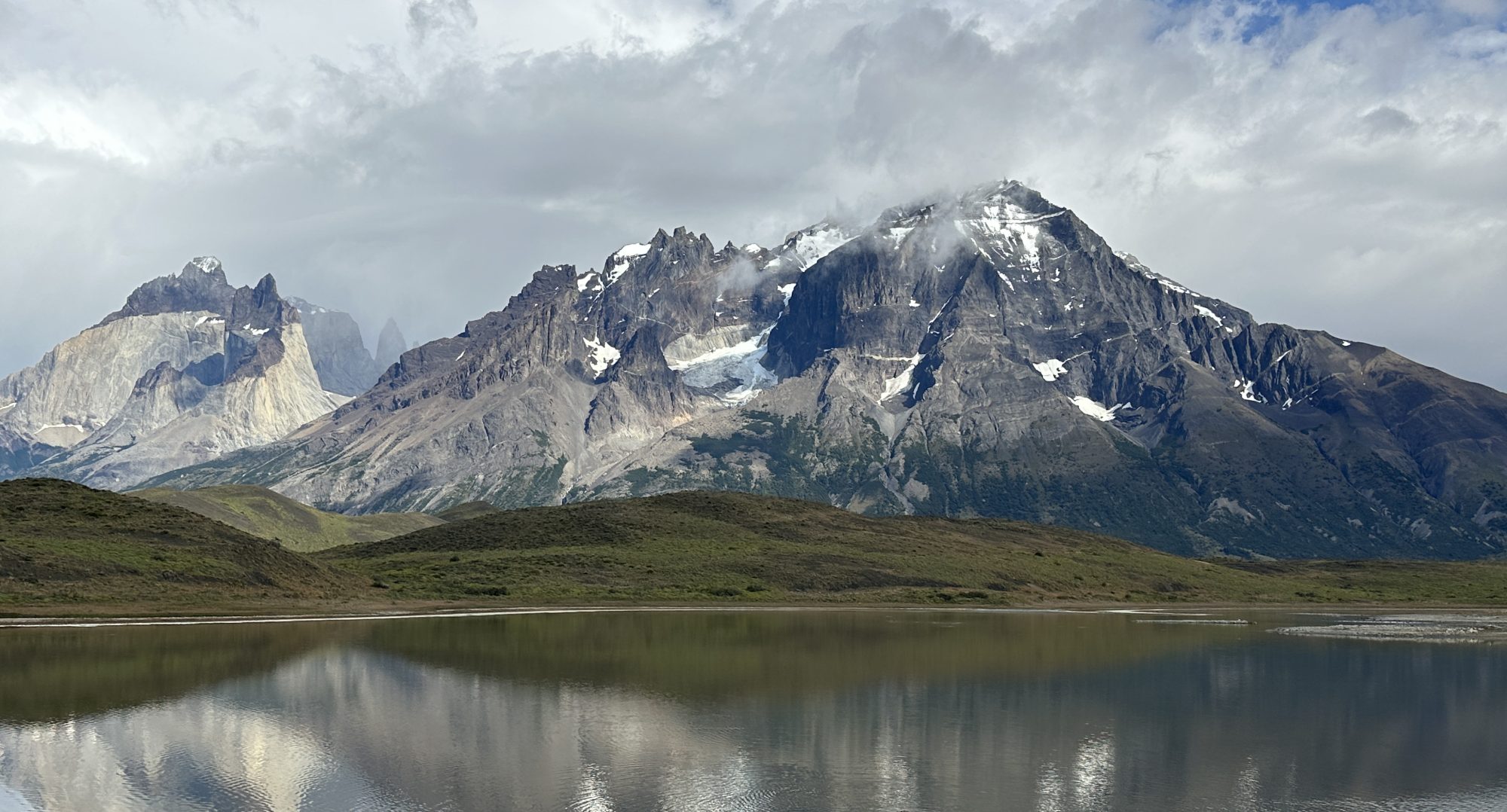
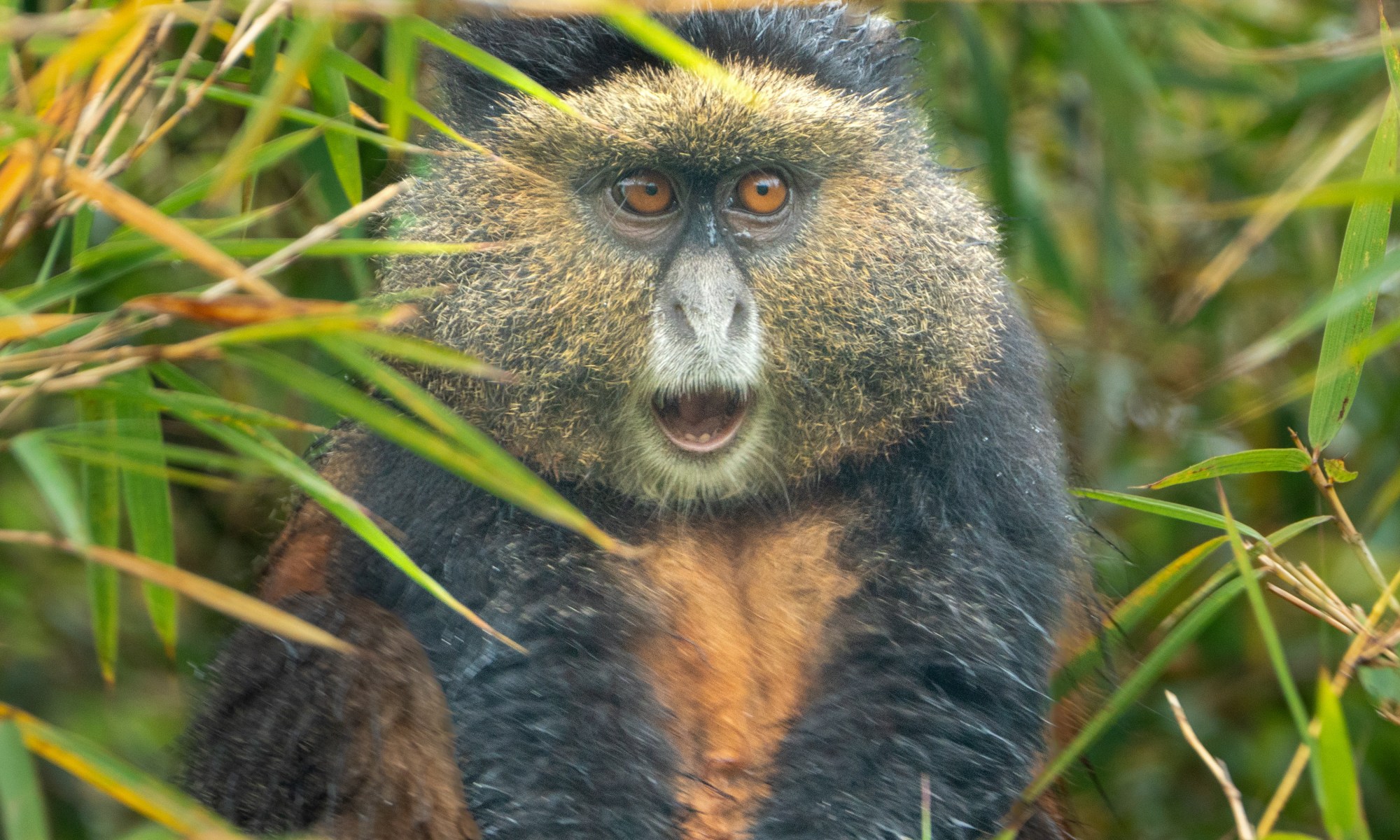
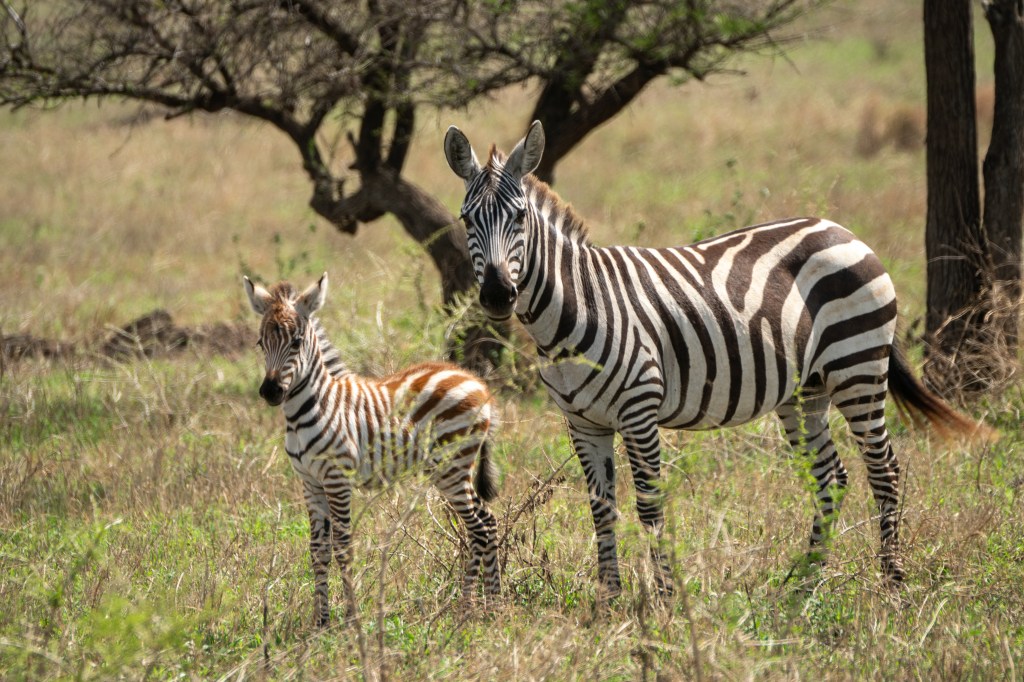
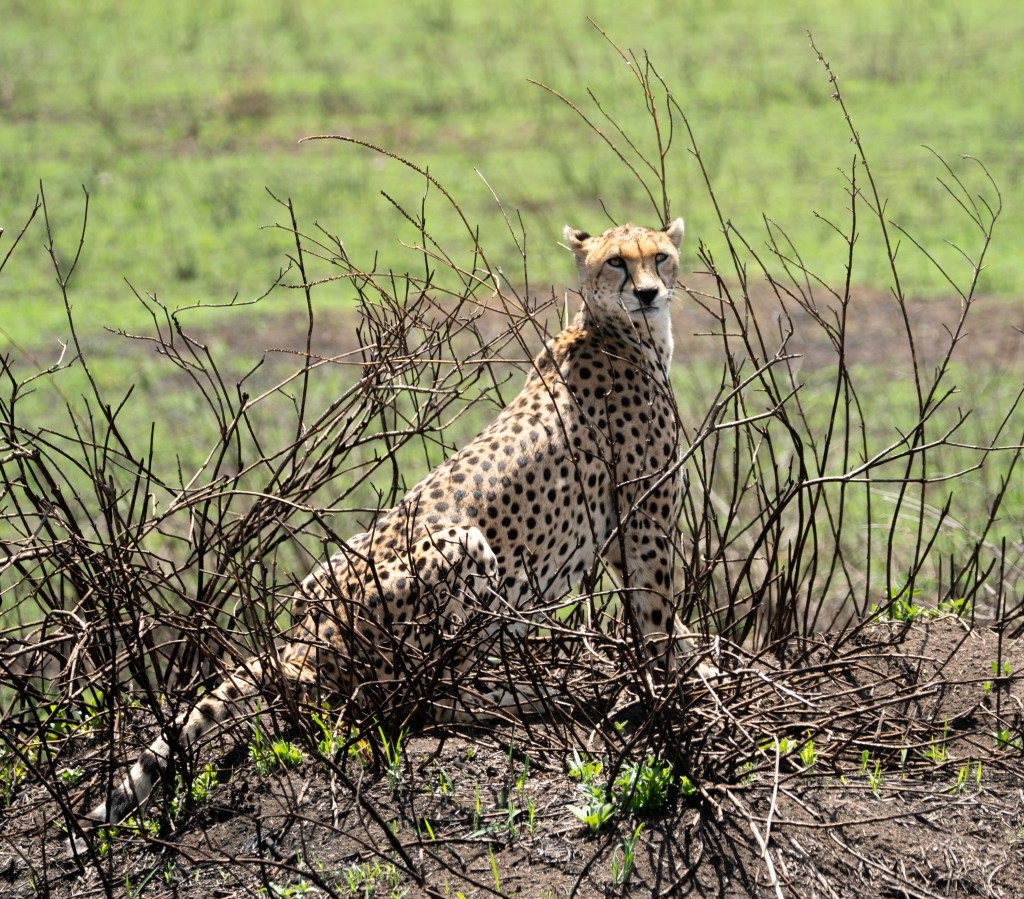
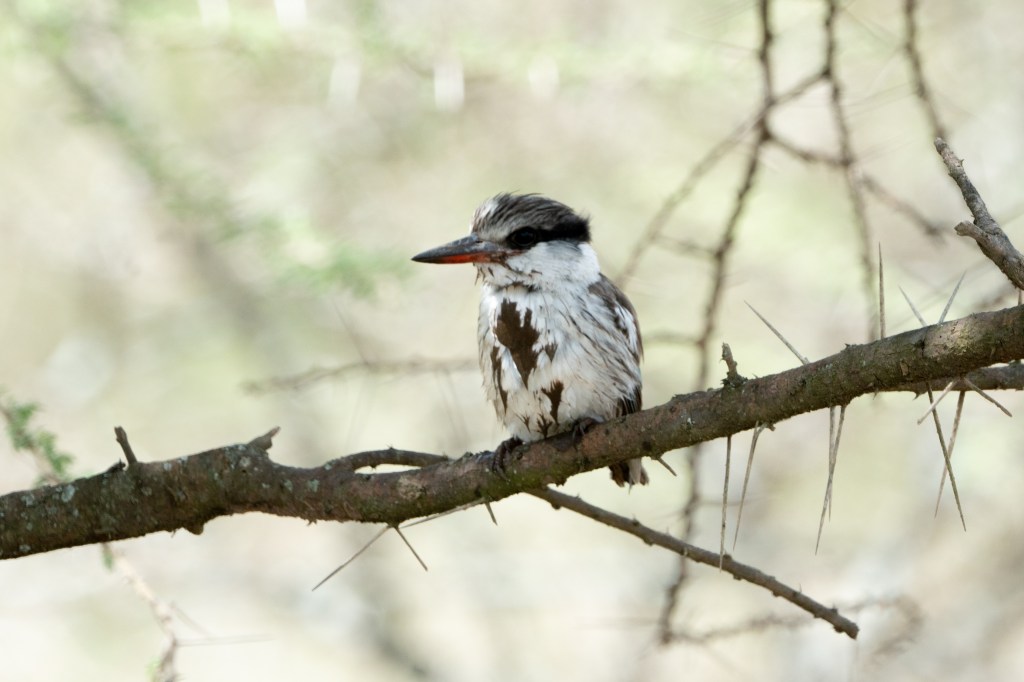
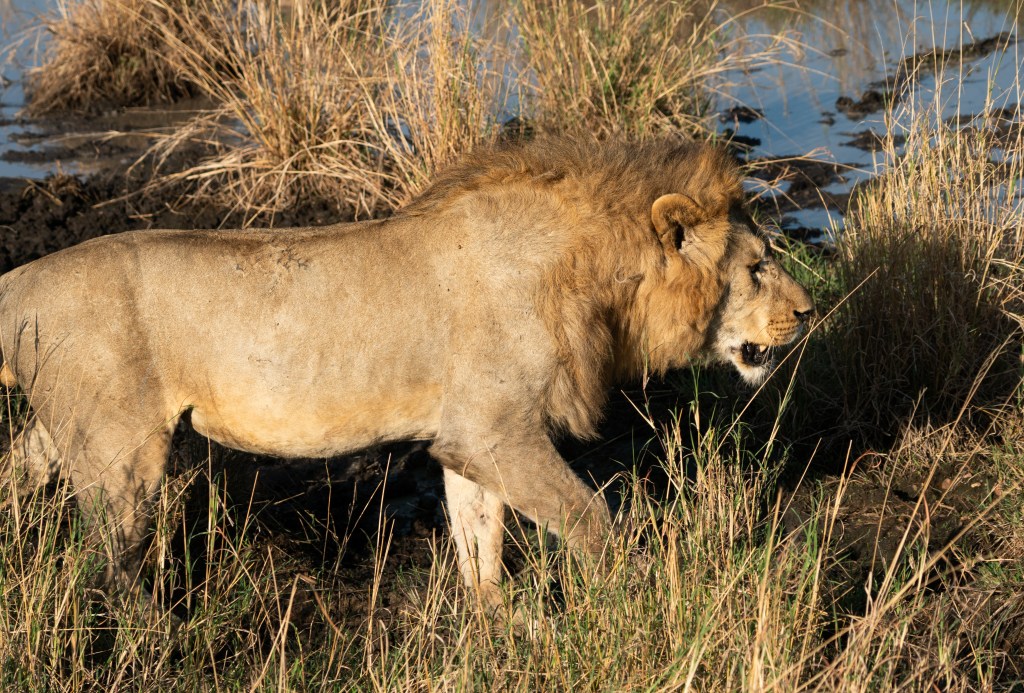
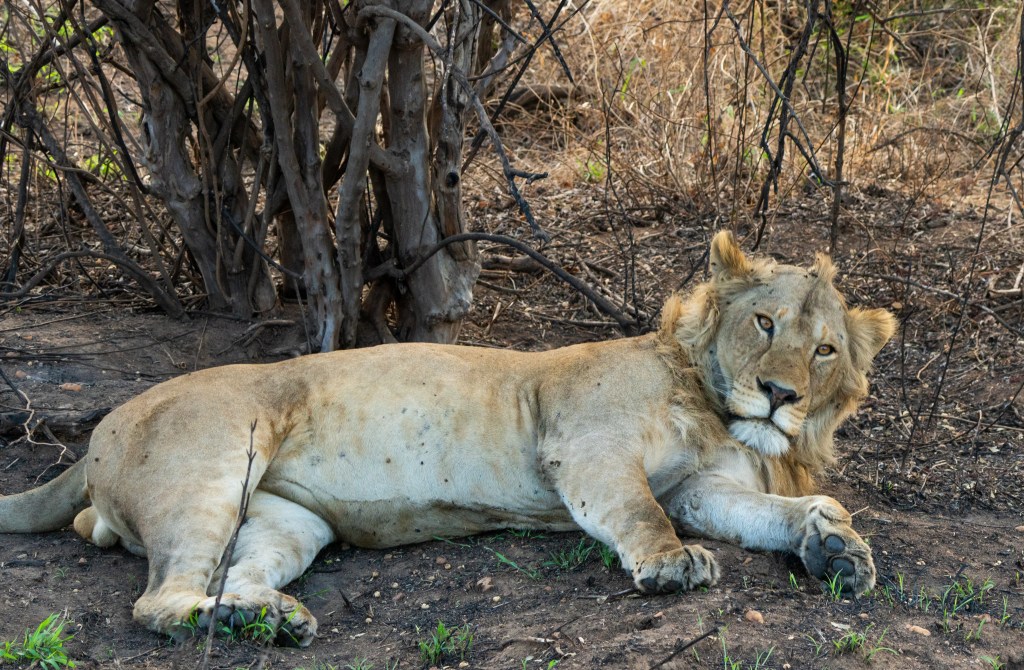
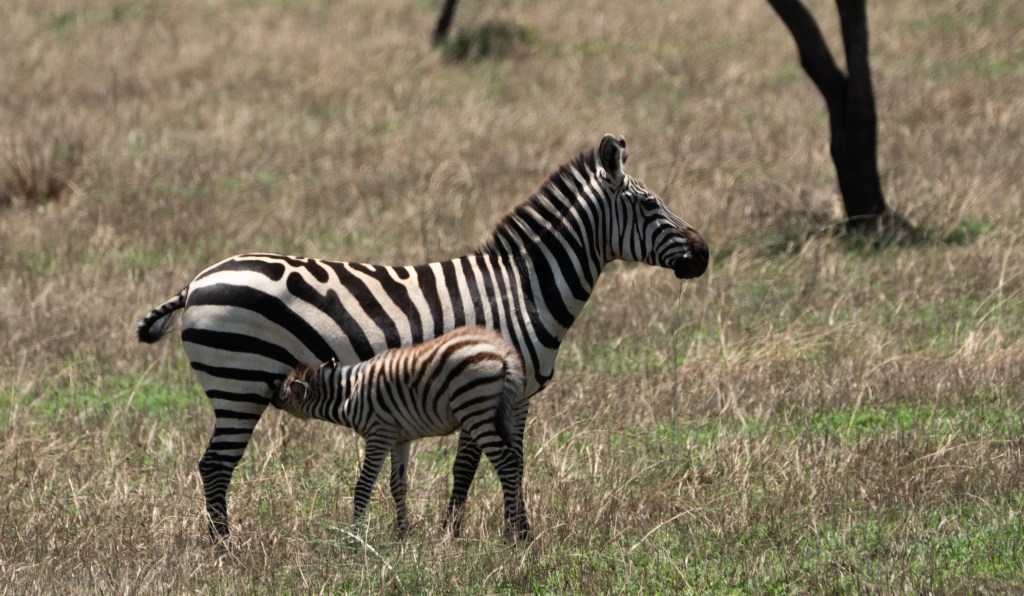
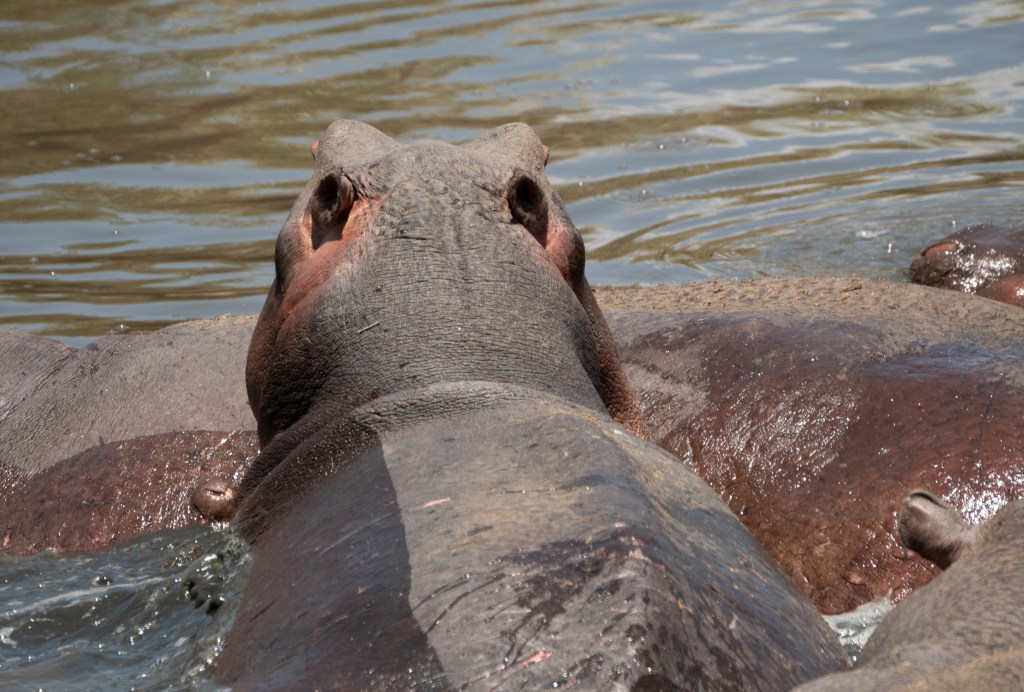
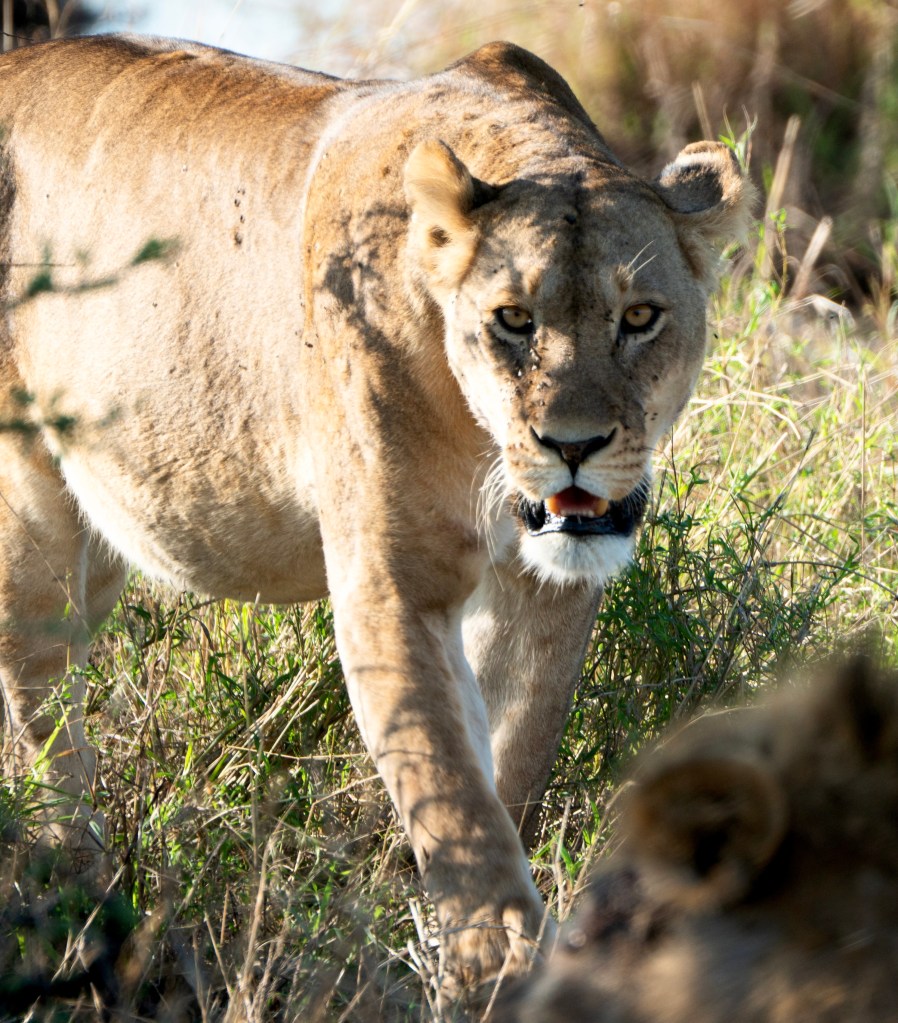
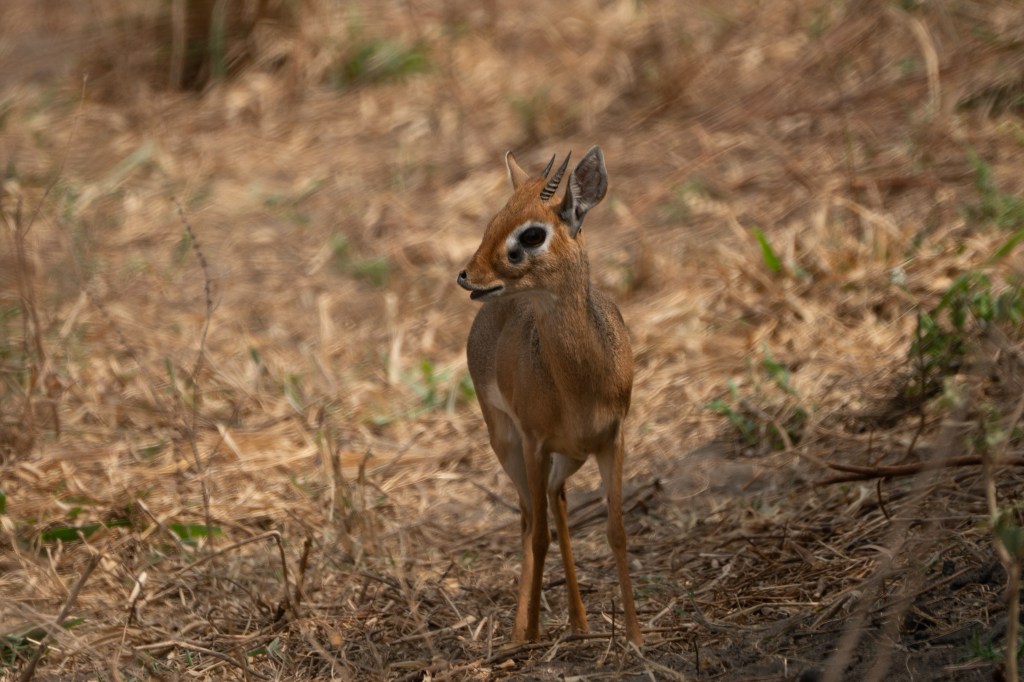
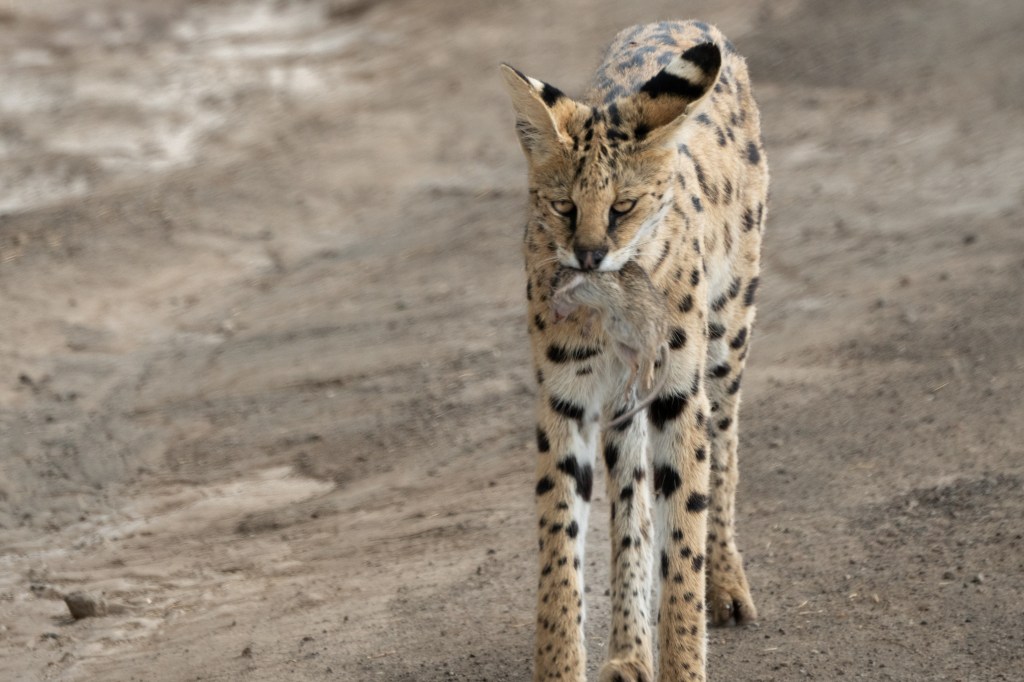
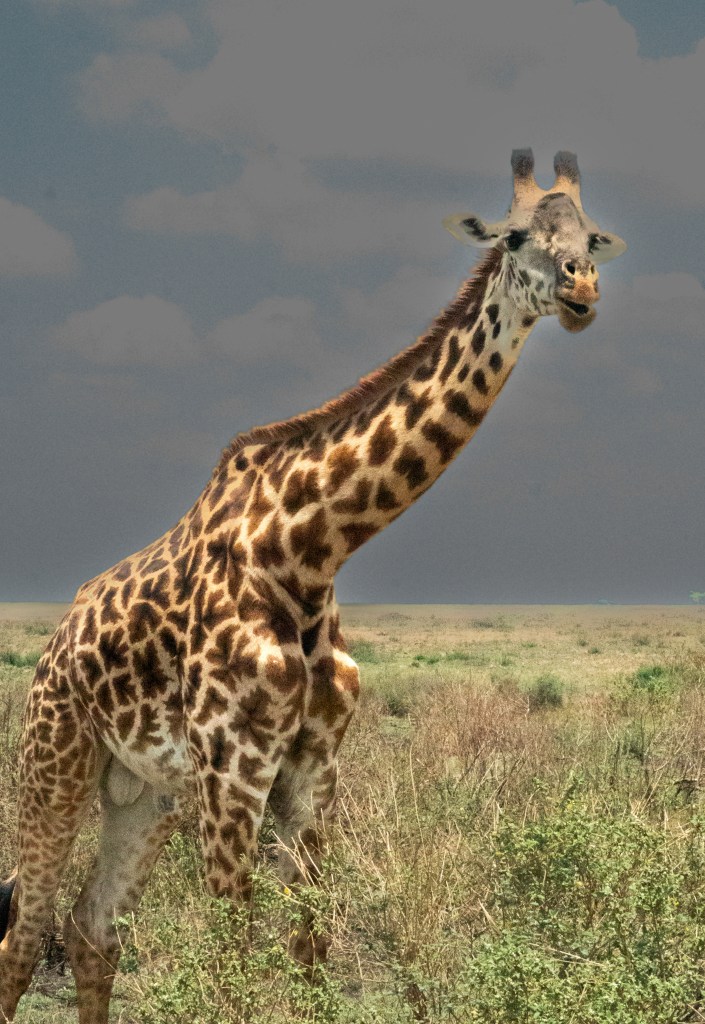
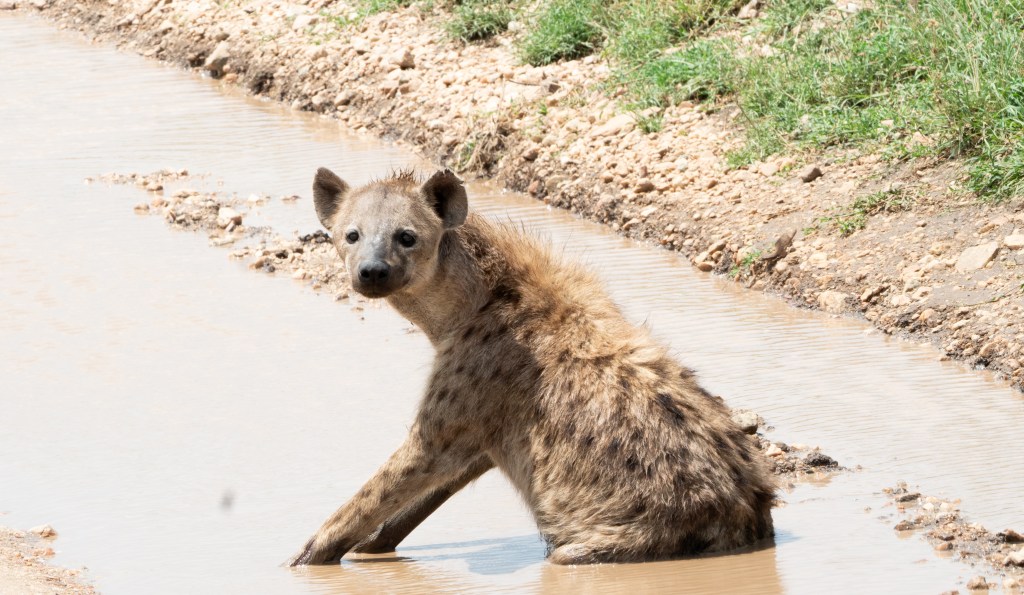
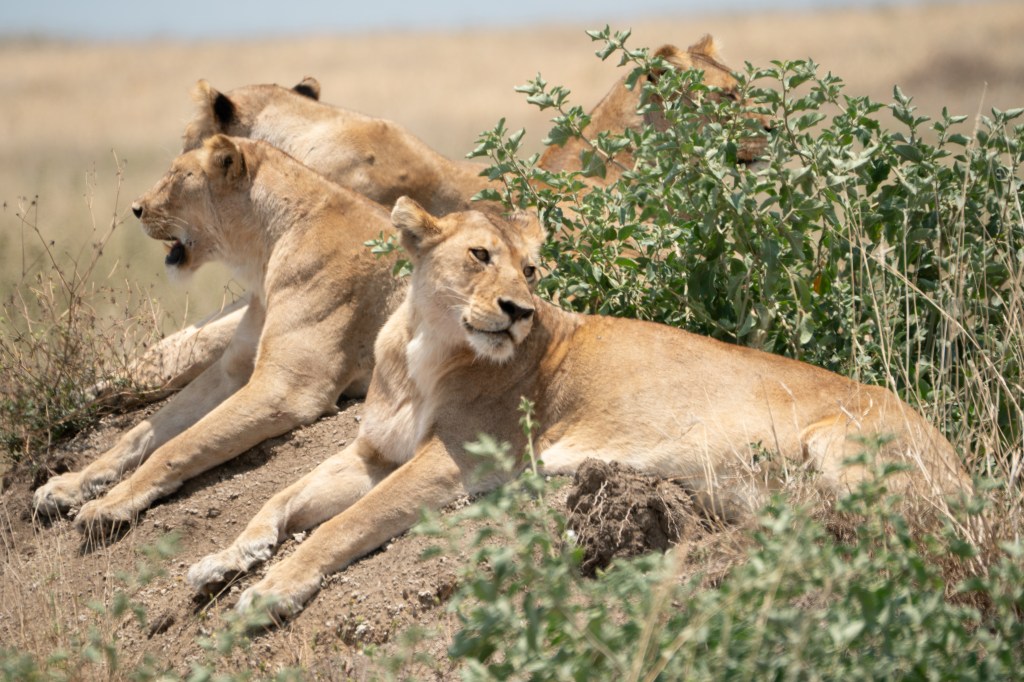
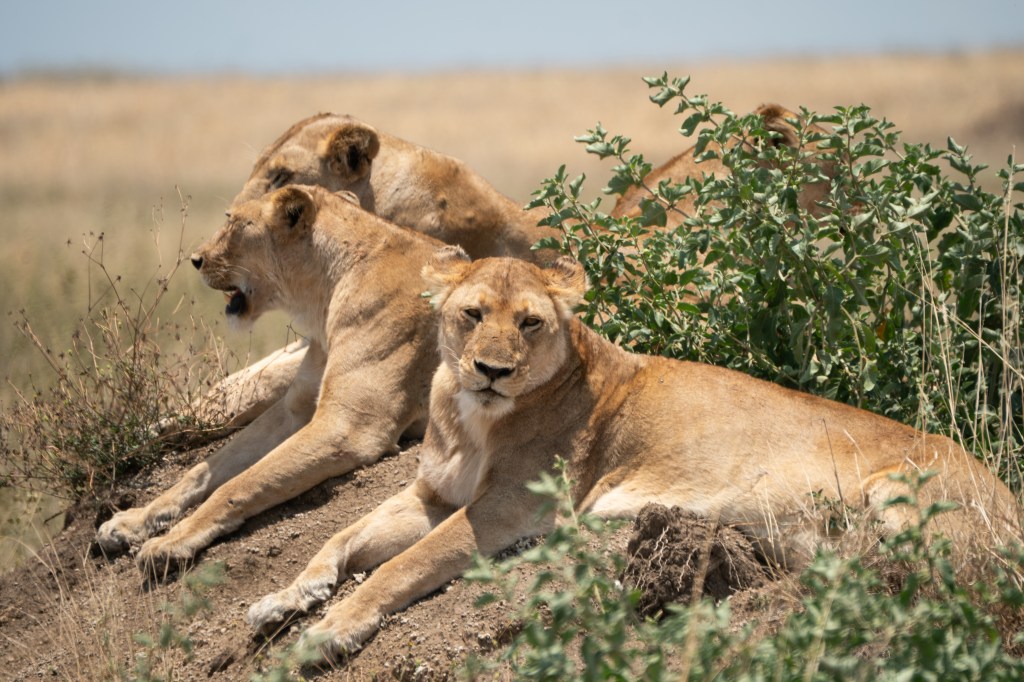
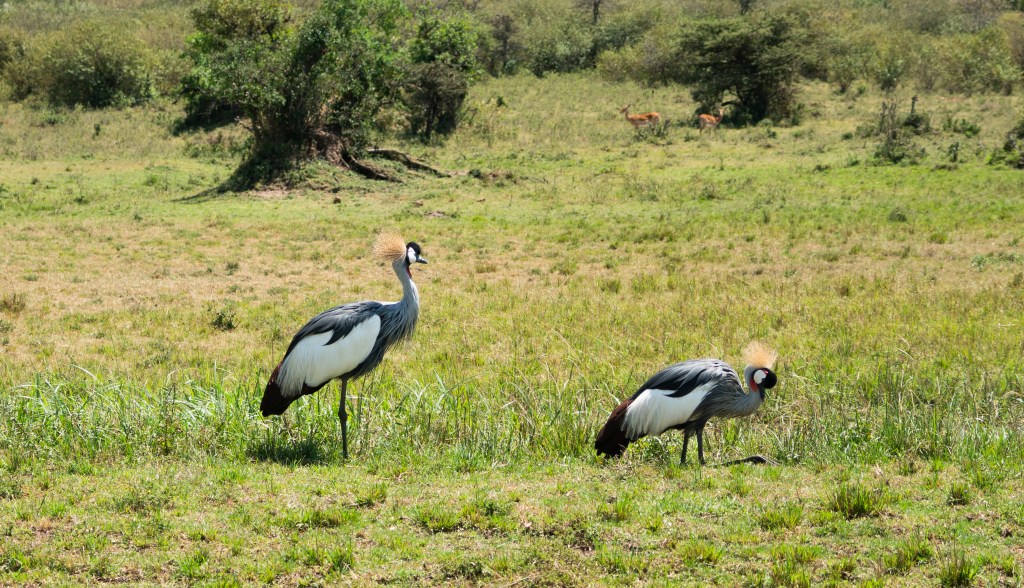
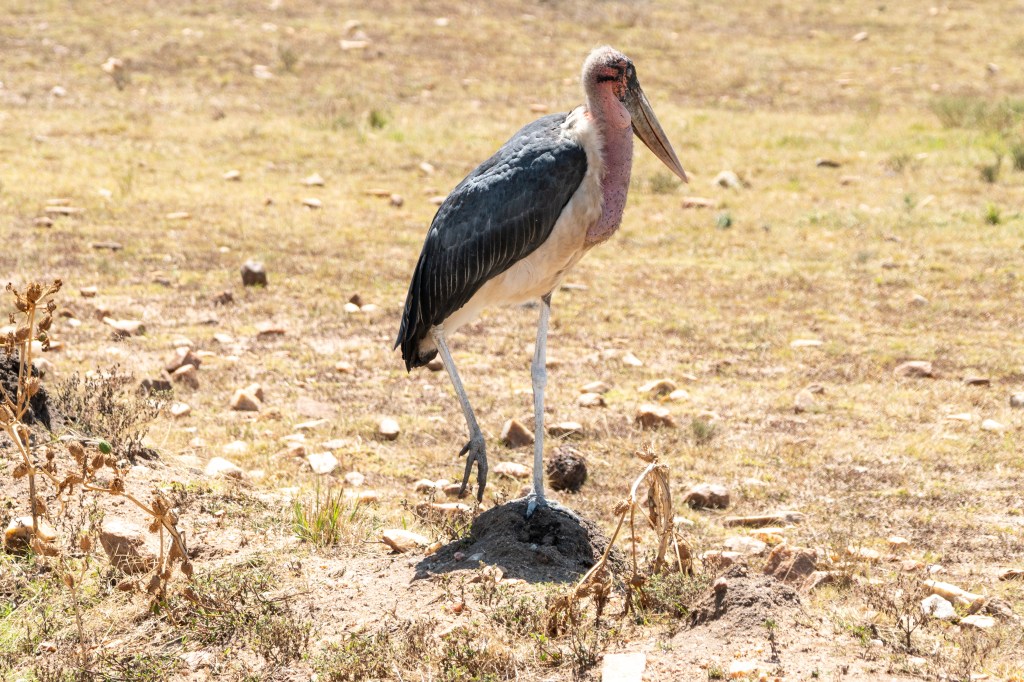
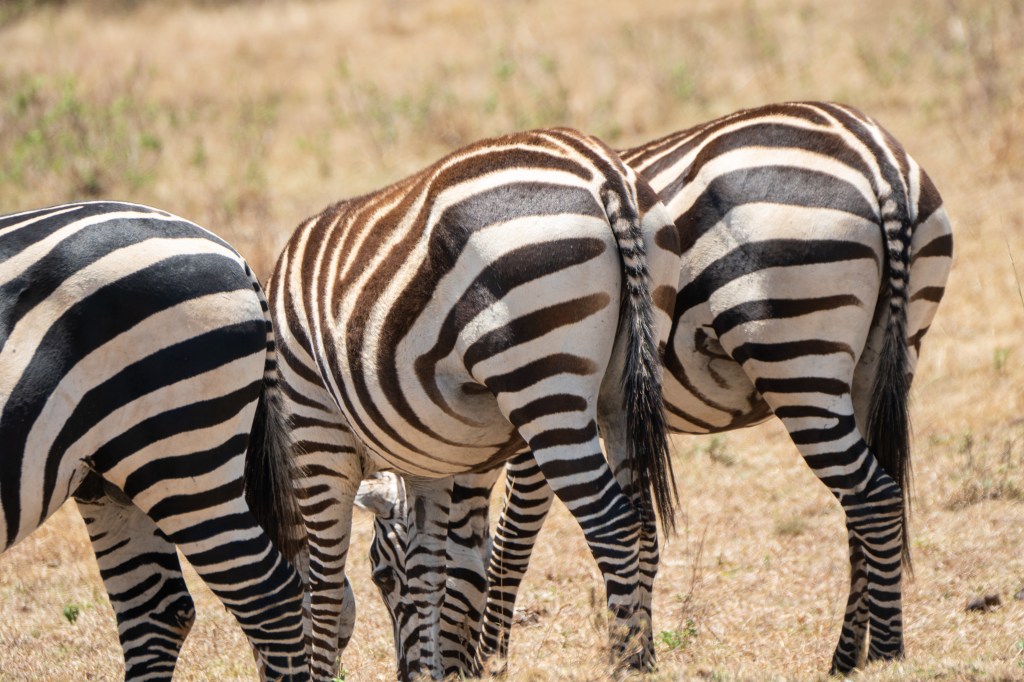
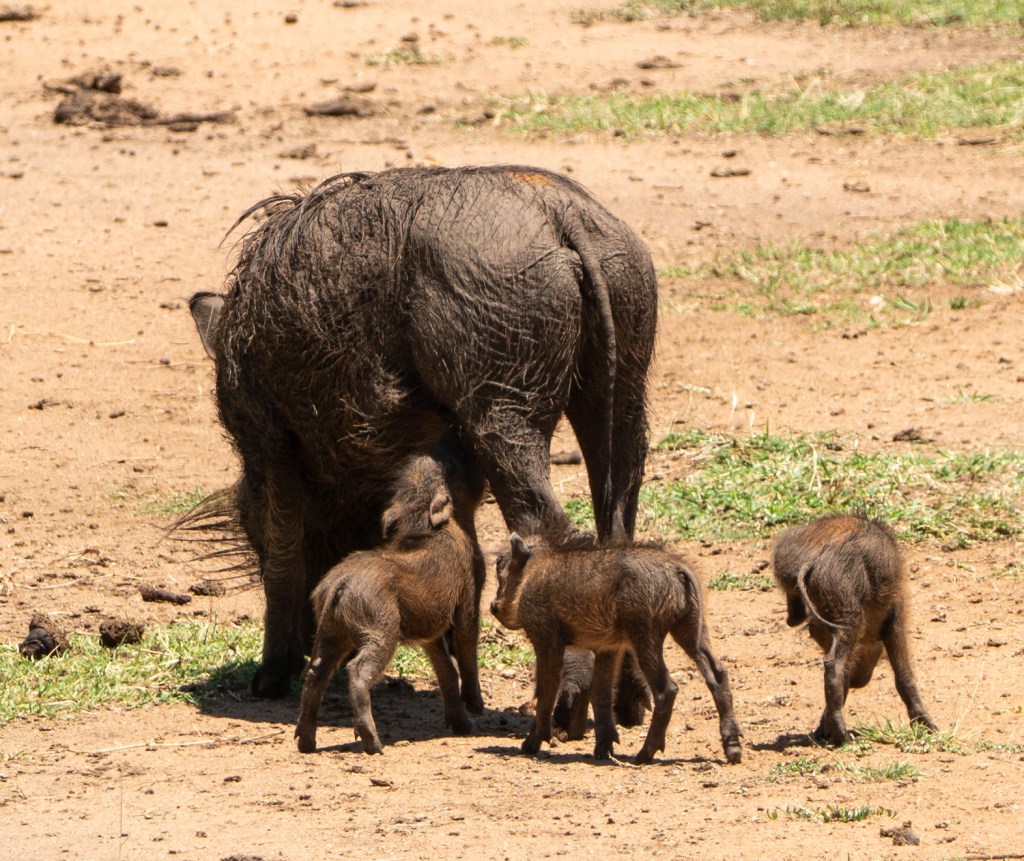
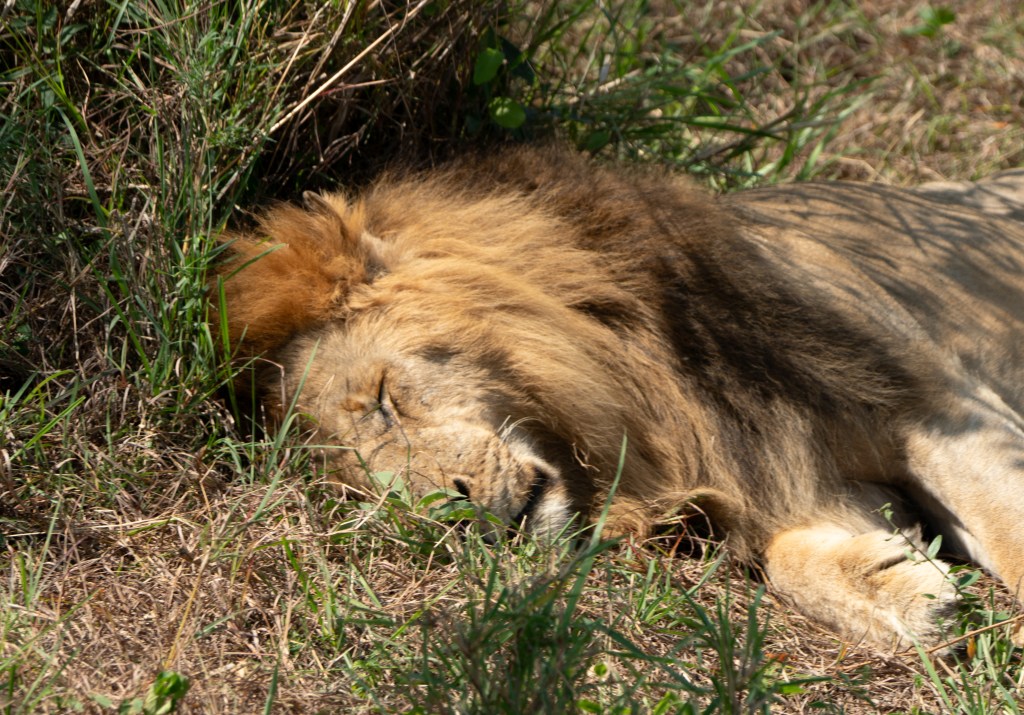
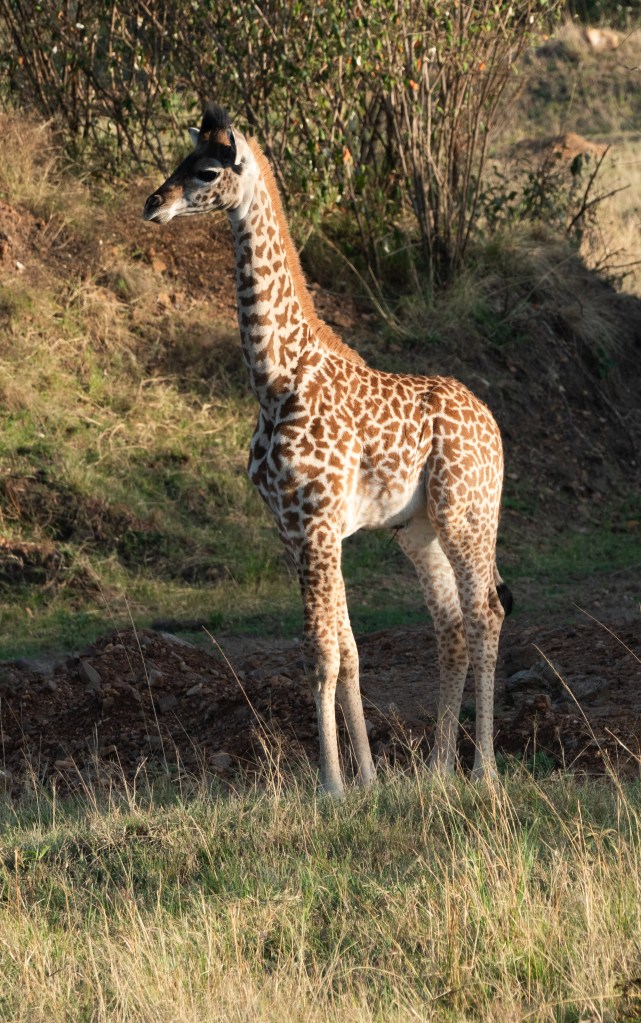
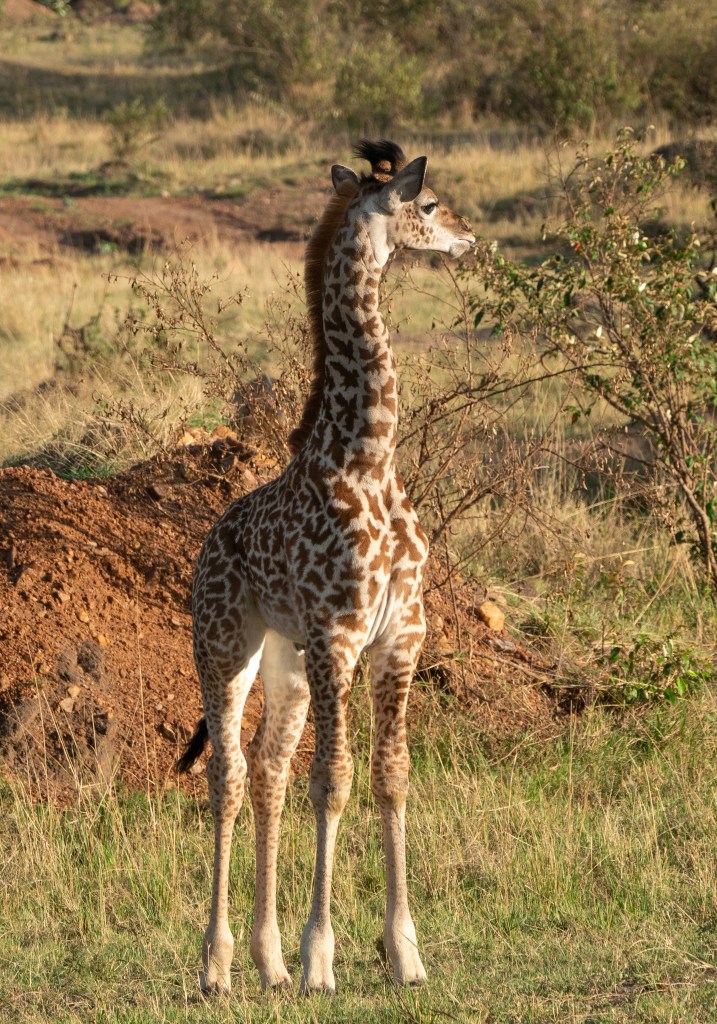
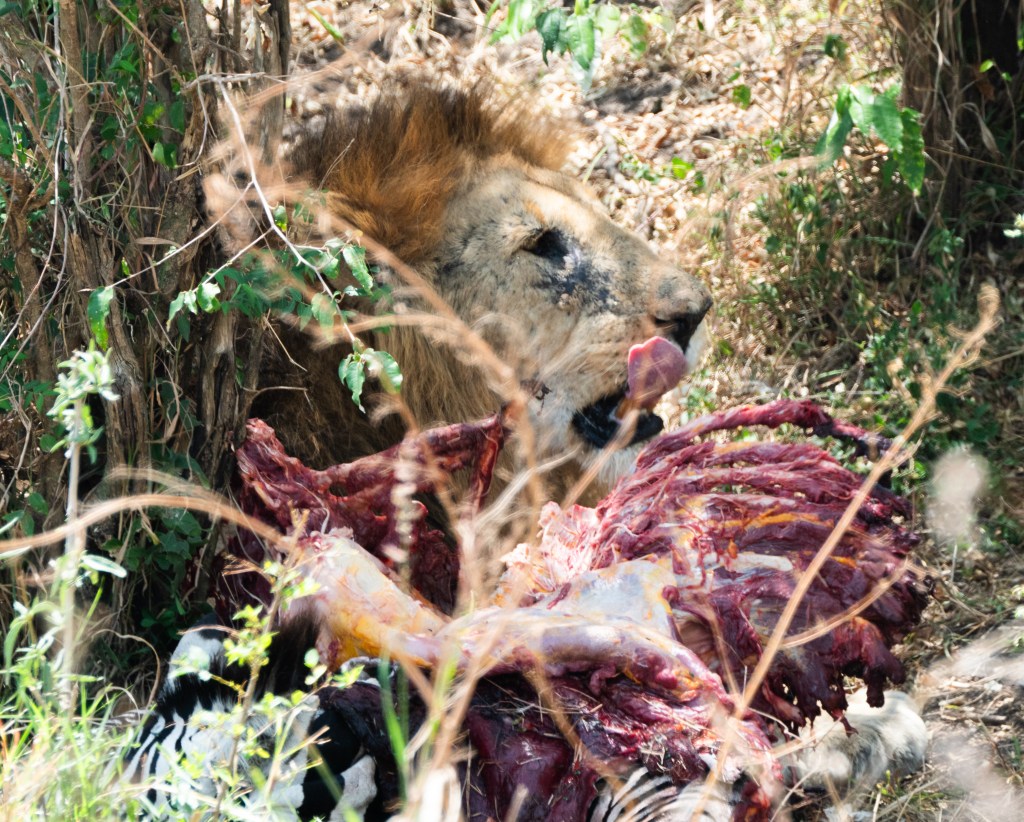
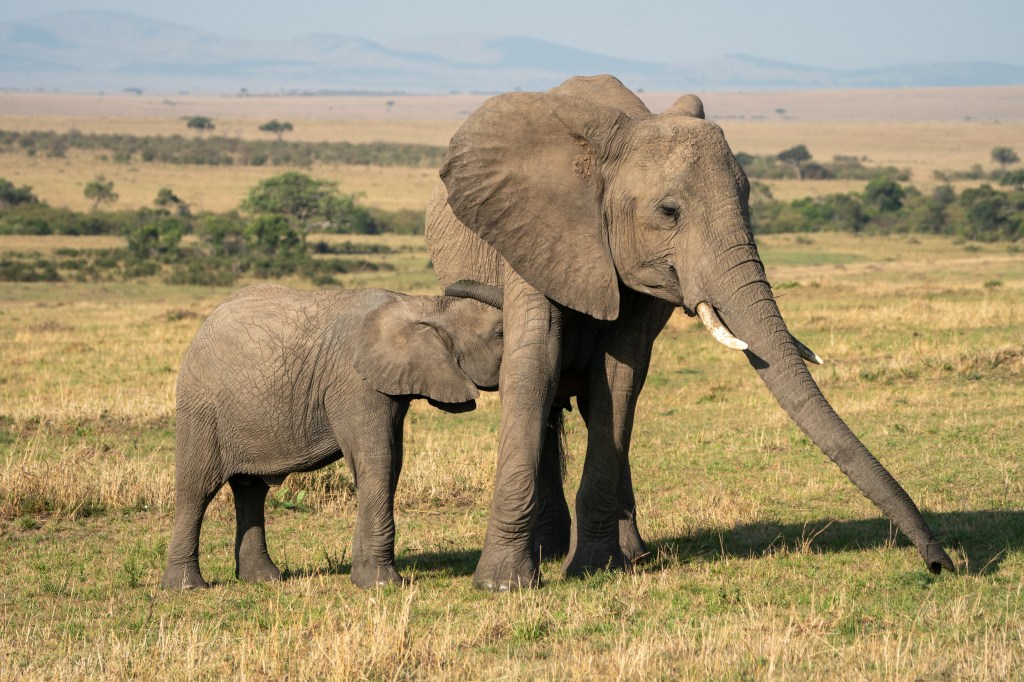
A few wildlife photos as an introduction (click for full image).













Rwanda/Kenya/Tanzania Trip
Sept-Oct. 2024
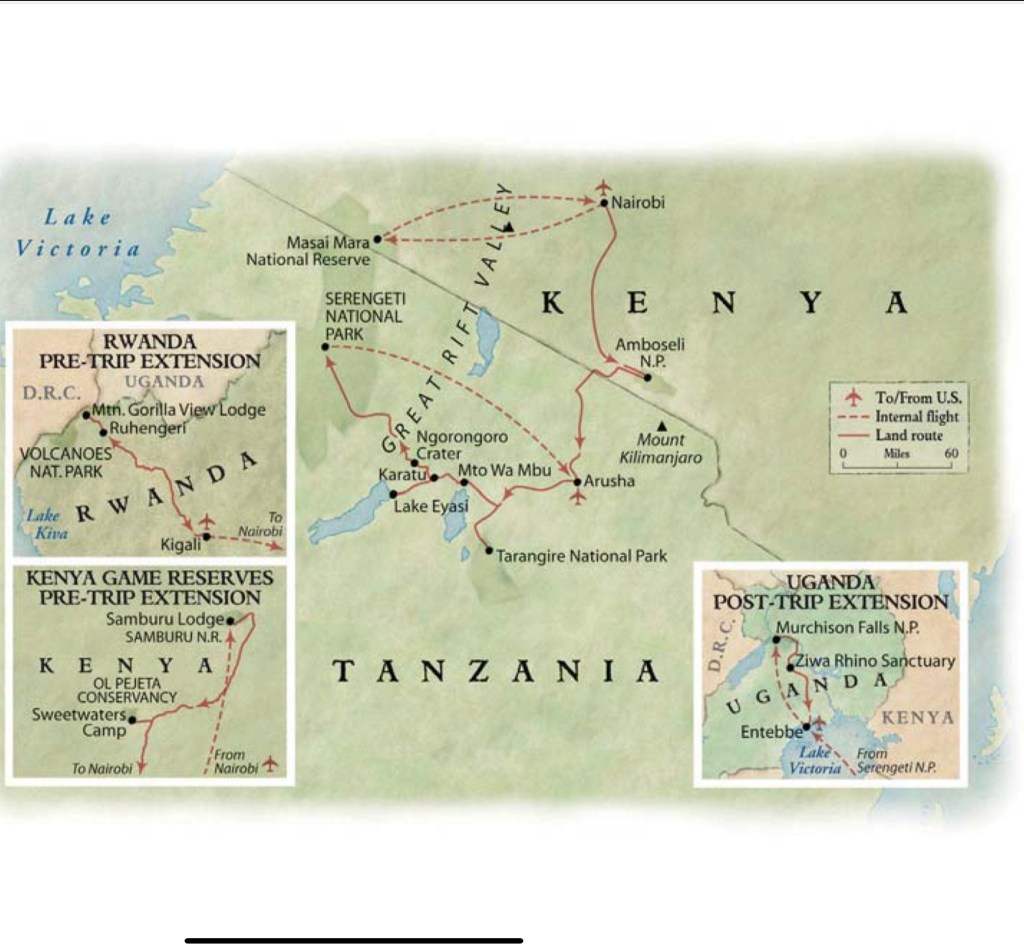
After two African safaris, I was hooked, and determined to see Kenya and Tanzani to round out my prior experience in Southern Africa. Moreover, trekking to see the mountain gorillas has been on my bucket list for years! So I had my eye on this Overseas Adventure Travel (OAT) trip to Kenya and Tanzania with a pretrip to Rwanda to see the gorillas. It seemed the trip would wait for a year or two, but then I got notice of a huge discount on OAT trips if I booked soon. This particular trip was included in the deal, and a spot was available for a single traveller, with no single supplement— a very rare situation. So I signed up! I knew Chris had no interest in joining me on this bumpy adventure; moreover, it was football season. So I flew from Raleigh Durham to JFK, and from JFK to Nairobi. After a 7-hour wait in the comfortable Kenya airways lounge at the Nairobi airport, I flew to Kigali, Rwanda to start this great adventure. Of the 11 individuals signed up for the main trip to Kenya and Tanzania, 9 were participating in the pretrip.
The following is a day-by-day summary of the trip, including many of the cultural insights and interactions (an important feature of all OAT trips, which is a reason I travel with them) as well as the game drives, with photos of the landscapes and wildlife sightings. The text can be pretty long, so feel free to skip ahead. The photos can be clicked on to open the full images. Most of the images are from my Sony alpha 6300 mirrorless camera with a 50-400 mm lens (equivalent to 75-600 mm given the crop sensor) or my iphone 14 pro. This was my first trip shooting in RAW, editing with Lightroom mobile. I do everything on my ipad. Bear with me if I have committed any over-editing sins! This is a great learning experience. Some photos might also be from colleagues on the trip (many thanks!). I have also added a few videos, with links to youtube. The map is from our trip guide.
Monday, Sept. 16
(Lemigo Hotel)
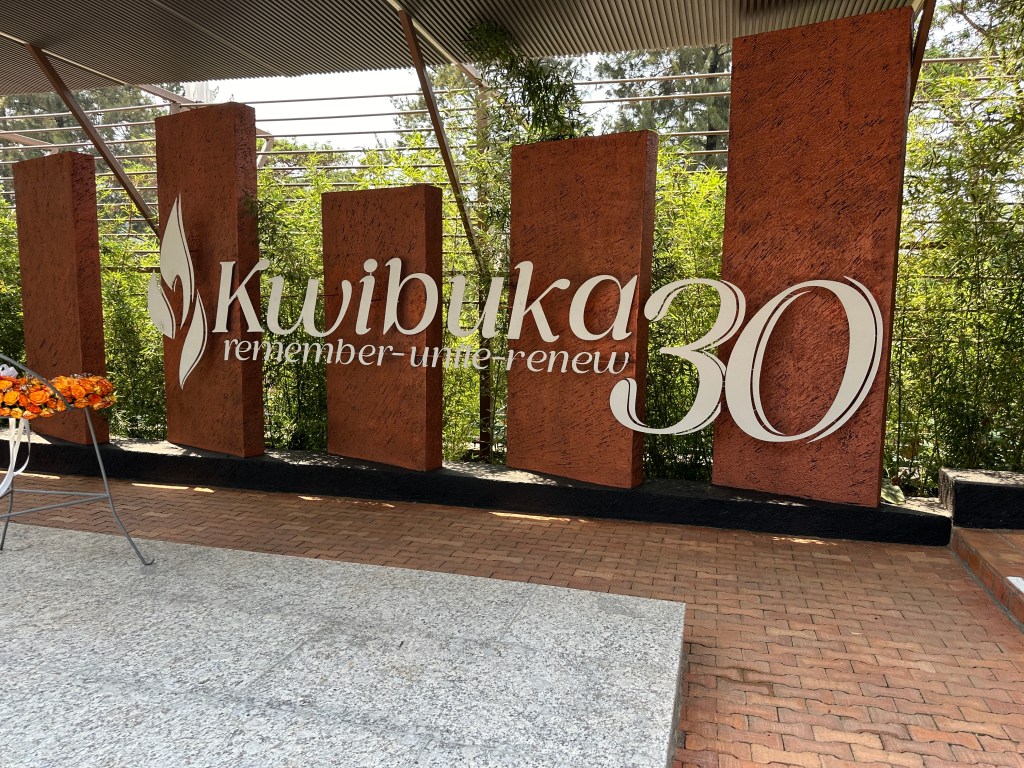
We started our first day of the Rwanda pretrip with cultural activities related to the Rwandan genocide involving the killing of Tutsis by Hutus. We had an orientation session with our trip experience leader (TEL) Didier, our driver Fred, and local guide Annie and two young assistants. Didier provided an overview of the country and our upcoming activities. Then Annie, the guide for the day, gave detailed historical background of the 1994 genocide in Rwanda and what has happened since then.
The genocide was not a tribal war, as I had been led to believe, but a planned activity devised by the colonial rulers who divided the country in Hutus and Tutsis arbitrarily and documented the distinction on identity cards, based on physical features and the number of cows a family owned, with a cutoff of ten. They created hatred through unfair laws and systems, by orchestrating propaganda campaigns, arming and training the Hutus, and then launched a horrific, barbaric assault to eliminate the Tutsis, following the assasination of the Rwandan president, whose plane was shot down. (A very abbreviated version, but the one reported by the Rwandans we met.)
The Rwandan government organized extensive reconciliation activities to bring harmony and economic stability to the country. Thousands of perpetrators had been imprisoned. They were afforded the opportunity to seek forgiveness from their victims’ families and show the families where their loved ones were buried in order to be release from prison. In addition, the government established reconciliation villages, where survivors and perpetrators lived side by side. Annie proposed a new project that would bring travellers from other nations to witness the reconciliation efforts in the country that could improve the image of Rwanda and benefit the local communities through increased revenue. She was given the green light for her project, and our activities were proof of its value.
Our first visit was to a community where many Tutsis had been concentrated after being relocated by the government. At the start of the genocide, many sought refuge in a Christian church where 10,000 people labelled as Tutsis were murdered, and more have been buried. The church has been preserved as a memorial to the genocide. Bullet holes and garments from the victims remain in the structure. It was a deeply moving experience. After learning a great deal about Rwanda’s history and visiting two major genocide memorials, we spent several hours in a reconciliation village near the church. We were able to see how survivors and perpetrators of the genocide live together in this community. We visited a family’s garden and livestock corral, and joined them for a delicious fresh lunch. We met with a group of villagers and heard reflections about the genocide from both a perpetrator and a survivor. The villagers encouraged us to ask loads of questions. It is so important to them that the rest of the world understands what they went through and to commit that such events should never happen again (and yes there are people who deny it happened). One young women who was translating the words of a speaker became so emotional she could not continue translating. Other members of the community appeared emotional as well. One of the travellers asked the villagers how many of them were perpetrators vs survivors. Their answer was a resounding “we are all Rwandans.”
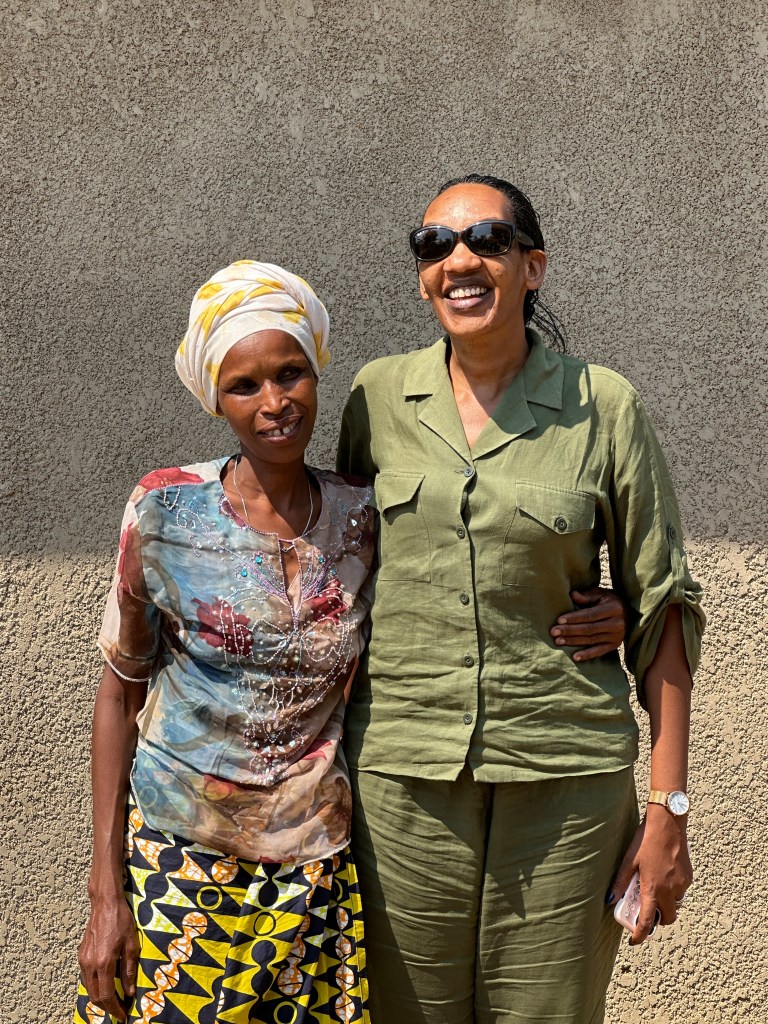
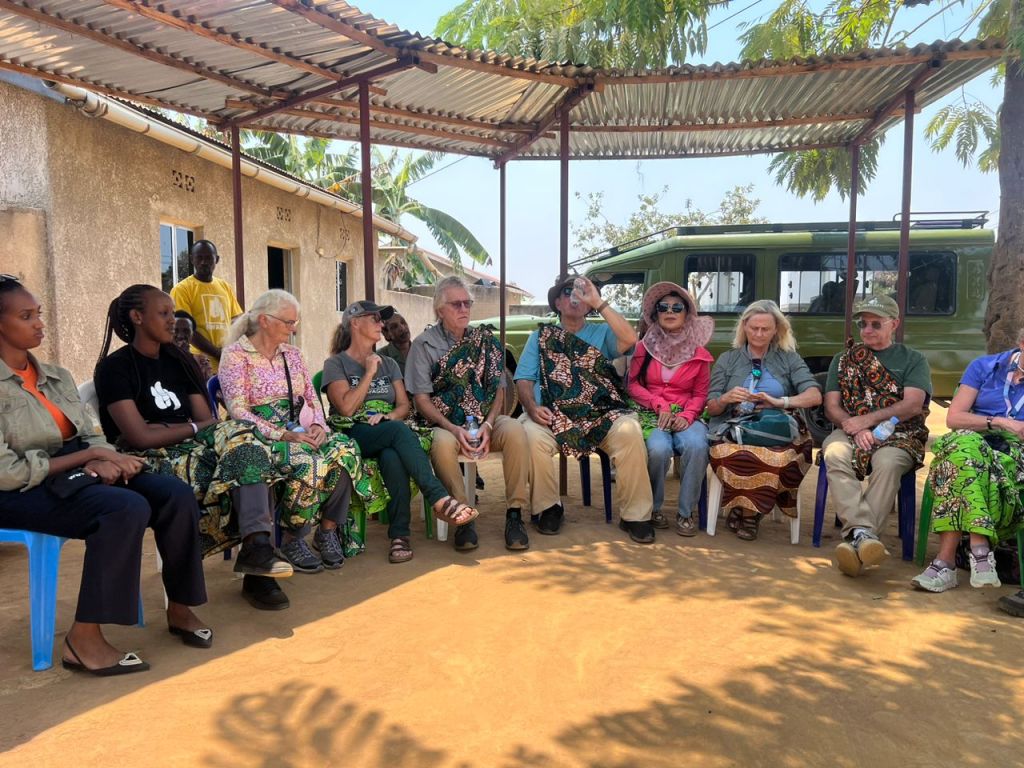

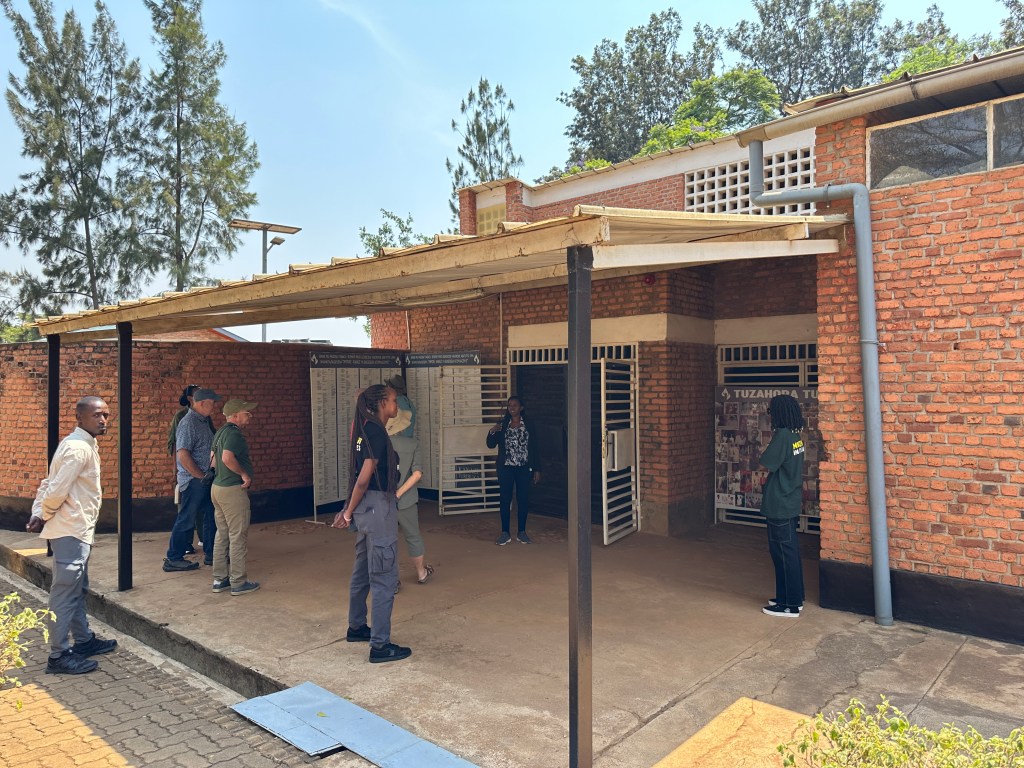
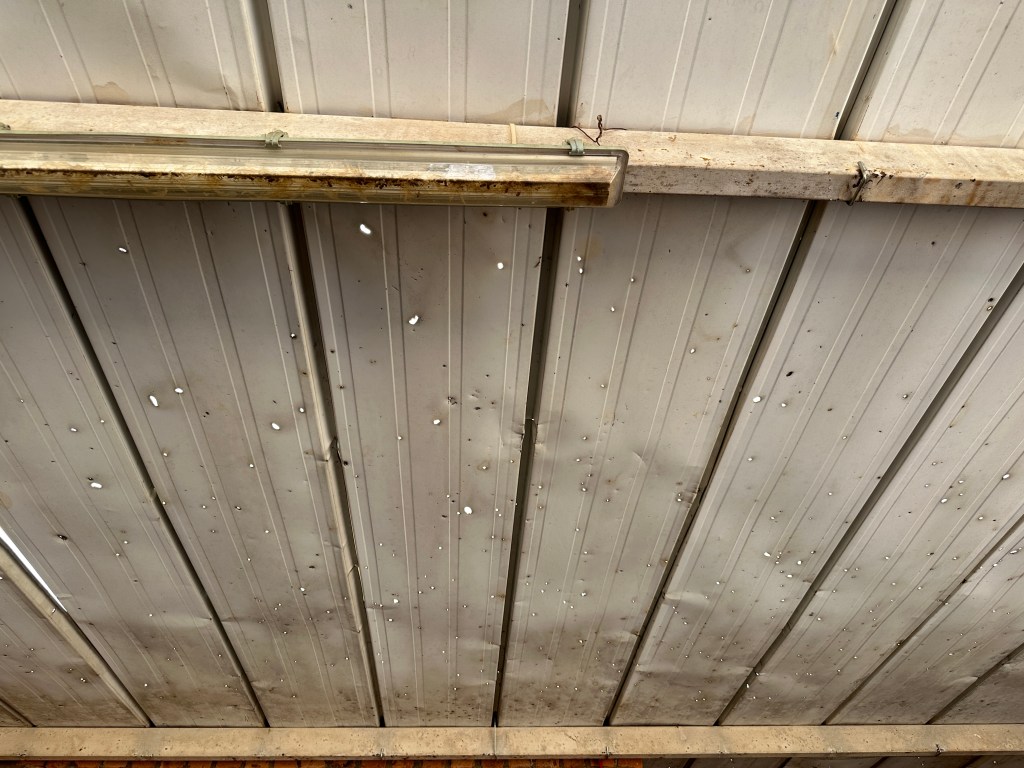
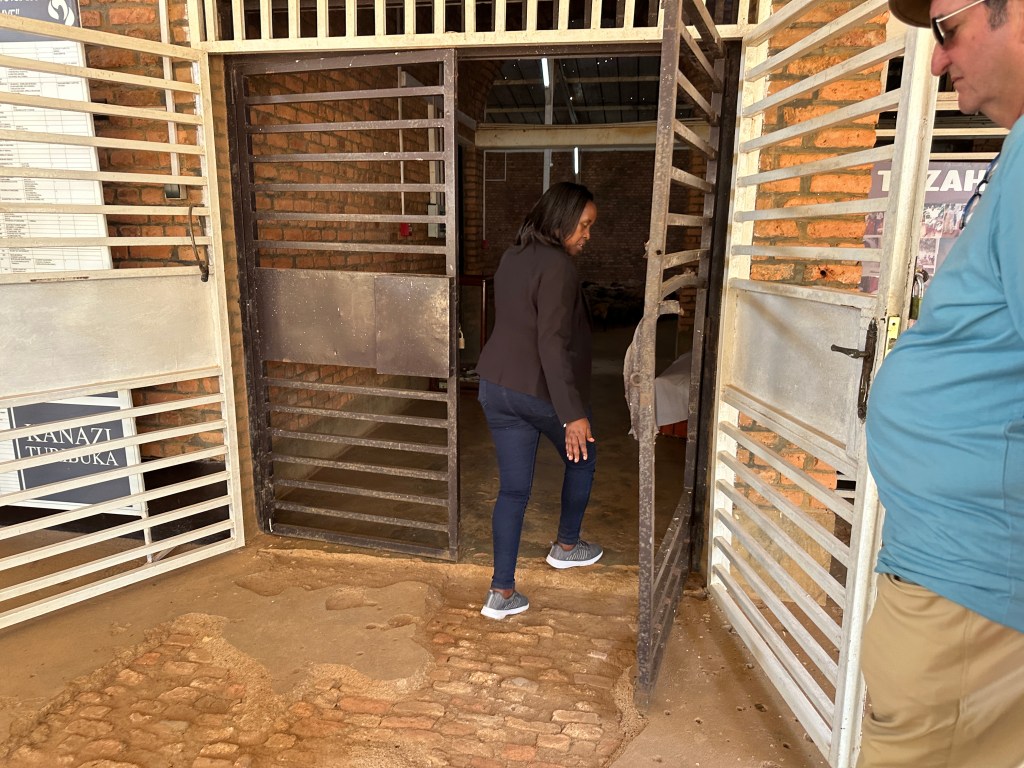
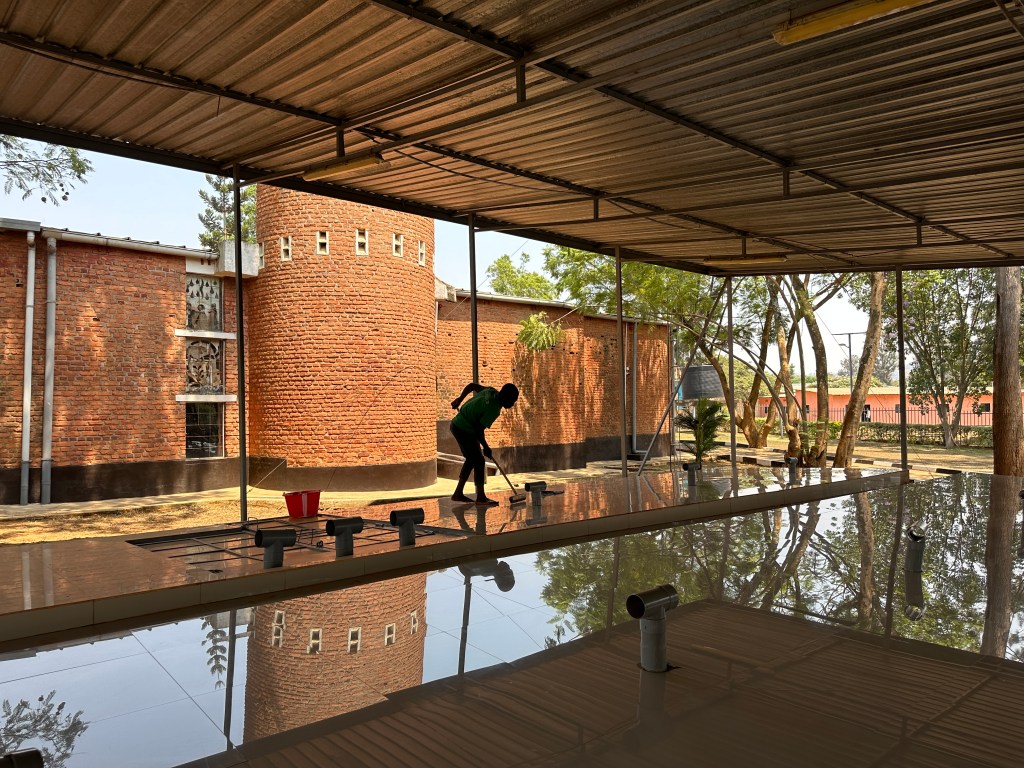
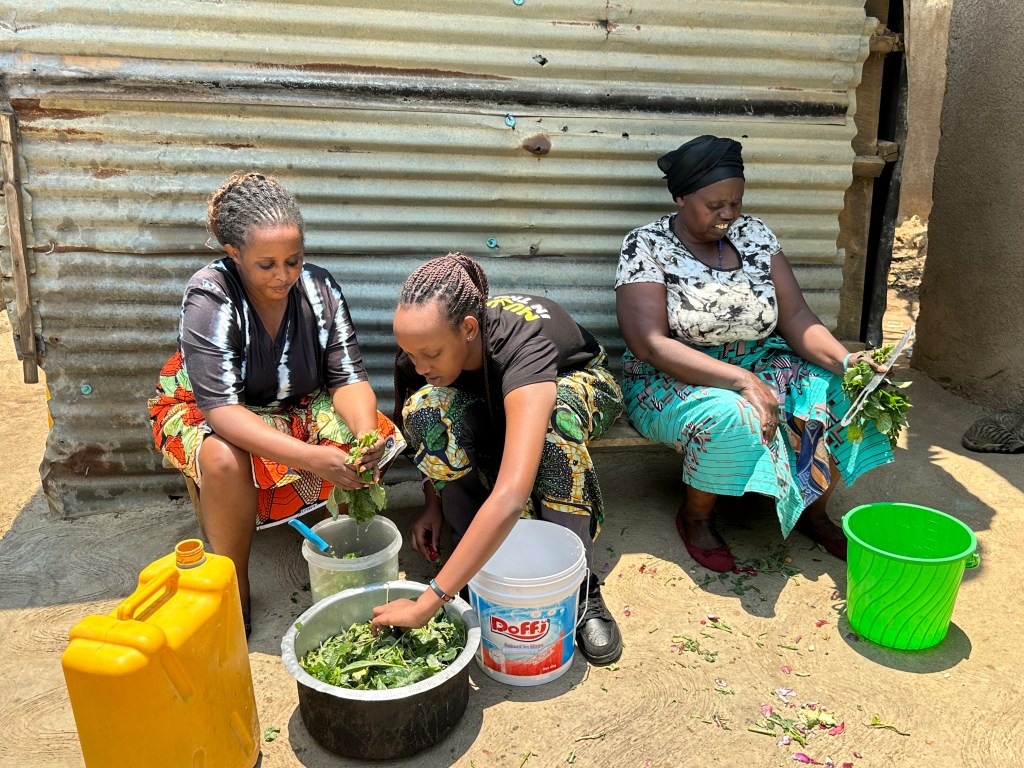

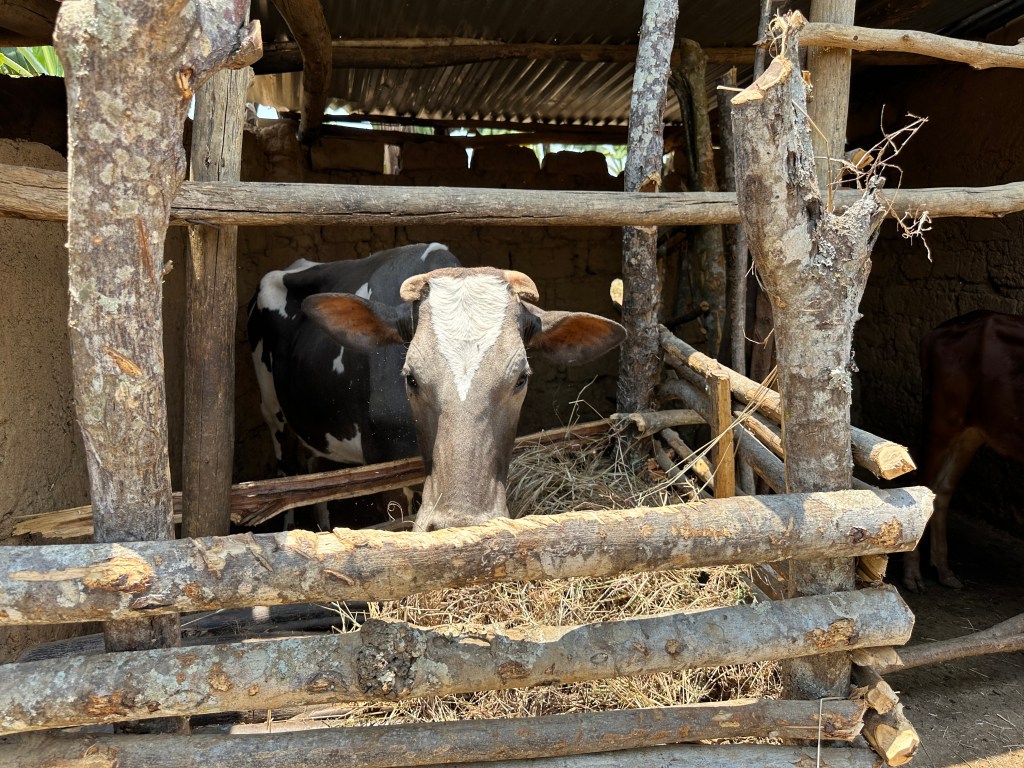

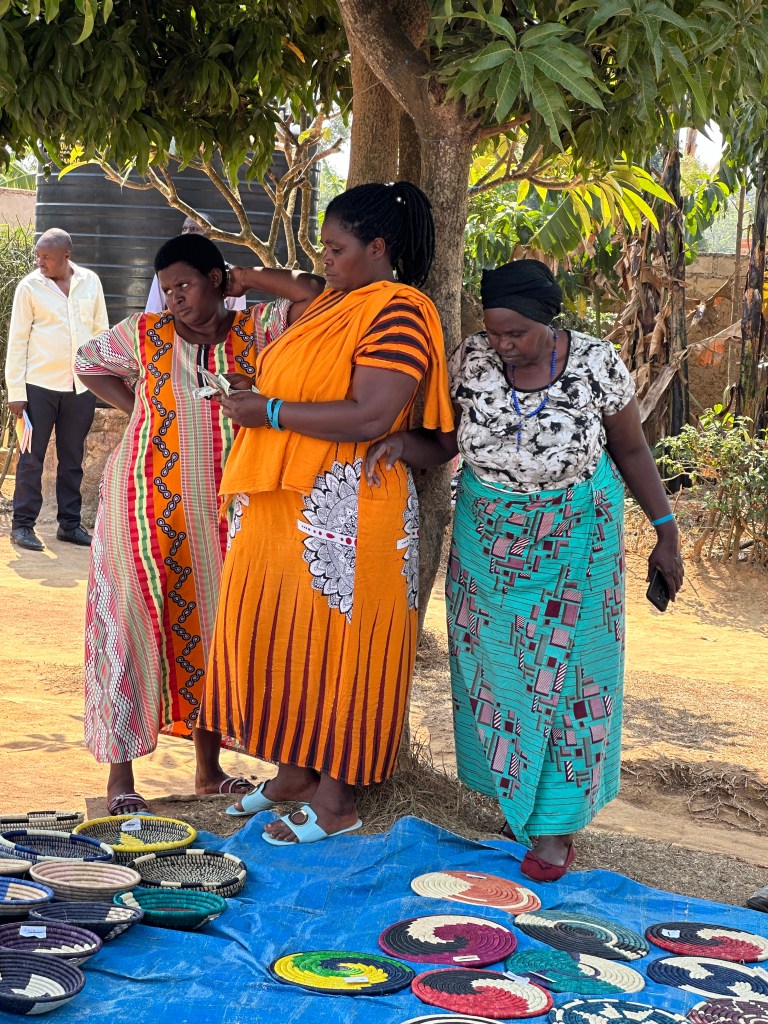

It is amazing the proactive approaches the Rwandan government and society have taken, in very specific and replicable ways, to heal from this tragedy and move forward as one people. It is hard to imagine living through the genocide and the healing process, but we did see some of the results. There is much we in the US and the rest of the world can learn from their experience.
The country is now vibrant, future oriented, and reasonably progressive. It seems the economy might have been boosted from some infusion of resources from outside, but that is pure conjecture. And boy is the country clean! On the last Saturday of every month, everyone in the country spends from 7 am until noon cleaning their neighborhoods and towns. It is quite a remarkable place.
Tuesday, Sept. 17
(Mountain Gorilla View Lodge)
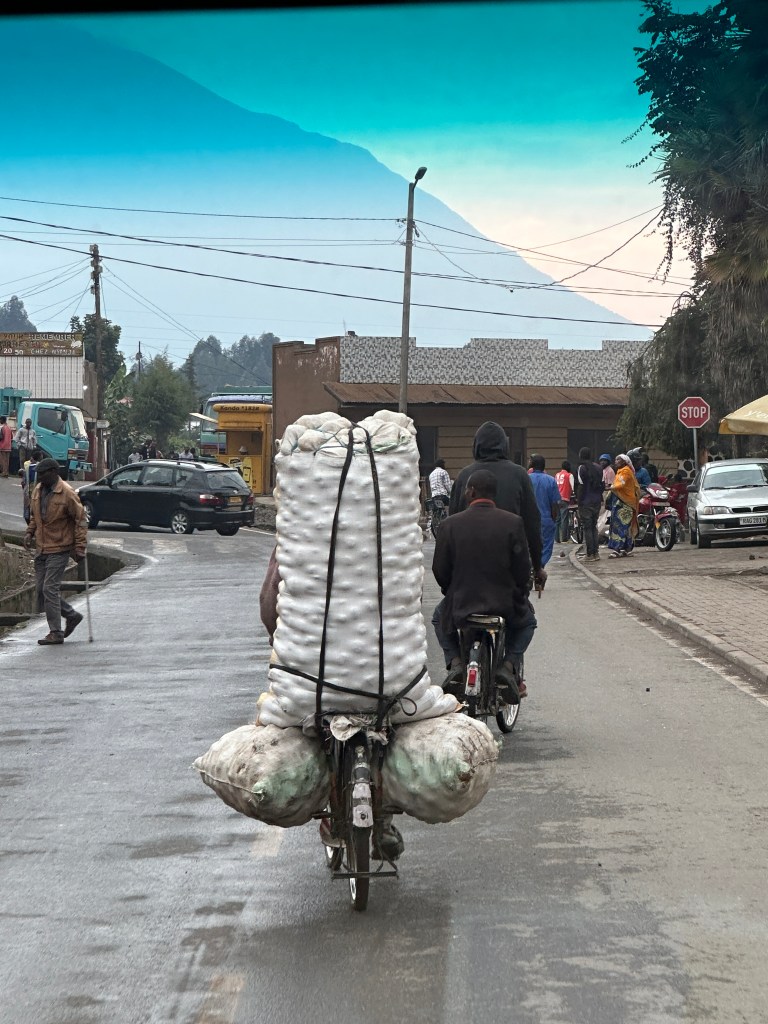
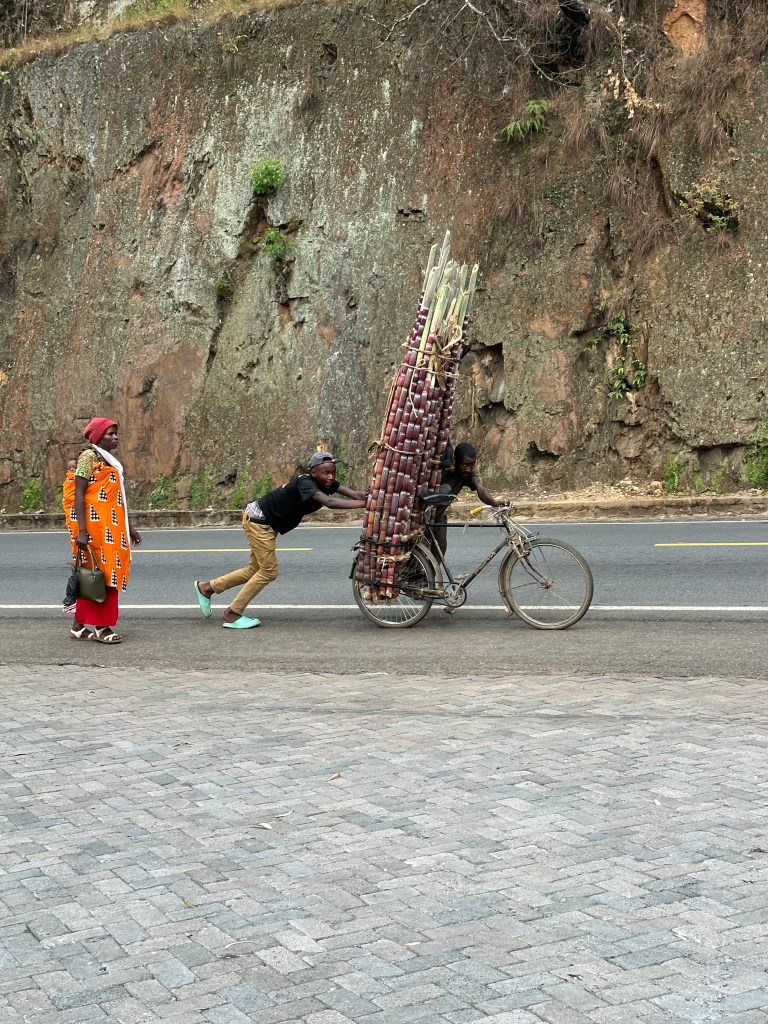
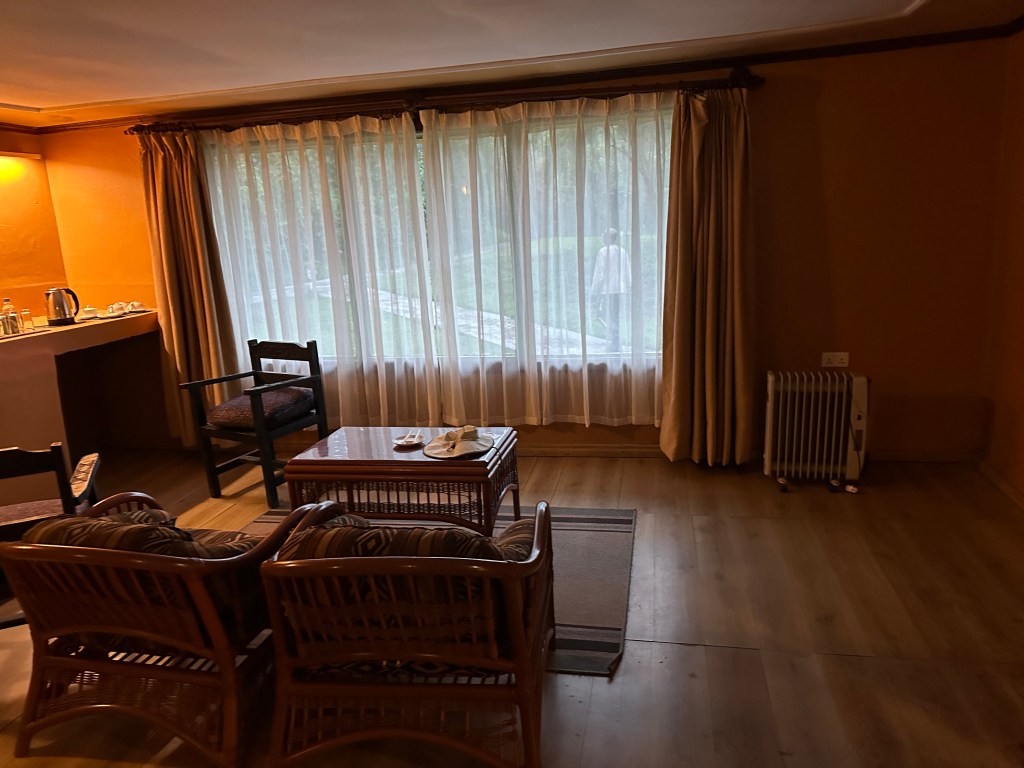
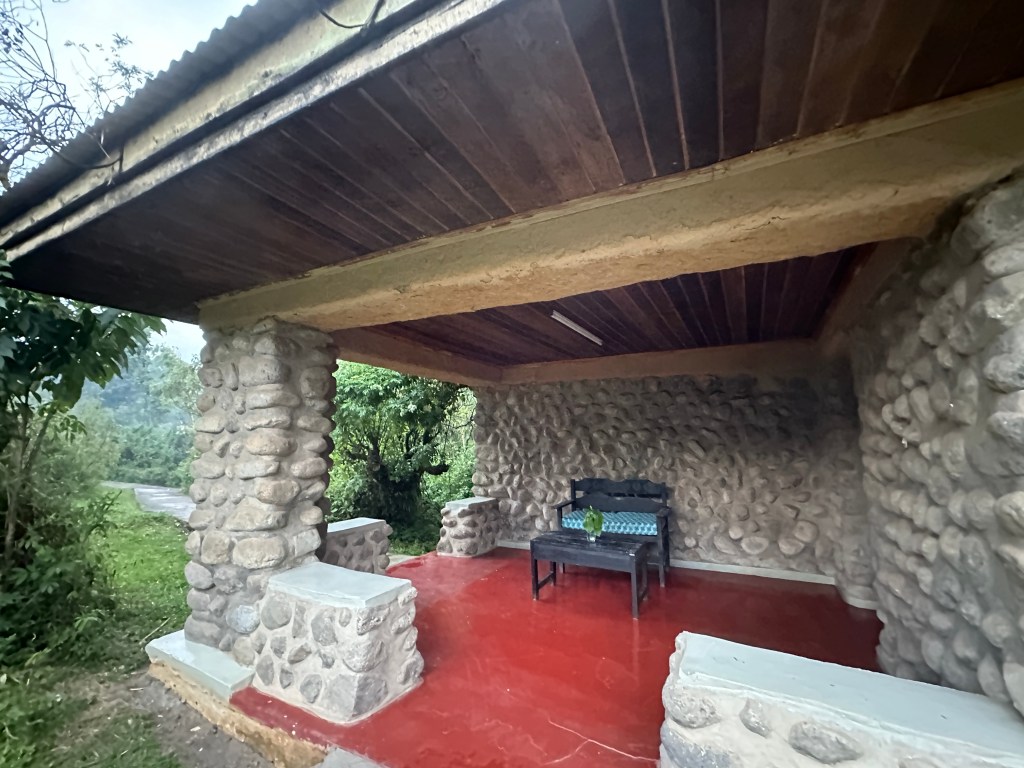
This morning we visited the National Genocide museum for more background on the country’s history and events. In the afternoon, we drove to the mountains to Volcano National Park. The drive was interesting as we passed villages, small businesses, and soooo many bicycles — they are used to transport absolutely everything!!! Our lodge was in a lovely setting with beautiful private cabins which had fireplaces and nice porches. We were greeted by a group of singers and dancers before we dined at the main lodge.



Wednesday, Sept. 18
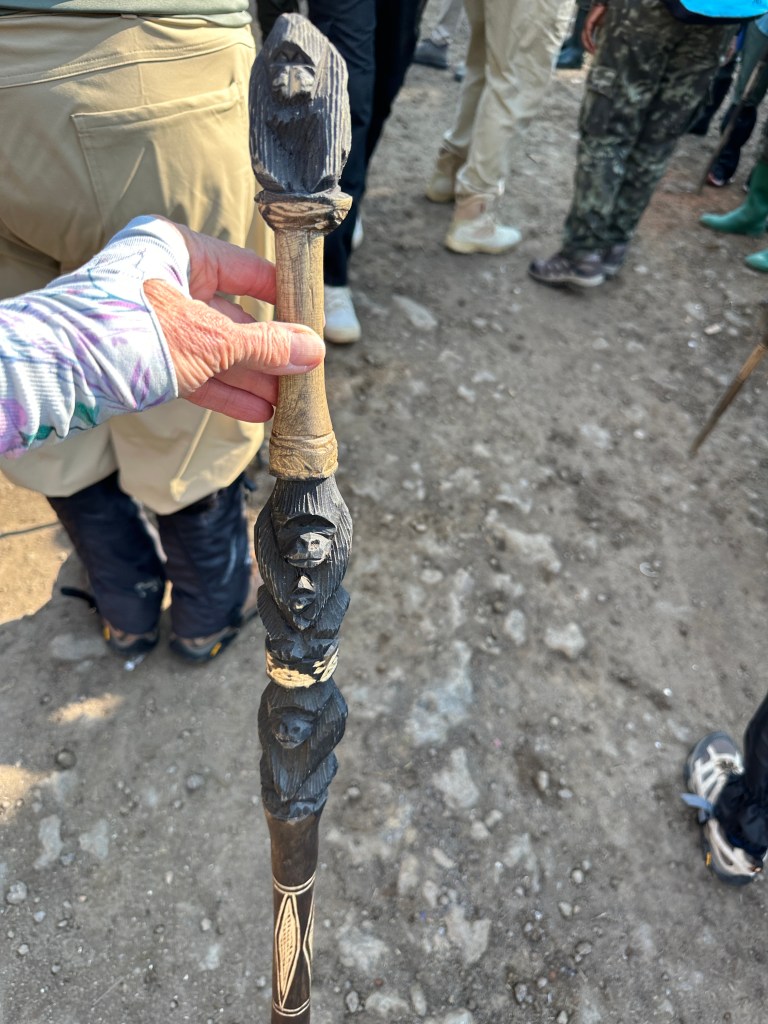
We awoke early, had breakfast at 6:00 and departed for the Gorilla trekking at 6:30. After checking in at the main center and getting assigned to different groups of 8 total particants, each group headed to their starting point. Trackers had gone ahead and located the different gorilla families that the groups would be paired with. At the starting point, we were given carved wooded walking sticks and introduced to our individual porters, who were fabulous. The porters carried our backpacks and heavy cameras, and would lead us by hand over steep and rocky terrain, and over the rock fence that separated the domestic farms from the National Park. Our hike took about a hour to reach the Park border fence, then another hour in steep terrain with dense vegetation to reach our gorilla family. Once near the family, we grunted a friendly greeting so we would be accepted by the family. We left our sticks and packs with the porters and proceeded to the family area with our guide and tracker, who made sure we showed the proper respect and distance from the family members. The family we visited, the Muhoza family, had several very young and playful infants (youngest 3 months), other youngsters, an impressive silverback male, and a total of 9 females. The mothers and infants were moving through the vegetation, and we followed at a distance. We found ourselves surrounded by the family members. At one point, with a mother an infant in the bush, a baby swung down to the ground on a vine, rolled around, and the silverback male ambled through the clearing, intending to chew on some additional vegetation. He was just inches from some of us, so we backed up to give him space. It was just amazing!!

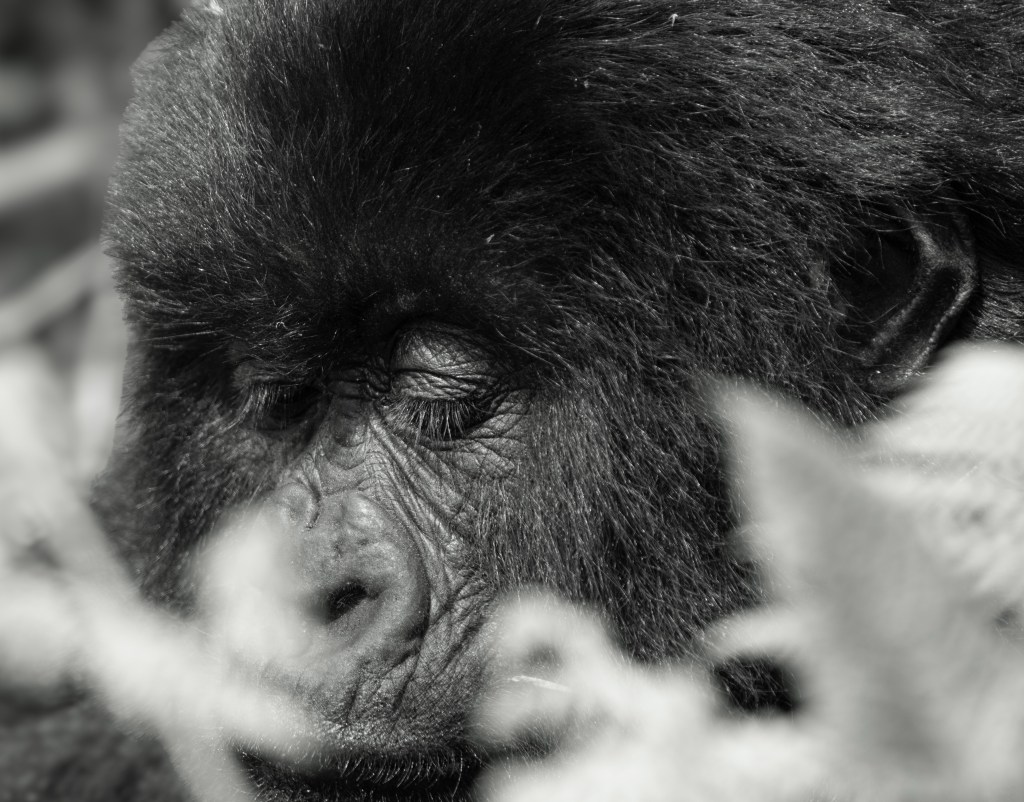
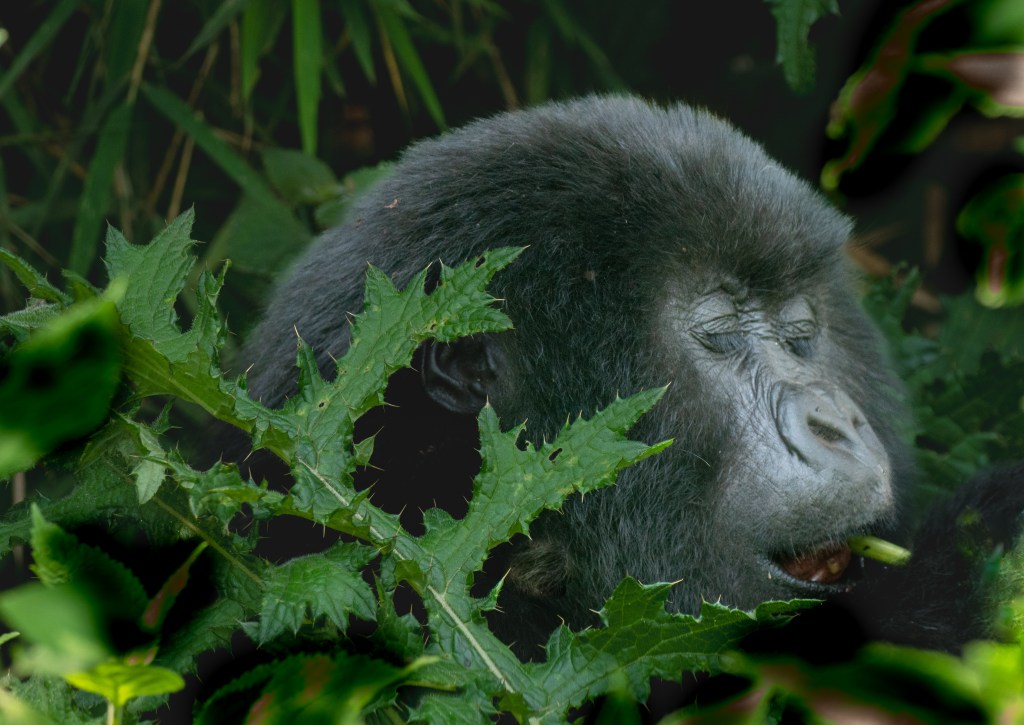
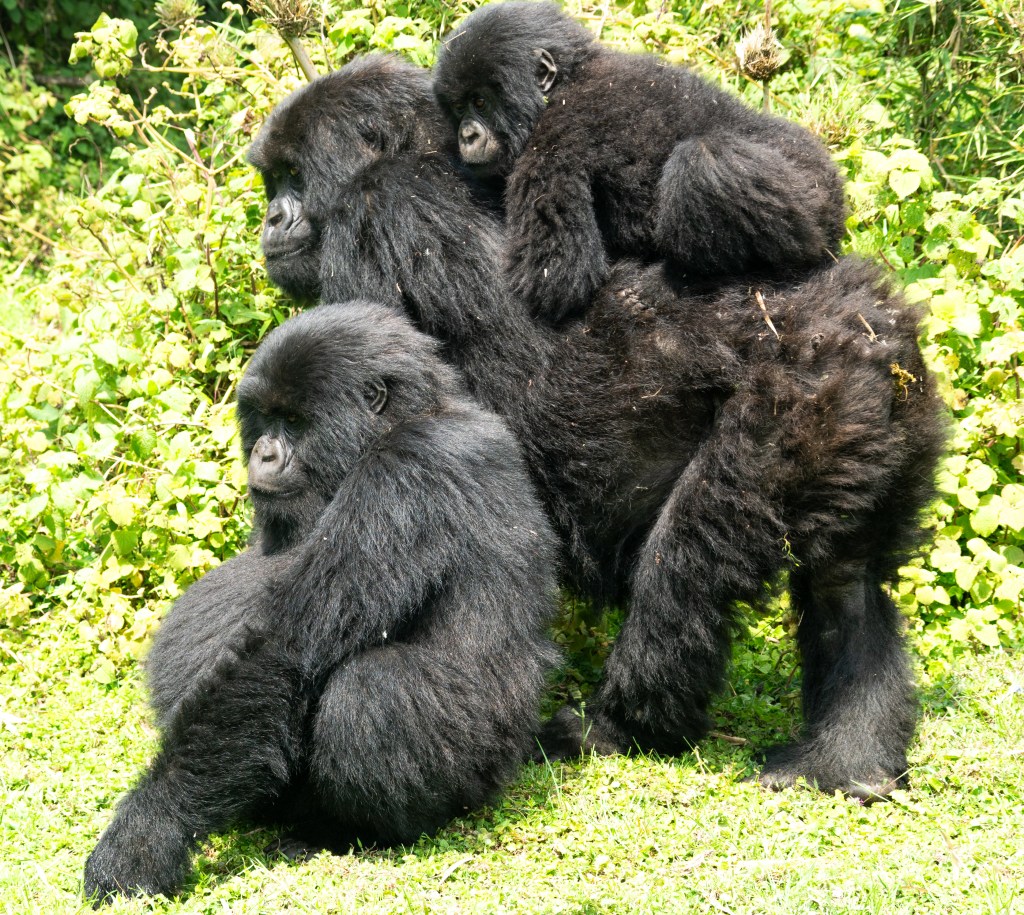
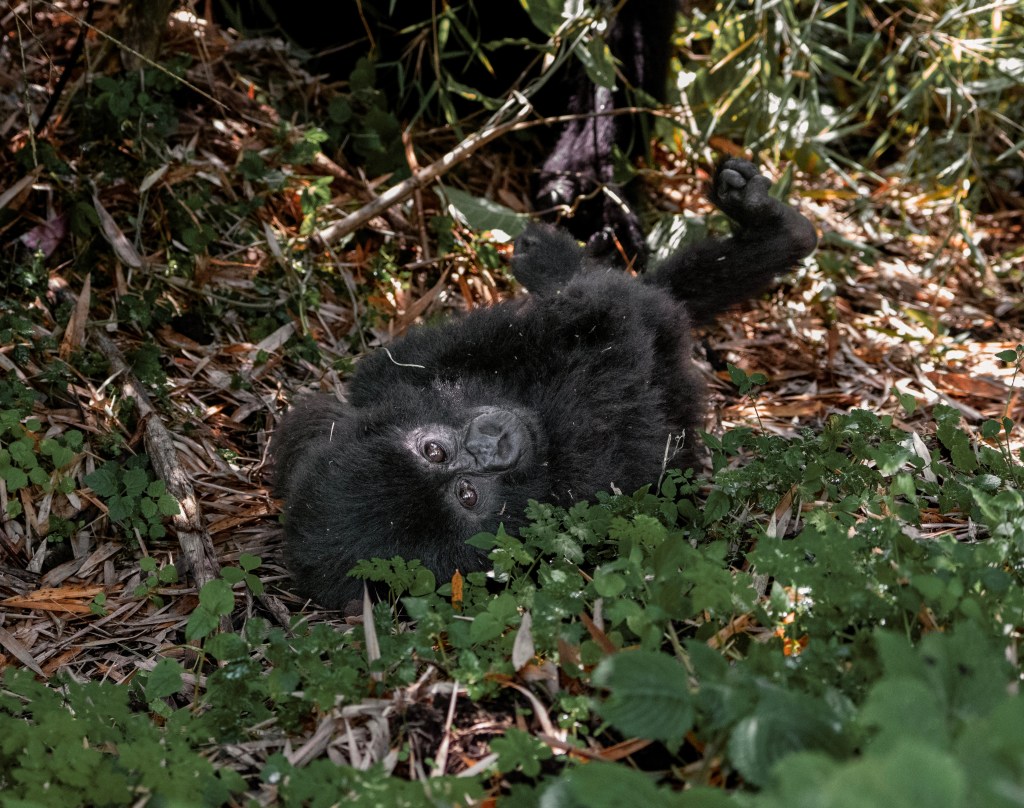
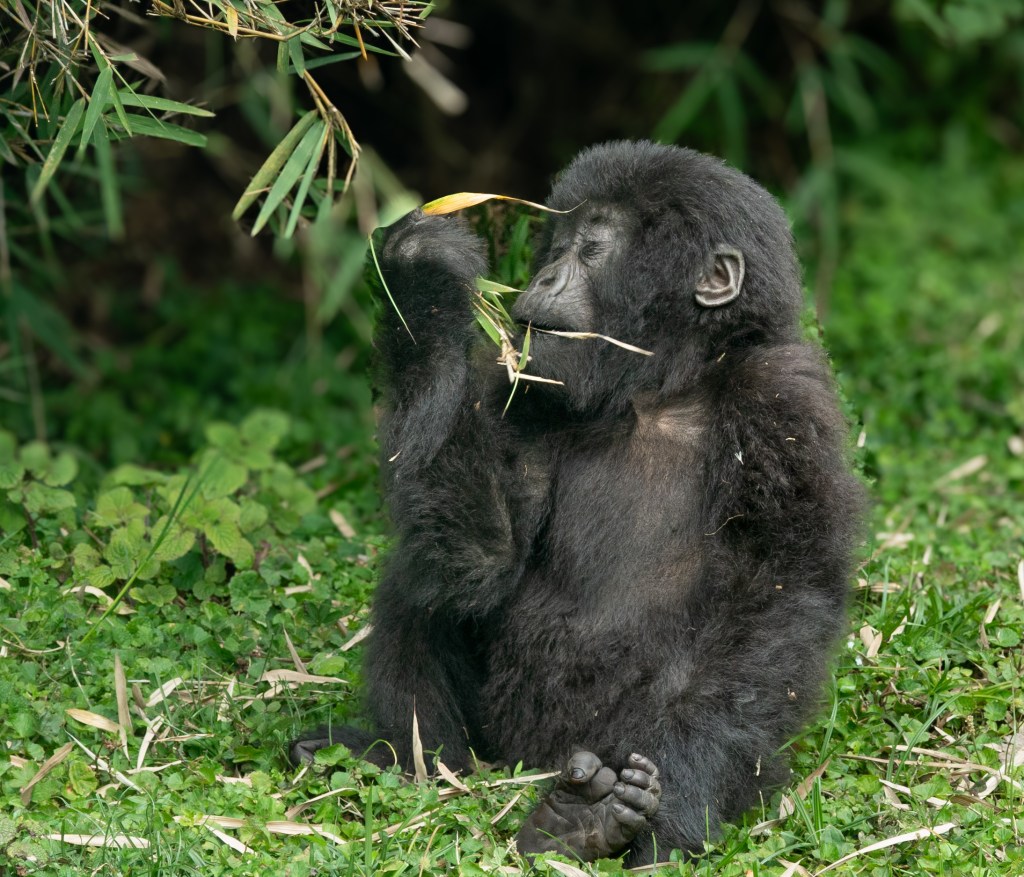


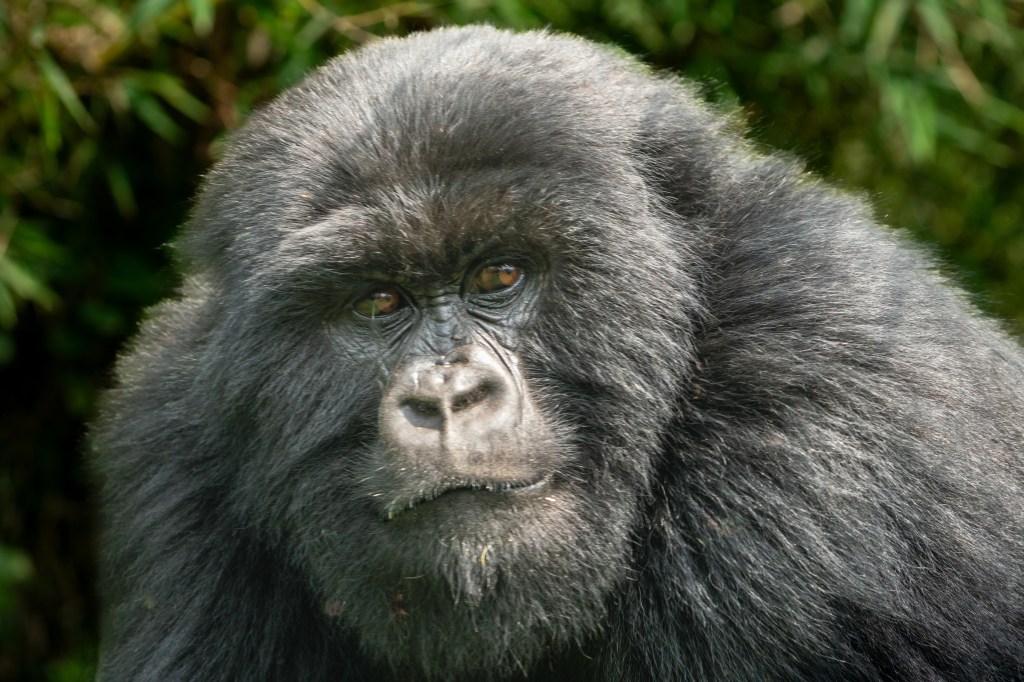


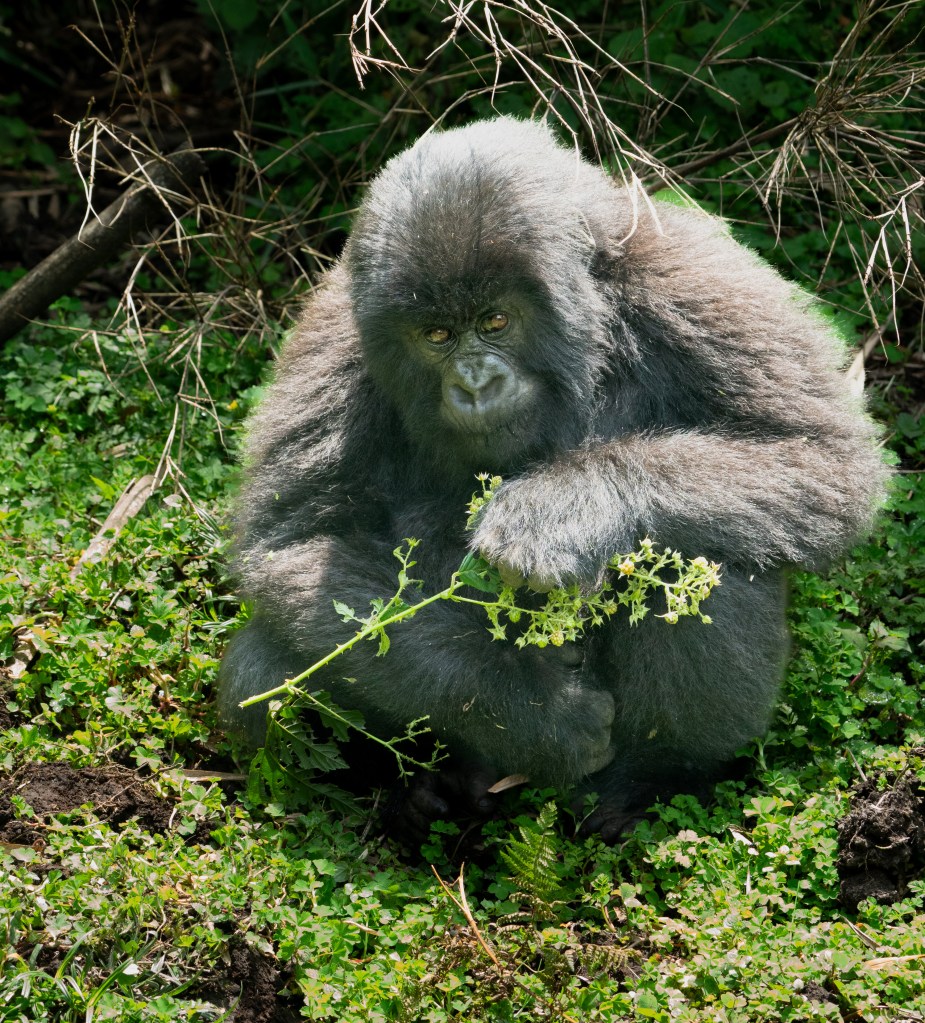

Each year there is a naming ceremony, called Kwita Izina, for the gorilla babies who have been born in the previous 12 months. It is held in Kinigi, Musanze, at the foothills of Rwanda’s Volcanoes National Park. Famous conservationists, athletes, members of Royal families, guides, and trackers have named the babies, each with a Rwandan name that has peace and conservation meaning.

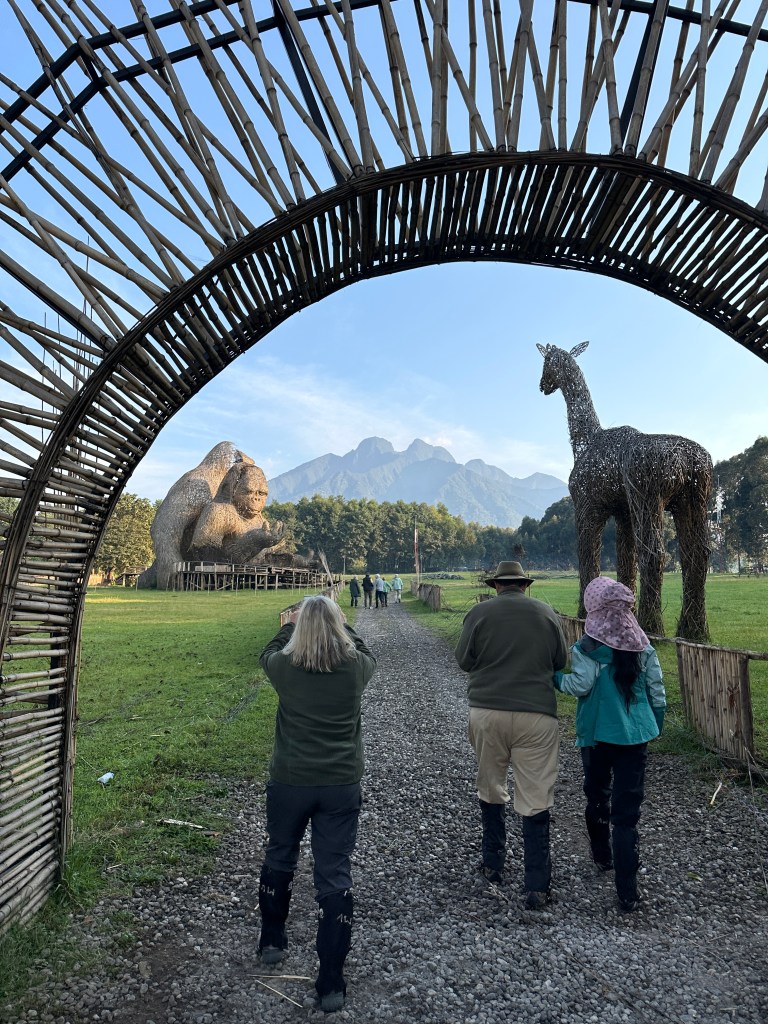
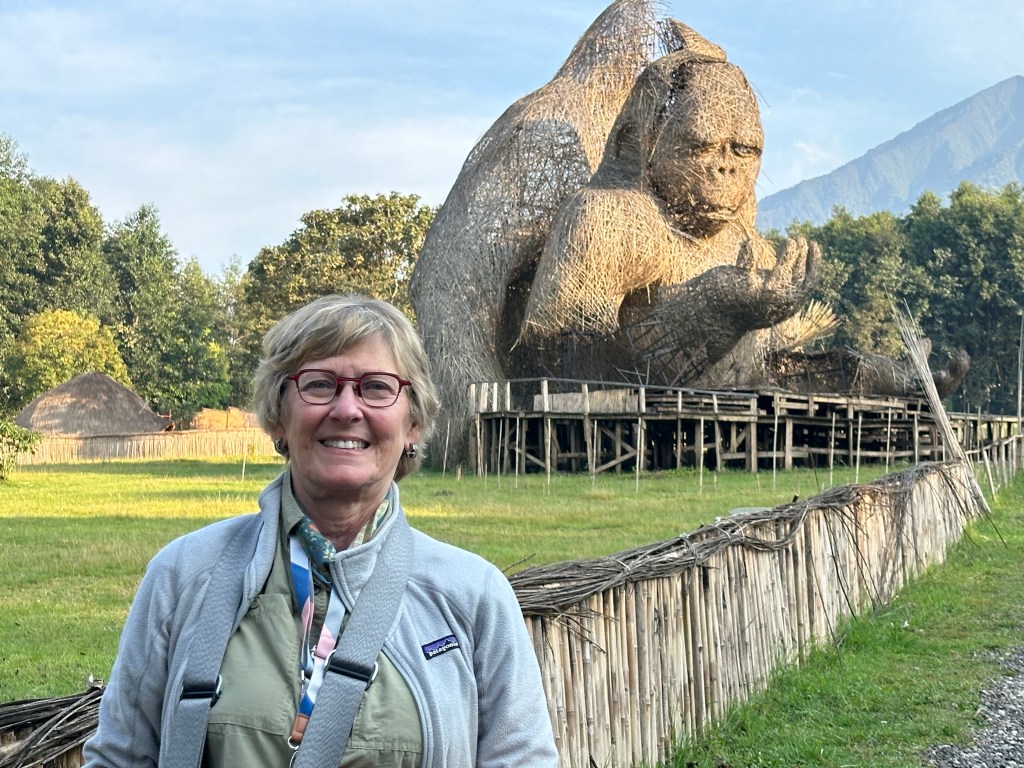
In the afternoon, we visited the Ellen Degeneres Campus of the Dian Fossey Gorilla Fund. The campus was a 60th birthday gift to Ellen from her wife Portia di Rossi. They continue to raise funds to help save the population of mountain gorillas, to continue the work that Dian Fossey started 50 years prior to this gift. The center has wonderful educational exhibits and is well worth the visit. They had to kick us out at closing time.
Thursday, September 19
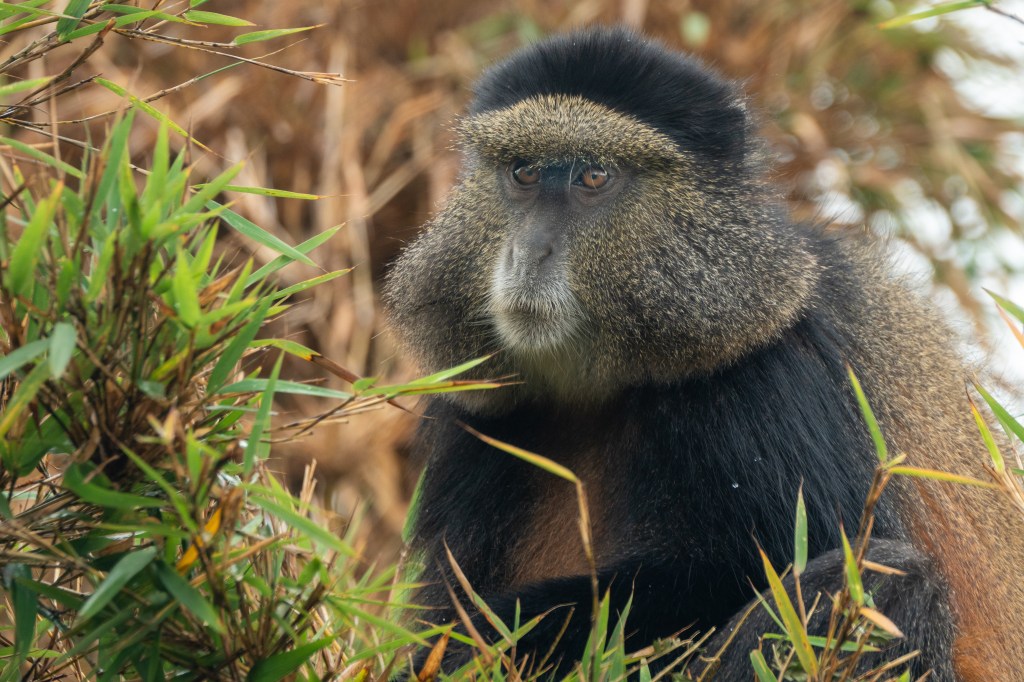
The day after visiting the mountain gorillas, we had a shorter trek up the mountain to see the golden monkeys, who only live in this part of the world. The process was similar, with trackers going ahead to find out where the groups were, a hike to the site, and an hour-long visit, wearing masks, keeping quiet, and observing these beautiful primates. It was another amazing and intimate experience! These monkeys are so expressive!
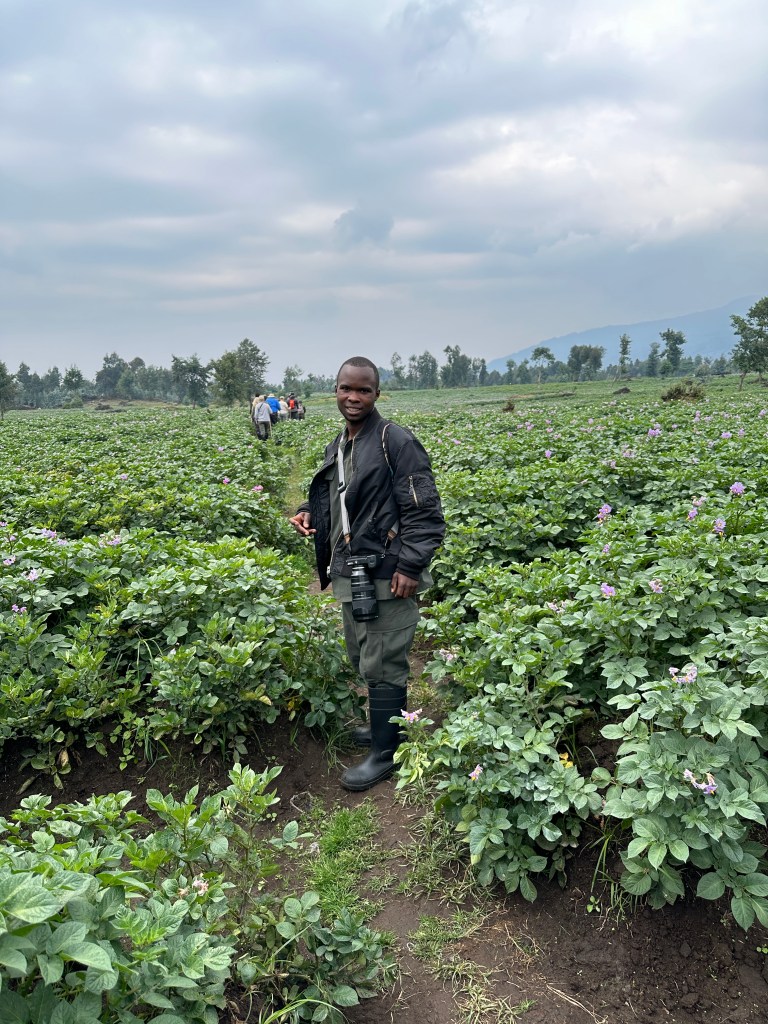



After our visit with the monkeys and lunch, we drove back to Kigali (a couple of hours) and were dropped off at the airport to have dinner on our own and to catch our flight to Nairobi.
Friday, September 20
(Eka Hotel, Nairobi)
We met our remaining two travellers for the beginning of our main trip during a morning briefing with our trip leader, Amani.
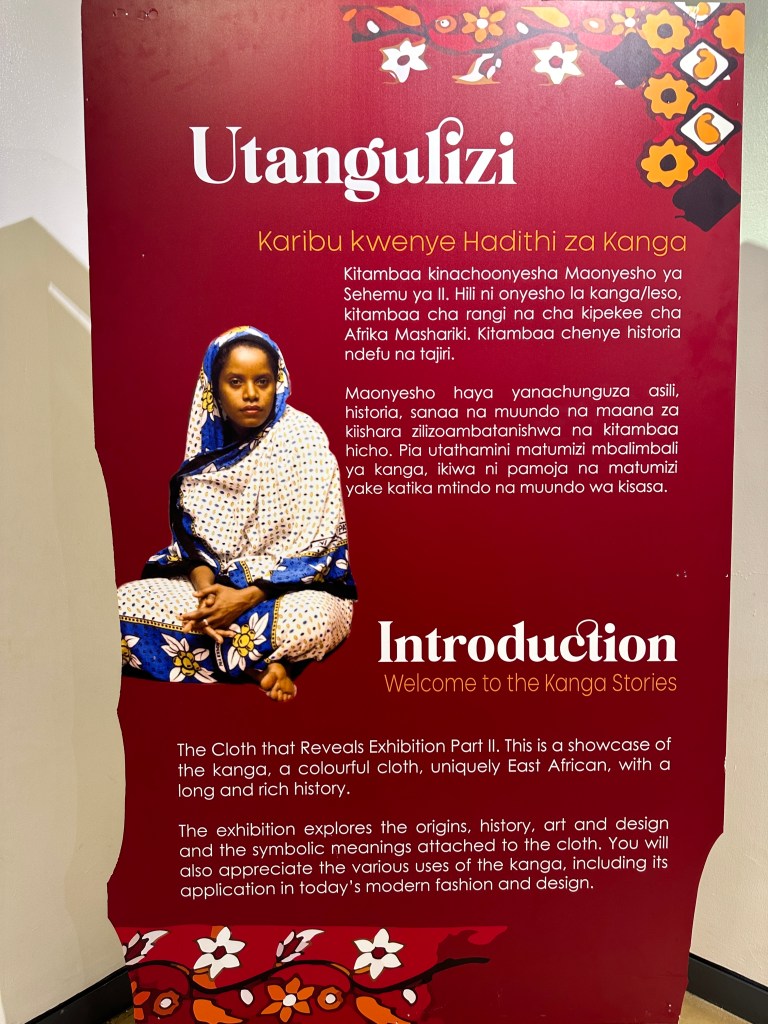
Our first stop for the day was the Nairobi National Museum which includes extensive exhibits about Kenya’s history, archaeological finds (of Richard and Mary Leakey), a comprehensive exhibit of birds of Kenya, and a special exhibit on textiles of Kenya, featuring the Kanga, a fabric originating in East Africa with saturated colors, bold designs, and often a text saying near the border. This was most fascinating to me. In addition to the exhibits, there were scores of school children in and around the museum in their school uniforms. While I explored the bird exhibit apart from the rest of our group, I was greeted by so many young children with smiles, high fives and fist bumps, and with English greetings and conversations from older children. This was a very special time!!
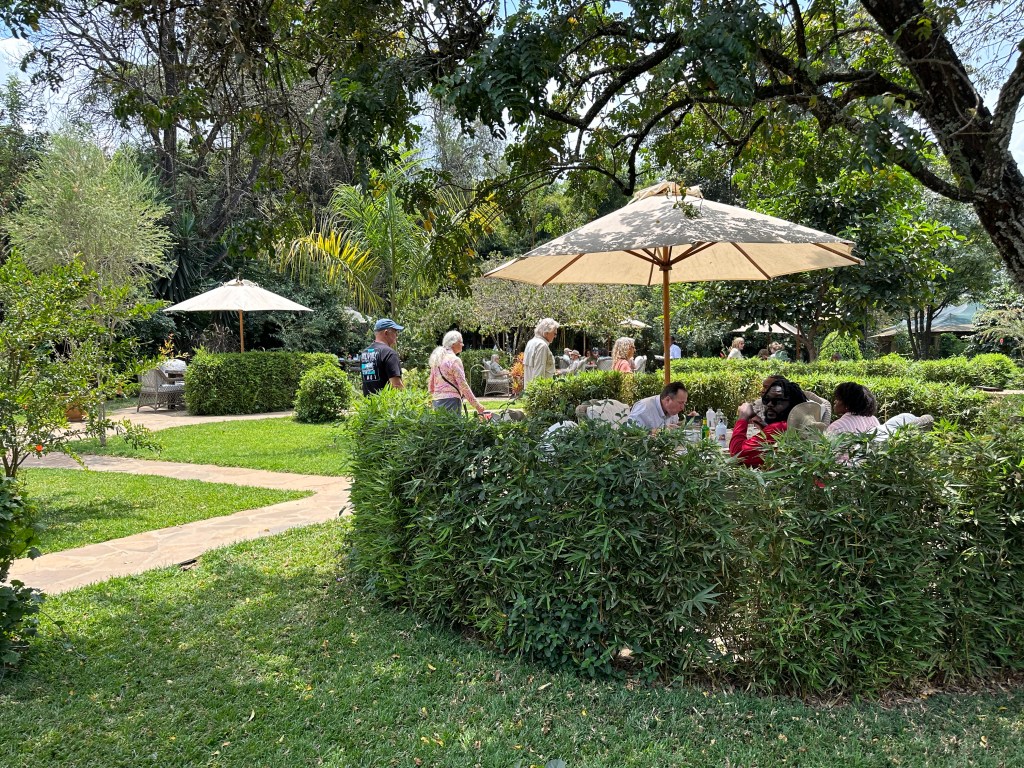
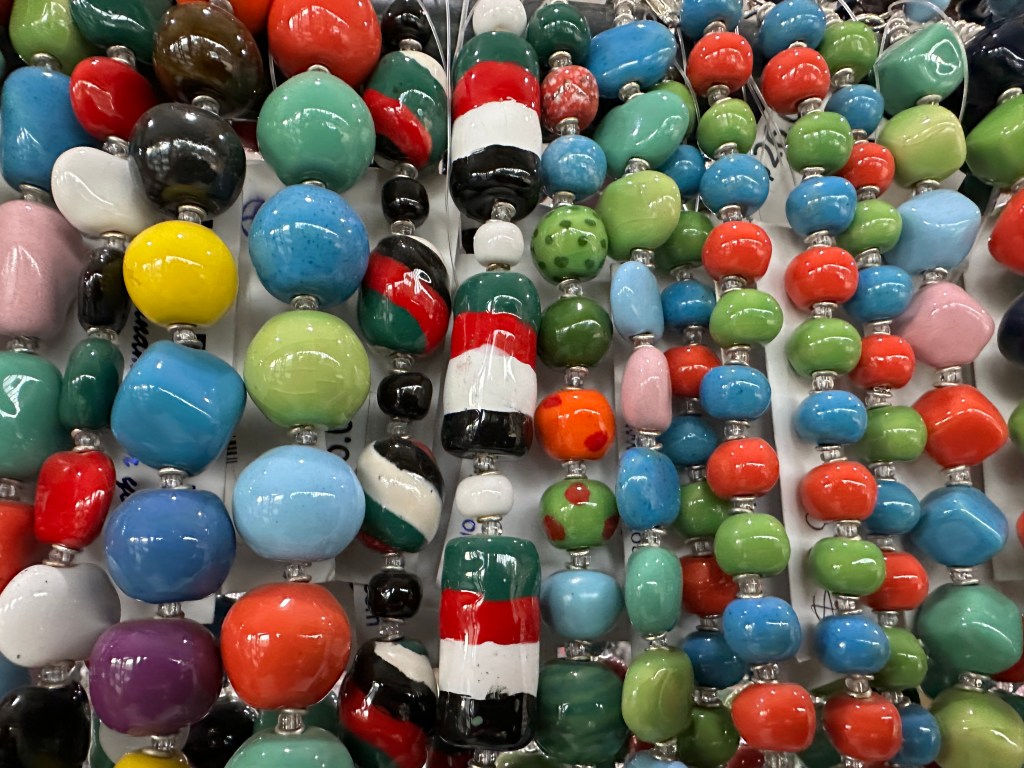
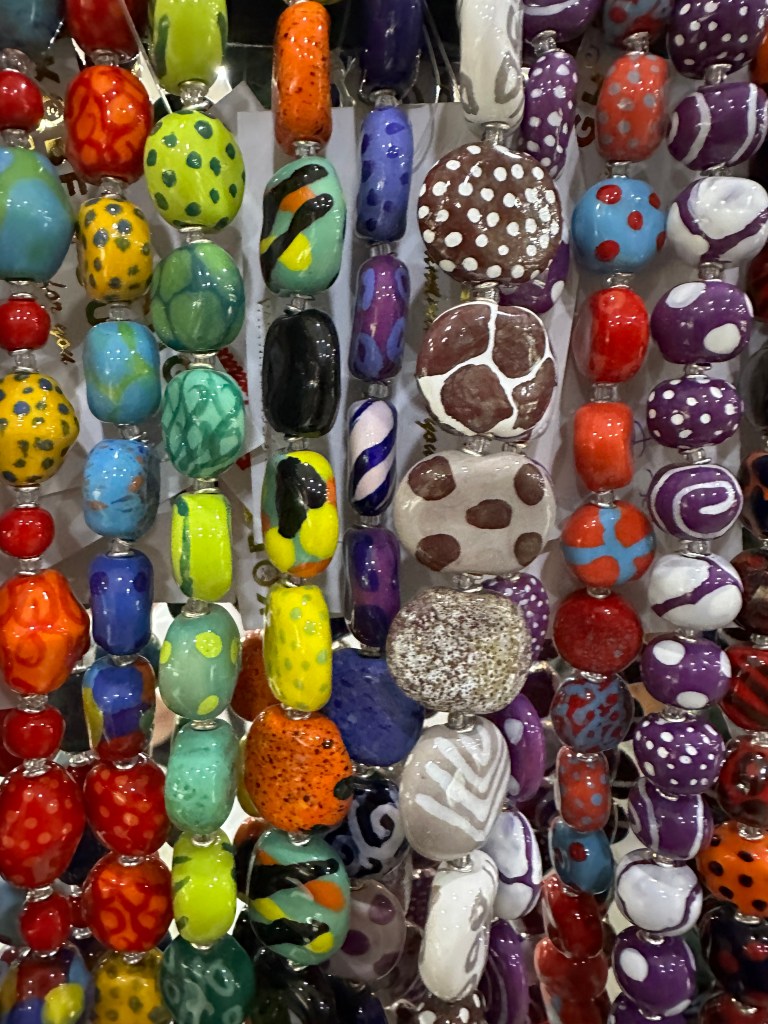
We had lunch at the Karen Blixen (author of Out of Africa) Coffee Garden. I learned Blixen, aka Isac Dinesen, also wrote Babette’s feast! In the afternoon, we visited Kobe Tough, an organization of Maasai women who craft ceramic beads and make jewely from beads and leather to make a living. They were previously forced into poverty when drought ended their livelihoods tending to cattle. They have a thriving business, conducting all the components of ceramic jewelry making. As travellers, we were delighted to support the local economy when we entered the gift shop!
There was a shopping mall close to the hotel. I needed some hair gel, so I walked over in search of a pharmacy or grocery store. Security staff were so friendly and helpful. I discovered I had purchased the wrong product and returned to the mall to see if I could get a refund and/or exchange. The transaction was successful, and the extended conversations with the local folks very friendly. These are the types of casual interactions that make a trip memorable.






Saturday, September 21
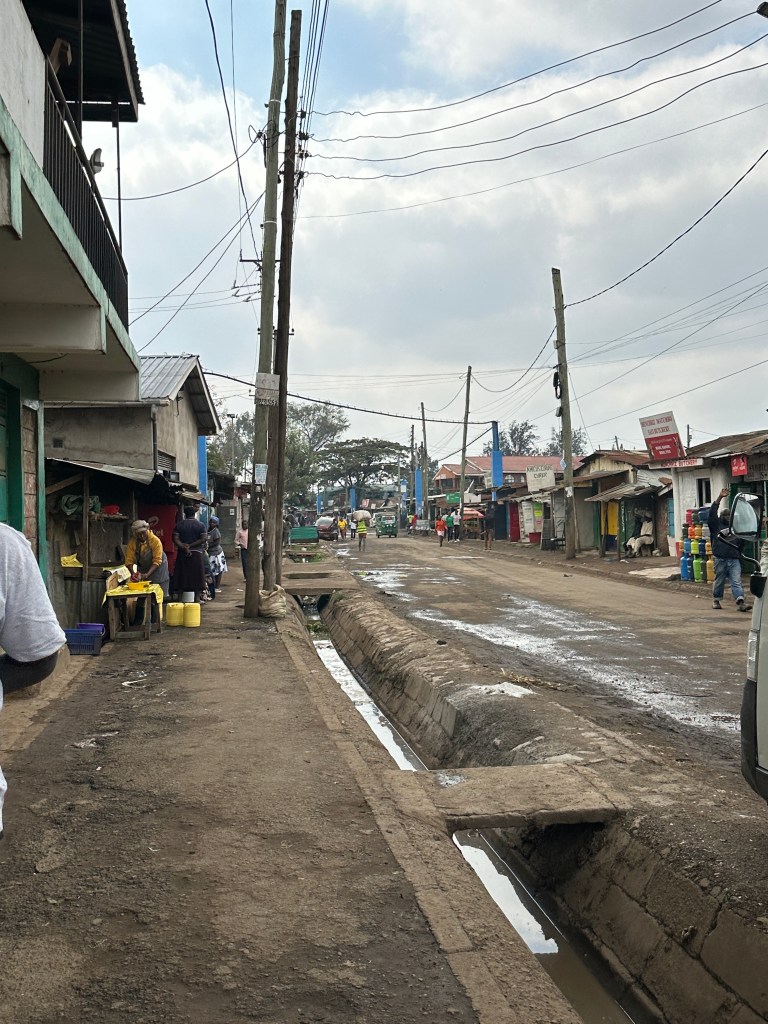
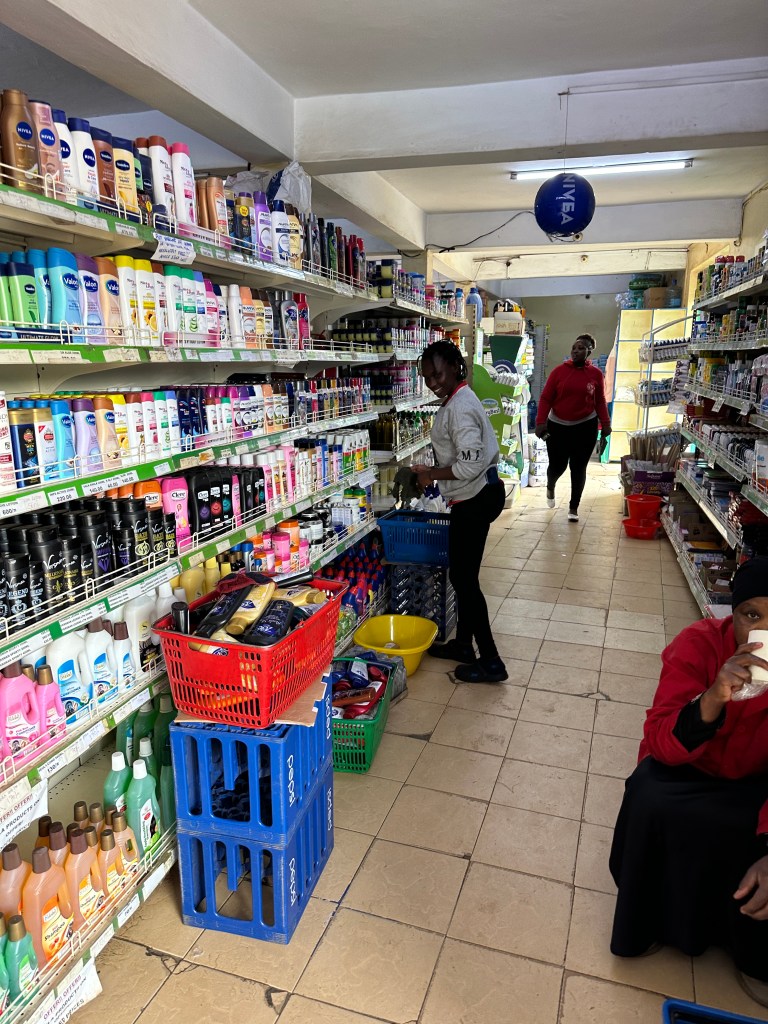
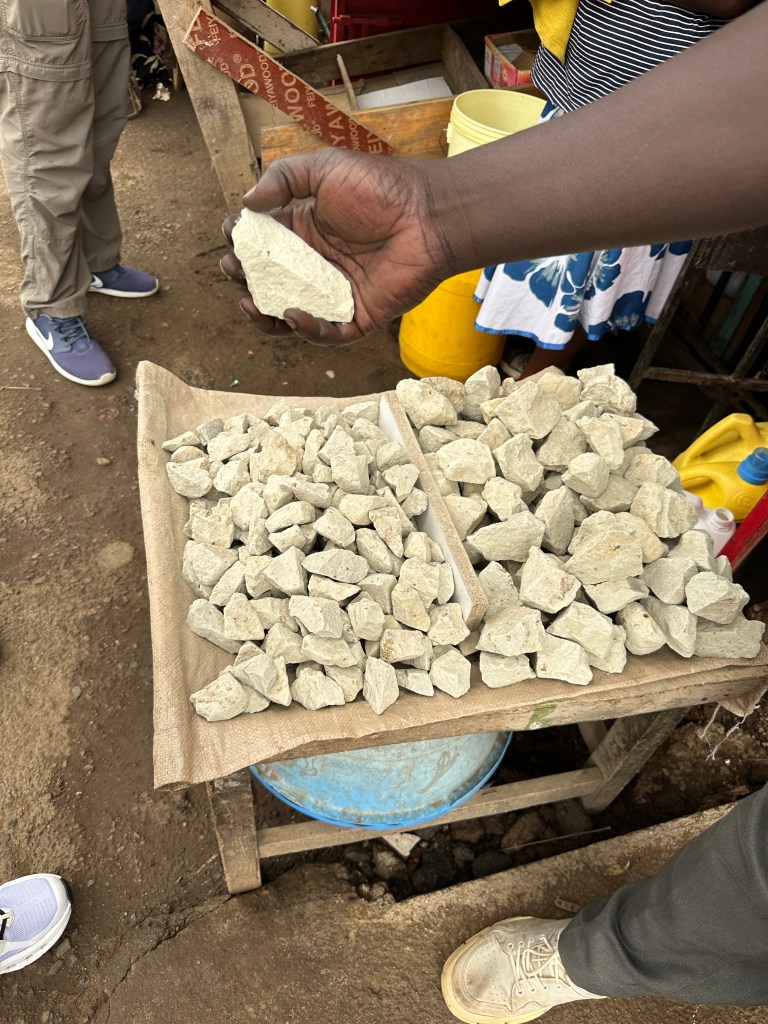
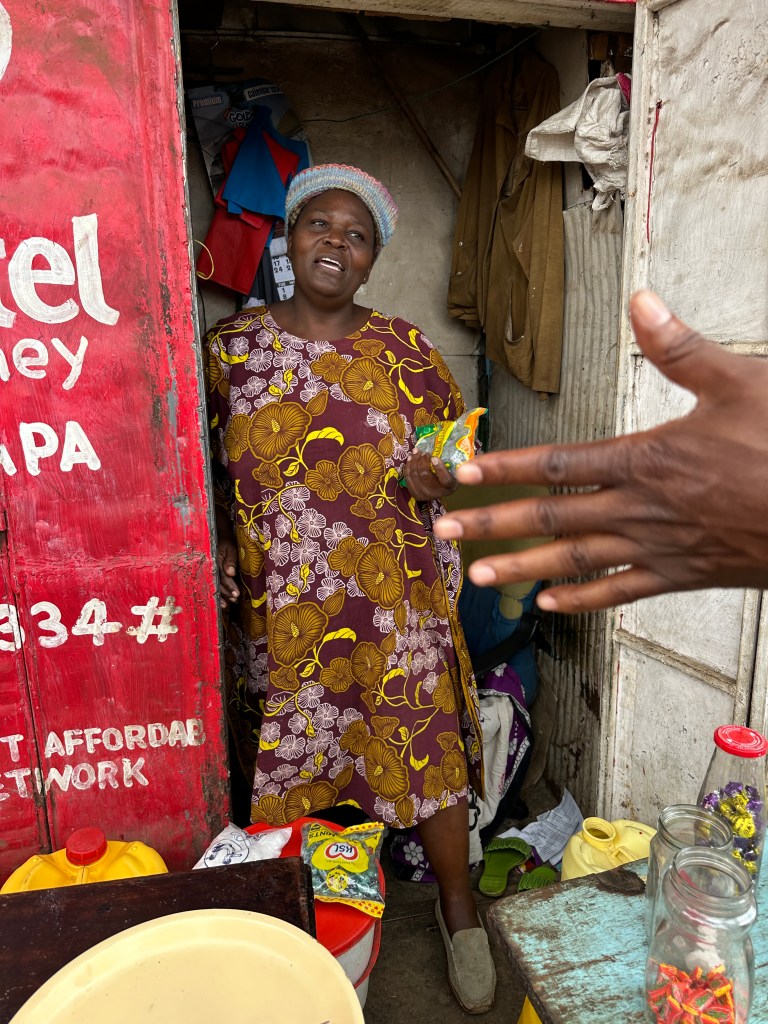
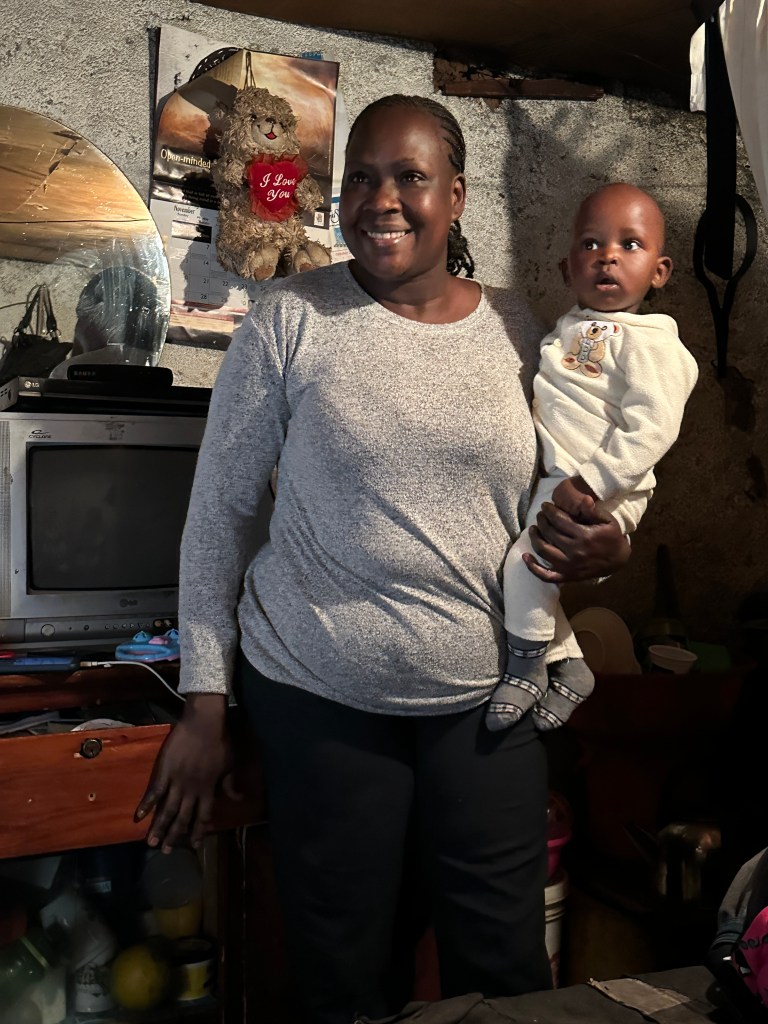
On our second day in Nairobi, we had an amazing experience in the morning visiting Kibera (meaning forest), the largest “slum,” or low income housing, in Africa, with up to one million residents. The area is self-contained, with entrepreneurial vendors, schools, hospitals, a clean water supply (residents collect water in containers), electricity, and government sponsored flushing-toilet outhouses. The aerial water supply system has dramatically decreased the incidence of waterborne diseases/diarrhea that was rampant in this community. Homes do have electricity. A local guide took us around, meeting shopkeepers, riding on the back of motorscooters to see more of the area, and visiting his home for a discussion about the politics and self-policing of the forest. His home was quite large for the area, with four rooms. We also visited a married mother of three whose home was more modest, with an all purpose room for eating, sleeping, watching TV, etc. and a small kitchen. She and her baby were about to leave for work in a salon, where she braids hair. Her other children were in weekend enrichment school. Her husband is a day laborer. When she moved to Nairobi from a rural area to improve her life, she rented an appartment elsewhere in town, but soon found that she could cut her rent in half by moving to Kibera.



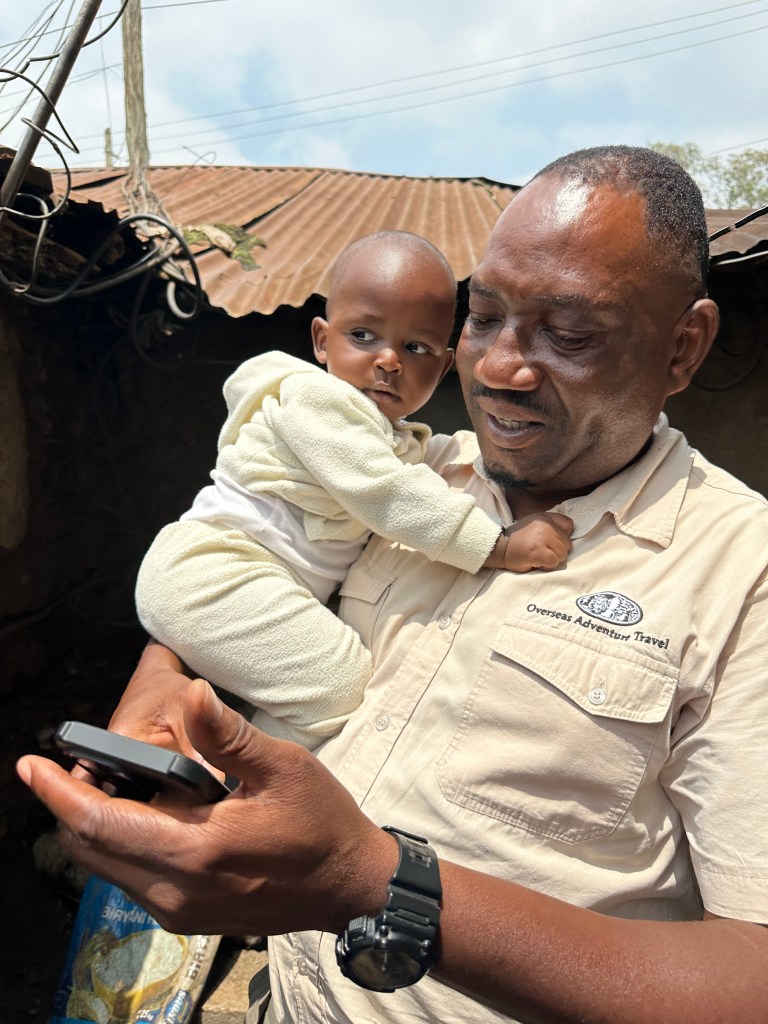
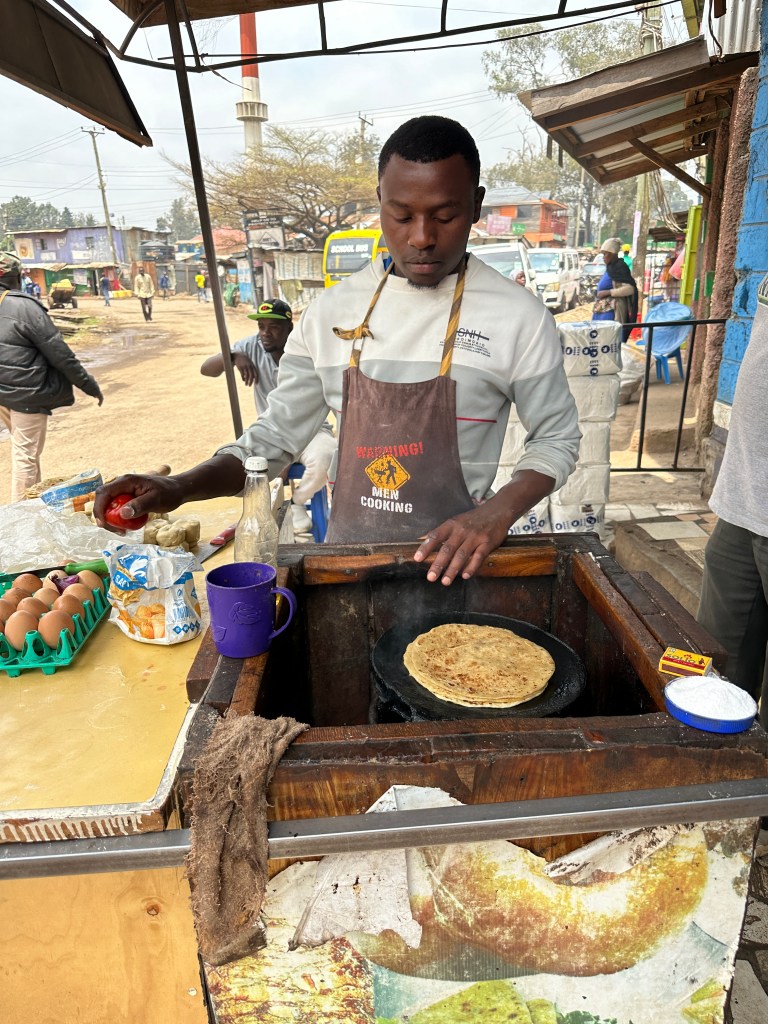
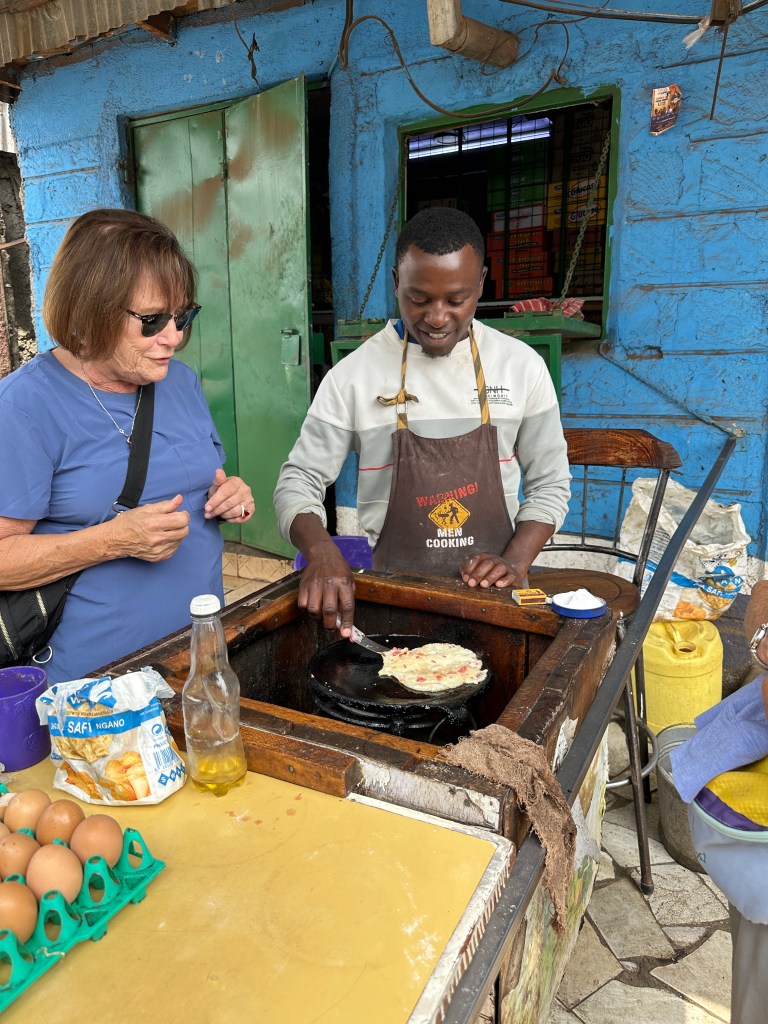
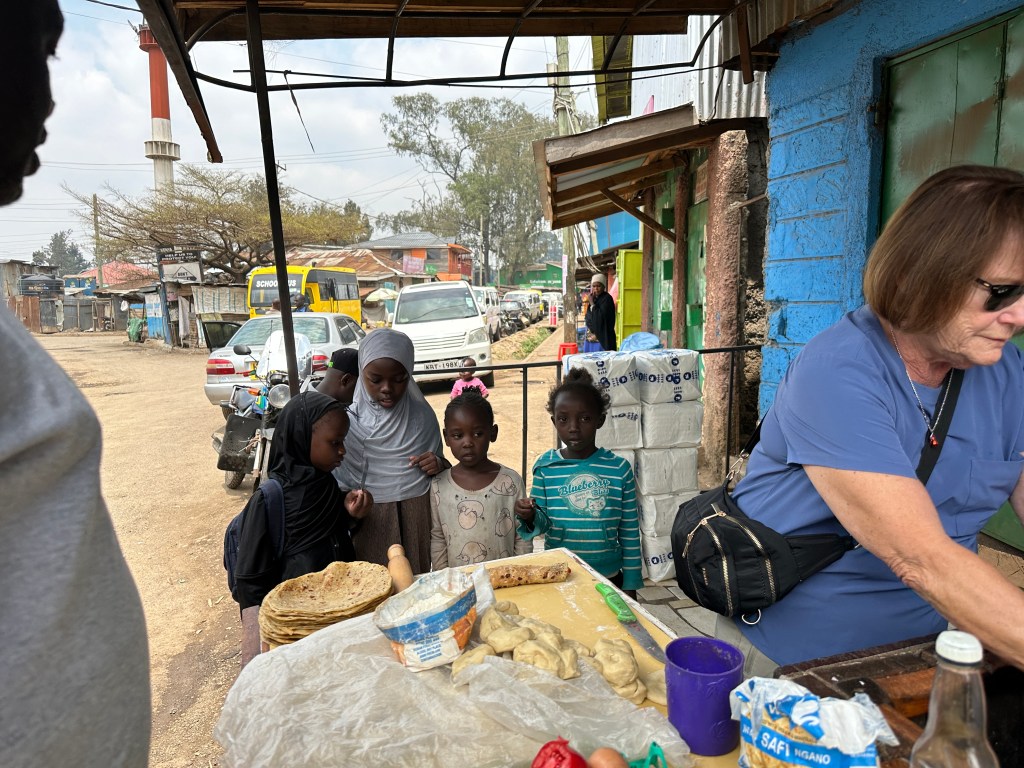
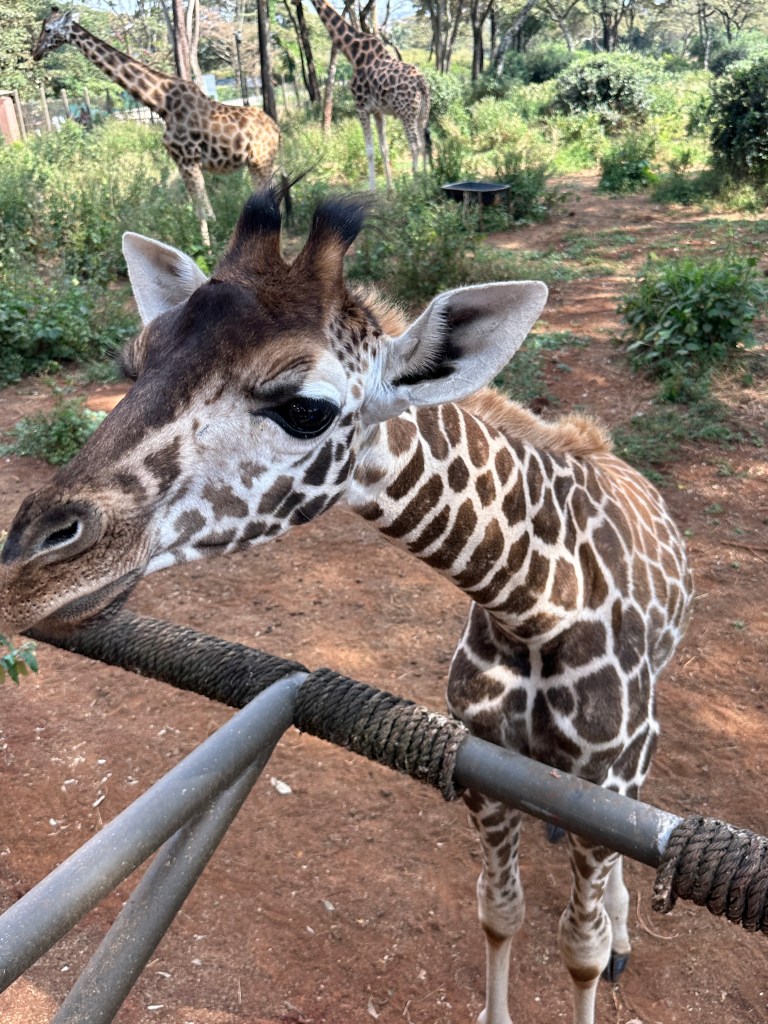
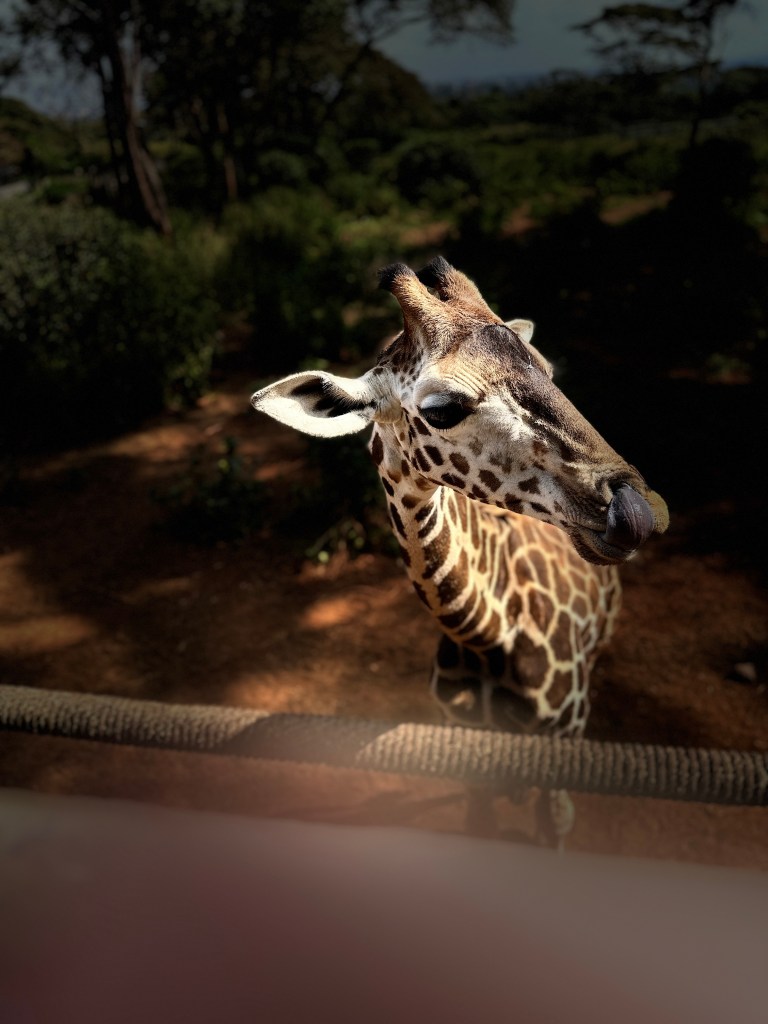
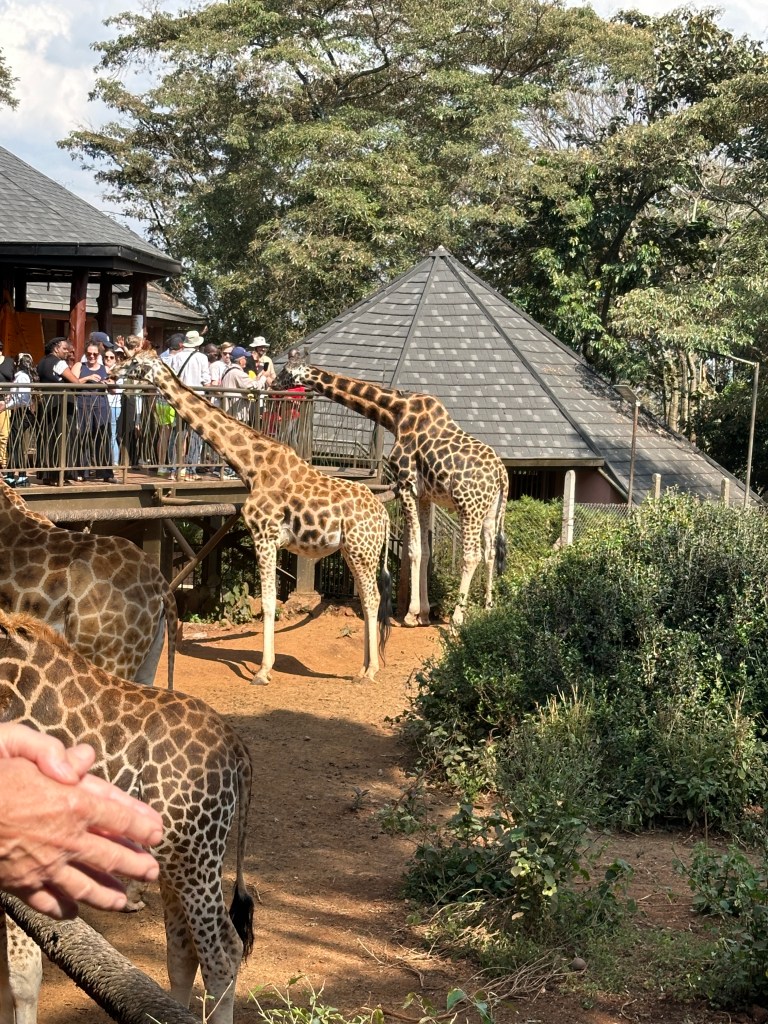
Later in the day, we visited the Giraffe Center, an organization run by the African Funds for Endangered Wildlife that breeds Rothschild Giraffes and sends them into the wild as they mature. They currently have 11 or 12 giraffes. People who stay at an on-site hotel have breakfast with some of the giraffes. Visitors get to feed the giraffes in the afternoon after an orientation lecture. We were warned that if we held our bowl of food without offering the giraffes a snack, we might receive a headbutt. Before the mature giraffes are released into the wild, they are moved to an area away from human contact for a long time.


Sunday, September 22 and Monday, September 23
(Nahdy Travel Mara Sentrim lodge)
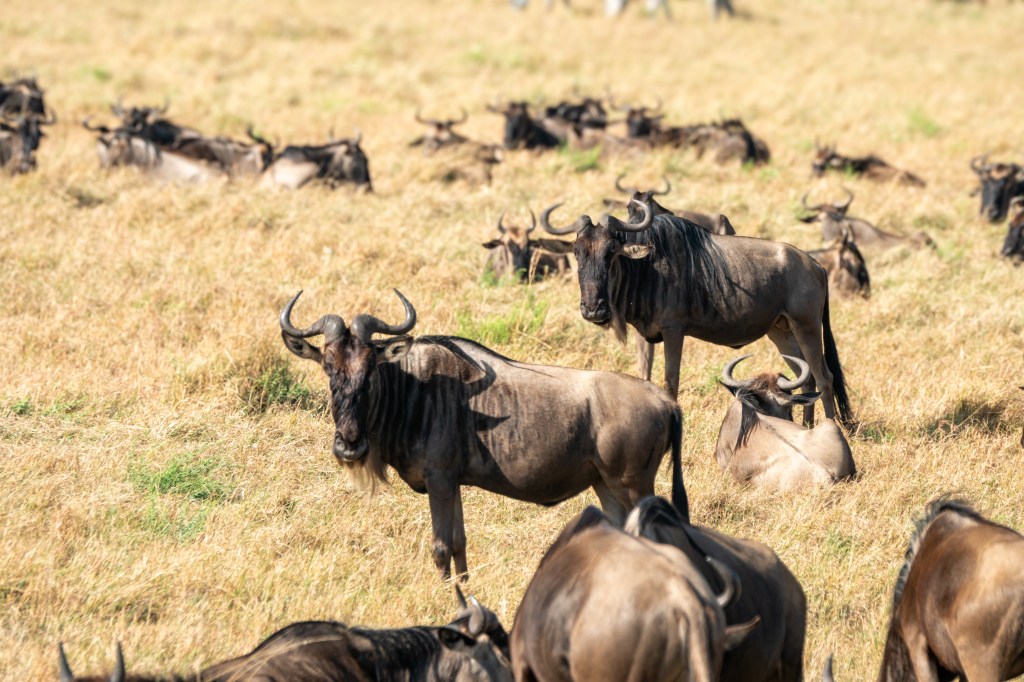
We caught a very early flight from Nairobi’s Wilson Airport to the Maasai Mara National Reserve, where we boarded our two safari vehicles. Unlike the open vehicles used in my two other safari experiences, these vehicles were closed Toyotas with three rows of passenger seats, all having windows, and a pop-up top, allowing travellers to stand on the floor or seats to get unobstructed views. Our first game-viewing drive was on the way to the lodge. We were totally spoiled by this first encounter in the Maasai Mara. The landscape was vast and spectacular. The wildlife along the way was filled with wildebeest and zebras (part of the great wildebeest migration), Thompson’s gazelles, Grant’s Gazelles, giraffes, warthogs with little wartlets, elephants, impala, ostriches, lions, and amazing birds.
Interestingly, wildebeest have been described as being created out of “spare parts,” when God had finished creating the other animals: face of a grasshopper, horns of a young buffalo, sloping back of a hyena, rump of a donkey, beard of a billy goat, and tail of a horse (there are other versions). It is part of the “ugly five” including wildebeest, warthog, vulture, marabou stork, and hyena. The “big five” are lion, leopard, cape buffalo, elephant, and rhinoceros.





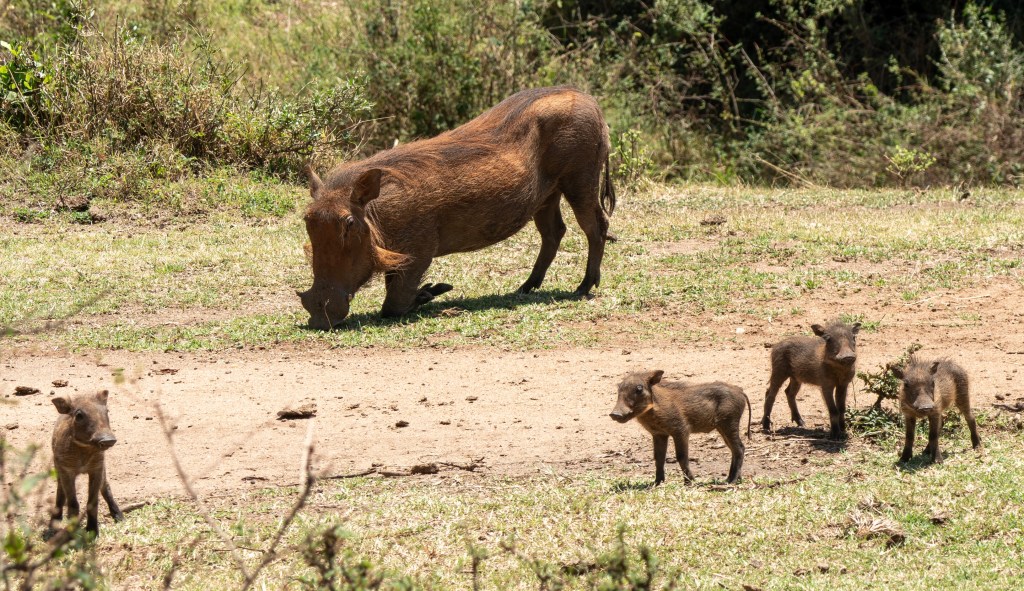

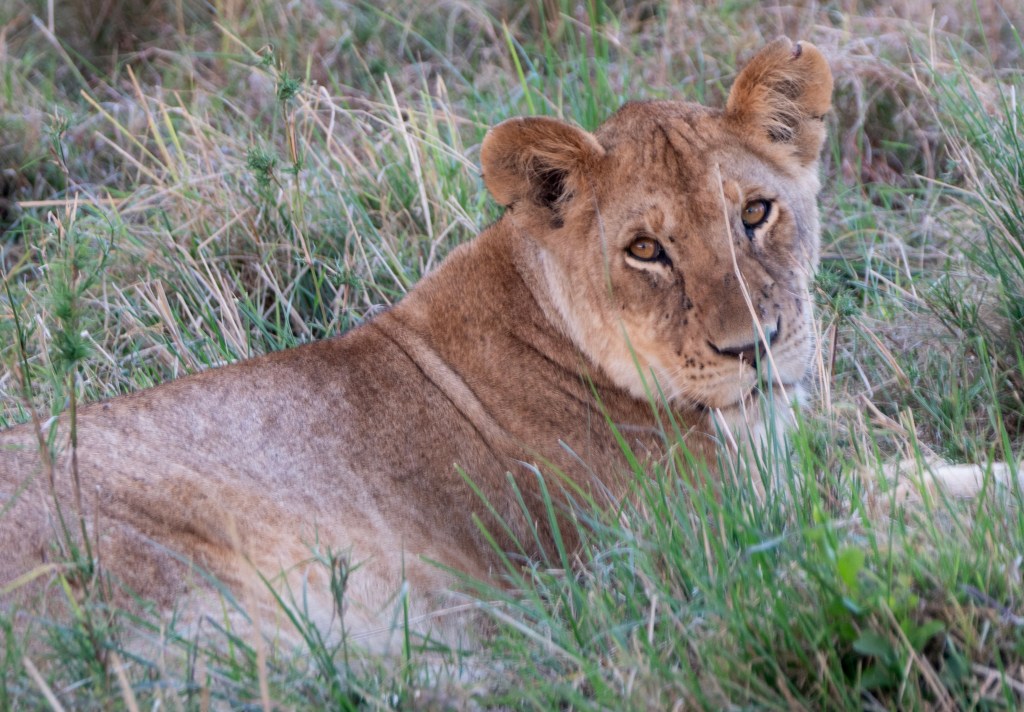
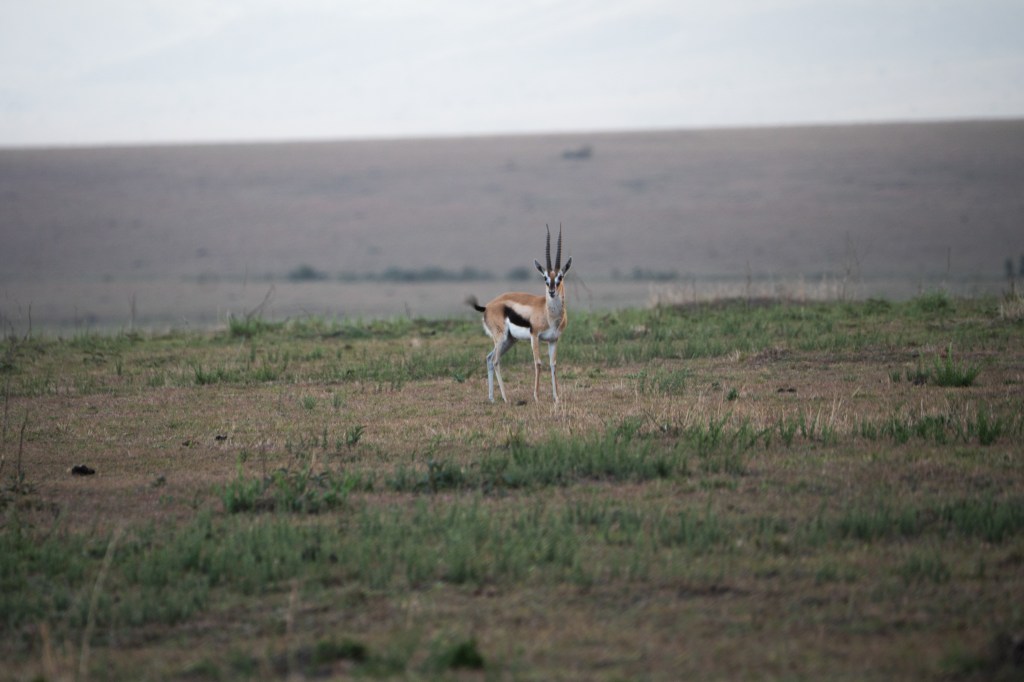
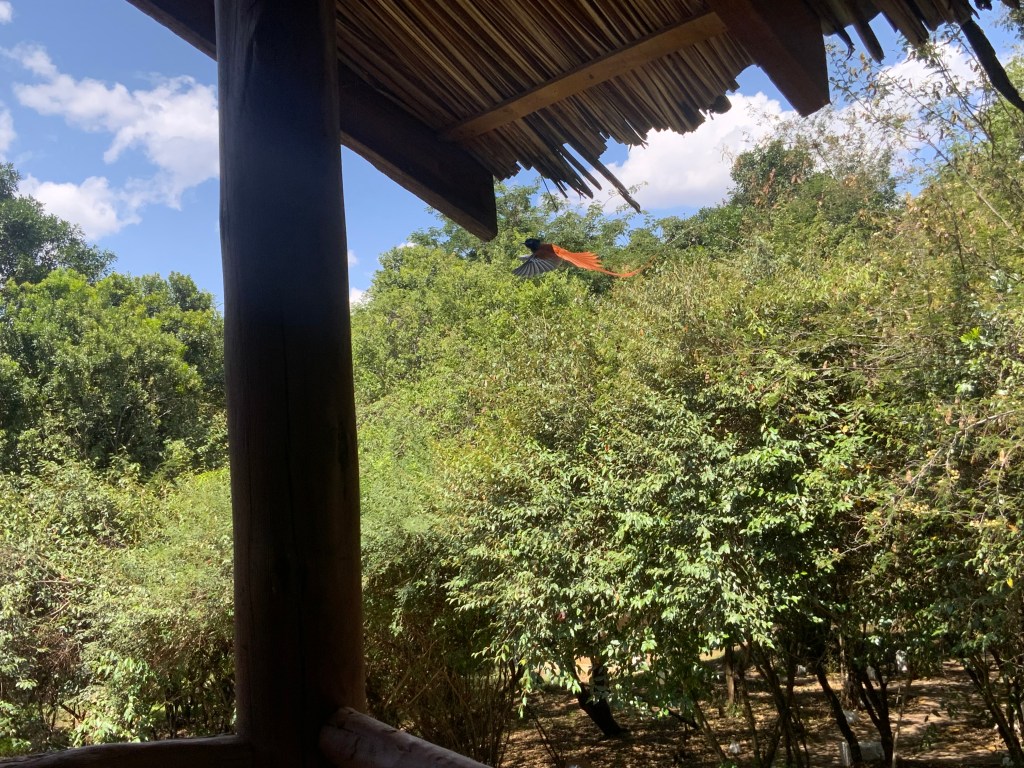
We ate lunch at the lodge, where we had permanent tented cabins with a porch overlooking great views, electricity, running water, flushing toilets, and very comfortable beds.
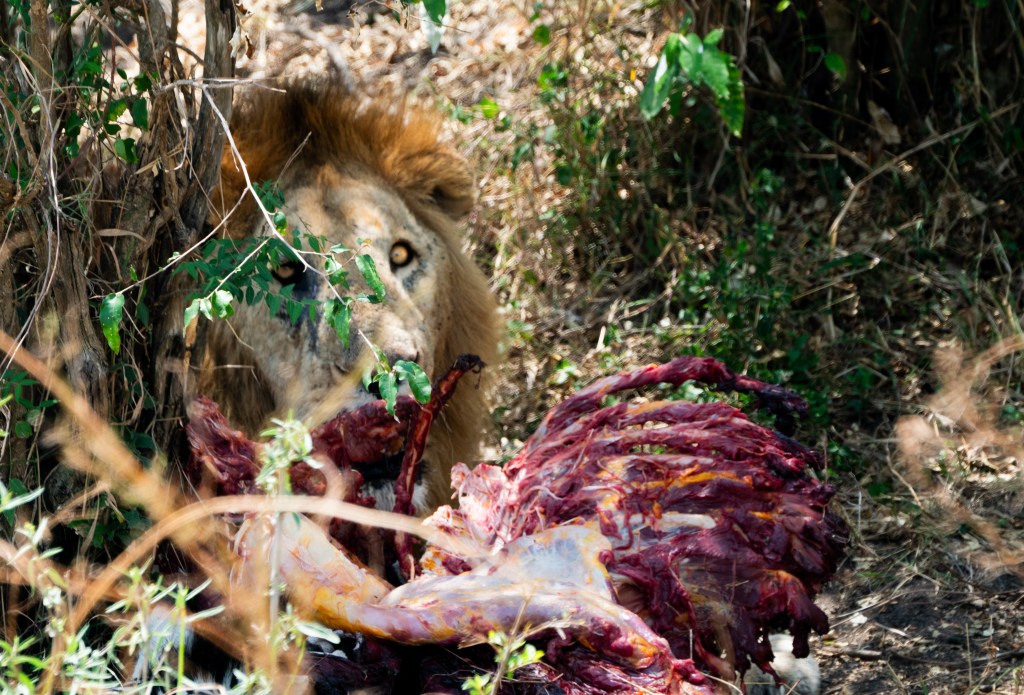
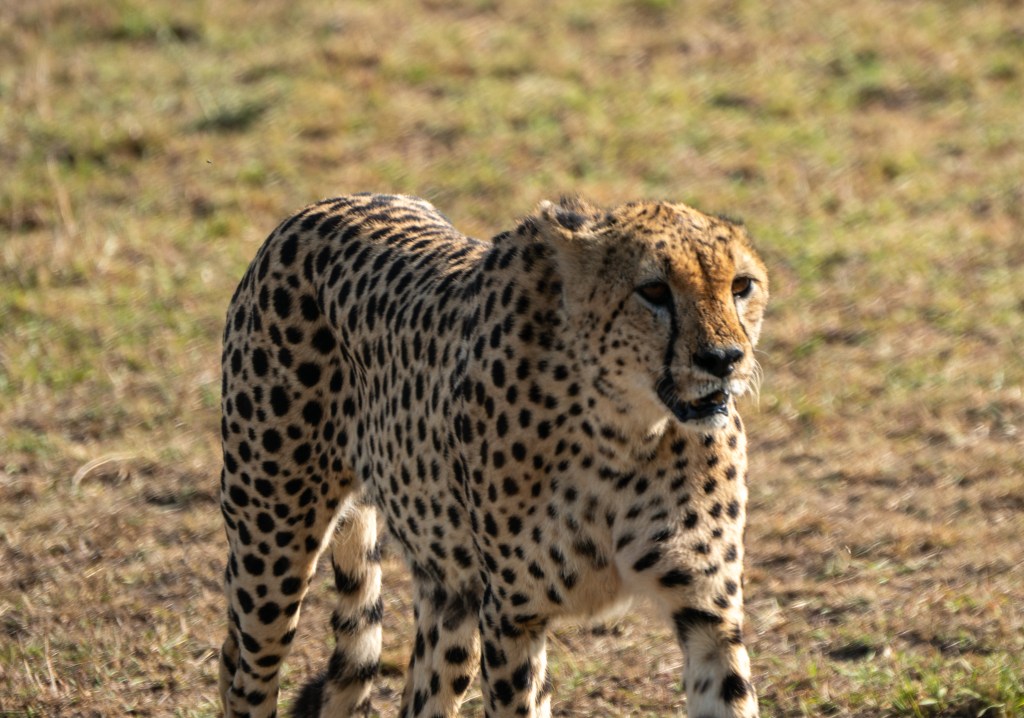
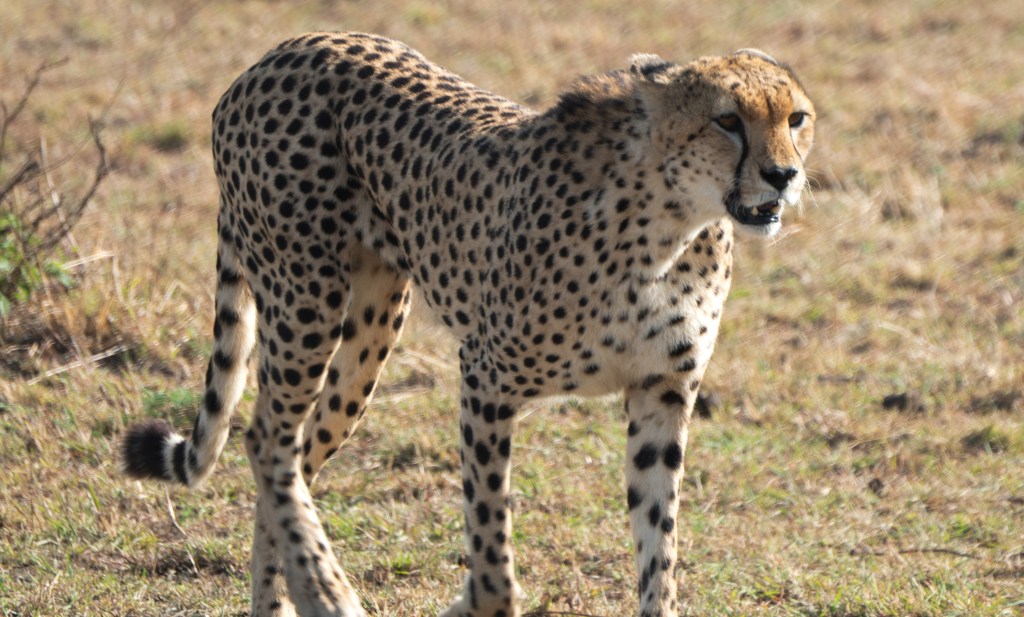
The afternoon and next day game-drives not disappoint, although our first morning’s drive led to very high expectations for the rest of the trip. We added cheetahs, lilac-breasted rollers, cape buffalos, and a lion chomping on its prey (zebra) to our increasing list of major animal sightings. Interestingly, it is usually the female lions who bring down the prey, but there is a pecking order for eating it: adult males first, then younger males, then females. After the lions finish, the hyenas and other scavengers take over, with vultures left to clean the bones.









Tuesday, September 24
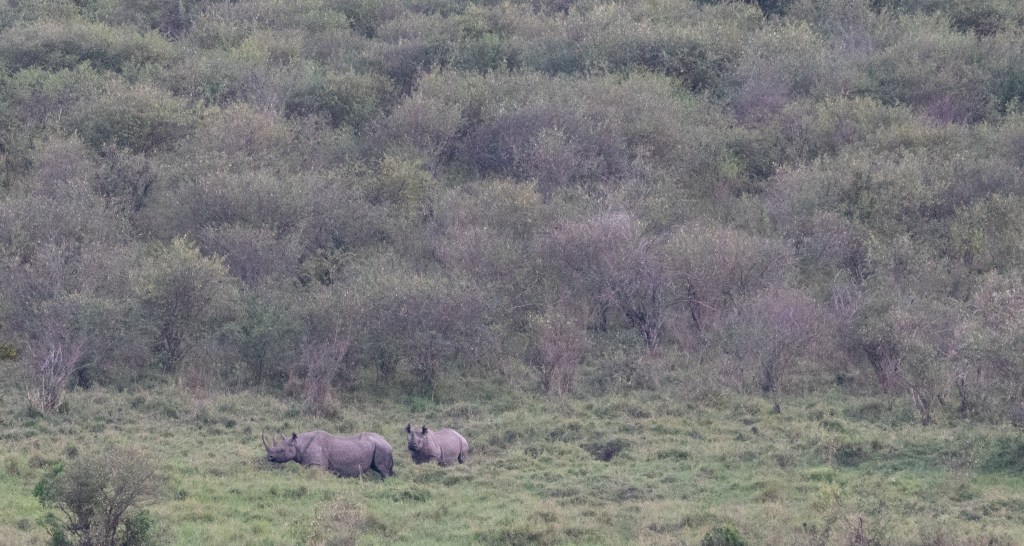
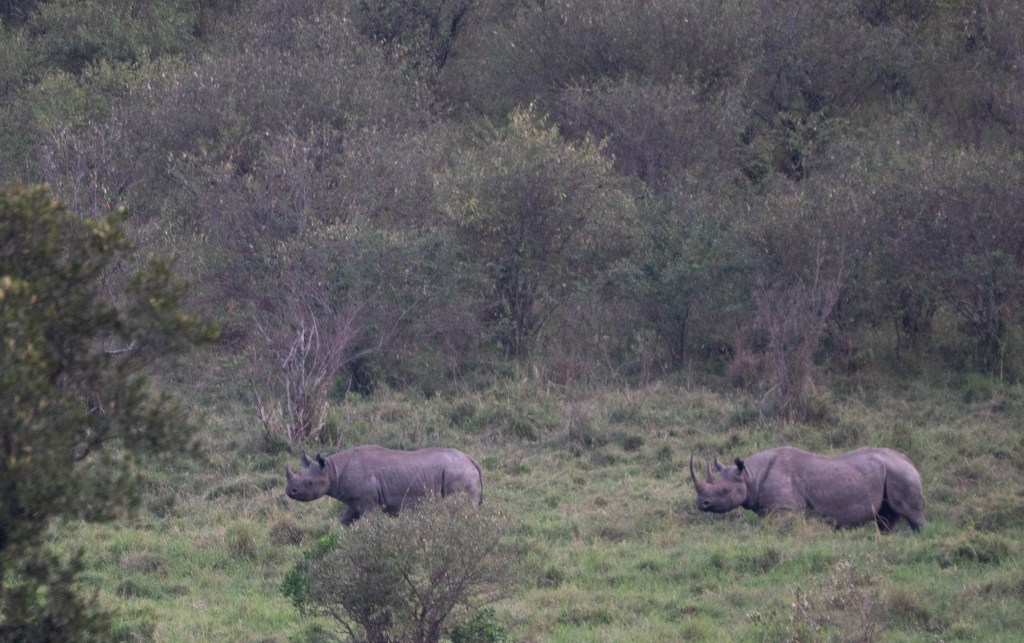
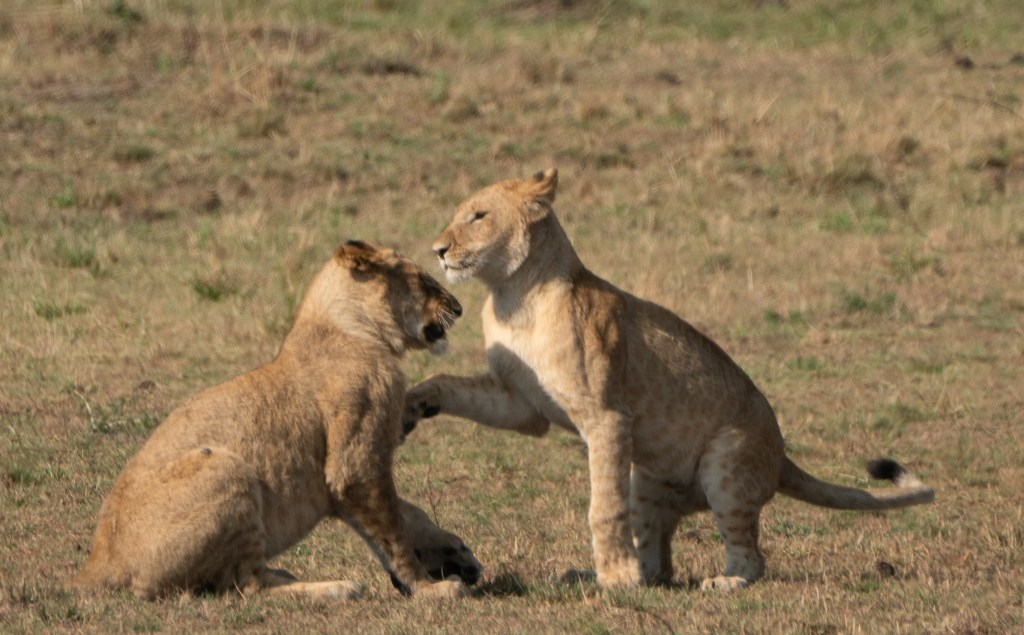
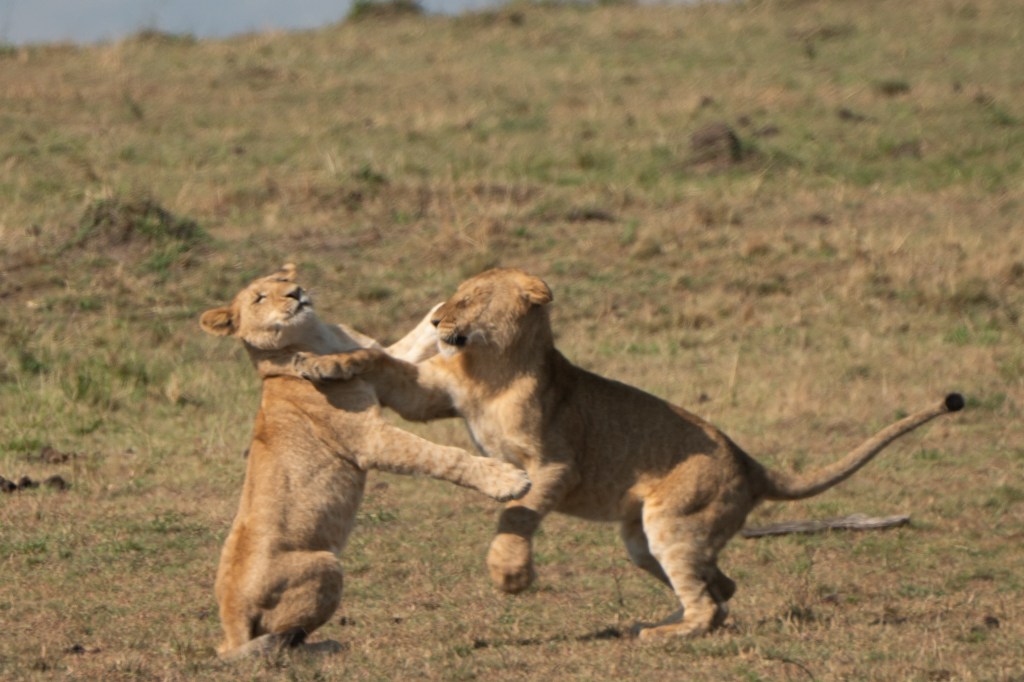
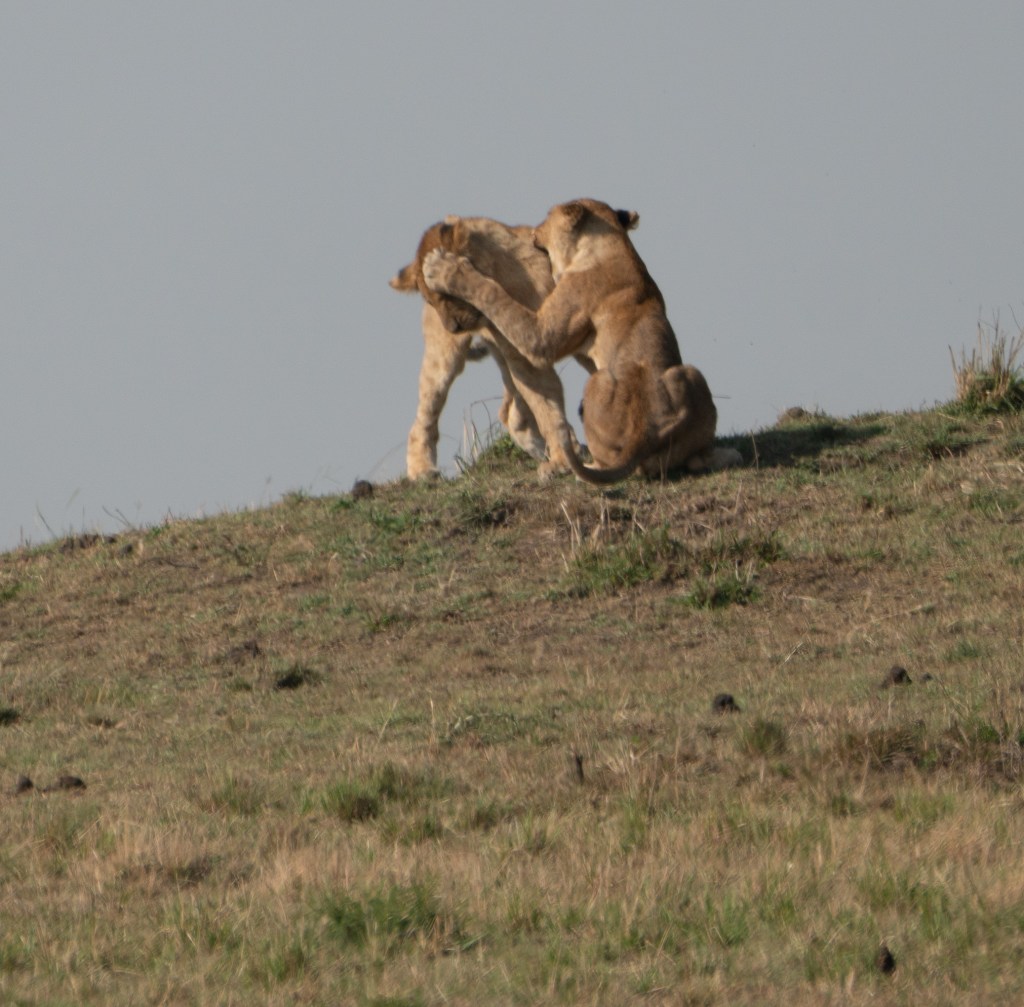
More incredible game drives! Hartebeests, buffaloes, lions, giraffes, and more. We spotted our first black rhinos, a pair up the hill in a semi-forested area, too far for good camera shots, but fine for binoculars. A couple of young lions were wrestling on a hill, obviously for our benefit.





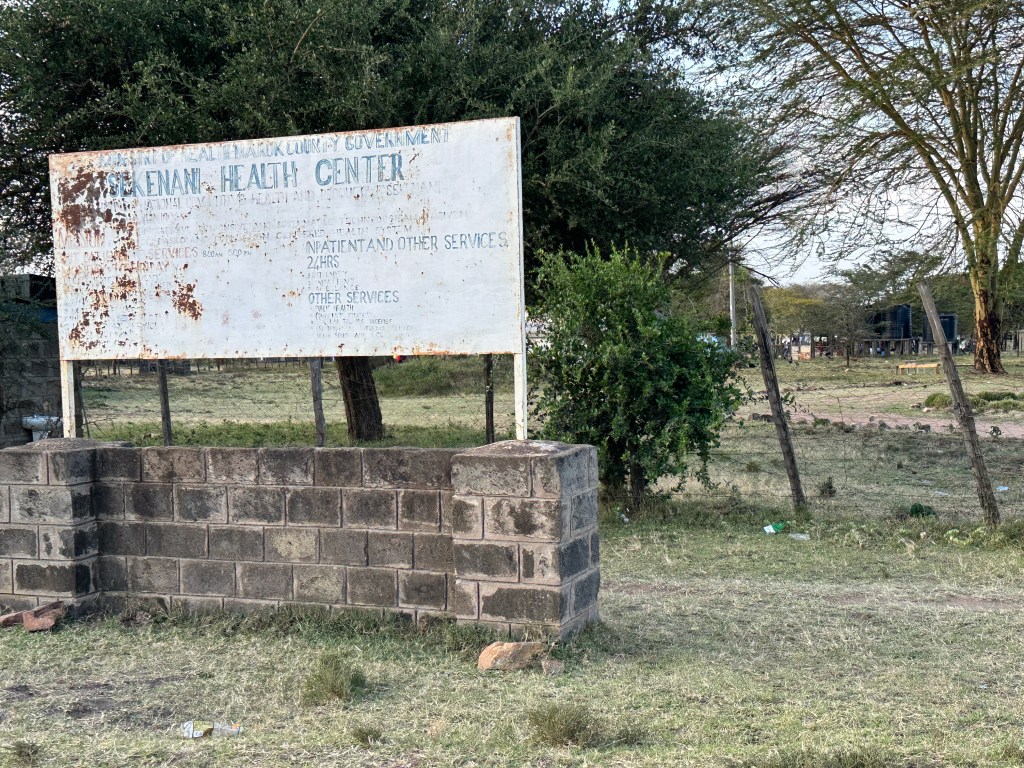
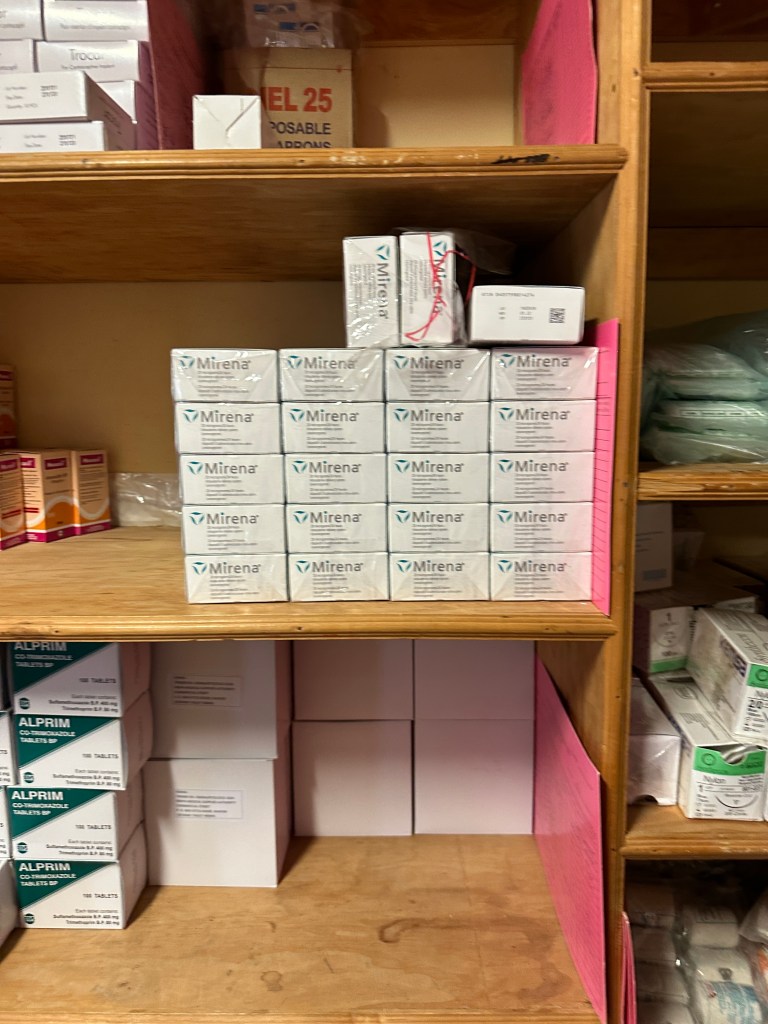
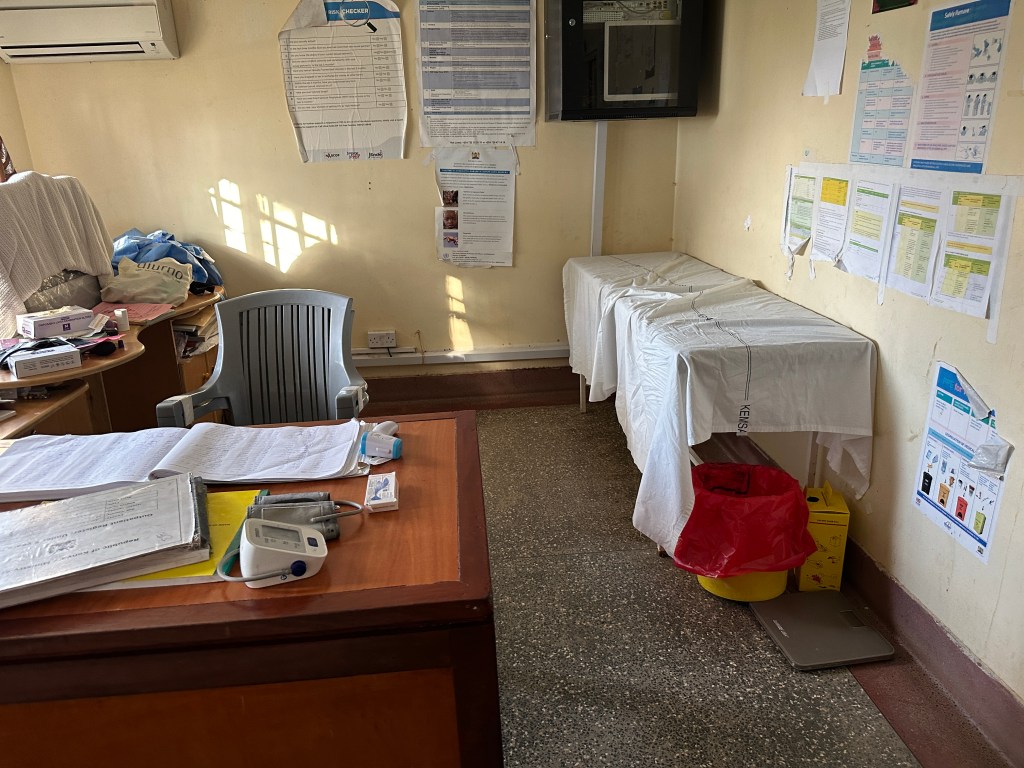
We visited a community clinic in the local village. A physician’s assistant gave us a tour of the facility. The clinic staff all live in buildings surrounding the clinic. The clinic handles all primary care activities for the neighboring villages, including preventive and acute care, contraception options, prenatal care, and deliveries. C-sections and other complicated medical conditions are referred to a better equipped hospital. The clinic provides vaccinations to the whole community (children are 99% complete with recommended vaccines). The standard of care is quite high considering that most prior care was handled by community helpers and midwives who learned their techniques and treatments handed down over the generations without benefit of modern science. I asked about access to rabies treatments and vaccines, given the prevalence and proximity of key wildlife carriers. They stock both rabies treatments and vaccines. They receive some aid thanks to Unicef and the World Bank.


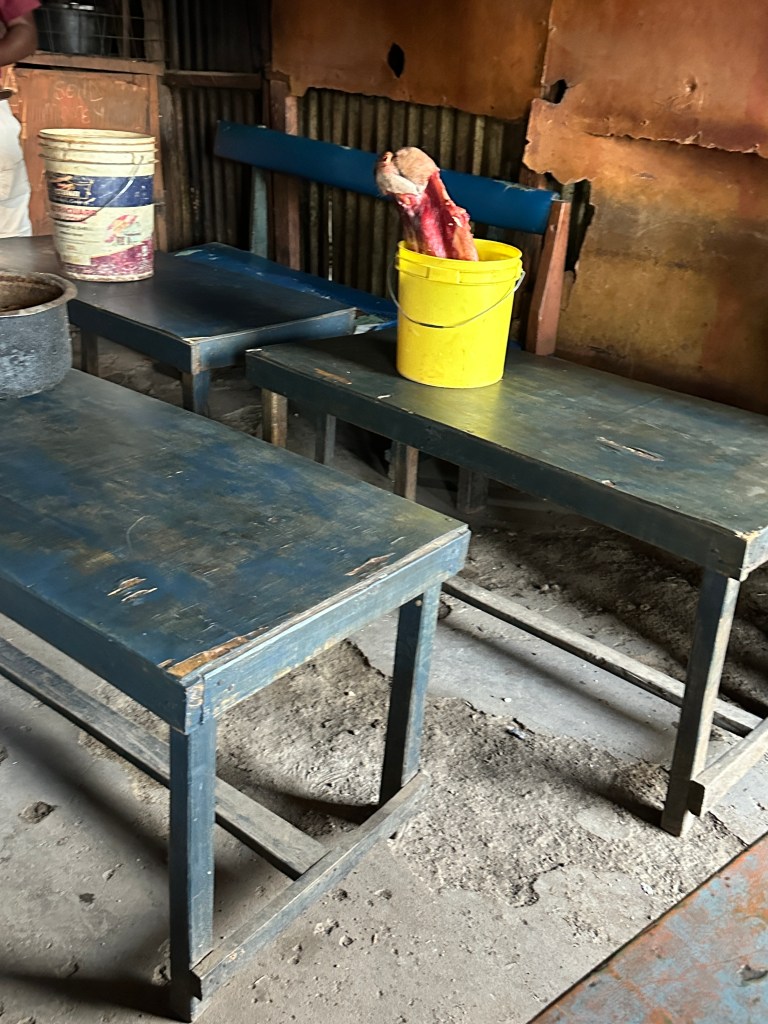
We then visited a local medicine man. His treatment center was a dark tent with a wood fire in the entry way for boiling his teas/treatments. He frequently ventures to the mountains to obtain a variety of tree barks, carries them back in a canvas sack, and then boils them over the fire for his treatments. In a bucket was a cow’s head, which was also to be used in a treatment. Our trip leader and the medicine man’s son and nephew (in training to take over his practice) helped translate as we asked questions about the types of problems he treats. There are many aches and pains, stomach problems, and other issues that he “cures” with a variety of potions. He passed around a cup with the fresh batch of healing for us to taste. Given the appalling lack of sanitation, I just smelled the smoky, woodsy potion.
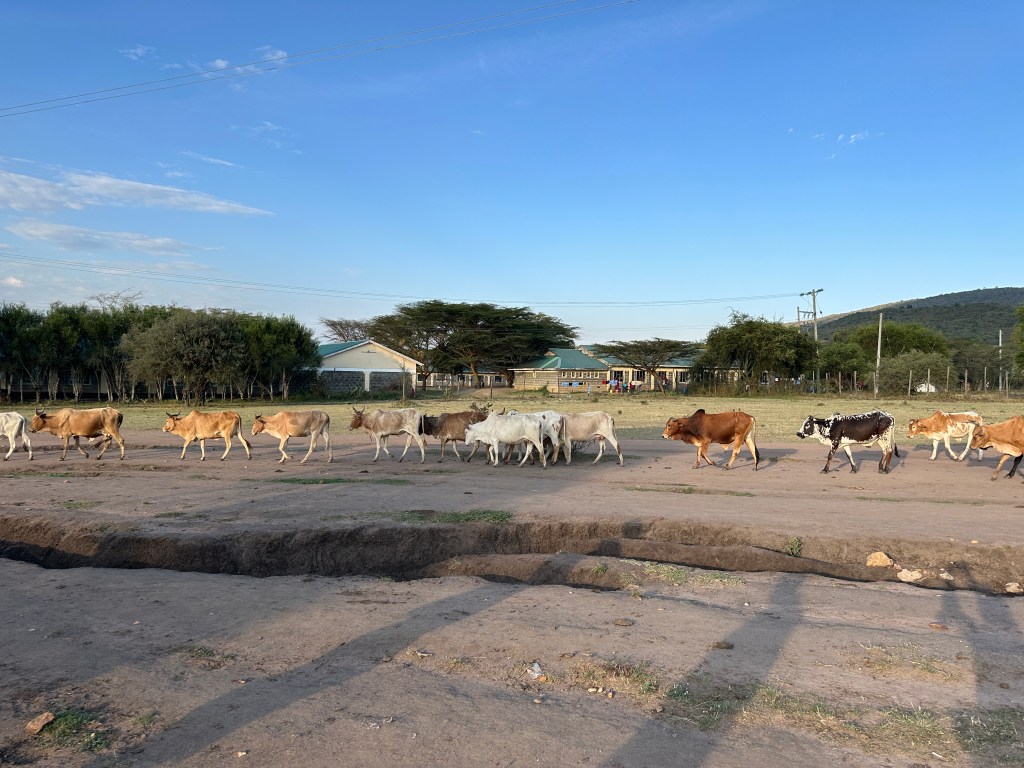
Our way back to the lodge was delayed as the local cows crossed the road along with their handlers.


In the late afternoon, we had a chat with one of the lodge managers, Rebecka, who told us her personal history. She joined us by the fire in traditional Maasai attire, which she explained in depth. Unique to the Maasai are the plaid blanket-like shawls, beaded necklaces, and a walking stick. Many of the Maasai have patterns etched into their cheeks. In the past, the front two bottom teeth were extracted from all children. The tradition was a result of lockjaw (tetanus), and the need to create an opening in the mouth to provide liquid sustenance during the illness. Some Maasai continue the tradition to show their heritage. Our speaker was born in a Maasai village, in which education of girls was not supported. At the age of six, and with the help of a teacher, she left home and attended a boarding school, getting sufficient financial support to cover her full schooling expenses. After her education, she returned to her village. She has become a community leader, advocate, and role model for the education of girls, and she is now supporting her retired parents.

Wednesday, September 25
(Nahdy Travel Sentrim Lodge, Amboselli)
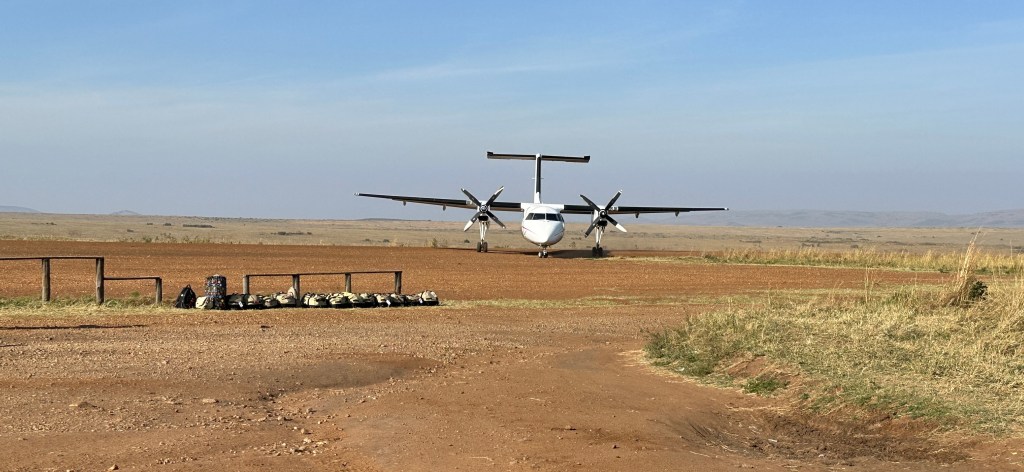
We flew back to Wilson airport in Nairobi and boarded safari vehicles to travel over the vast savanna to Amboselli National Park, which is on the border with Tanzania. This was our game drive for the day, with a stop for a boxed lunch on the way. Our lodge, with lovely tented cabins, was at the foot of Mount Kilimanjaro with a great view of the mountain. The lodge was very active with banded mongoose rooting on the ground and vervet monkeys swinging around in the trees!


Thursday, September 26
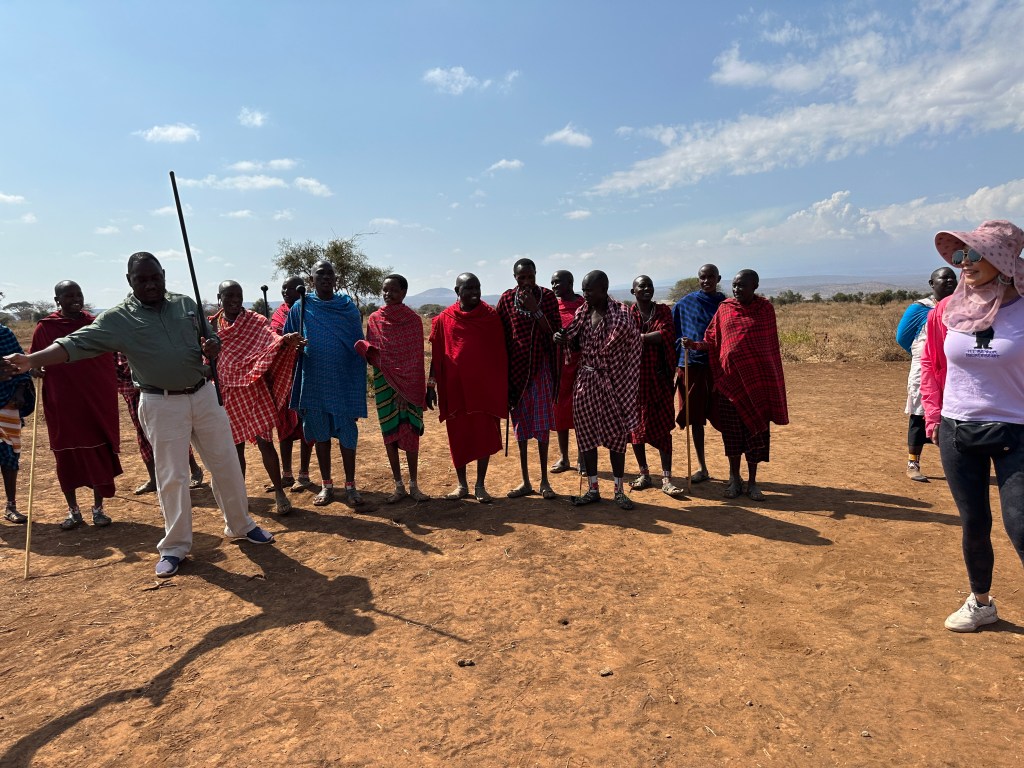
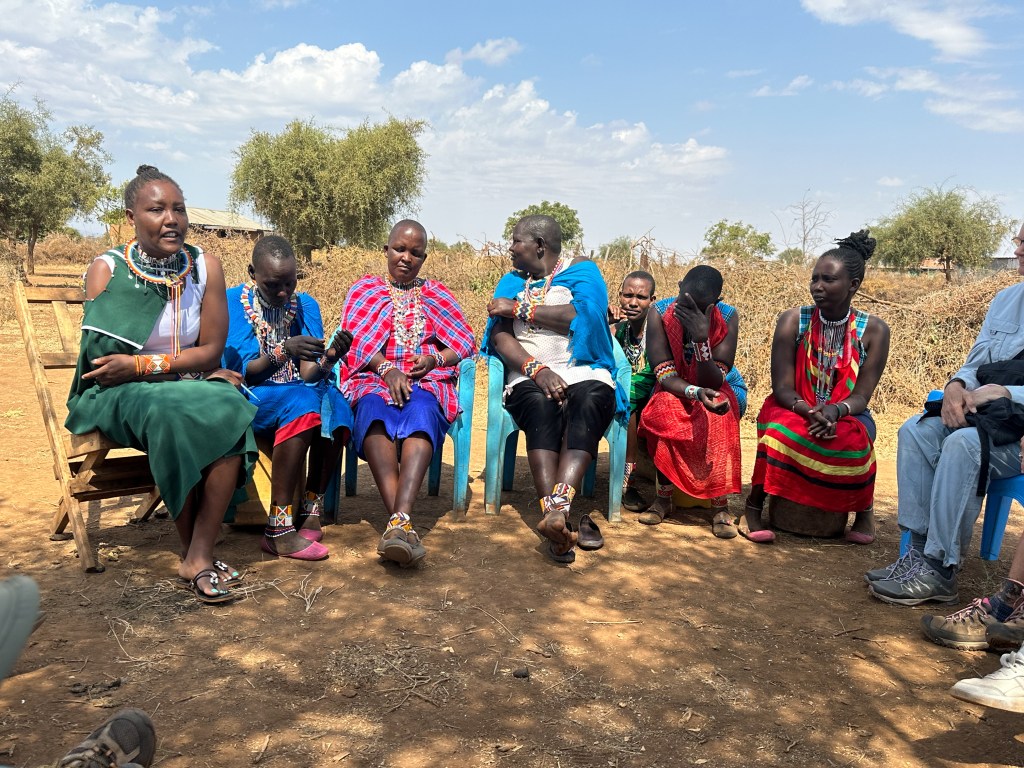
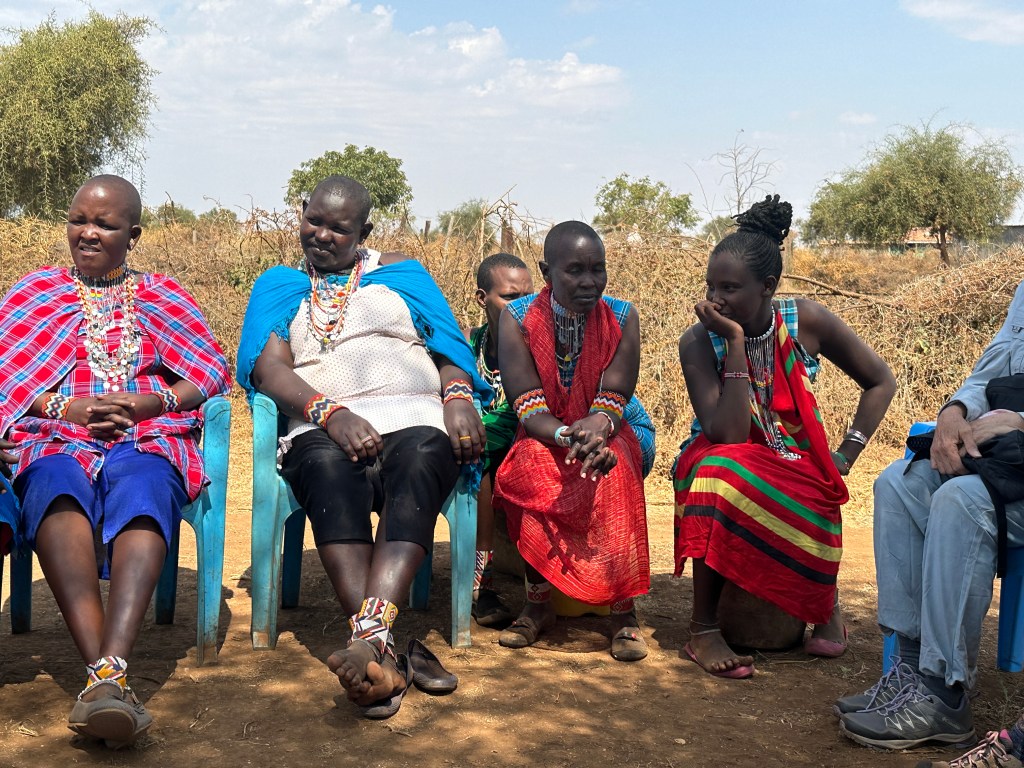
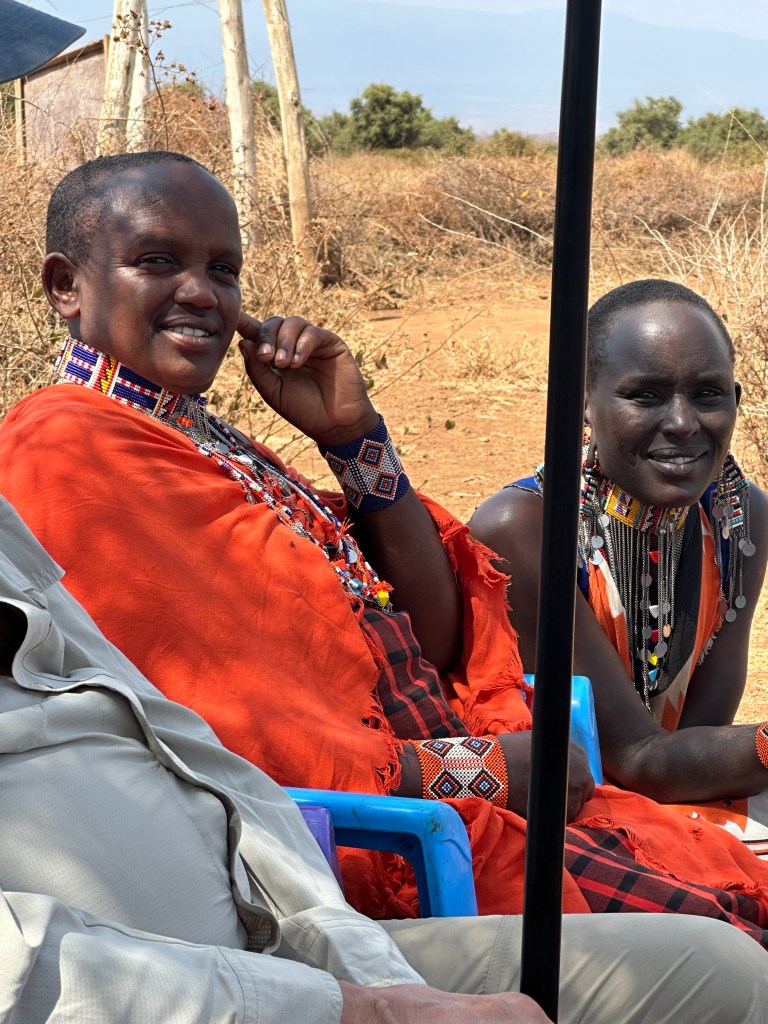
This was our “Day in the Life,” one of the cultural highlights of all OAT trips. We visited an authentic Maasai village. The villagers greeted us warmly as we entered the village and allowed us to wander freely around the village, looking at their lodgings, pens for the wildlife (goats and sheep), and asking questions. We then gathered in a circle of chairs to hear from the Maasai chief. He is chief for a variety of local villages, and inherited his position from his father. We talked about the prior custom of men marrying multiple wives. In fact, given the division of labor between men (managing the livestock) and women (family, food, building the huts and everything else), it was usually the first wife who proposed and selected a second and any subsequent wives to obtain additional labor for the family. Having multiple wives and many children was previously a sign of wealth. However, with increasing droughts and the decline in lifestock populations, the major source of wealth, very few men have more than one wife. After that and other discussions, we joined the villagers as they showed us some dances, a jumping competition, and prayer.
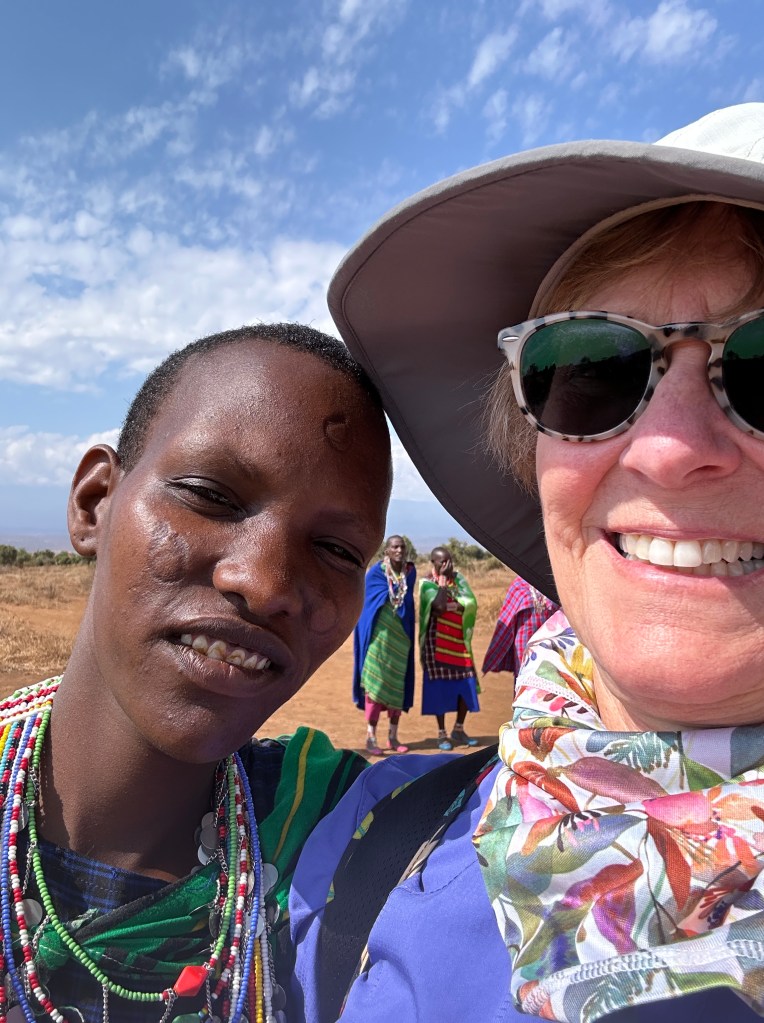


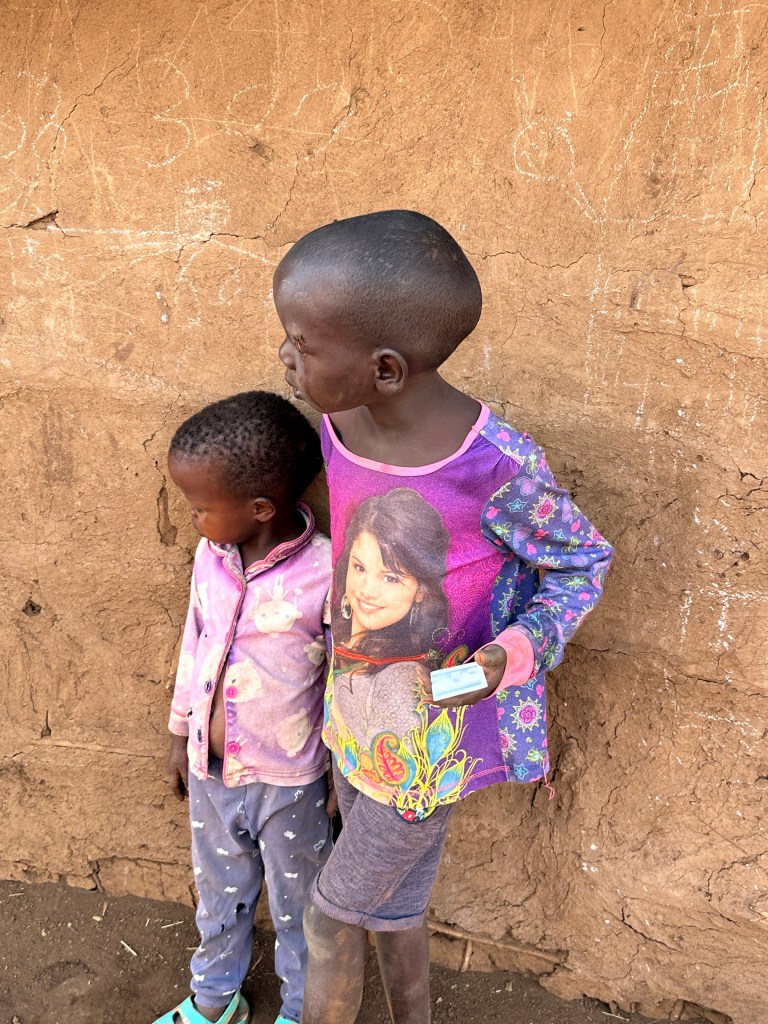
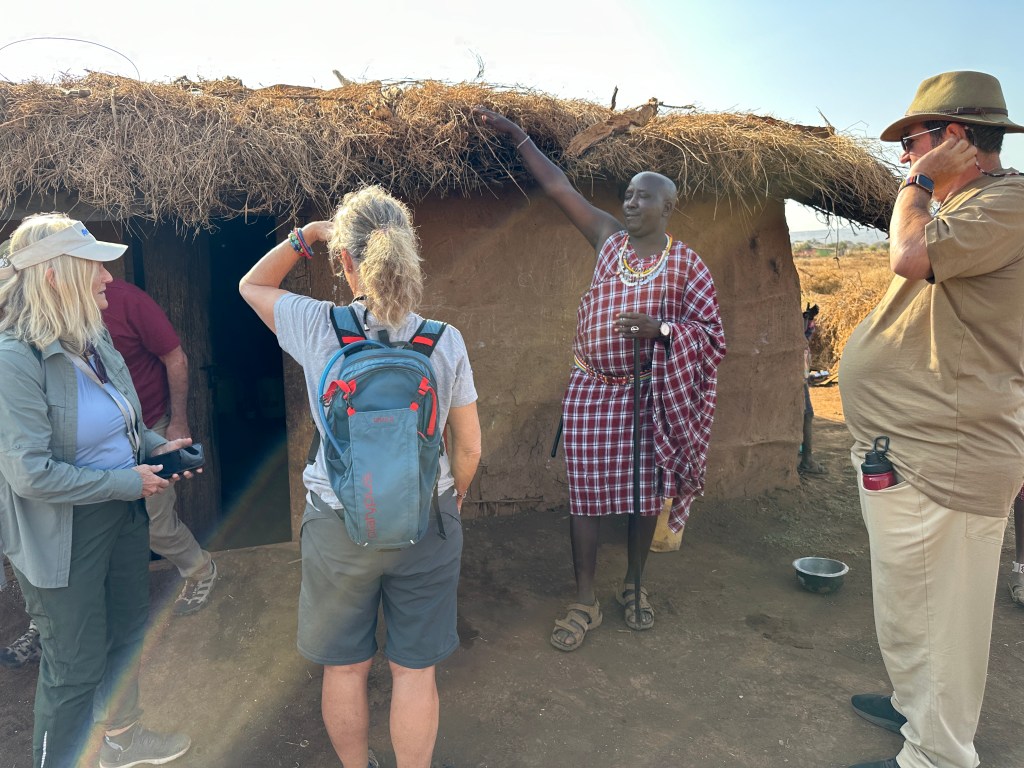


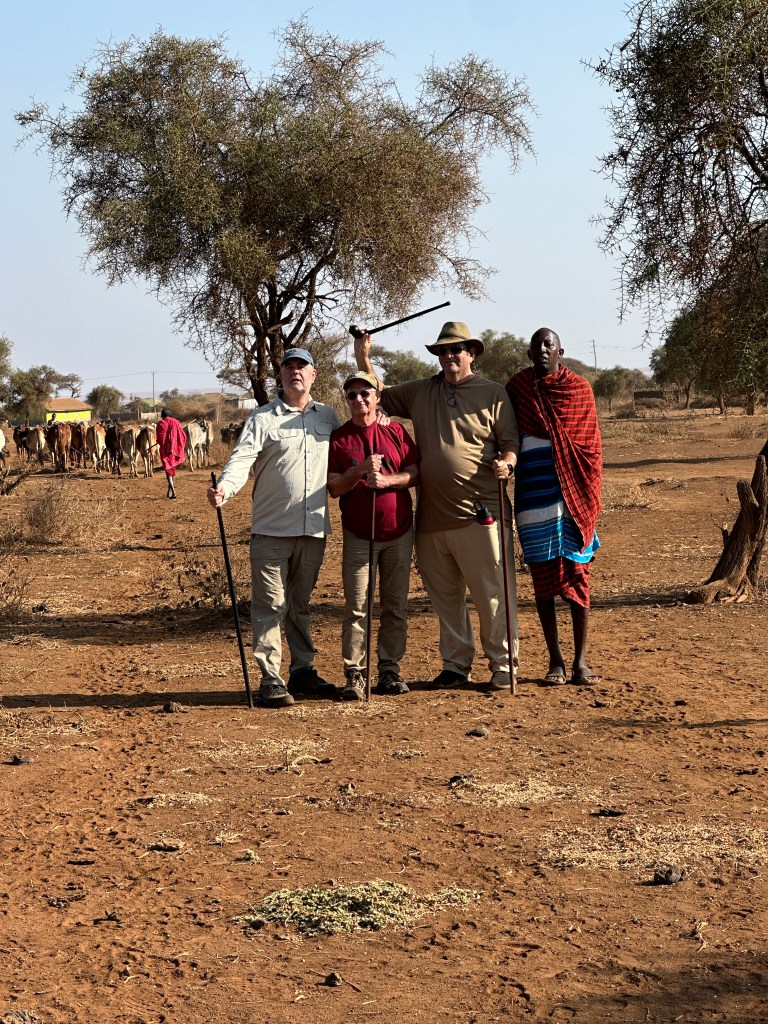


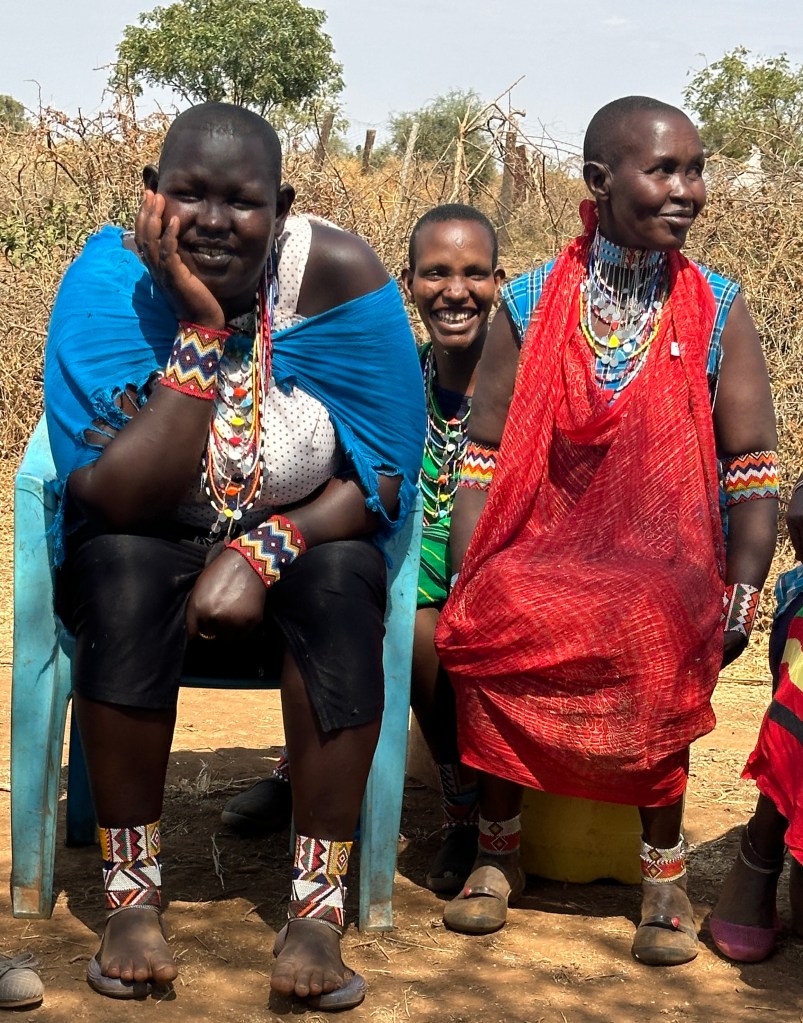
We then gathered with the women in the village and a community leader, partially supported by funds from the Grand Circle Foundation (affiliated with OAT), for a discussion of female genital mutilation (FGM). The leader works with all the local villages to educate the population about FGM, the long-term harms and possible complications, and to get them to curtail the practice. In the past, women were not considered eligible to be married if they had not undergone FGM, and of course, women had no acceptable future without marriage. Gradually the practice is becoming rare. In fact, our community advocate predicted that she would be out of a job in a few years because the practice would be eliminated in her geographic area. We had frank discussions with the women who were gathered about sexuality and the consequences of FGM. There was a great deal of sharing, learning, and laughter in our very candid discussions.


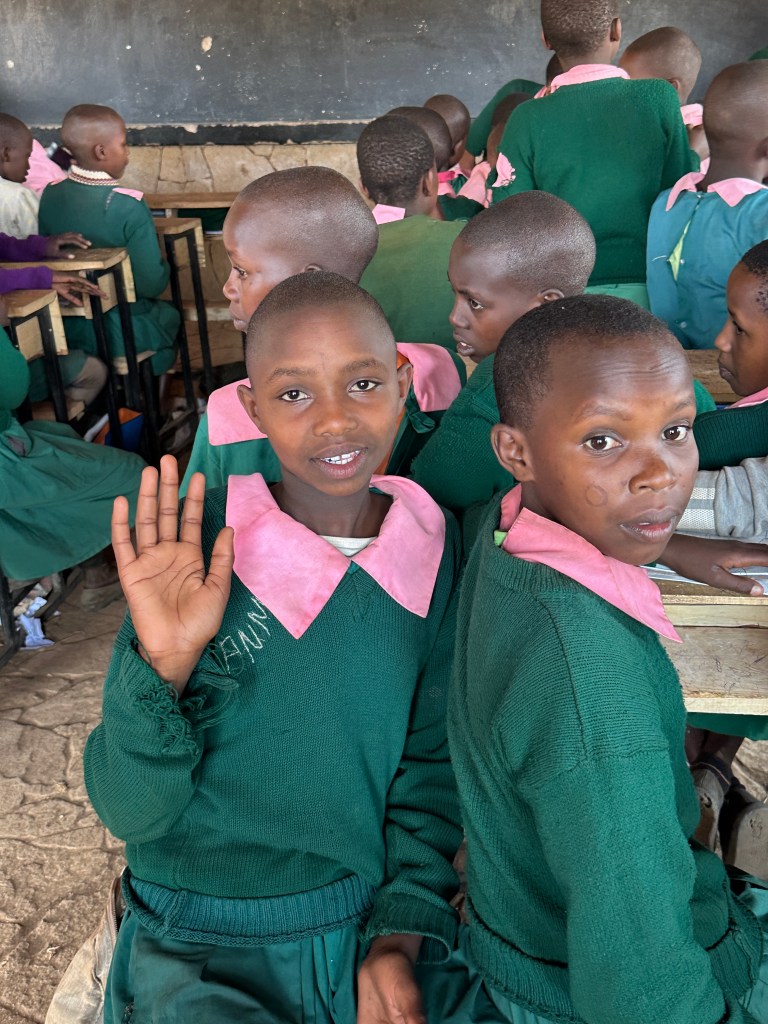
After our time in the village, we visited a primary school that is supported by the Grand Circle Foundation (supplies, bathrooms, a girls dormitory, a classroom, a basketball court), and met with the senior teacher who explained the primary school subjects and schedule, as well as some of the additional needs of the school. We then visited a classroom full of students. They sang a song for us and we tried pitifully to sing one to them. The children broke into applause mid-way through our song, bringing it to an early close. Then we separated into smaller groups to have conversations with the children. I had purchased an instant Fujifilm camera (like the old Polaroids) for the trip and was able to take photos and give the physical pictures to the kids. Boy was it a hit! The kids were crawling all over me — saying “me me me next!” The teacher had the kids line up, which brought some order to the pandemonium. It was so much fun to see their delight as the images slowly emerged from the photo paper!
We the toured the school grounds, and helped pour lunch porridge for the children who did not walk home for lunch. Our travelling group is hoping to collect enough funds among our group to pay for a mobile science laboratory for the school, one of the main needs mentioned by the head teacher.


After lunch at the lodge, we had an afternoon game drive. Our vehicle was lucky enough to spot Michael, one of the three remaining super tuskers in the park. Super tuskers are elephants with tusks weighing a minimum of 100 pounds each, which means they reach almost to the ground or actually hit the ground. Due to poaching, changing diets, and other reasons, the elephant population has evolved to grow smaller tusks, so very few super tuskers still exist.

Friday, September, 2024
(Burunge Tented Camp)
We rose early to start the game-viewing drive to the Tanzania Border (a very easy border stop with all the required passport, visa, and yellow-fever card checks) and on to Tarangire. We stopped for shopping in Arusha at the Cultural Heritage Center, which had genuine Tanzanite gems, wonderful wood carvings, fabrics, and artwork all locally made.
We ate lunch at the Arusha Coffee Lodge, home of a former coffee plantation, and visited Shanga, a local glass-blowing, weaving, and craft business employing individuals with physical disabilities.
A benefit of stopping (and shopping) in Arusha was that we would be coming back to a local hotel for lunch and a “day room” for a few hours on last day, so we could leave items we did not want to take for the remaining days of the trip in the hotel storage area.
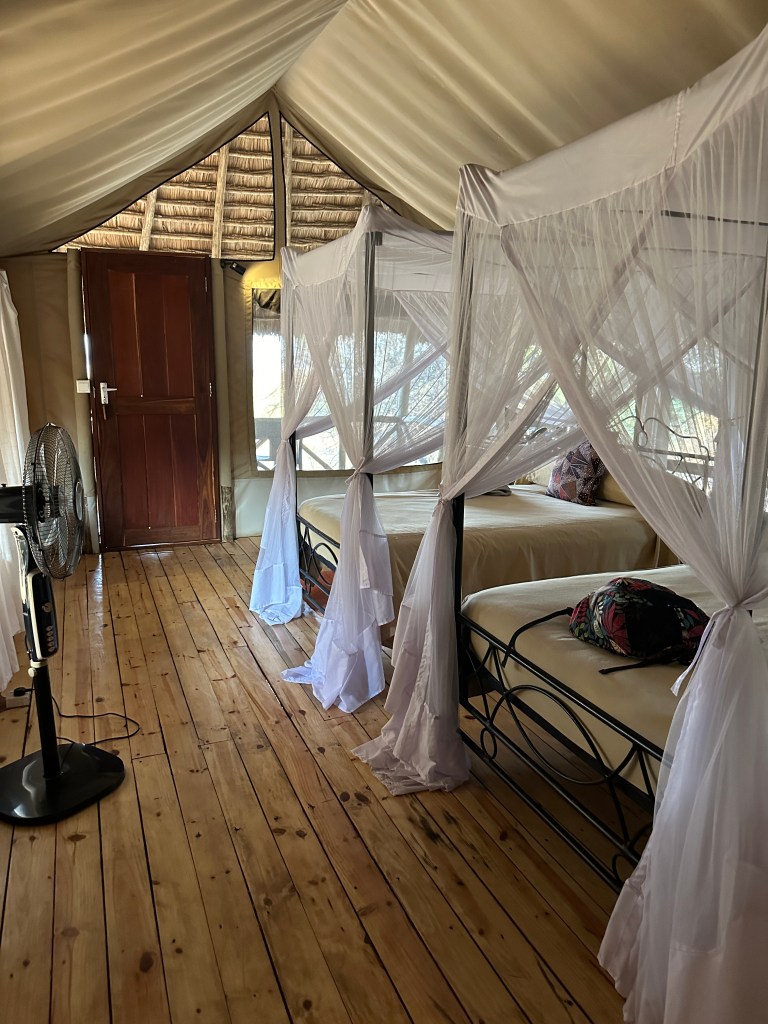
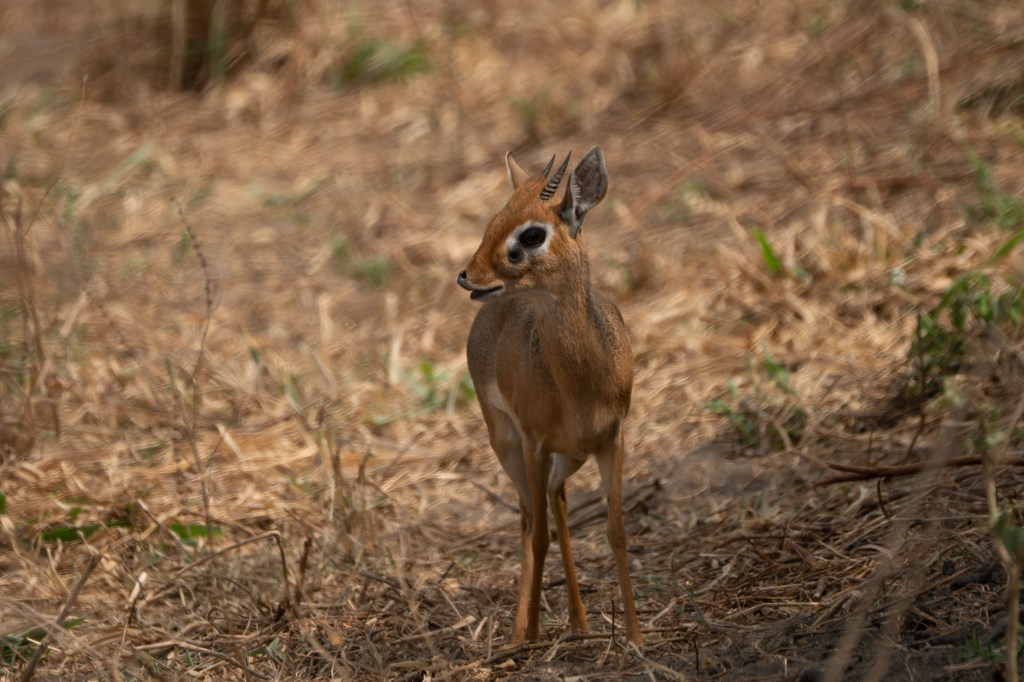
We arrived at our lodge near Tarangire National Park. Among the animals at the lodge were little dik-diks, really small antelopes.




Saturday, September 28
(Burunge Tented Camp)
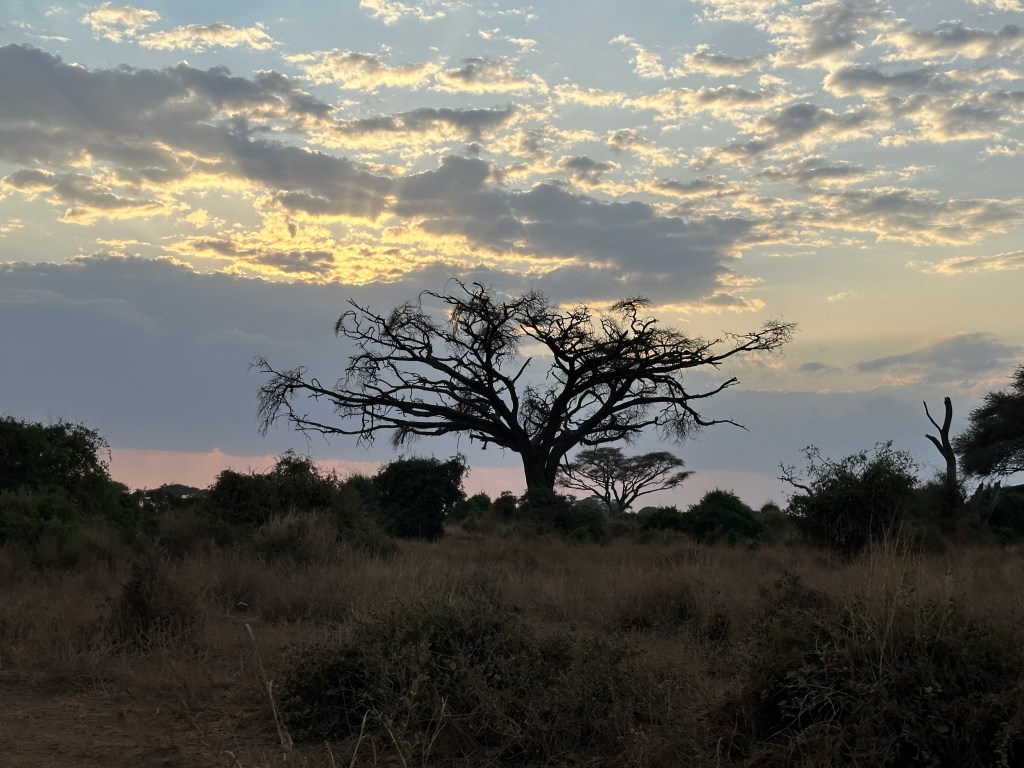
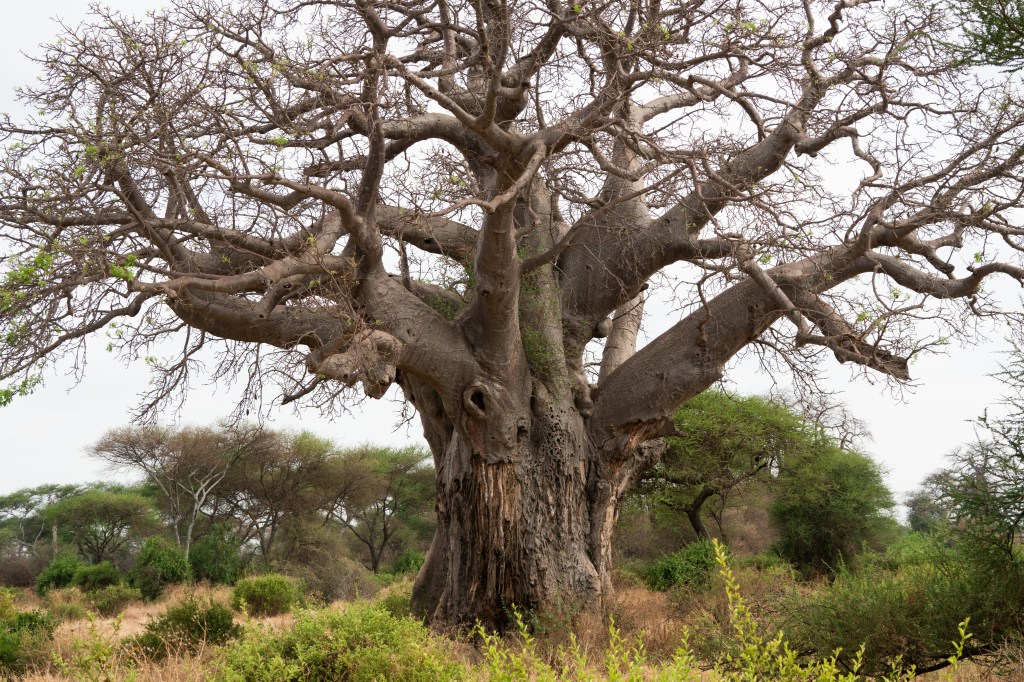
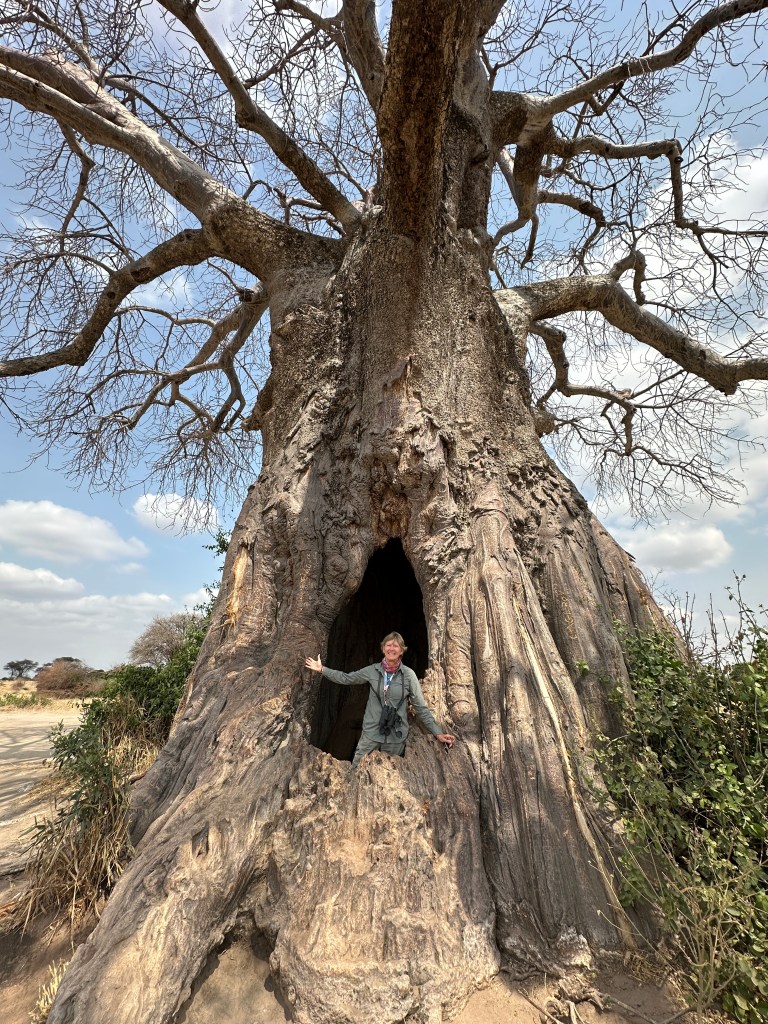
We had a full day game drive in the park. The park is known for its many baobab trees (tree of life), which were pretty incredible. We stopped at one that had previously been used by poachers as a hiding and sleeping spot and place to store their plunder. The interior of the tree was massive, and we could see the interior ladder rungs hung for their goods and bounty. Fortunately there is no longer much poaching in the park.


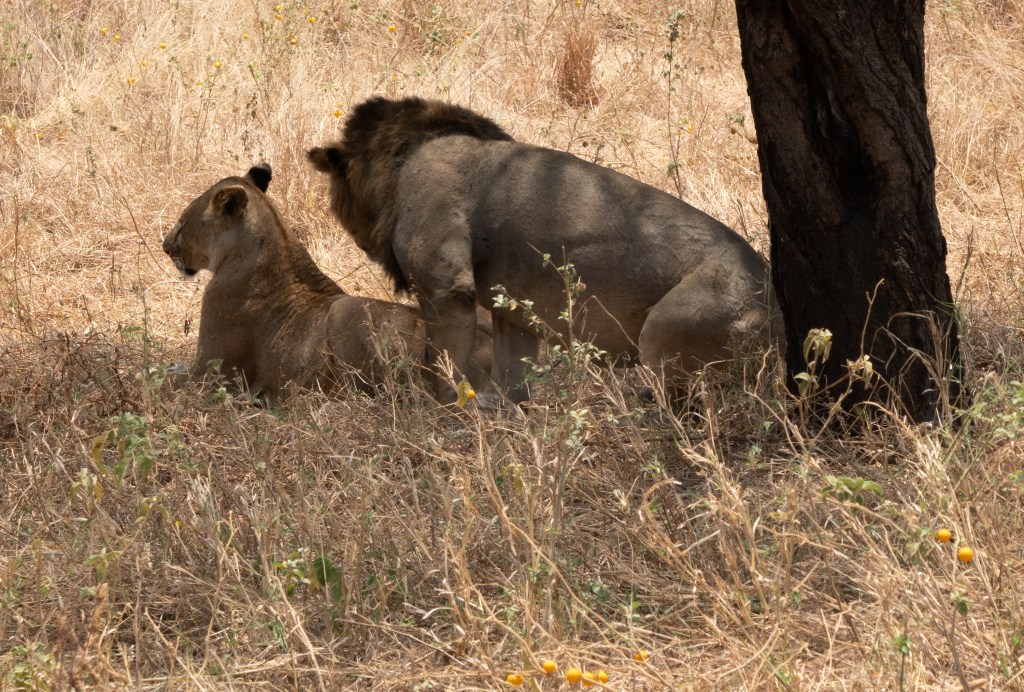
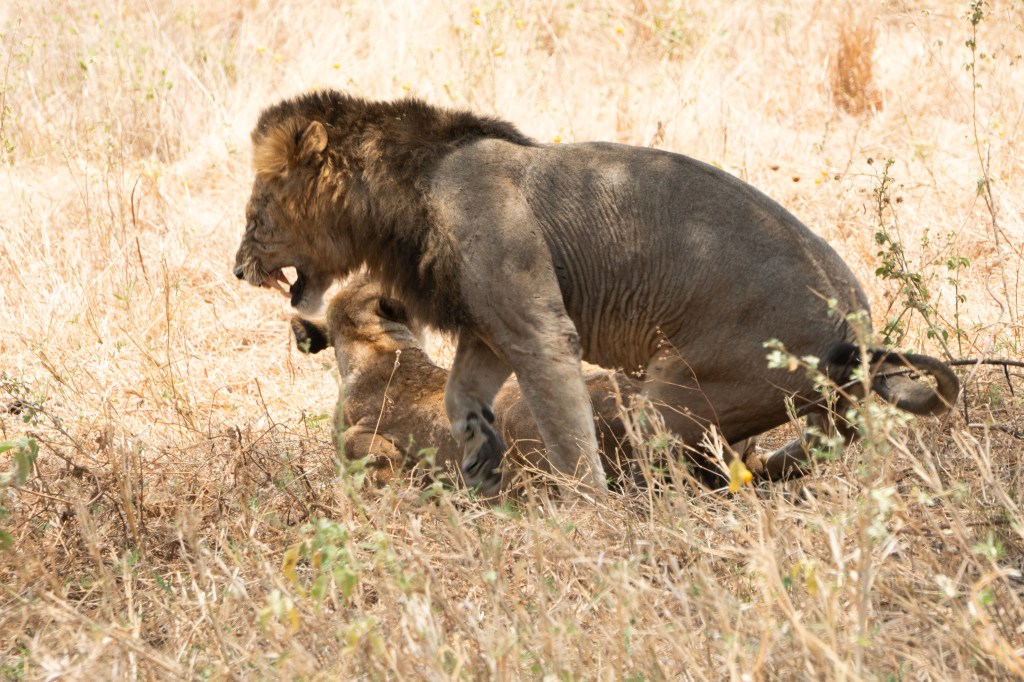
The Tarangire River provides a great setting to attract the wildebeest migration and lots of buffalo, elephants, giraffes and zebra. We also saw waterbucks and lions. We were fortunate in seeing a lion pair in early stages of mating. The process lasts 3-4 days, with coupling occuring every 15 to 30 minutes during those days, with no pause for meals. If the mating is successful, the female lies down on her back.
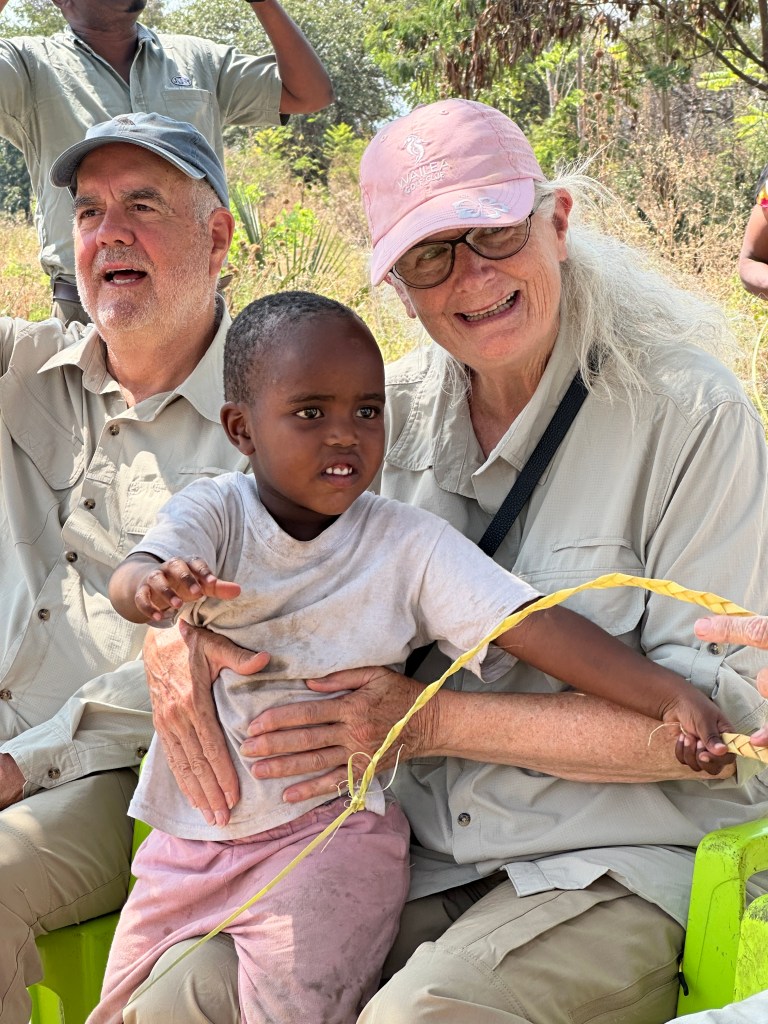
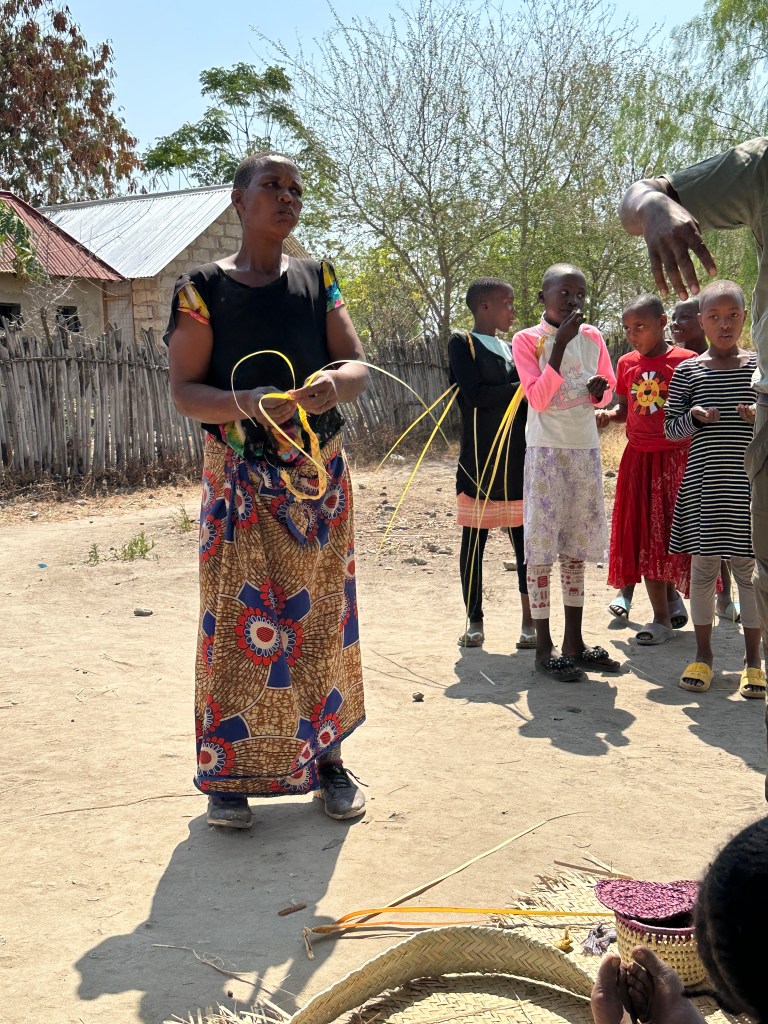
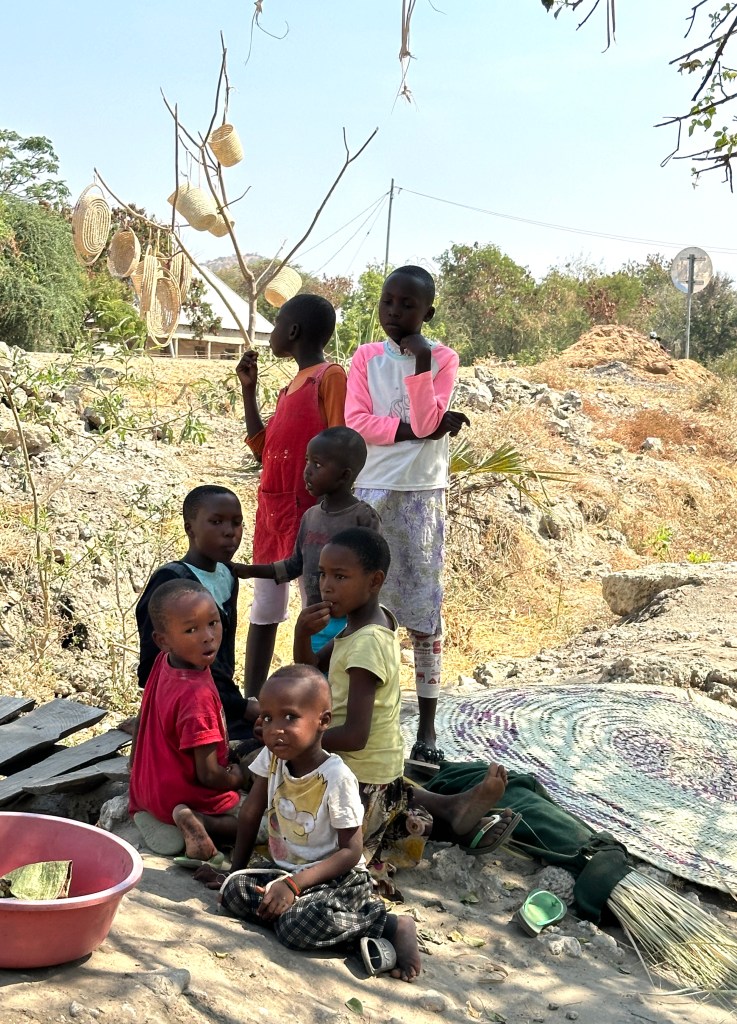
We stopped by the roadside to visit with a group of local villagers who were braiding palm leaves into rugs, mats, baskets and trivets of all sizes.



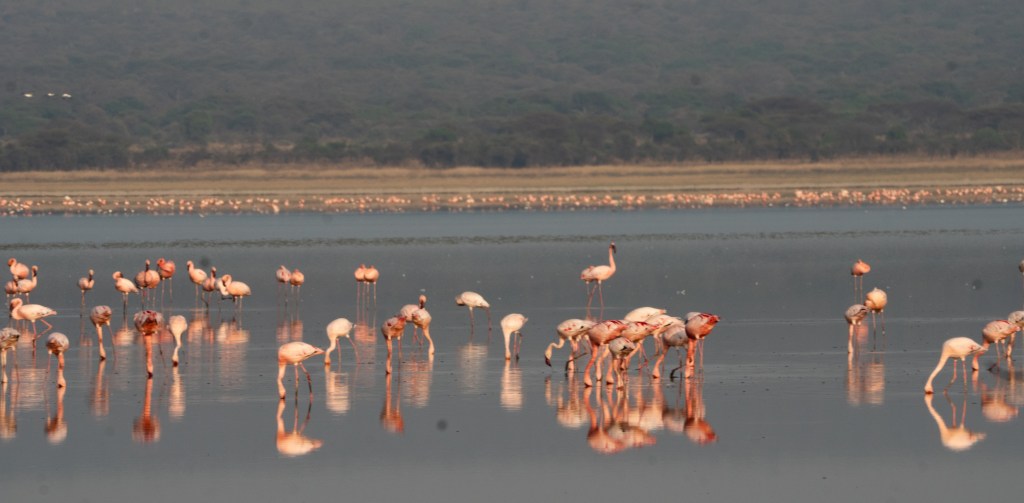
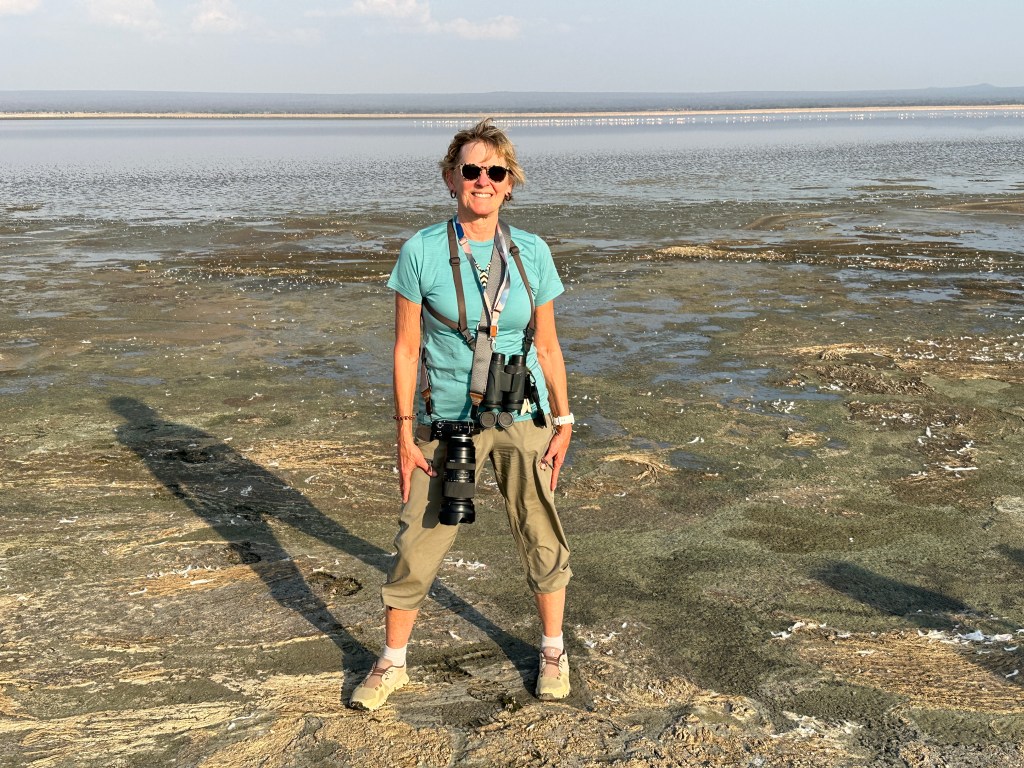
We saw loads of birds, including thousands of flamingos during an afternoon walk along the lakeside.
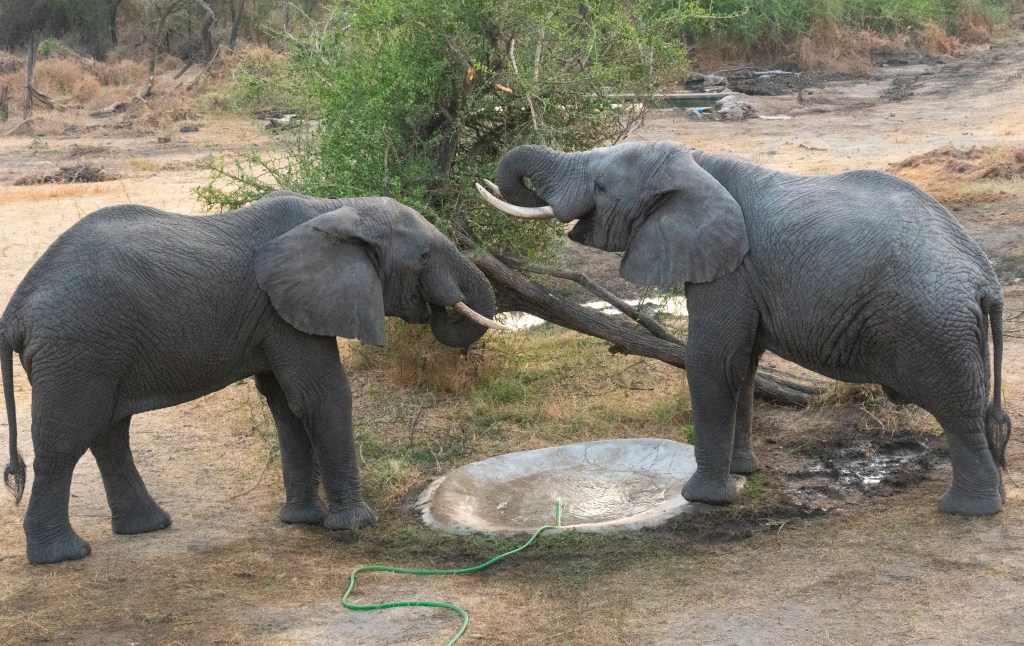
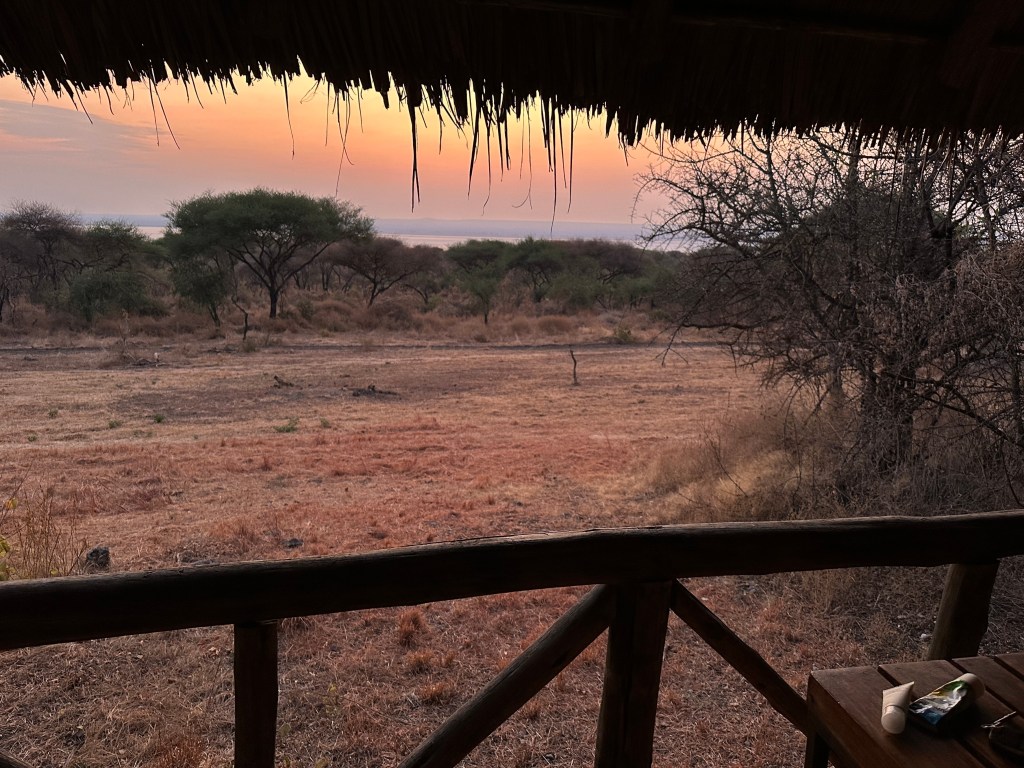
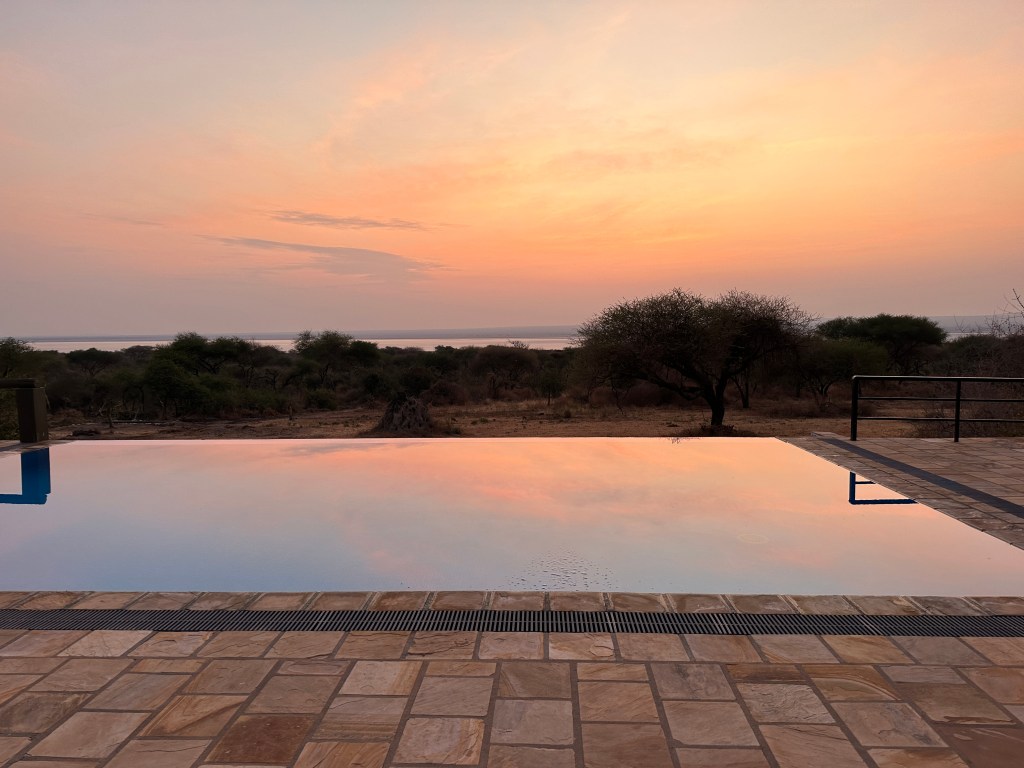
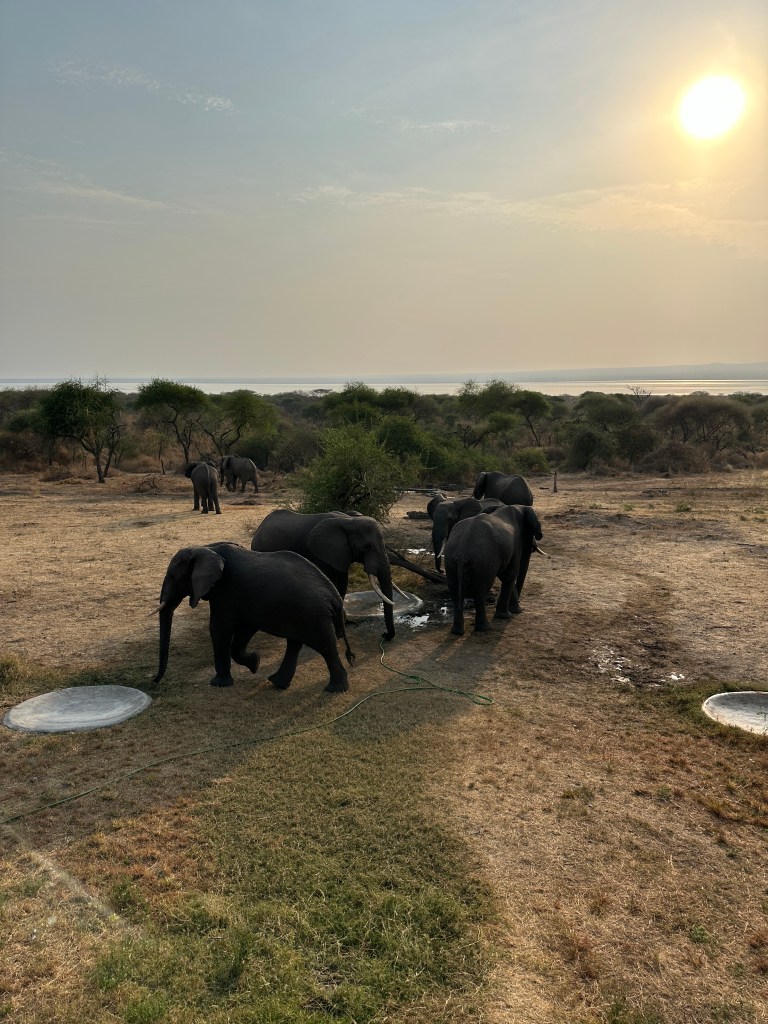
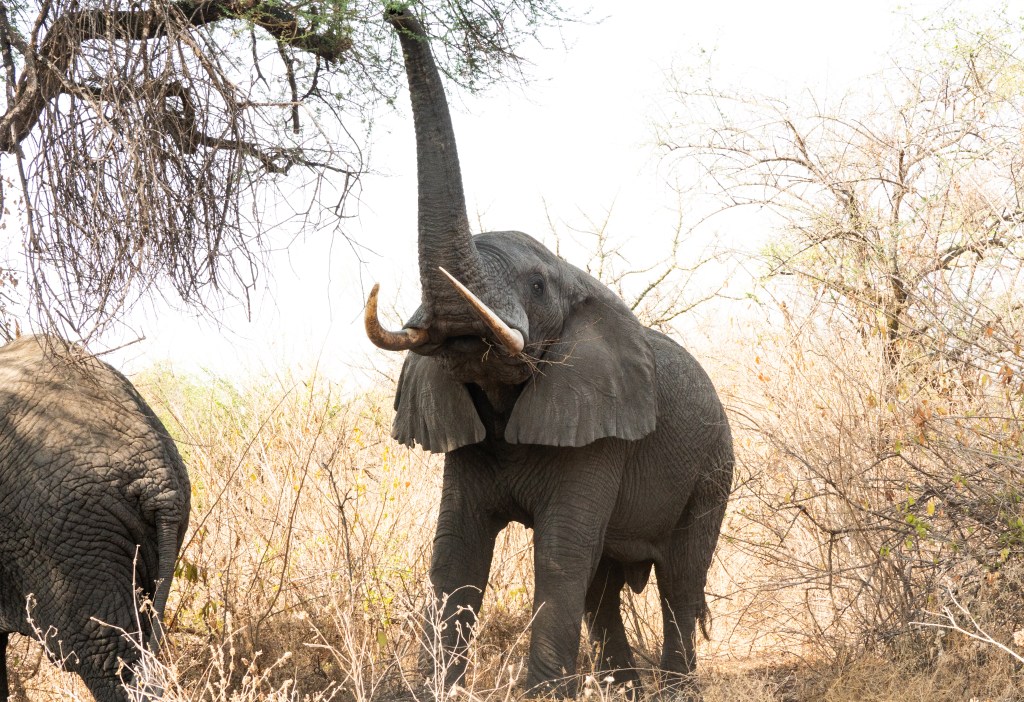
The main eating deck of the lodge, next to the swimming pool, overlooked Lake Burunge in the distance, a wooded area, and a clearing where there were several man-made water holes that were filled in the morning and evening to attract local elephants. The elephants were delightful to watch, as were monkeys, mongoose, herons, and other birds.

Sunday, September 29
(Tloma Lodge)
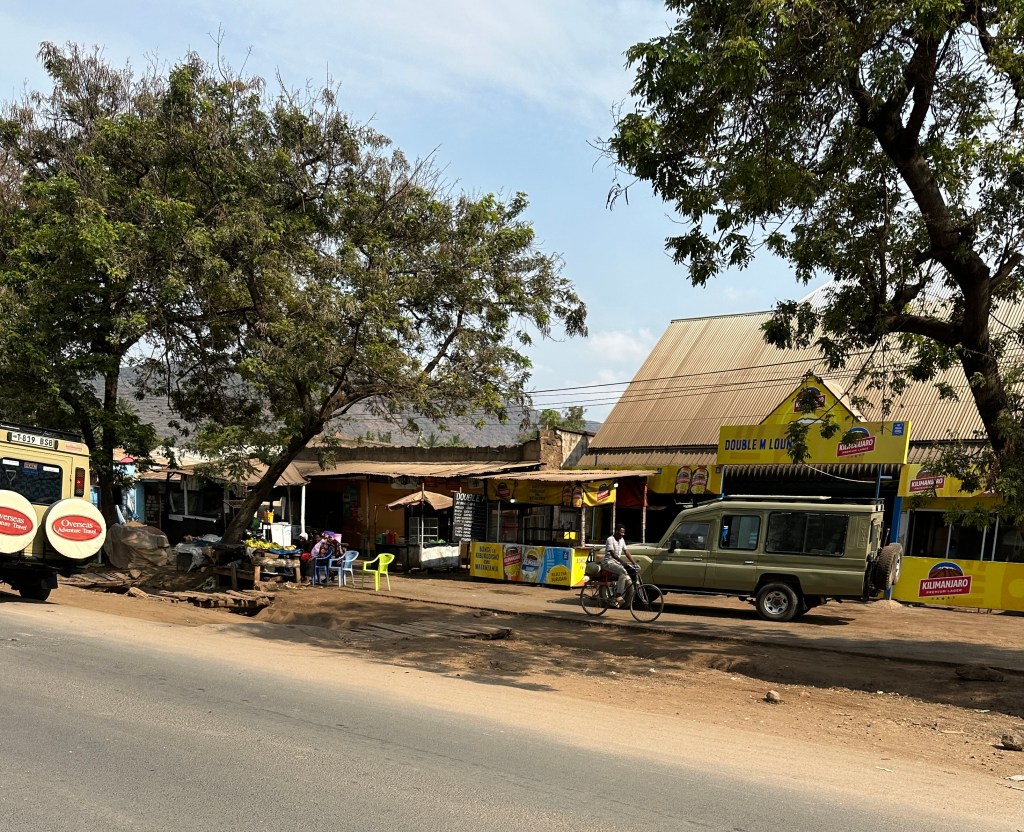
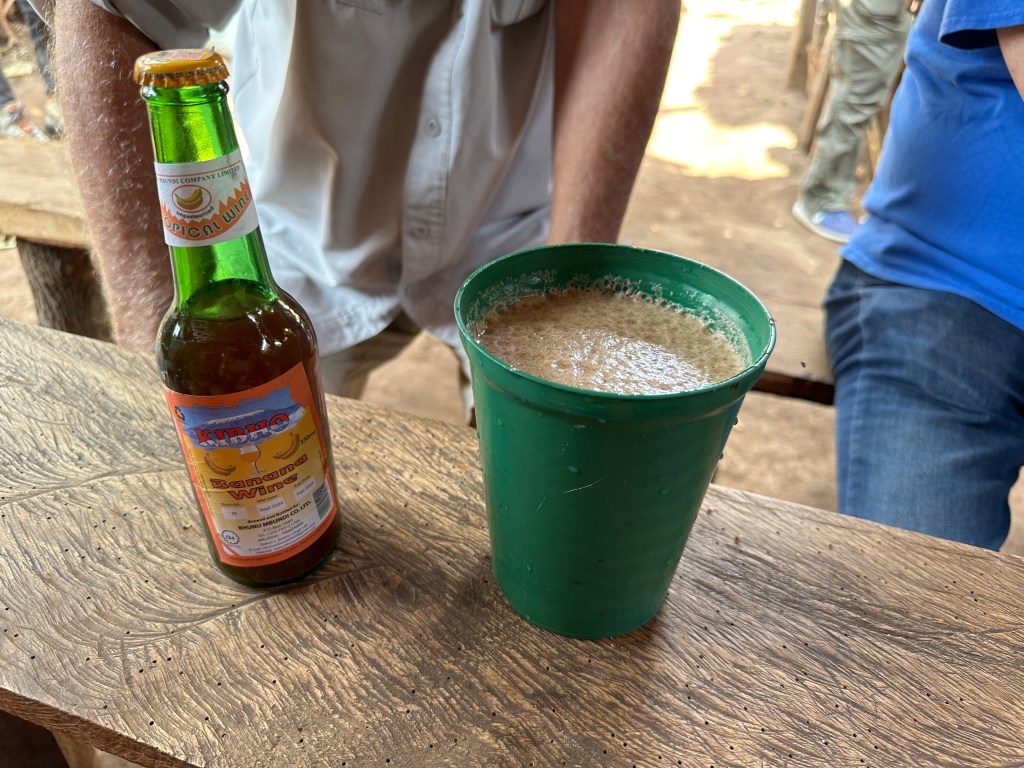
We made our way to Karatu for the next few nights. Along the way, we stopped at Mto Wa Mbu (mosquito river) Village, which is located in the Great Rift Valley. We were joined by two local guides, rode in tuk tuks (three-wheel taxis) to the open-air market where we used local currency to purchase food items to be used in our home-hosted lunch. I love visiting local markets! After the market, we made our way through the village to a local bar to try the popular banana beer and banana wine. I sniffed both, and prefered the wine to the very frothy and highly textured beer. Then we visited the home of a lovely family, talked with them about their family and livelihoods (both parents were retired educators), toured their home, and had lunch in a beautiful courtyard. Lunch items included a variety of local dishes which were delicious.



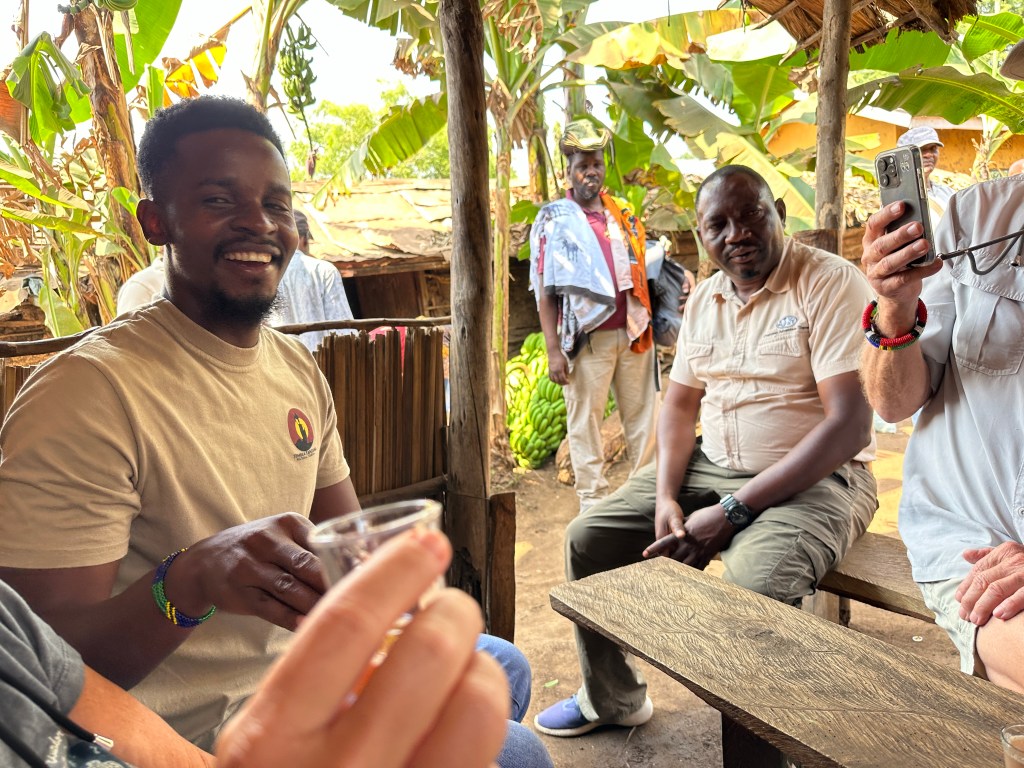


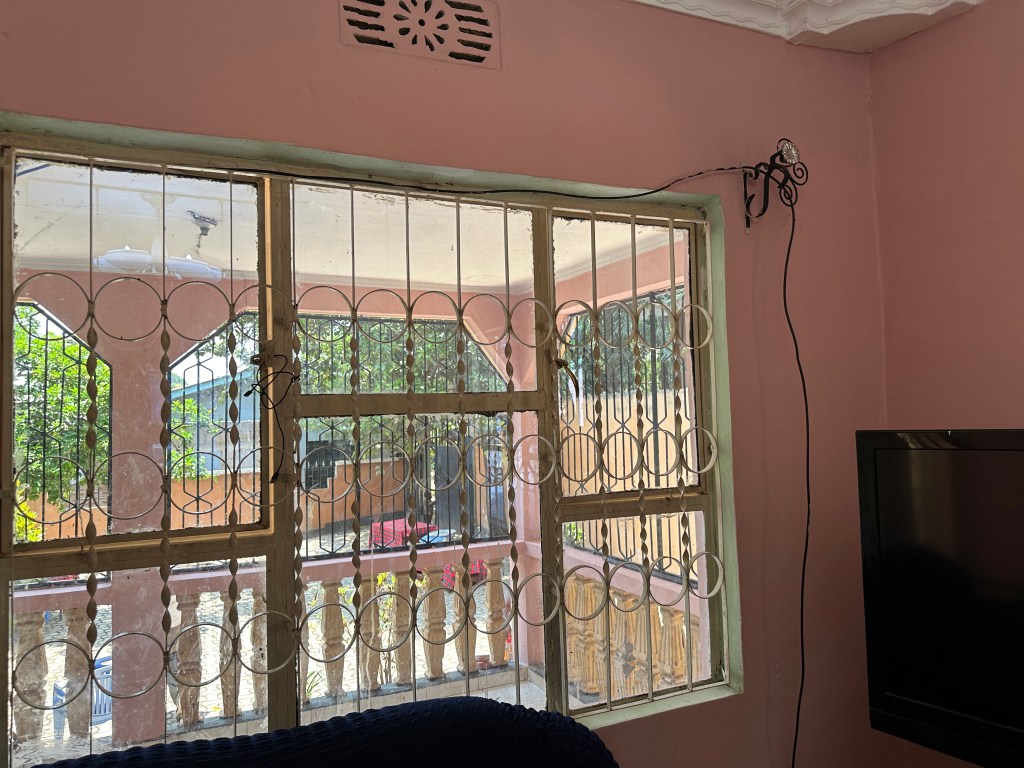
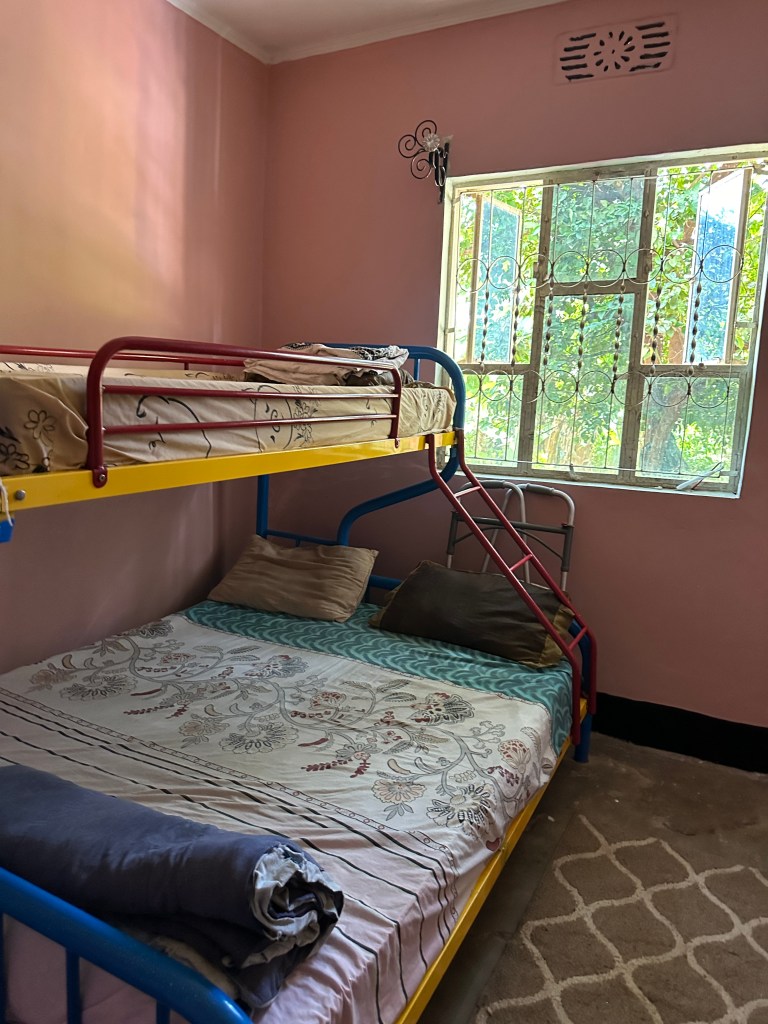

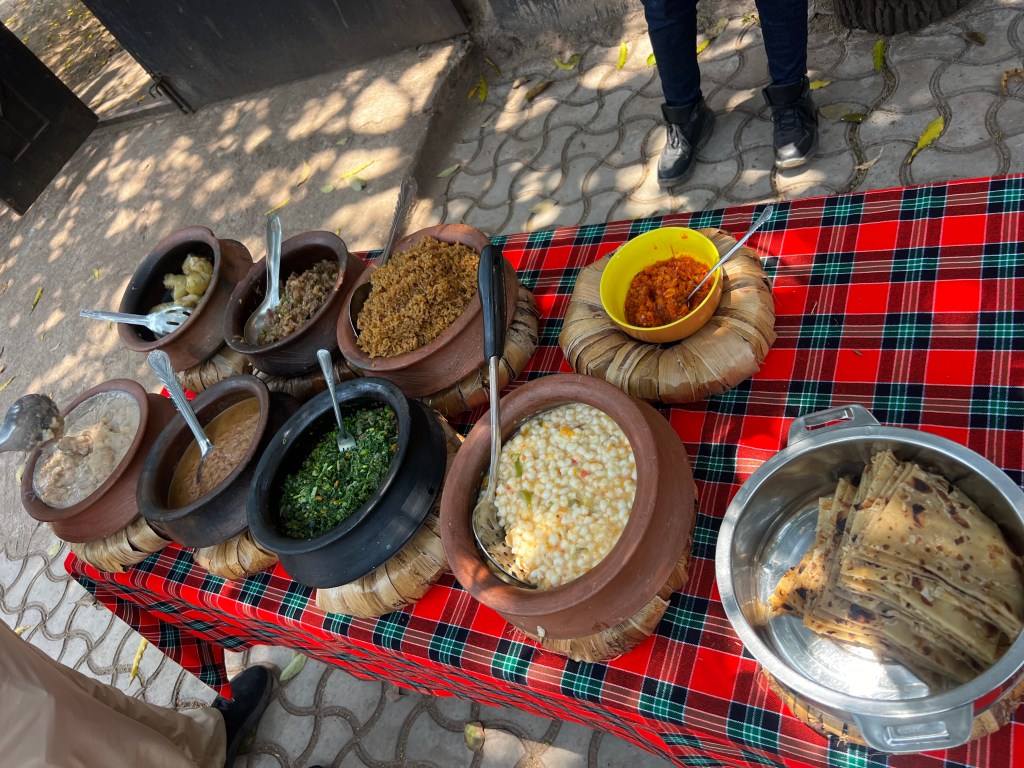


Remarkable sightings along the way to our lodge included hyenas, water birds (pelicans, egrets, herons, geese), kori bustards, grey crowned cranes, cape buffalos, and a serval cat with a mouse in its mouth.
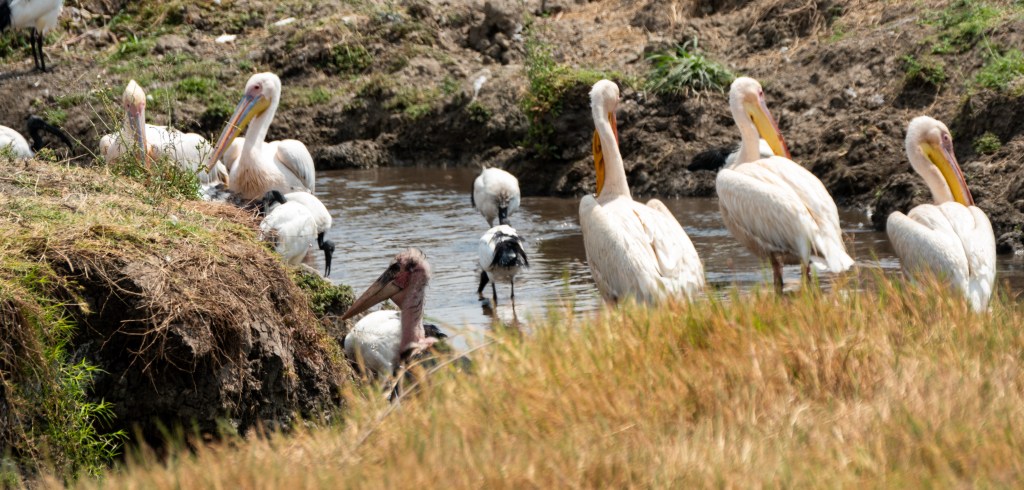


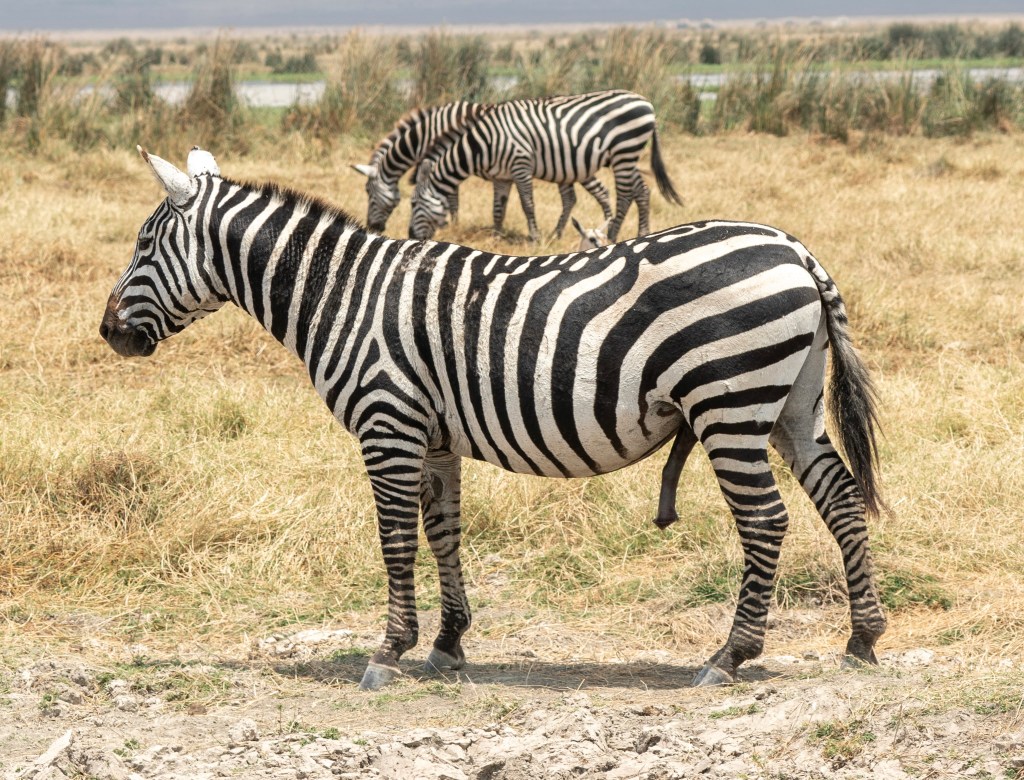

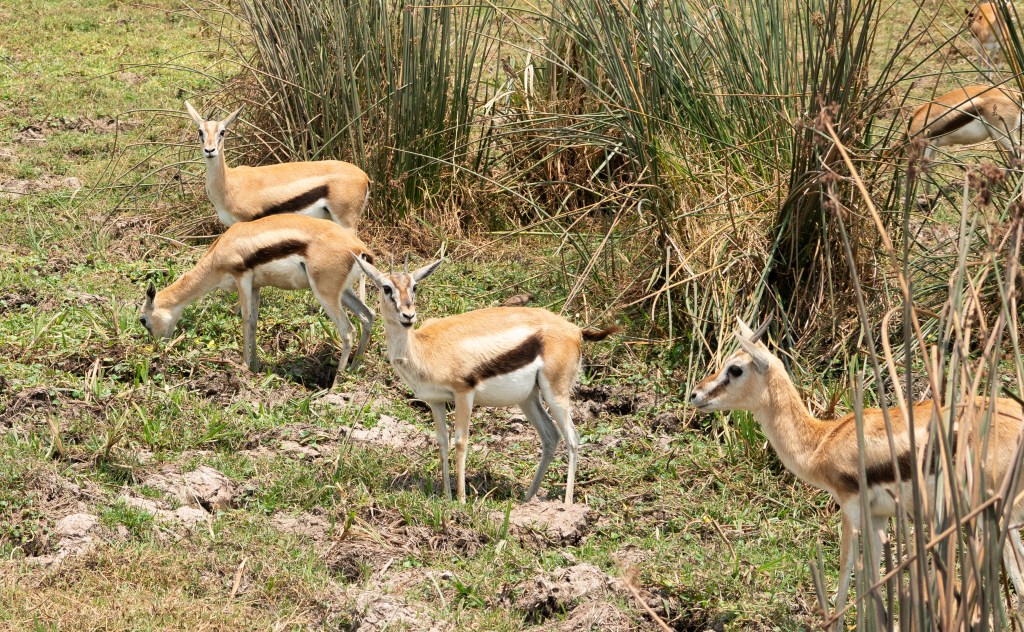


Our next lodge was in a beautifully landscaped setting. I took the afternoon to relax, while many of the group visited a local wood carving center and all-manual coffee production business.
Monday, September 30
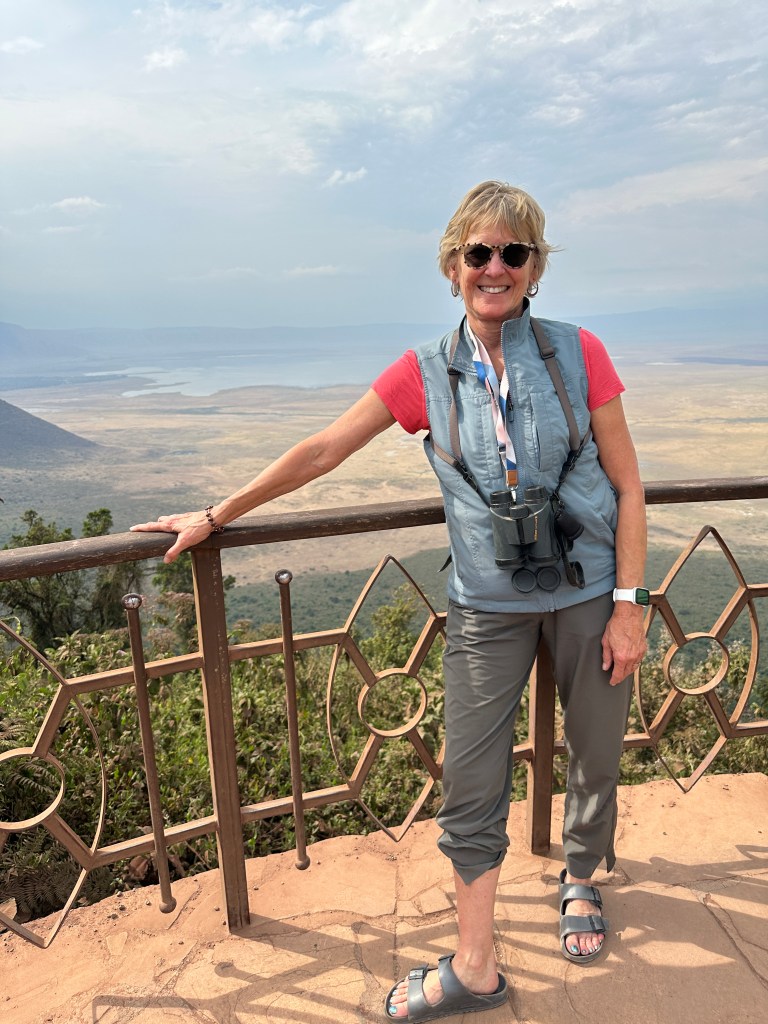
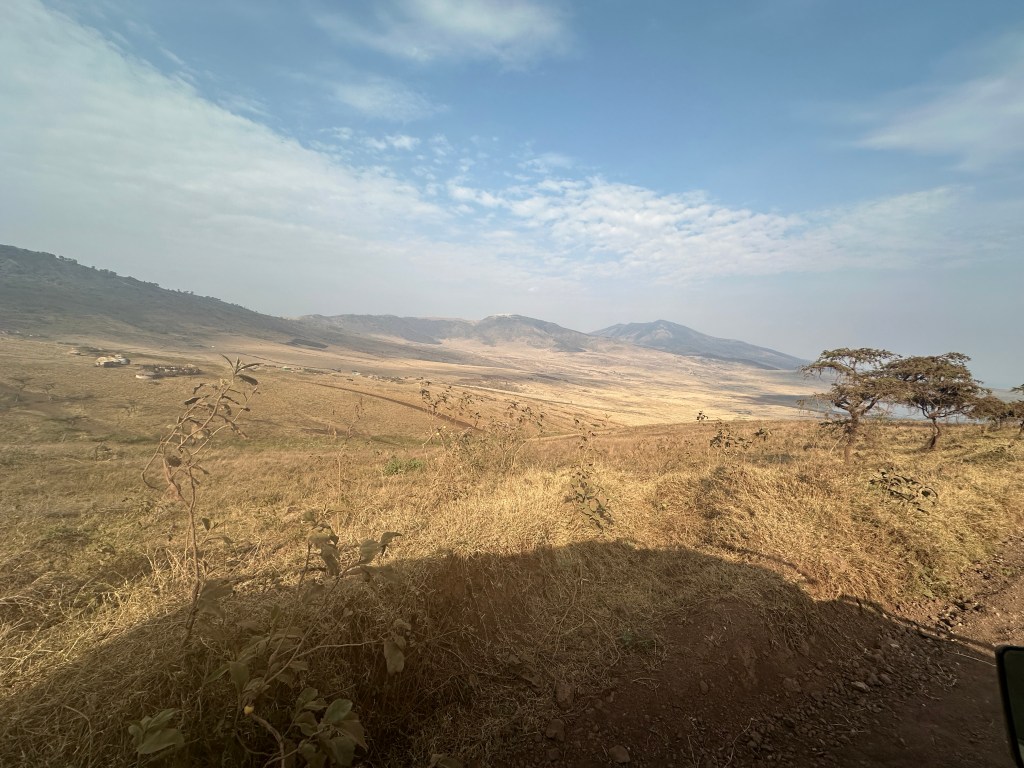
Our day was spent en route to and exploring the Ngorongoro Crater, which is the world’s largest intact caldera, and is home to 7 different habitats, including highland plains, savanna woodlands, and forests. It is also home to some black rhinos. The number of vehicles allowed into this UNESCO World Heritage Site is limited, so we had to check in at the entrance. We drove along the crater rim, and then slowly descended to the floor. Maasai tribes had lived within the crater, but most have been relocated outside of the rim. Scenery was varied and beautiful, animal sightings great, and we even saw two rhinos in the distance.
Back at the lodge, it was time for a swim and some down time before dinner.






Tuesday, October 1
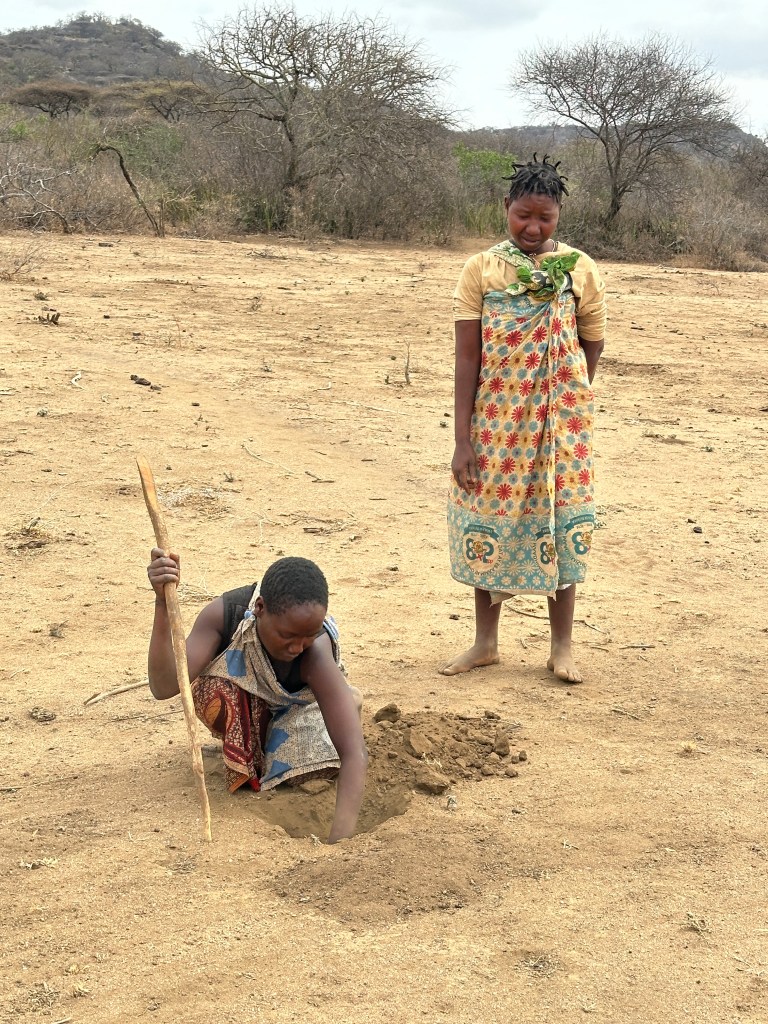
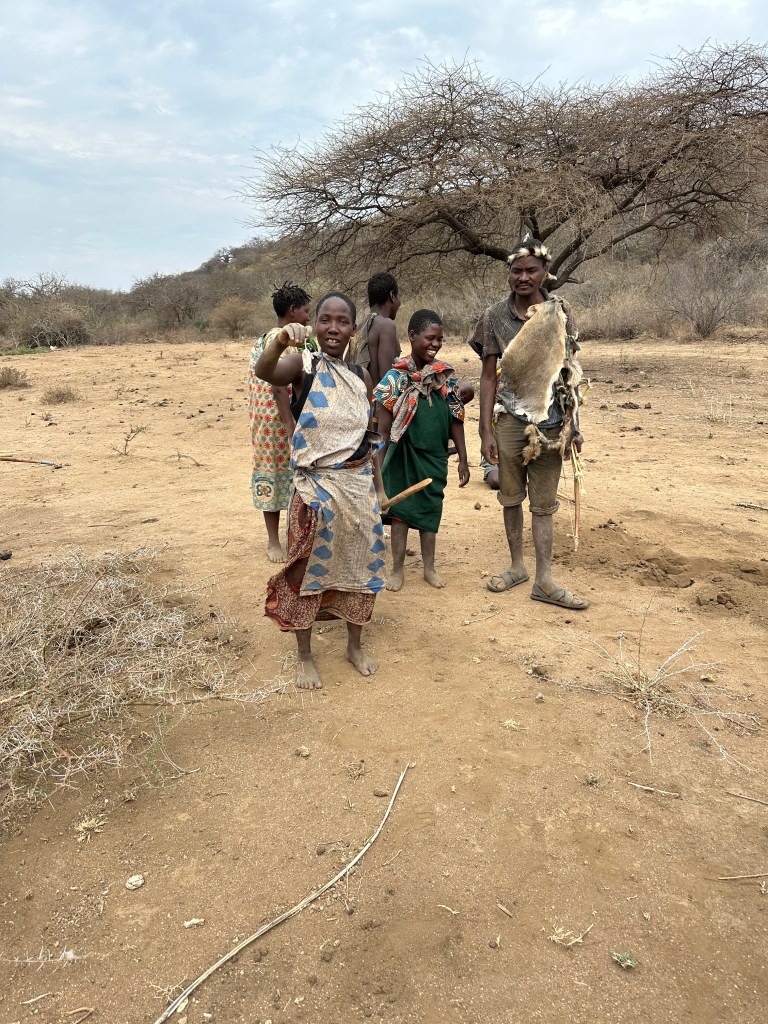
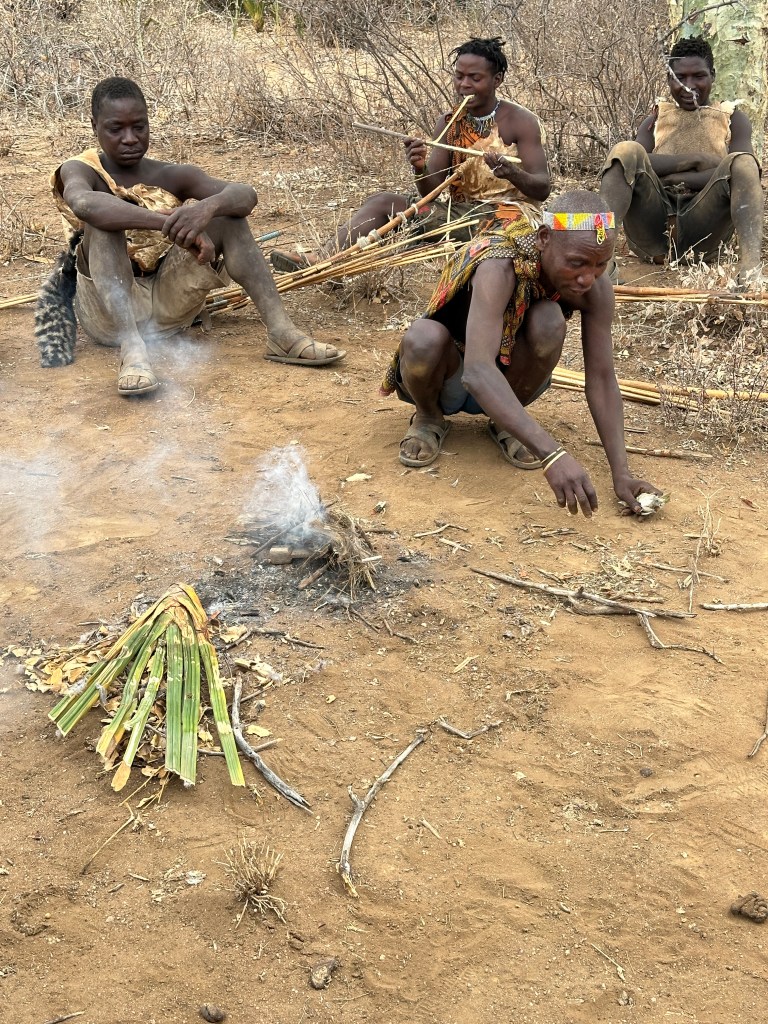
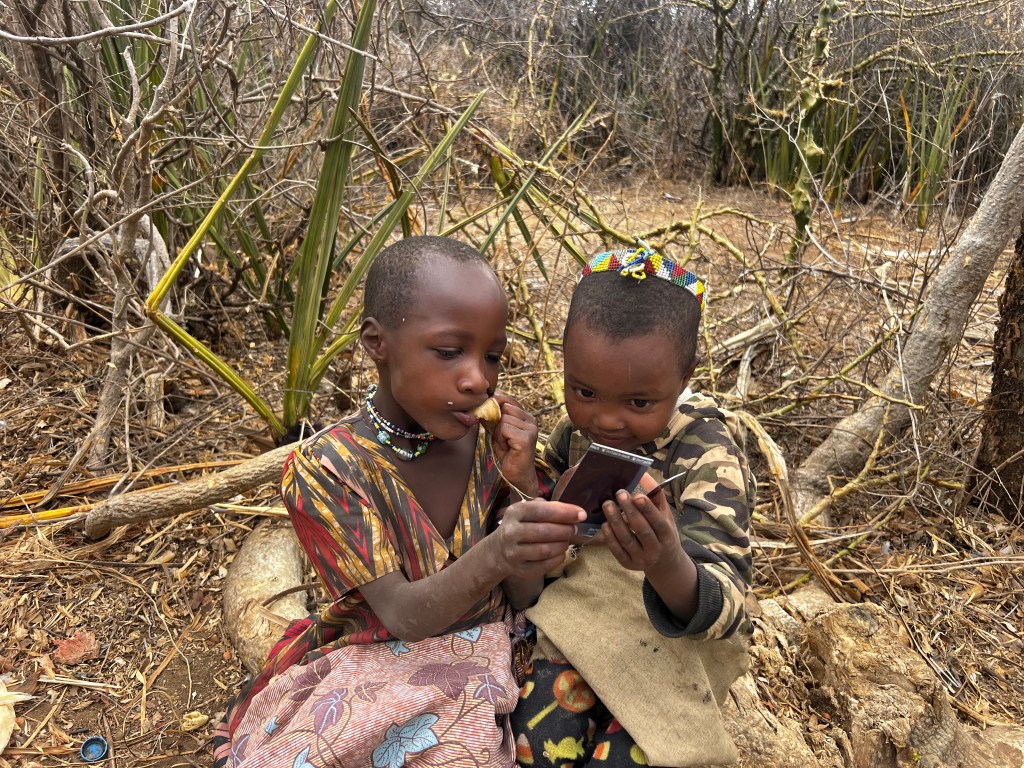
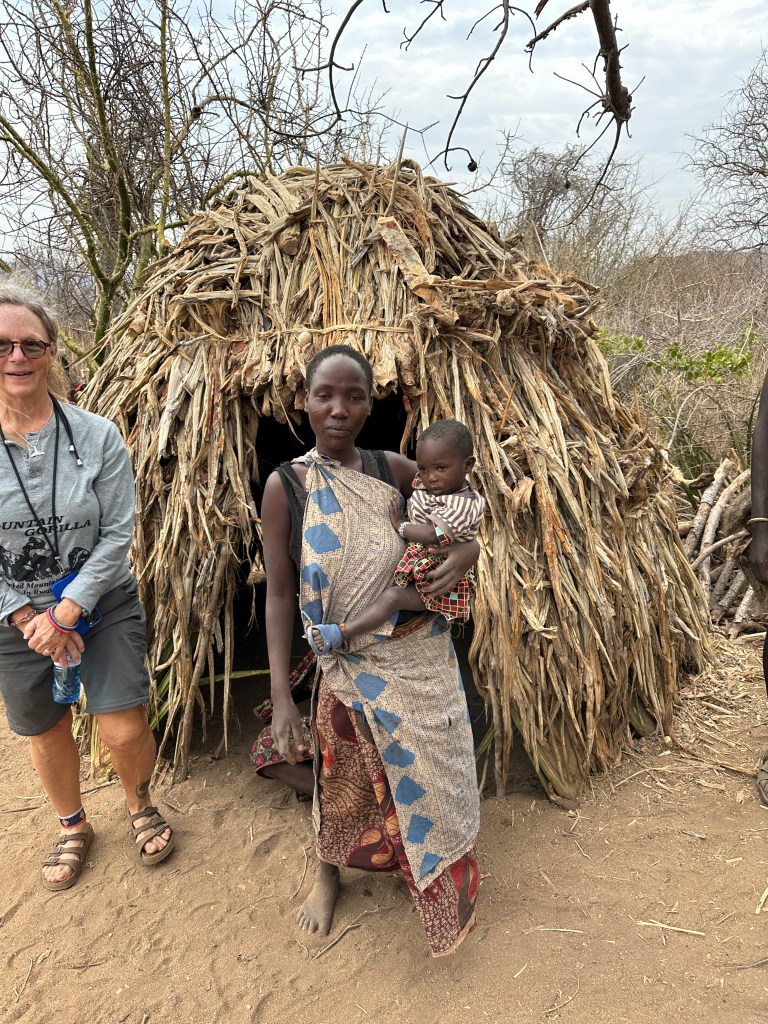
This was an amazing day! We drove to Lake Eyasi, where we met with a local guide, who then led us on a short hike to meet with a nomadi tribe of hunter-gatherers. These are the Hadzabe, who speak using a click language that is not written down, and hunt with bows and arrows. Different arrowheads are used for different animals and birds. We saw their temporary living area, and the fire used to light their marijuana cigarettes, its use being common. (They did not offer to share.) Then we joined the group in a cleared area where a woman dug into an area inhabited by mice. Once she found their tunnel, she was able to chase a mouse to the other end of the tunnel, where one of the men stabbed it as it emerged. Another of the men had shot a weaver bird in a surrounding tree. The tribesmen built a fire from scratch, and proceeded to roast the mouse and the bird. A couple of fellow travellers were bold enough to taste them, but being the public health nerd, I just watched.
Next the tribesmen gave us a lesson in using the bows and arrows, and further described the types of arrowheads and methods for hunting different small and large animals. Our local guide translated.
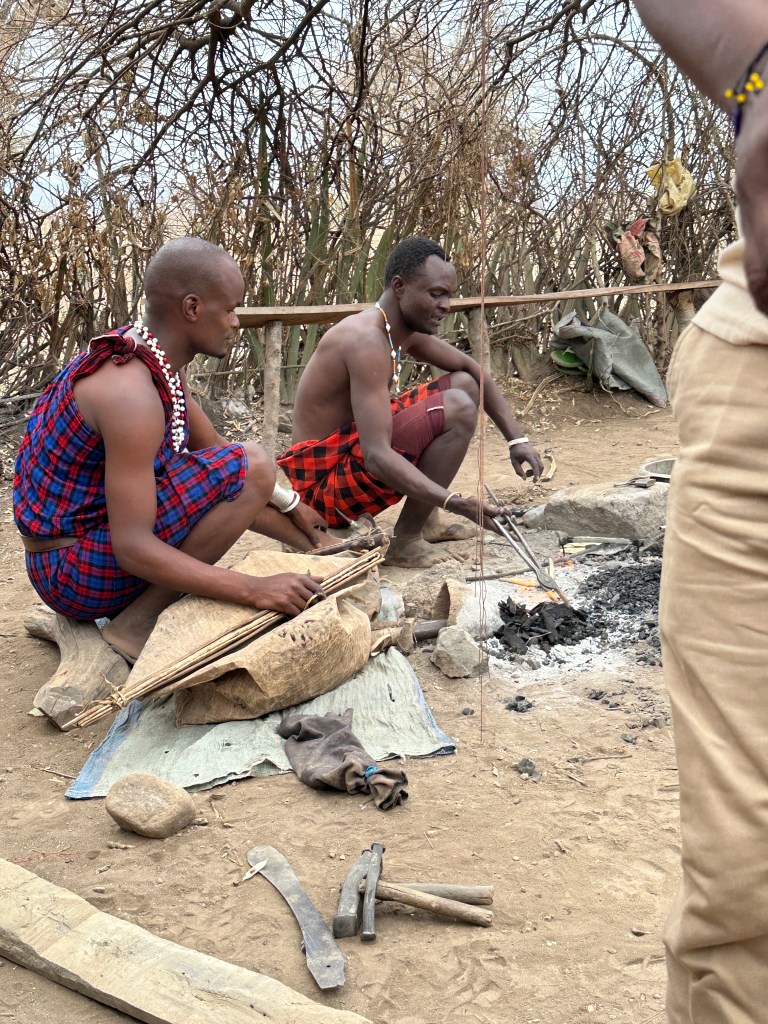
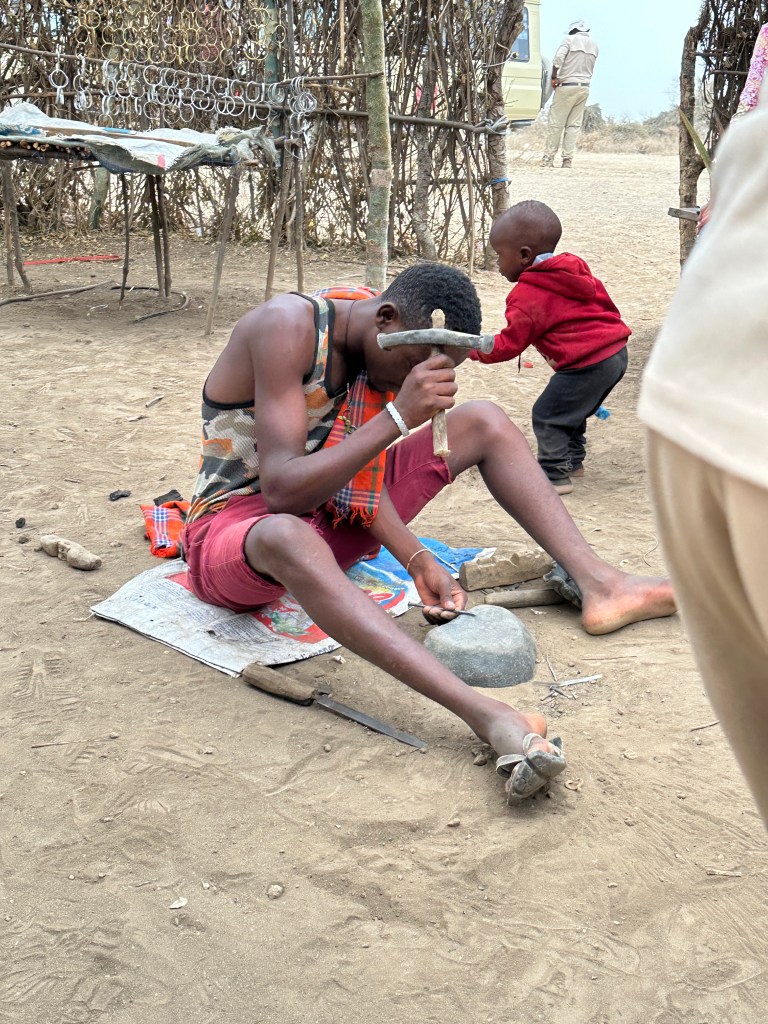
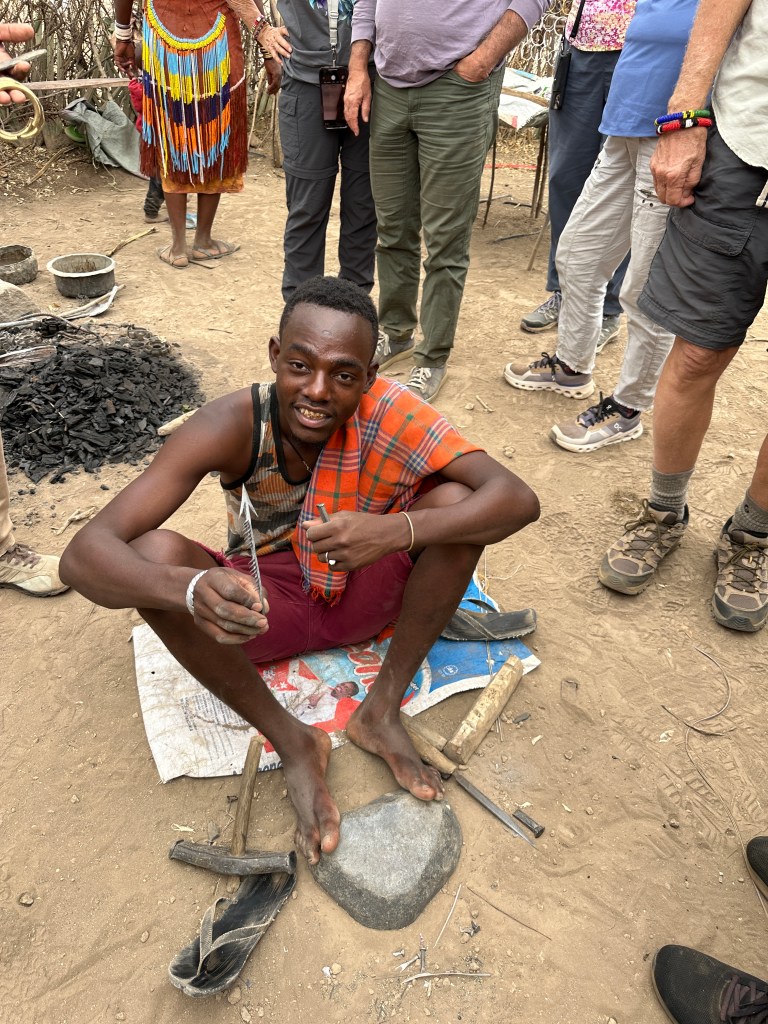
After saying our goodbyes to the Hadzabe, we visited members of the Datoga tribe, who live in the same area, and practice metal working using reclaimed materials. For example, they make arrowheads from large nails. They also made lovely jewelry.
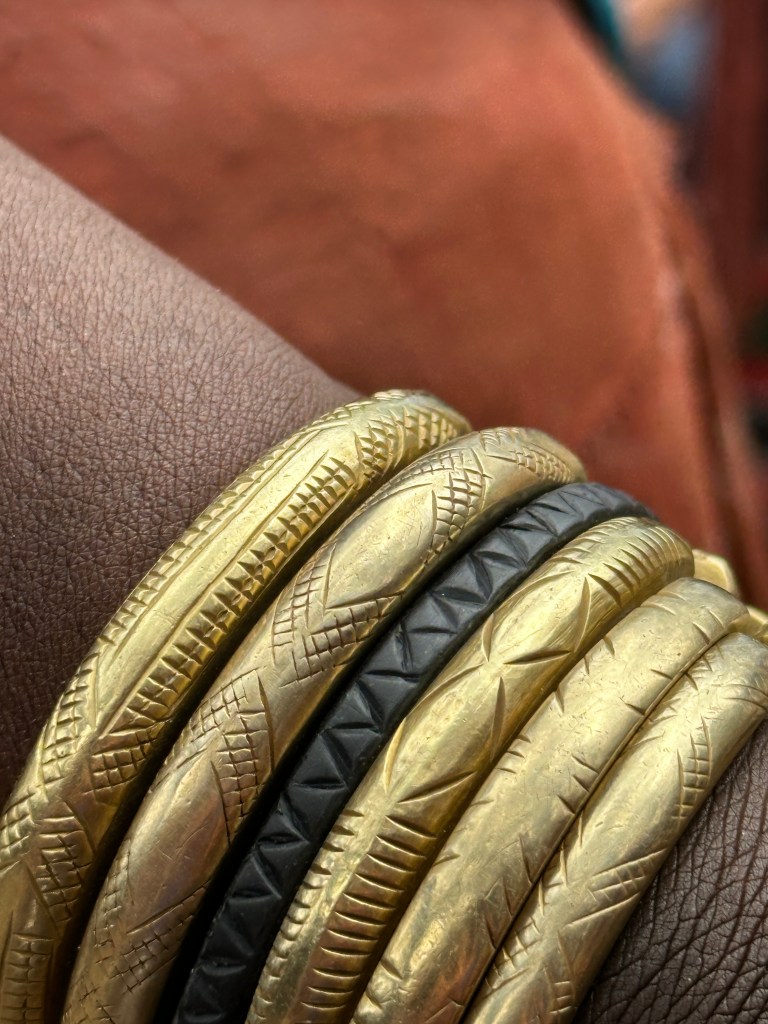
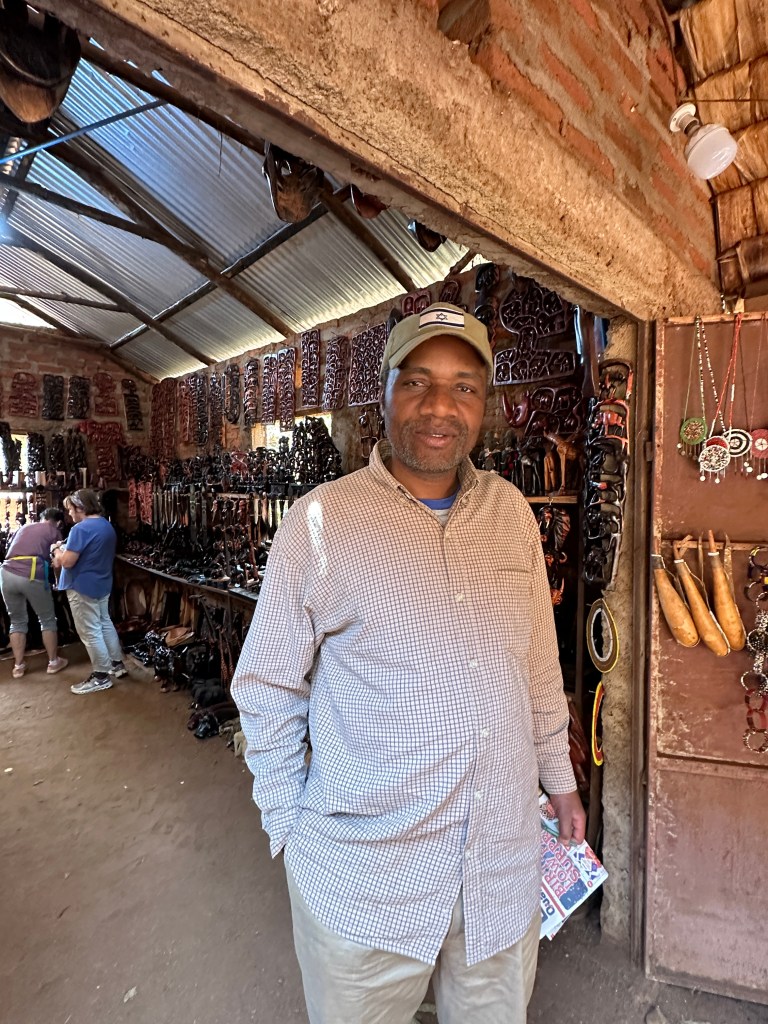
On the way back to the lodge, we stopped at a local wood-carving enterprise. The work was beautiful, made from ebony wood. Most of our group had already visited them, but a few wanted to return to shop, and it was the first visit for me.







Wednesday, October 2
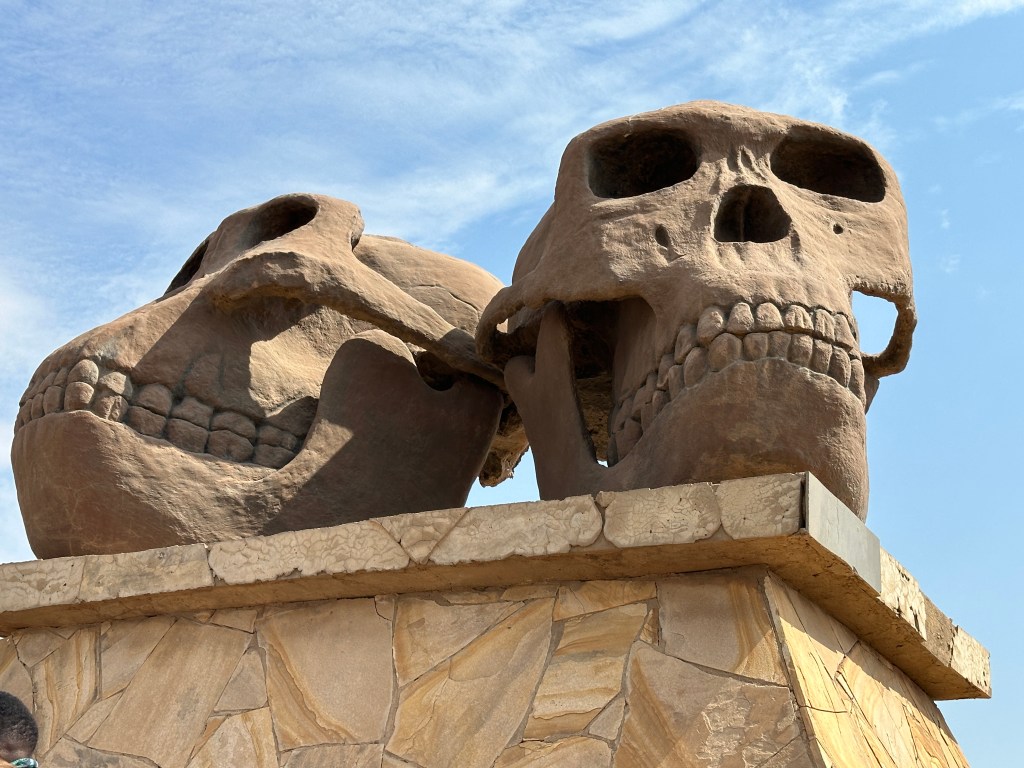
We spent most of the day driving to the Serengeti National Park. Along the way we passed Maasai villages and villagers herding their animals to and from water sources. We also stopped at the Olduvai Gorge, called the “cradle of humankind,” being the source of fossil remains of two bipedal hominim species with very different skull structures, bothdating back 1.84 million years. One was discovered by Mary Leakey in 1959.


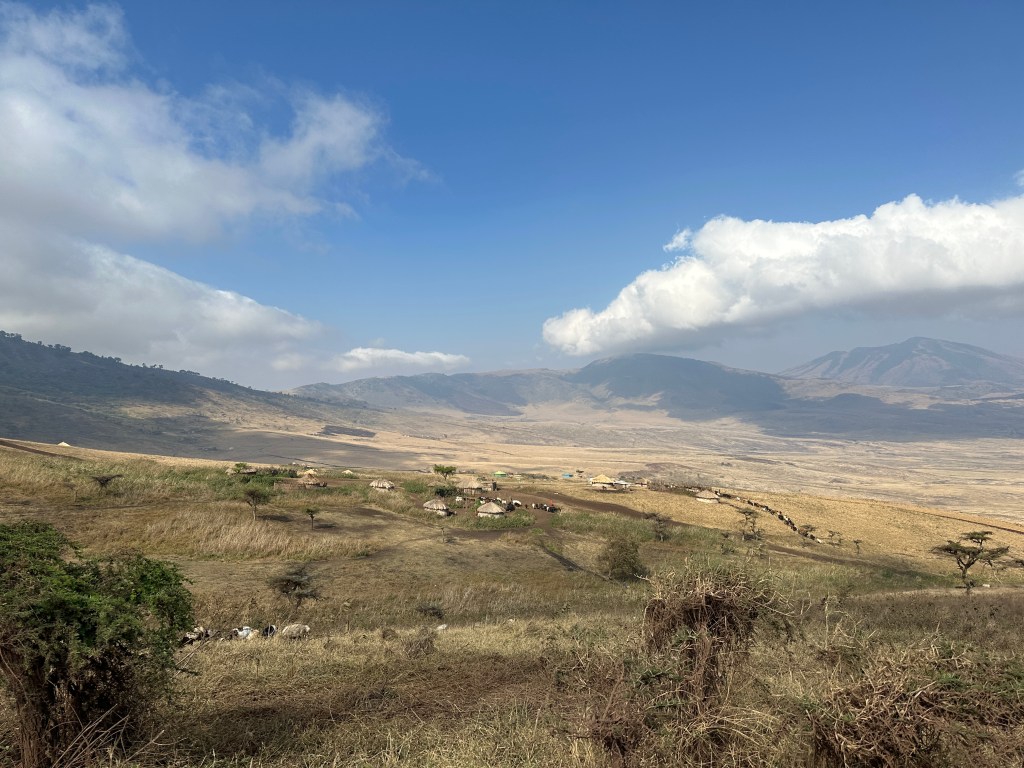
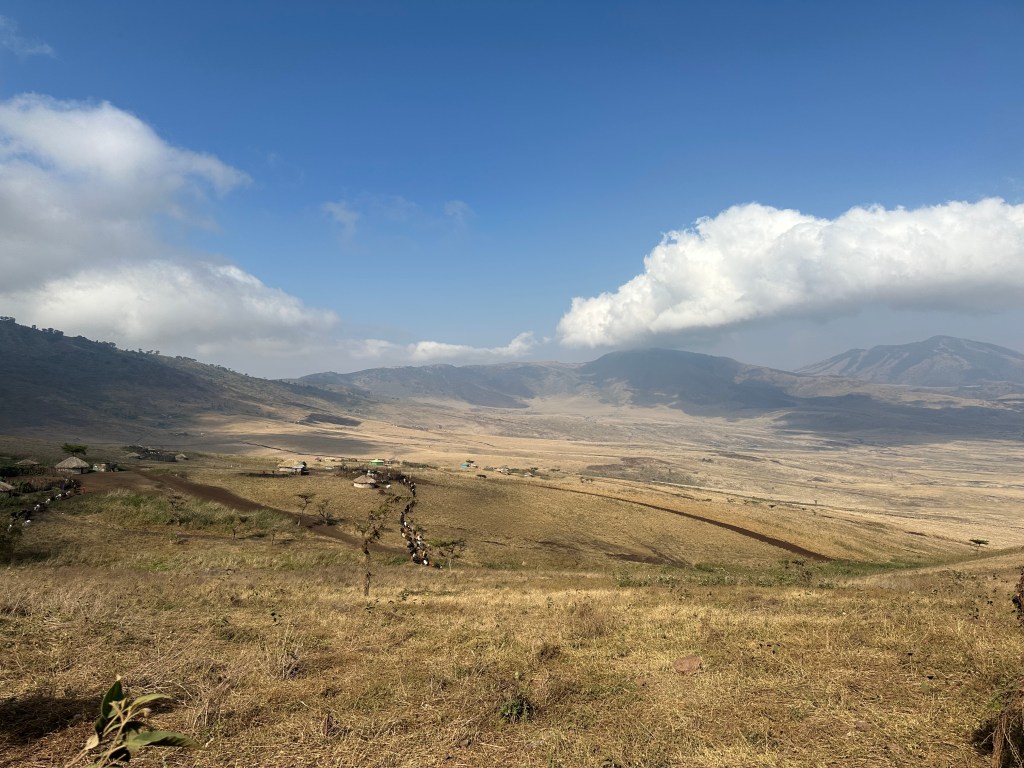



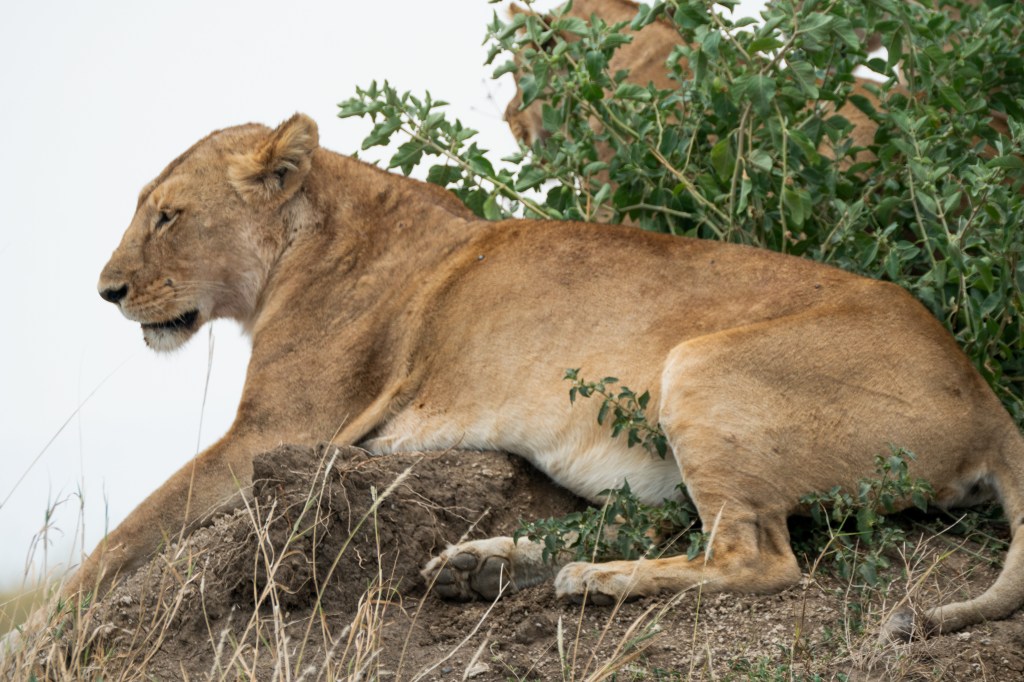
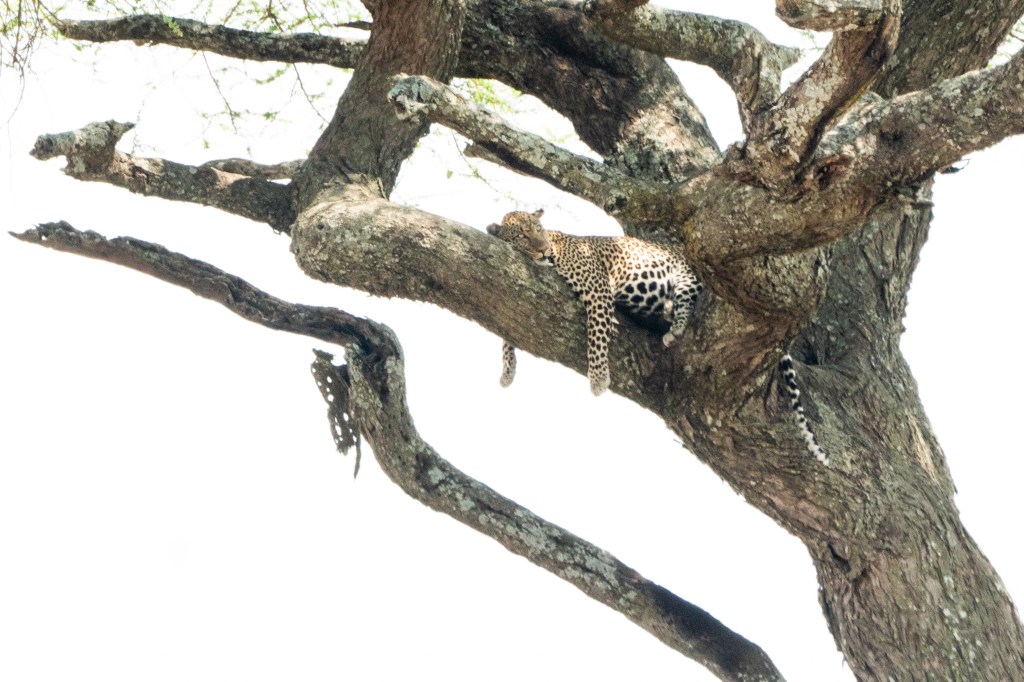
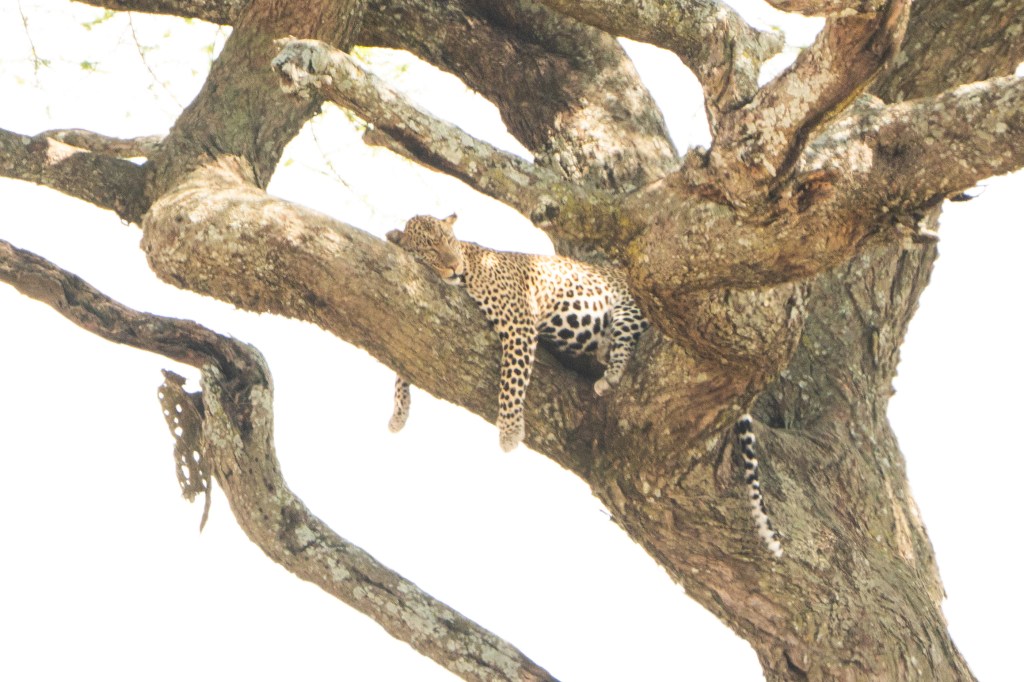
Immediately upon entering the national park, we were treated to a group of female lions sunning themselves on a rock beside the road. Later we saw our first leopard, the one remaining member of the big five for our trip.


We later arrived at our semi-permanent tented camp in the park. The camps are relocated at least once a year, requiring a couple of weeks each to take apart and set up. This was my kind of camp!!! Rustic, set amid the grasses and wildlife, with animals roaming pretty close to our tents at different times of day.
The tents were well appointed, with canvas floors and mats, comfortable beds, separate vanity with running cold water, en suite with flushing toilet, and shower area for bucket showers we could schedule whenever we wanted. Our front porches had a table and chair, and an outdoor light. Because of the proximity of the wildlife, we were not permitted to walk without an escort in the dark.


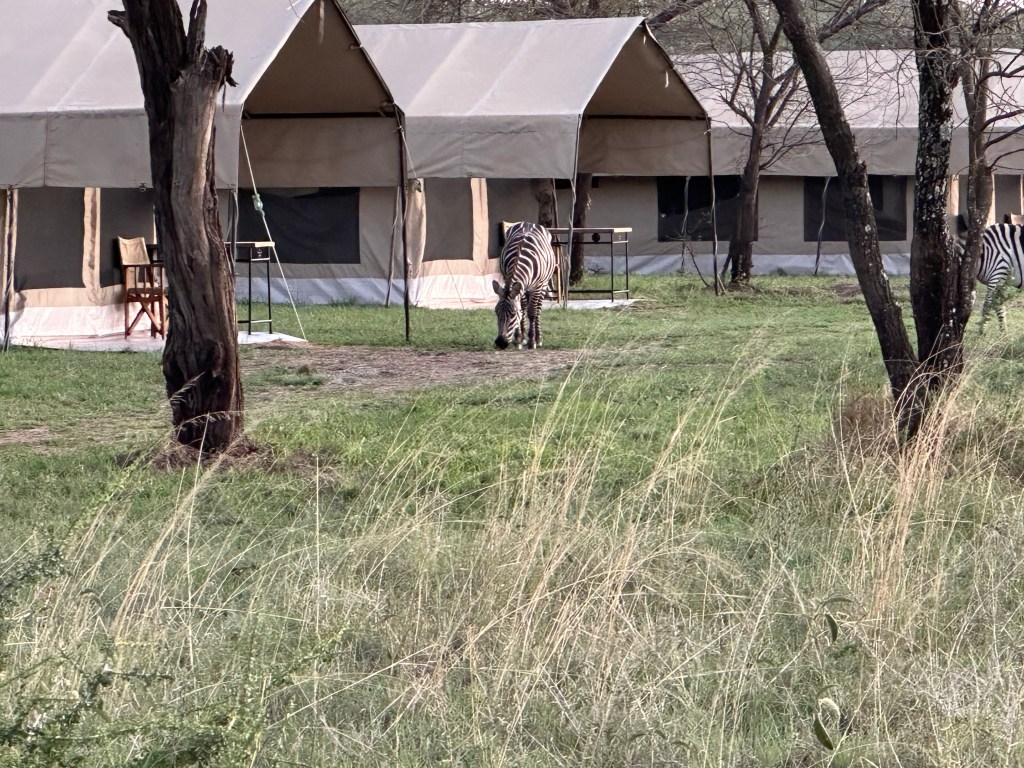
On our first evening, hundreds of wildebeest and zebras were in our “front yard.”
The night sounds were full of lions, hyenas, zebras and wildebeest. One member of our trip was sure there had been a deadly attack on a baby zebra given the screams at 1:30 am, but no carcass or circling vultures were evident the next morning.
Thursday, October 3
We were met at our camp at 4:30 am to head to our sunrise hot air balloon ride. The starting position of the basket was unusual: because of the strong morning winds, the basket was sideways, and we boarded in a seated position on our backs. As the balloon filled and was untethered from a truck, the basket righted and we were able to stand up. The reverse happened on our very bumpy “drag” landing. Our pilot, Moses, was the lead pilot, trainer, and mechanic for the whole outfit and was just delightful. The scenery as we drifted soundlessly was breathtaking.
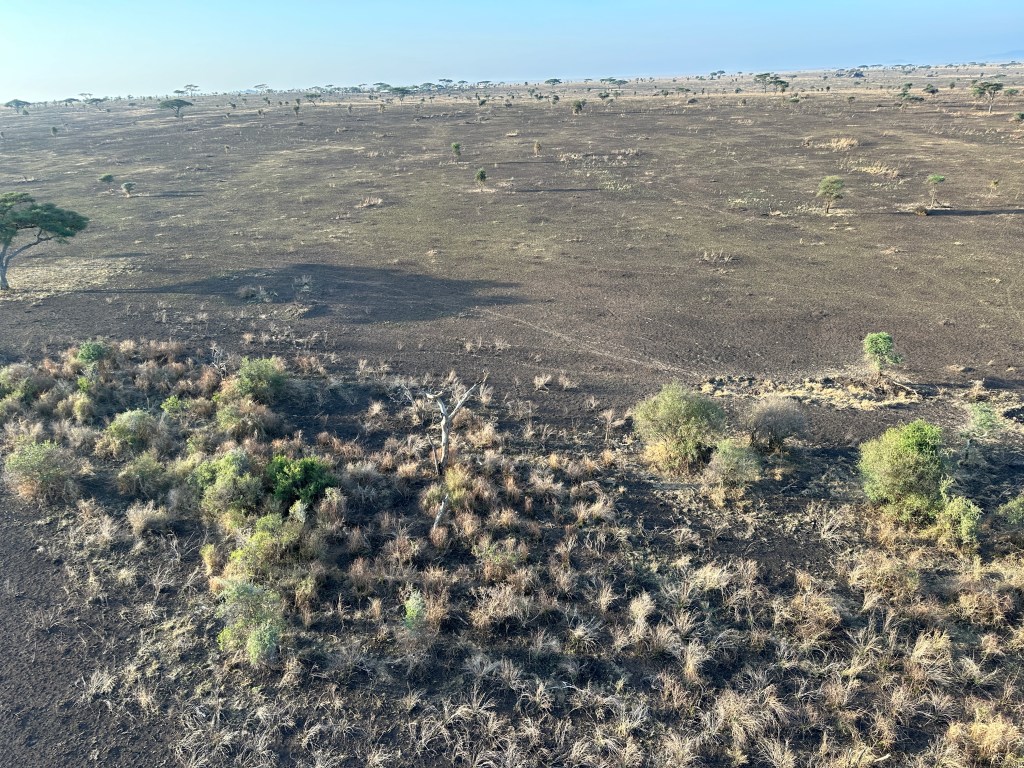
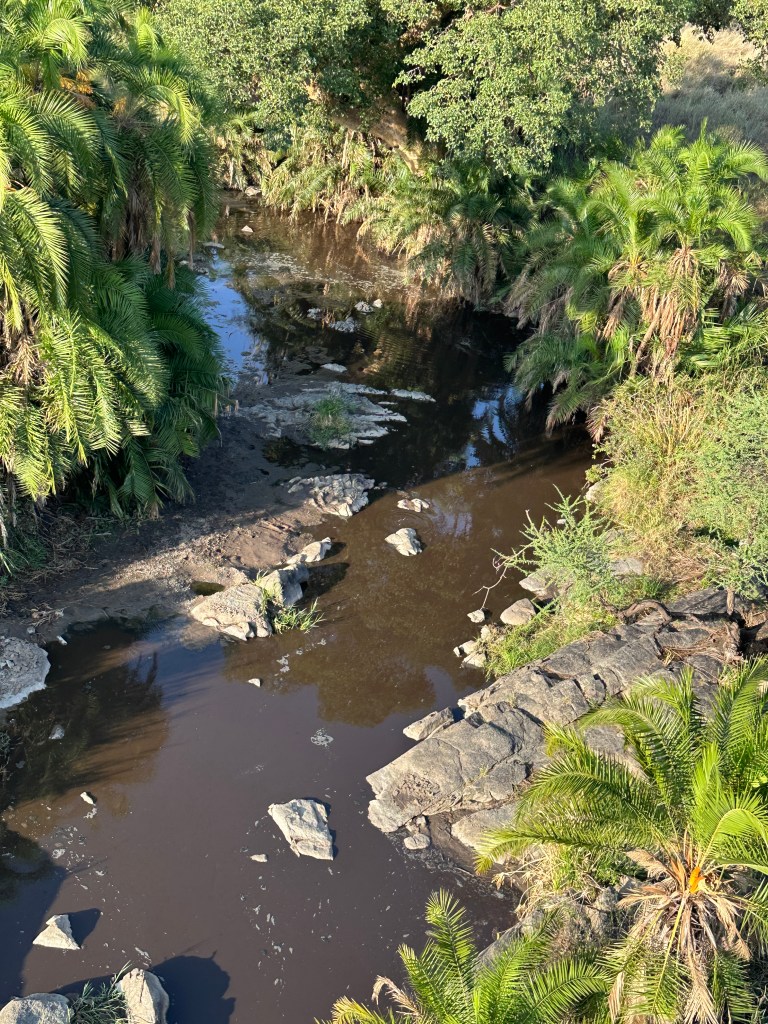


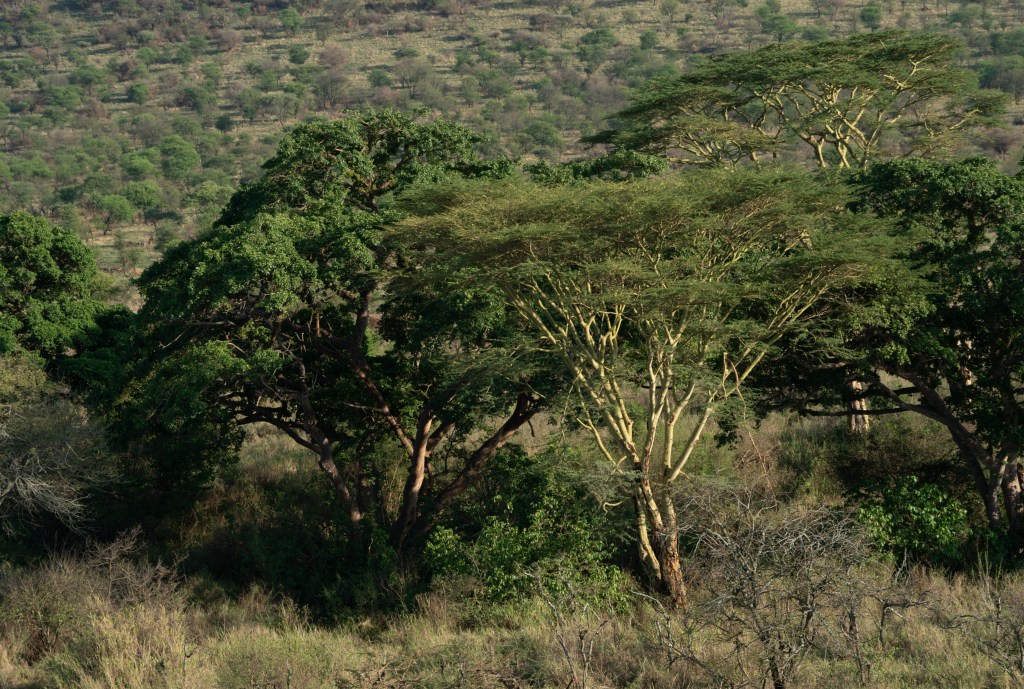


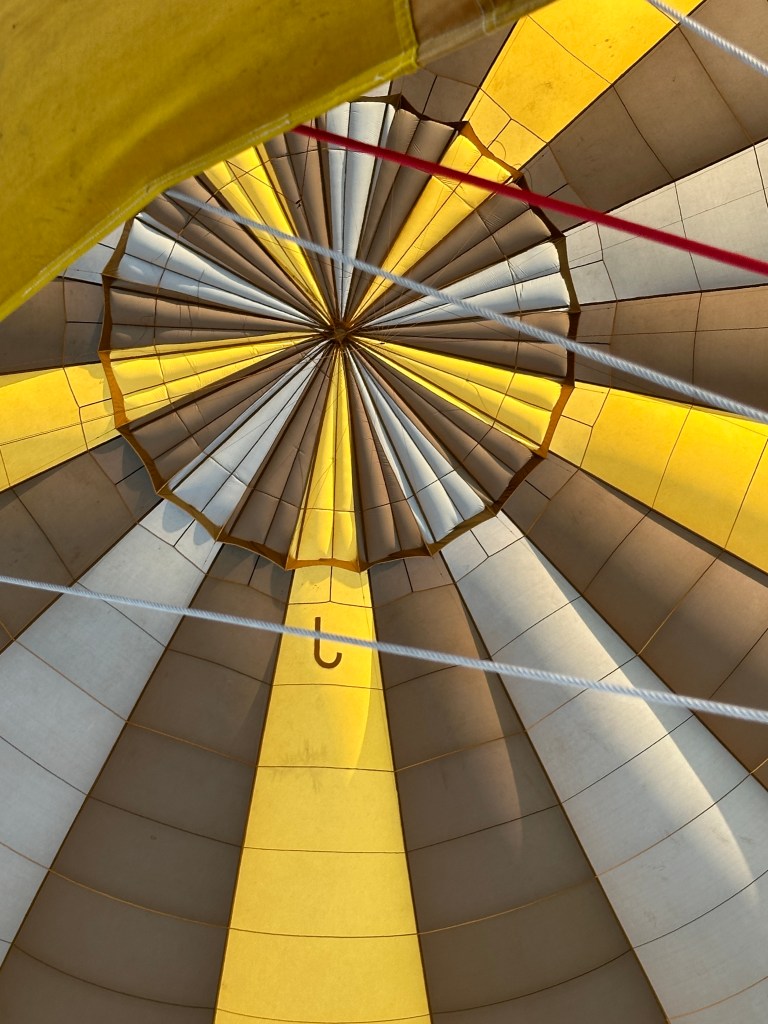


After a lovely English breakfast (and a needed stop at the awesome “Loo with a view”), we were driven to the cultural center in the Central Serengeti to meet our trip leader and driver/guides. At the center, we had a talk about poaching and wildlife in the Serengeti with a park ranger. Most of the commercial poaching throughout the Serengeti has been stopped. Subsistence poaching from villagers around the perimeter of the park has been curtailed thanks to educational activities and efforts to provide meaningful alternative sources of income for these residents who were accustomed to hunt wildlife for sustenance and livelihoods.
Thursday afternoon, Friday, and Saturday, October 3, 4, and 5
The remaining days were dedicated to full-day game drives in which we took picnic lunches with us so we could venture long distances within the park to explore different ecosystems and different wildlife. We were eager to spot leopards and cheetahs, and of course more lions. We ended up spotting a total of 67 lions on this trip, which was just amazing. Photos show some of the animals and birds we saw in the Serengeti.
Late afternoons in the Serengeti we had drinks at the fire pit at the lodge, and one unscripted sundowner in the park before dinner.

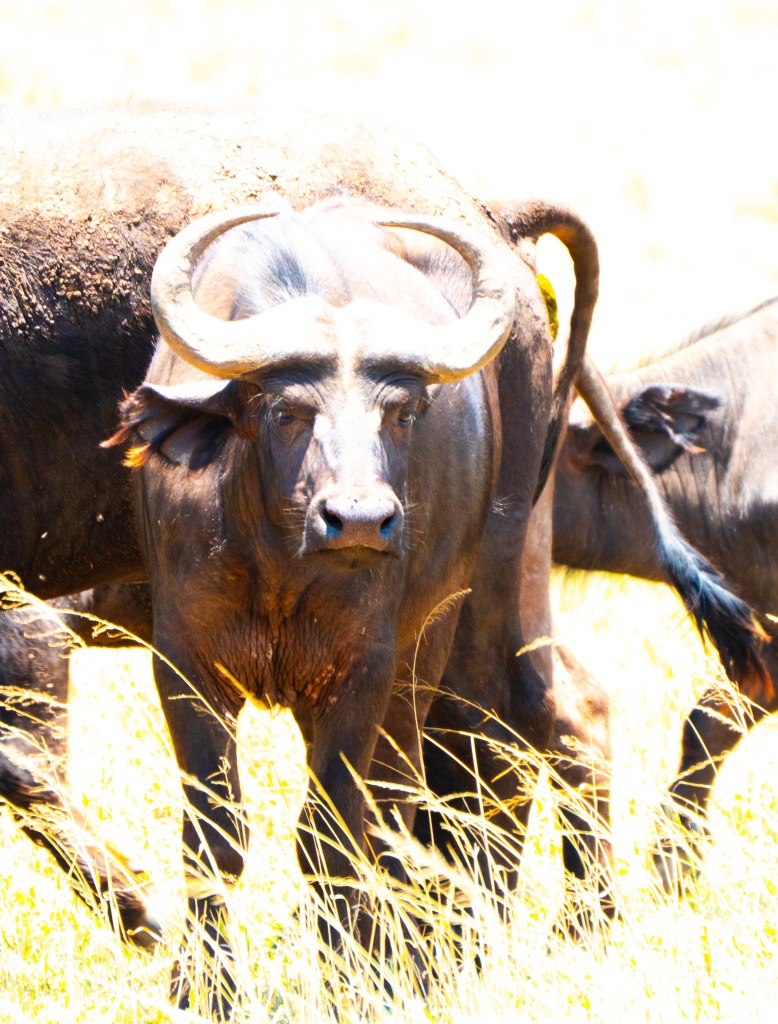


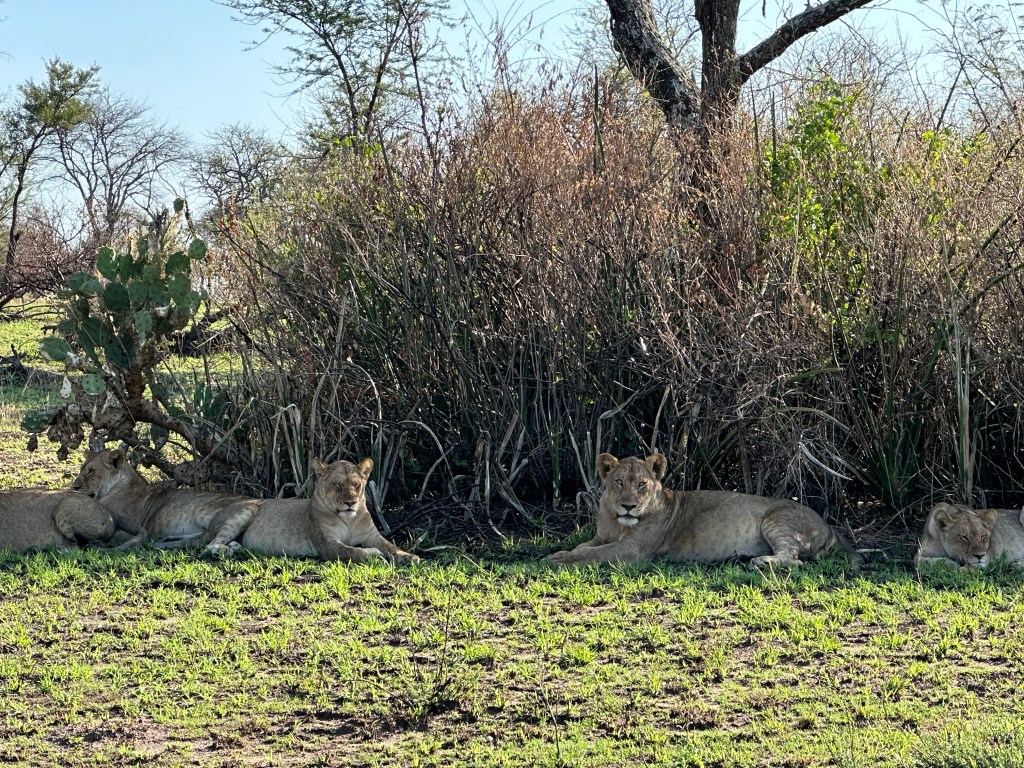


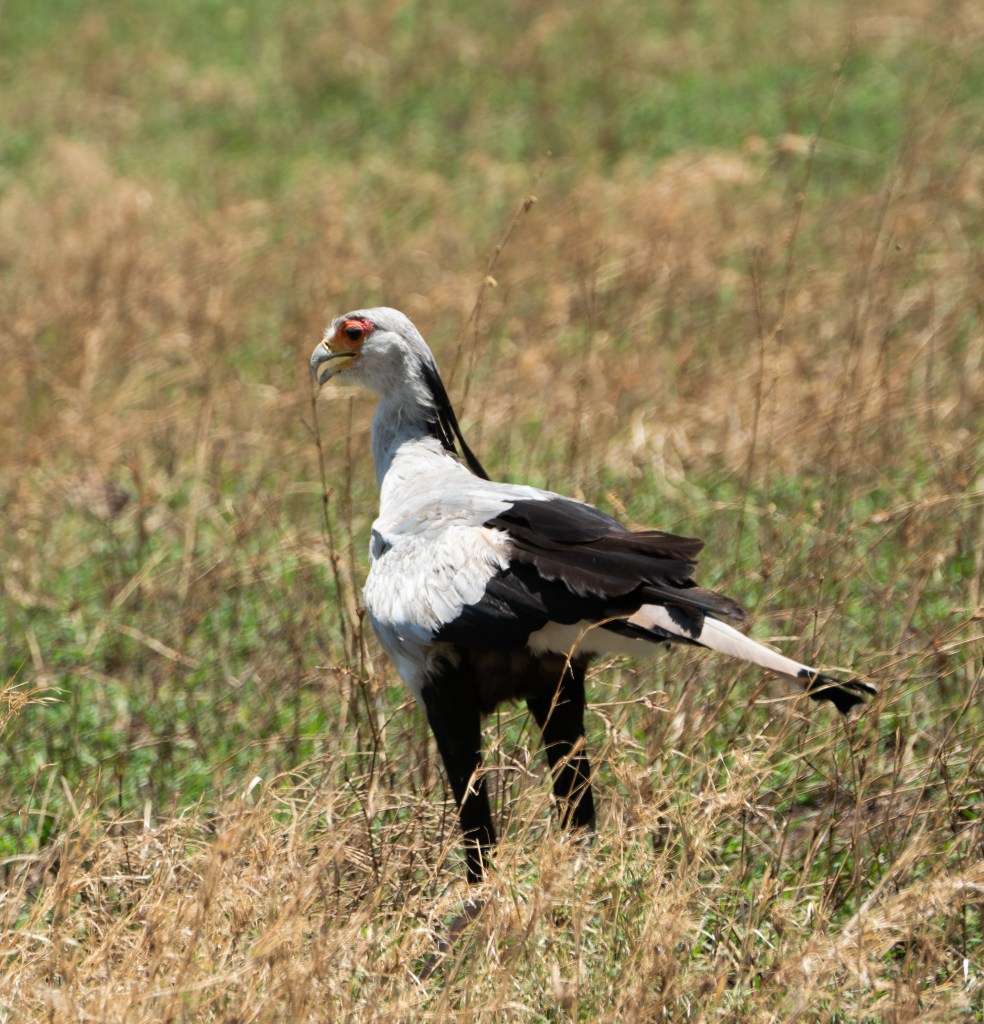
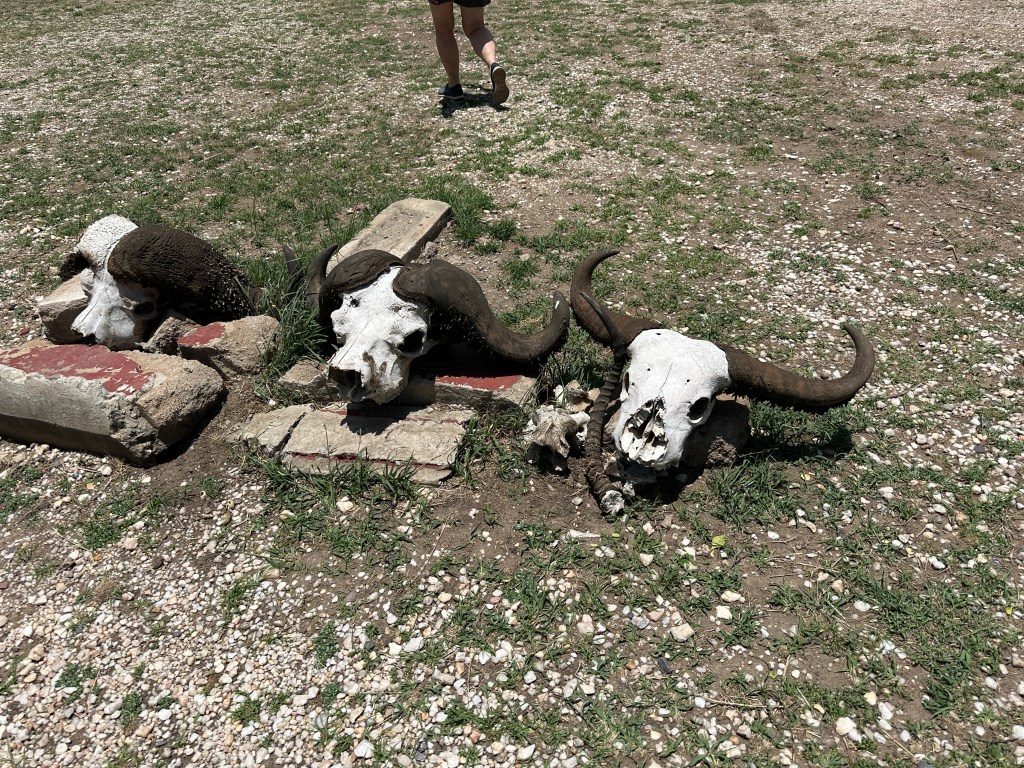


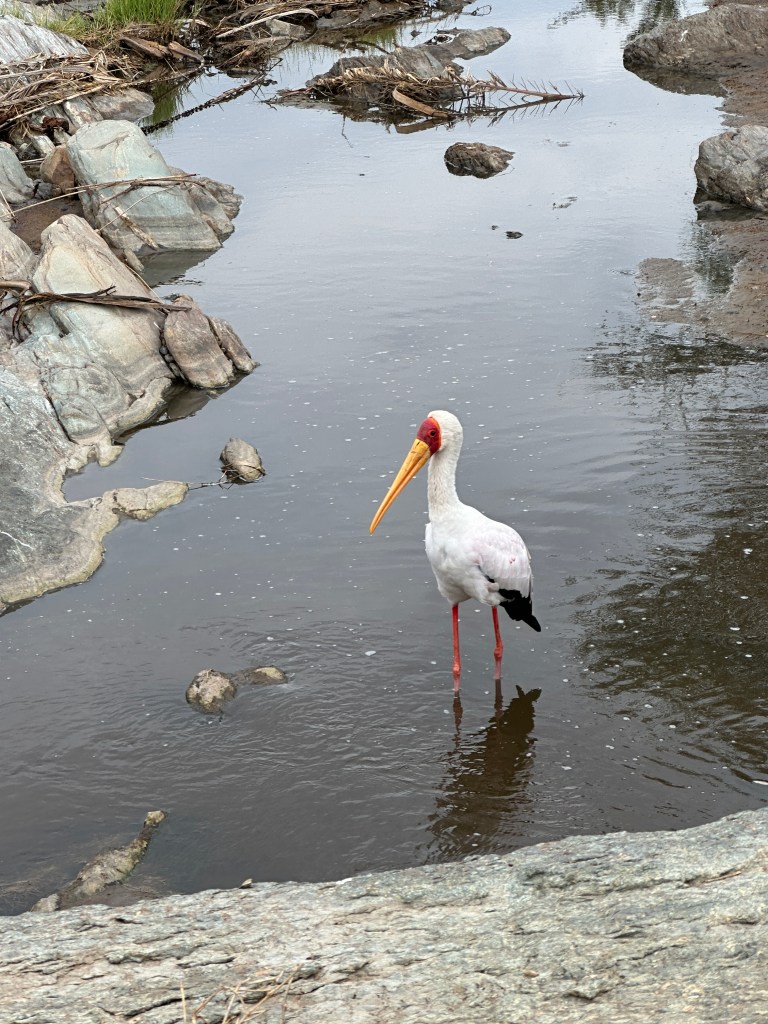


At the end of this blog, I include a list of most of the wildlife we spotted during the whole trip, even if I didn’t get a good photo.
A few remaining comments
This was a great trip. What made it so good were the people: those in our travel group; our wonderful trip leader, Amani; the driver/guides throughout the trip; and the staff at the lodges. The people in the villages were so warm, welcoming, and willing to share any and all details of their lives and perspectives. The lodges were great, food was delicious with good variety and an abundance of fresh vegetables, and fresh eggs and pancakes (crepes, really) were available every morning.
The close-up experience with the gorillas and golden monkeys will stay with me forever. As will the experiences we had in the genocide memorials and reconciliation village in Rwanda. Life in the Kibera “slum” was an eye opener. The lifestyles of the Maasai are changing, in many way for the better, and it is hard to believe that the Hadzabe nomads will be able to maintain their lifestyle, culture, and language for long.
The landscapes with acacia trees, hills, plains, and varied vegetation, were magnificent, something I was not prepared for after my two prior safari trips. And the wildlife!!!!!!
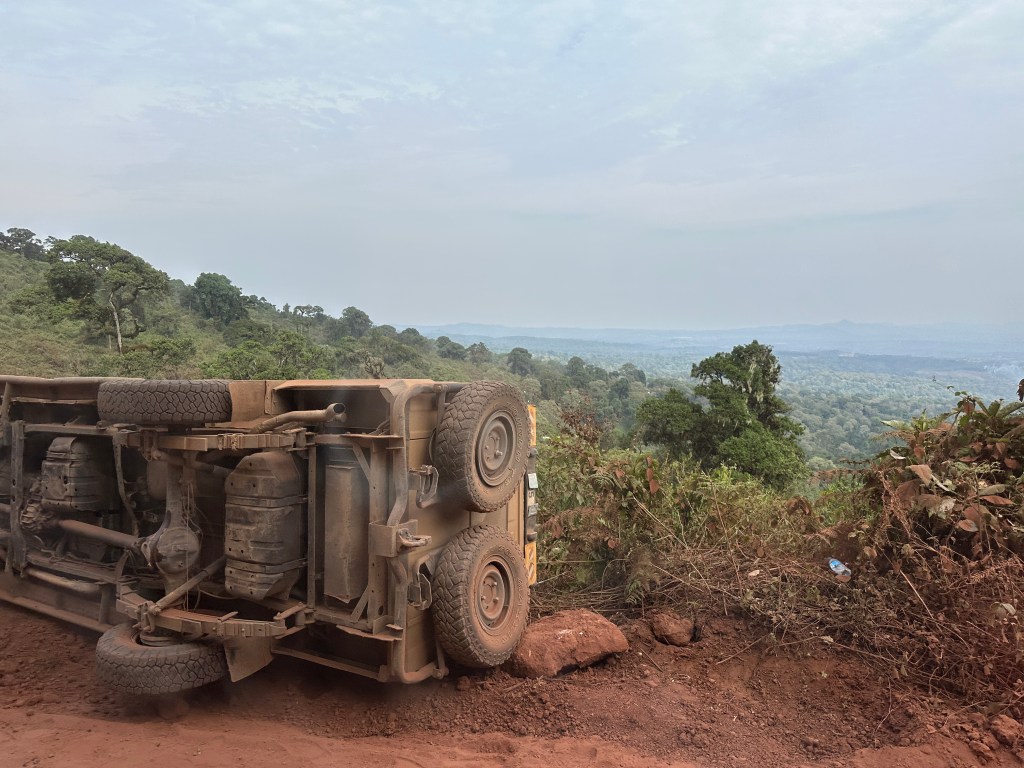
Roads were bumpy and dusty — washboard roads provided the true “African massage.” We were so busy with cultural activities and game drives, we hardly had any down time, but that was OK. There was no time for sketching and little opportunity to read. I went to sleep early every night, which is unusual for this night-owl.
The return home was fraught – a one-day delay due to a missed flight, a scary, dark hotel in the slums (which we knew were actually pretty safe, but seemed threatening at 1:30 am), and a very tired body. But that is travel, and I’d do it again in a heartbeat!!!
My next step is to make some watercolor sketches of some the beautiful people we encountered, particularly the women in the Maasai village. I hope to capture their open, joyous faces, and the colorful beads and fabrics they wore.
Some of the wildlife (not always captured in decent photos):
Anteater chat
Batteleur eagle
White-browed sparrow weaver
Maribou stork
Grey crowned crane
Yellow-vented bulbul
Paradise flycatcher
Helmeted guinea fowl
Magpie shrike
Common ostrich
Little bee-eater
Red-billed oxpecker
Yellow-billed oxpecker
Superb Starling
Greater blue-eared starling
Egyption geese
Ruppel’s Griffen vulture
Yellow-collared lovebird
White-bellied bustard
Kori bustard
Secretary bird
Fish eagle
Blacksmith blackwing
Red-billed Teal
Kittlitz’s plover
White-faced whistling duck
Squacco heron
Blackwing stilt
Black-shouldered kite
Red-necked spur fowl
Crested francolin
Ash starling
White-bellied Go Away bird
Long crested eagle
Auger buzzard
Black kite
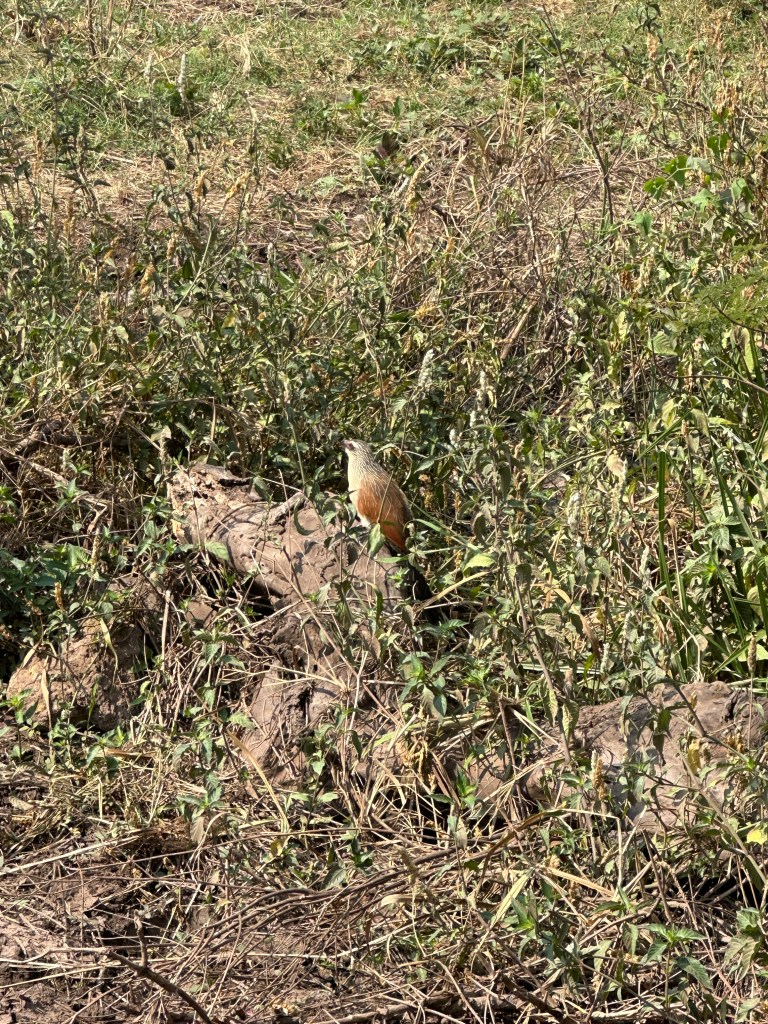
White-browed Coucal
Avocet
Flamingoes
Glossy Ibis
Dark chanting goshawk
White-bellied bustard
Red-cheeked cordon bleu
Ruppel’s long-tailed starling
Hildebrand starling
Striped kingfisher
African black crate
Long-toed lapwing
Common bulbul
Grant’s gazelle
Thompson’s gazelle
Eland
Topi
Klipspringer
Dik-dik
Impala
Stenbuck
Waterbuck
Fringe-eared oryx
Yellow baboon
Southern wildebeest (we saw two types)
 My Travel Blog
thank you so much for your detailed blog. It is much appreciated. I’m signed up for 2026.
LikeLike