Maritime Jewels of the British Isles and Ireland
June, 2026
I was craving a trip that Chris and I could share after traveled solo to Patagonia and Easter Island in January. Looking at the Overseas Adventure Travel (OAT) offerings, and considering we would welcome a break from summer heat of North Carolina, we landed on this small ship voyage around the British Isles.
The trip turned out to be ideal: non-stop flight to London, quick ride to Oxford, where we stayed two nights; on to Fishguard, Wales, where we boarded our ship for two weeks. We had stops at lovely ports/islands, fabulous scenery, welcoming local hosts, two days in Belfast, more lovely islands, a quick lay-over in Aberdeen and the flight home. The weather was cool, often breezy and overcast with a few brief showers. The sun came out often as well, with glorious blue skies when we needed them most.
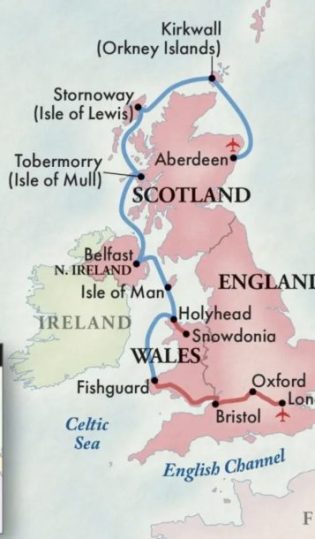
The trip map below is from the OAT website. One correction: because of strong winds, the ship could not dock in Bristol as planned, so we drove through Wales to meet our ship in Fishguard.
Below is a day-by-day summary of the trip. If you click on a photo, you will get the full image and can scroll through the images in each block of photos. Hit escape to return to the blog. In some sections there may be multiple blocks of photos under the same text. Videos are linked to YouTube. The videos can be accessed in the printed version using the QR codes.
I create these blogs as a way to help me remember key details of trips, and to put in context some of my favorite photos. I also love sharing the experience with friends and fellow travellers from different trips we have taken.
Monday, June 8
We left Sunday, June 7 and flew overnight from Raleigh Durham to London and were met at Heathrow Airport and driven to Oxford, where our hotel rooms were ready early.
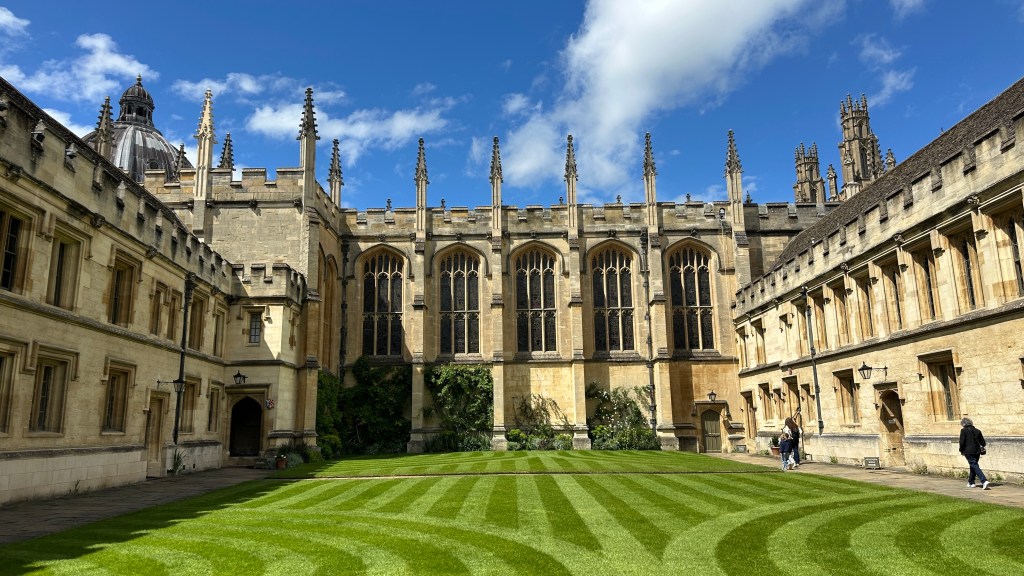
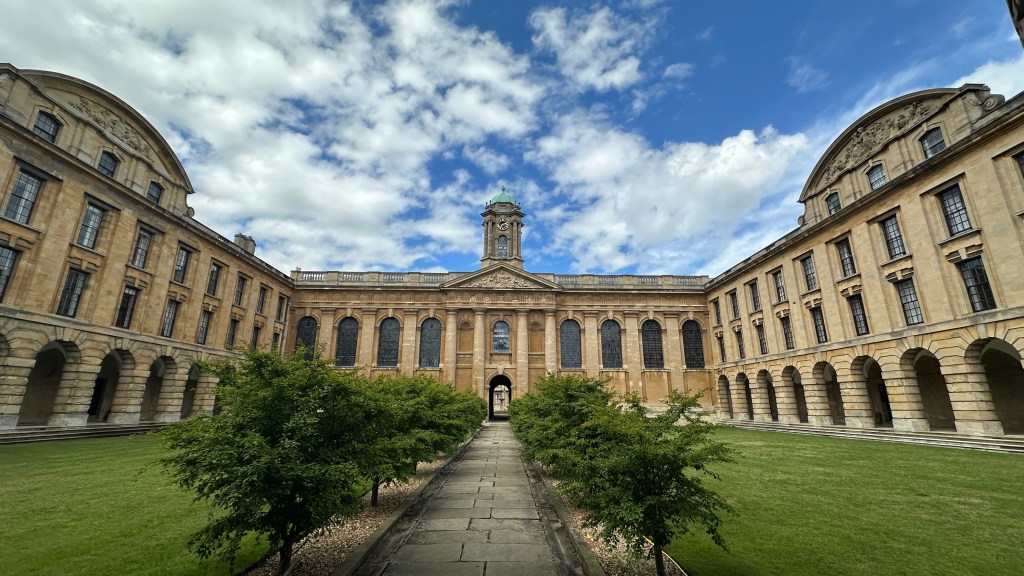
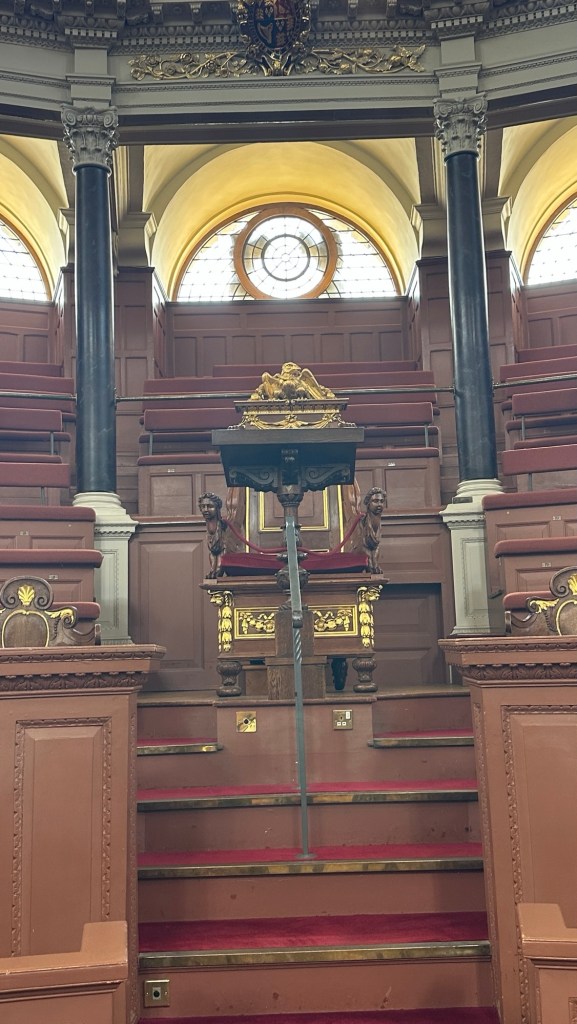
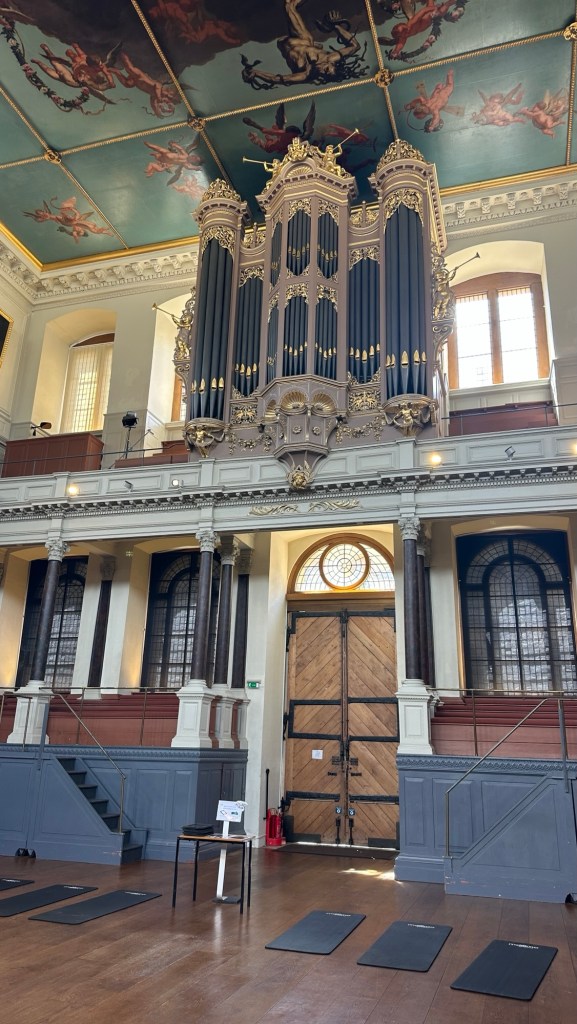
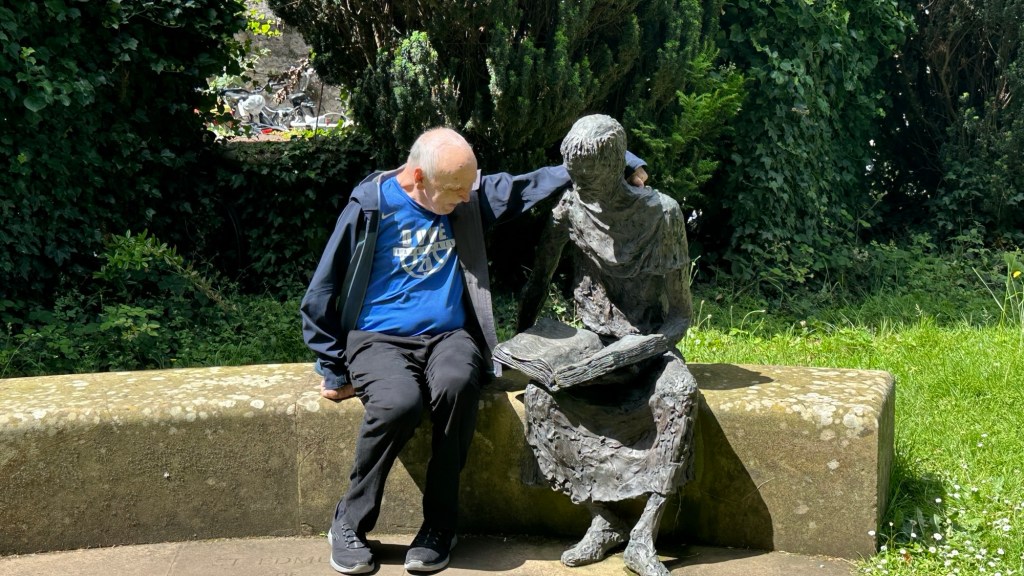
Chris and I had independently explored Oxford, its various colleges, chapels and museums back in 1986. On this trip, we thoroughly enjoyed seeing the sites, visiting pubs, and watching the Oxford students around town. Our hotel was in the heart of town, directly across a narrow road from the registration and exit tent for all student examinations. While Oxford students take classes in their specific colleges, examinations are all centralized at the University level. For the exams, the students must wear the traditional “sub fusc”attire: white shirt, black bow tie or ribbon, black trousers/skirts, black socks and shoes, under the academic gown, which is a short, black, capped-sleeve gown. Students taking their final exam wear a red carnation. Upon completion of the exam, they are cheered by fellow students carrying flowers, champagne bottles, and other goodies, like stuffed animals and crowns. Students taking their first exams wear white carnations, and the rest wear pink ones, if they don flowers at all. We were fortunate to be in town during the time of exams and were able to witness multiple celebrations.
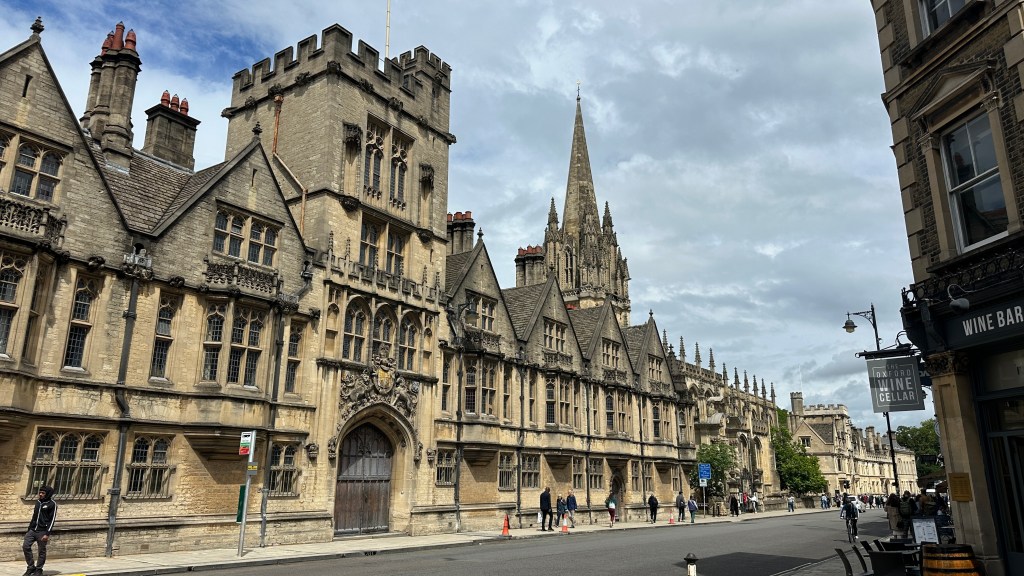
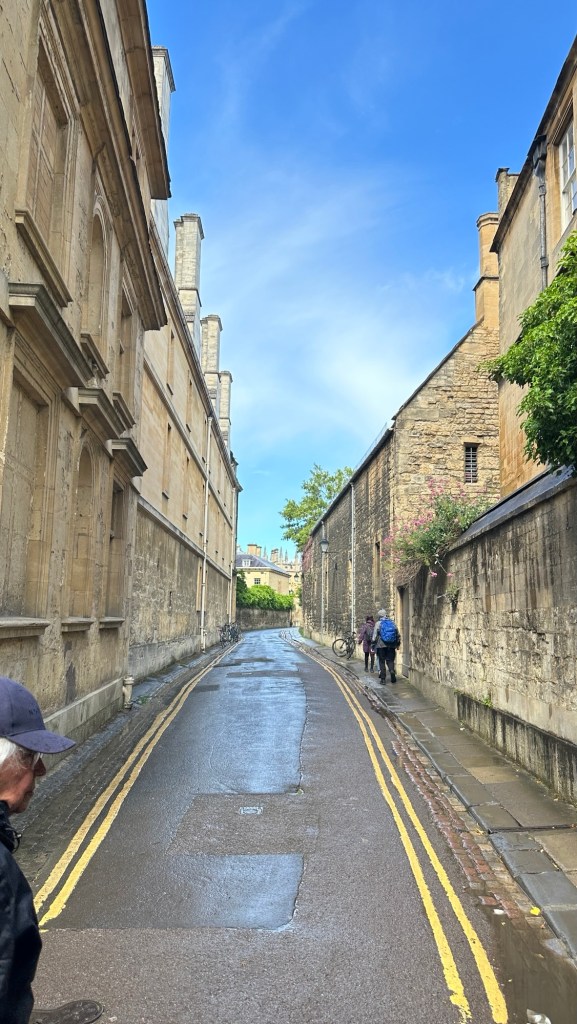
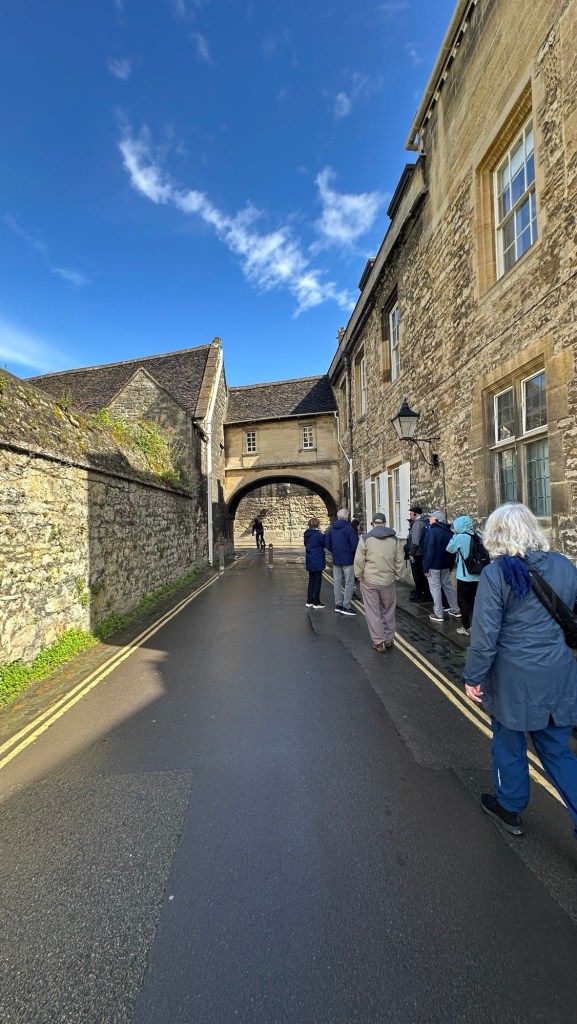
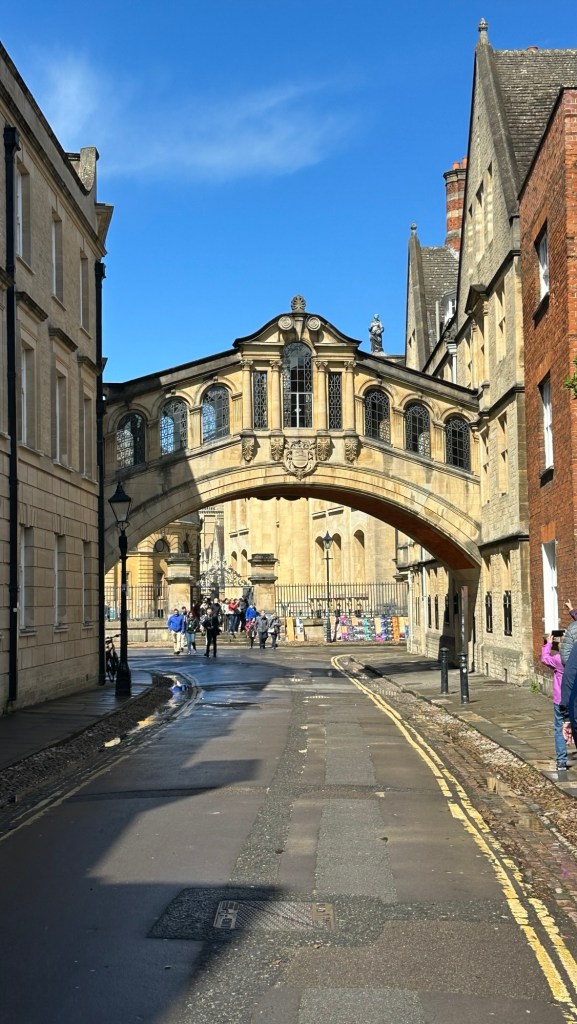
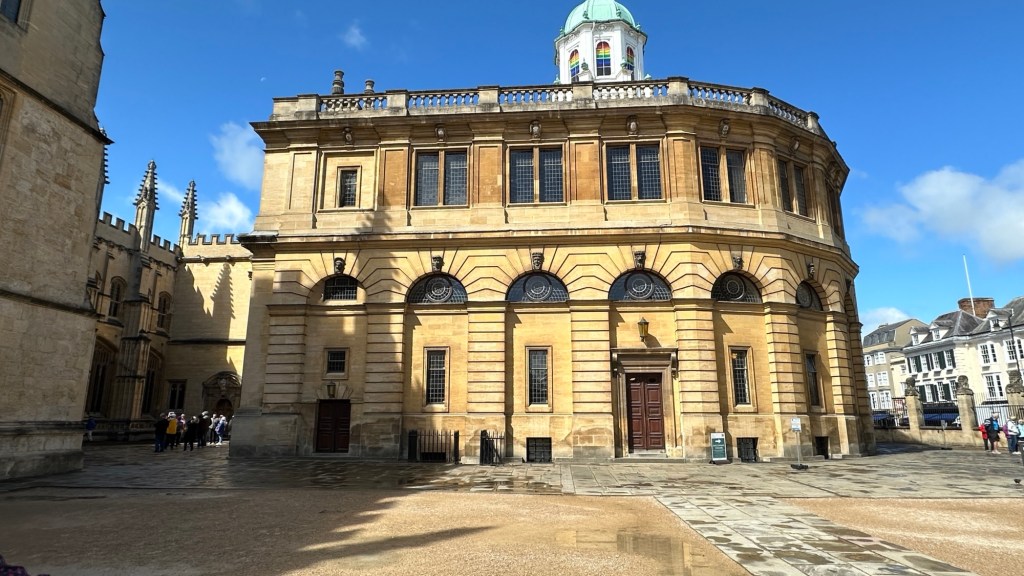
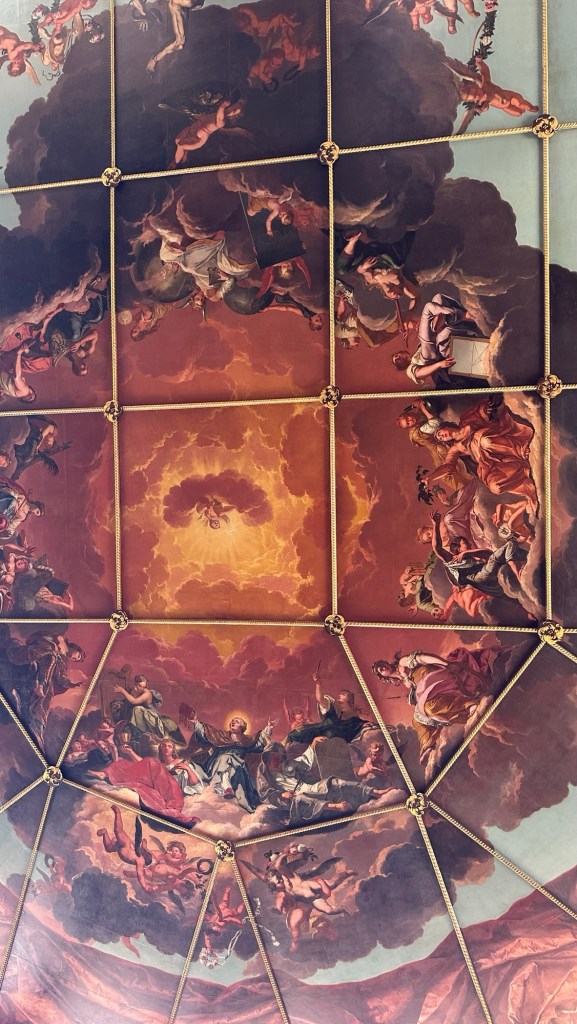
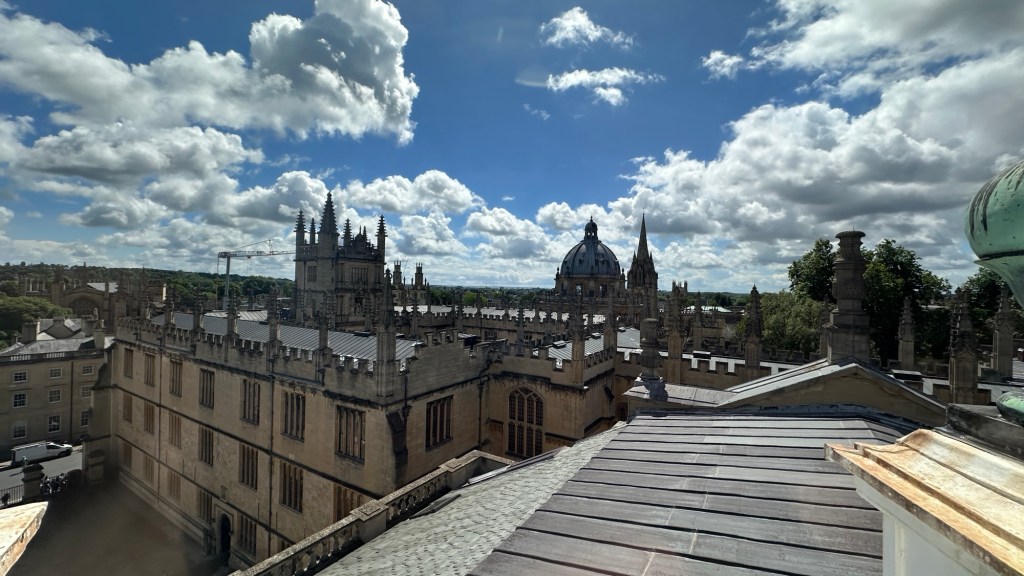
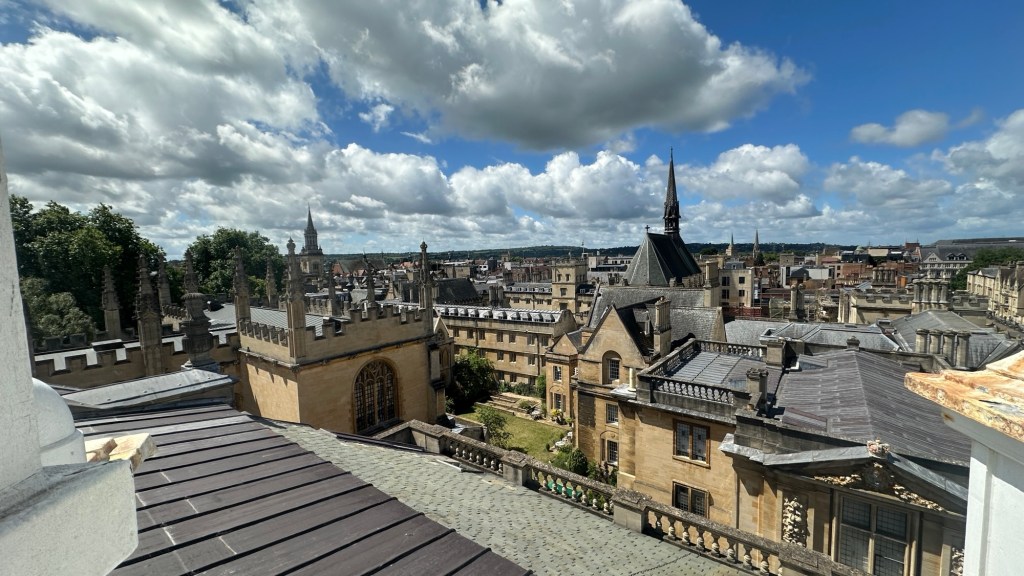
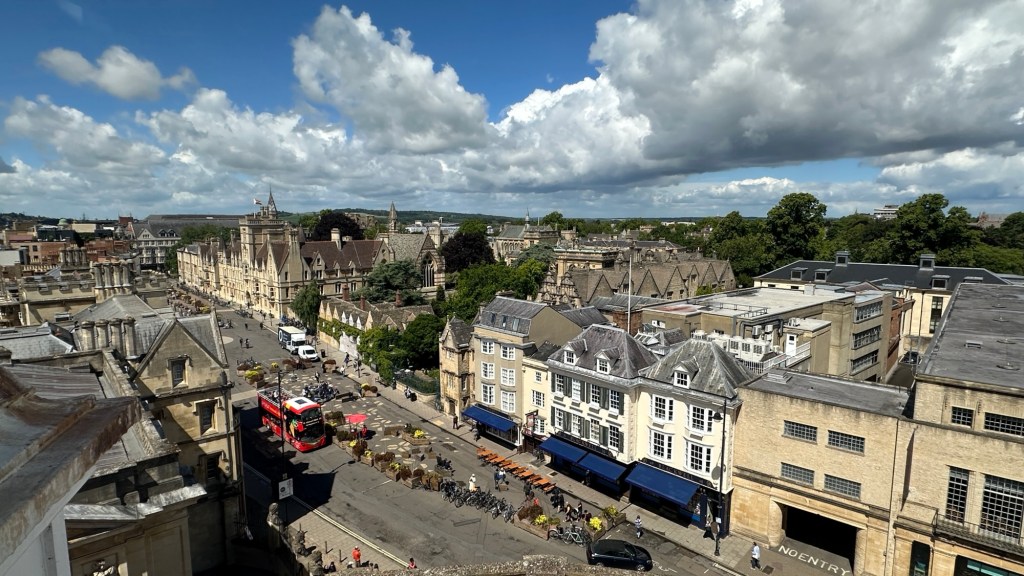
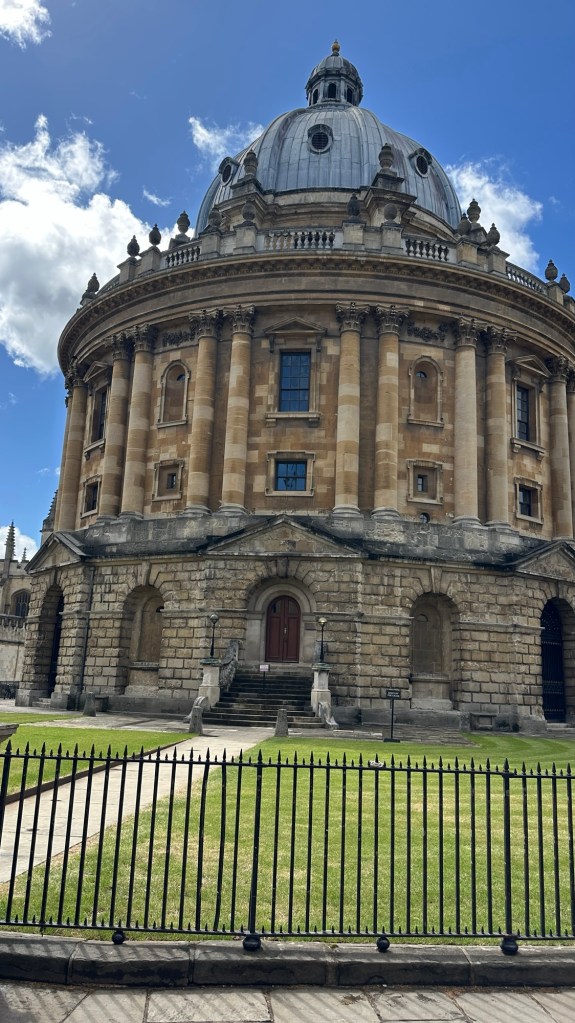
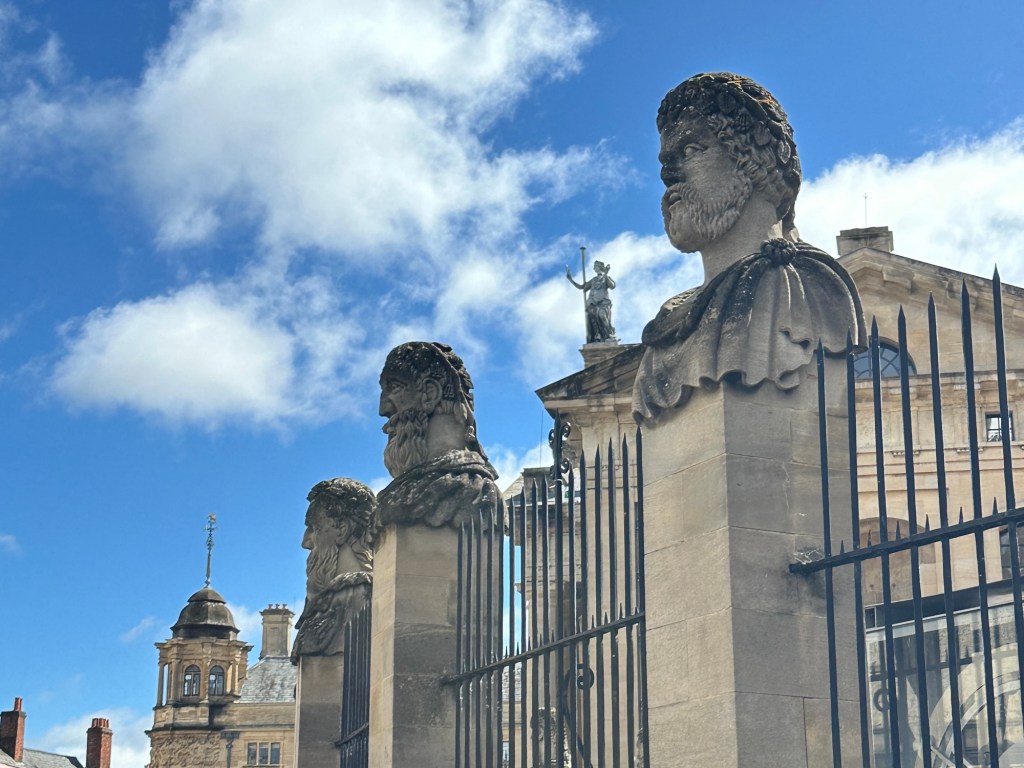
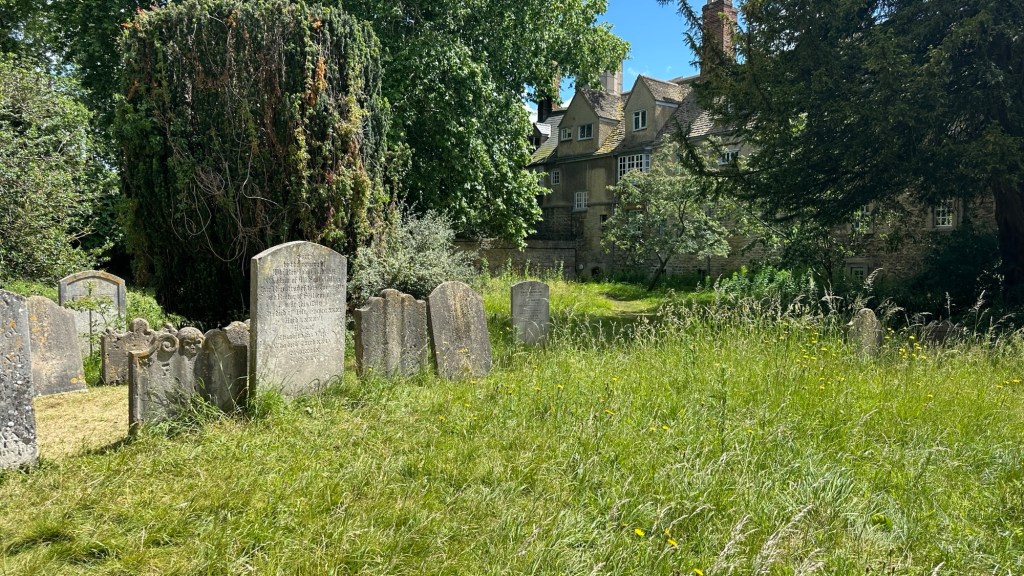
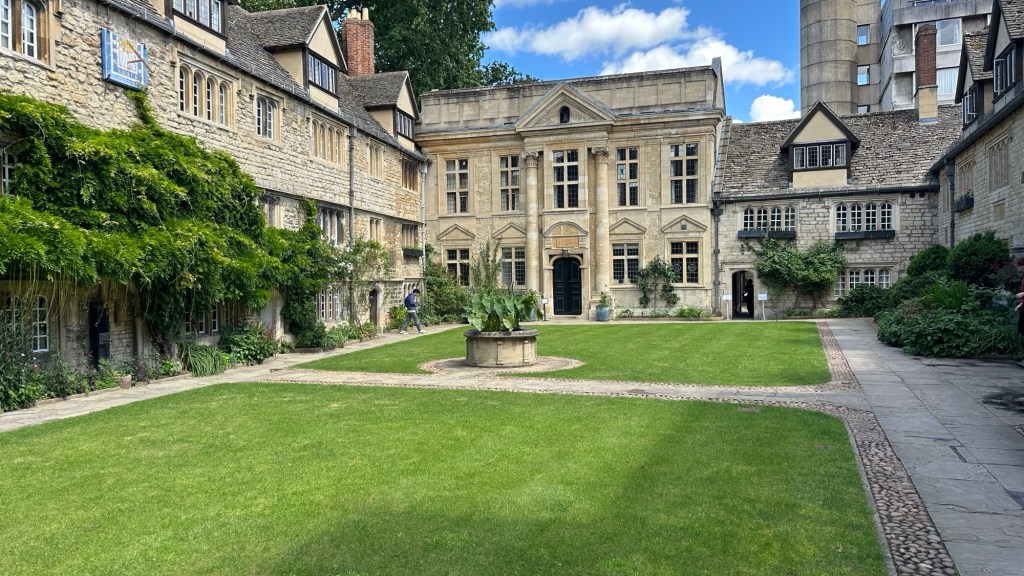
Wandering around Oxford is such a treat: colleges, churches, bookstores, and other historical buildings.
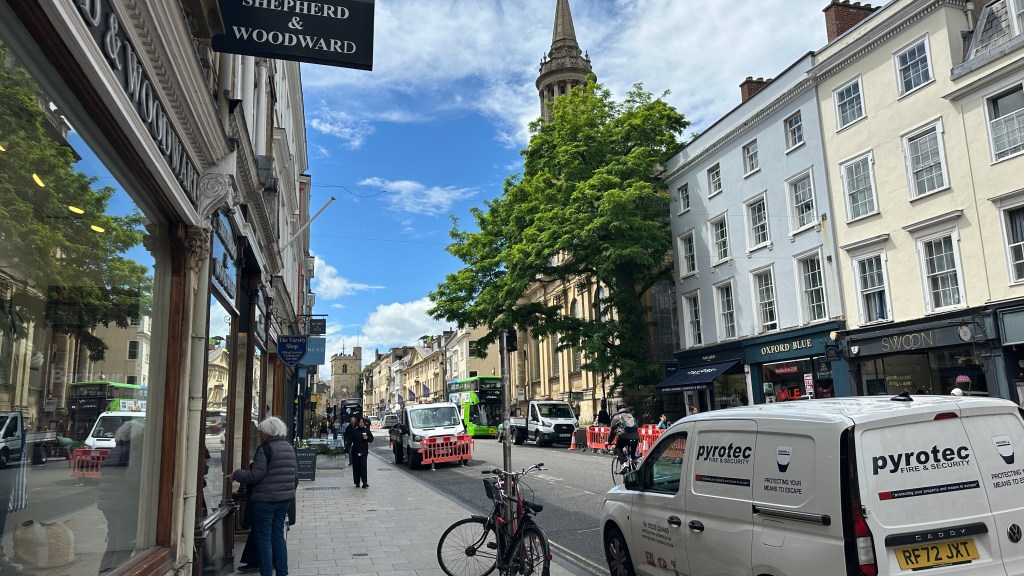
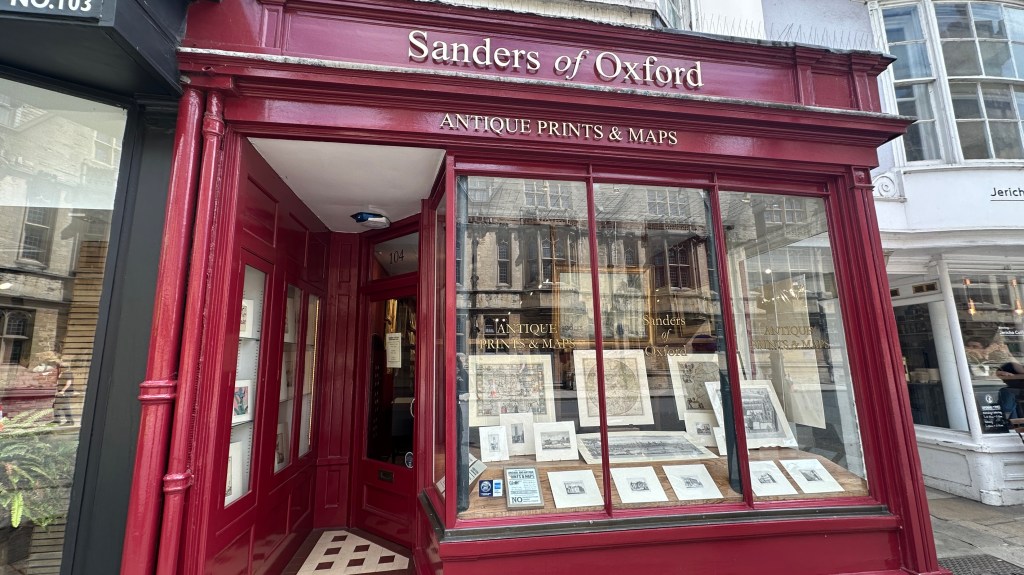
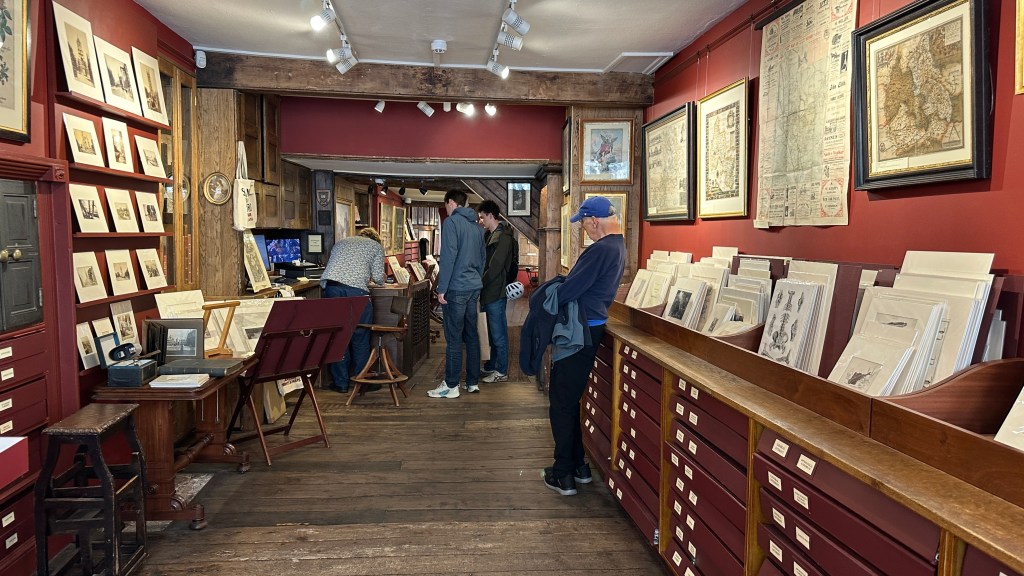
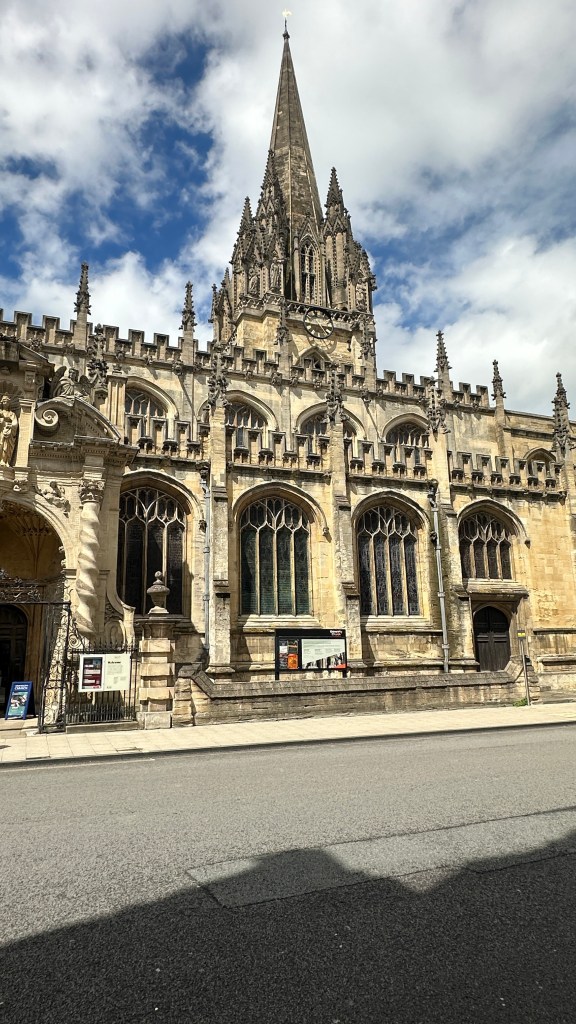
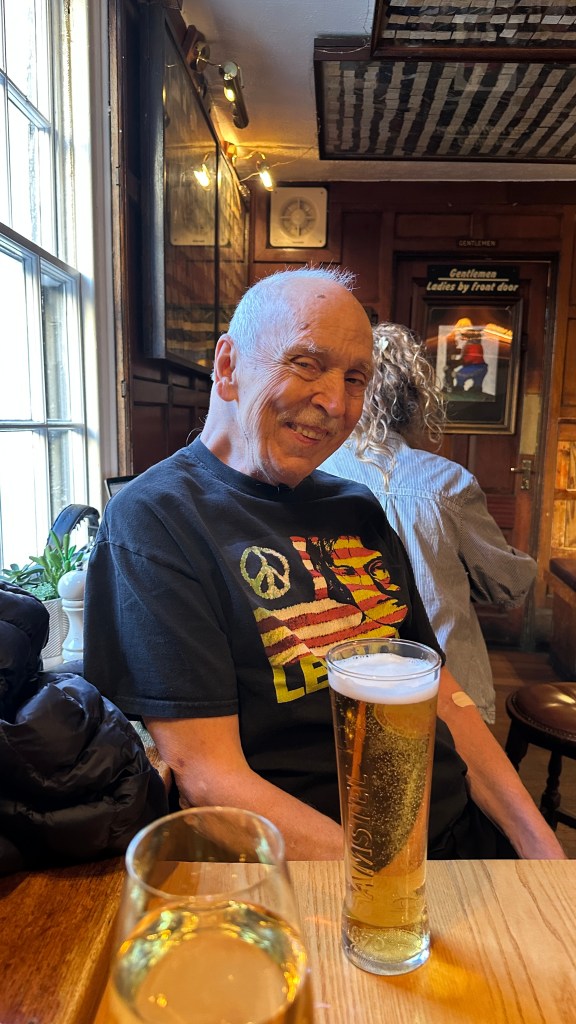
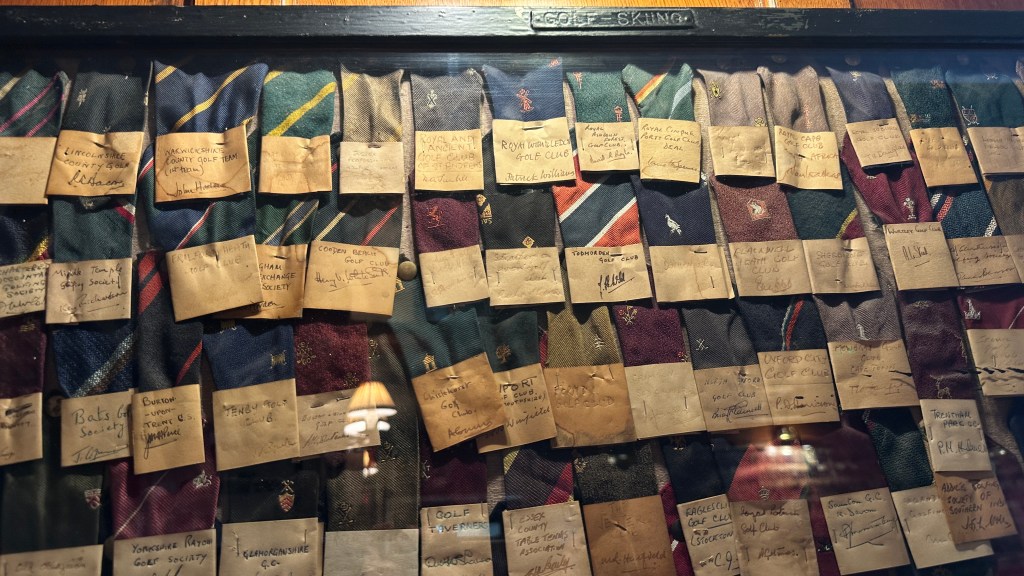
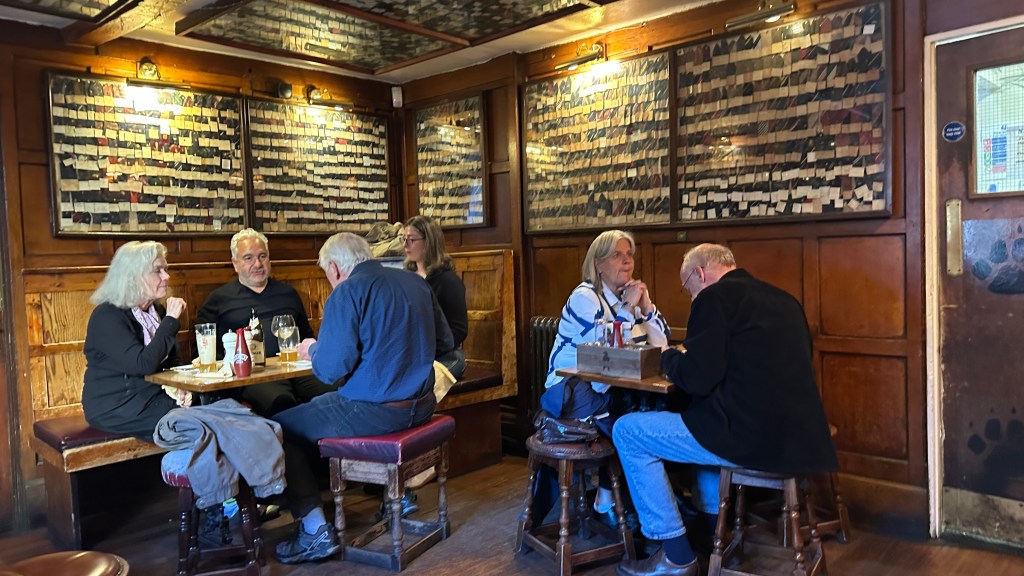
Chris and I found a cool pub for dinner. The Bear Inn Pub and Restaurant, the oldest pub in Oxford, “serving pints since 1242,” has a collection of over 4,500 neck tie ends on display, from various colleges, universities, and sports teams. All are dated, signed, and framed in collections by dates or themes.
Tuesday, June 9
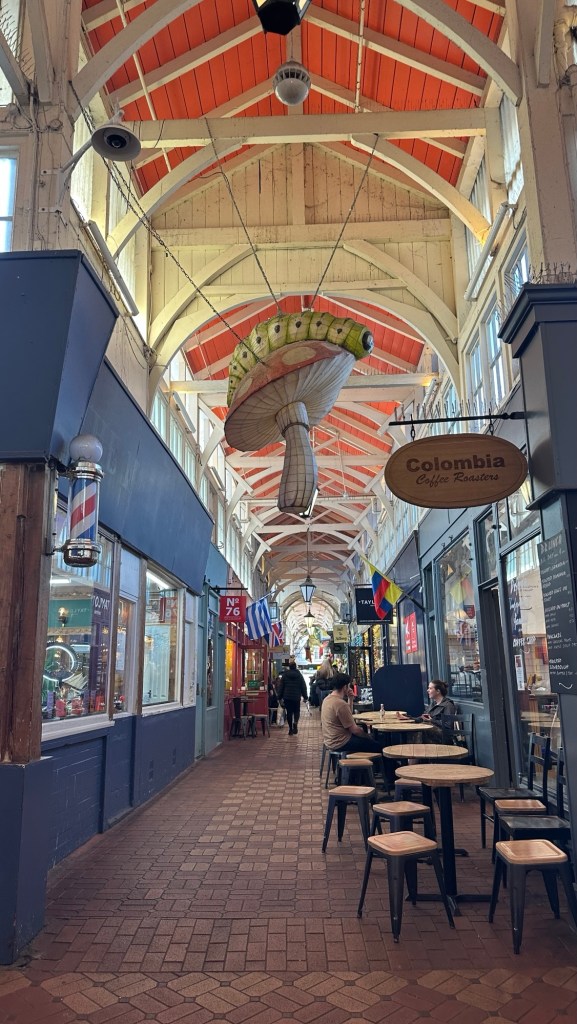
We had a walking tour of Oxford, followed by lunch in the Turf Tavern, a popular pub since the 19th century.
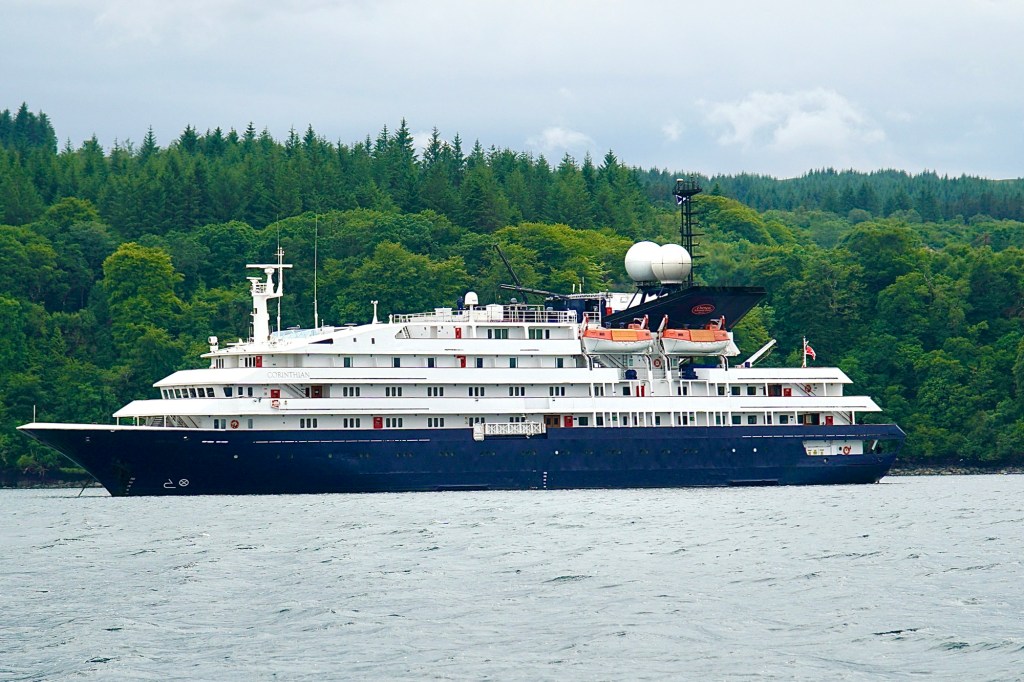
Our OAT welcome dinner was held at a local restaurant, the Oxford Retreat, and was a total disaster. I need to back up and explain that there were four groups of OAT travelers on this trip. Each group of 20-25 had an OAT trip leader. Together we would be the only passengers on our ship, the M/V Corinthian. Our group had 20, including Chris’s brother Tim and his wife Kim, with whom we have traveled many times. Our team leader’s name is Lucy. The Oxford Retreat thought they could handle all four groups for the dinner, but they fell far short in staffing and quality. Despite ordering our meals two days in advance, the restaurant ran out of some items (for example, I was left with no main course), and the fish needed special effort to saw through the crust to get to the flesh. Evidently the lamb was excellent. As compensation for our forbearance, OAT decided to add a visit to the Titanic Museum as an included activity in our upcoming visit to Belfast.
Wednesday, June 10
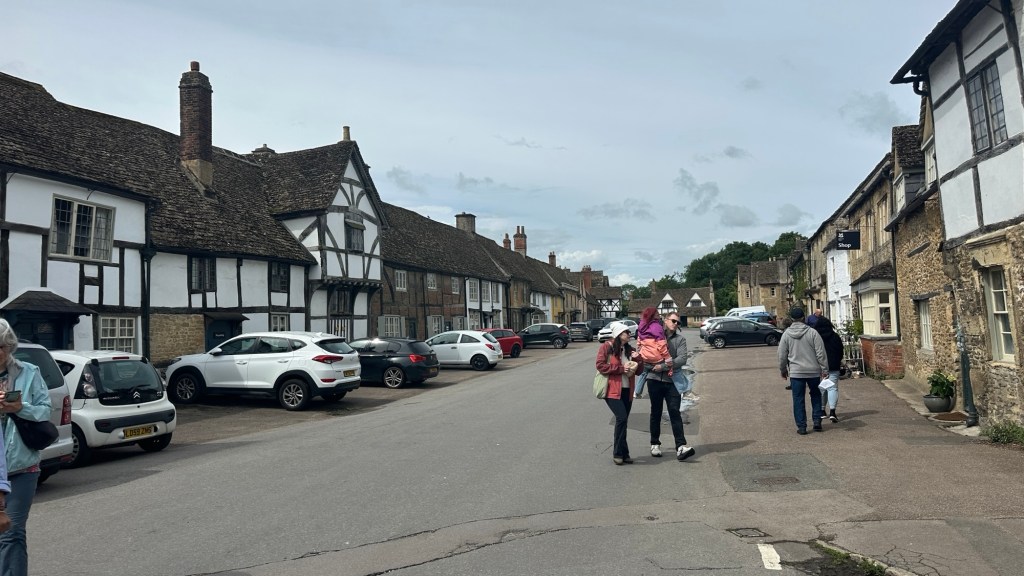
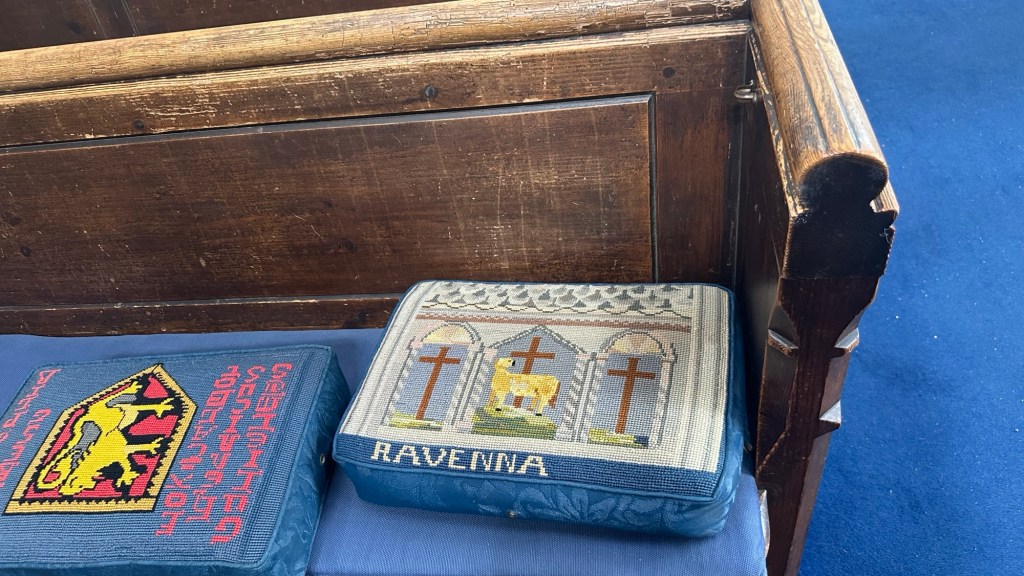
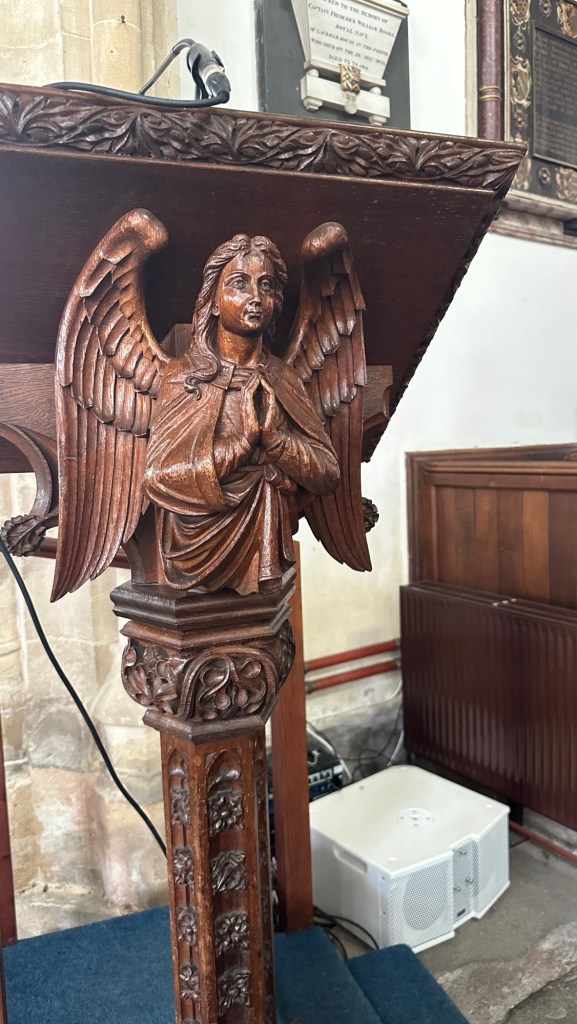
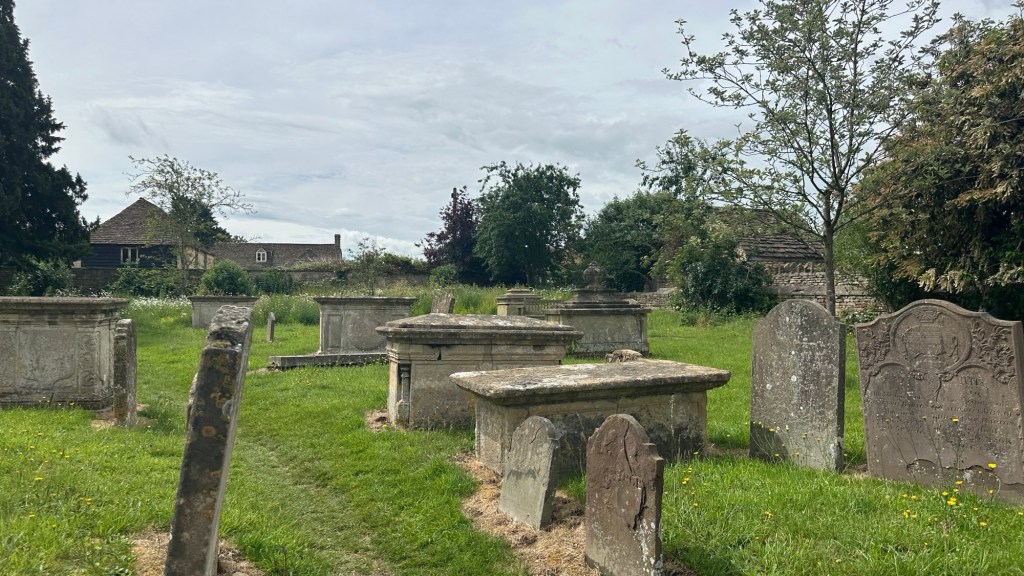
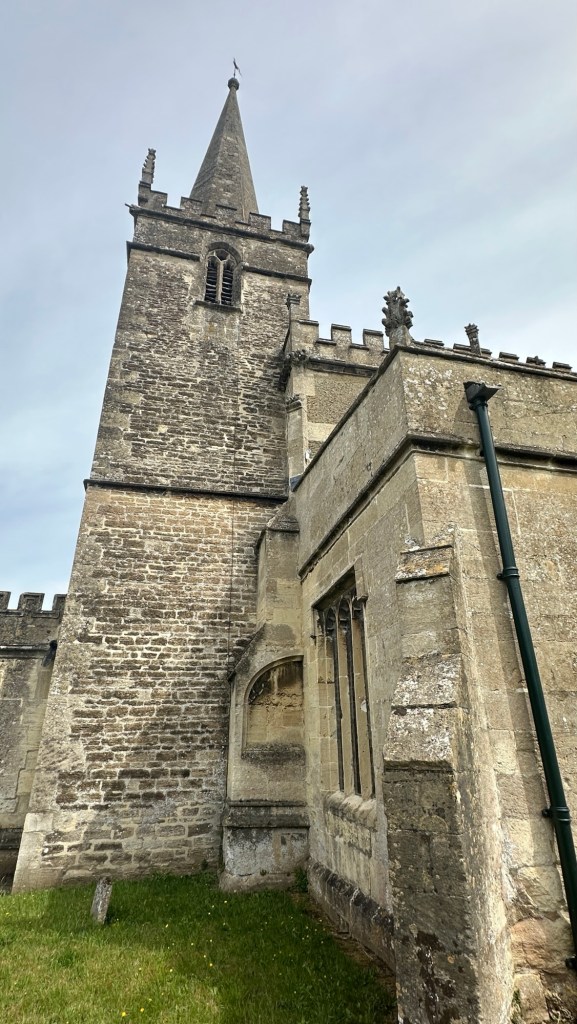
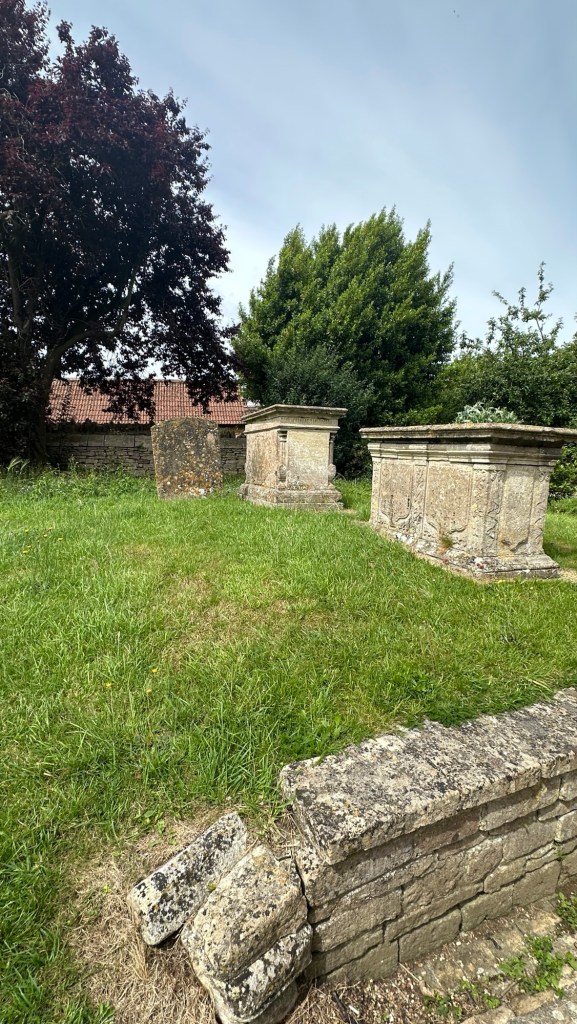
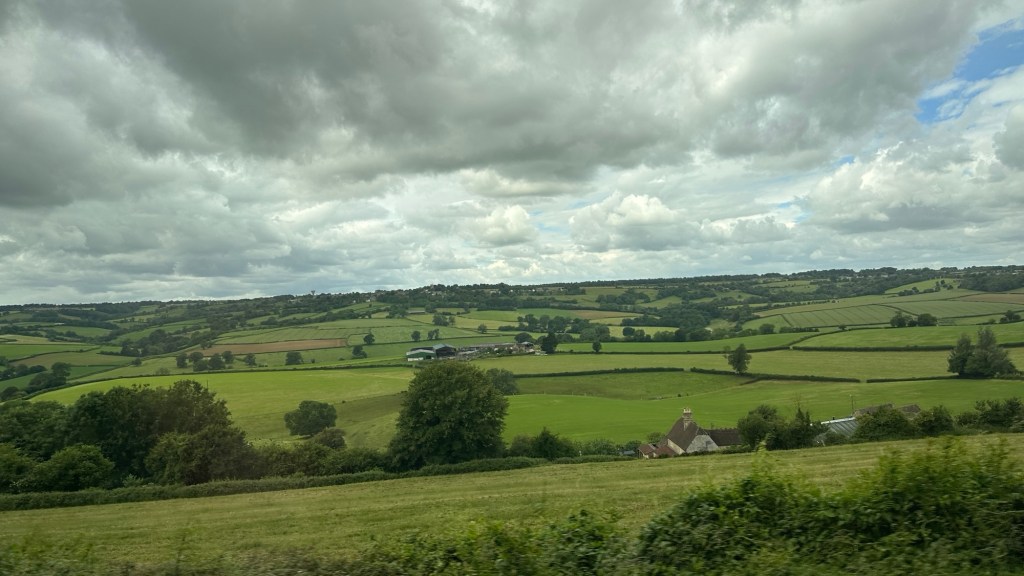
Leaving Oxford, we drove through the Cotswolds and then through Wales to meet our ship in Fishguard. Along the way, we visited the medieval village of Lacock, in England. The old town, including the chapel, is well preserved, and continues to be inhabited.
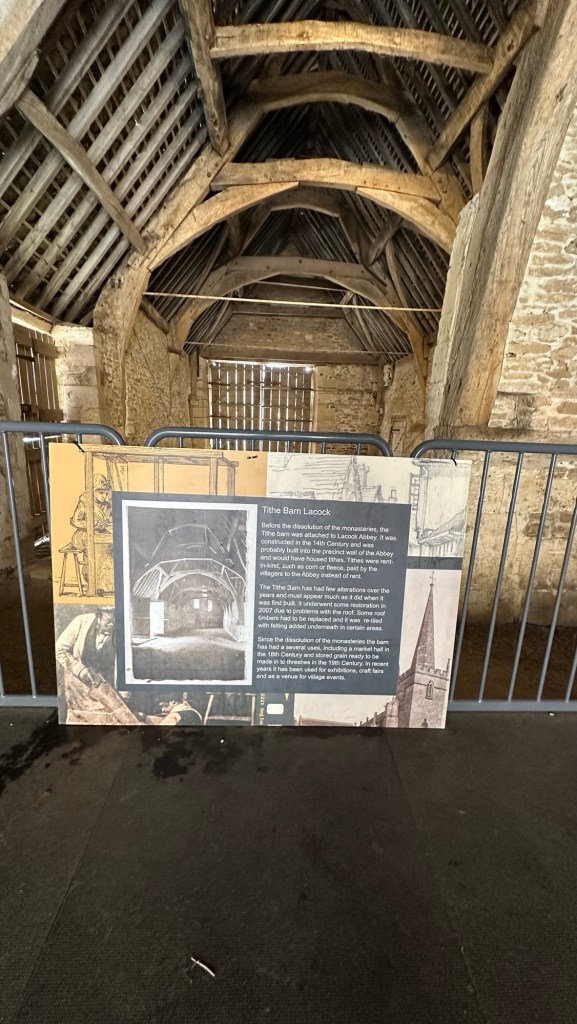
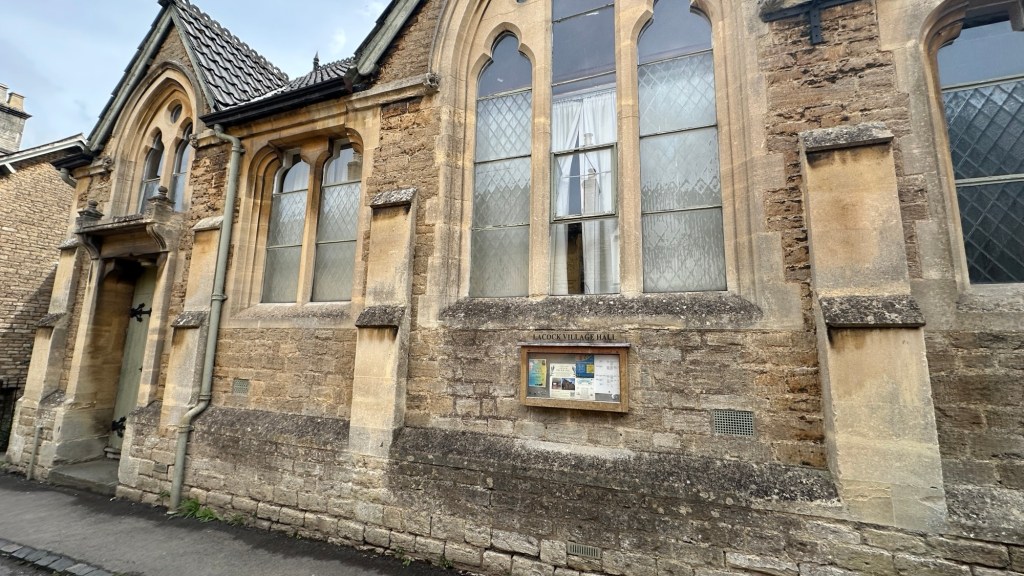
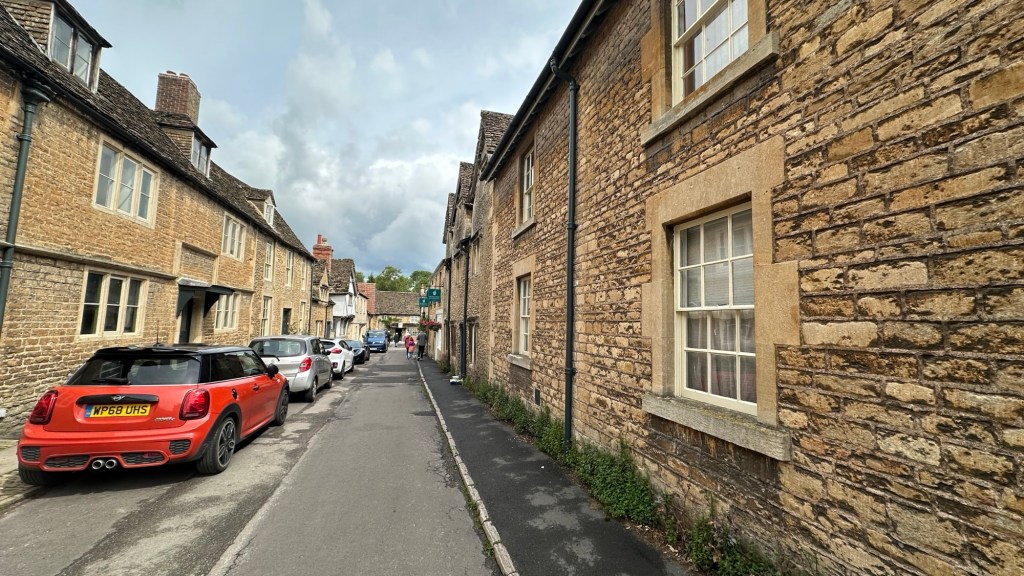
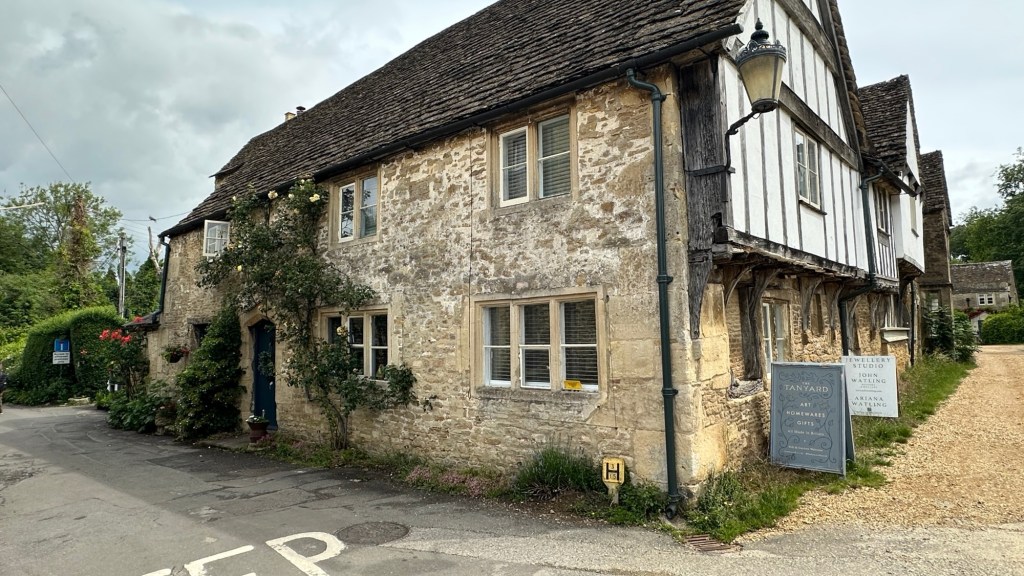
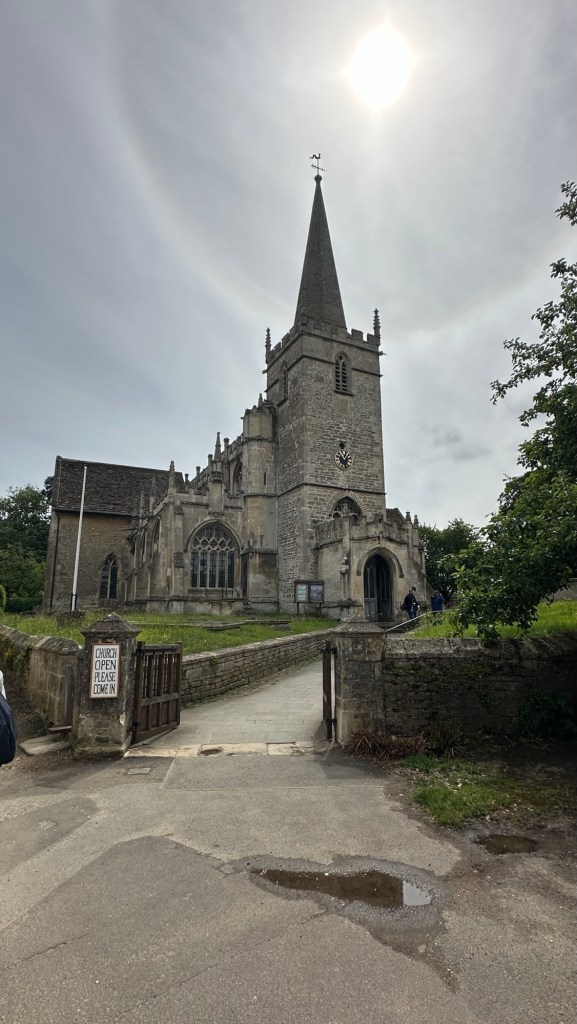
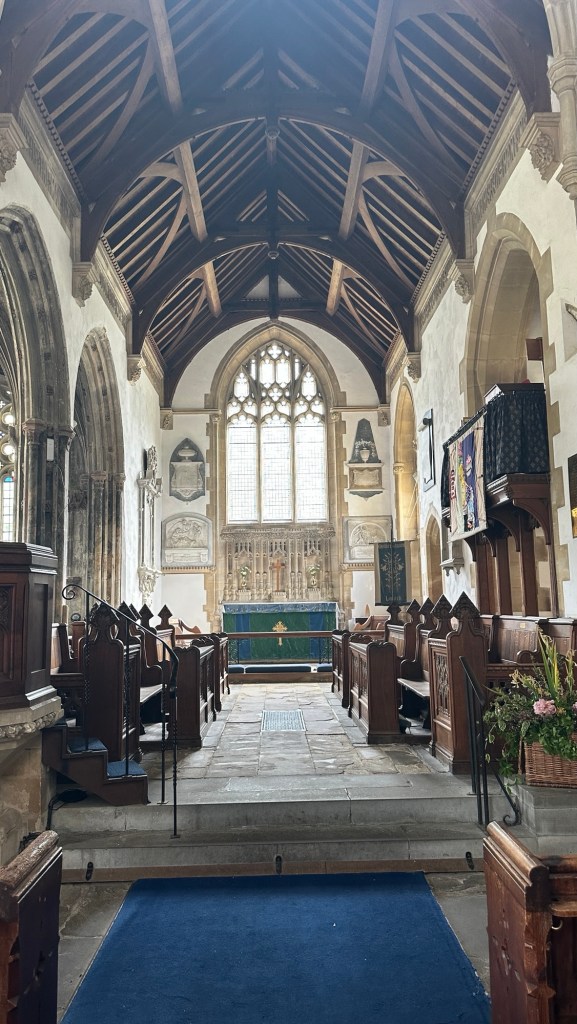
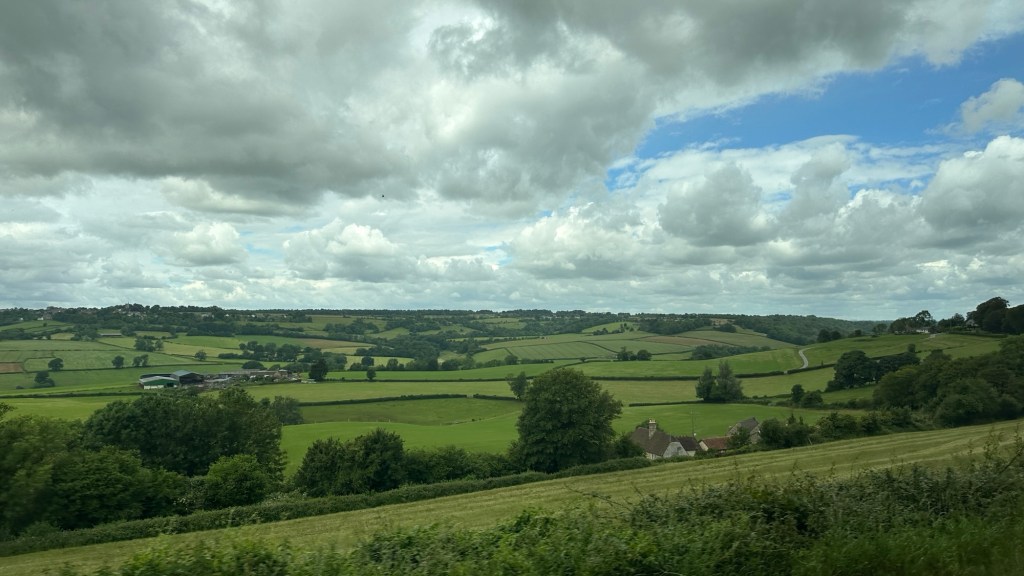
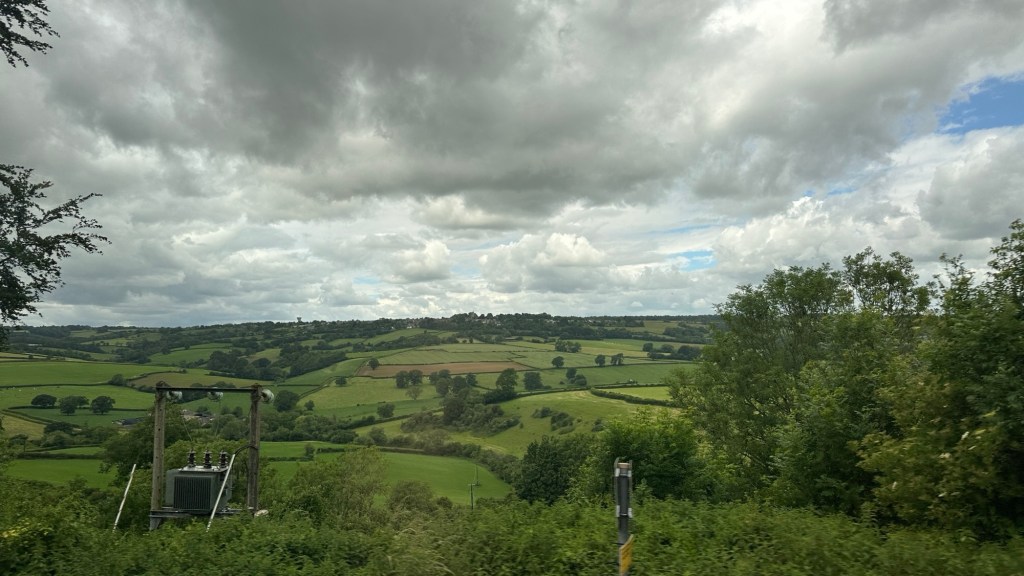
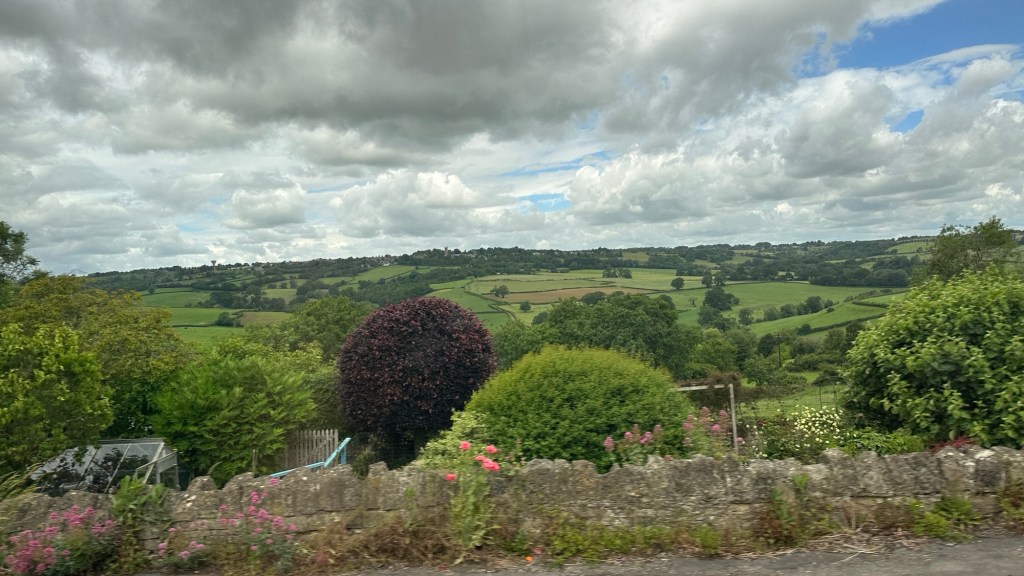
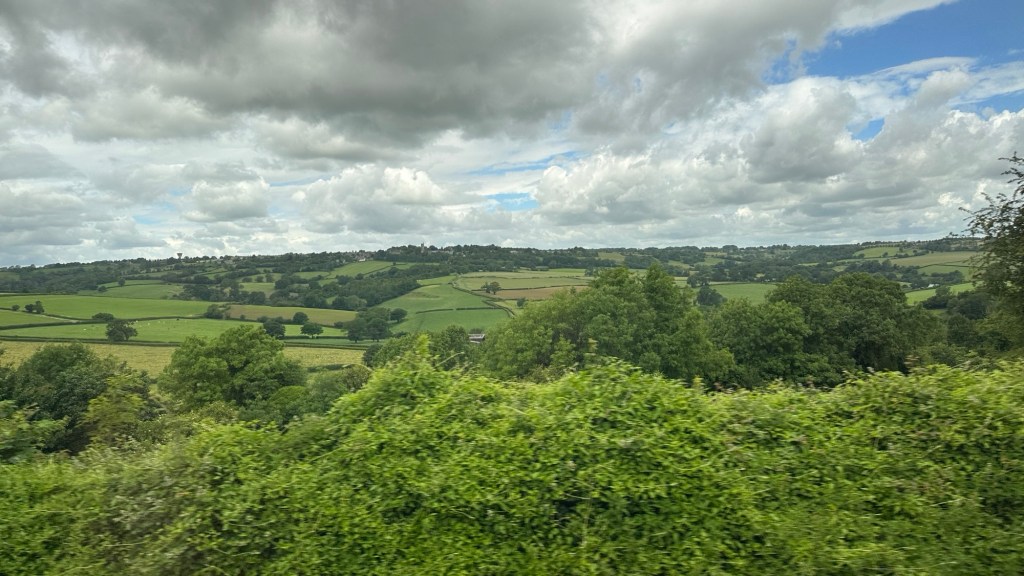
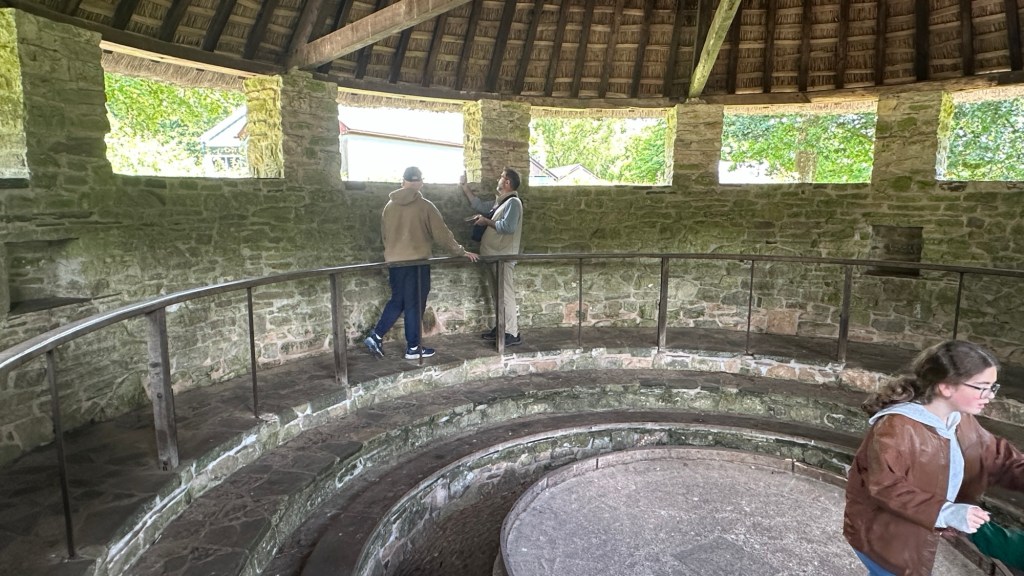
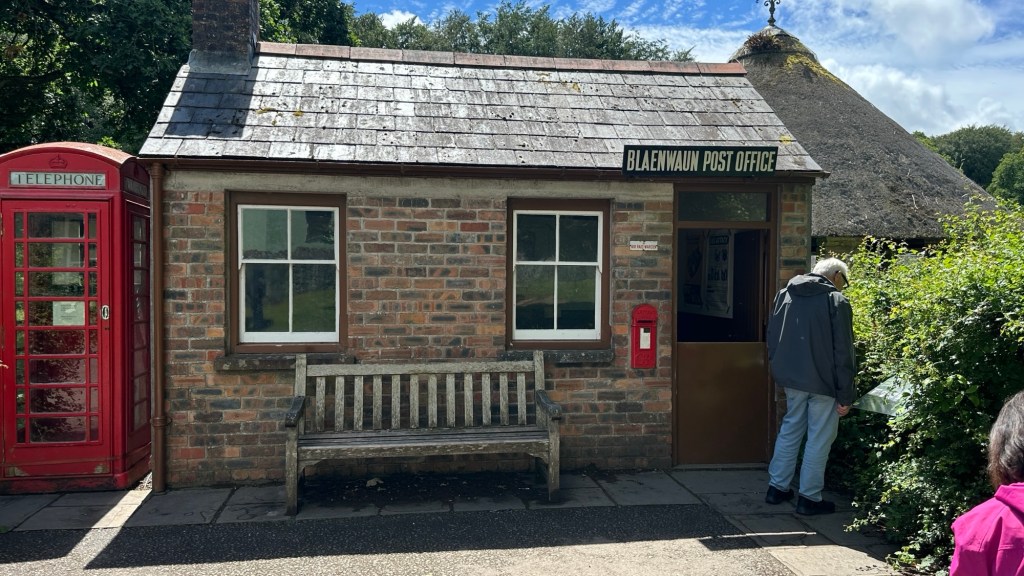
In Wales, we stopped to explore the open-air village of St. Fagans. The museum is on the grounds of a 16th-century manor house donated for public use in 1948. Historic buildings were reconstructed in this rural setting, to display details of daily farm and community life of the early Welsh.
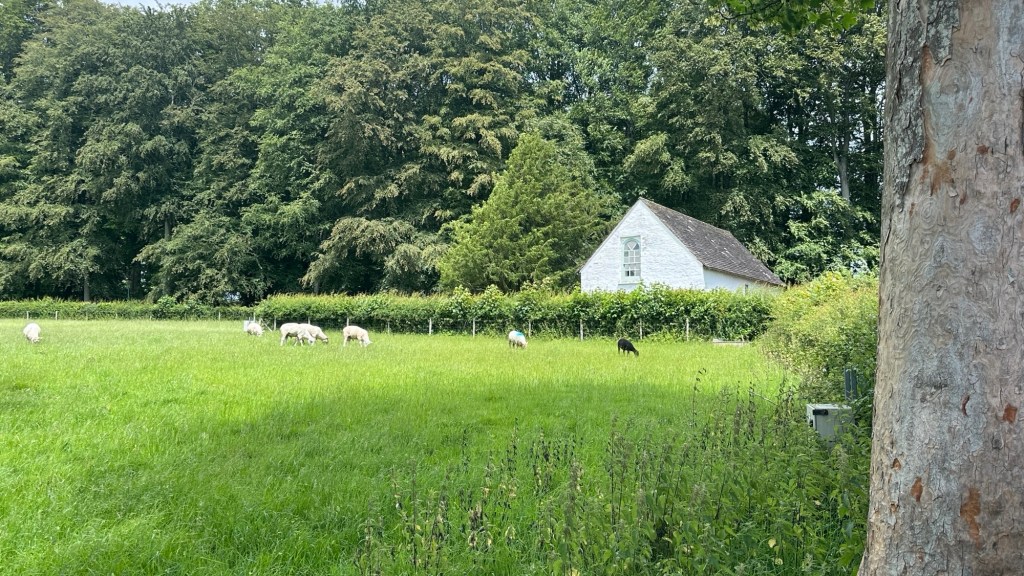
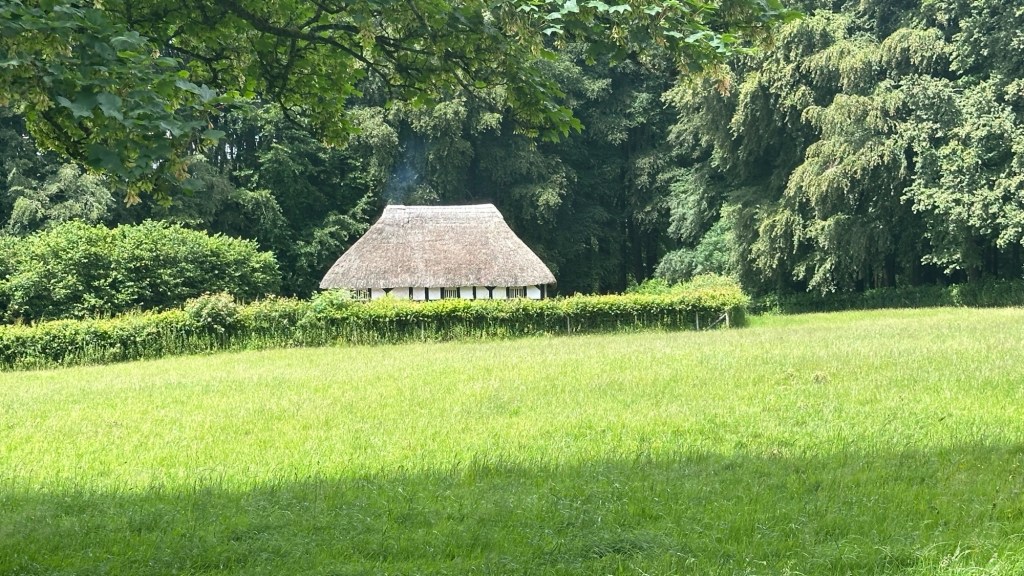
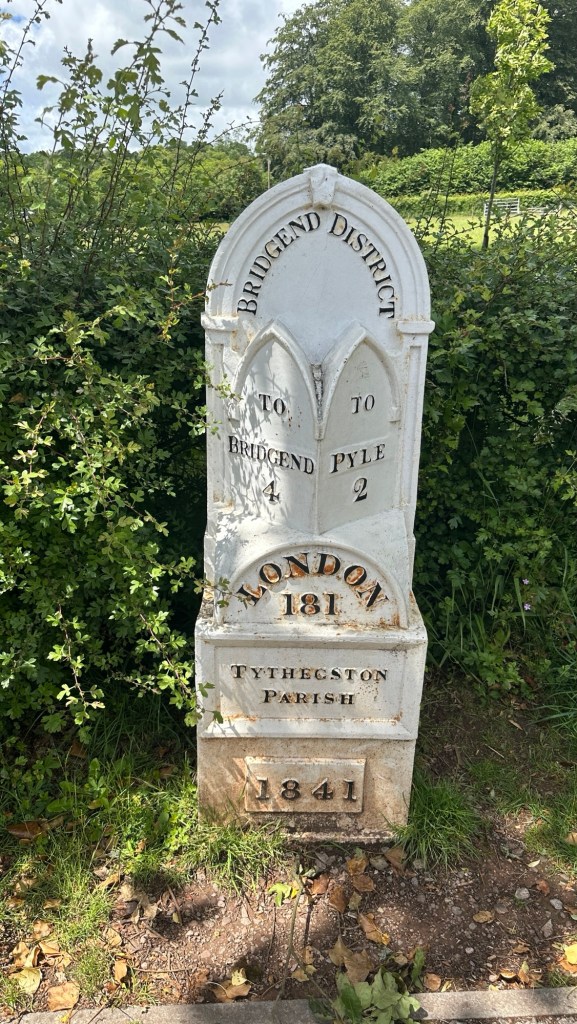
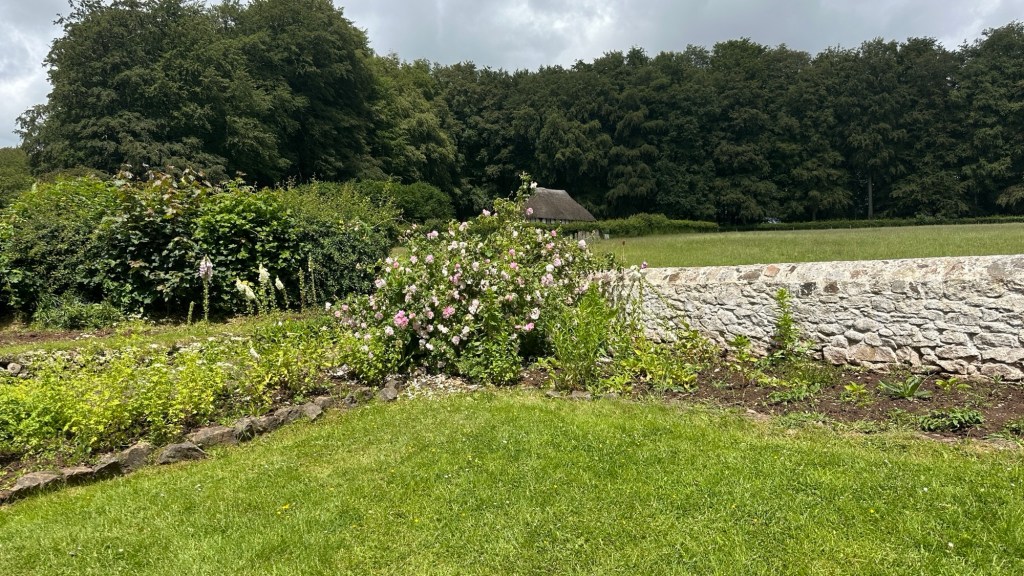
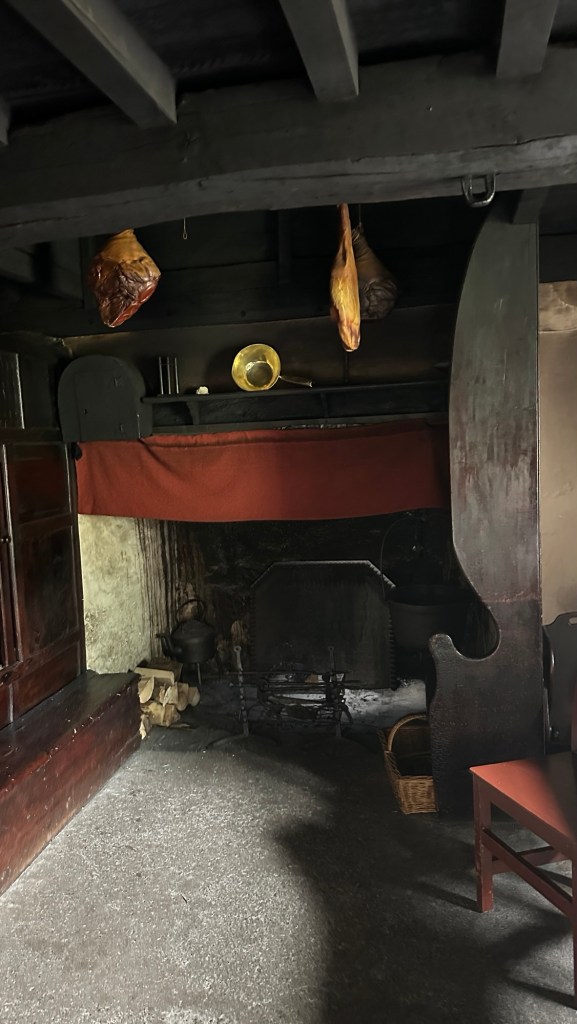
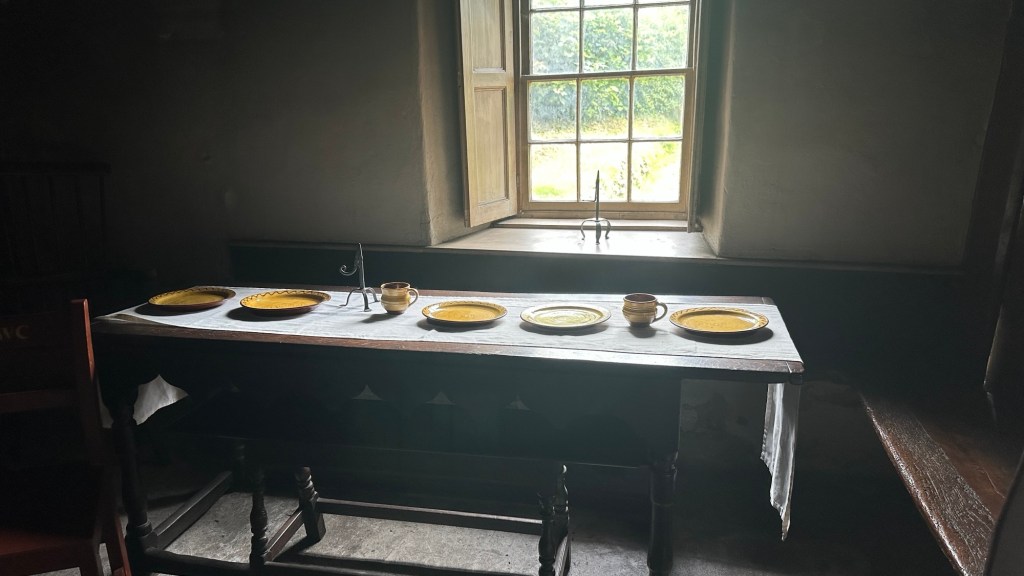
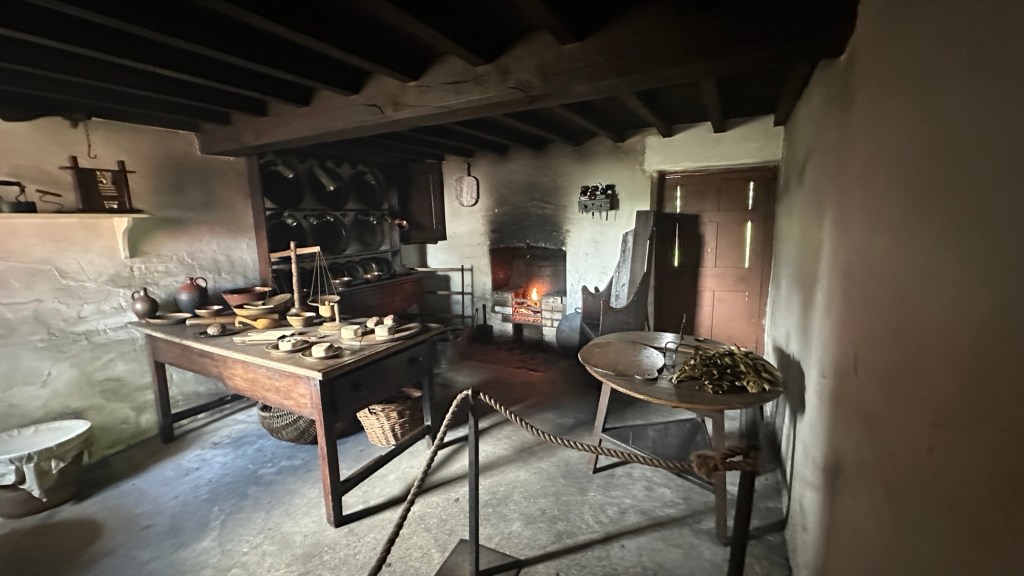
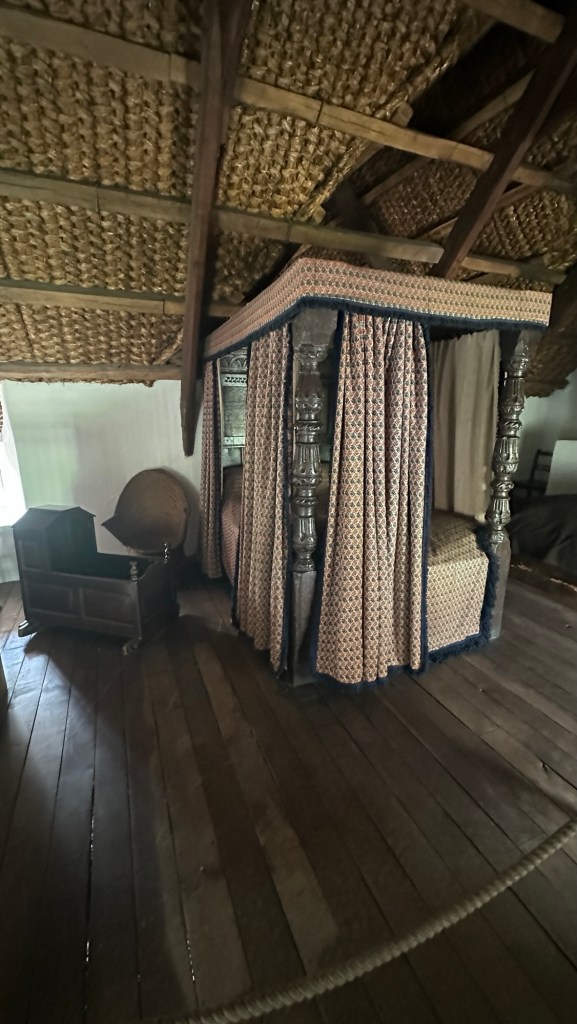
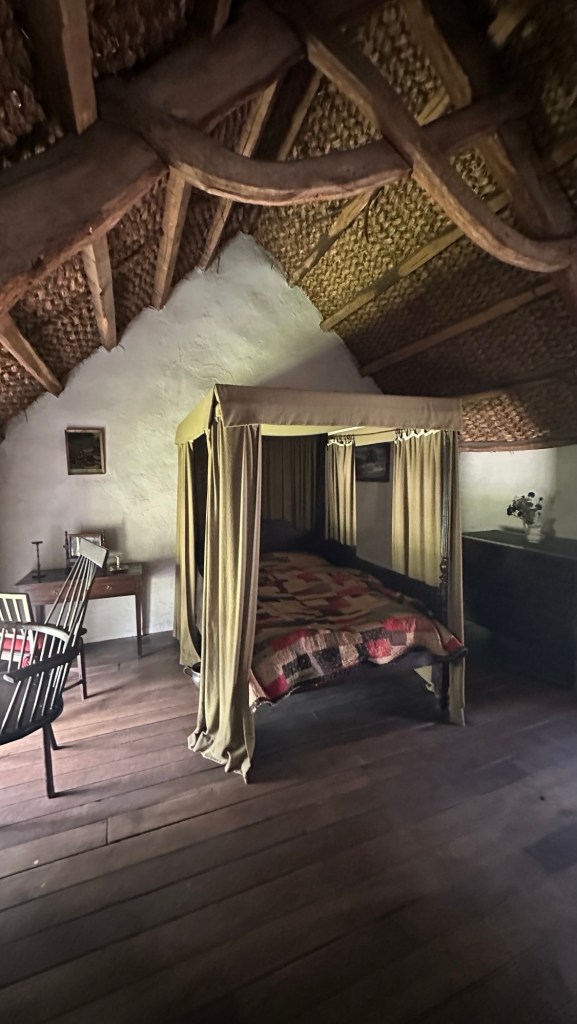
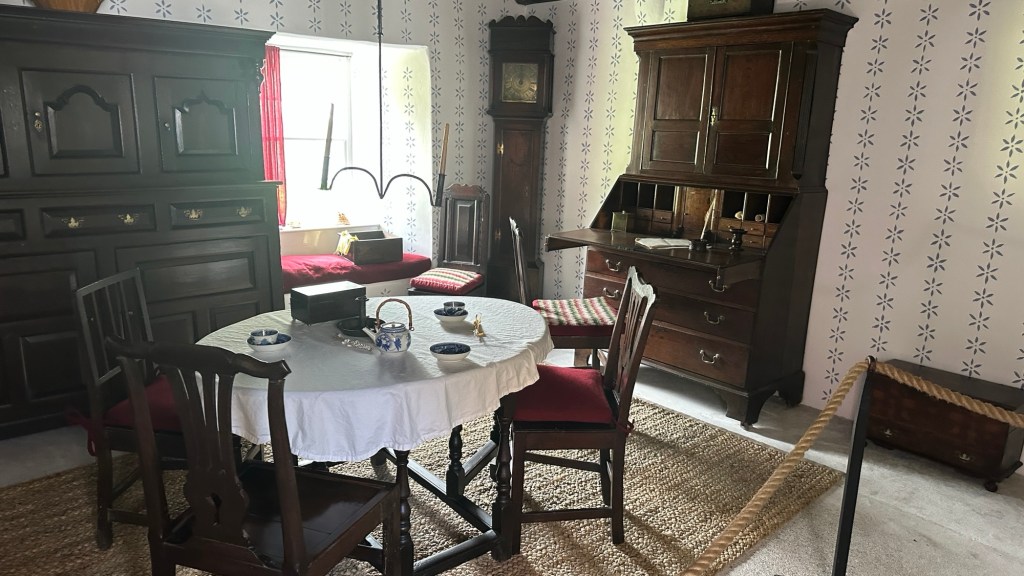
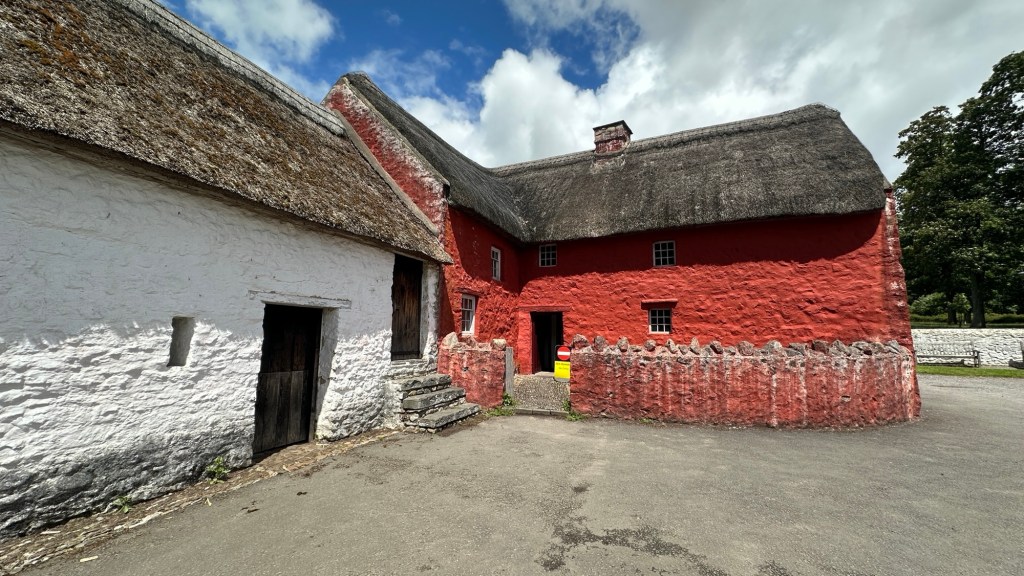
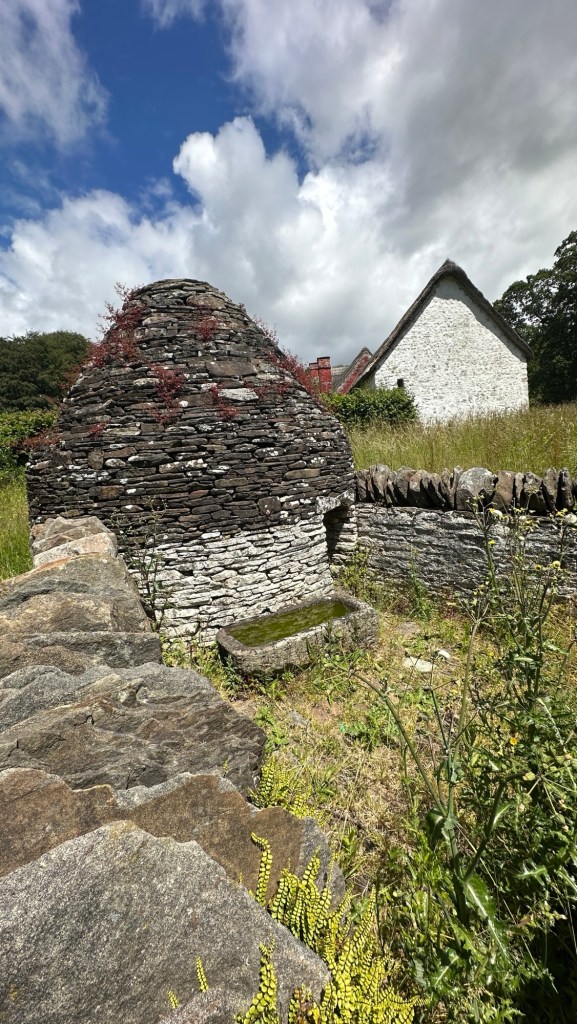
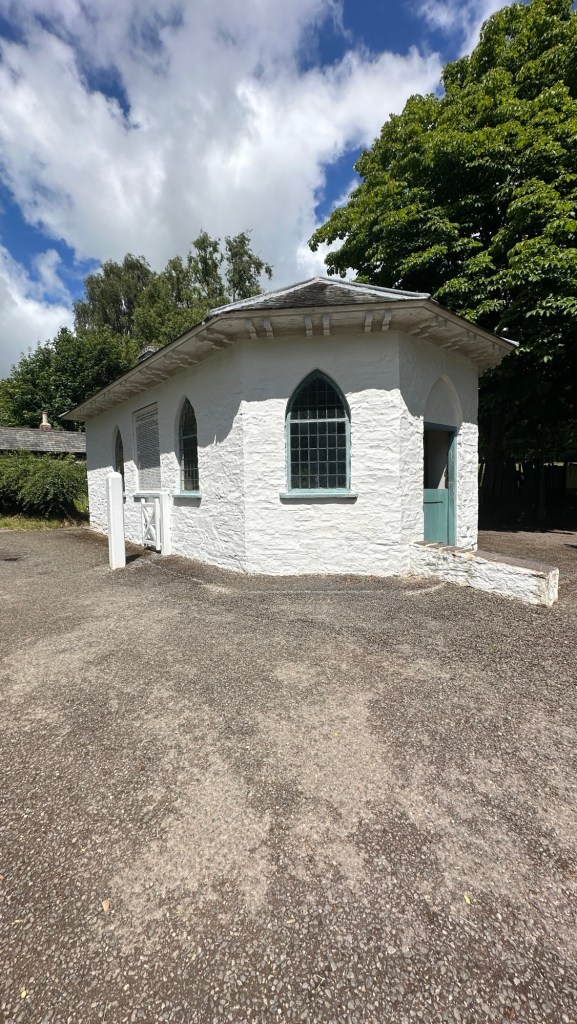
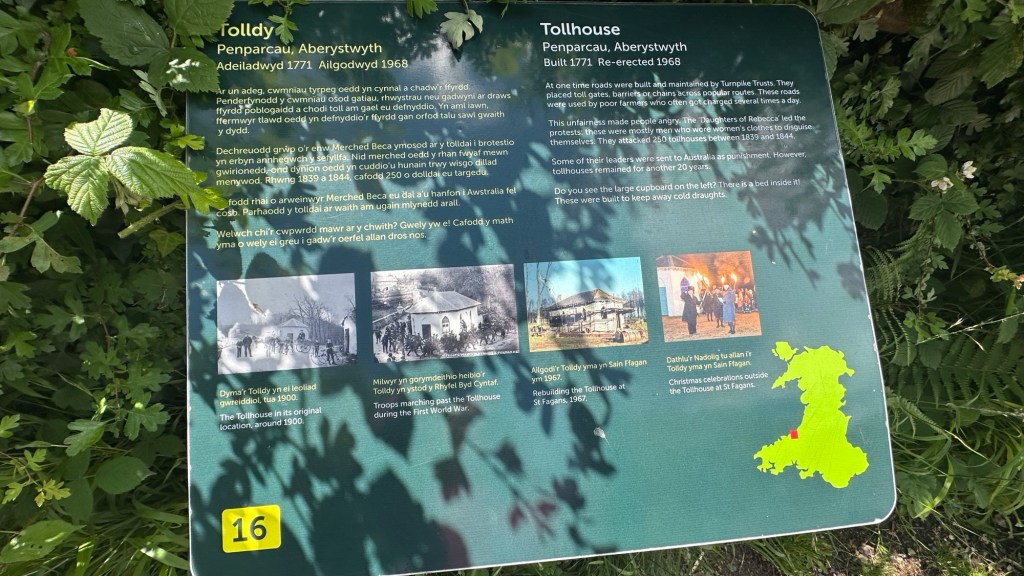
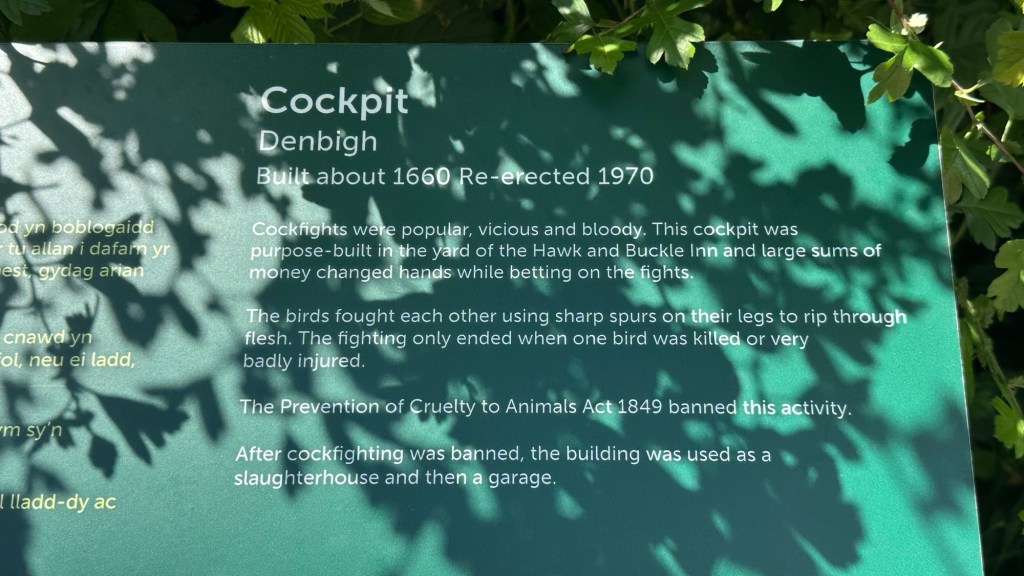
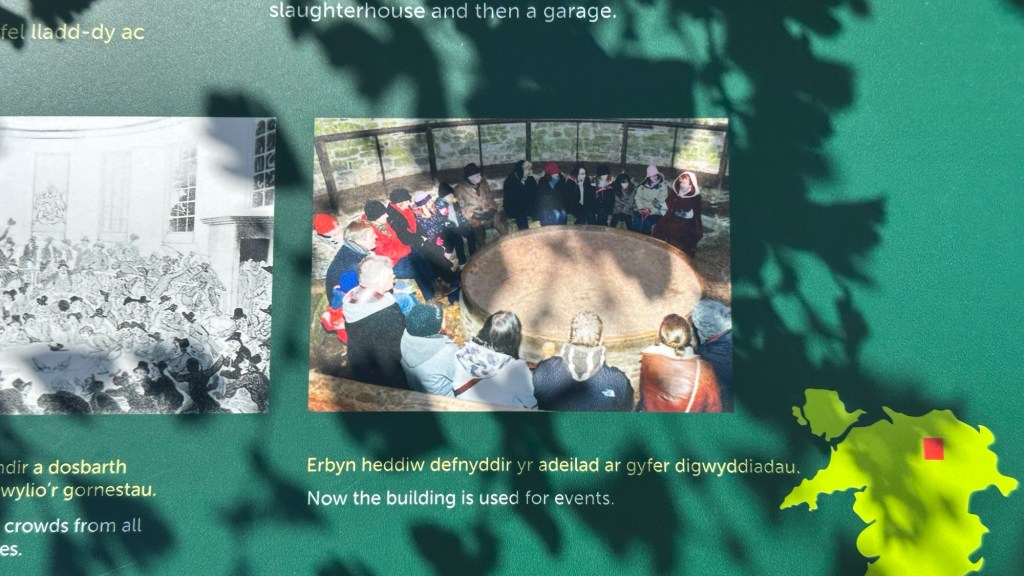
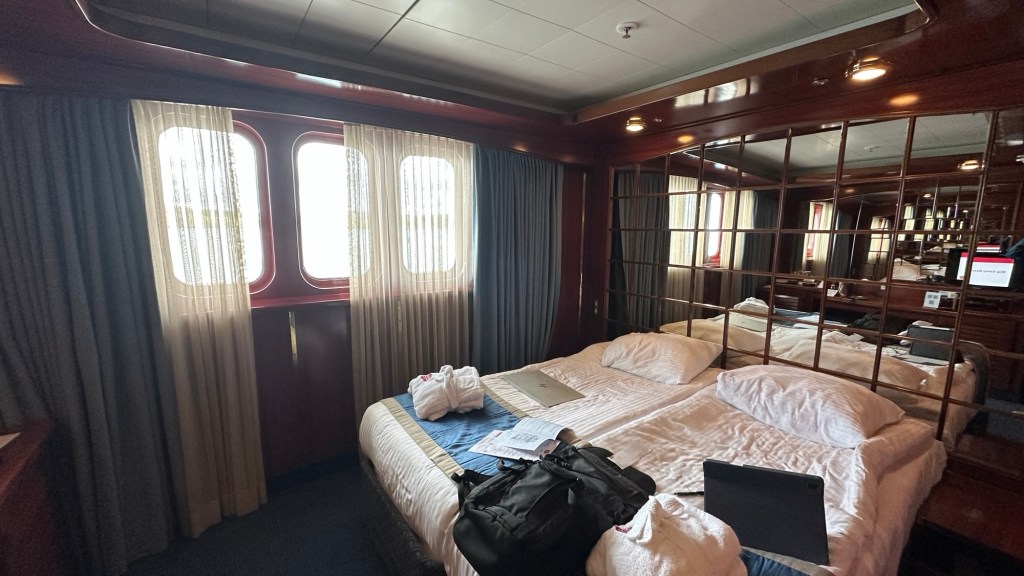
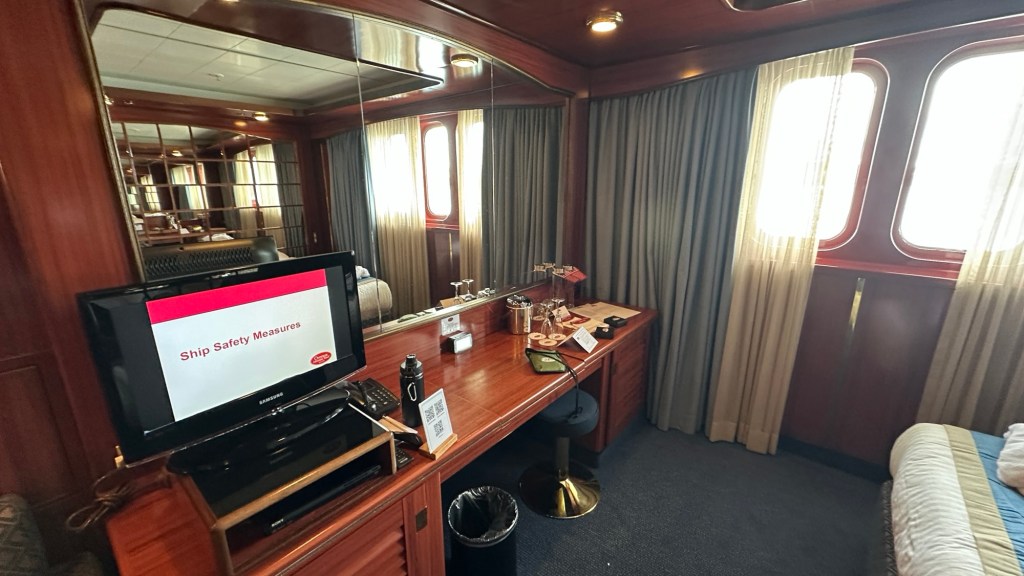
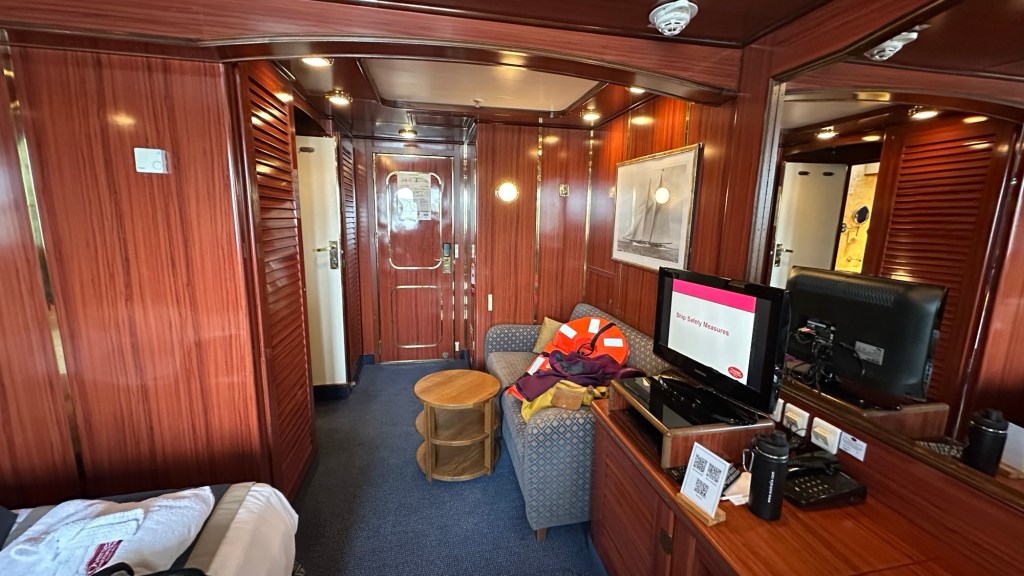
In late afternoon, we settled into our well designed cabin on the ship, participated in the mandatory safety drill, and enjoyed the first of many delicious meals on board.
Wednesday, Jun. 11
Our boat remained in Fishguard overnight. We were greeted in the morning by “Jemima,” a reenacted (or is the term cosplayed) Welsh heroine.
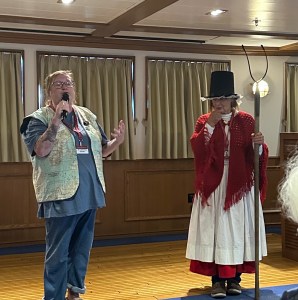
From the Chicago Talia Welsh Society:
“Never mess with a Welsh woman!
“Jemima Nicholas, known as “Jemima Fawr” (Jemima the Great), is a Welsh folk heroine who, according to legend, single-handedly captured 12 French soldiers armed only with a pitchfork during the 1797 Last Invasion of Britain at the Battle of Fishguard.
“A local cobbler, she reportedly marched the intoxicated soldiers to St Mary’s Church, cementing her legacy as a symbol of Welsh grit and independence.”
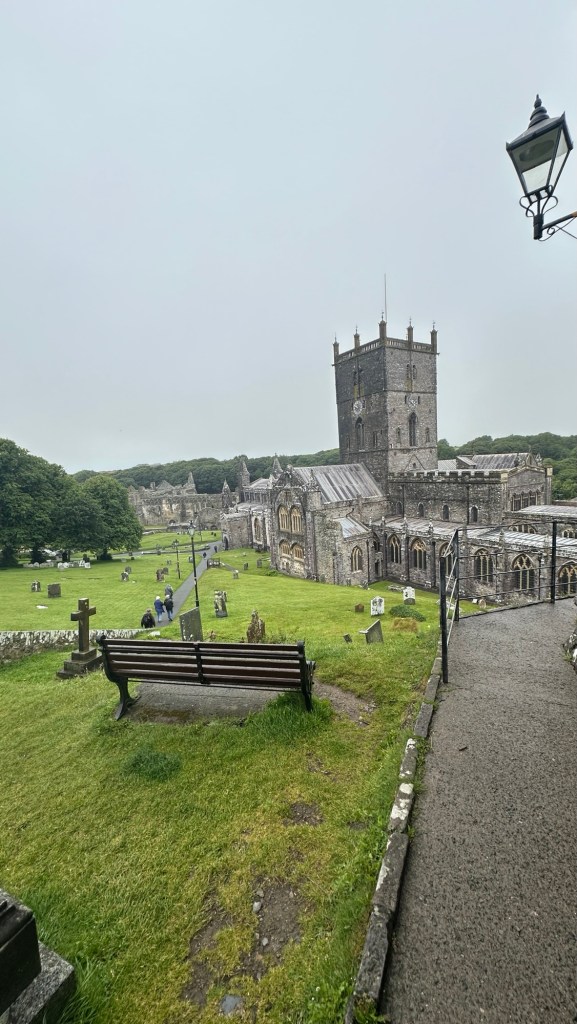
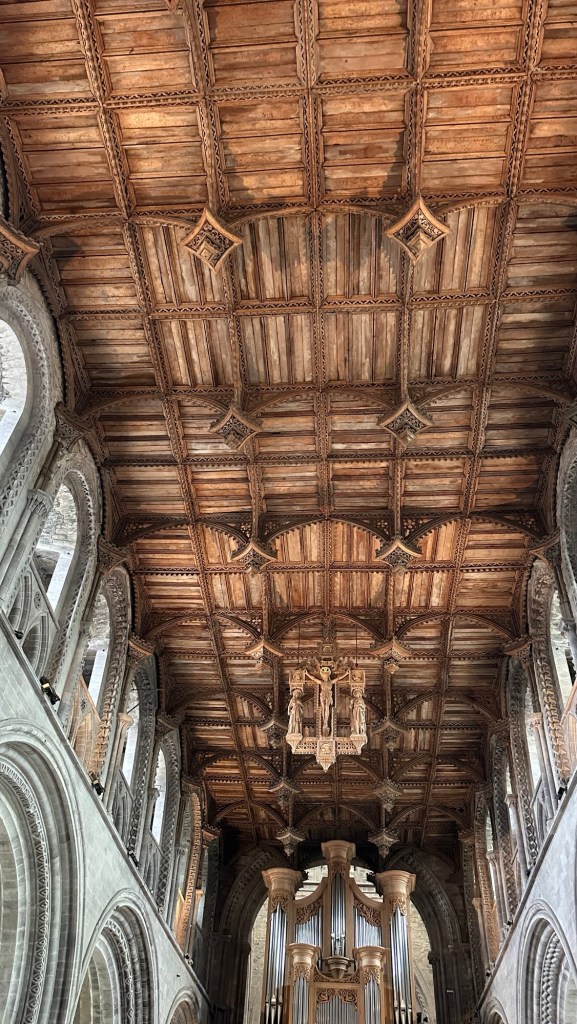
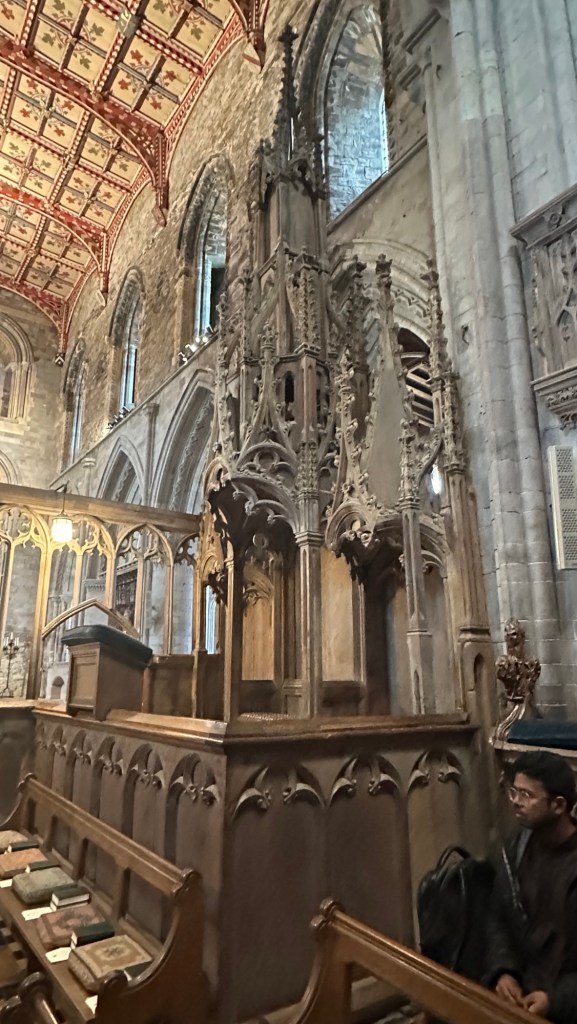
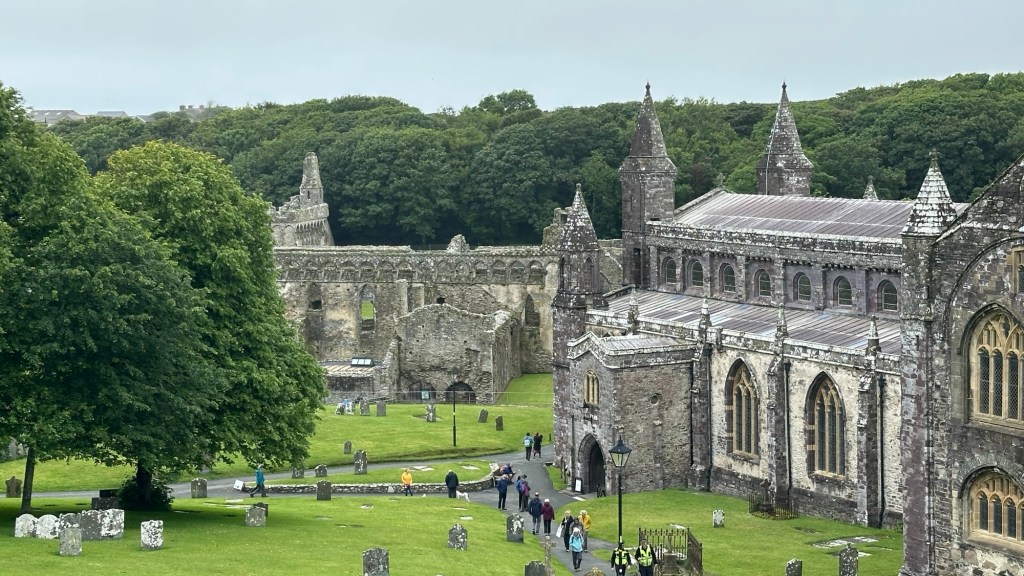
As we left the ship, Jemima and a group of local ladies welcomed us with greetings, local information, and cloth Fishguard shopping bags, which came in handy throughout the trip. After that warm welcome, we visited a medieval cathedral named for Wale’s patron saint, St. David. St. David had established a monastery on this site in the sixth century. Subsequent buildings on the site had been destroyed by Vikings, and the construction of the current cathedral was begun in 1811.
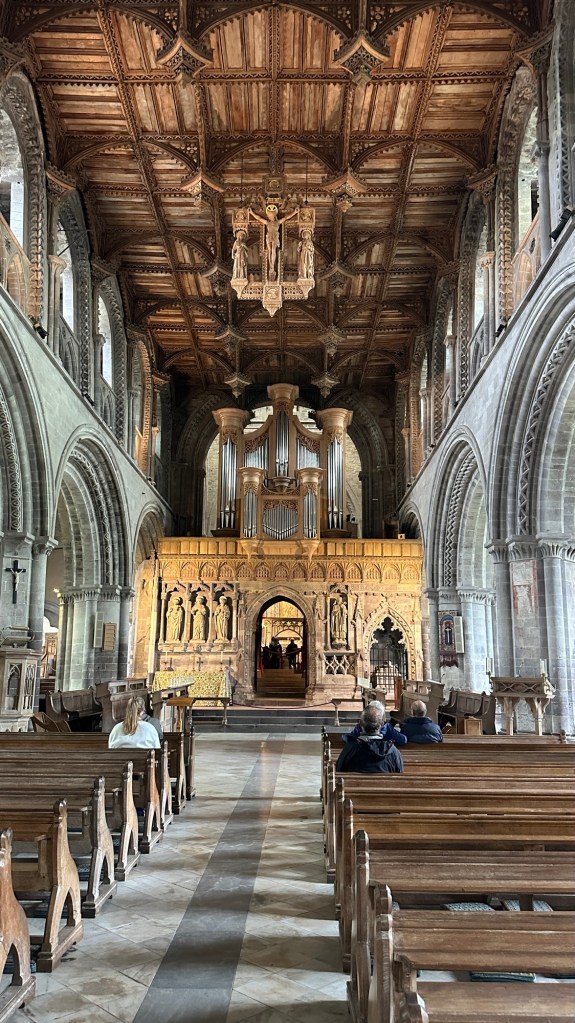
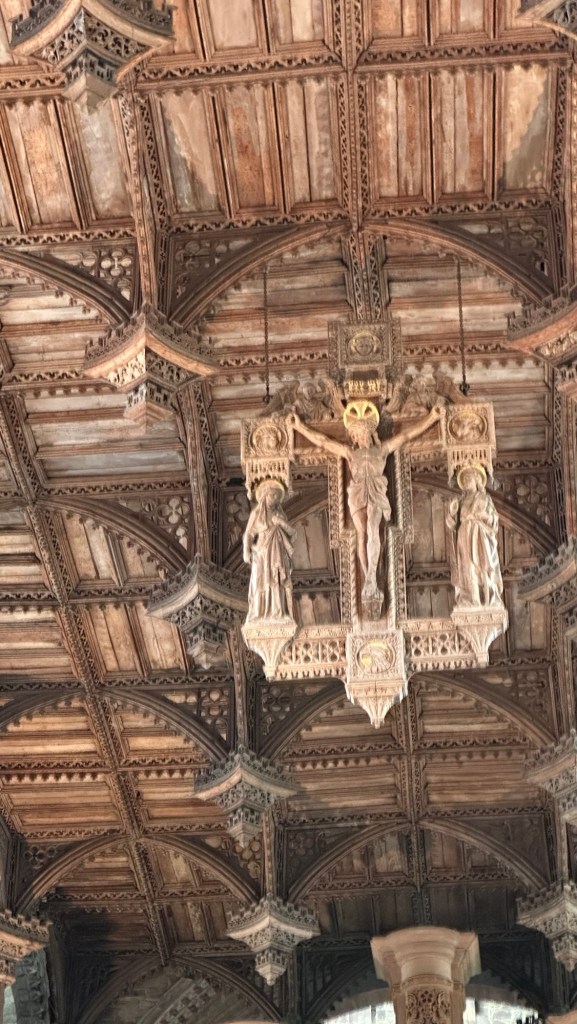
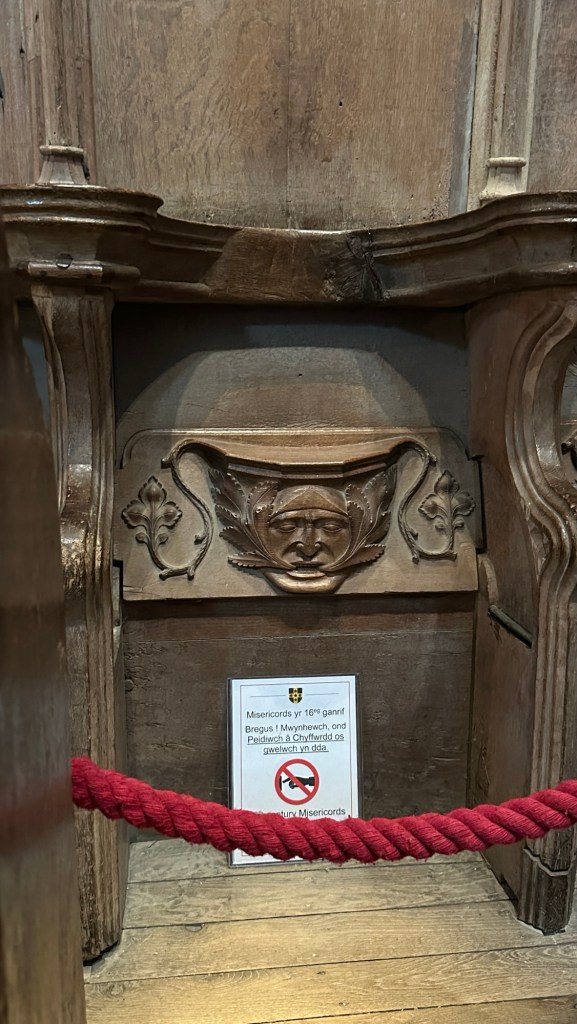
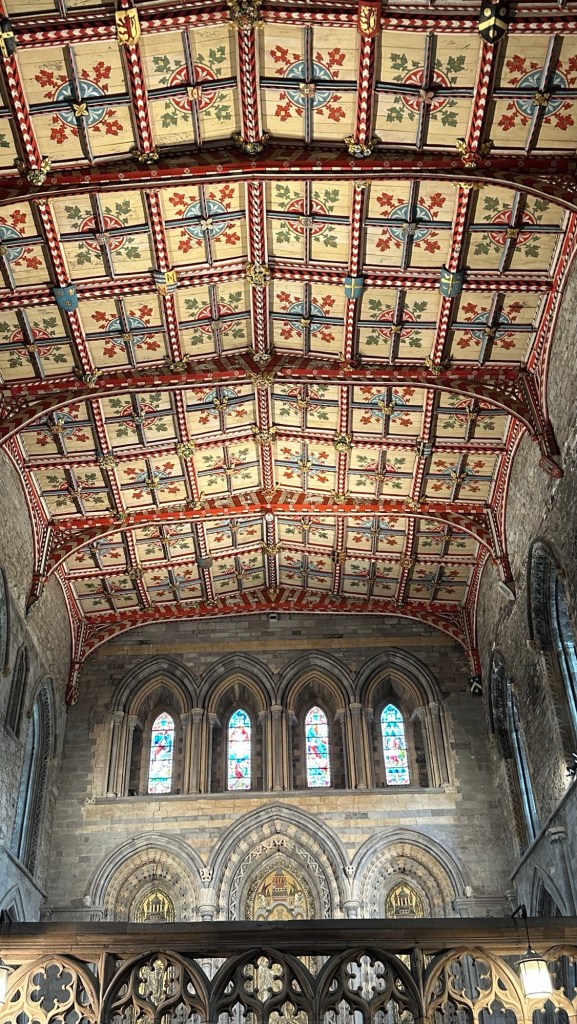
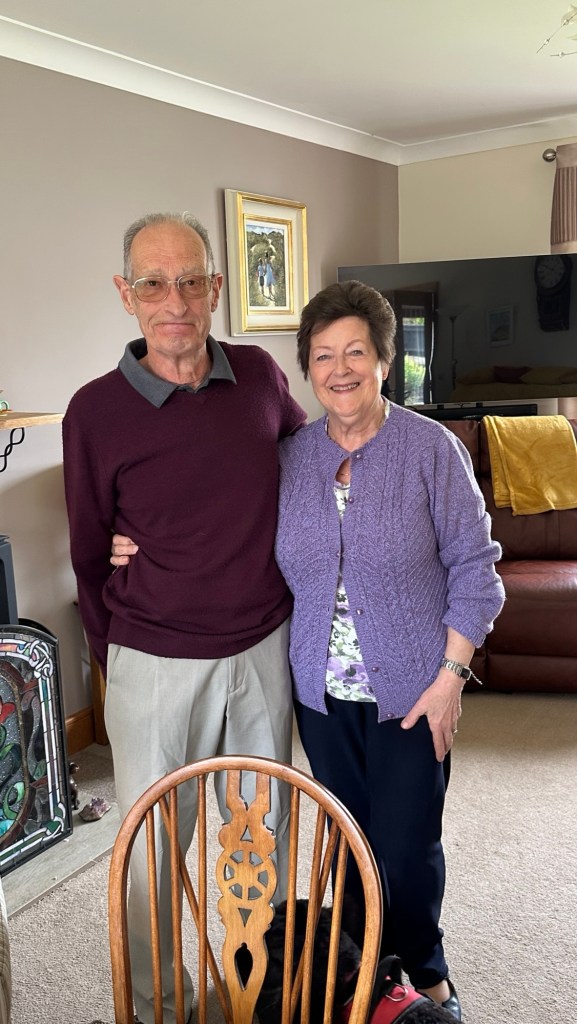
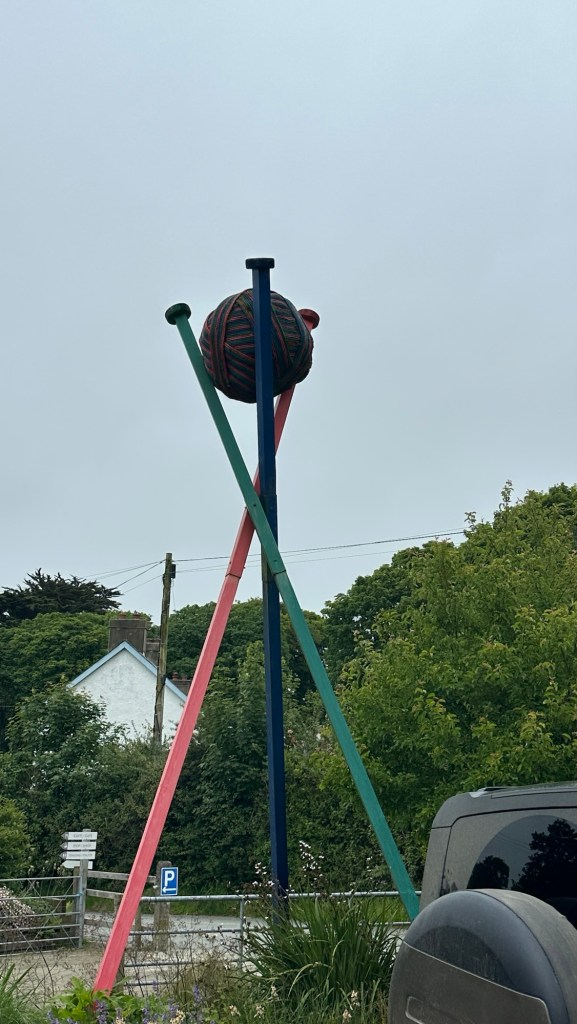
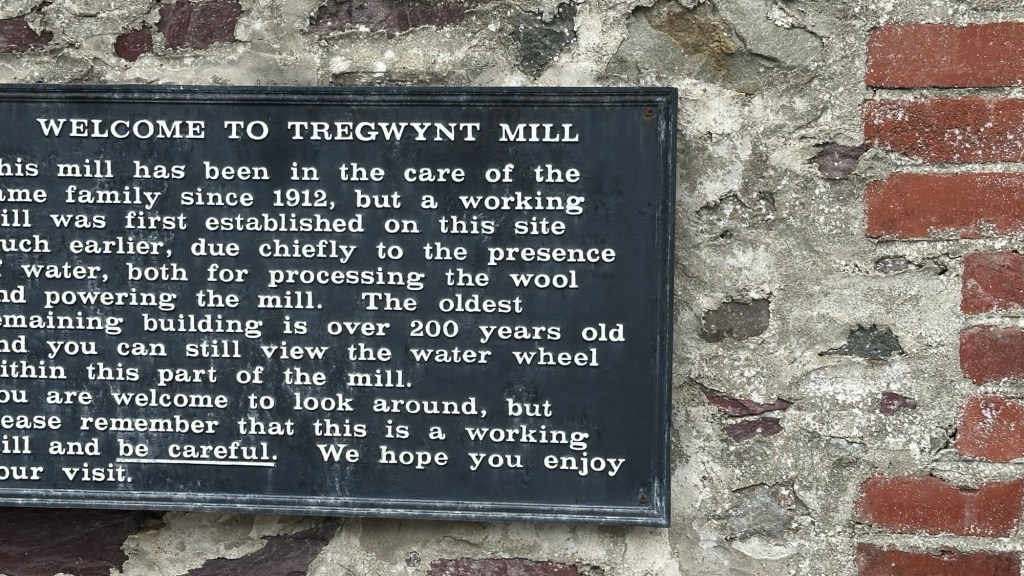
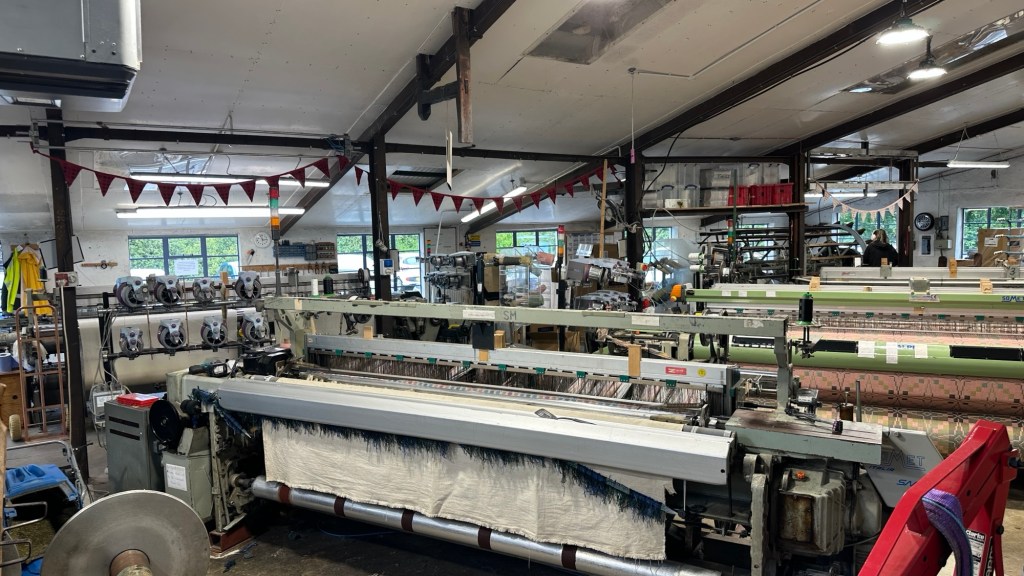
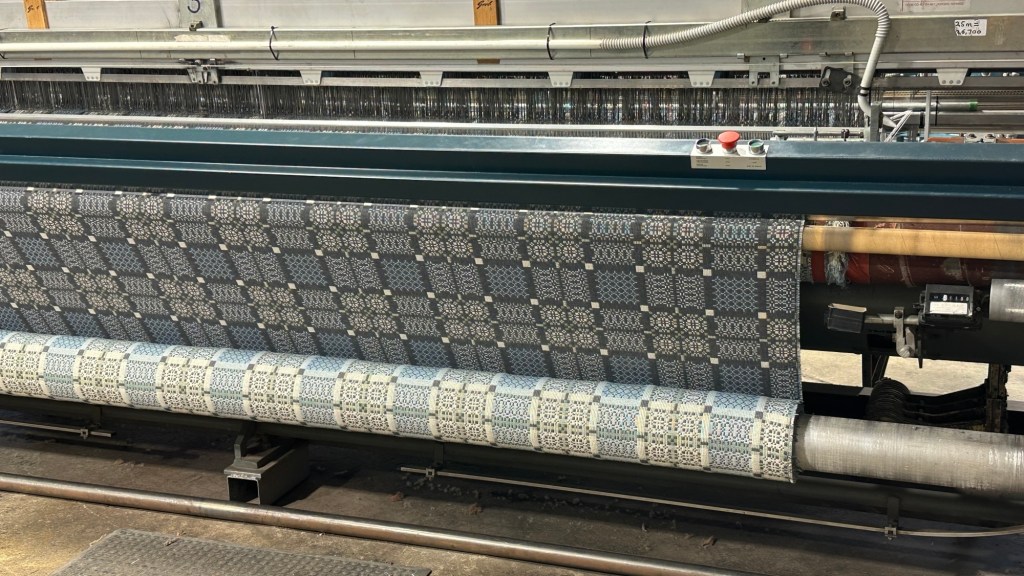
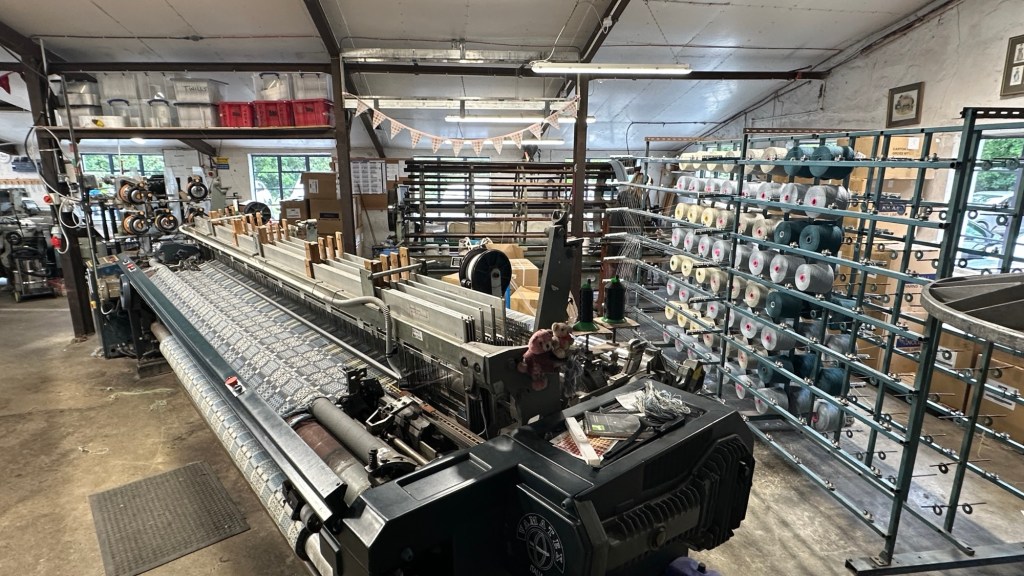
For lunch, our group divided into three groups for our home-hosted lunch (a feature of all OAT trips). Kim, Tim, Chris, and I were hosted by a lovely couple, Michael and Sheila, who shared the meal preparation with two neighbors, who hosted our other two groups. Our hosts told us about their lives, family, and reasons they live in Fishguard (the quiet, the community). They also told us about a local woolen mill, the Tregwynt Mill, that was not part of our trip.
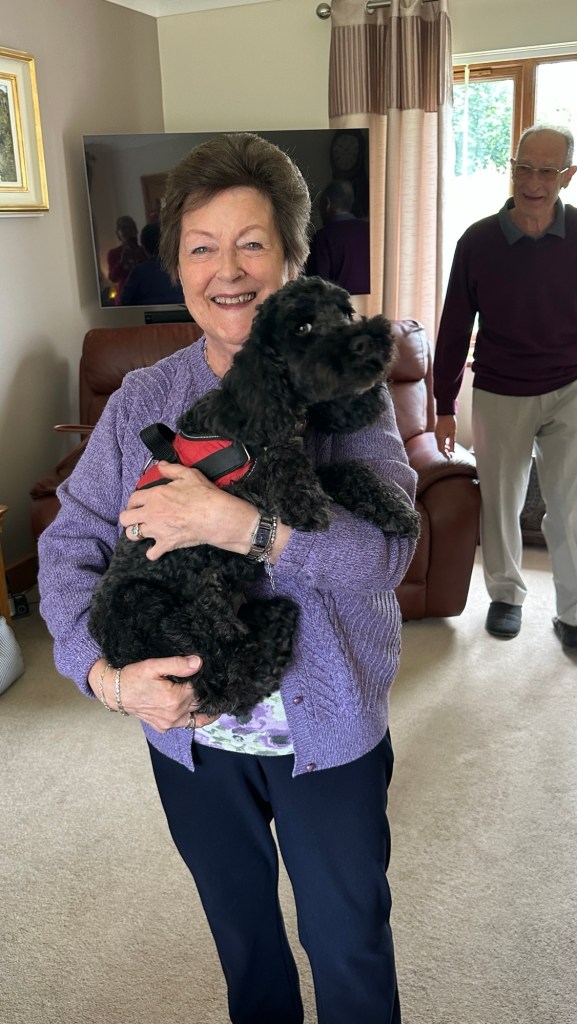
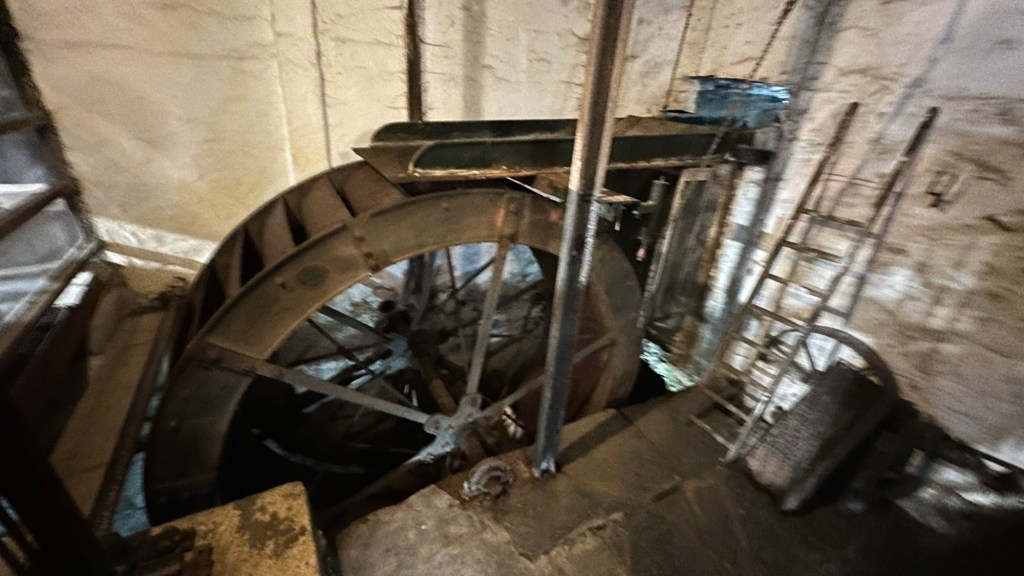
Arriving back at the ship, Tim discovered he had left his ship ID (required for boarding) at the house. Fortunately Michael found it and followed our coach to the ship. He kindly offered to drive us to the mill and back. I was able to have snuggle time with one of their affectionate pups as we were squeezed in the backseat of his car. The mill was fascinating and well worth being on the trip agenda. We could have seen a locally produced tapestry commemorating the 1797 “last invasion” of British soil by the French. Next time!
Friday, June 12
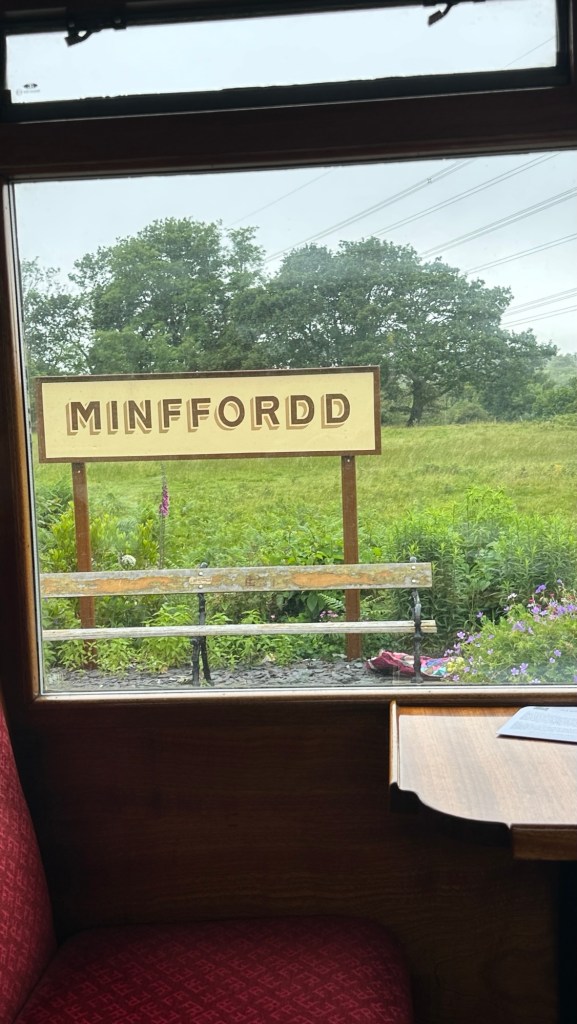
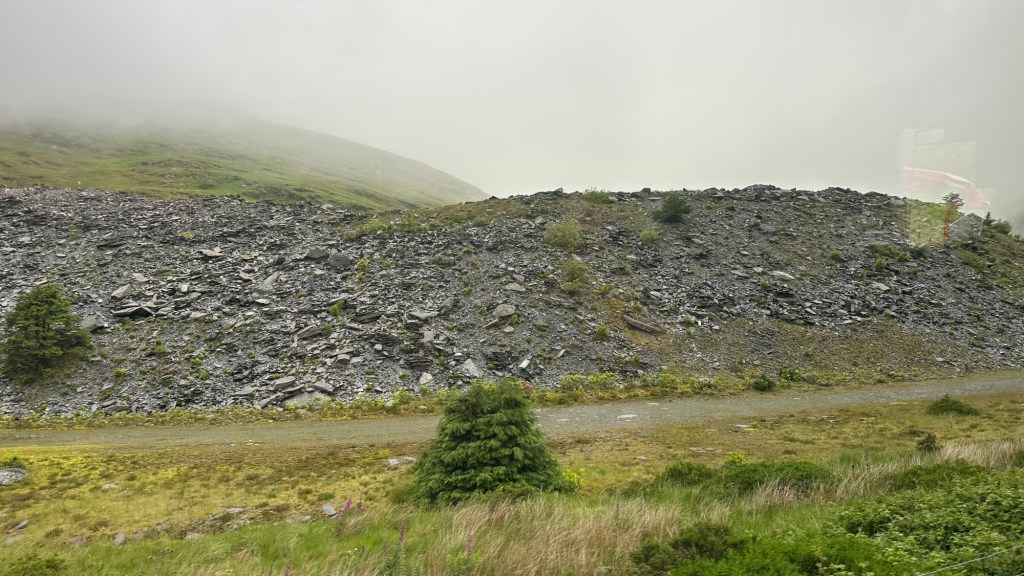
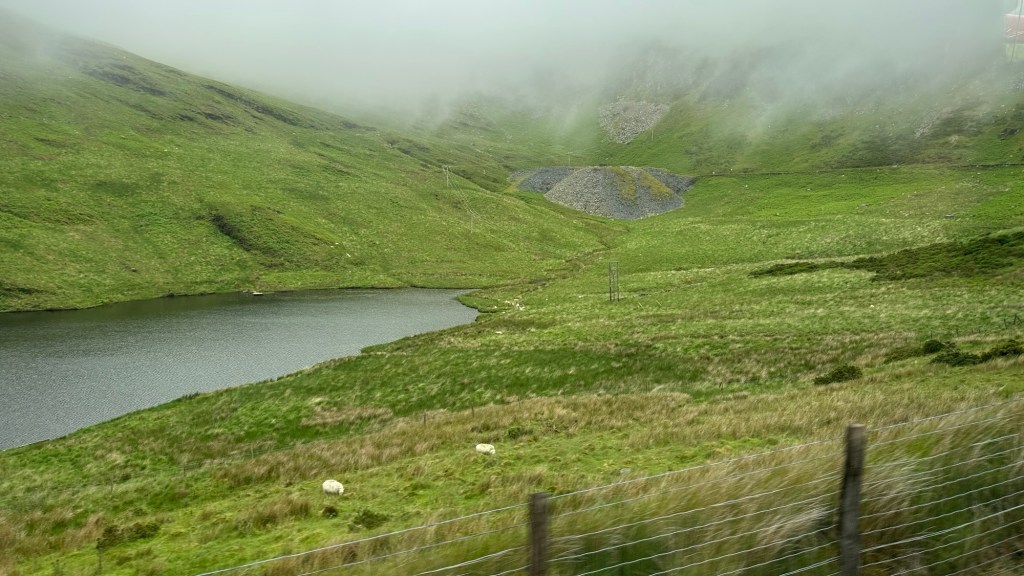
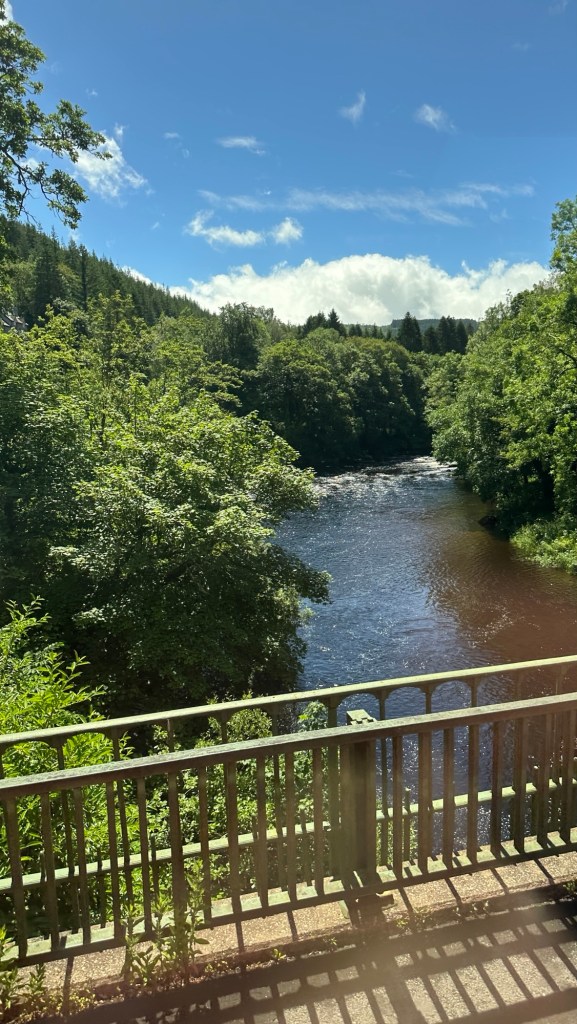
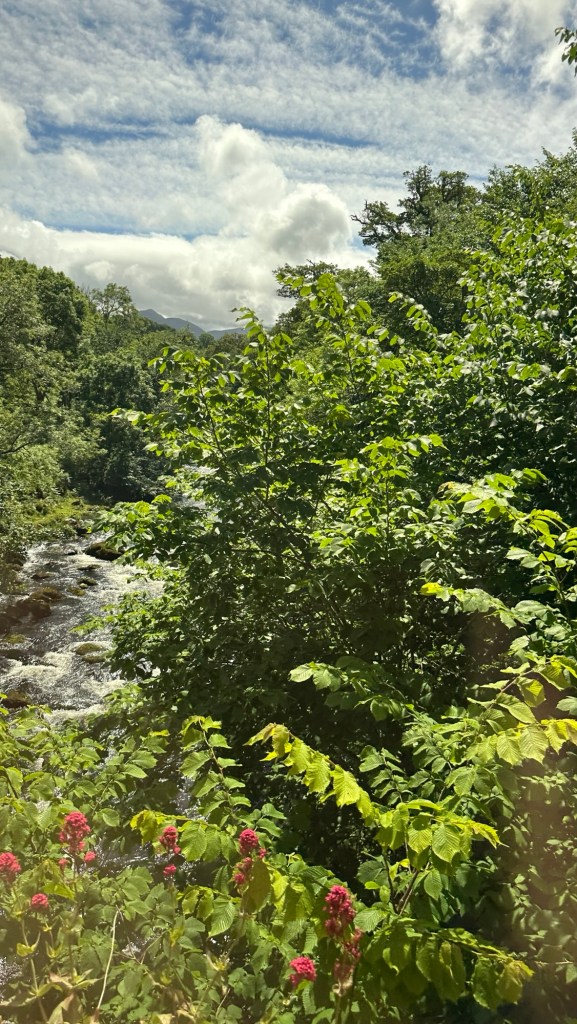
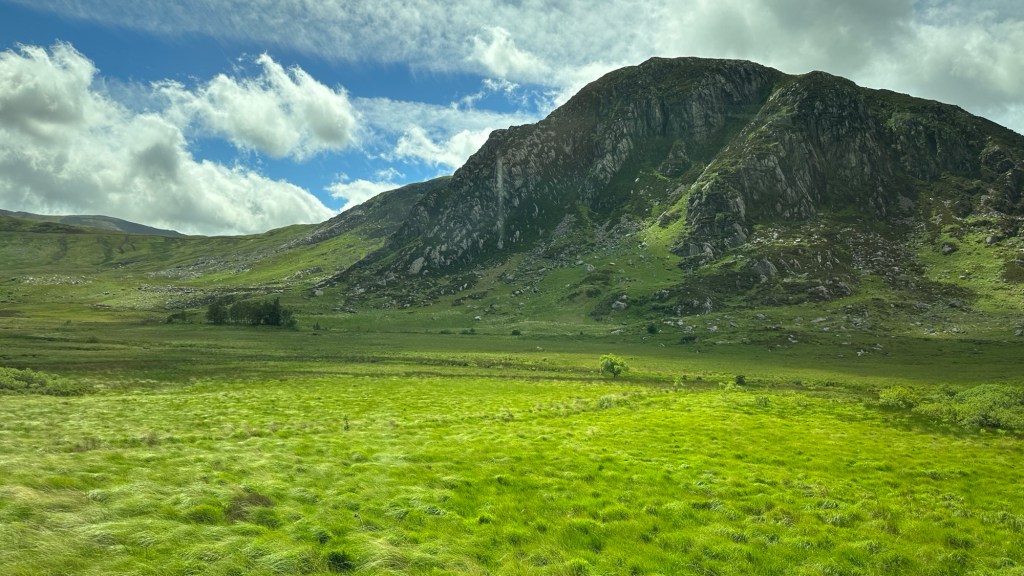
We sailed overnight to Holyhead, a port on Holy Island, part of the Isle of Anglesey. There we boarded a narrow gauge train, the Ffestiniog and Welsh Highland Railways. It was a lovely ride, and along the way we saw sites of the slate-mining activity that was a key economic driver in Wales, starting with the Romans, and peaking during the industrial revolution. Evidently Welsh slate is currently highly prized. It was previously routinely used for roofing.
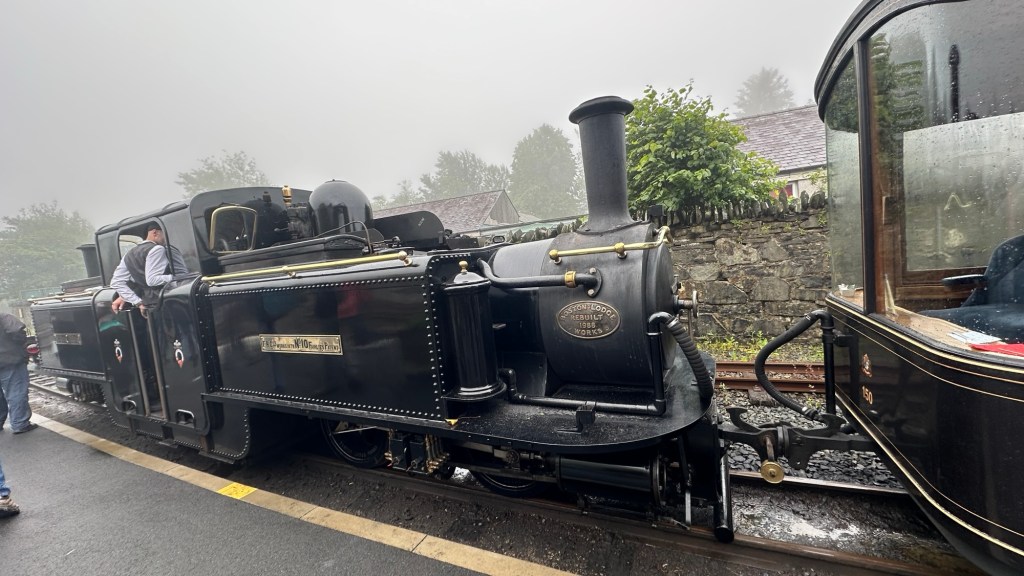
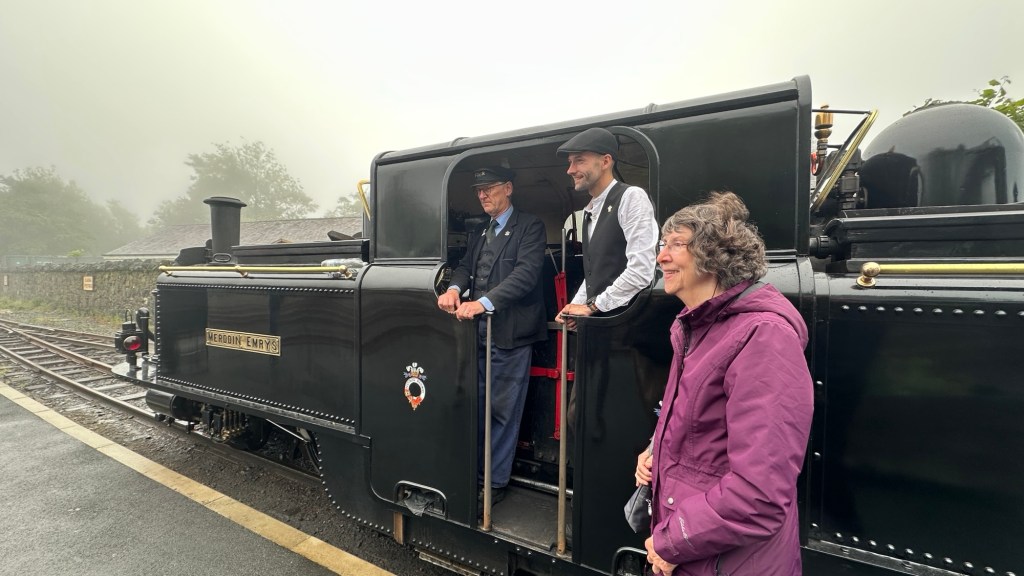
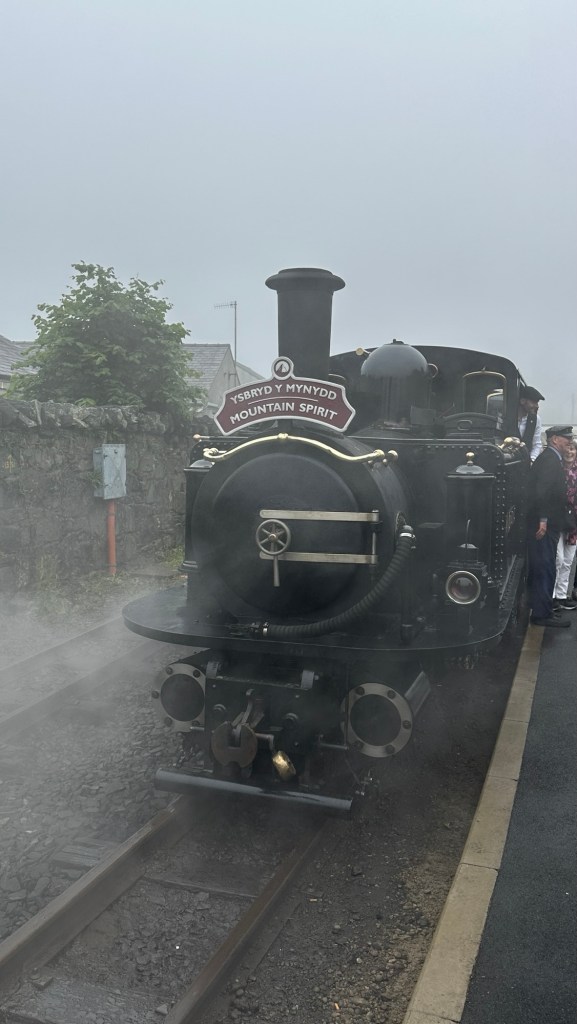
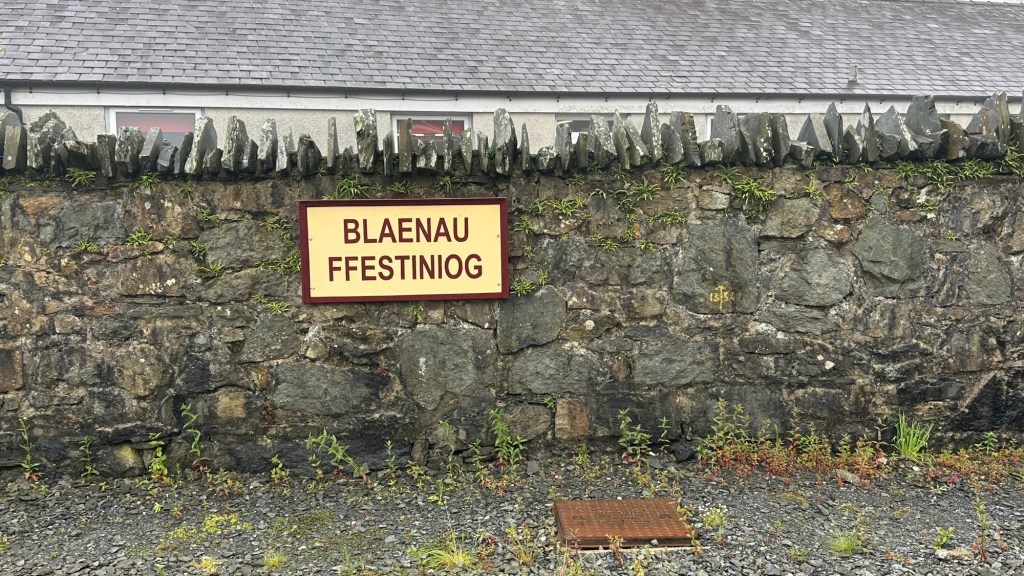
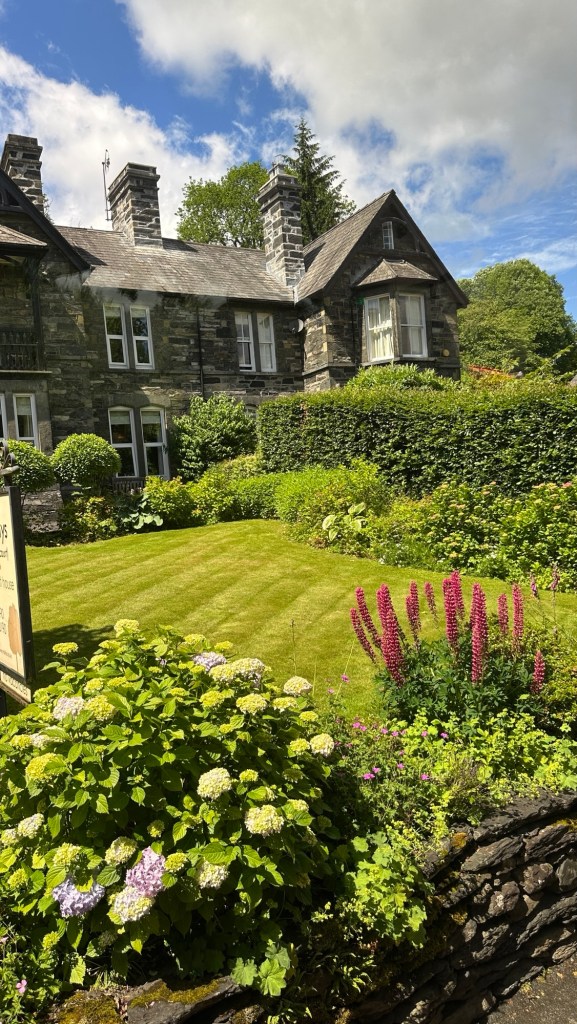
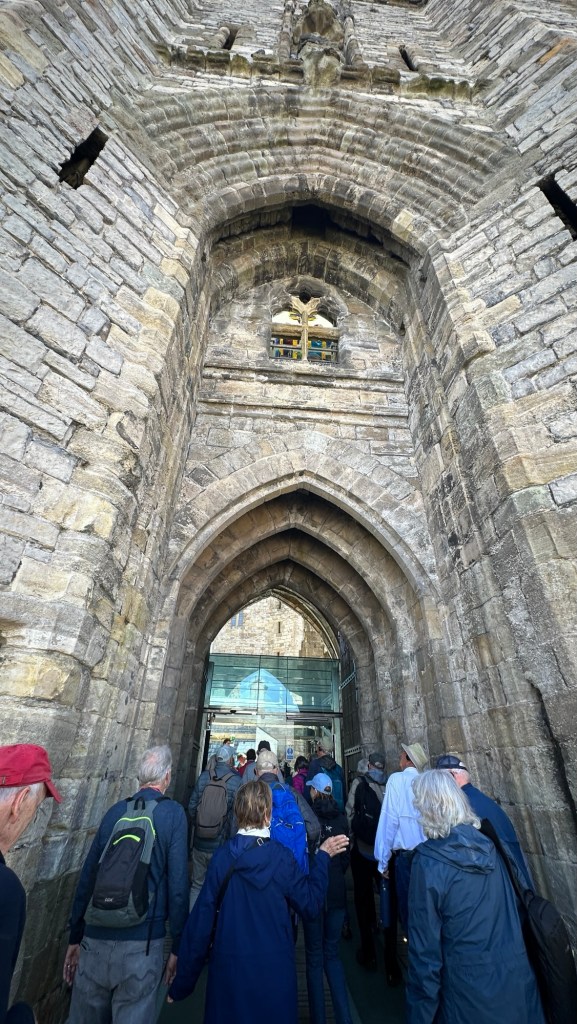
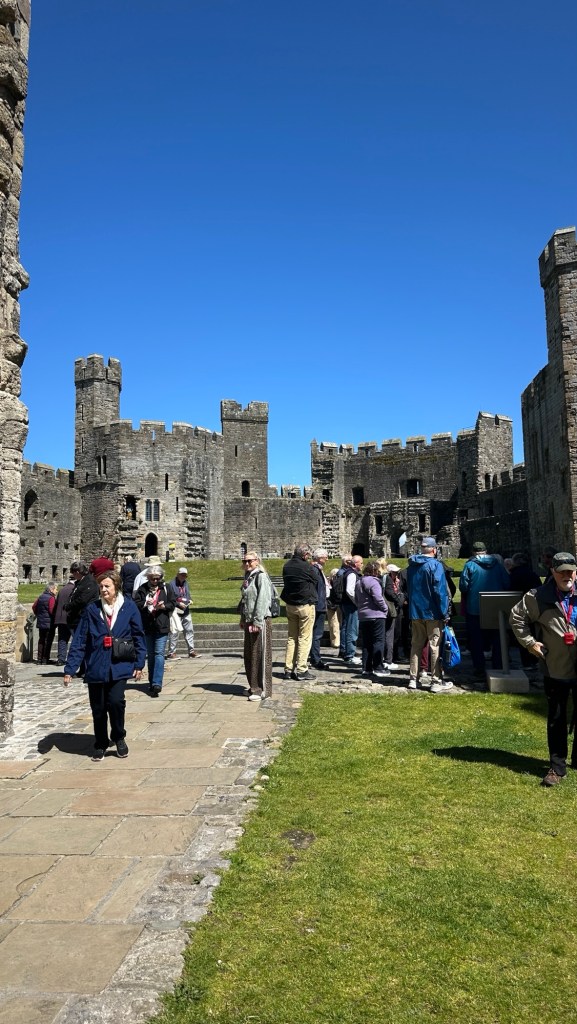
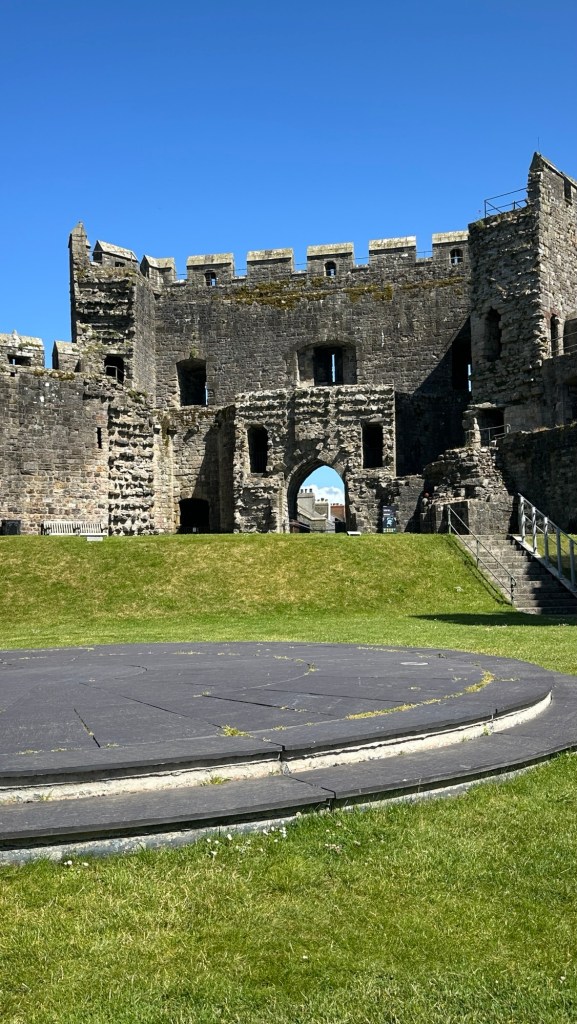
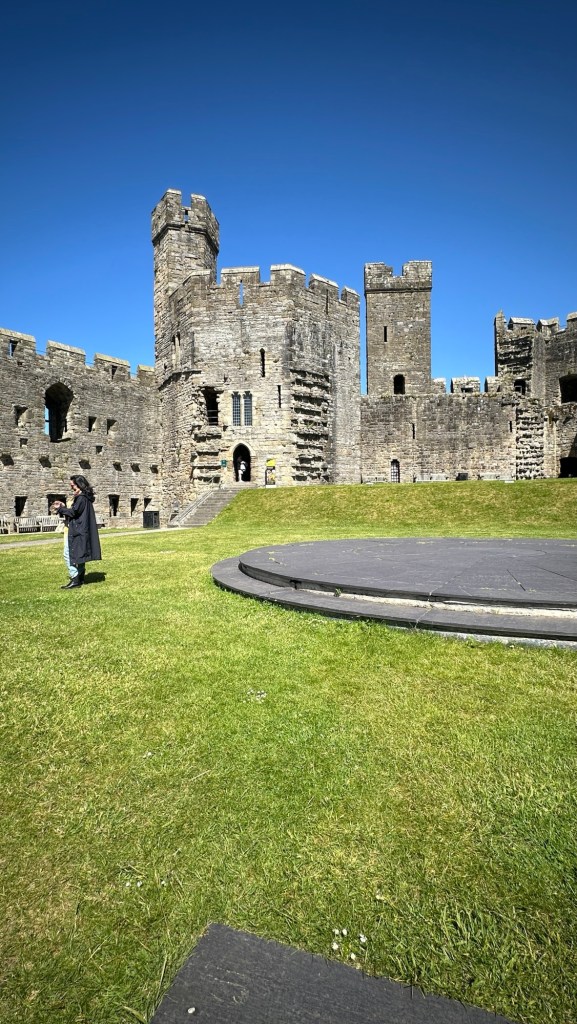
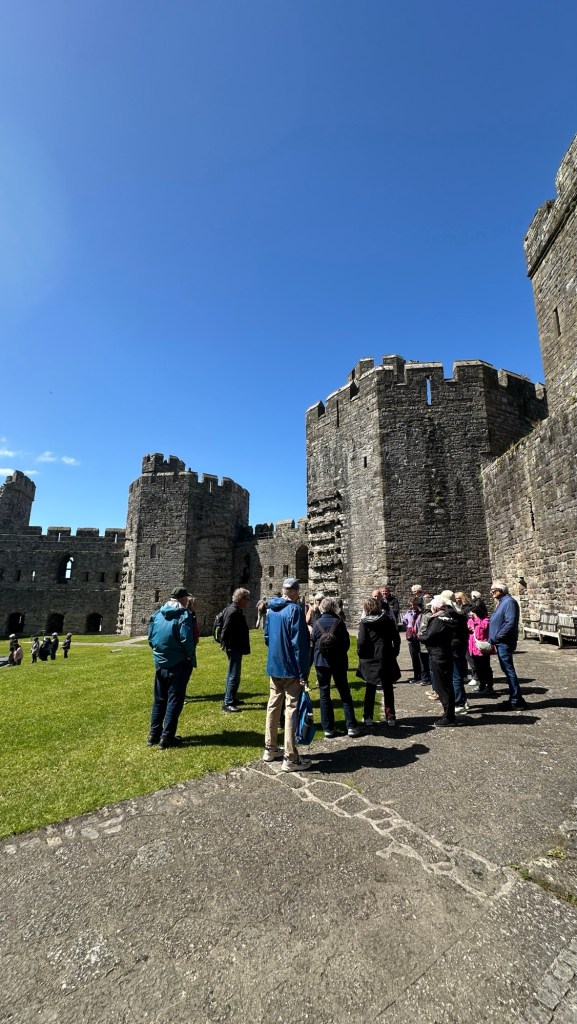
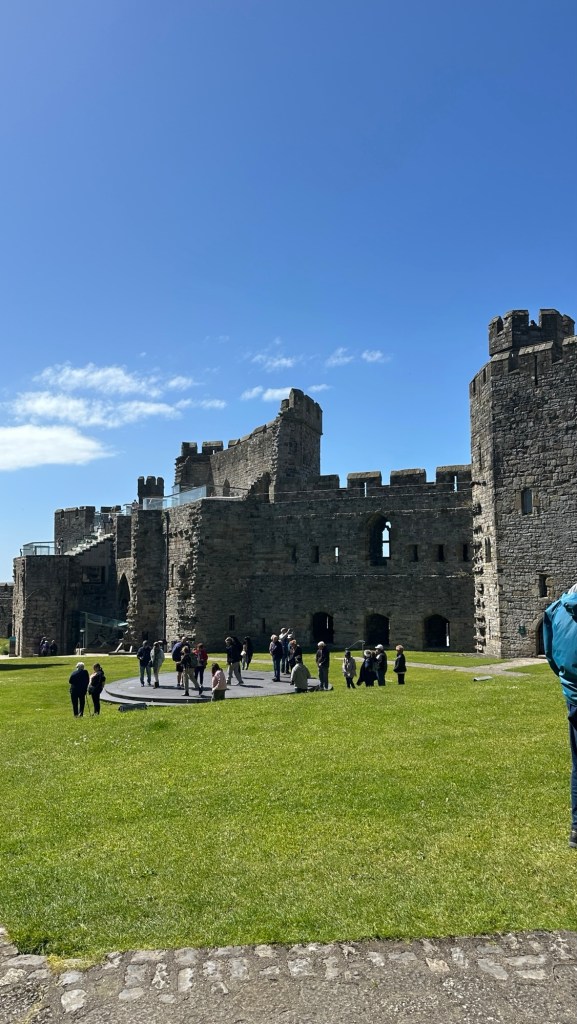
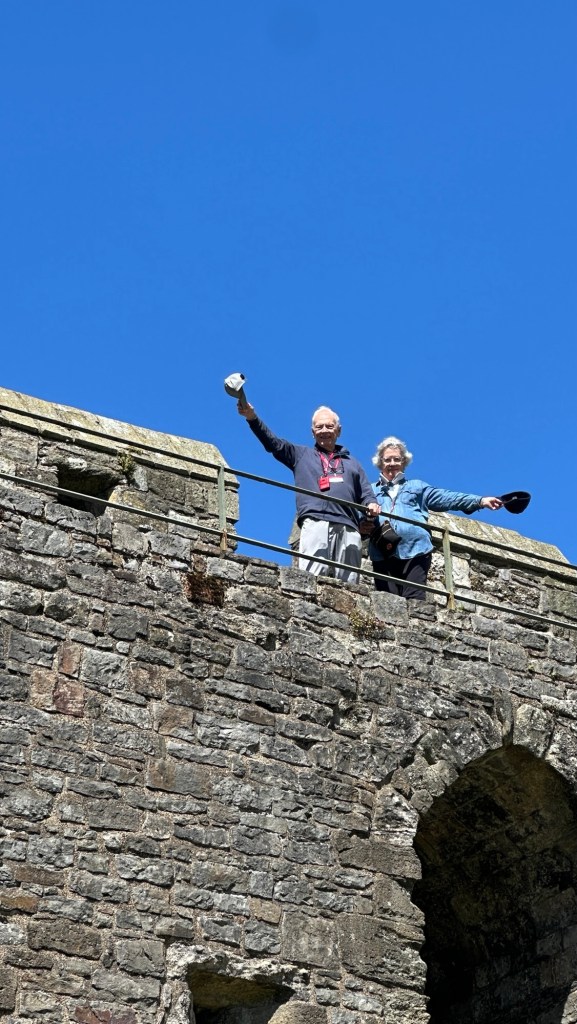
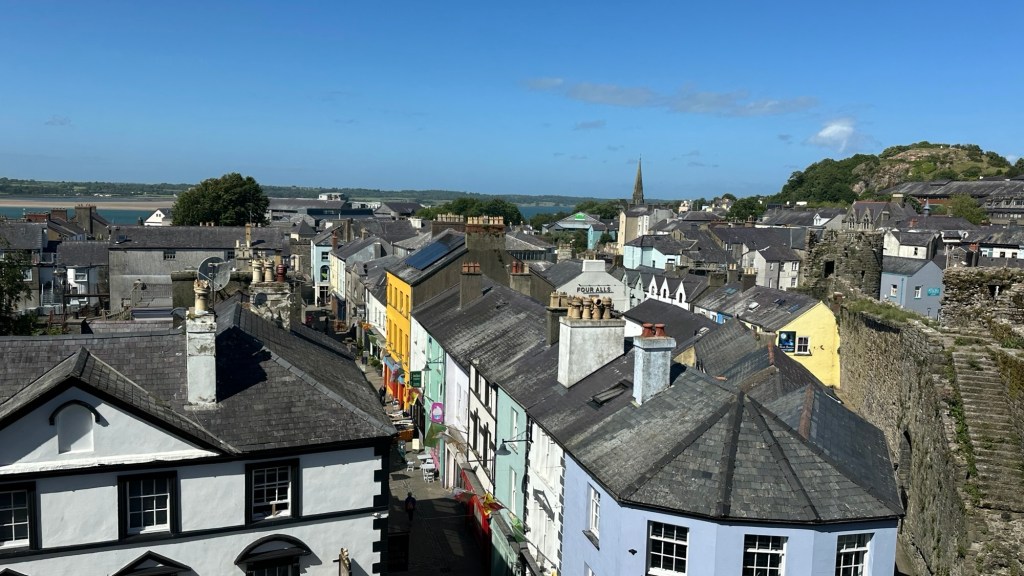
After lunch in a local pub, we drove to the massive Caernarfon Castle, built between 1283 and 1330 to mark the conquest by the English. The polygonal towers had been inspired by the architecture in Constantinople. In 1969, Royal Highness Prince Charles (now King), was invested as Prince of Wales here. Prince William opted against a formal investiture event, and instead spent time in Anglesey, where he and Kate had lived. Residents recalled routinely seeing Kate in the local grocery shops. They love their royal family!
Saturday, June 13
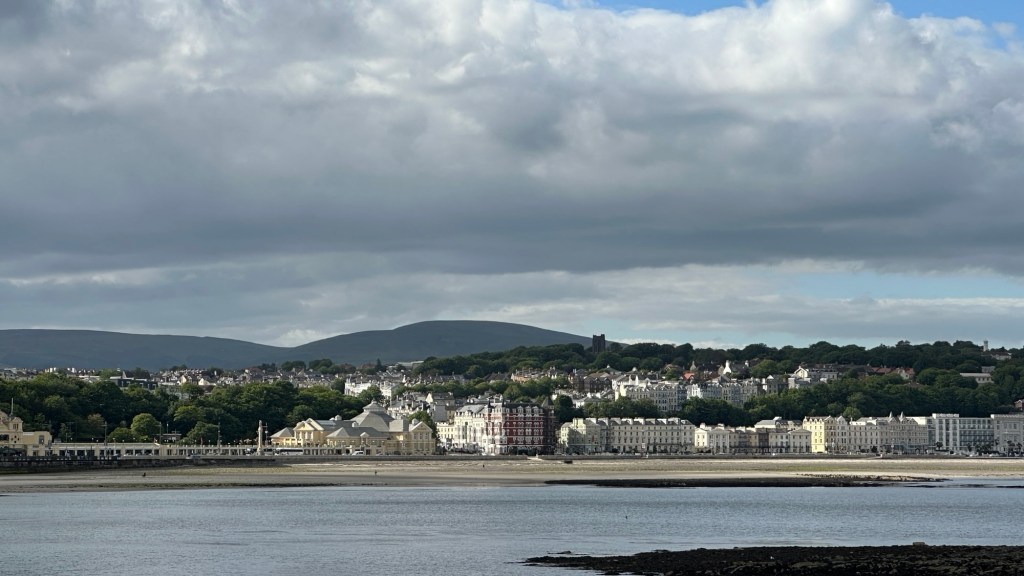
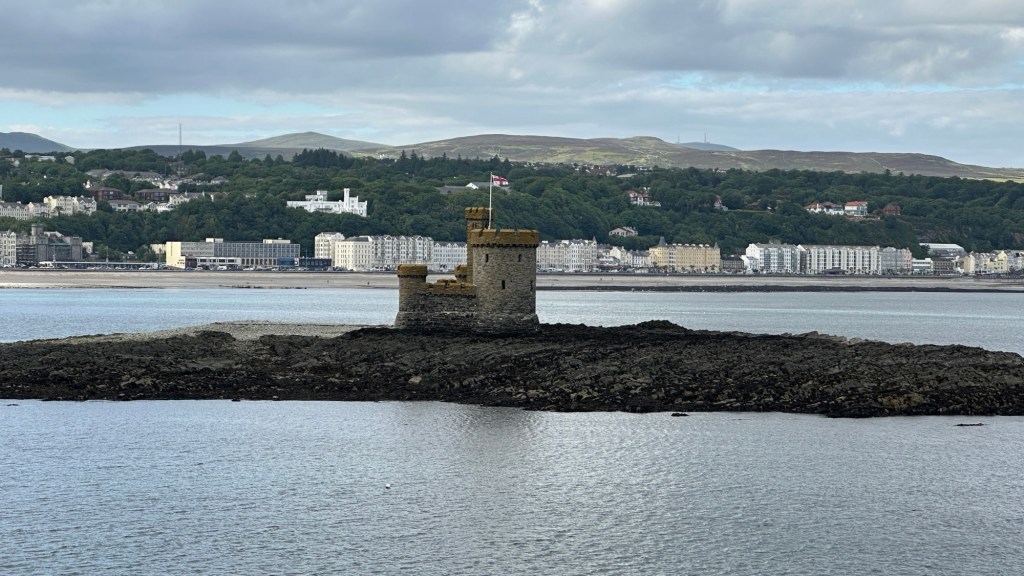
We arrived early in the morning at the Isle of Man. The island, although legally a UK protectorate, is not otherwise a part of the UK. Its independent parliament has been in place since 979.
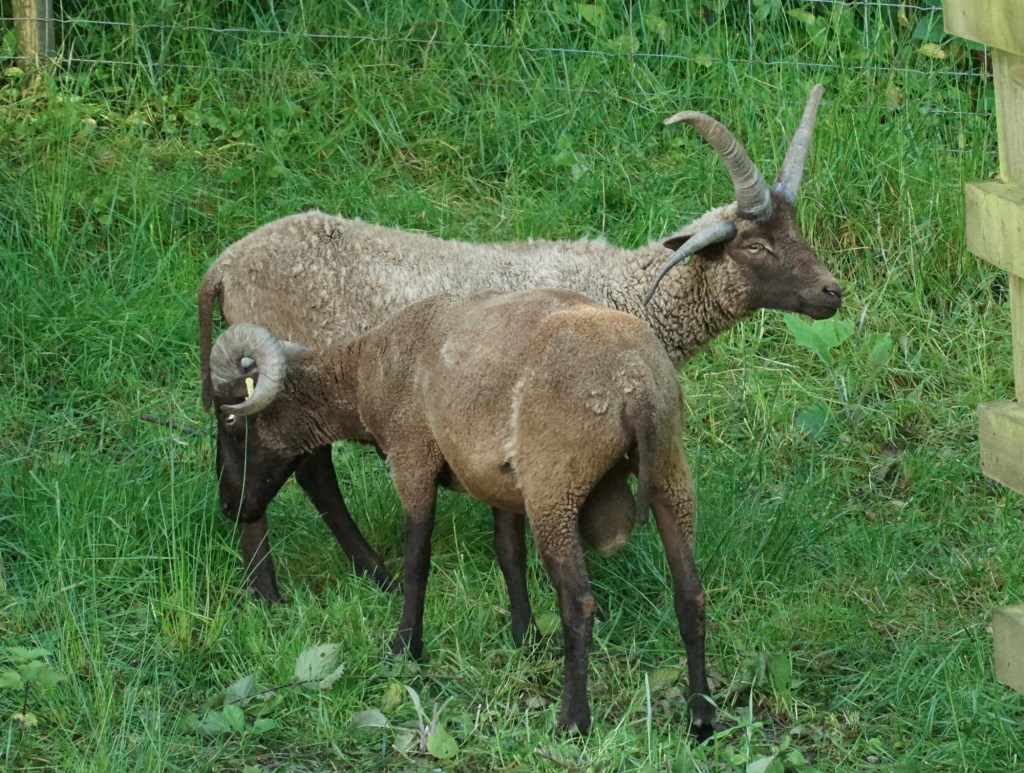
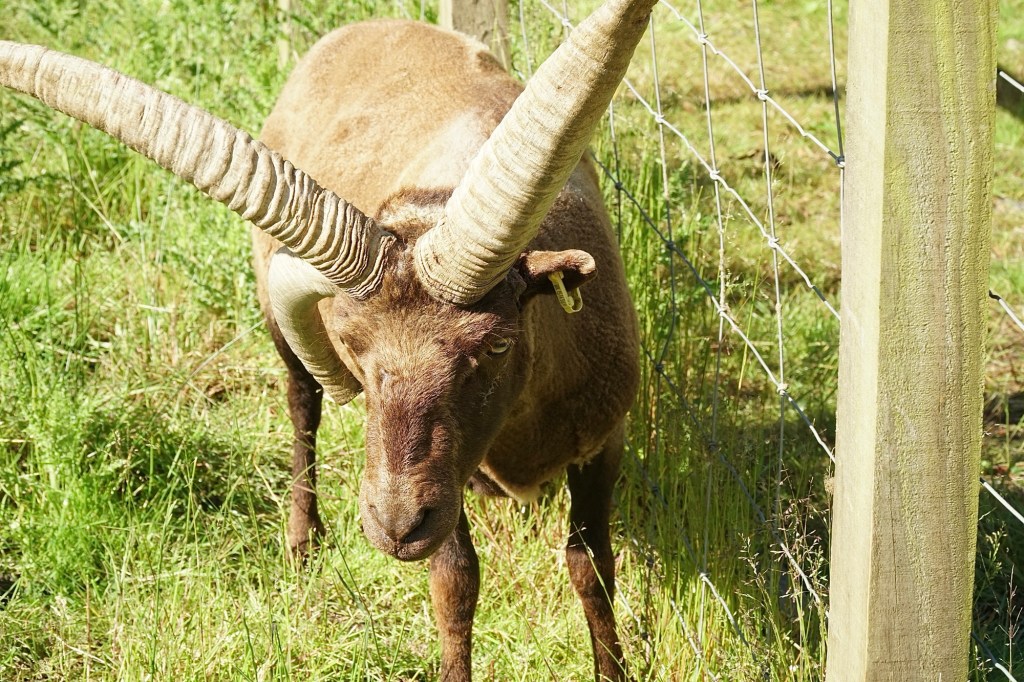
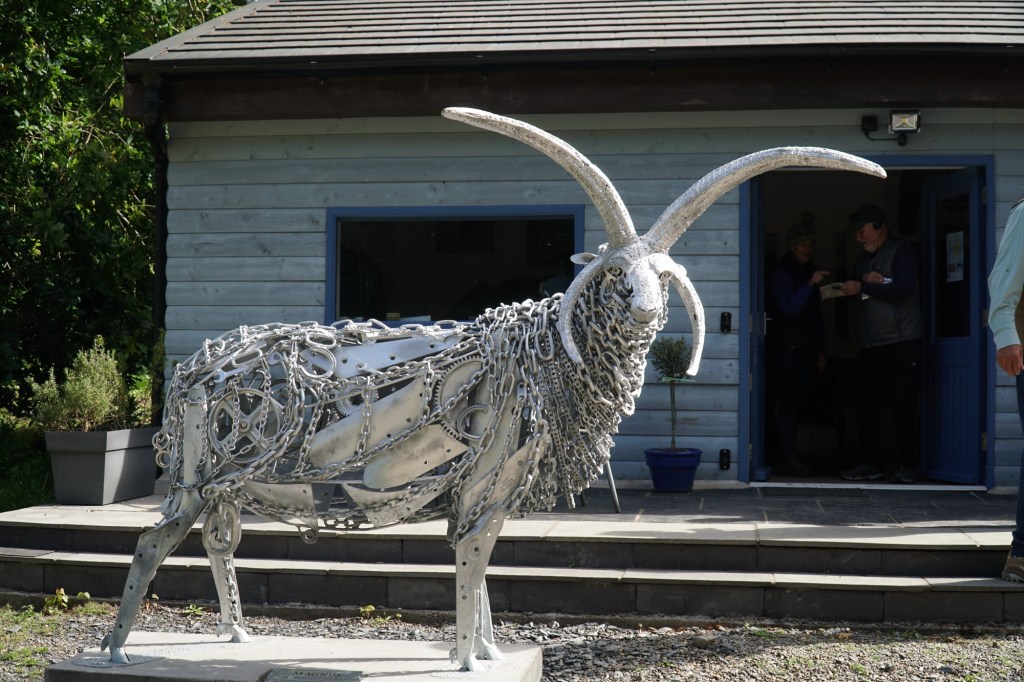
We started our explorations with a visit to a farm that raises a unique type of sheep, solid brown Manx Loaghtan, that each have 4, and occasionally 6, horns.
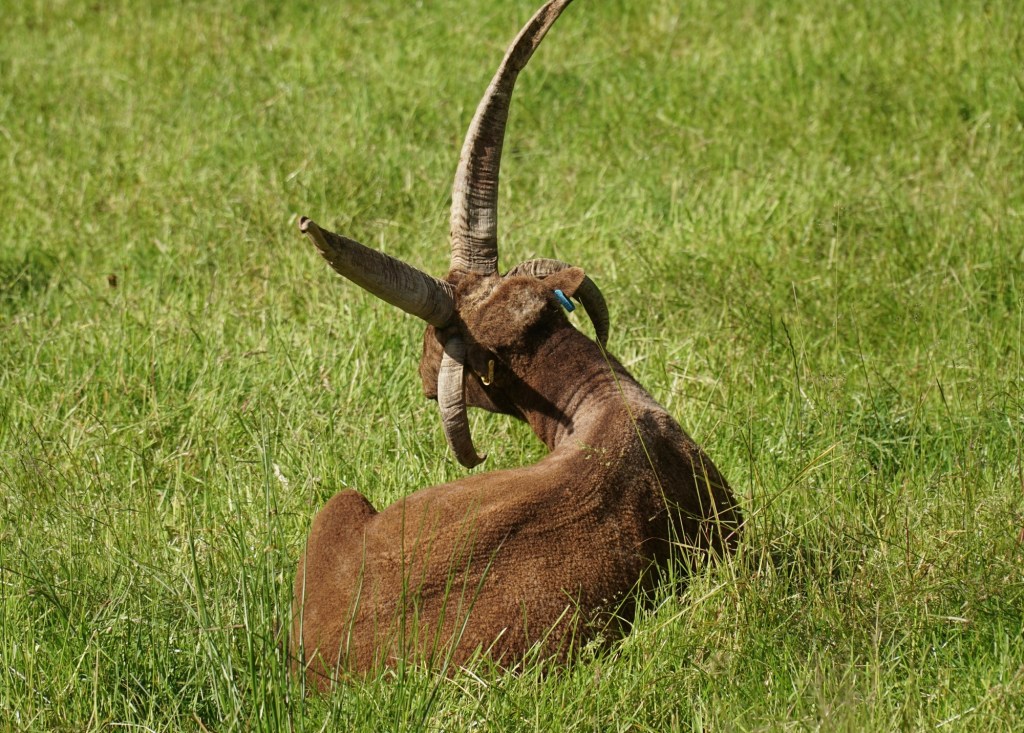
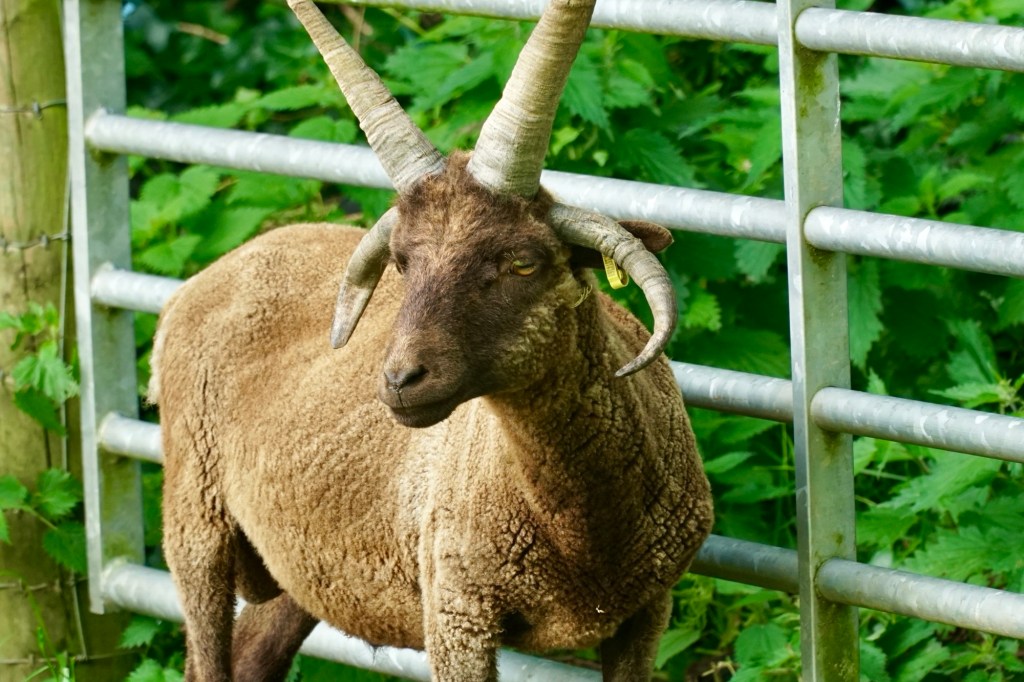
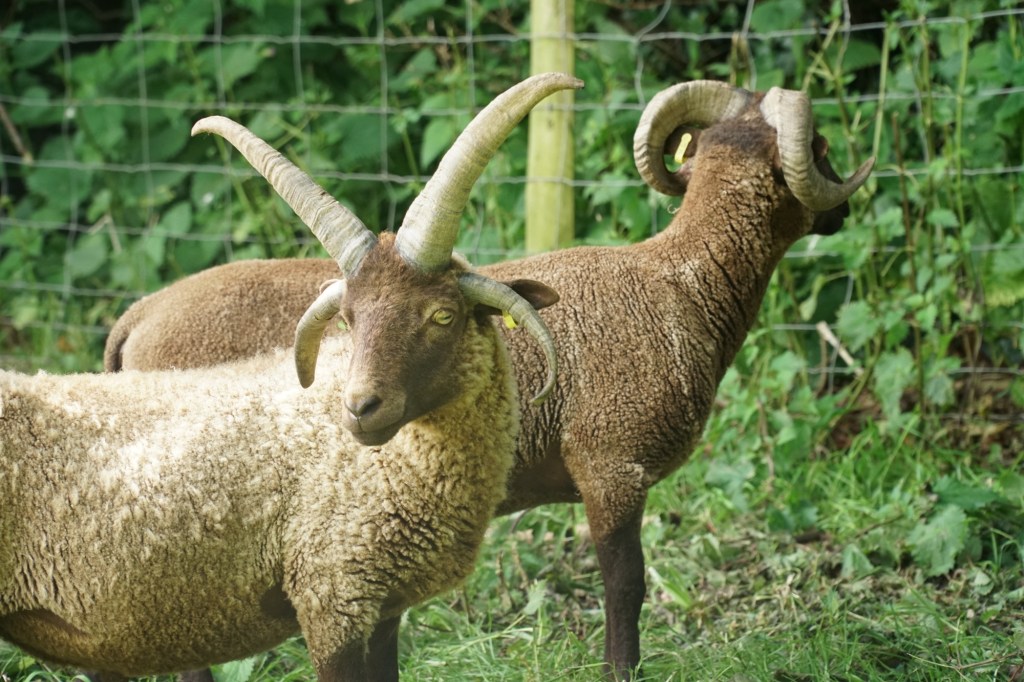
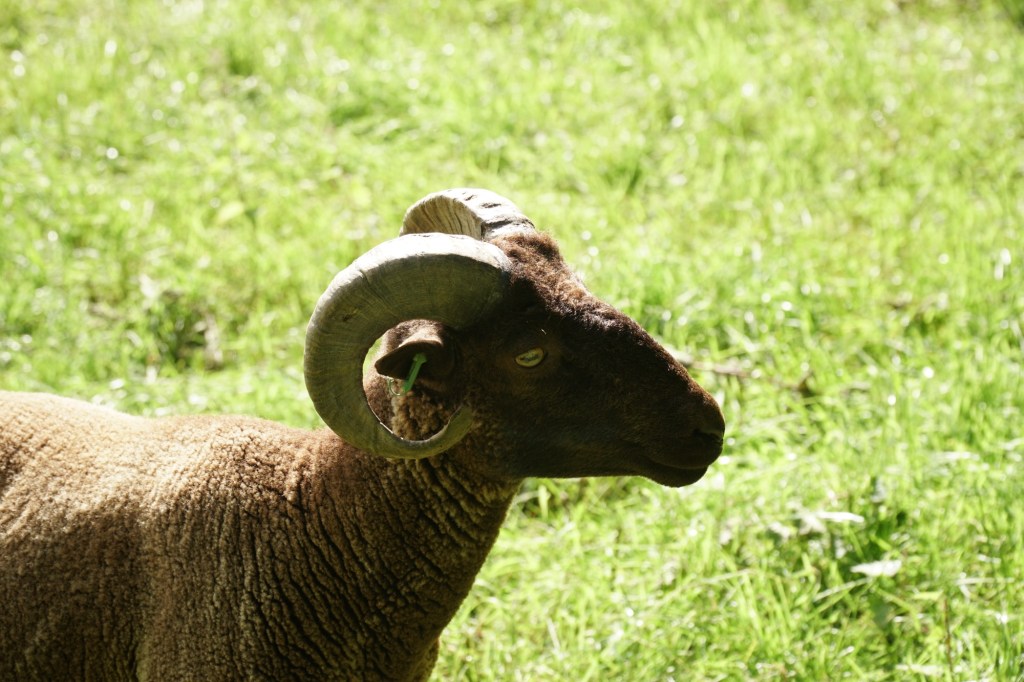
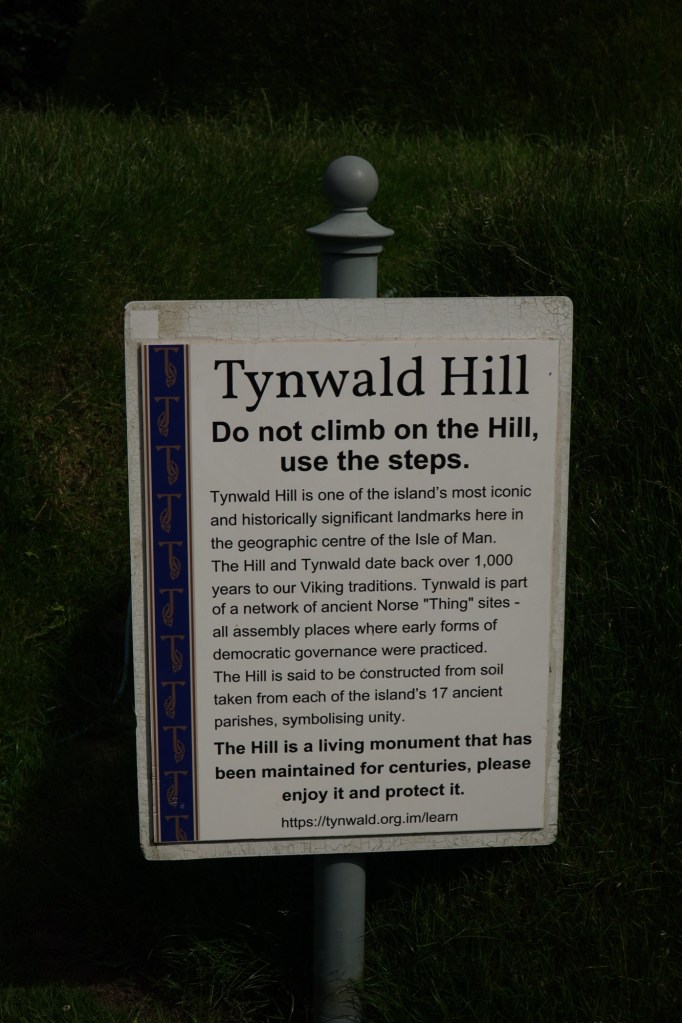
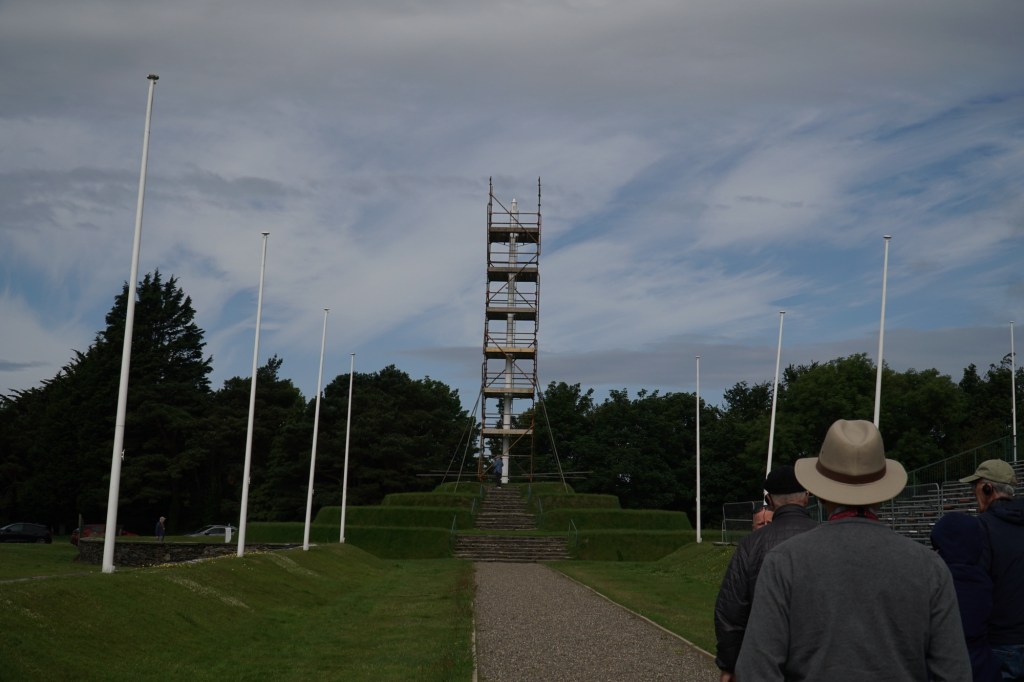
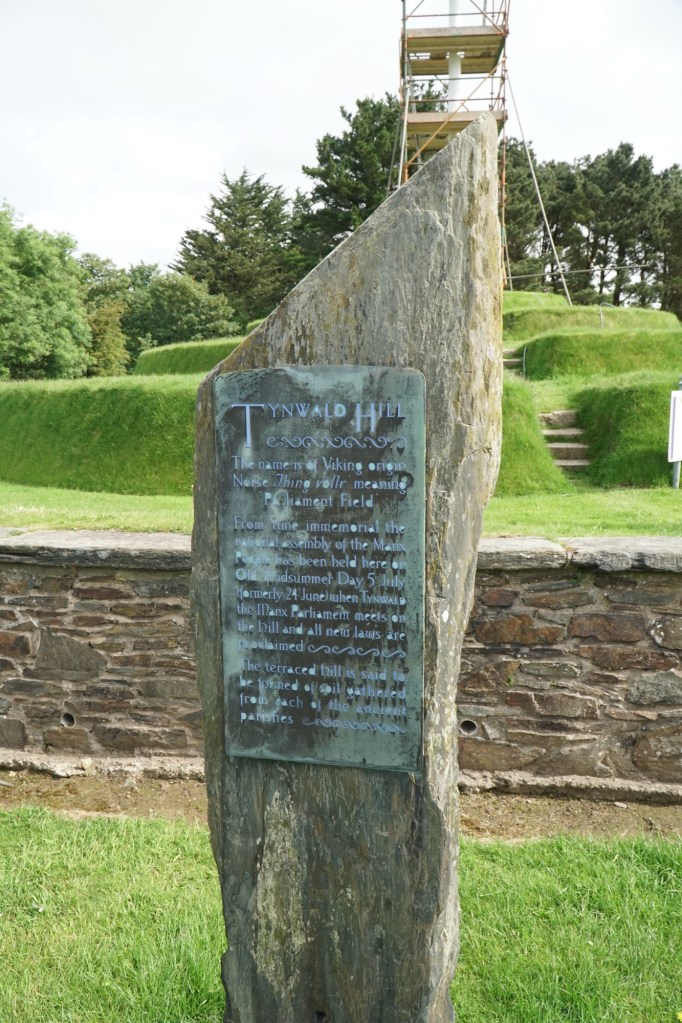
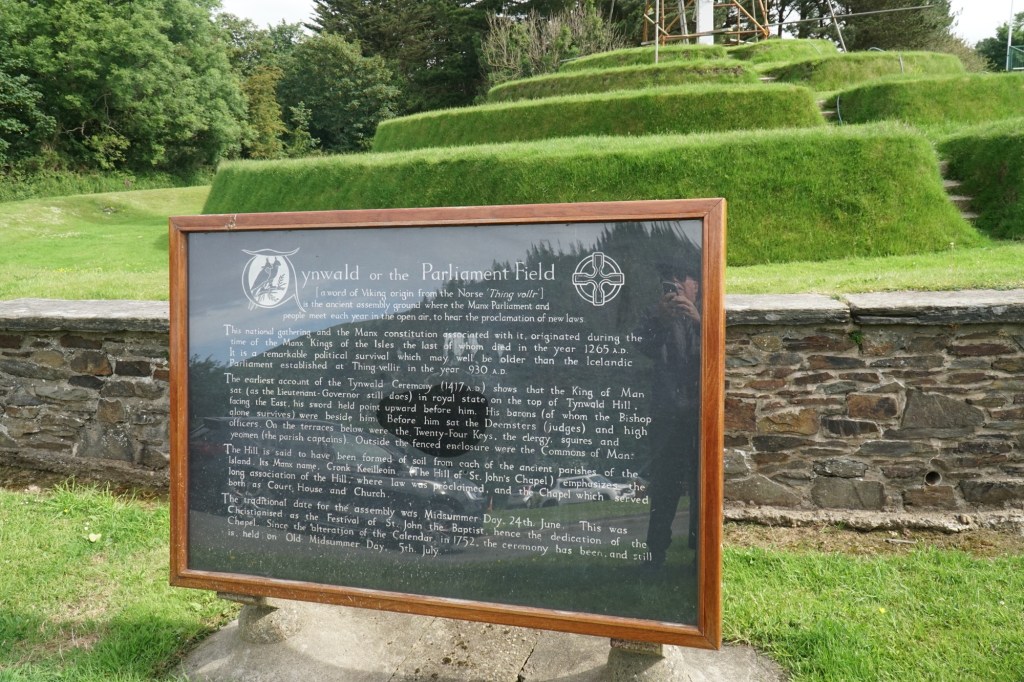
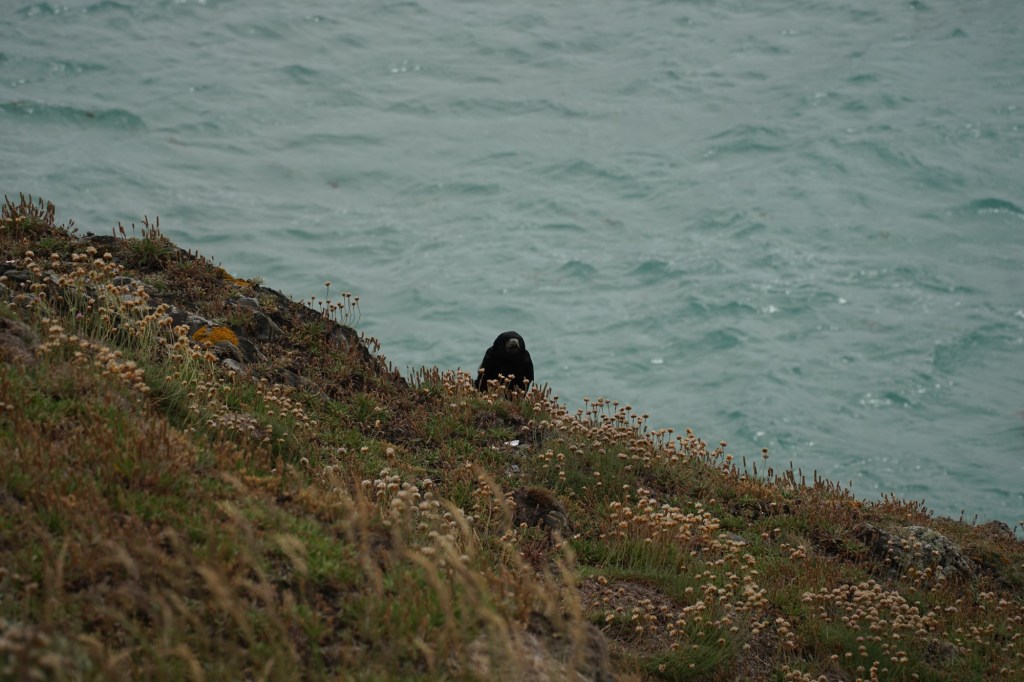
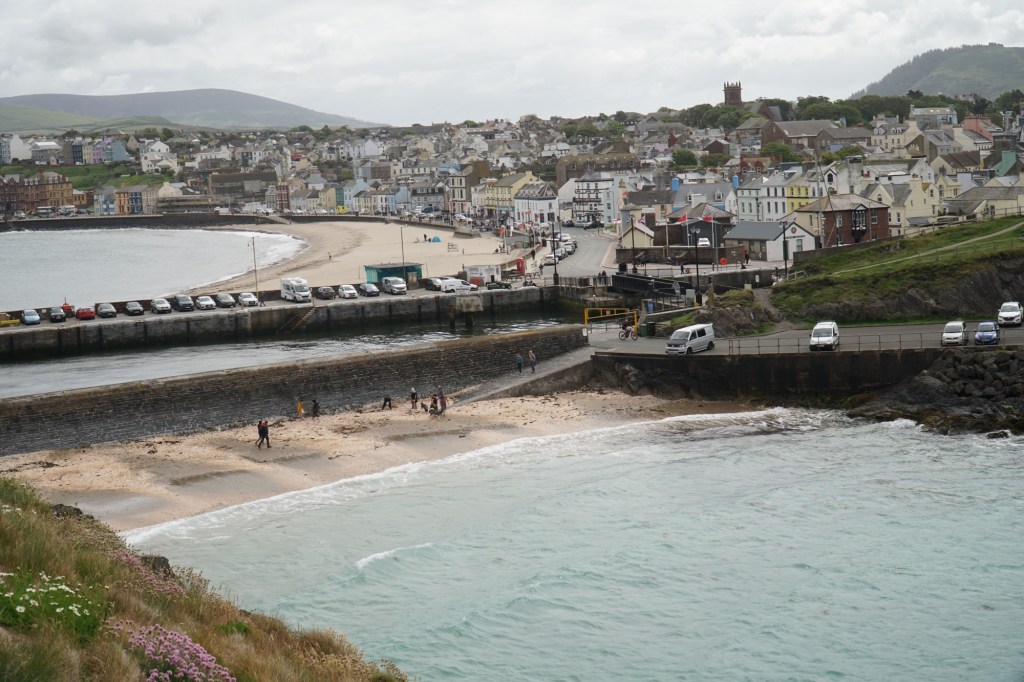
We then visited the town of Peel, where we saw Tynwald Hill, the town commons where they celebrate the Manx parliament with festivities every year. Preparations were already underway, as you can see from the scaffolding above the tiered hill. Once a year all new laws enacted during the year are read aloud on the hill. In Viking days, the location was the site of dispute resolution.
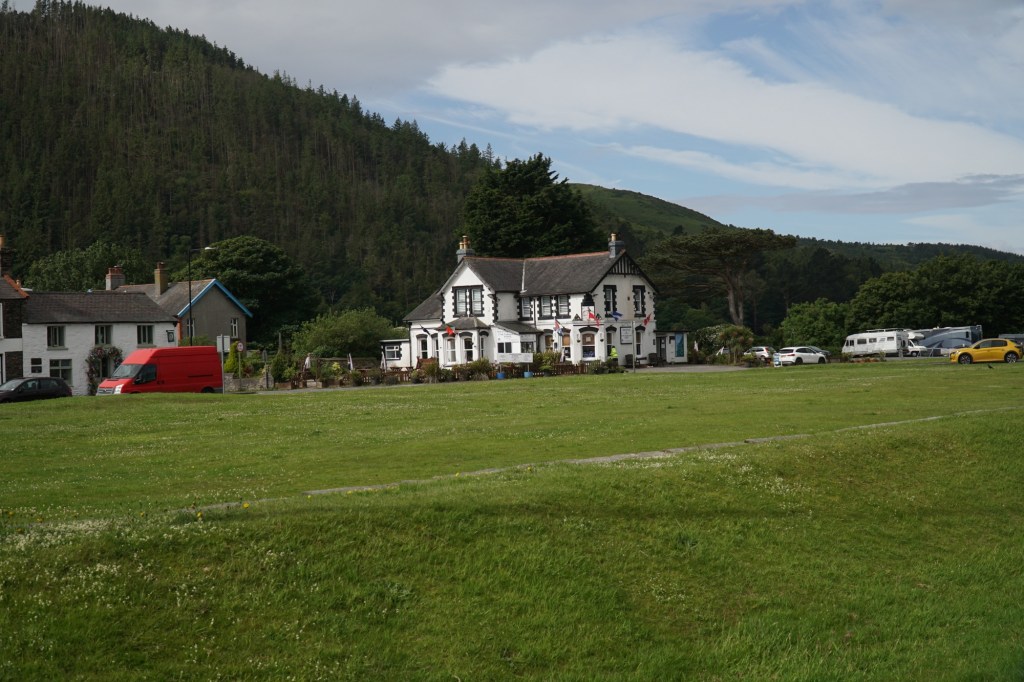
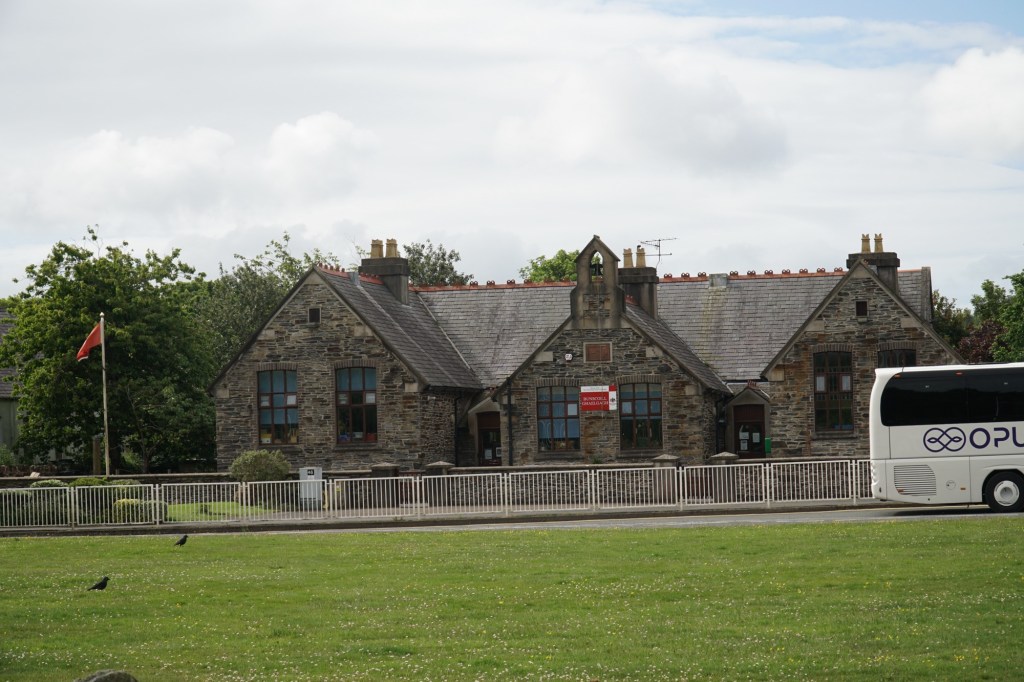
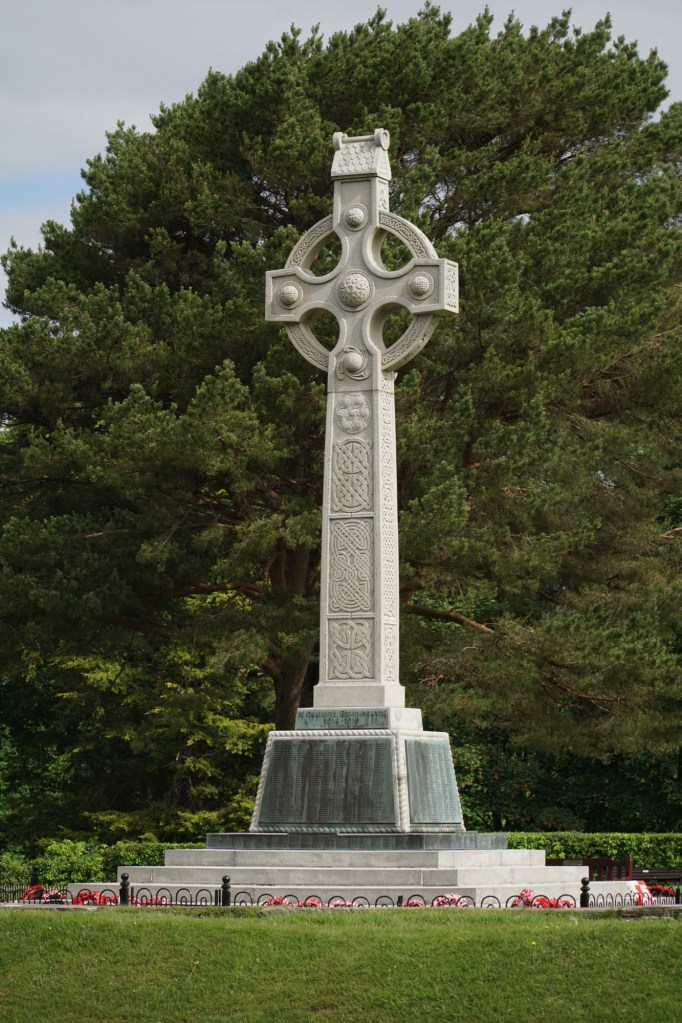
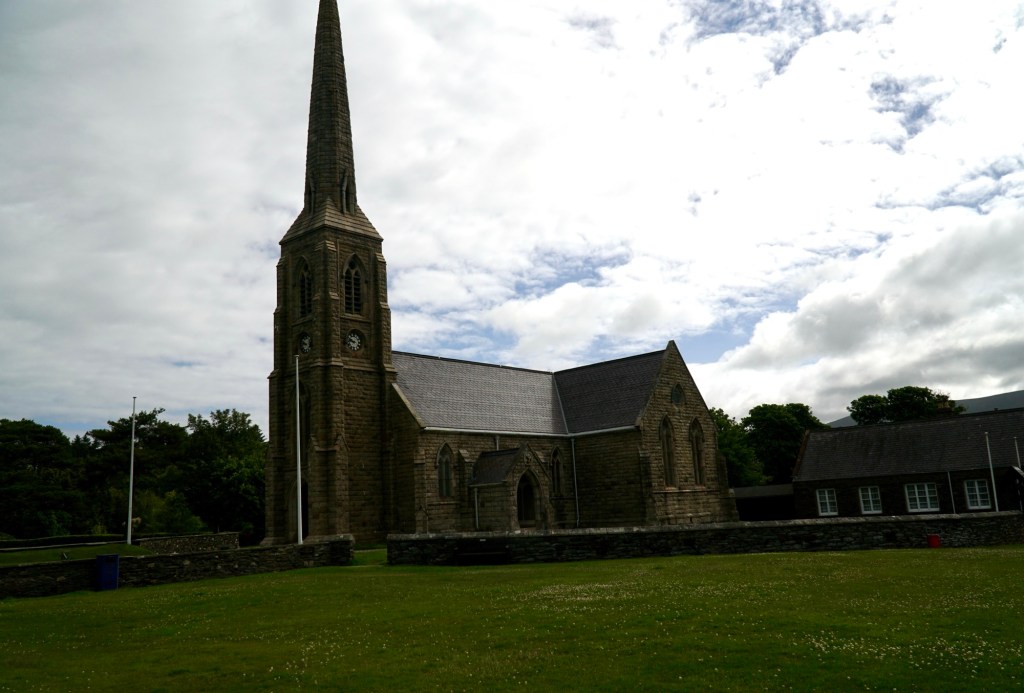
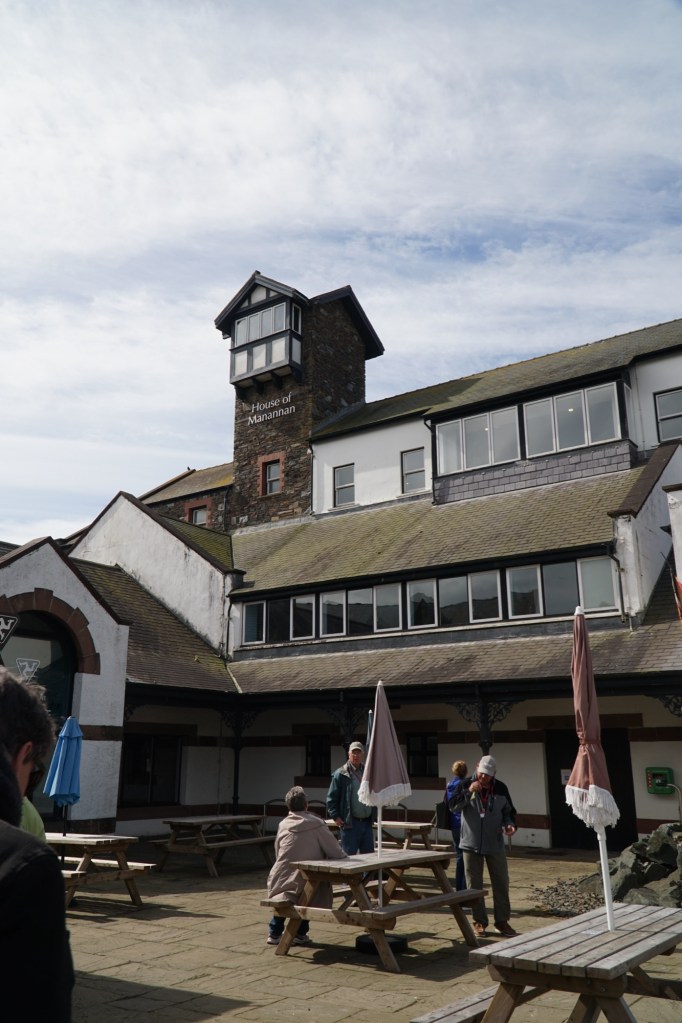
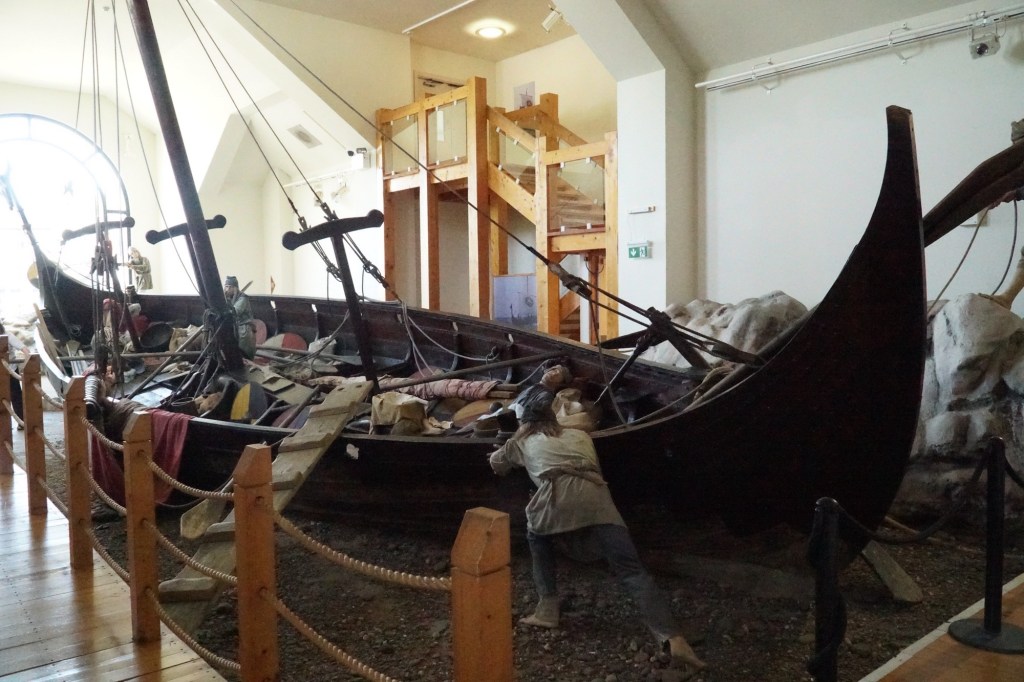
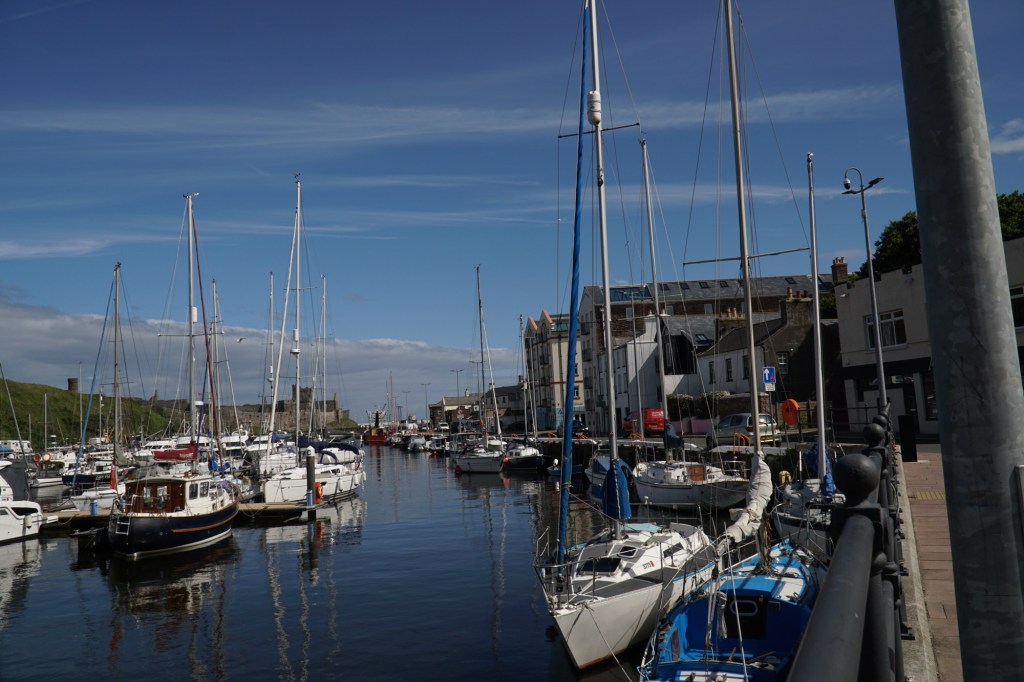
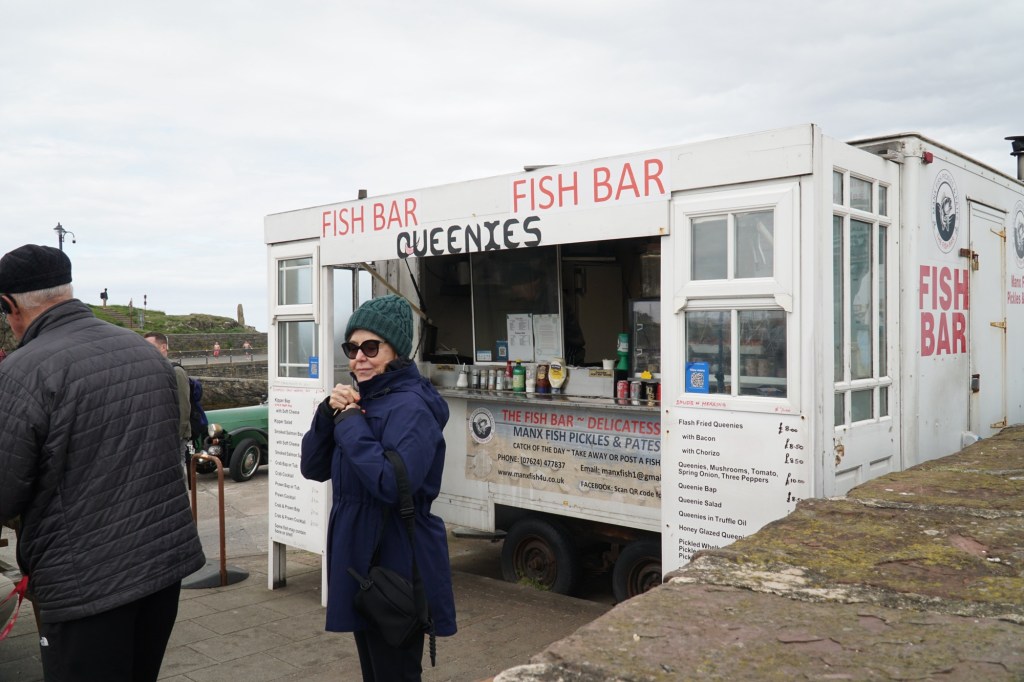
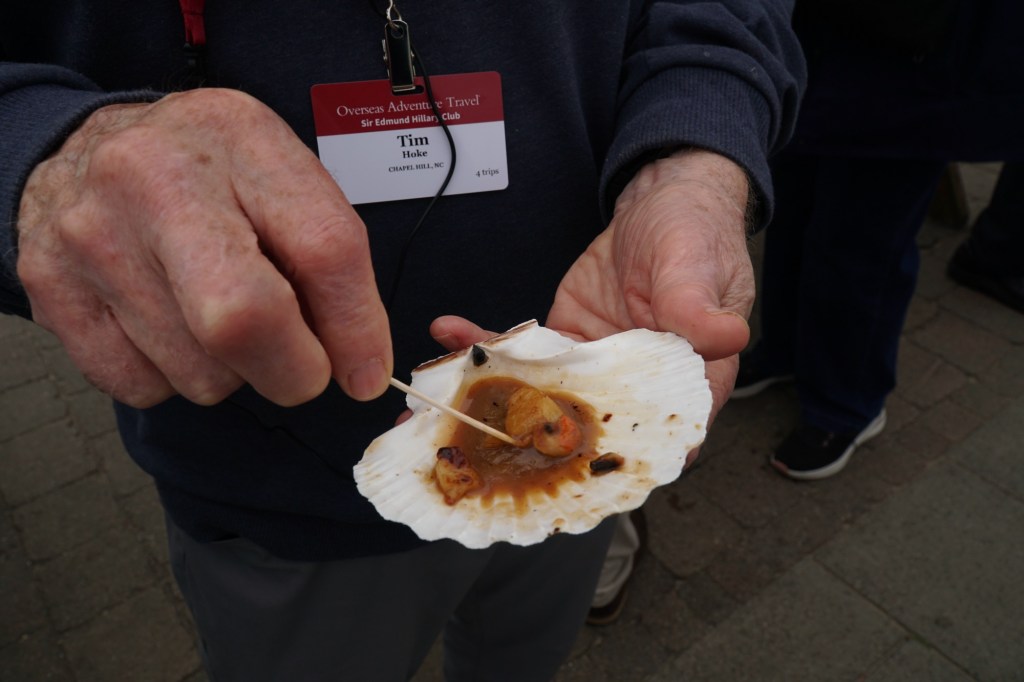
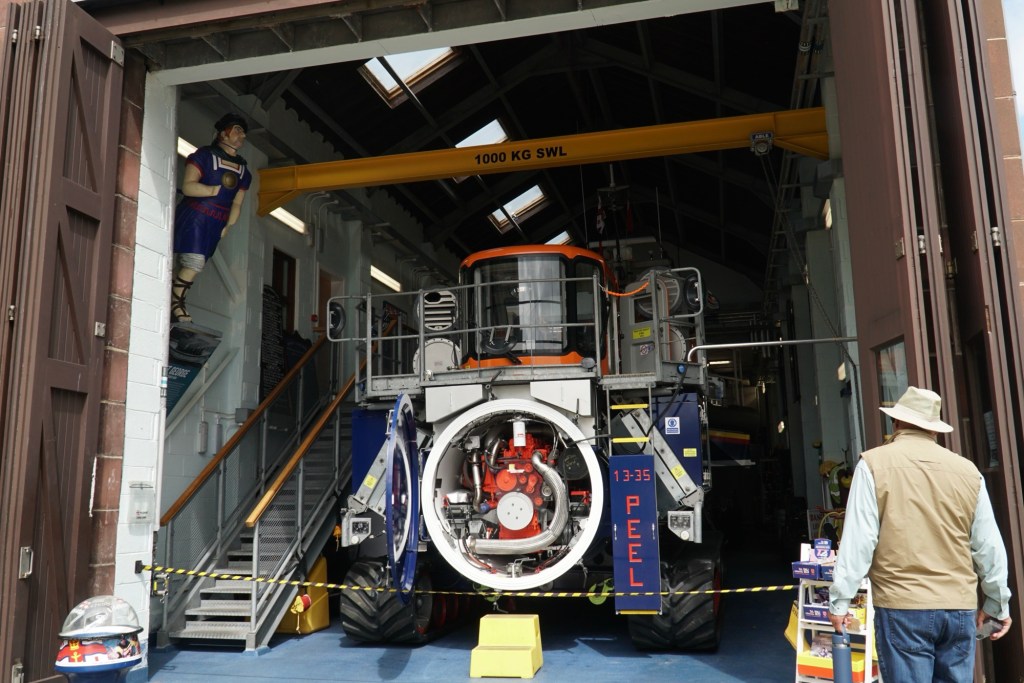
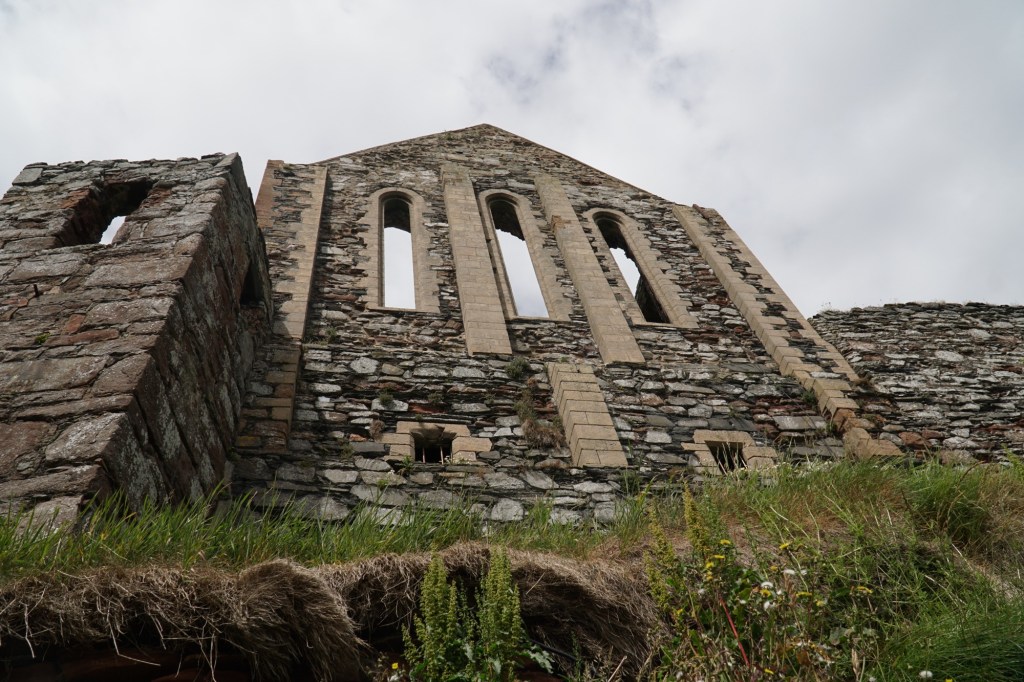
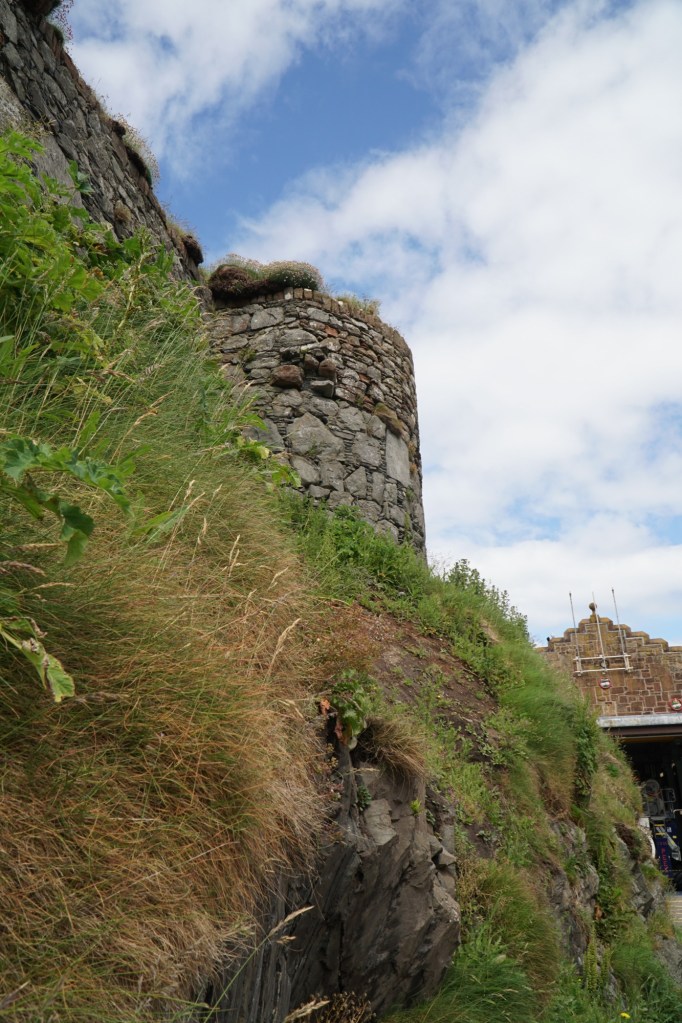
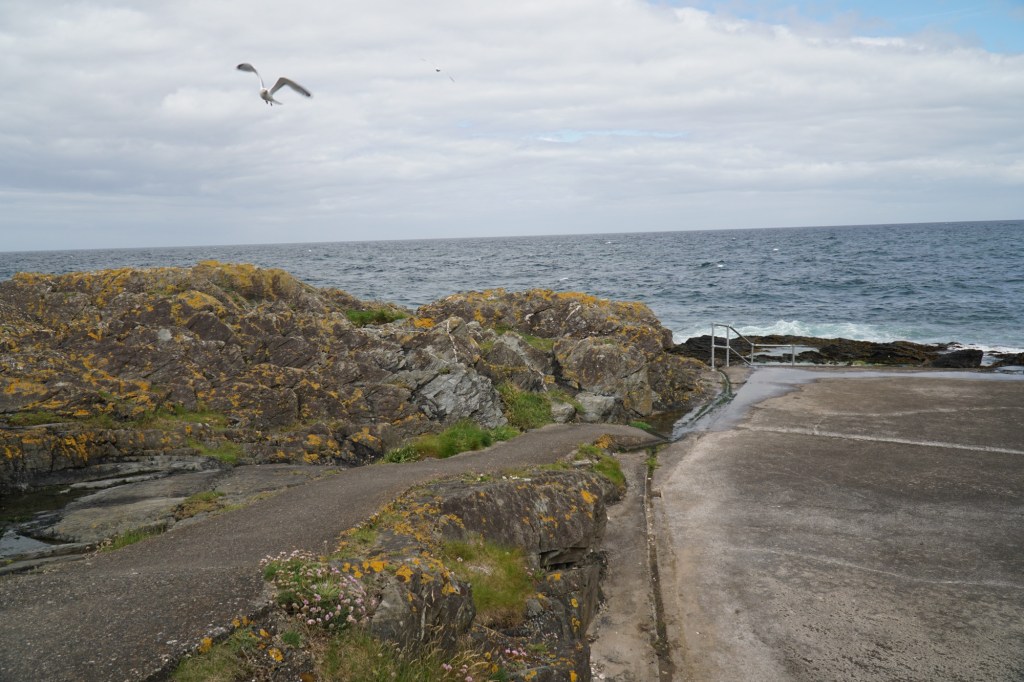
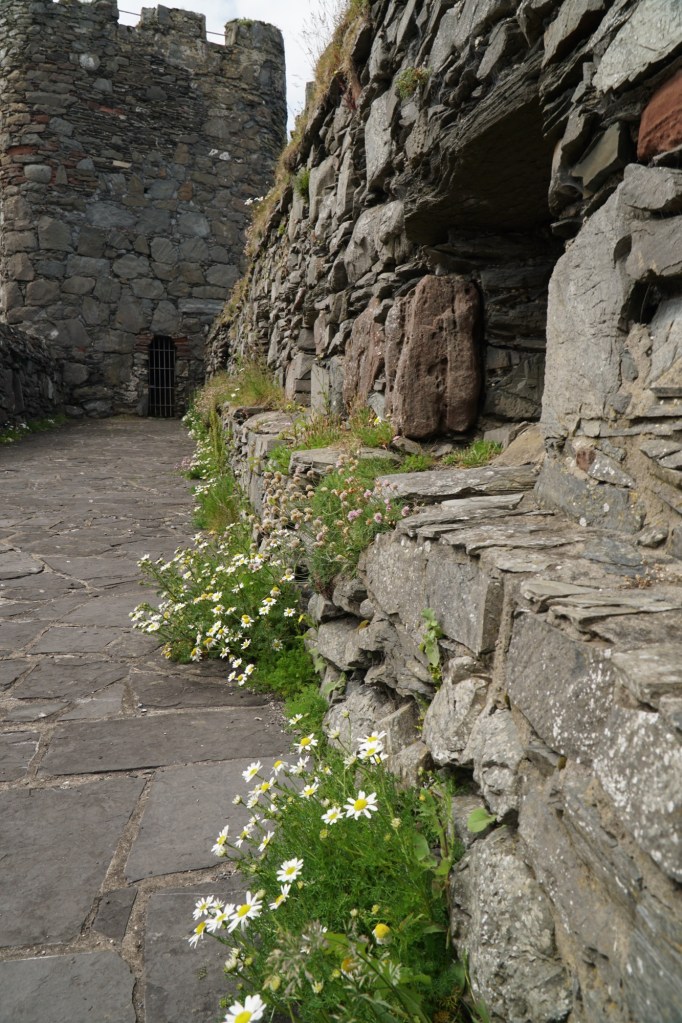
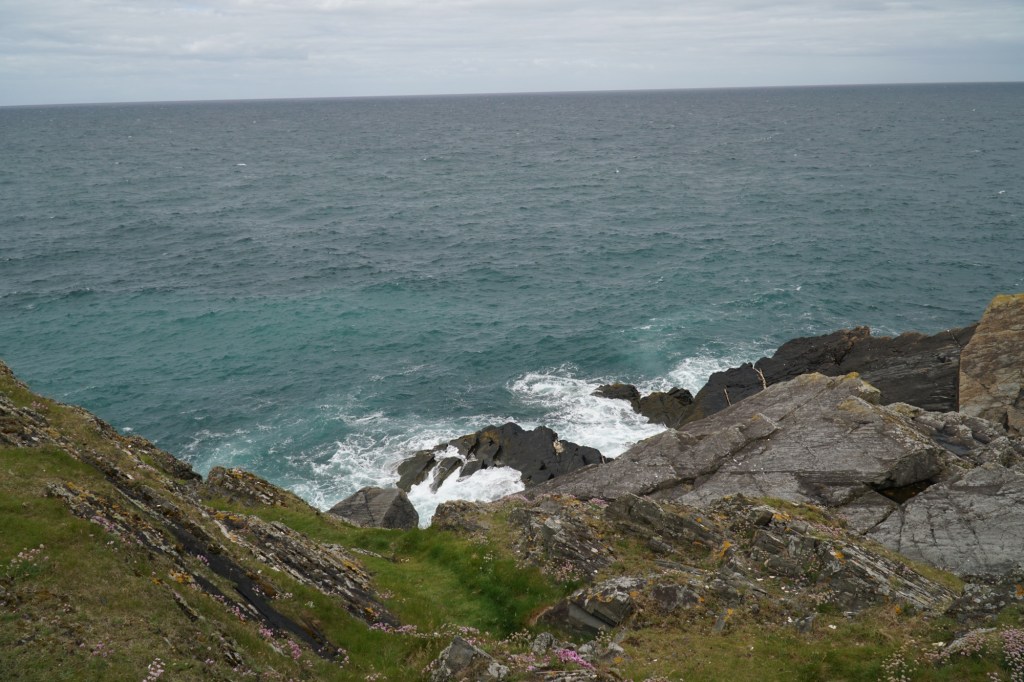
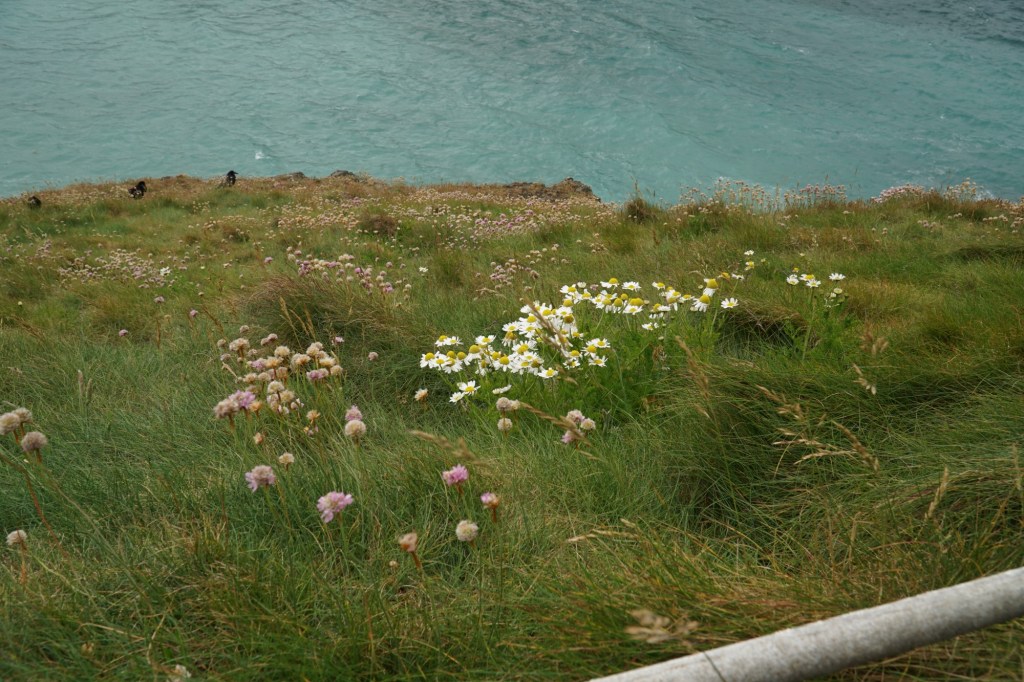
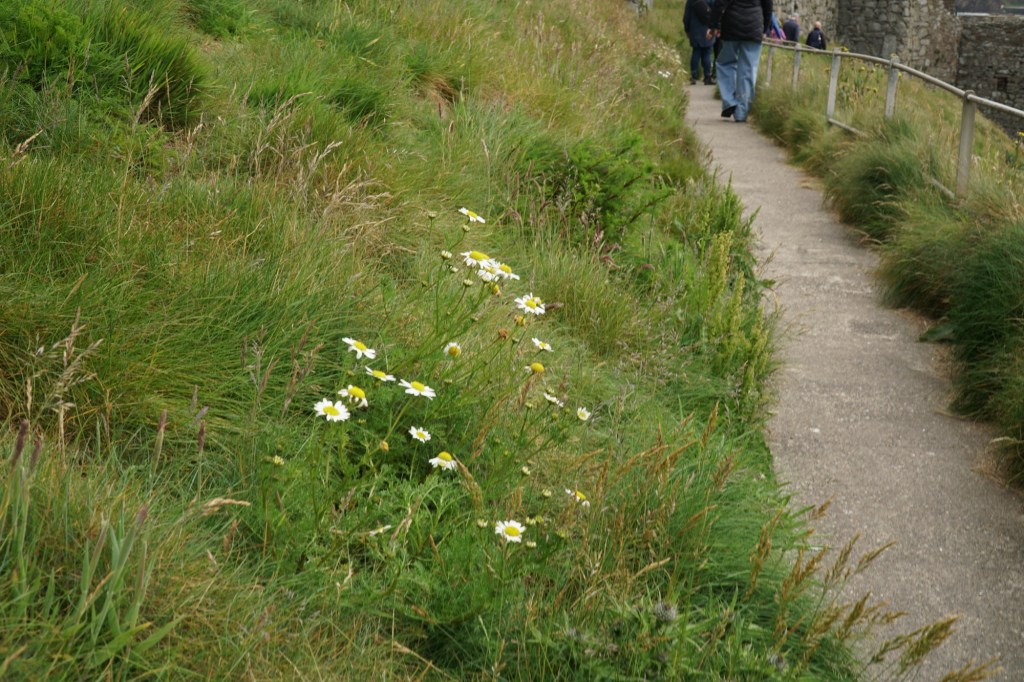
While in Peel, we had some time to explore the House of Manannan, a museum exploring the island’s Celtic, Viking, and Maritime past. Afterwards, we tasted the best “queenies” (little scallops) on the island from a food truck, and walked around Peel Castle on St. Patrick’s Isle, a rocky promontory overlooking the sea.
We drove along some of the main road where the Isle of Man TT (Time trial) Race takes place. This is an annual race on 37.7 miles of public roads, which are closed for the race. Different classes of Motorcycles, including sidecars, compete. Average speeds of 130 mph, curving roads, walls, and general conditions make this a highly dangerous sport. Back on board ship, we had a presentation and discussion with a man who has broadcast the race over the radio for many years. His son competed in the TT for a couple of years, but fortunately stopped before being injured. This conversation was one of our “controversial topics,” another OAT trip feature.k
After dinner we were joined by a local men’s choir that sang traditional ballades, hymns, and battle songs. They were accompanied by piano and directed by a woman conductor (as is customary for men’s choirs, evidently). Some voices were strong and dynamic, and harmonies were nice. However, due to the frailty of some, I worried that a few of the gentlemen would not make it off the ship before we set sail for Belfast.
Sunday, July 14
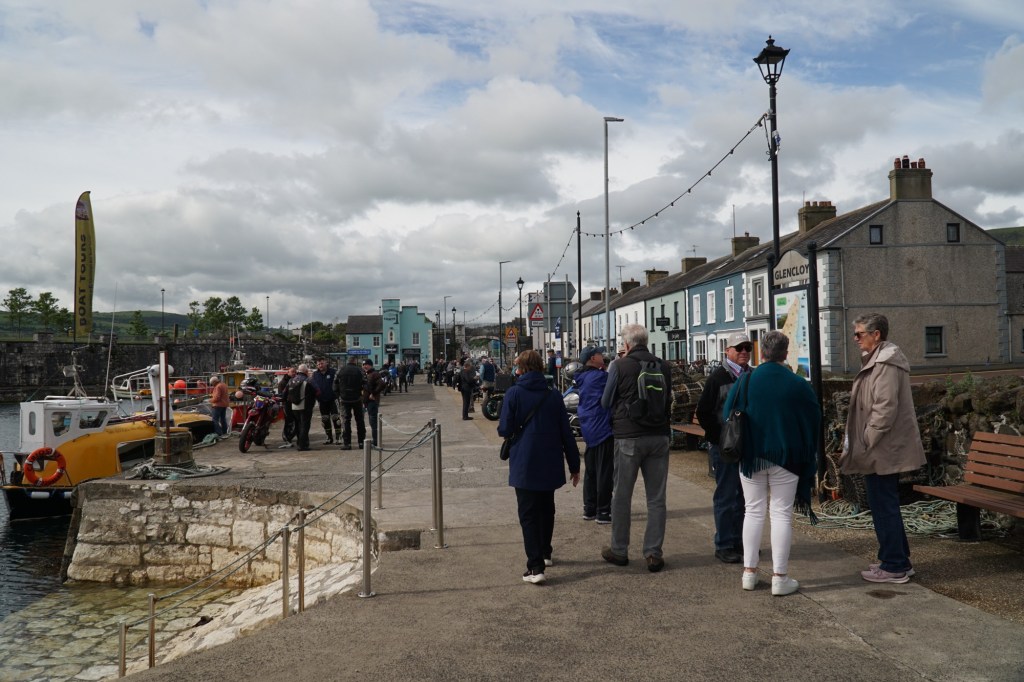
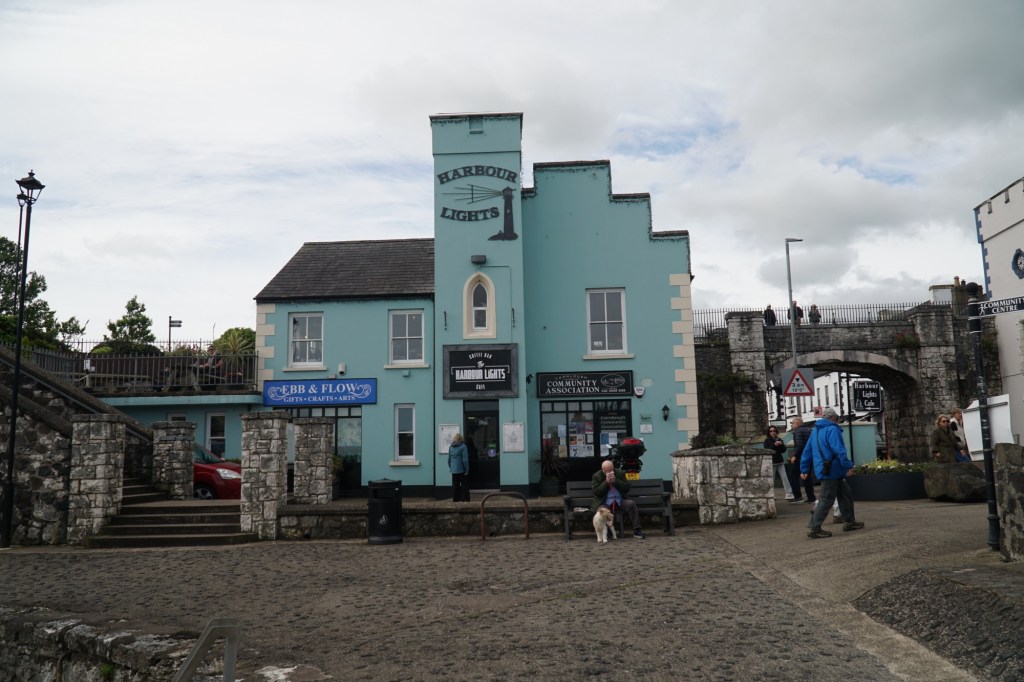
We docked in Belfast, Northern Ireland this morning. We drove along the Antrim coast and stopped at the Carnlough harbor.
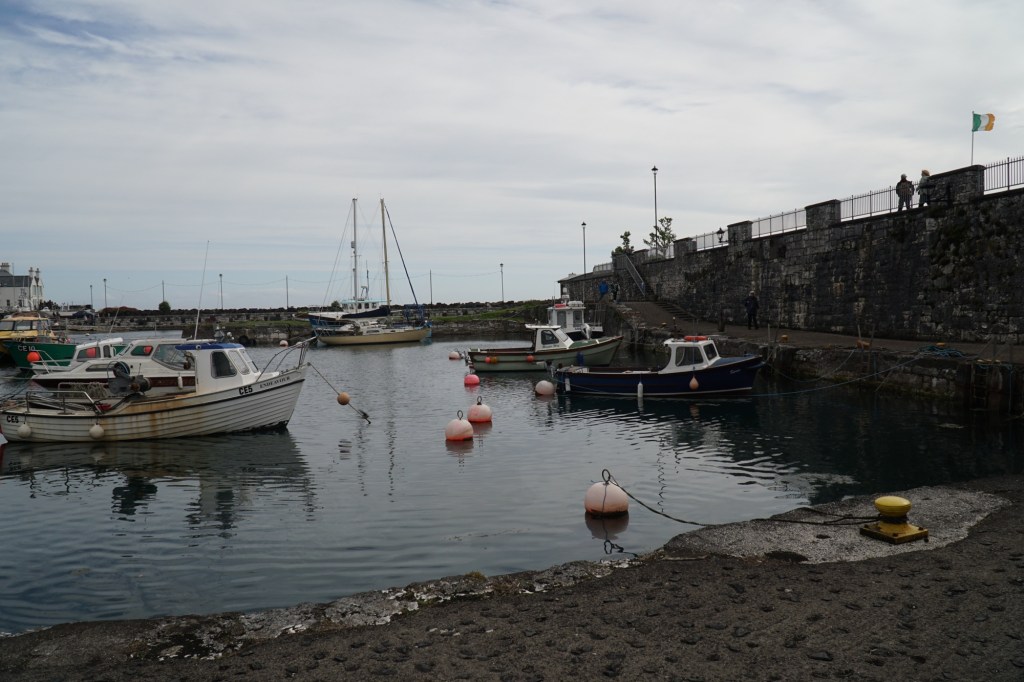
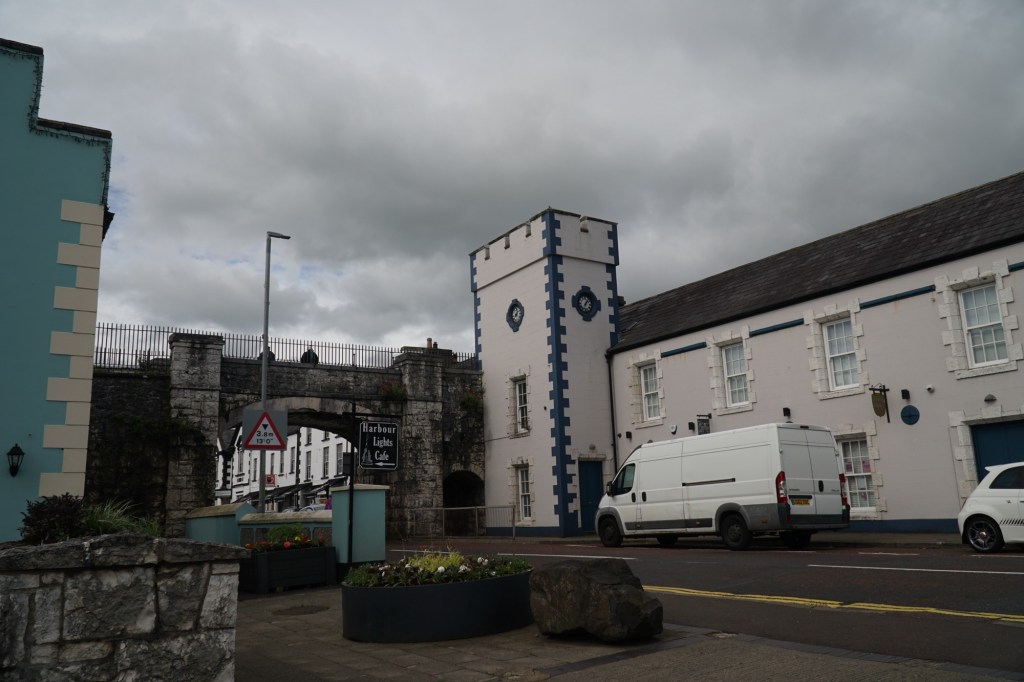
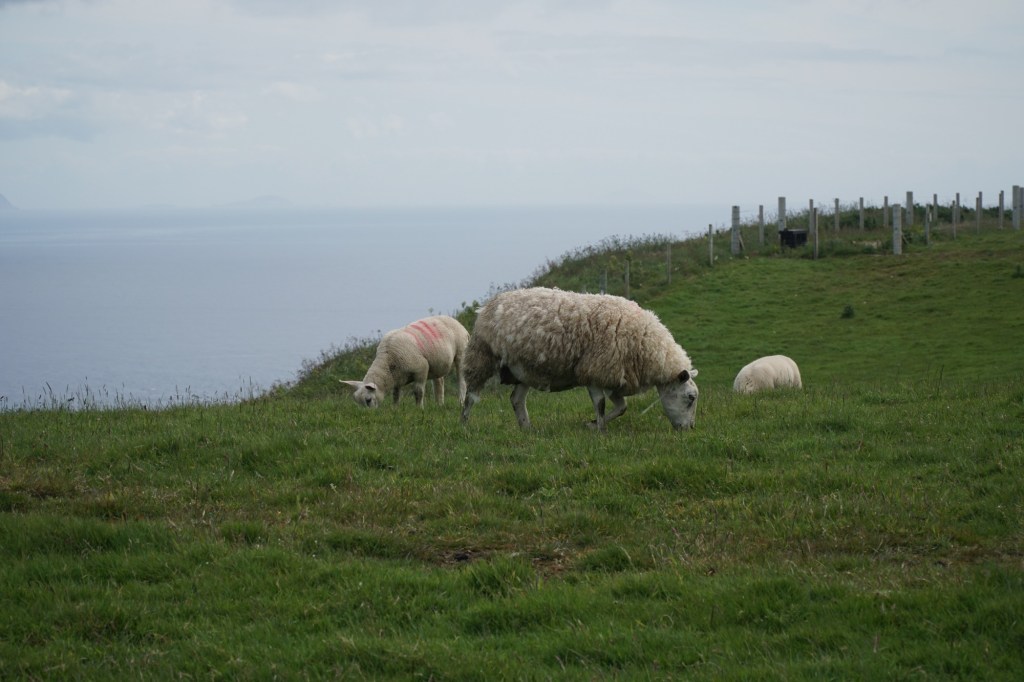
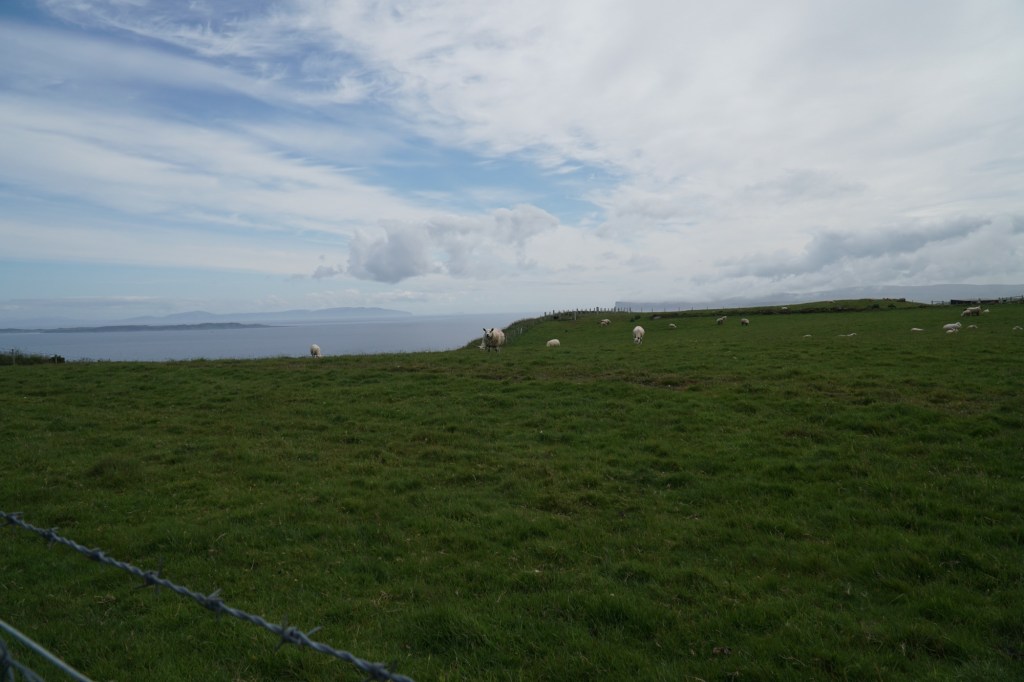
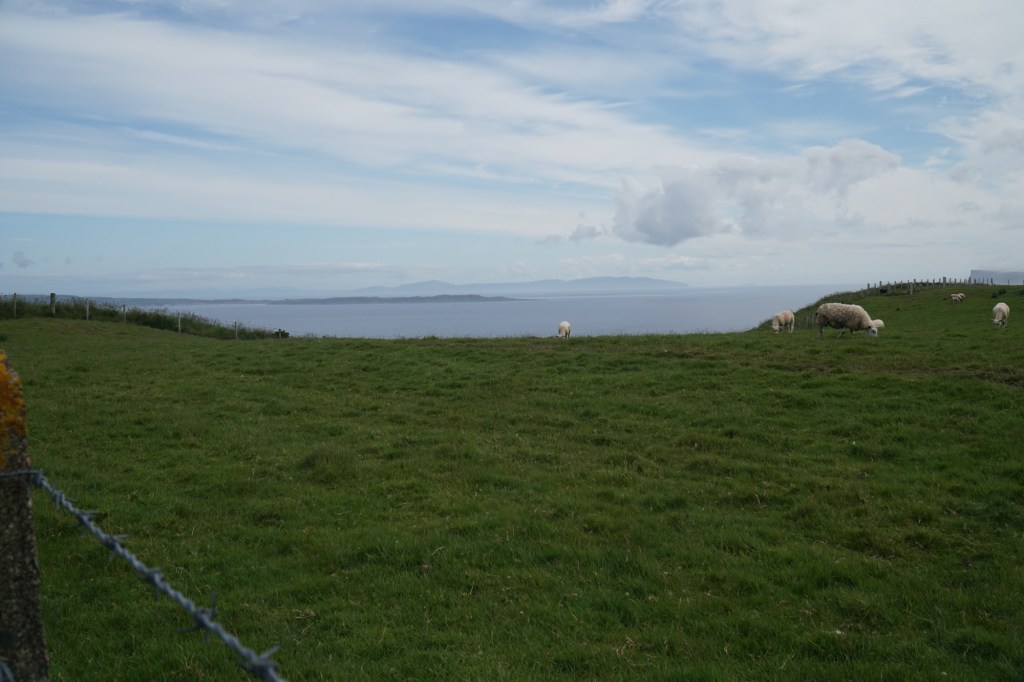
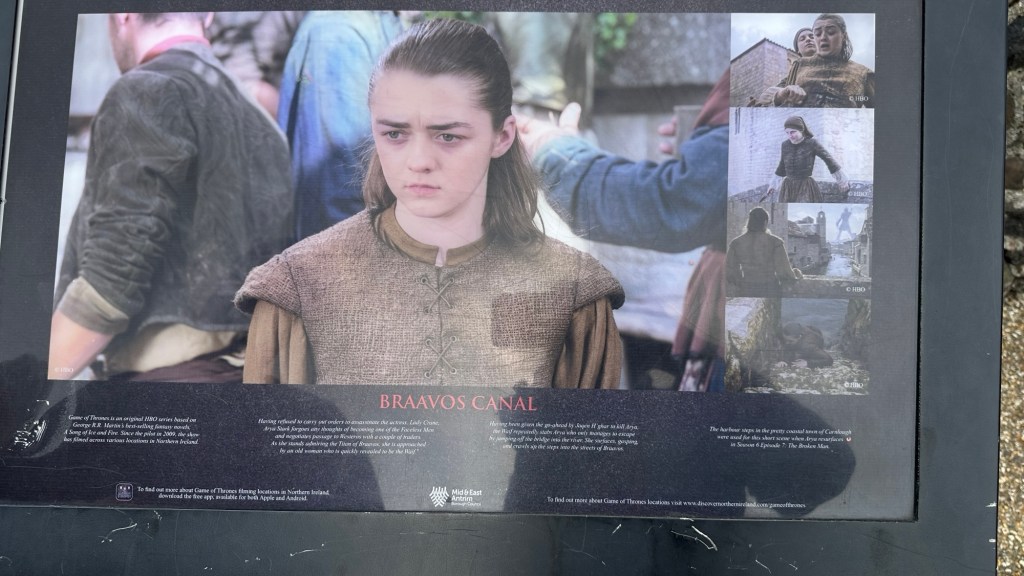
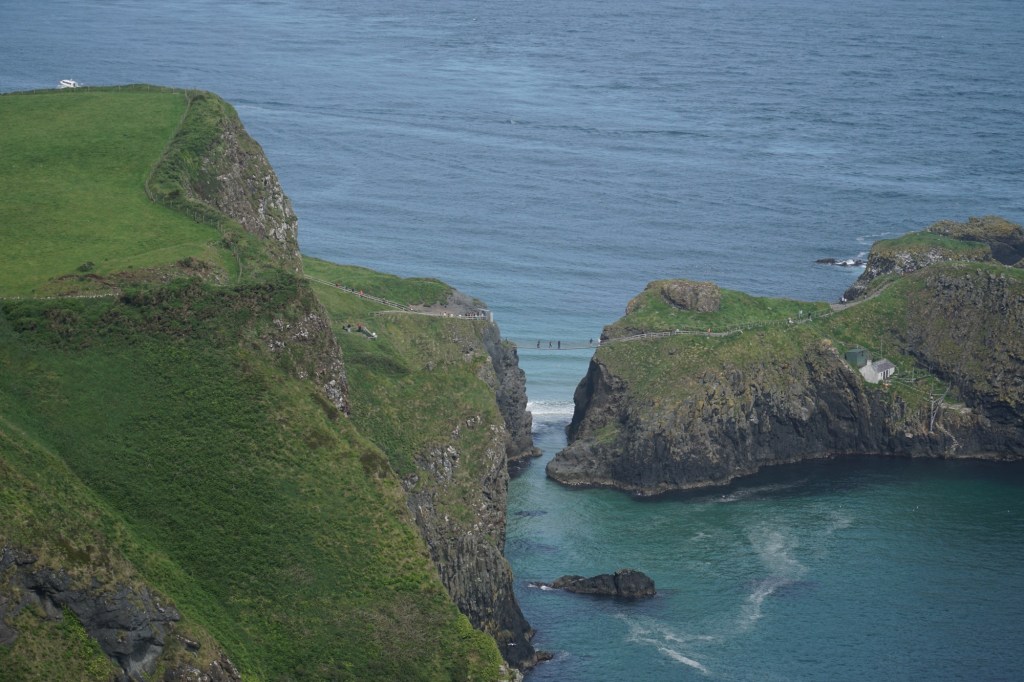
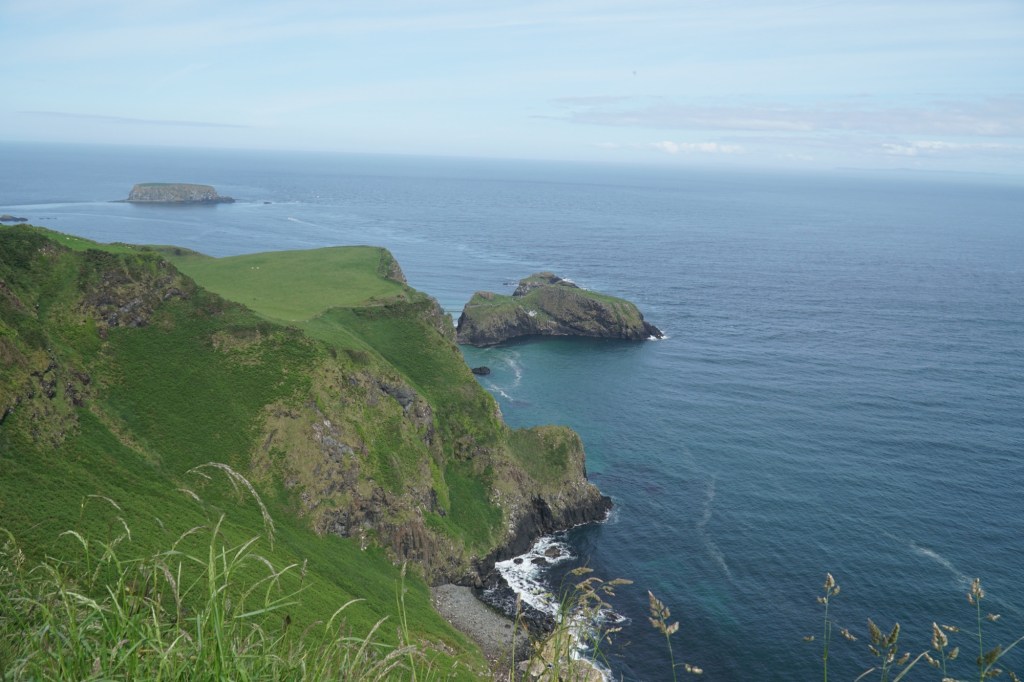
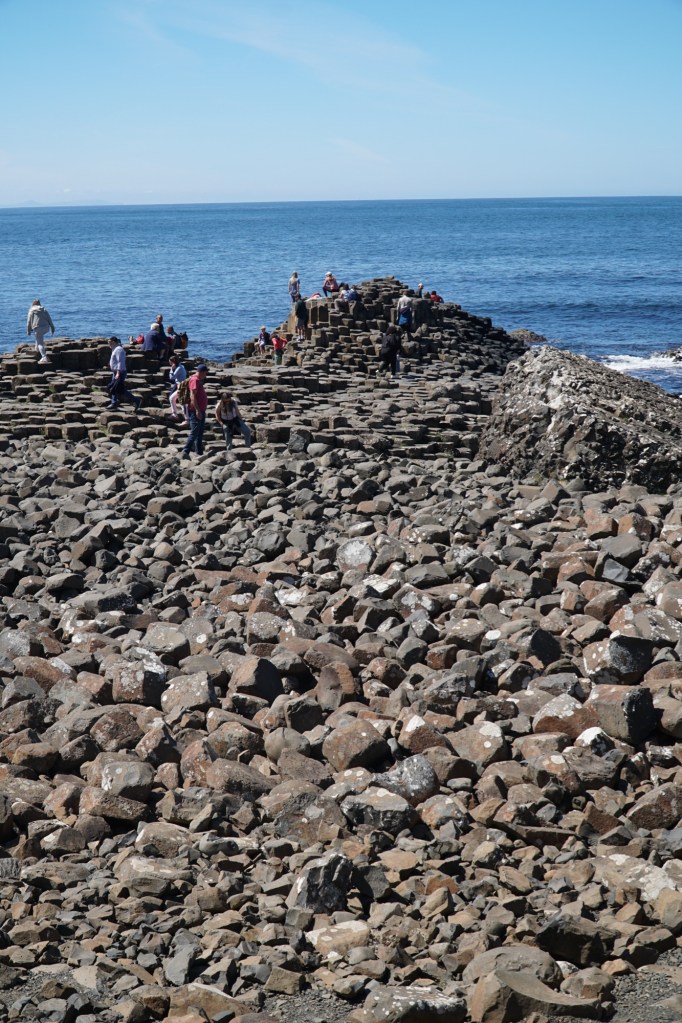
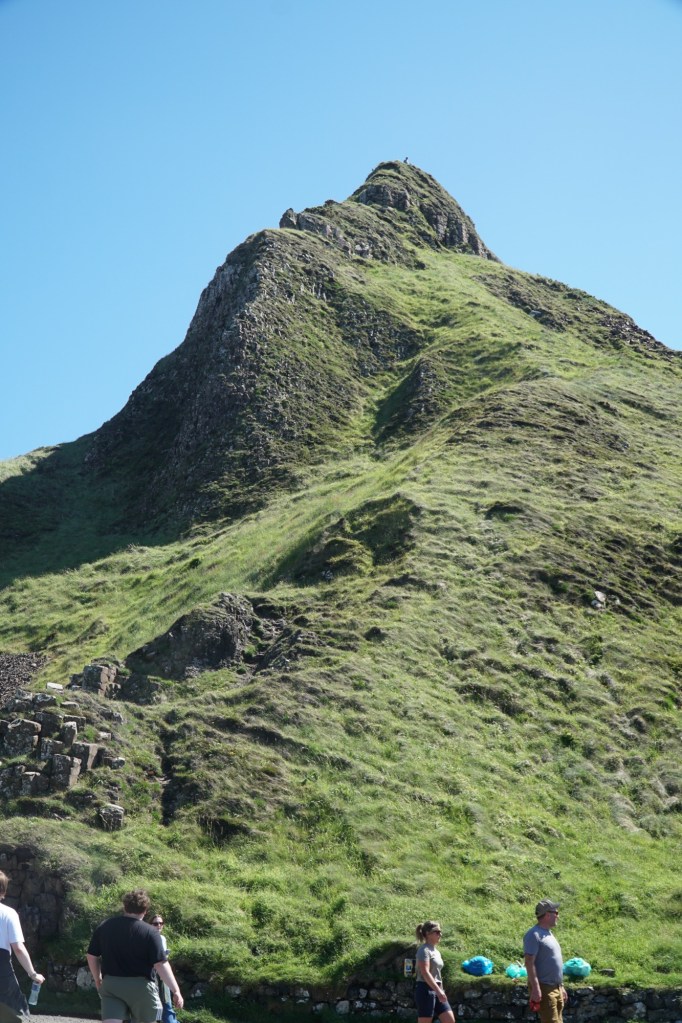
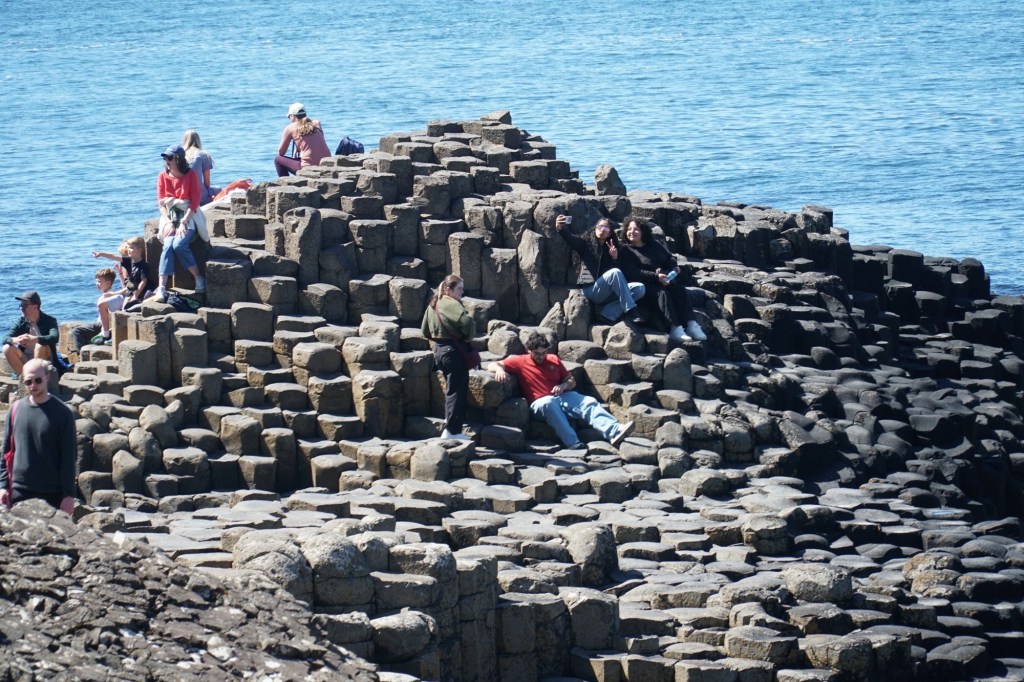
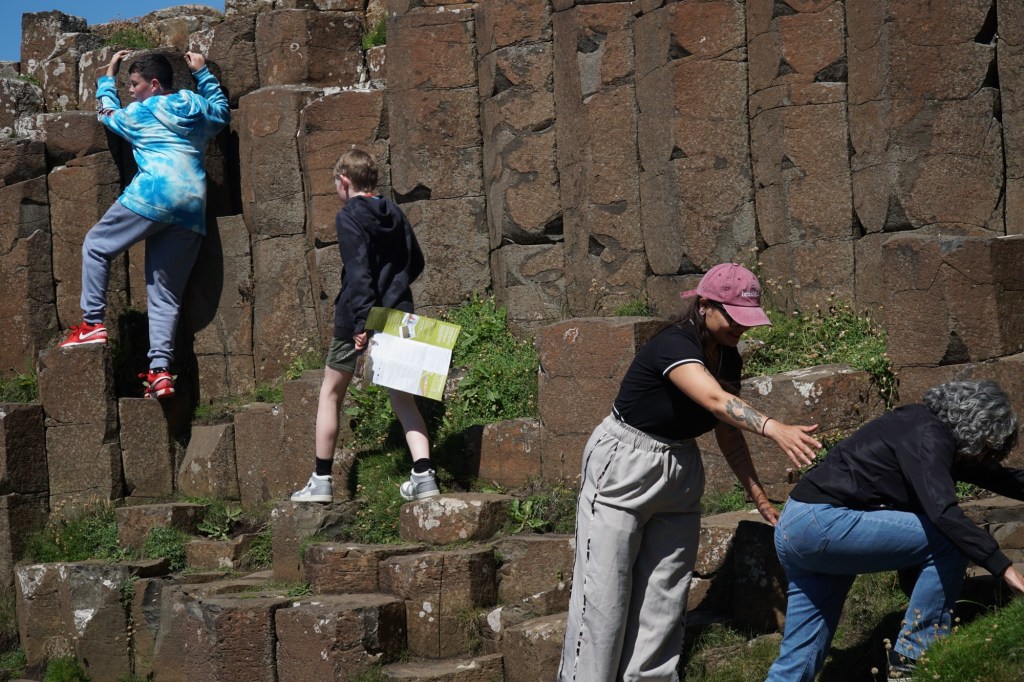
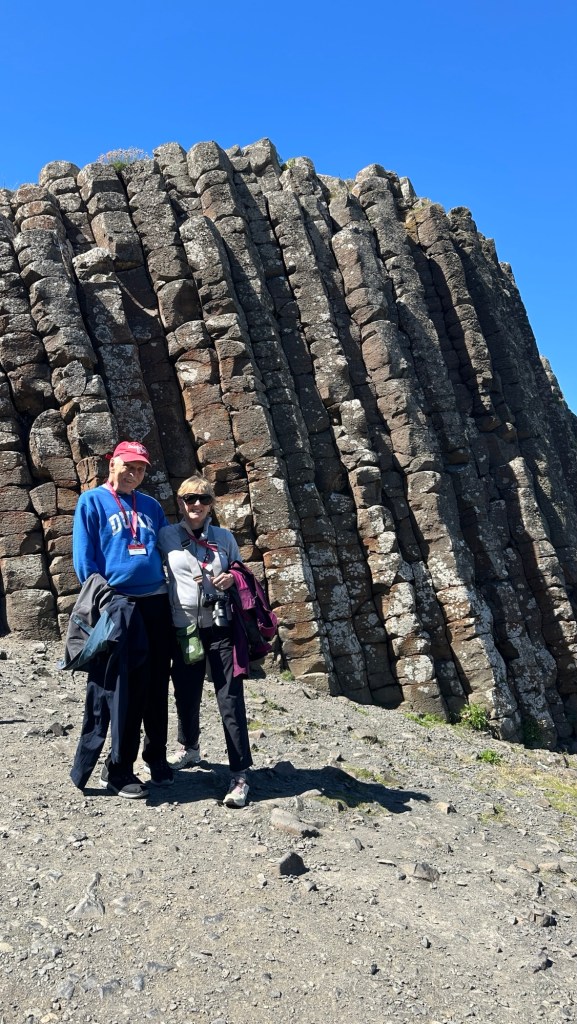
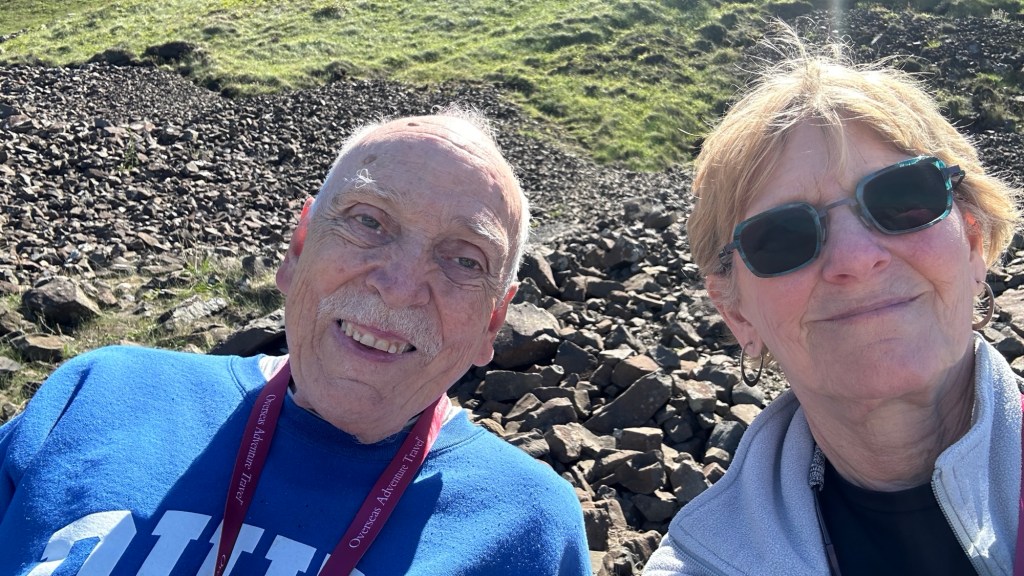
This was our day to visit the Giant’s Causeway, truly an amazing geological formation of hexagonal basalt columns.
Drive along the coast:
Driving and arriving at our lunch spot.
The Giant’s Causeway
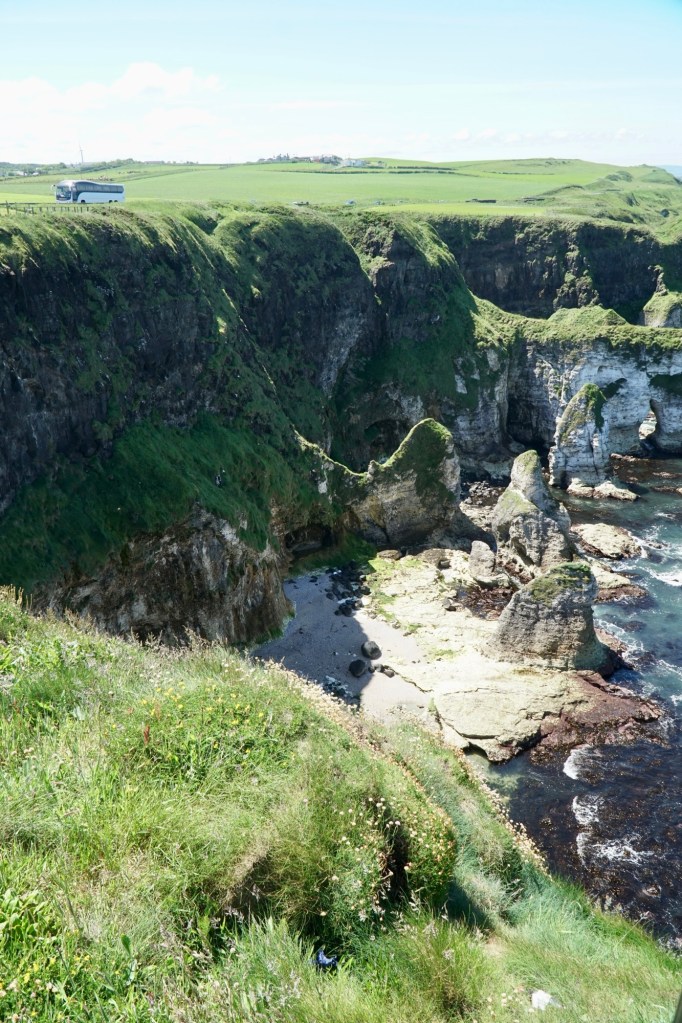
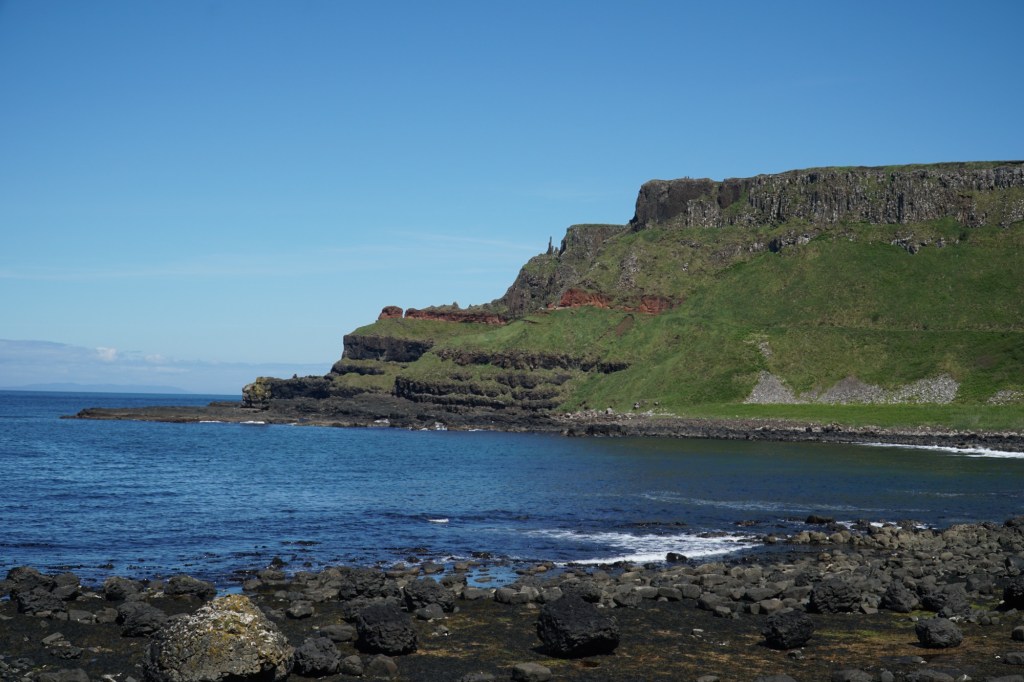
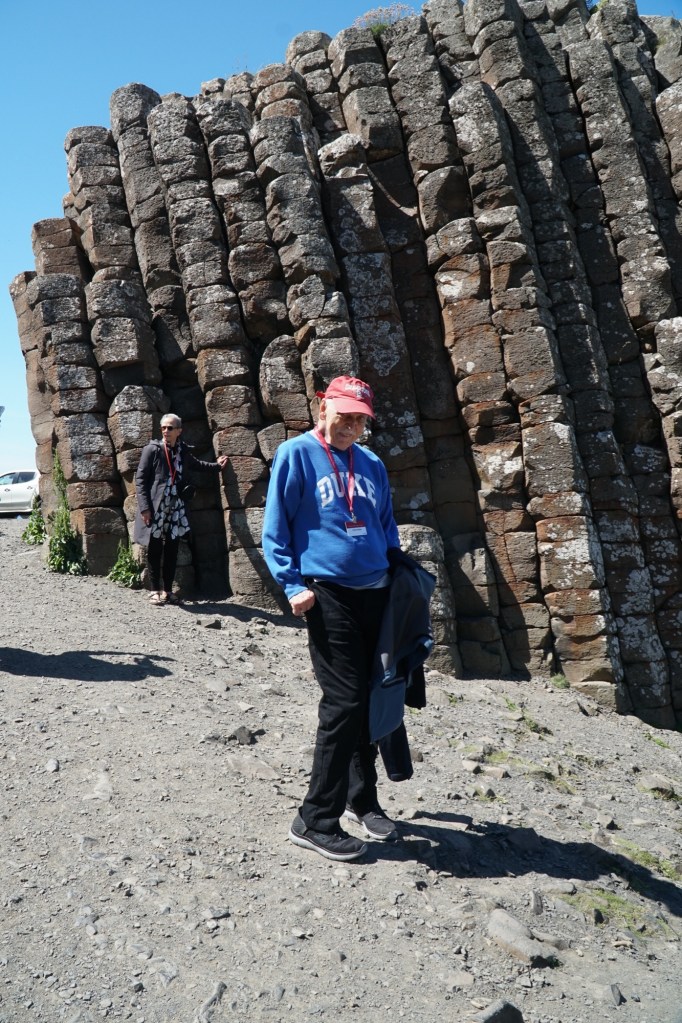
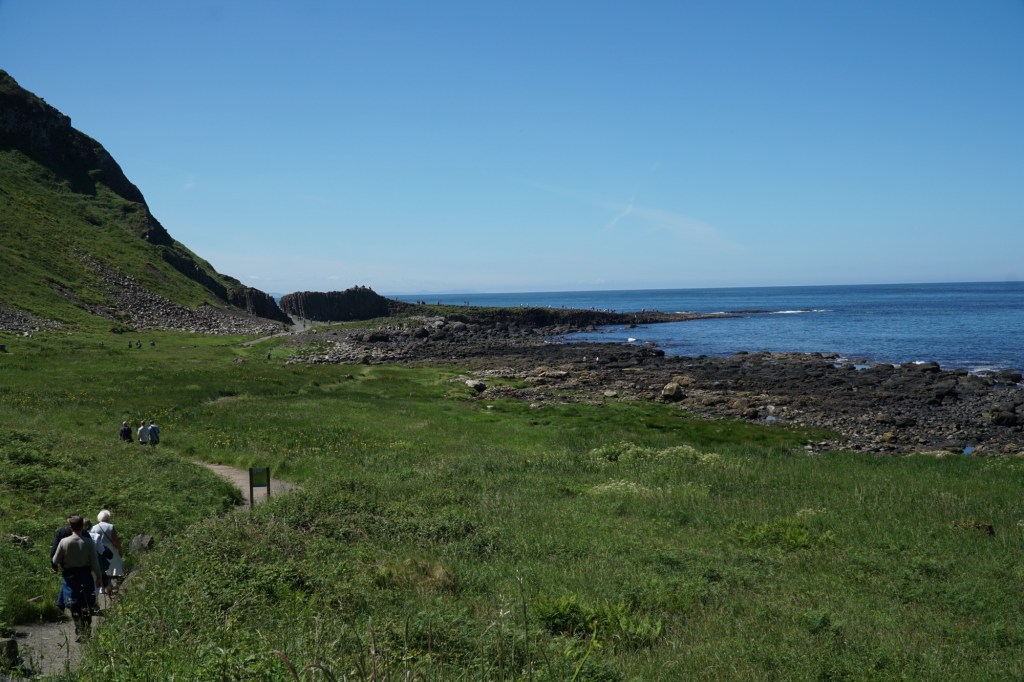
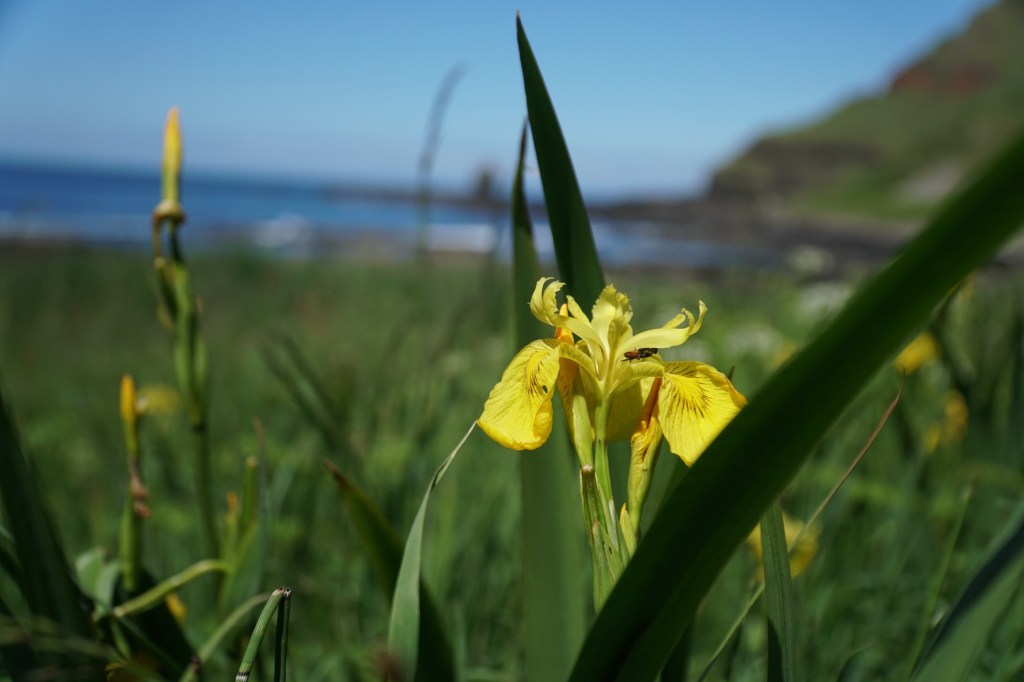
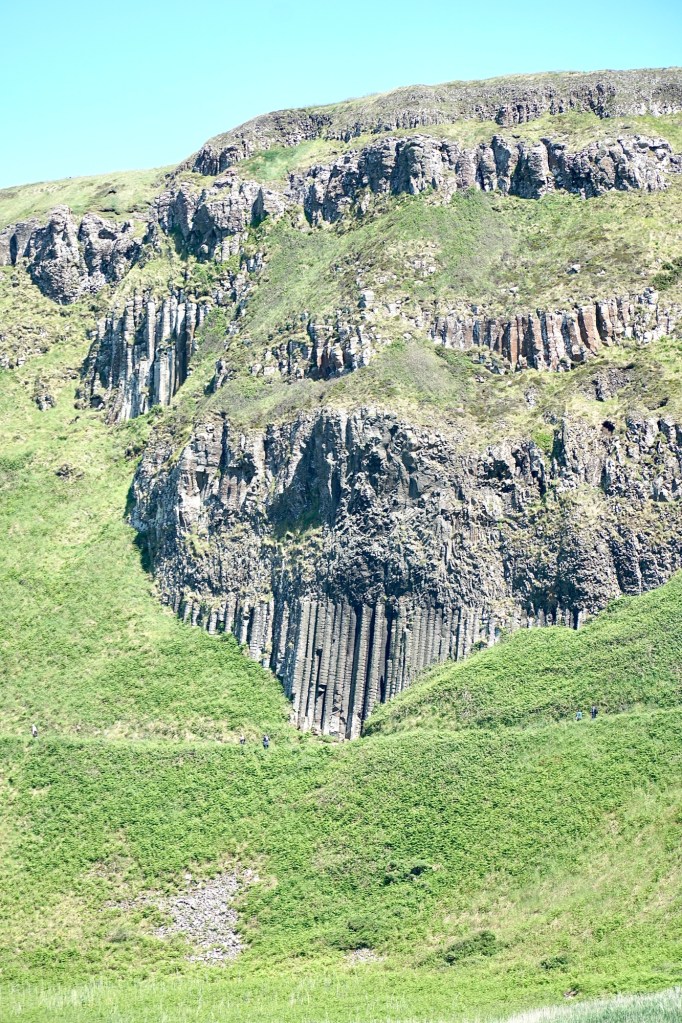
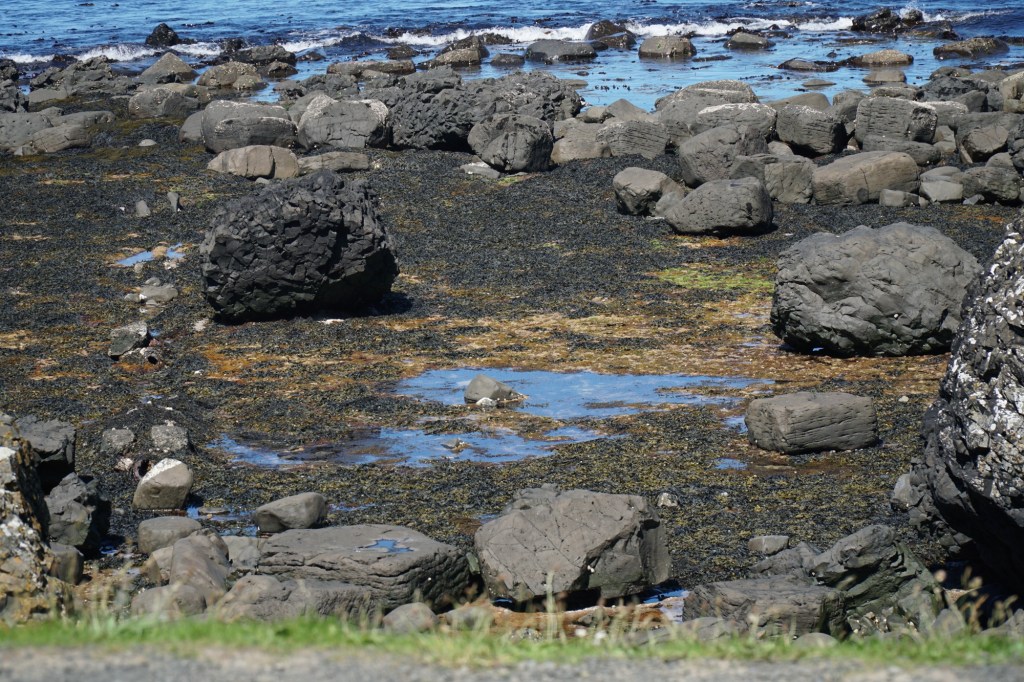
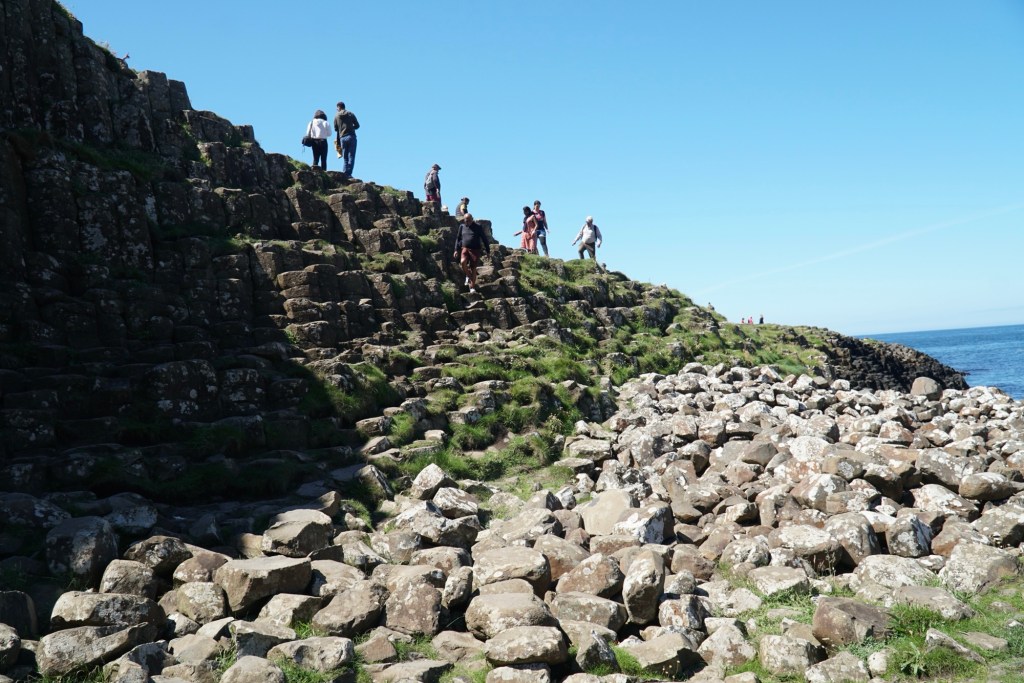
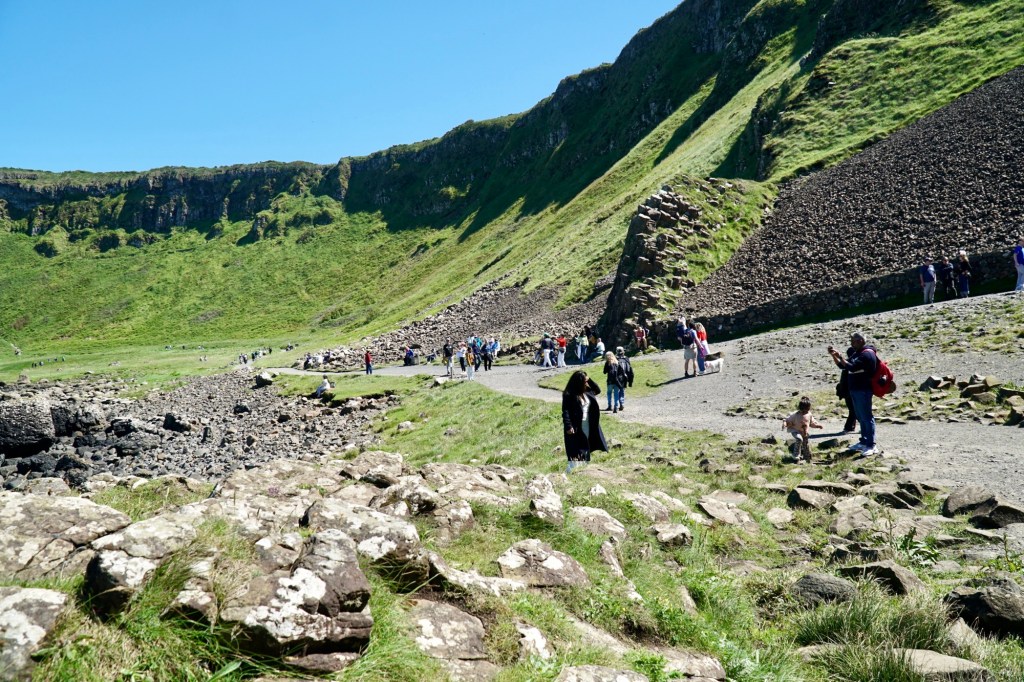
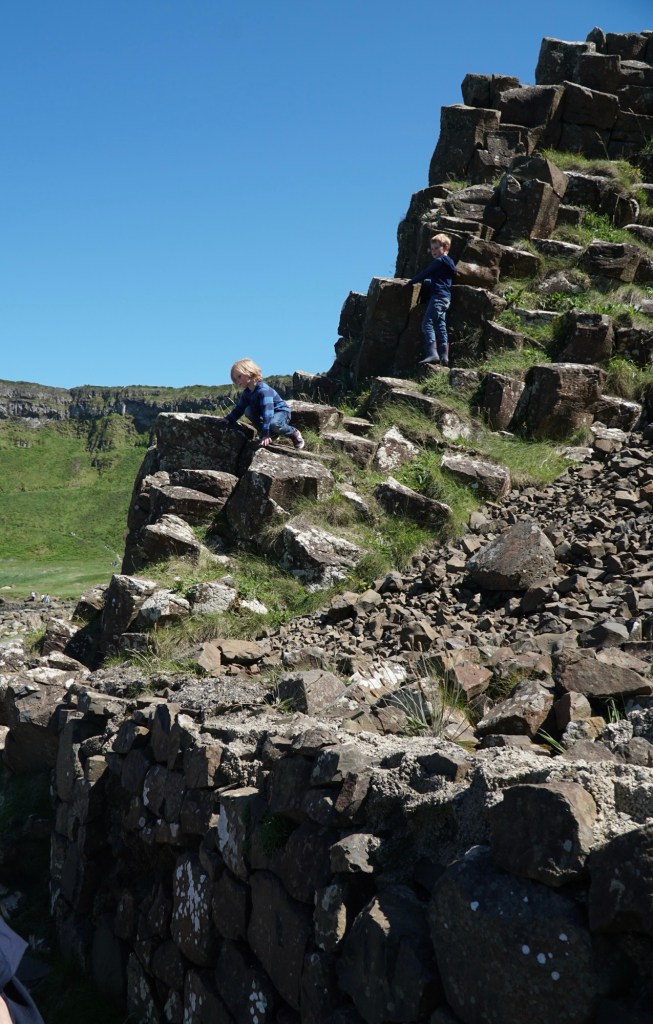
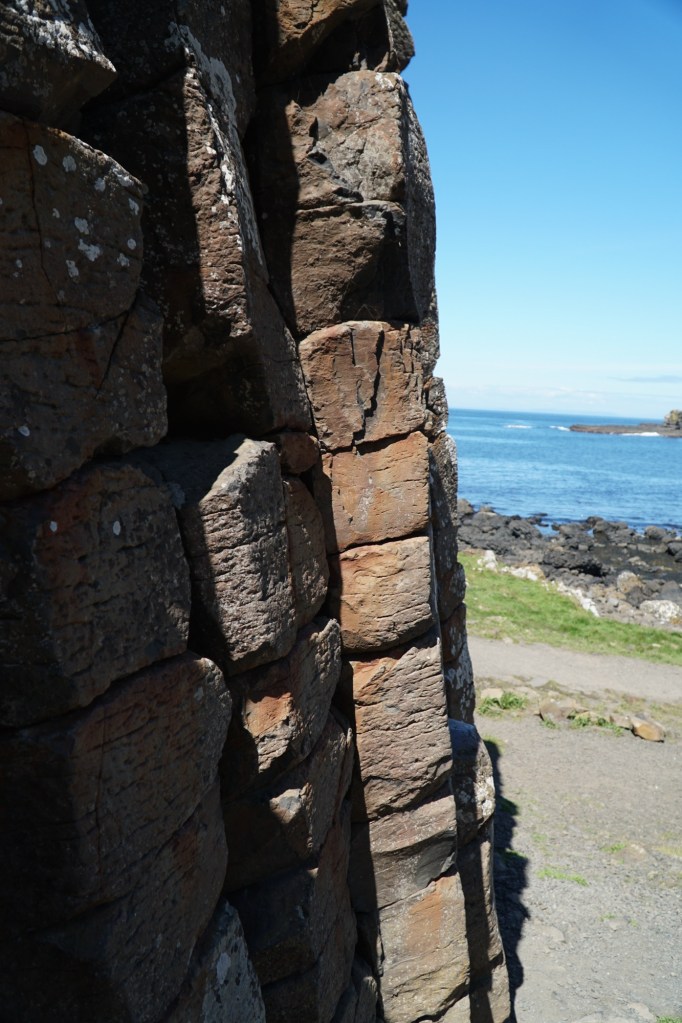
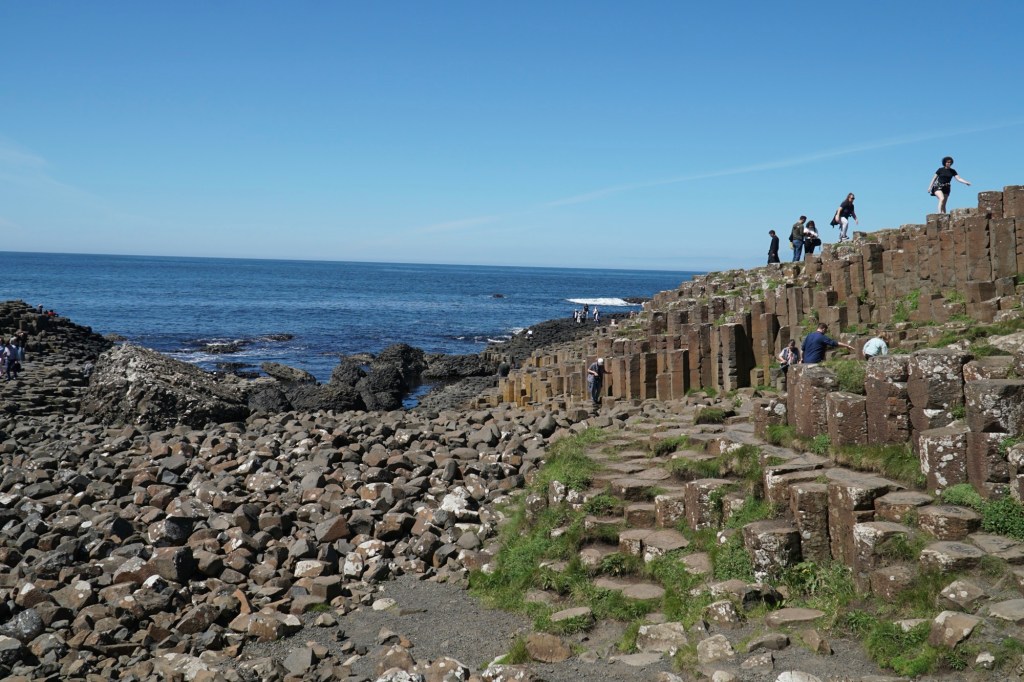
Late in the afternoon, we had another “controversial topic” discussion. Presenting were two men who had spent time in prison after being arrested during the Troubles in Northern Ireland. They were from different sides of the conflict. We did not learn details of their crimes. Both shared recent experiences of working with youth to steer them to productive activities, rather than the seemingly senseless violence they witnessed during the troubles.
Monday, June 15
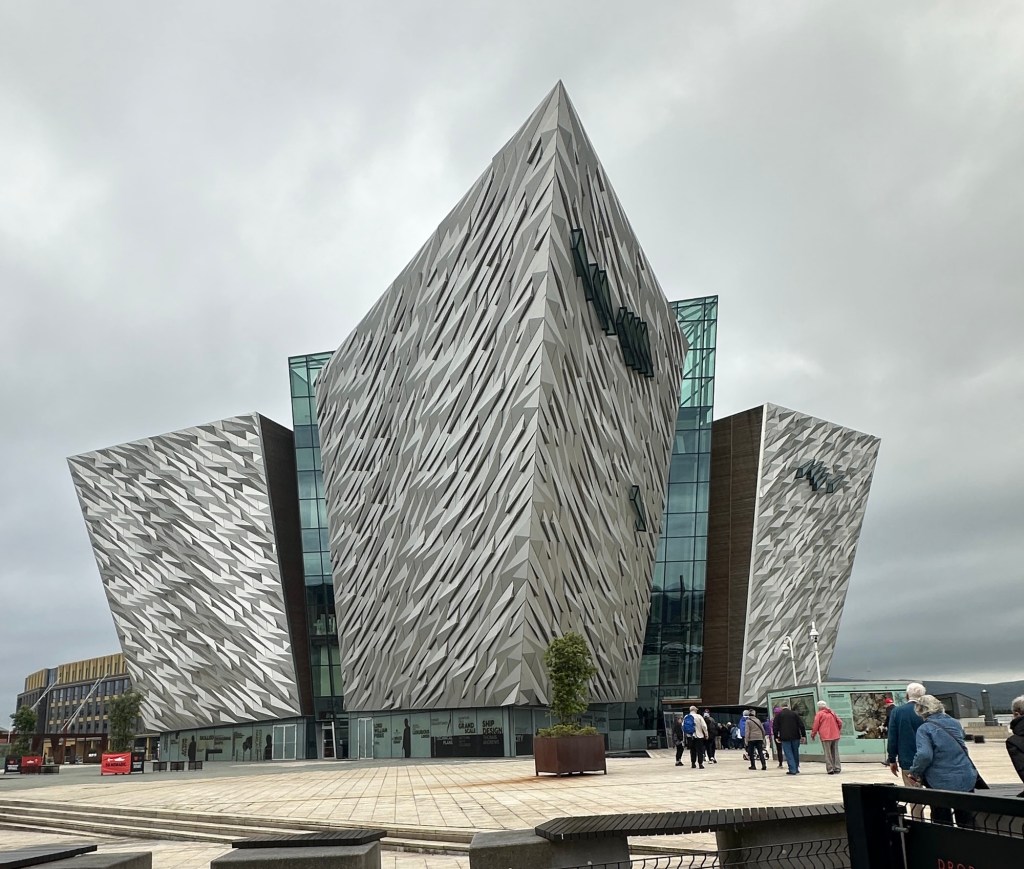
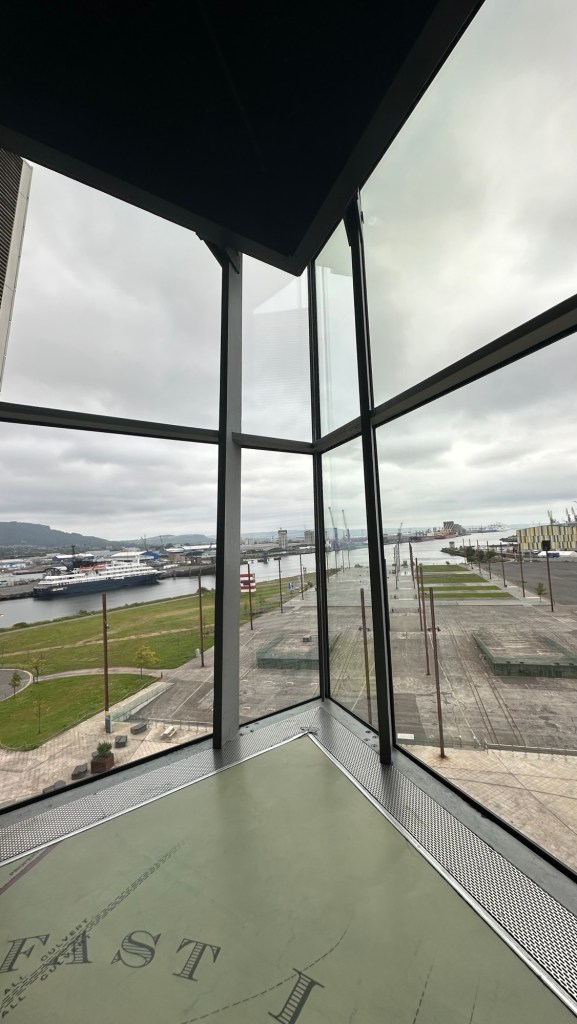
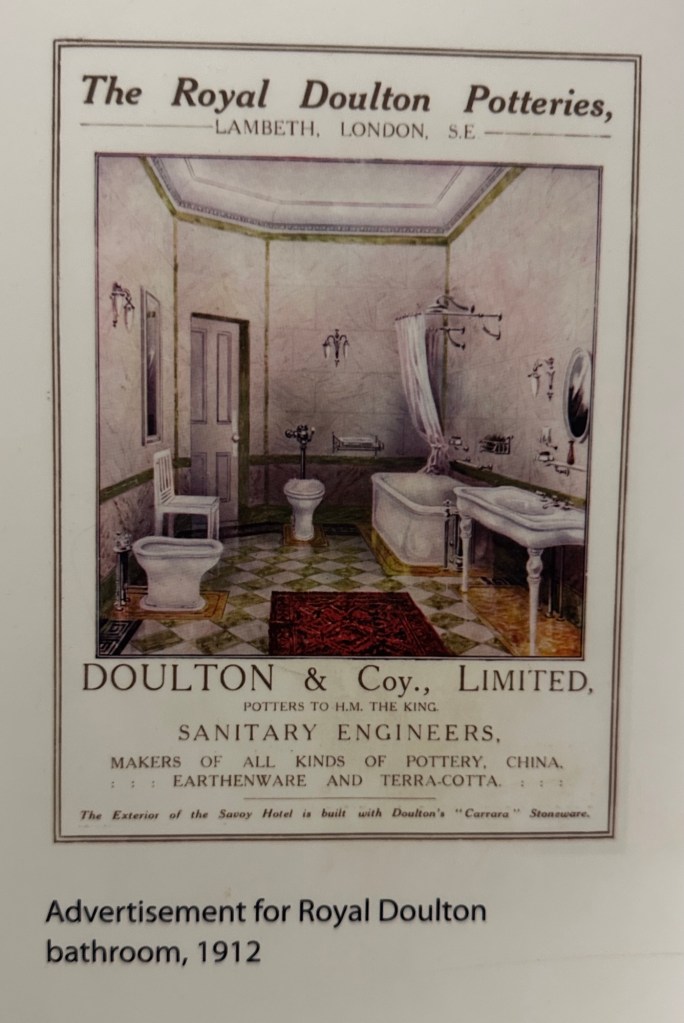
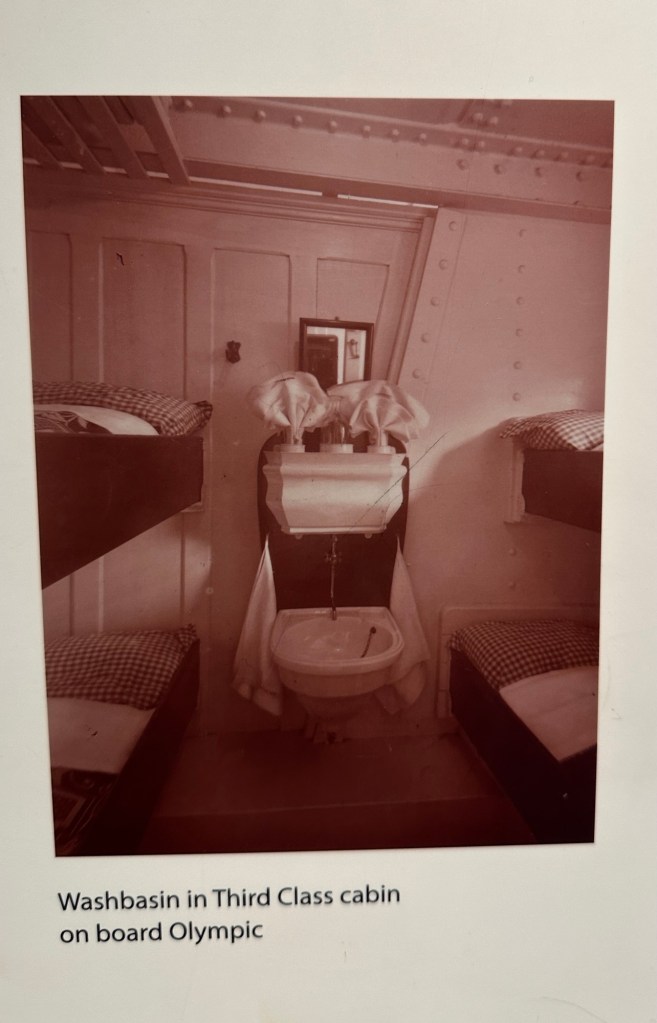
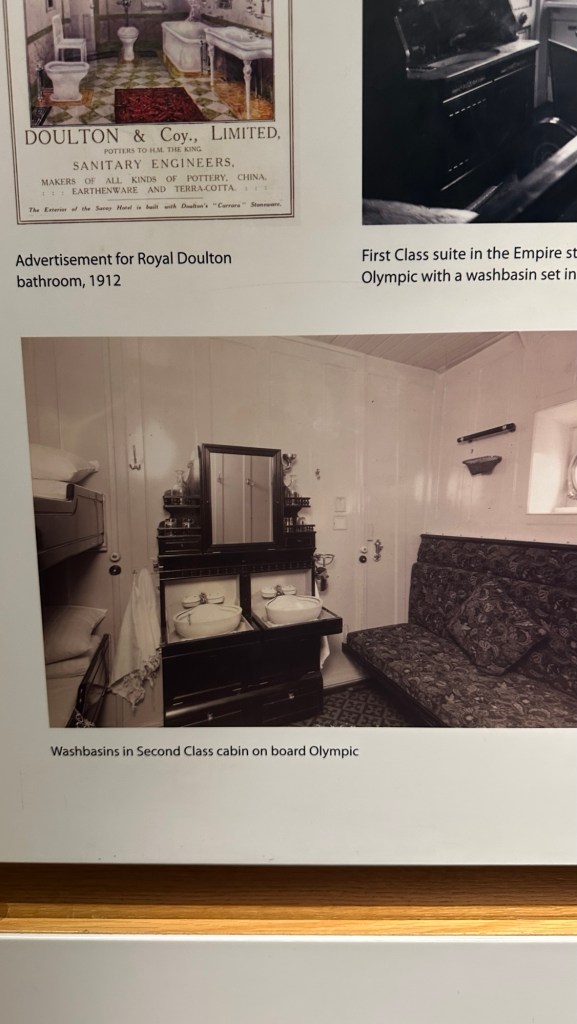
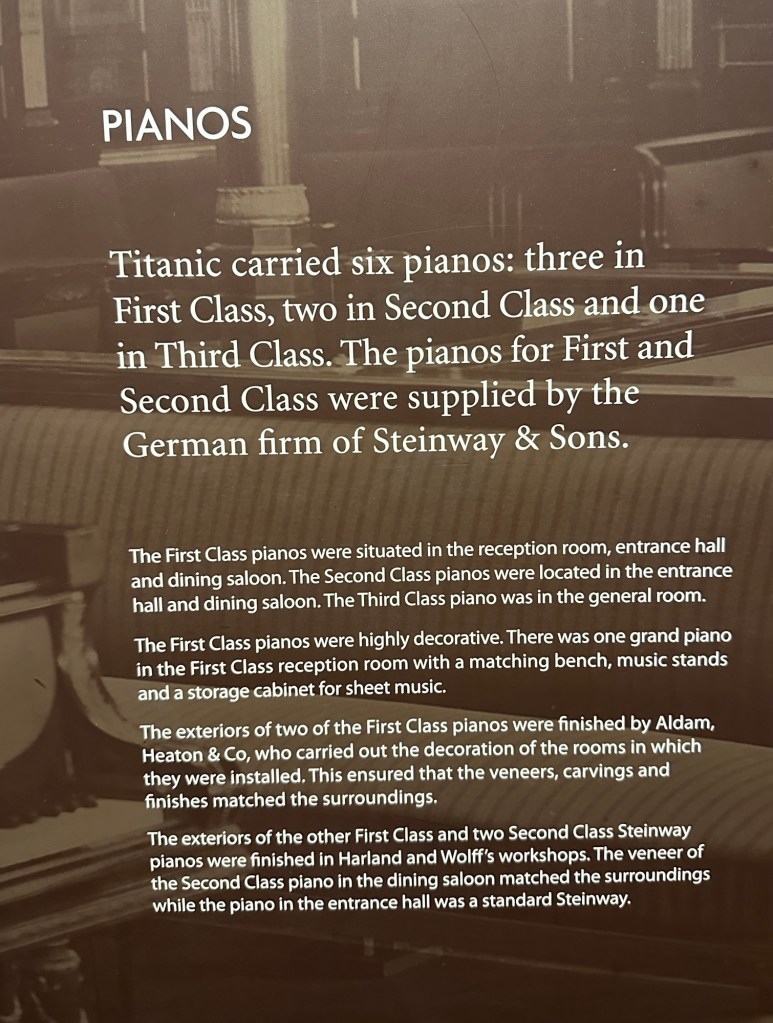
We had two excursions today. In the morning, we went to the Titanic Belfast Museum. This museum was not on my bucket list, but was highly acclaimed. Since OAT provided transportation and tickets as compensation for our disastrous welcome dinner, why not? It was actually a wonderful experience. The building is exquisite, and its four levels have interesting displays about the designs and building of the Titanic, including a ride through a simulated shipyard, reproducing various stages of shipbuilding and displaying historic photos as background murals. In other galleries, there were photos and exhibits representing life on board the Titanic and other ships of the time, in each class of passengers. At the end of the exhibits were artifacts from the Titanic and displays about the discovery of the sunken ship, and technologies used to find it.
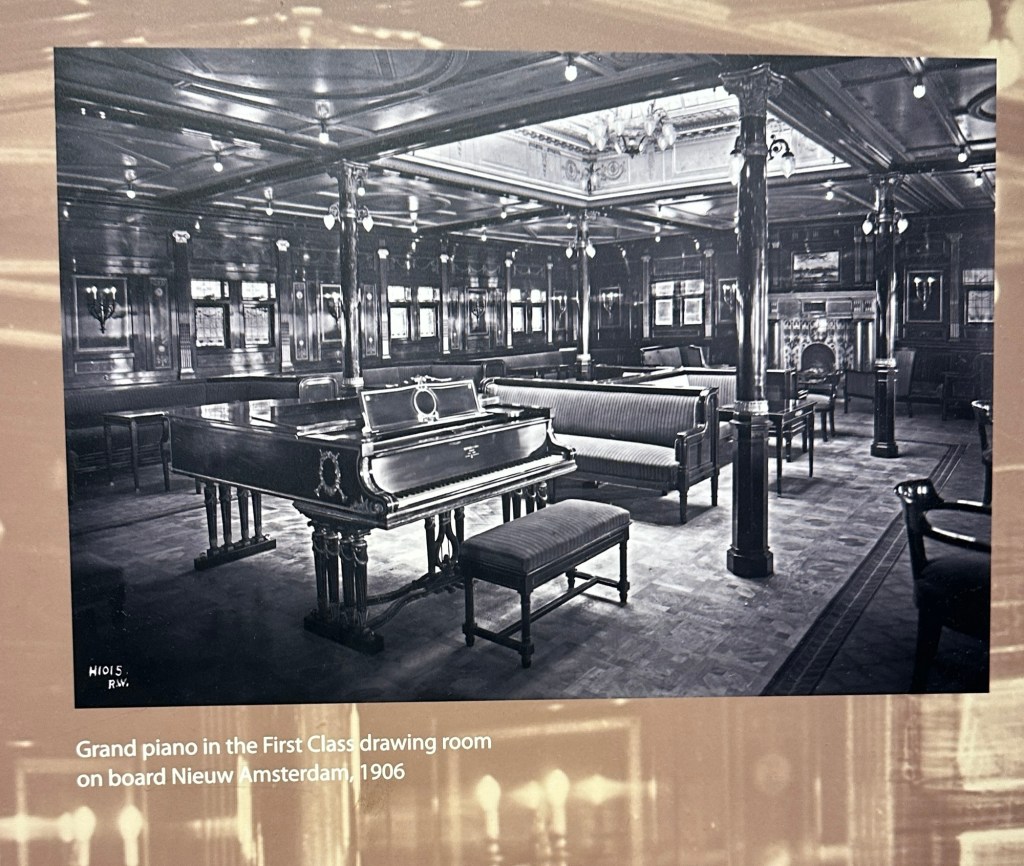
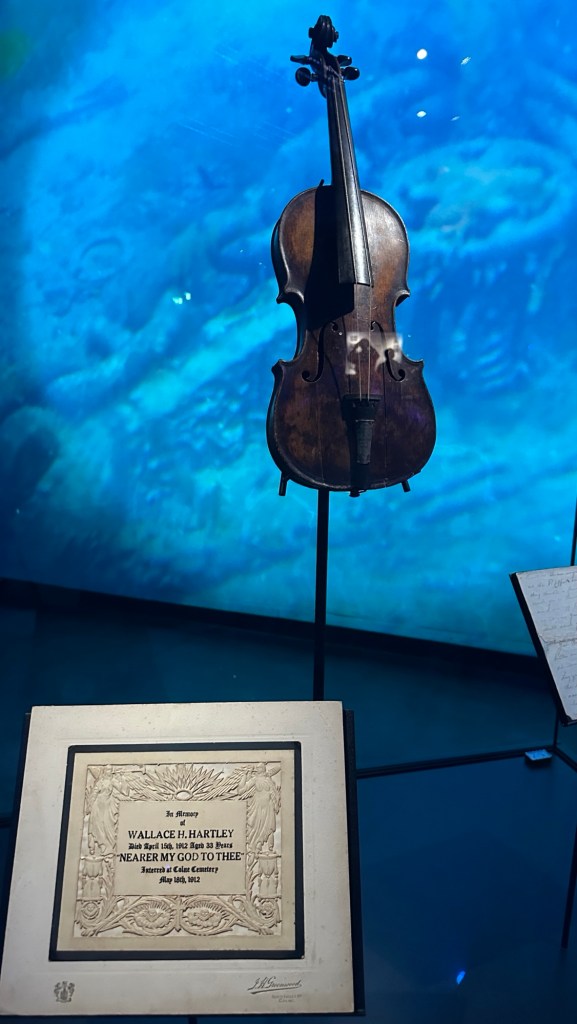
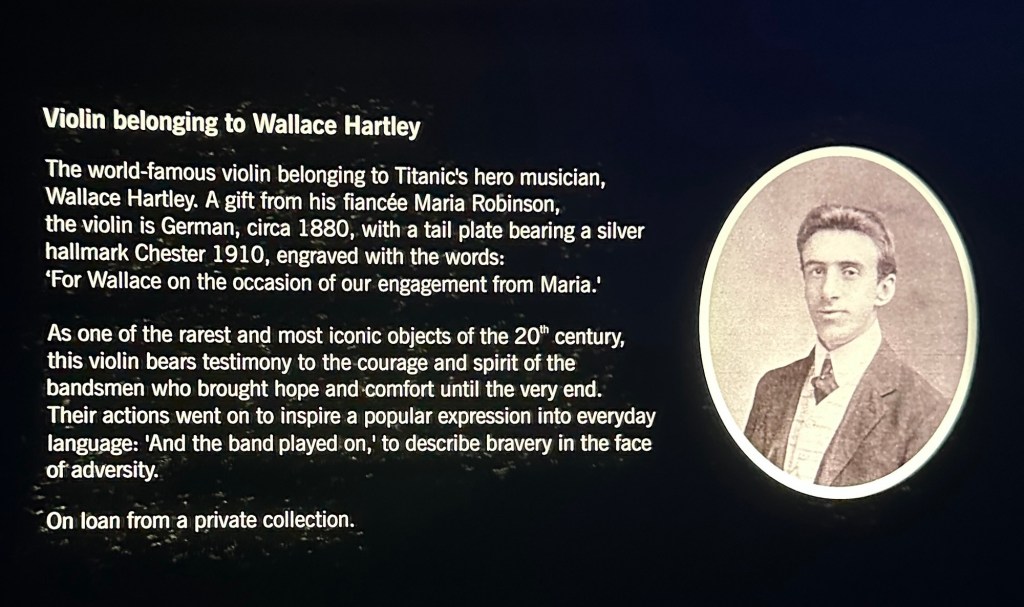
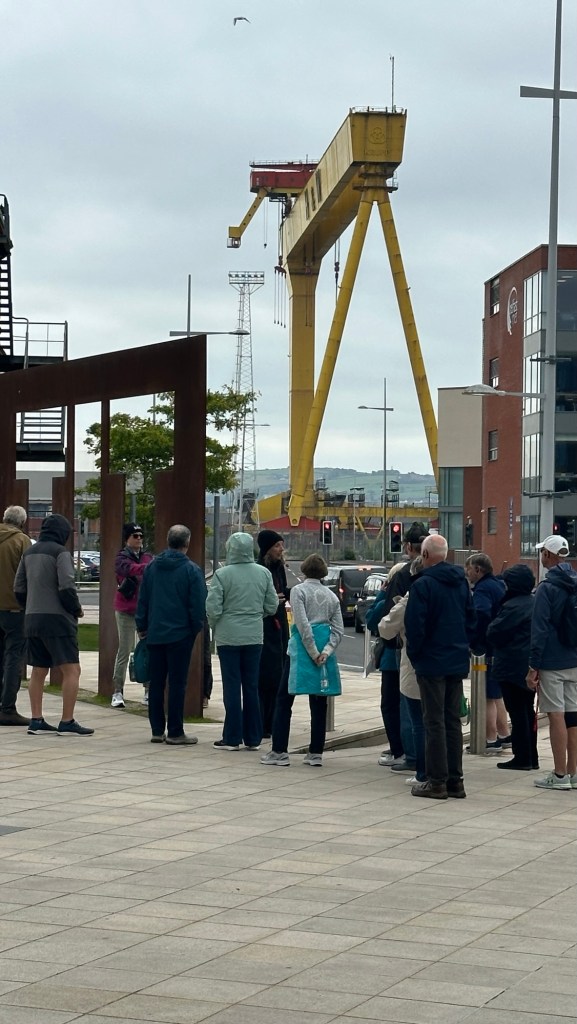
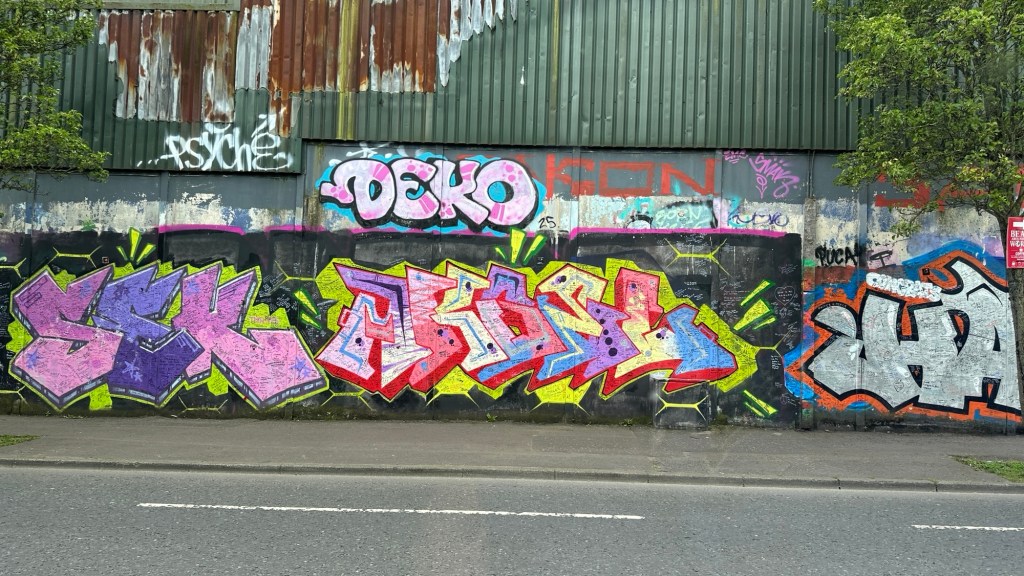
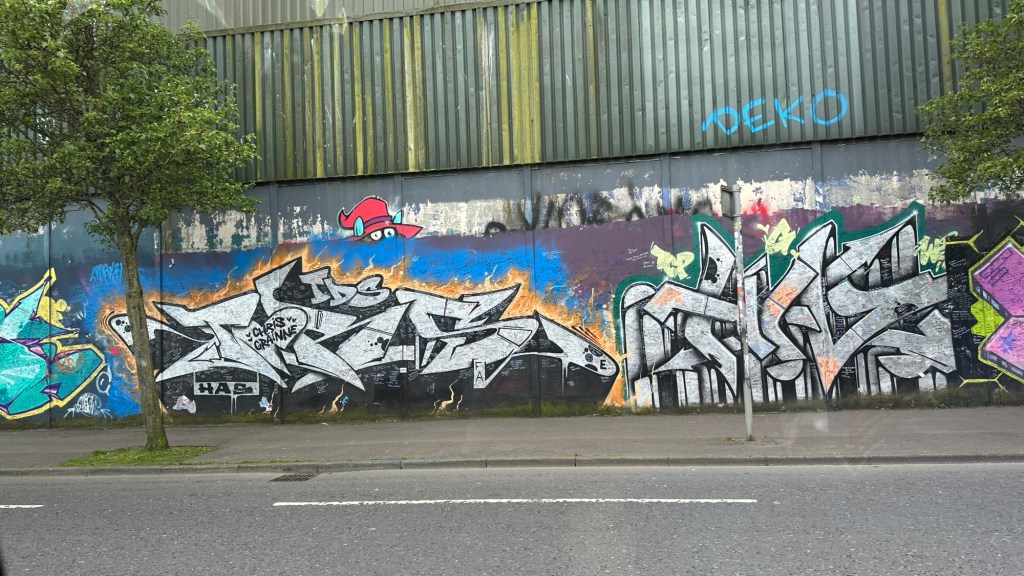
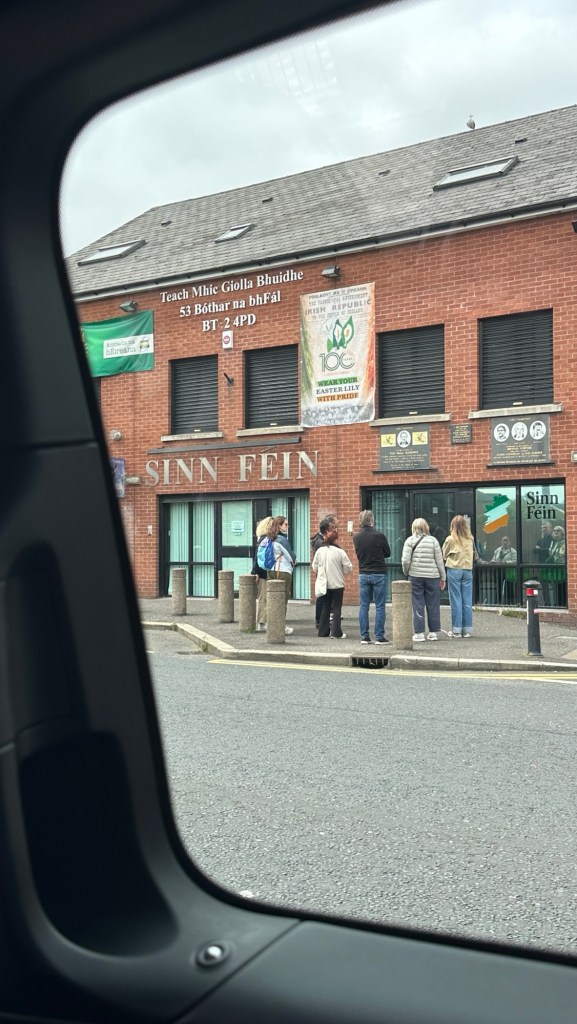
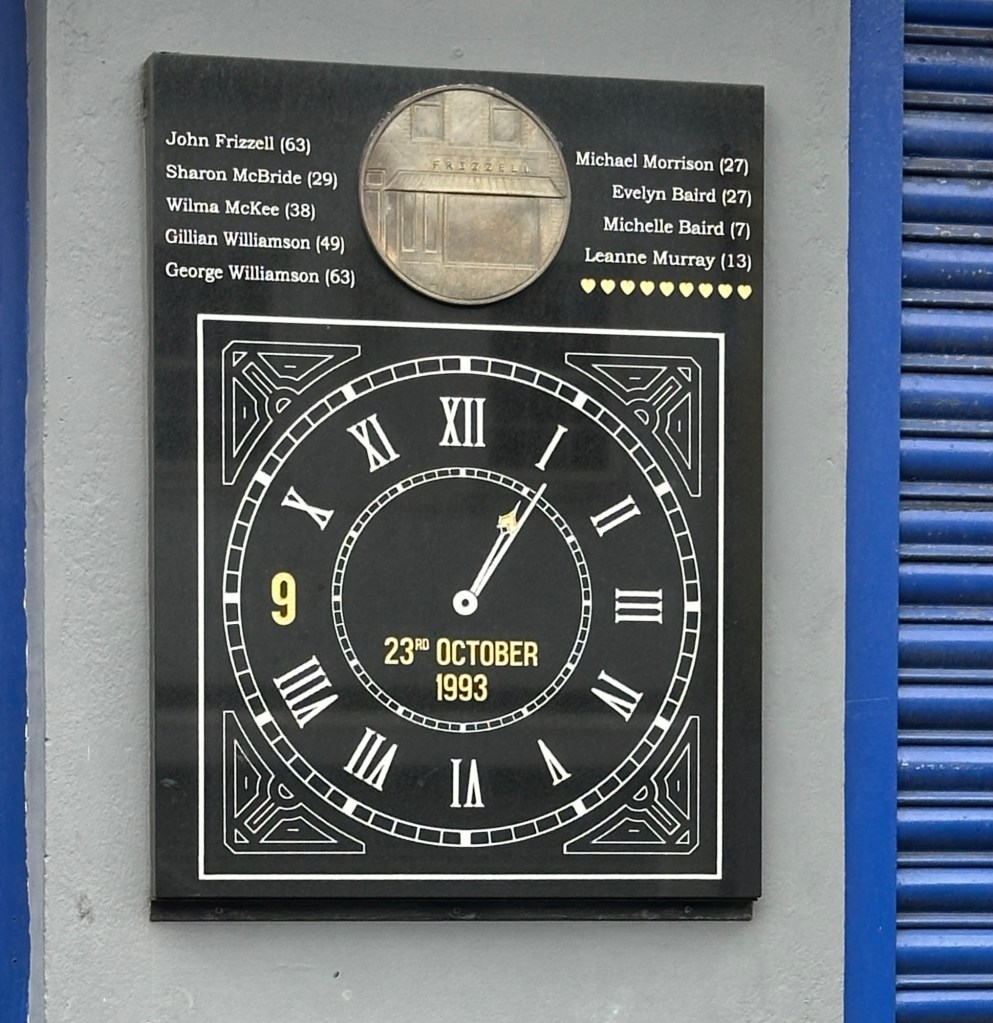
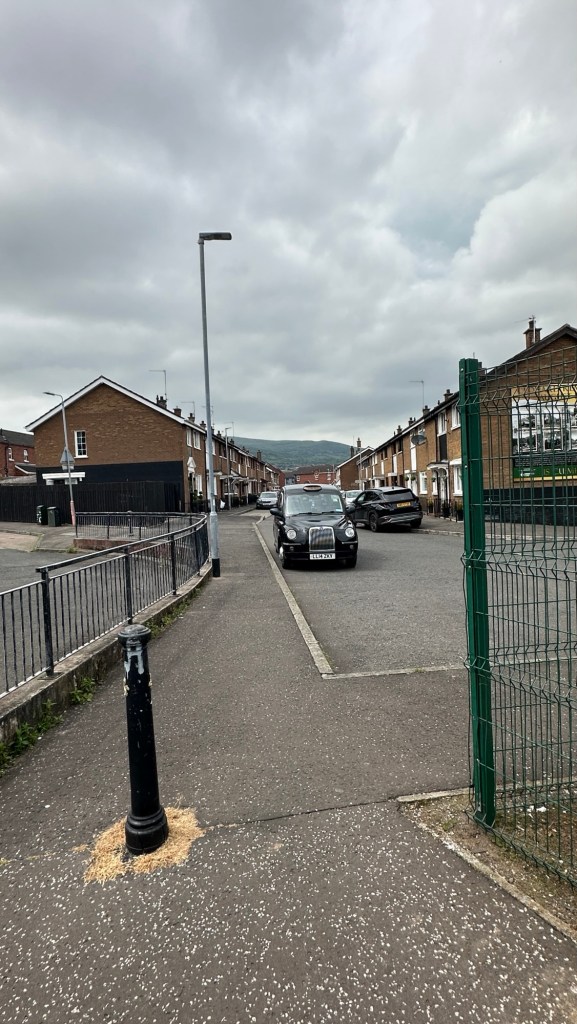
In the afternoon, we had a Black Taxi tour of Belfast, a traditional way to learn about the Troubles. Our driver had lived through the Troubles in a Catholic community. The Troubles pitted the Catholic republicans, who supported a united Ireland, and the Protestant loyalists, who wished the country to stay with Great Britain. We drove through neighborhoods of each group, saw huge murals representing views and “heroes” of each sector. The clock pictured below memorializes the date and time of the Provisional IRA bombing on Shankill Road in Belfast, and the ten people killed. Despite the Good Friday agreement of 1998, tensions are still evident.
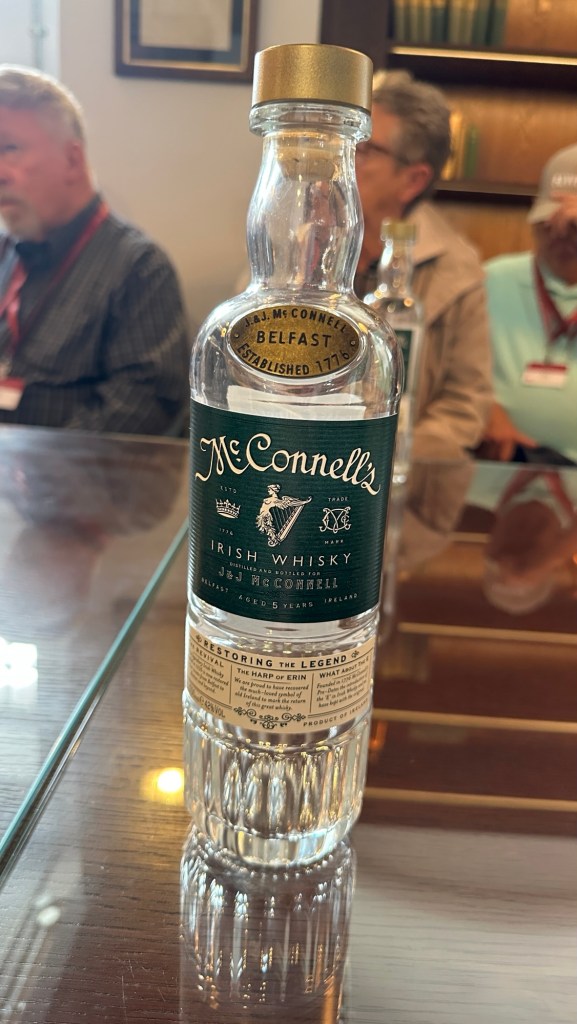
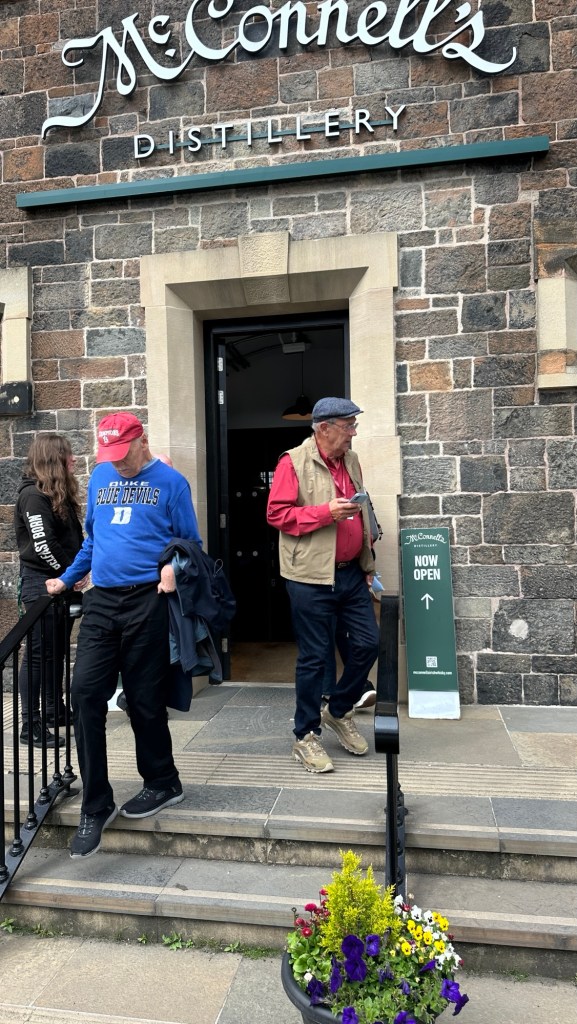
We ended the drive at a historic jail, the Crumlin Road Gaol, which has been repurposed as the McConnell Whisky Distillery. We had a distillery tour and tasting. Try as I might, I haven’t been able to develop a fondness for whiskeys.
Back on board the ship, we were treated to some Irish folktunes and dancing.
Tuesday, Jun 16
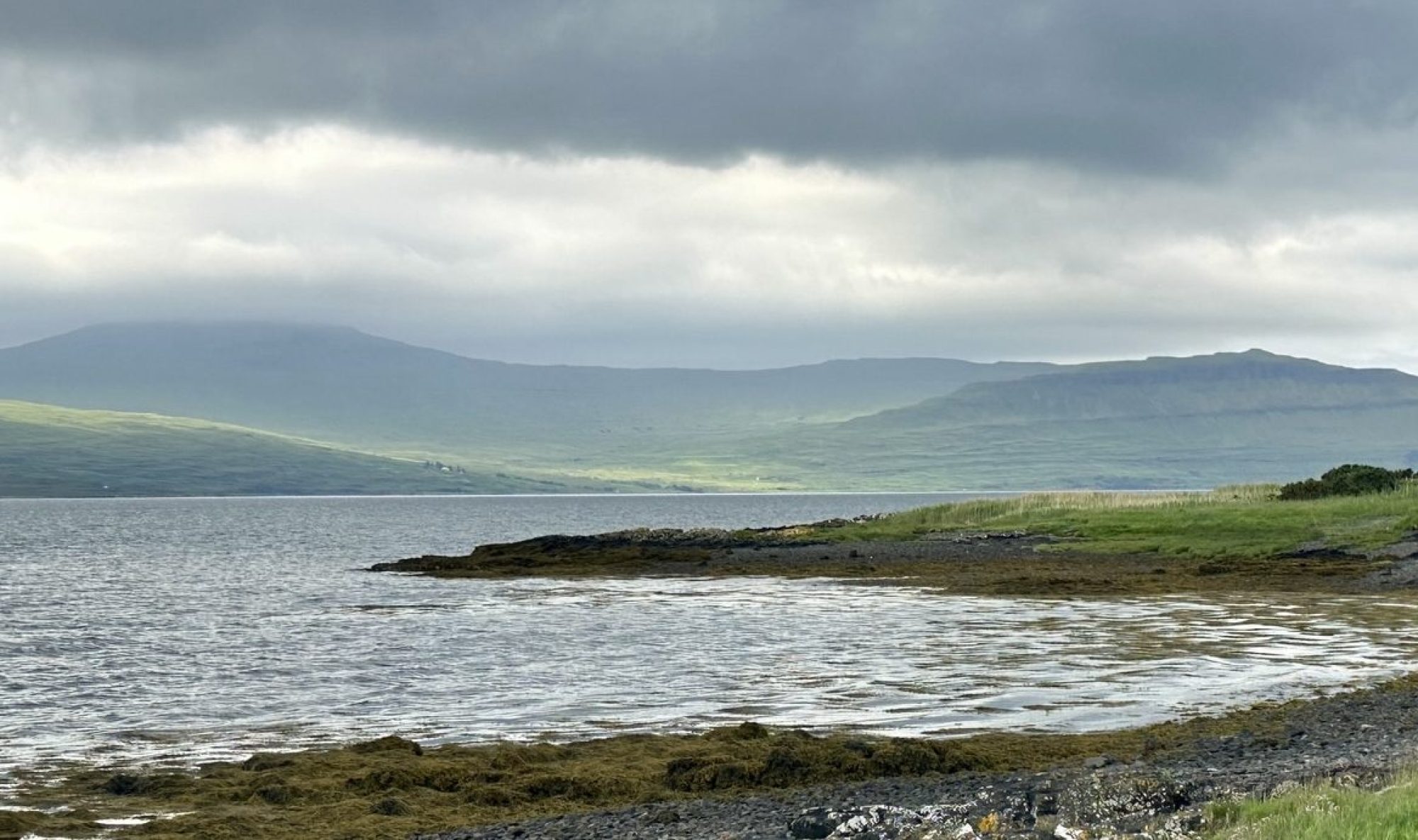
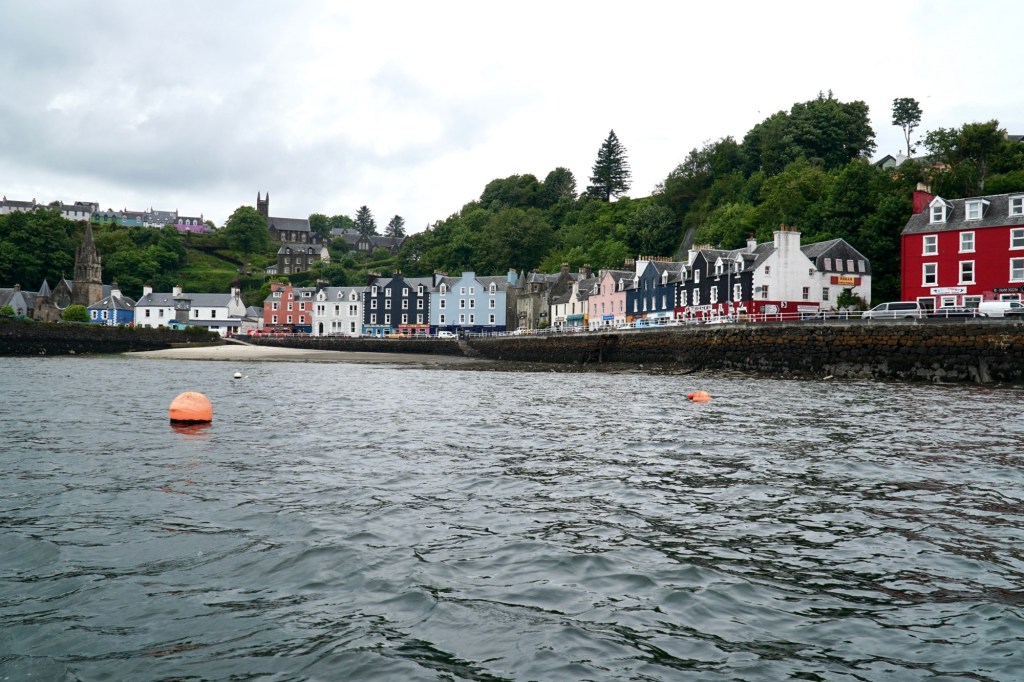
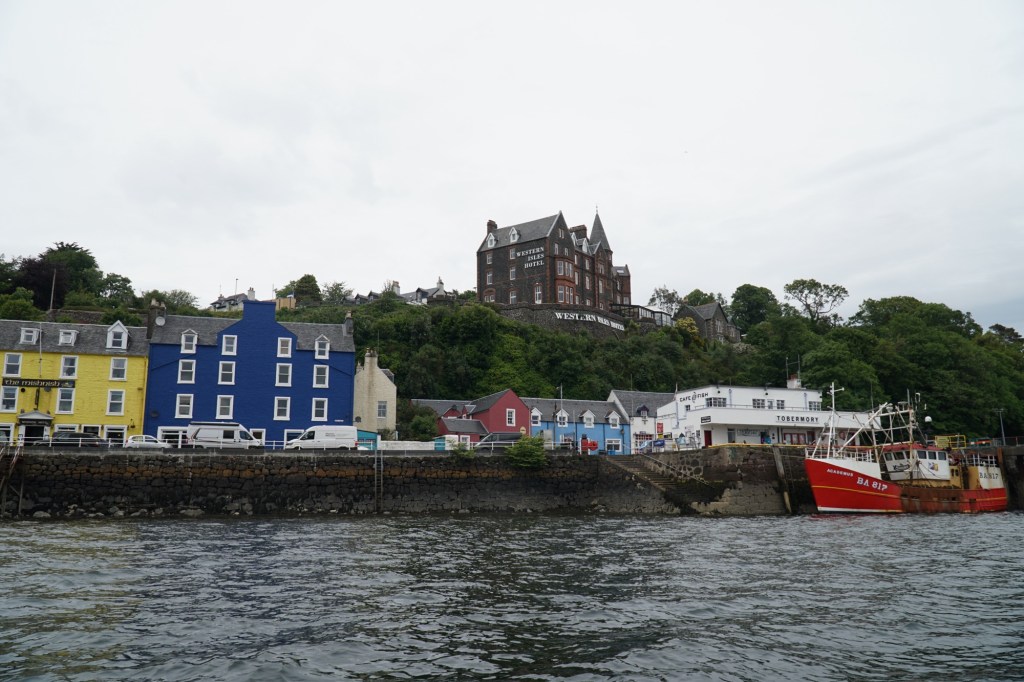
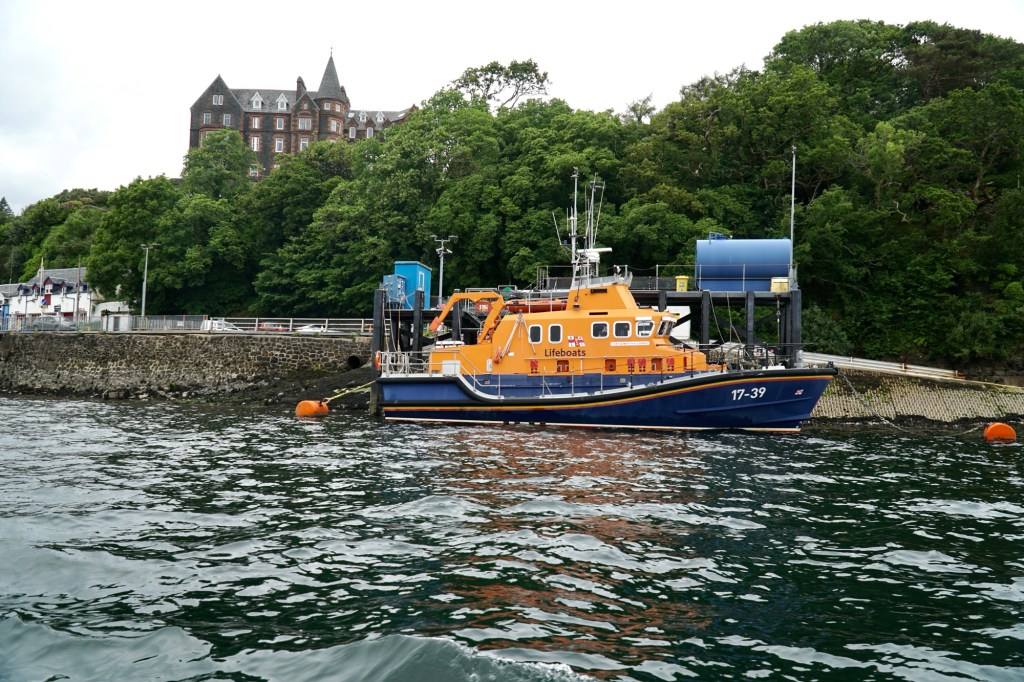
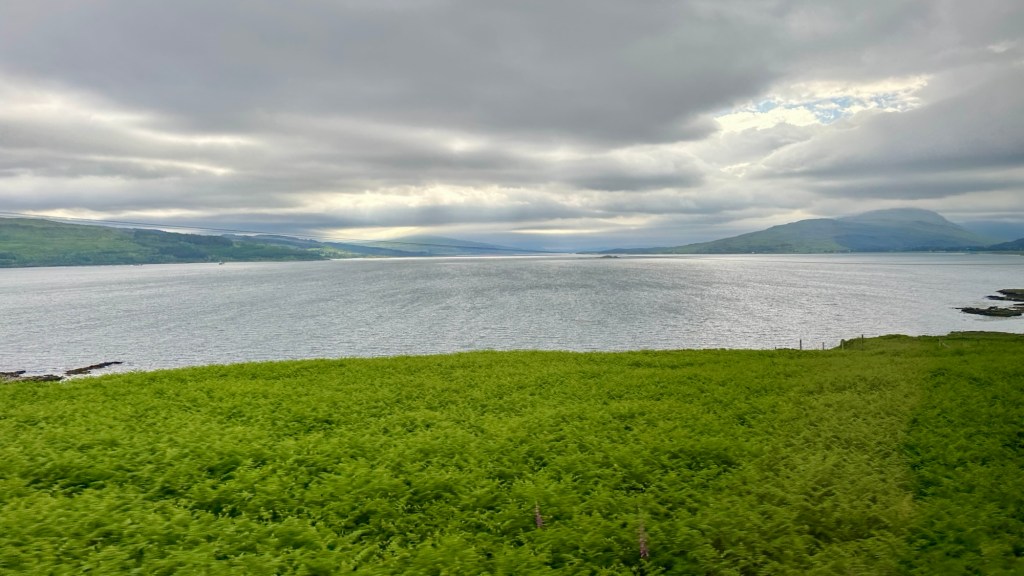
After leaving Northern Ireland and sailing to the Scottish Inner Hebrides, we docked in Tobermory, a fishing village and the capital of the Isle of Mull. Because of the shallow depth of the harbor, we needed to dock outside the main harbor and take a 10 minute Zodiac ride to town. Tobermory is a lovely town with colorful buildings along the L-shaped main street. We had a scenic drive along the coast, with several photo stops on the way to visit the Lip na Cloiche Garden and Nursery, owned by a woman named Lucy Mackenzie Panizzon.
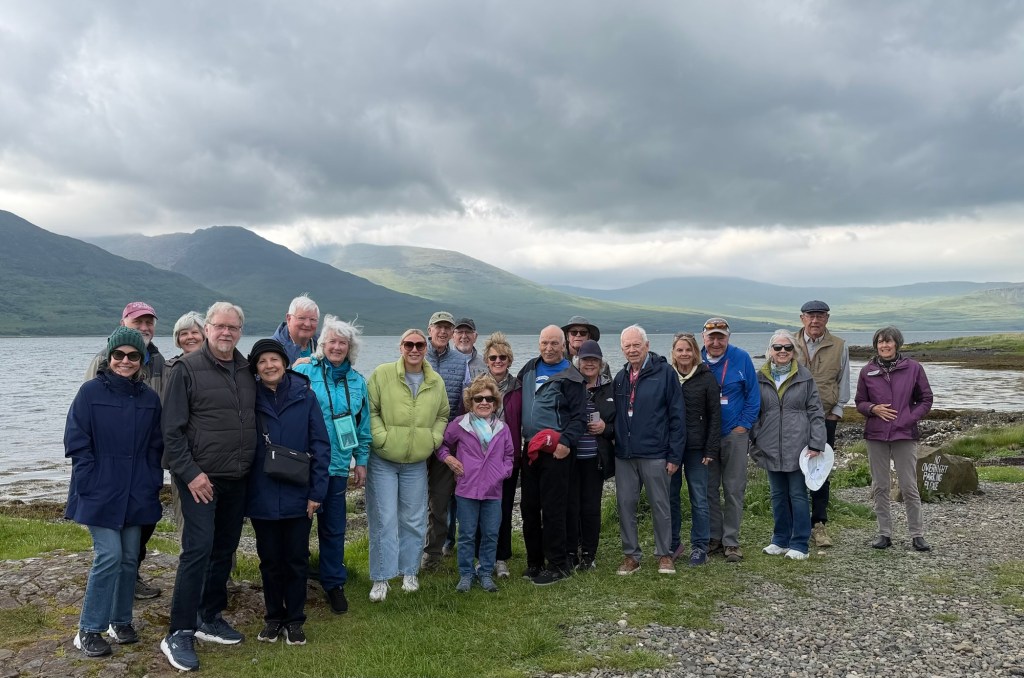
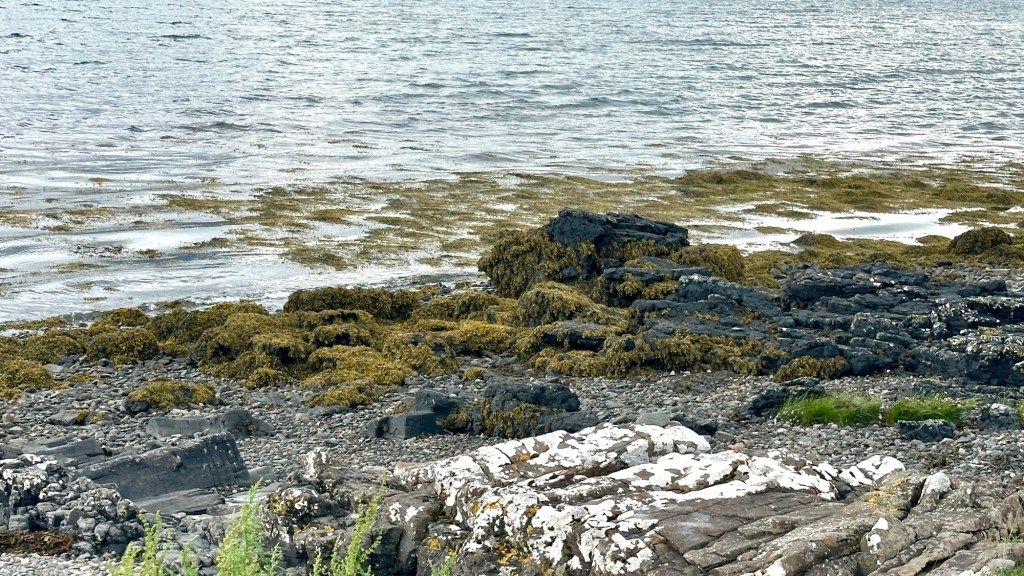
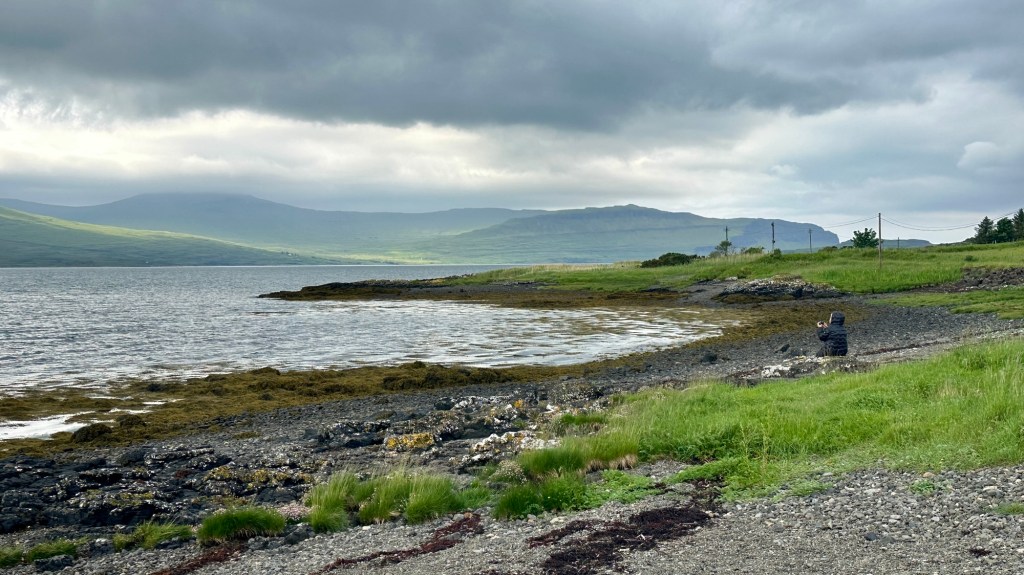
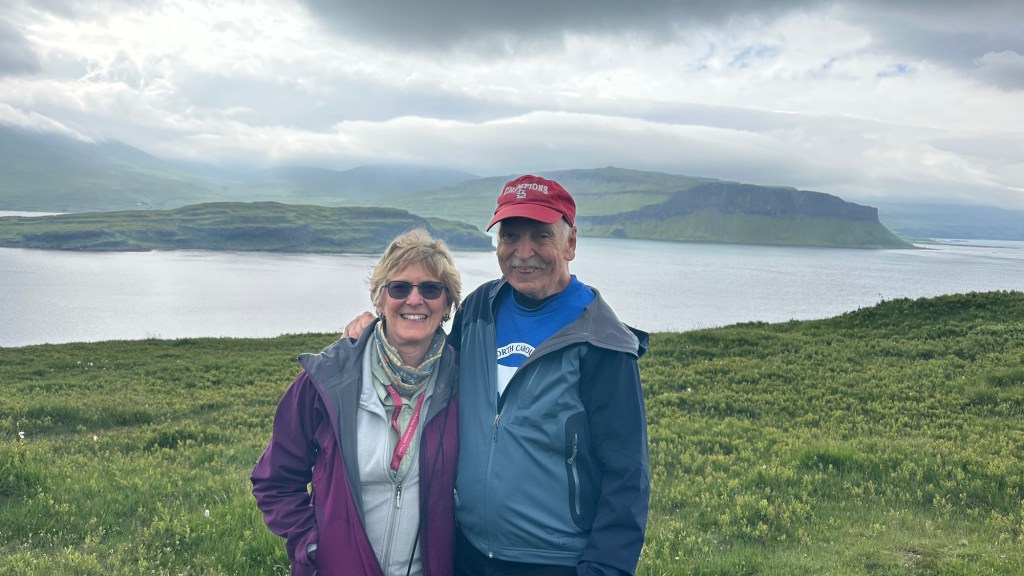
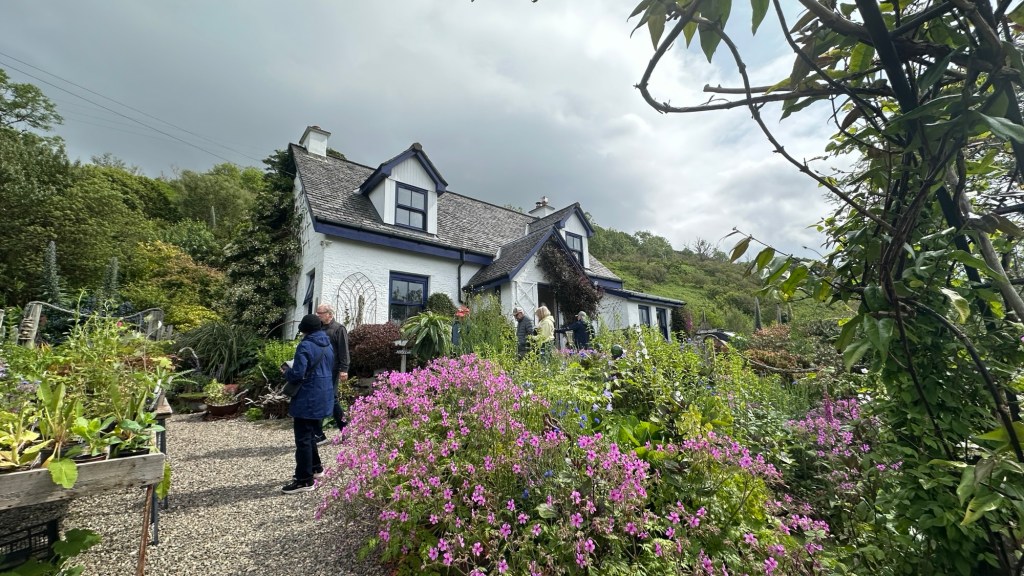
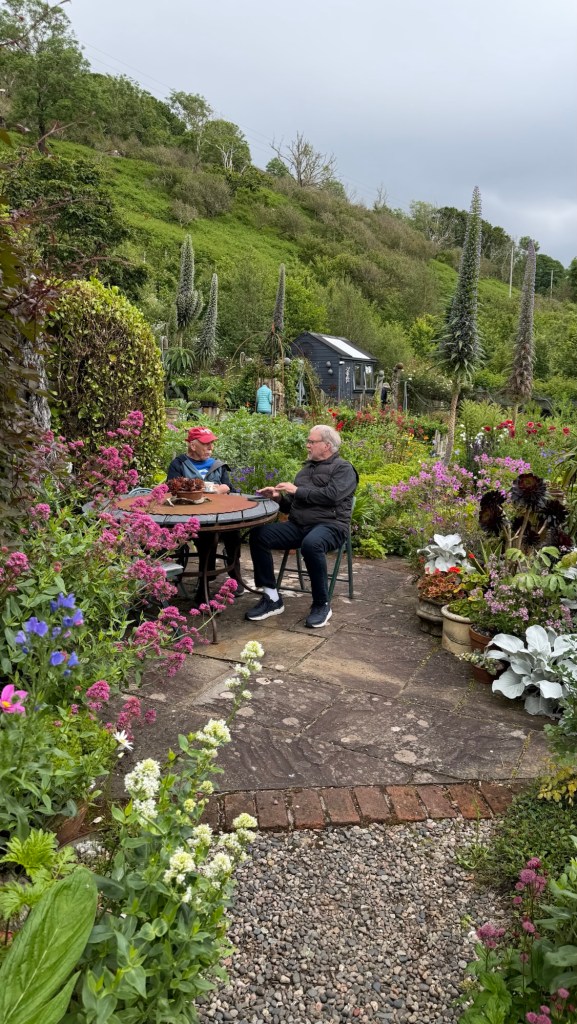
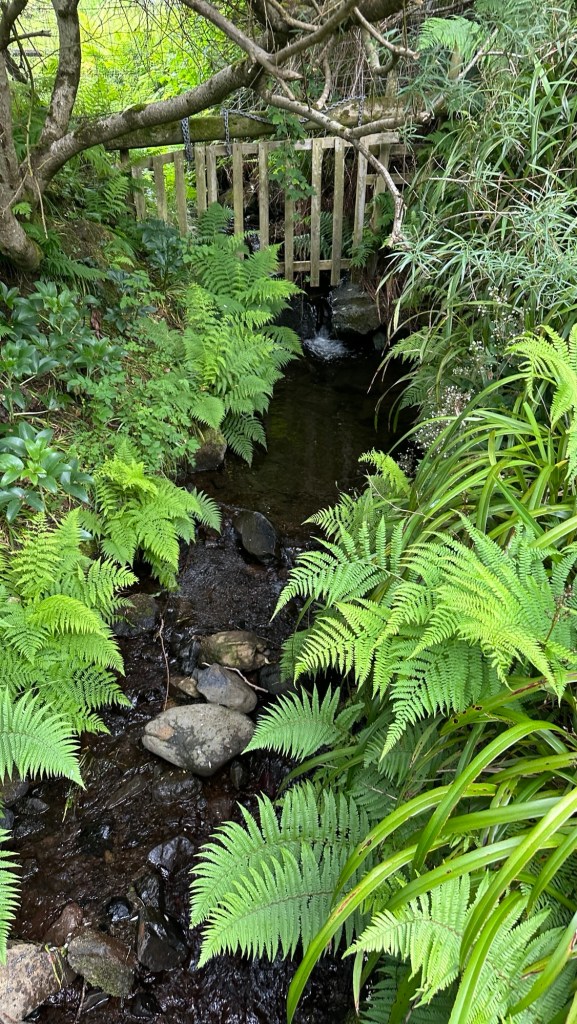
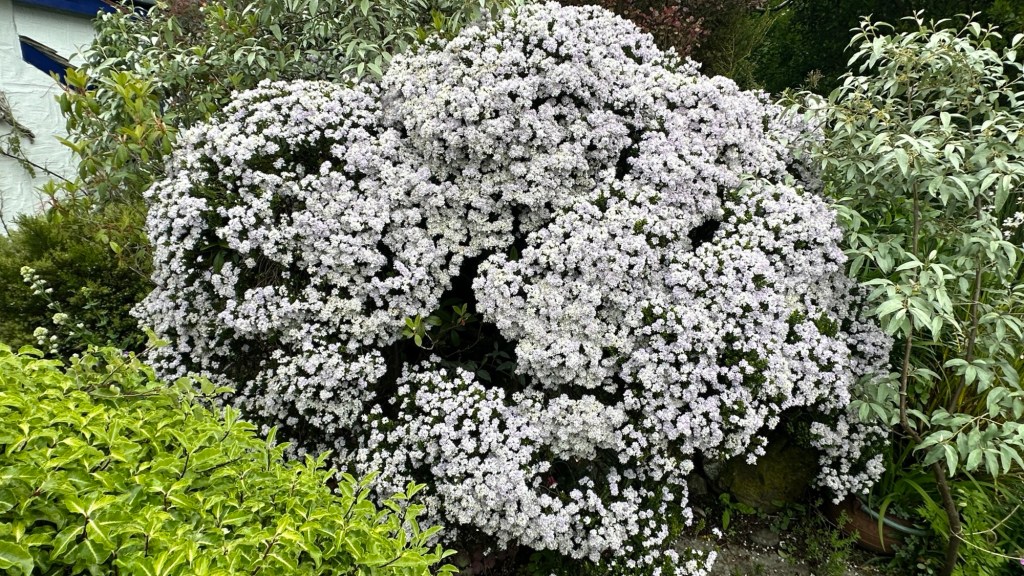
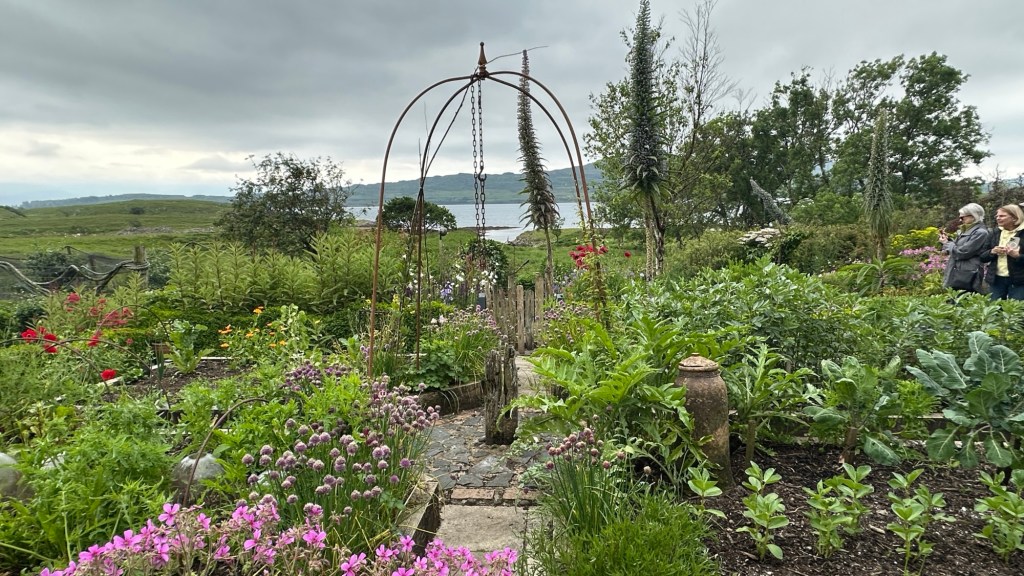
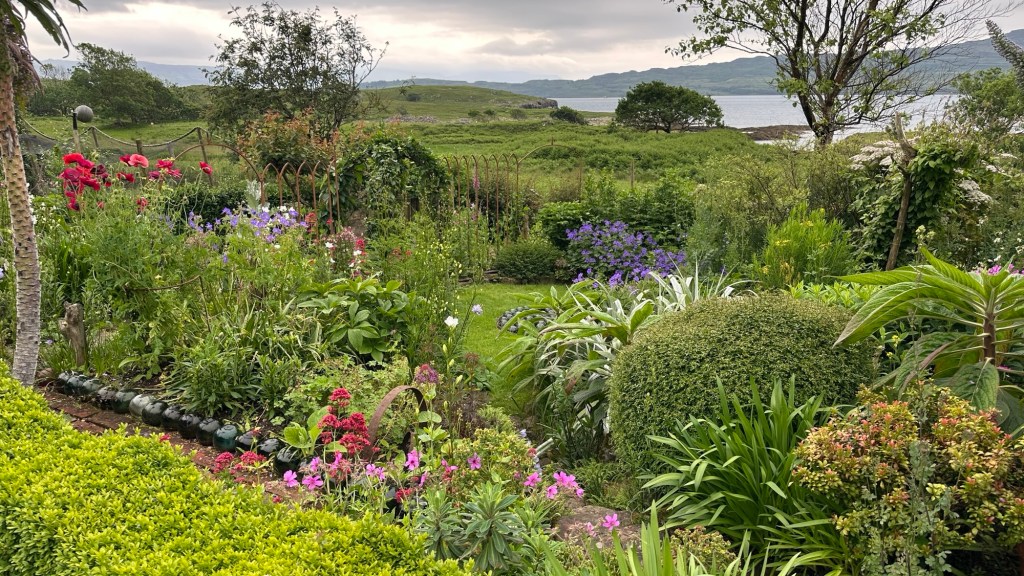
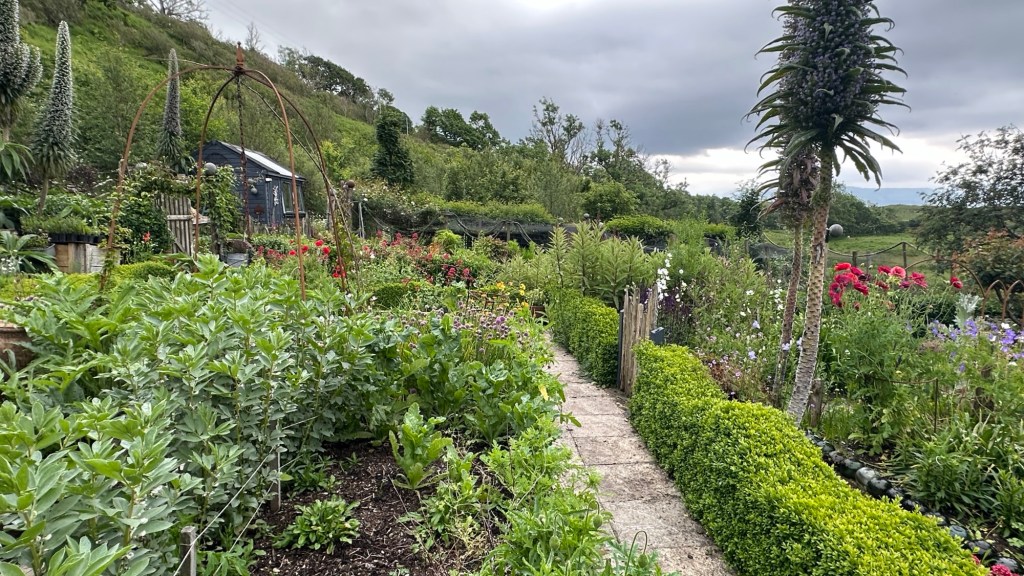
Lucy was a native of Mull, who had lived in Rome with her Italian husband for 30 years. She and her daughter returned after her husband’s death and had acquired the property. After building the cottage, she created the whole garden including the pathway up and down the hillside, from scratch. What a variety of plants!!! She also collects old garden tools and uses them for edging and decoration. She sells plants at the local market, and makes cards and other artwork from pressed flowers. These are sold at her garden and in local shops.
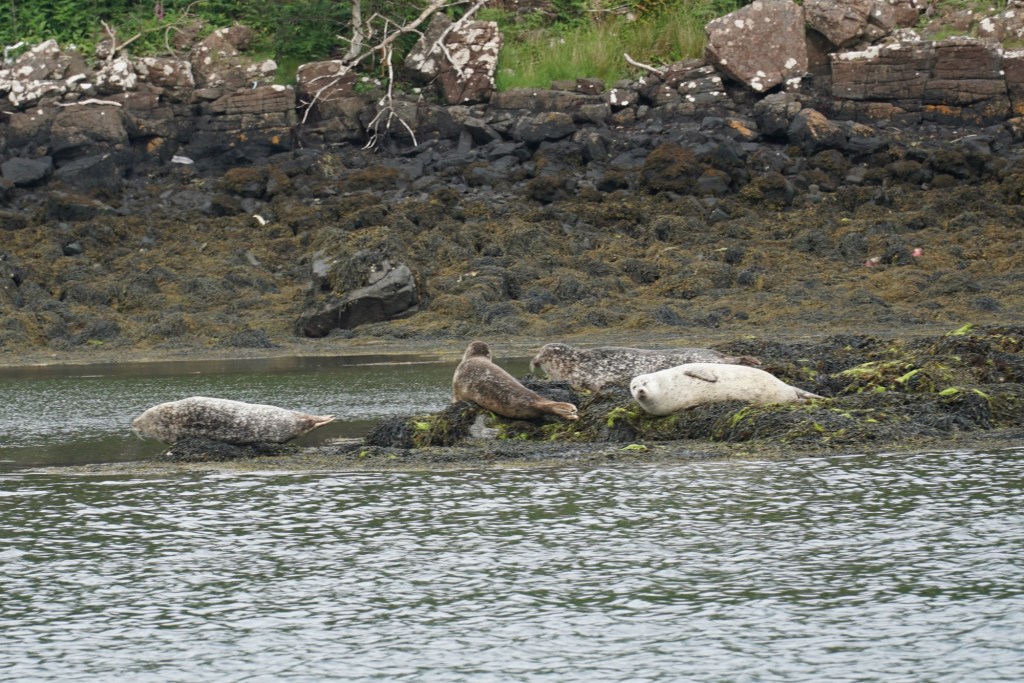
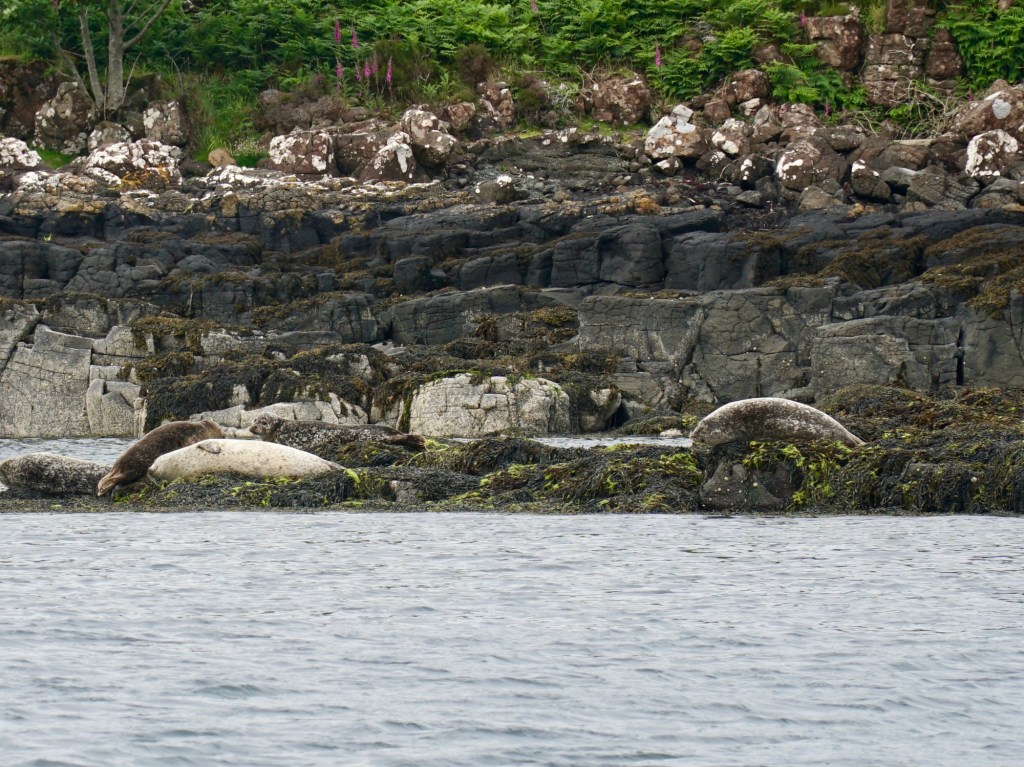
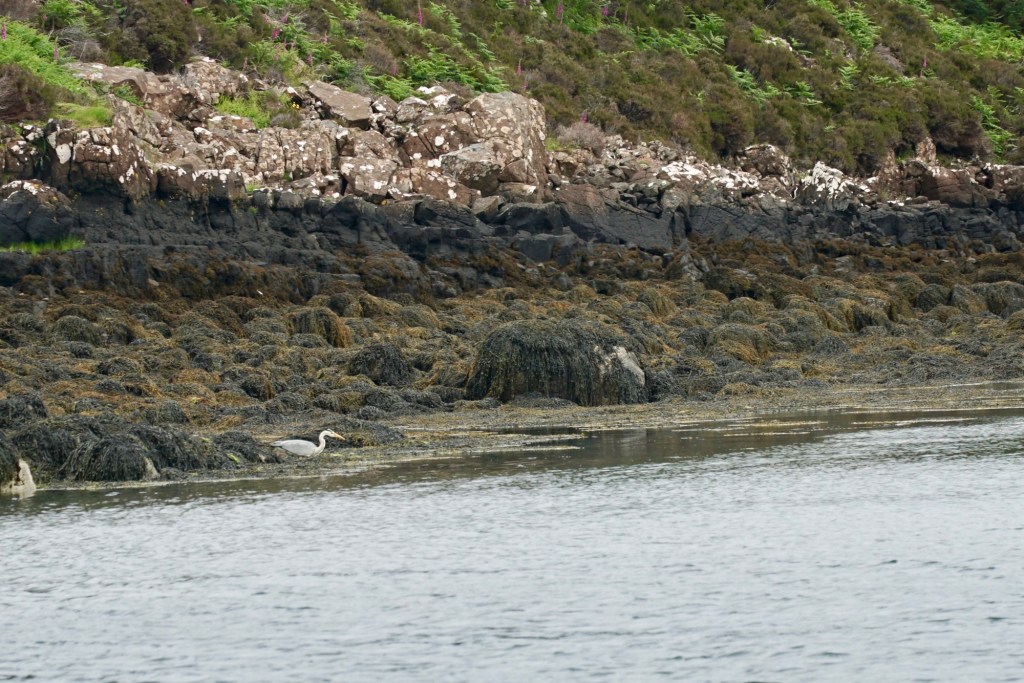
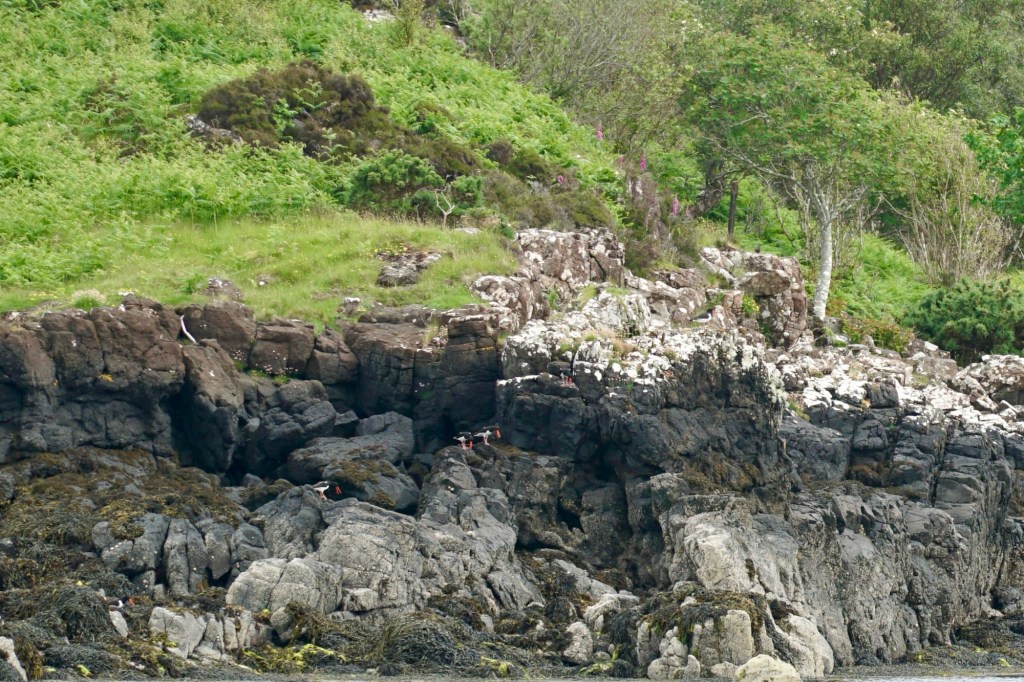
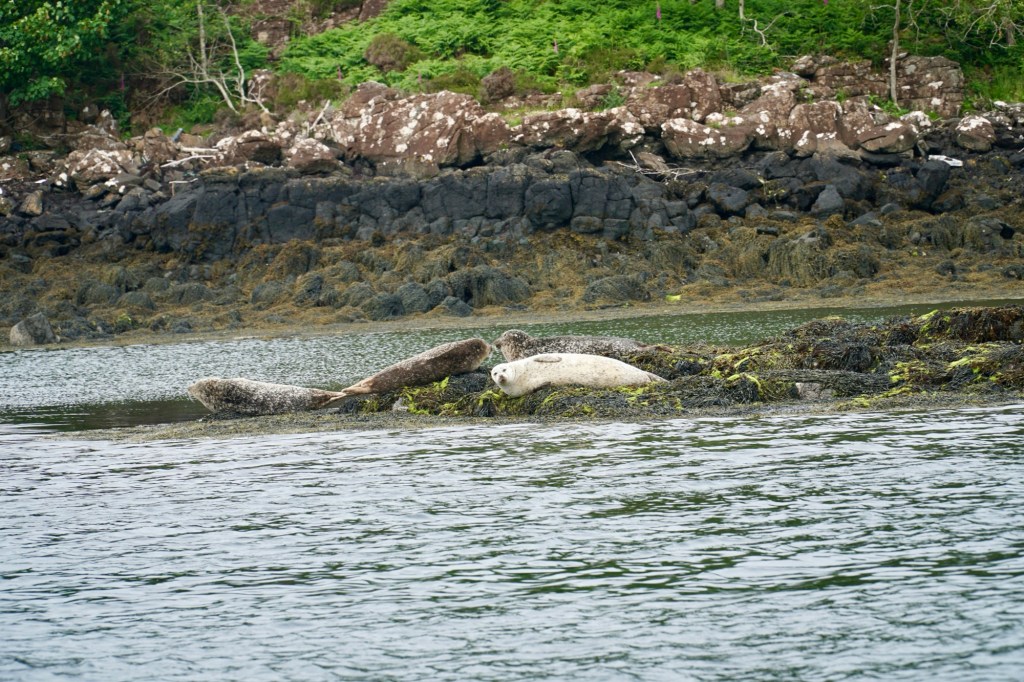
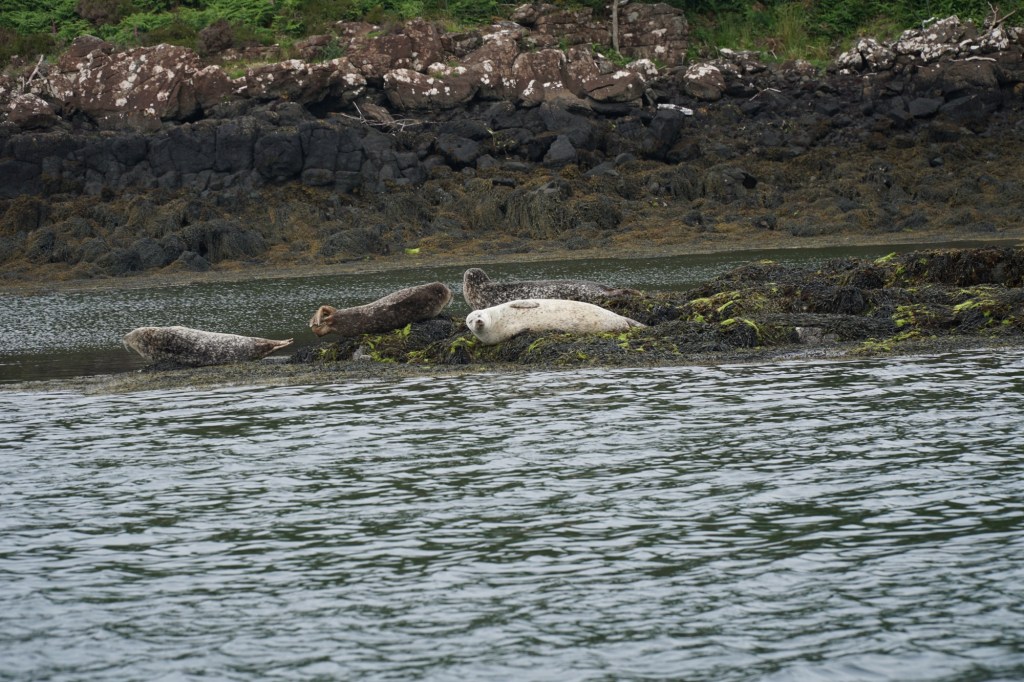
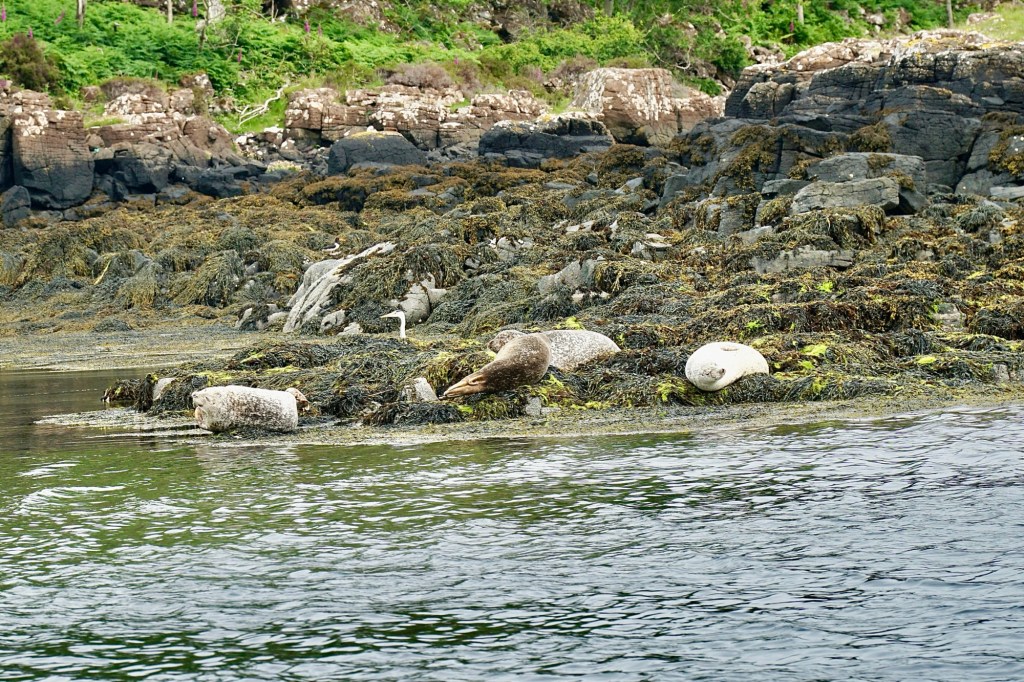
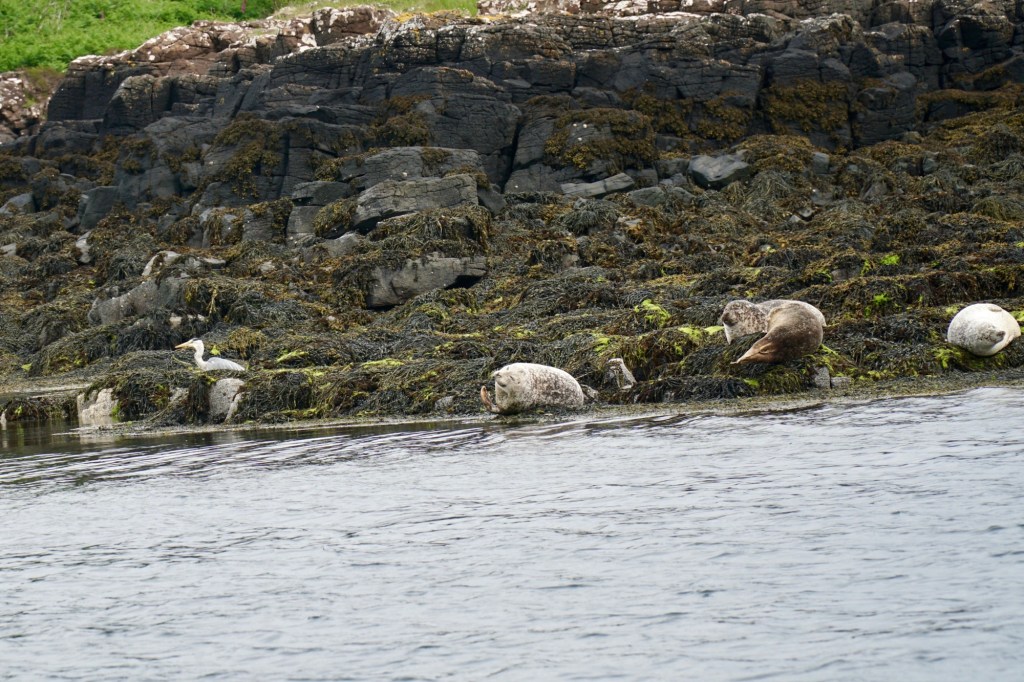
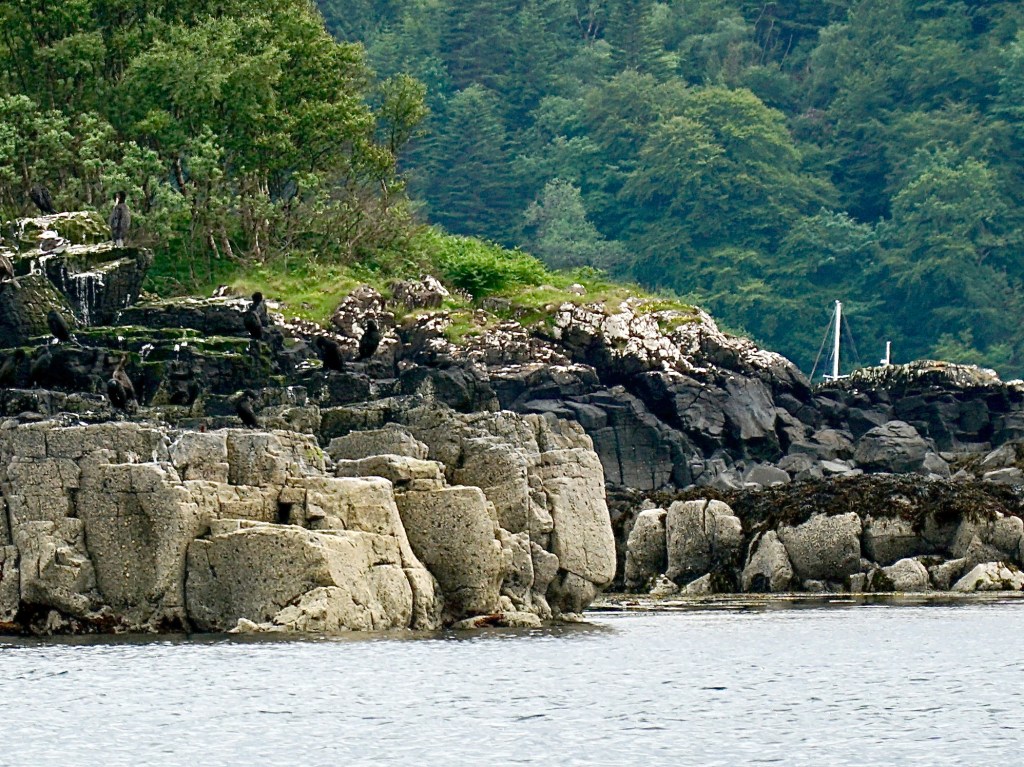
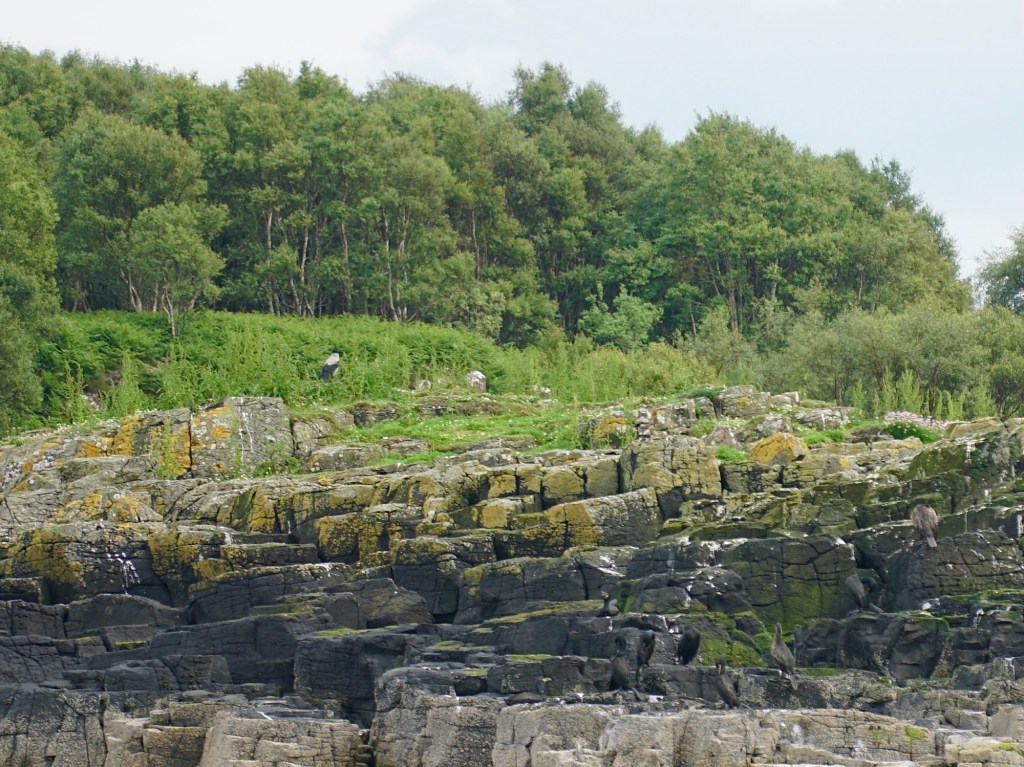
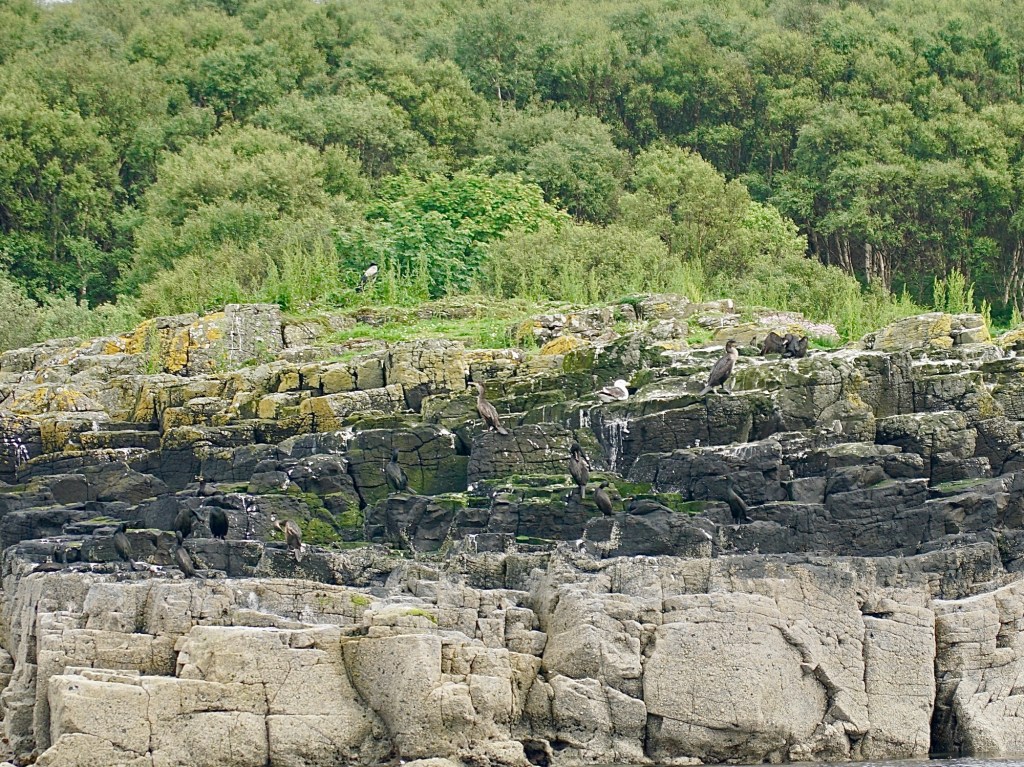
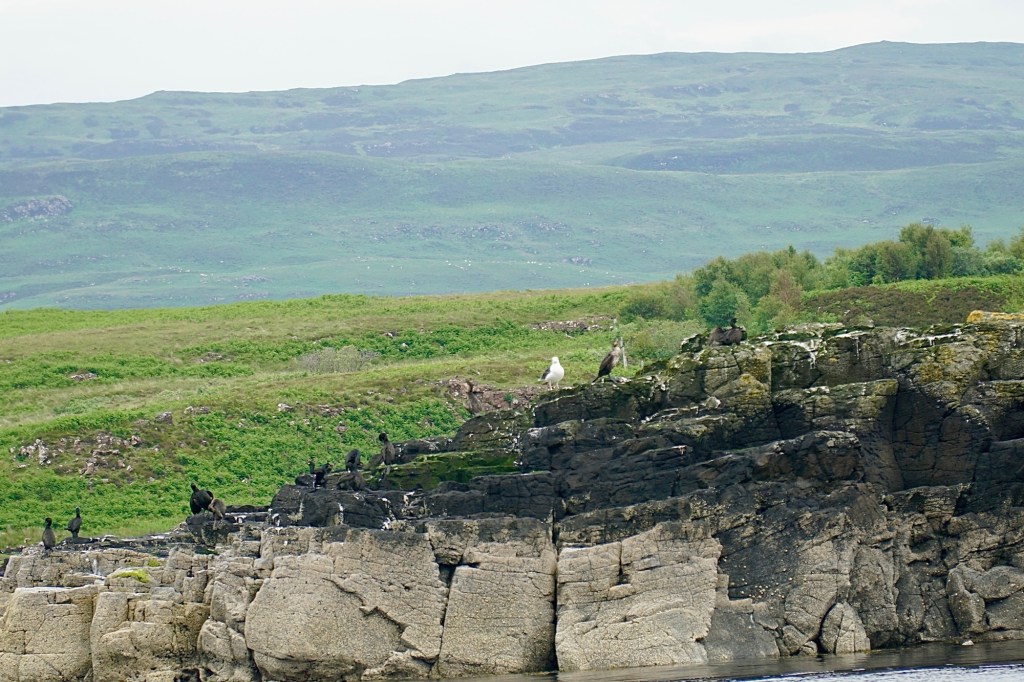
In the afternoon, we had free time. I took the Zodiac back to explore the town, and found a hiking path at the end of the town, leading to the Tobermory lighthouse. I had hoped to take a boat tour to see wildlife, but the advertised tours were either all-day, which would not work, or booked up. Just in case, I headed to the dock at 3:00 and snagged a spot on a 1.5 hour tour. It was a small boat with about 10 passengers. The guide was extremely informative. We sailed around the lighthouse, then around to another small island to a seal “maternity ward.” Given the time of the year, the harbor seals were very pregnant. We then headed to the bird “gymnasium,” another small island where many water bird were hanging out: cormorants, shags, herons, herring gulls, black-backed gulls (the largest species of gull), and lots of oystercatchers.
Wednesday, June 17
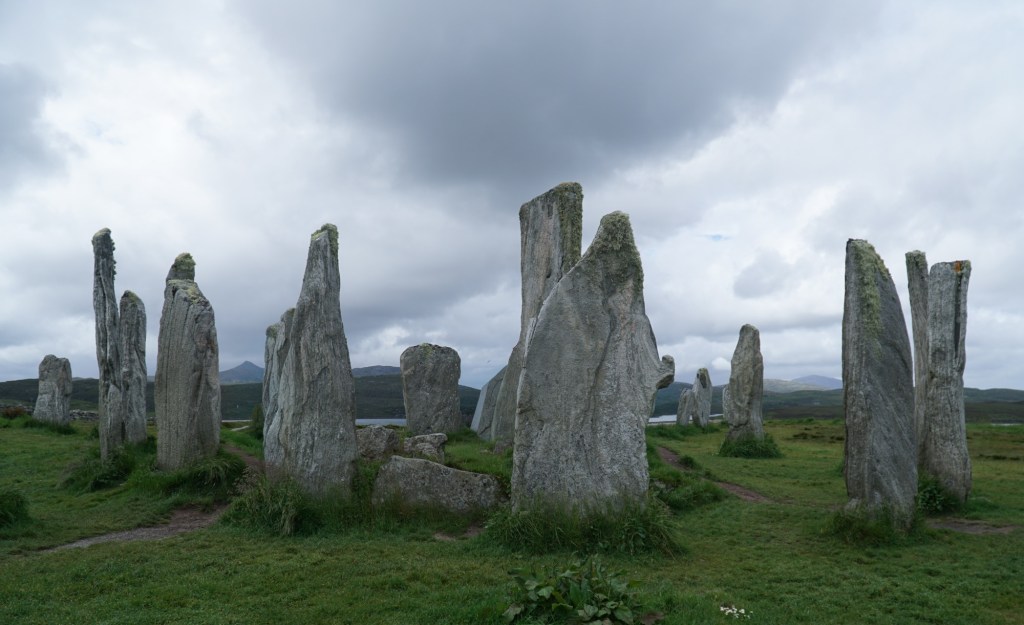
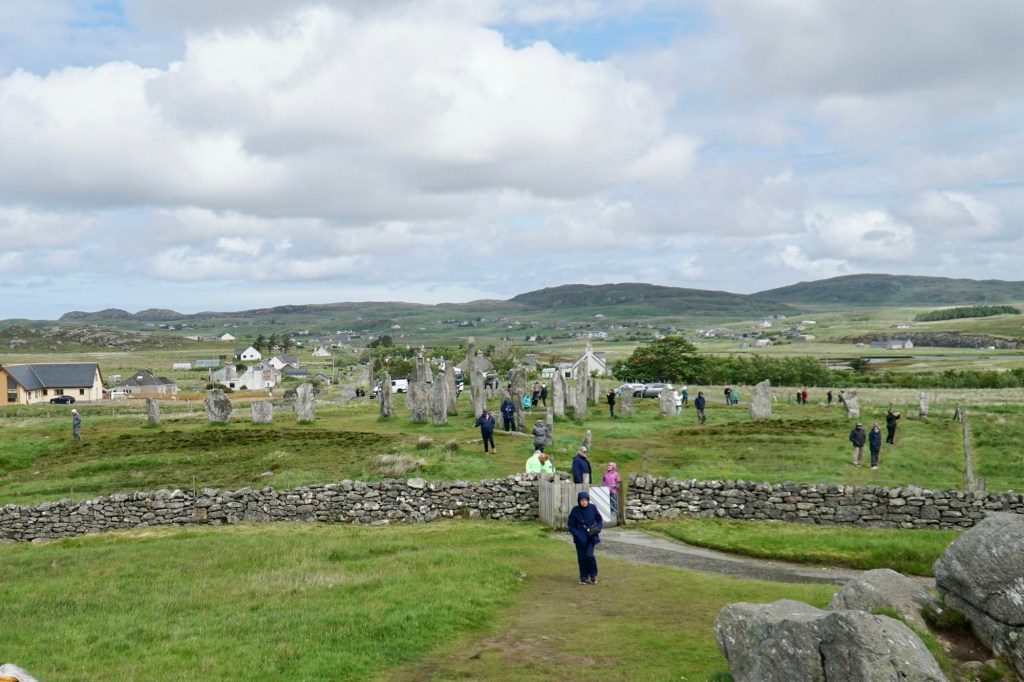
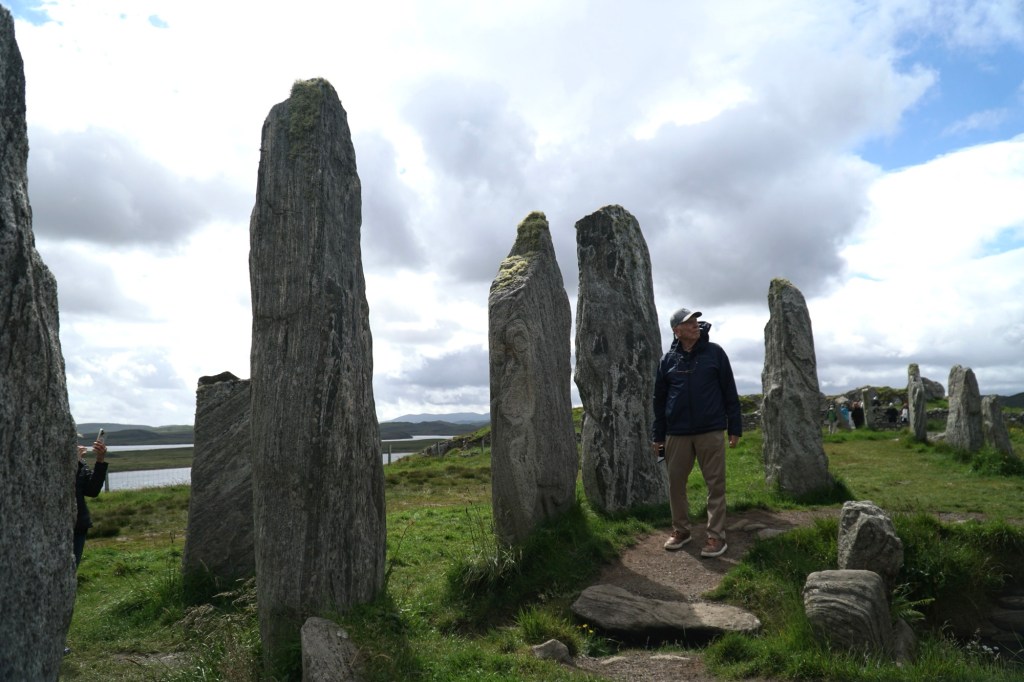
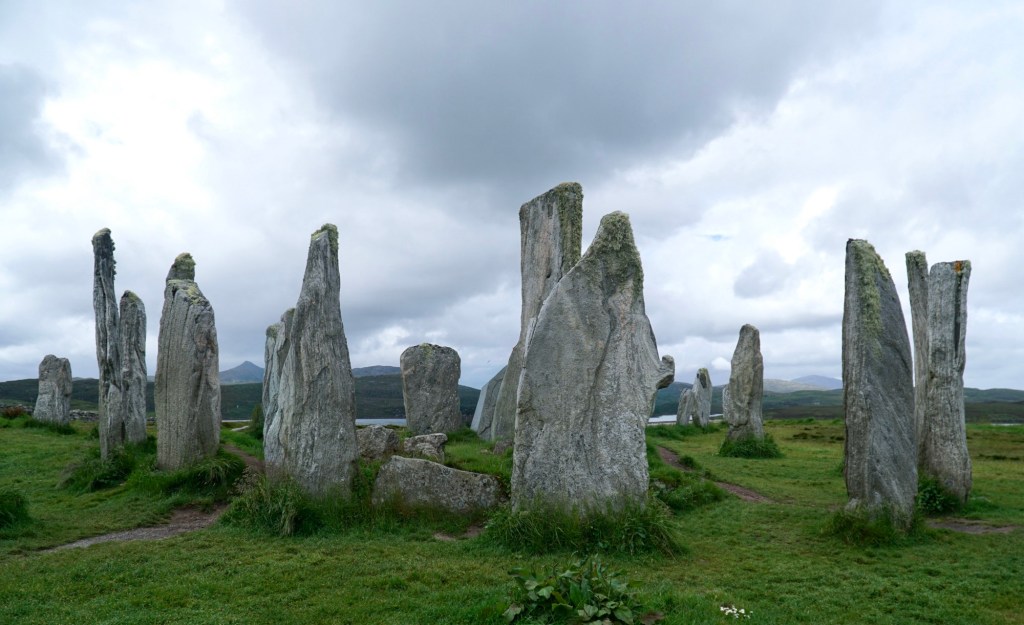
After leaving Tobermory, we sailed on smooth water overnight and arrived in the fishing village of Stornaway on the Isle of Lewis, in the outer Hebrides. Our first visit was to the Callanish Stones. This is a standing stone circle in the shape of a Celtic cross, and dates back 5,000 years. The meaning of the stone configuration is not known. Interestingly, the stones appear to have been locally quarried.
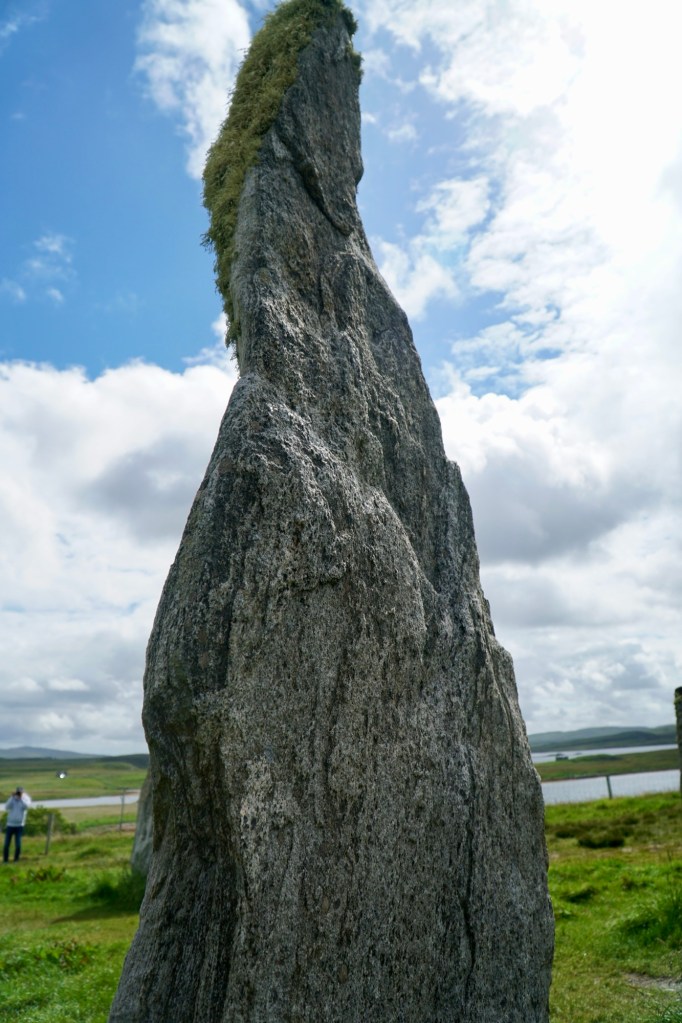
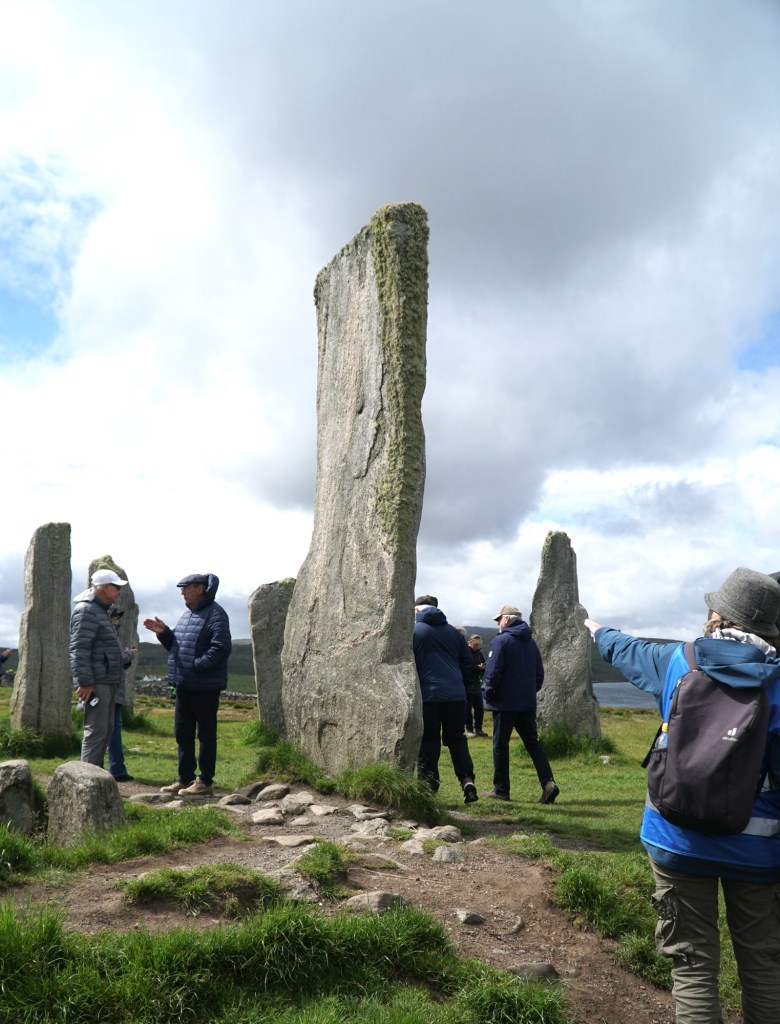
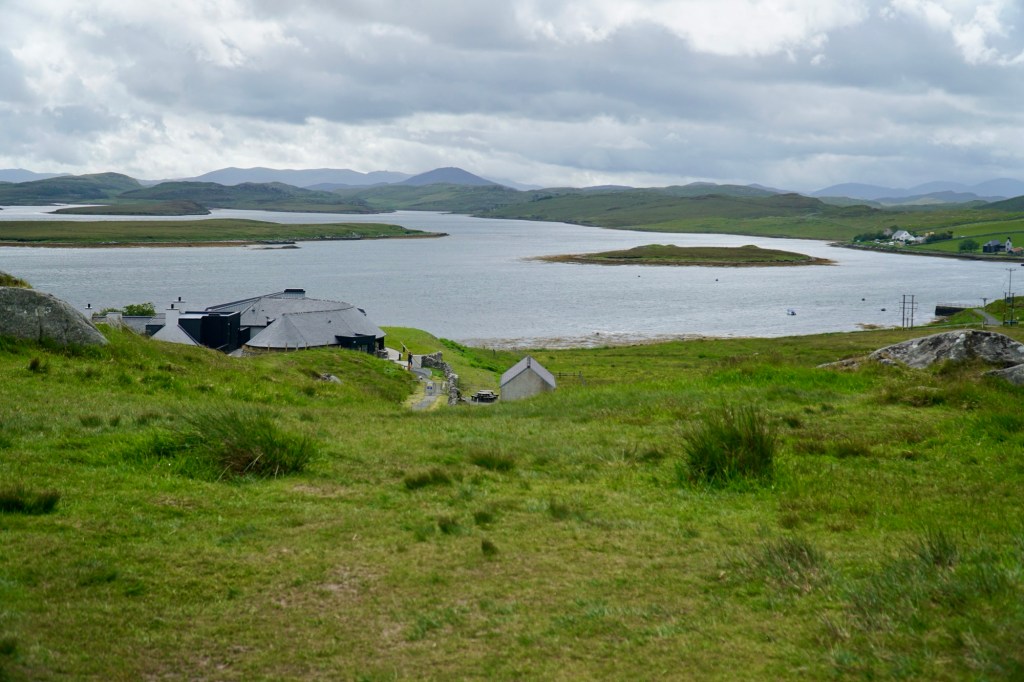
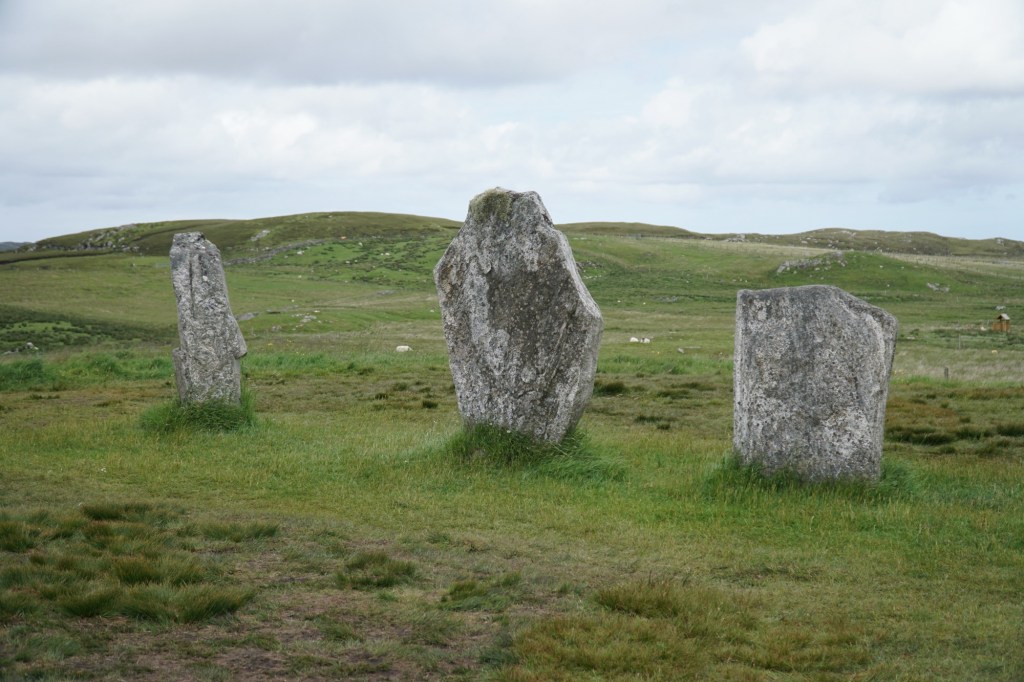
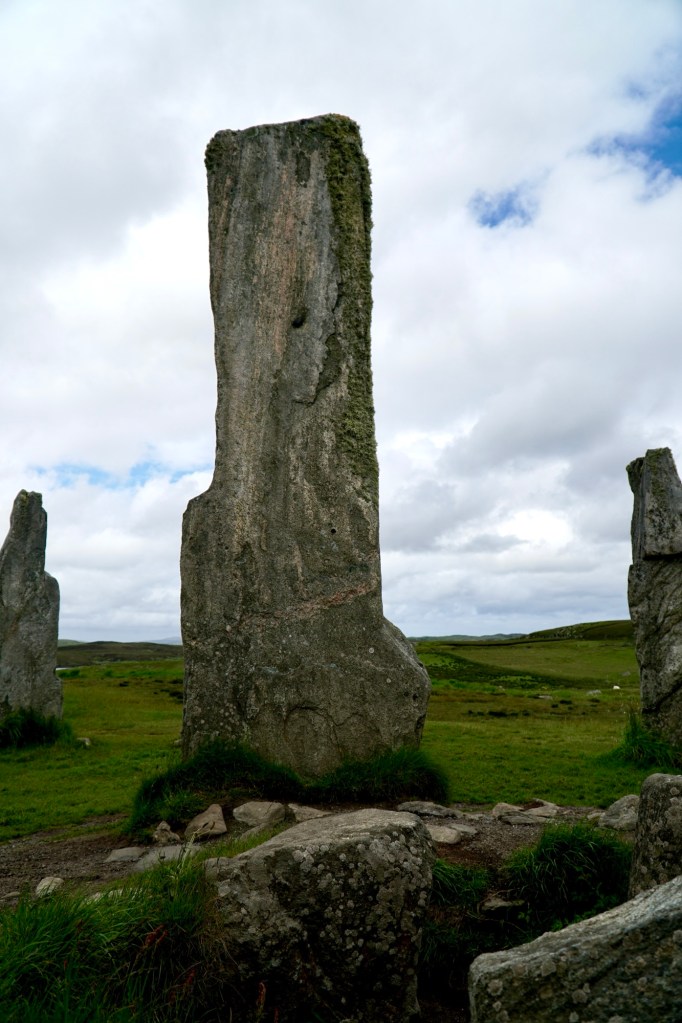
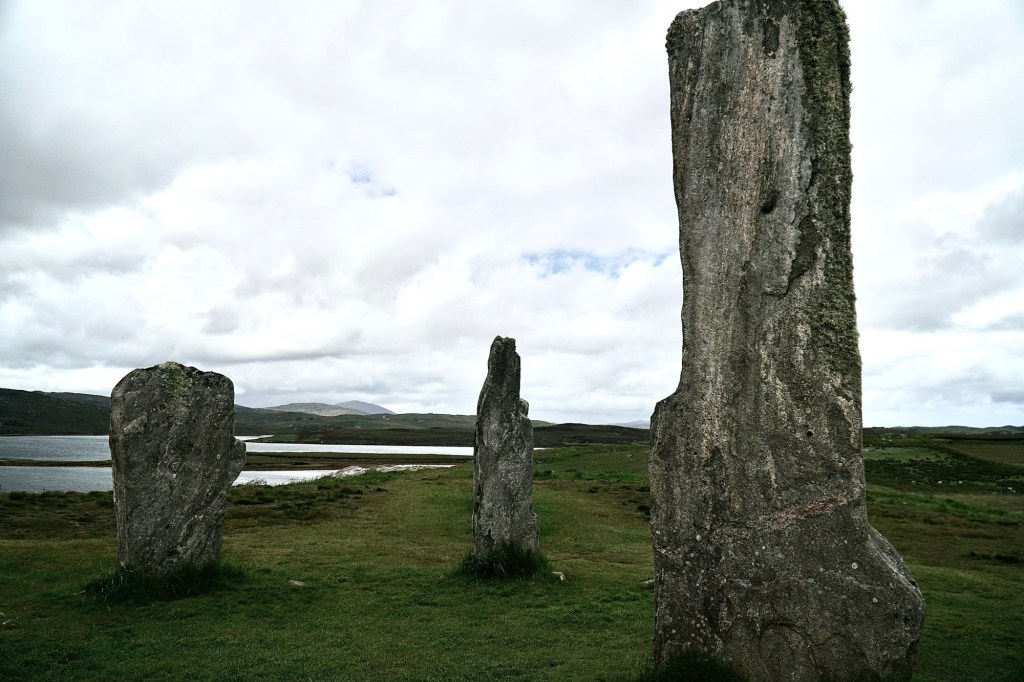
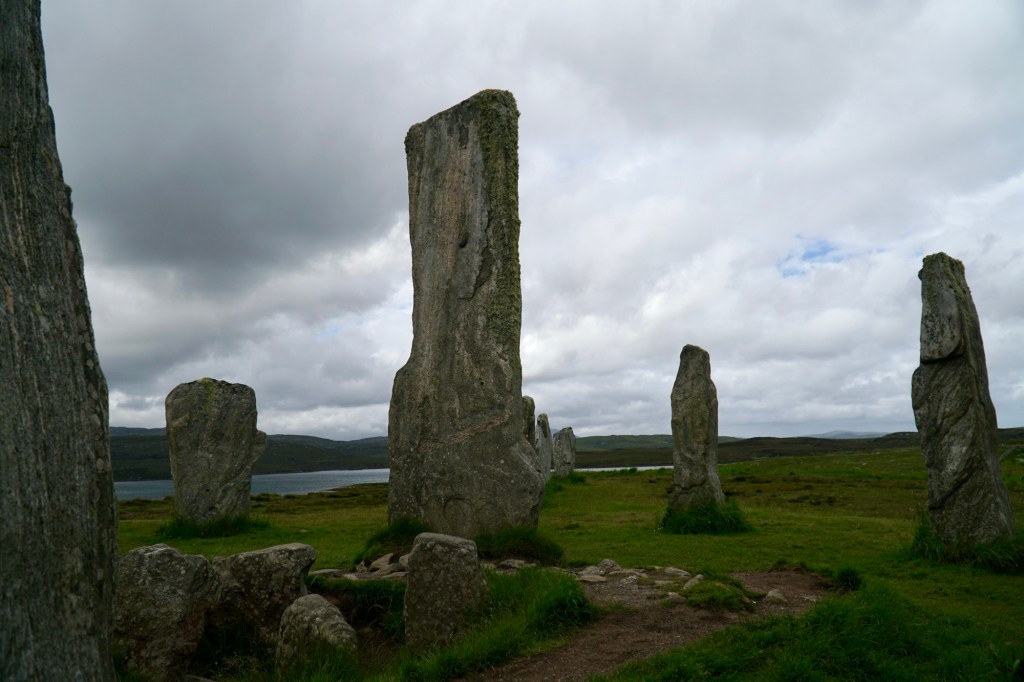
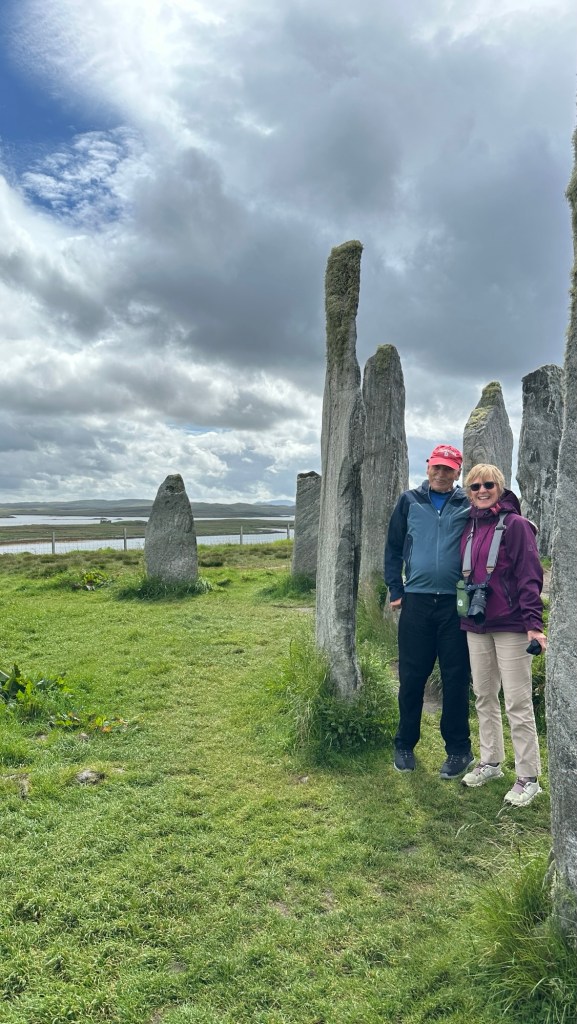
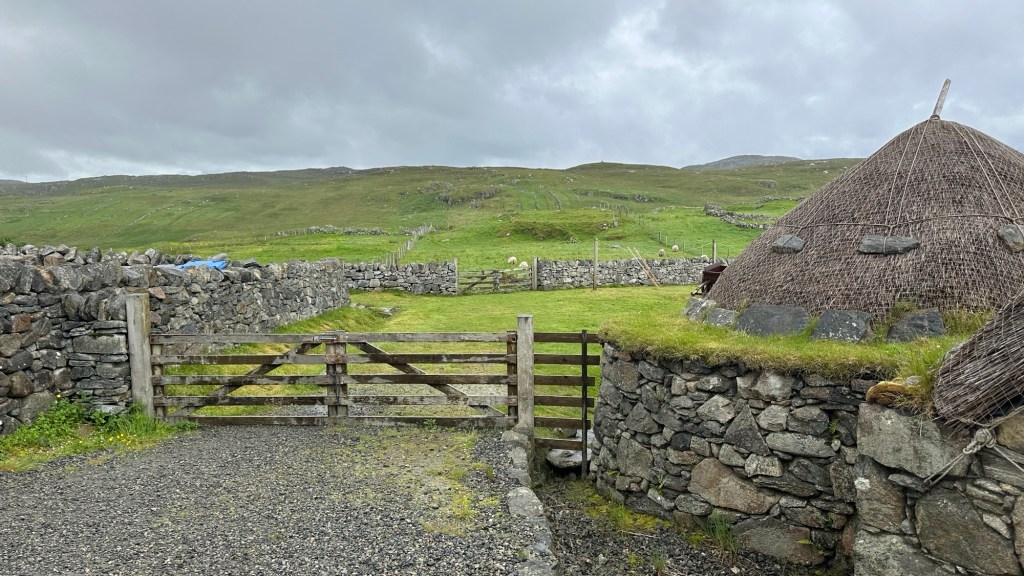
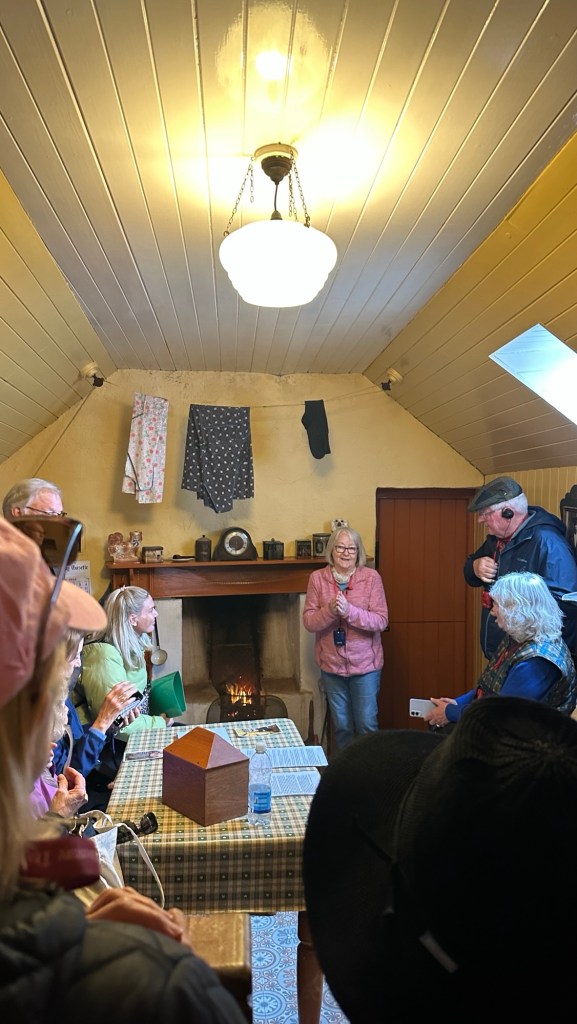
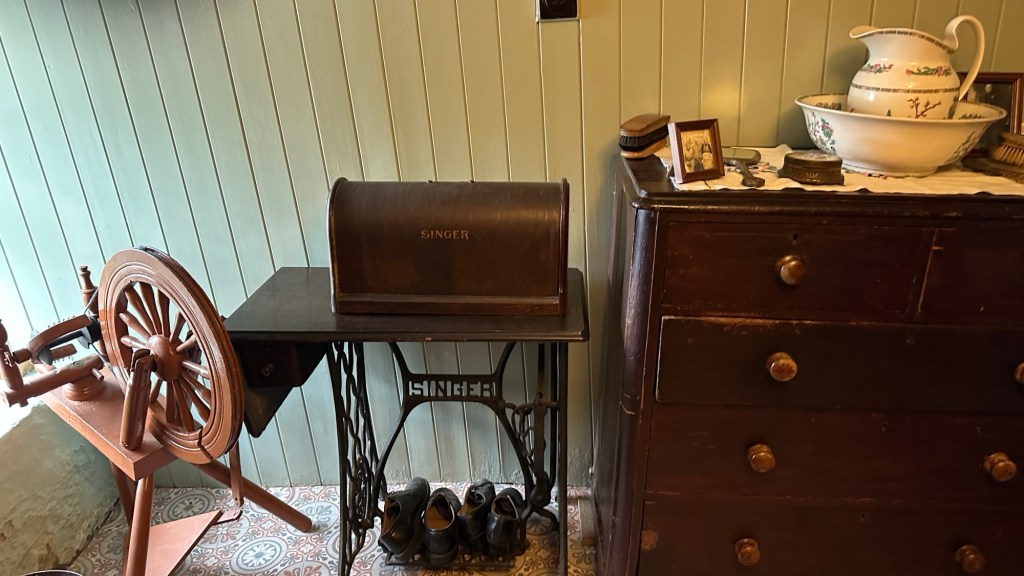
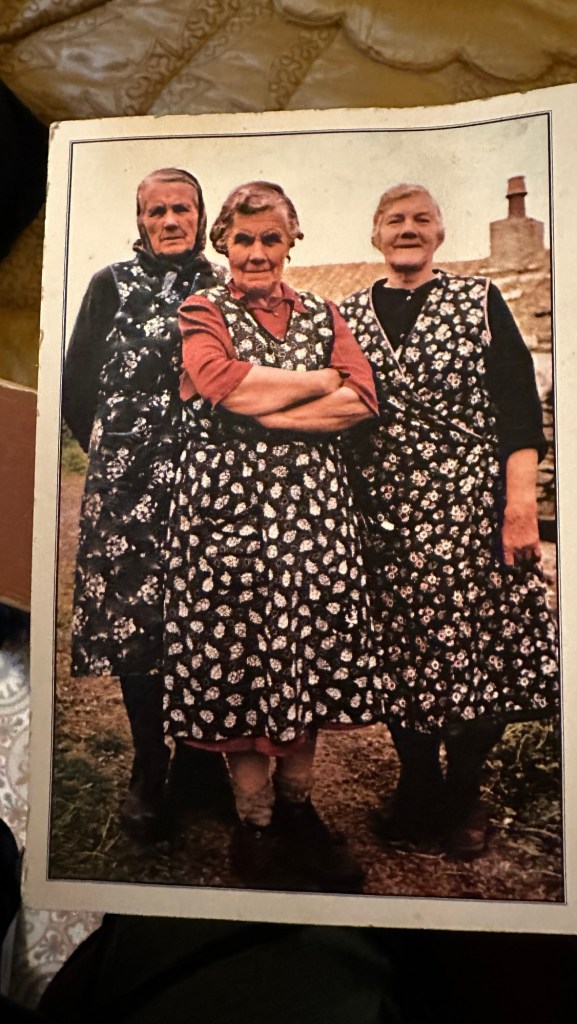
We next visited the Gaerannan Blackhouse Village, an 1880 village that has been reconstructed to show how people lived on Lewis Island. These houses were inhabited until the 1970s. They were built of stone, with timbered and thatched roofs. Heating was by peat in the fireplaces. Likely the soot from the fires was the origin of the name Blackhouse. Cattle shared the interiors with the residents. A couple of the houses had been converted to holiday rentals, as has been done with other blackhouses on the Isle of Lewis.
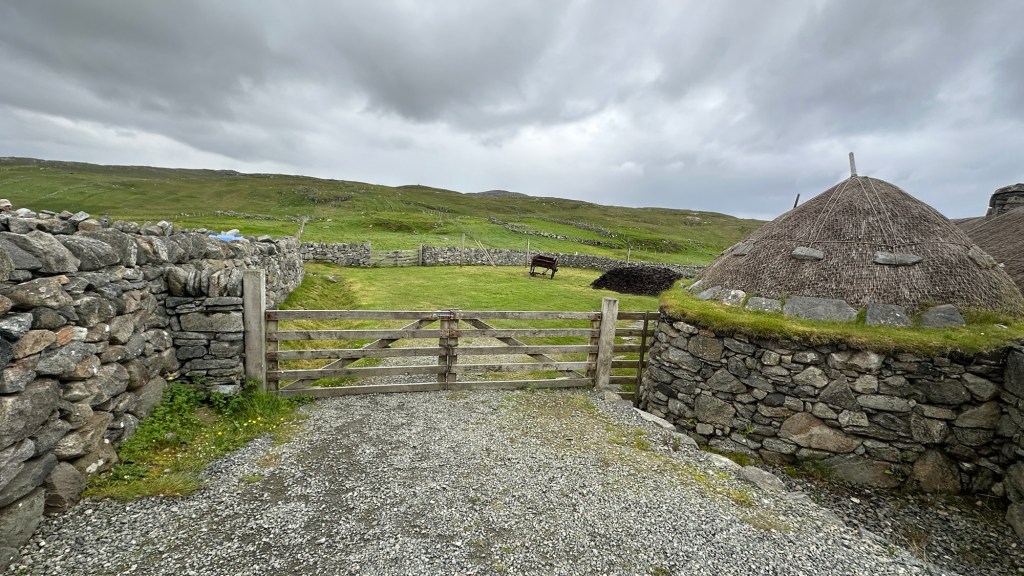
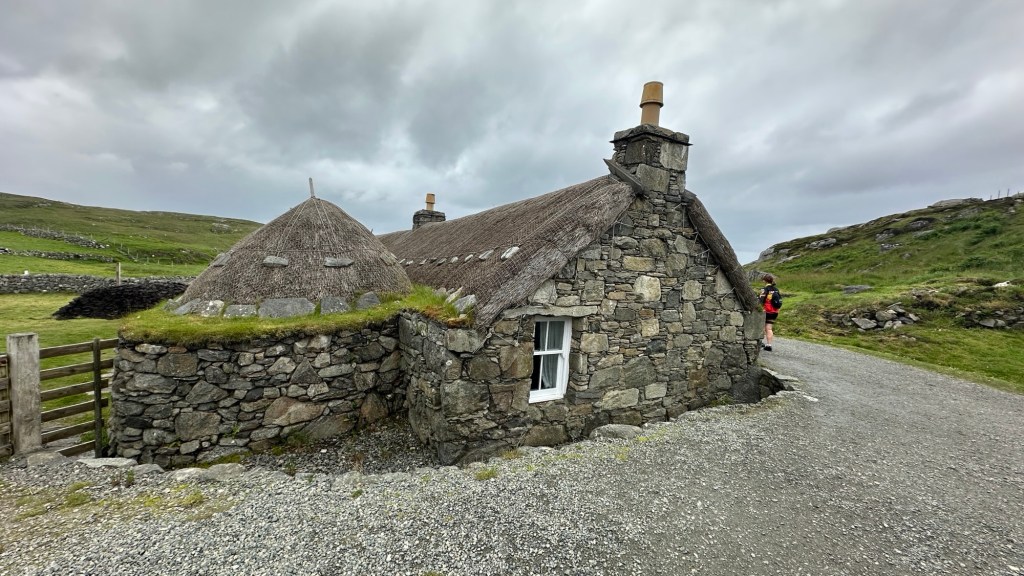
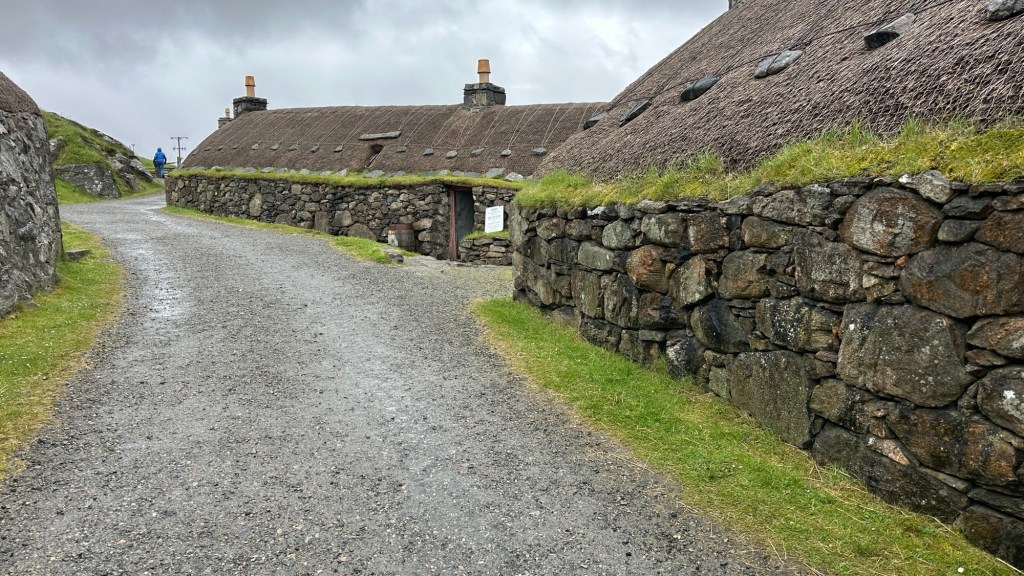
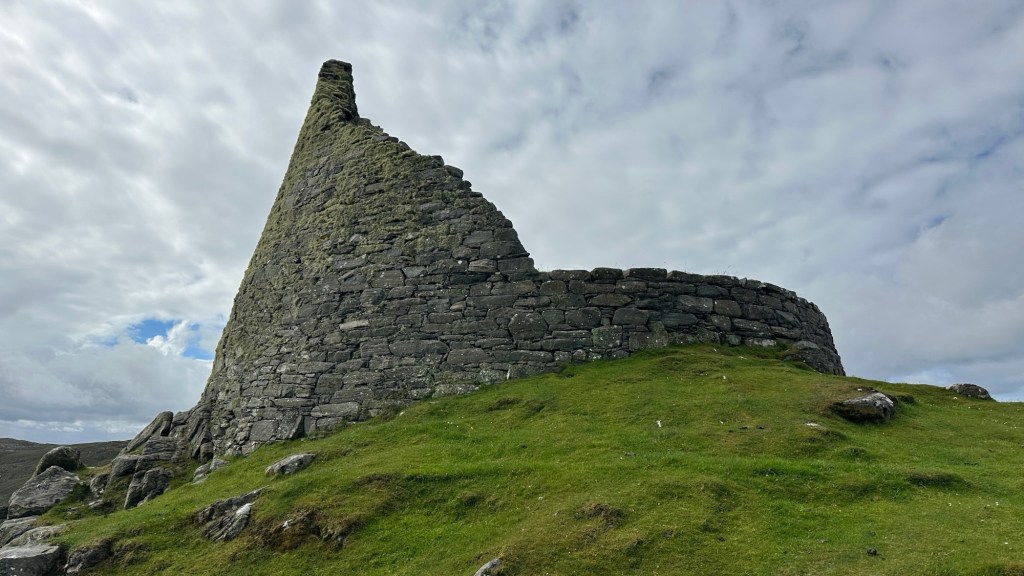
Later, we walked up a tall hill and visited the “broch” Dun Carloway
“The broch was probably constructed about 200 BC. Broch-building ceased around AD 100, but they may have continued in use. Evidence from excavations suggests Dun Carloway may have been used until about AD 1000. It’s also said to have been used as a stronghold by members of the Morrison Clan during the 1500s.” Source wikipedia.
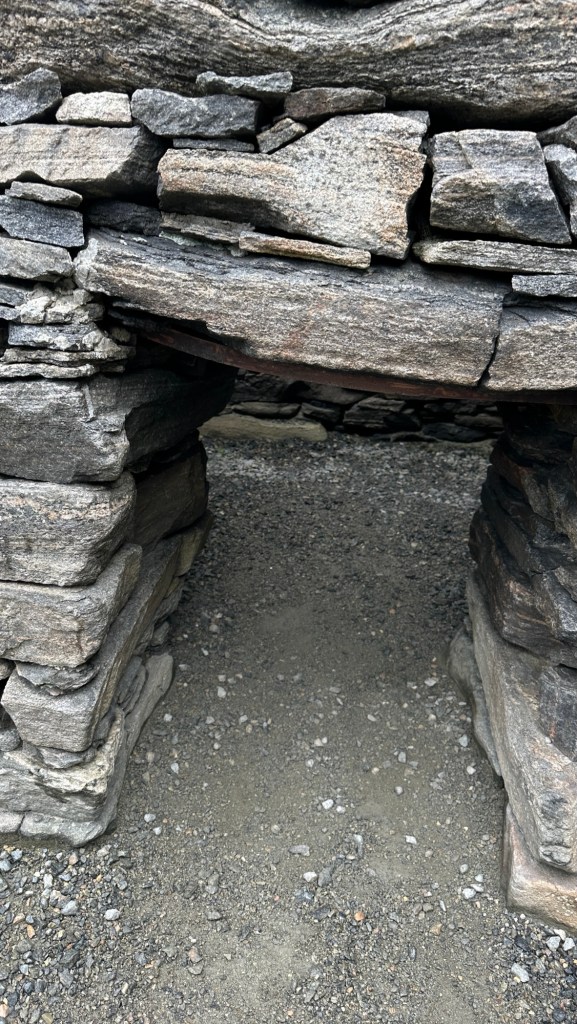
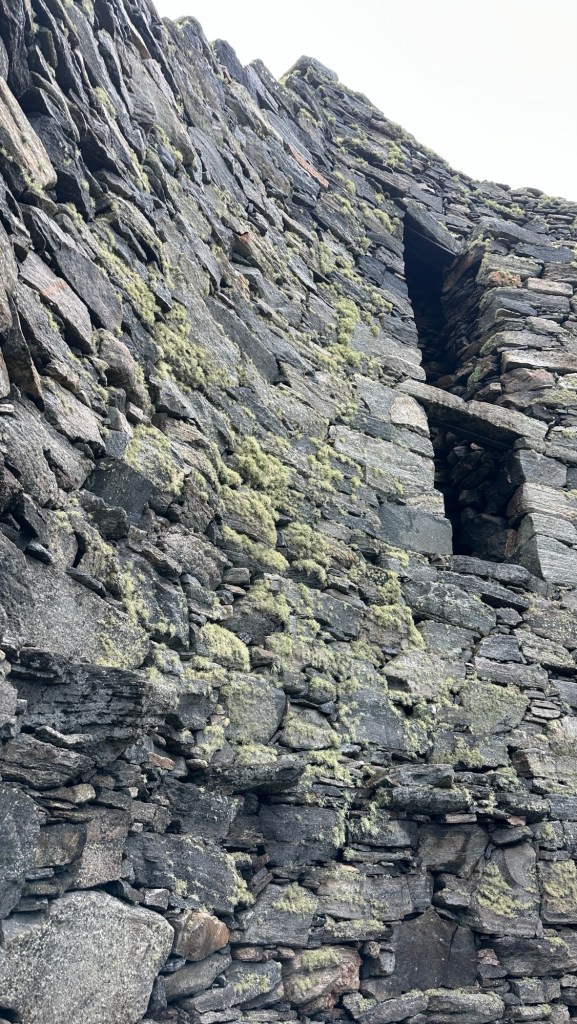
Walls were very thick to withstand the strong winds, doors were short, and the structure had evidence of previous multiple levels, likely separated by wooden floors. Stairs were still standing.
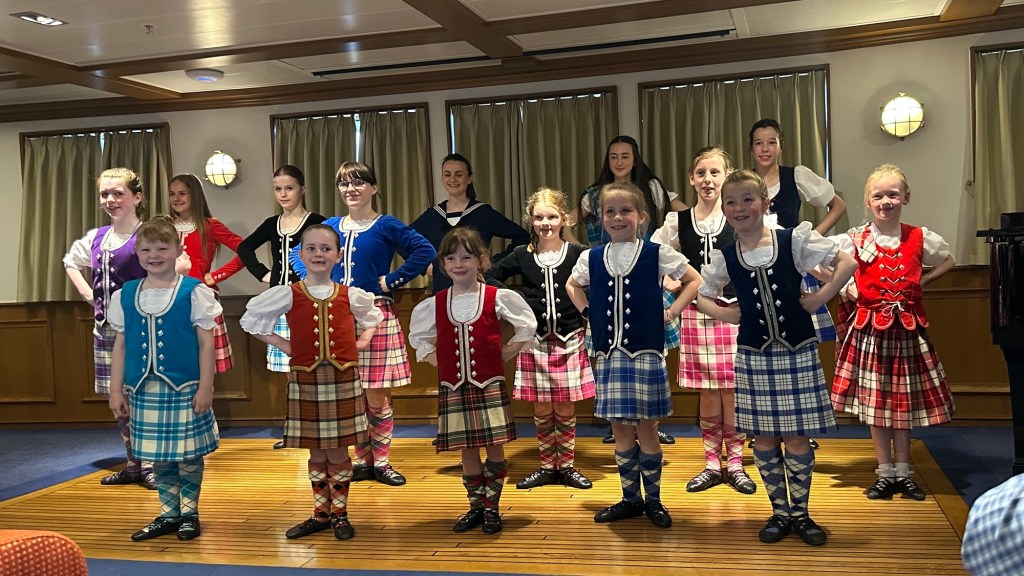
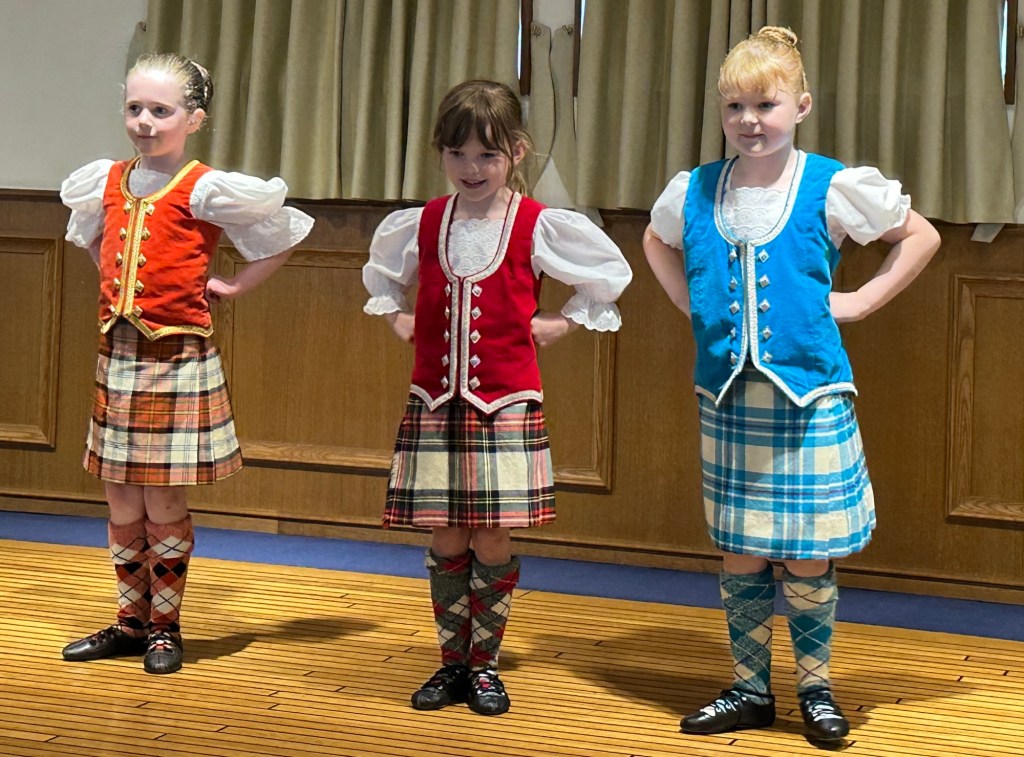
In the late afternoon, we were entertained on board by a Scottish dancing group, all girls ranging in age from about 5 to 17, who competed in Highland dance contests. They wore soft shoes, Highland Ghillies, allowing the girls to dance on the balls of their feet. They were so charming, and really enjoyed performing for us. I was quite taken with the little brown-haired girl in red!
Thursday, June 18
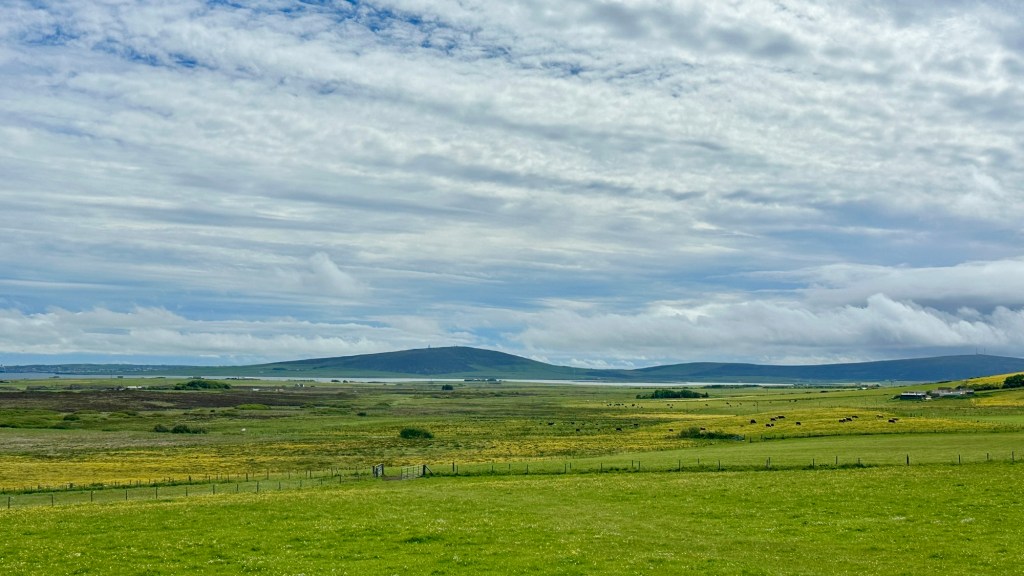
We had again traveled overnight and docked early in the morning in West Mainland, Orkney Island. The Orkneys are an archipelago of over 70 islands in Northern Scotland, best known for its neolithic ruins.
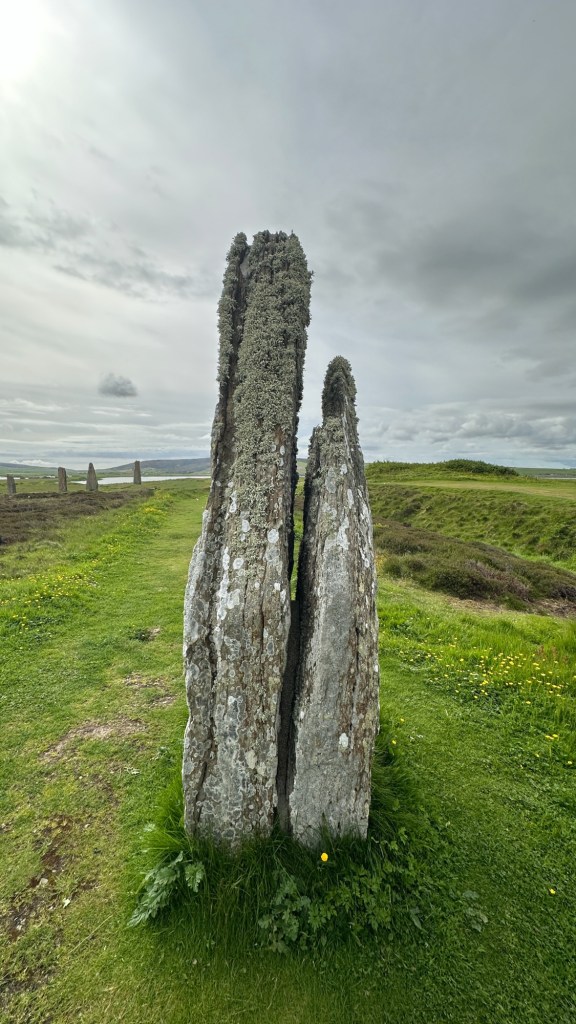
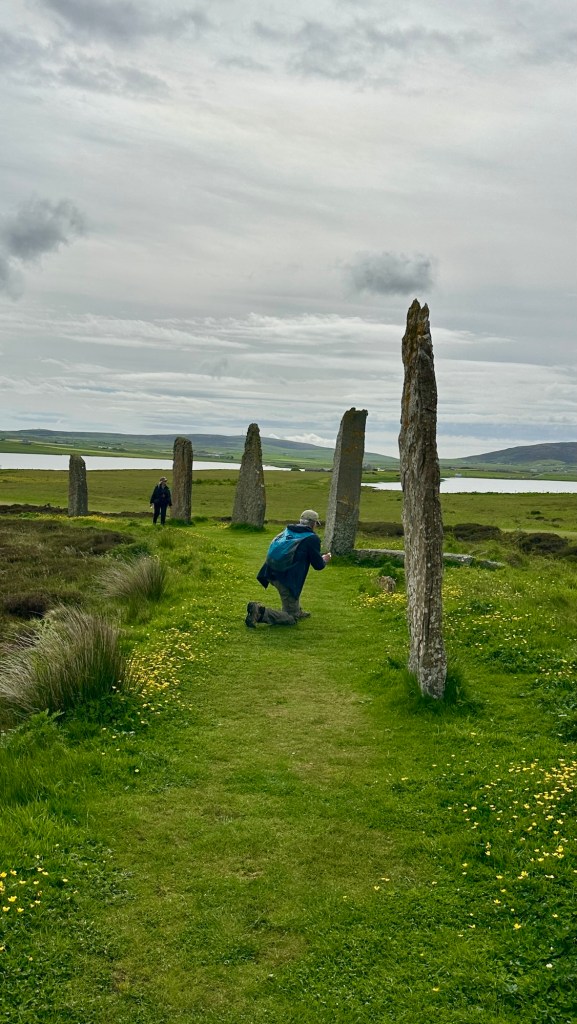
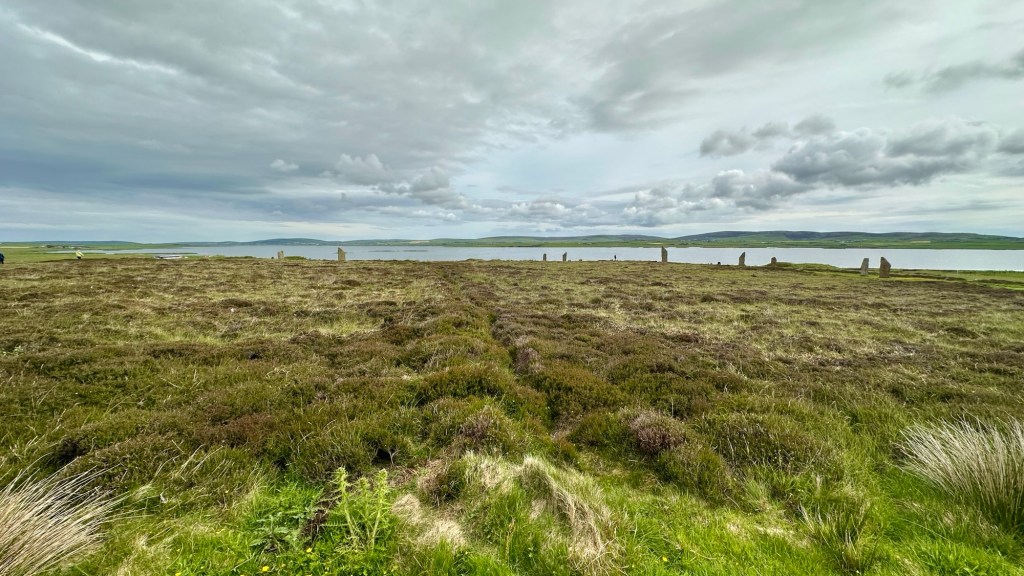
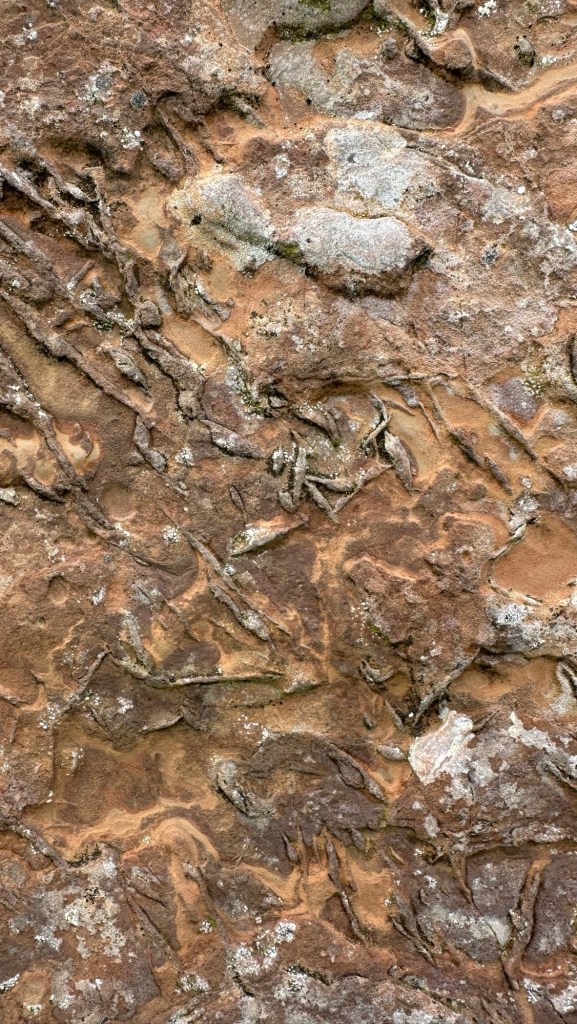
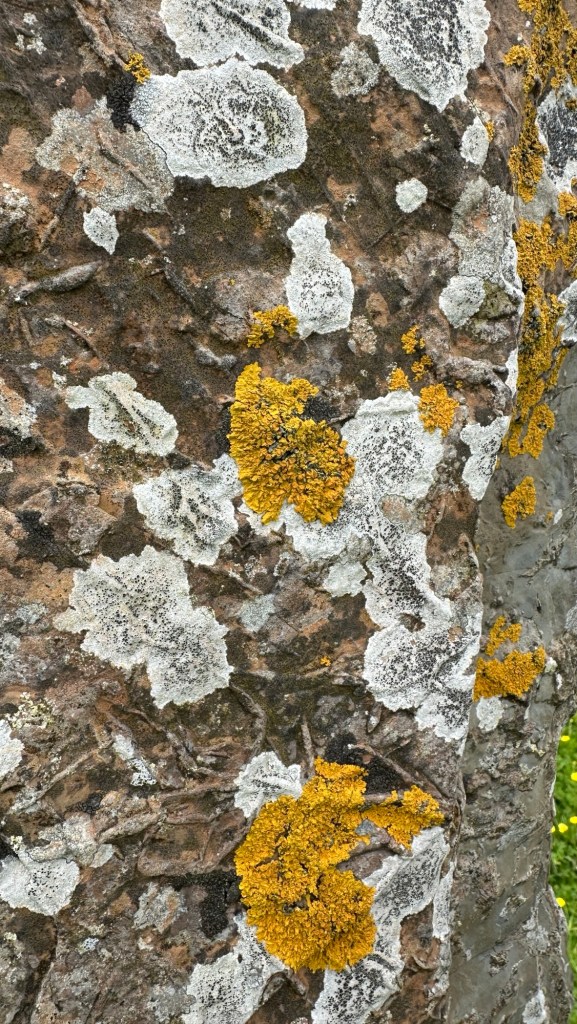
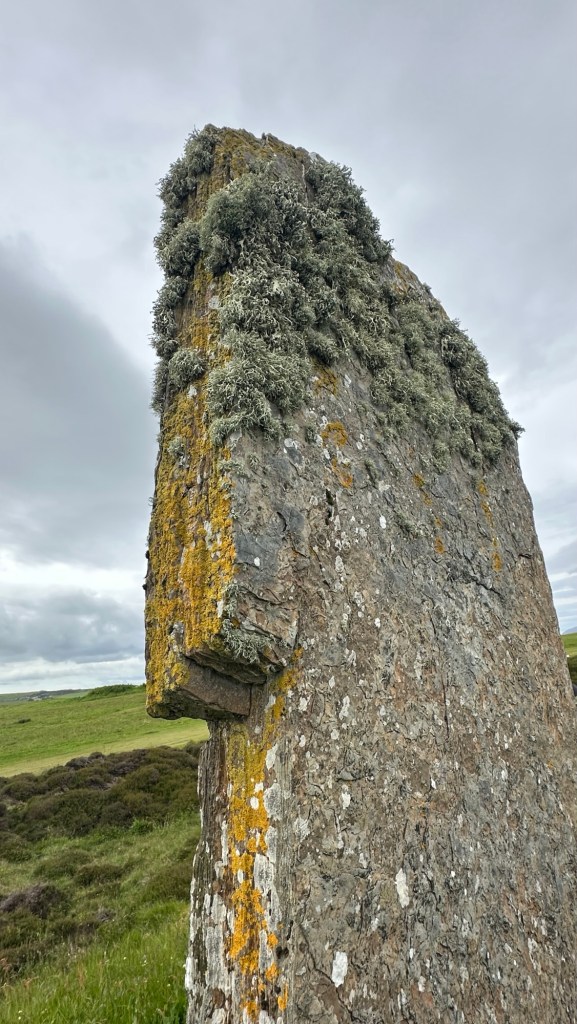
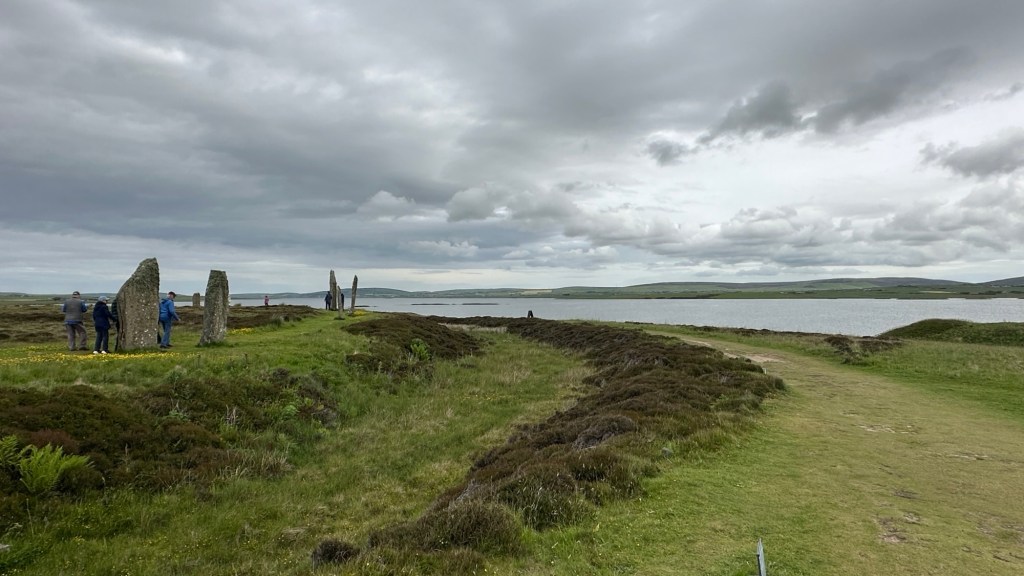
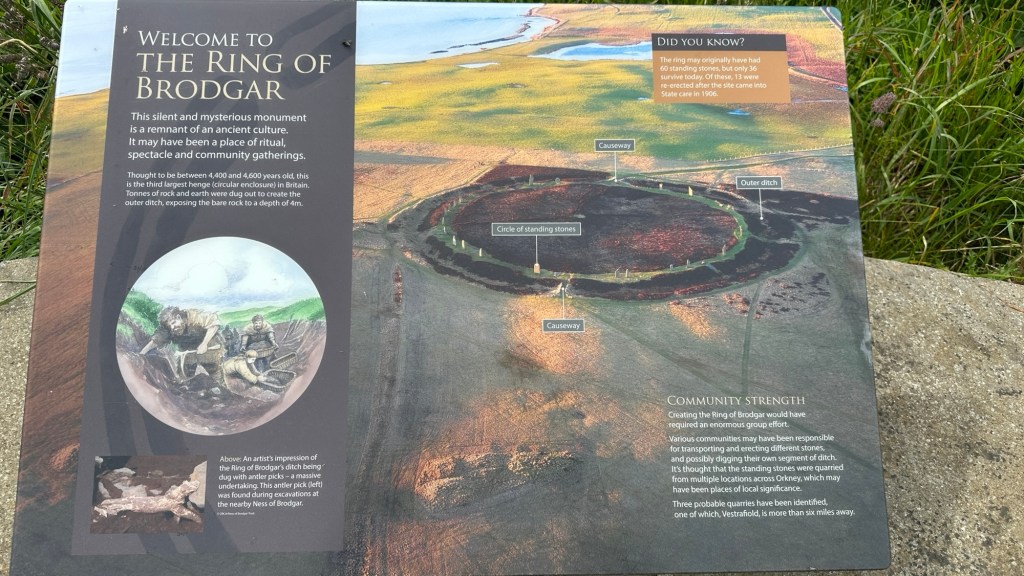
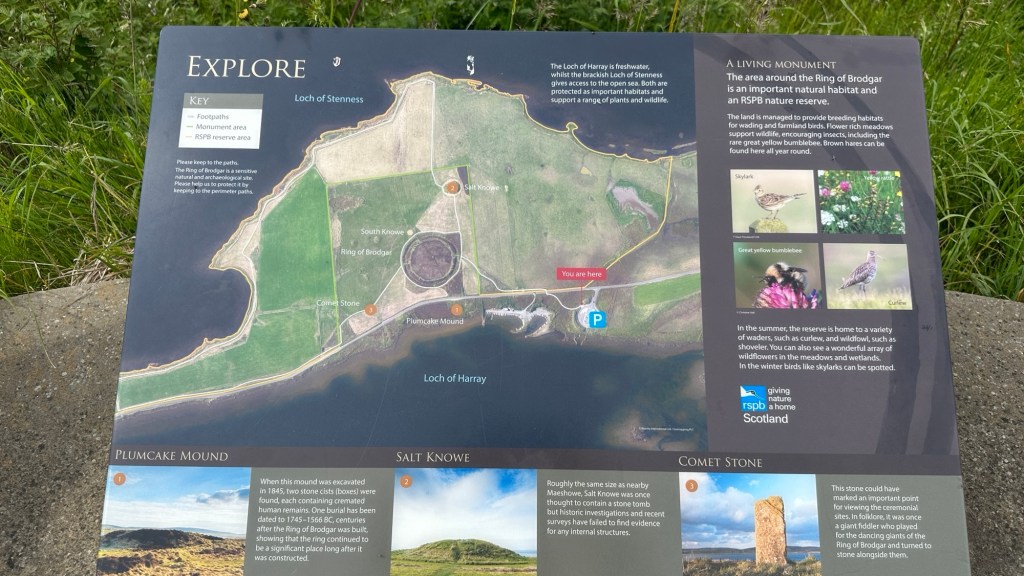
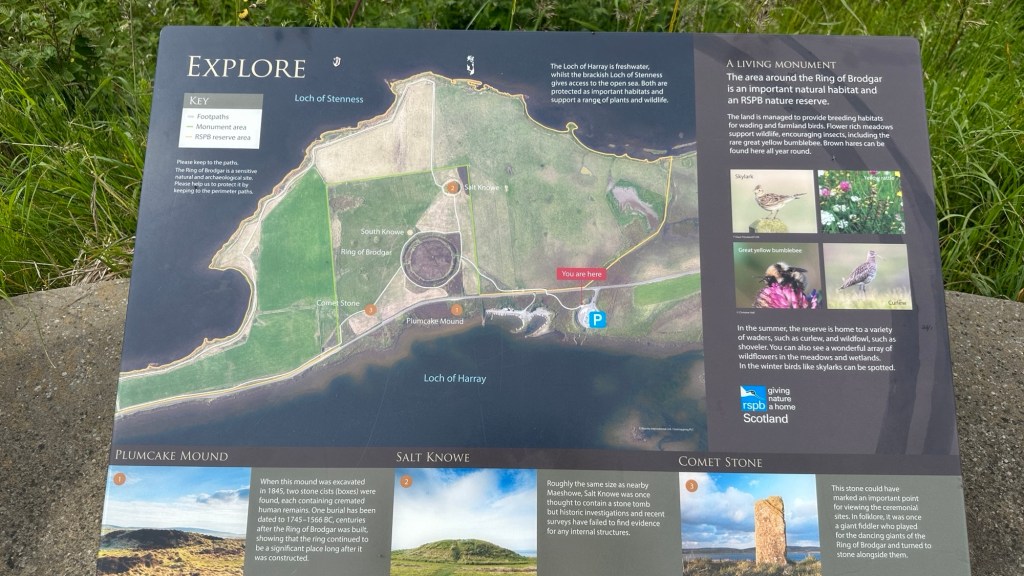
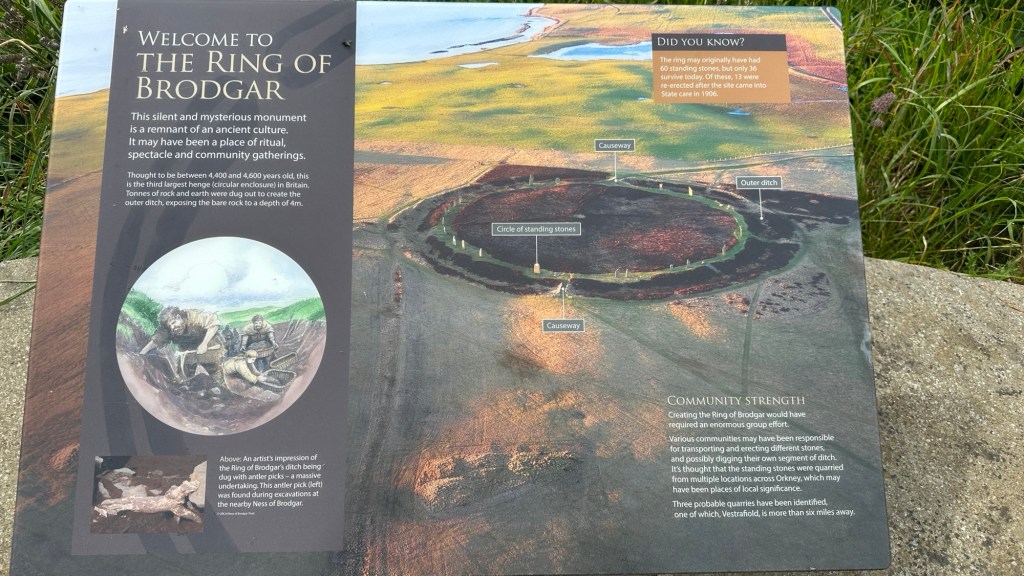
We visited the Ring of Brogdar, the third largest stone circle in the British Isles, with 36 remaining of the original 60 stones. It is surrounded by a ditch, as well as prehistoric burial grounds. It was built between 2500 and 2000 B.C. Similar to the stone circle on the Isle of Lewis, the stones had been locally quarried, and the seaside setting is stunning. Later along our drive we saw the Ring of Stennes, with only 4 remaining stones of the original 12.
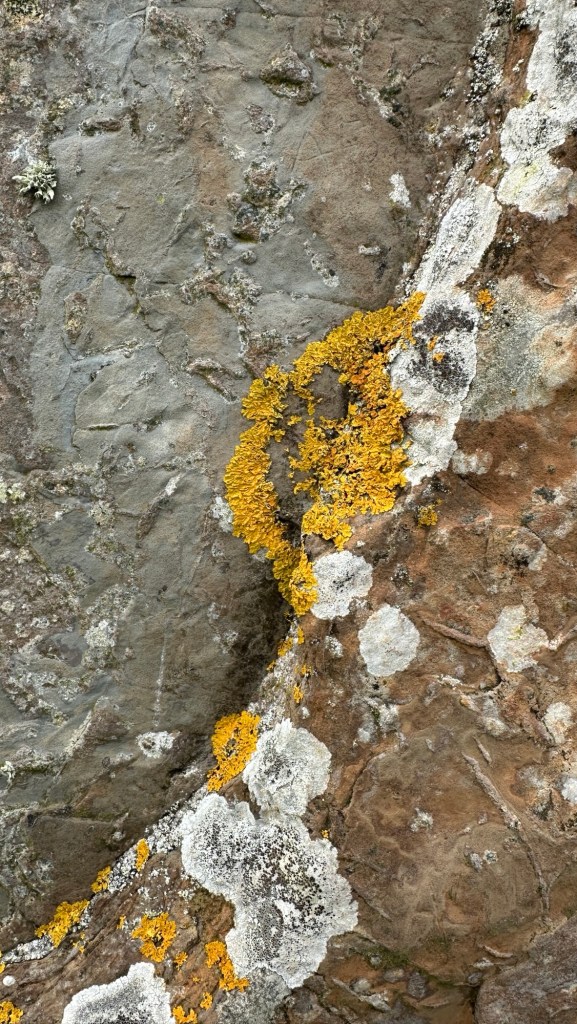
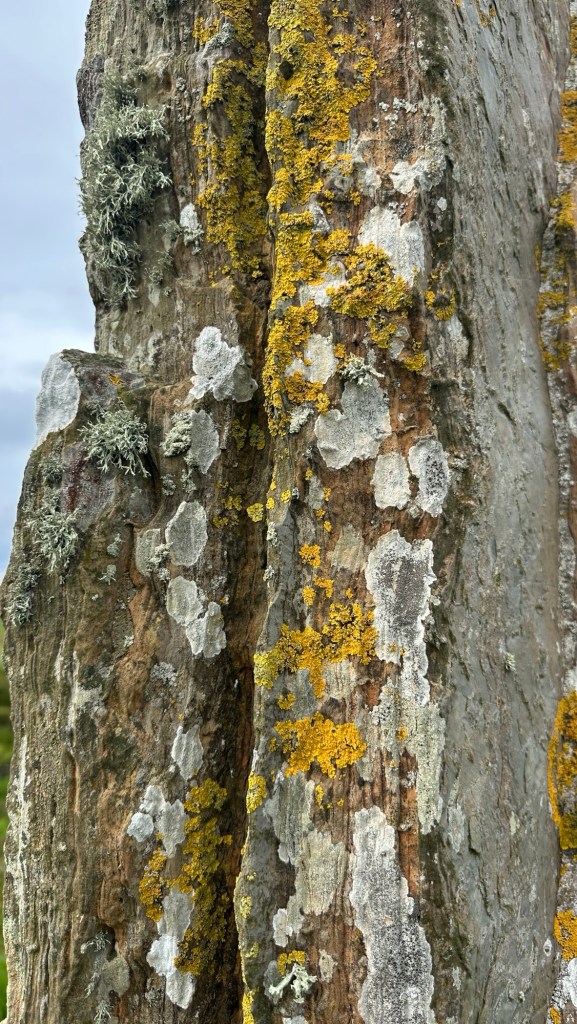
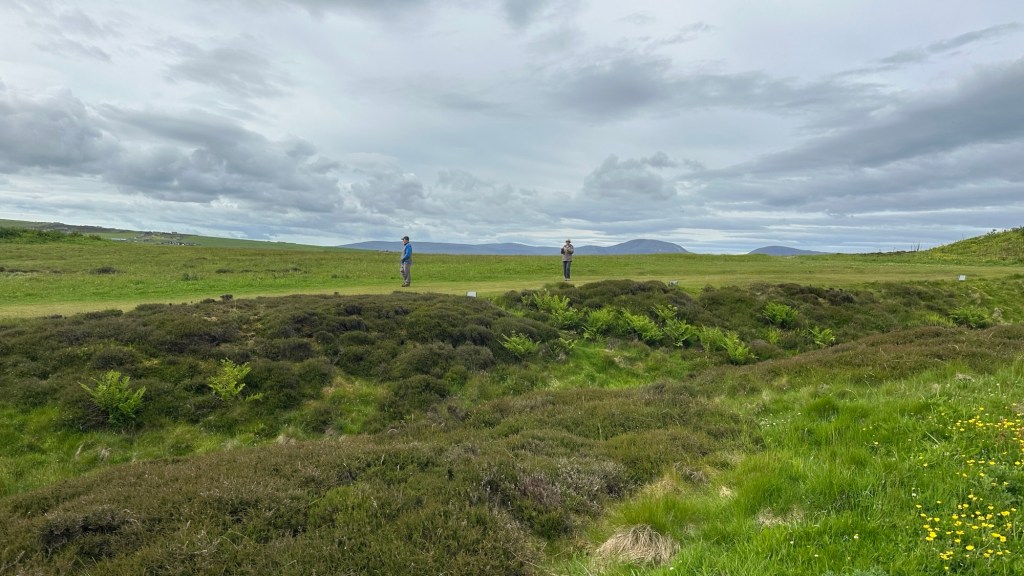
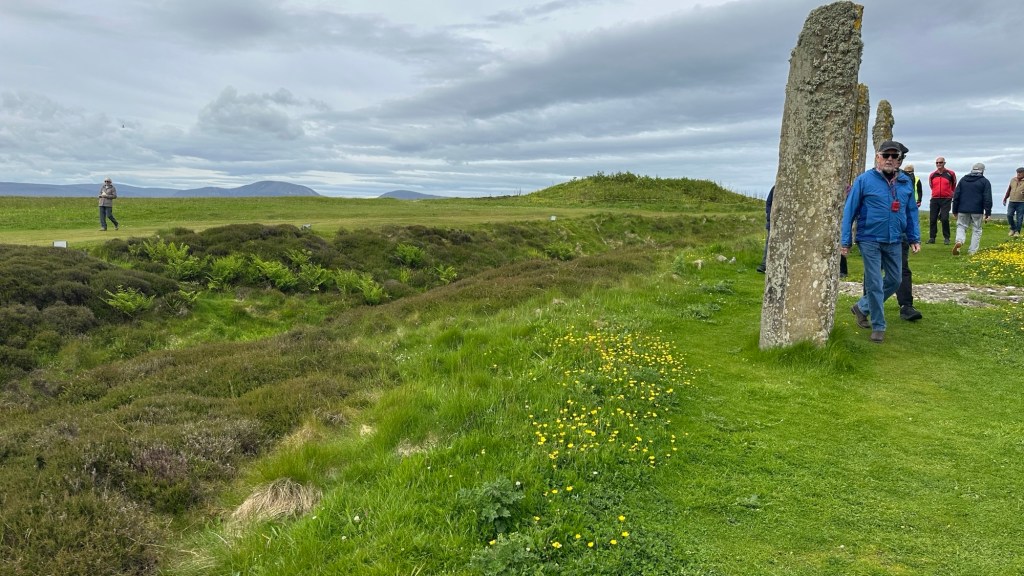
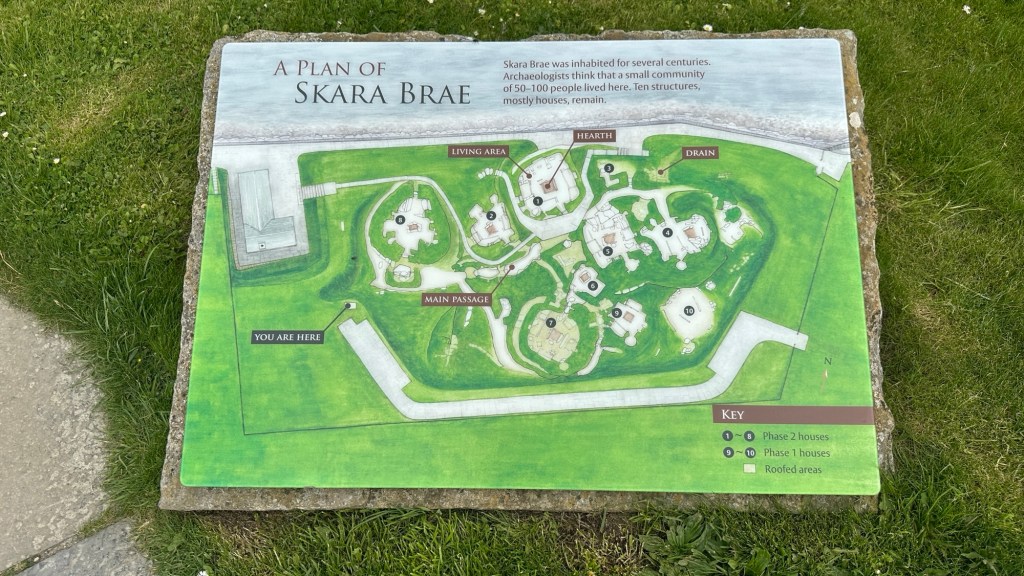
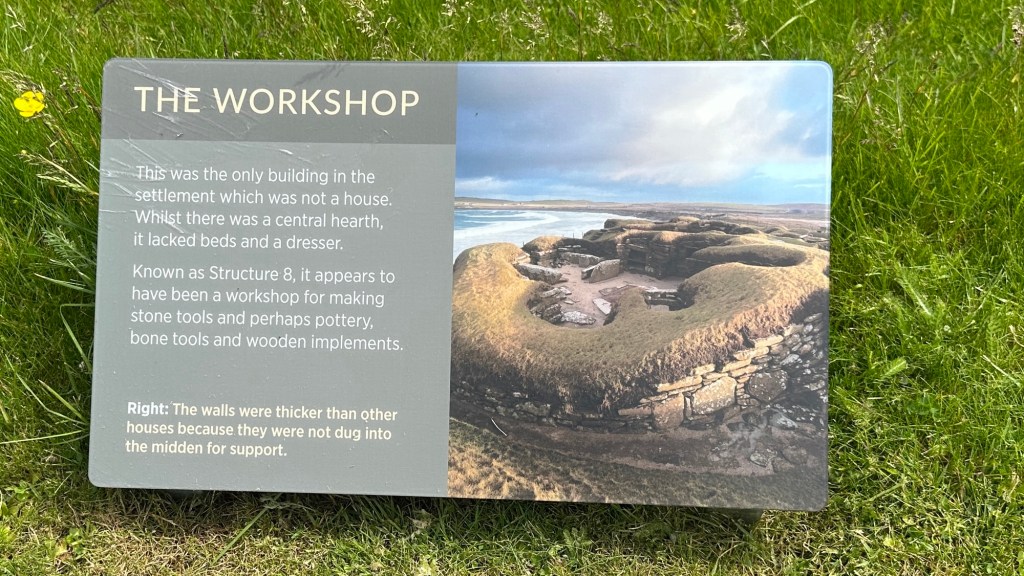
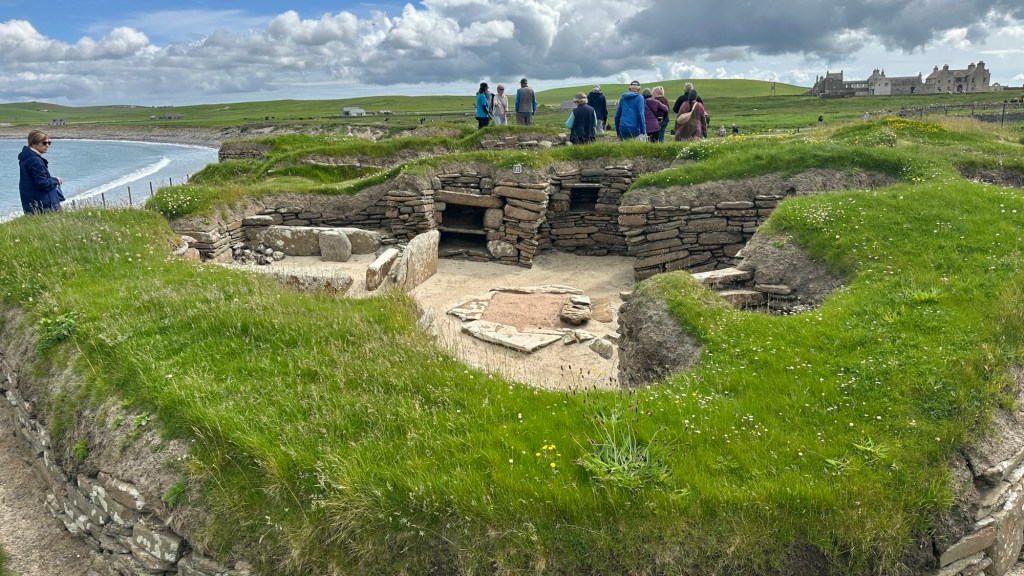
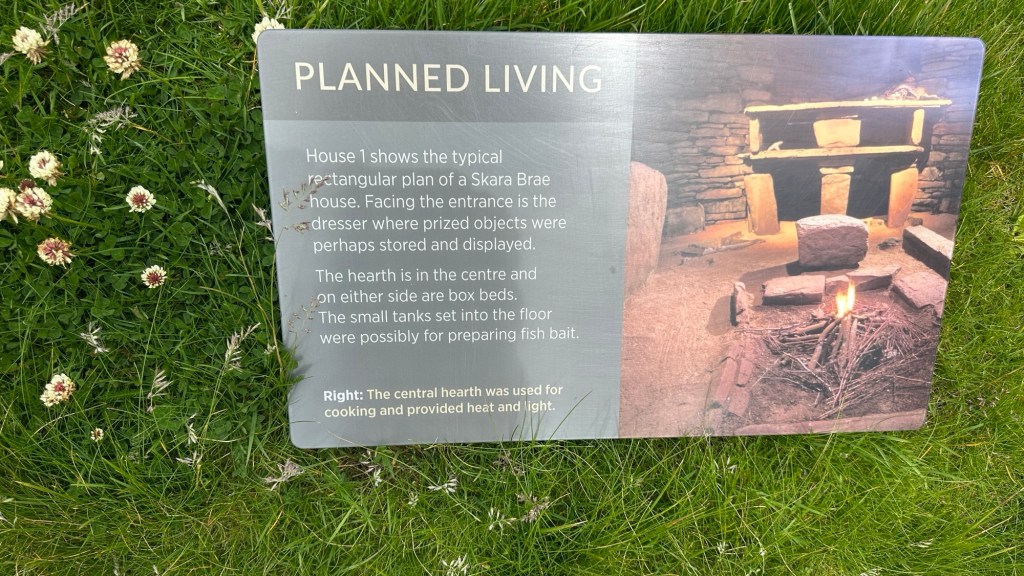
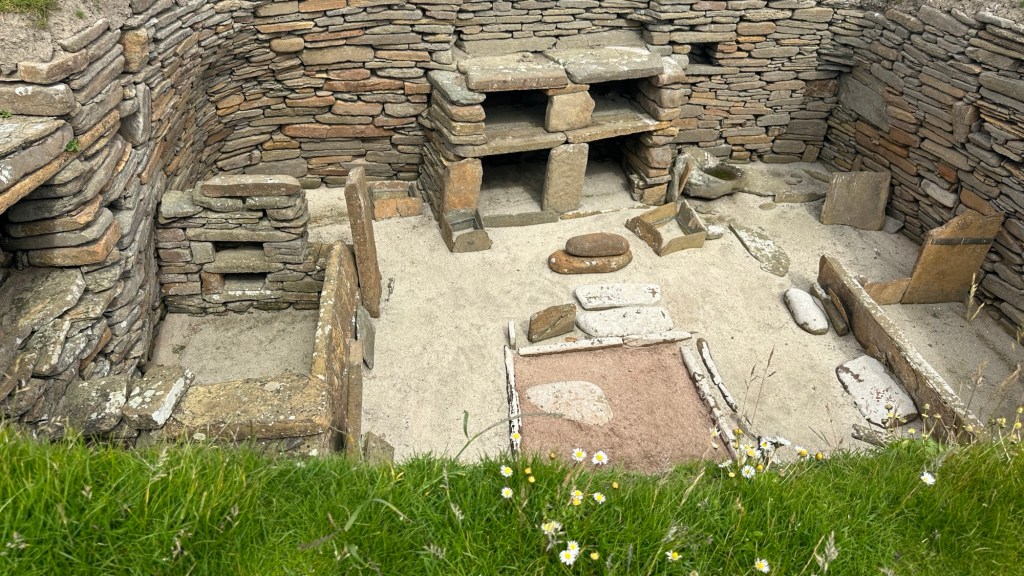
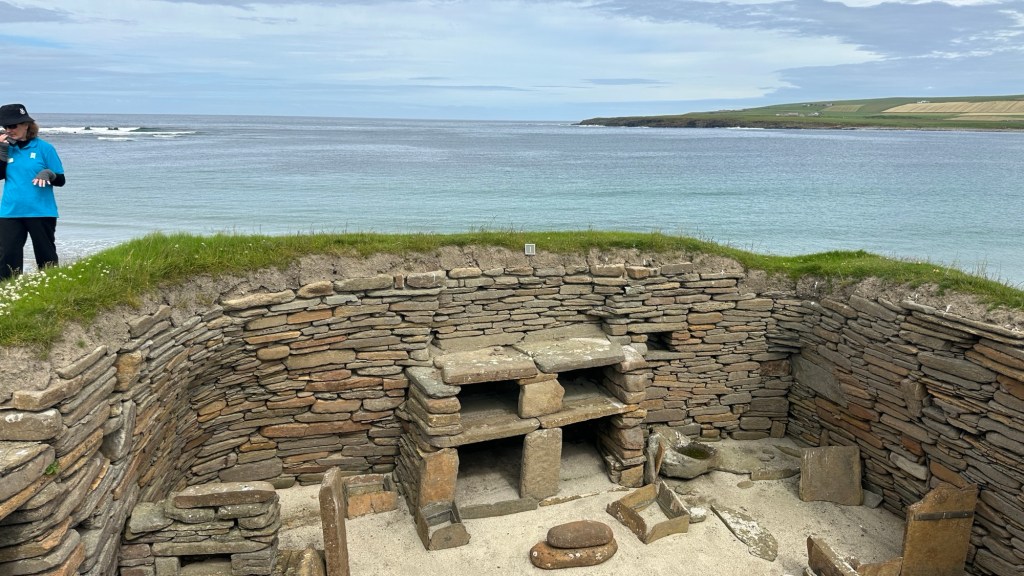
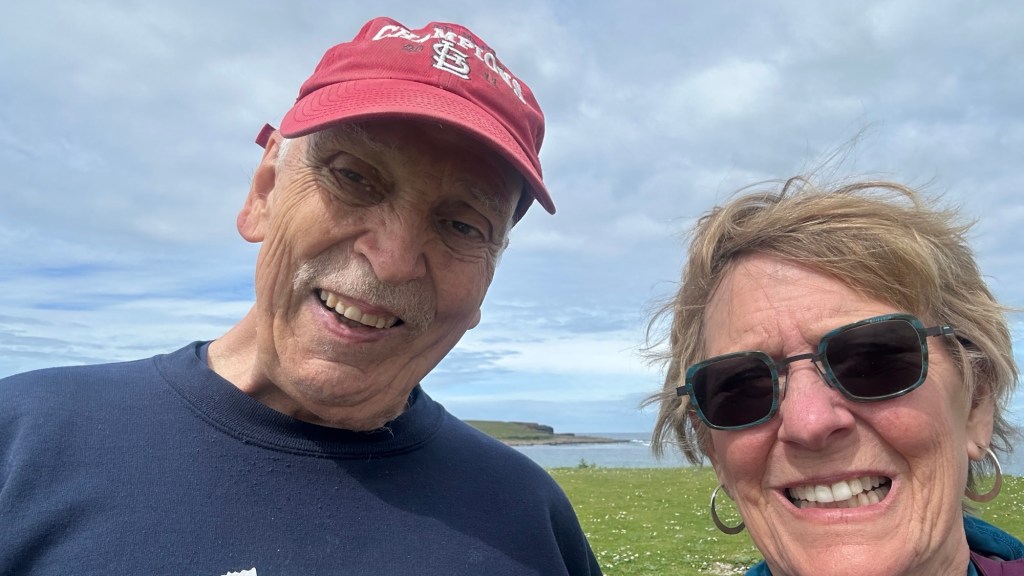
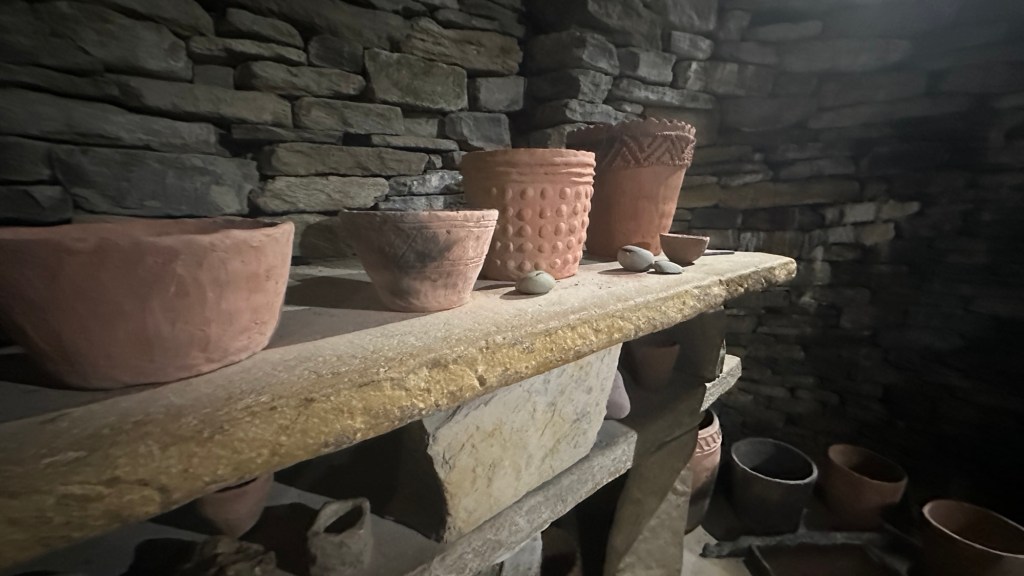
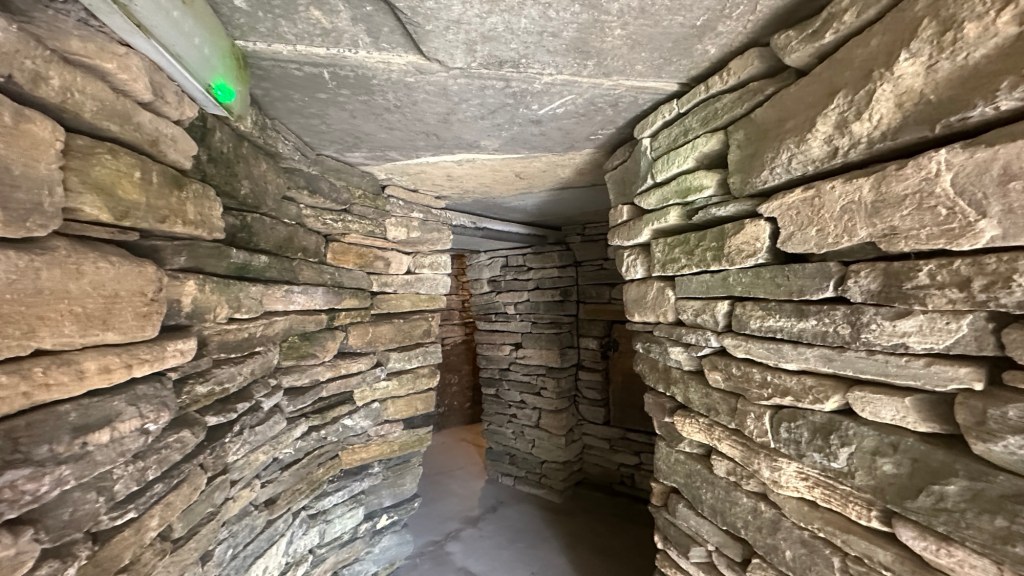
We then visited Skara Brea, a Neolithic village established around 3,000 BC. This makes the village older than Stonehenge and the pyramids of Giza. It was discovered in 1850 after a storm washed much of the shoreline away. We walked around remains of homes (with stone bed boxes, shelves, and a fire pit), pathways/tunnels connecting homes, and the village workshop. There was also a reconstructed building to walk through to get a feel for life in the settlement.
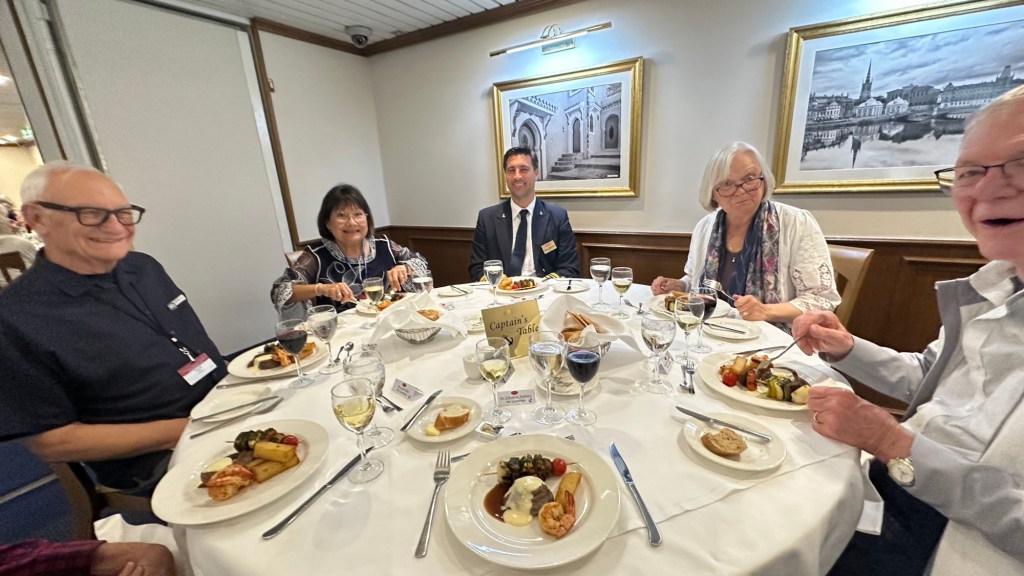
We had our farewell dinner (one night before our last night on board), and we sat with the captain and some other interesting guests.
Friday, June 19
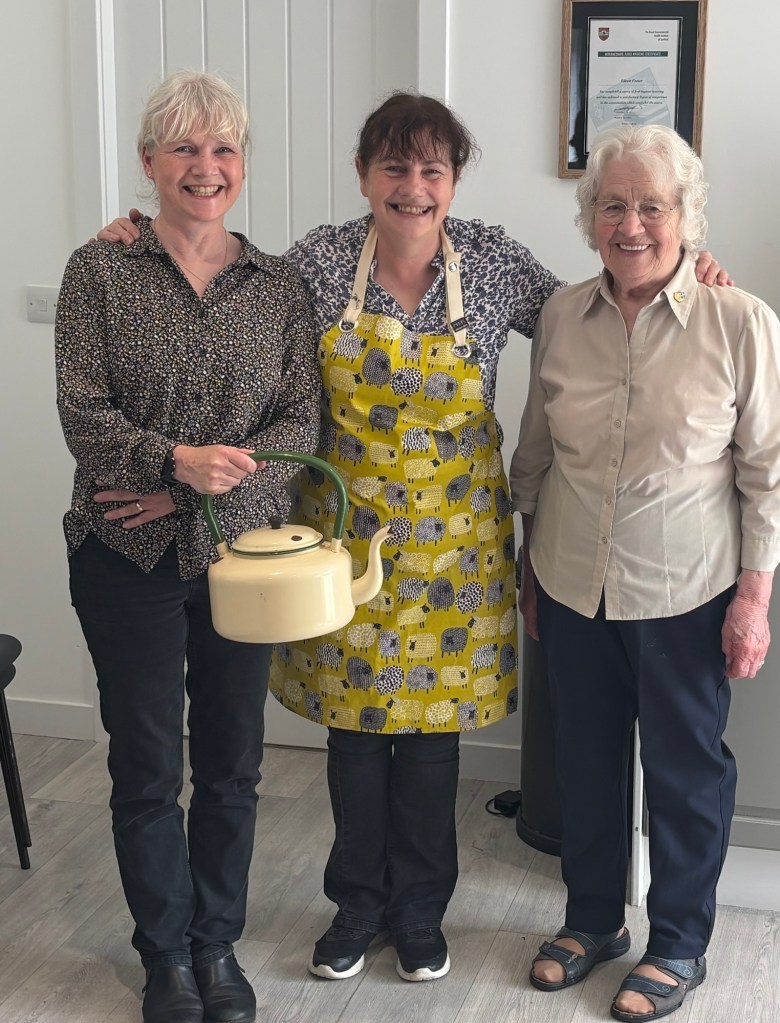
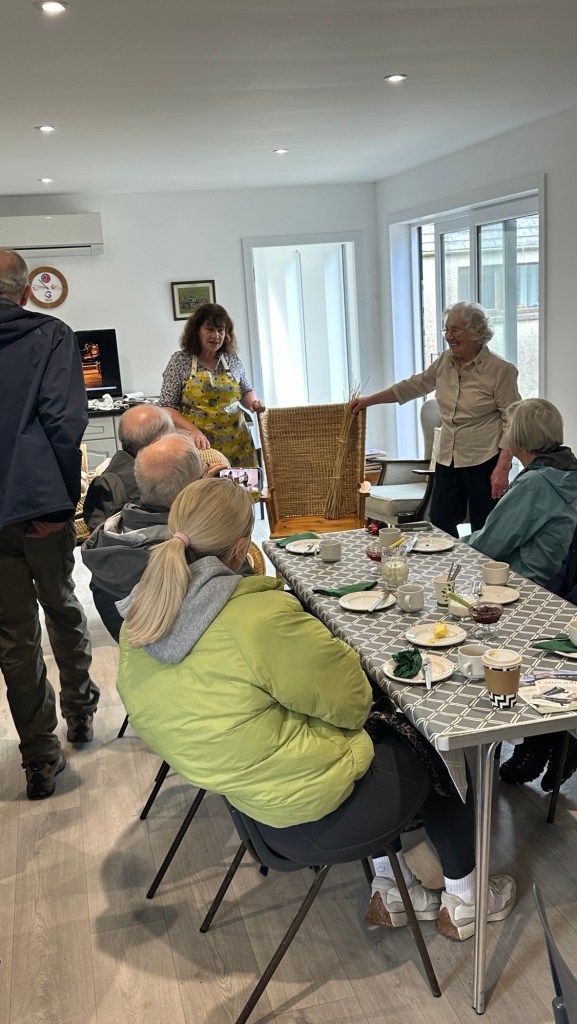
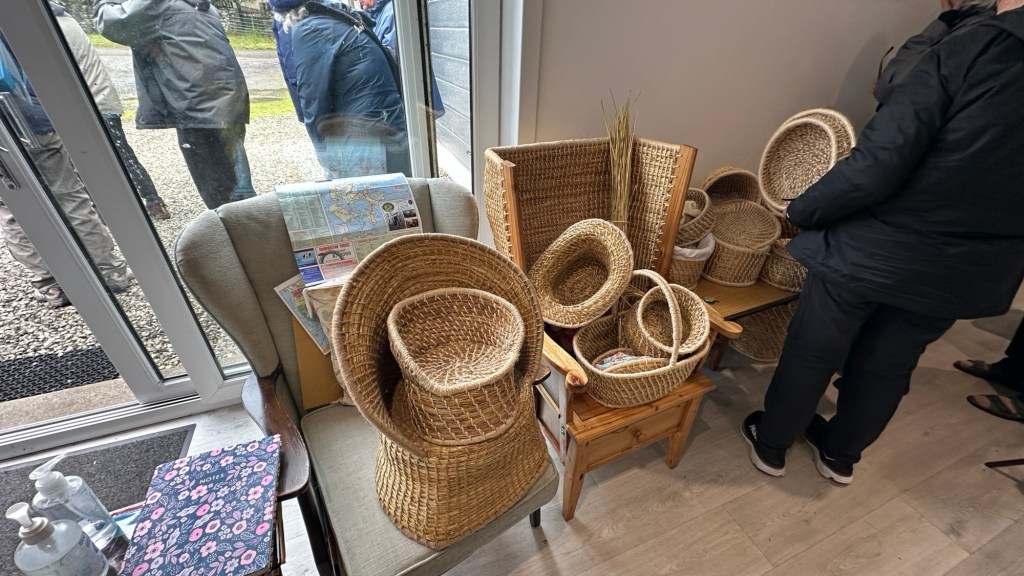
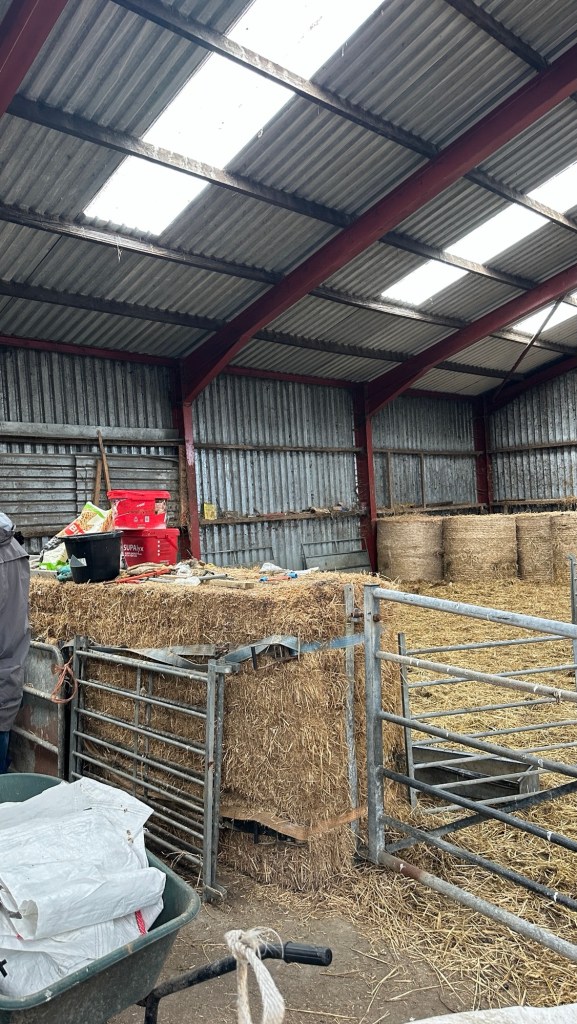
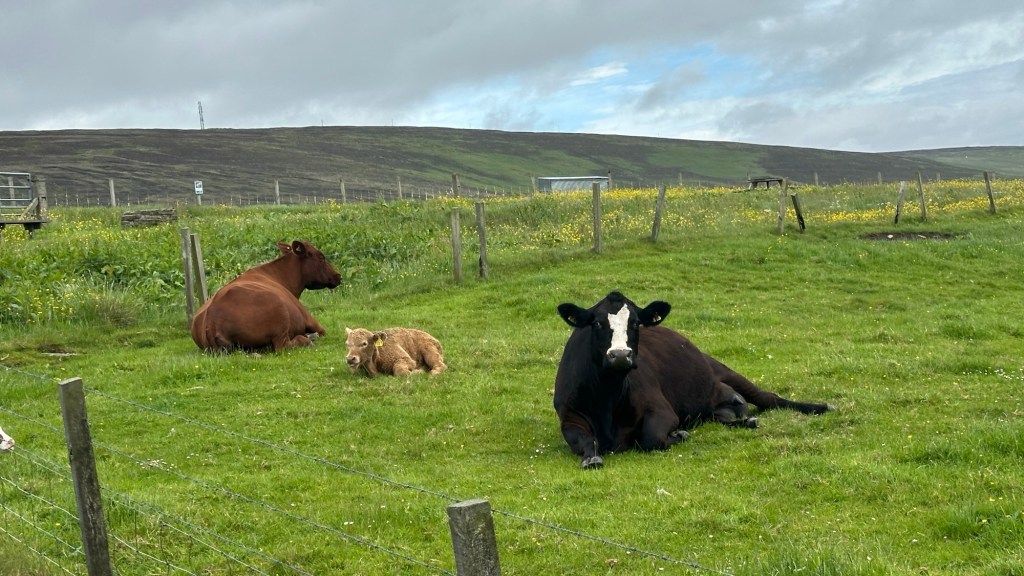
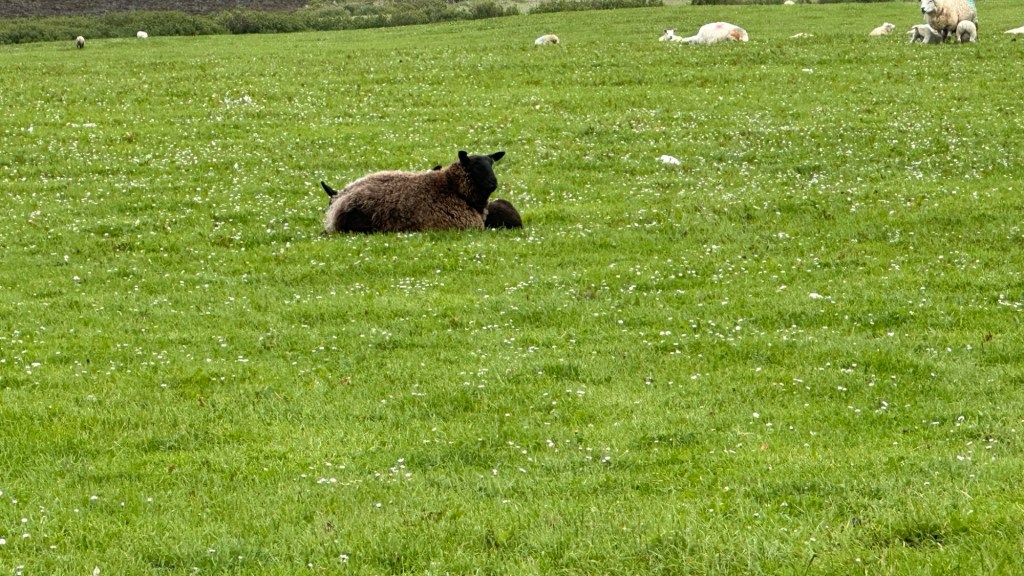
This was our “day in the life,” another beloved feature of OAT trips. We spent all morning with a local Ortney couple, Robby and Eileen, his aunt, and a friend. They raise cattle and sheep on a large organic farm with a lovely view of the Kirkwall bay. The aunt weaves items (baskets, cradles, hats, chairs) using barley leaves, and sells everything she makes at the local market. We were served local pancakes during a morning rain shower. Once the weather cleared up, we toured the barn next to the house where the ewes give birth. There are CCT cameras overlooking the large sheep stalls so the farmer can monitor the ewes, and only get out of bed when needed for the lambing. We also visited the cow barn, where the cows stay when it is too cold to graze in the pastures. Manure falls through the floorboards into a large pit below the barn floor, keeping the floors clean. At the end of the winter, the farmer hires a service that vacuums out the pit at high speed, and spreads the manure on the barley fields.
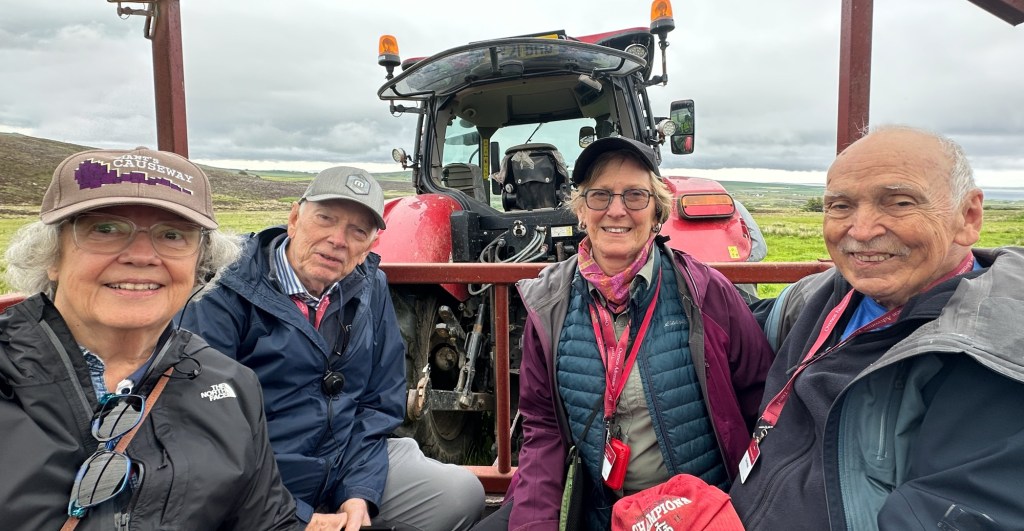
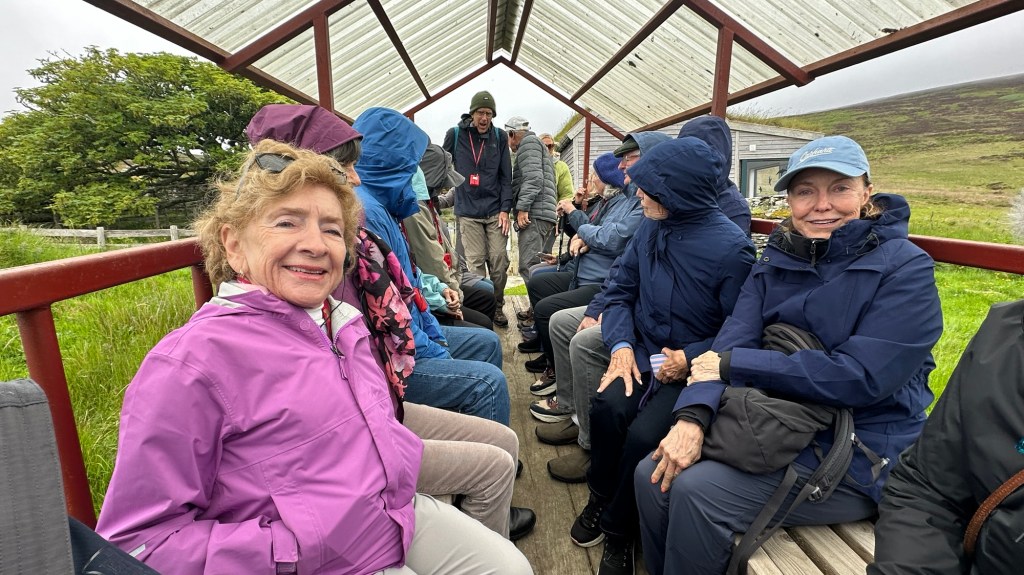
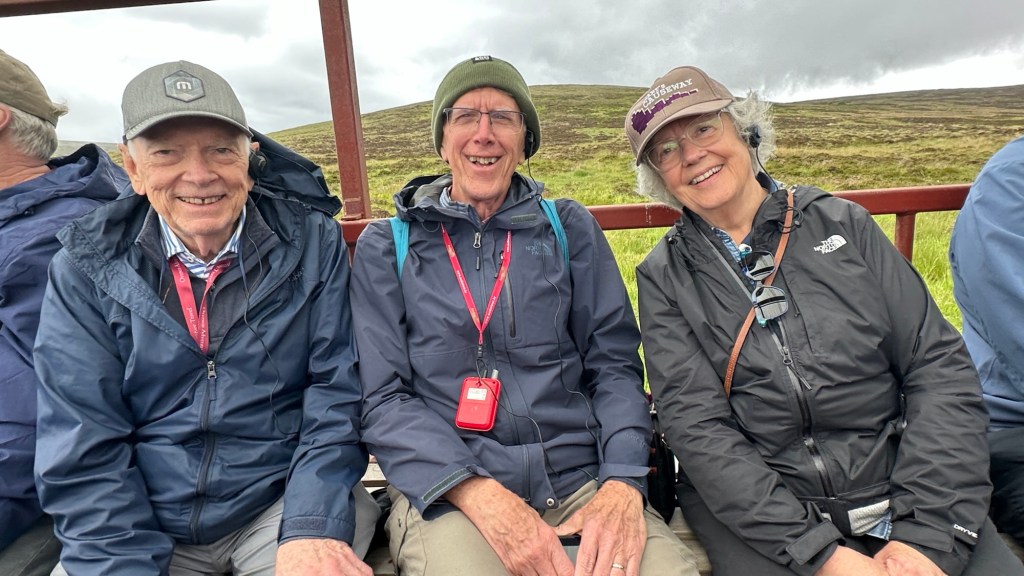
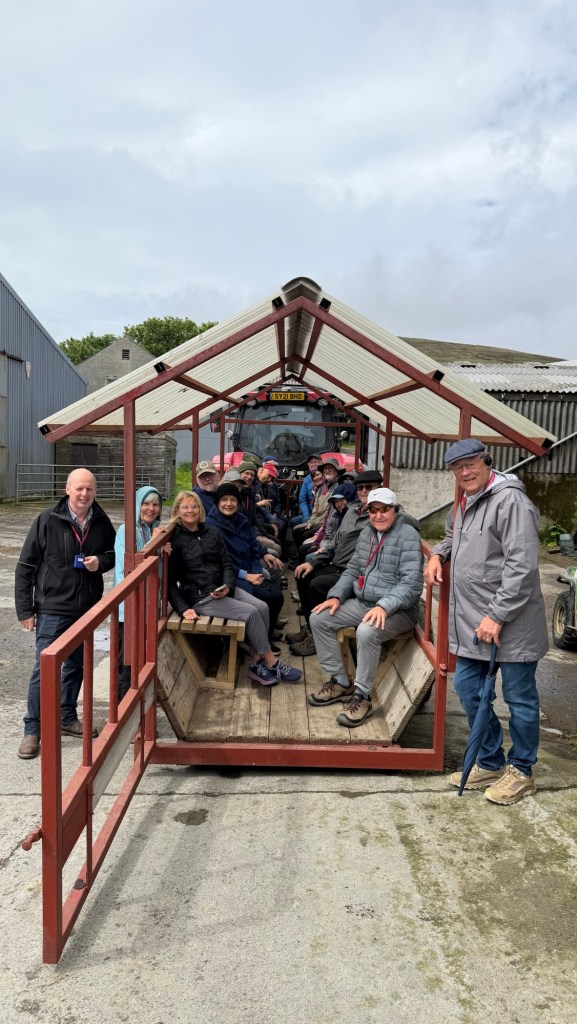
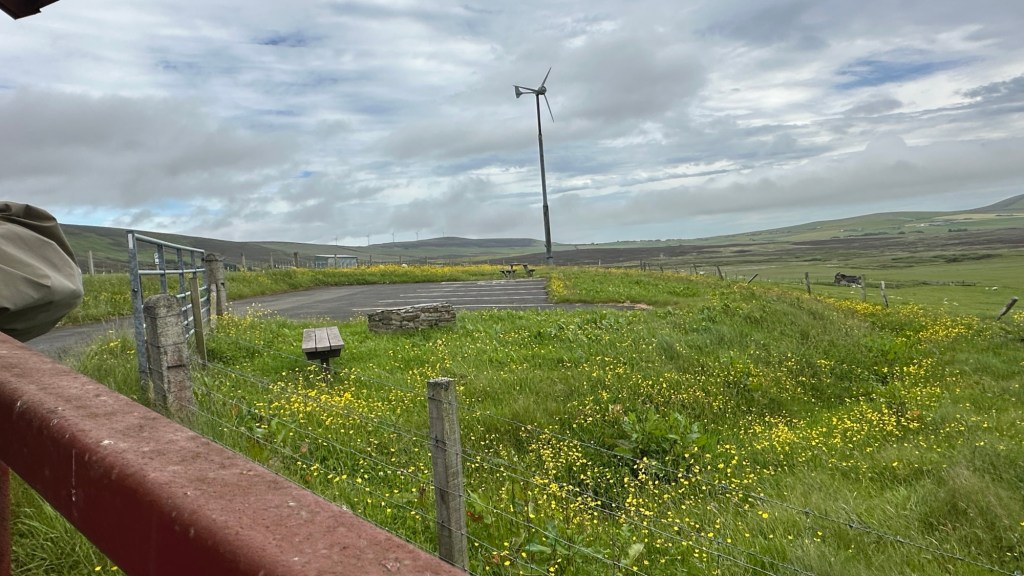
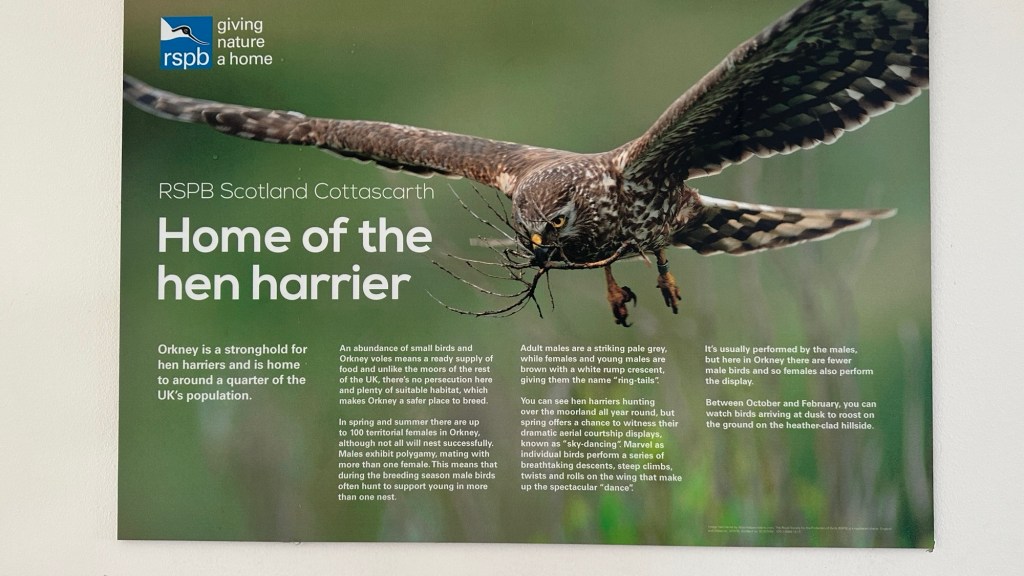
Robby took us for a ride in a trailer behind his tractor through the fields up a hill to the Royal Society for the Protection of Birds reserve. This area is a prime nesting site of the rare hen harriers.
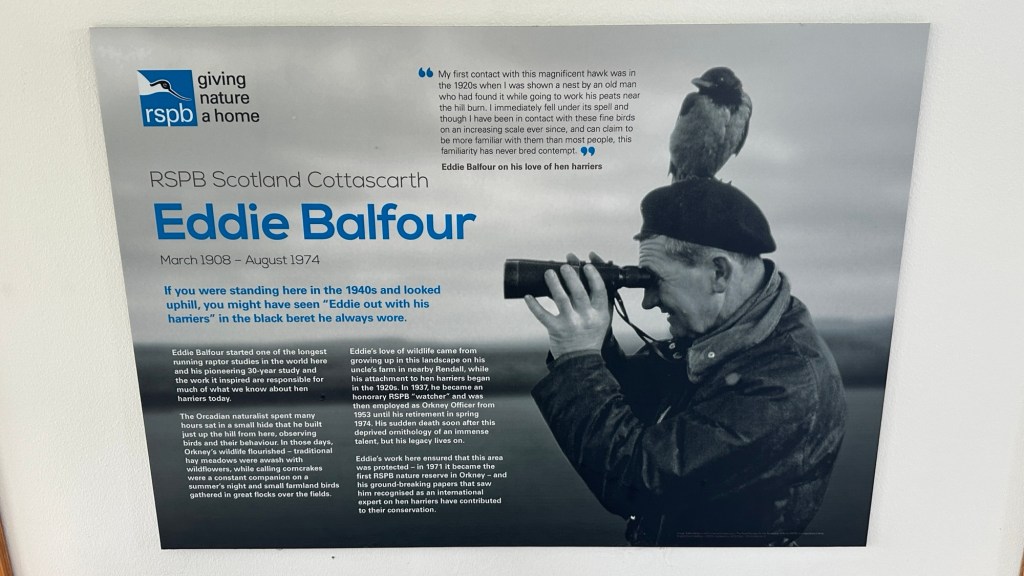
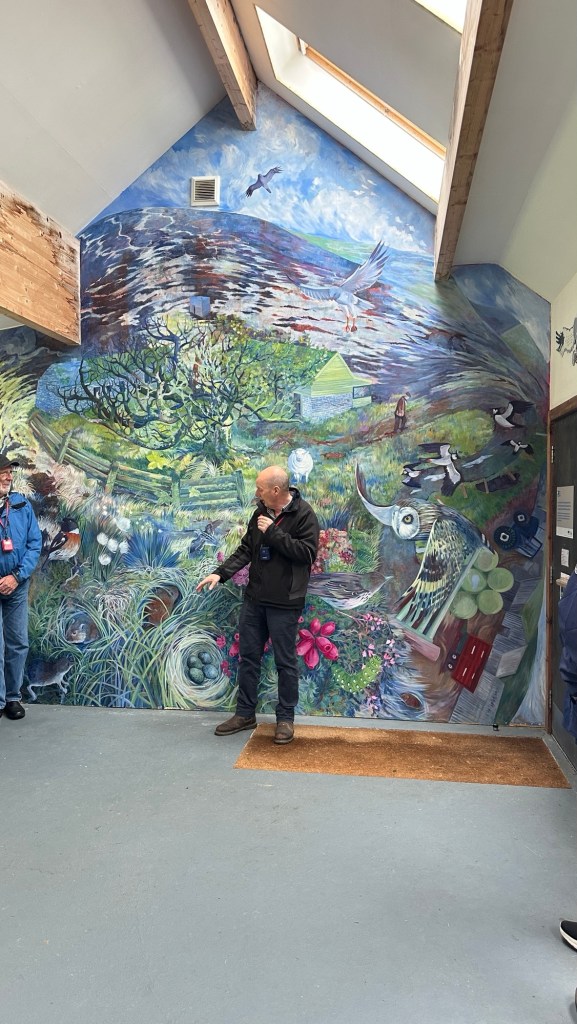
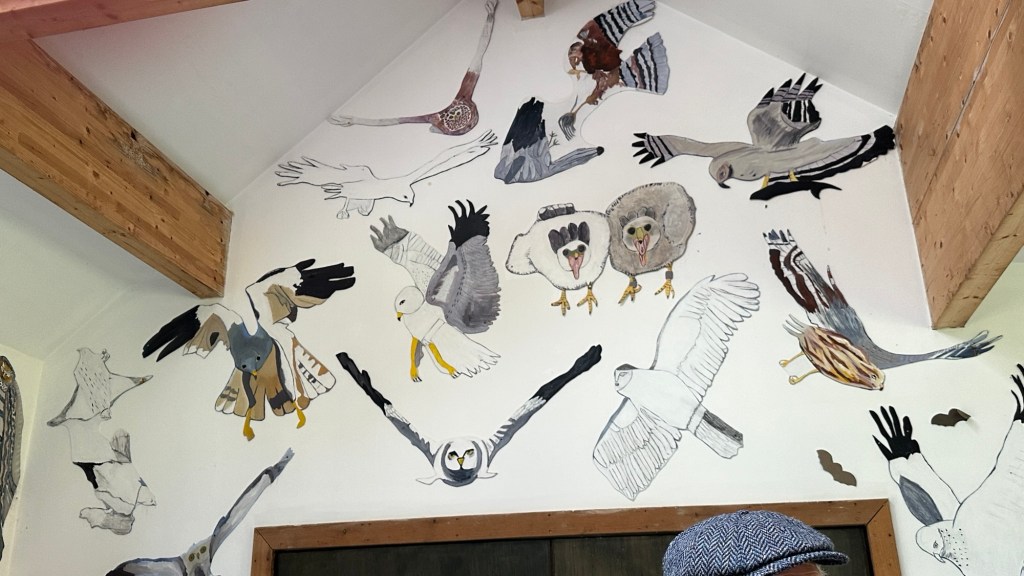
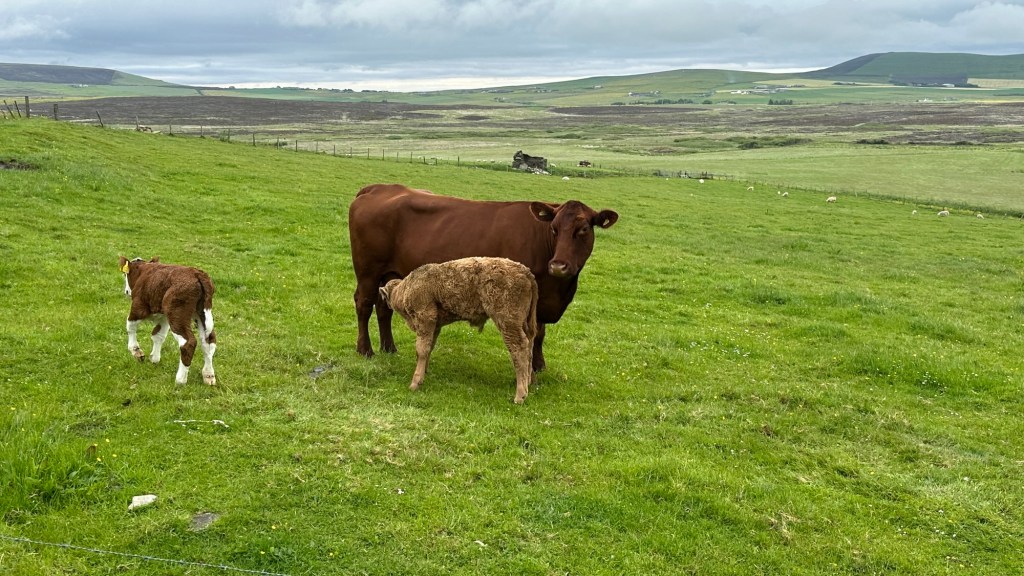
In the afternoon, we had free time to visit the village, shop for items to bring home, and start packing for our departure the next day.
Late in the afternoon we were treated to Scotch whiskey and pipers.
Saturday, Jun 20
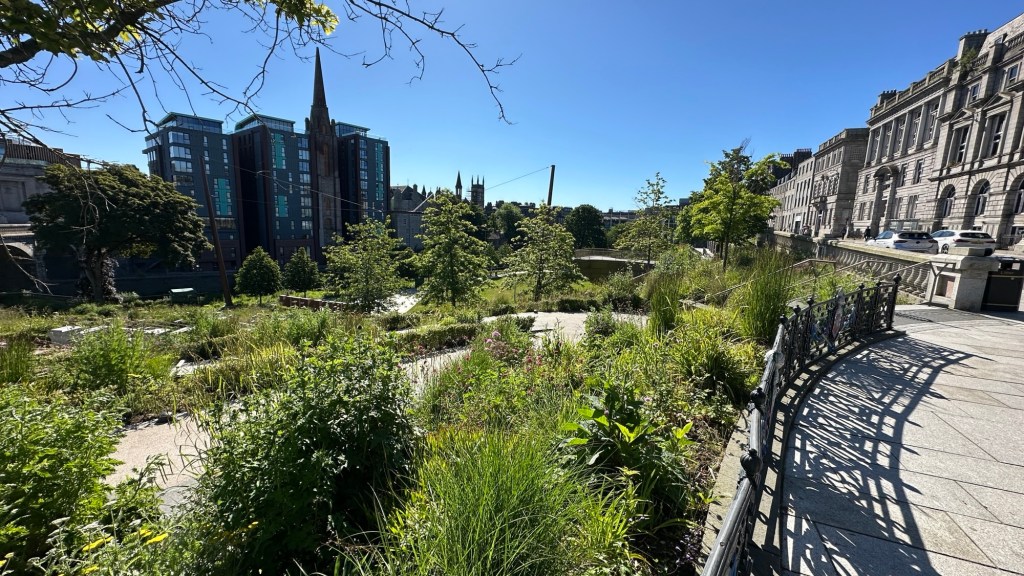
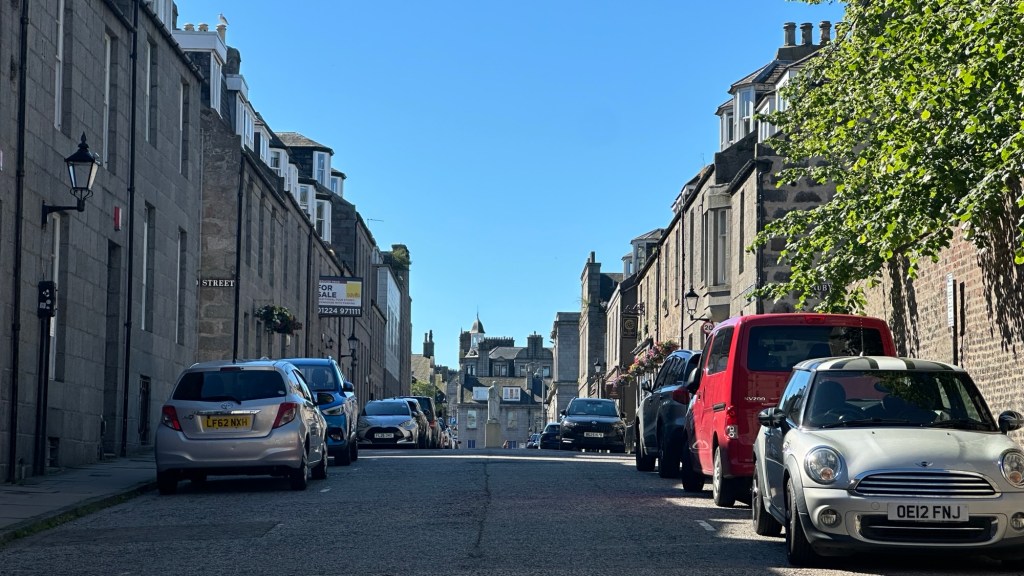
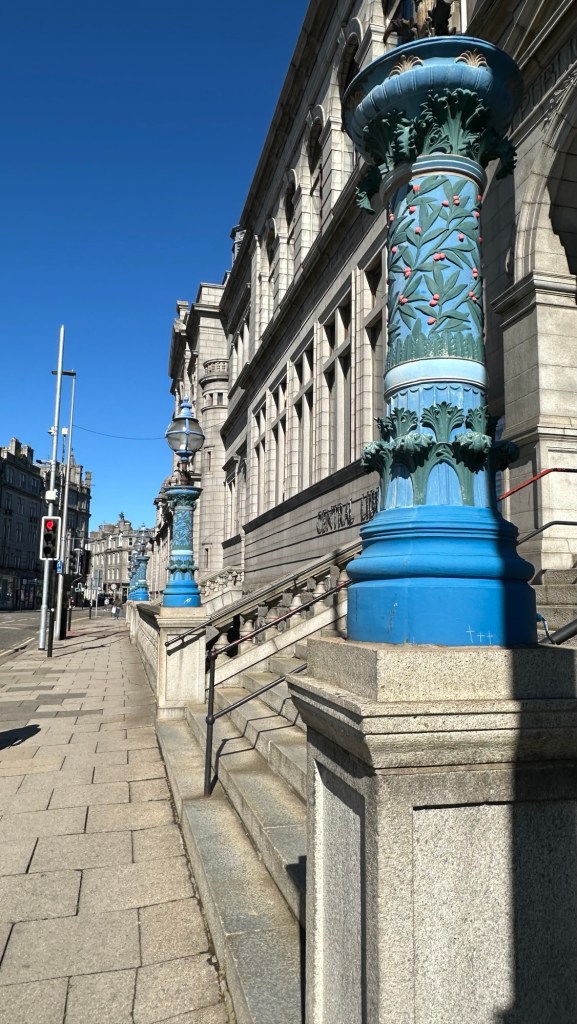
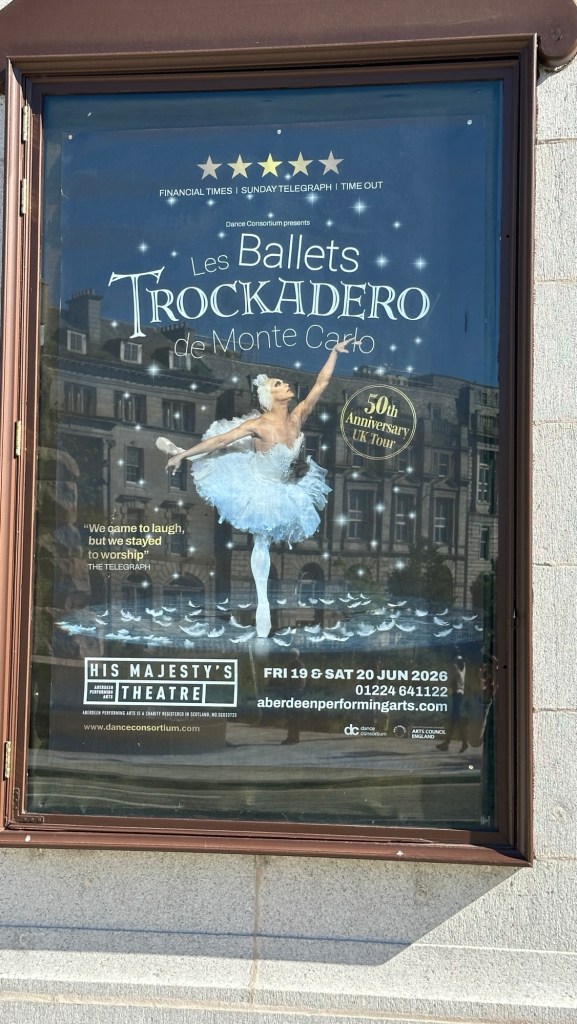
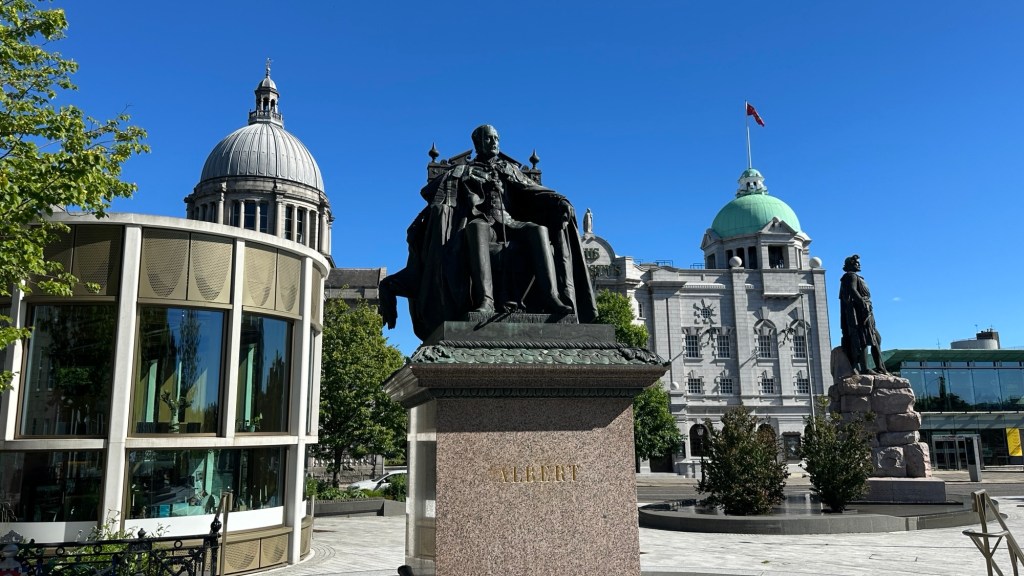
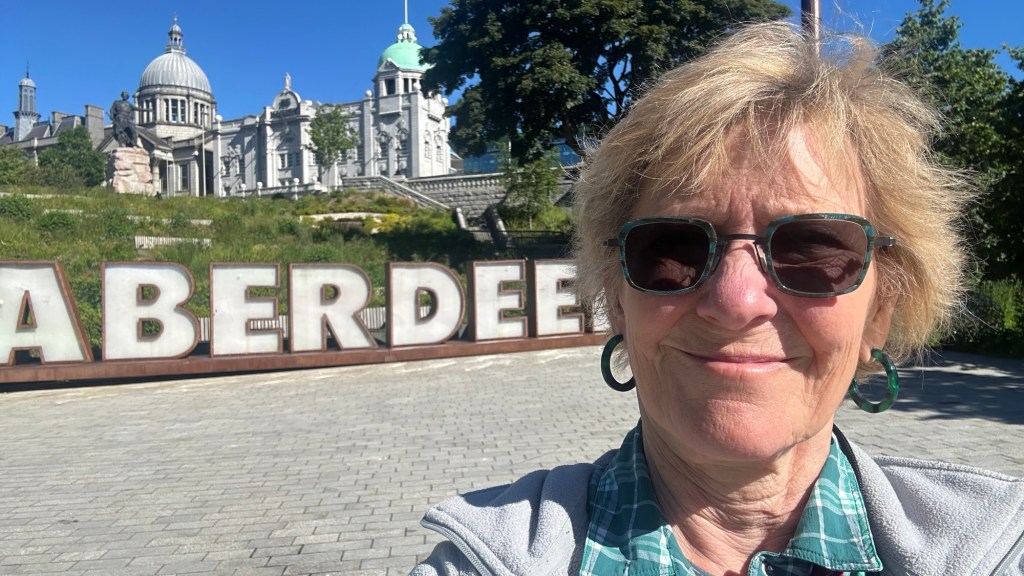
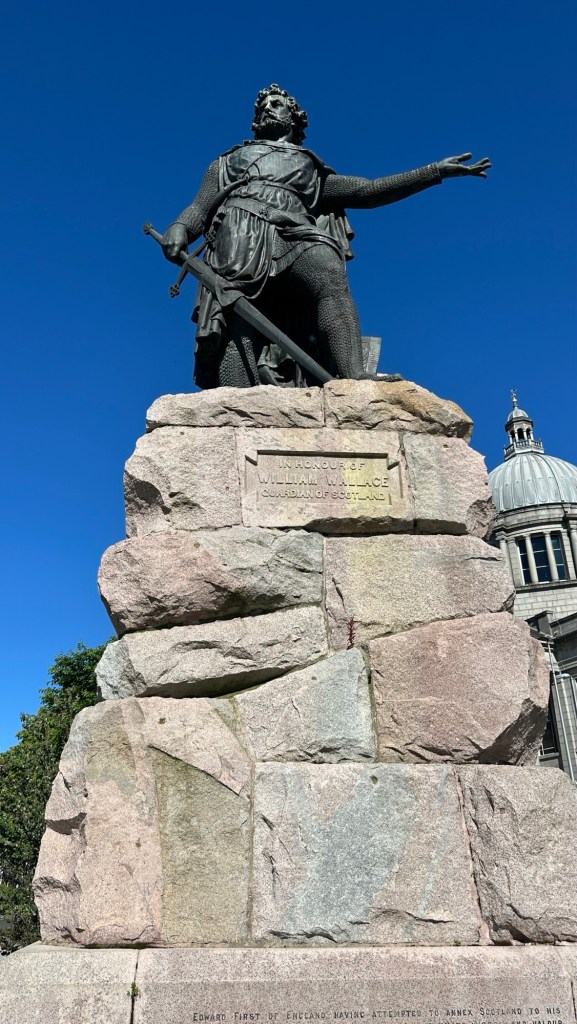
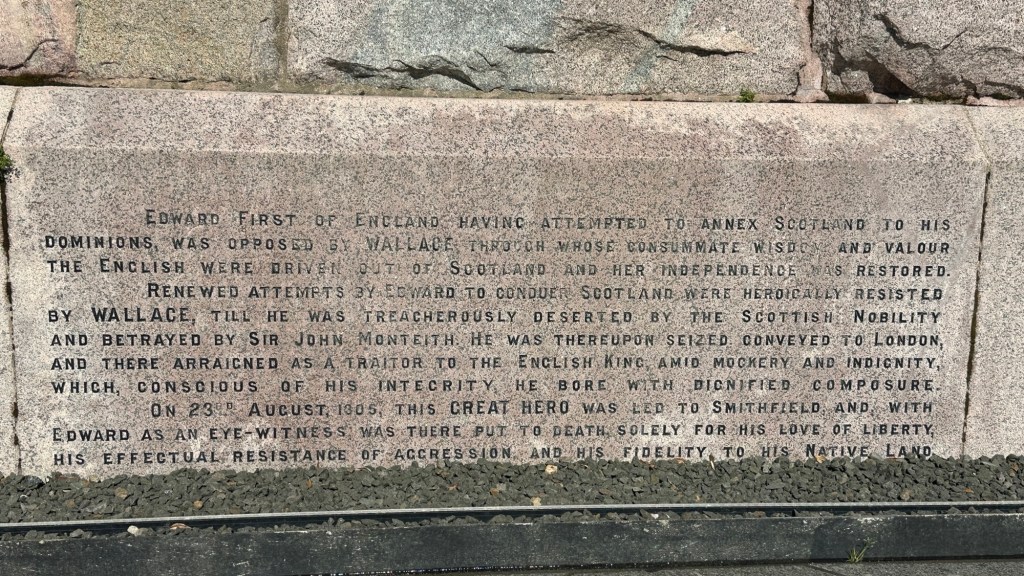
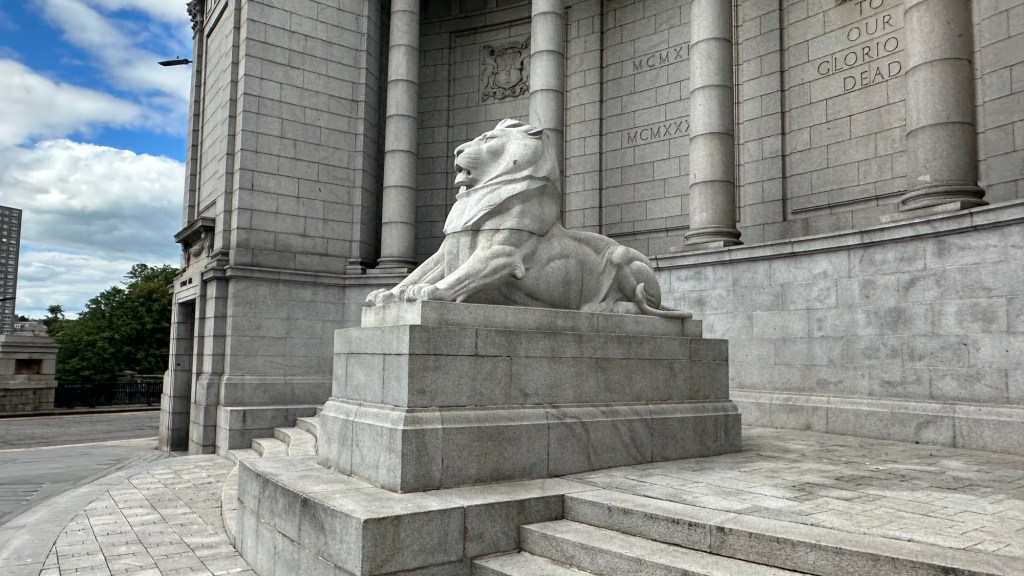
We disembarked to a piper’s welcome in Aberdeen, and boarded a coach to begin a tour of key sites in the city.
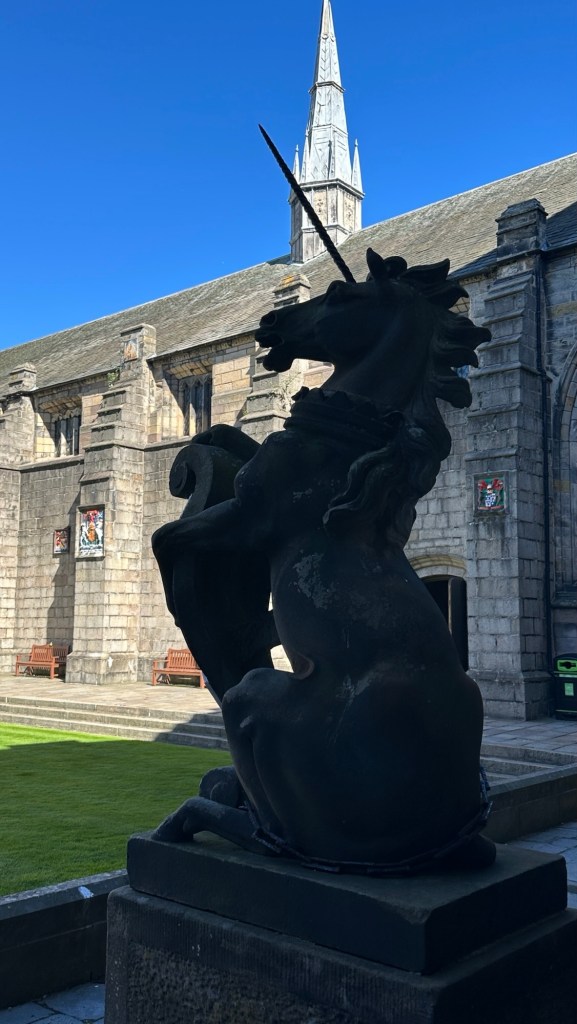
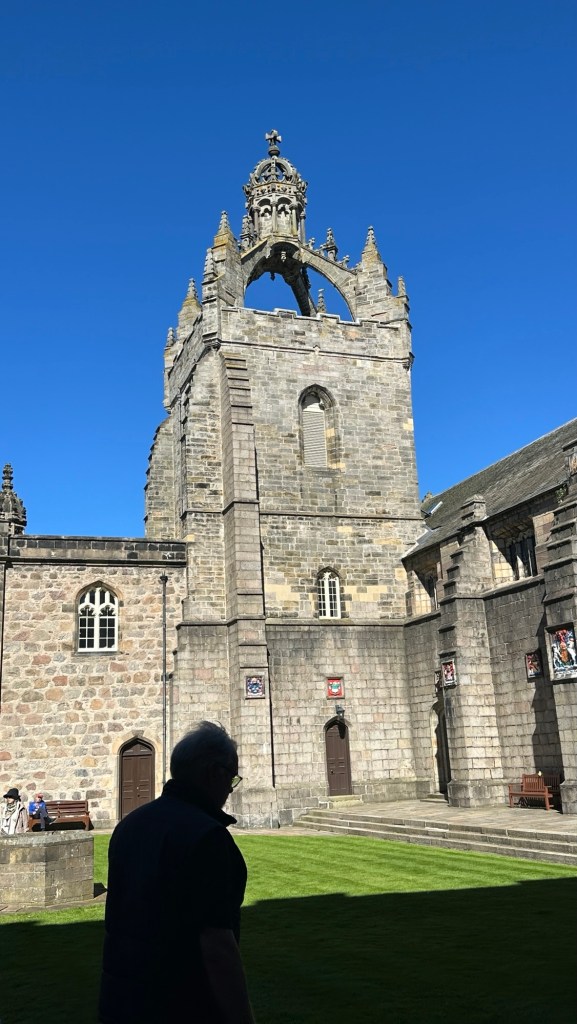
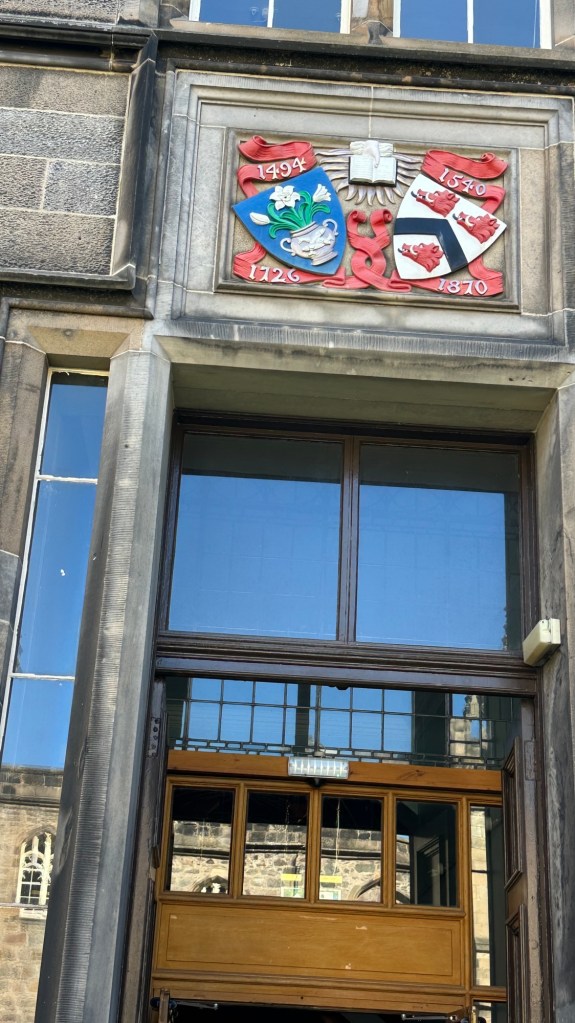
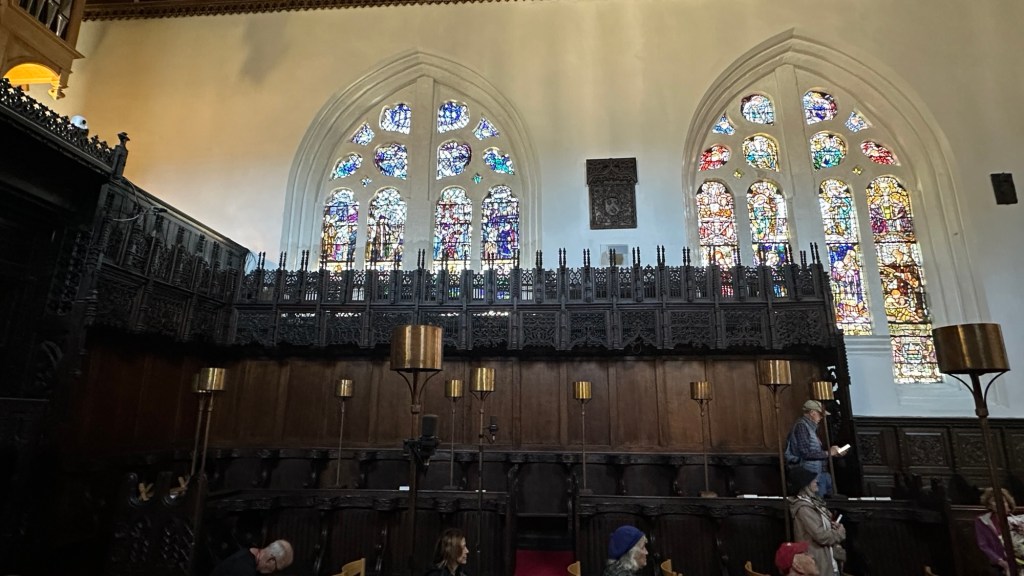
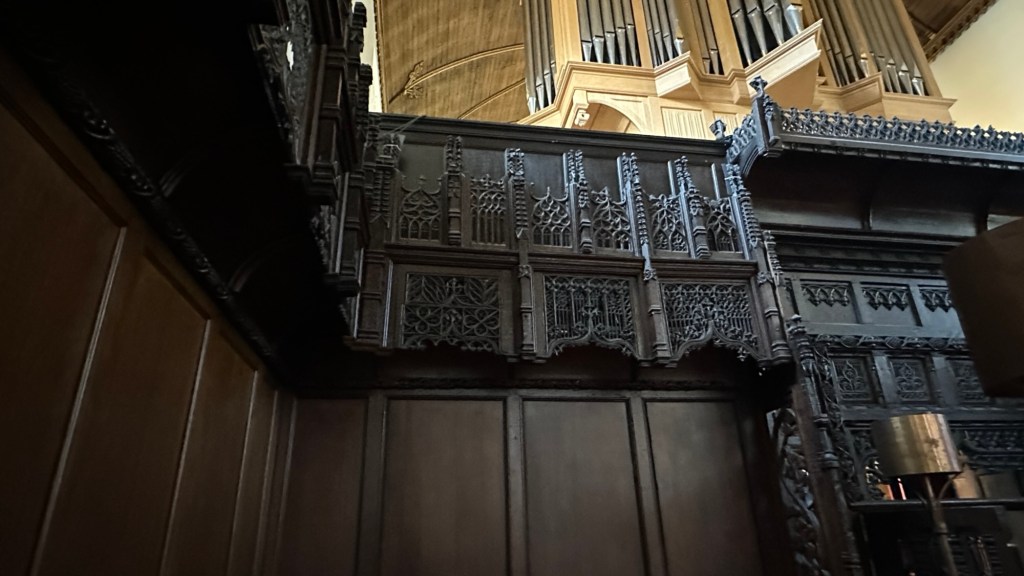
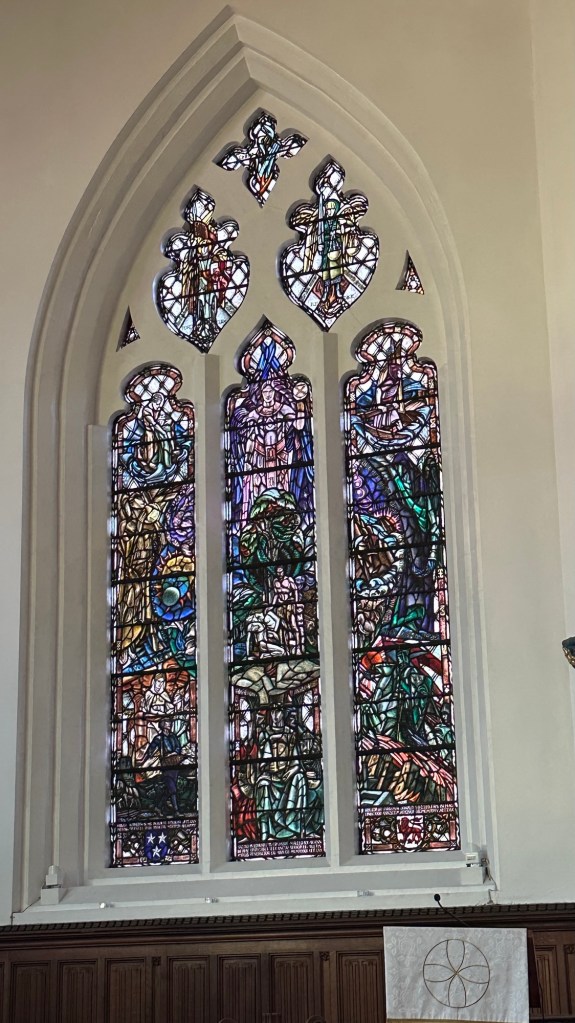
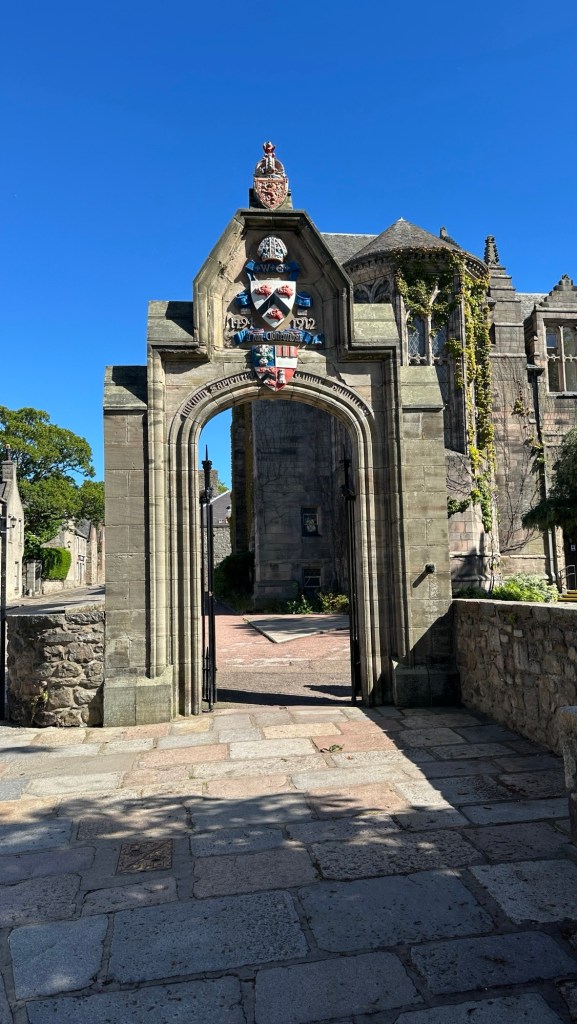
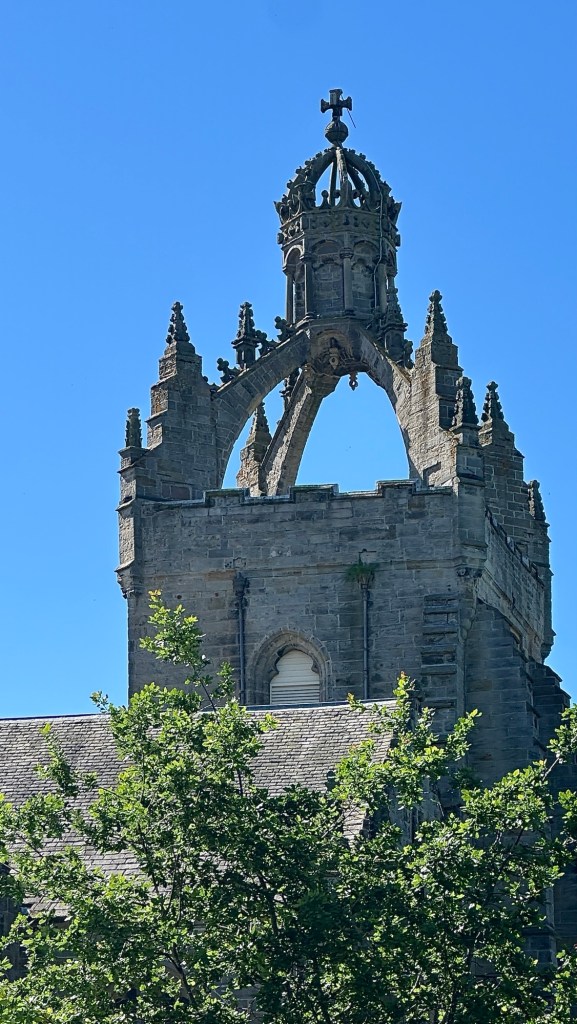
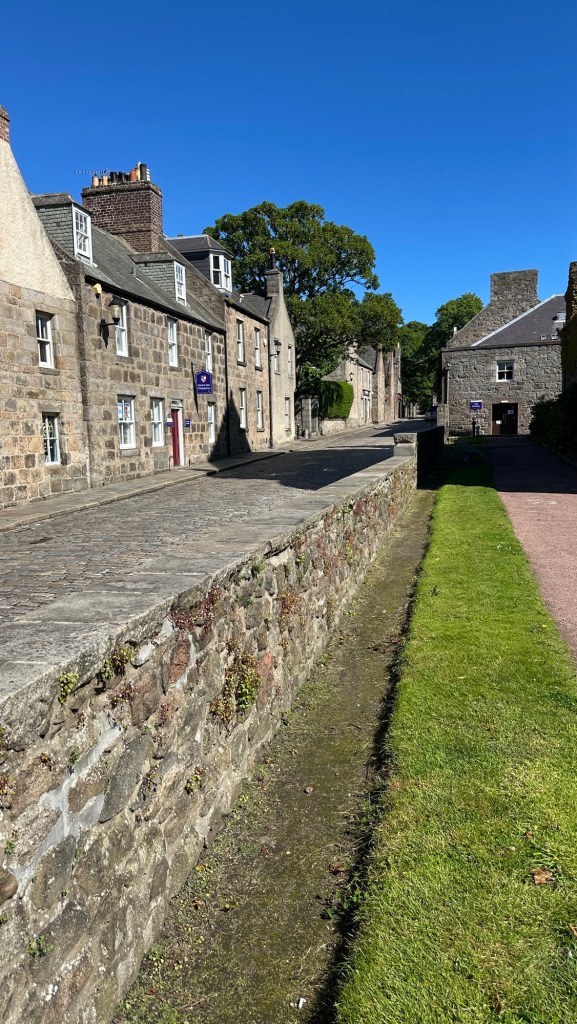
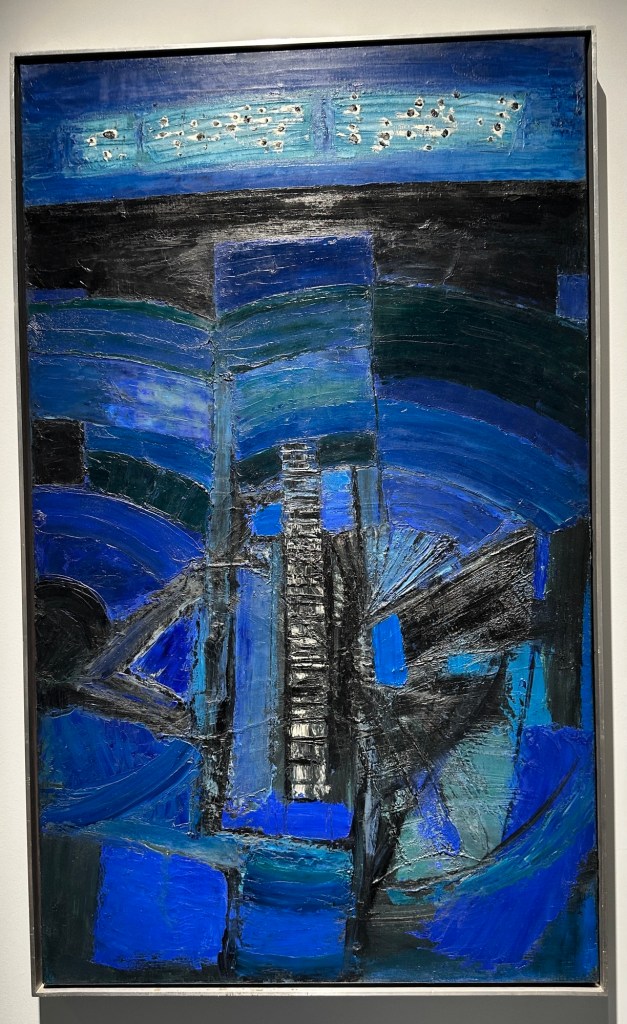
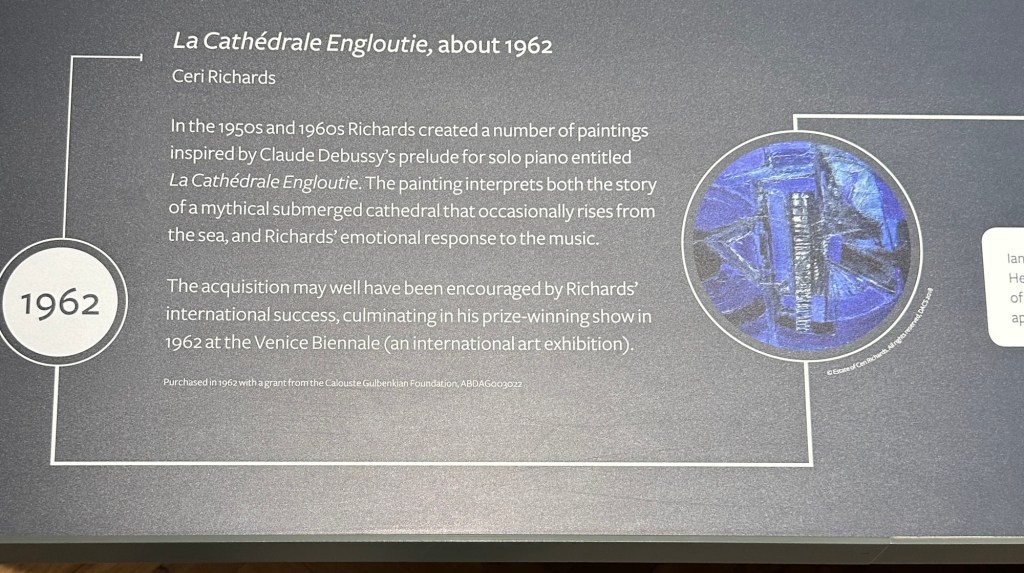
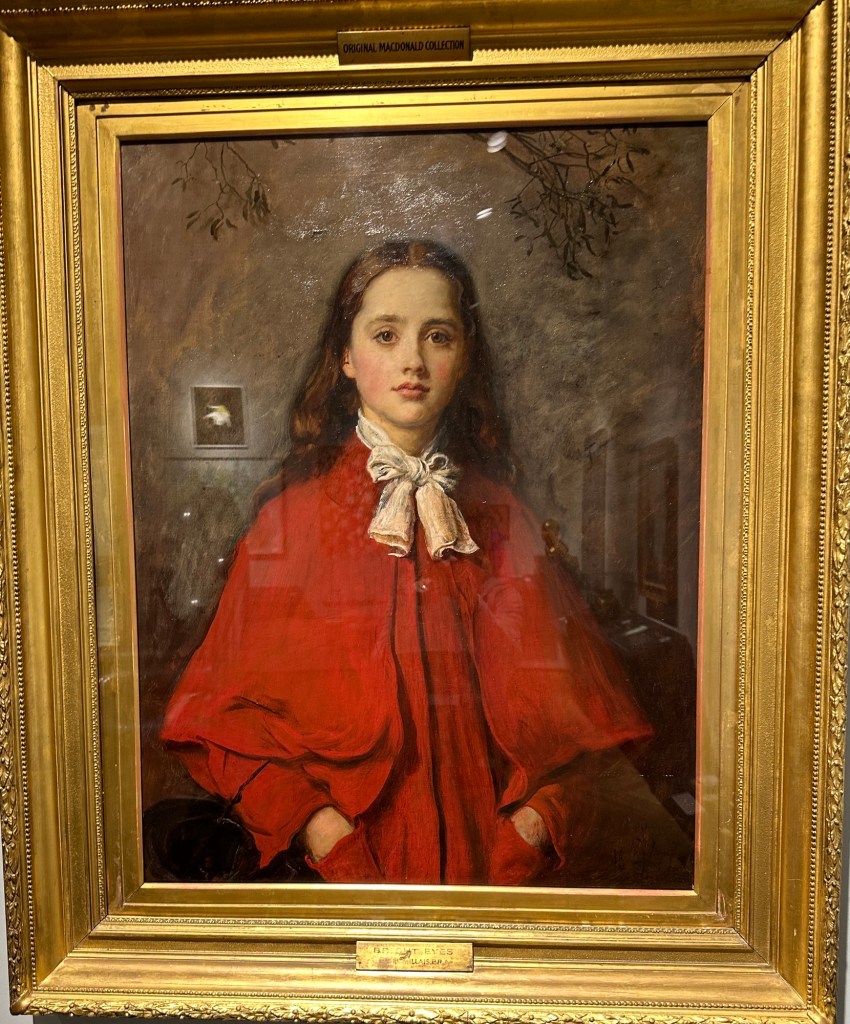
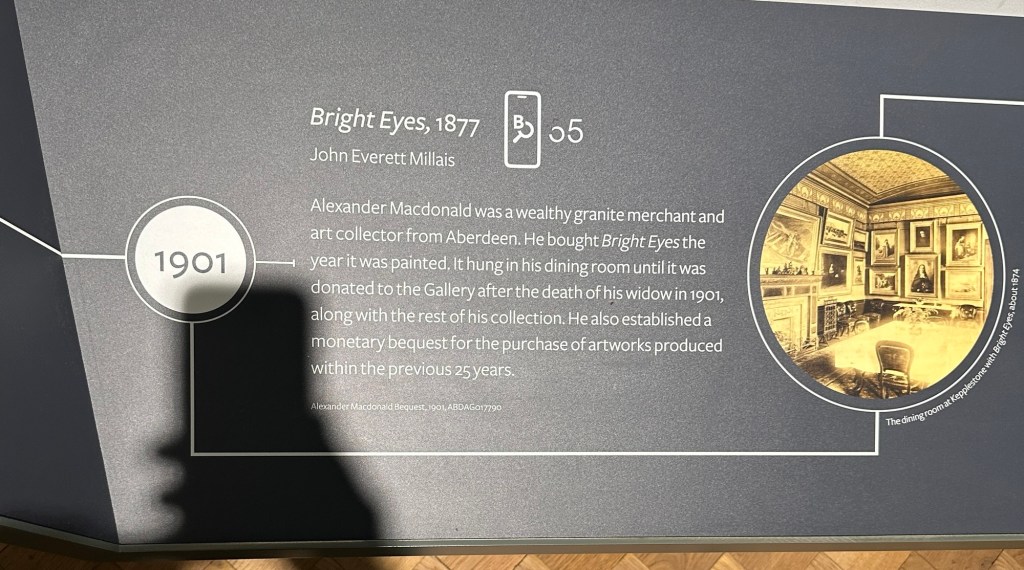
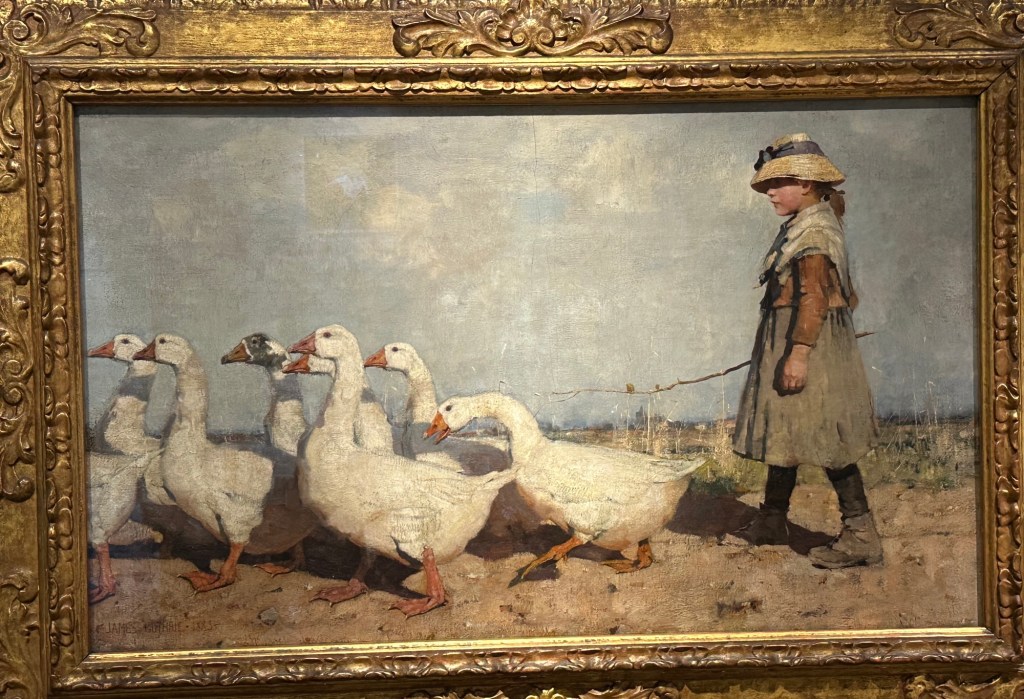
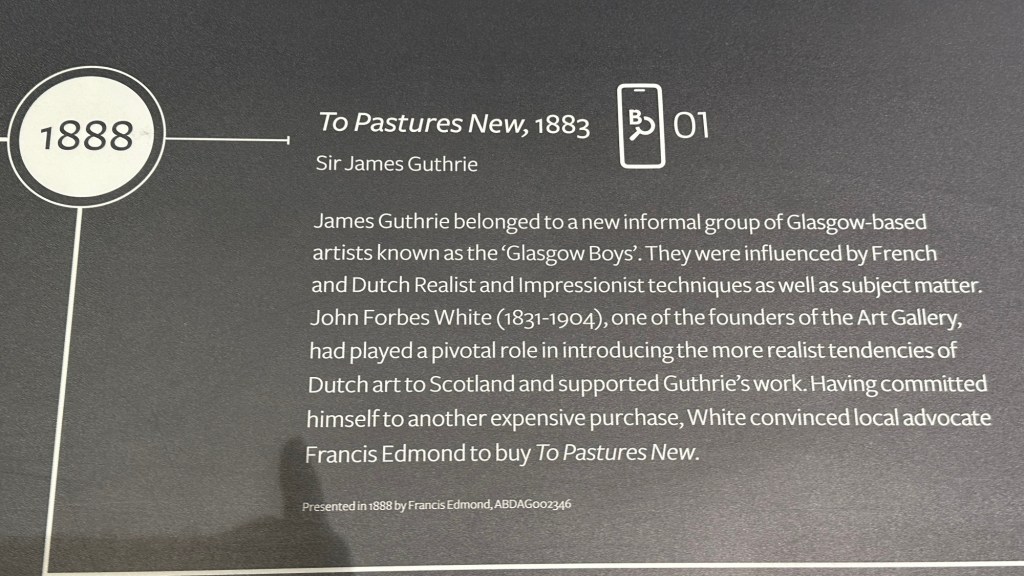
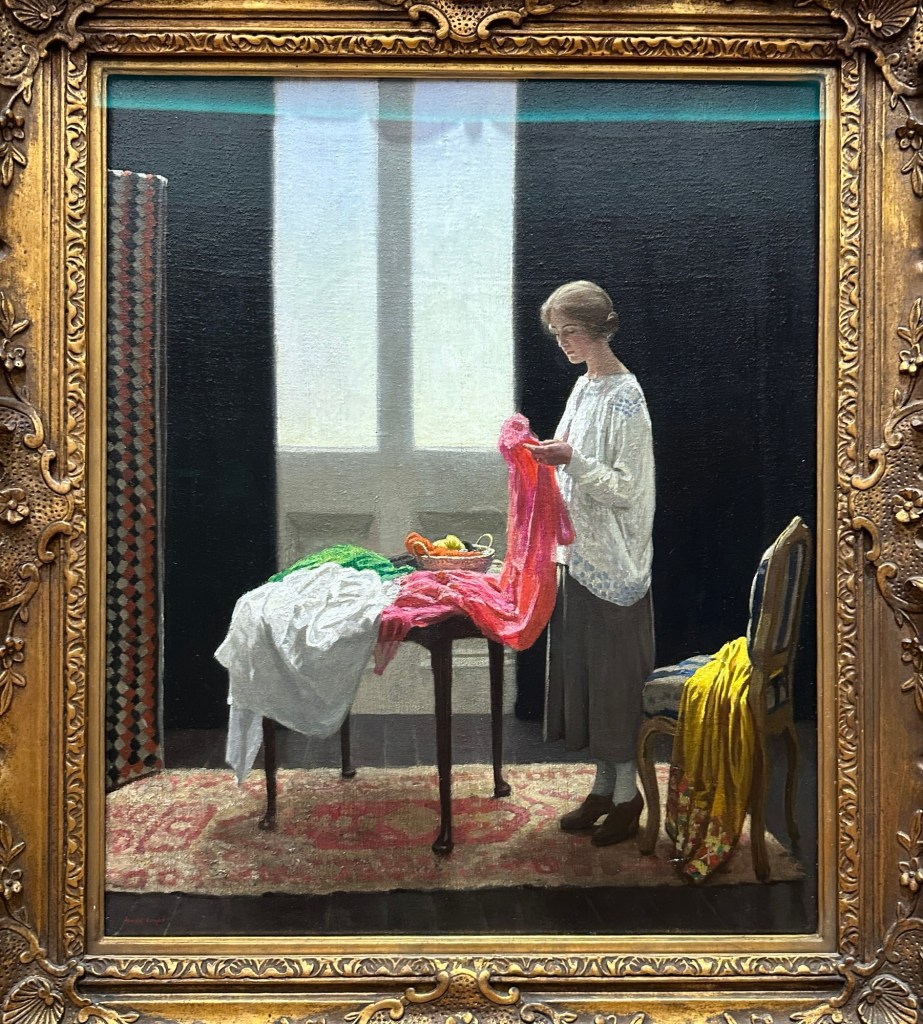
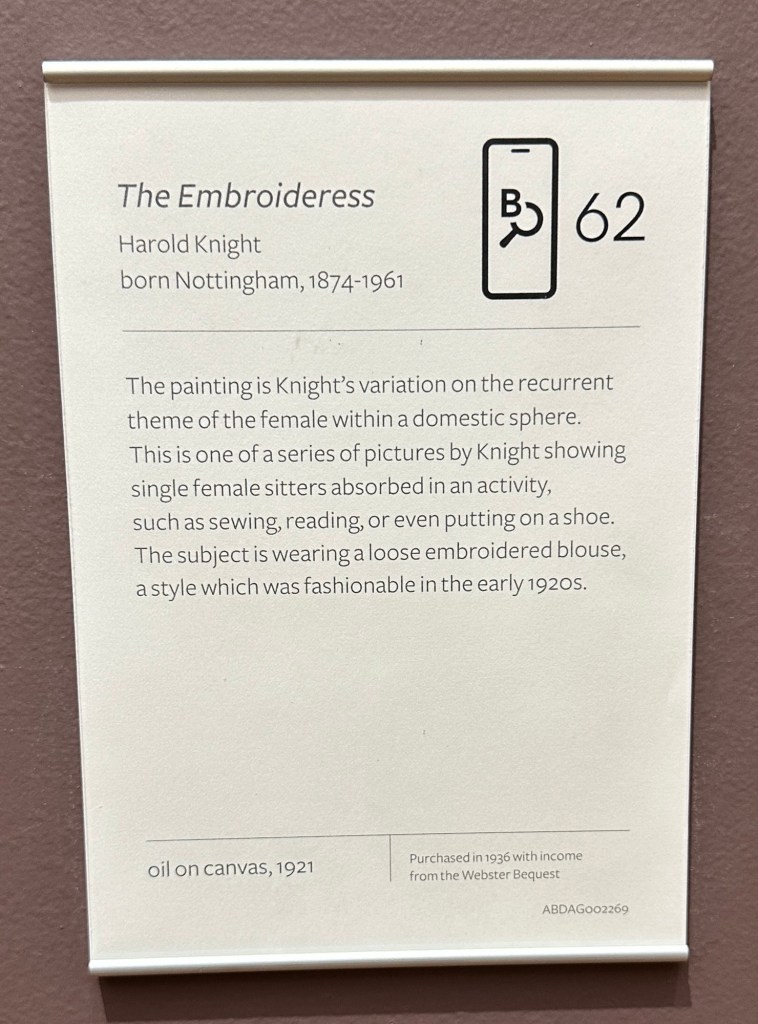
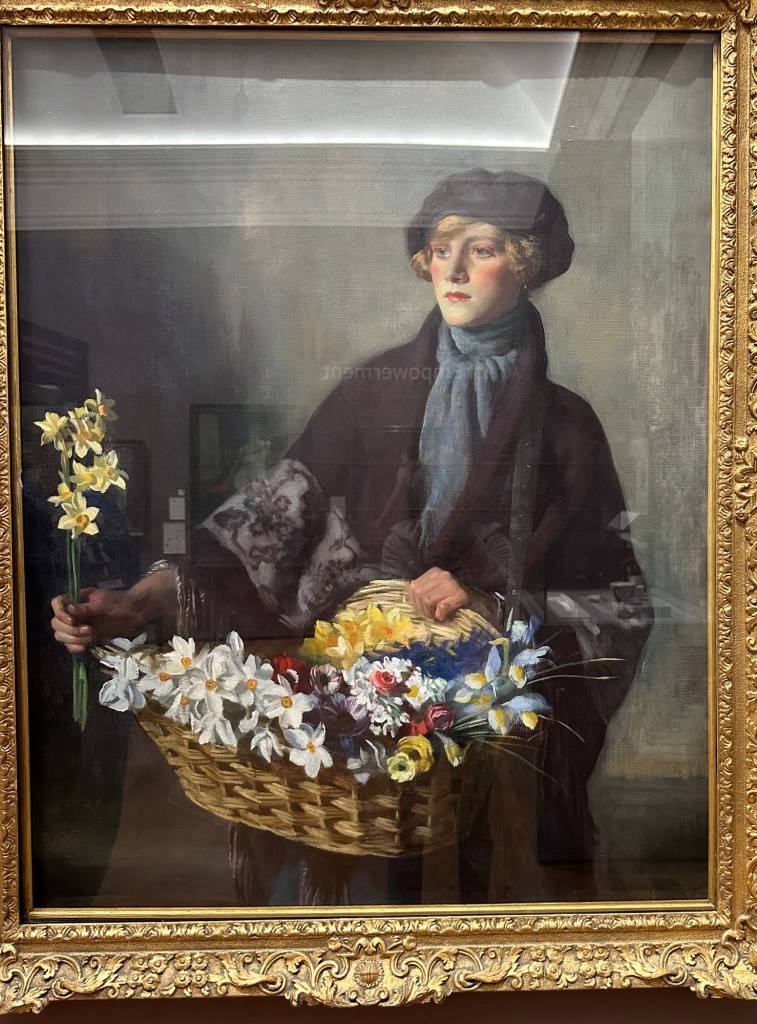
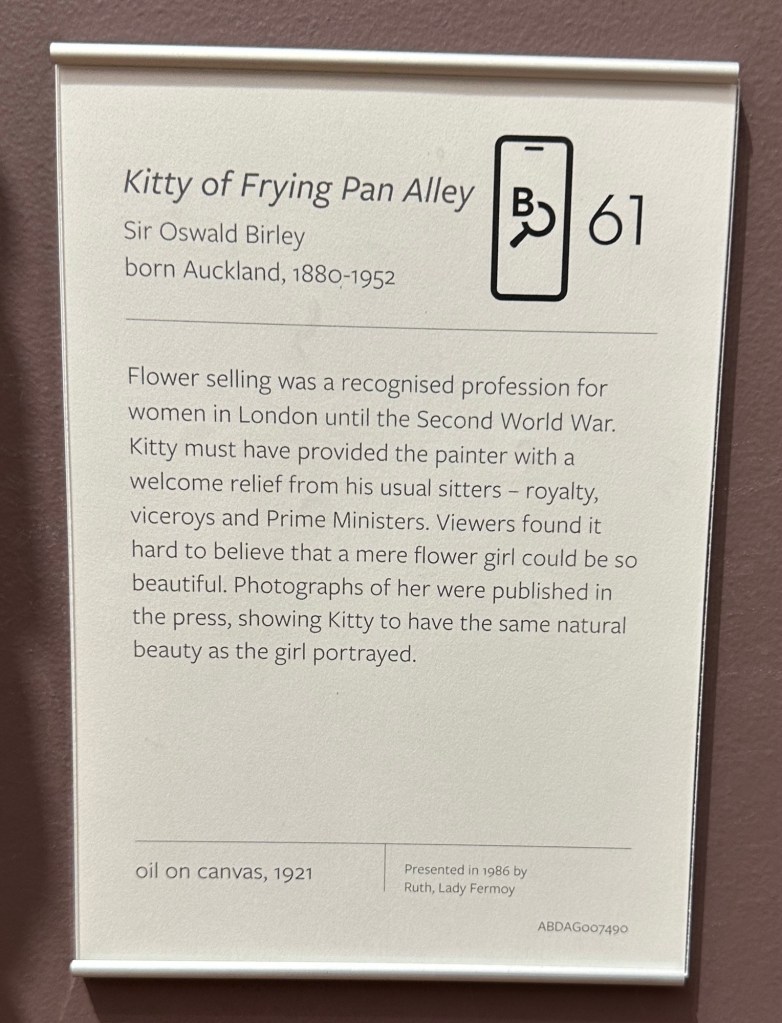
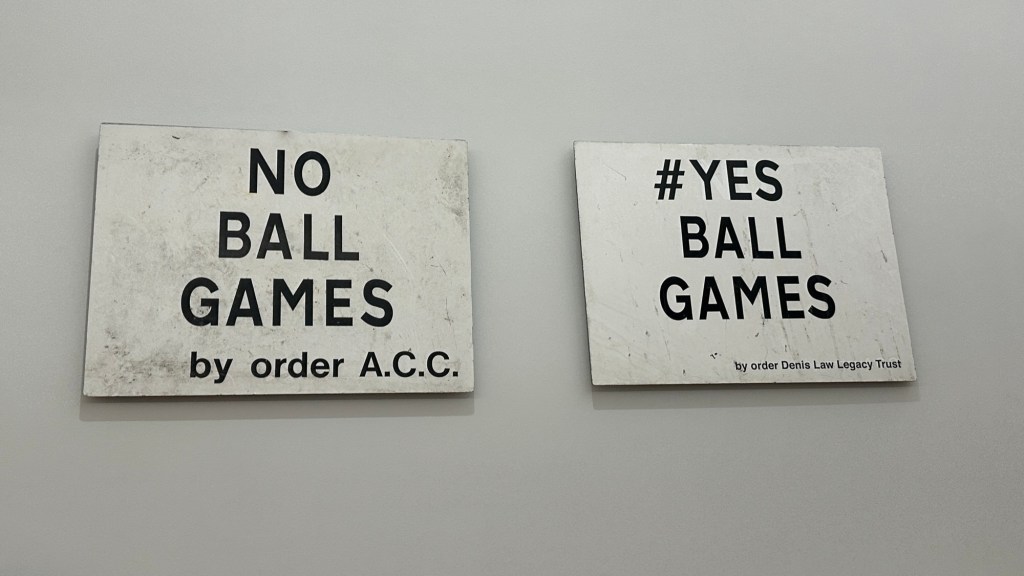
Among the sites were the historic buildings of Kings College, established in 1495. It was the third college in Scotland and the fifth in the British Isles. The chapel and its crown tower were impressive. We had time to see some of the art collection in the Aberdeen Art Gallery and had a pub lunch at the Old School House.
In the evening, we ate our farewell dinner with our group at a local restaurant, and prepared for an early morning departure.
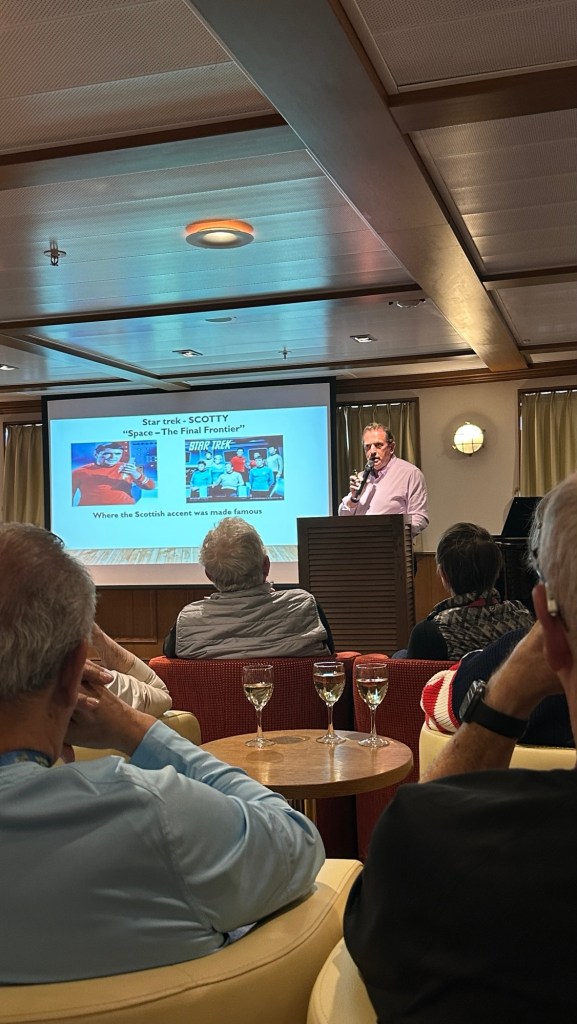
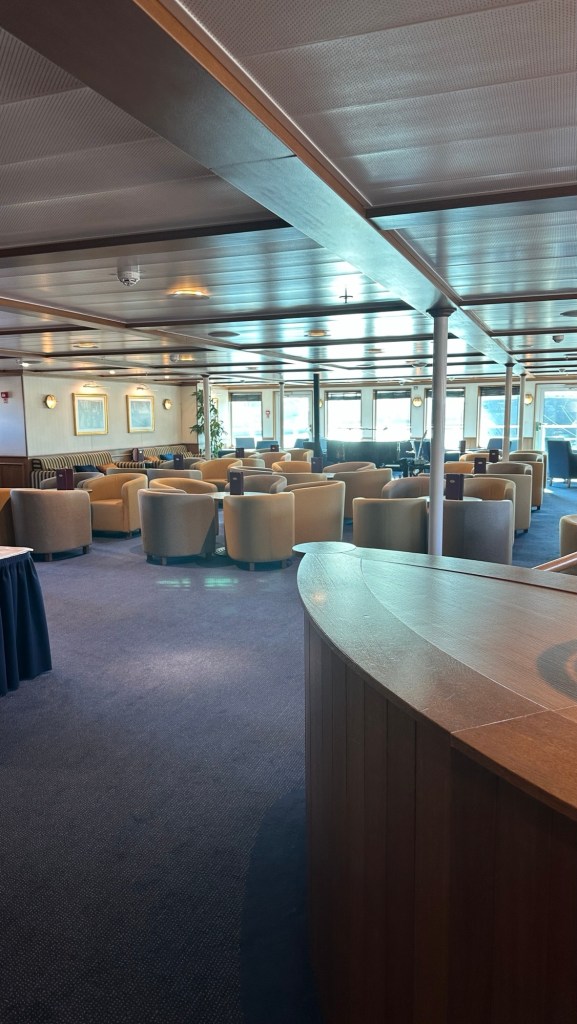
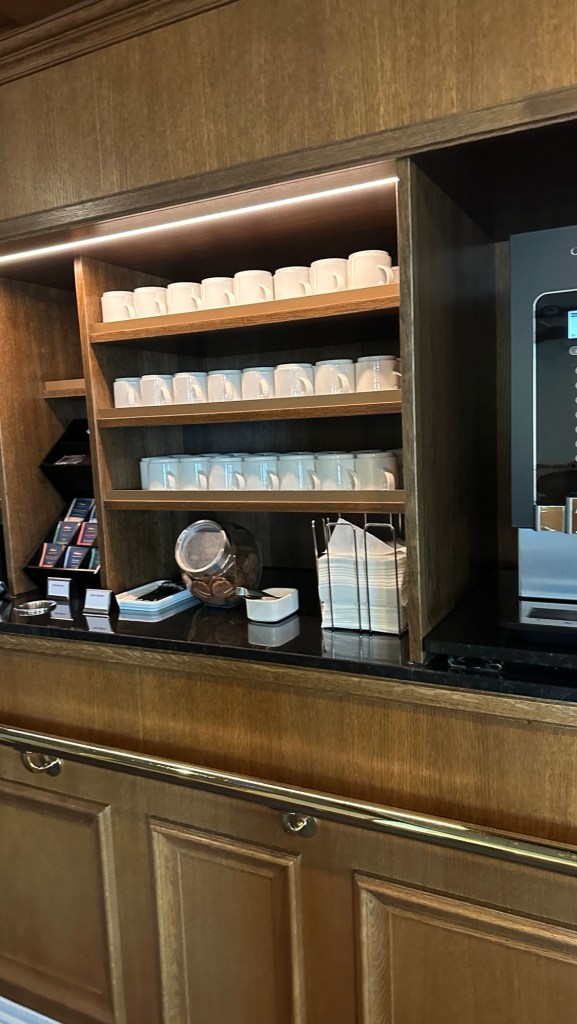
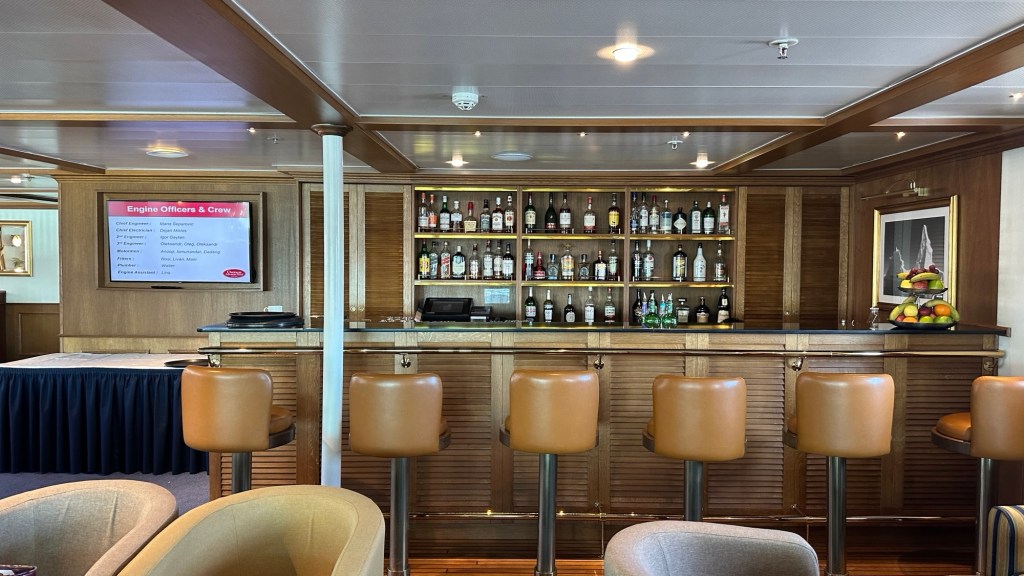
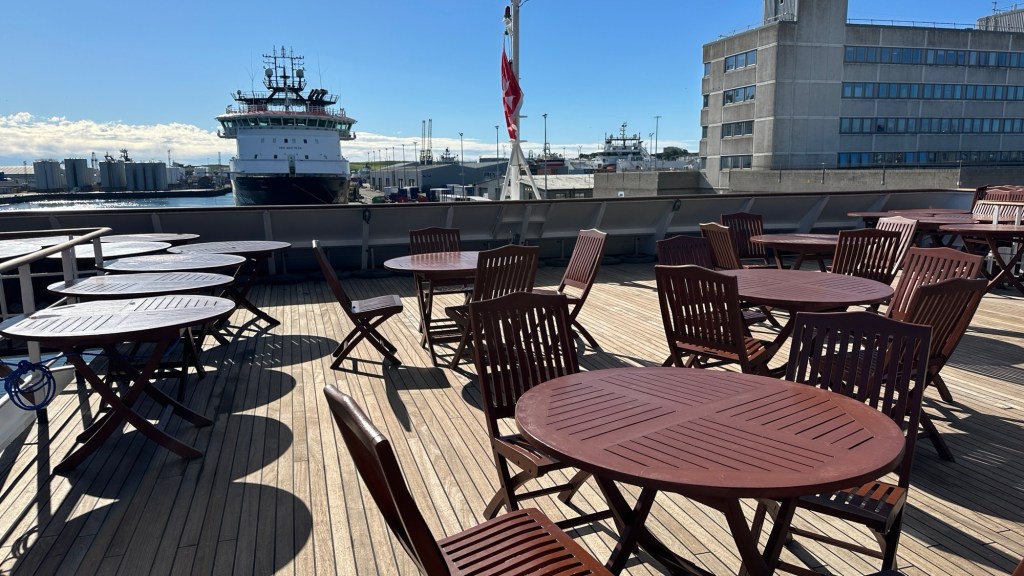
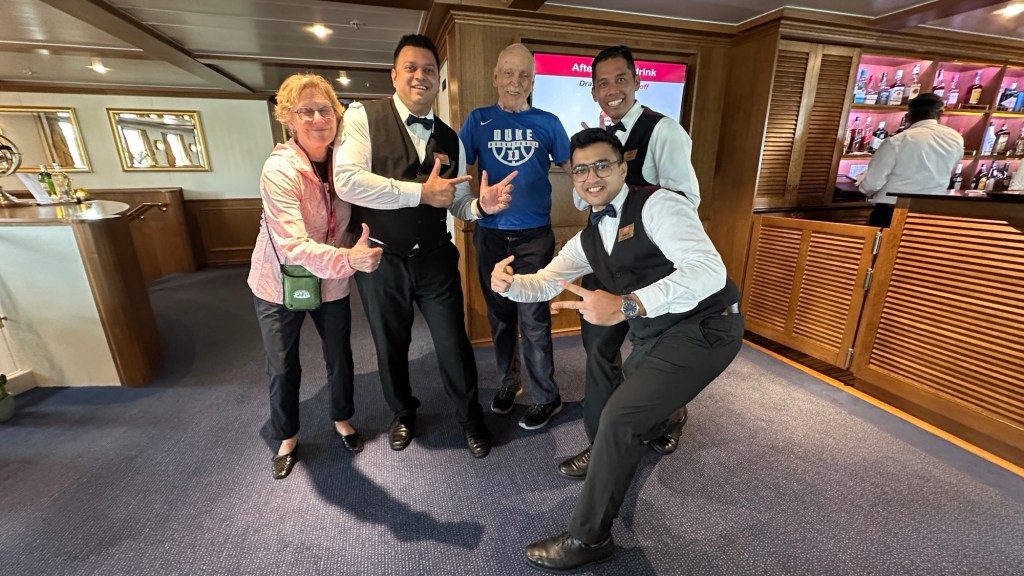
Below are a few photos of the ship.
 My Travel Blog