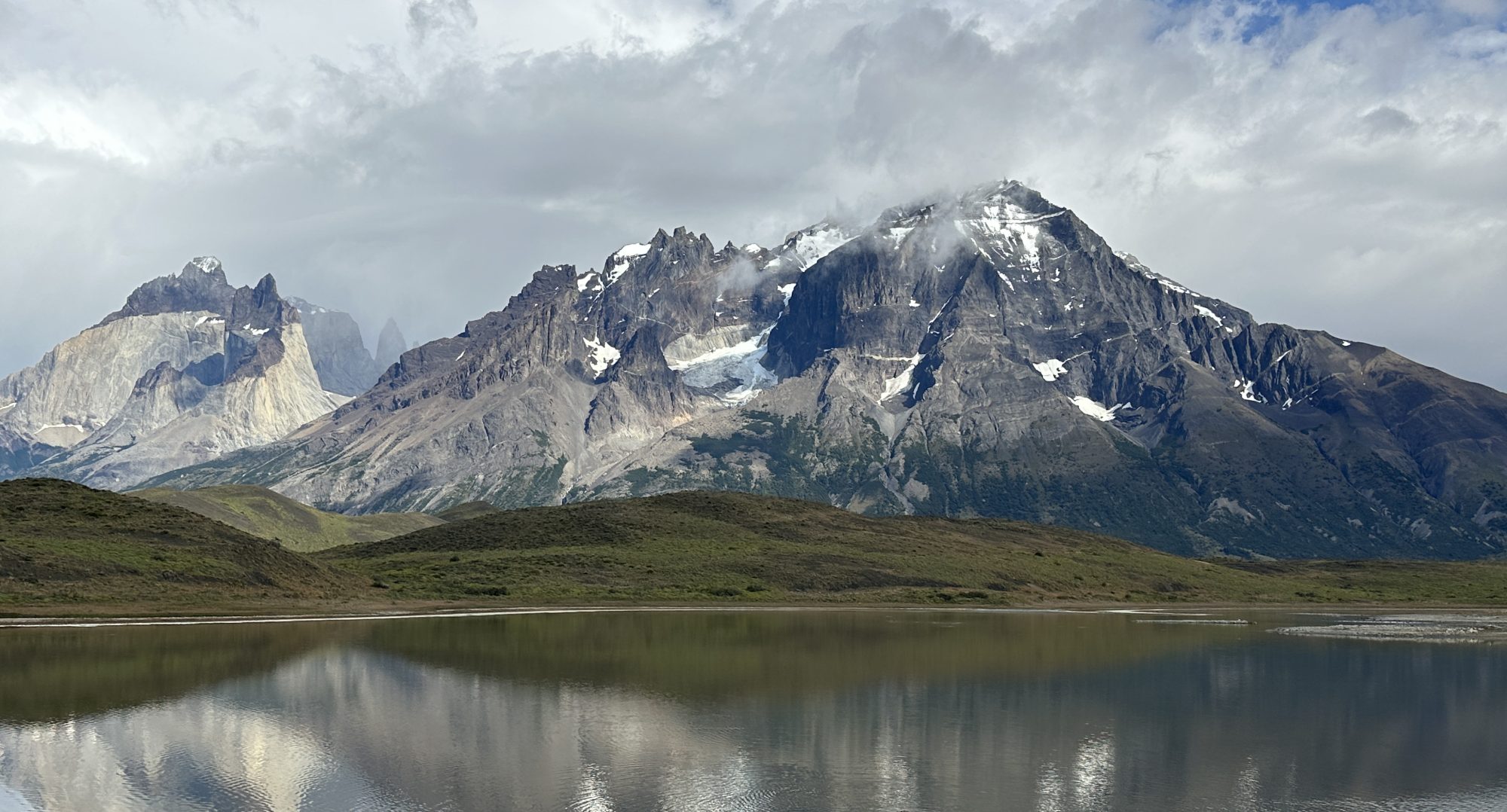
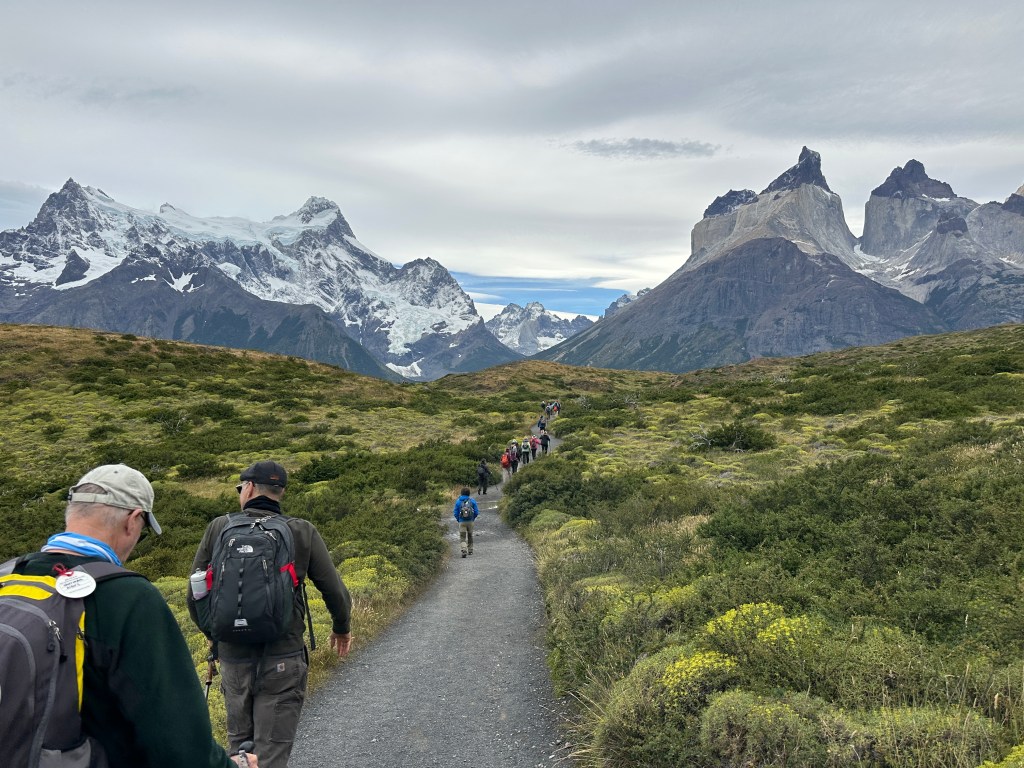
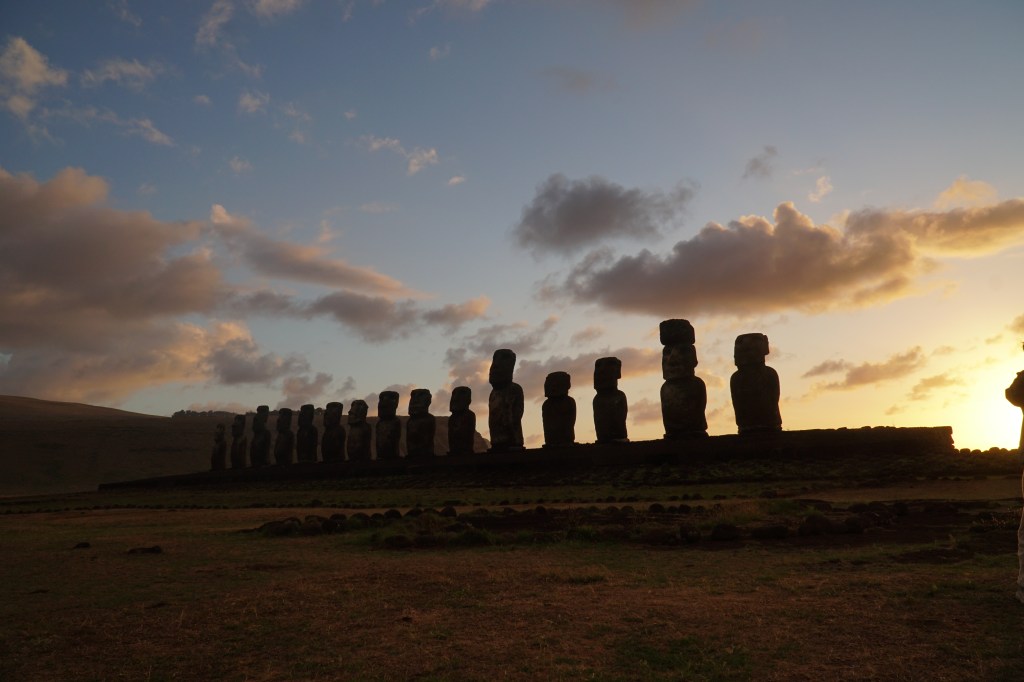
Seeing breath-taking views of the mountains and waters of Patagonia has been an aspiration of mine ever since I first saw pictures of this wild place. So I finally booked a trip as a solo traveler on the Overseas Adventure Travel (OAT) trip “The Wildness Beyond: Patagonia, Tierra del Fuego & the Chilean Fjords”
In addition, I booked a pretrip to Rapa Nui (also known as Easter Island) to see this remote island and its many Moai.
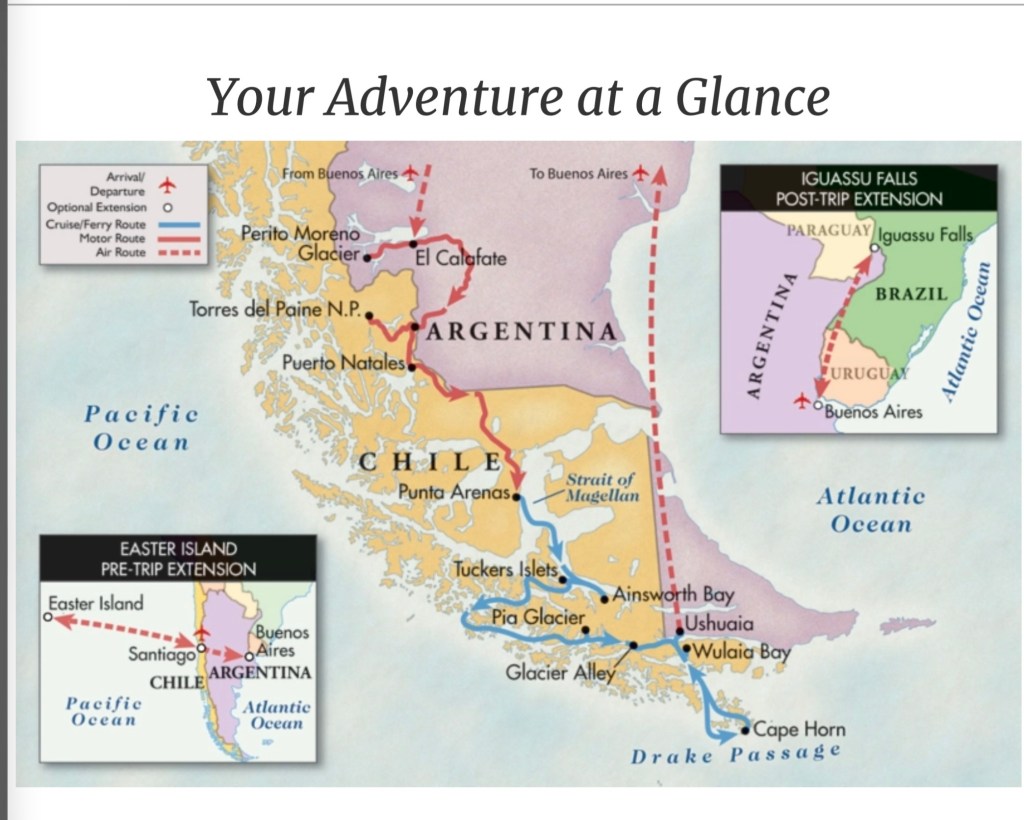
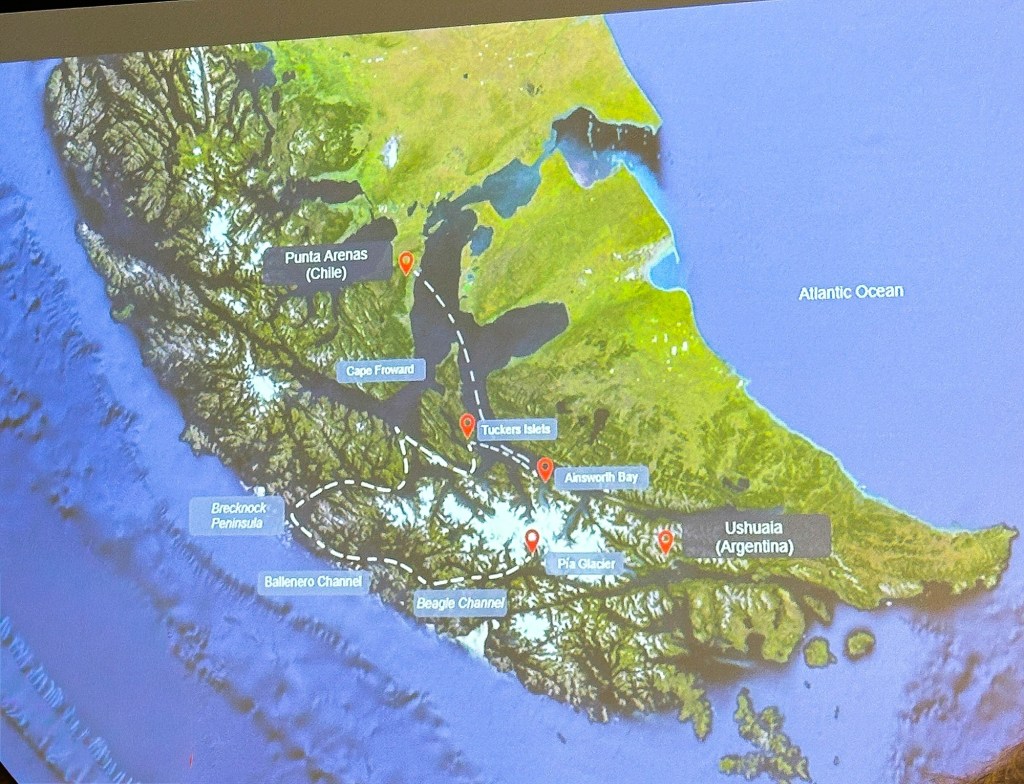
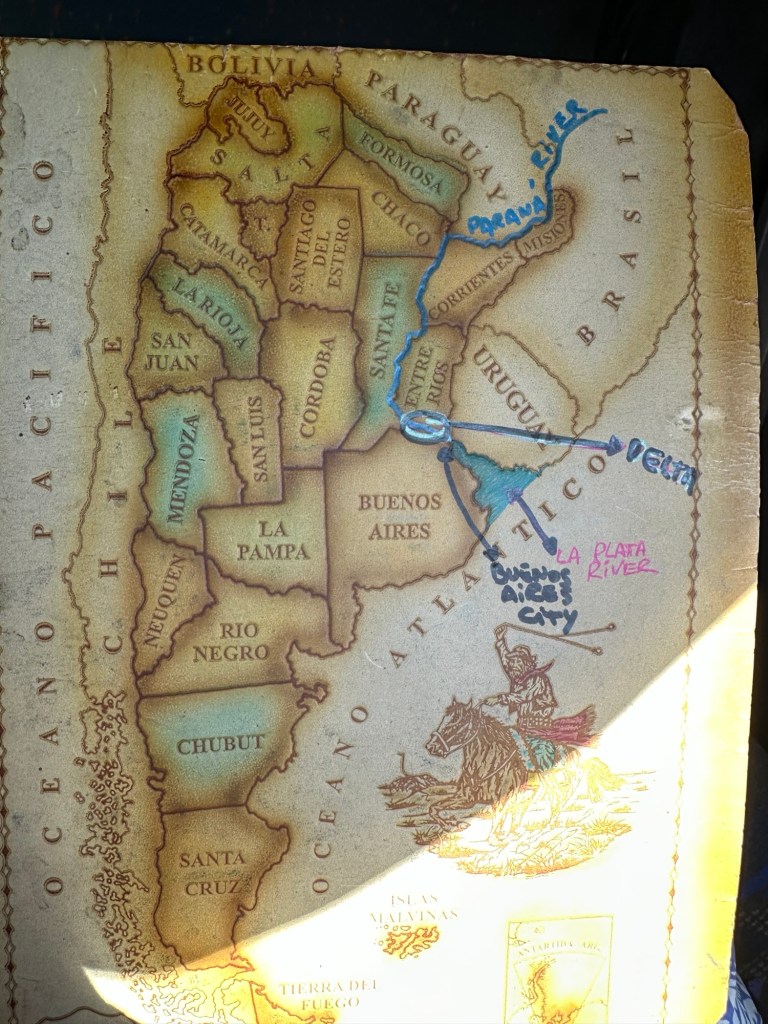
The logistics of this particulary trip were challenging because we had so many flights. See the route below on a map from the OAT trip booklet. I flew from Raleigh through Miami to Santiago, Chile. After a brief stay and tour of Santiago, our group of eight women and trip leader on the pretrip flew the 5.5 hours to Rapa Nui, the most remote inhabited island in the world. After our 4-day stay, we flew back to Santiago to stay overnight at an airport hotel and then fly to Buenos Aires (BA), Argentina, the next morning, where we met the rest of the travelers for our main Patagonia trip. After touring BA, we flew to El Calafate, Argentina. We reached the next destinations by coach and a 4-day sail on an expedition ship, The Ventus Australis. We disembarqued in Ushuaia,”The End of the World,” stayed there for a night, and flew back to BA for another overnight stay before flying home.
Below is a day-by-day or place-by-place summary of the trip. Feel free to skip text and jump around, because this summary is long. If you click on a photo, you will get the full image and can scroll through the images in that “block,” using the direction keys if on a laptop. Hit escape to return to the blog. In some sections there may be multiple blocks of photos or Youtube videos under the same text.
I create these blogs as a way to help me remember key details of trips, and to put in context some of my favorite photos. I usually print out a book as well (minus the videos, of course). I also love sharing the experience with friends and fellow travelers from different trips we have taken.
Wednesday, Jan. 7
I arrived in Santiago, and met the 7 other women on our Rapa Nui pretrip, along with our trip leader Javier, and had a lovely dinner in the hotel, preceded by our first Pisco Sour of the trip.
Thursday, Jan. 8
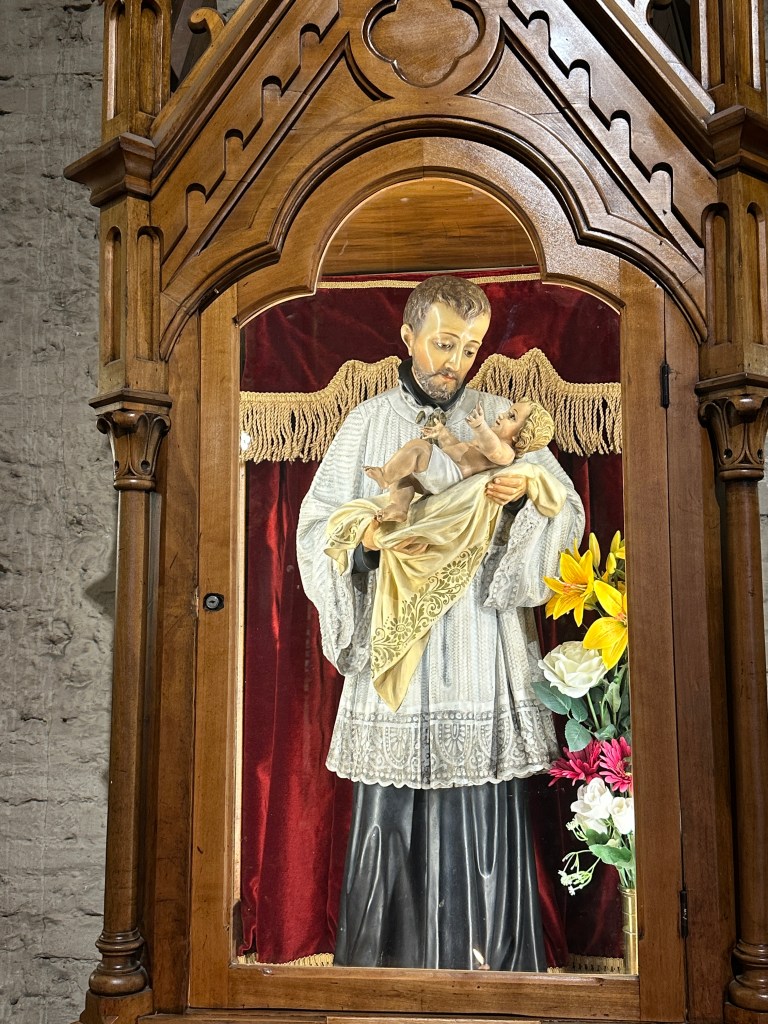
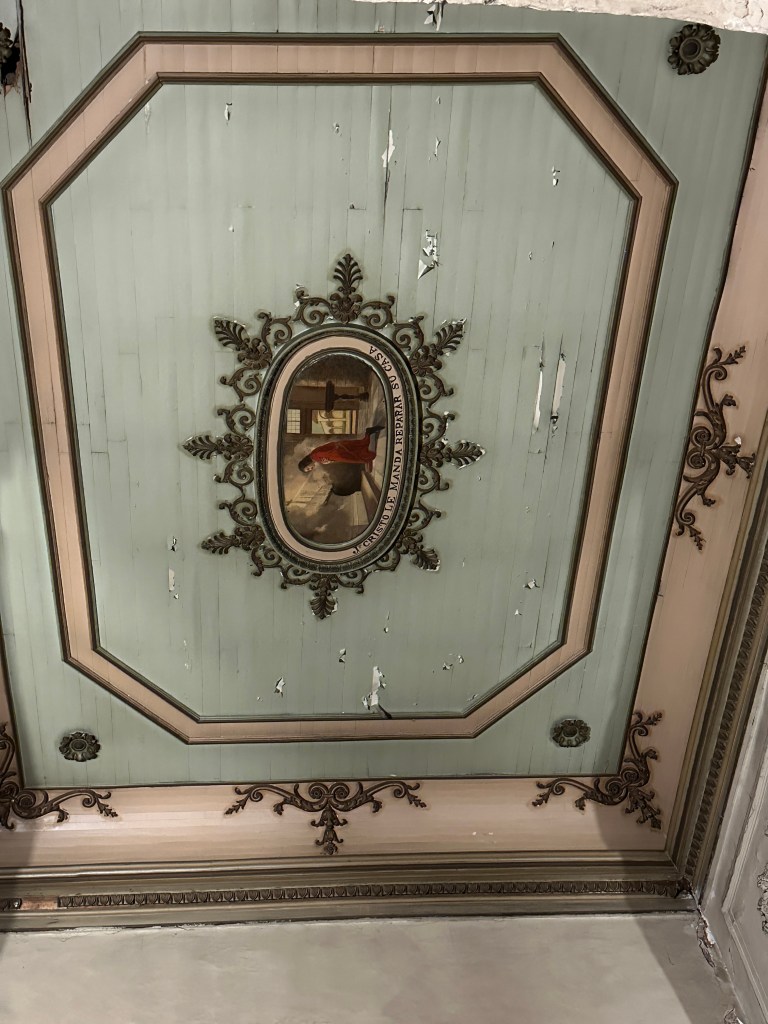
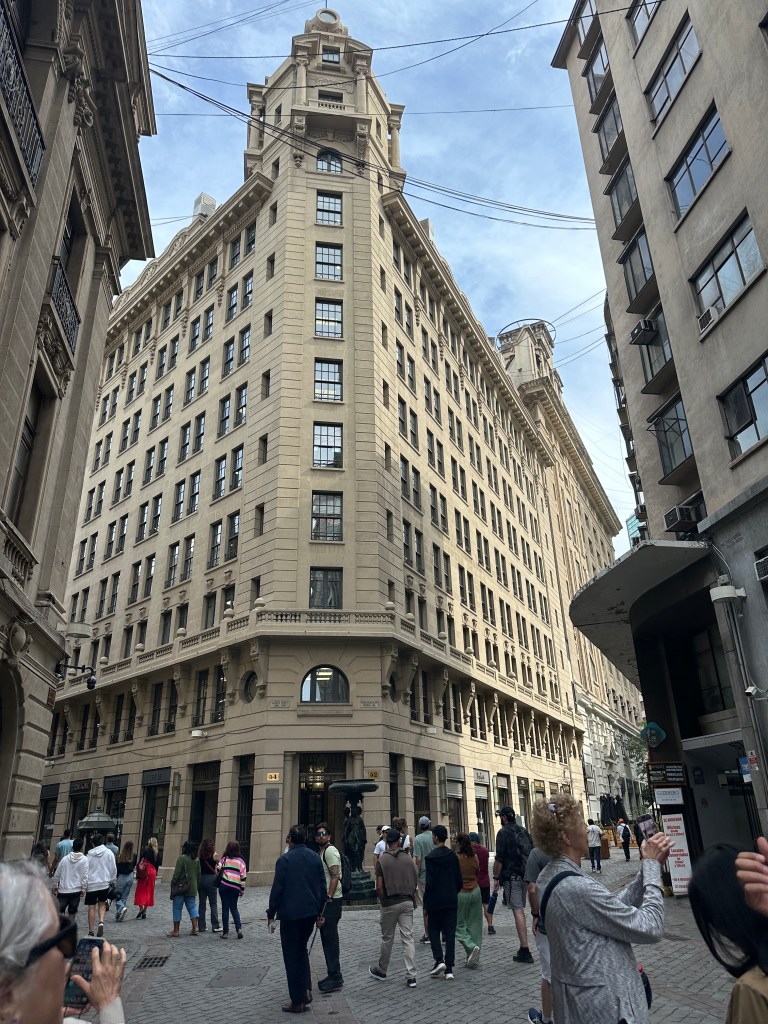
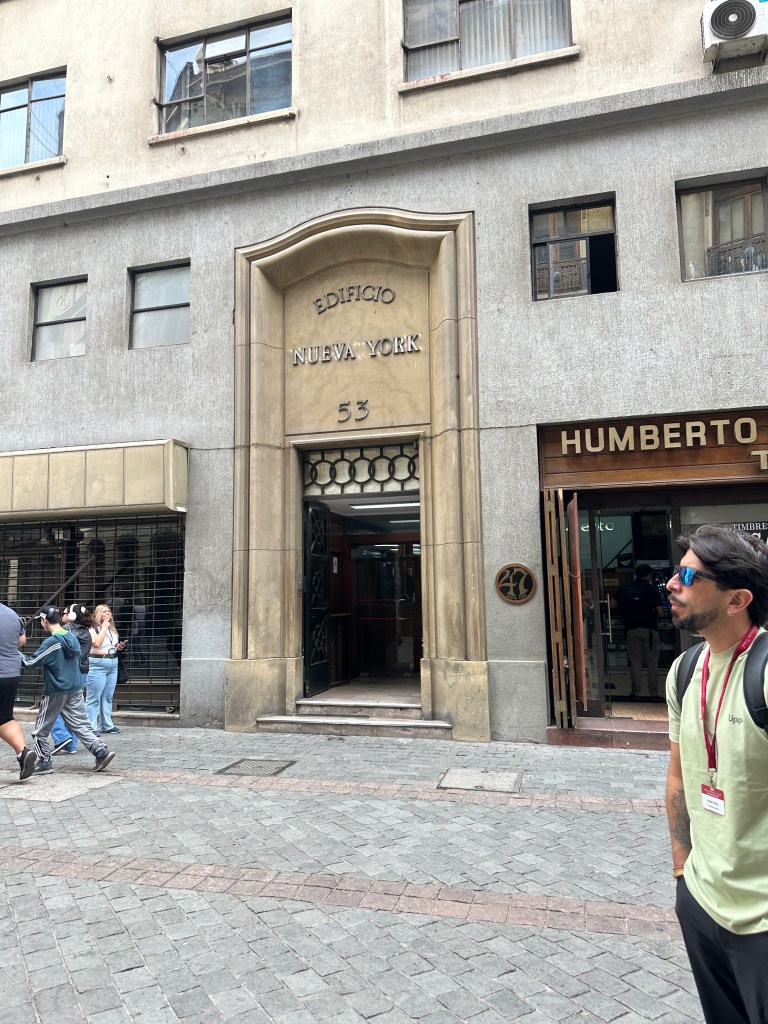
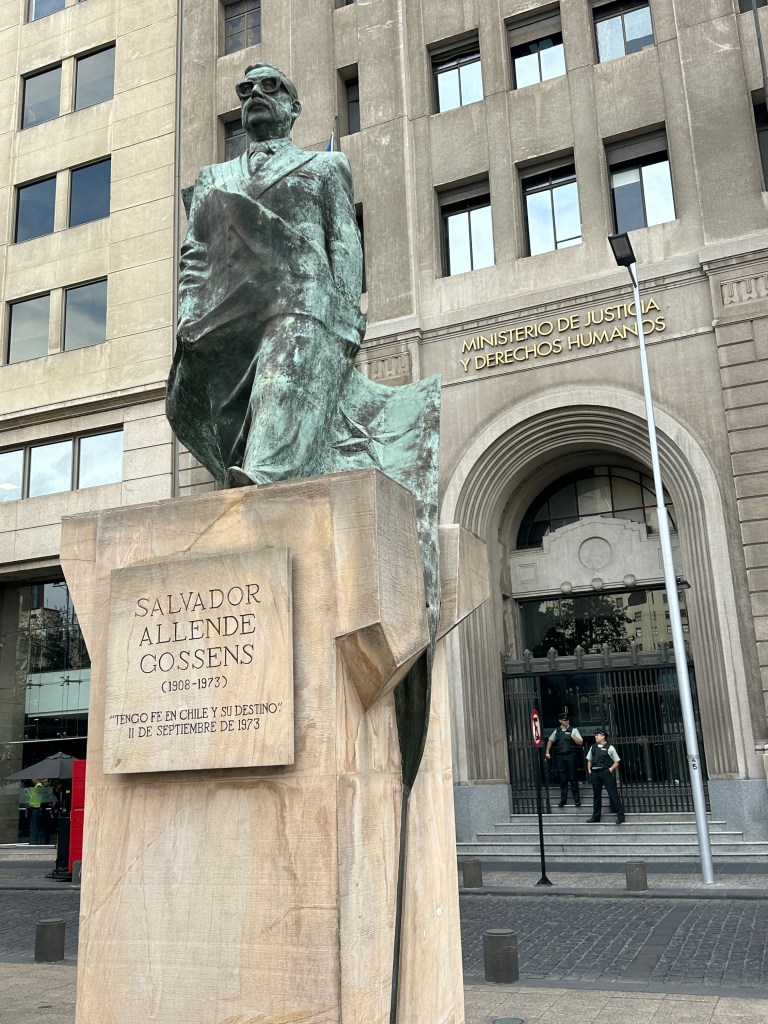
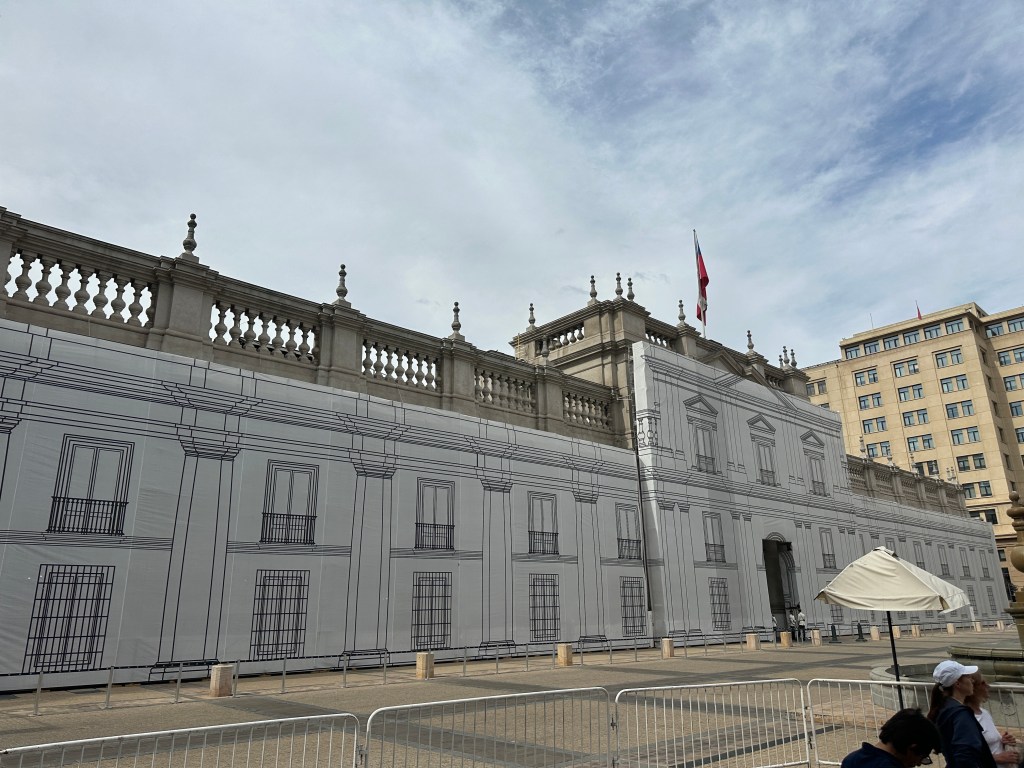
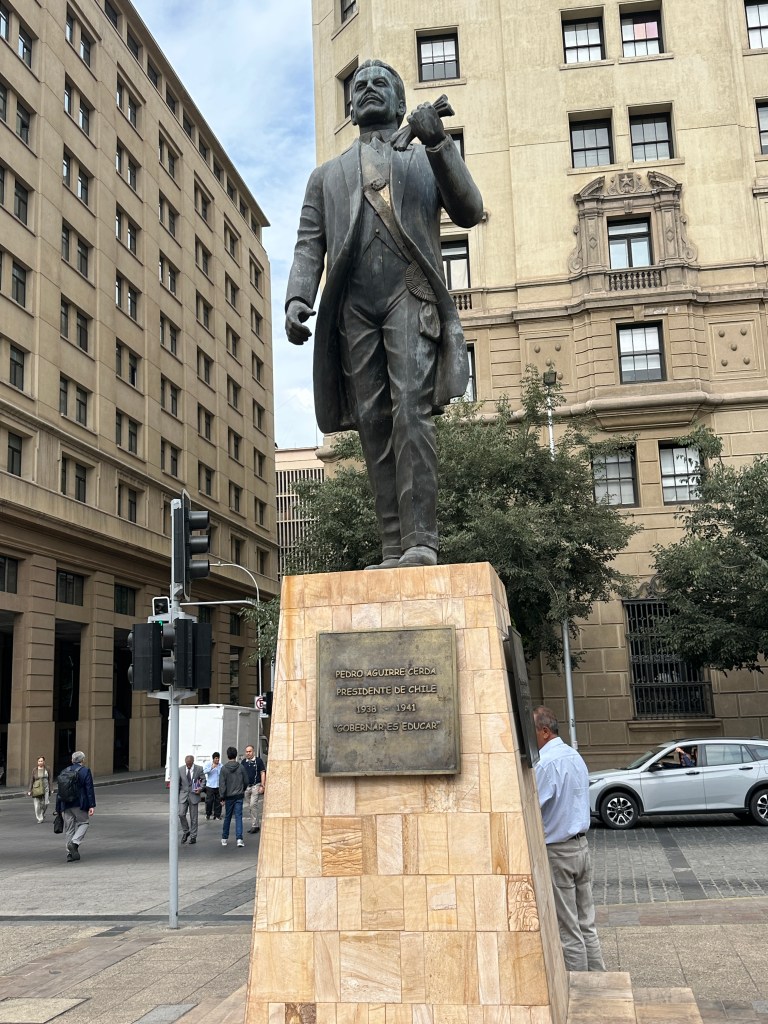
We had a tour of Santiago, which included the Church of San Fransisco, a Fransiscan church which dated back to the early colonial days. It has survived 15 major earthquakes, thanks to good engineering (like many of the other buildings in Santiago). In the center of the city is the Moneda Government Palace and other government buildings surrounding Constitution Square, with statues of former presidents. We walked through the Nueva York area and got a flavor of the city.
We learned that Chileans add avocado to many dishes. In fact, the most popular street food is the Complete Italiano, a hot dog with mashed avocado, mayonnaise, and tomatoes (colors of the Italian flag).
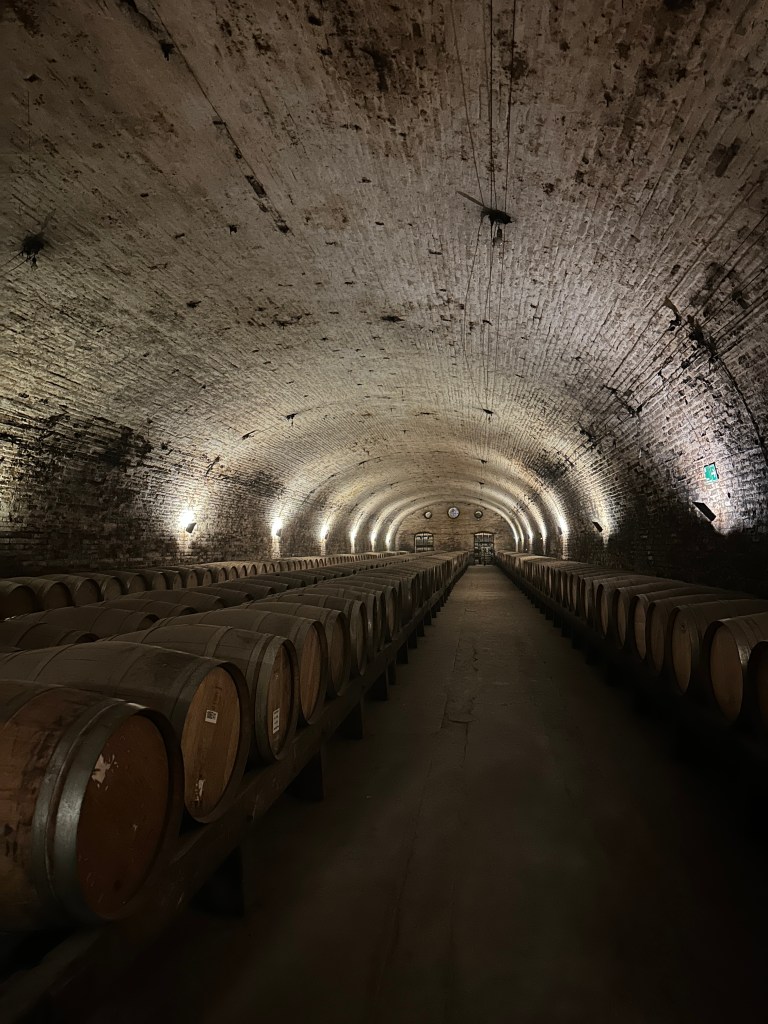
We then visited the winery of Cousino-Macul, which has been in the hands of a single family every since founded in 1856.

Friday, Jan. 9 through Sunday Jan. 11
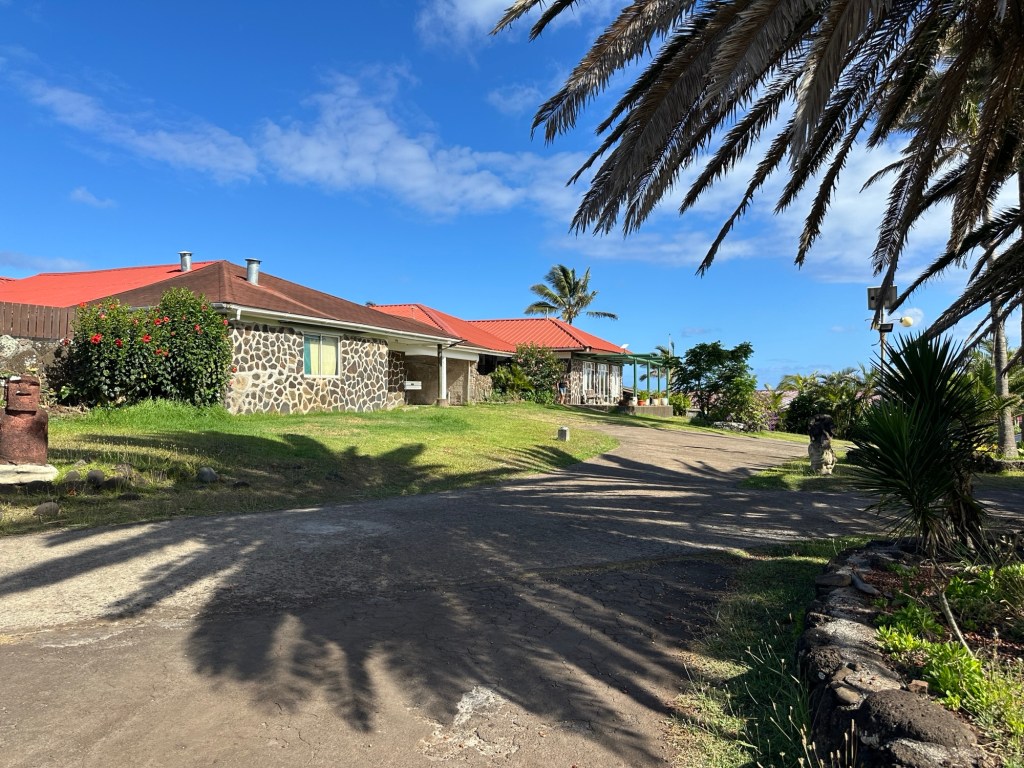
We flew to Rapa Nui, arriving around lunchtime (long flight but 2 hour time difference). We stopped at a local spot to pick up freshly made empanadas on our way to our lovely lodge overlooking the ocean (Iorana Hotel).
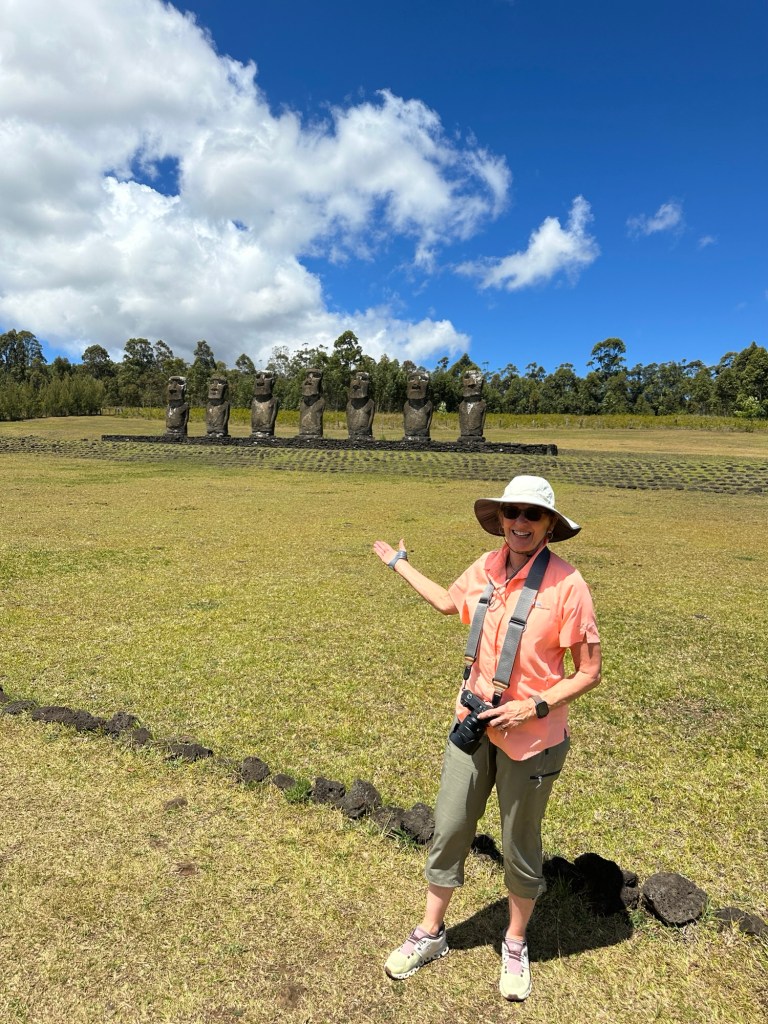
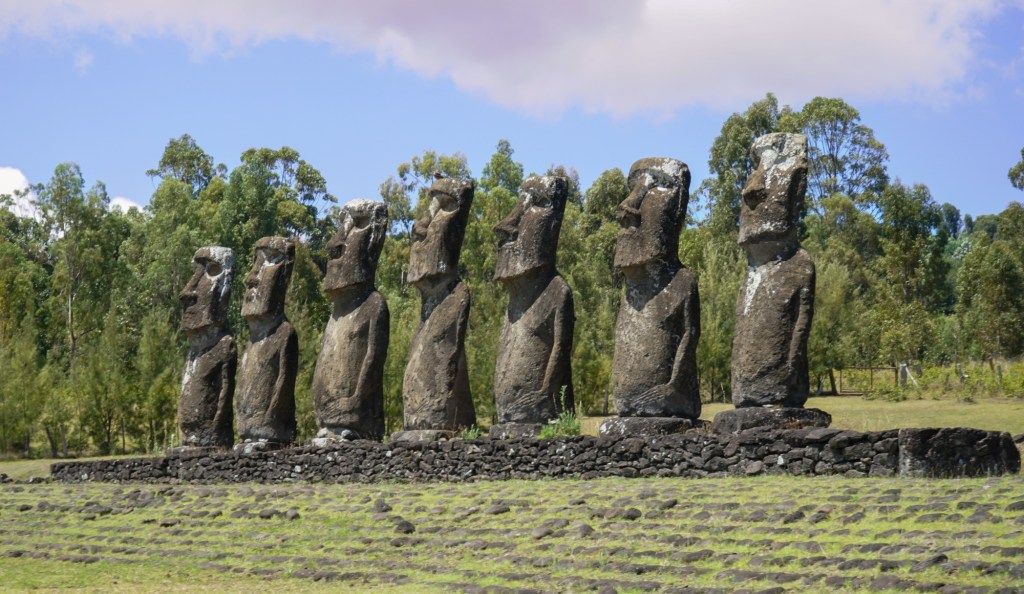
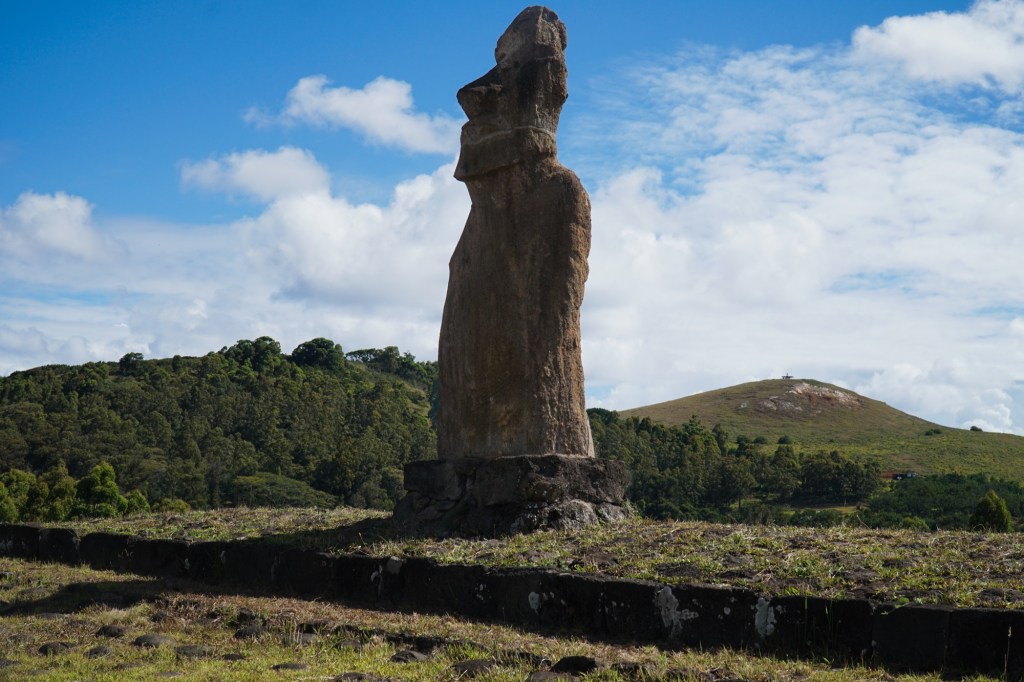
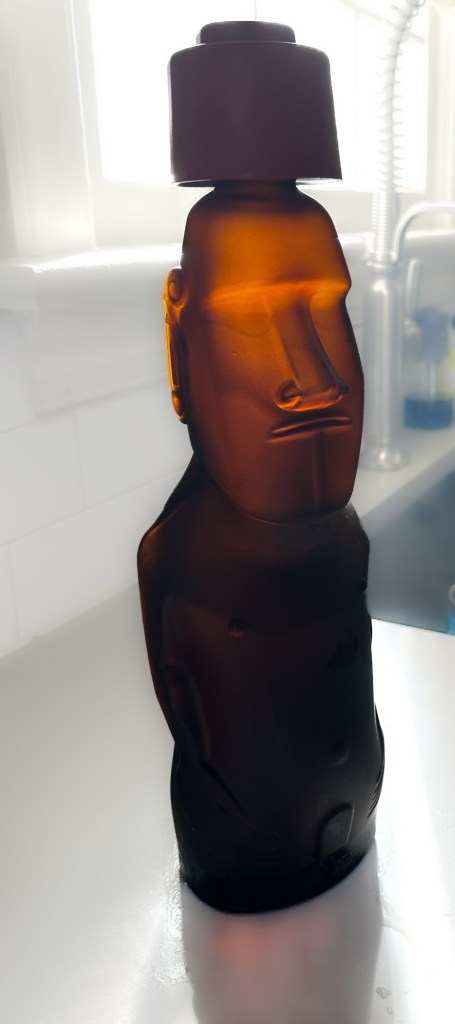
A local guide joined us for a tour of some of the key Moai sites. We started at Ahu a Kivi, with seven Moai. We learned that the Rapa Nui clans, between 1250 and 1500 AD, created platforms for displaying these standing carved figures to honor the dead. The family of a prominent deceased clan leader would arrange for several persons to carve a moai in the local quarry, then transport it to its position on the platform facing the clan’s village. It is still unknown exactly how the transport worked, but a leading theory is that they were “walked” using ropes. A recent New York Times article described recent findings:
[https://www.nytimes.com/2025/11/26/science/archaeology-easter-island-rapa-nui.html?unlocked_article_code=1.LlA.o_1C.mL_fVqUnON4N&smid=nytcore-ios-share]
Only once the figure had arrived at its destination would the eyes be added. It was thought that the “mana,” or life force of the ancestors, was transmitted via the moai eyes, and would lend protection, prosperity, and fertility to the clan. Surrounding the platforms was the community burial ground.
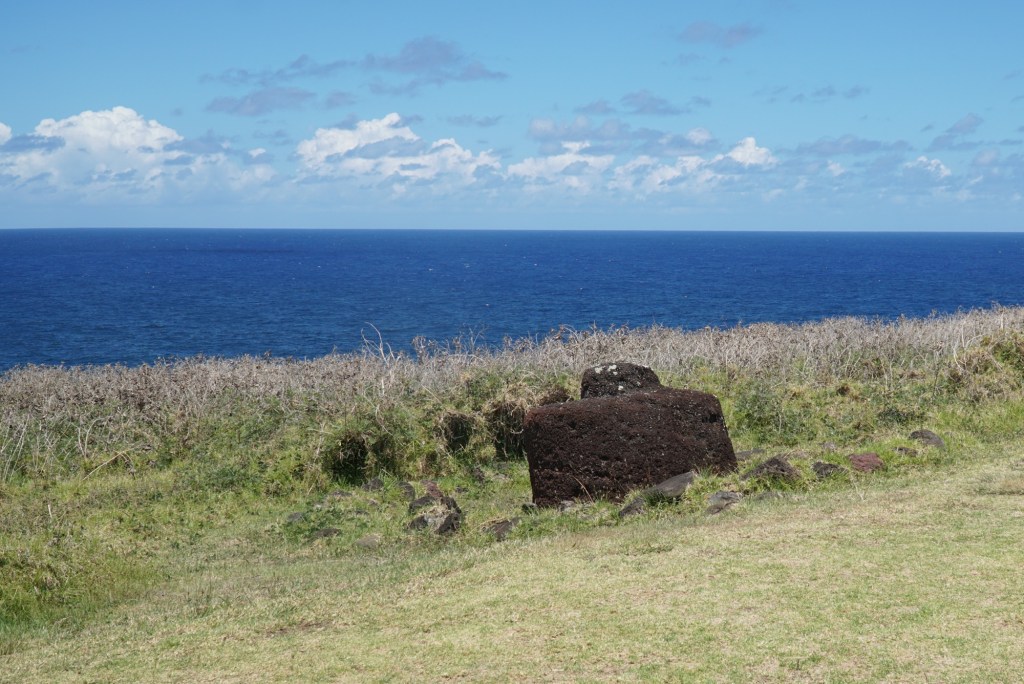
The body (about 2/3 of which is the head) was carved from compressed volcanic ash. The pakao, or topnot, was carved separately from red rock, to sit upon the head of some of the later constructed moai. The eyes were formed by light colored coral surrounding black or red obsidian. None of the original eyes have survived, but archaeologists have pieced together information about them from remains.
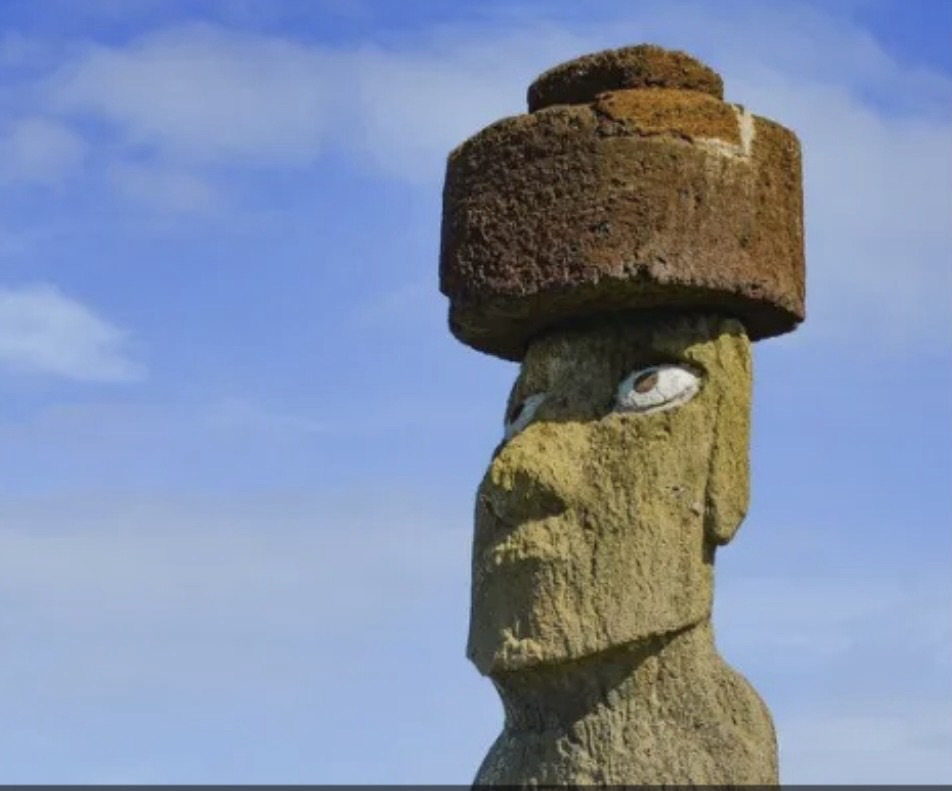
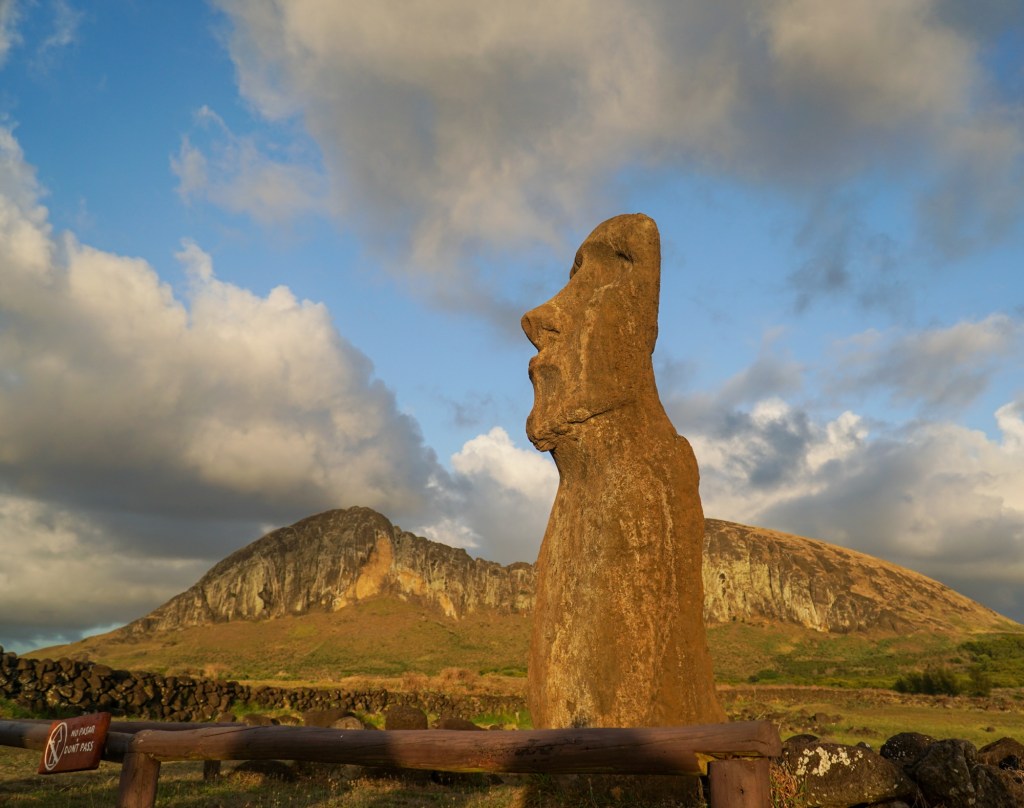
Many of the moai were still standing when the first Europeans came to the island in 1722. A century later, all had been toppled. It was thought that clans would push the moai of its rivals face down to take away the power of the mana. Almost all moai have been found face down. The moai that are currently standing have been carefully restored by archaeologists and historians.
The Rapa Nui population, founded by Polynesian voyagers, was decimated around 1862 through abduction of around 1500 individuals as Peruvian slaves and through transmission of smallpox by outsiders. Only 111 residents remained by the early 1900s. The current policy of land ownership on the island is restricted to descendants of the original residents (currently approximately 3,500-4,000).
Of interest, at least to me, was that Thor Heyerdahl, ethnographer and Norwegian explorer of Kon Tiki fame, helped explore Rapa Nui in 1955-56. He expounded a theory that the original settlers on the island were from South America. This was later proven to be false, as the settlers were of Polynesian origin. The most important person leading moai restoration efforts was William Mulloy, in the 1960s and 70s.
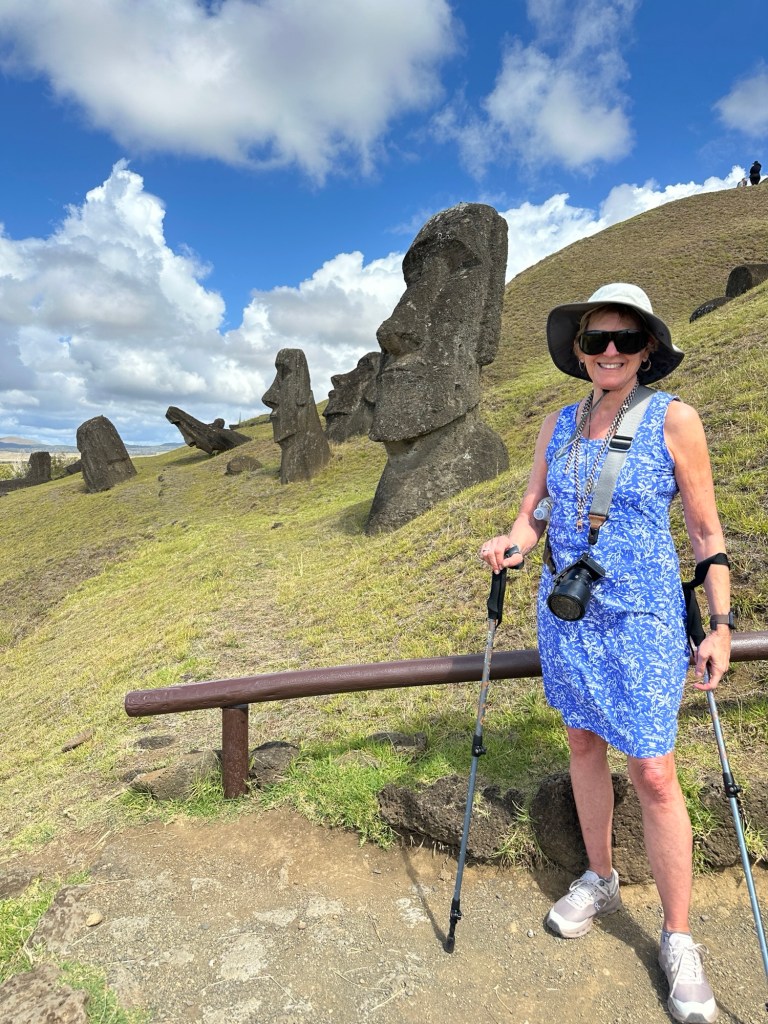
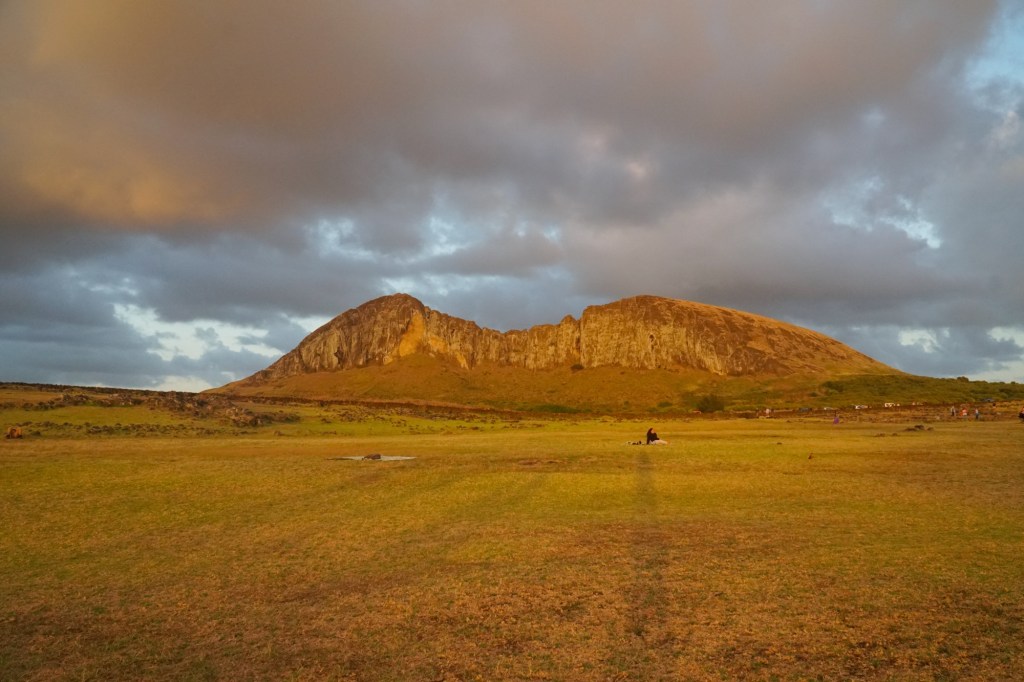
We visited fully restored moai, some moai remains as they were found on their clan sites, some that had evidently fallen during transport, and a quarry where they had been carved and where many were still located, in various stages of completion.
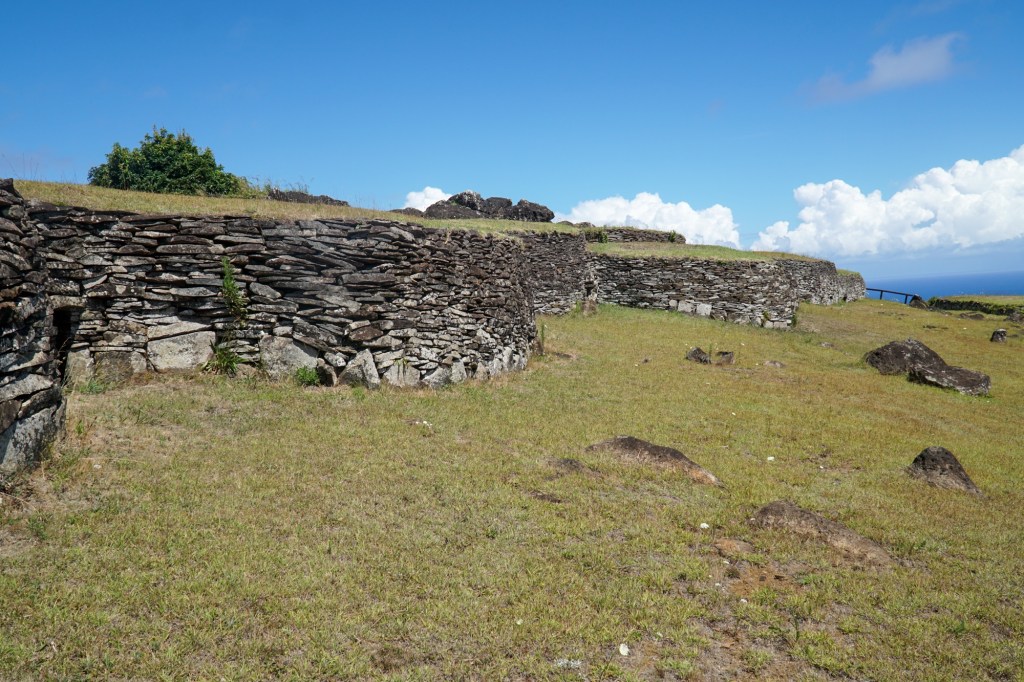
We also visited a site where a village had been reconstructed, including a lodging, cavities in the stone walls for chickens to roost, cooking sites, and raised beds for farming. All had to be protected from the wind and rain.
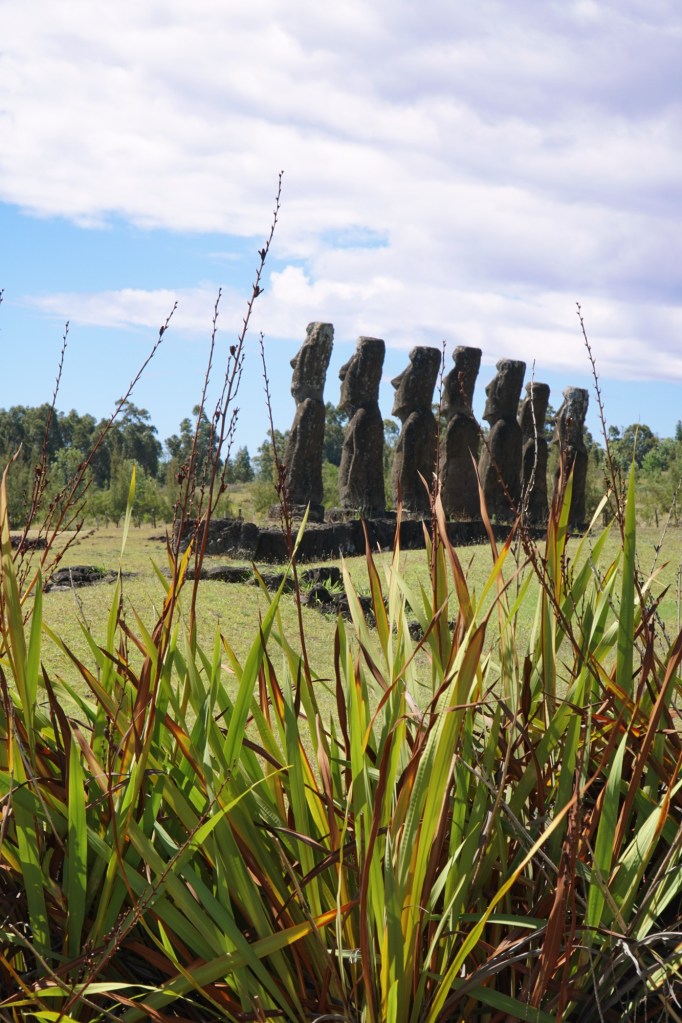
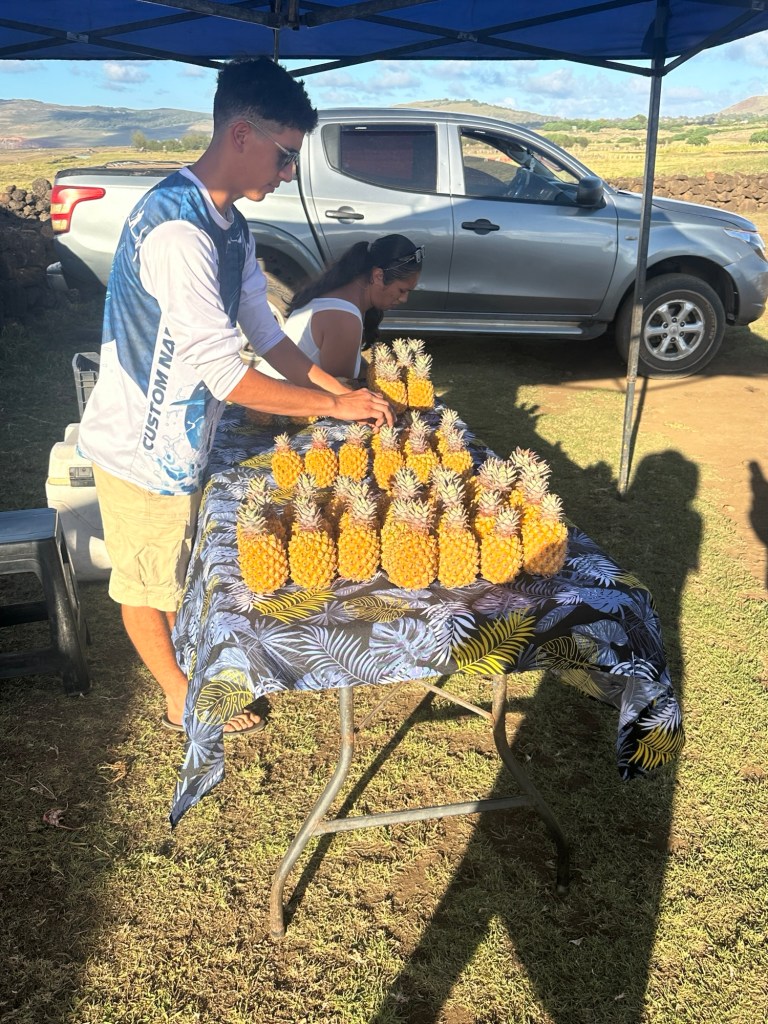
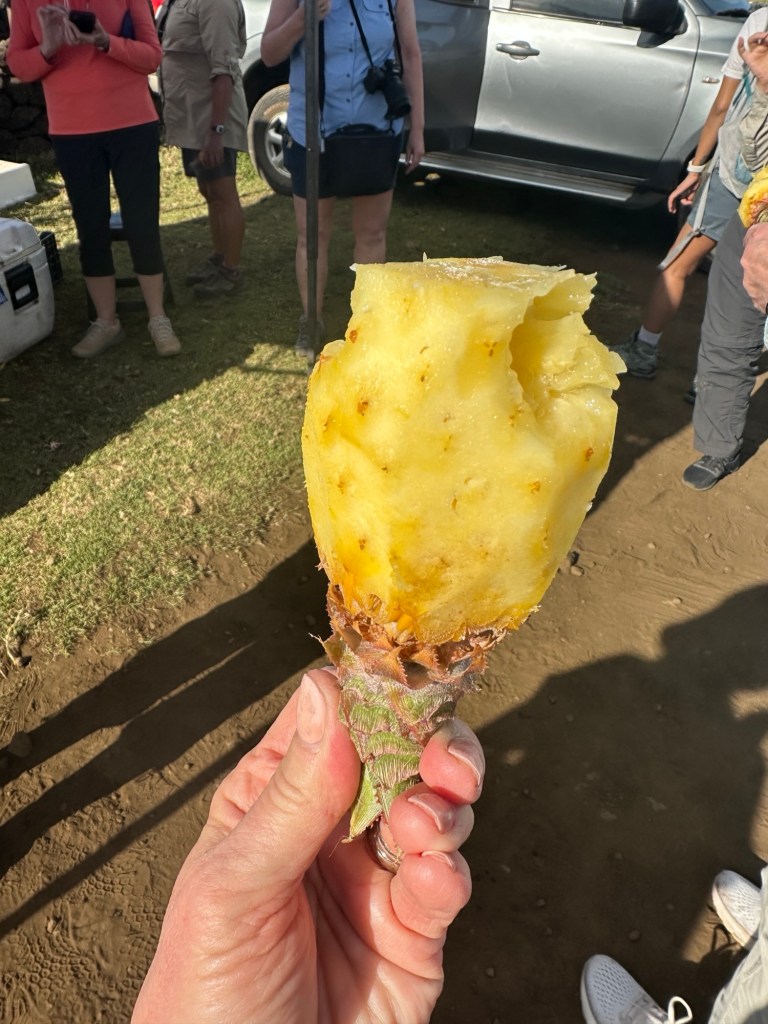
Below are images from visits to the different moai during our stay. At some of the stops, locals were offering freshly carved small pineapples — delicious!
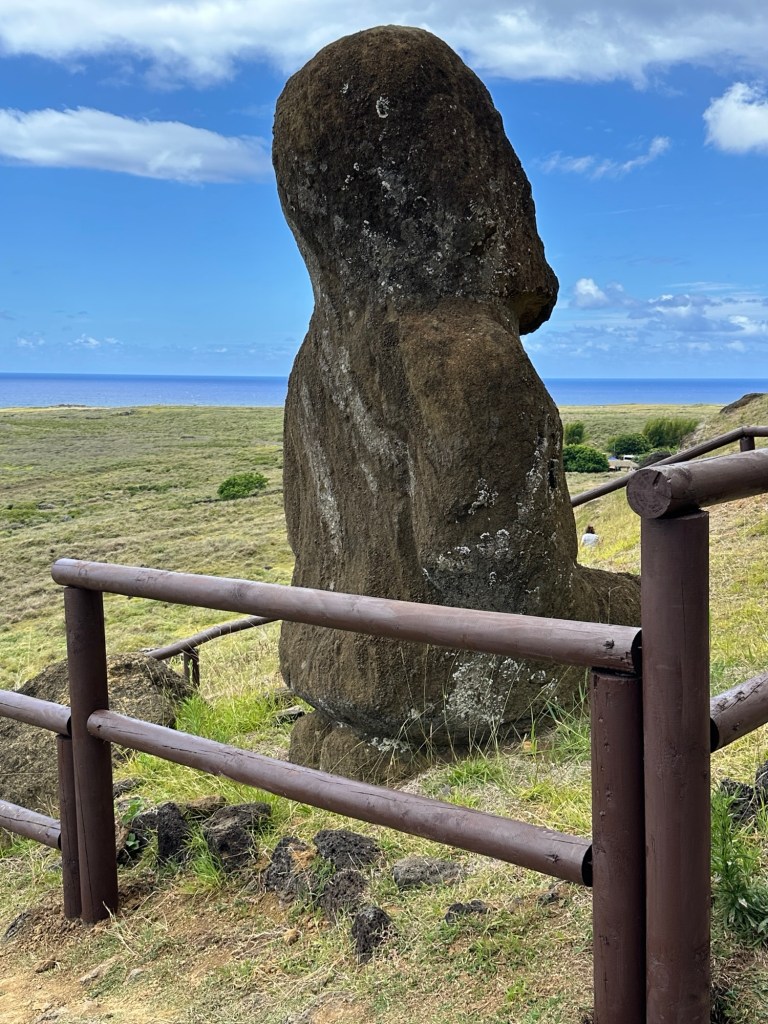
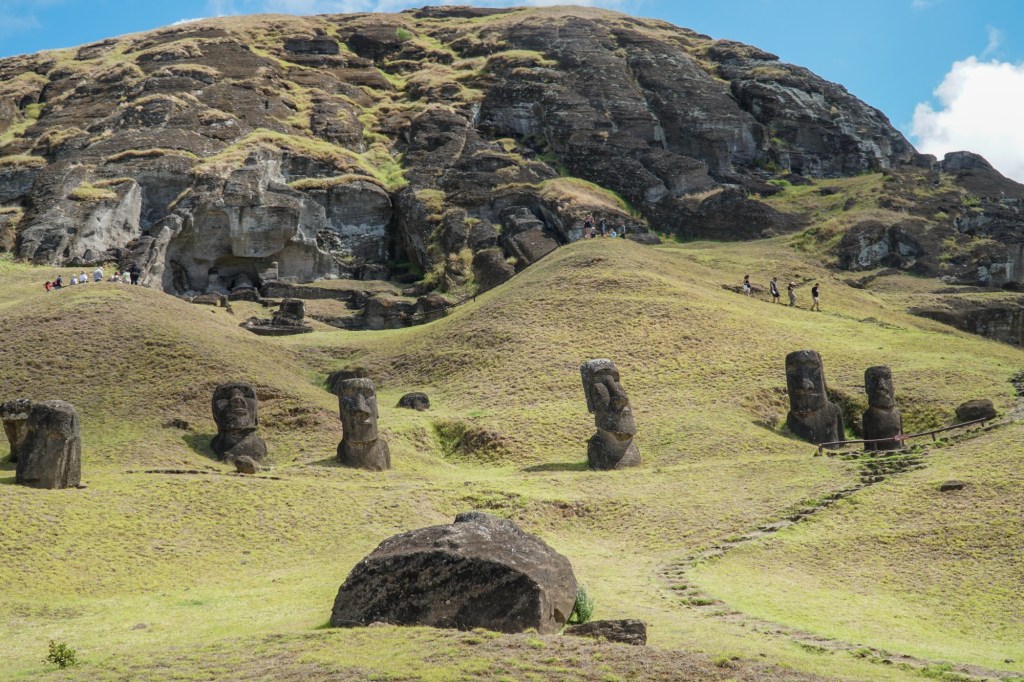
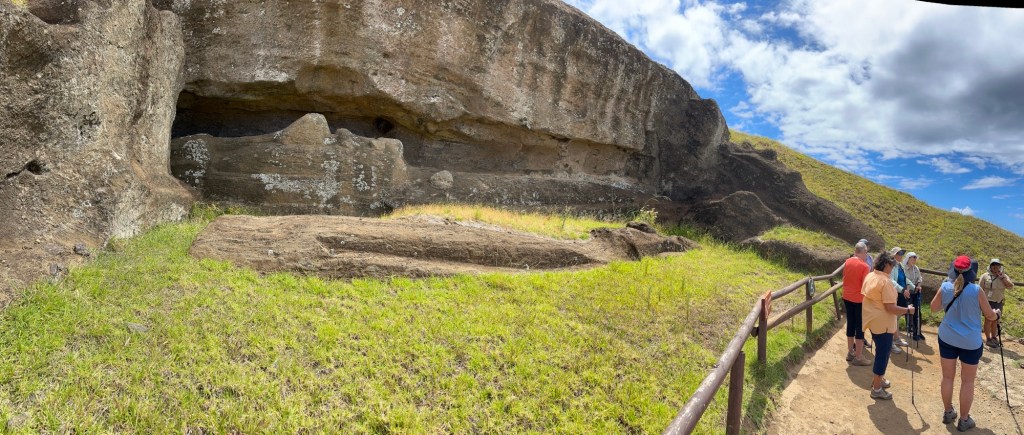
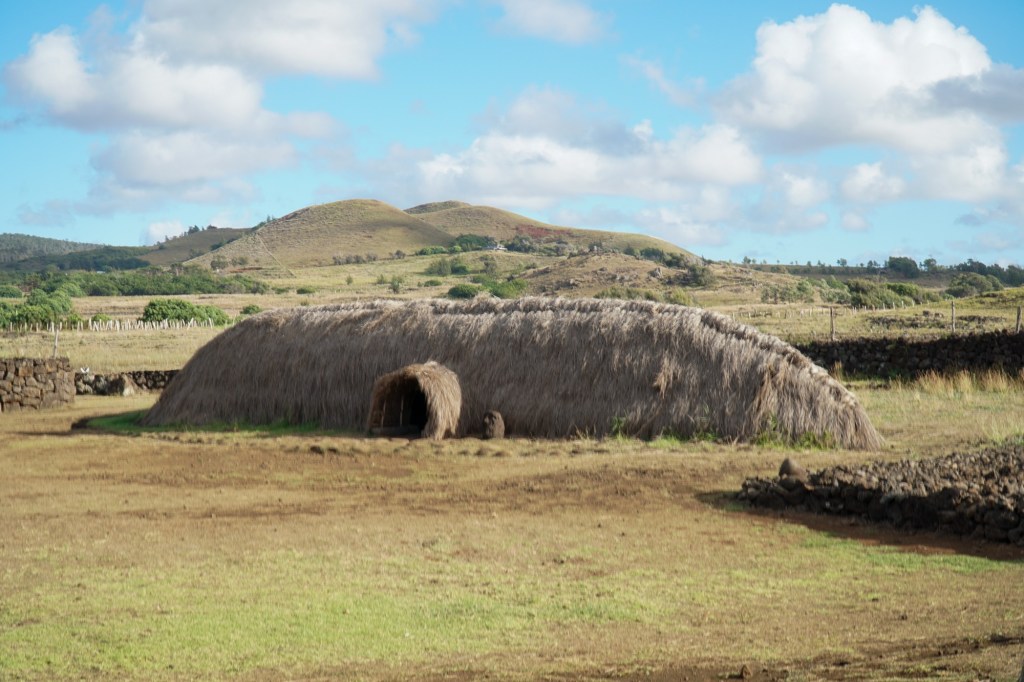
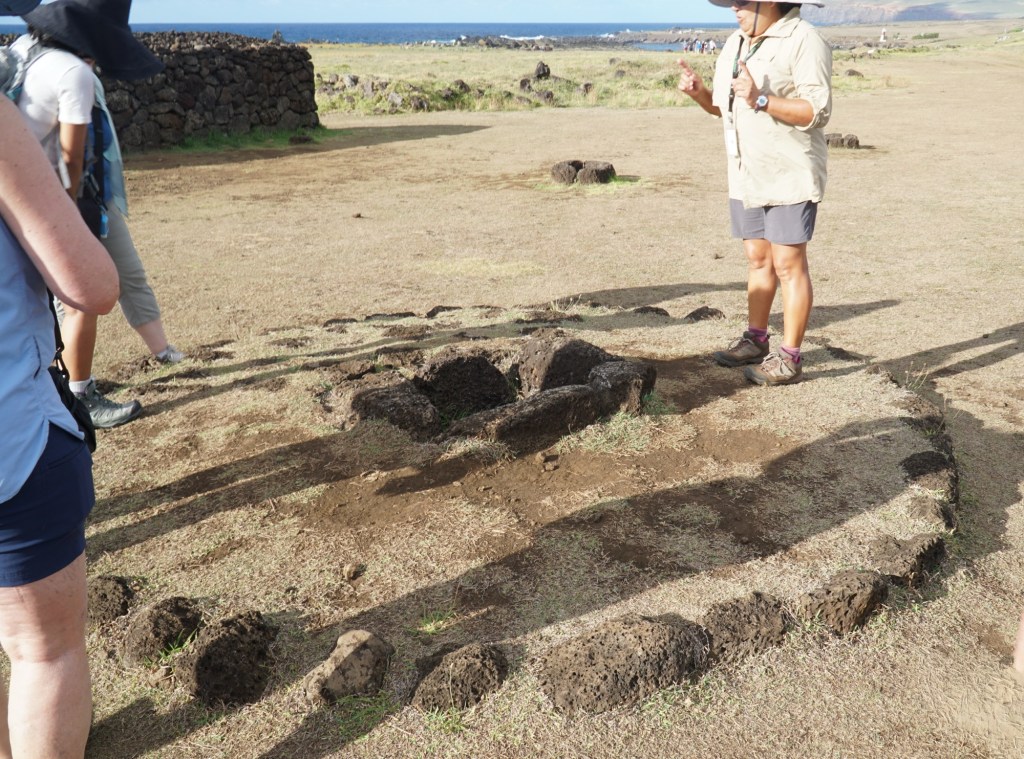
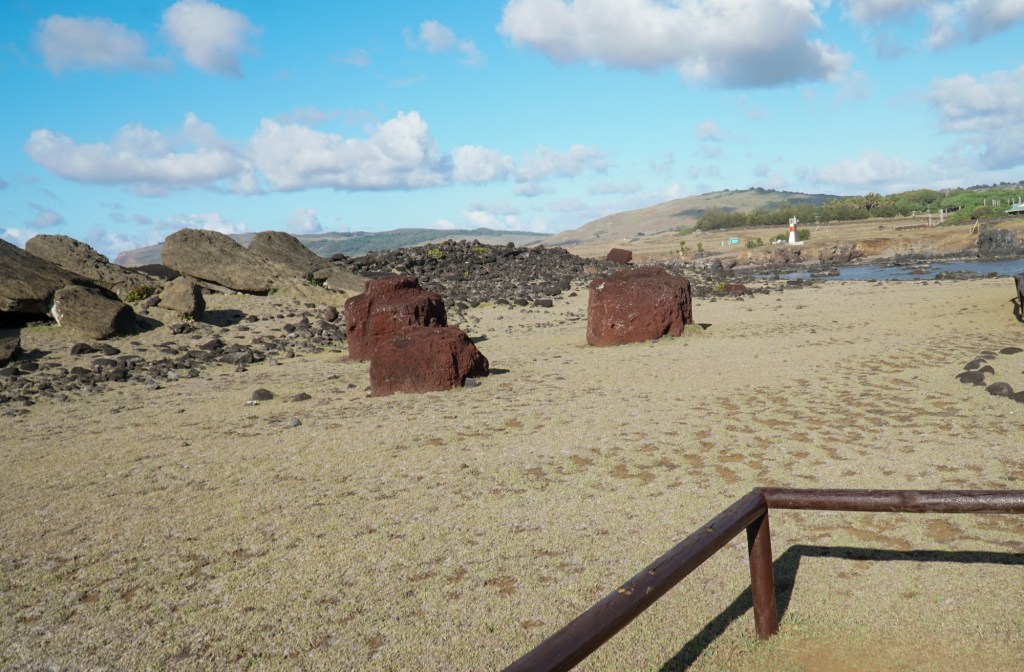
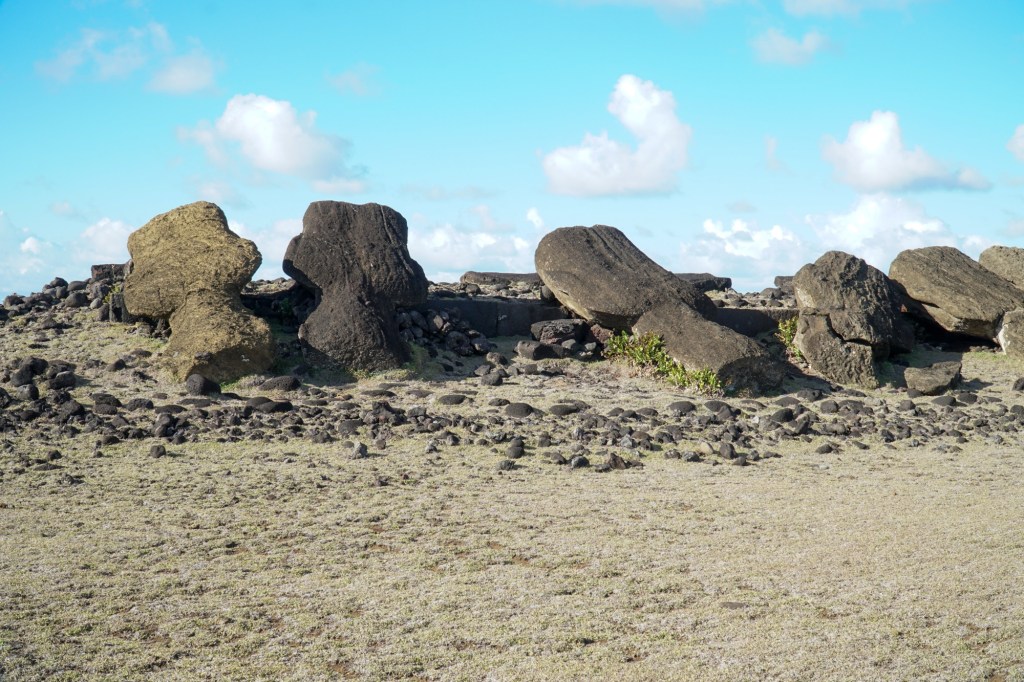
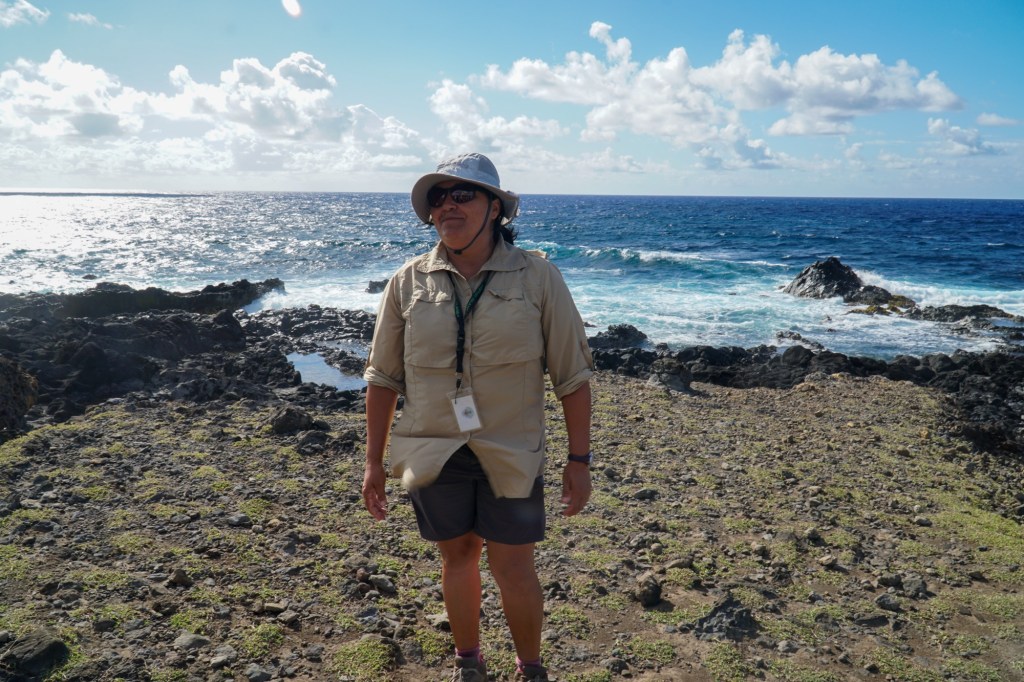
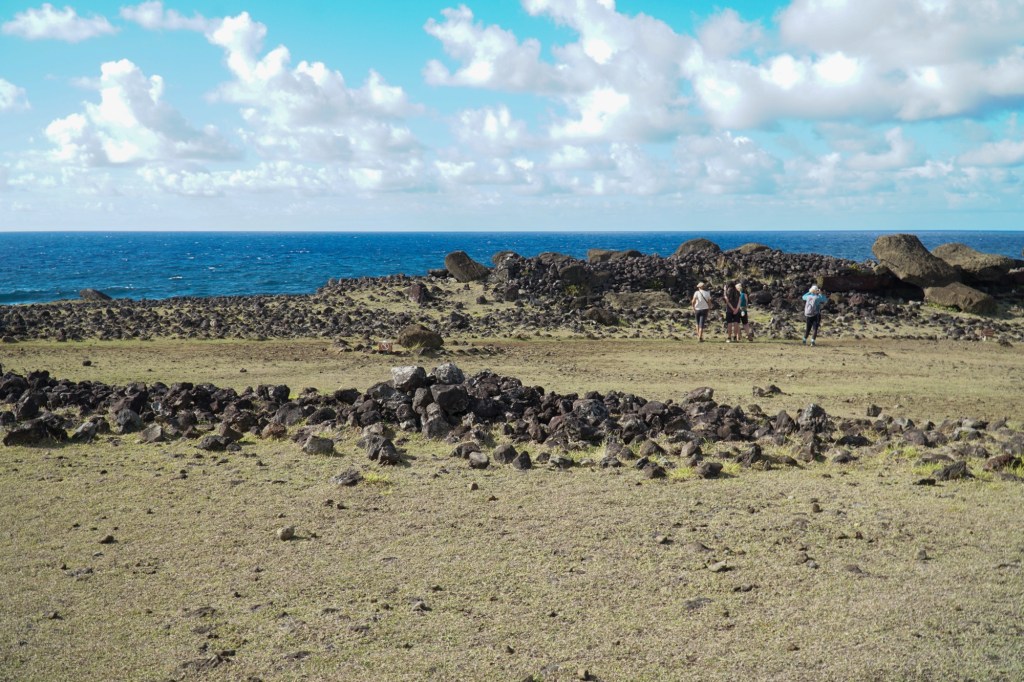
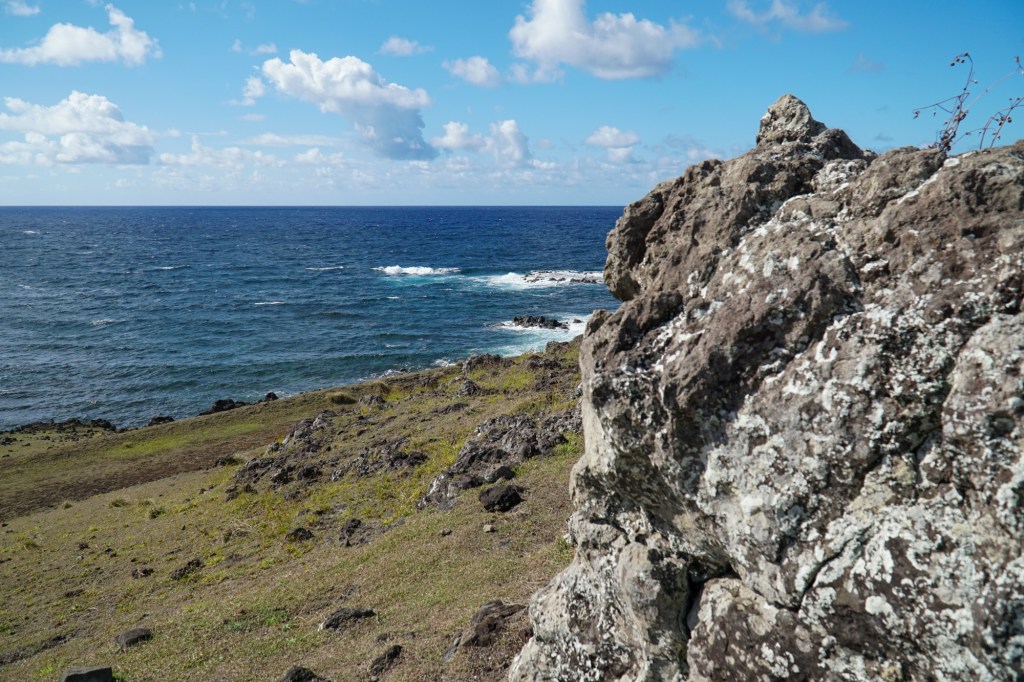
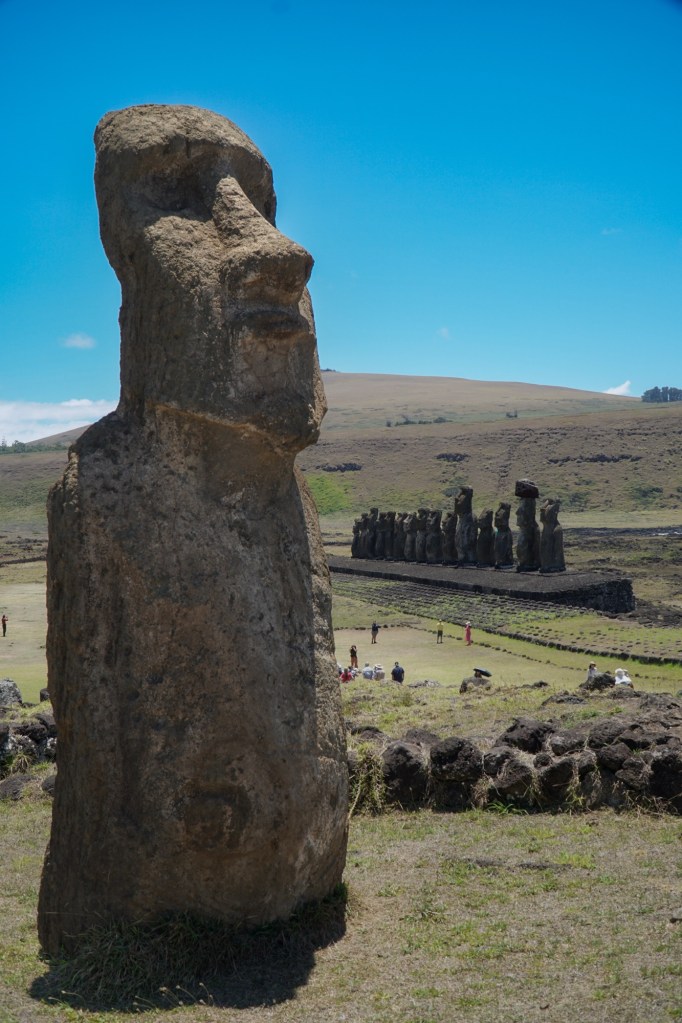
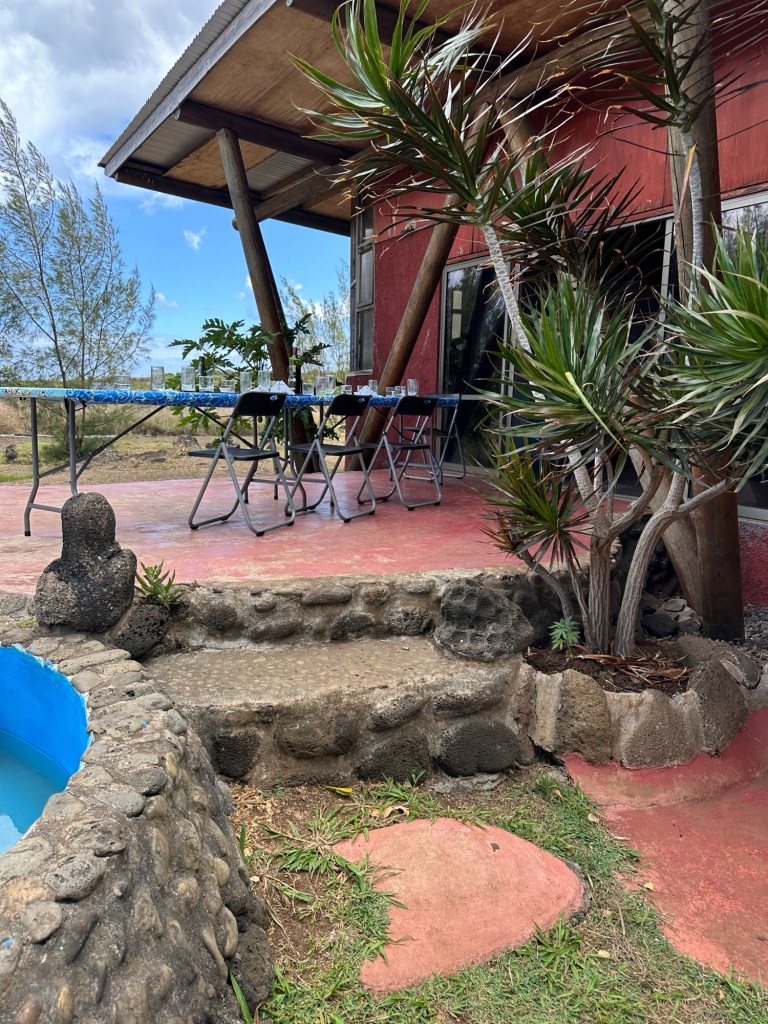
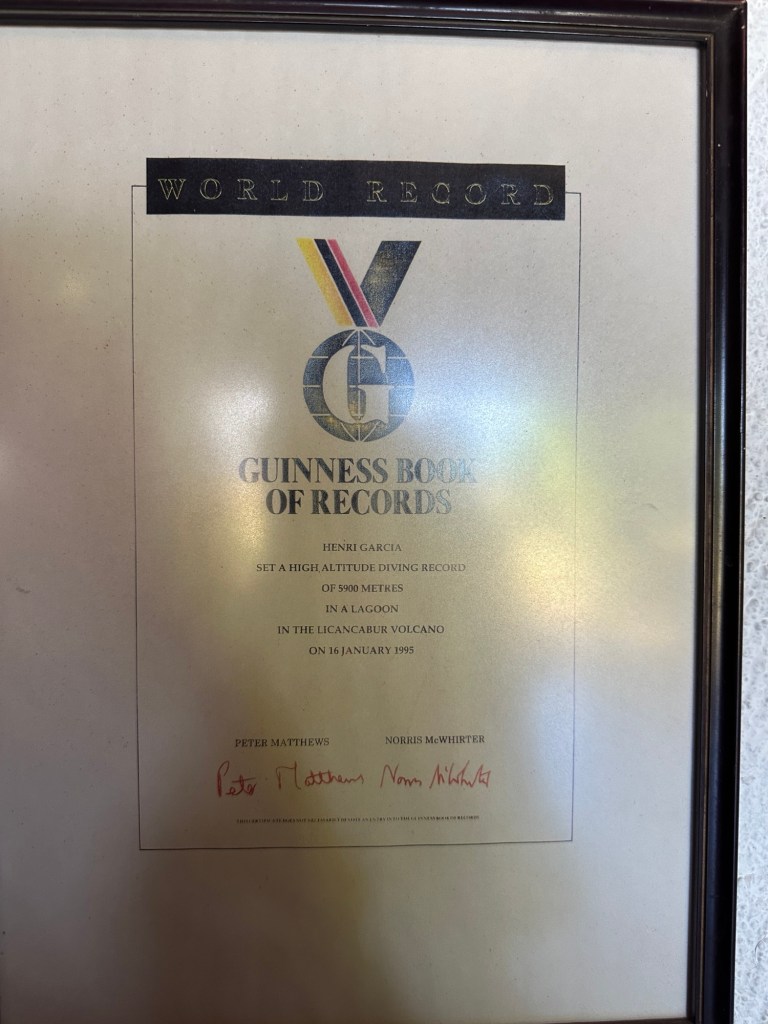
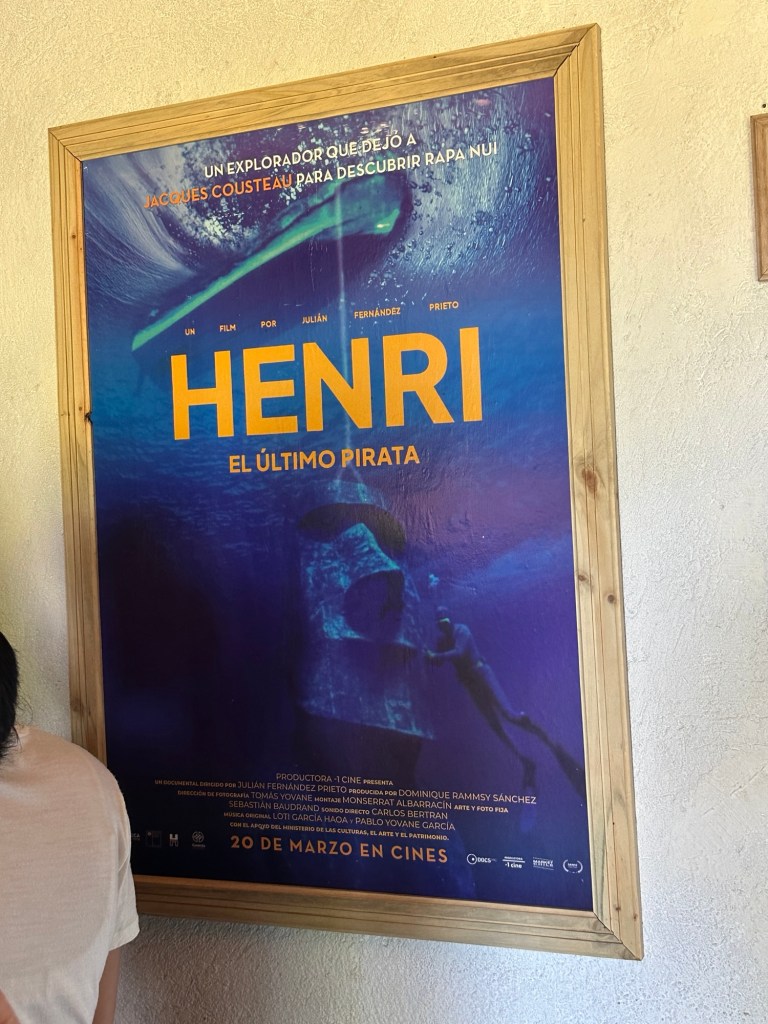
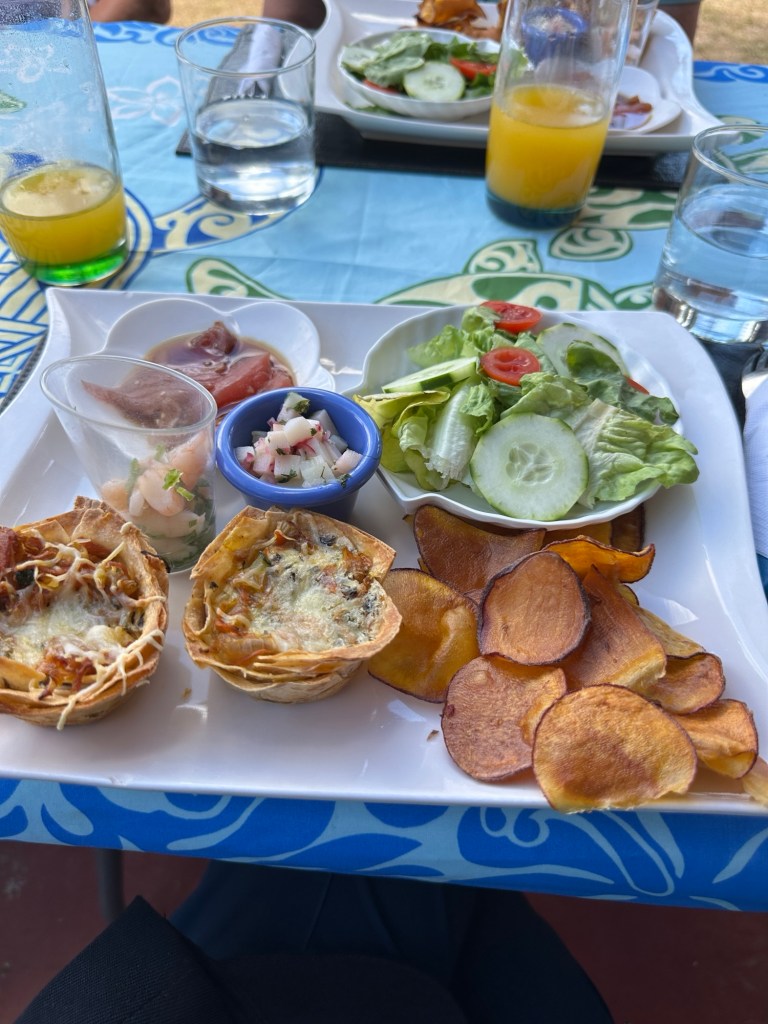
One of our delicious lunches was prepared in the home of the late Henri Garcia, a colleague of Jacques Costeau, who also won various diving awards. His son keeps his memory alive and helped create a documentary about his father: Henri, the Last Pirate.
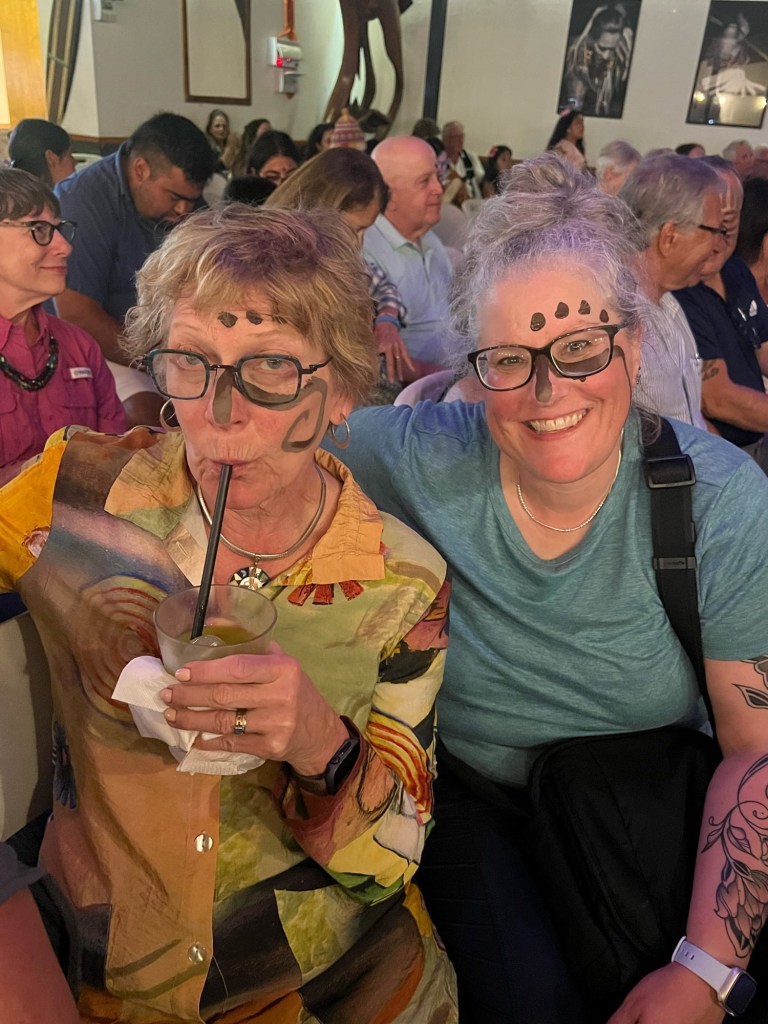
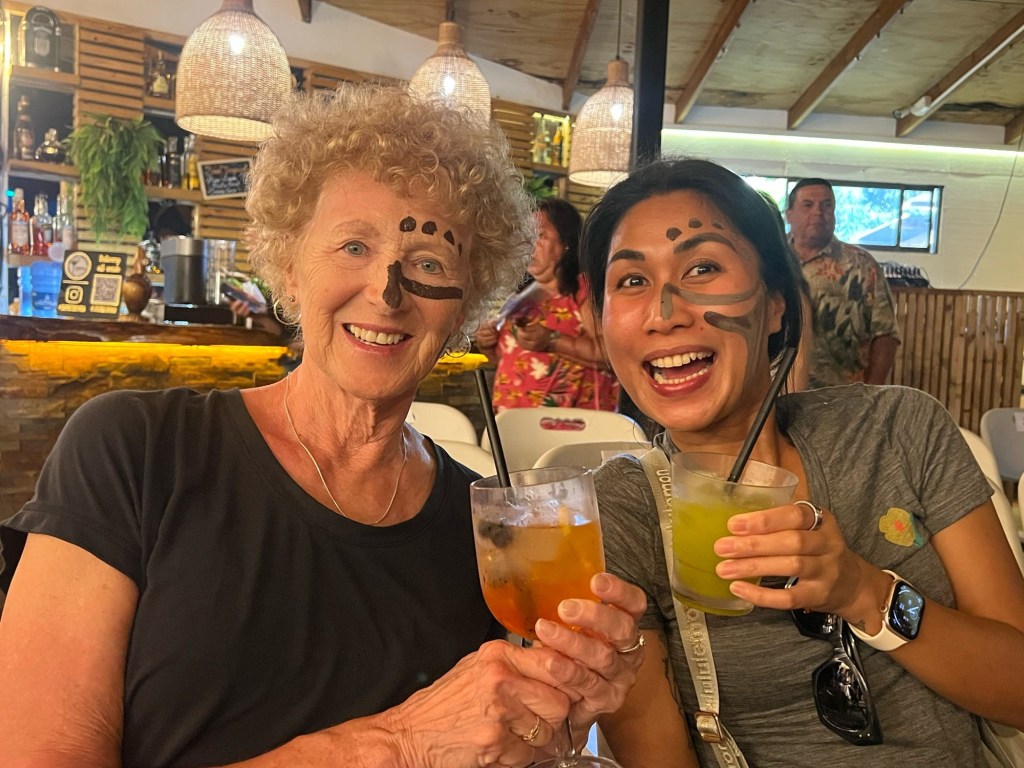
While we were on the island, we also attended a dance performance reflecting Polynesian heritage: body painting, story telling, war dances, drums, and ukuleles.
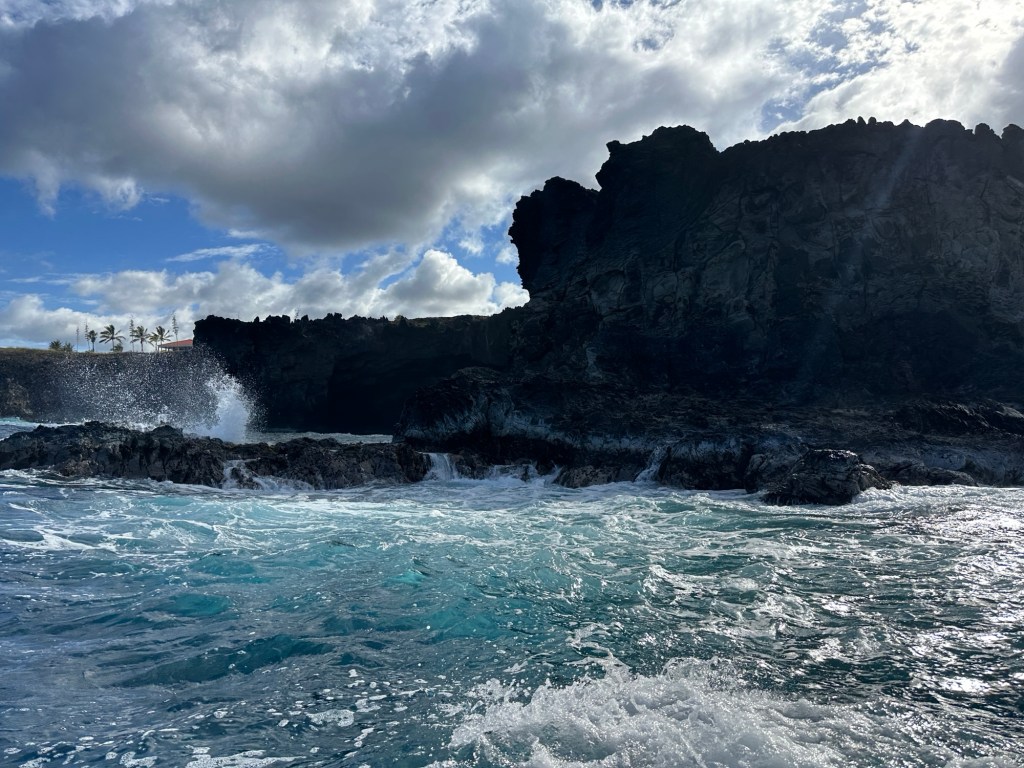
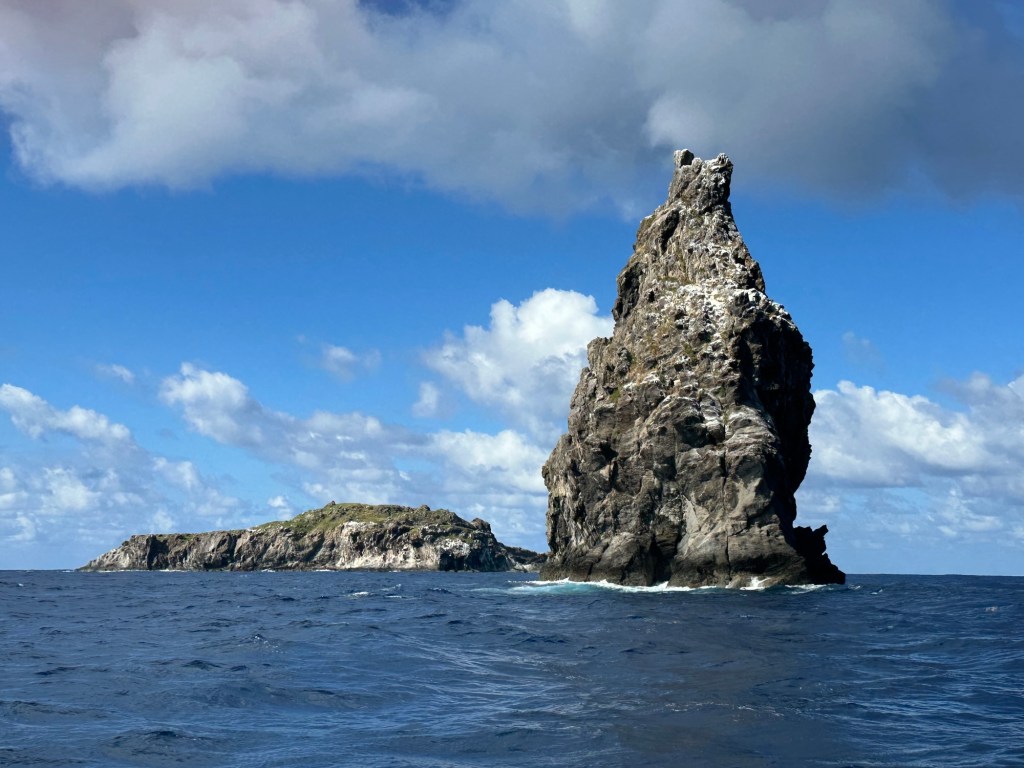
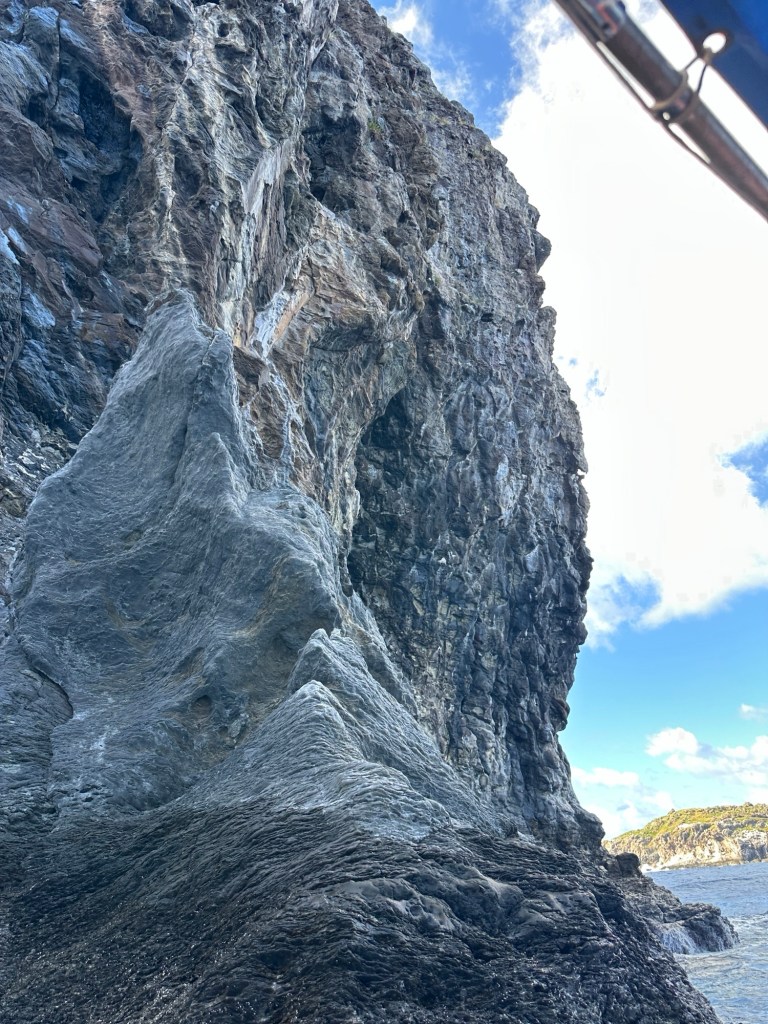
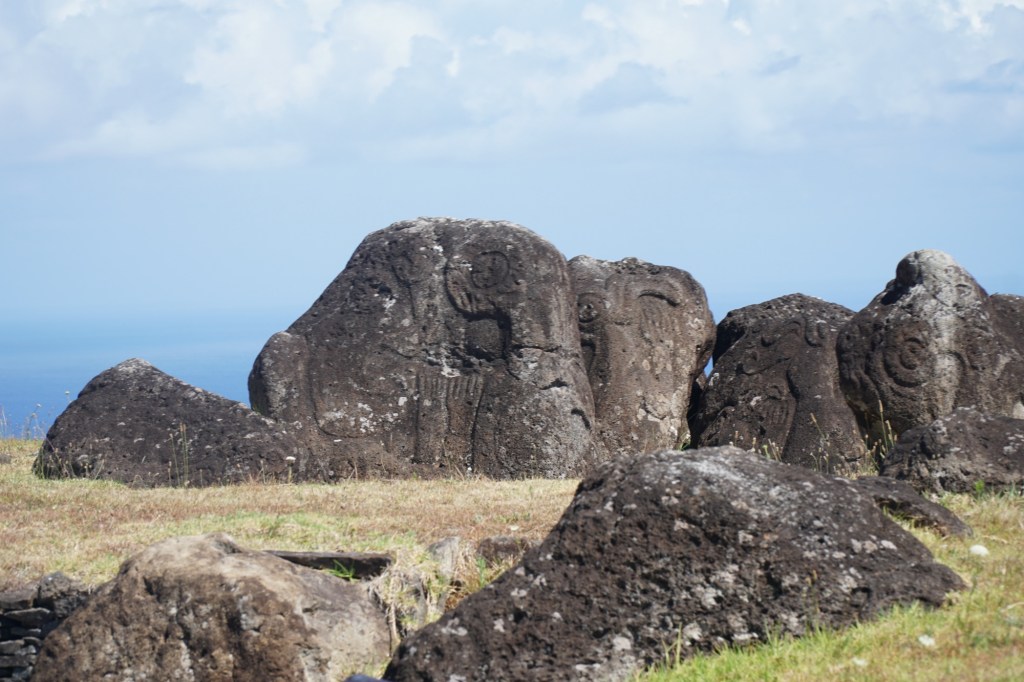
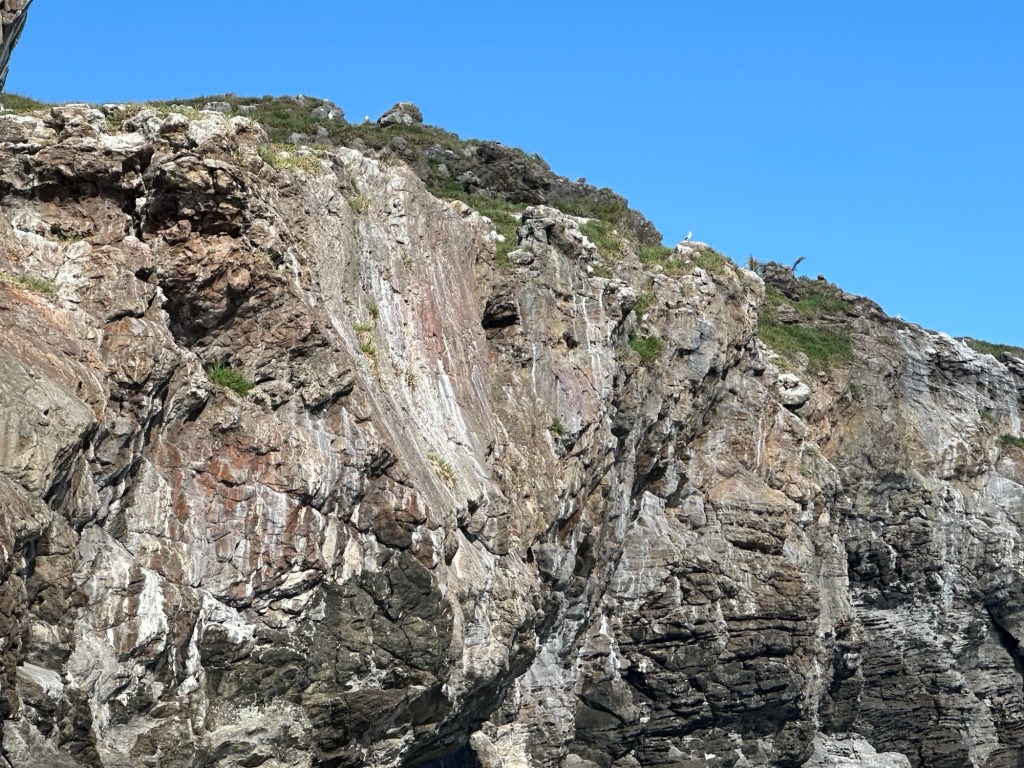
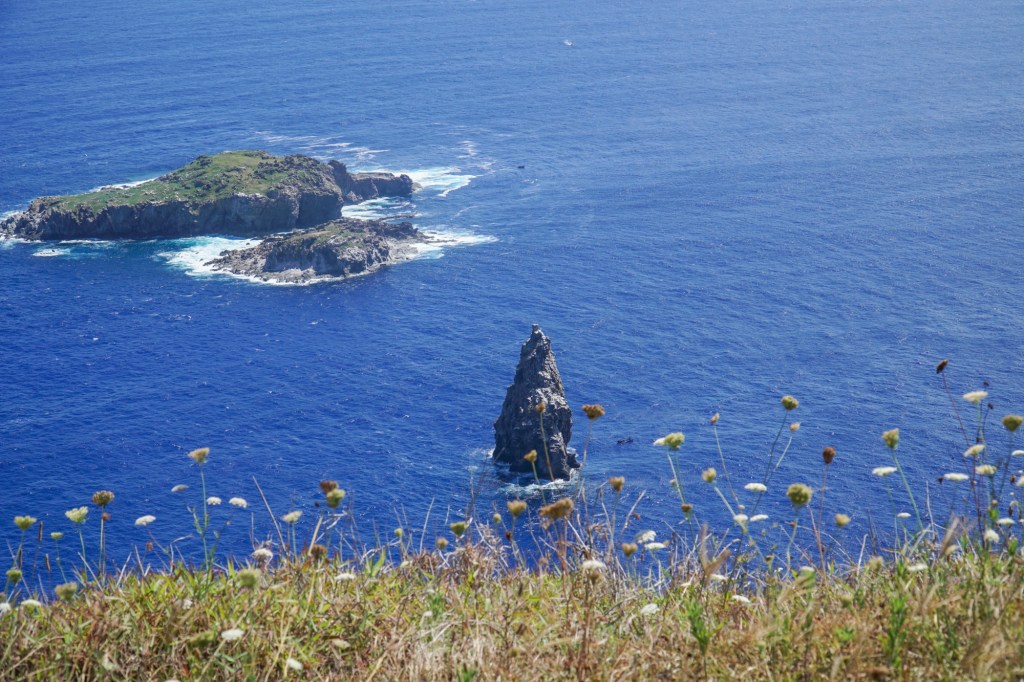
For another island experience, we went on a boat ride with the hope of snorkeling. The boat had a glass bottom, which allowed us to see coral and fish. The sea was too rough for snorkeling. We saw the rocky island that the birdmen used in the traditional birdman competition on the island. This competition was held in the 16th or 17th century, after the moai era. Contestants would descend a cliff, swim to the island and climb its steep rocky hill to obtain and return unbroken the first egg of the sooty tern of the year. The winner would be the leader over all the clans on the island for the following year. We saw birdman images in various carvings on the island. Unfortunately our boat ride halted when our captain (a boat mechanic) could not restart our engine after our stop at the birdman sites. Nearby fishing boats ferried us back to the harbor after a somewhat scary time of tossing in the heaving waves toward the rocky shore!
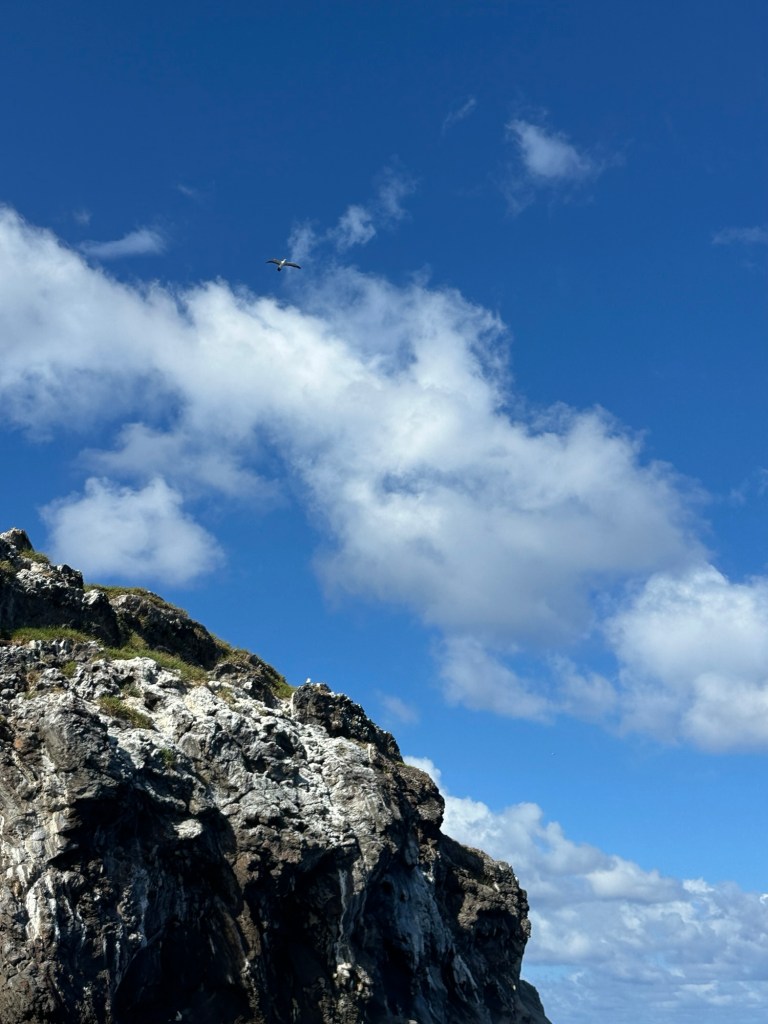
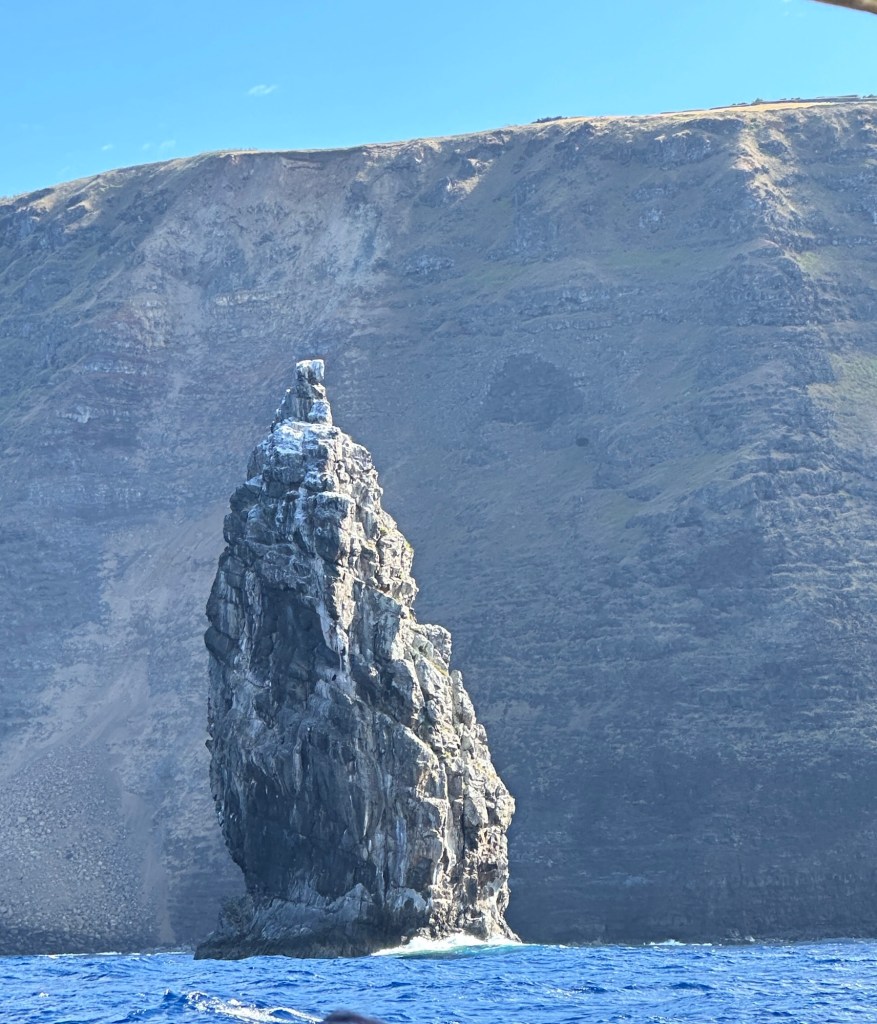
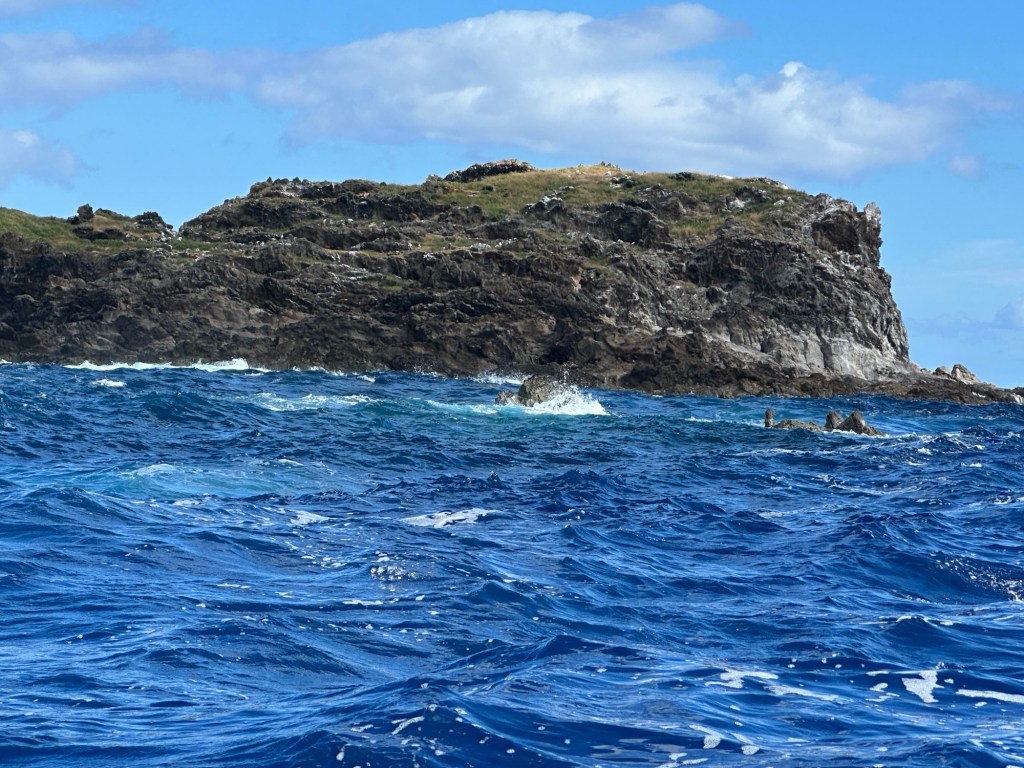
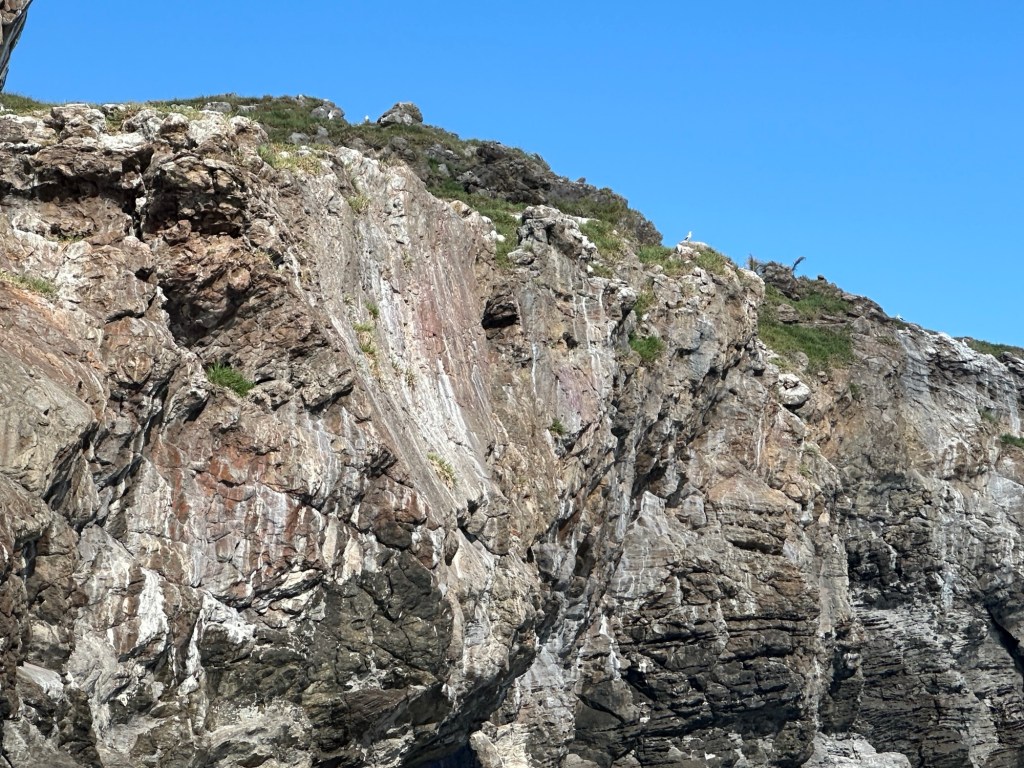
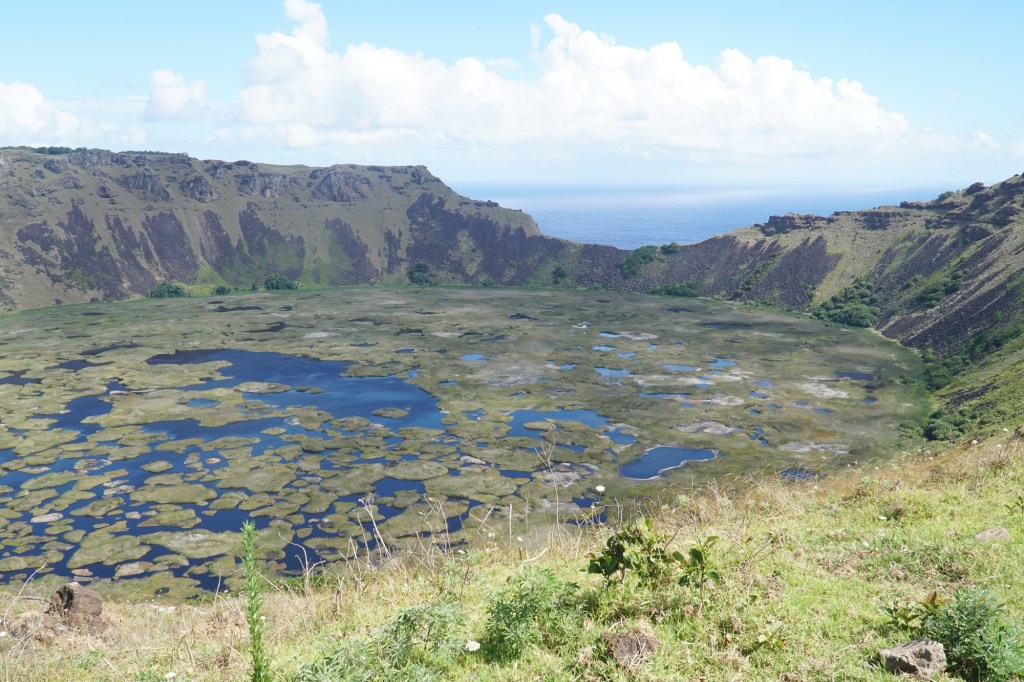
We visited the crater of the Rano Kao Volcano, which was absolutely gorgeous with flowers and other lush vegetation around. We also had a great view down to the sea to the site of the birdman competitions.
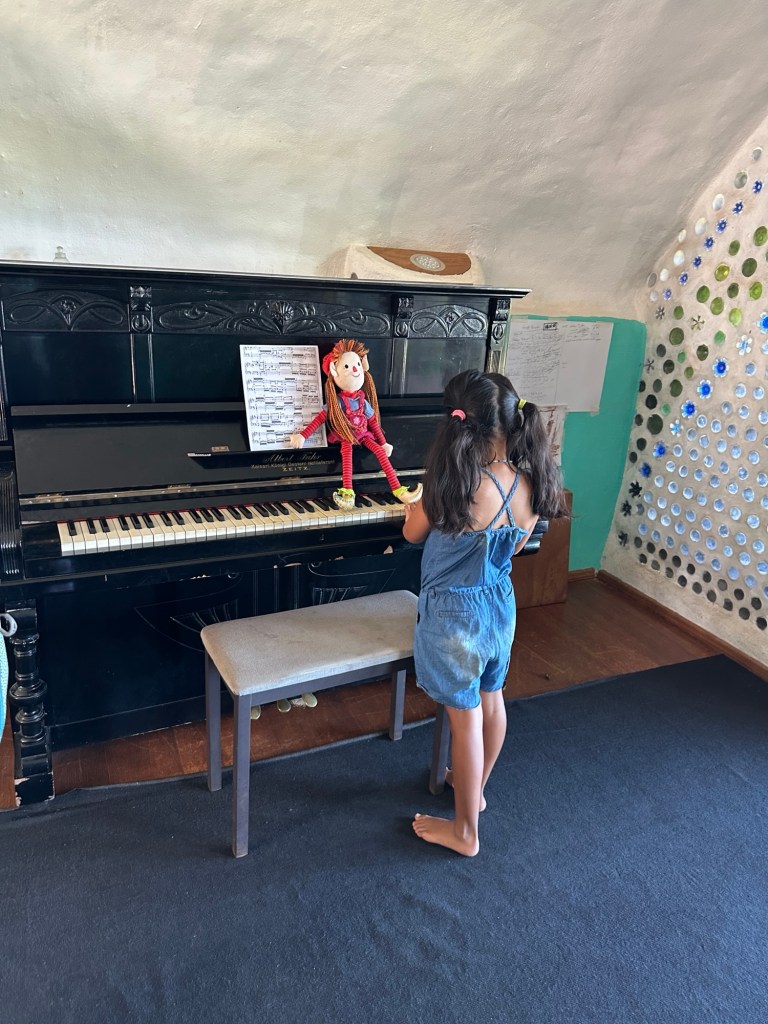
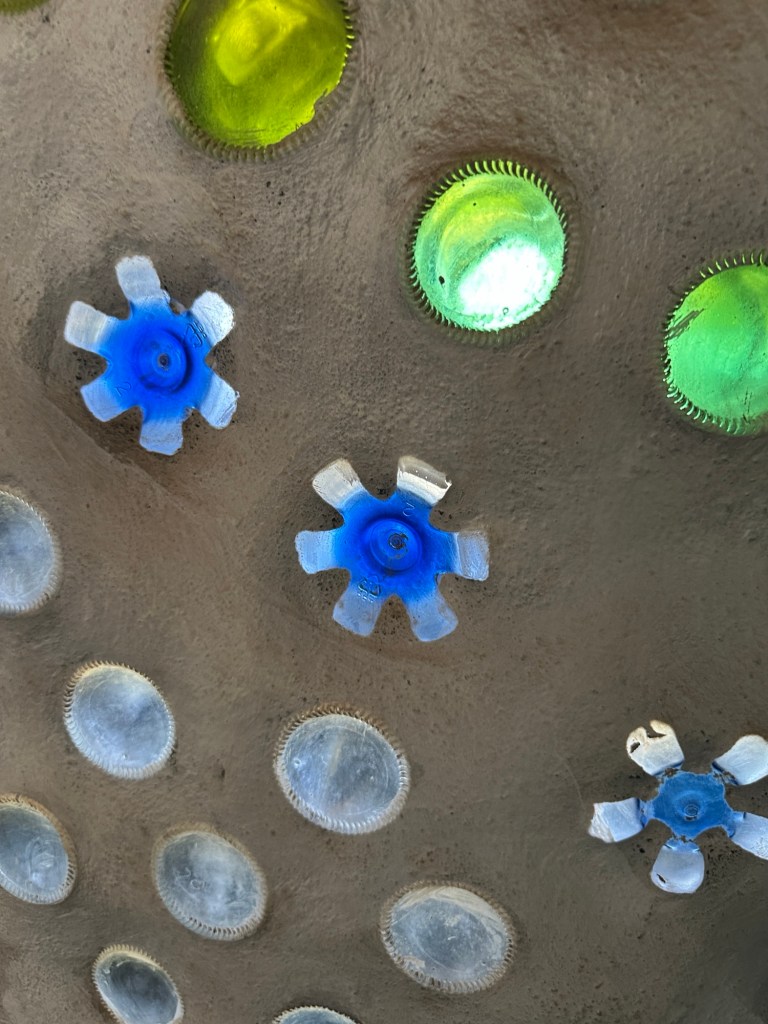
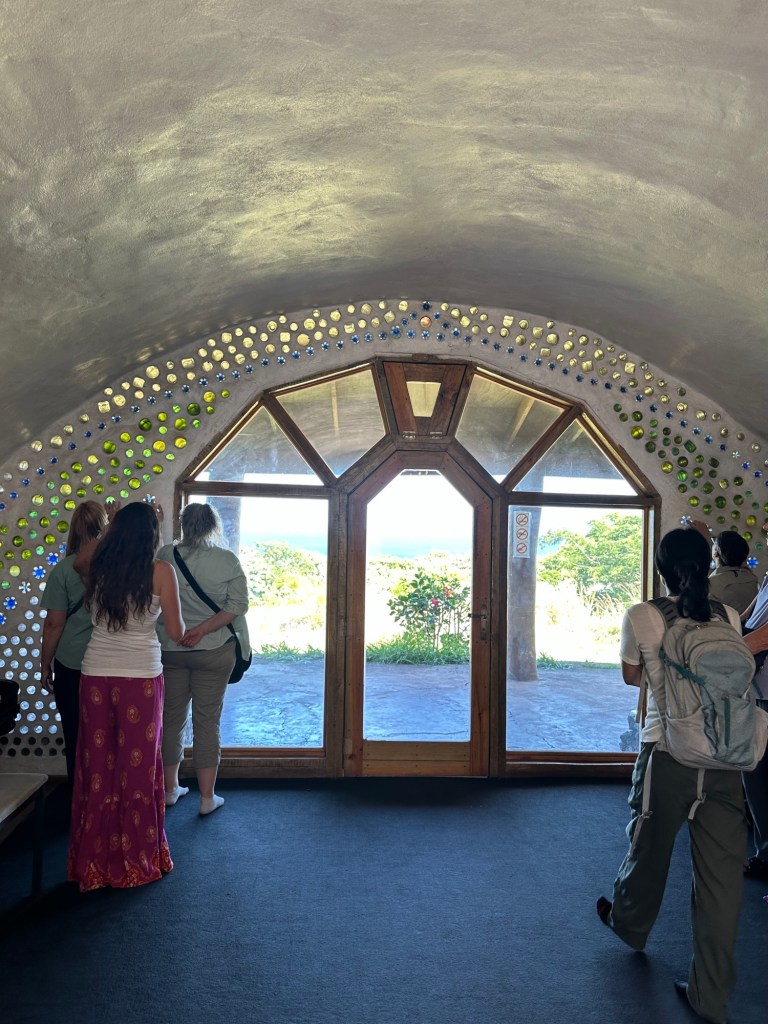
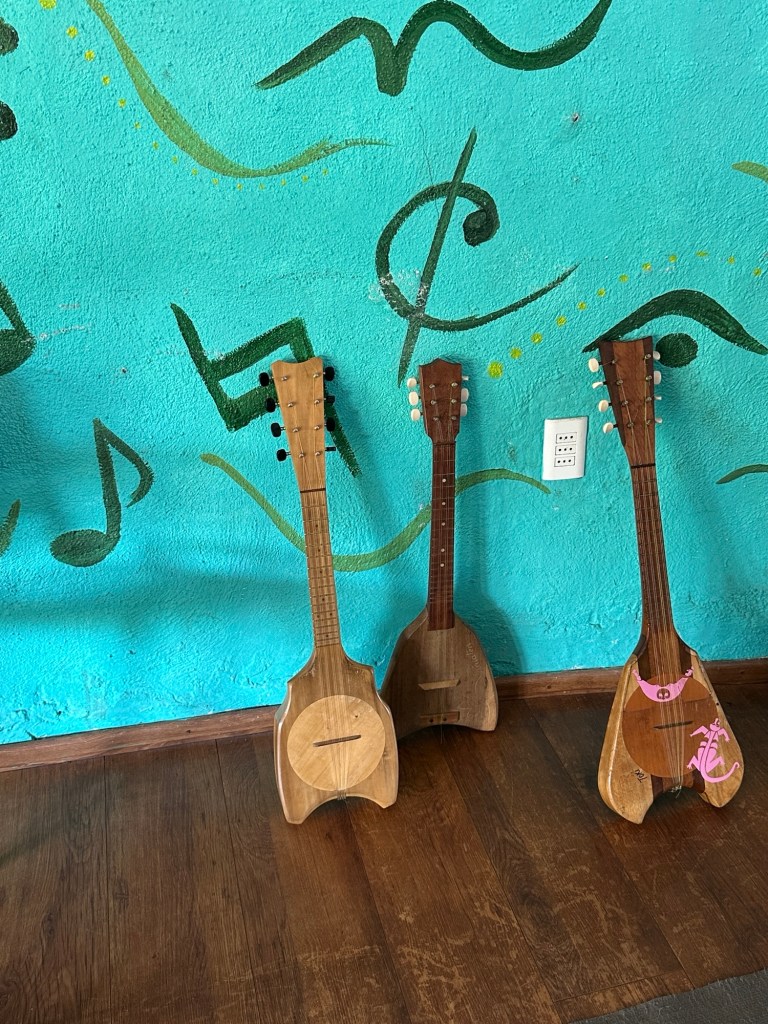
A key component of OAT trips is a visit to a non-profit organization that is supported by the Grand Circle Foundation (owners of OAT). A concert pianist from the island, Mahani Teave, founded a music school that provides free music and cultural education to local children. It was built with wholly sustainable materials. The school teaches both classical music (primarily piano, strings, and choral), and music from the Rapa Nui heritage.
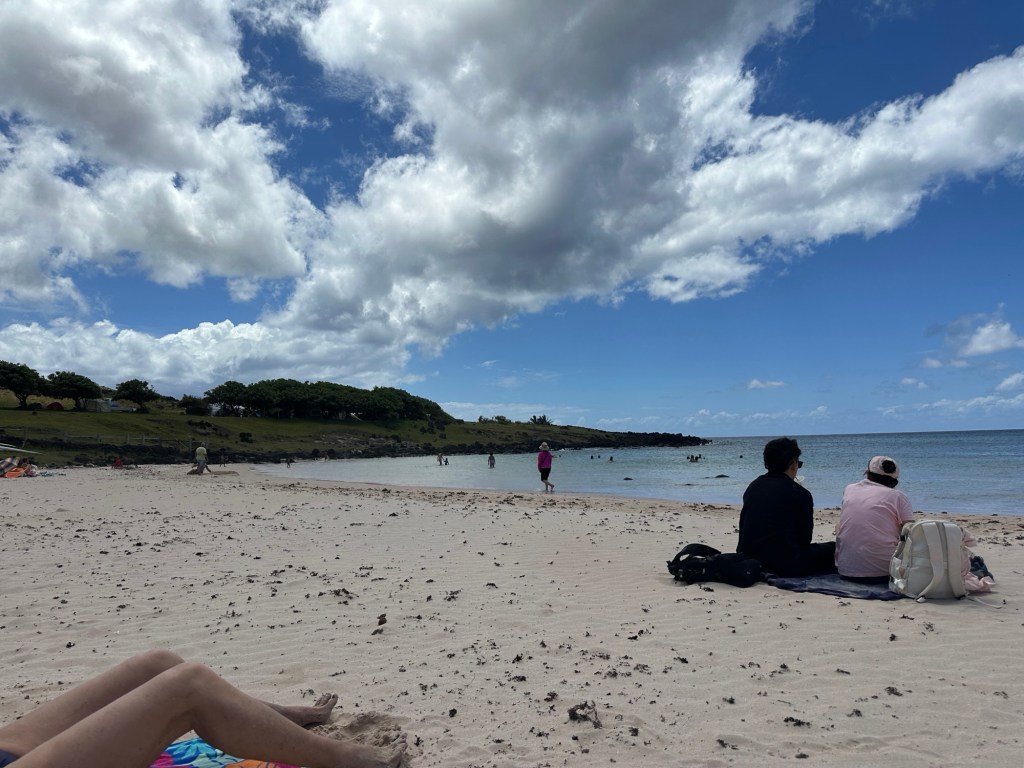
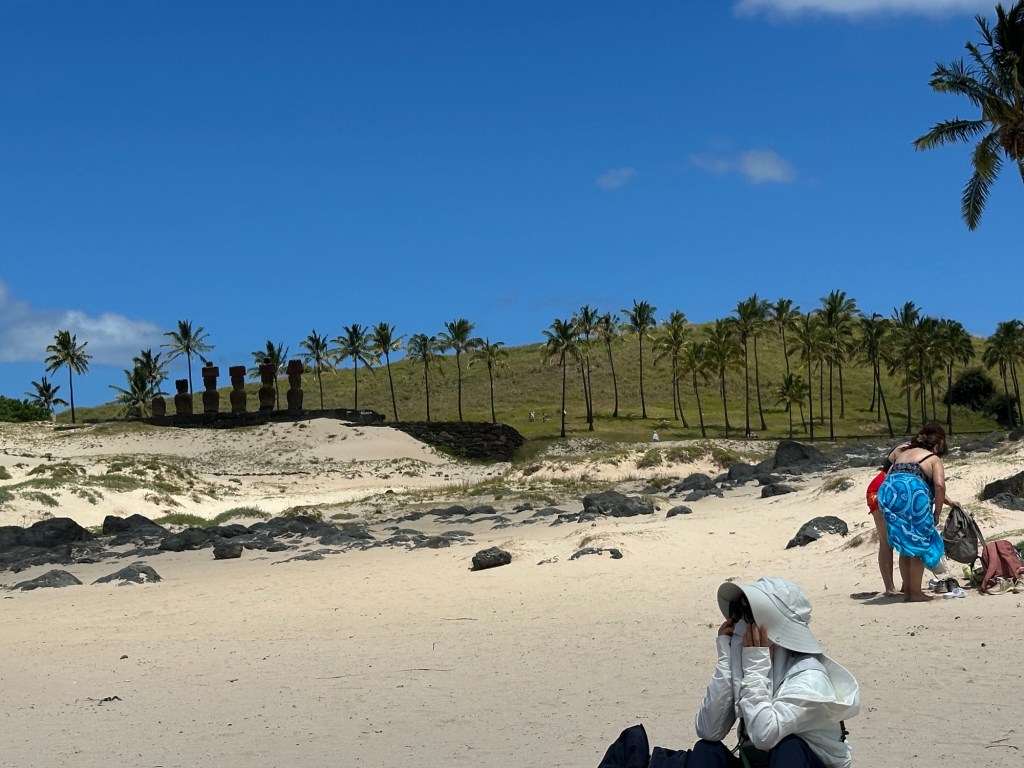
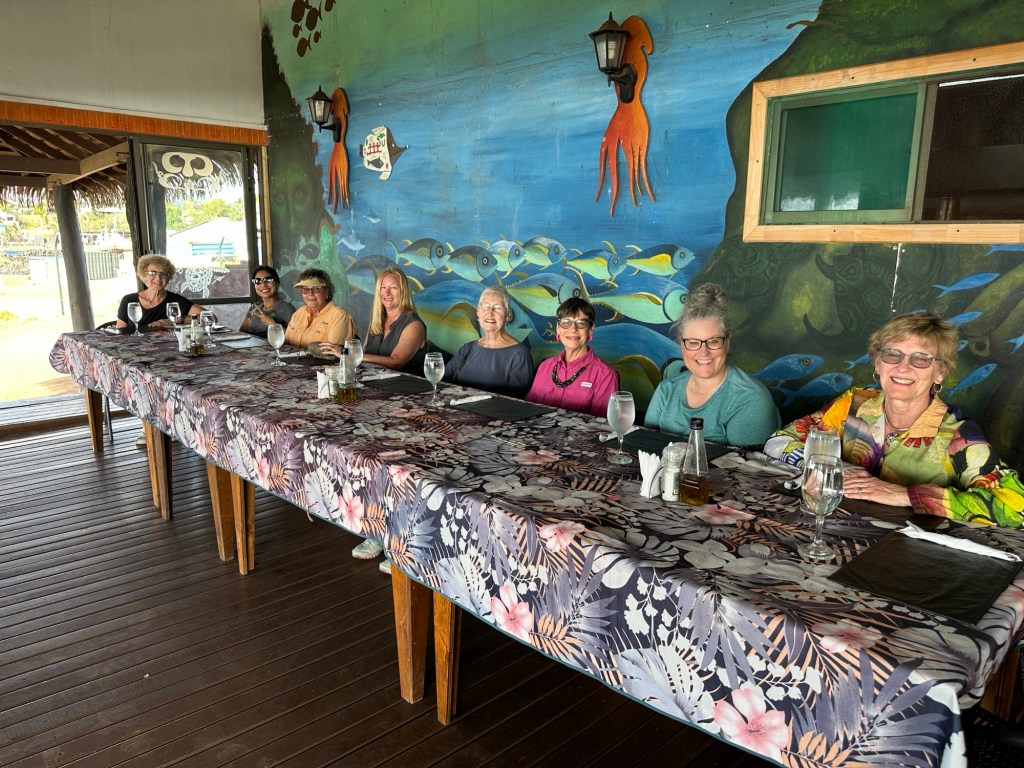
We swam at Anakena beach under the view of several moai. This was thought to be one of the first landing sites and home of an early settlement of the Polynesian settlers. We enjoyed a lovely meal at a restaurant looking out at the ocean.
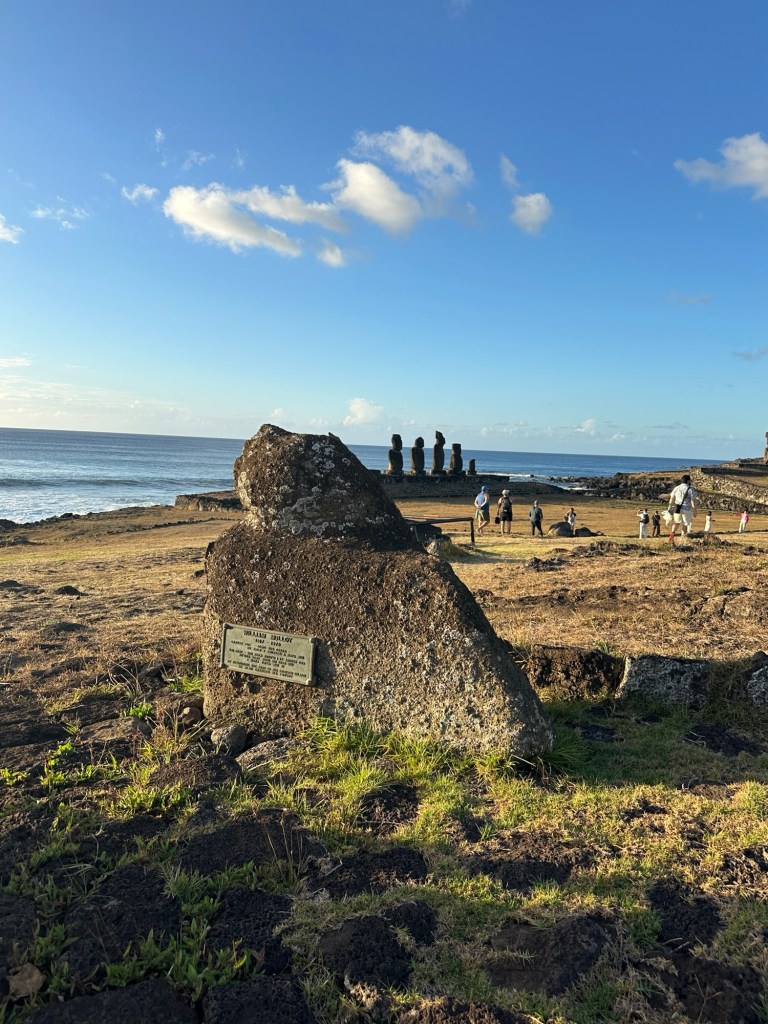
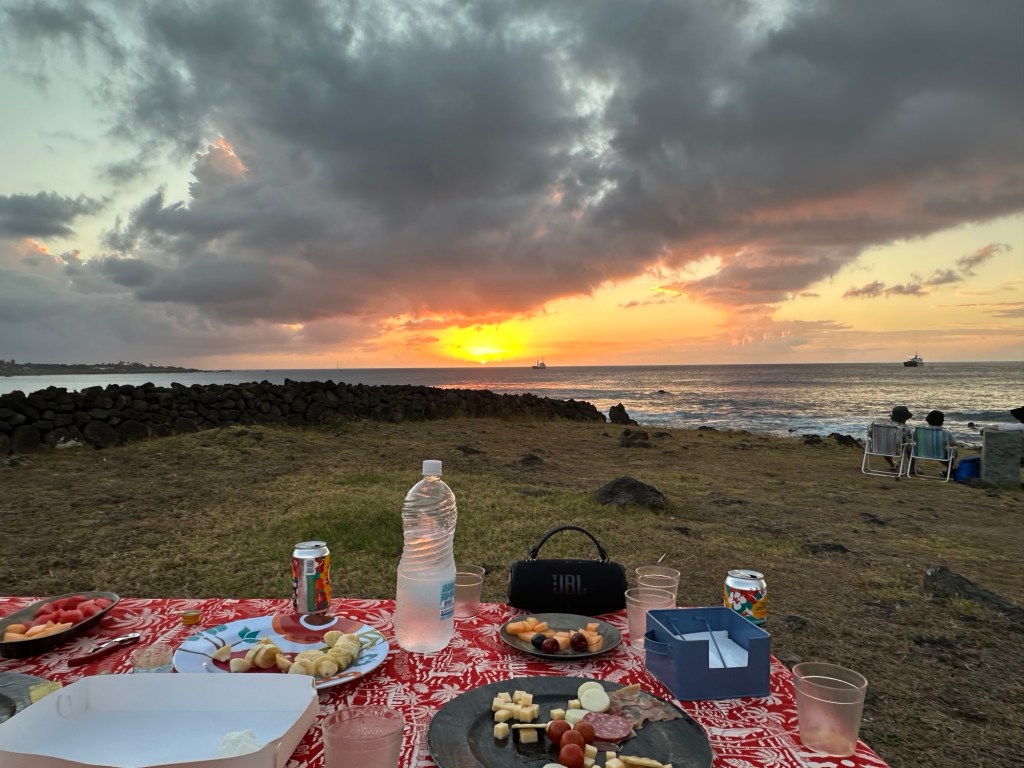
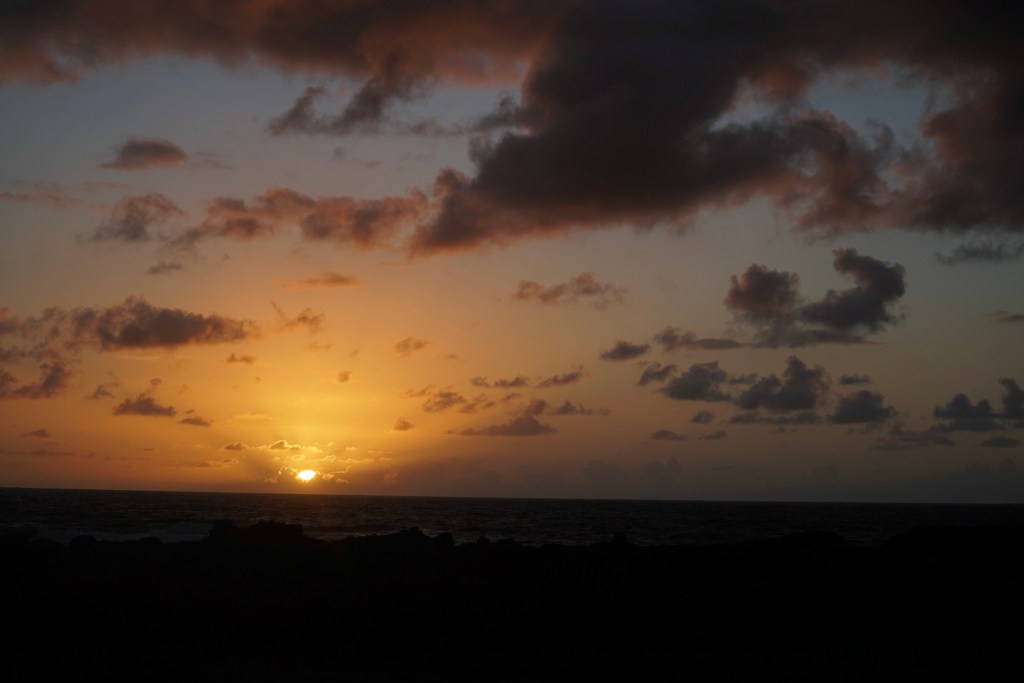
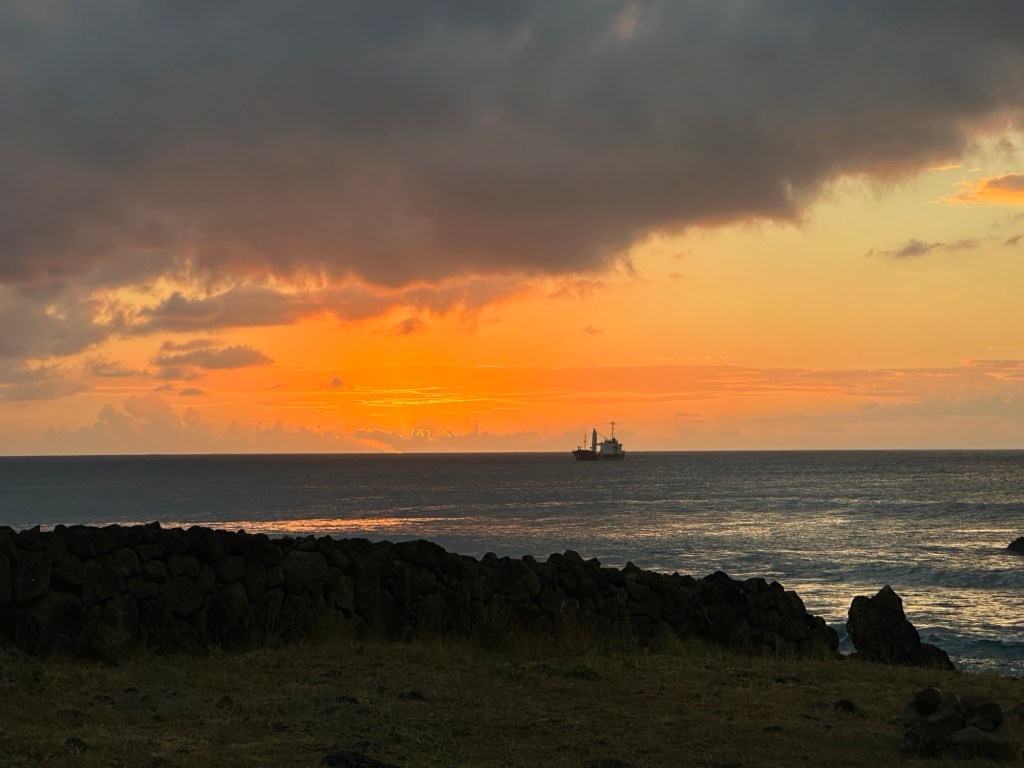
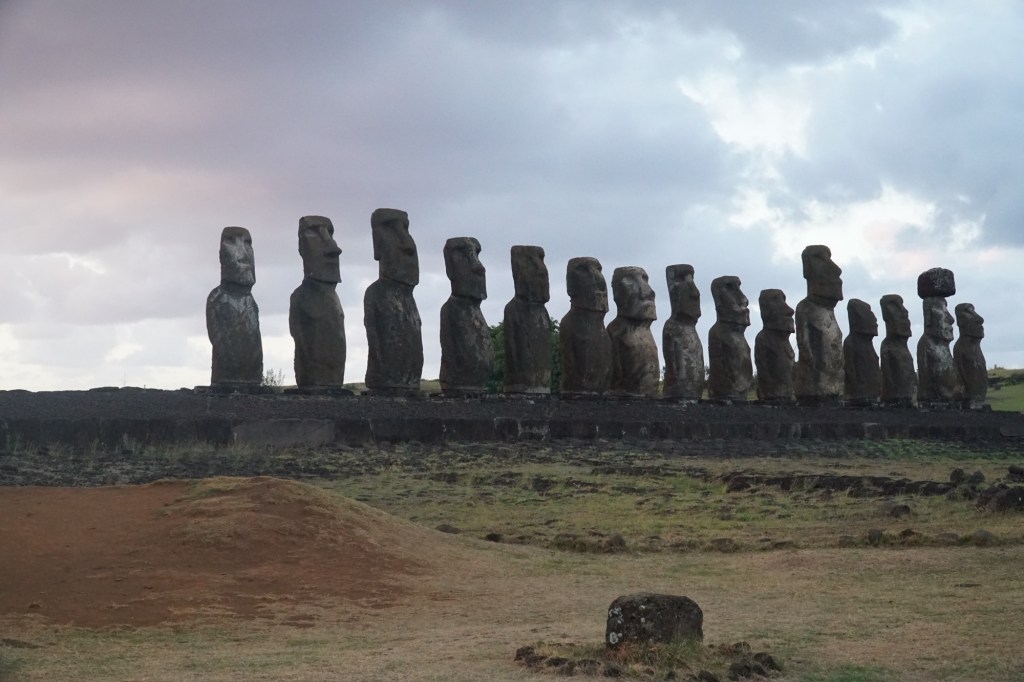
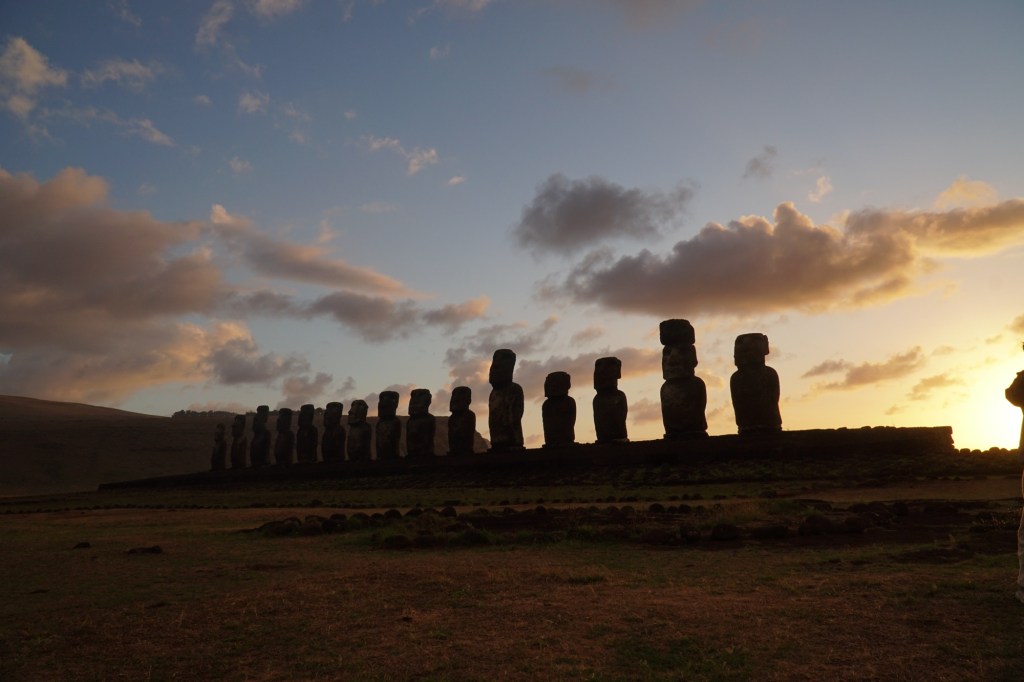
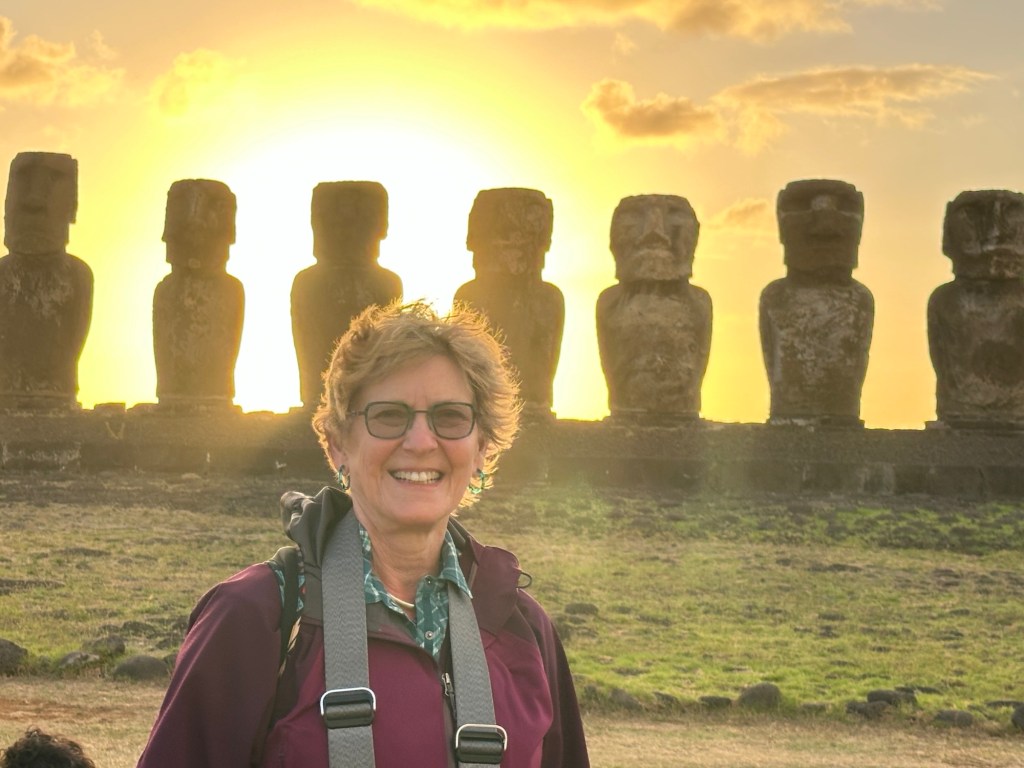
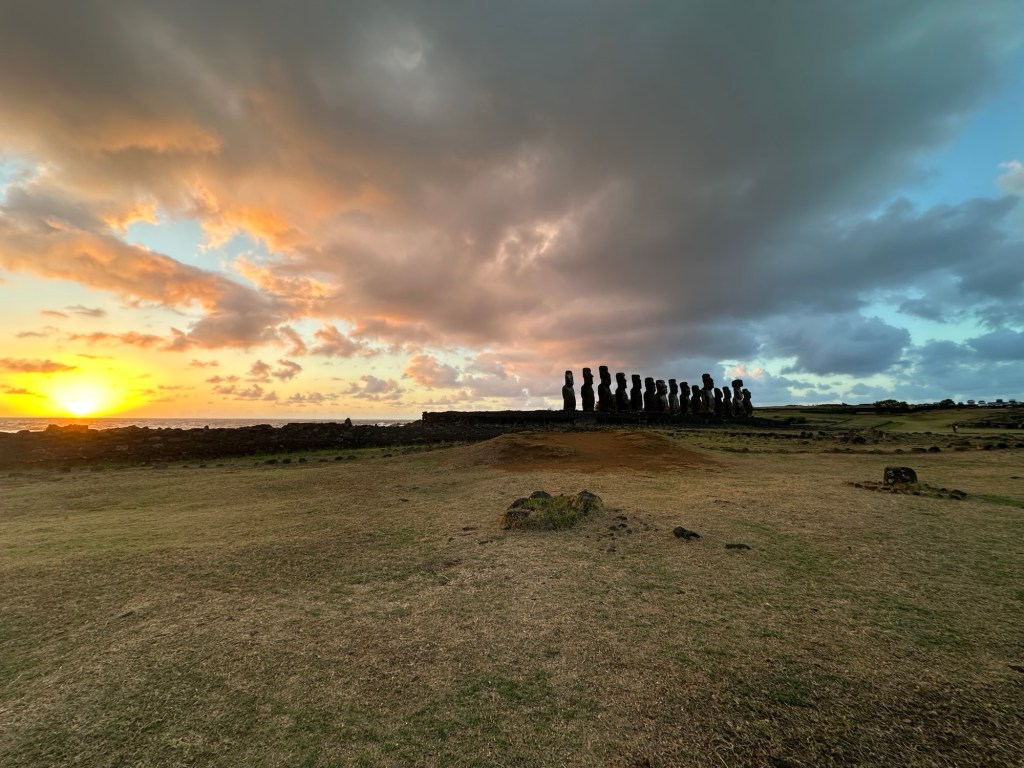
We also experienced a cocktail hour sunset at the Ahu Akivi site, and most of us opted to spend our last morning rising early to view Ahu Tongariki’s 15 moai at sunrise.
Tuesday Jan. 13
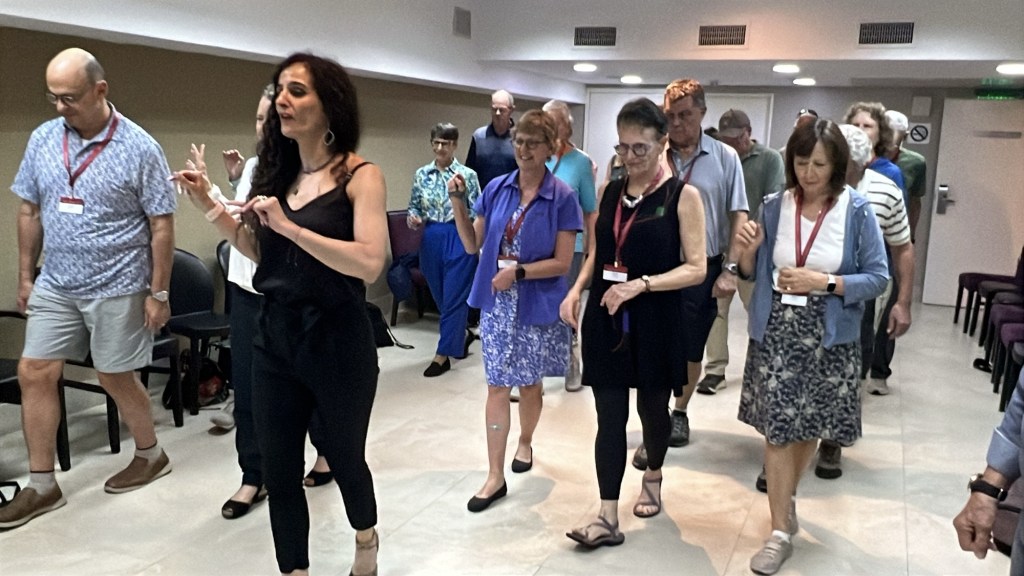
After our Monday flight to Santiago, overnight stay in an airport hotel, and Tuesday morning flight out of Santigo, we arrived in Buenos Aires and checked into our hotel (ARC Recoletta in the Recoletta area of town). We had delicious pizza at a restaurant at the corner and walked around the neighborhood to get our bearings and exchange dollars for pesos. Late afternoon we had a welcome briefing with our Trip Experience Leader, Carlos, followed by a Tango lesson from three Argentinians – a bandoneon player and two dancers.
Wednesday, Jan. 14
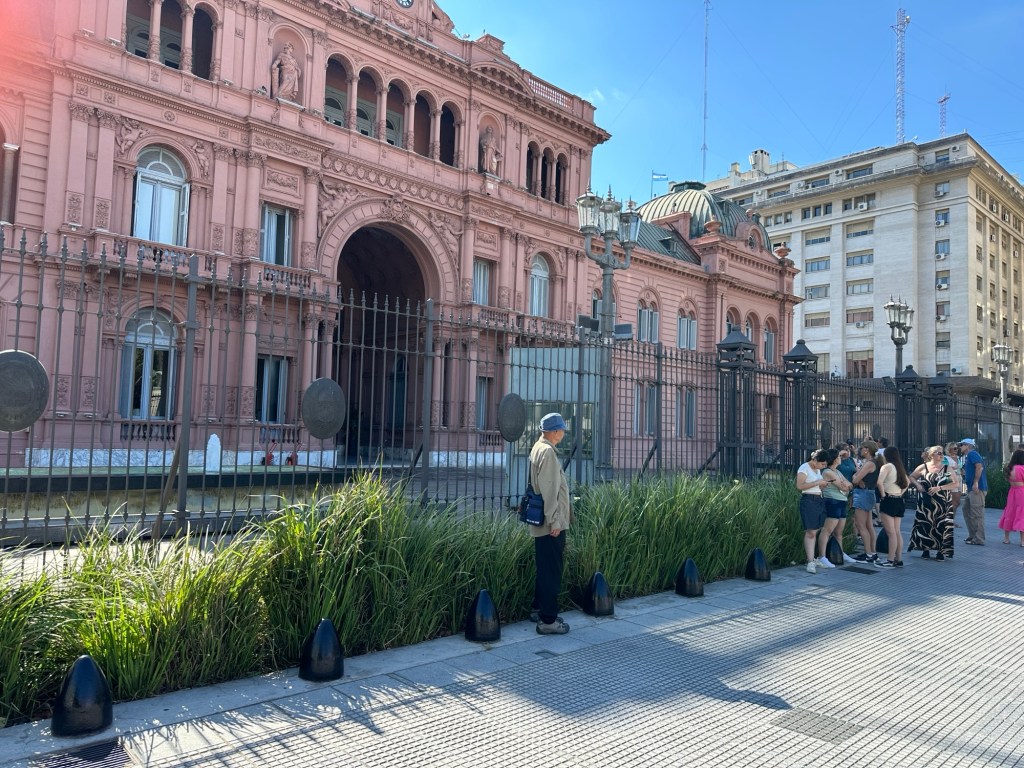
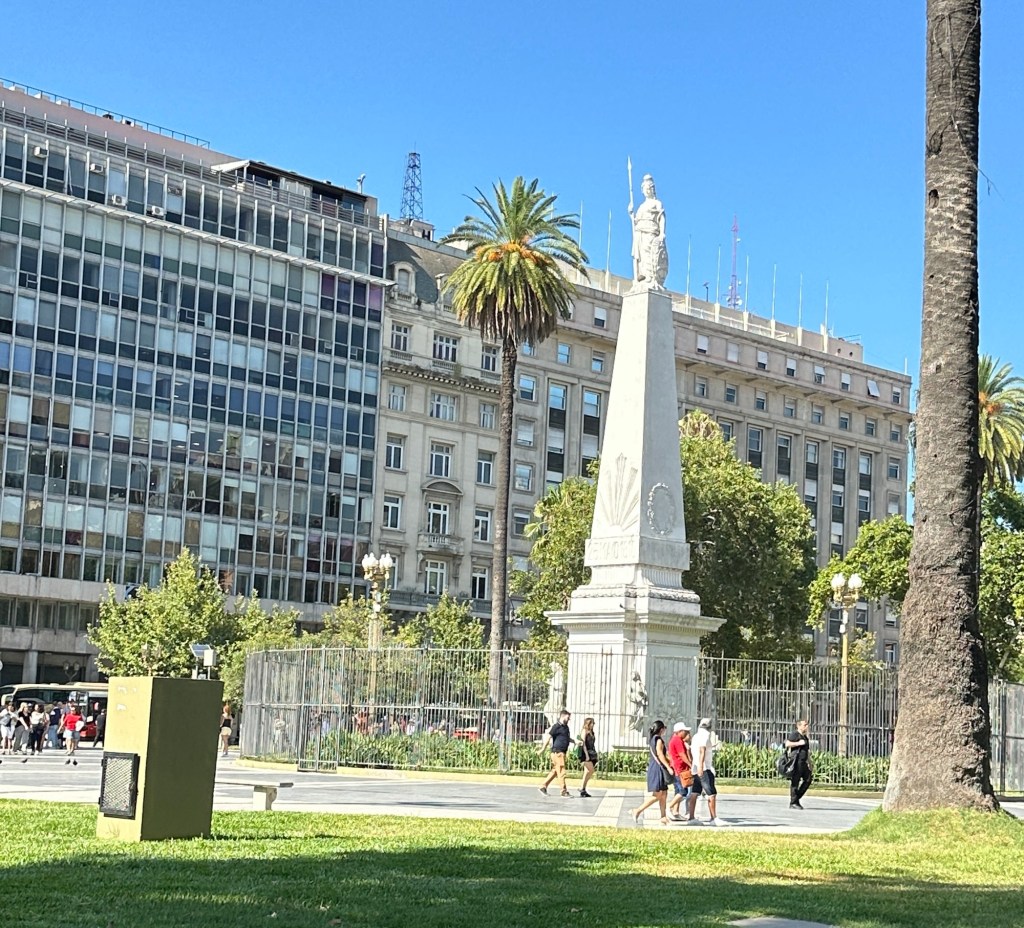
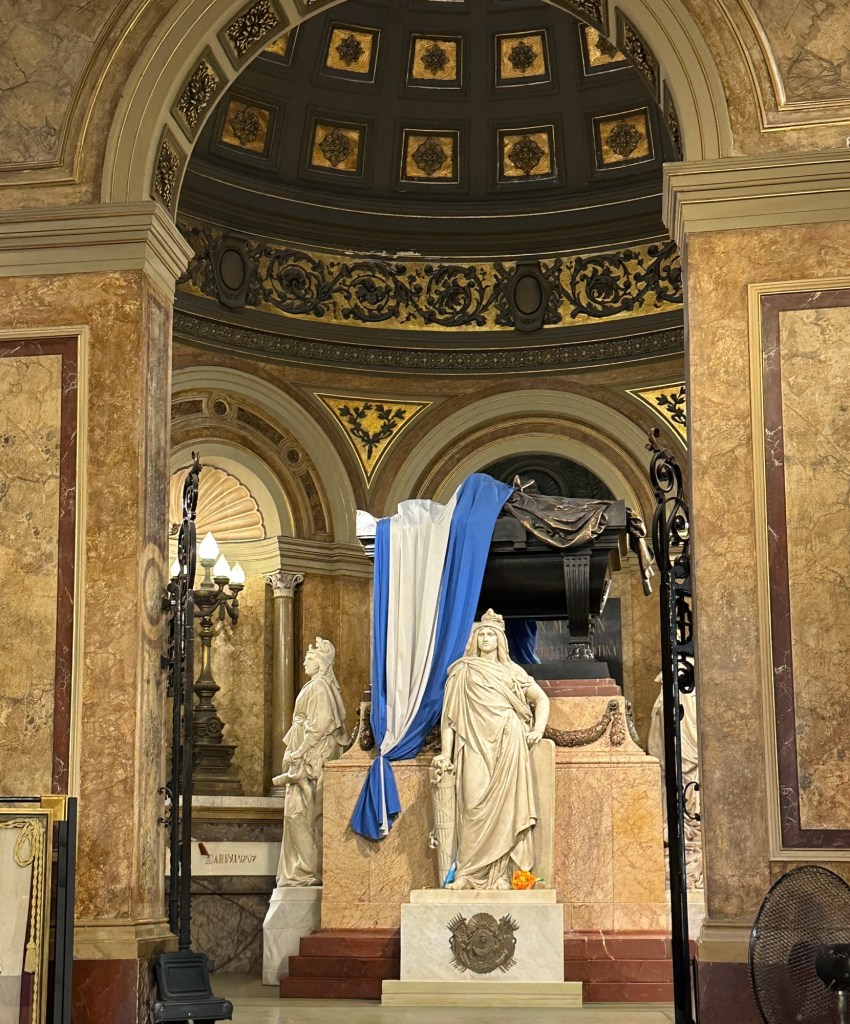
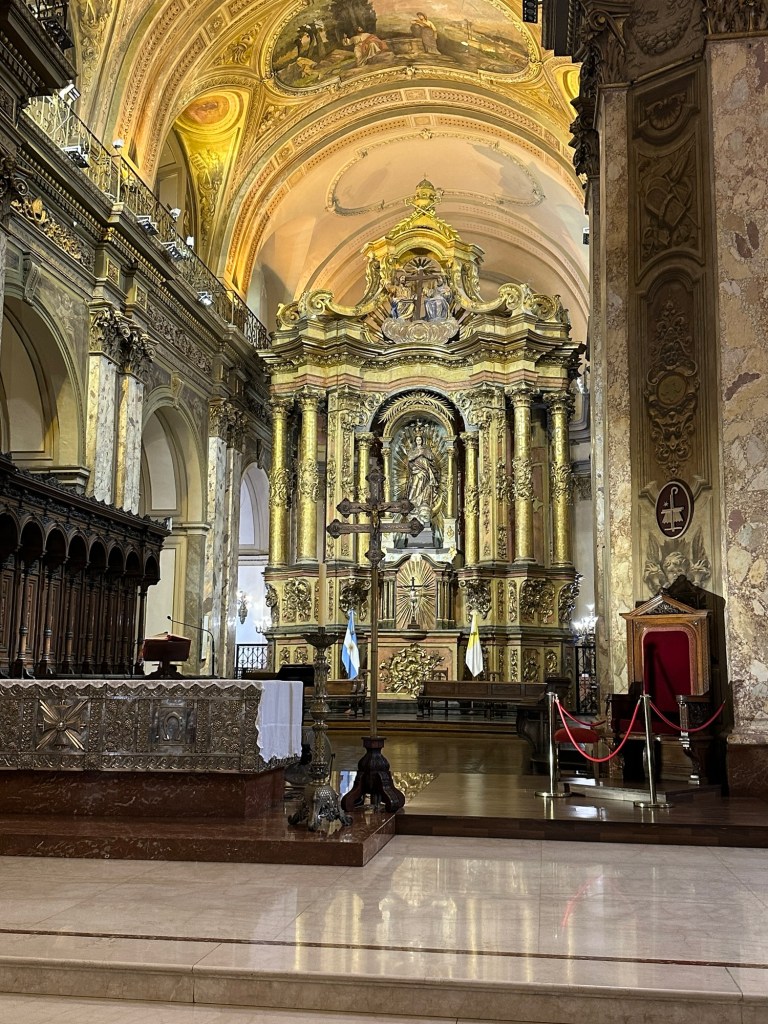
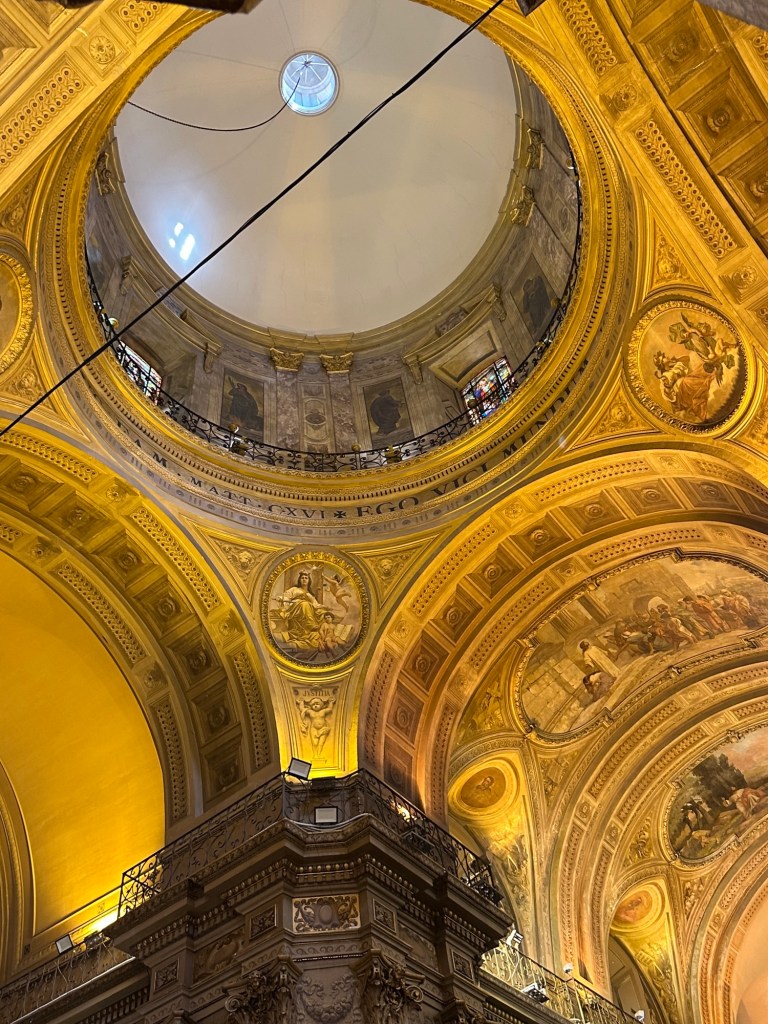
We had a wonderful tour of Buenos Aires, through the Plaza de Mayo, which includes the Casa Rosado (seat of government with the famous Evita Peron balcony), and the Metropolitan Cathedral, the seat of Archbishop Jorge Bergoglio before he became Pope Francis. There is a monument in cathedral to Jose San Martin, the liberator of Argentina, Chile, and Peru. The tomb is surrounded by statues representing each country, and is guarded around the clock, with guards changing every two hours. We saw the changing of the guard, and learned more about the governing history of the city and country from our local guide.
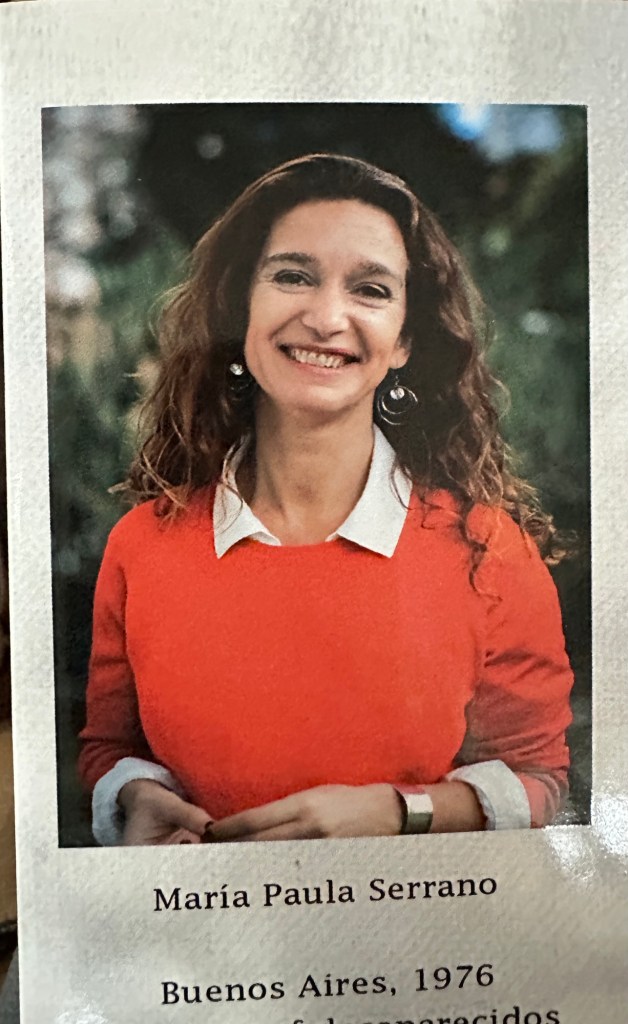
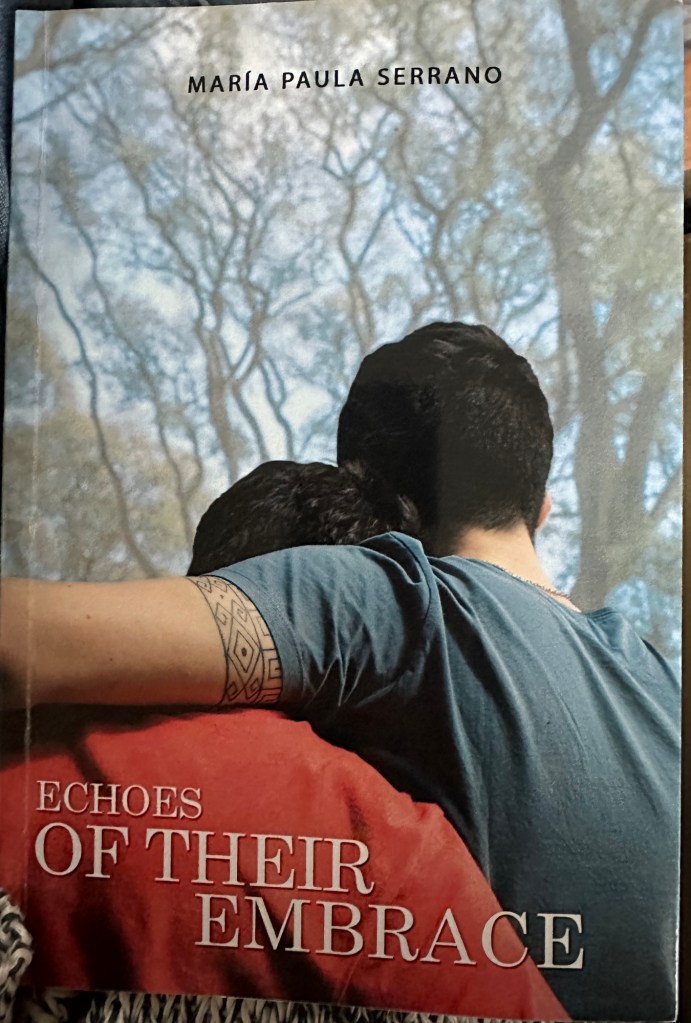
We stopped in a local coffee shop for our Controversial Topic discussion, another interesting feature of all OAT trips. The topic was the period of 1976 to 1983 when tens of thousands of residents, were captured and “disappeared.” The “desaparecidos” were often students, journalists, or activists. Feel free to look up more about the series of coups, dictatorships, “dirty war,” in Argentina as well as US involvement in some. We met with a lovely woman, Maria Paula Serrano, who was kidnapped as a young child with her parents, then given to her grandmother, who raised her in a loving home and with a good education. Maria thought her parents were “traveling” until she was later told the truth, that her parents disappeared with no information about their death or disposition. Many bodies had been dropped into lakes or the ocean from planes designed with hatches for this purpose. Parents and grandparents of the disappeared continue to search for evidence of their family members, often using newer methods of DNA technology. Maria wrote a book about her experience entitled “Echoes of Their Embrace” after explaining to her two sons the family history.
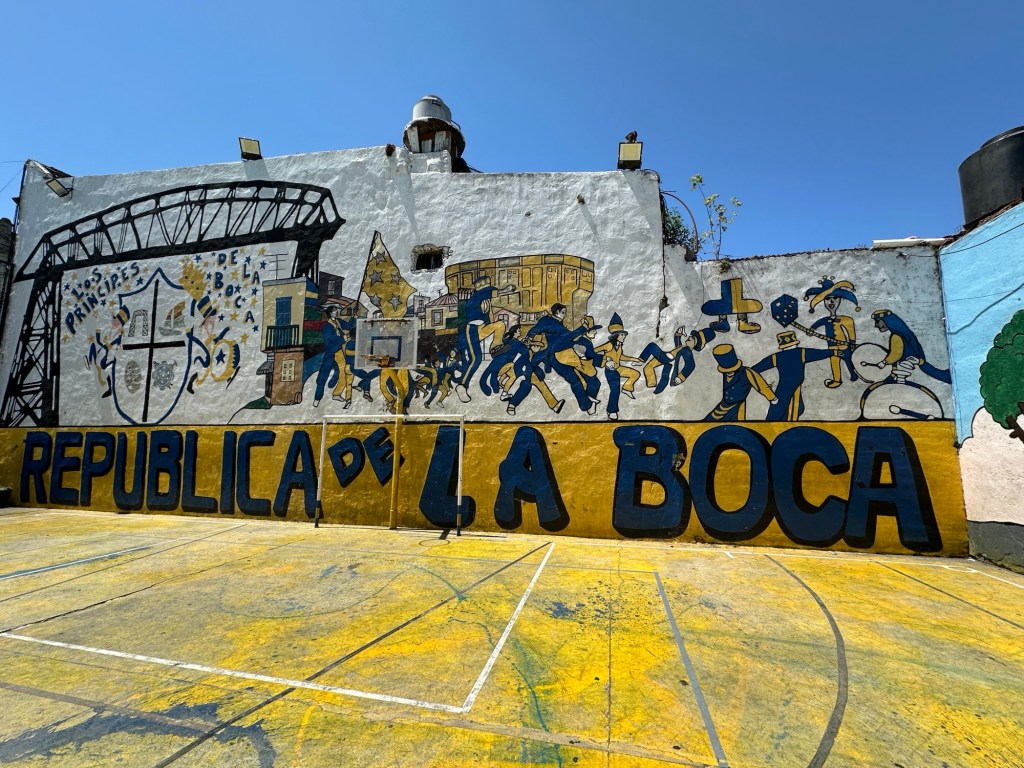
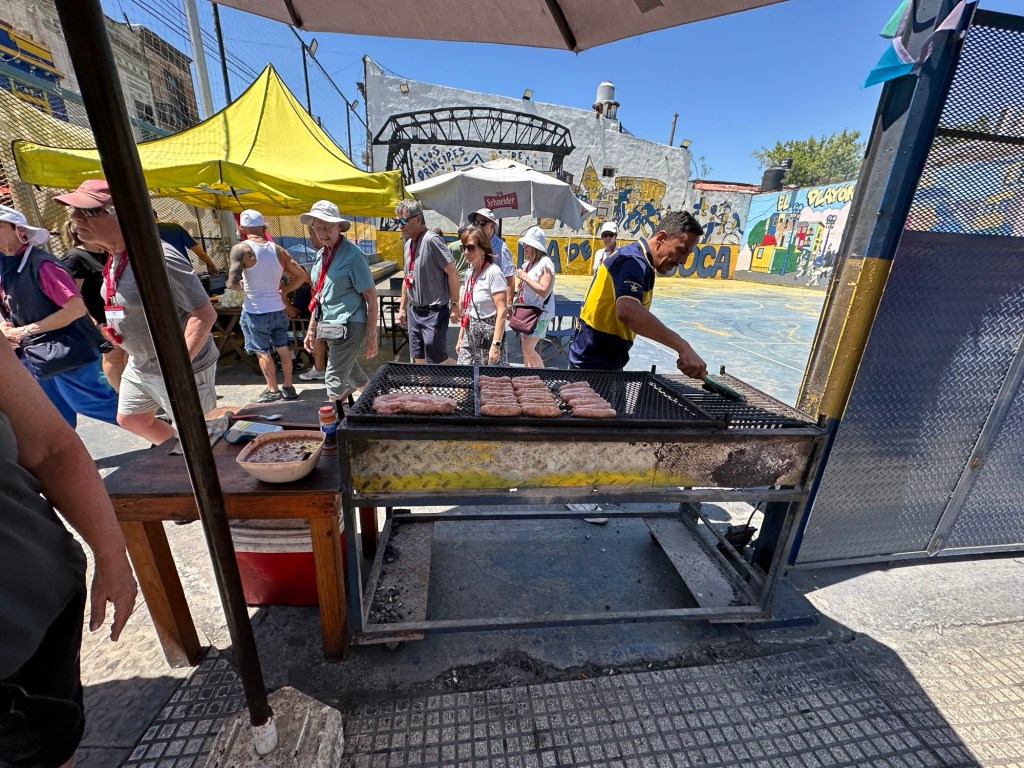
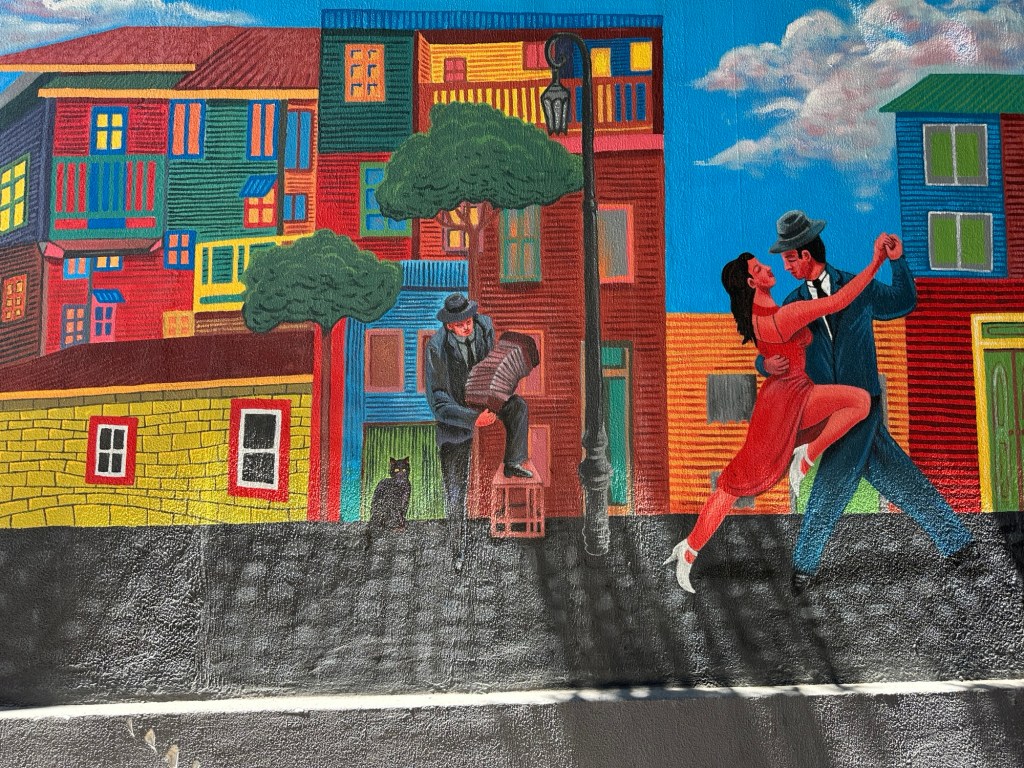
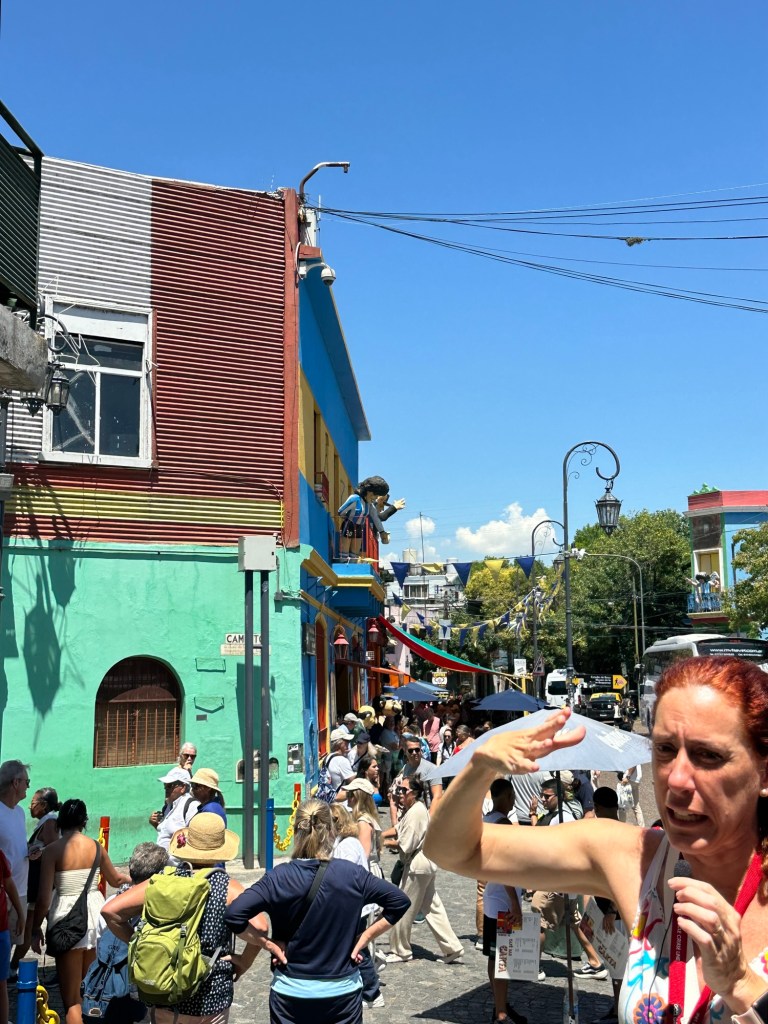
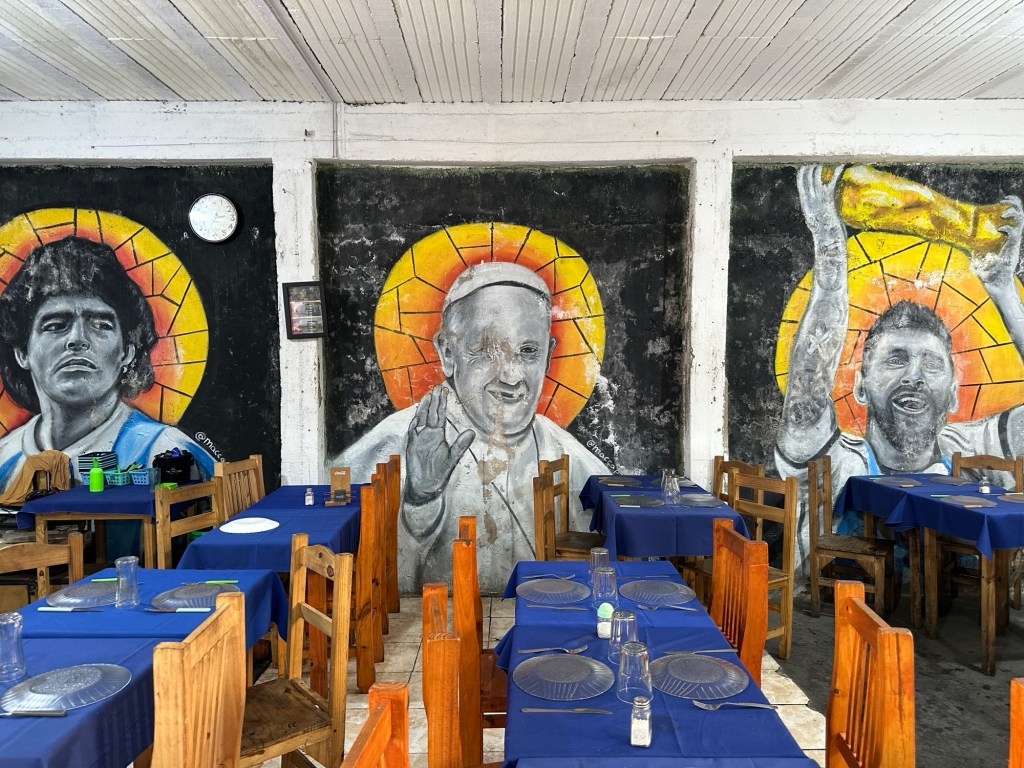
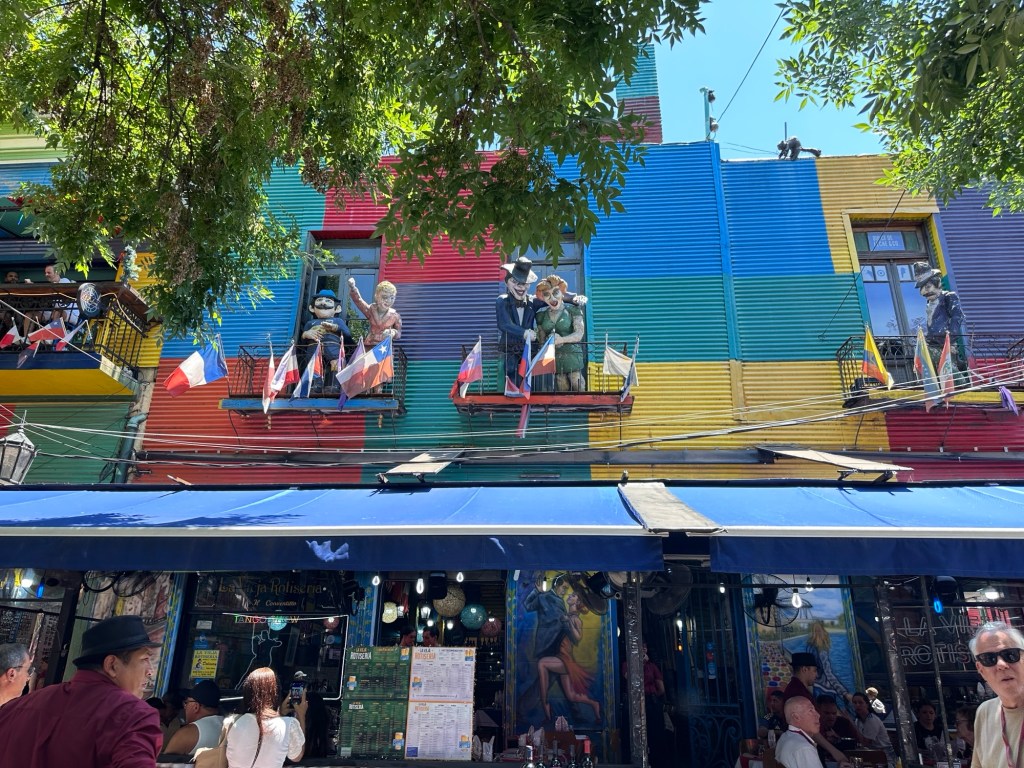
After this very moving discussion, we were back on the tour, visiting the site of local football club, and having time to explore La Boca, a vibrant neighborhood that gave birth to the Tango. There were lots of images of some of the key historical figures from Argentina: Pope Francis, Lionel Messi, Diego Maradona, and Evita and Juan Perón.
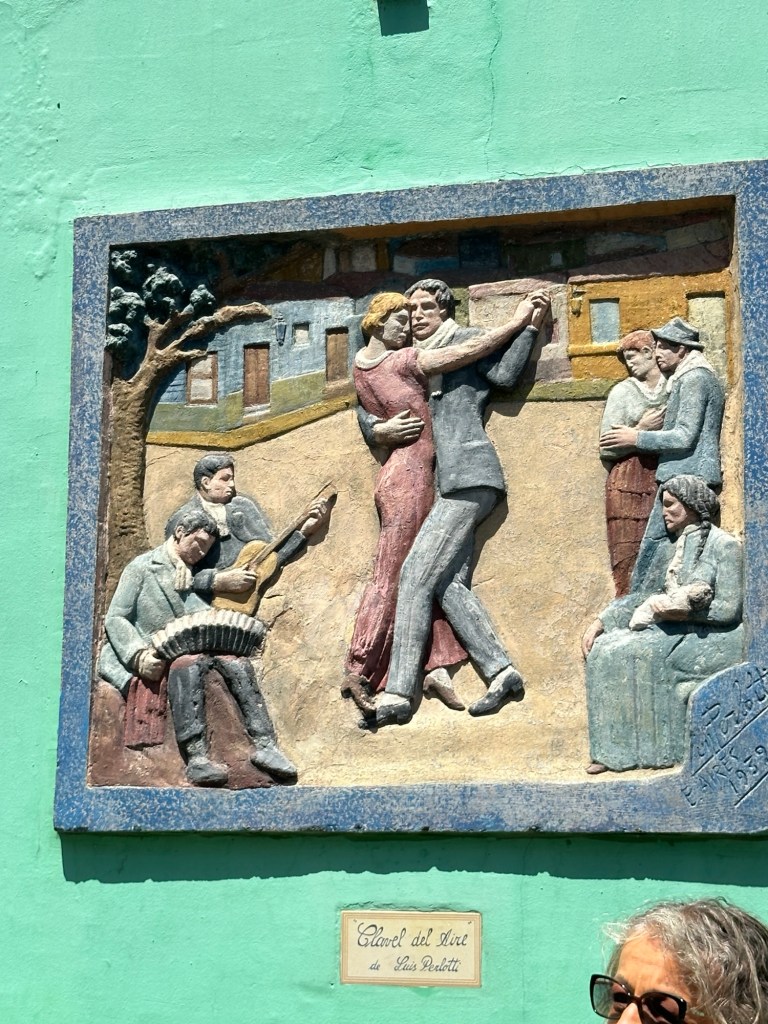
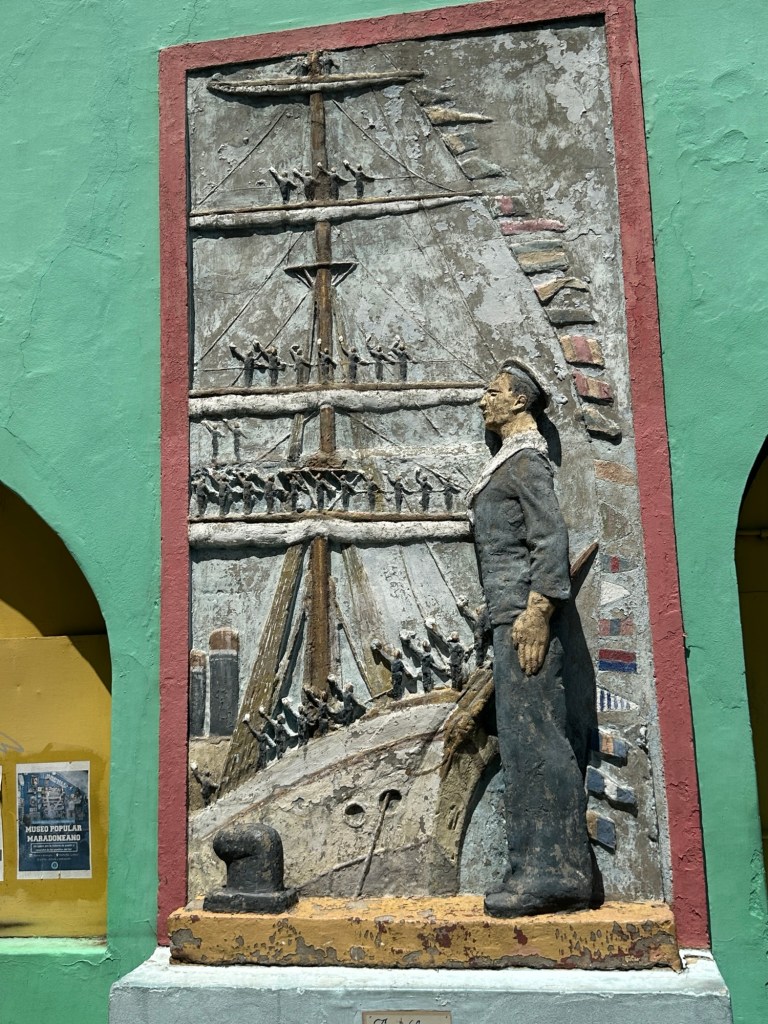
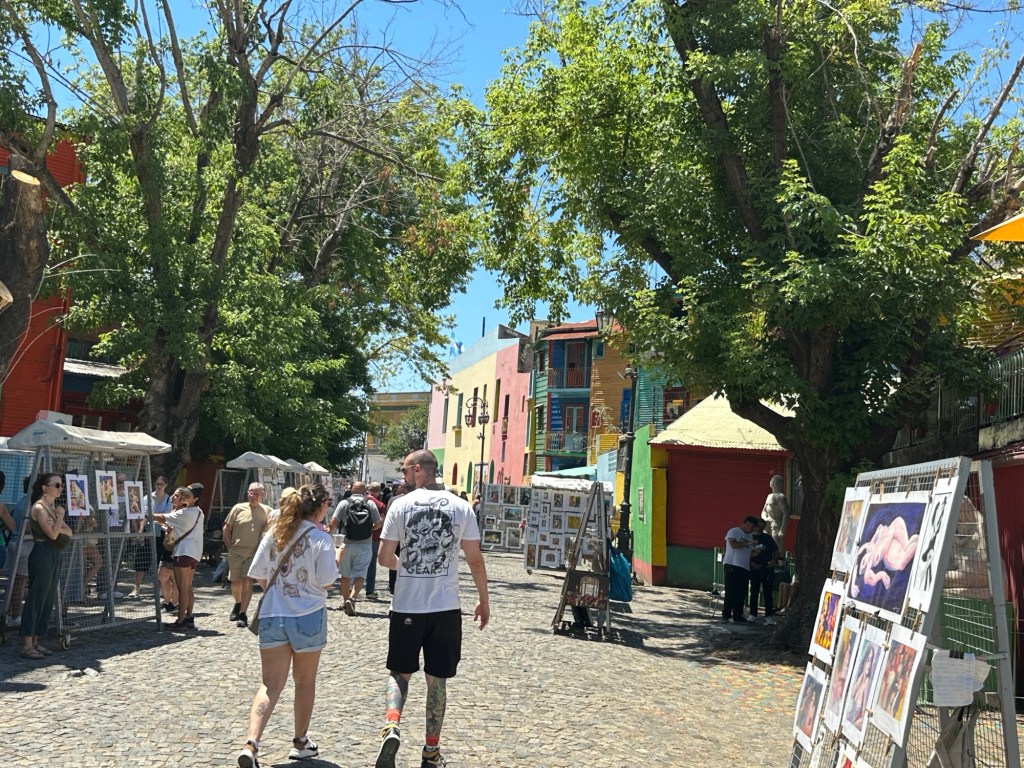
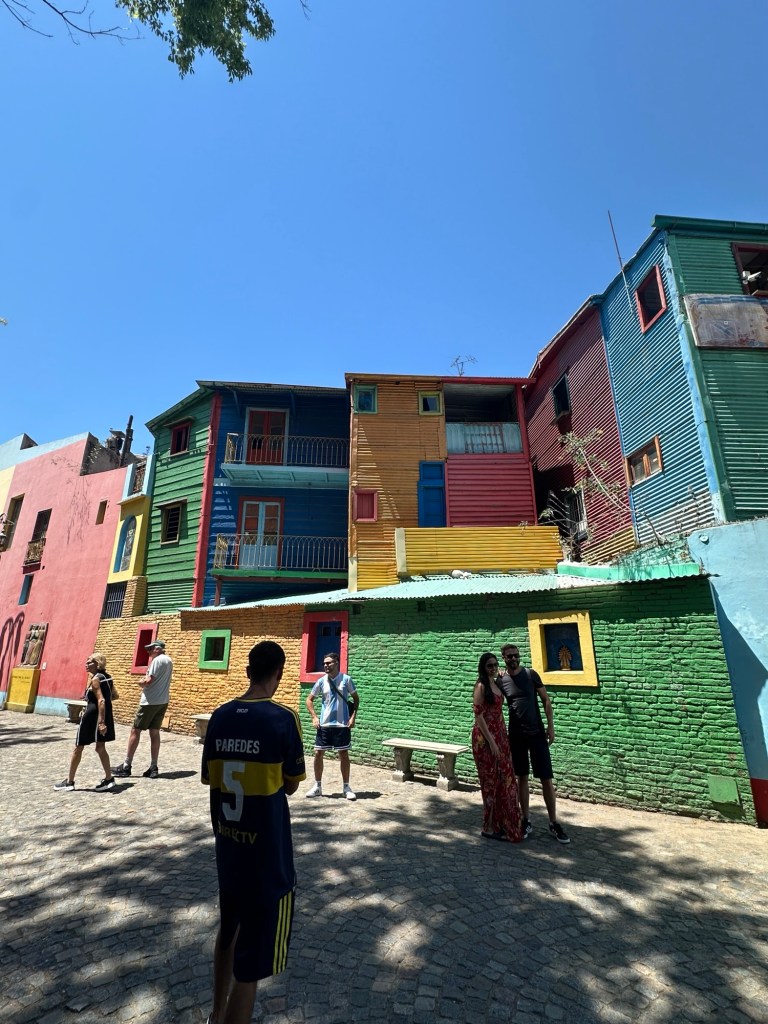
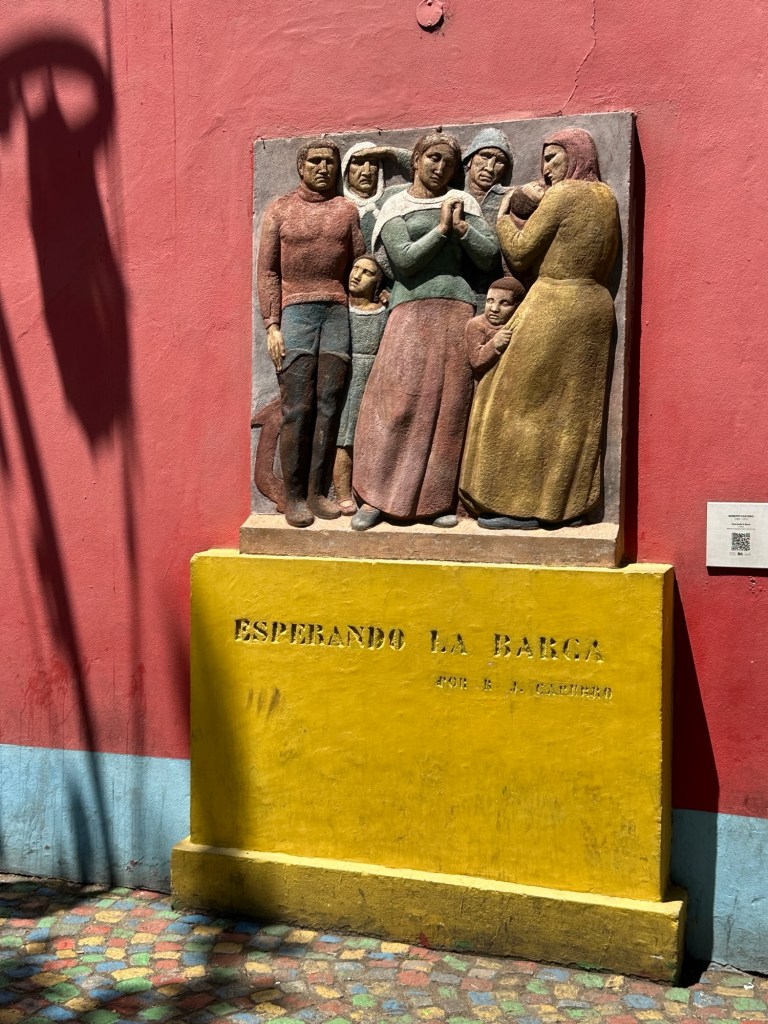
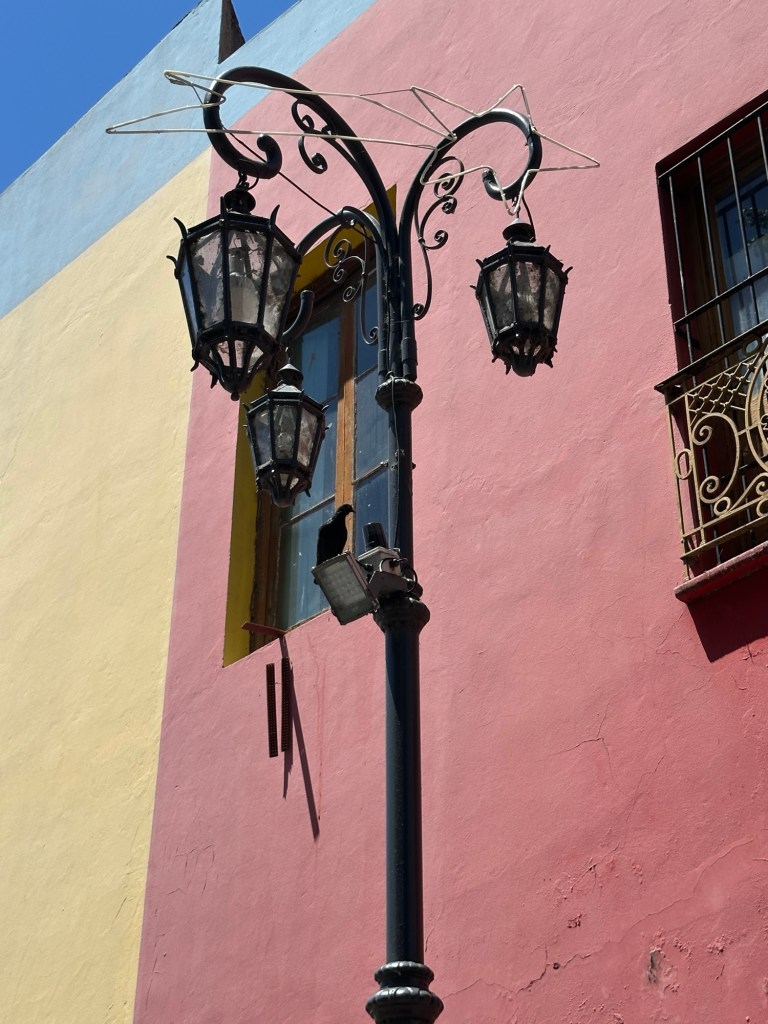
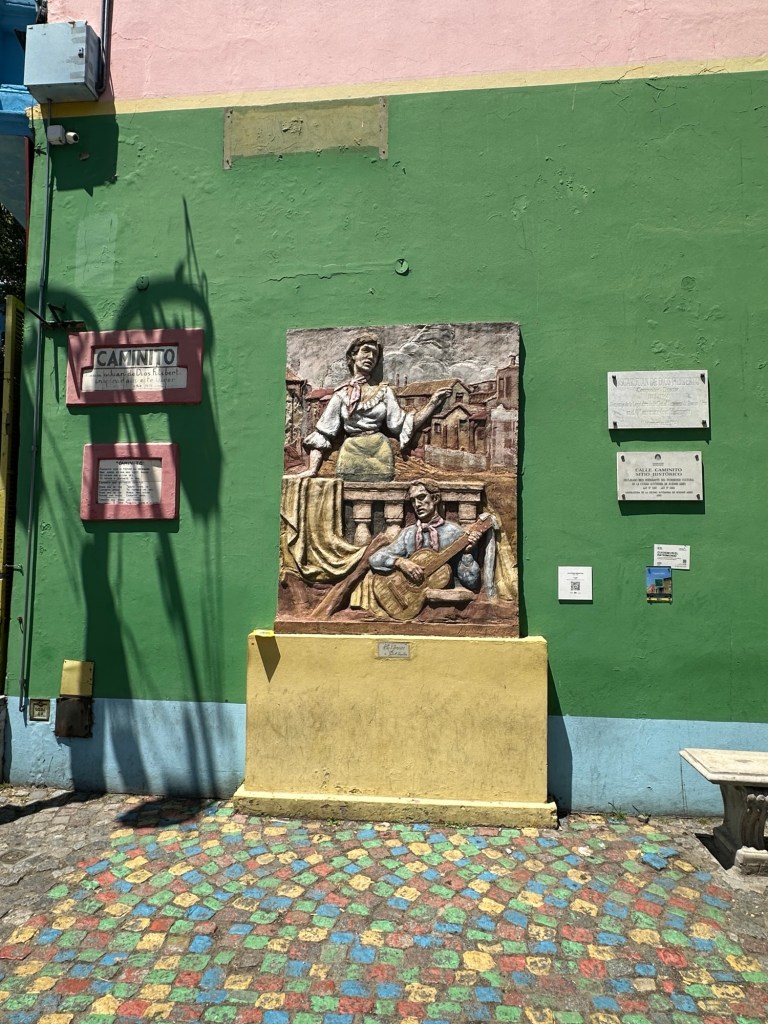
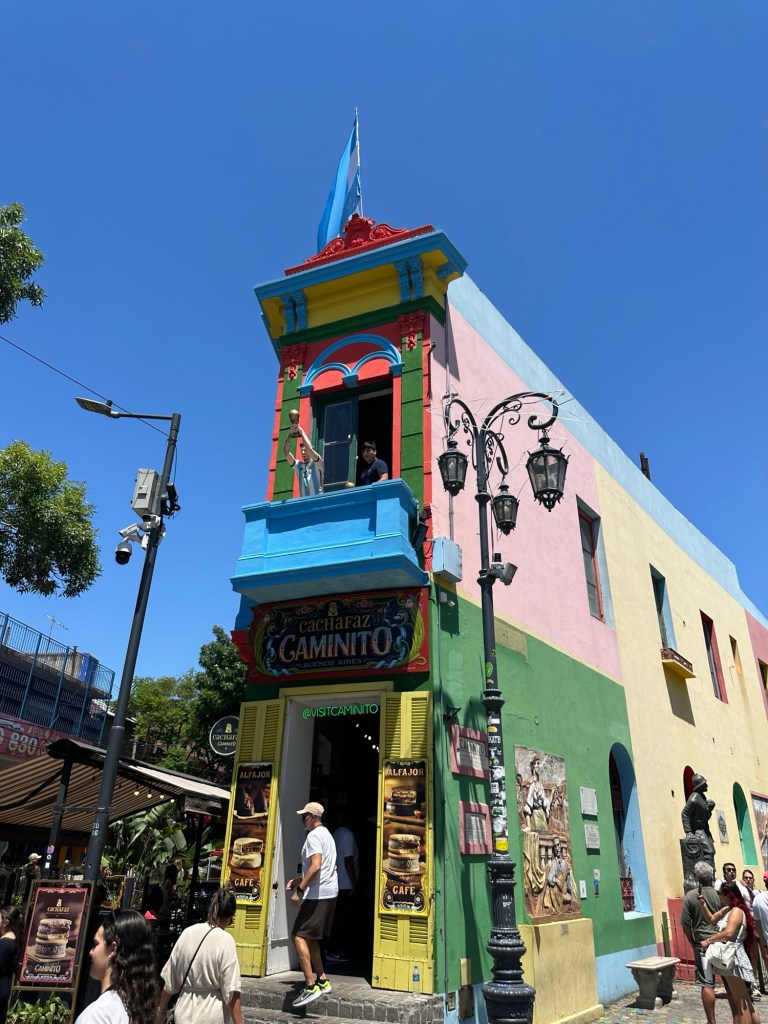
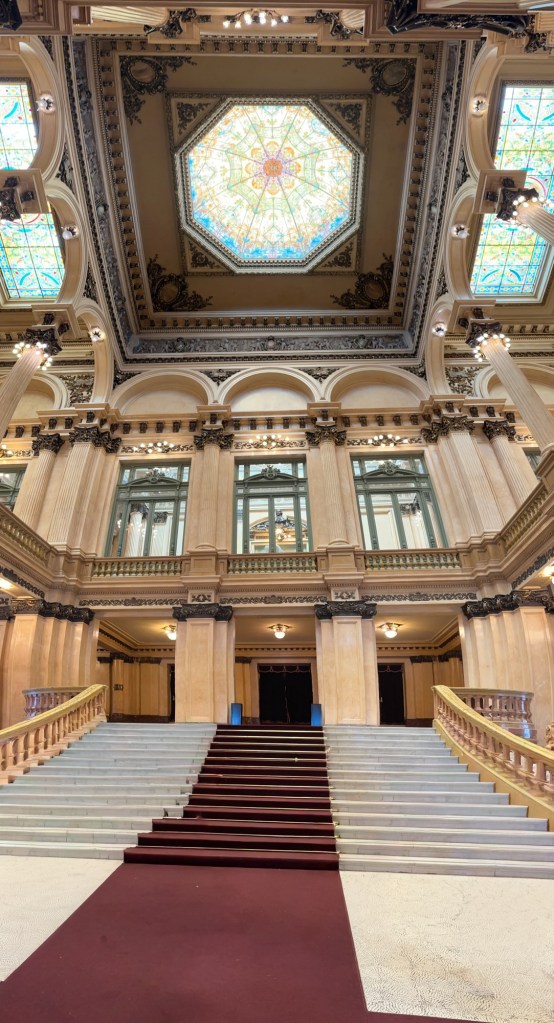
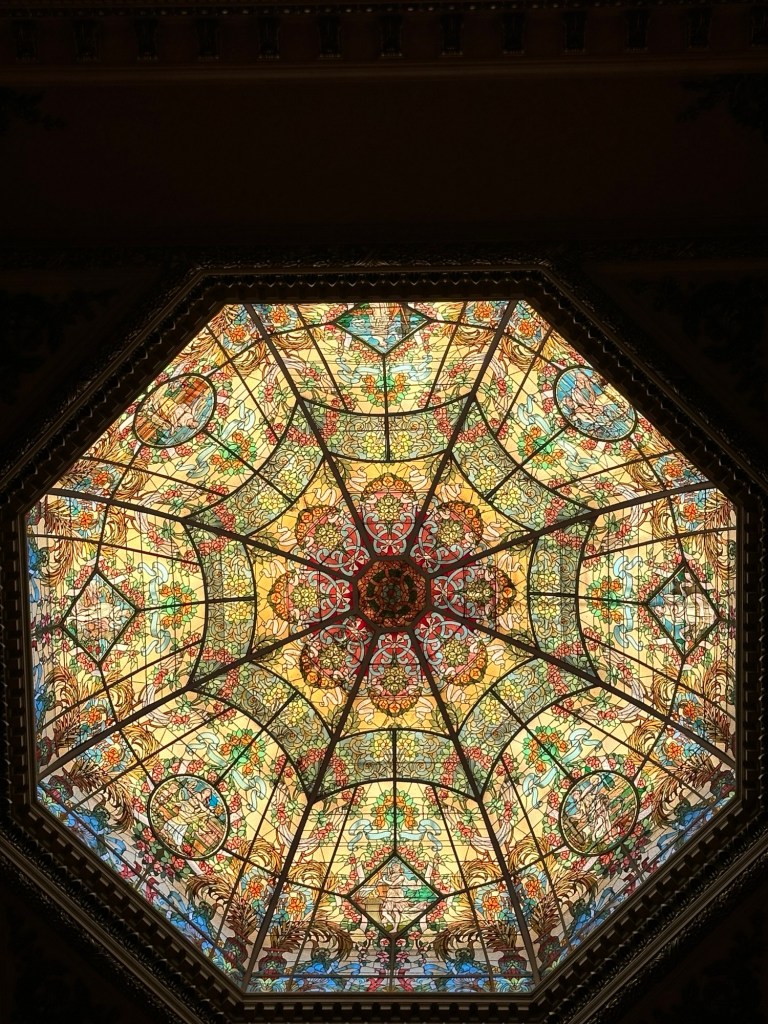
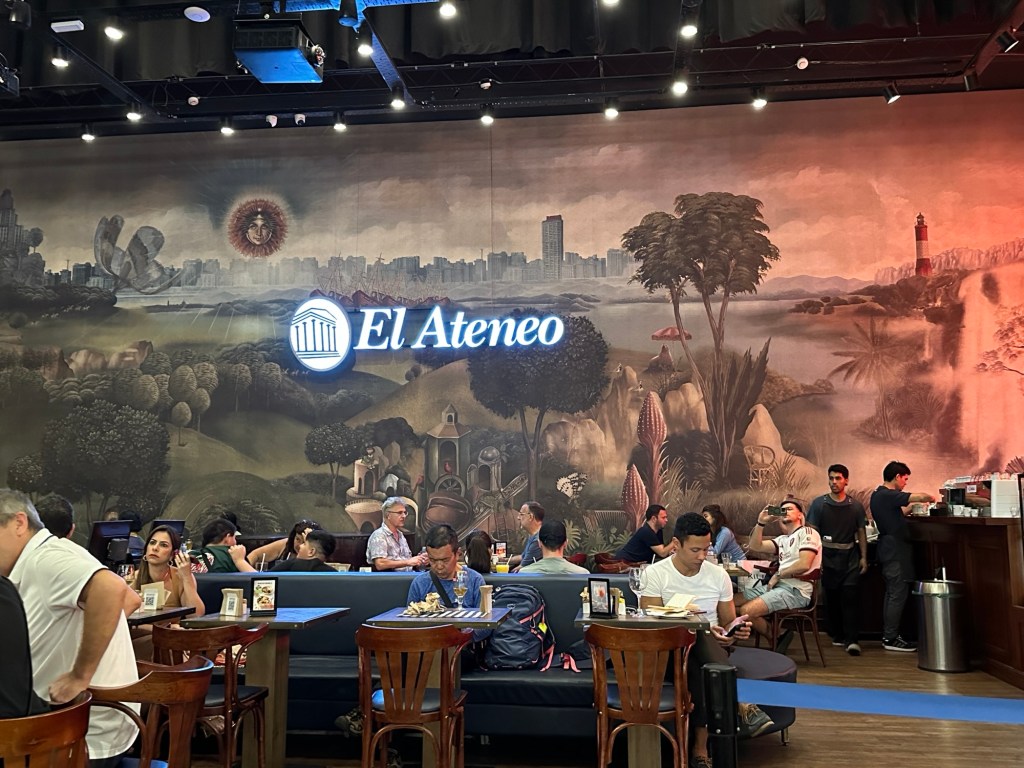
After the group tour, I visited the Teatro Colon, one of the top Opera Houses in the world. I was lucky to arrive in time for the only tour of the day in English! On my way back to the hotel, I stopped at El Atheneo Grand Splendid, a wonderful bookstore in an old theater. Instead of lunch, I had a fruit torte and glass of wine on the “stage” of the bookstore.
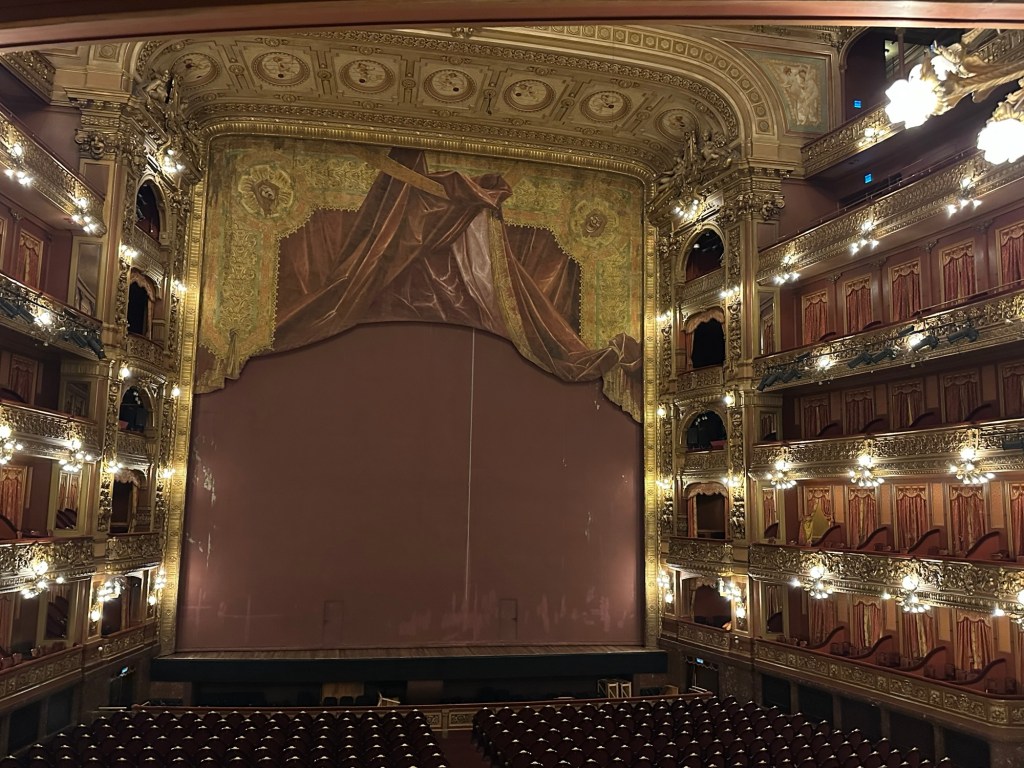
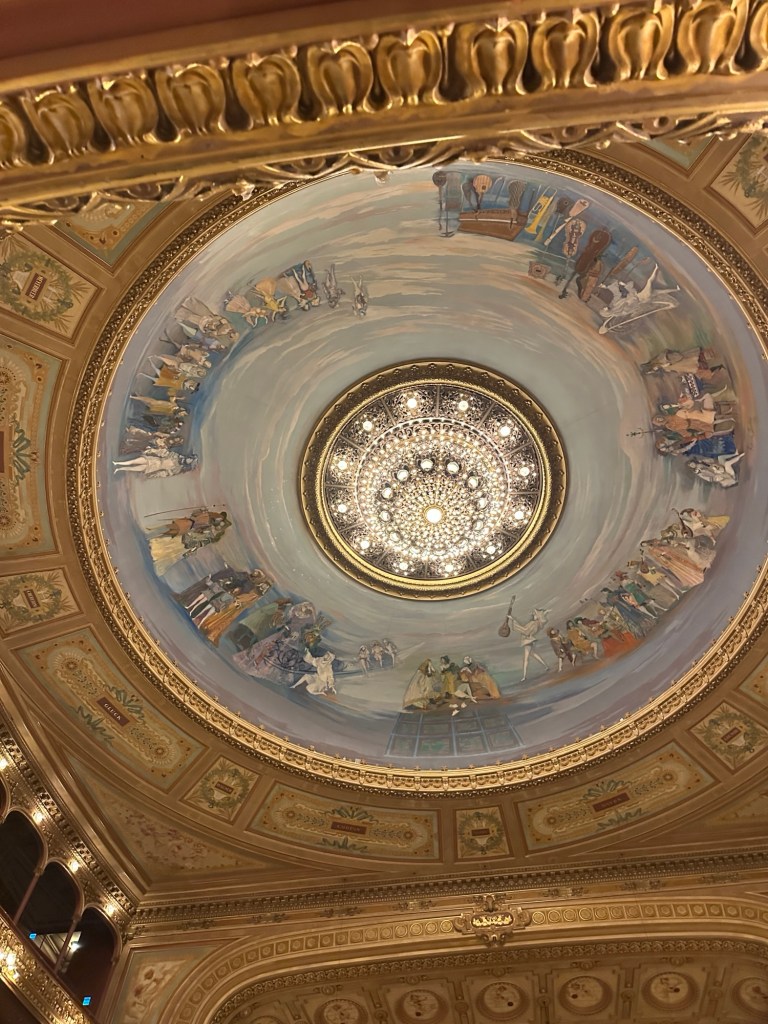
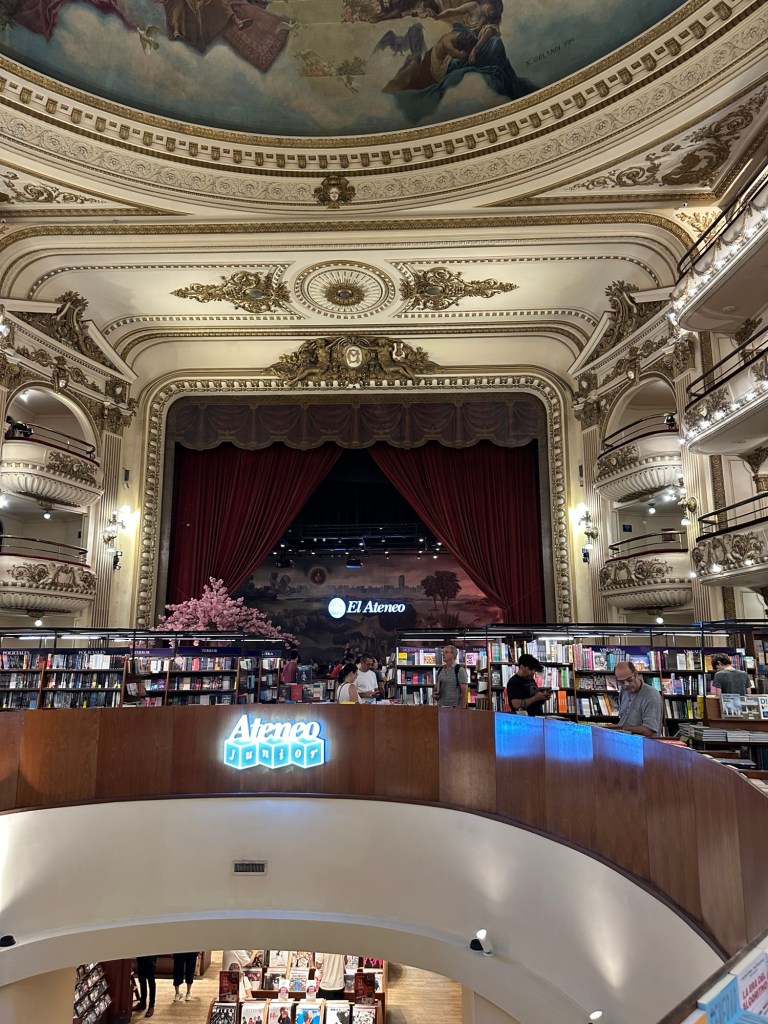
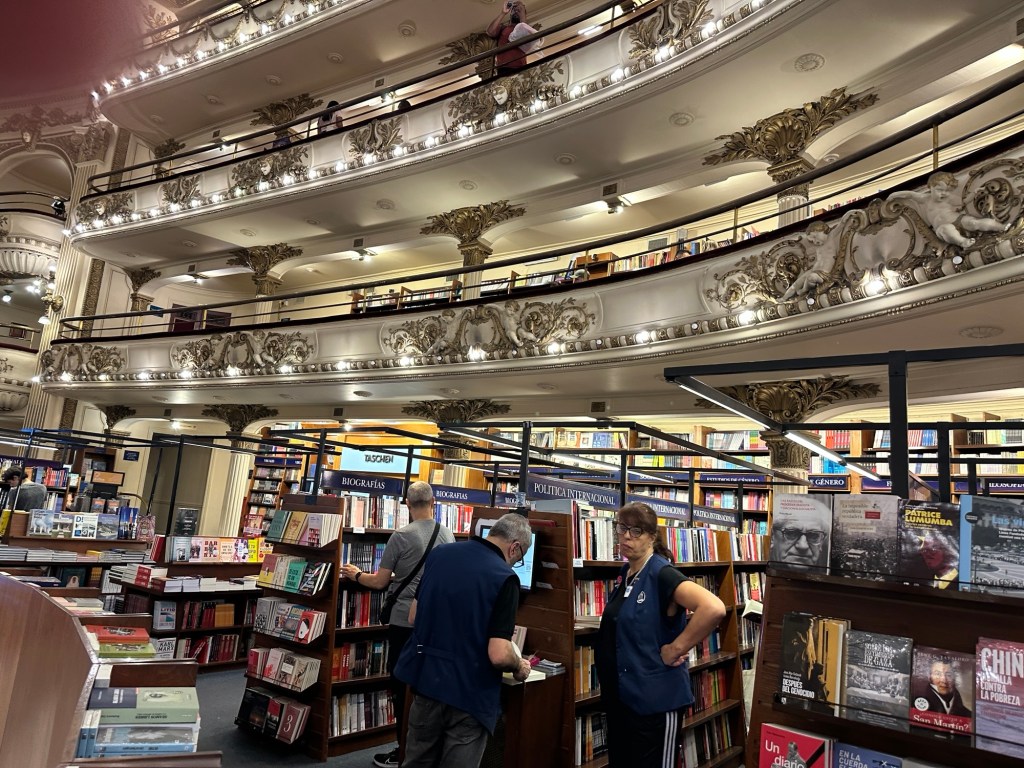
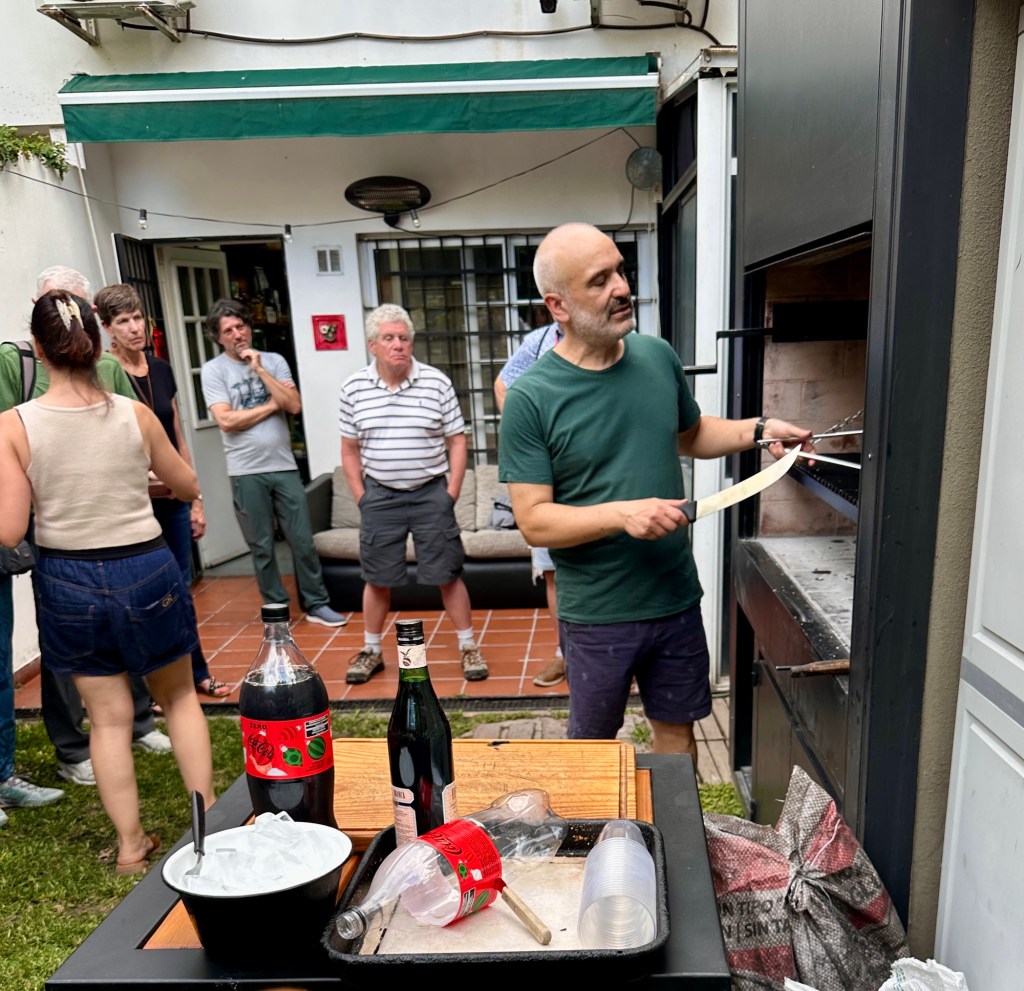
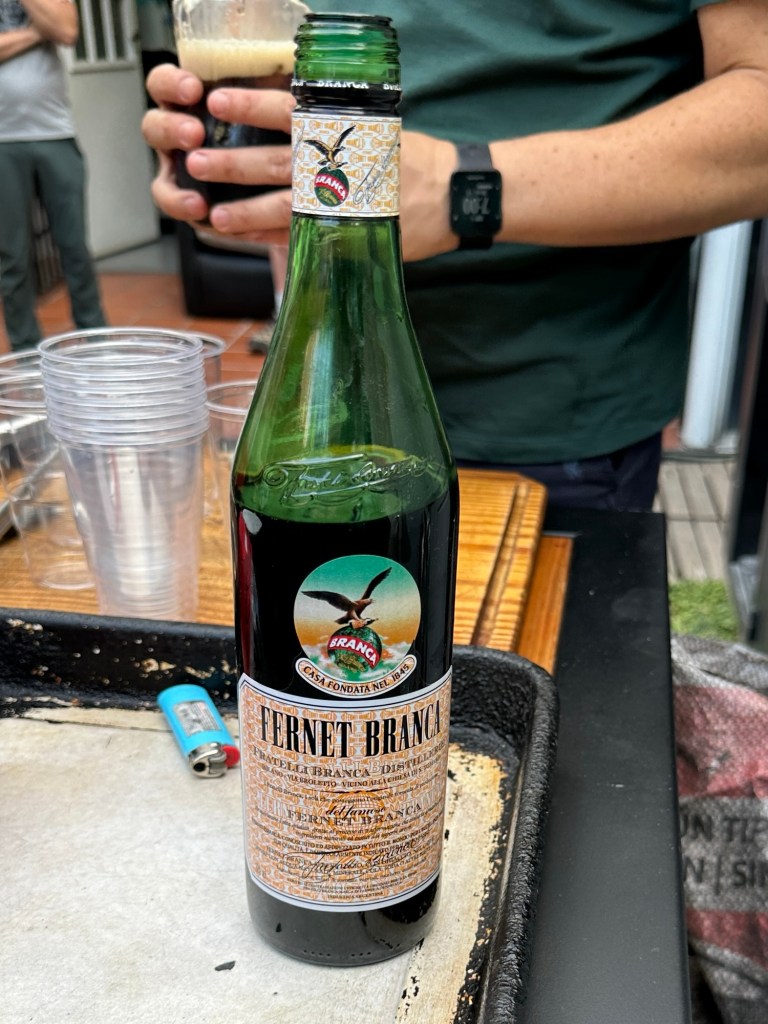
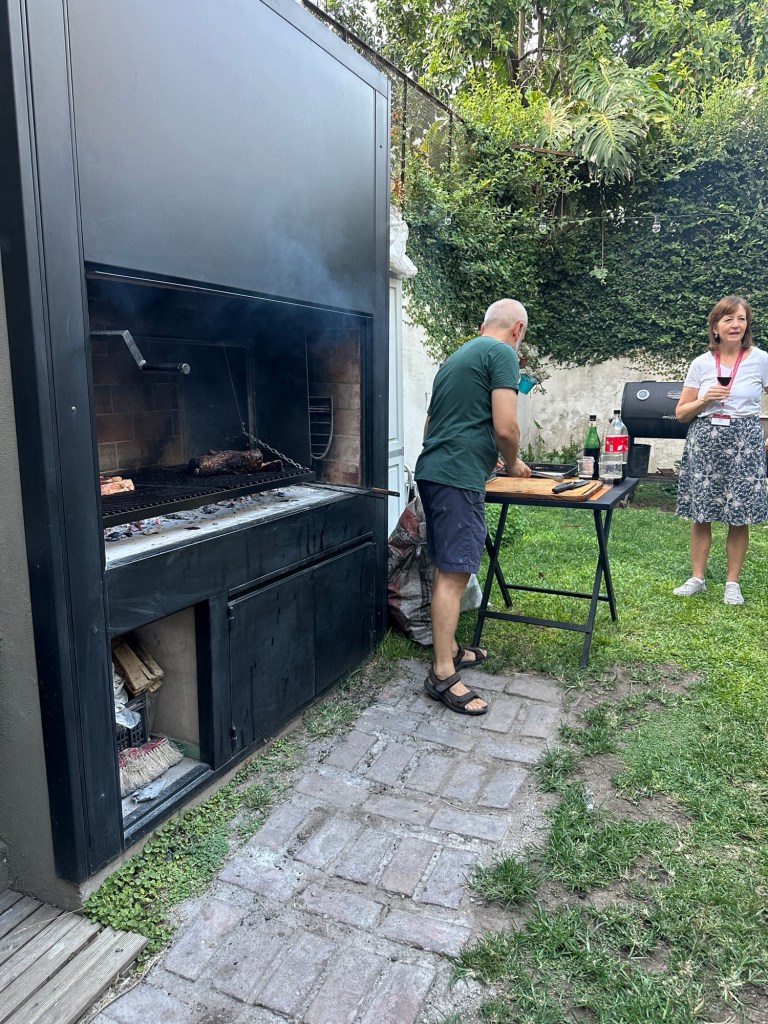
That evening, we had a marvelous home-hosted meal at the home of a man who, mid-life, obtained certification as a beef sommelier. For appetizers, we were served beef empanadas and a classic drink for social gatherings: a mixture of Fernet-Branca (an herbal blended spirit from Italy) and Coke. We watched as he grilled the special cut of beef he had selected for the meal. We enjoyed talking with him, his wife, and their two grown sons, and had a marvelous meal.
Thursday, Jan. 15
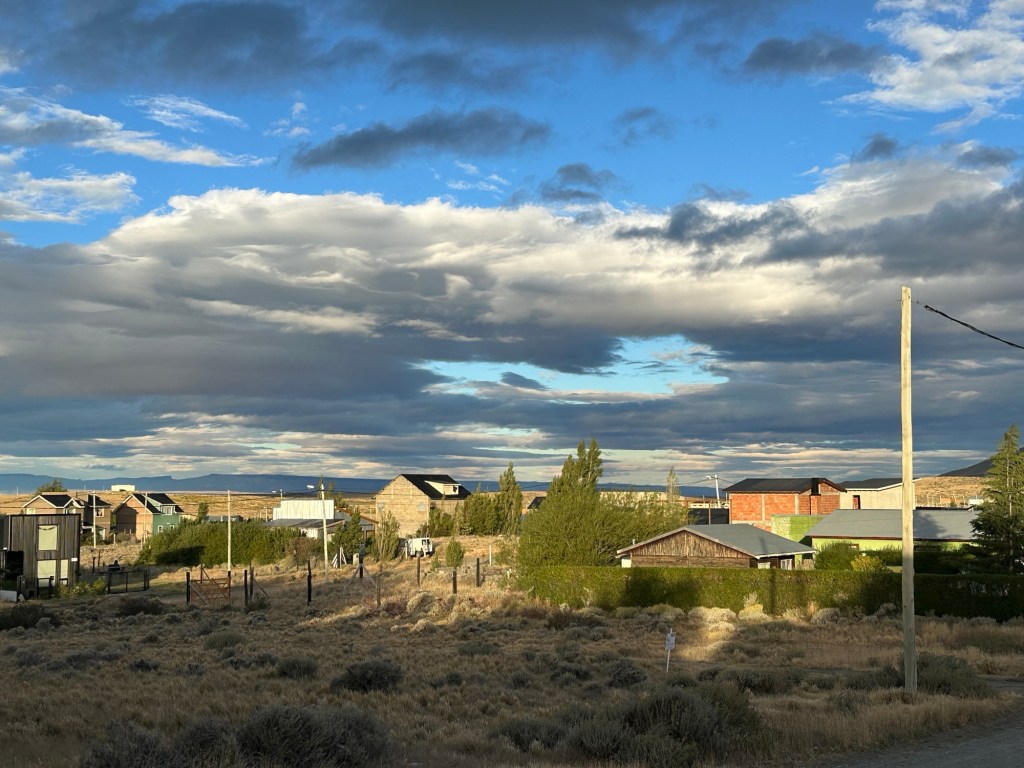
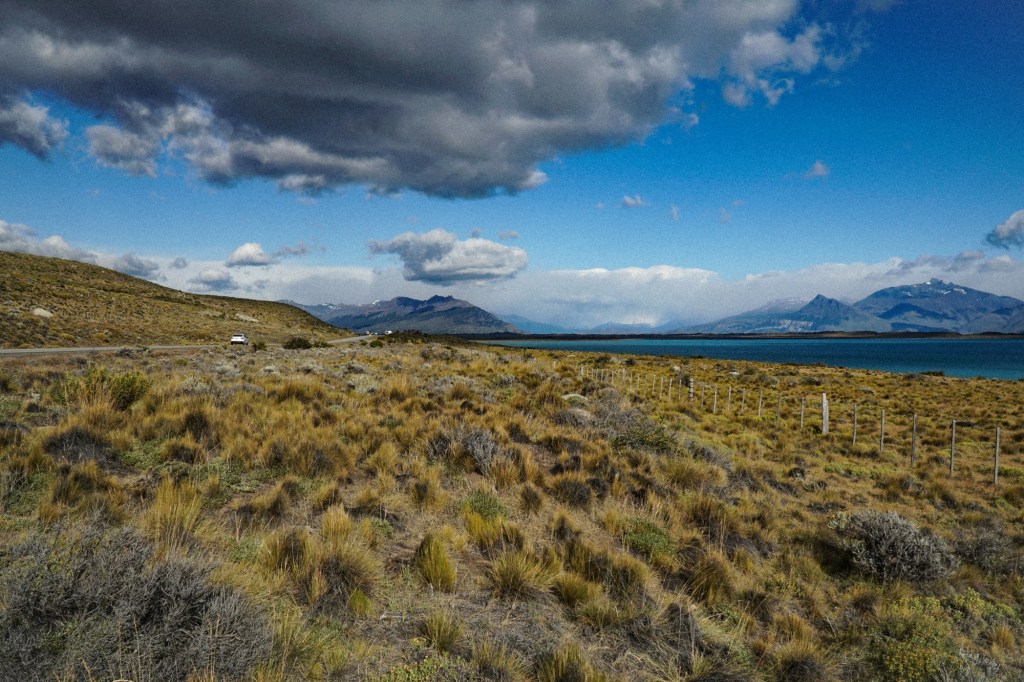
We flew to El Calafate, had a beautiful drive into town beside Lago Argentino, grabbed a snack for lunch, and walked around this tourist town. The town is close to the border with Chile, and gets its name from the calafate plant, whose berries are used in preserves and syrups. Our local drink switched from pisco sours to calafate sours! The town reminded me of Blowing Rock, NC, with lots of small shops, local crafts, and sporting gear stores. This was also our one chance to drop off dirty clothes at a wash and fold laundry.
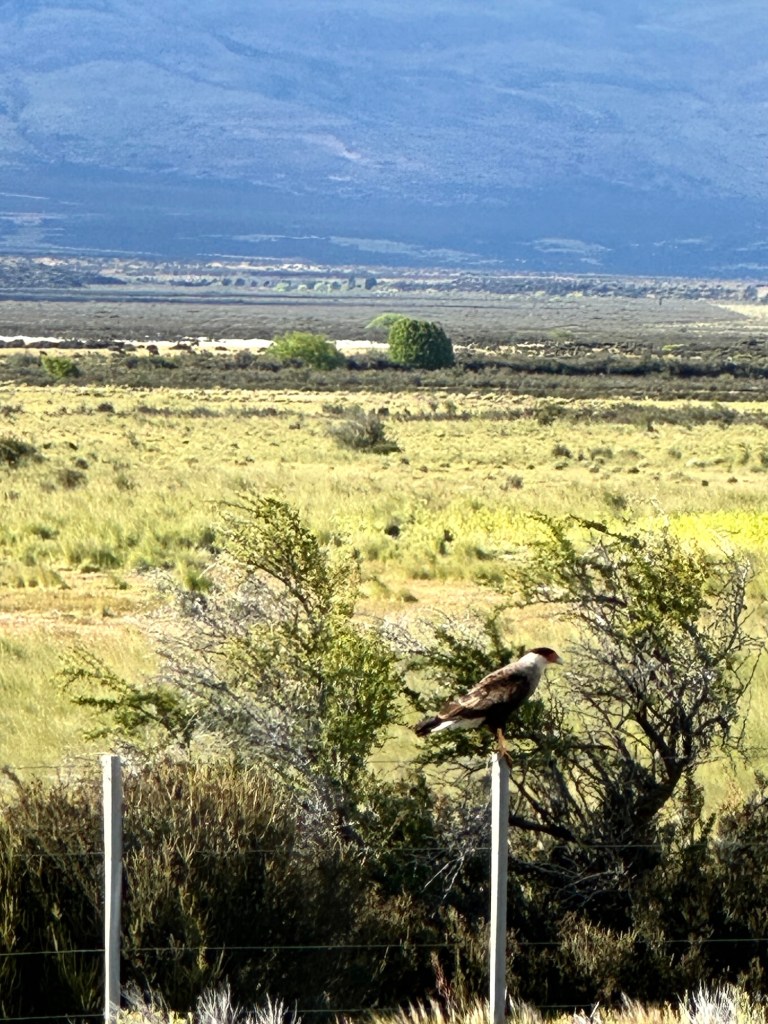
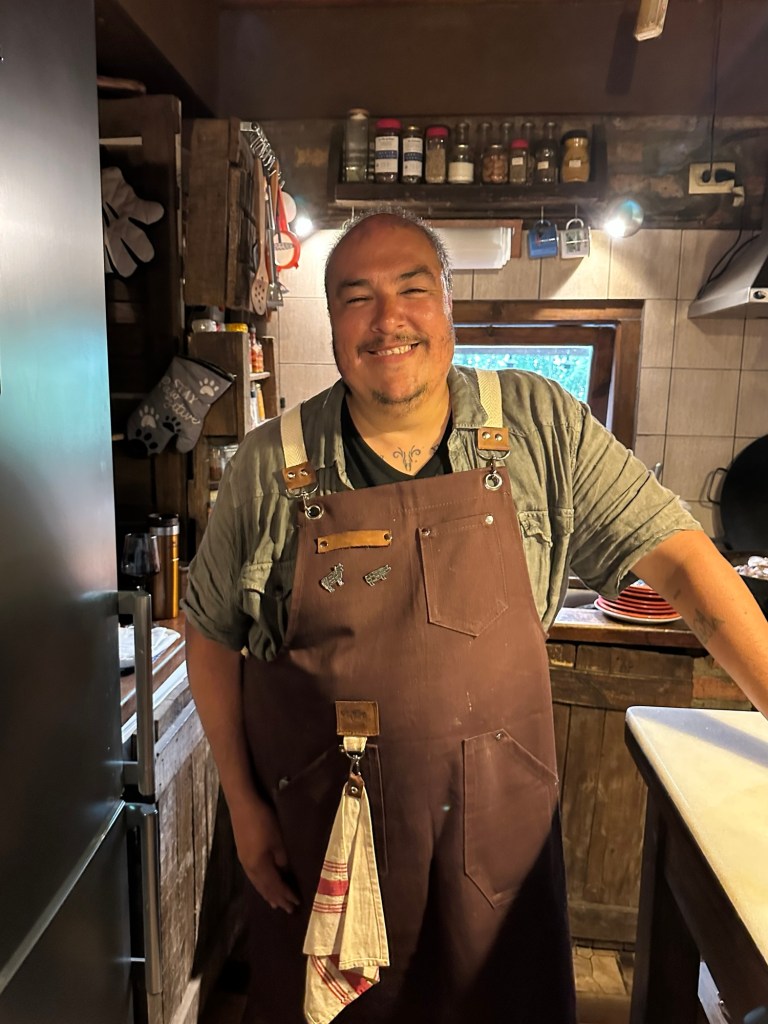
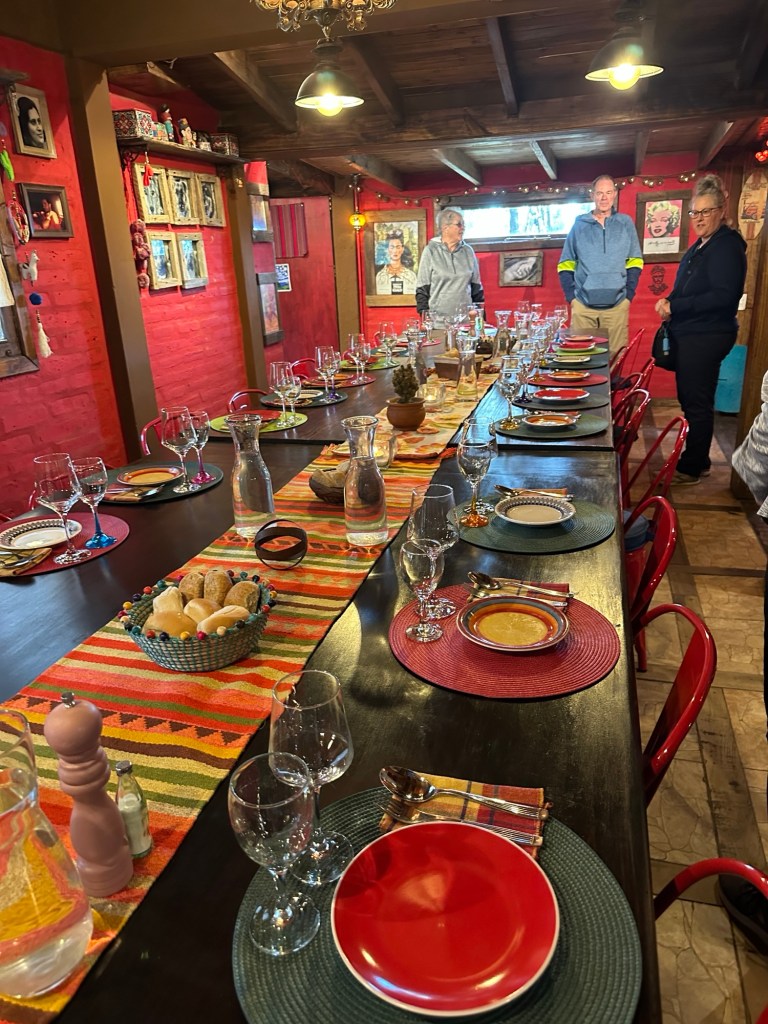
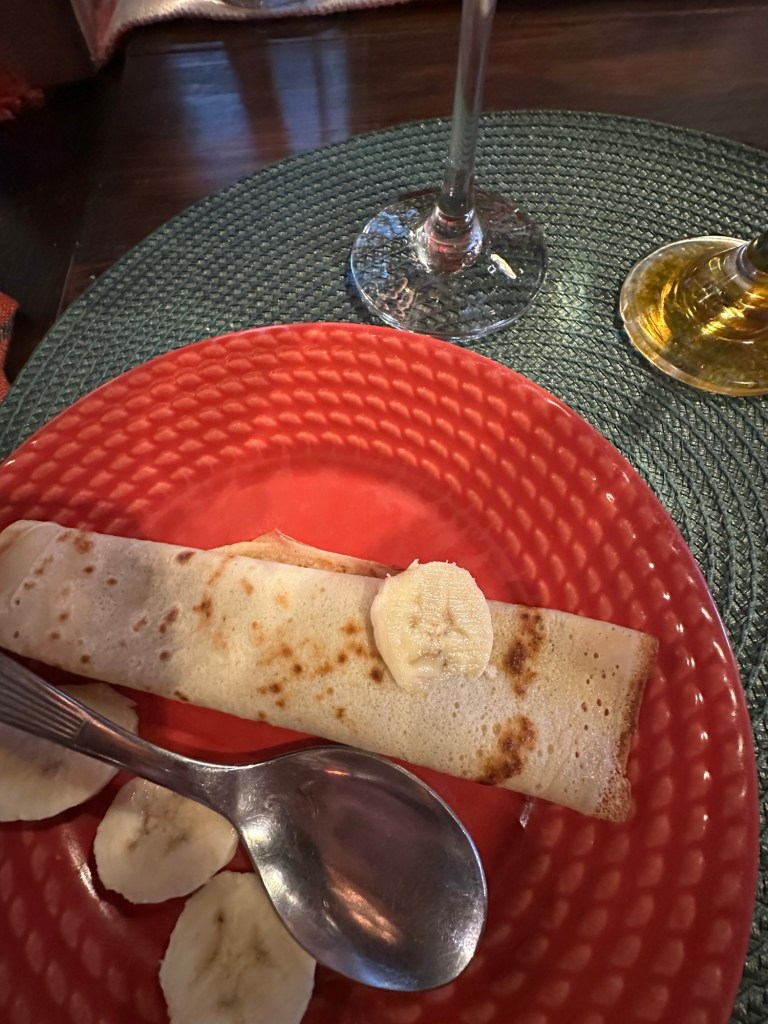
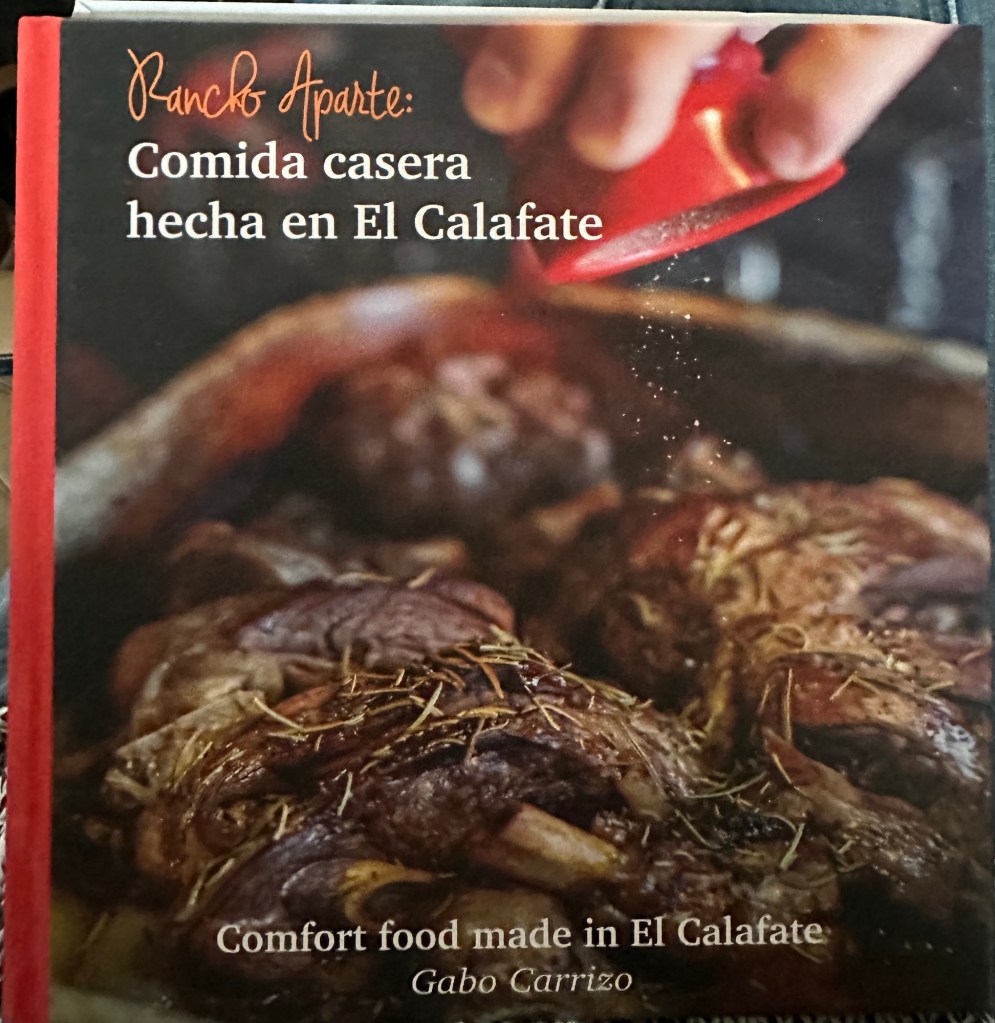
Our evening meal was held in the home of a local man, Gabo Carrizo, who shared great food and drink and his history in the area. When I was shopping back in El Calafate, I found his cookbook, Comfort Food Made in El Calafate, in Spanish and English, and of course bought it!
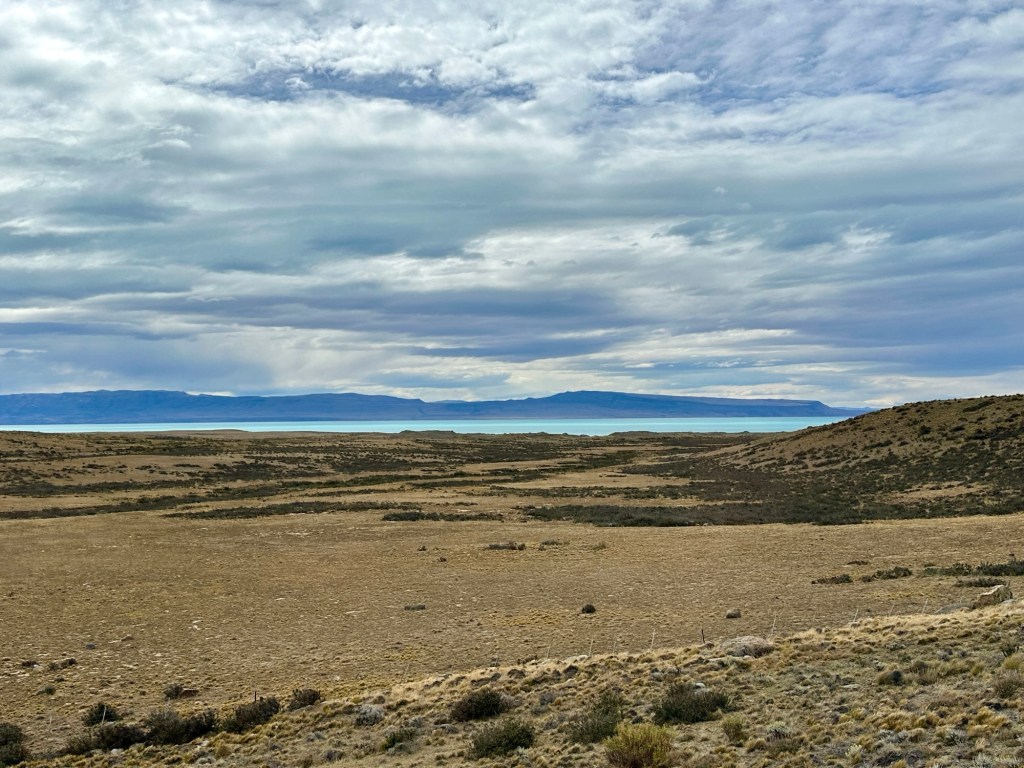
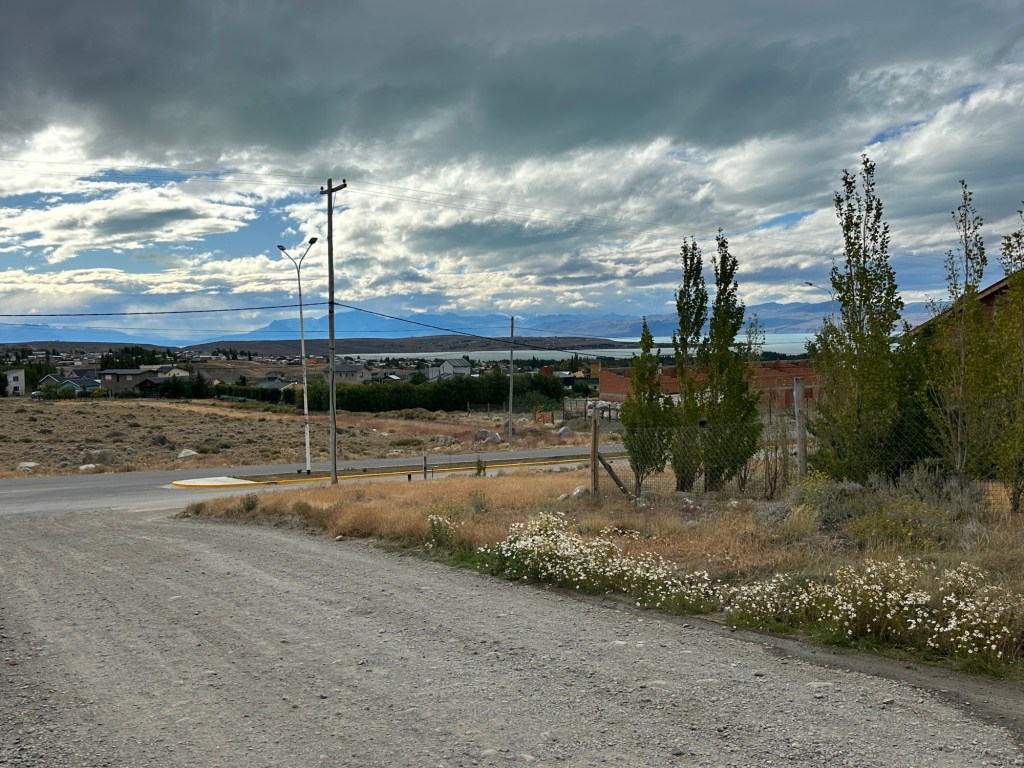
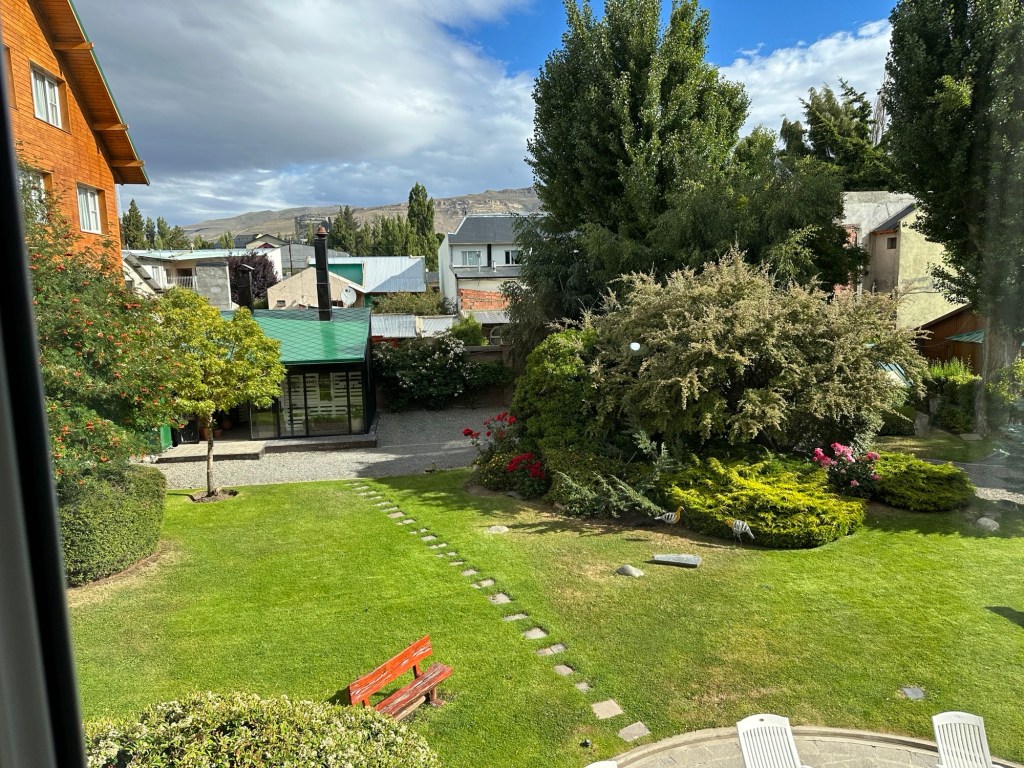

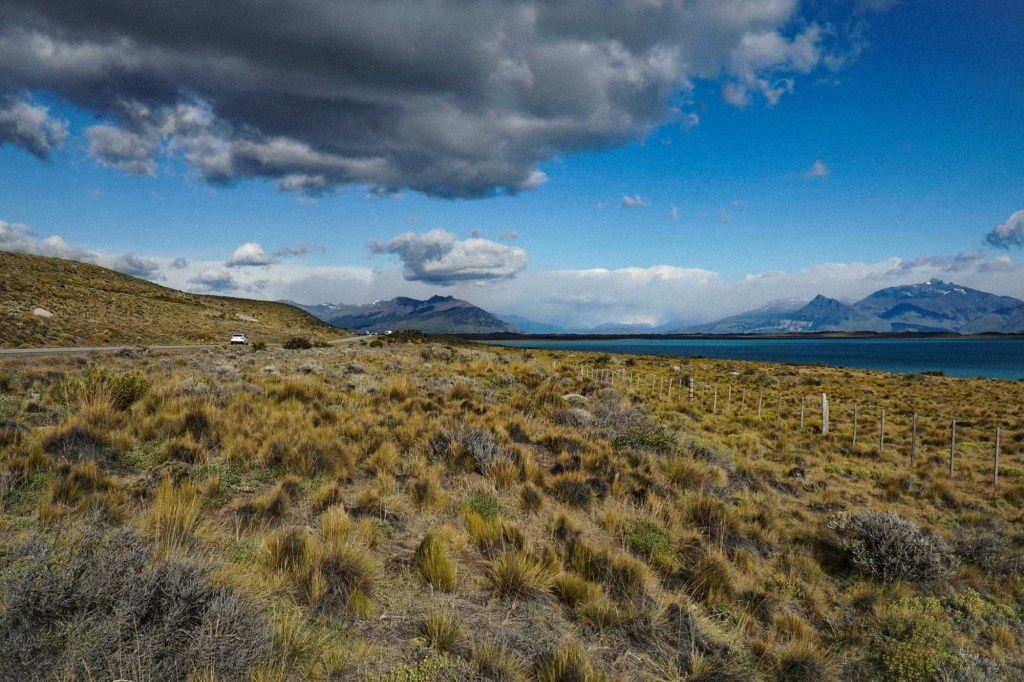
Friday, Jan. 16
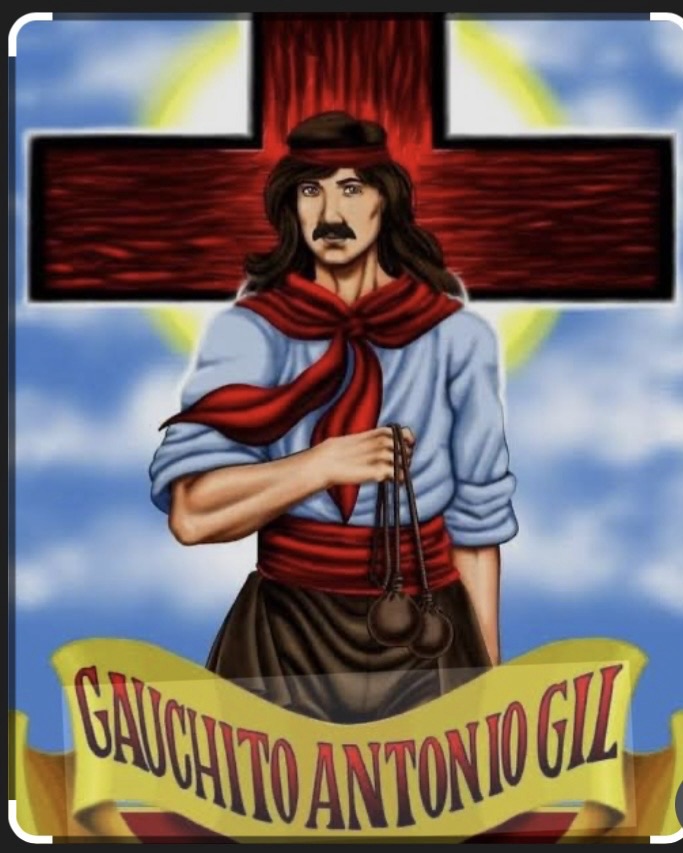
This was our first day on the main trip to really enjoy the wild natural beauty of Patagonia. As we drove out of El Calafate, we stopped at a memorial to Gauchito Gil. There is a legend that this gauchito performed a miracle for a sheriff who was about to execute him for (there are a variety of reasons in the various legends, including army desertion). He said he knew the sheriff’s son was very sick. If the sheriff would give him a proper burial, Gil would heal the boy. The sheriff put the body in a pauper’s grave and went home to find his son even sicker. He then gave the body a proper burial, and upon arriving home this time, found his son totally healed. Gauchito Gil has become a travel “saint,” and little red memorial structures appear along the roadside, where people stop and make offerings, hoping that Gauchito Gil will bless them with a safe journey. We stopped and poured a local brew at one of the memorials.
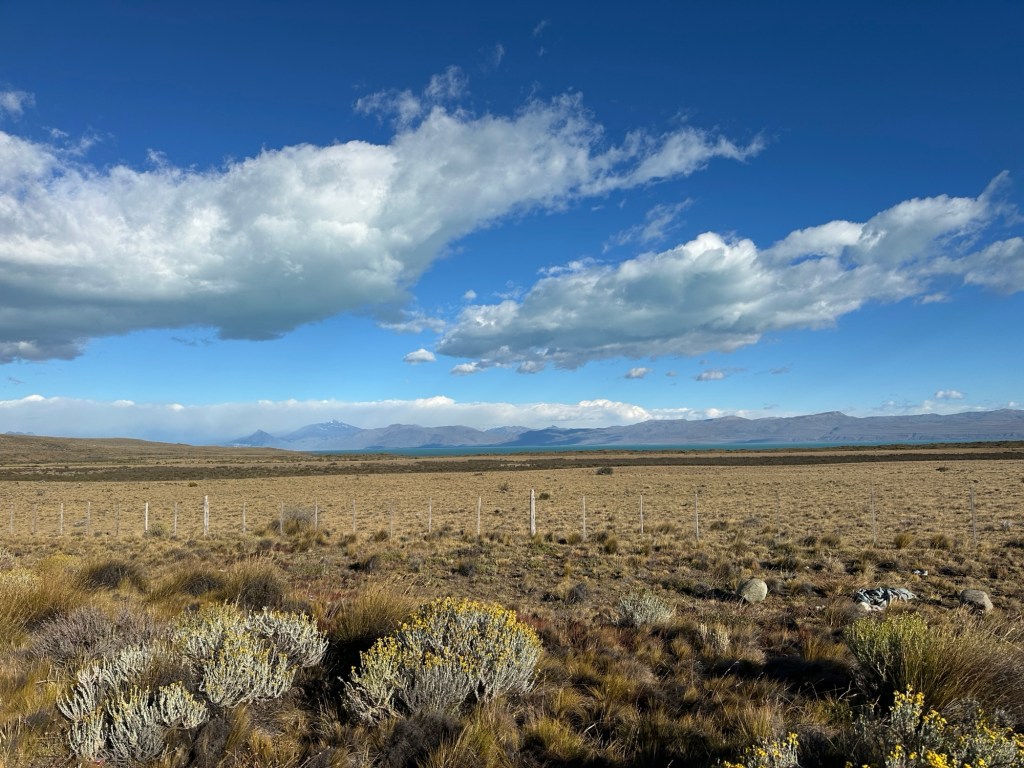
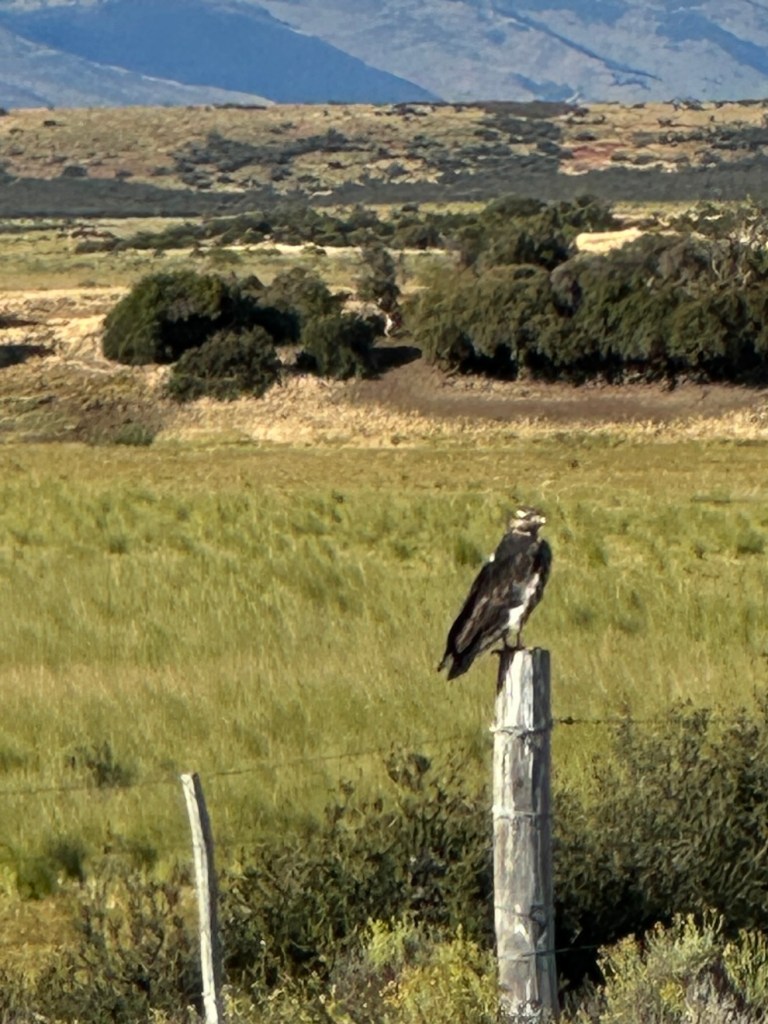
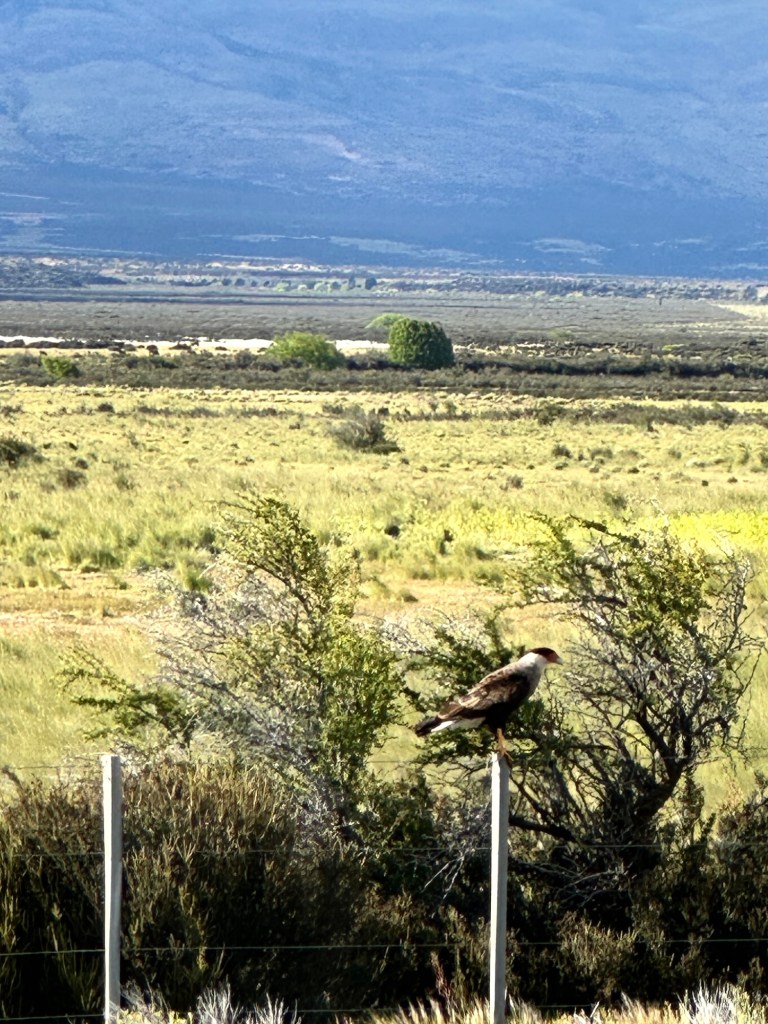
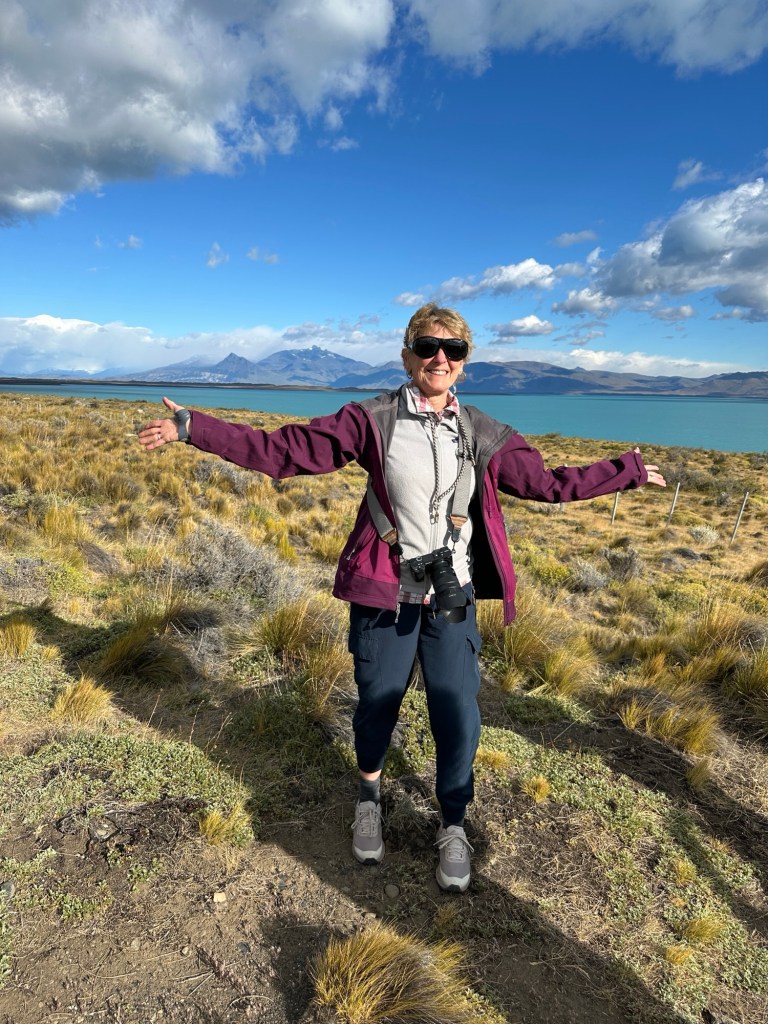
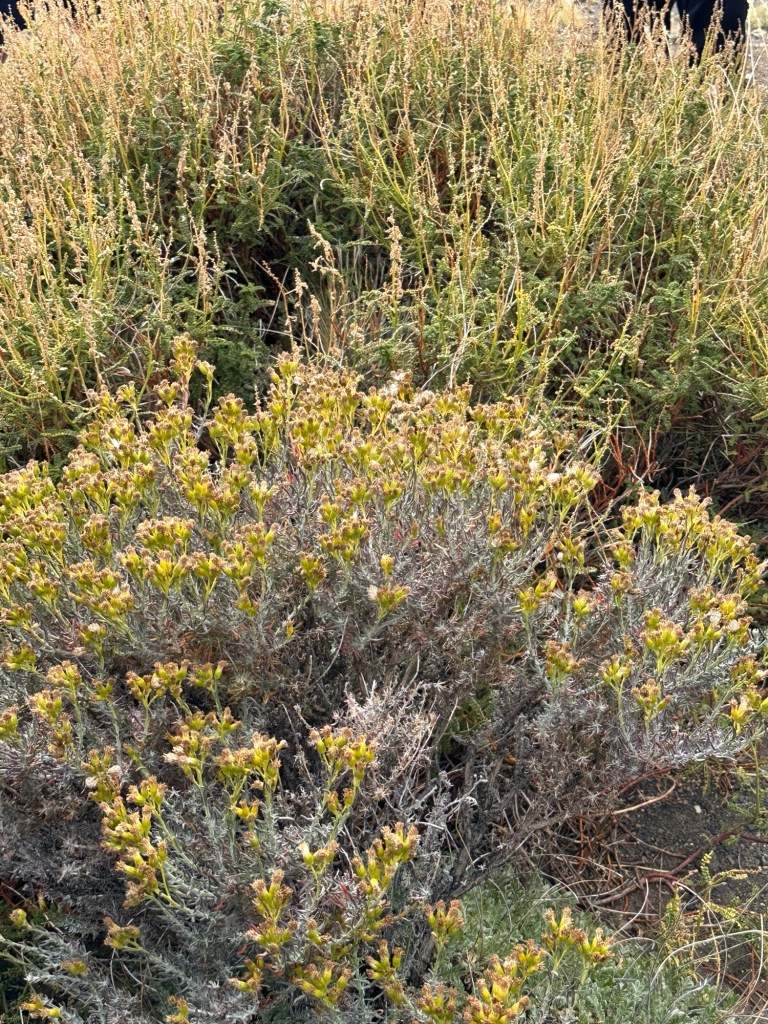
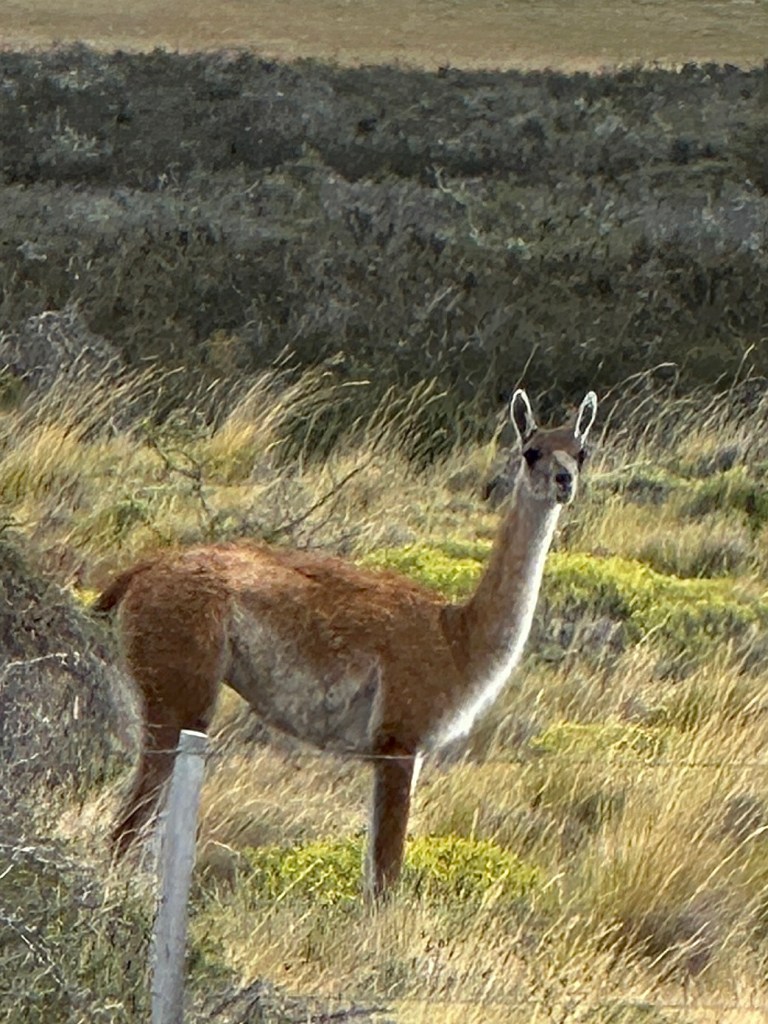
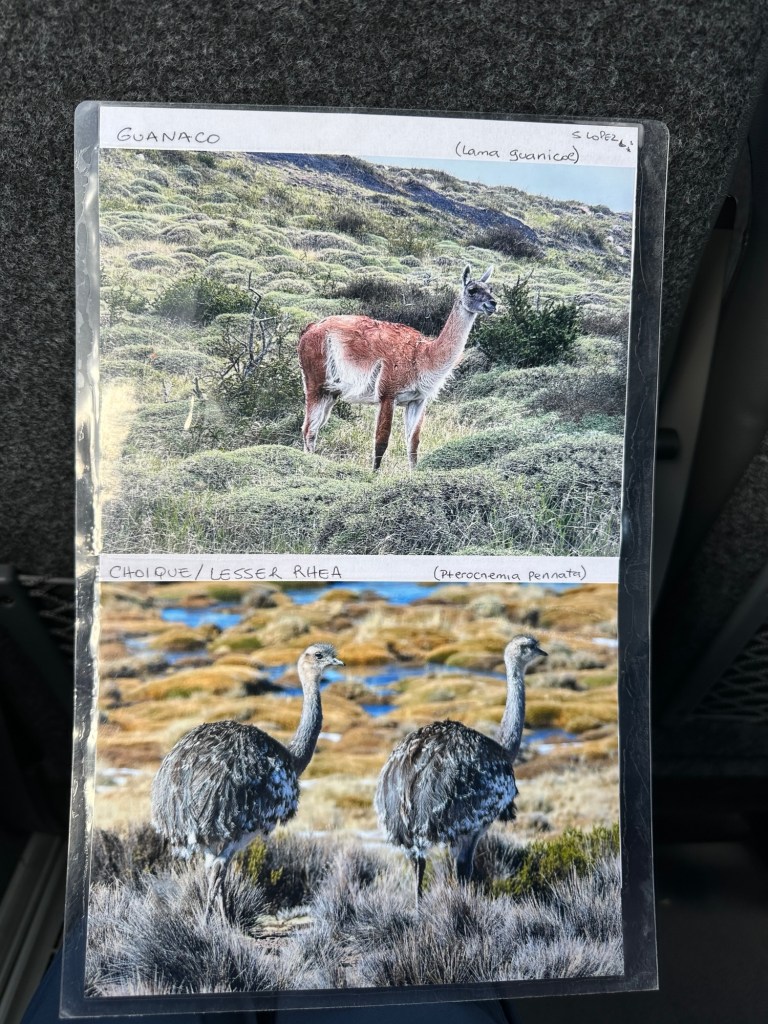
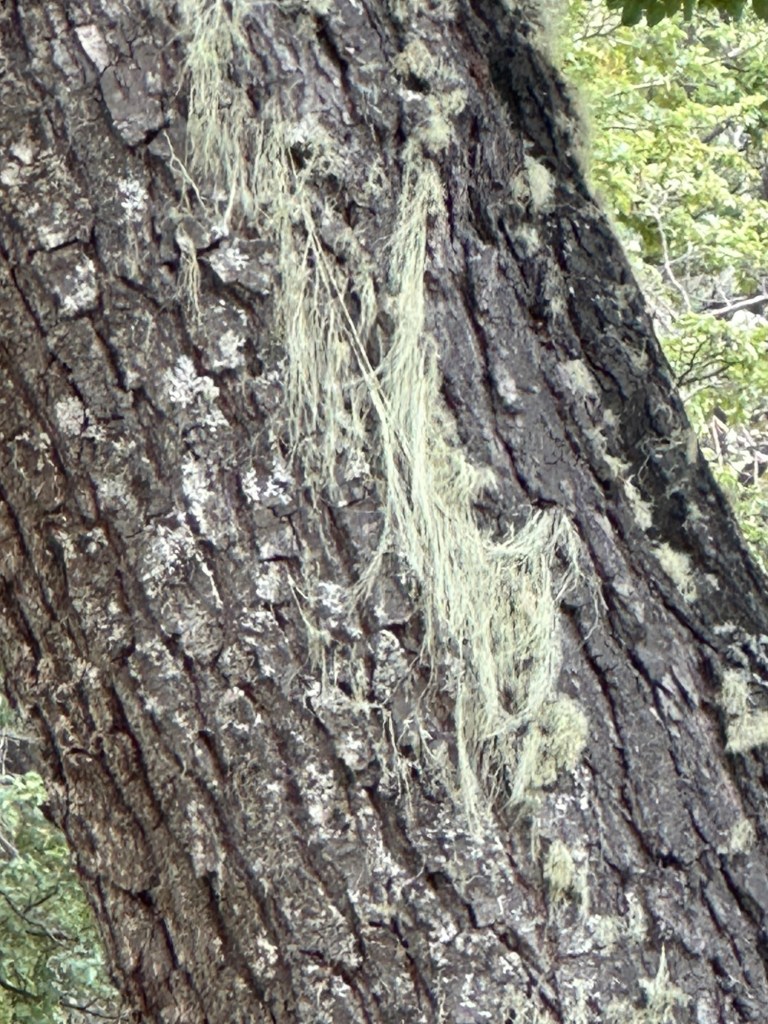
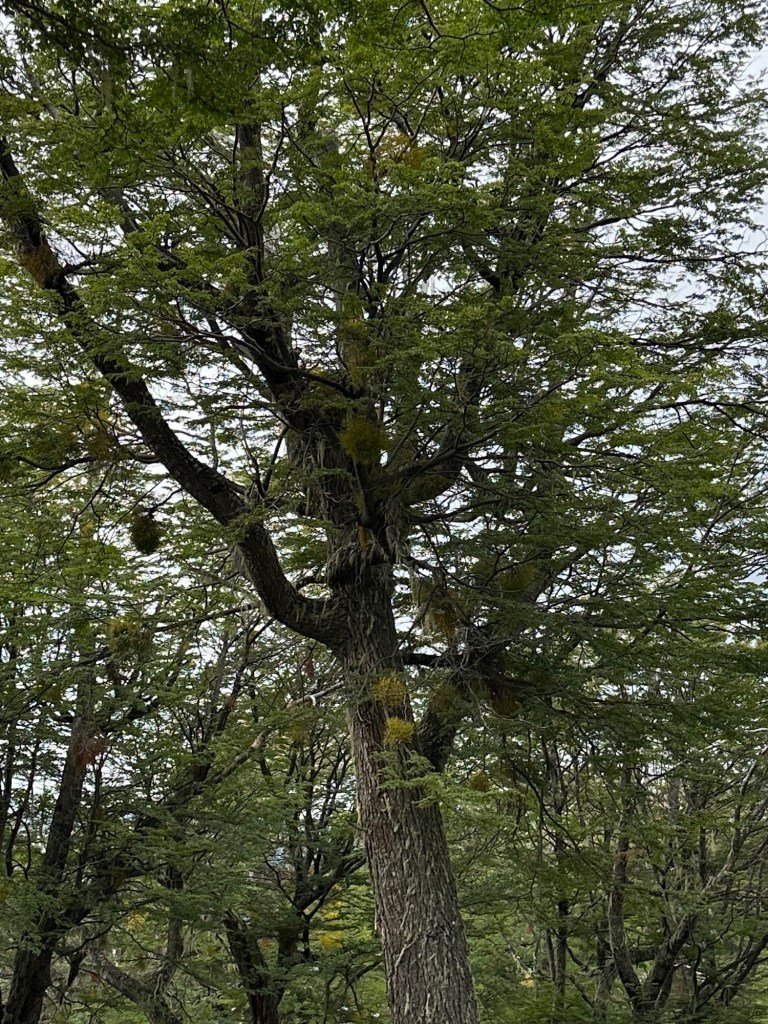
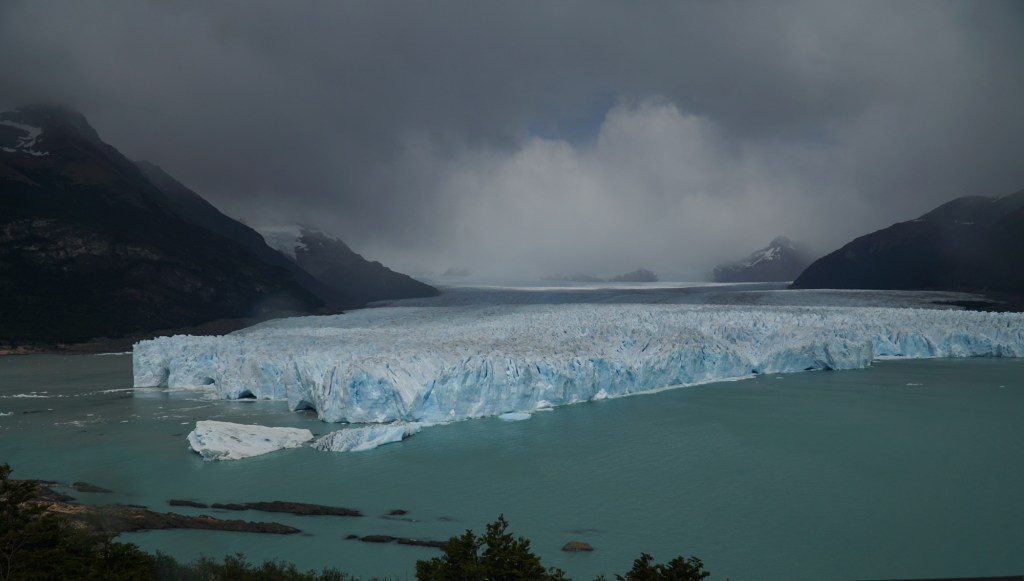
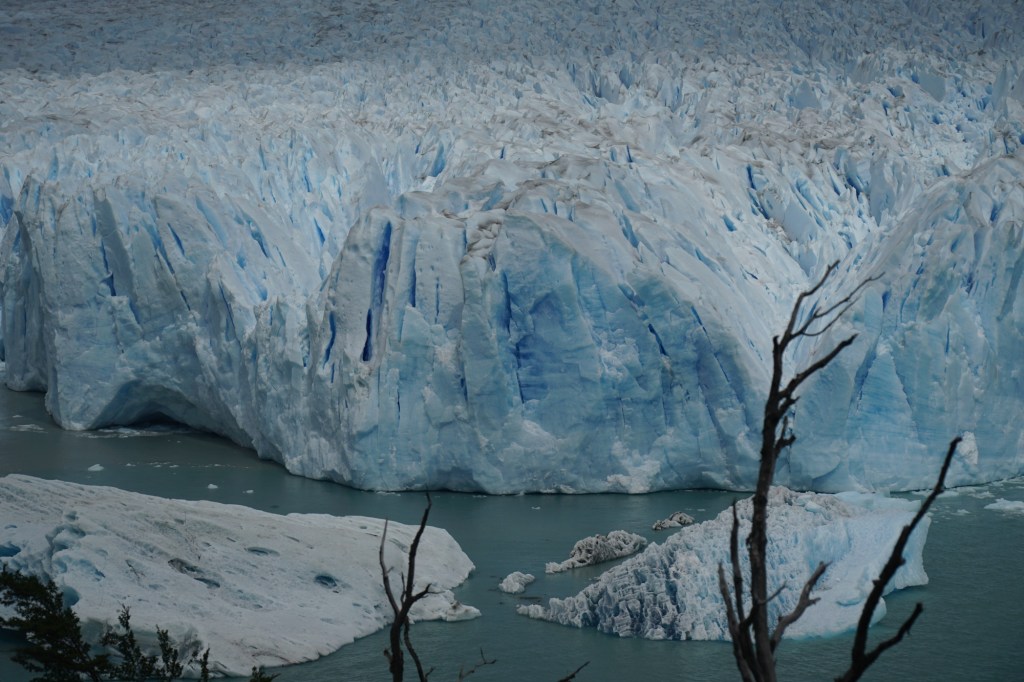
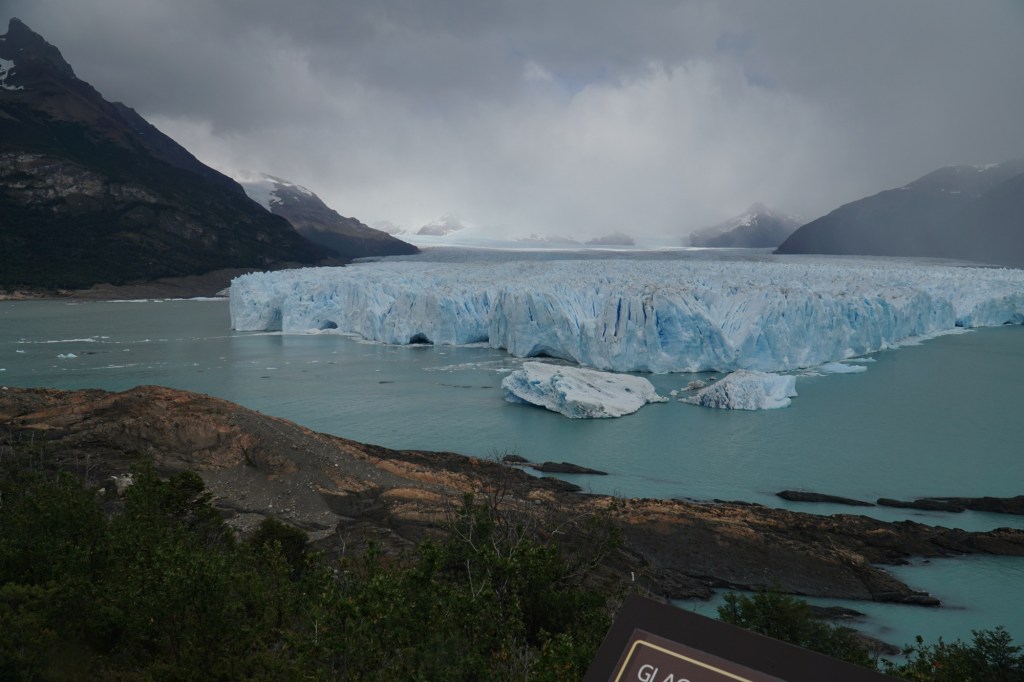
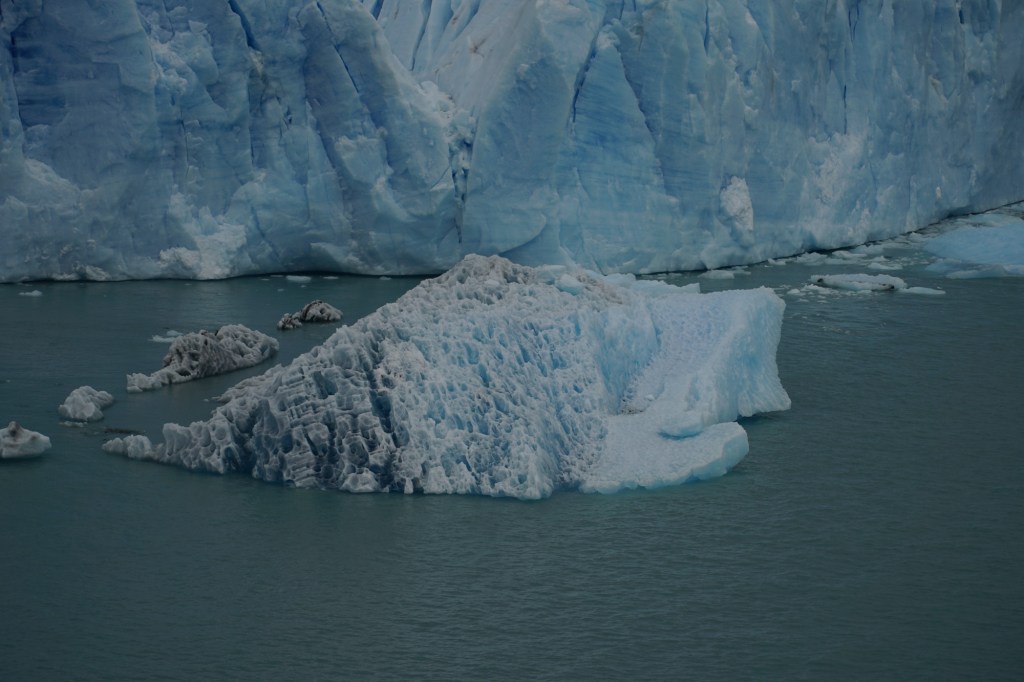
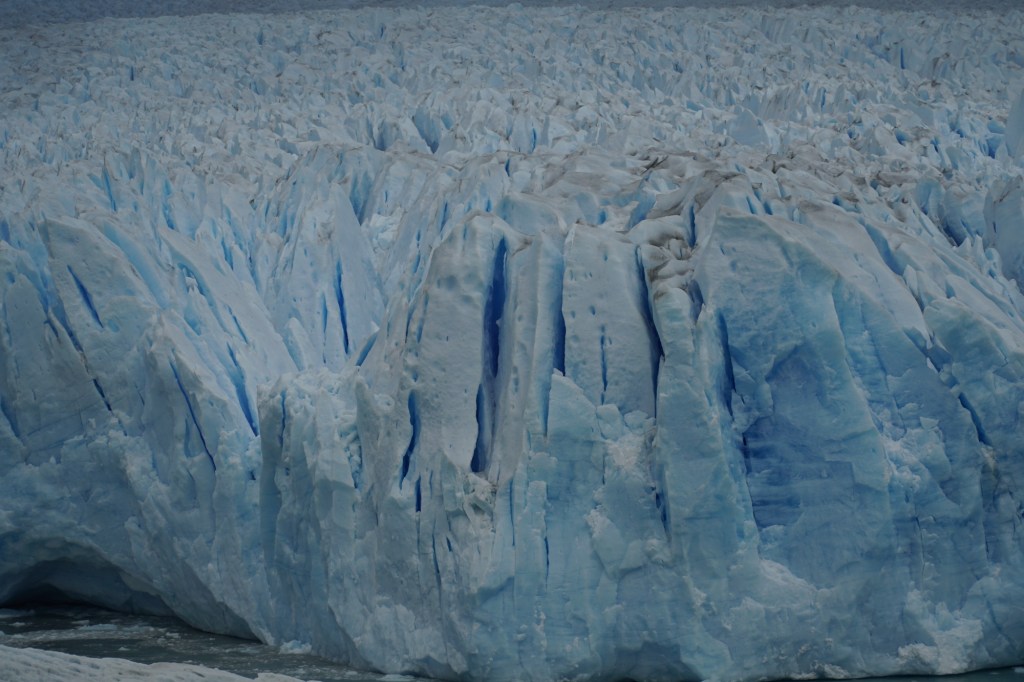
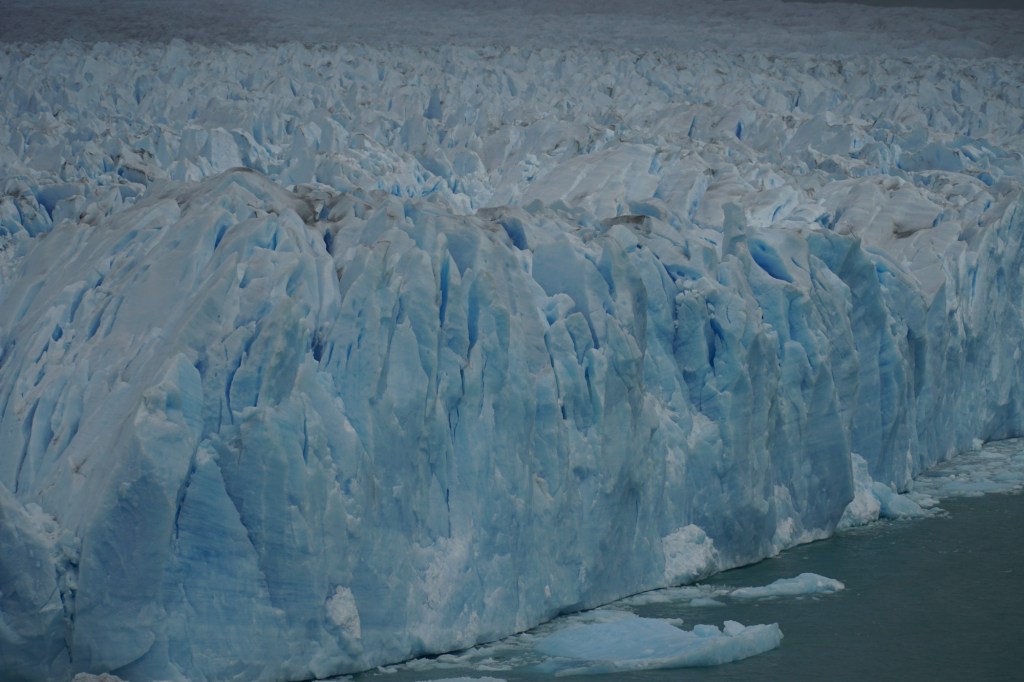
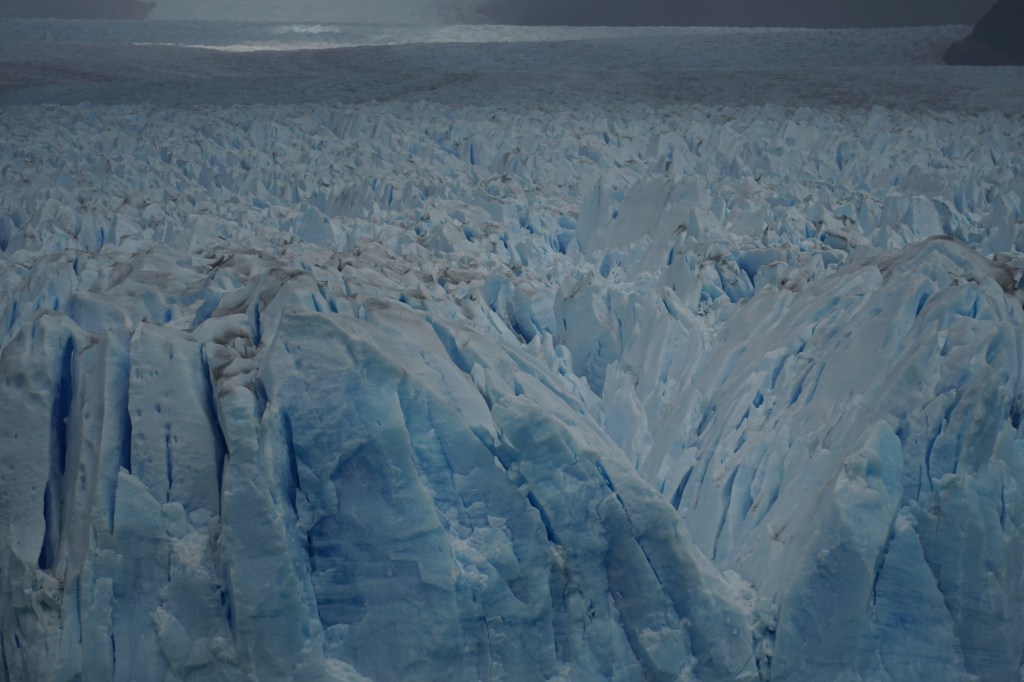
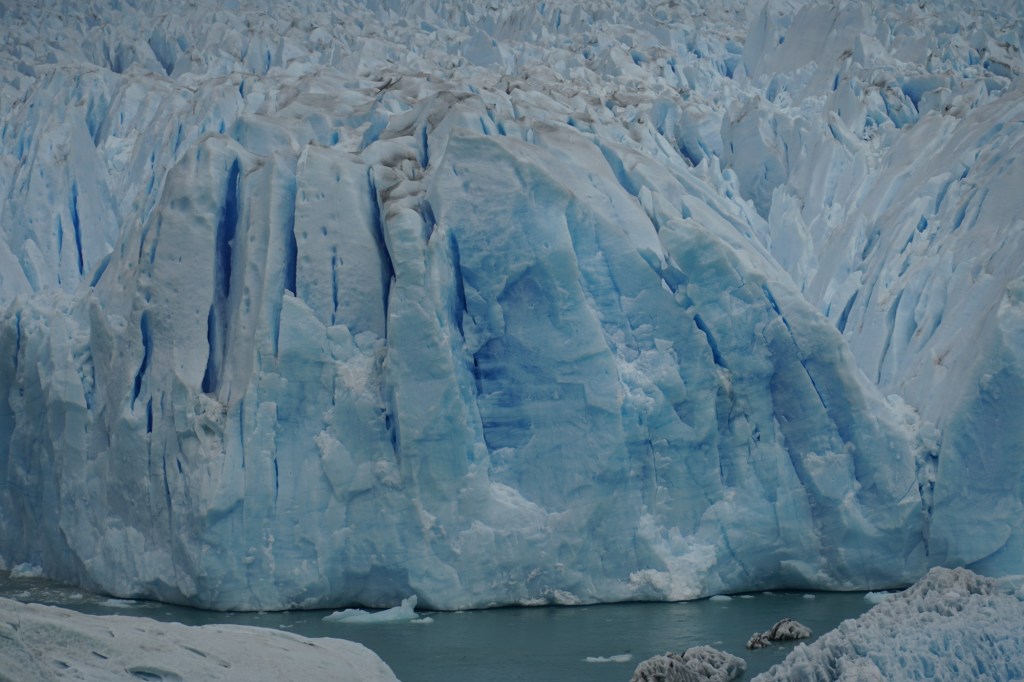
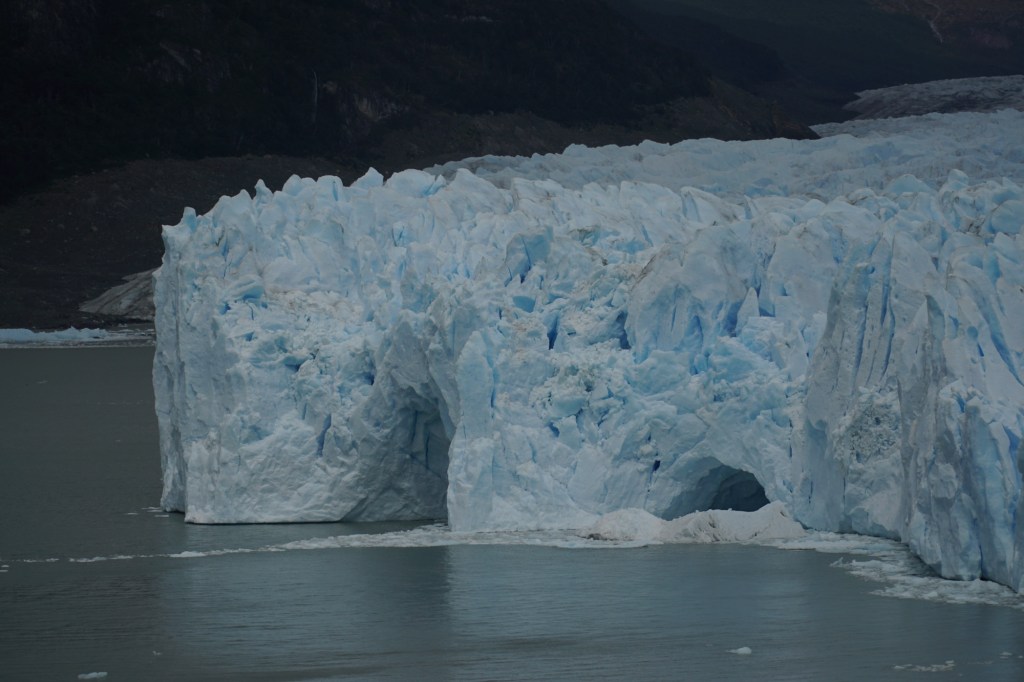
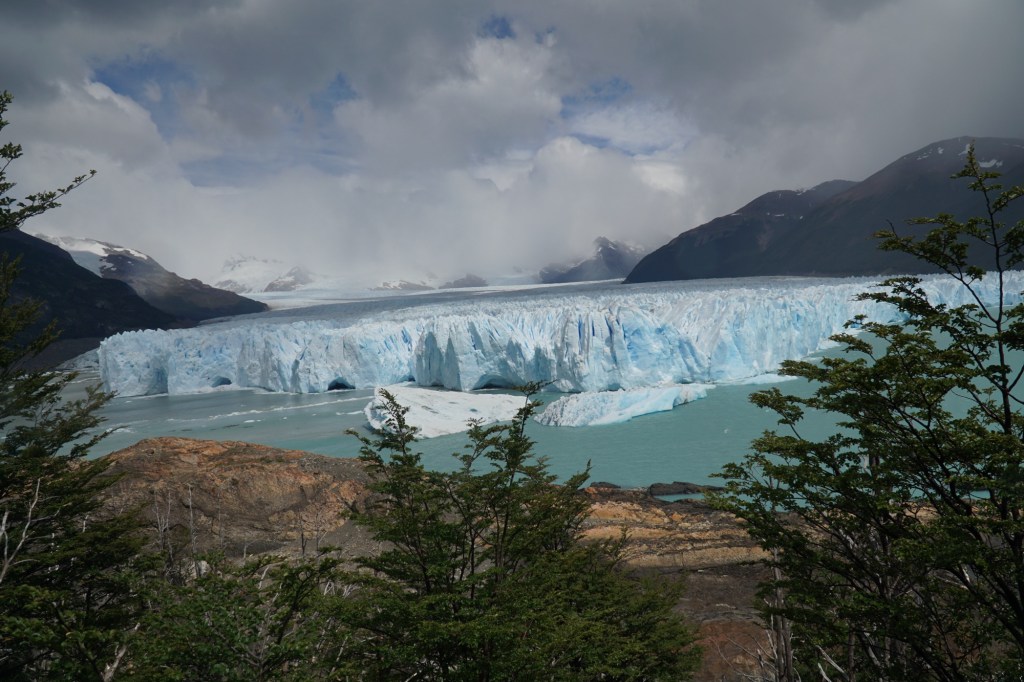
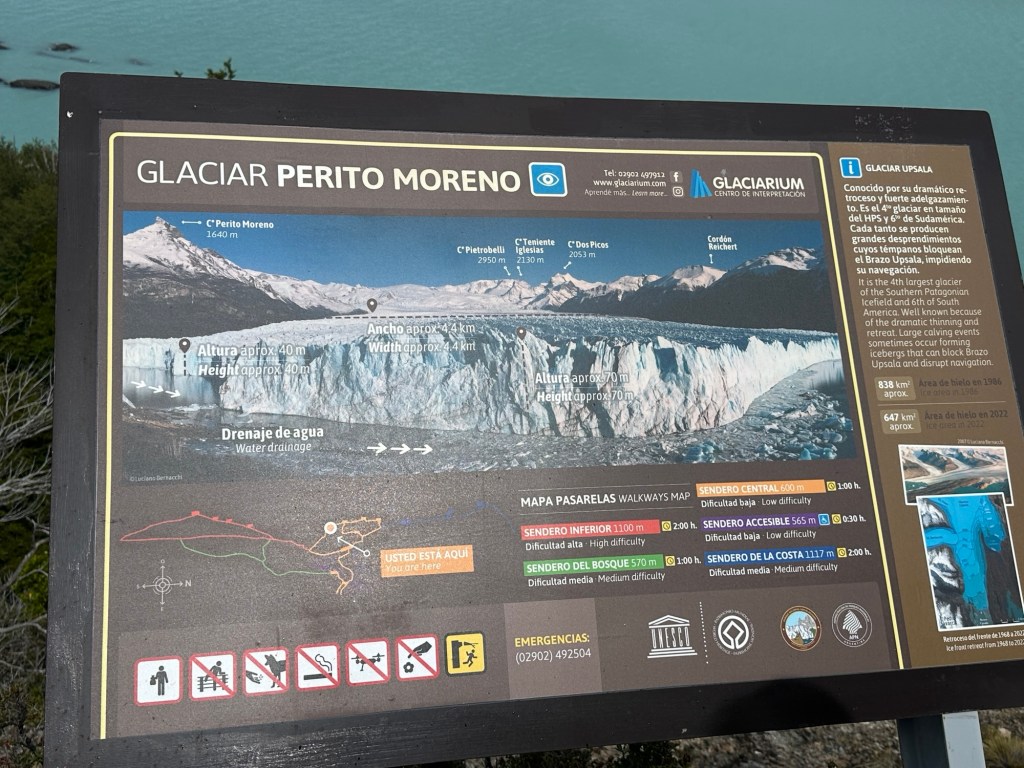
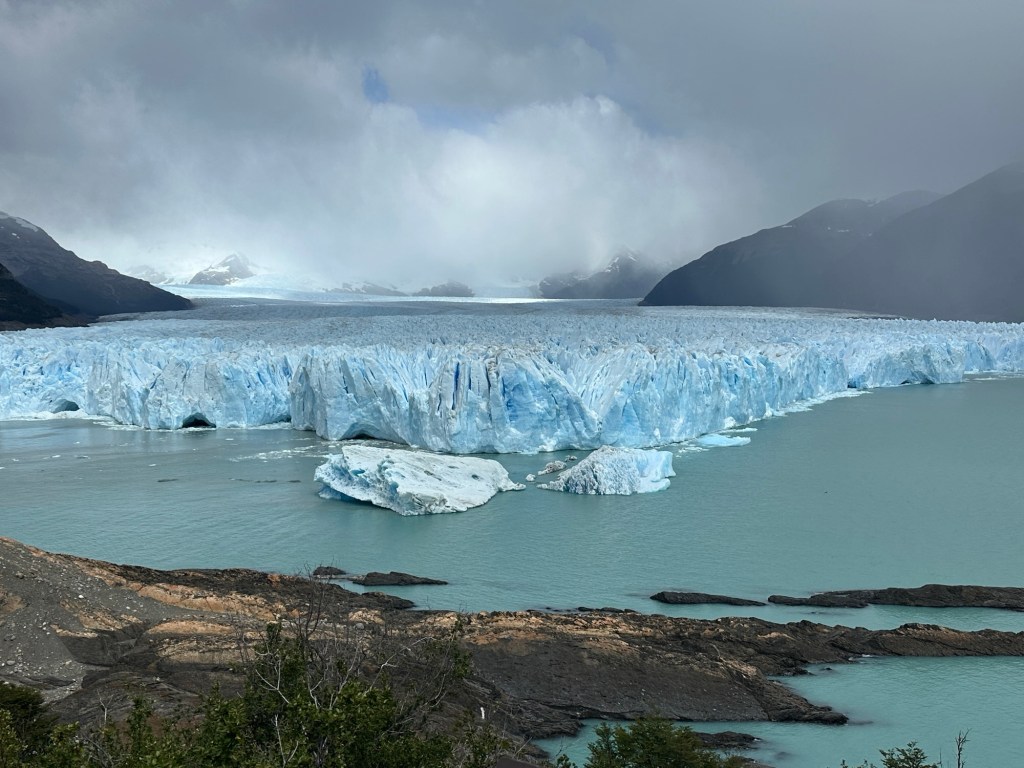
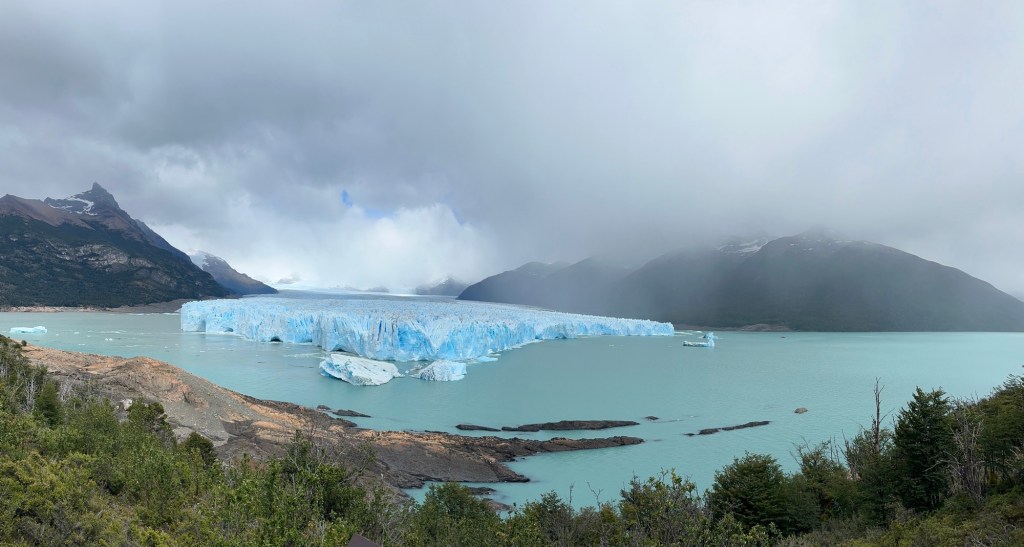
We spent the rest of the day exploring Los Glaciares National Park. The highlight was a hike to see various views of the Perito Moreno Glacier along different paths through the forest or at the glacier’s edge. We heard the thunder of parts of the glacier calving several times, and were able to see the bits of ice tumbling down.
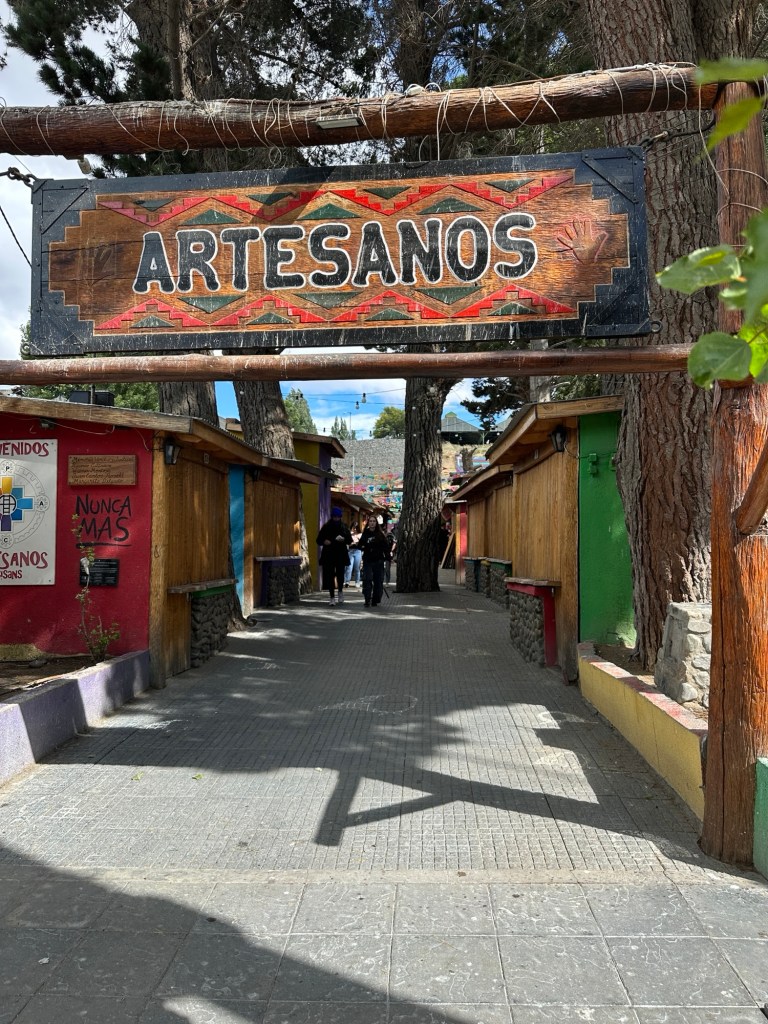
I enjoyed watching the black-faced ibis in the courtyard of the hotel.
Saturday, Jan. 17
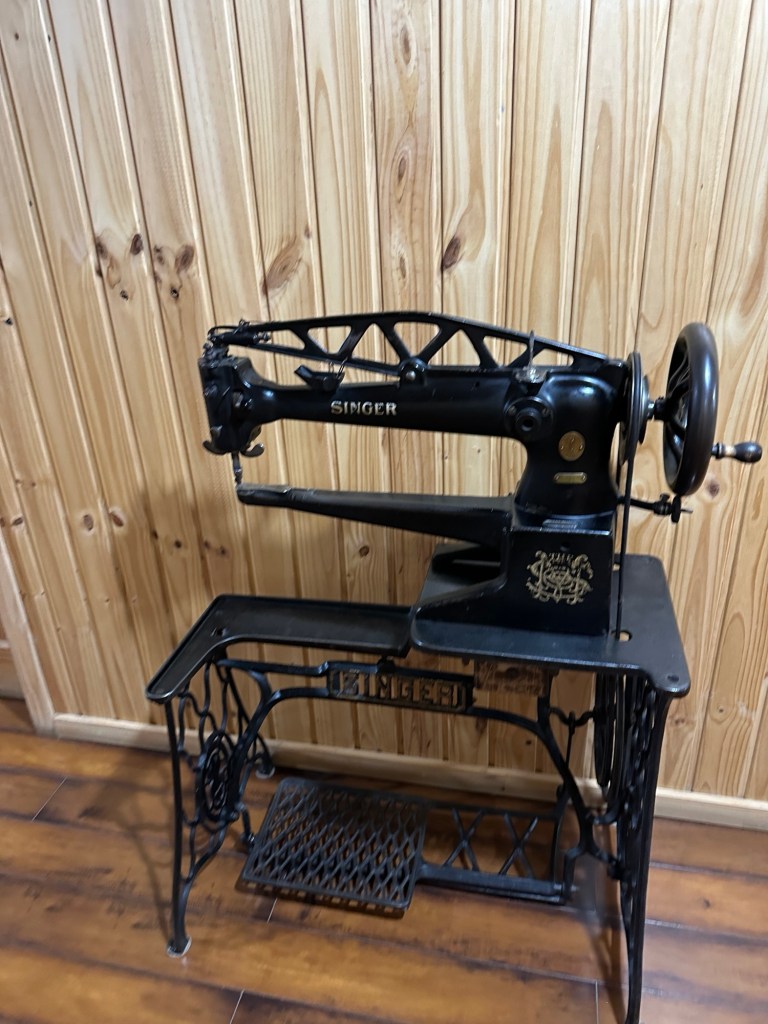
We drove to Torres del Paine National Park, crossing the border into Chile and had lunch just across the border at an interesting large restaurant that had an amazing display of old sewing machines as well as gaucho gear, like saddles as bar seats.
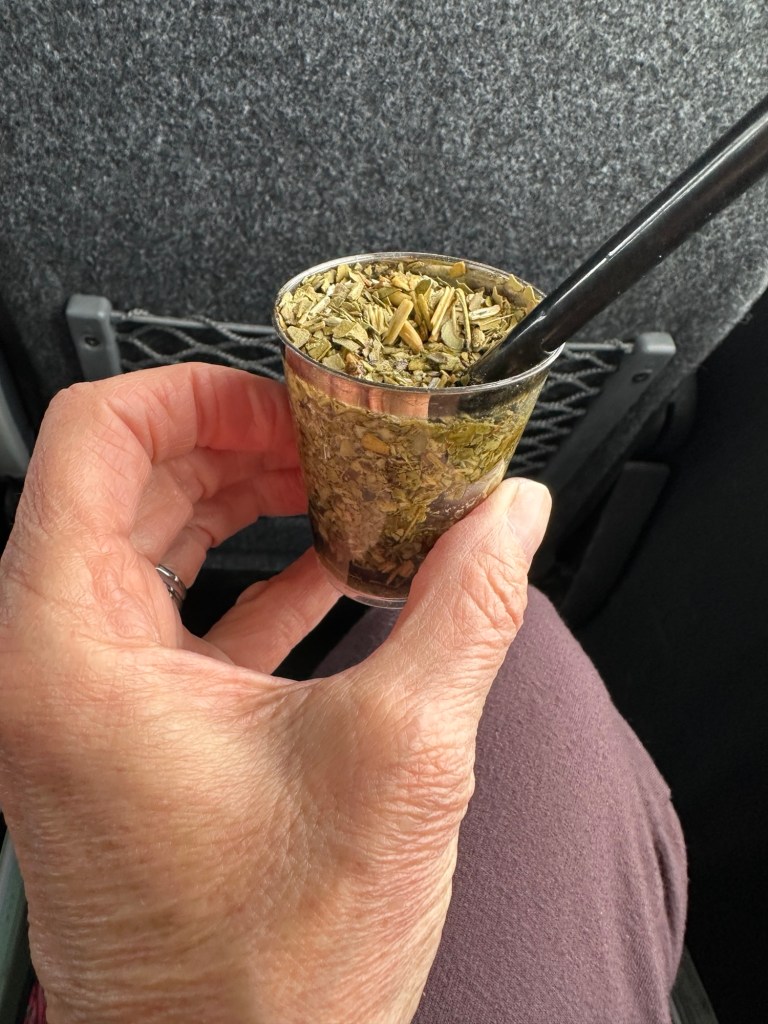
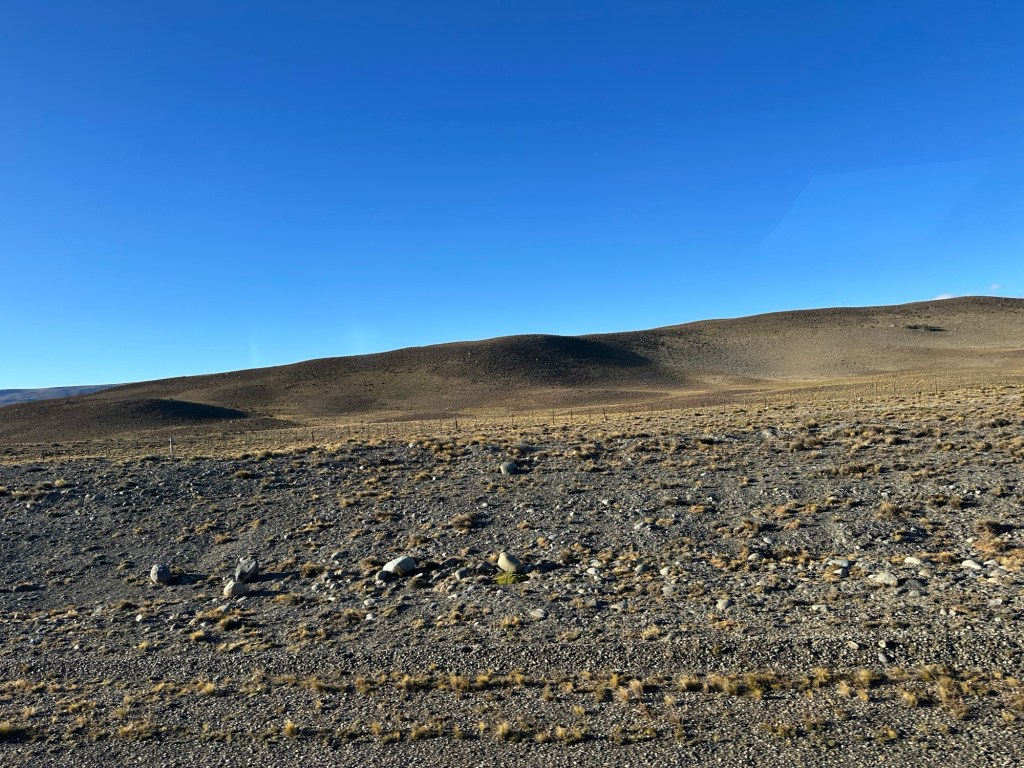
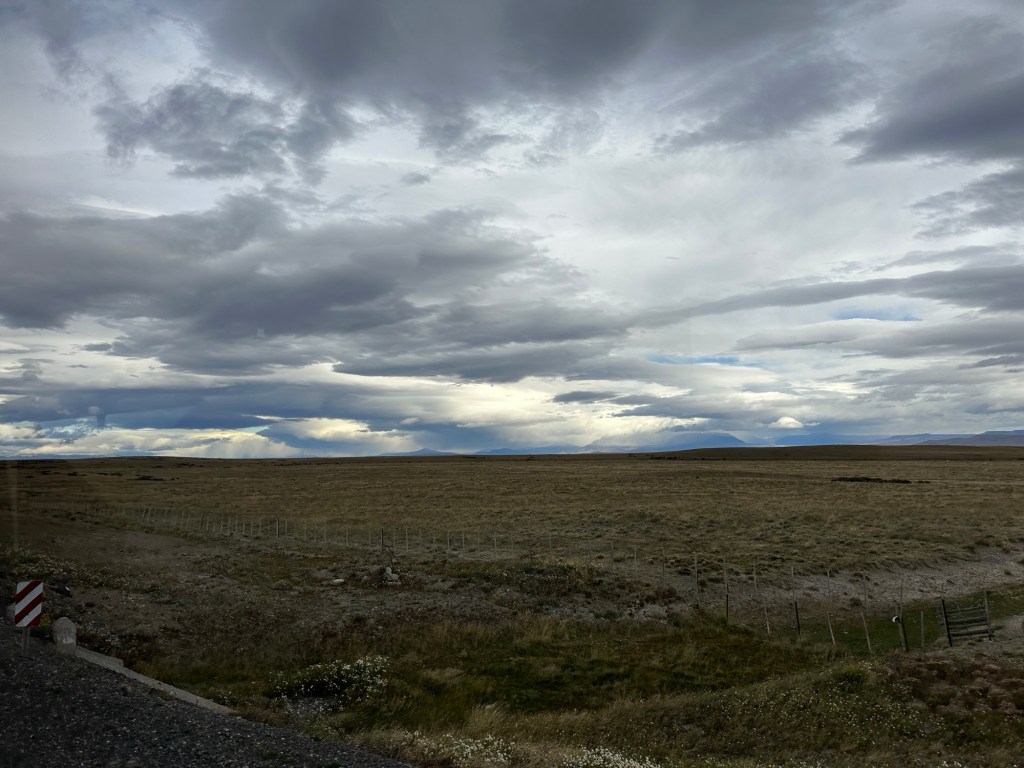
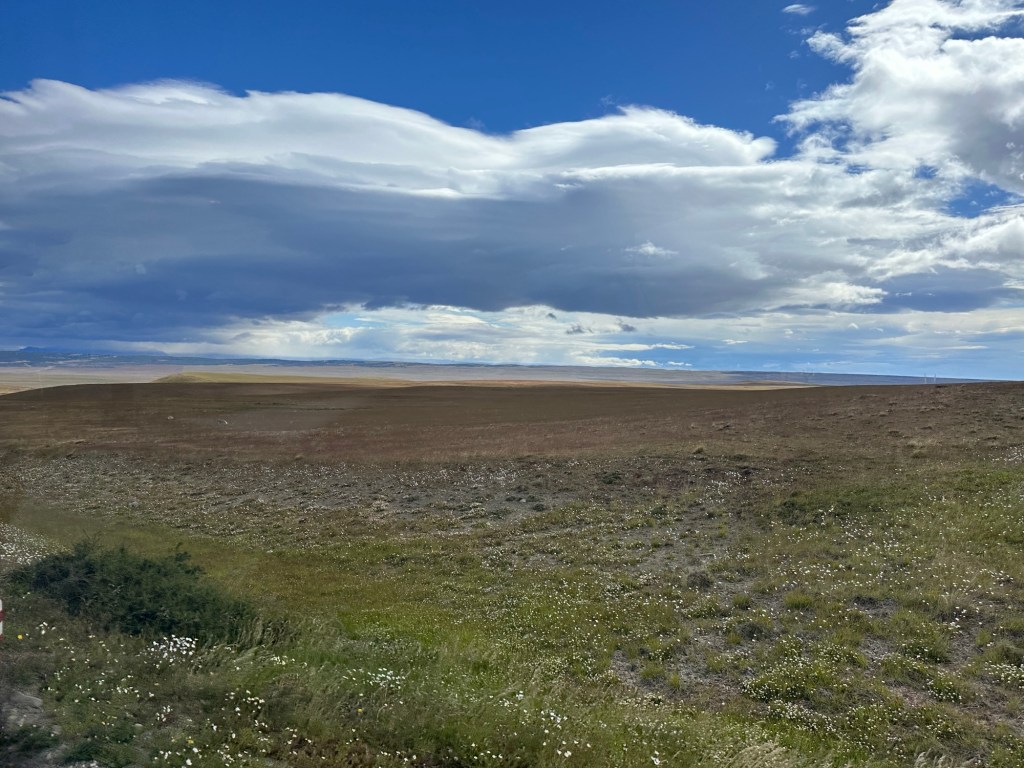
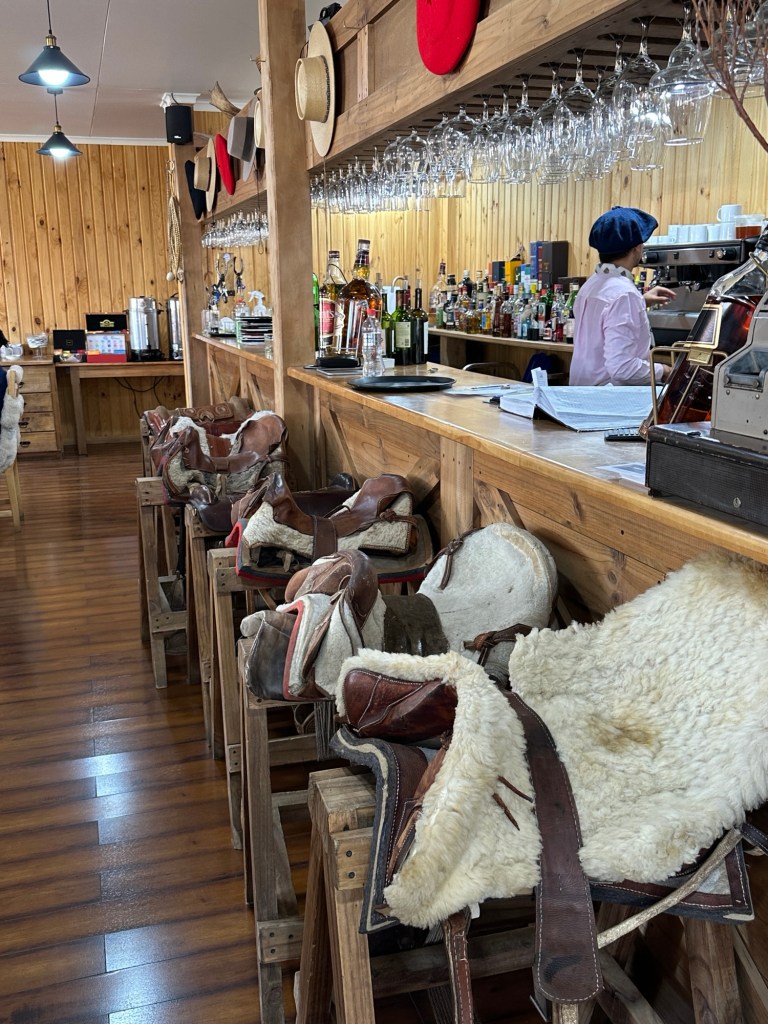
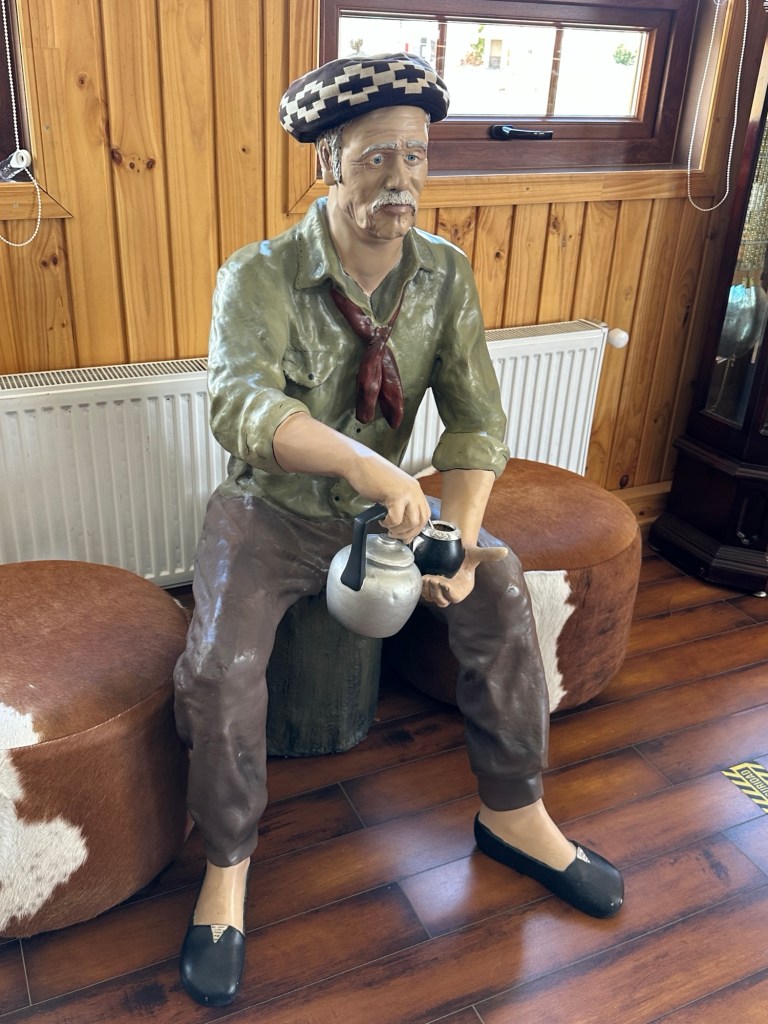
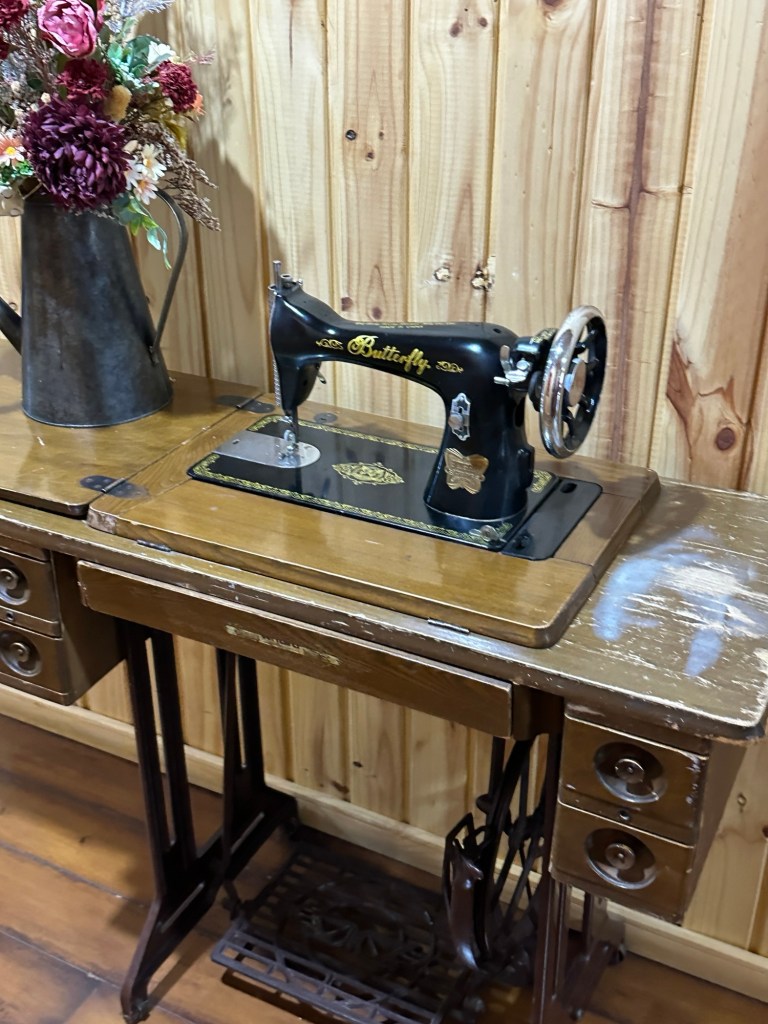
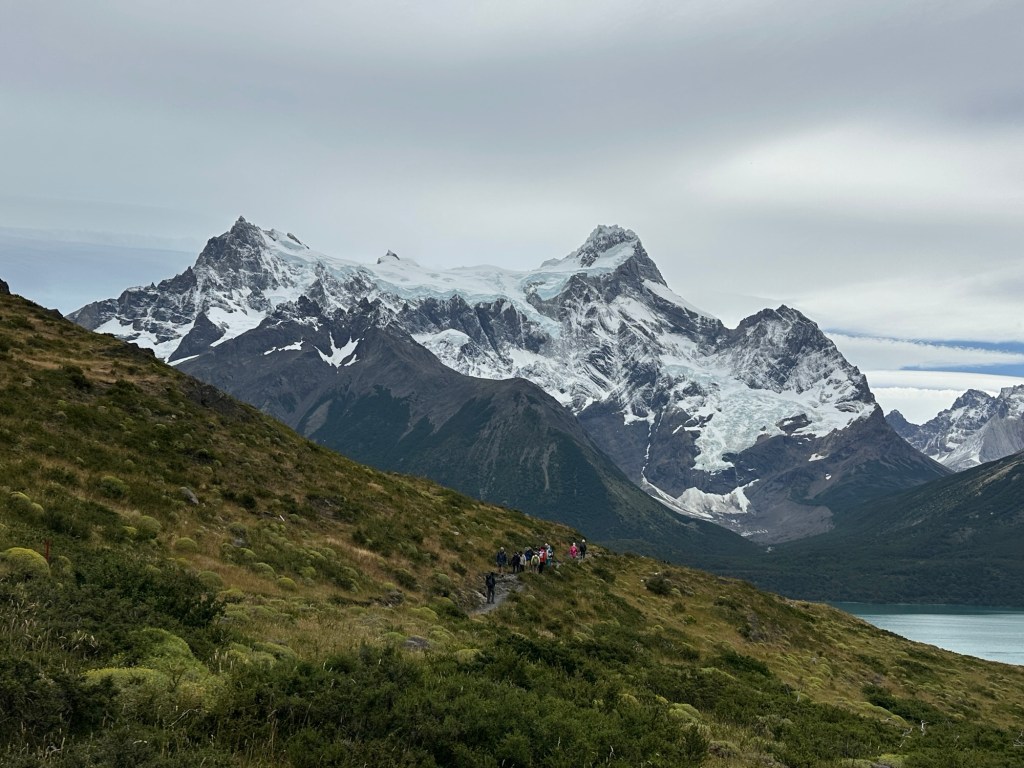
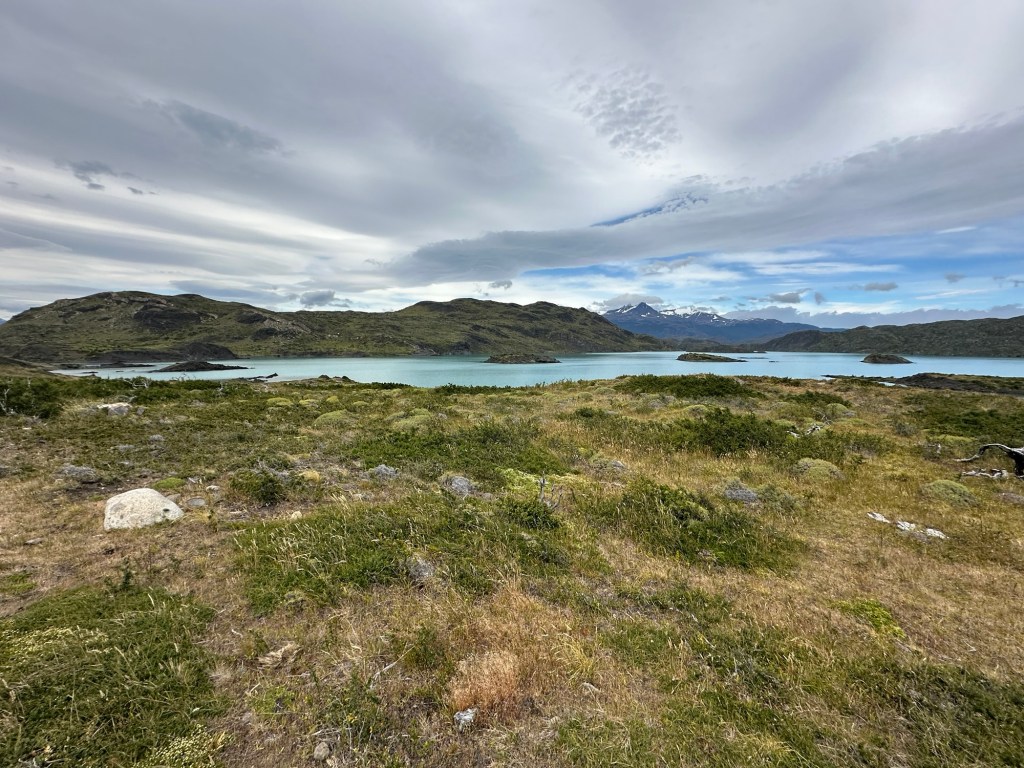
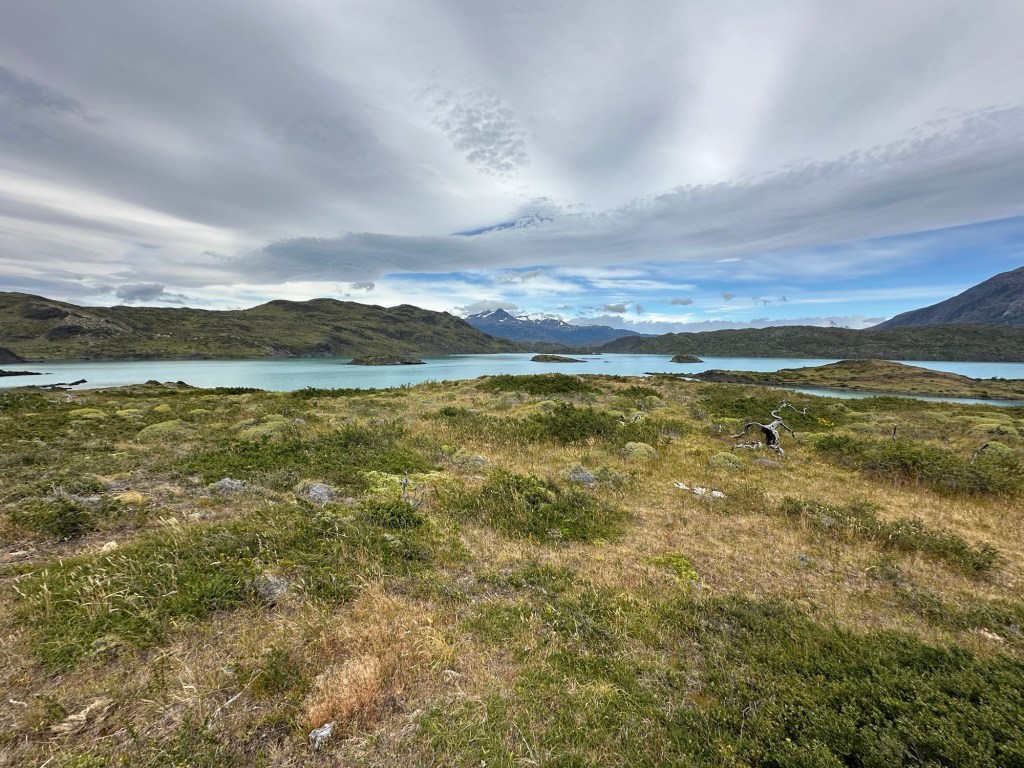
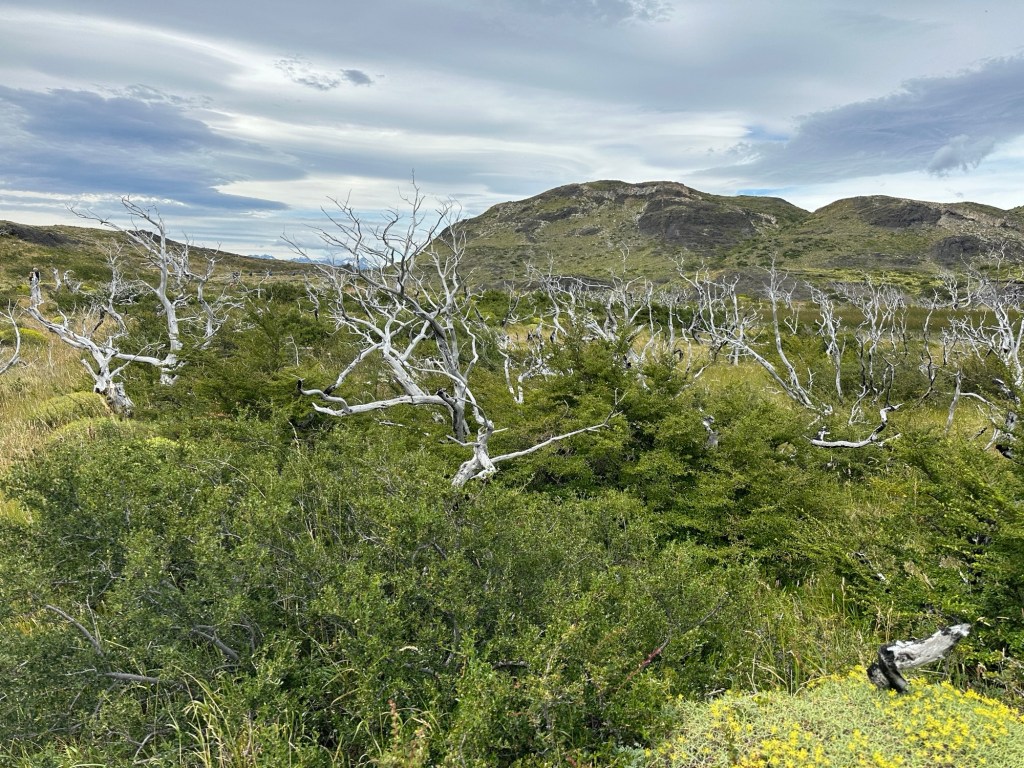
One of our first stops in the park was at a spot where we experienced the mighty winds of Patagonia.
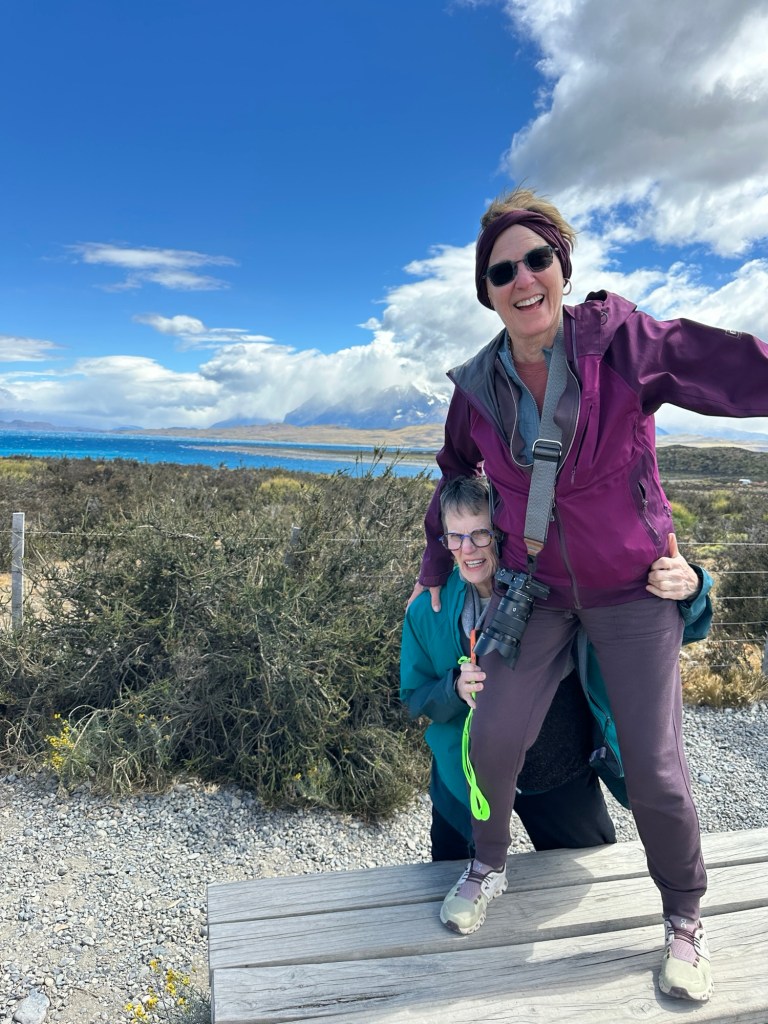
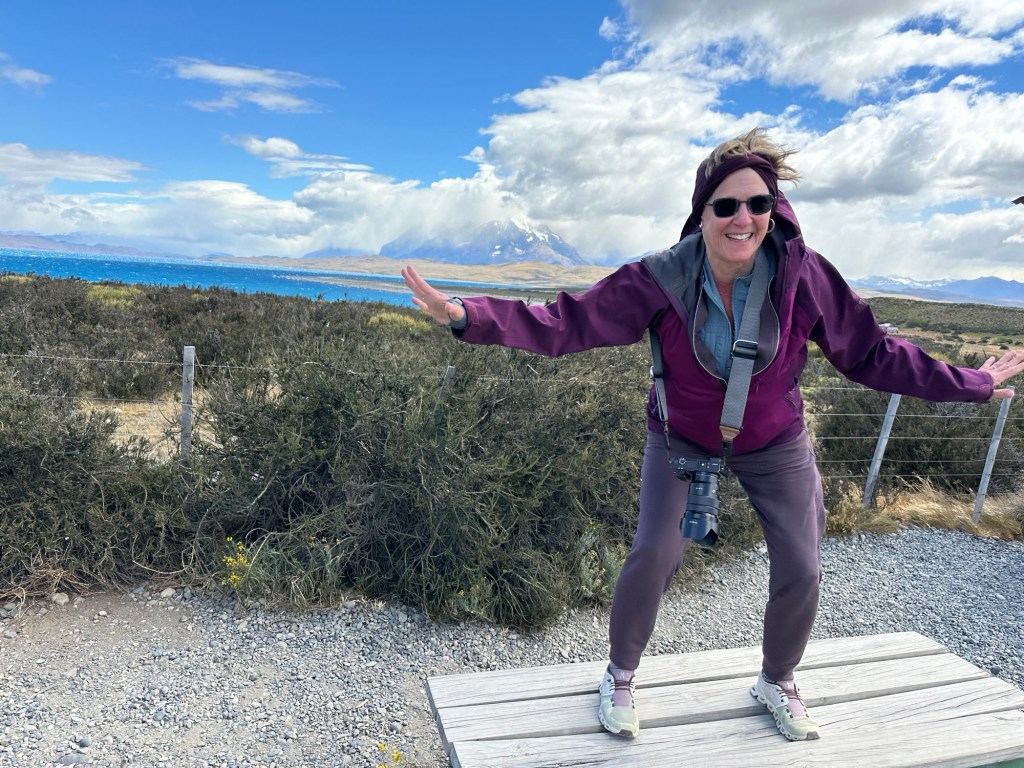
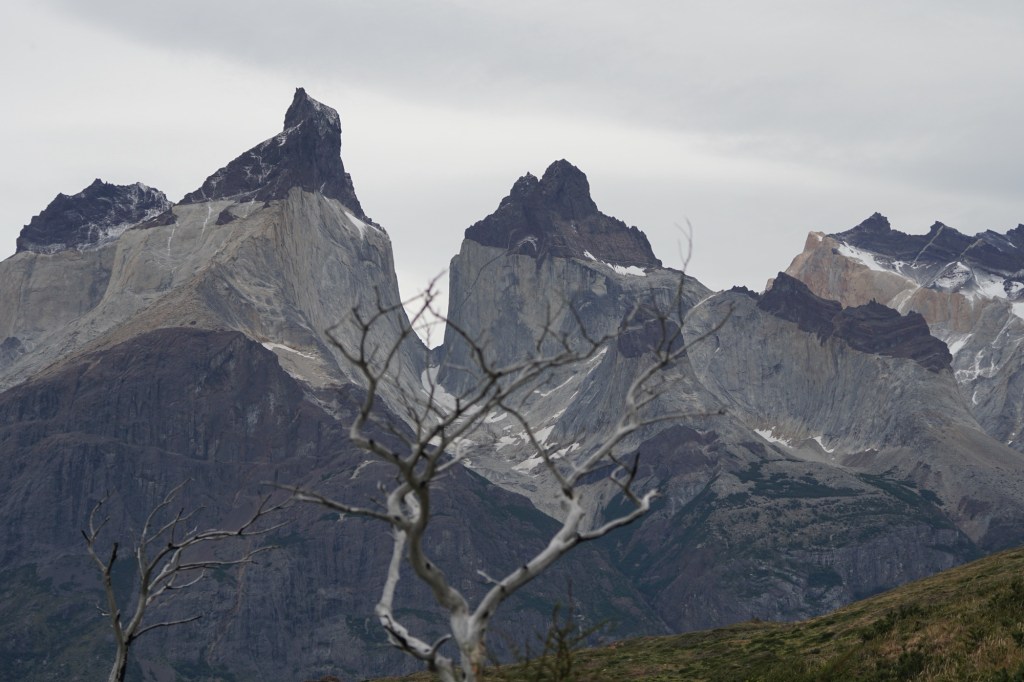
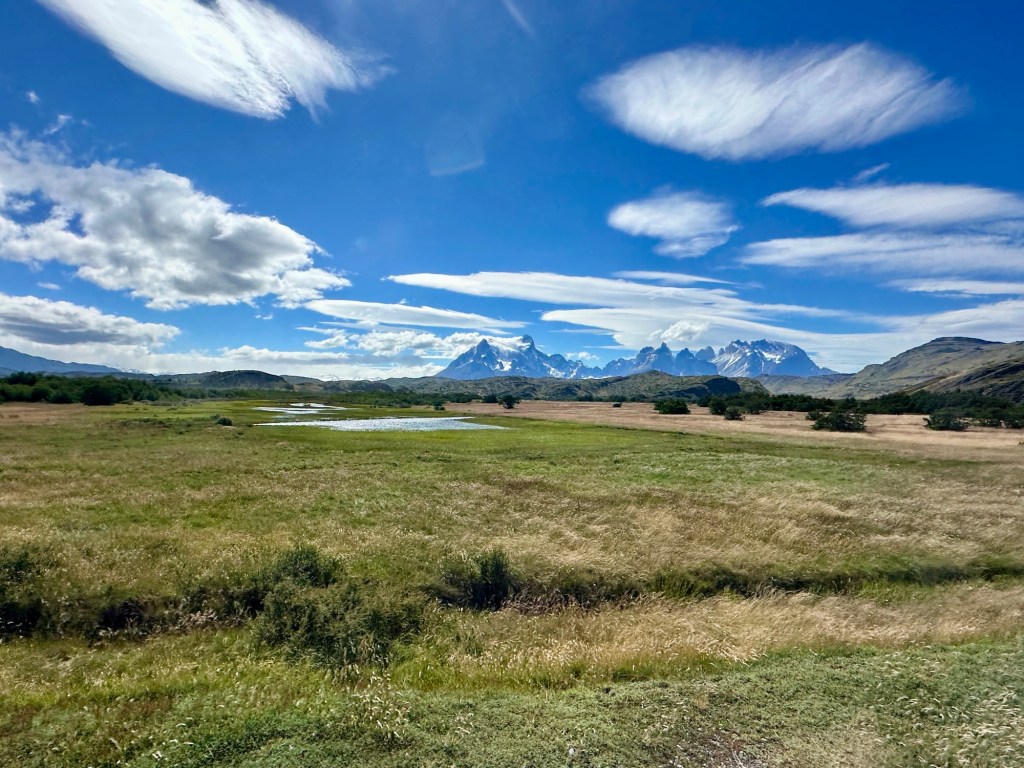
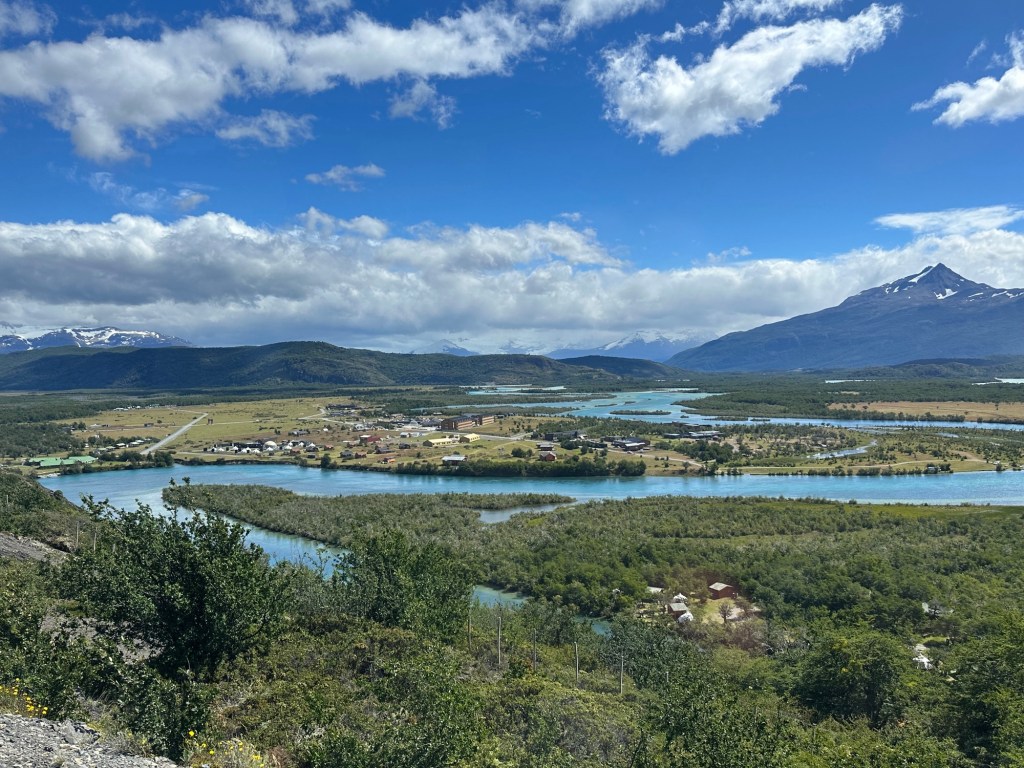
We drove through the park, stopping at wonderful spots to view the Paine Massif.
Sunday, Jan. 18
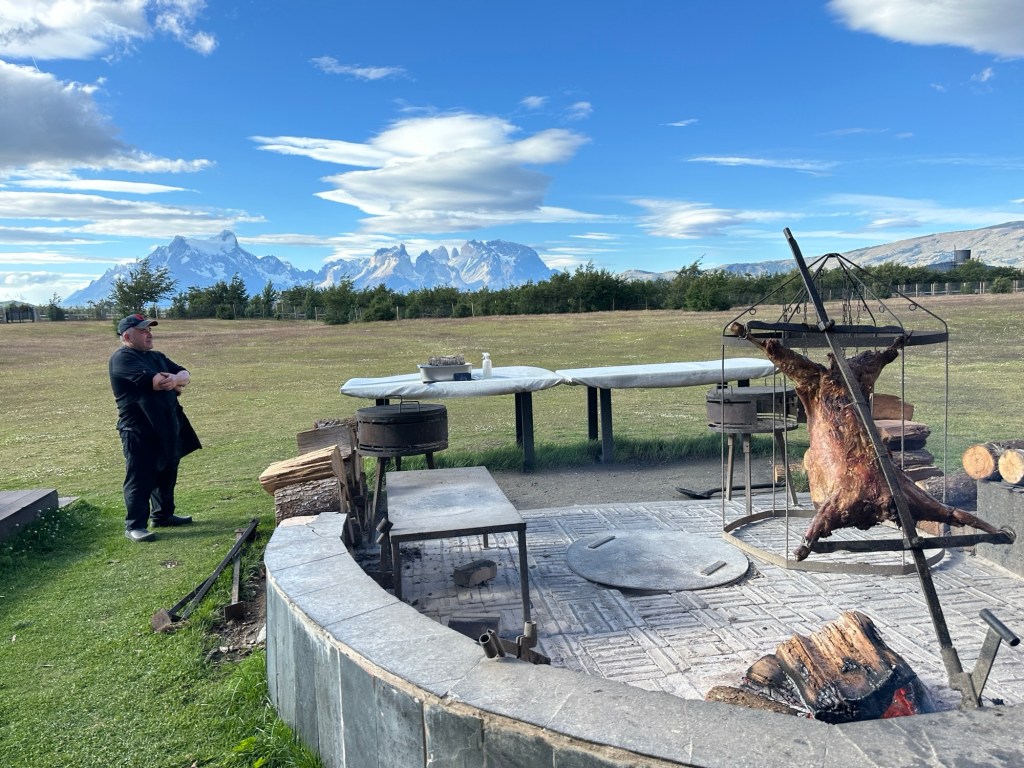
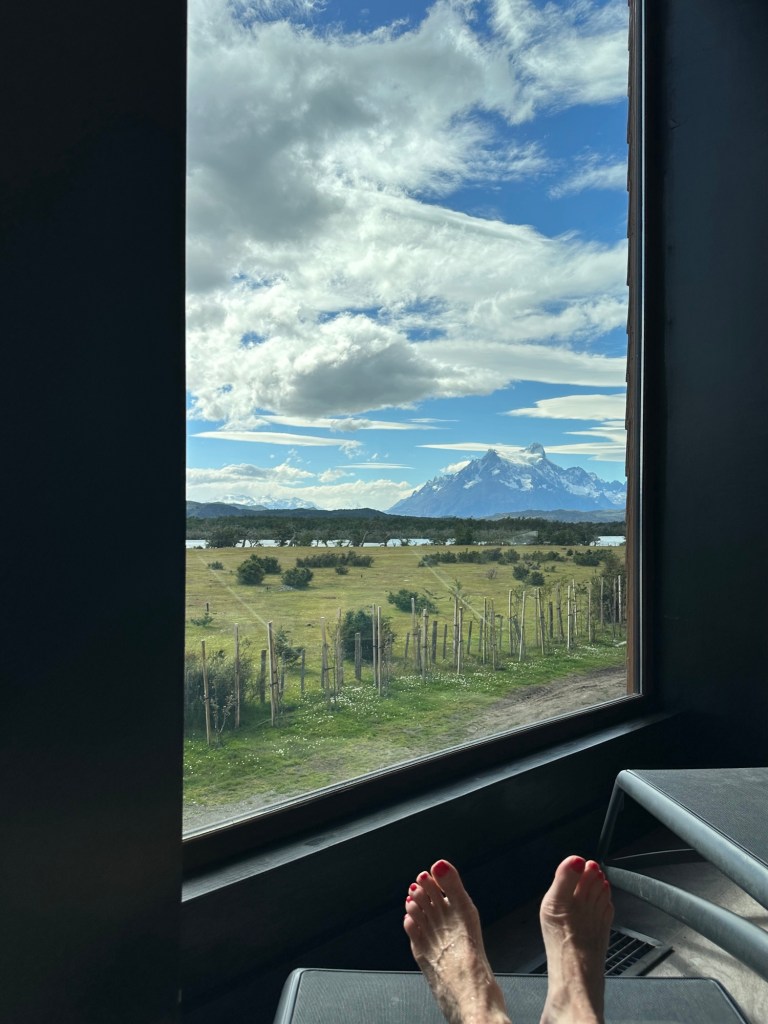
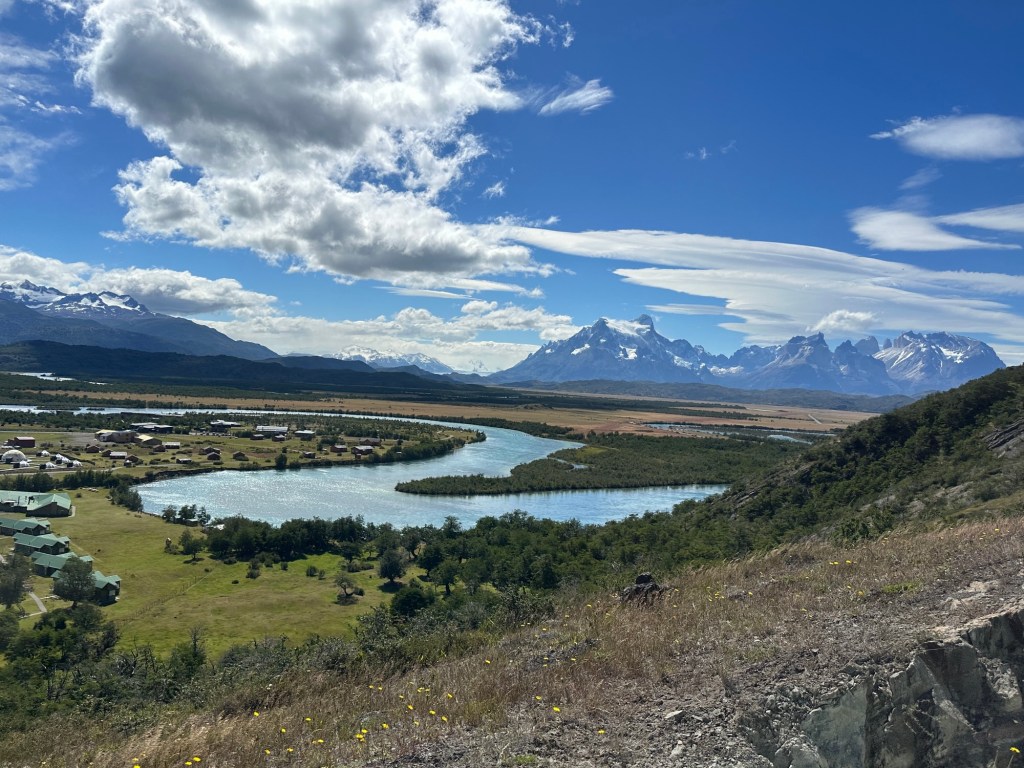
Our hotel had magnificent view of the Paine Massif. They offered a lamb appetizer at happy hour, which was barbecued out back. There was a lovely swimming pool and spa.
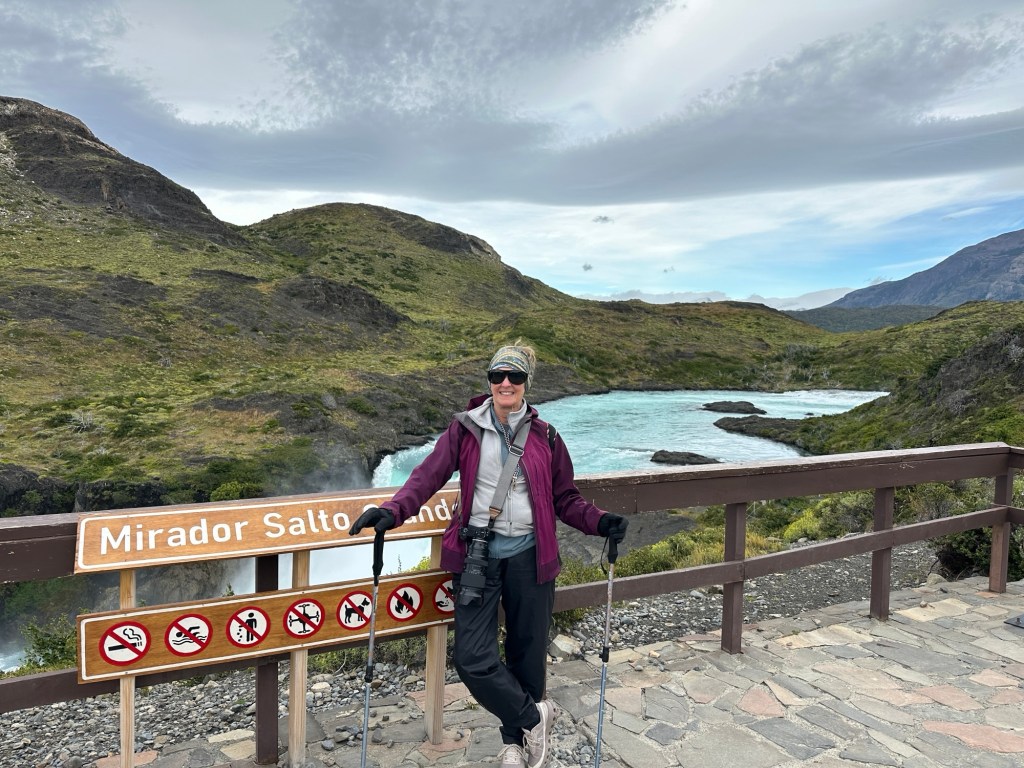
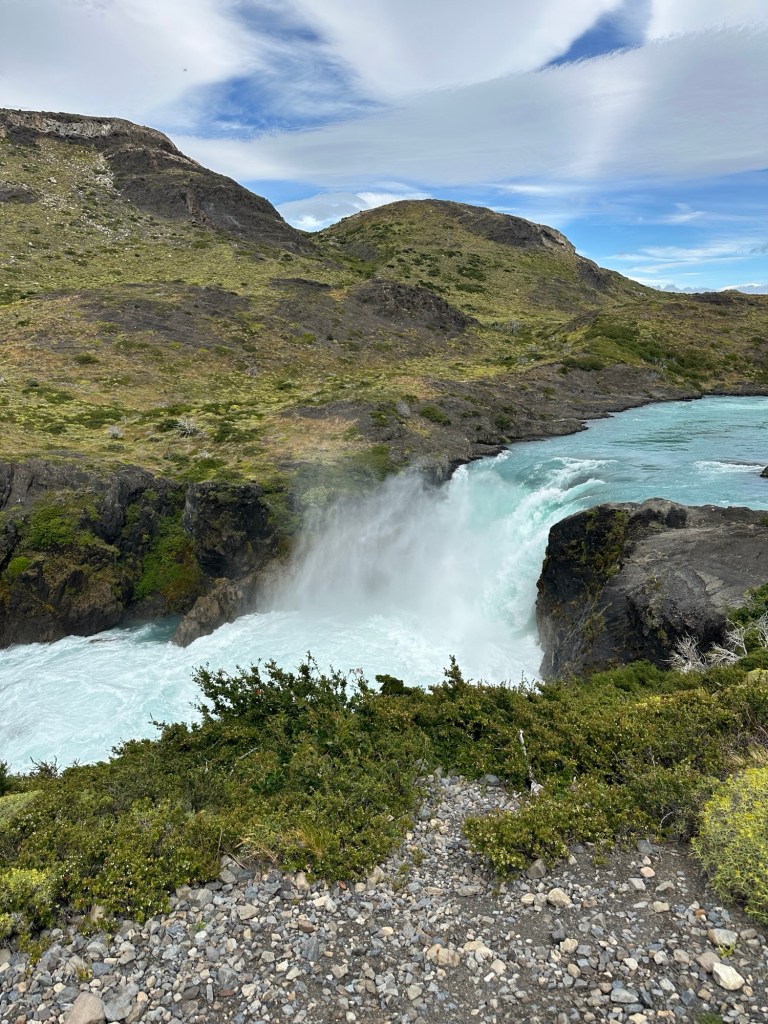
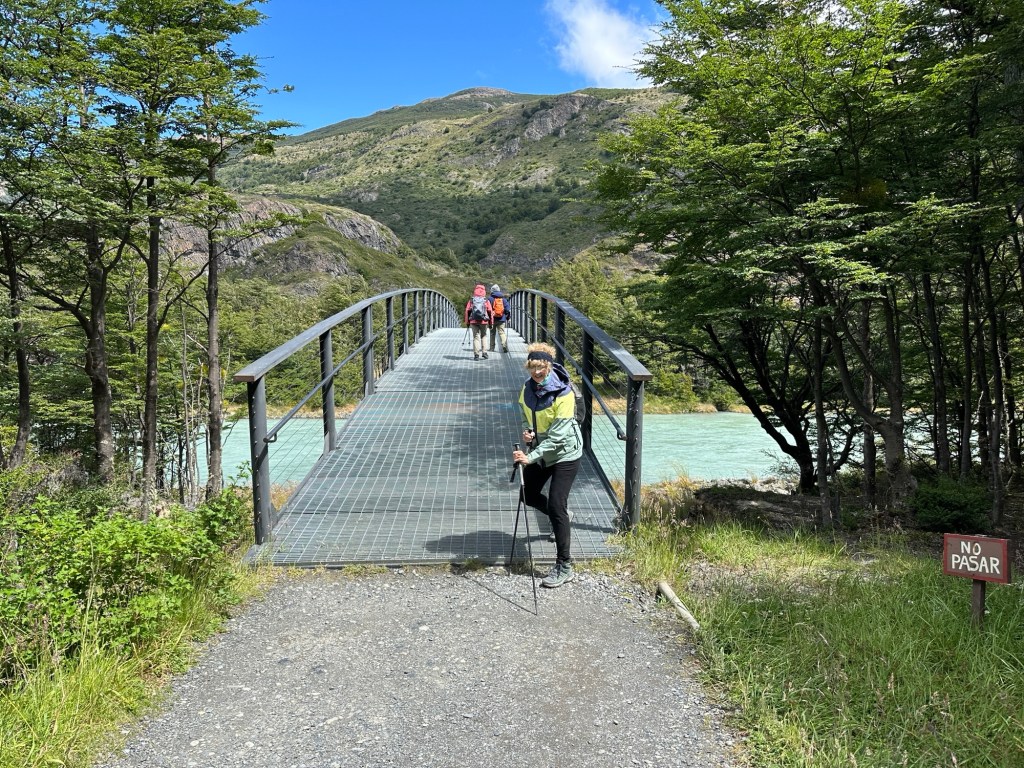
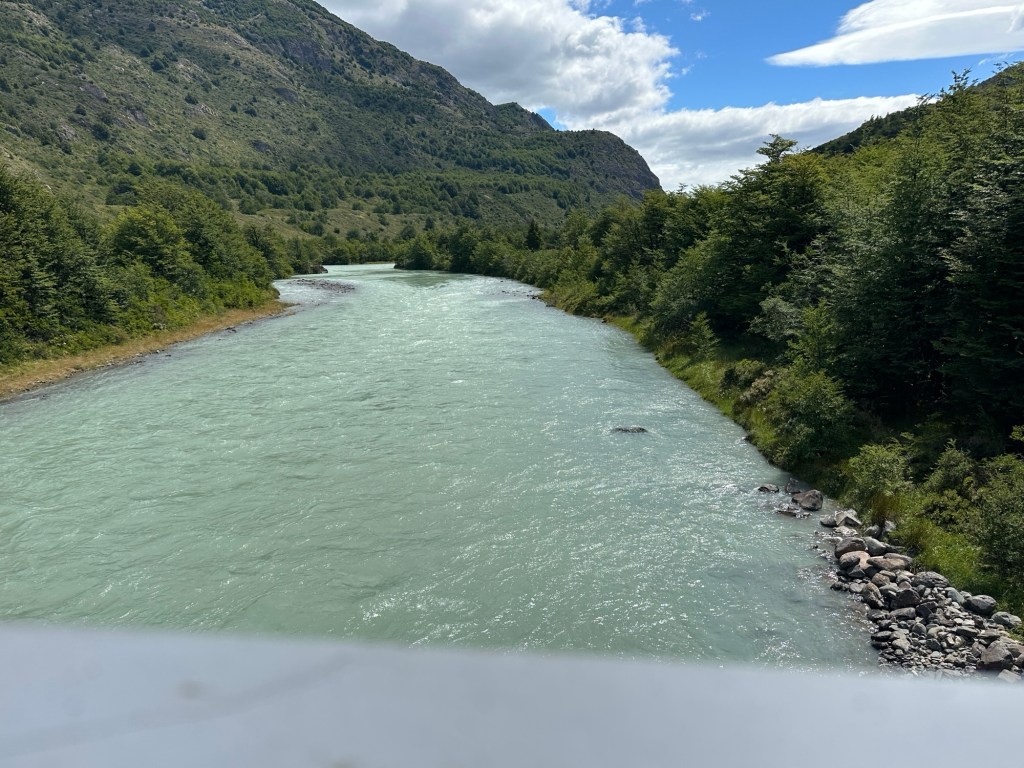
In the morning, we hiked past the Salto Grande waterfall fed by Lake Nordenskjold and on toward the magnificent Horns of the Torres del Paine. The views along the way were absolutely stunning. The different colors of the horns reflected sedimentary rock and shale at the dark tops, while the lower part is lighter granite. Our local guide, Jacquie, is a geologist, which was really helpful. I bought a book she and two colleagues authored and will read it with the help of Google translate.
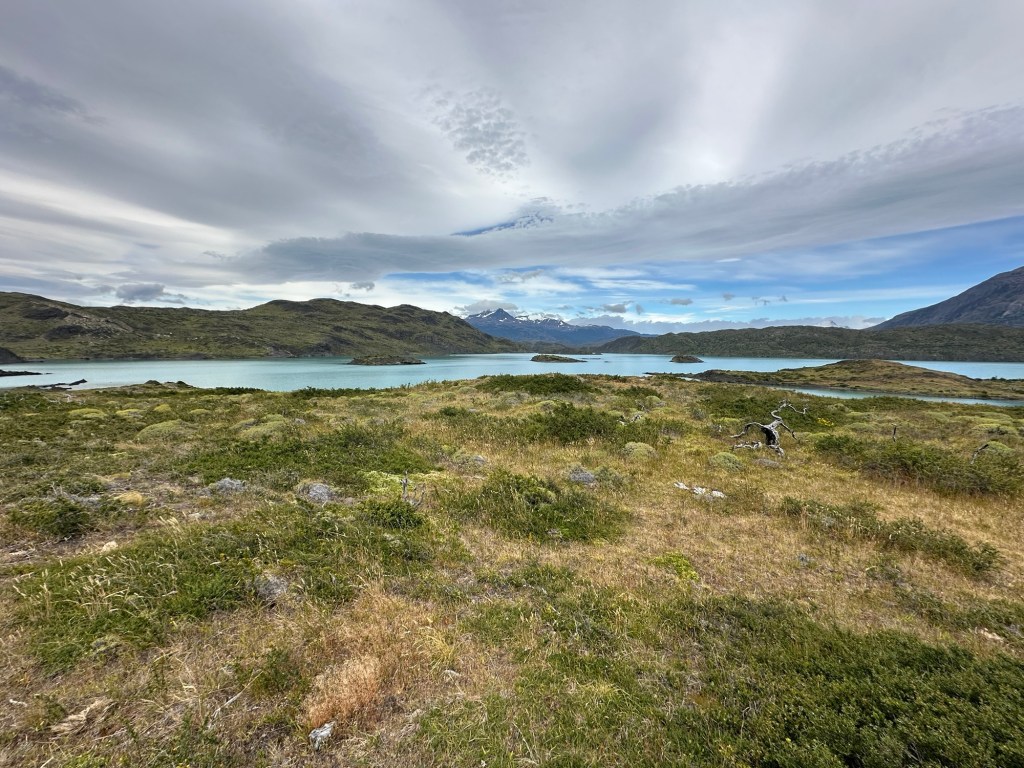
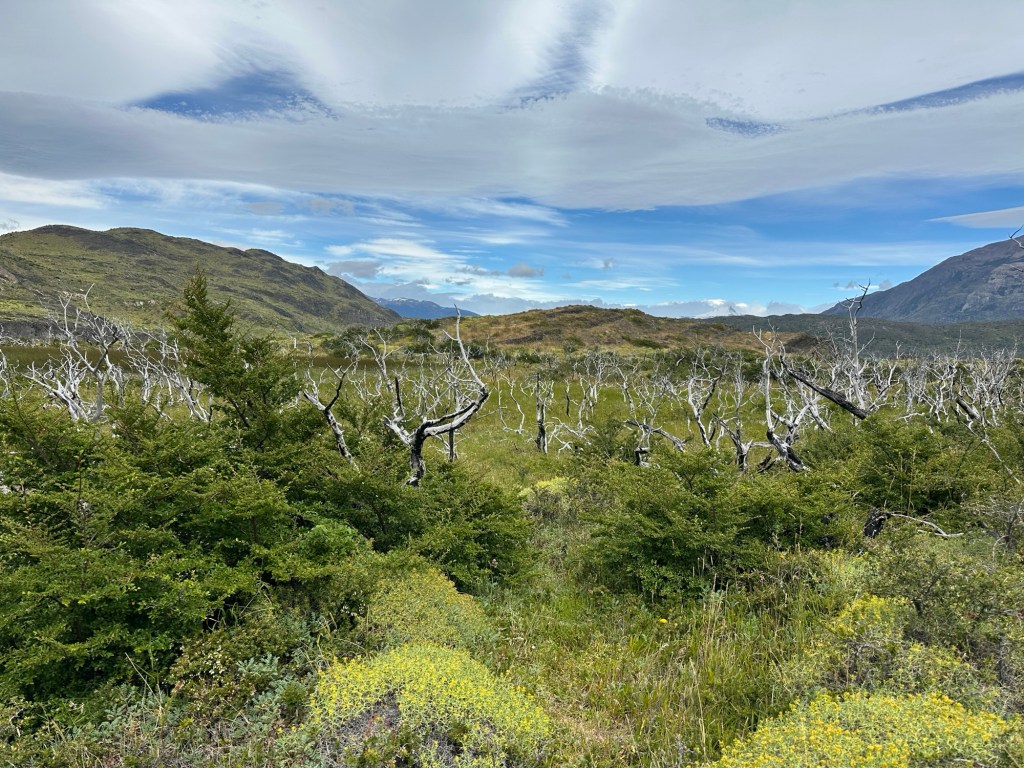
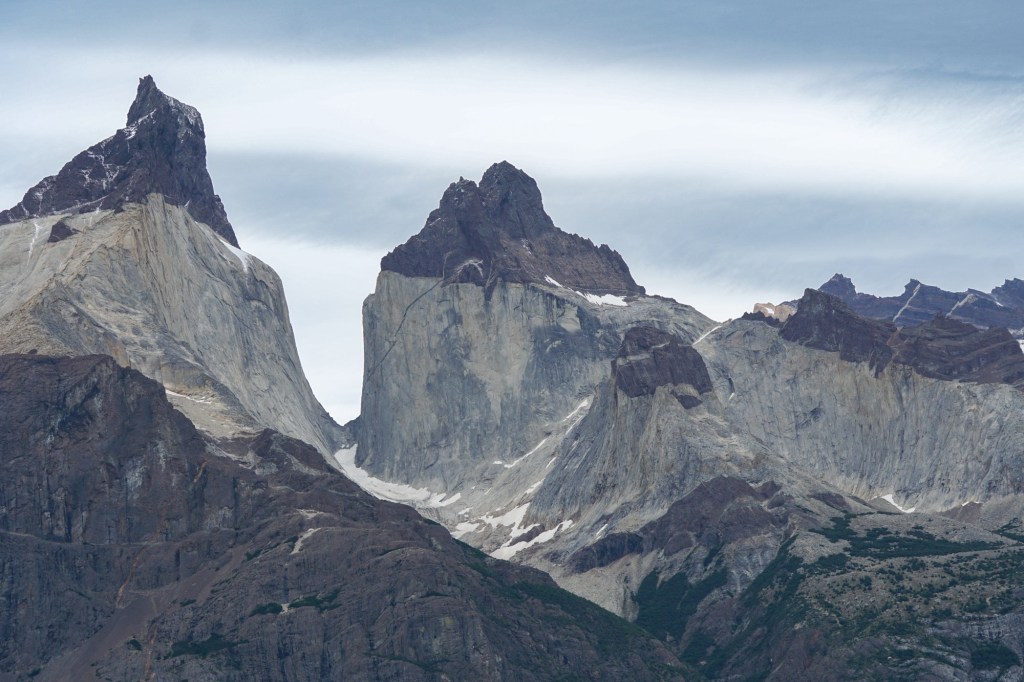
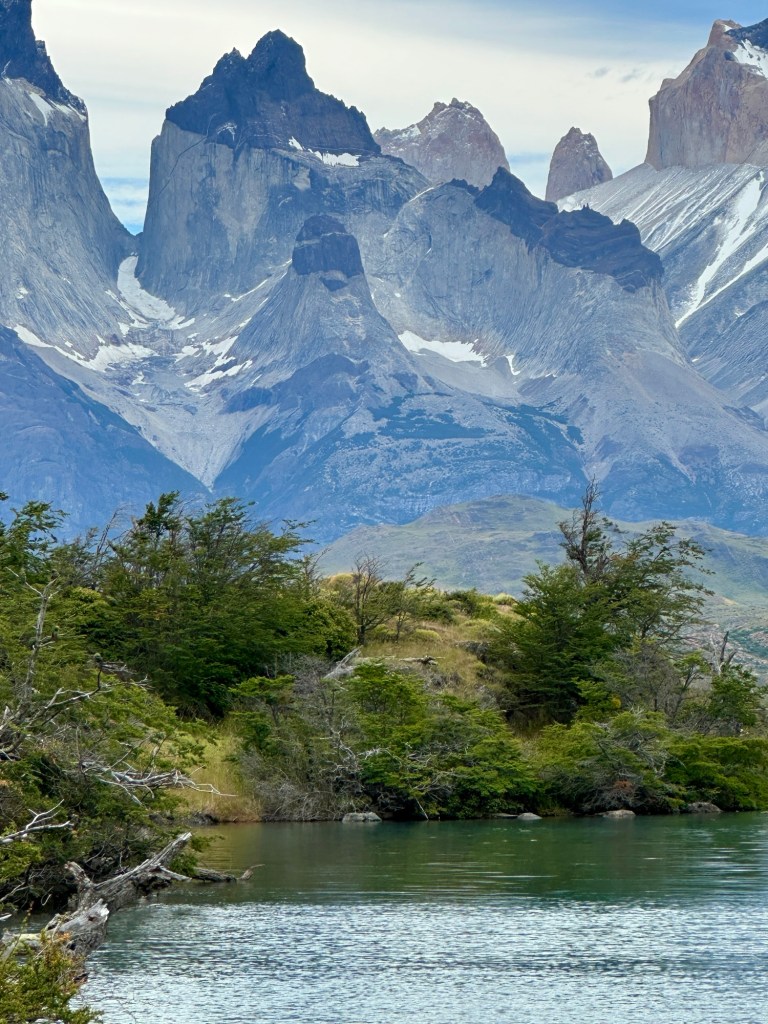
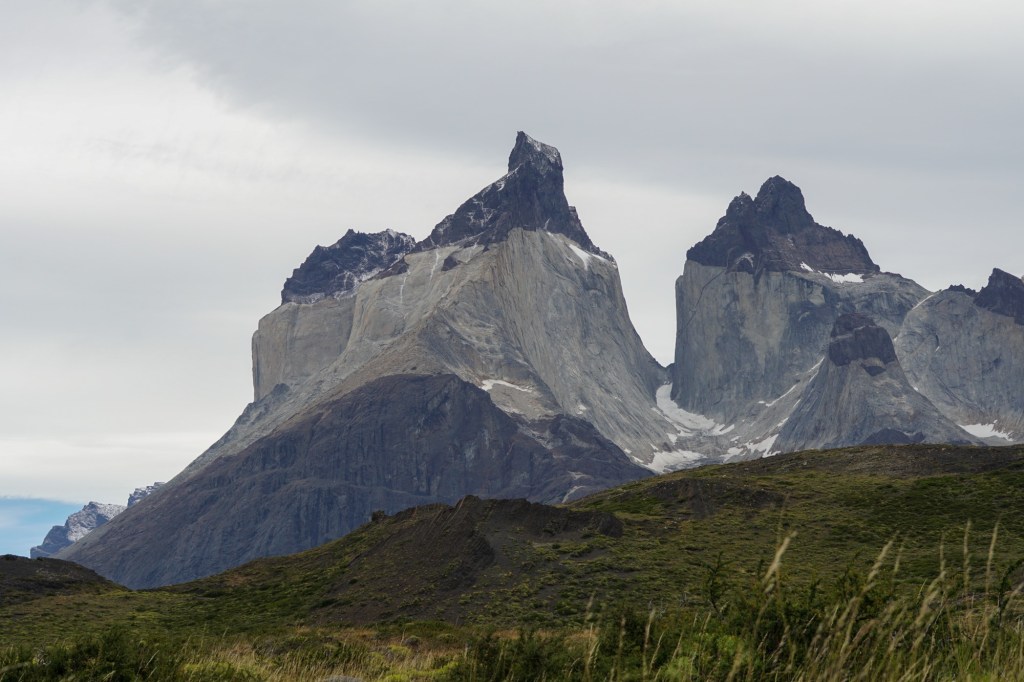
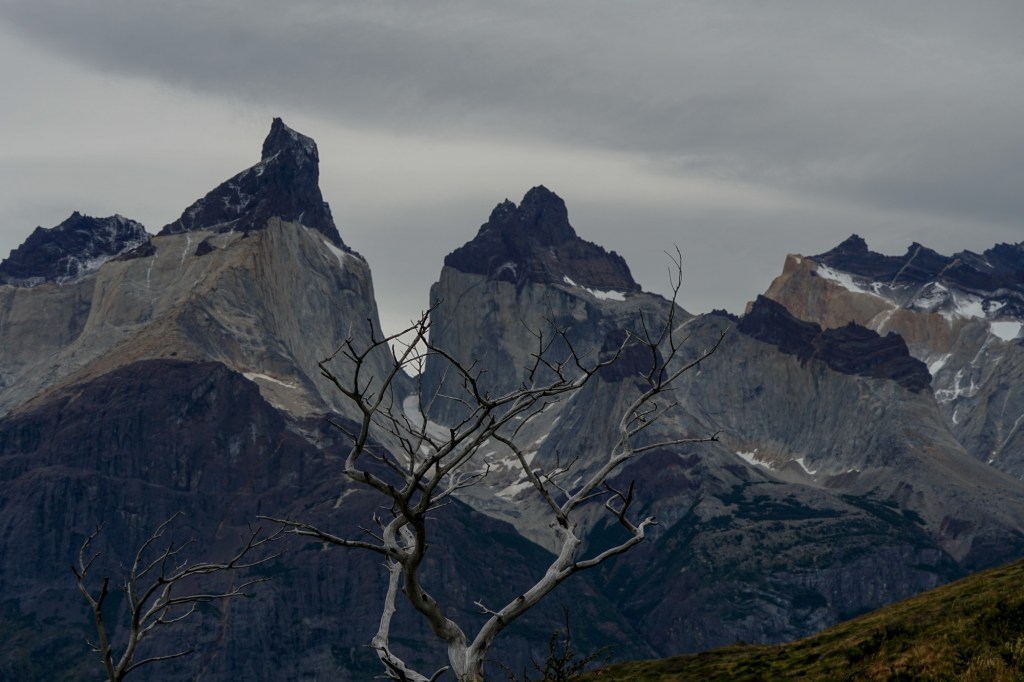
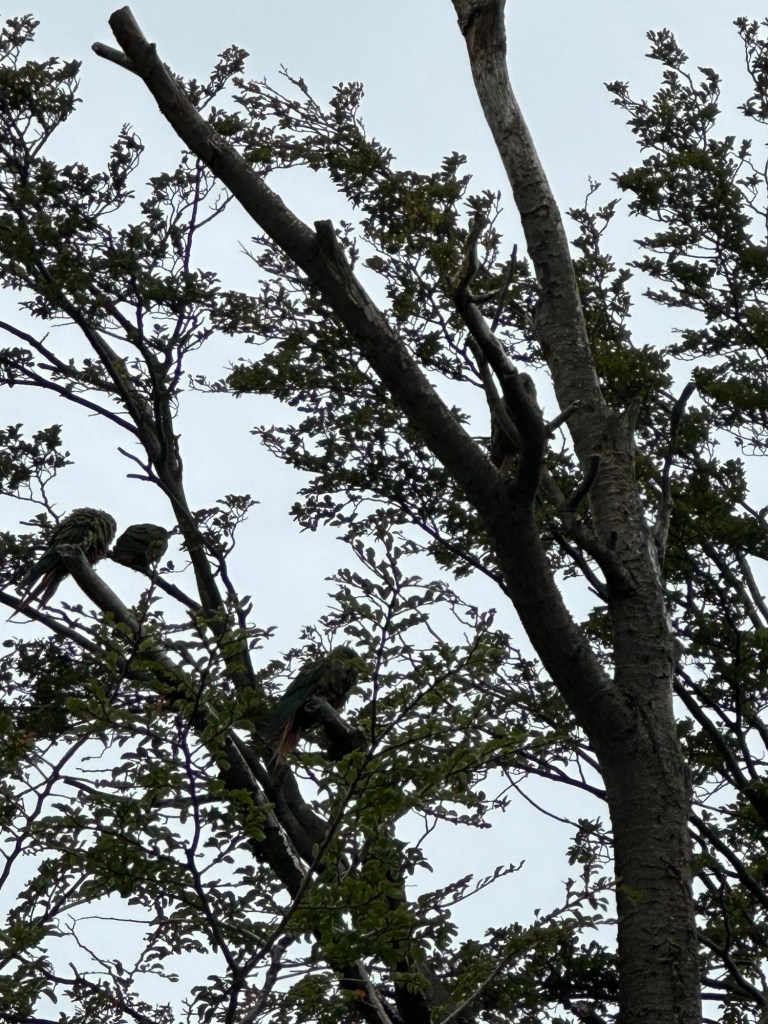
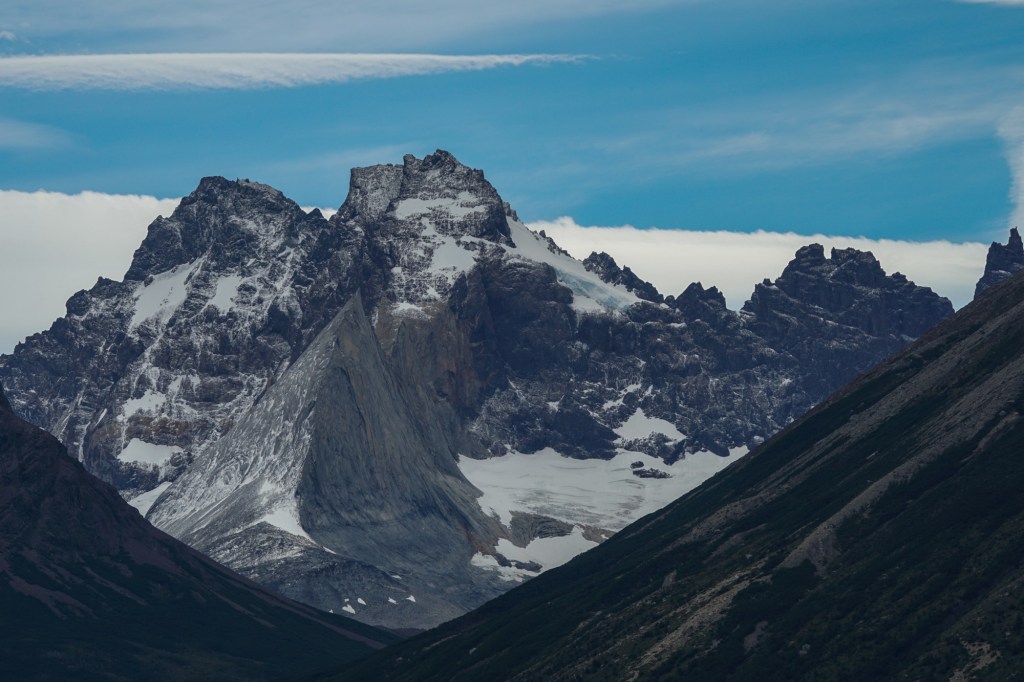
After lunch, we hiked in Lago Grey along the shore to see the Grey Glacier in the distance. The winds were so strong, we were mighty glad to have hiking poles to anchor ourselves during gusts.
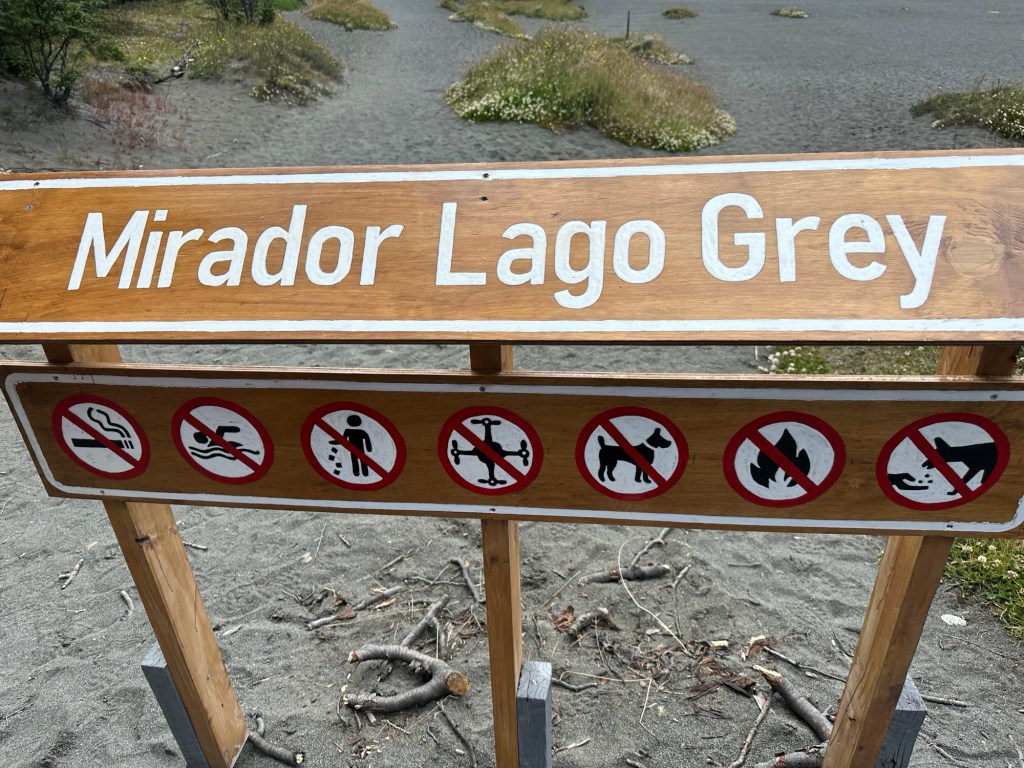
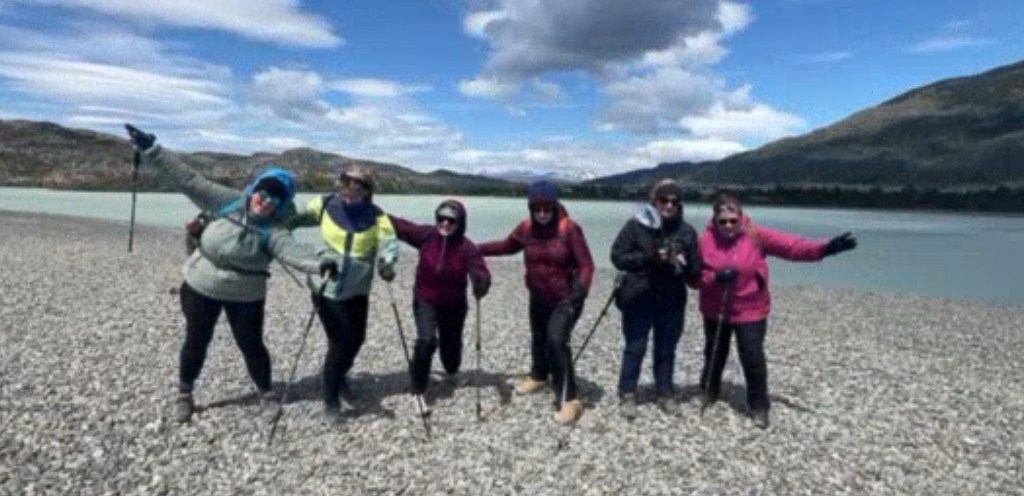
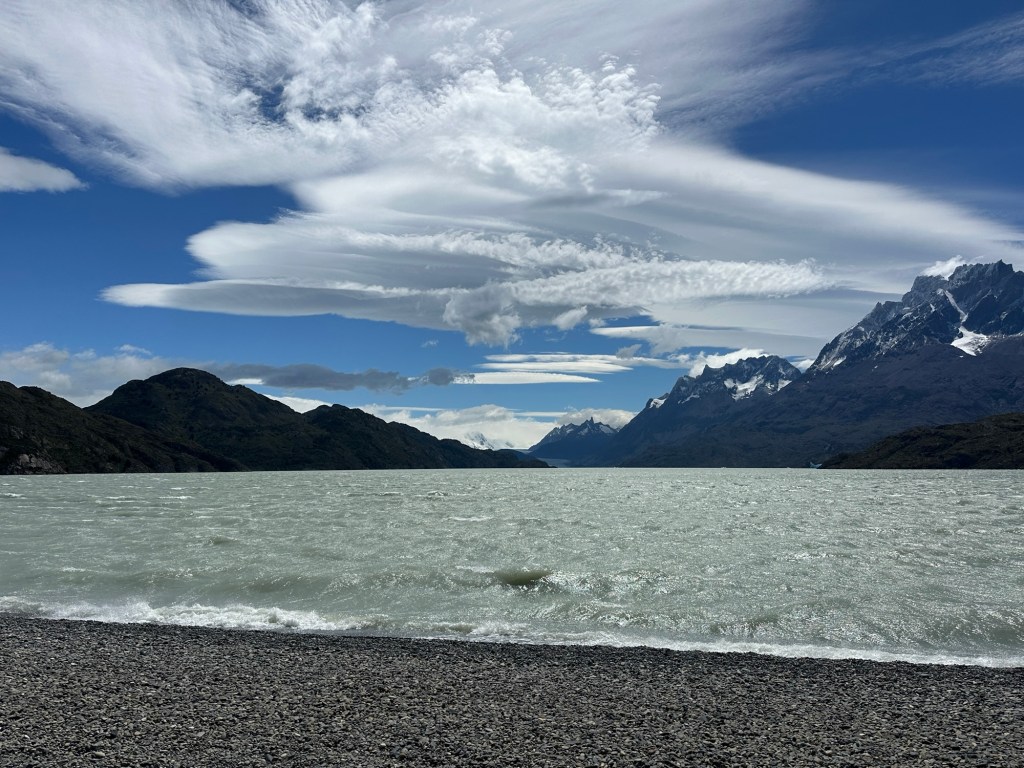
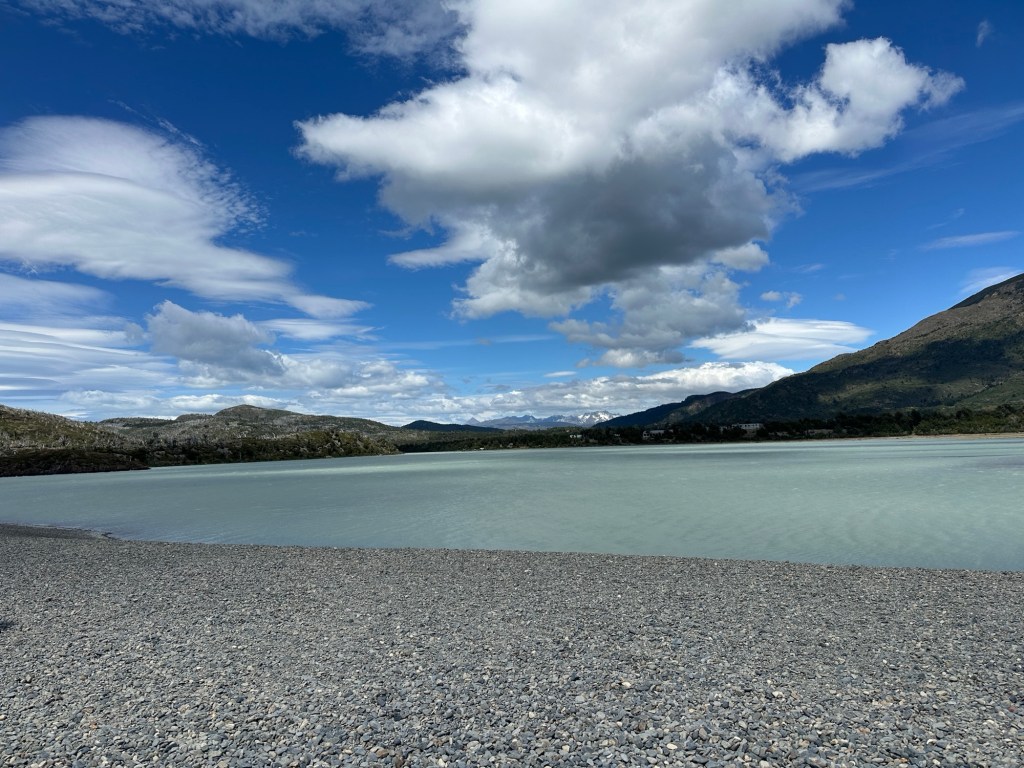
Monday Jan. 19
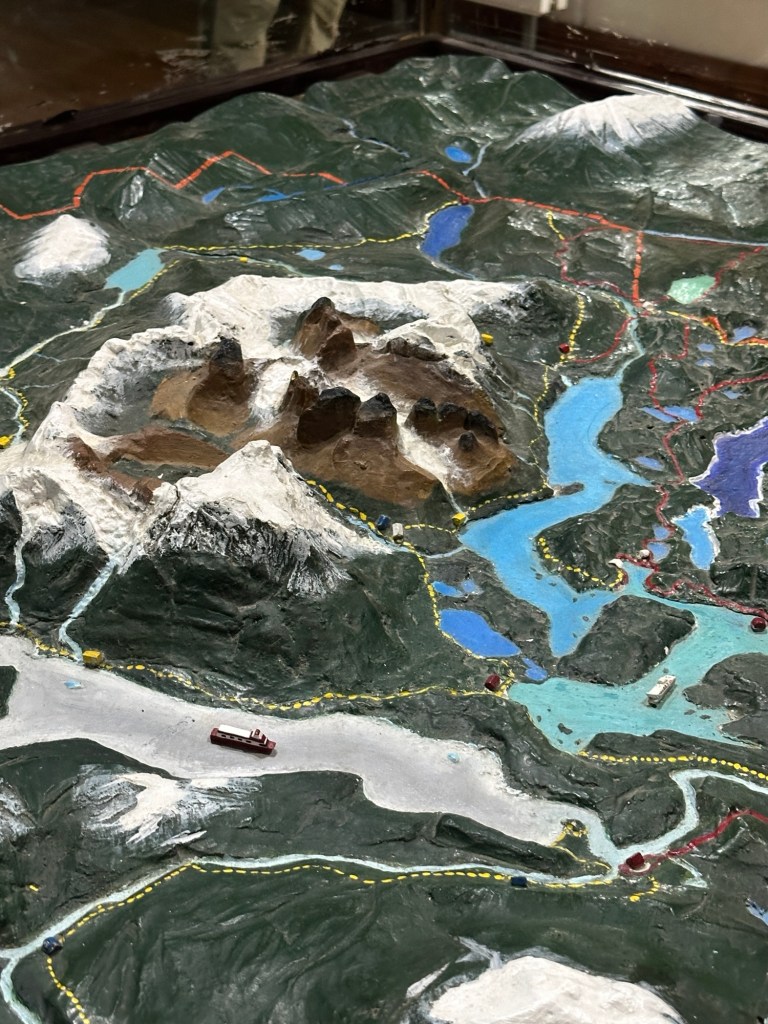
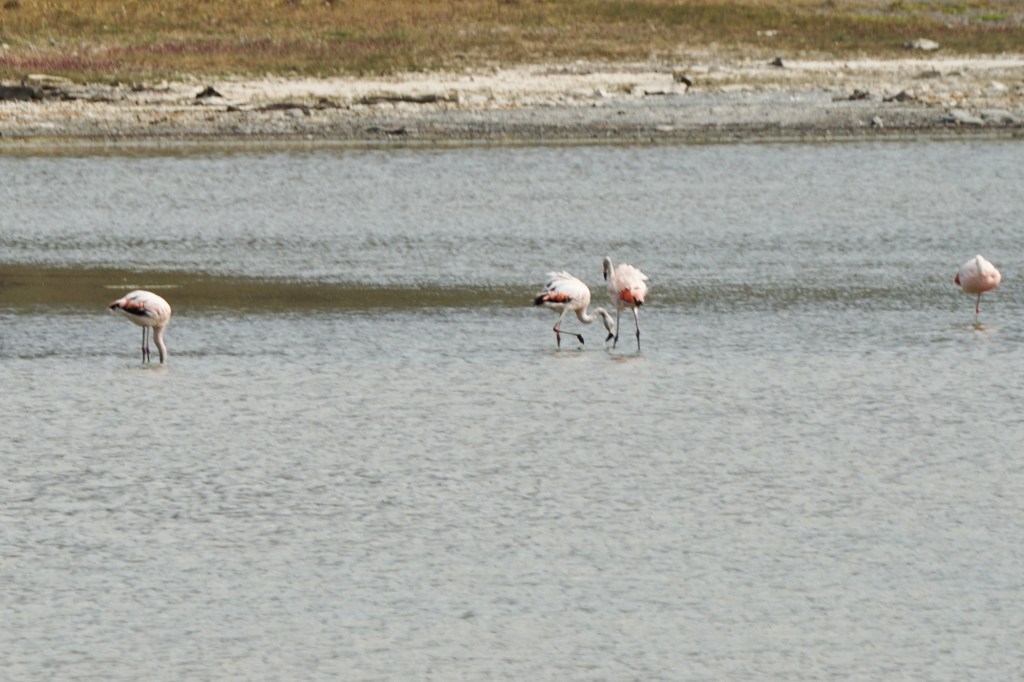
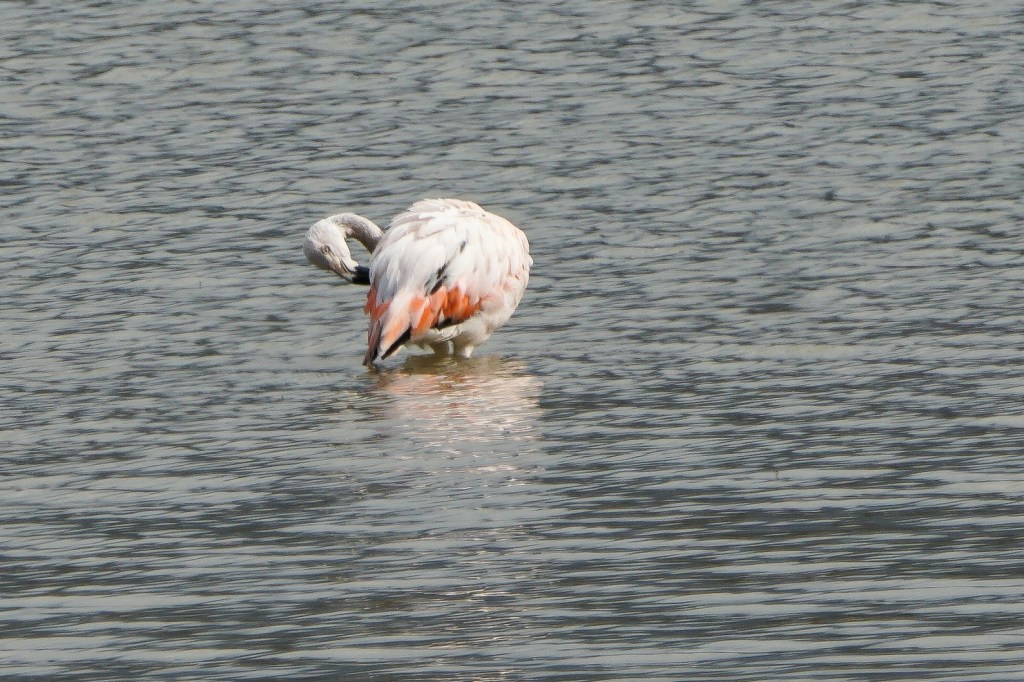
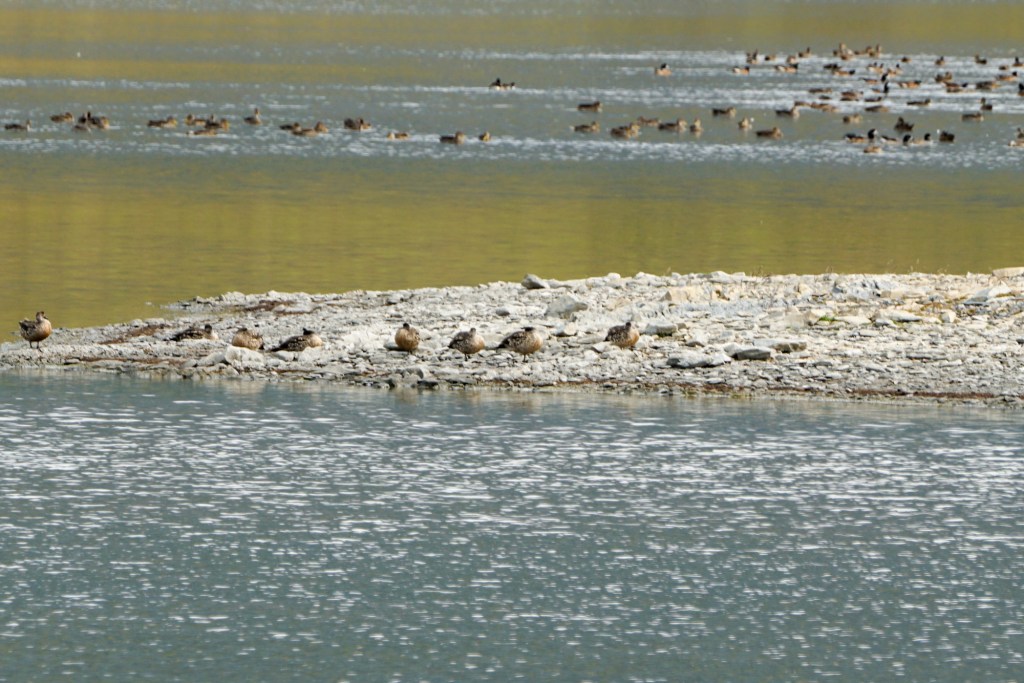
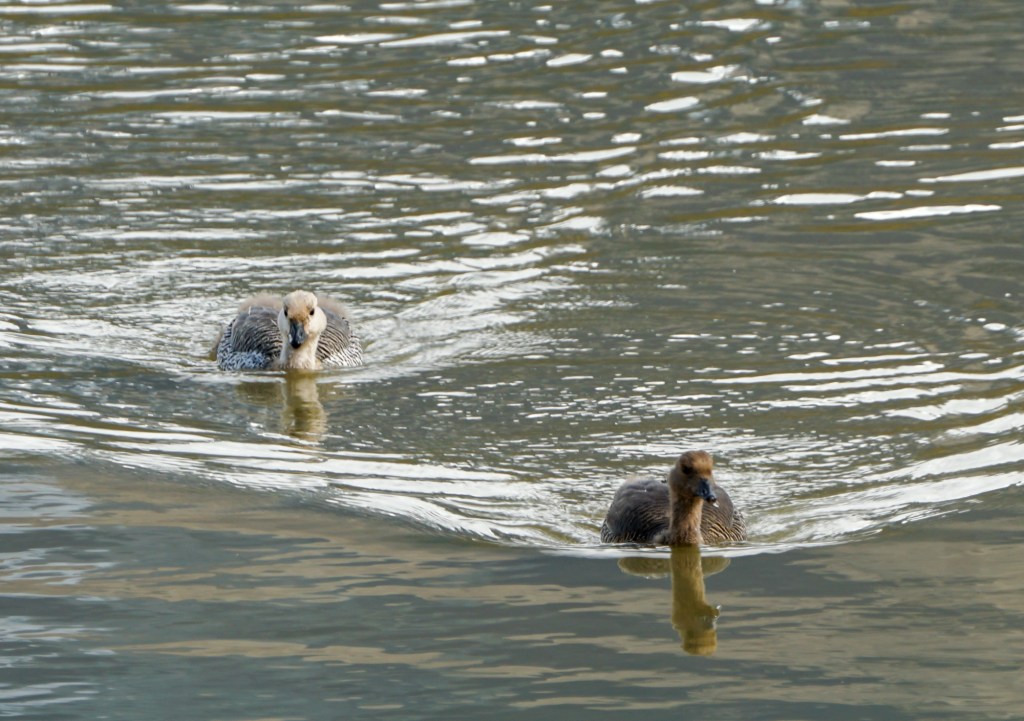
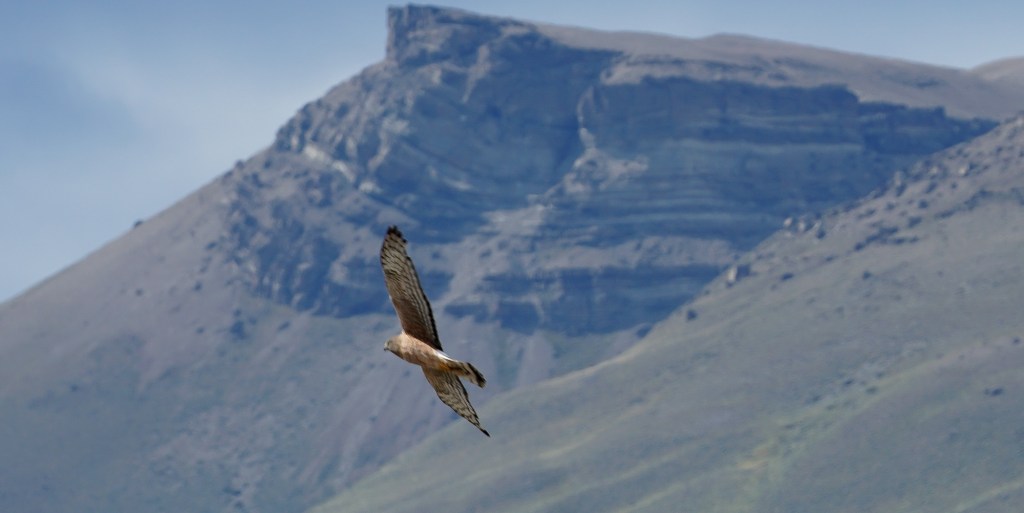
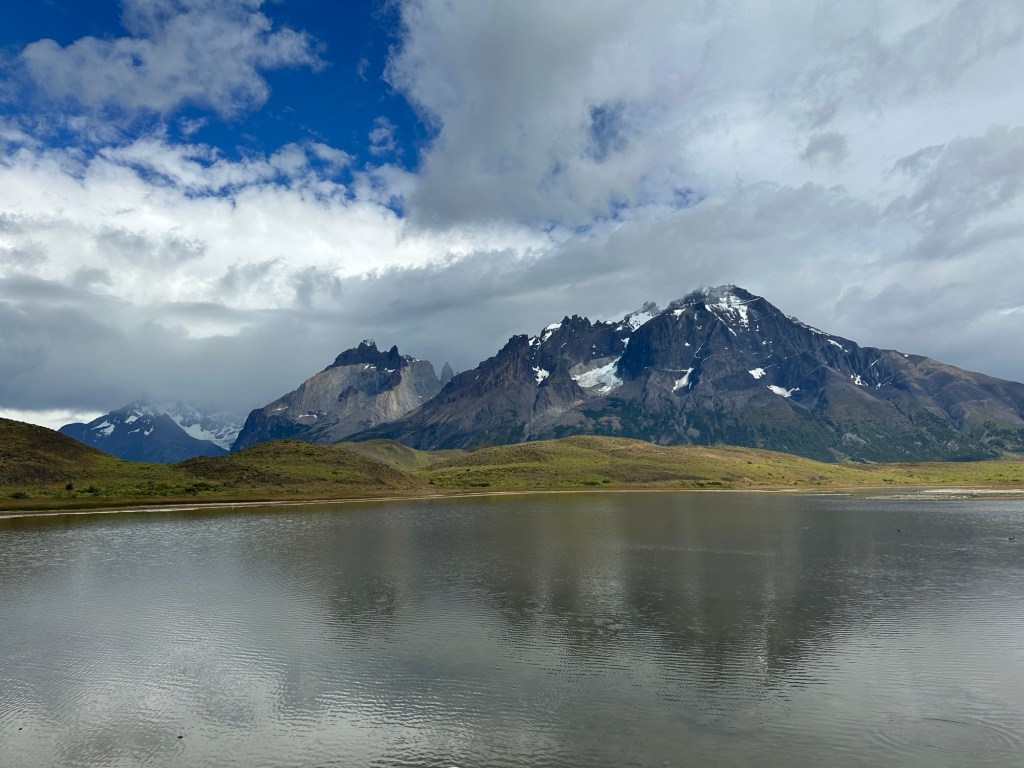
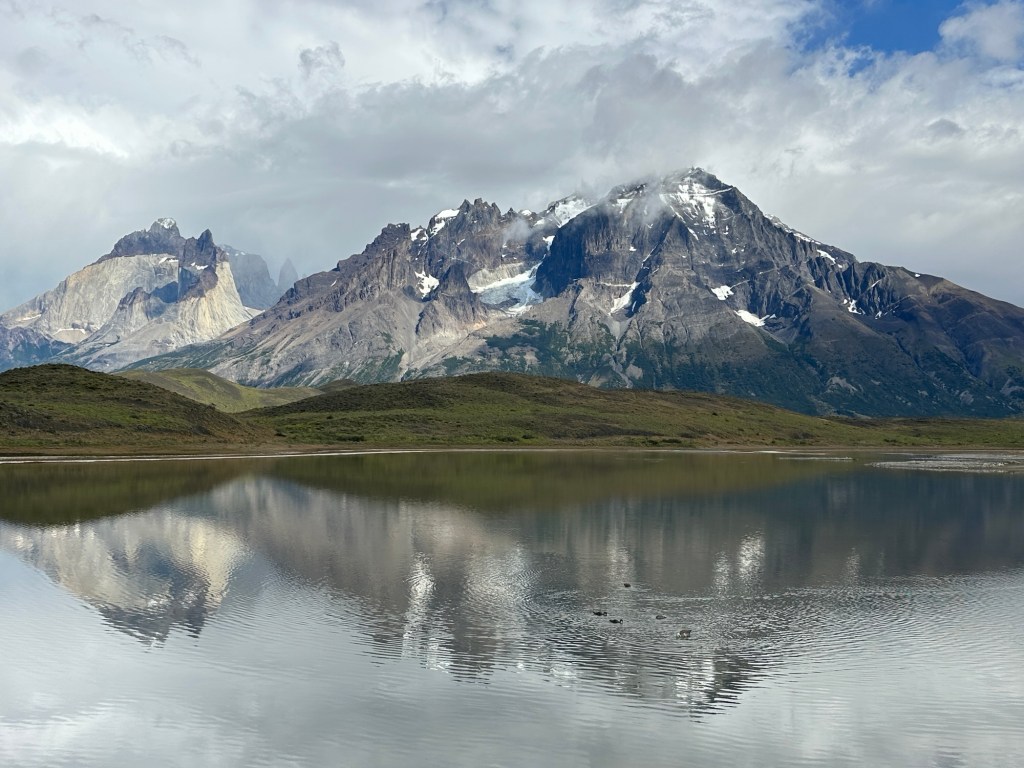
We drove back through the park to an information center where we could observe a 3-D model of the Paine Massif, and get a better understanding of the views we were seeing from our hikes, drives, and hotel. We stopped at Laguna Amarga, a lake flush with waterfowl, including Flamingos, Upland Geese, Ashy-headed Geese, Black-necked Swans, with Harriers and Andean Condors soaring above. We ate Box lunches en route to a local ranch.
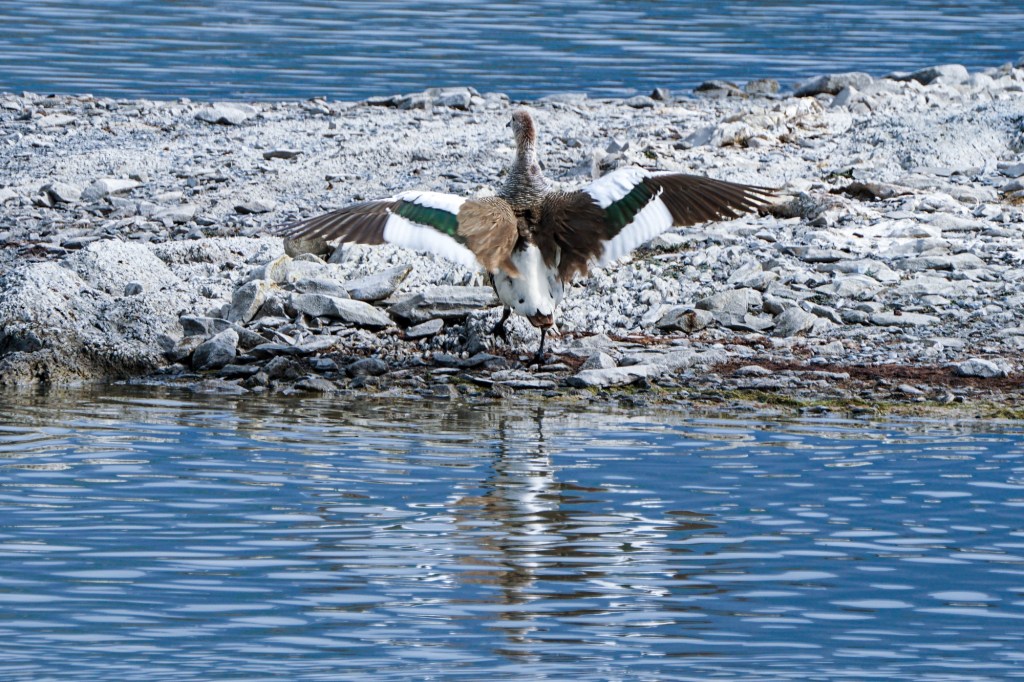
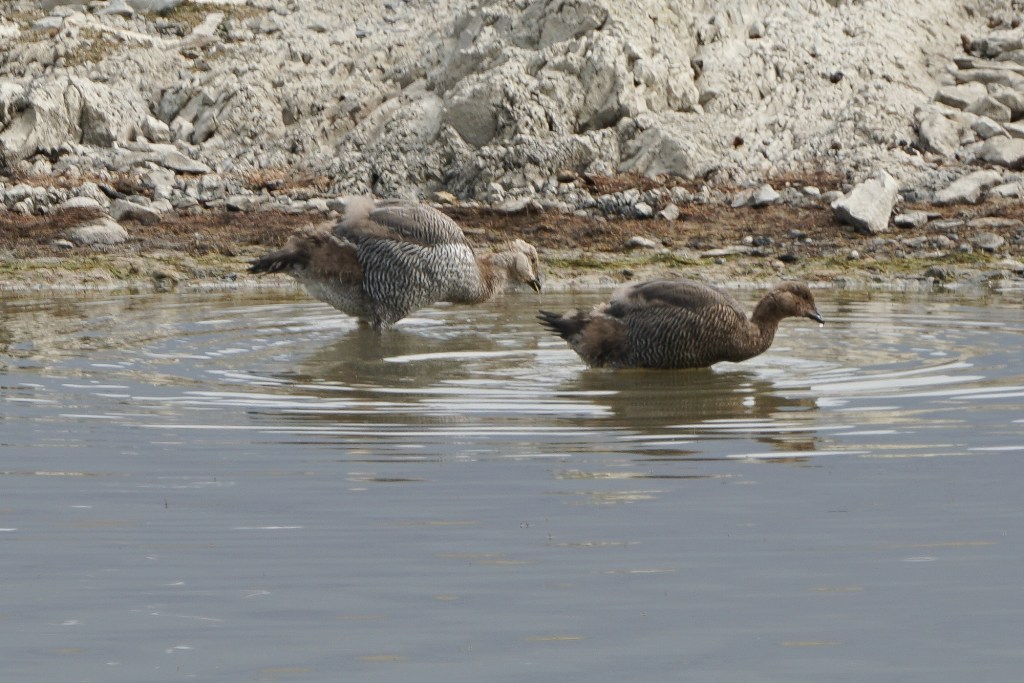
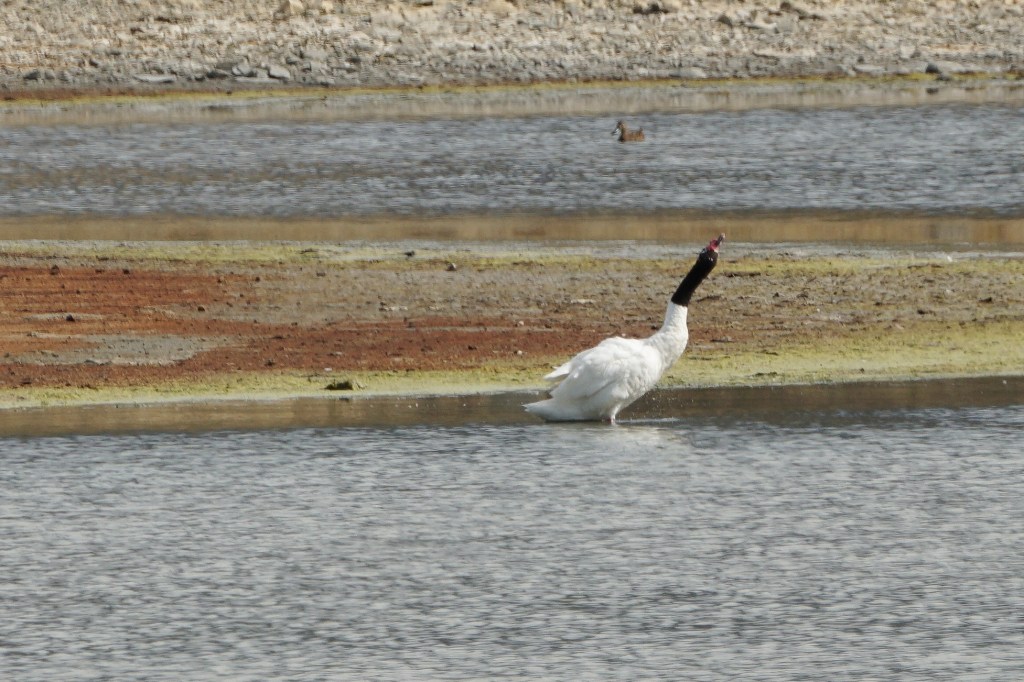
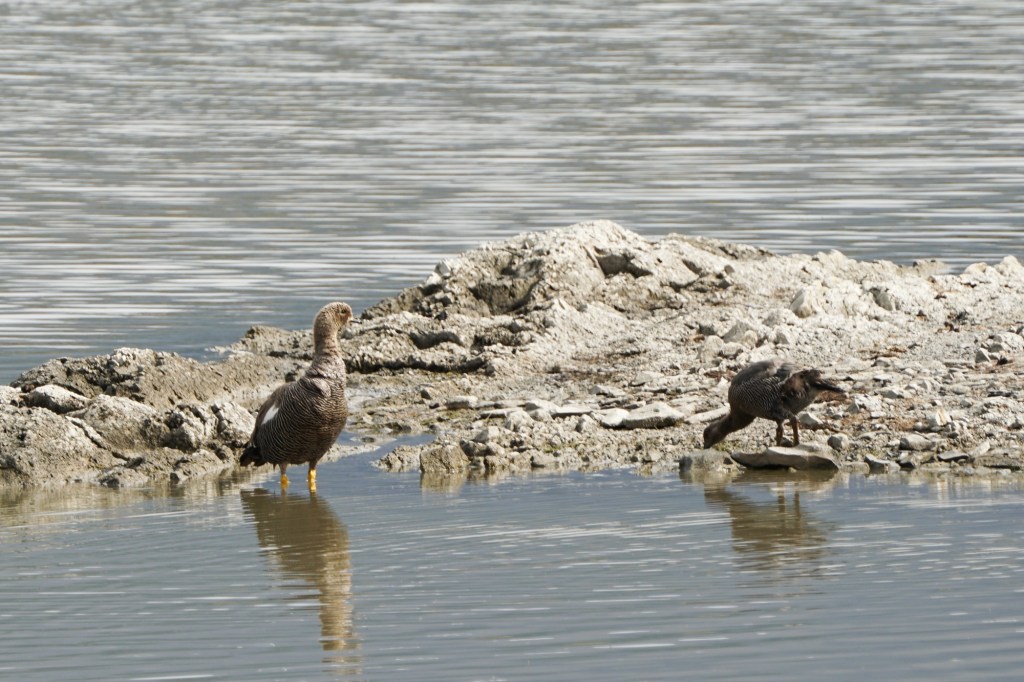
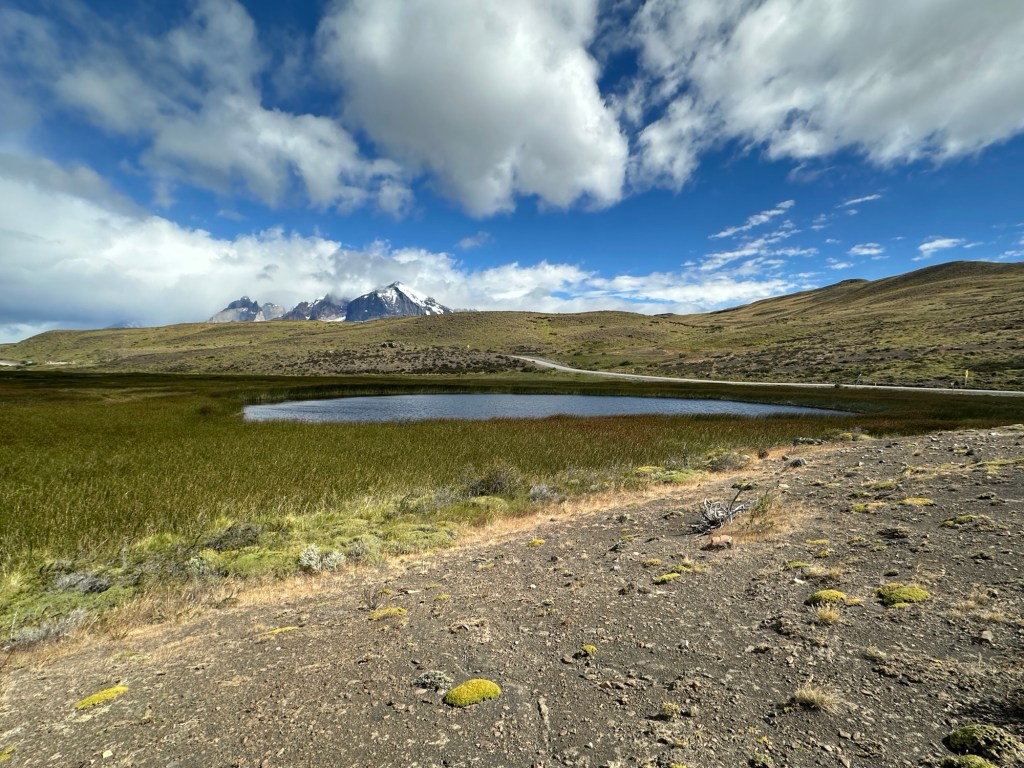
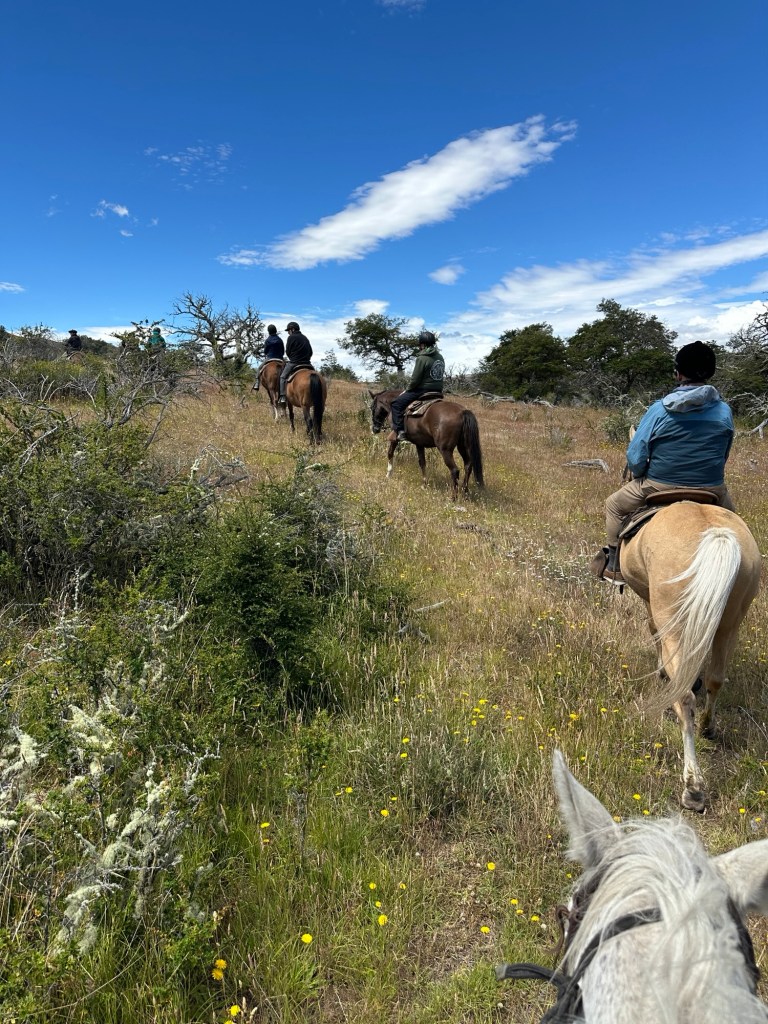
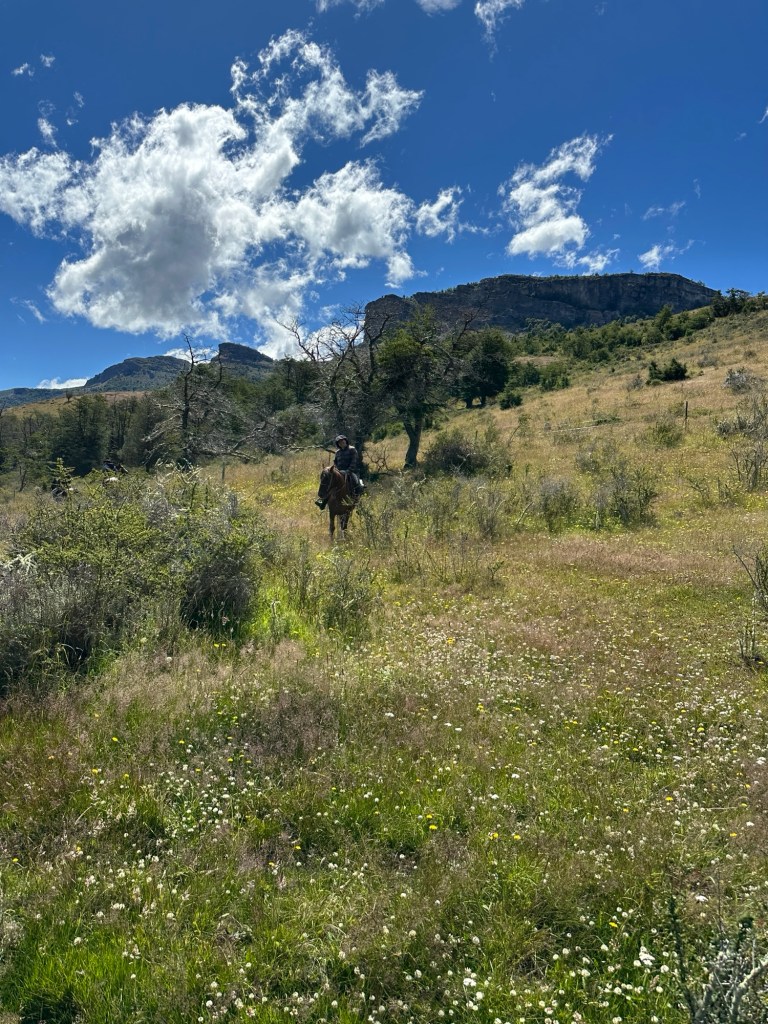
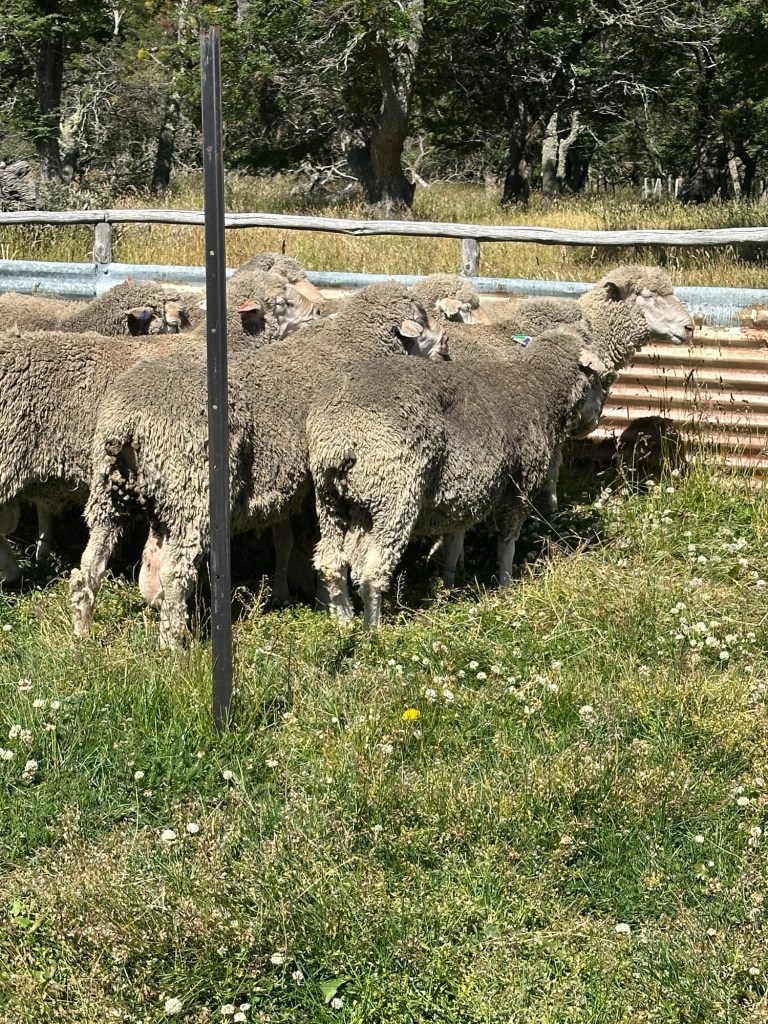
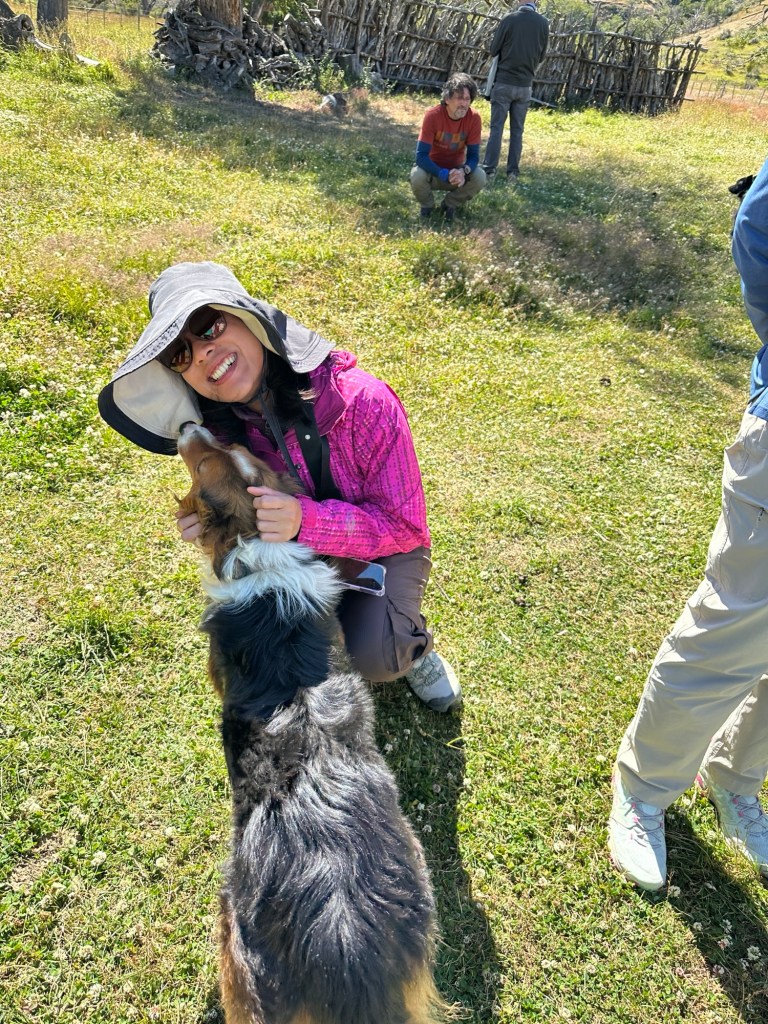
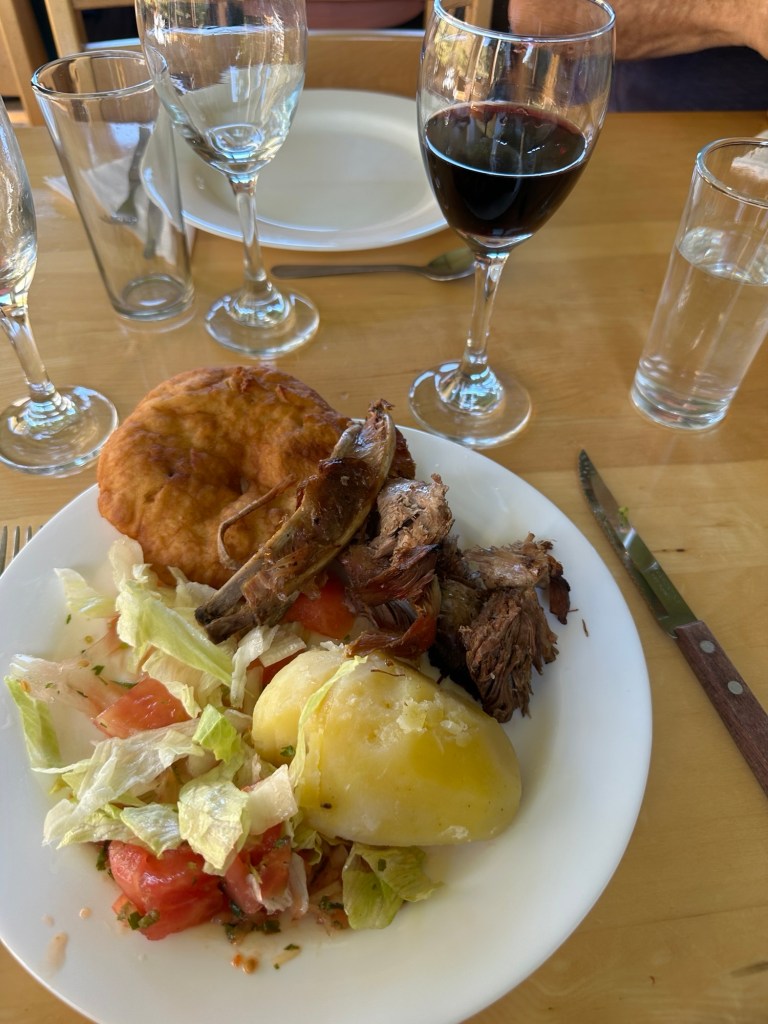
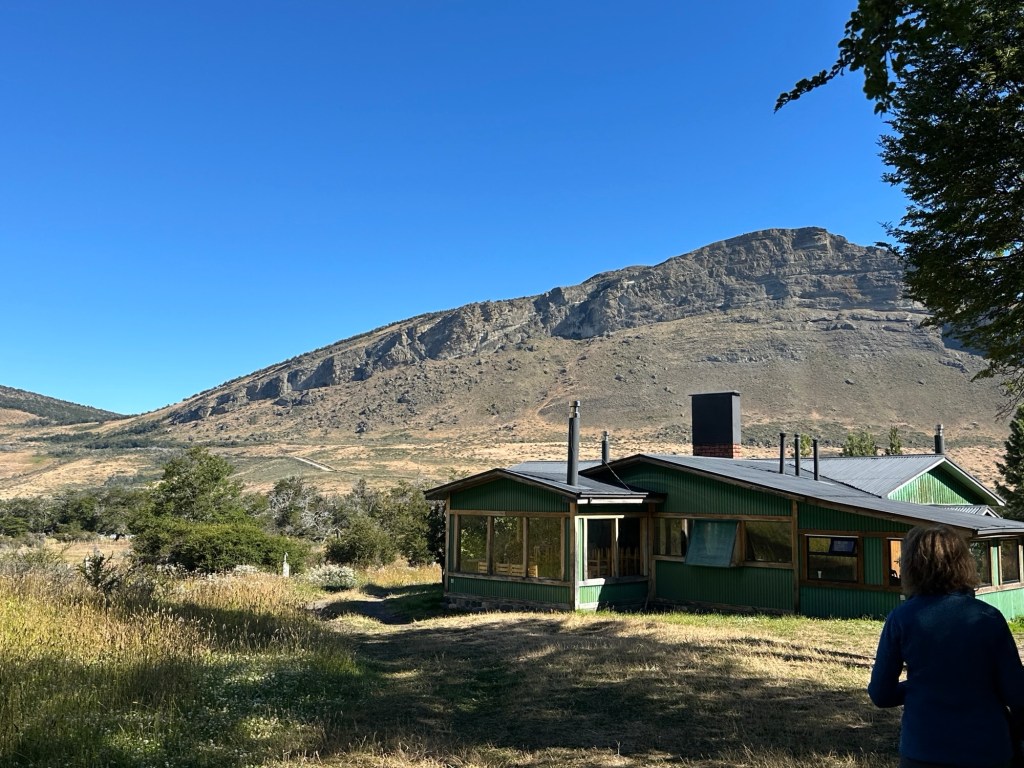
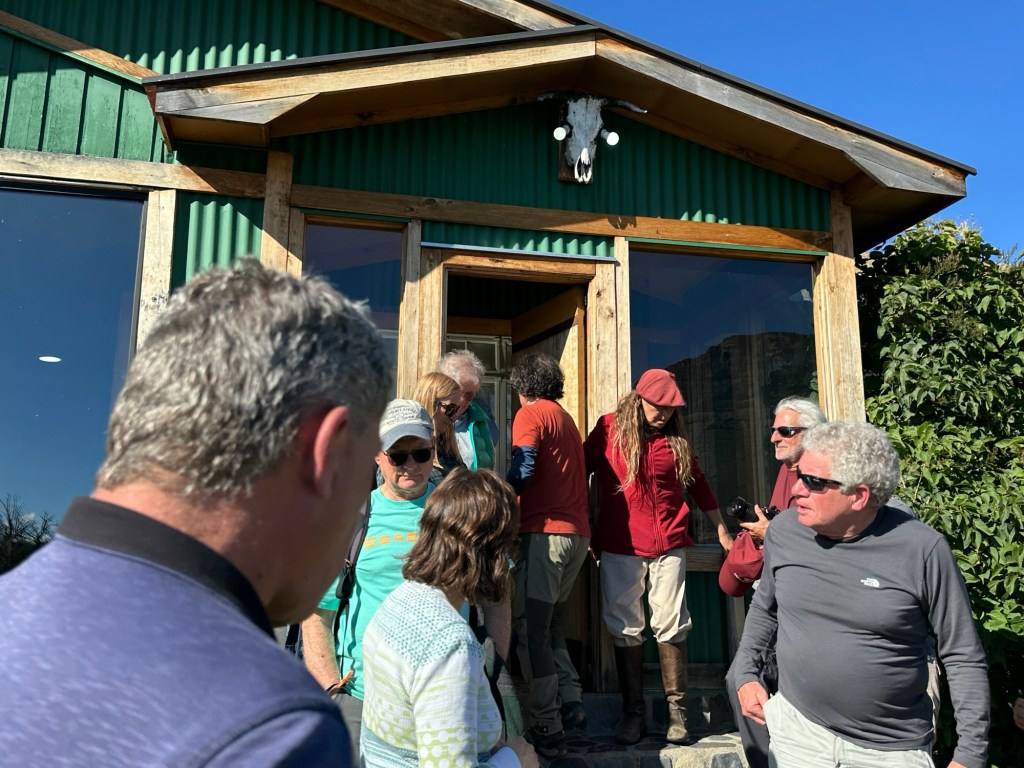
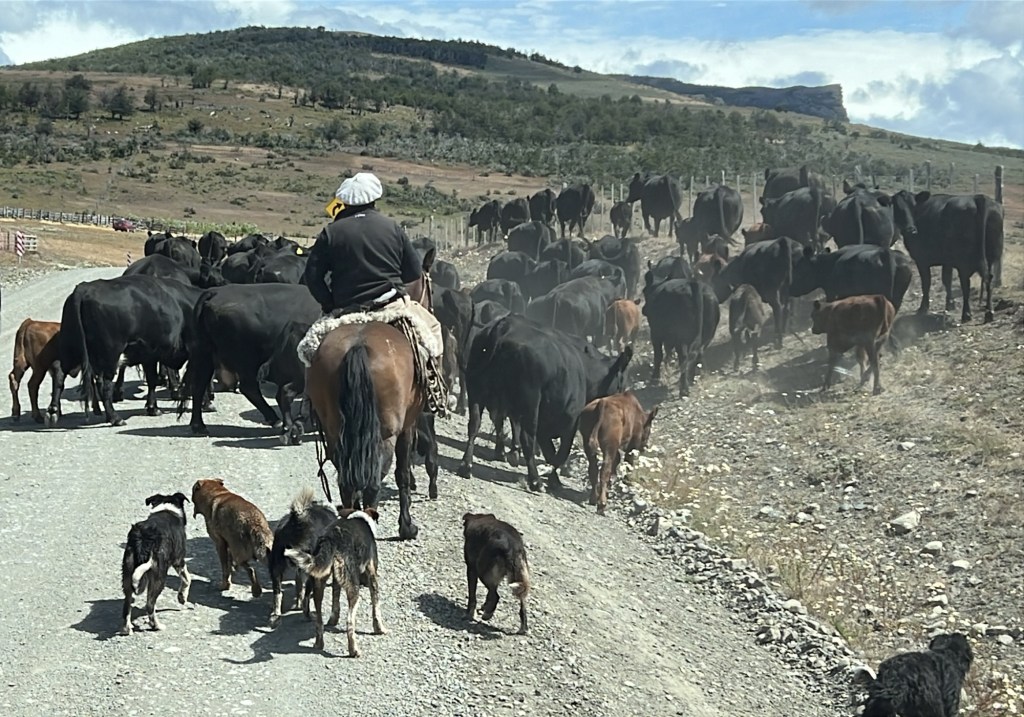
Along the dirt road to the ranch, a Gaucho and dogs were trying to herd cattle out of the road. It was fun to watch them finally move over. Then our ranch hands met us and escorted us to the large ranch, and the tack-house where those of us planning to ride horses would get our helmets and instructions. We rode through the most beautiful scenery, with lush vegetation, flowers, and snow-capped mountains surrounding us. Those not riding got a tour of the ranch and helped to barbecue the lamb for our dinner. After the ride, the ranch staff gave us a demonstration of how two dogs herd the sheep they raise for wool and food. The dogs were super friendly!
We then had pisco sours and a lovely lamb dinner before saying our farewells.
We got back on our bus and drove on to Puerto Natales.
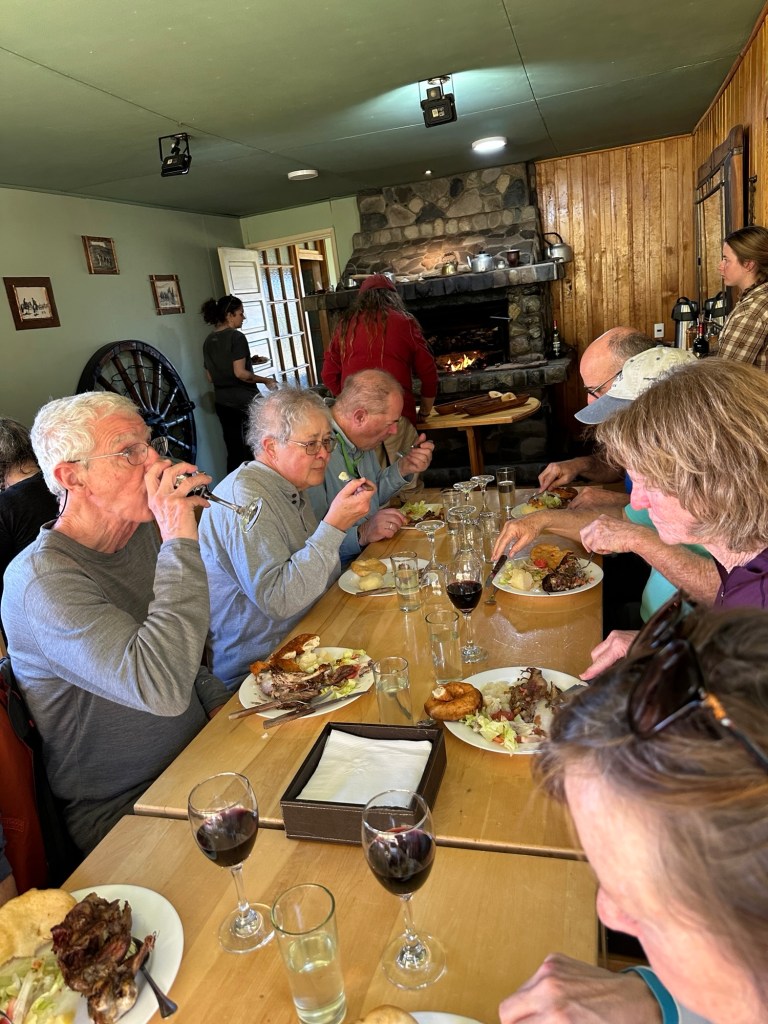
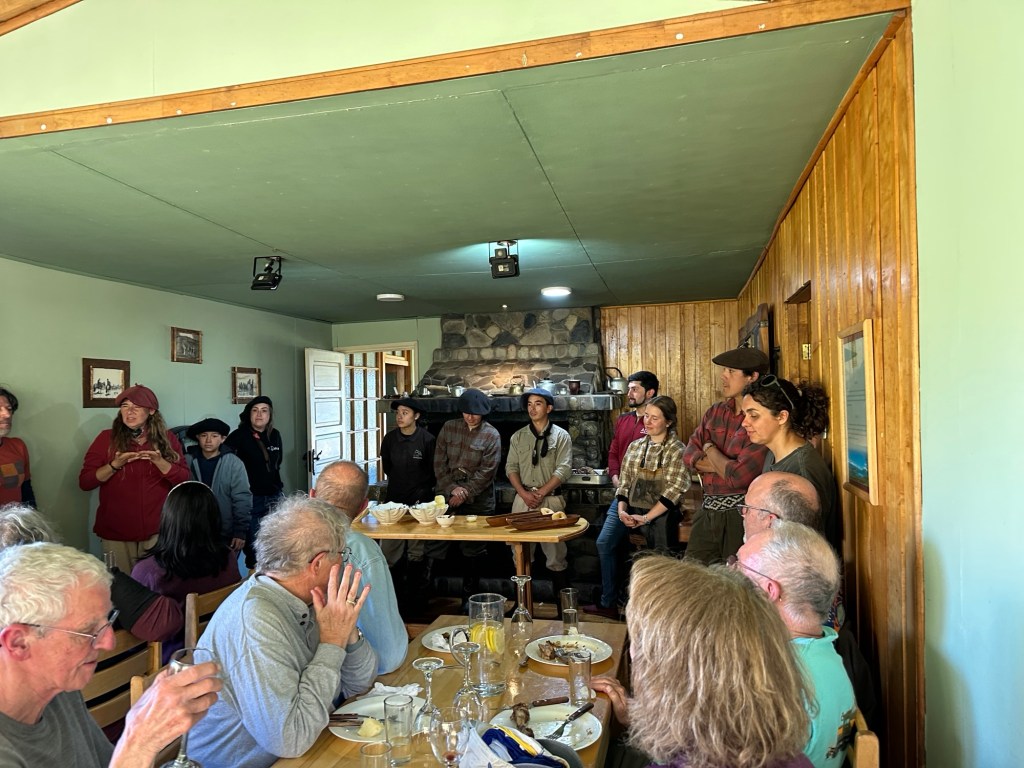
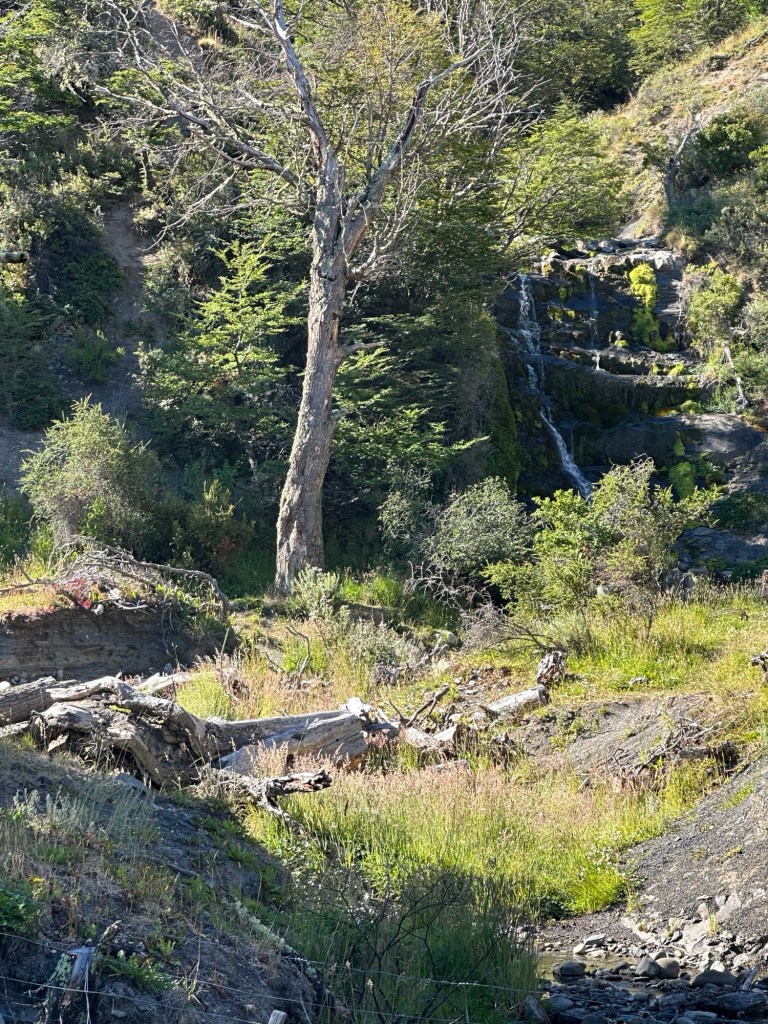
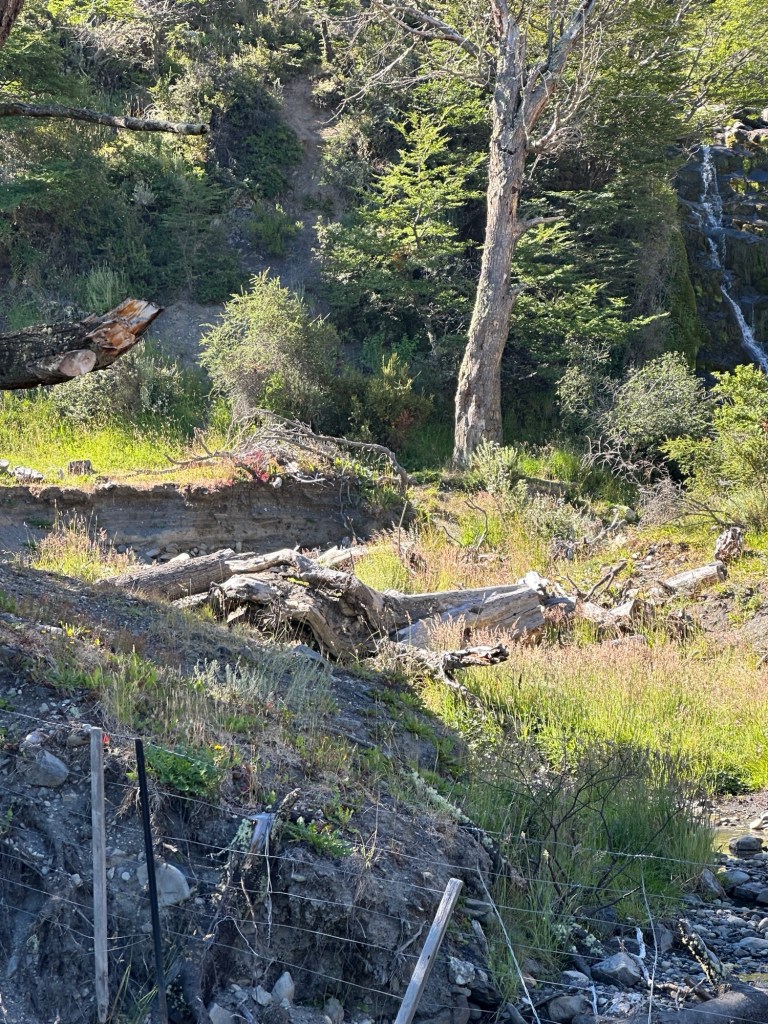
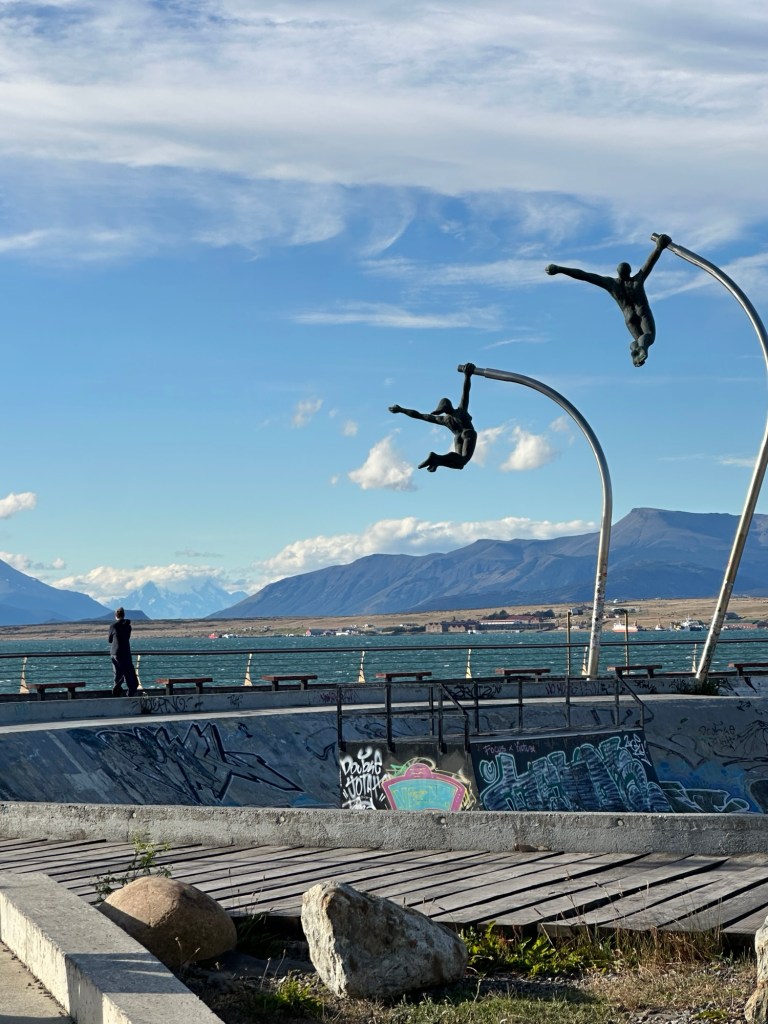
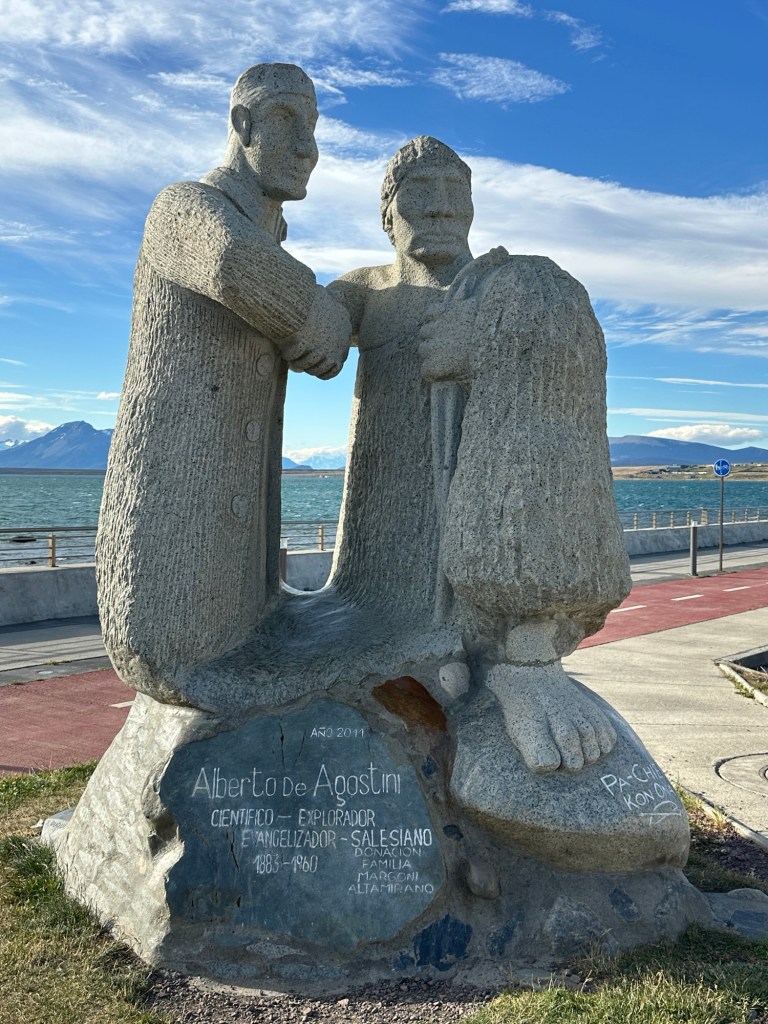
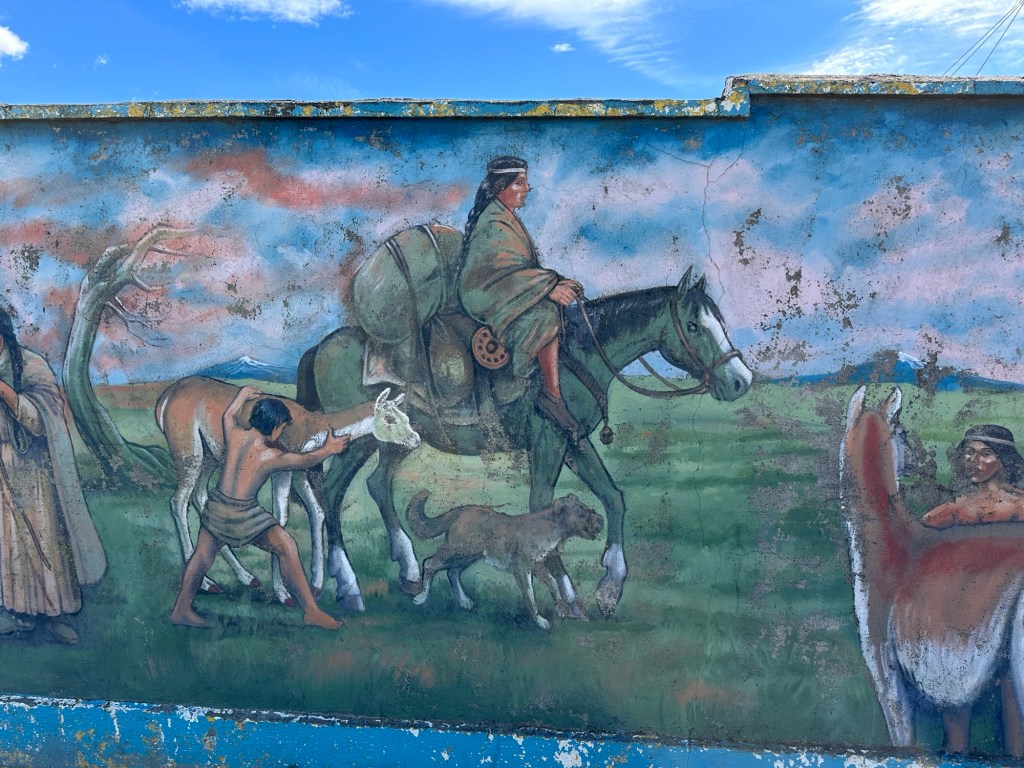
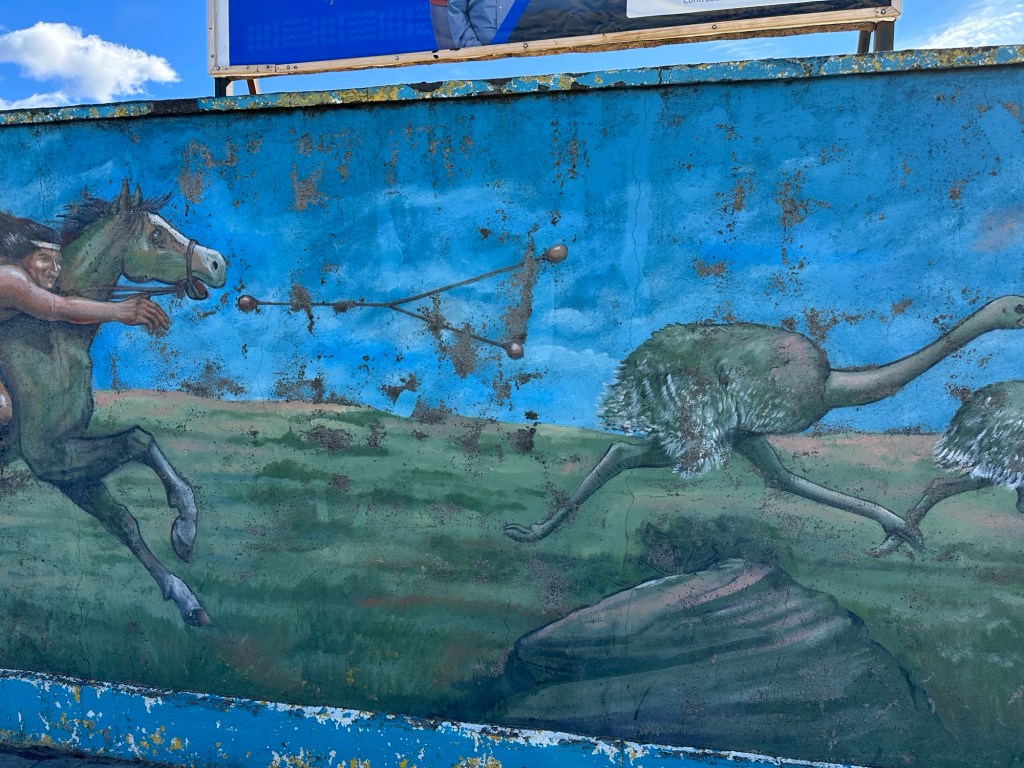
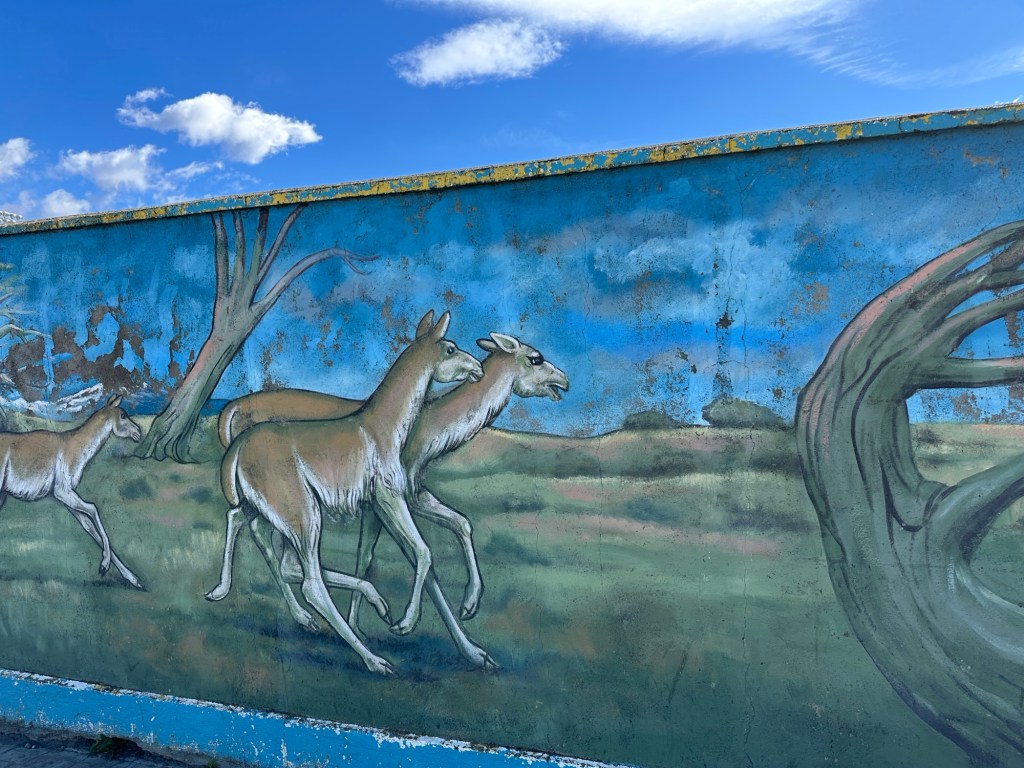
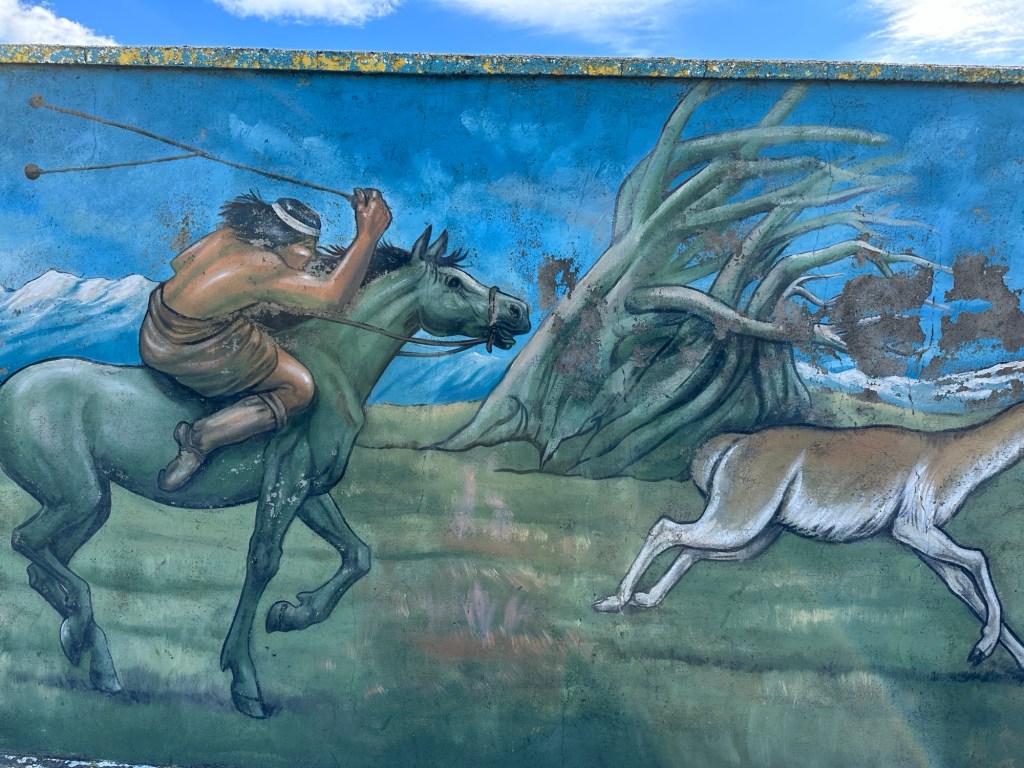
Puerto Natales is a lovely town with a nice waterfront, a long wall of murals depicting the life of the indigenous Aonikenk and Kaweskar people in the region (from relying on fishing from small family boats, hunting guanacos and arrival of horses ). The next day, Tuesday, Jan. 20, we spent some time touring the town on foot, had lunch at the hotel and then drove to Punta Arenas, where we boarded our ship in time for dinner and setting sail in the Straight of Magellan.
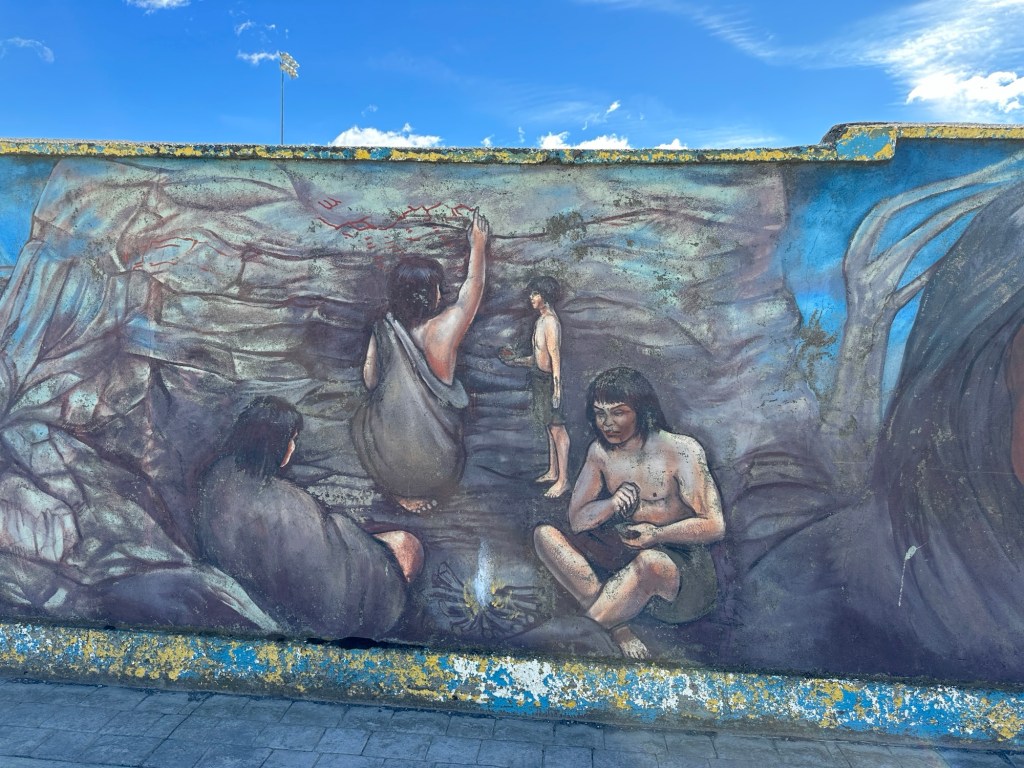
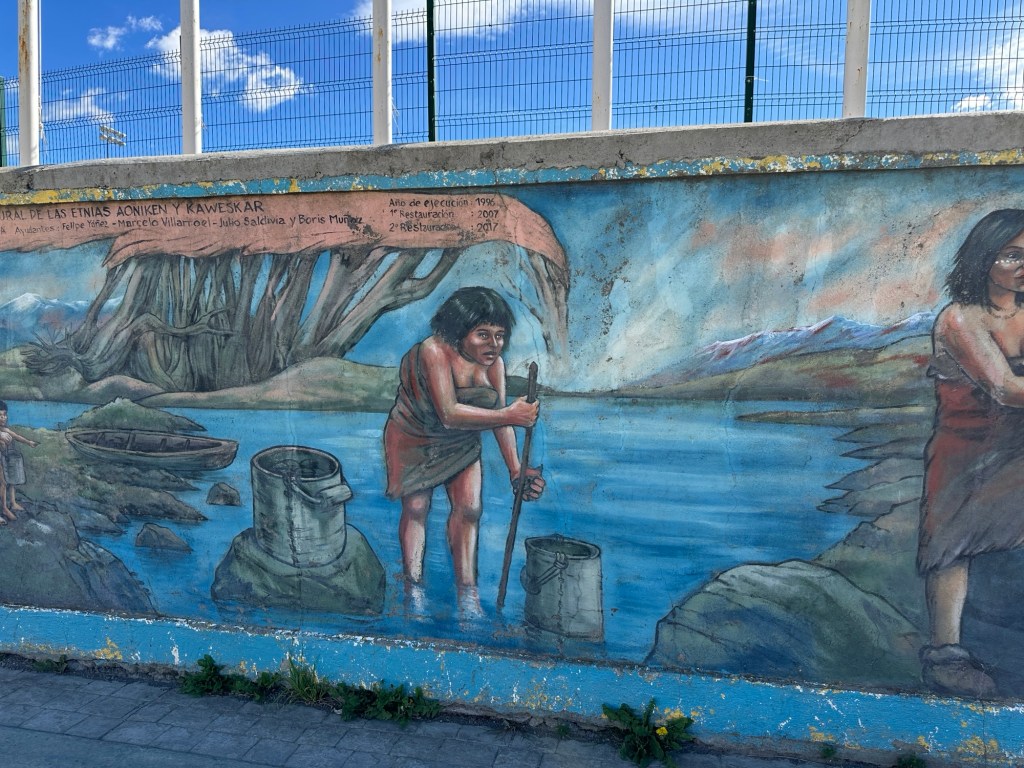
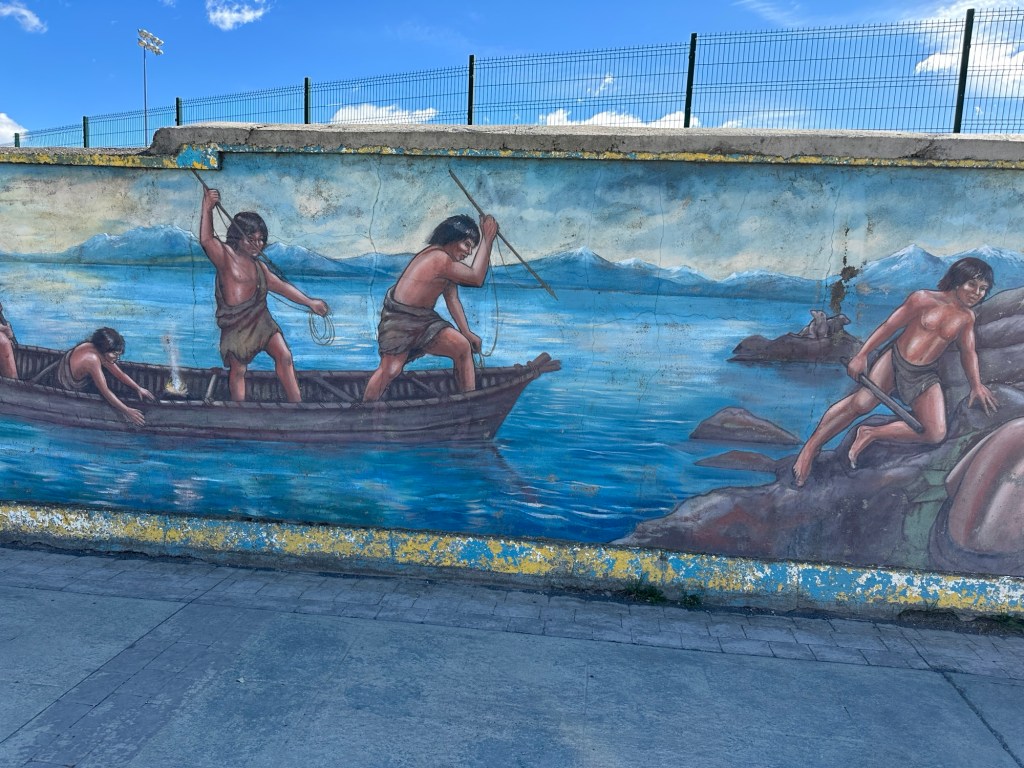
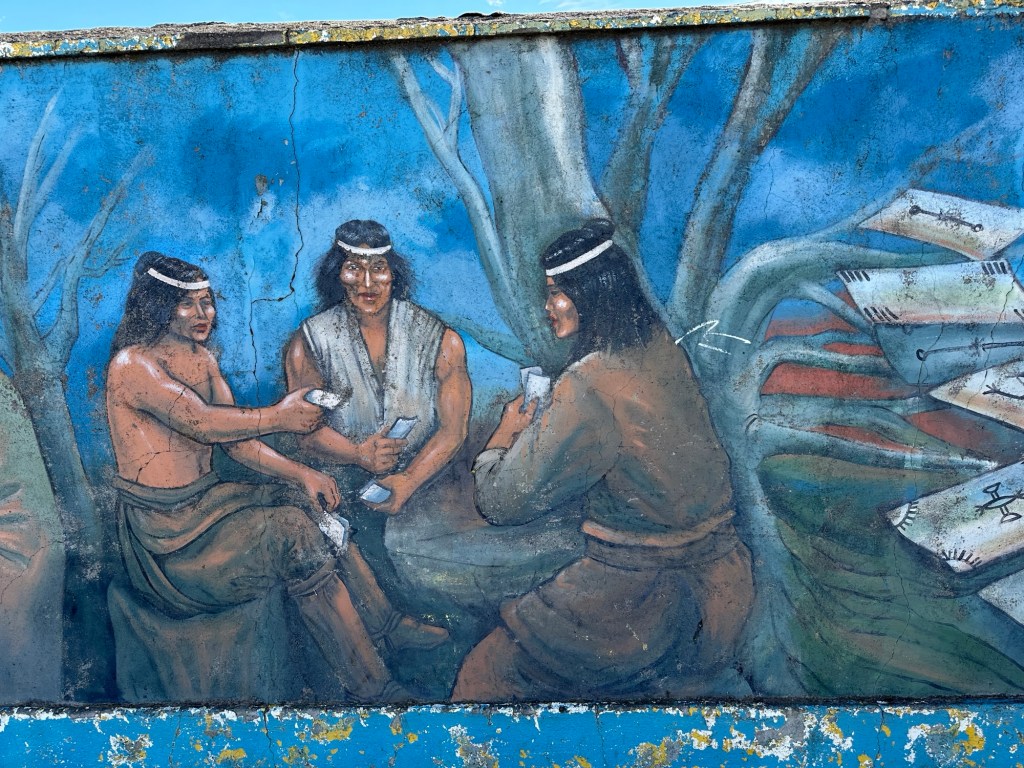
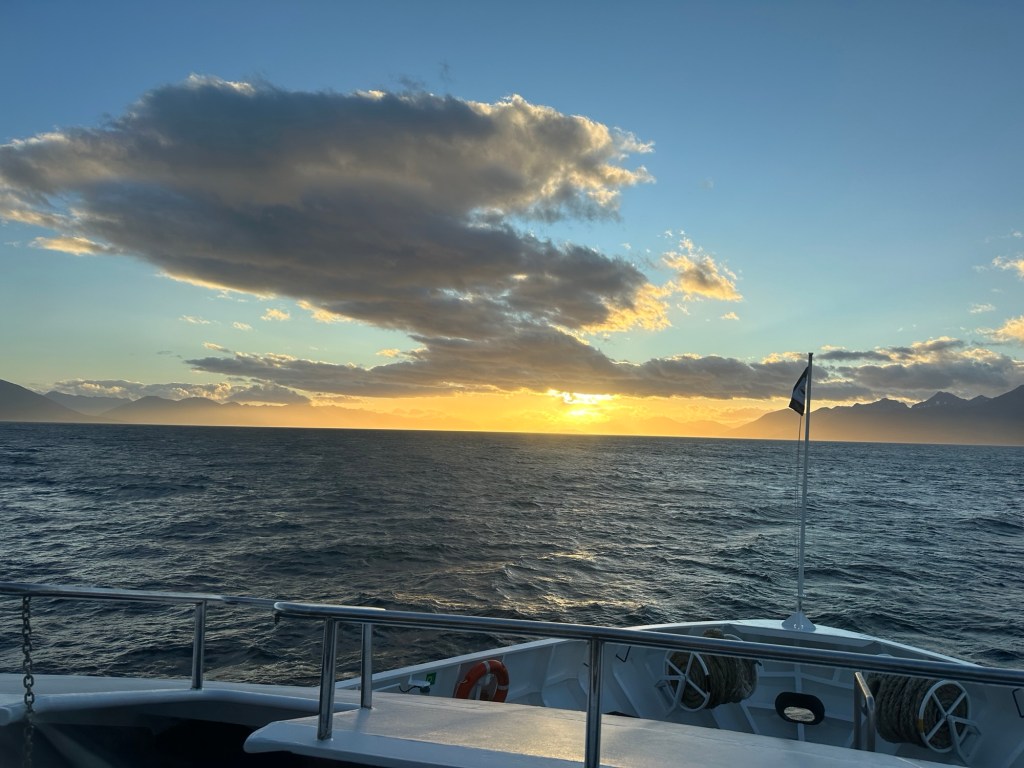
The view from my cabin.
Wednesday, Jan. 21
The expedition ship, Ventus Australis, was just wonderful, with several lounges offering panoramic views, a large dining room, lovely cabins, and the most amazing staff of engineers, stewards, waiters, and expedition guides. The ship can accommodate 200 passengers, but there were only around 100 on our sailing. Meals and drinks were great, breakfast was buffet and lunch and dinner were served; we selected each meal at the previous meal.
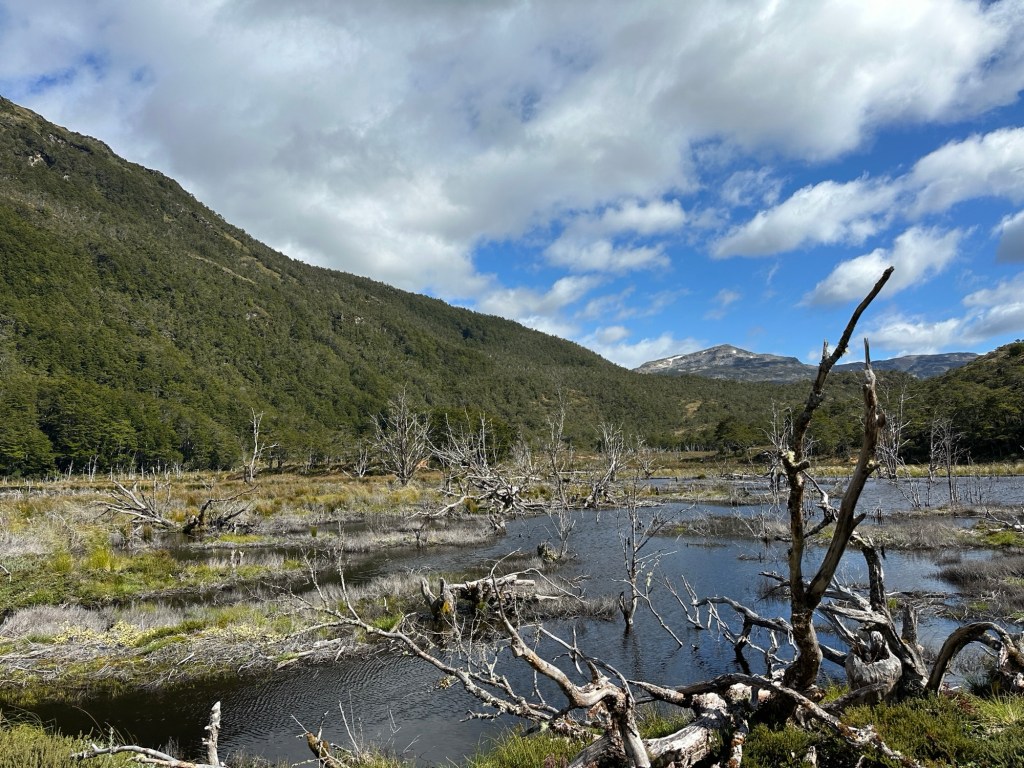
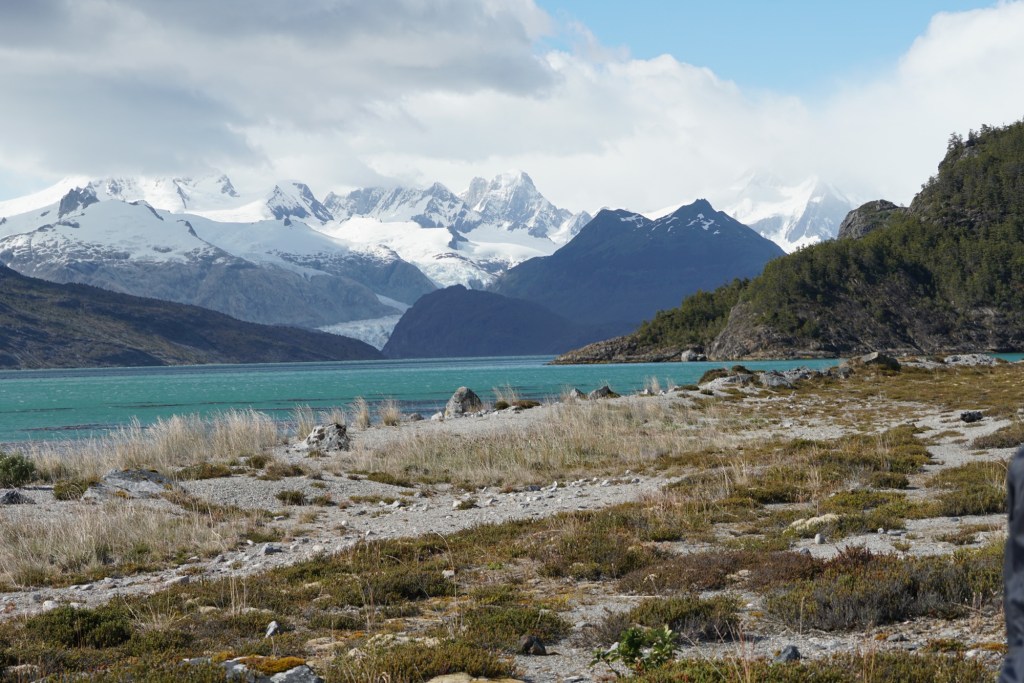
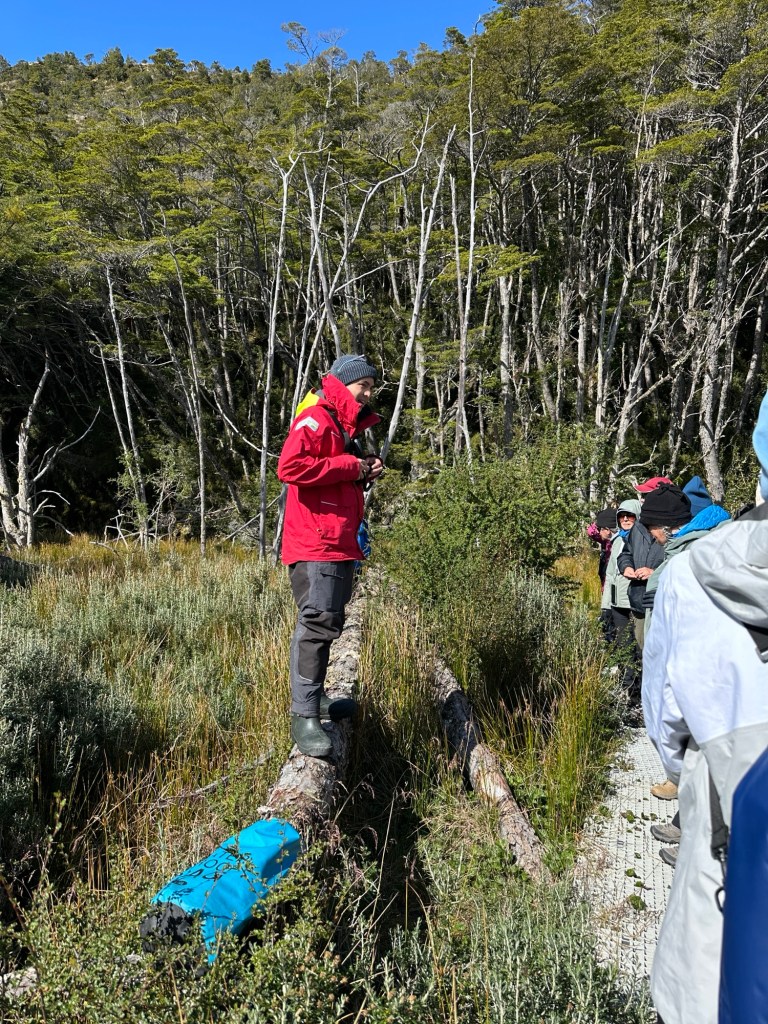
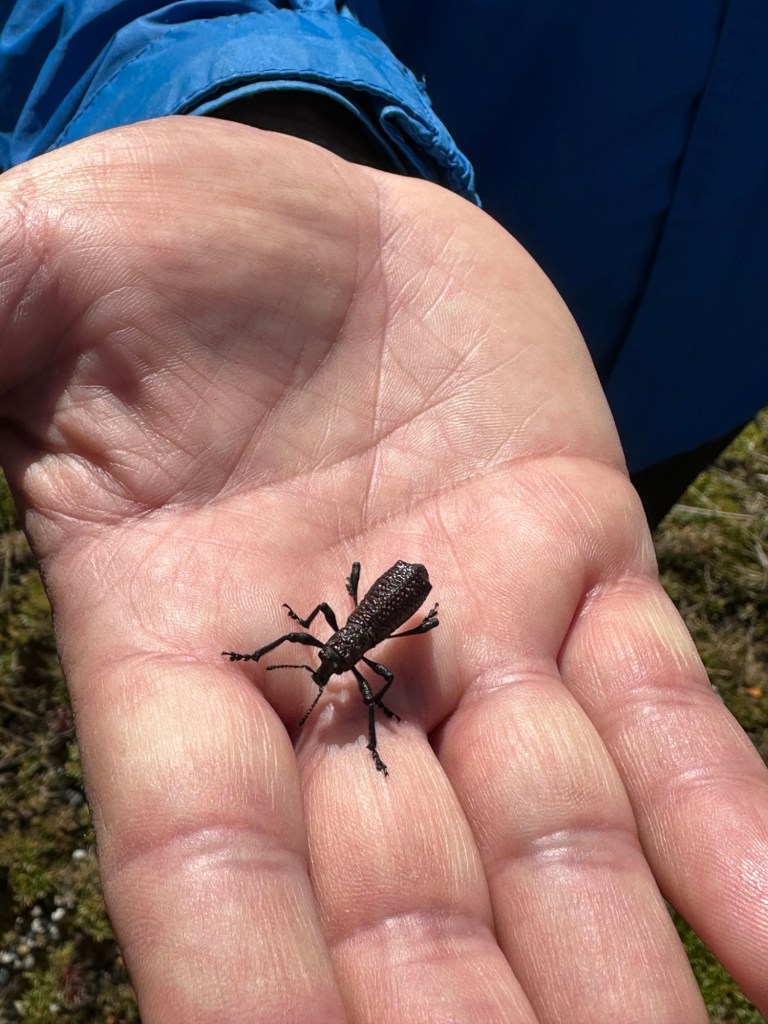
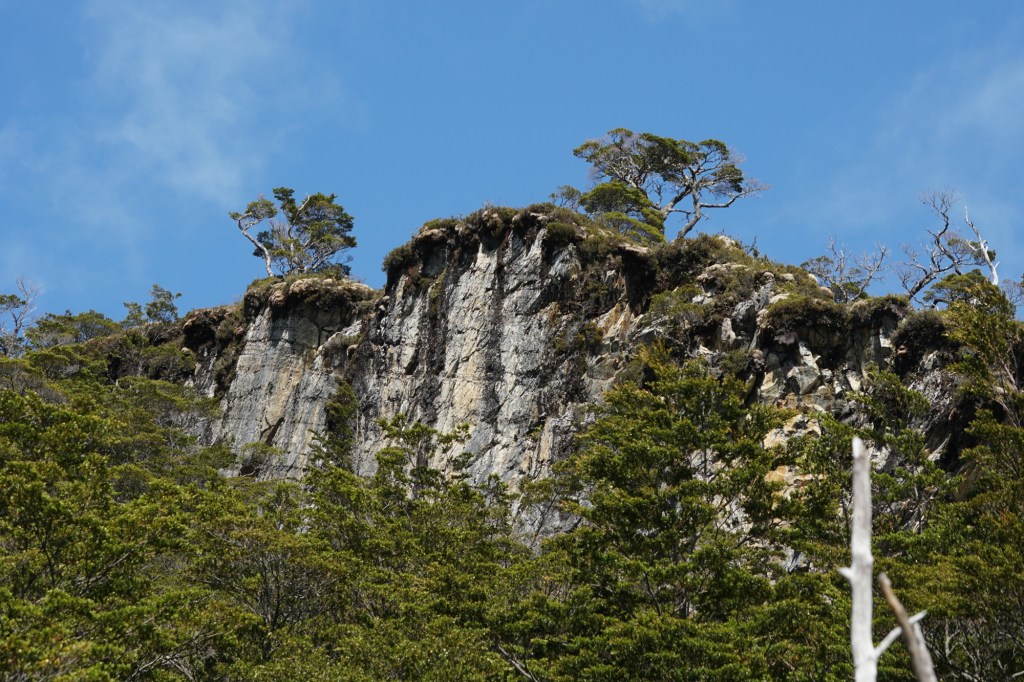
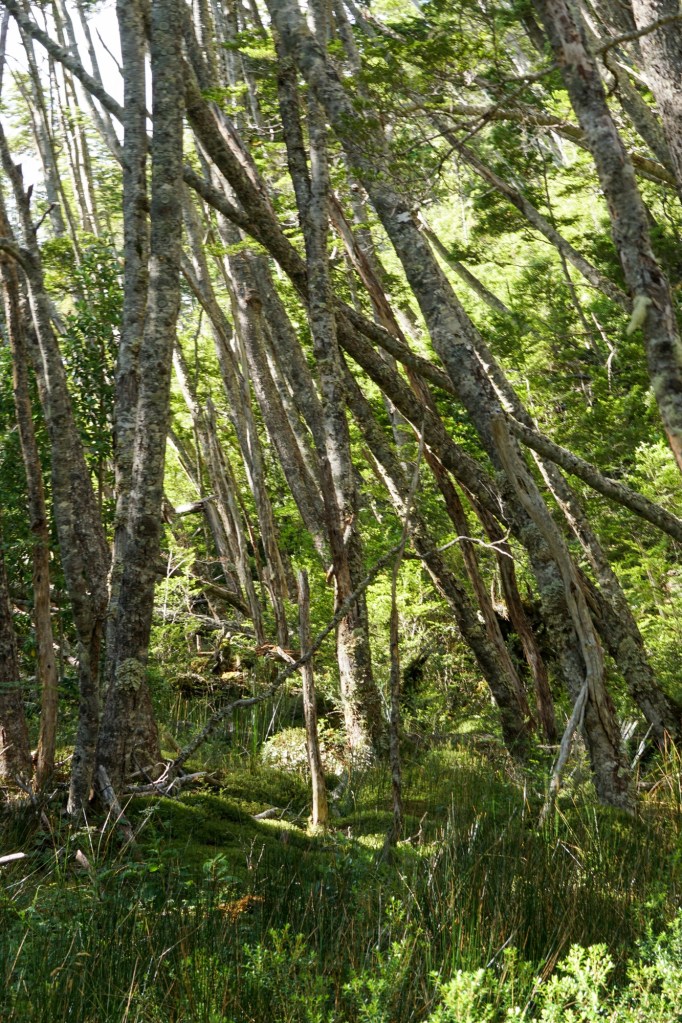
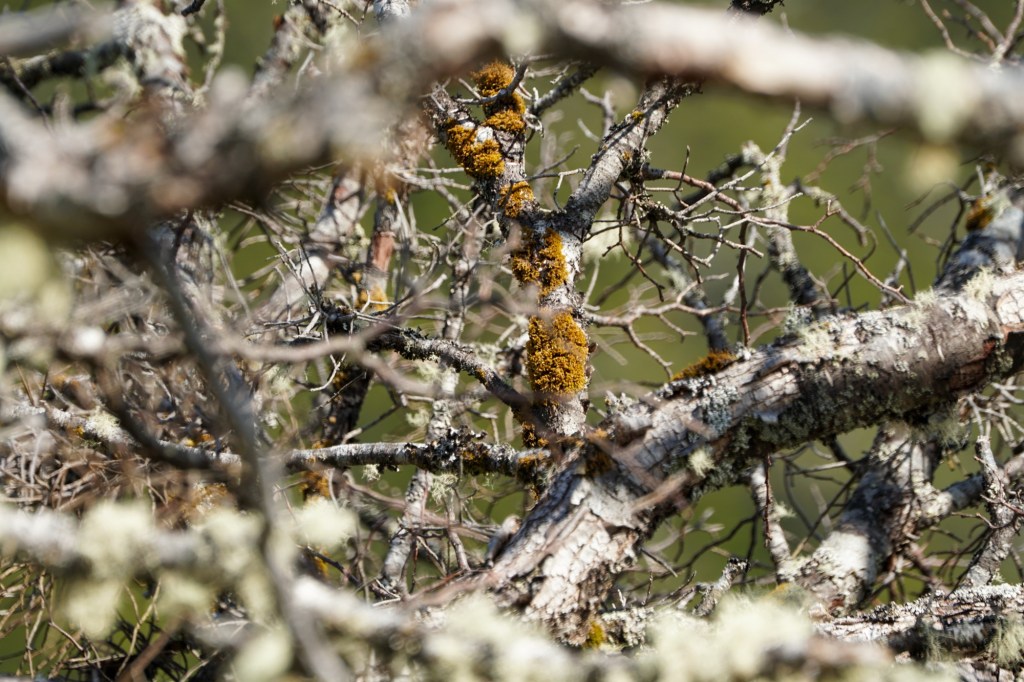
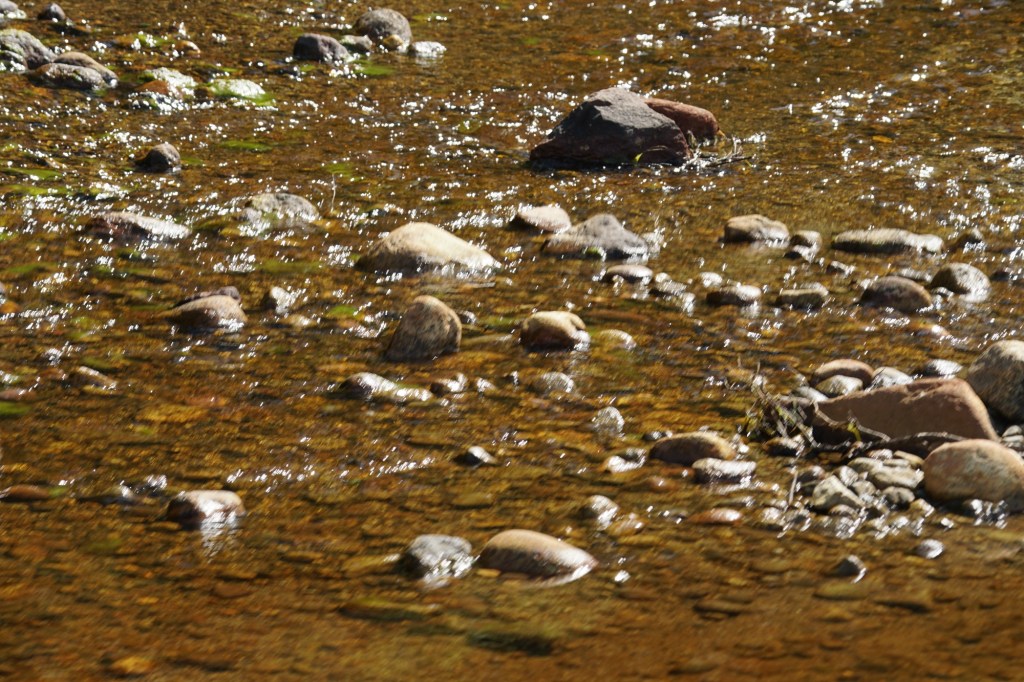
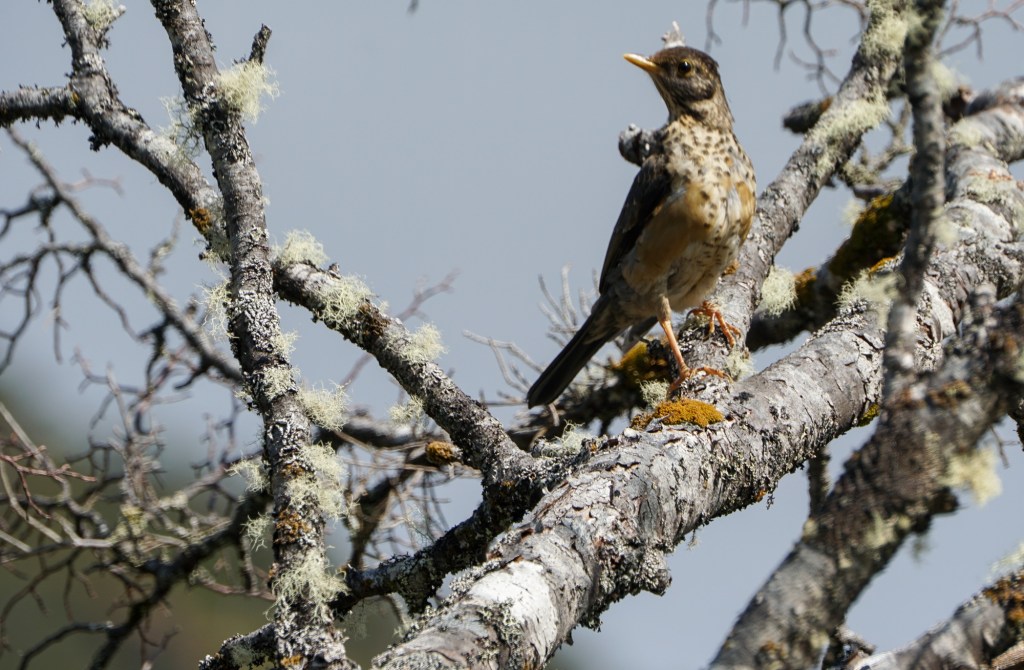
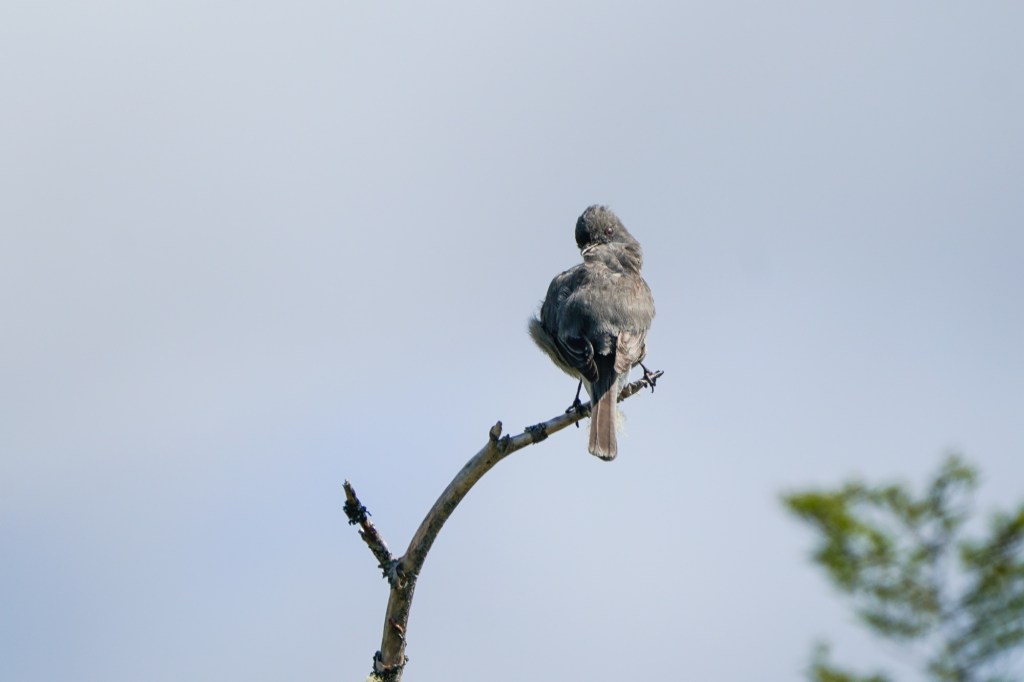
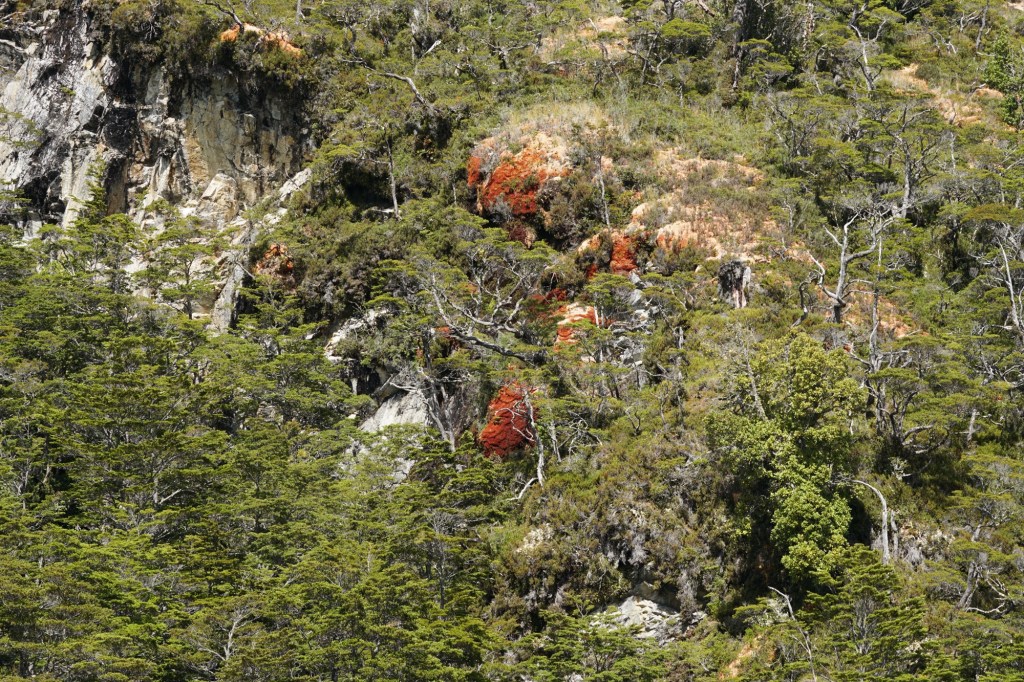
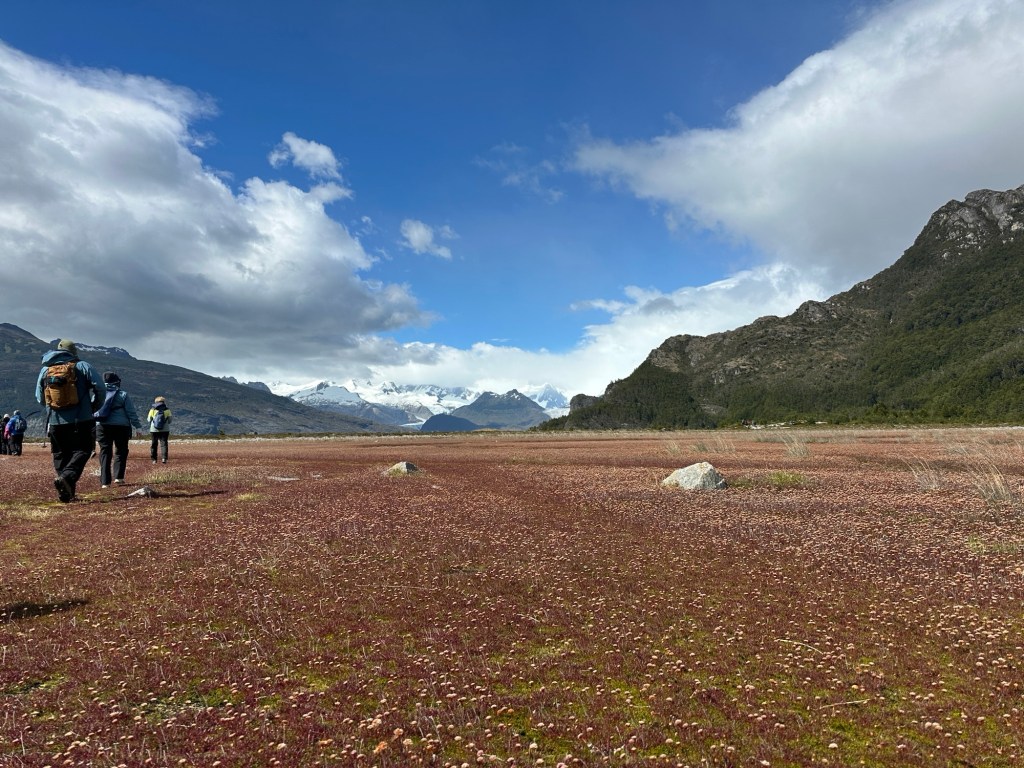
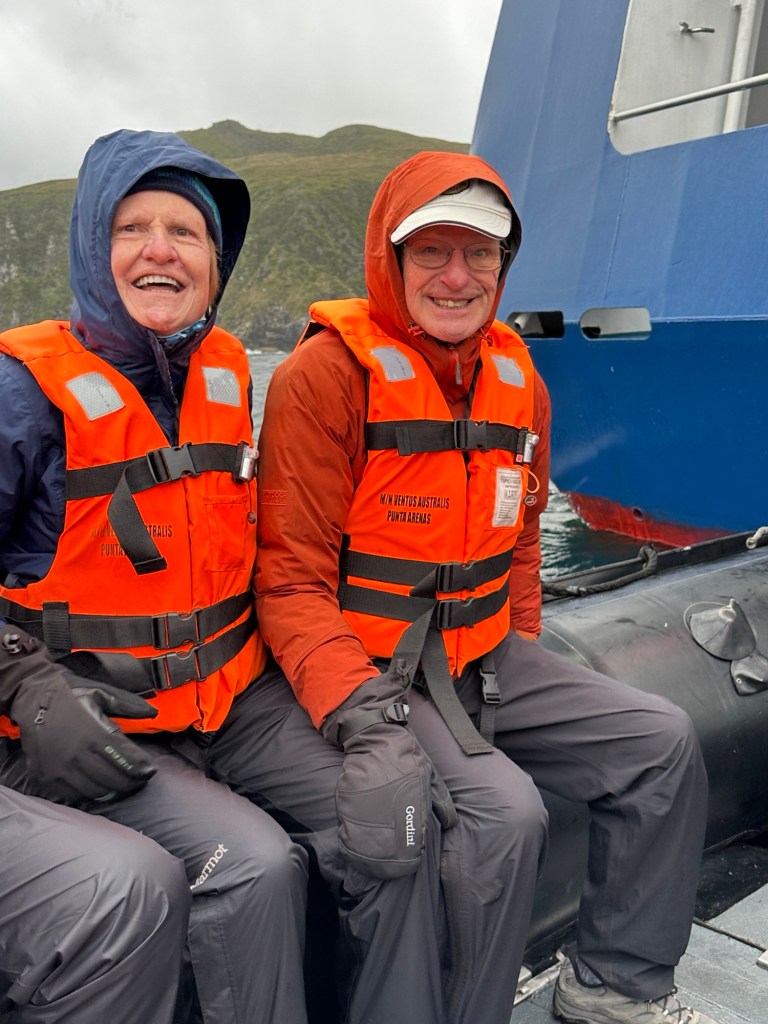
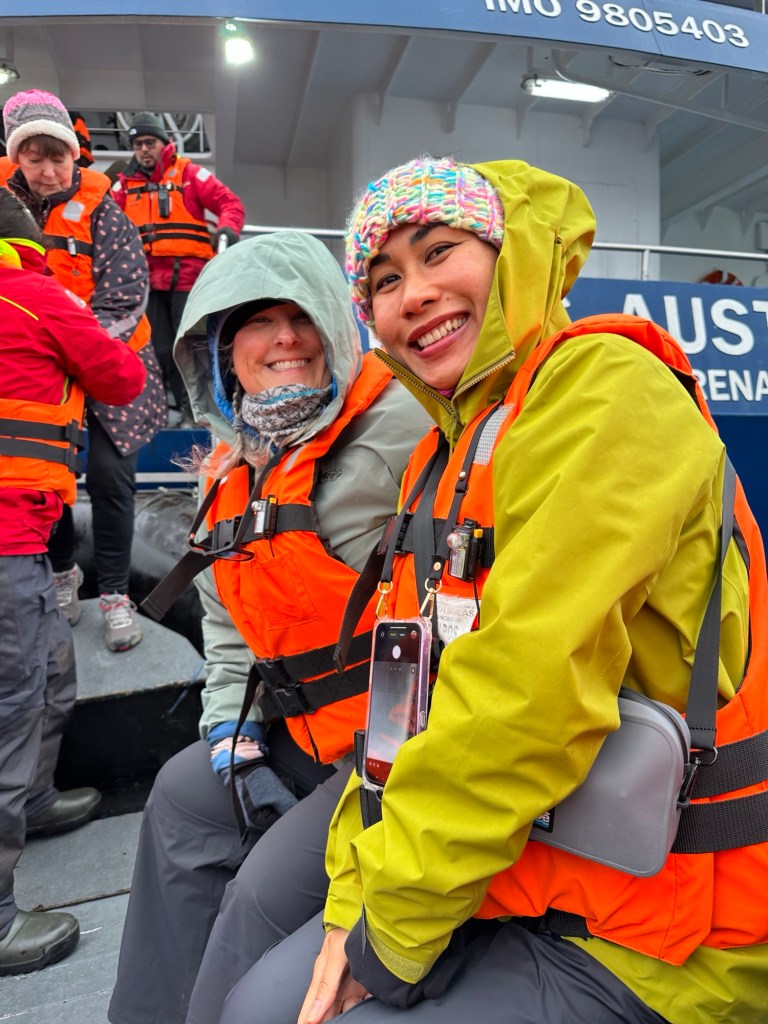
We generally had two off-ship expeditions a day, traveling from the ship by zodiacs to reach our destinations. For hikes, there were always options from strenuous hiking to easy walks with a naturalist guiding. Our first stop on day 1 was at Ainsworth Bay. At the recommendation of Carlos, our OAT Trip Leader, I opted for the forest walk, to get a good overview of the landscape and vegetation of this part of Patagonia, along the Strait of Magellan and the Beagle Chanel, as well as a good view of the Marinelli Glacier. Interestingly, a great deal of forest damage has been done by beavers, which were introduced by Argentina to establish a fur industry. The endeavor was a commercial and environmental disaster, and one that is not being addressed in any way.
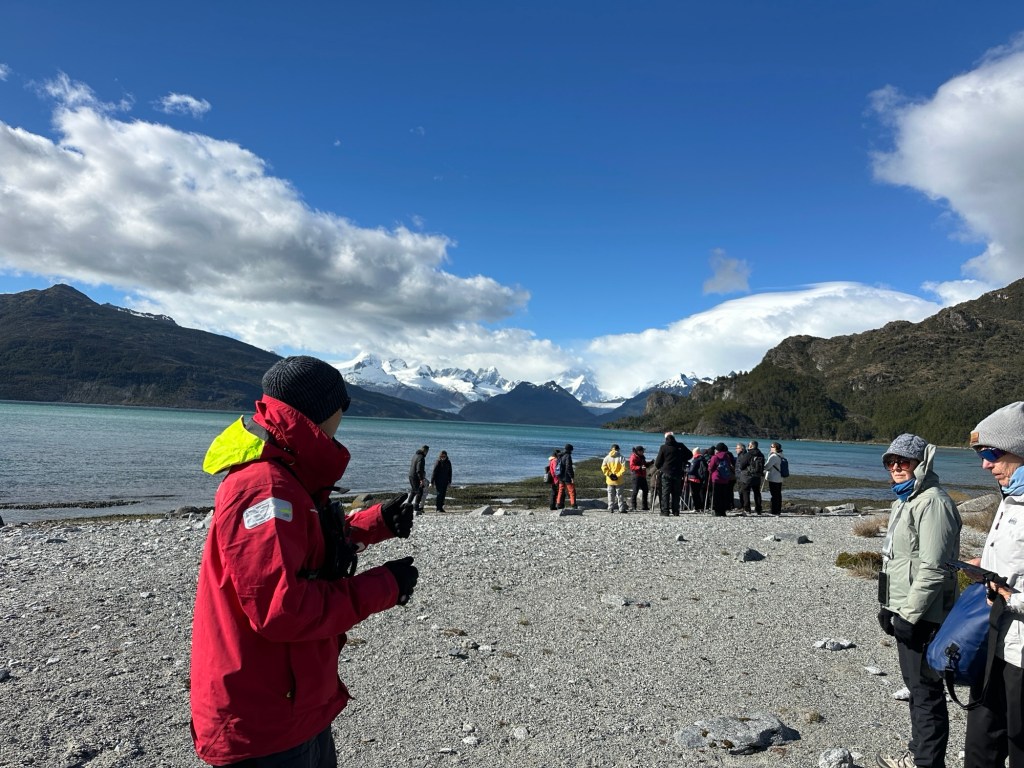
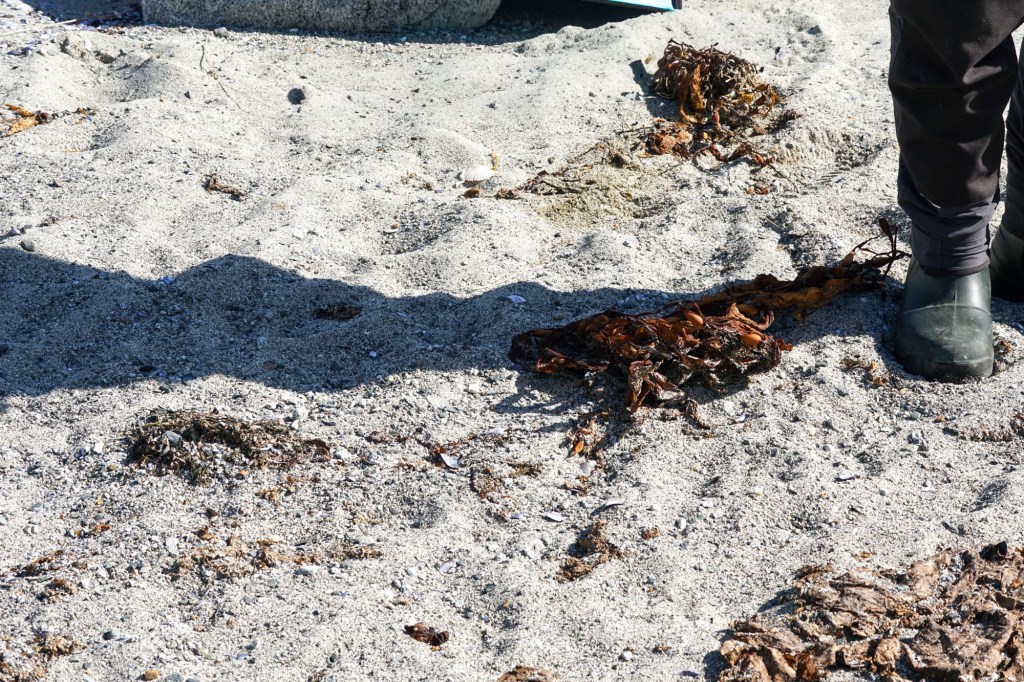
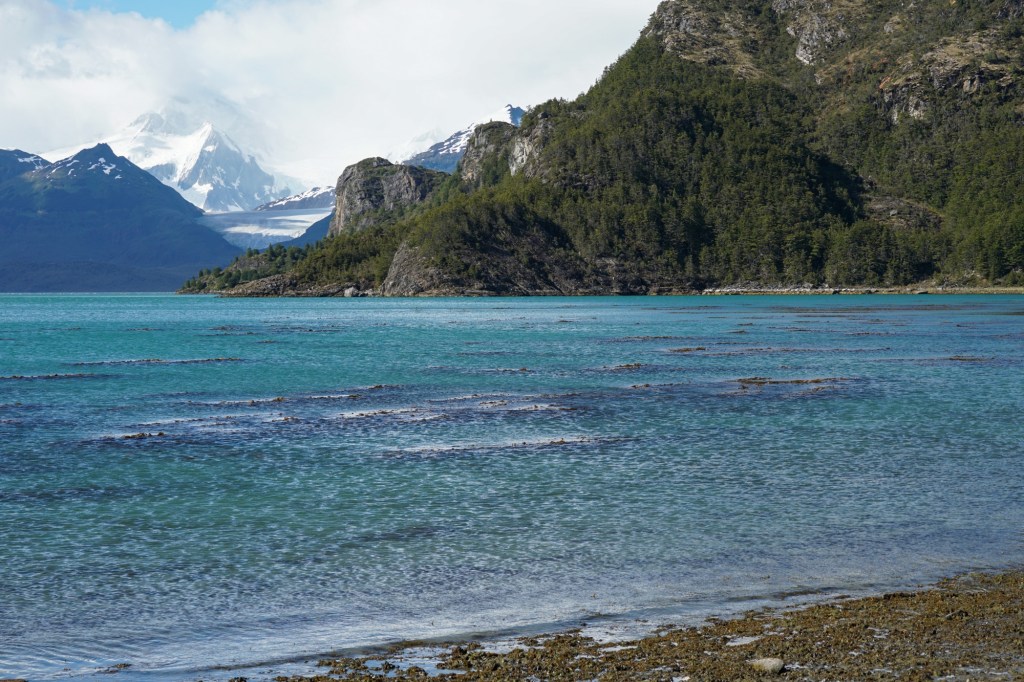
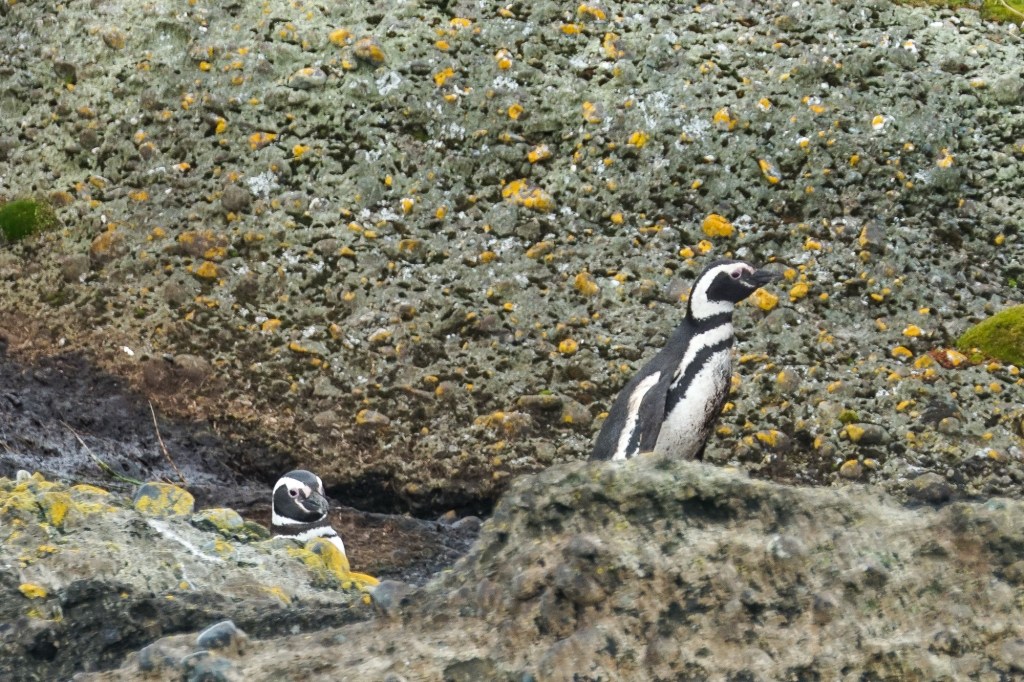
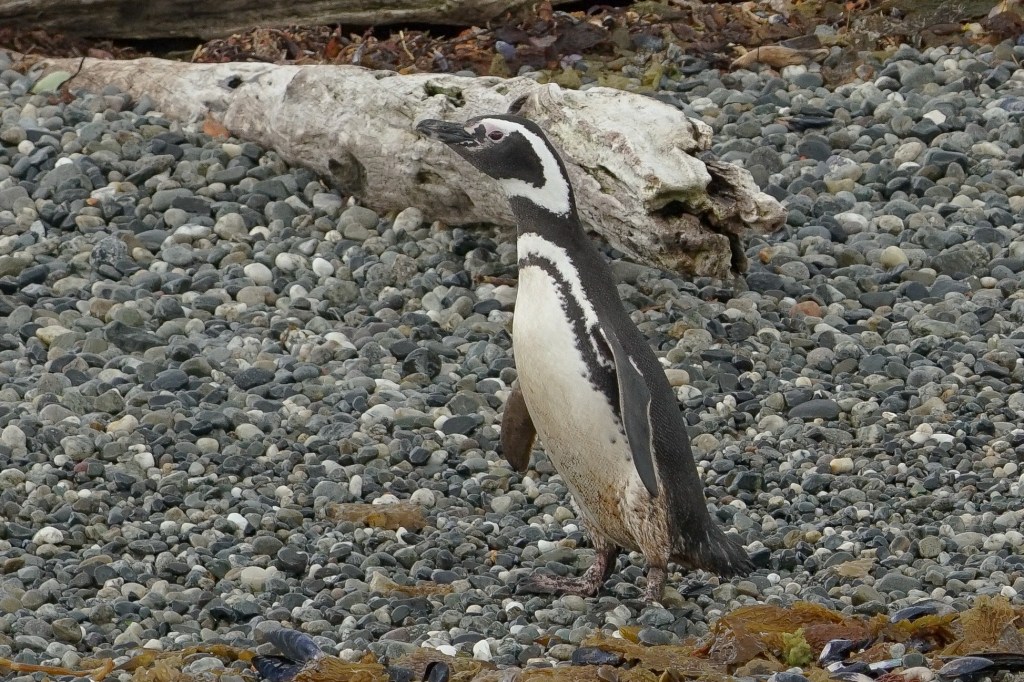
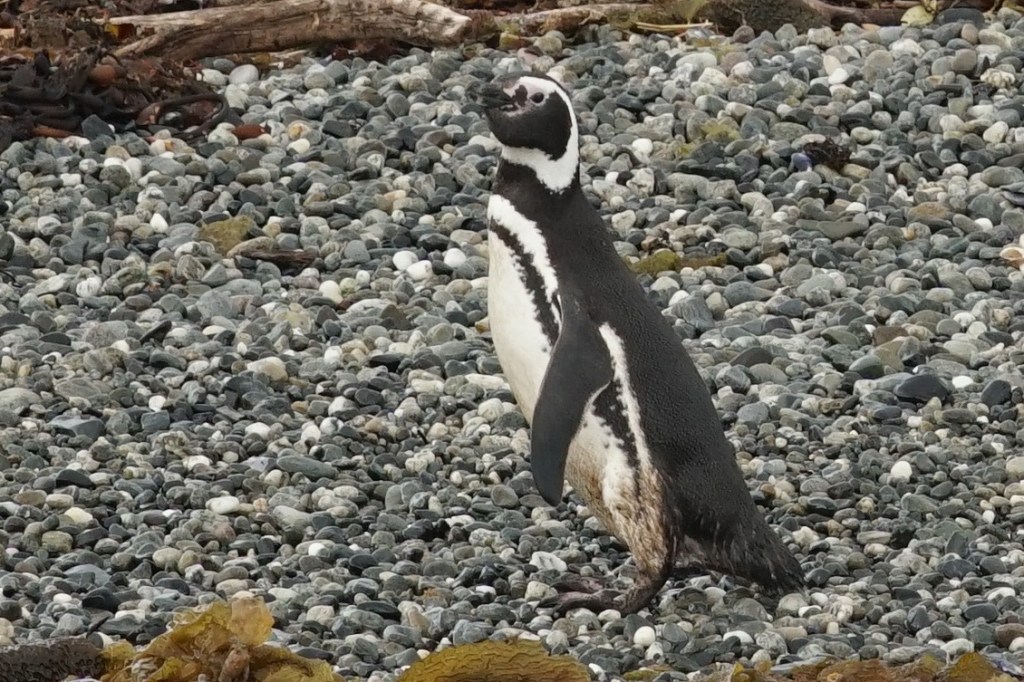
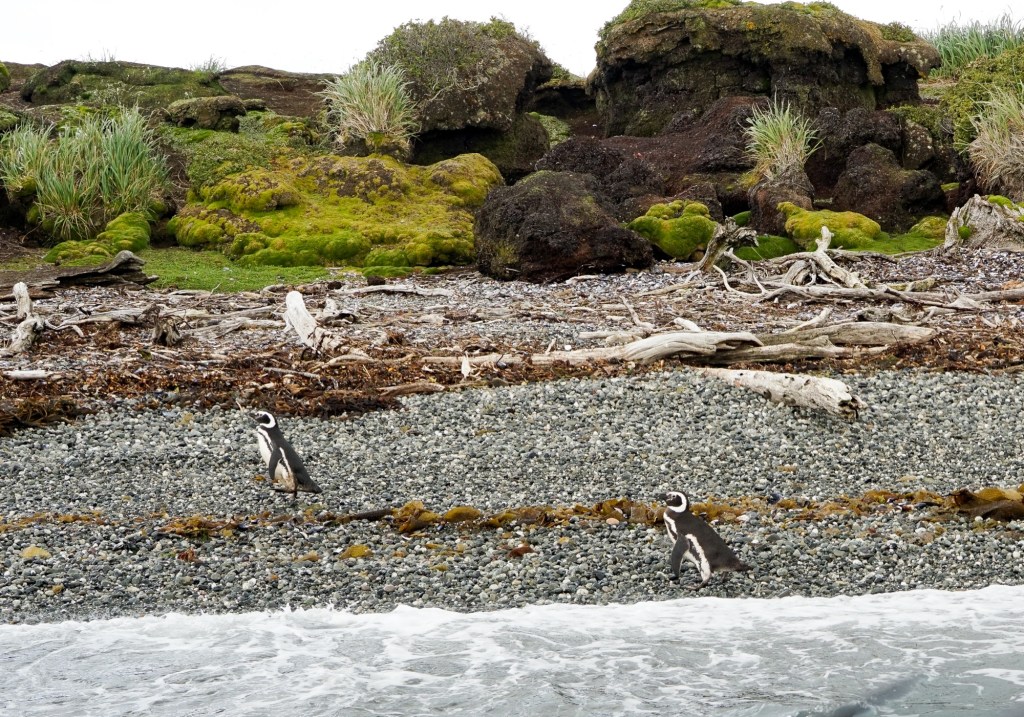
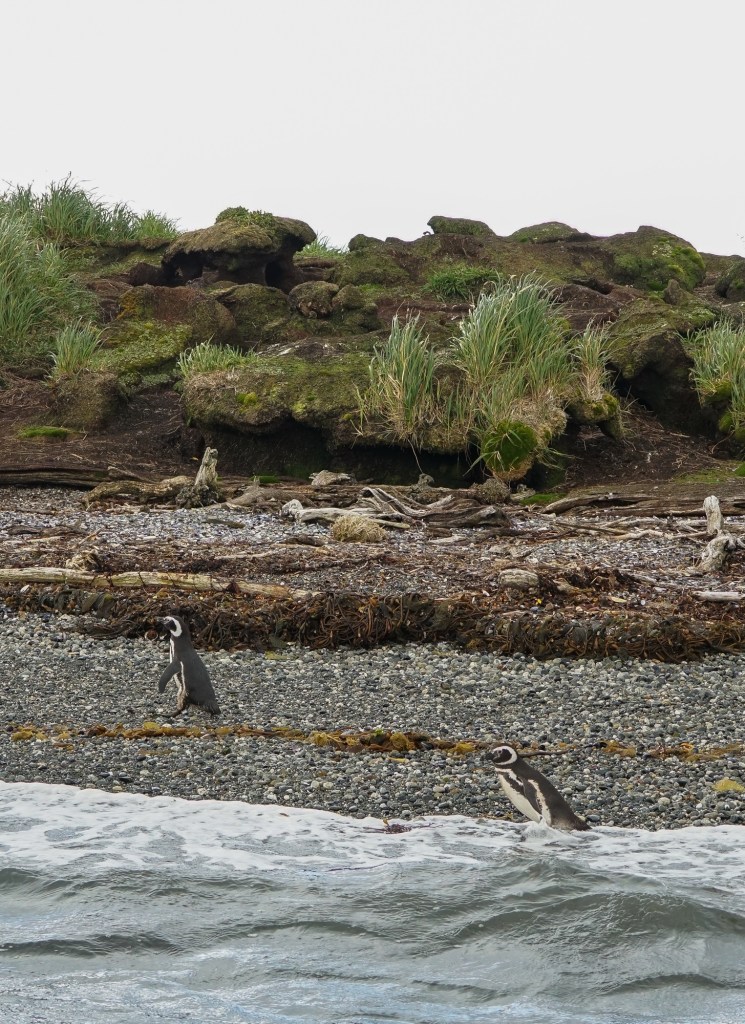
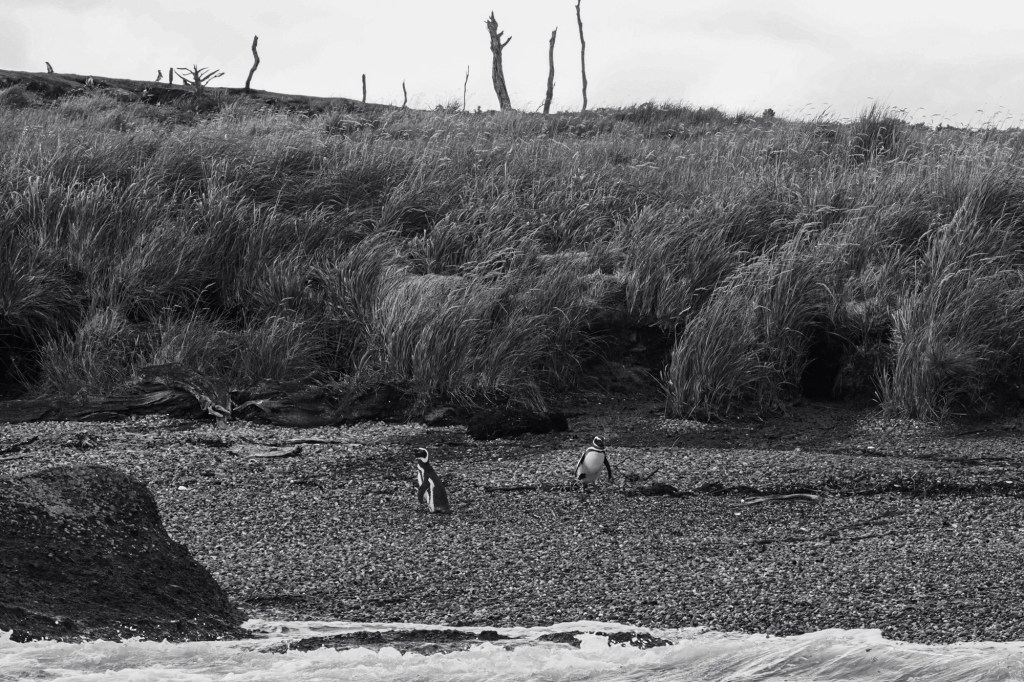
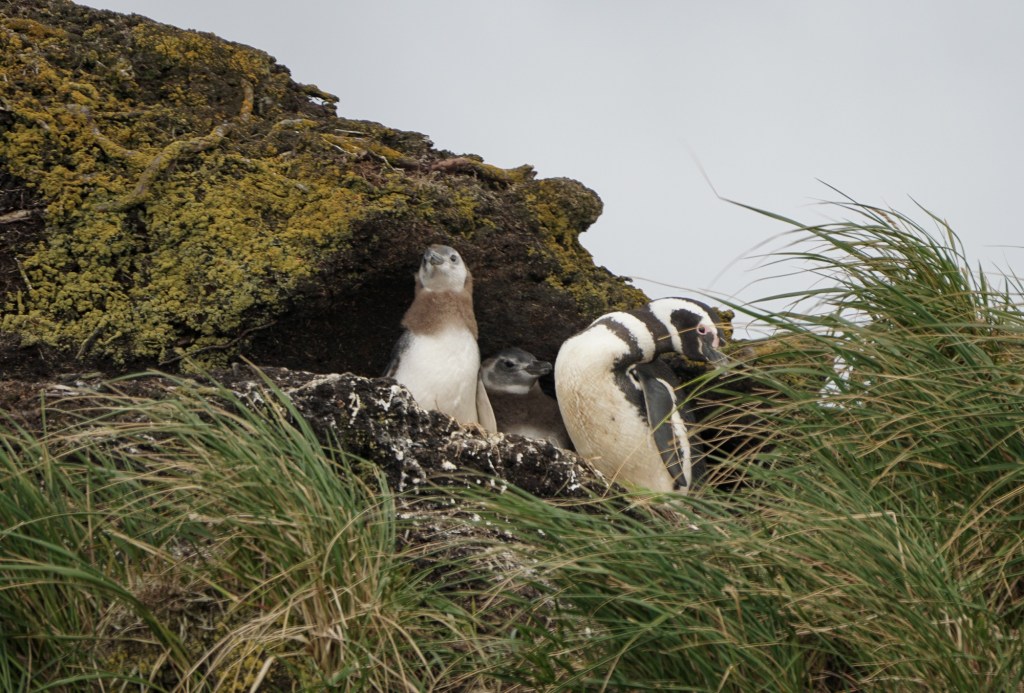
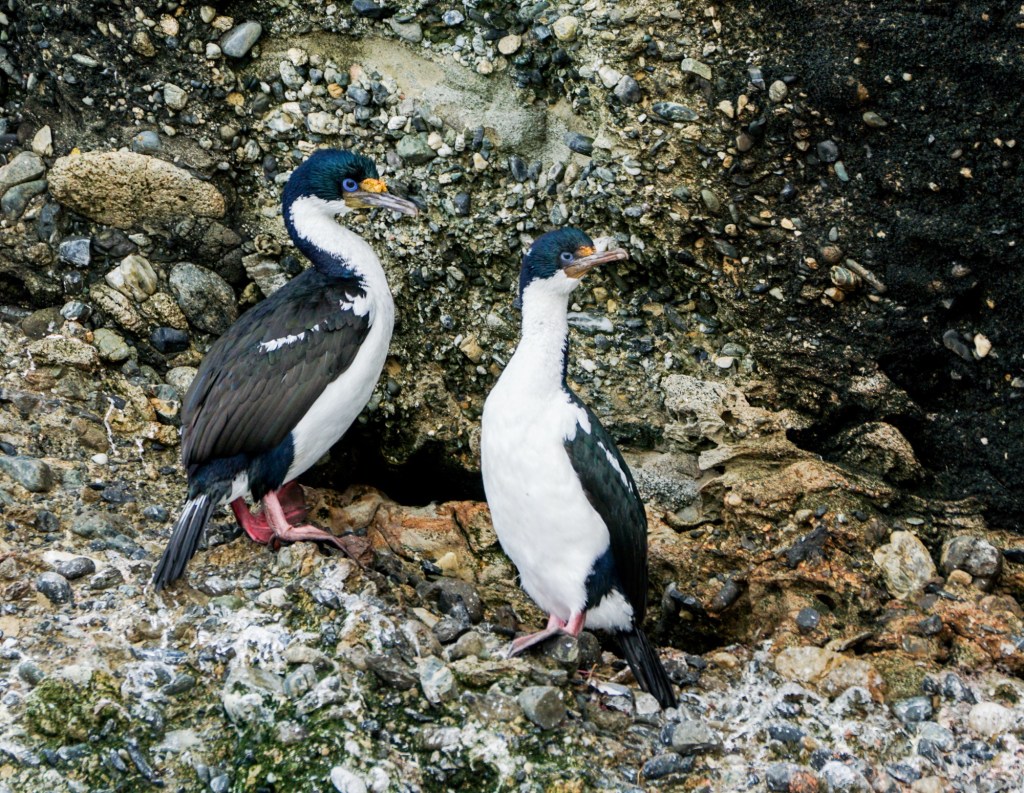
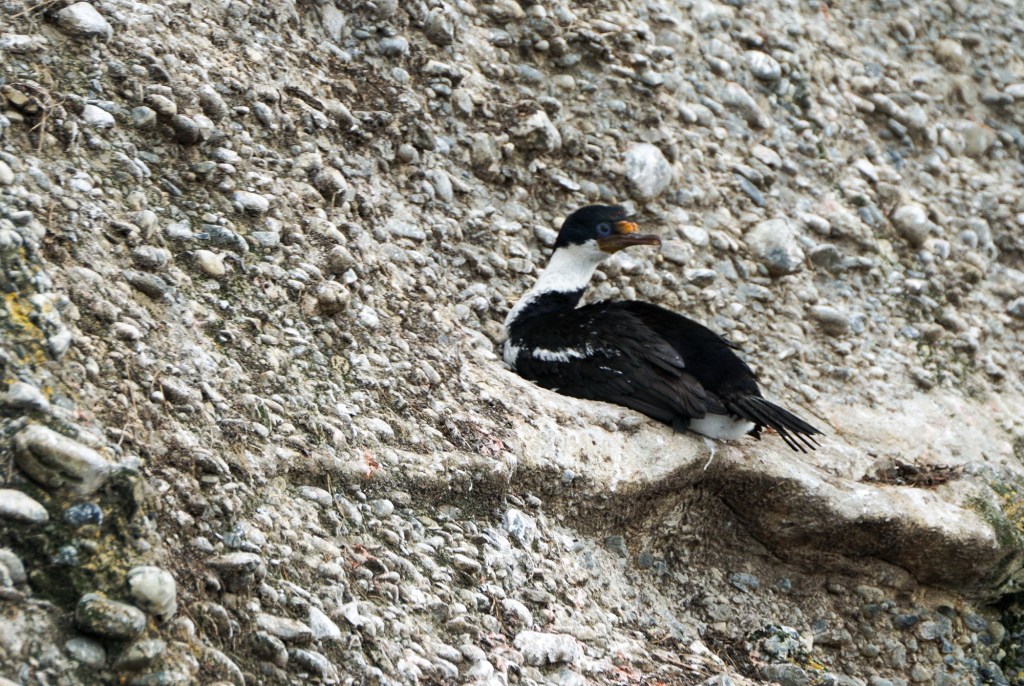
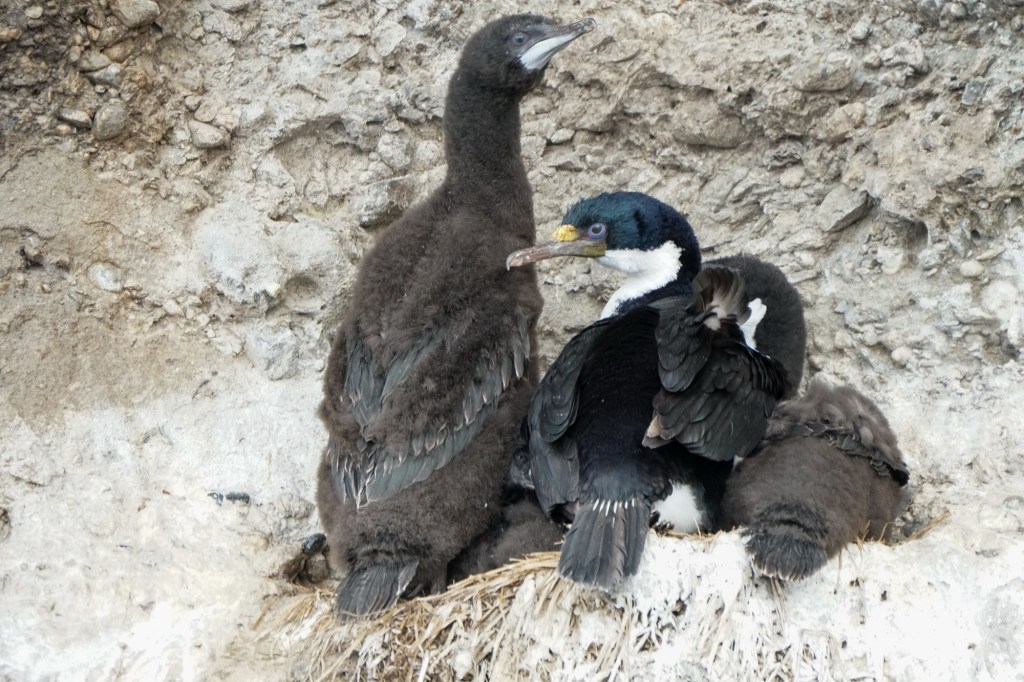
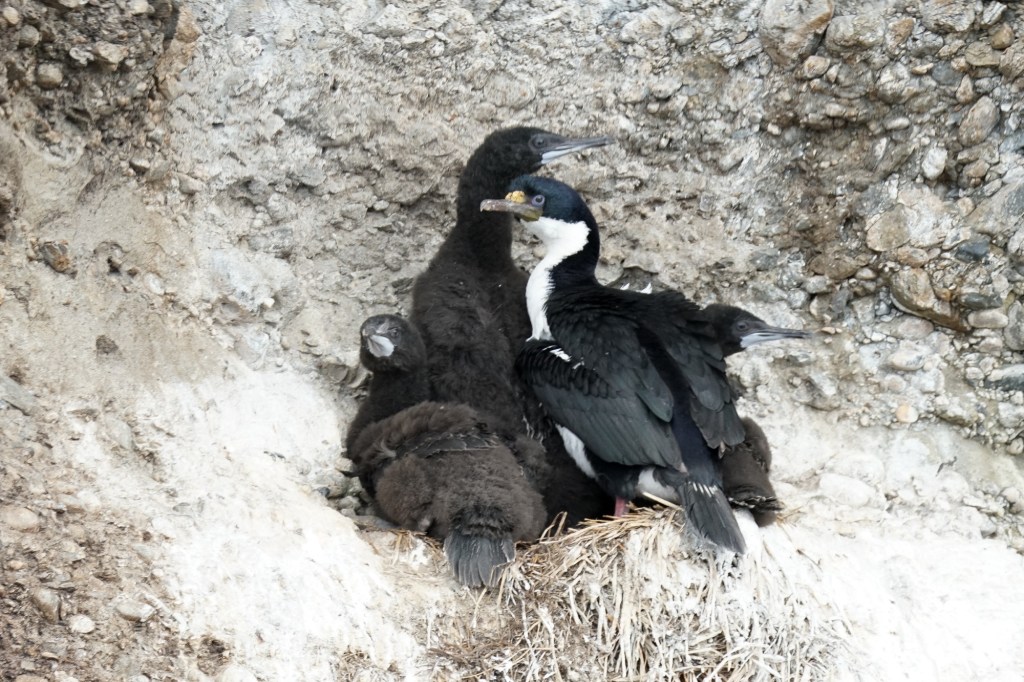
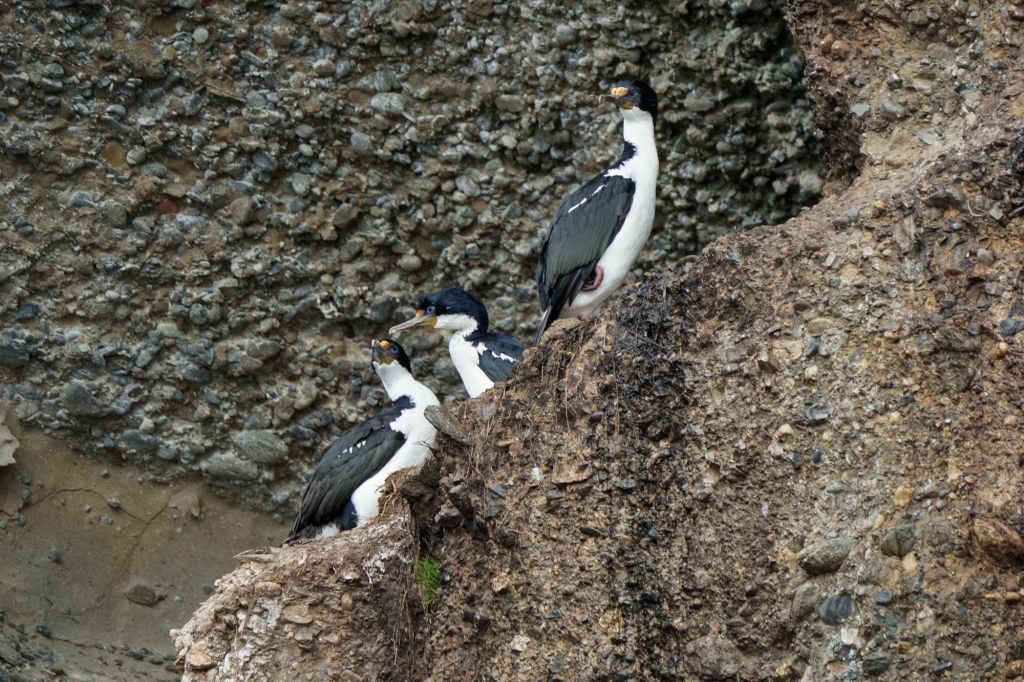
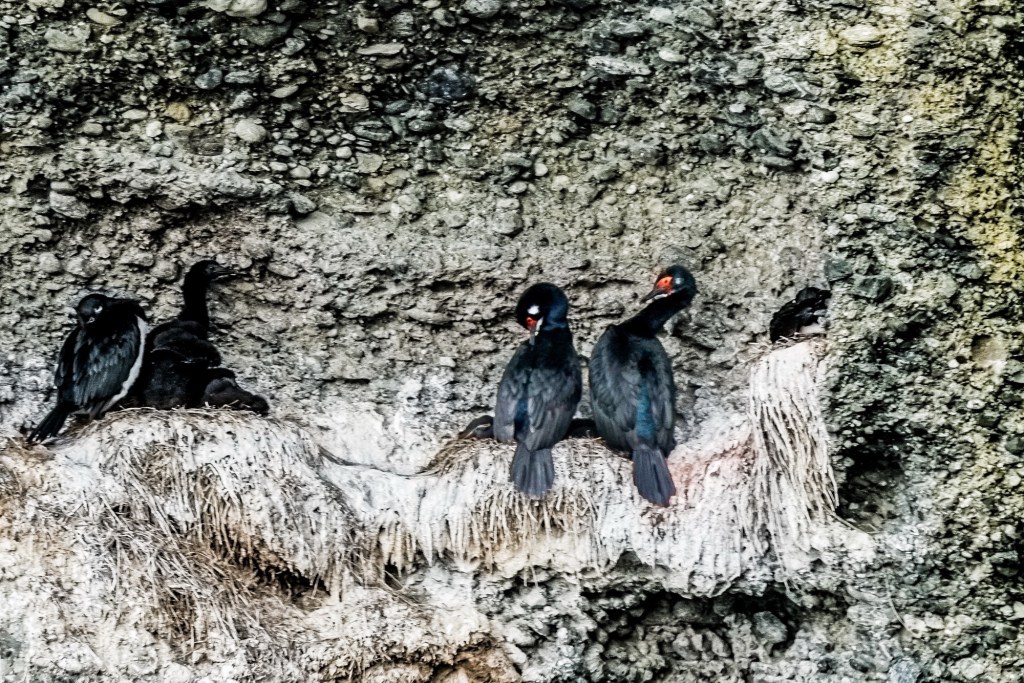
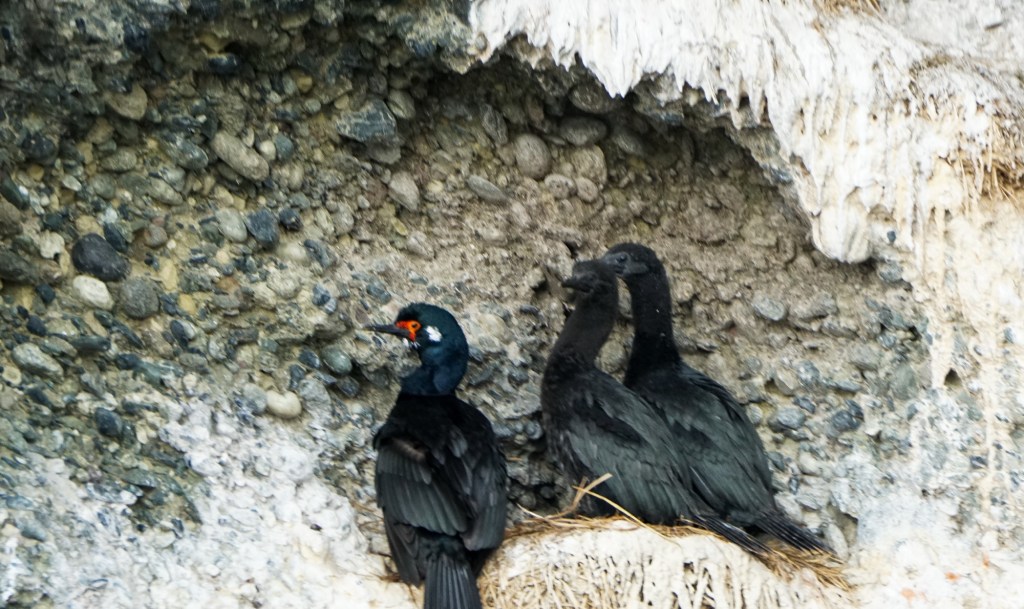
The afternoon expedition was to Tucker Island to view the Magellanic penguins and both Magellanic (small, mostly black, with red around eyes), and Imperial cormorants (large, with white breast and yellow above the eyes). We could not land on the islands where they gather, so we observed from our zodiacs.
Thursday, Jan. 22
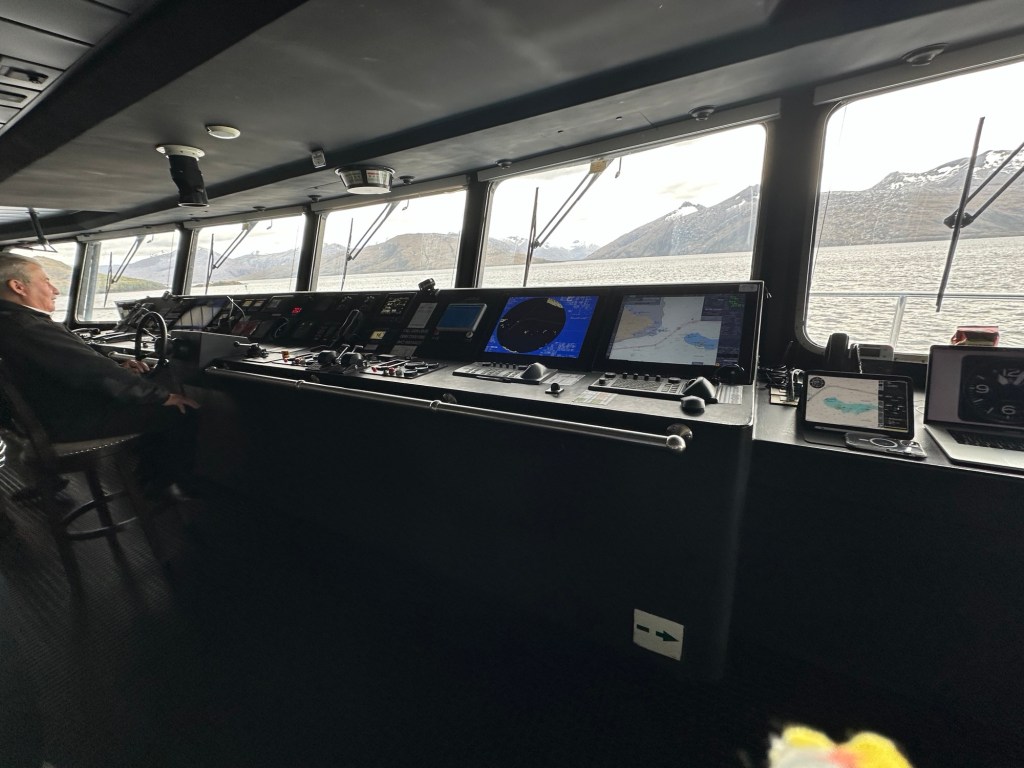
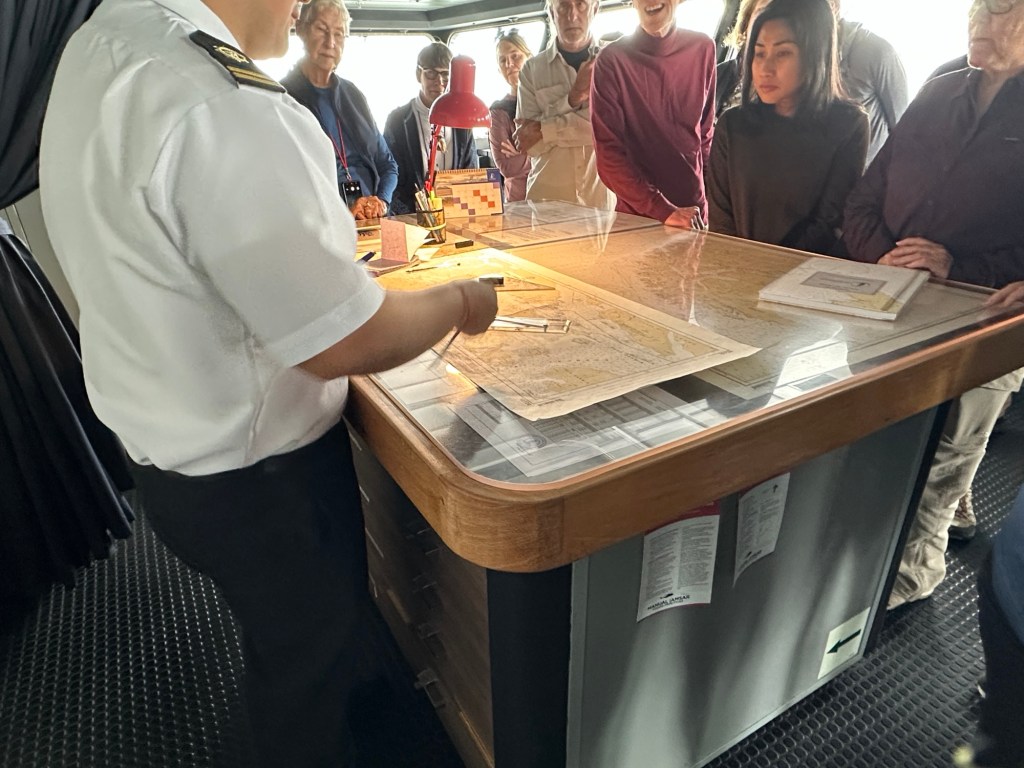
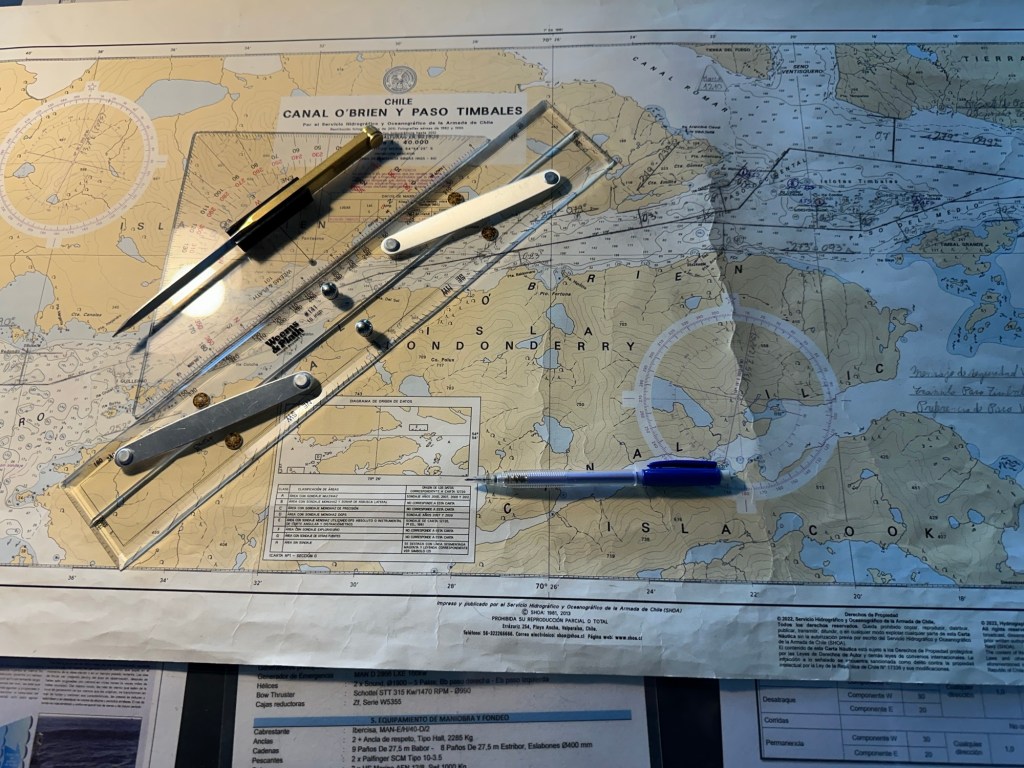
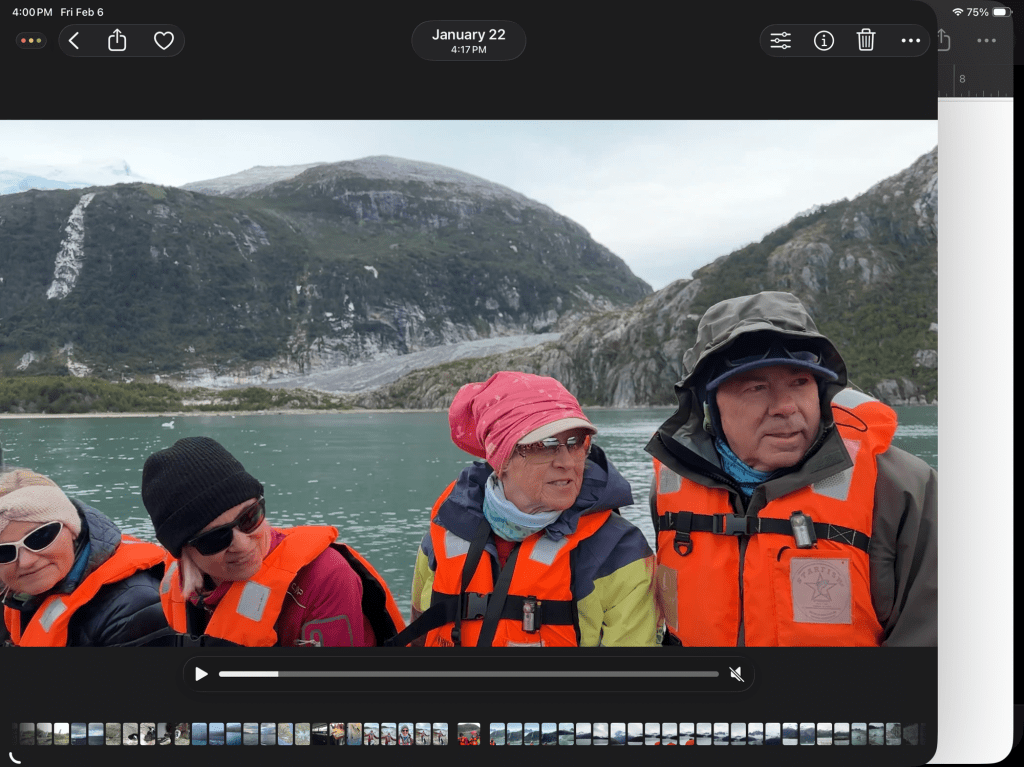
We had a morning presentation about glaciers, and the Tierra del Fuego history. This was followed by a tour of the ship’s engine rooms, storage area, and the bridge. Because of the unique geology and remoteness of the area, the crew marks the details of the voyage by hand. Of course they have the most modern instrumentation in the bridge. At the end of each trip, the staff auctions off the chart used during the journey to Cape Horn. Proceeds are split among the staff. In the afternoon, we had a zodiac excursion to see the Pia Glacier that flows from the Darwin Mountains to the sea.
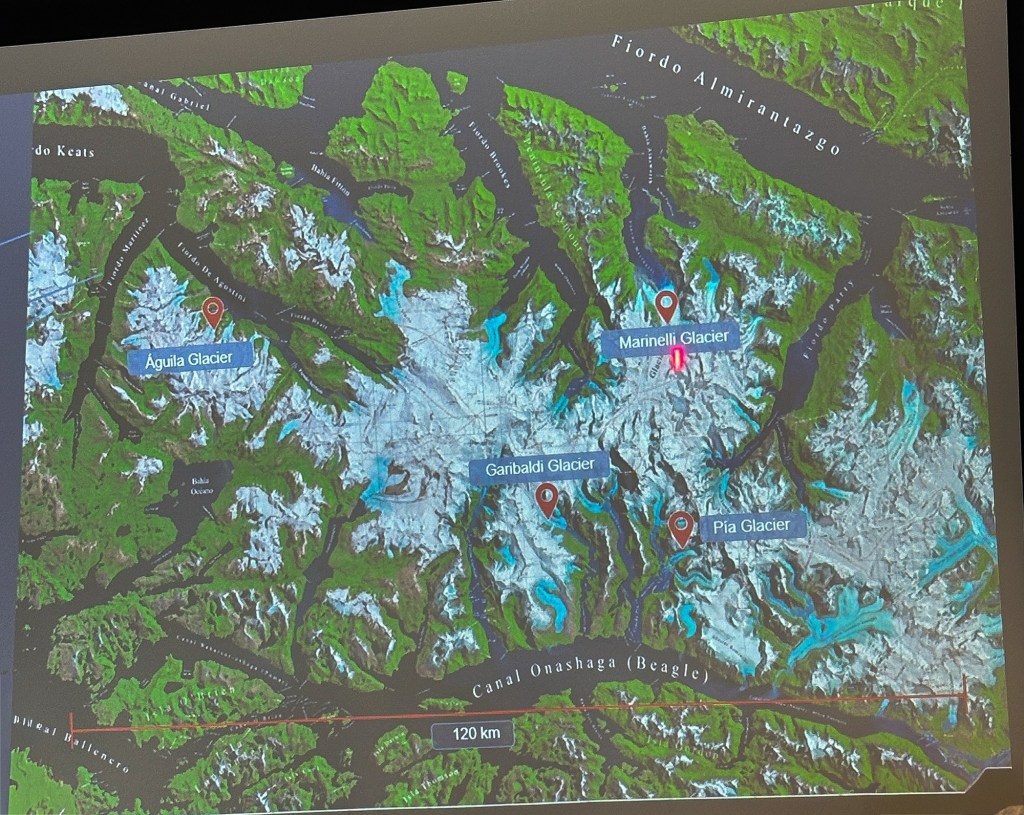
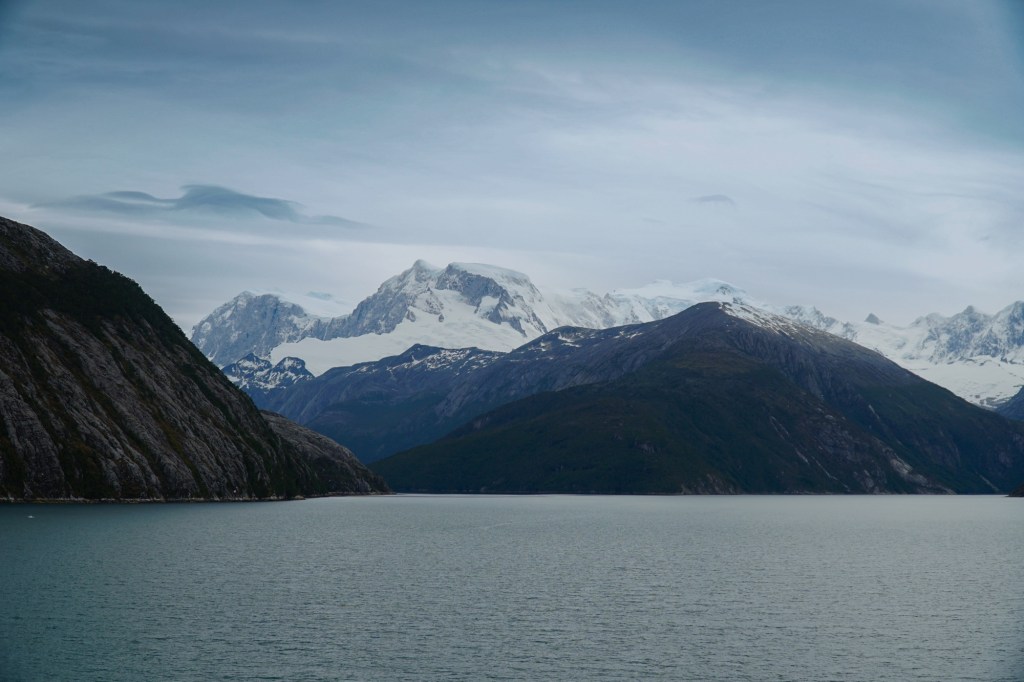
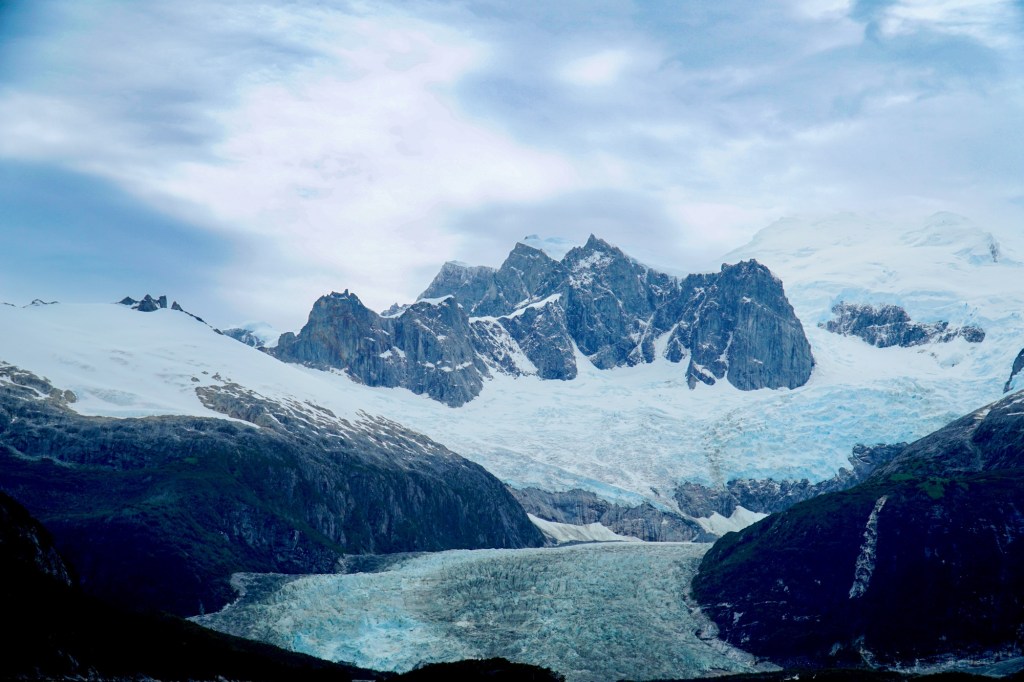
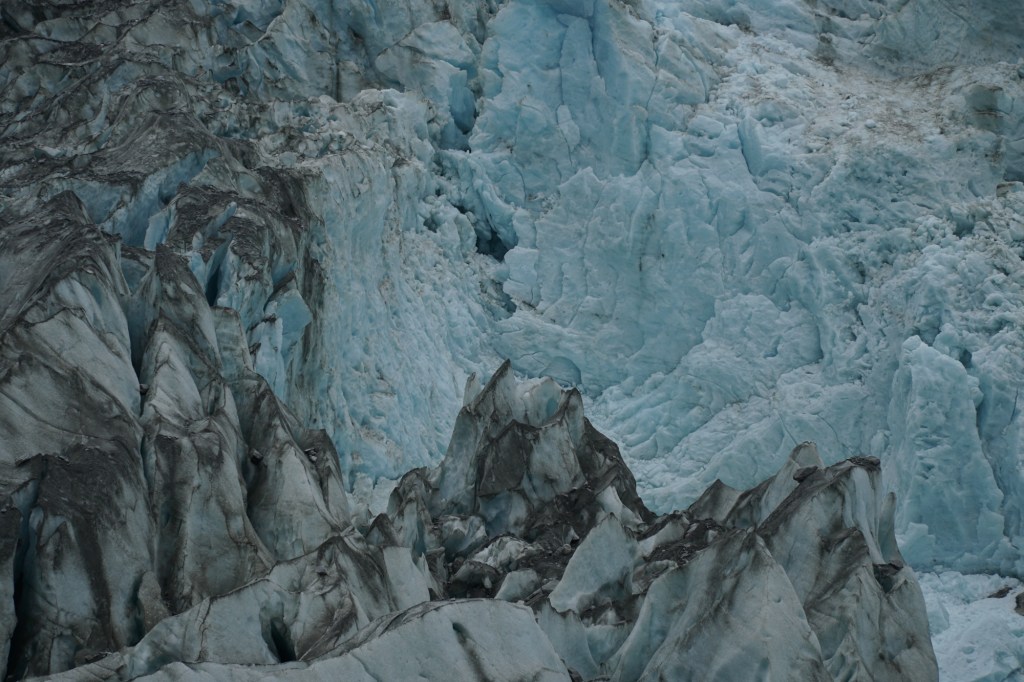
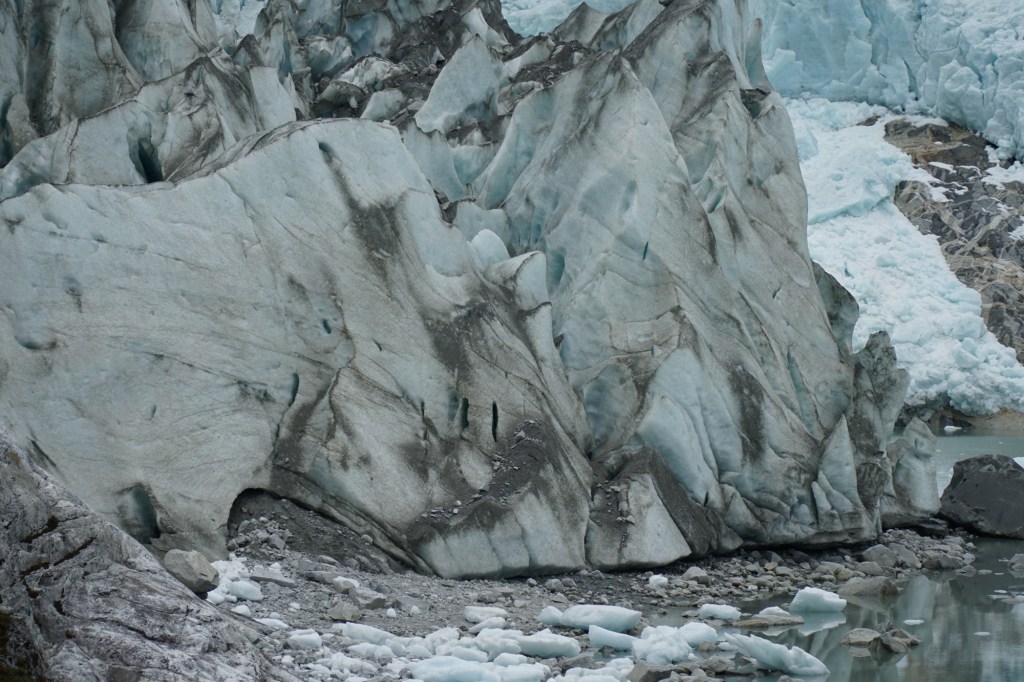
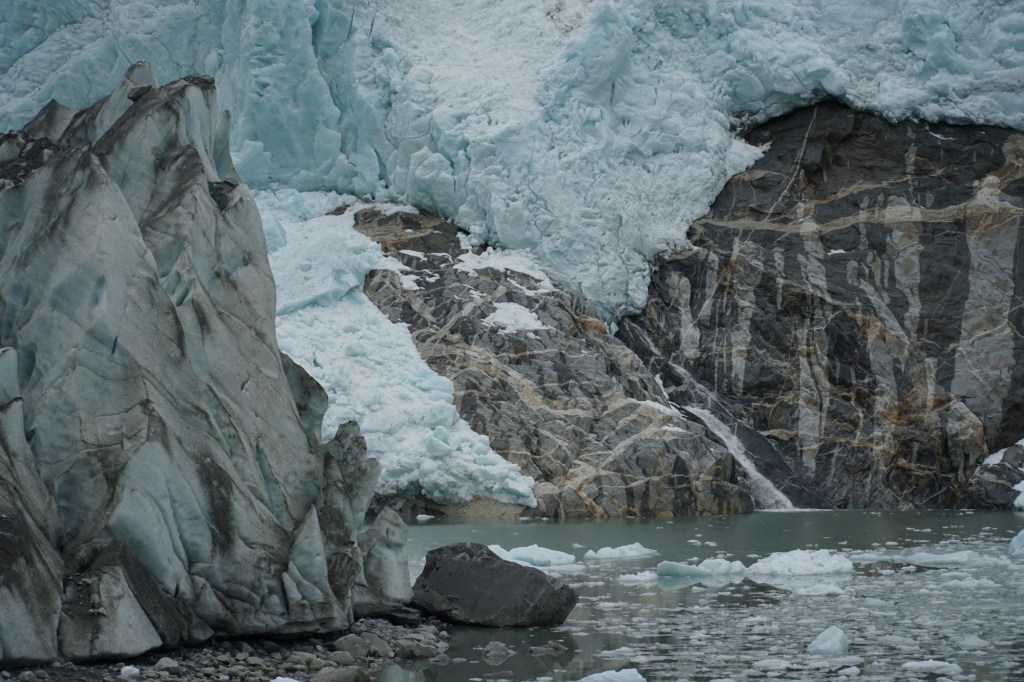
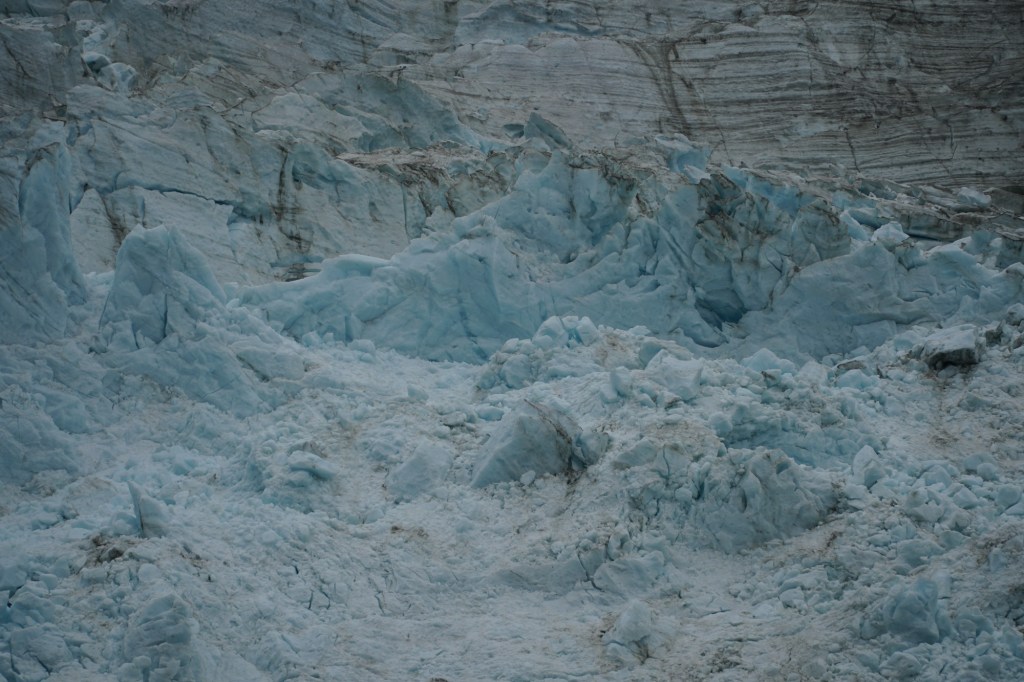
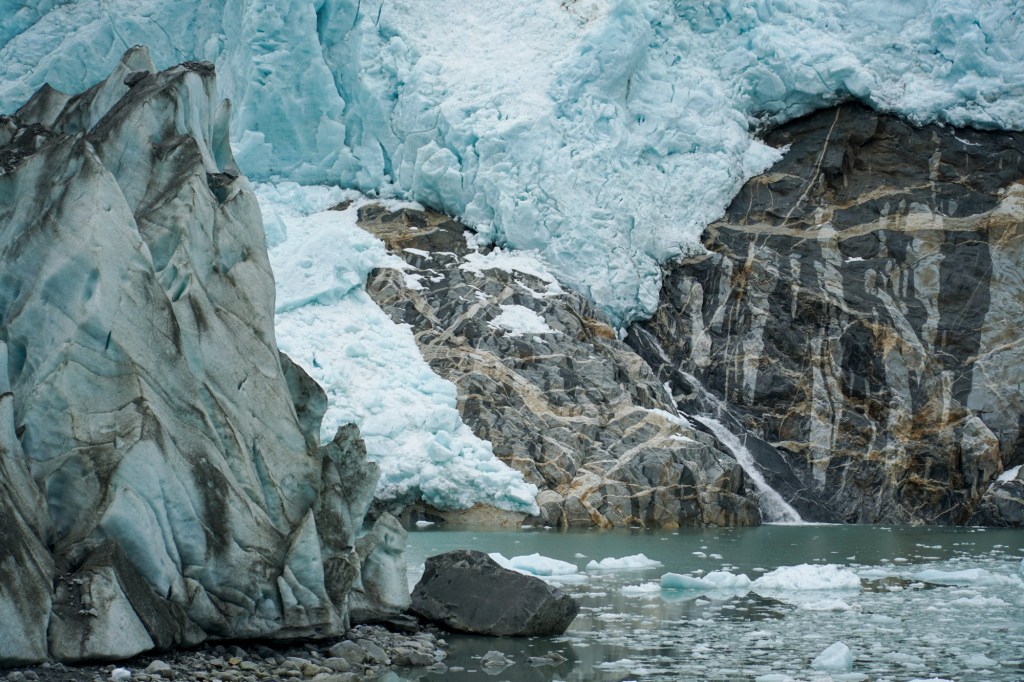
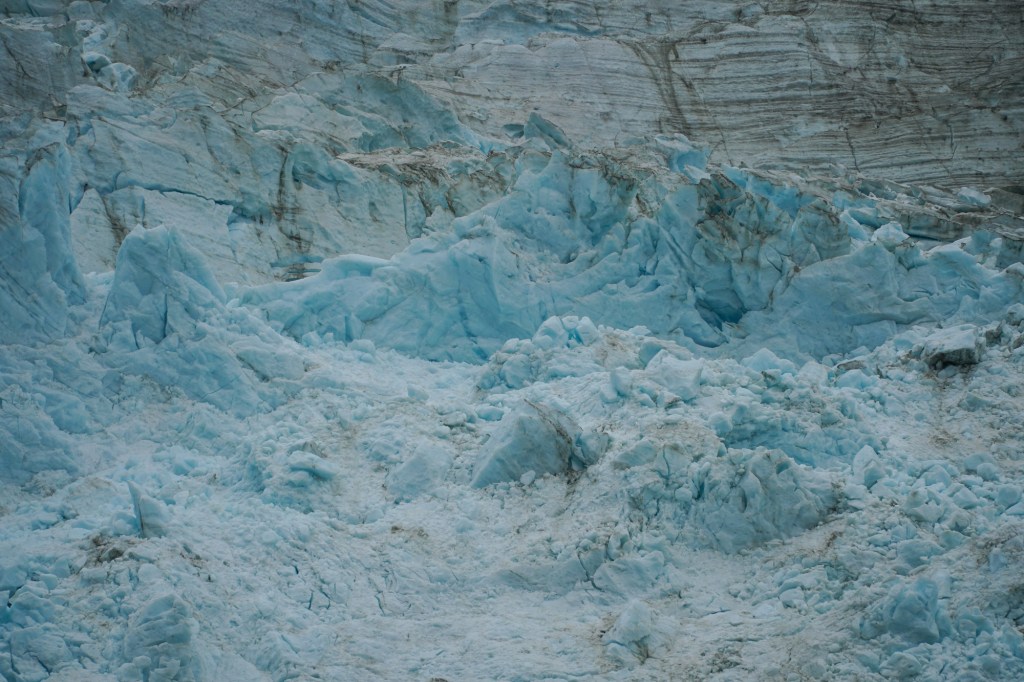
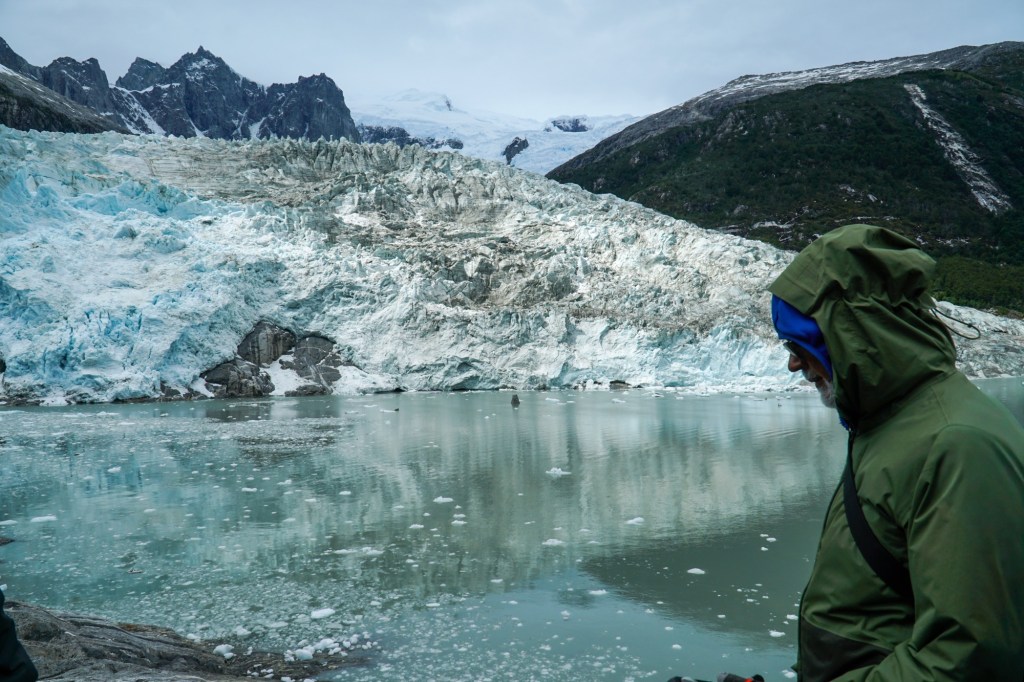
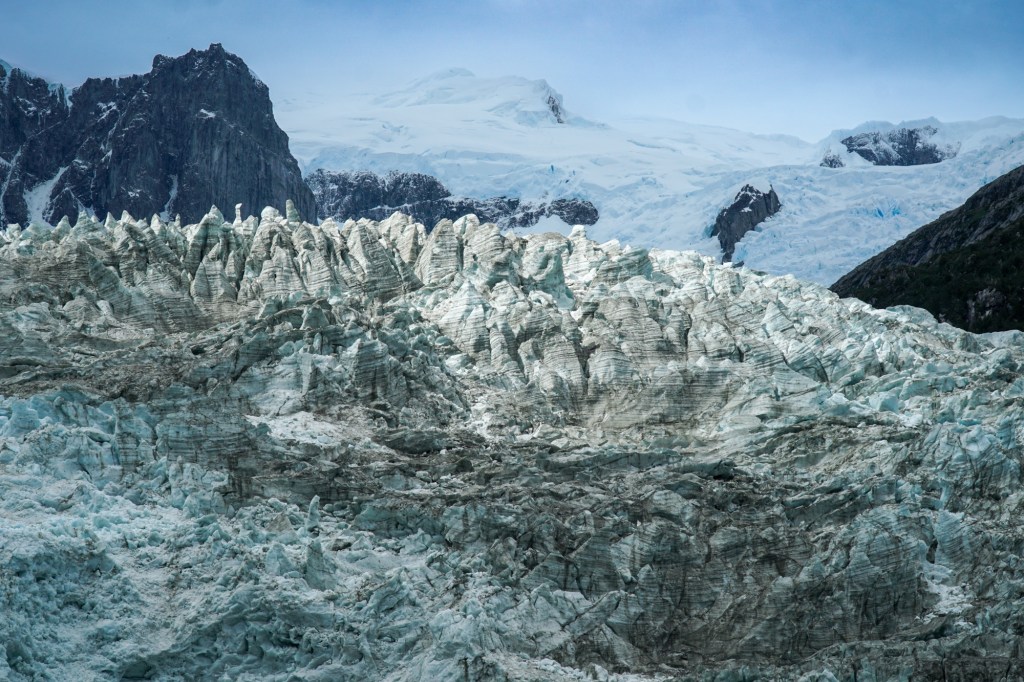
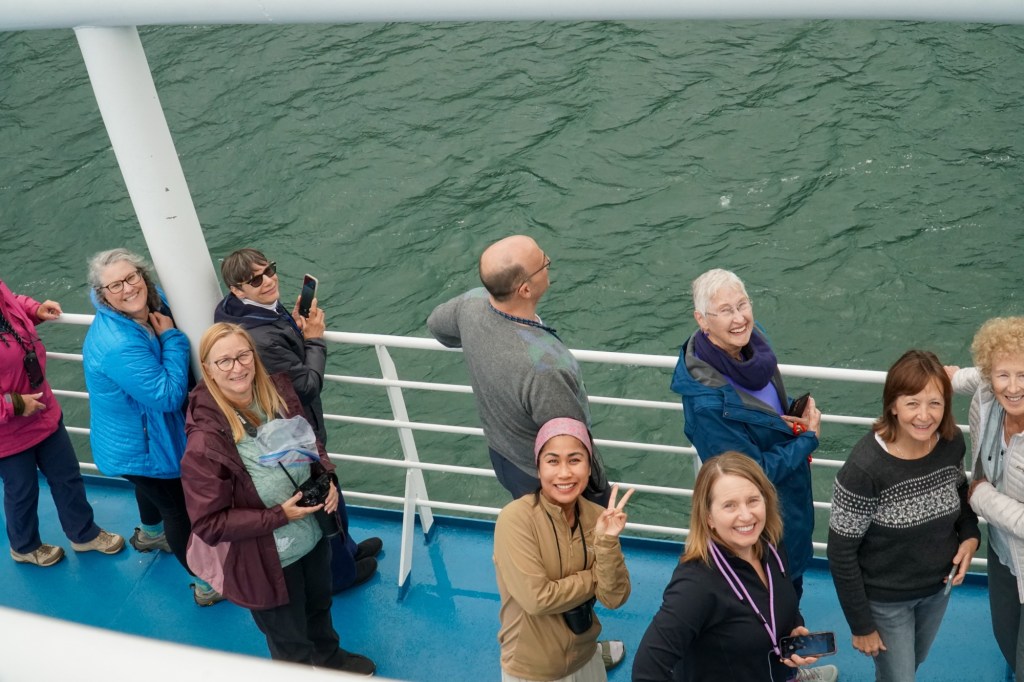
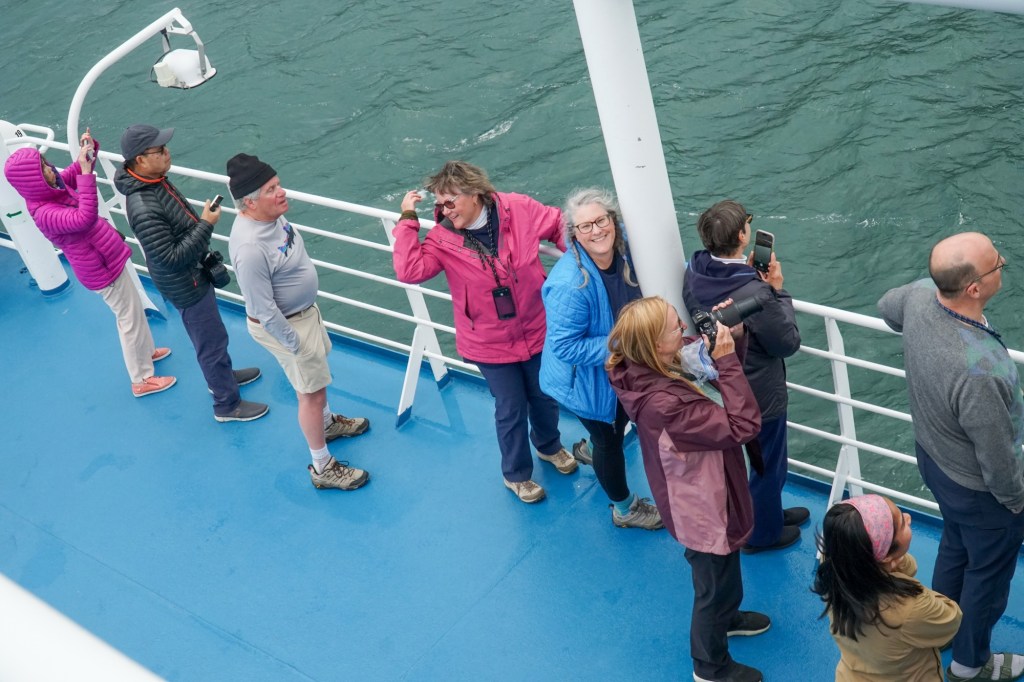
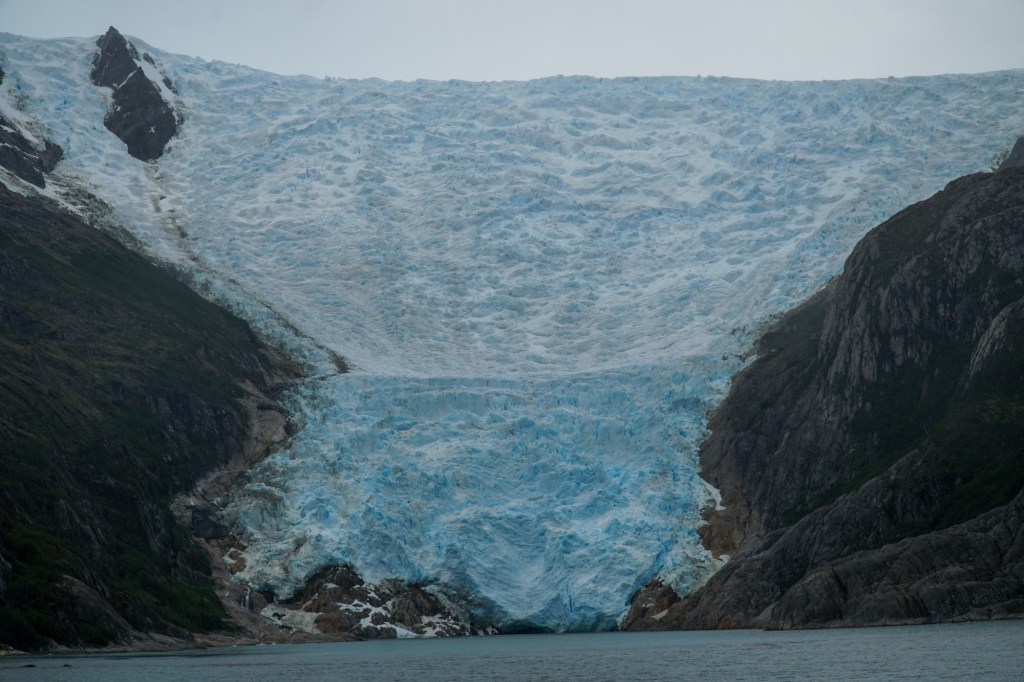
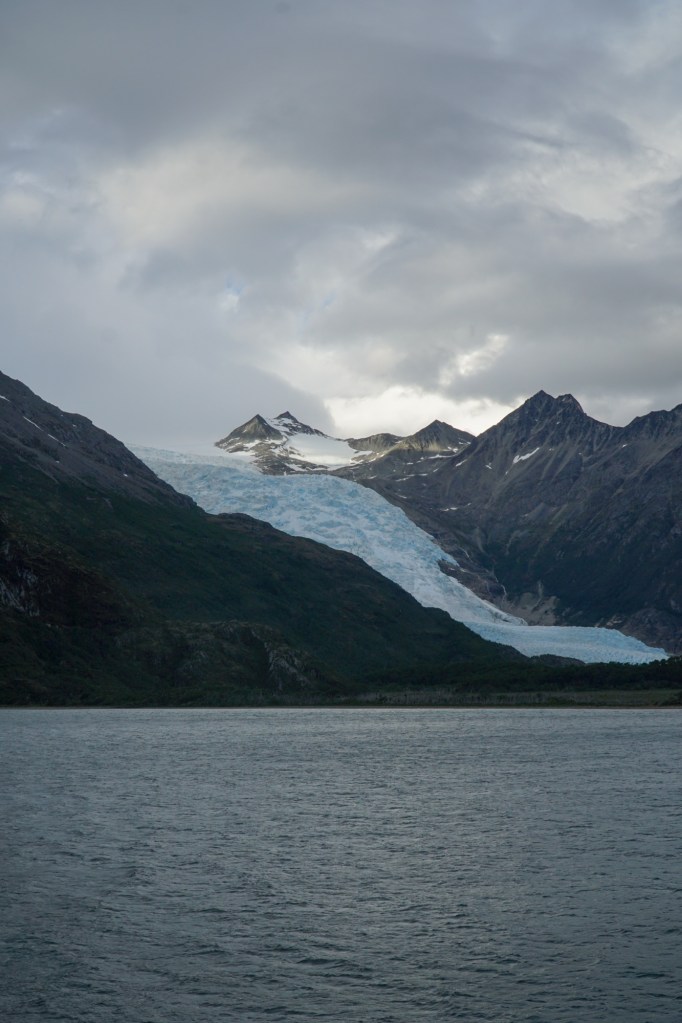
Late in the afternoon, we sailed through Glacier Alley, within the Alberto de Agostini National Park in the Beagle Channel. Glaciers were named after various European countries. As each glacier came into view from the main lounge and deck, waiters would bring around drinks and snacks from the country the glacier was named for.
Friday, Jan. 23
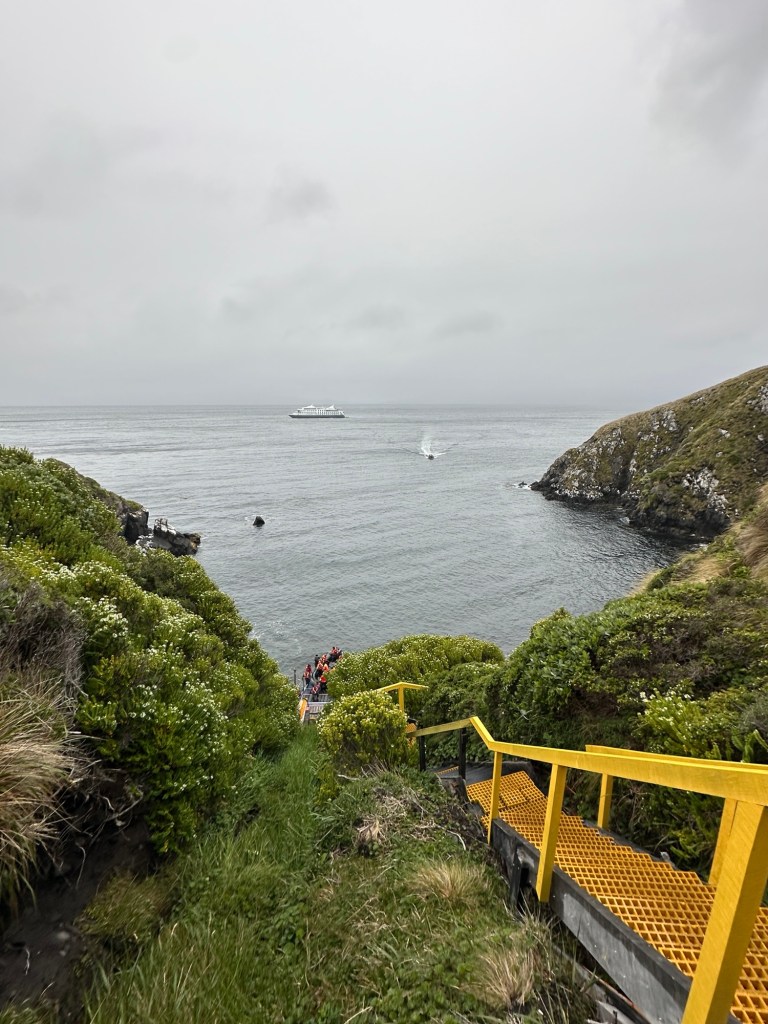
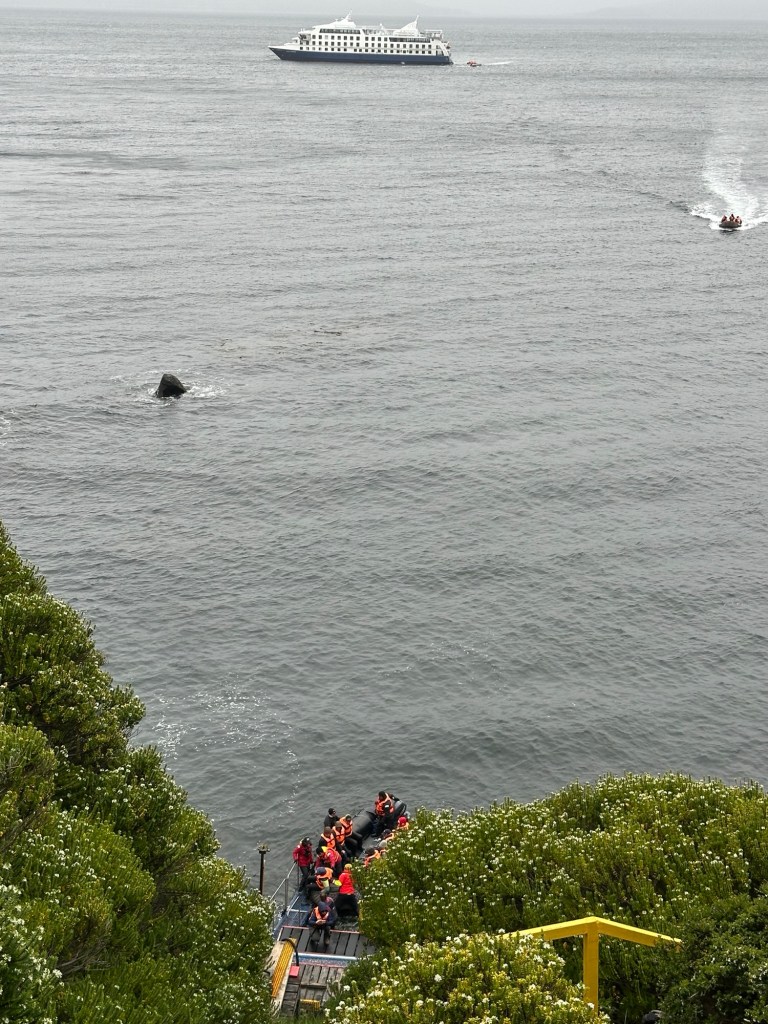
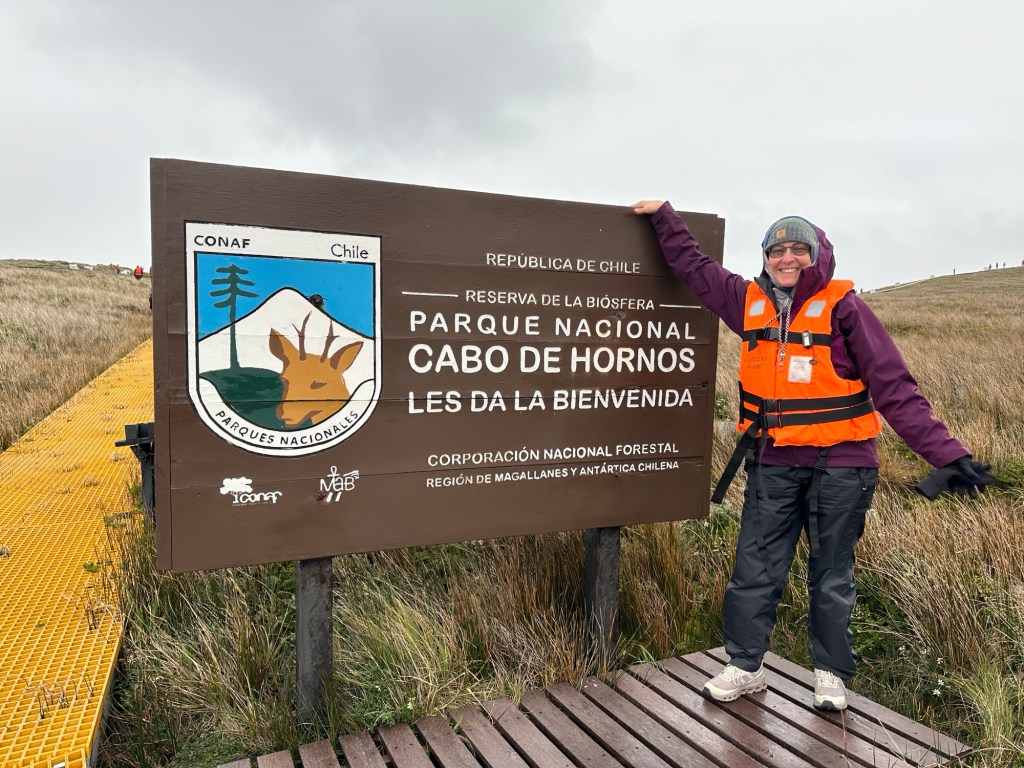
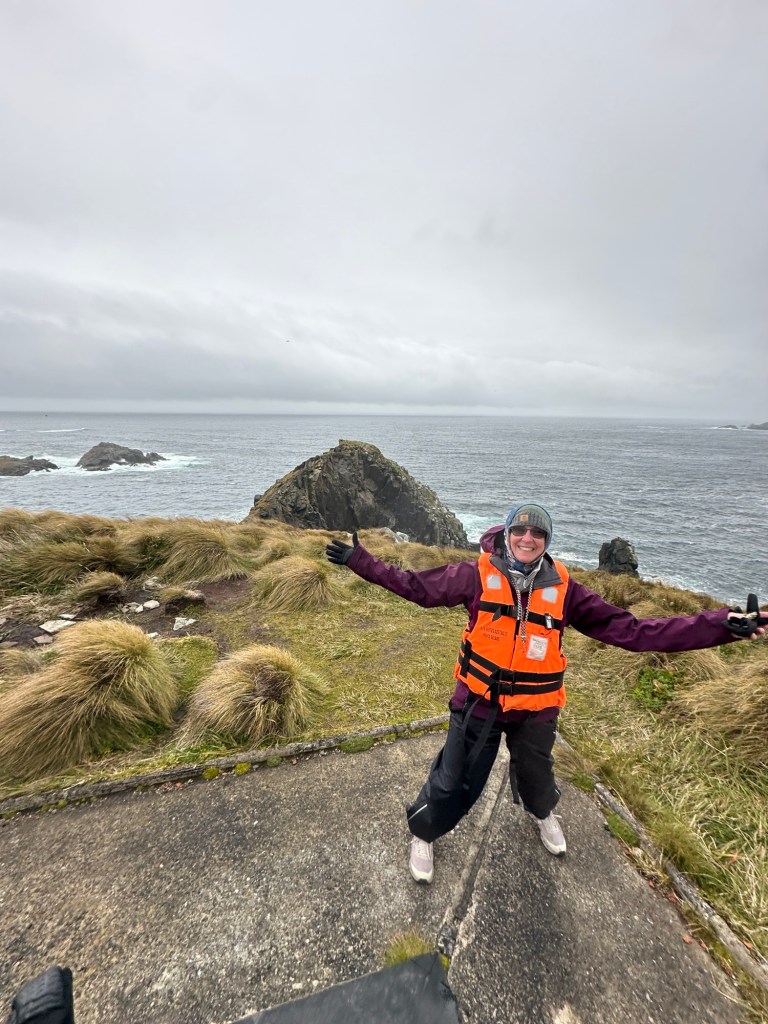
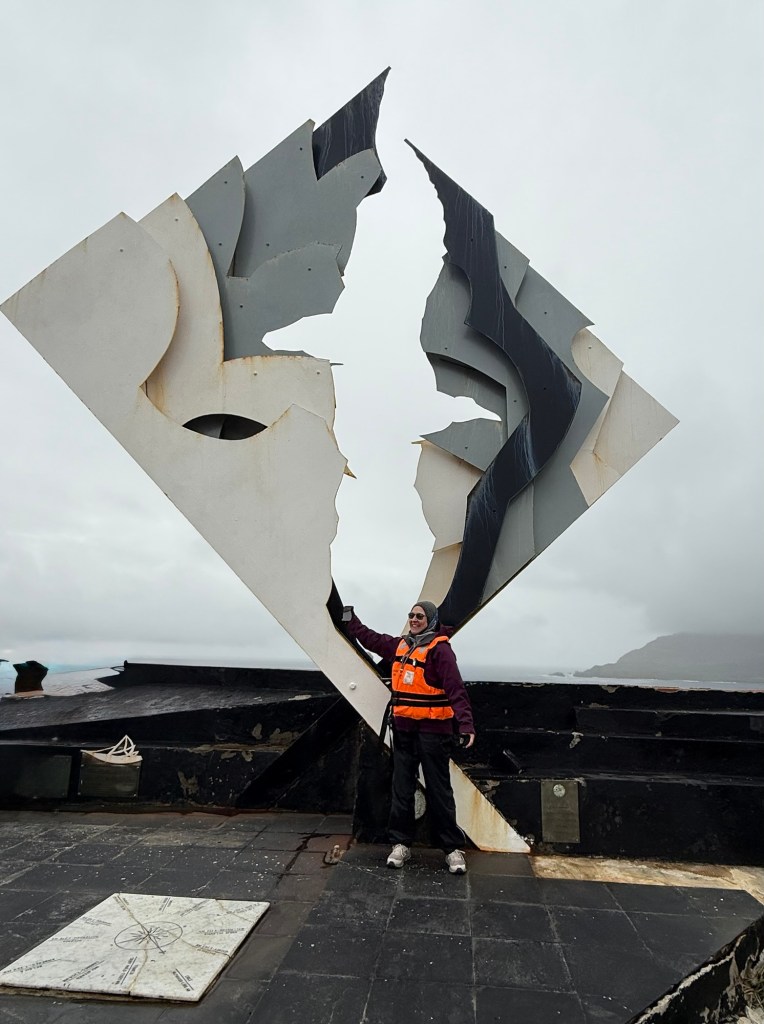
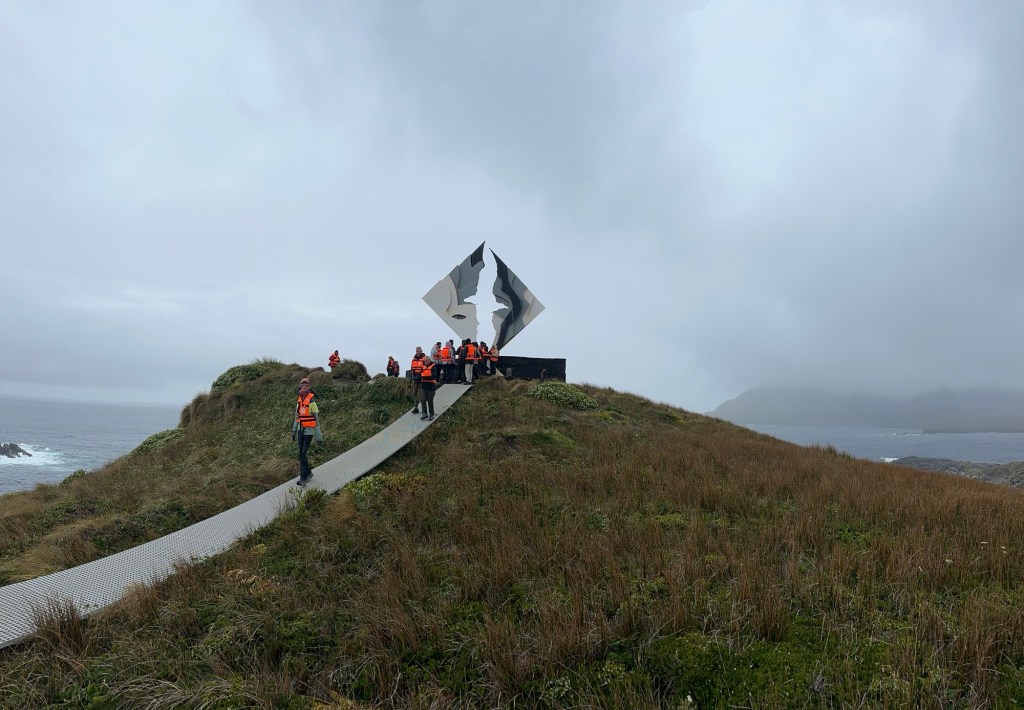
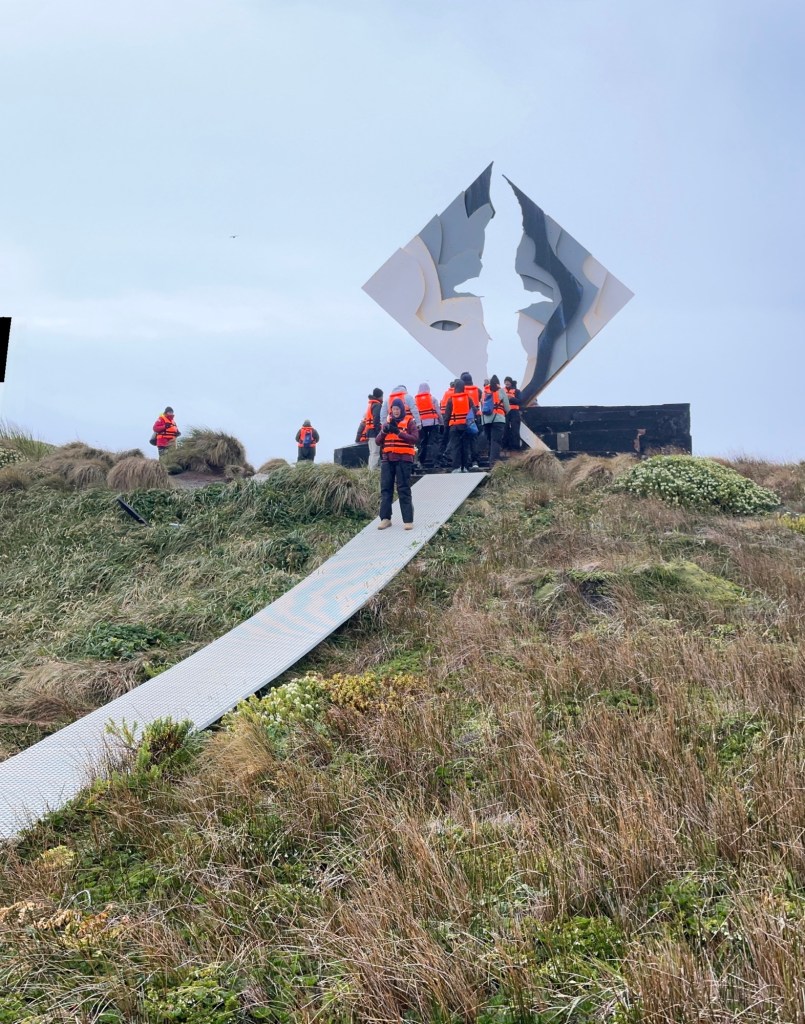
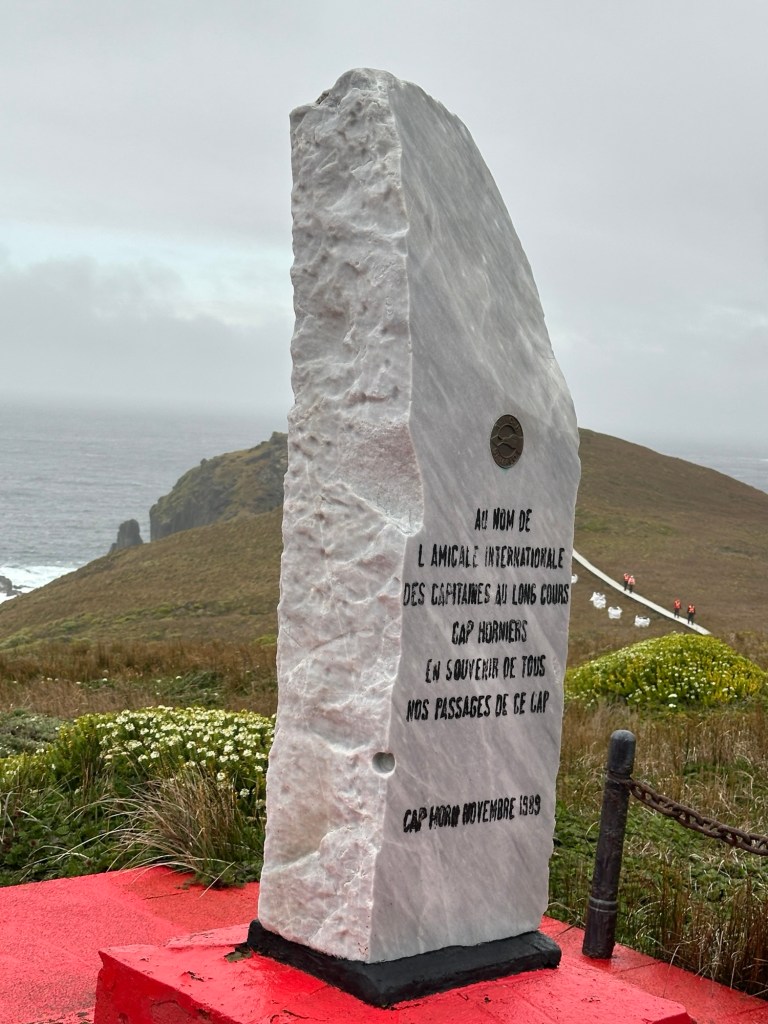
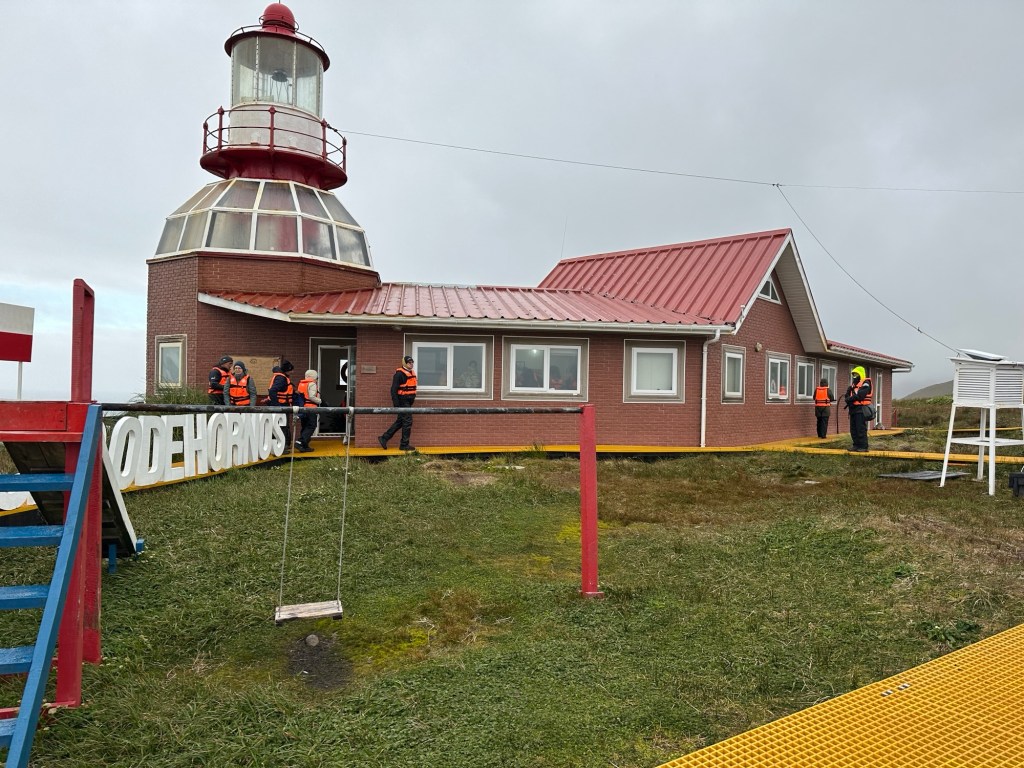
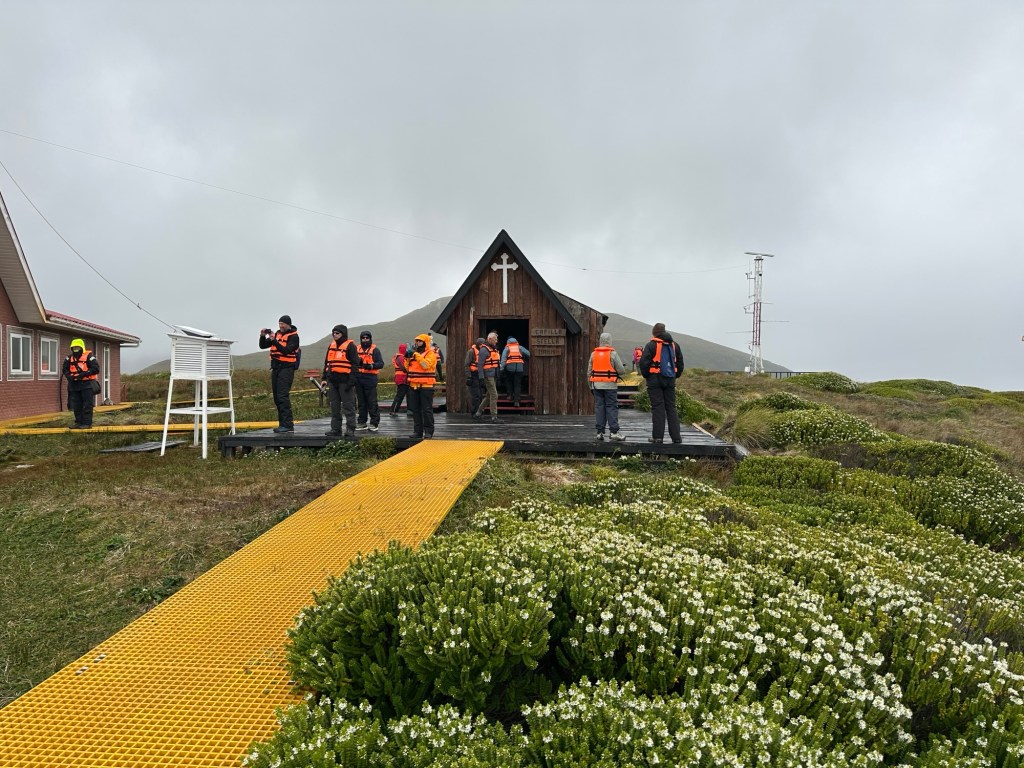
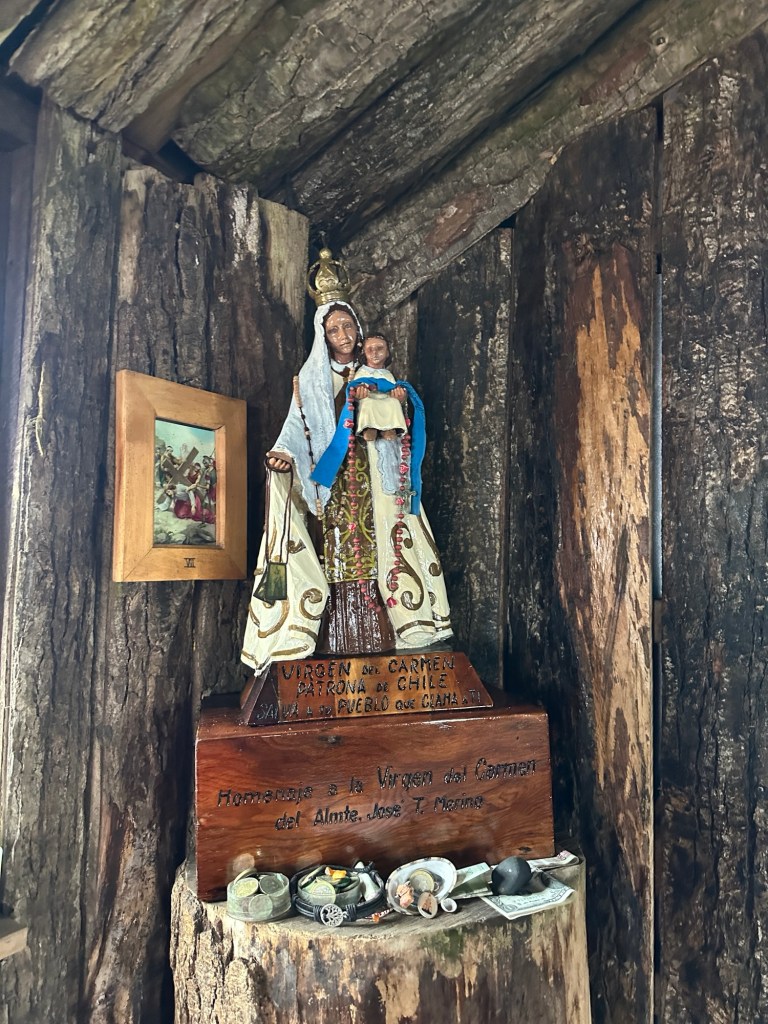
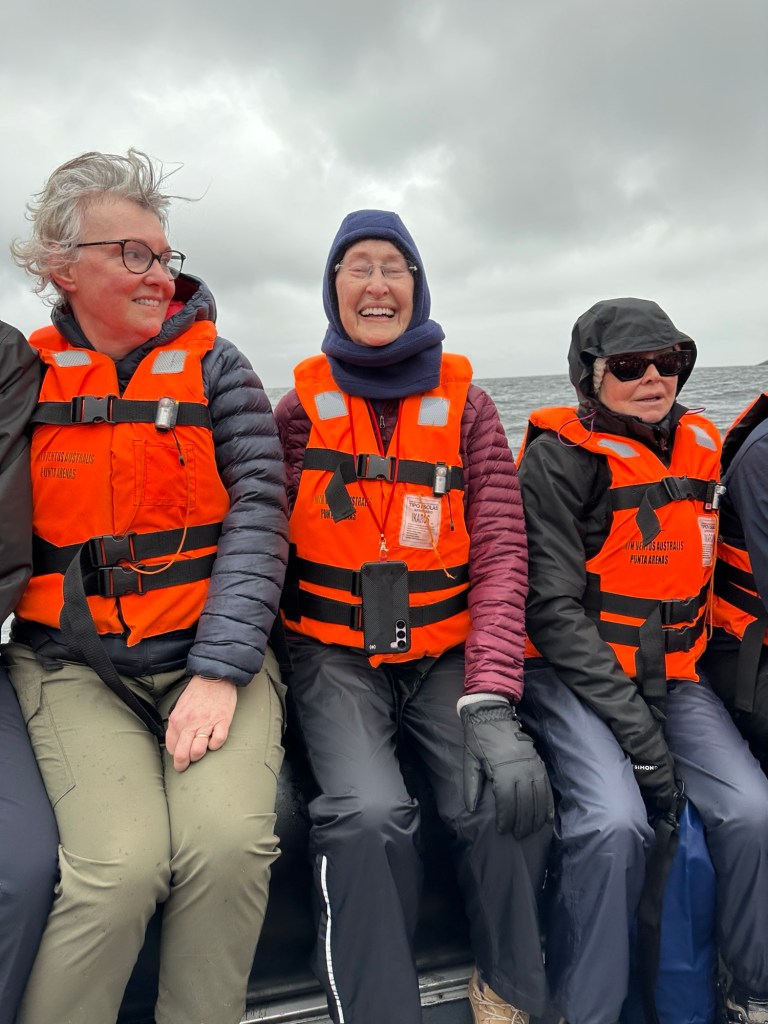
We rose very early in hopes that we could take a zodiac to Cape Horn. The staff needed to check out the conditions between the ship and landing site – wind speed, waves, etc. Once they confirmed it would be safe to go, staff were put in place for the zodiac landings. A couple of waiters were actually stationed in wet suits in the water at the Cape Horn landing site to help the zodiacs get stabilized so the travelers could get from the zodiacs to the platform and stairs up the island. The winds were strong, but we had no rain and were able to climb to the top, to the monuments then to the chapel and lighthouse, where a family of four lives. If the ship’s horn were to sound, we would need to immediately head back to the ship due to a rapid change in conditions. Fortunately, that did not happen. After about an hour of exploring, we returned to the ship for breakfast and morning activities.
We watched a documentary about the Ernest Shackleton expedition of 1914-1917, which changed from a major exploration adventure across Antarctica to a survival mission when the ship, the Endurance, was trapped in ice, and later sank. The 28 men lived on ice floes for months and then made it to Elephant Island on small boats. From there, Shakleton and five crew traveled for 16 days to South Georgia Island. Once they were on the island, they had to hike across the mountains to the only port. Amazingly all 28 members of the crew made it back alive. There are several good documentaries/films about this expedition (one features Kenneth Branagh as Shakleton).
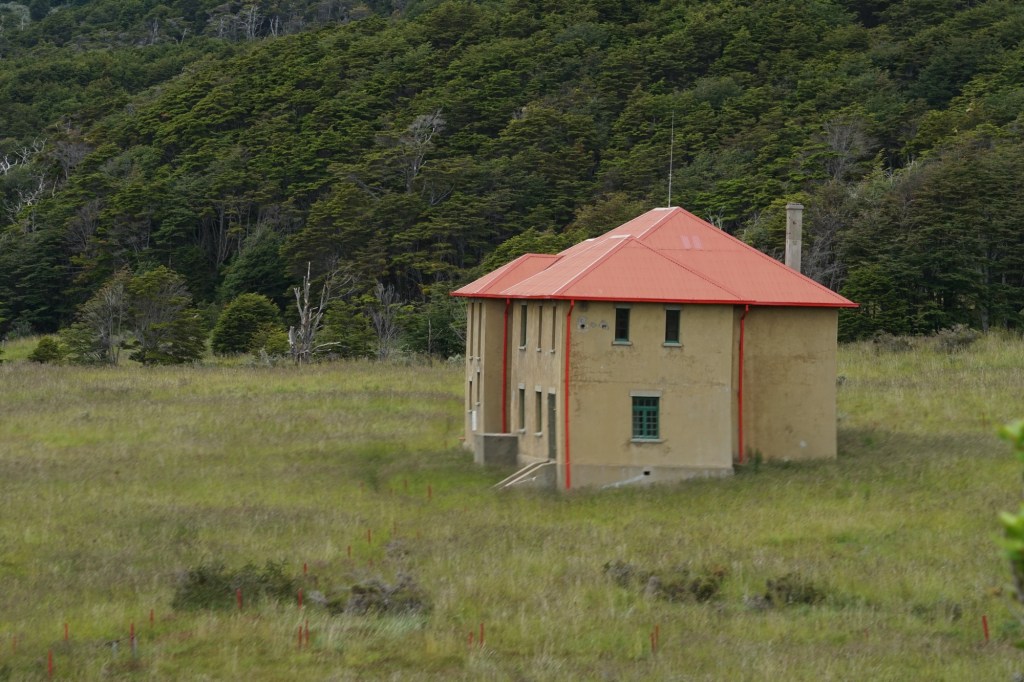
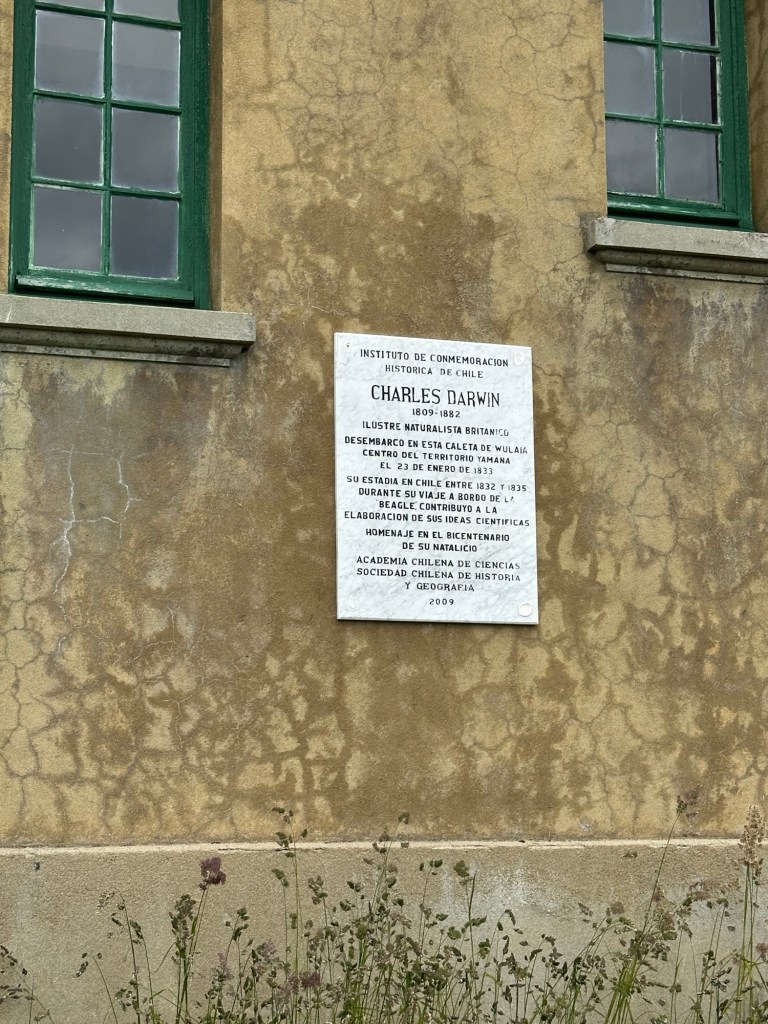
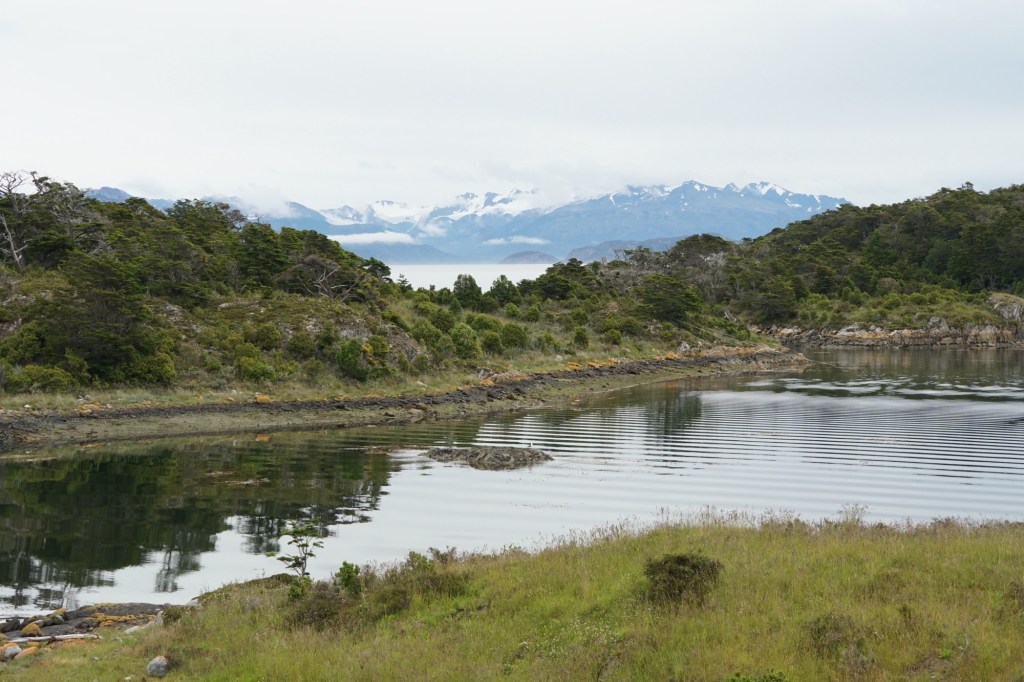
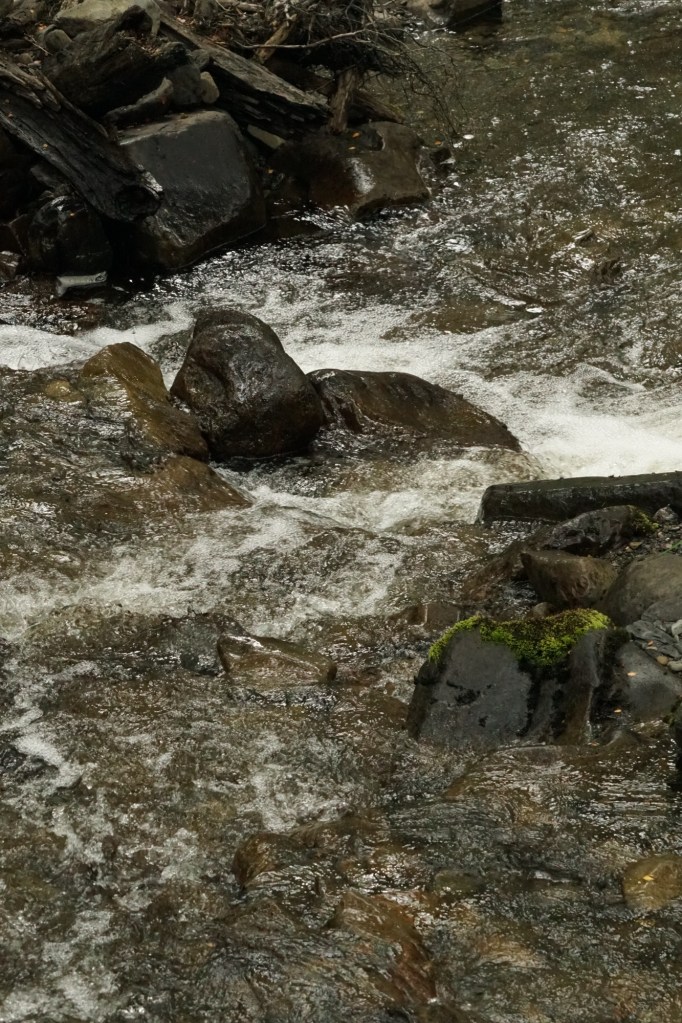
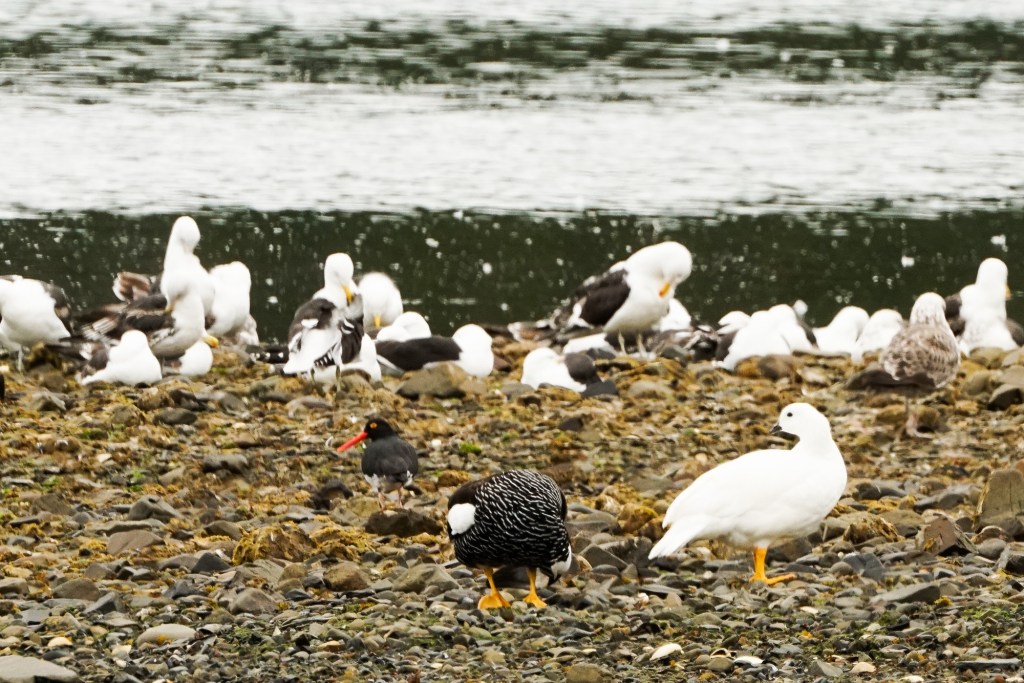
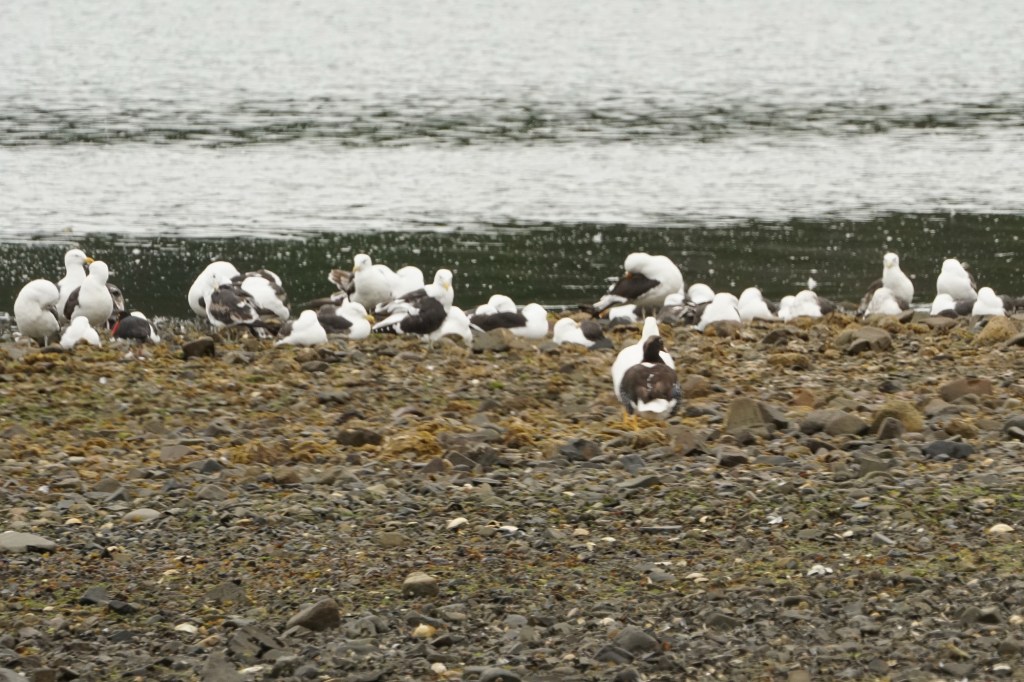
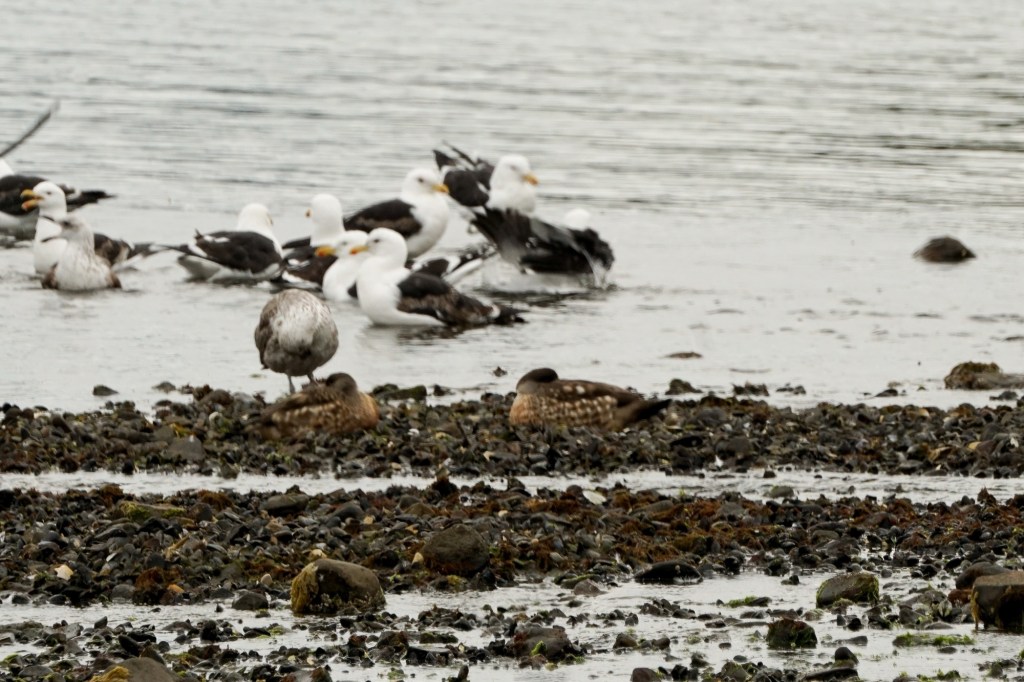
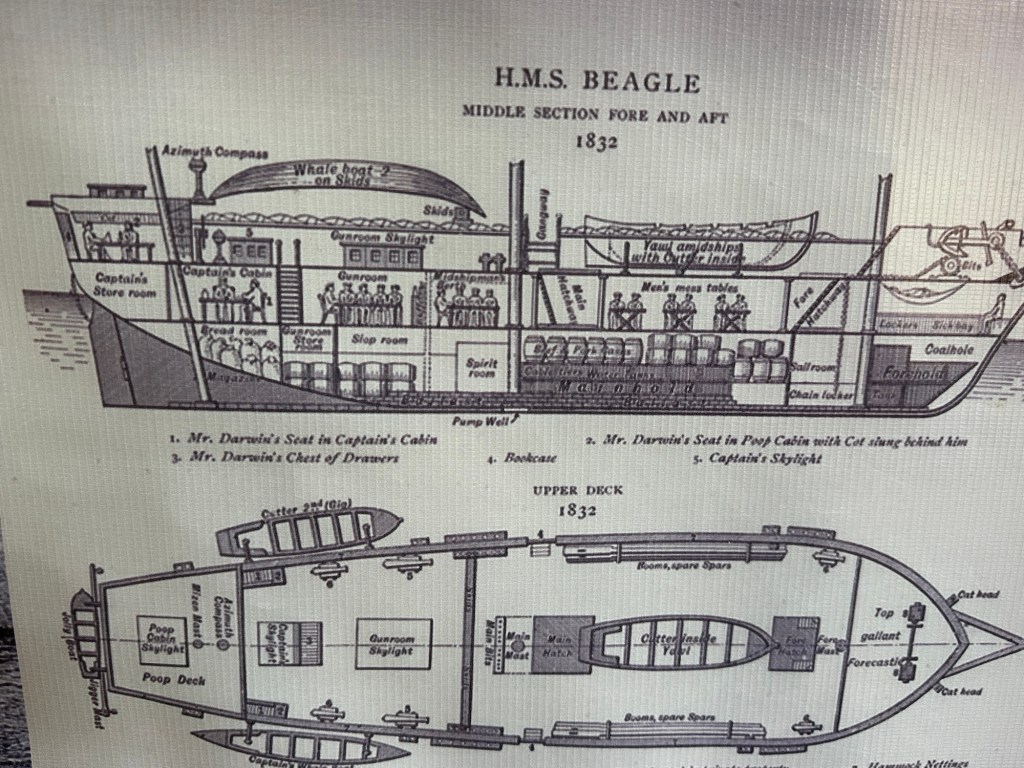
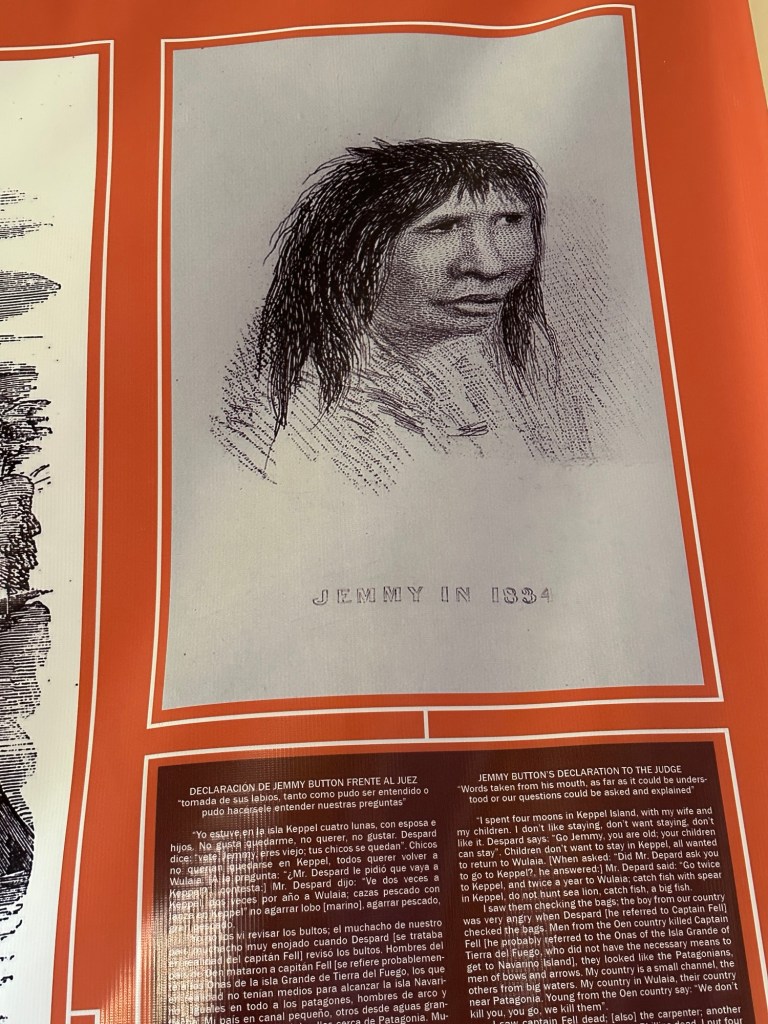
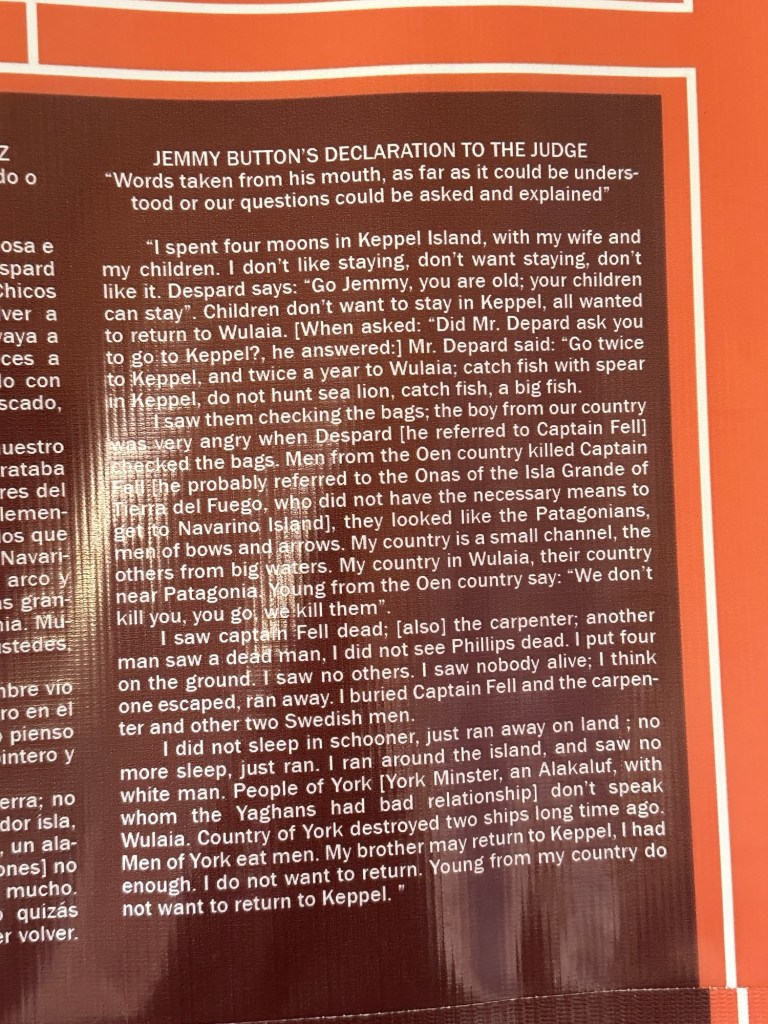
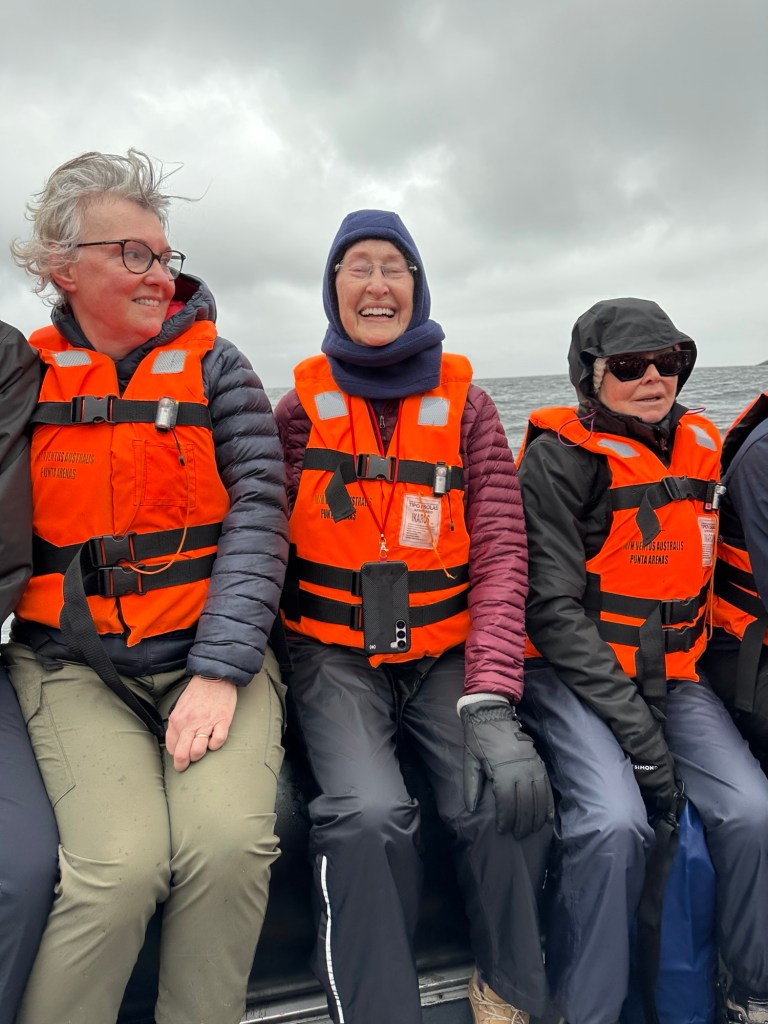
In the afternoon, we took zodiacs to Wulaia Bay. This was so interesting, as this was the site where the Beagle, guided by Captain Robert FitzRoy, landed in 1831 and enticed four Fuegian residents to join them on a journey to England in an attempt to “civilize” them and return them as missionaries. He was committed to his promise that he would return them (actually three of them, as one died of smallpox) to their homeland, which he finally did several years later, after Charles Darwin had joined the ship’s crew. I’ve been reading “This Thing of Darkeness” by Harry Thompson, a historical fiction account of FitzRoy and the Beagle.
Saturday, Jan. 24
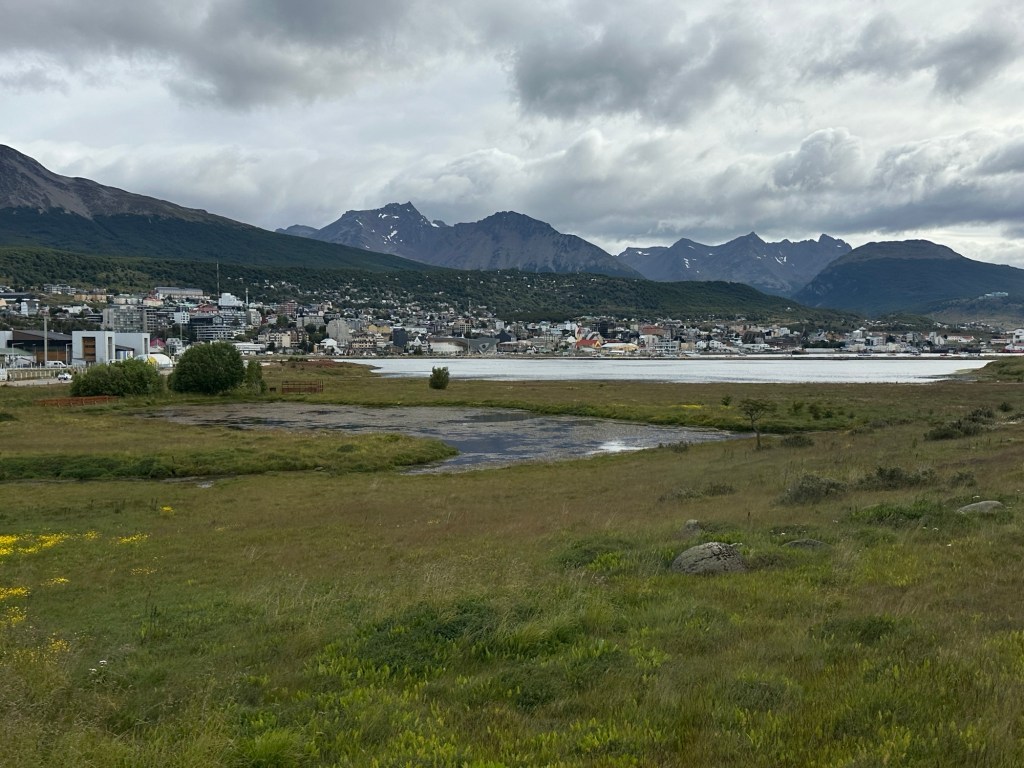
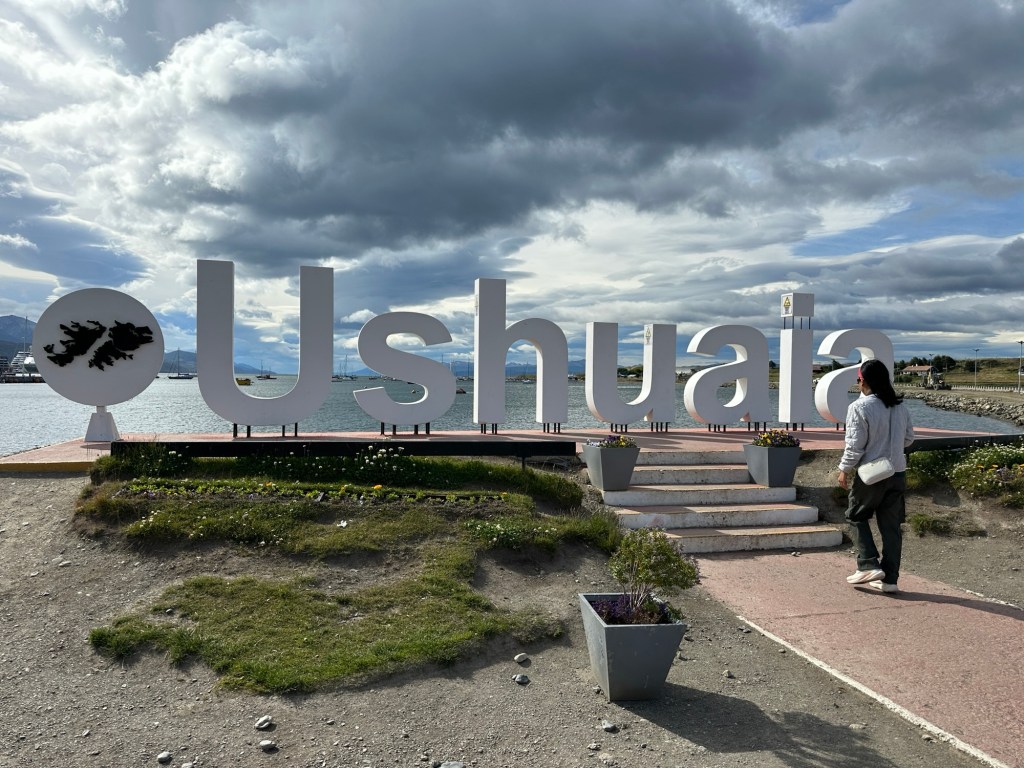
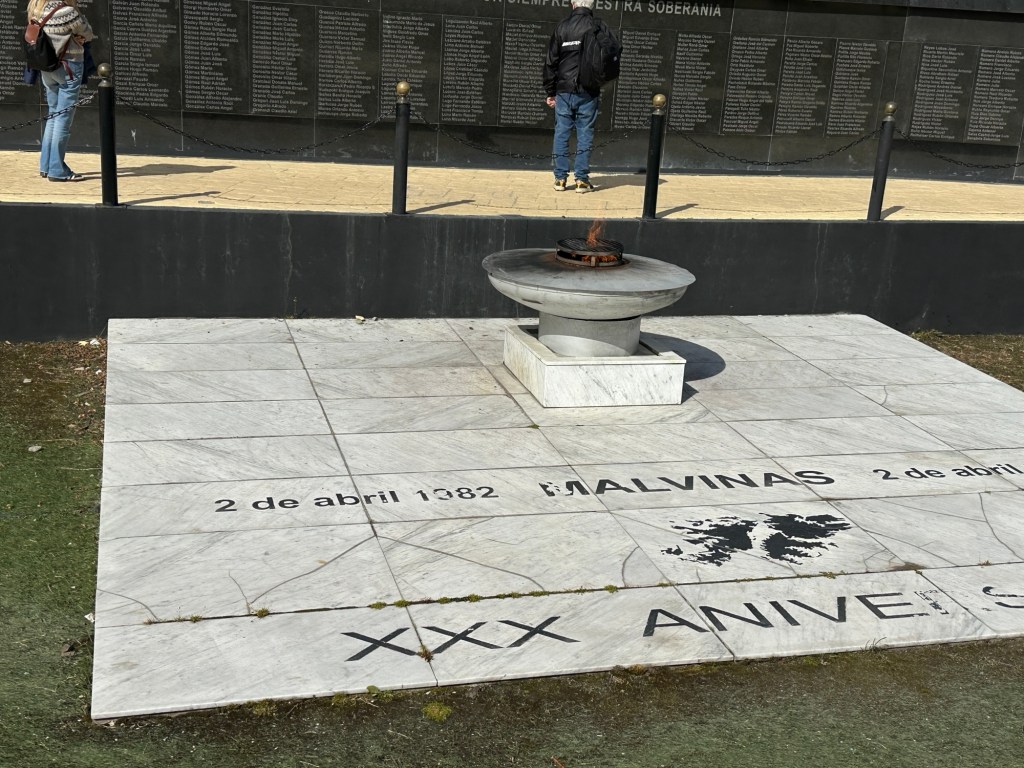
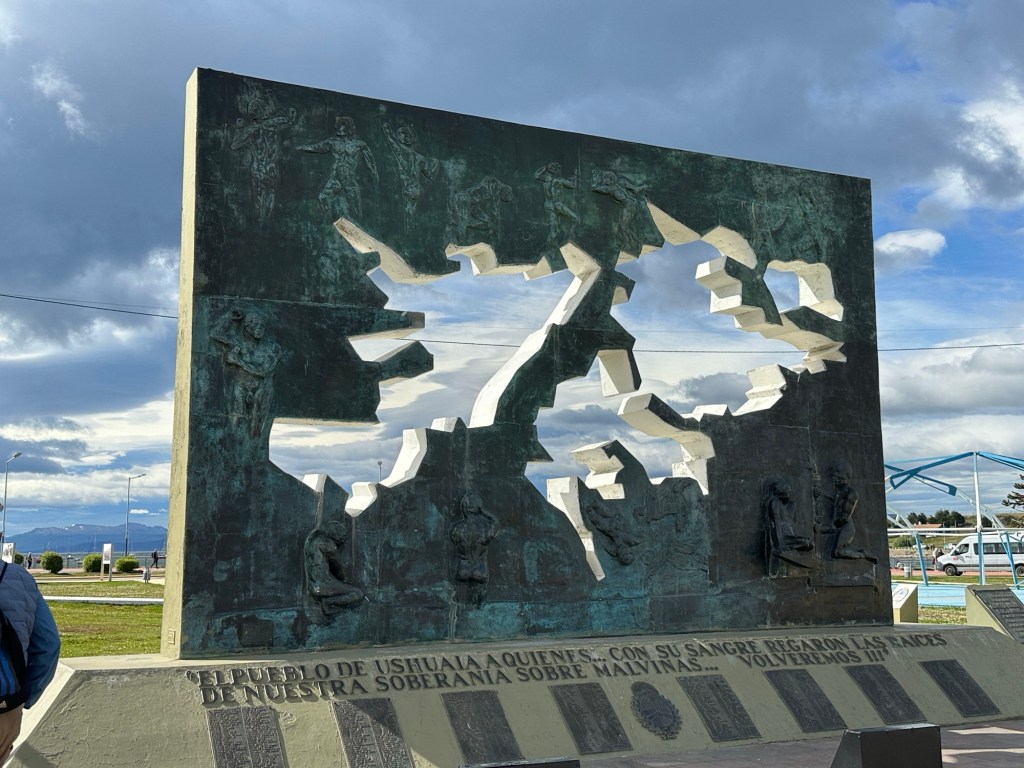
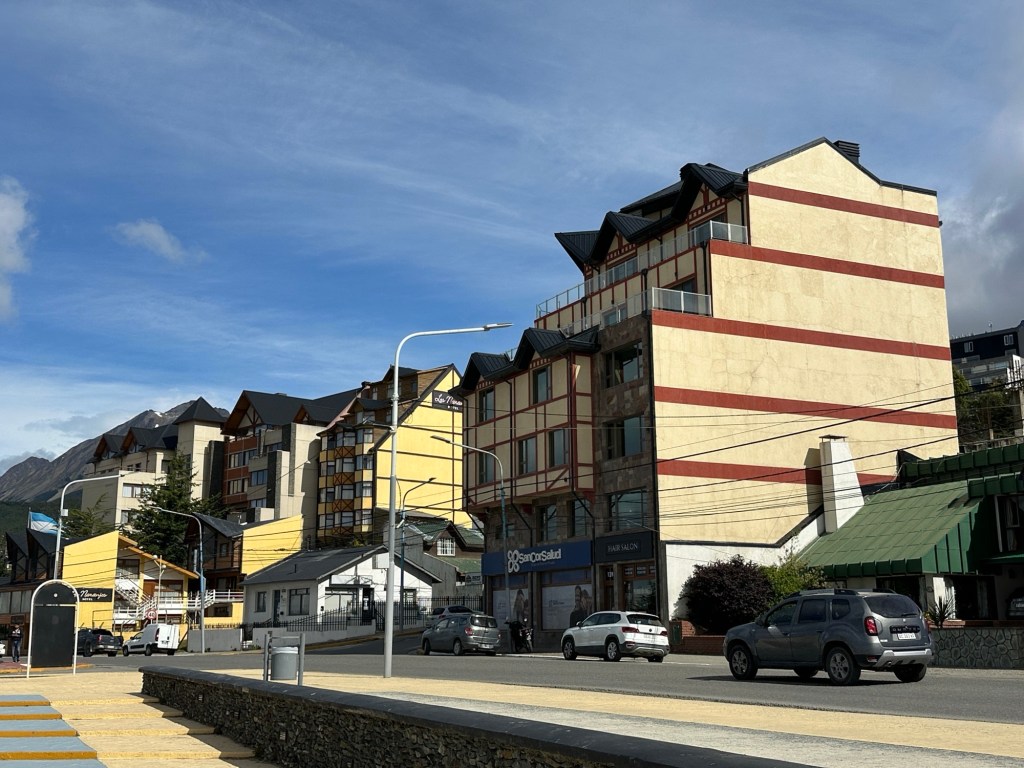
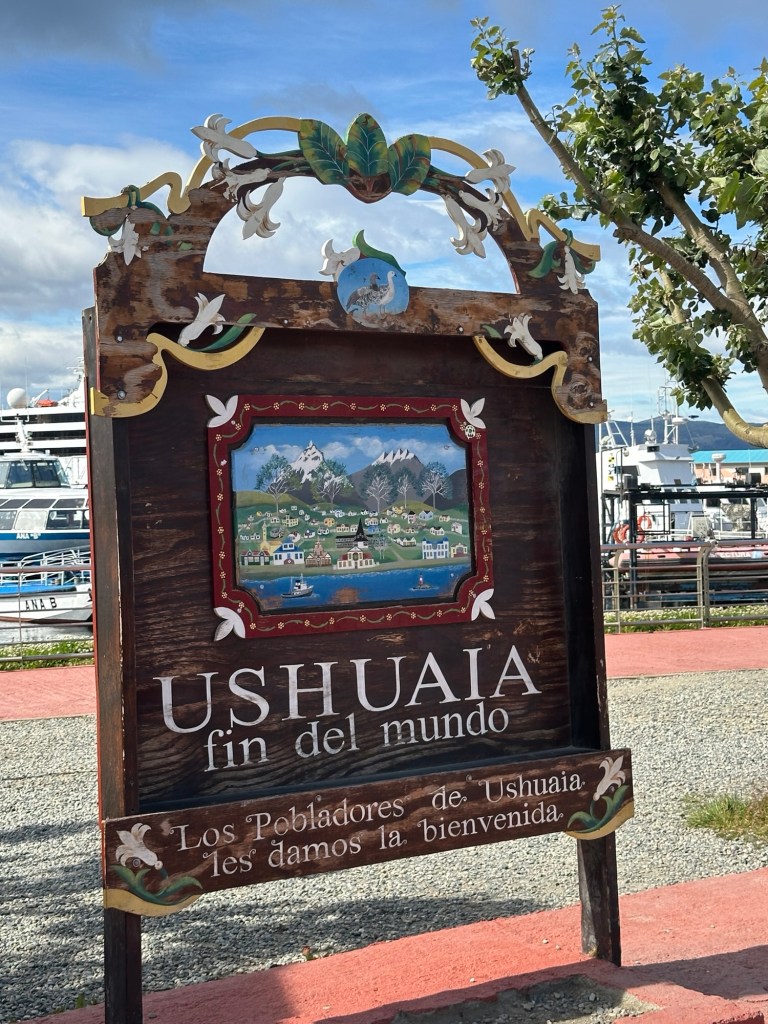
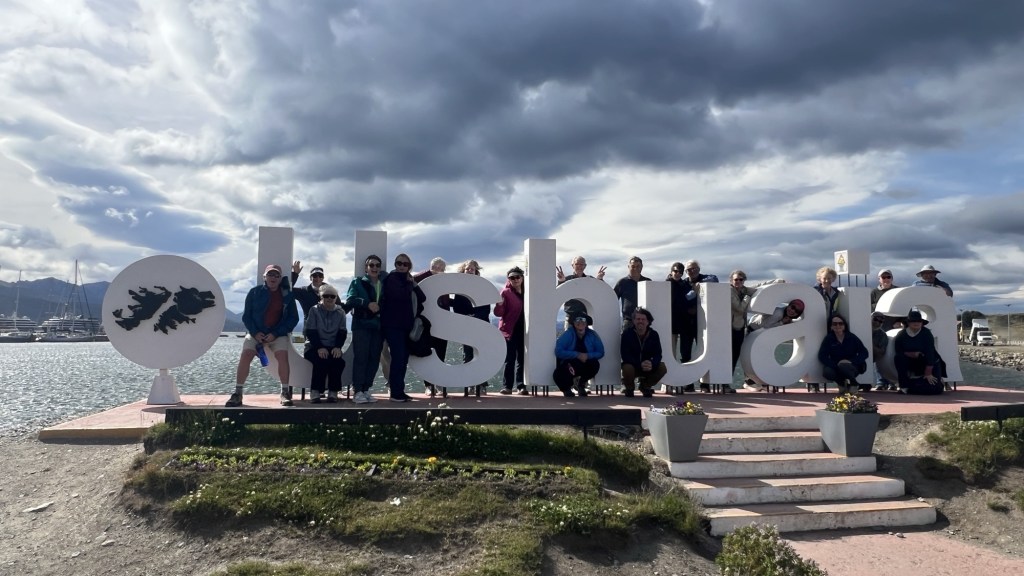
After breakfast, we said our sad farewells to the ship’s staff and disembarked in Ushuaia. We had a brief tour of the town, and some background on the conflict between Argentina and England over the islands known as Falklands or the Malvinas (as known by the Argentinians).
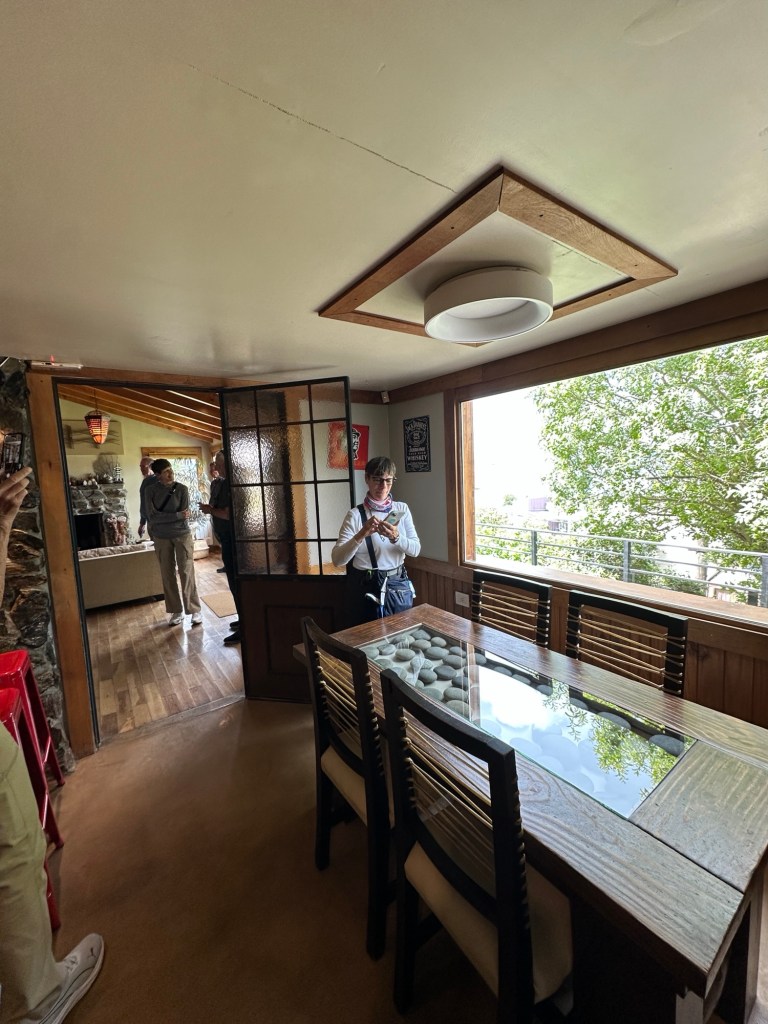
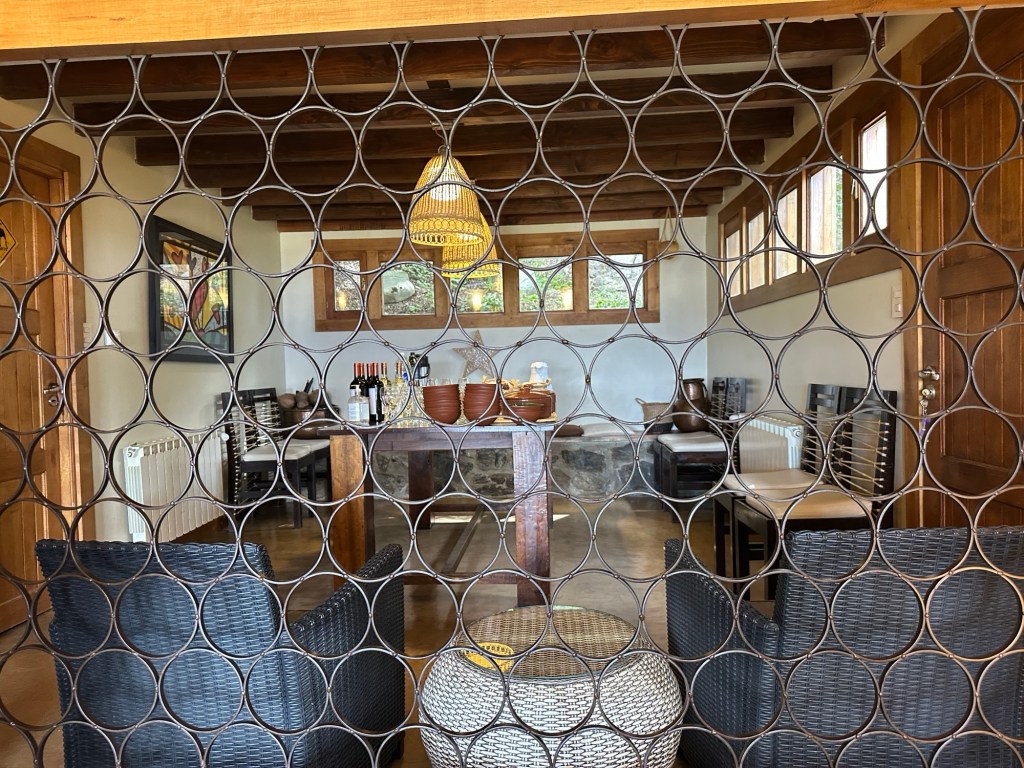
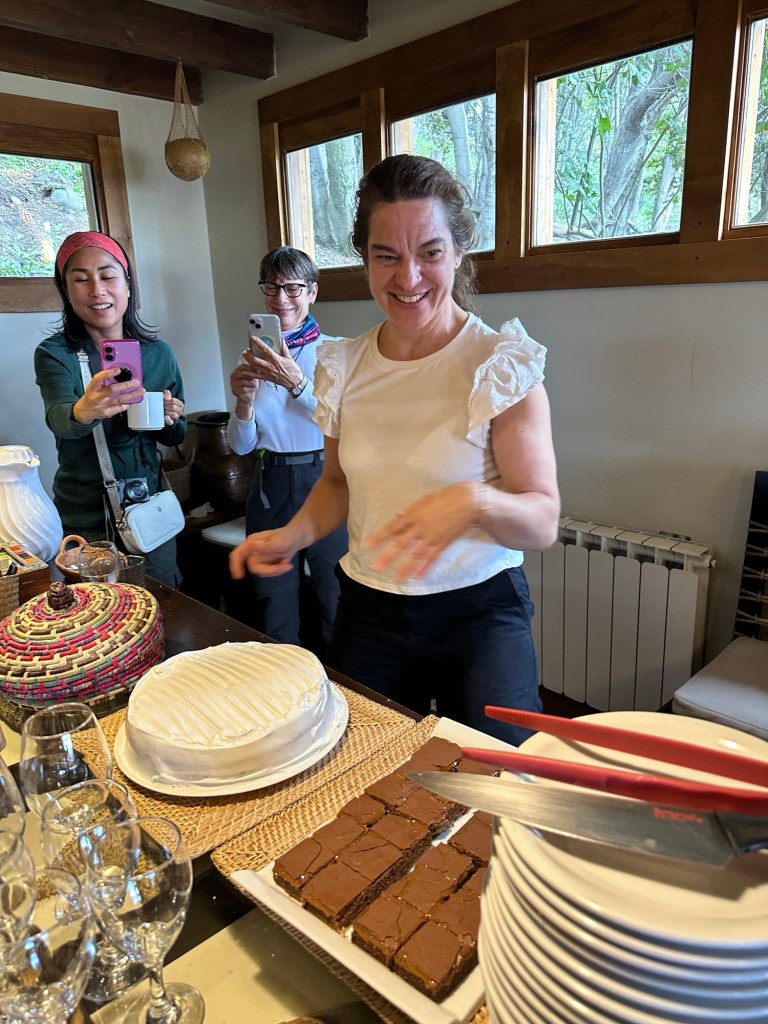
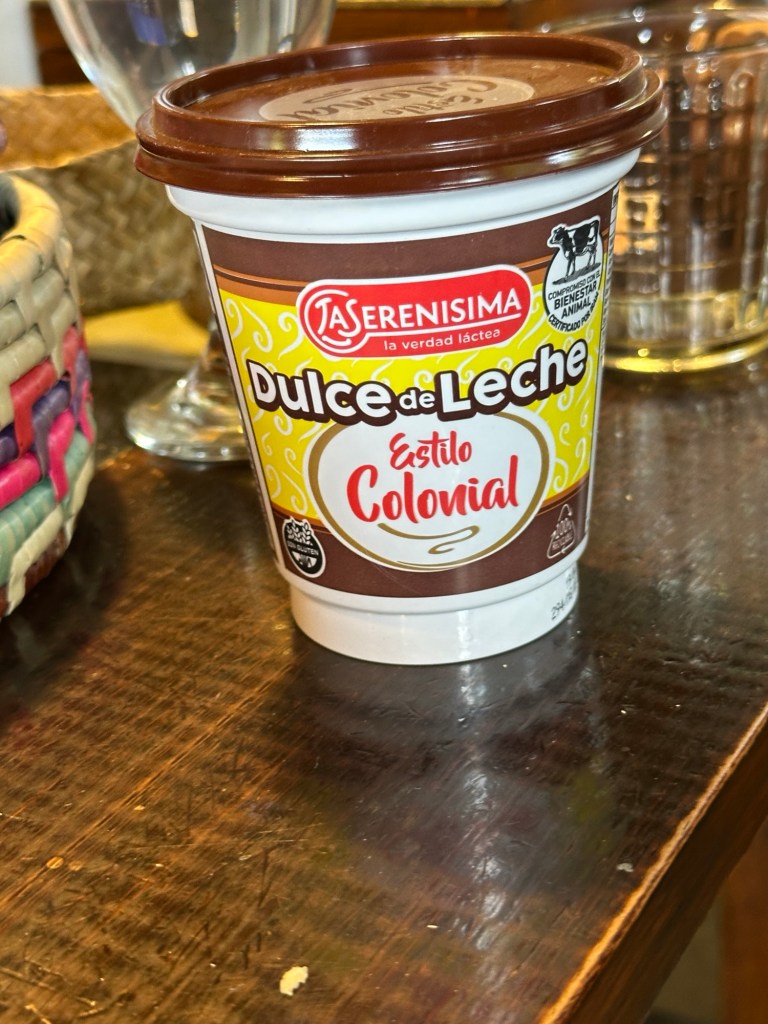
We had our last home-hosted meal at the lovely hillside home of Gabi, a great cook and lovely hostess who has mastered great conversational English since she started hosting these meals. We had spinach fritters, a hearty lentil stew, and Tres Leches cake and brownies with dulce de leche. Dulce de leche originated in Latin America and is made with caramelized milk and sugar, getting a somewhat toffee taste. It is found in so many sweets! Gabi’s recipes were in our trip book, so I plan to replicate her meal for my family, after serving them pisco sours.
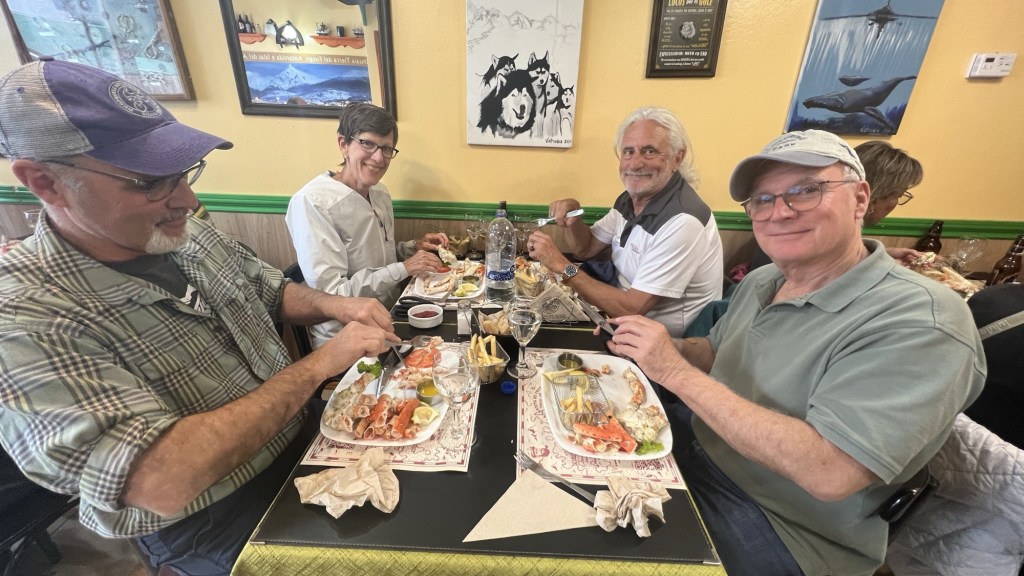
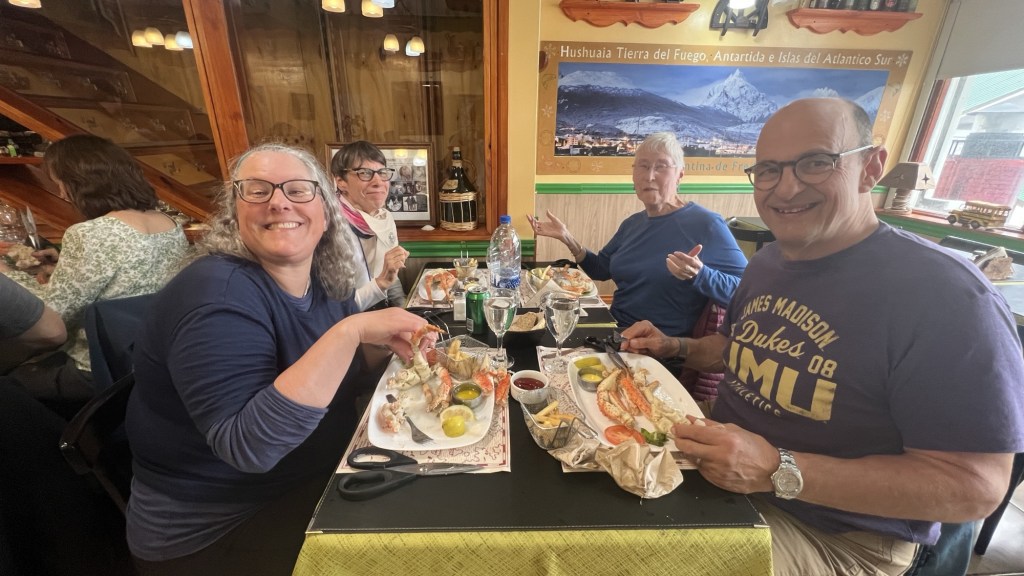
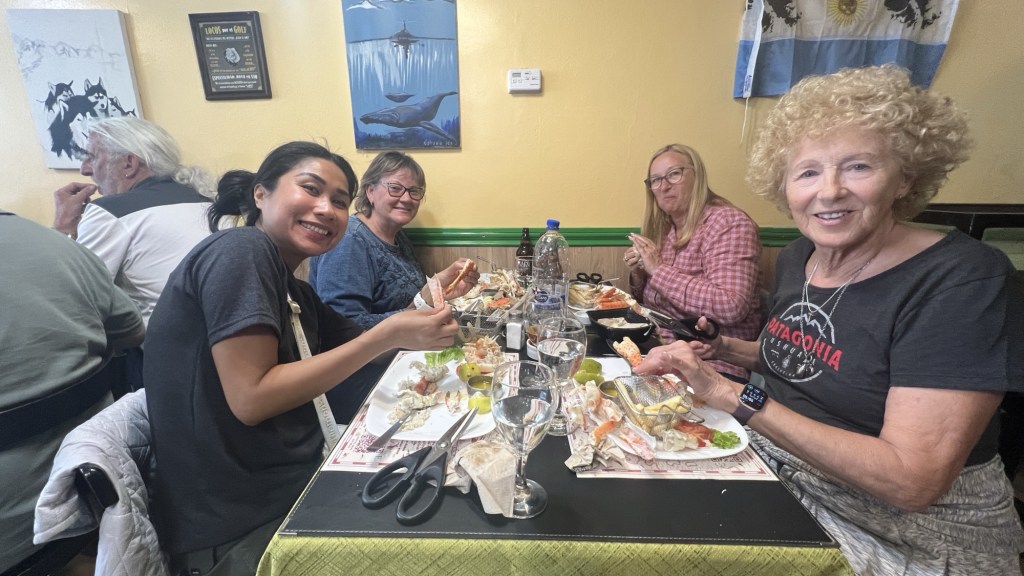
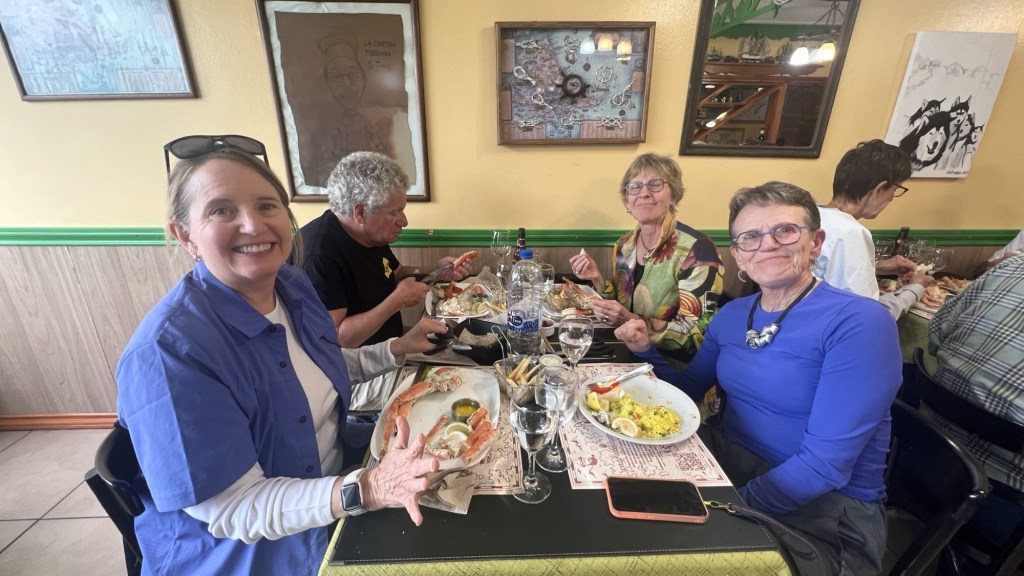
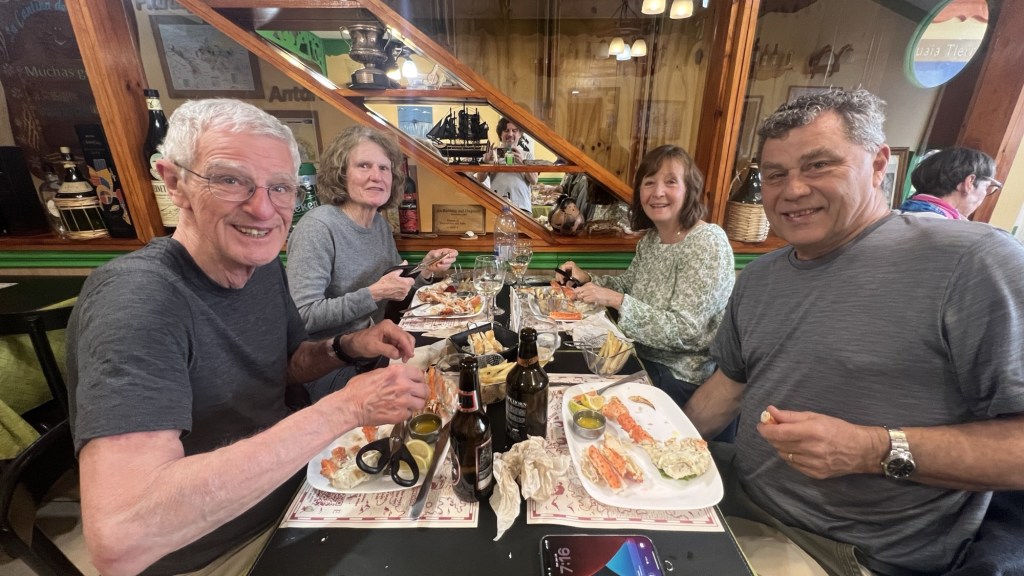
We had a free afternoon for shopping and hanging around the hotel spa. In the evening we gathered at a popular king crab restaurant, Freddy, for our last Controversial Topic discussion. Our speaker was a man who, as a teenager, appeared to have a promising career as a football (soccer) player, when Argentina invaded the Malvinas in 1982 to reclaim them. Argentina has long claimed the territory as belonging to it. The UK claimed it in 1841. Most residents have UK heritage. Our speaker was one of the many Argentinians forced to fight in this war, with very little training. The war has had lasting impact on many of his and subsequent generations. The veterans were basically forgotten by their government. It wasn’t until the Kirchner government in 2003-2007 that the government expanded pensions and mental health services for the veterans.
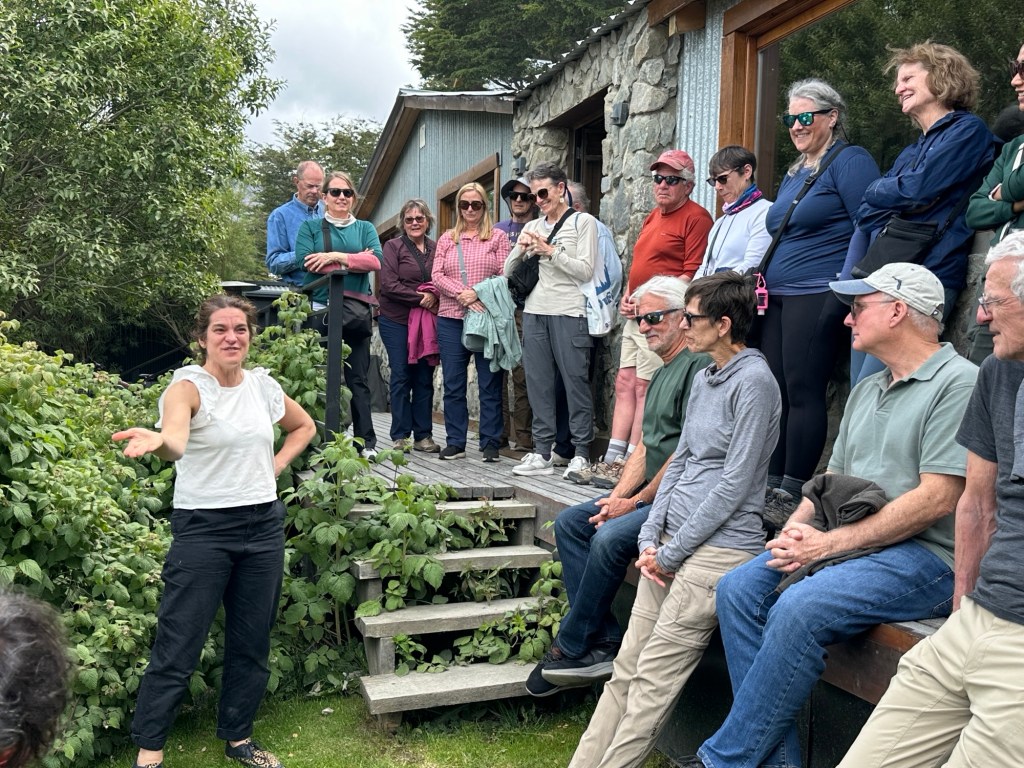
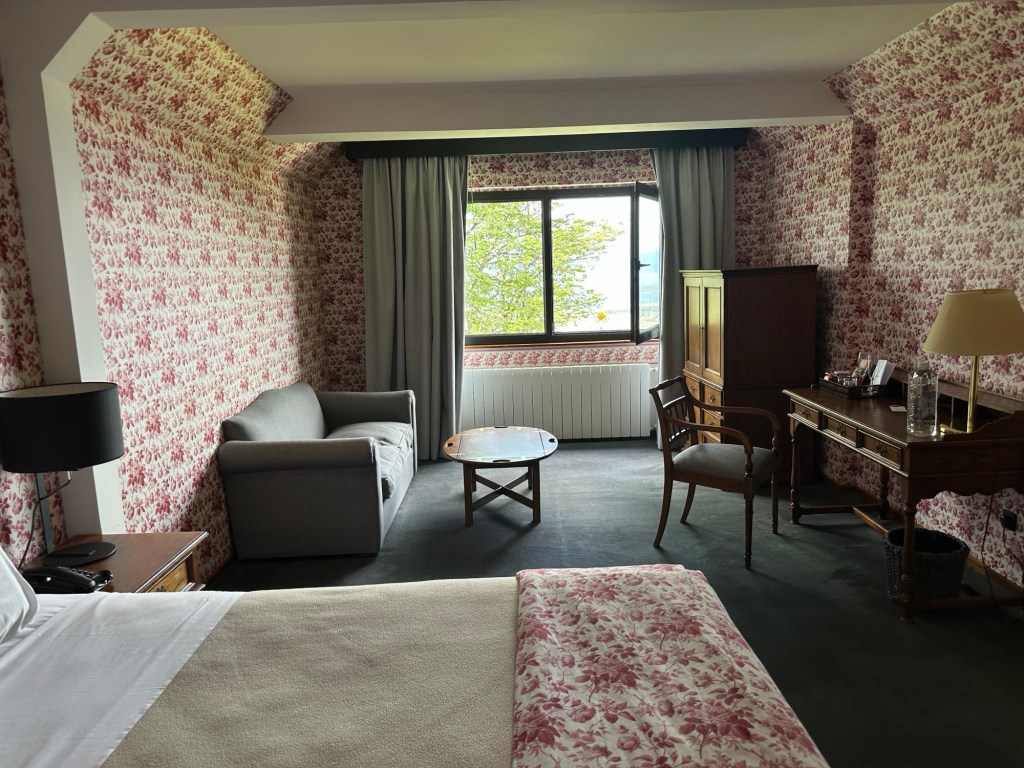
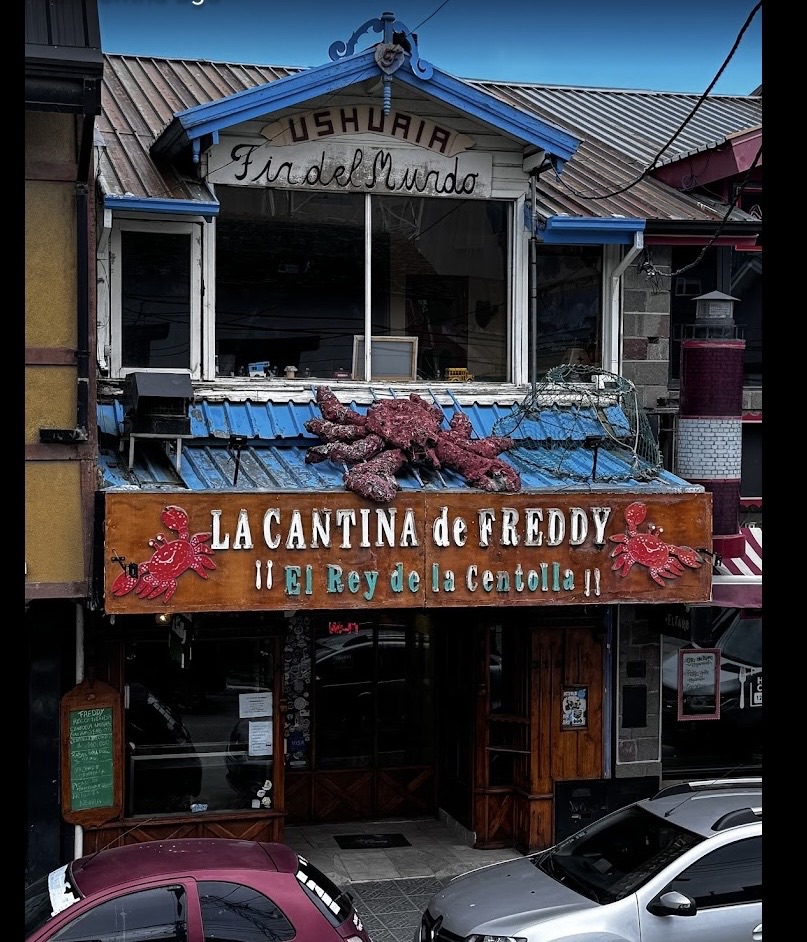
After the discussion, we had a lovely dinner of king crab, assisted by sharp Kitchenaide scissors (rather than mallets or nutcrackers) for cracking the shells.
Sunday, Jan. 25
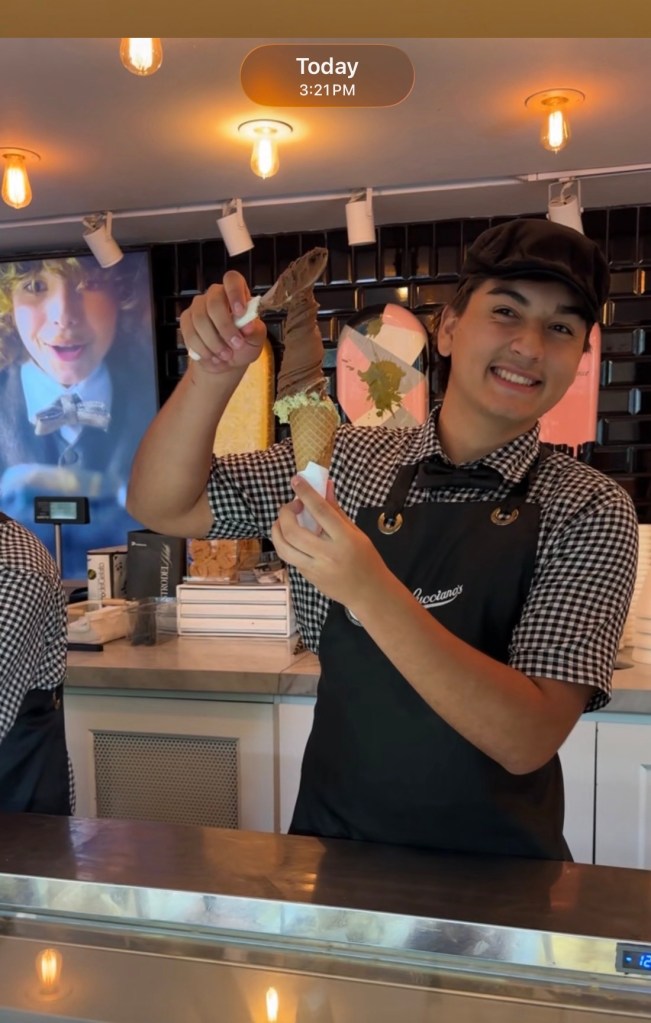
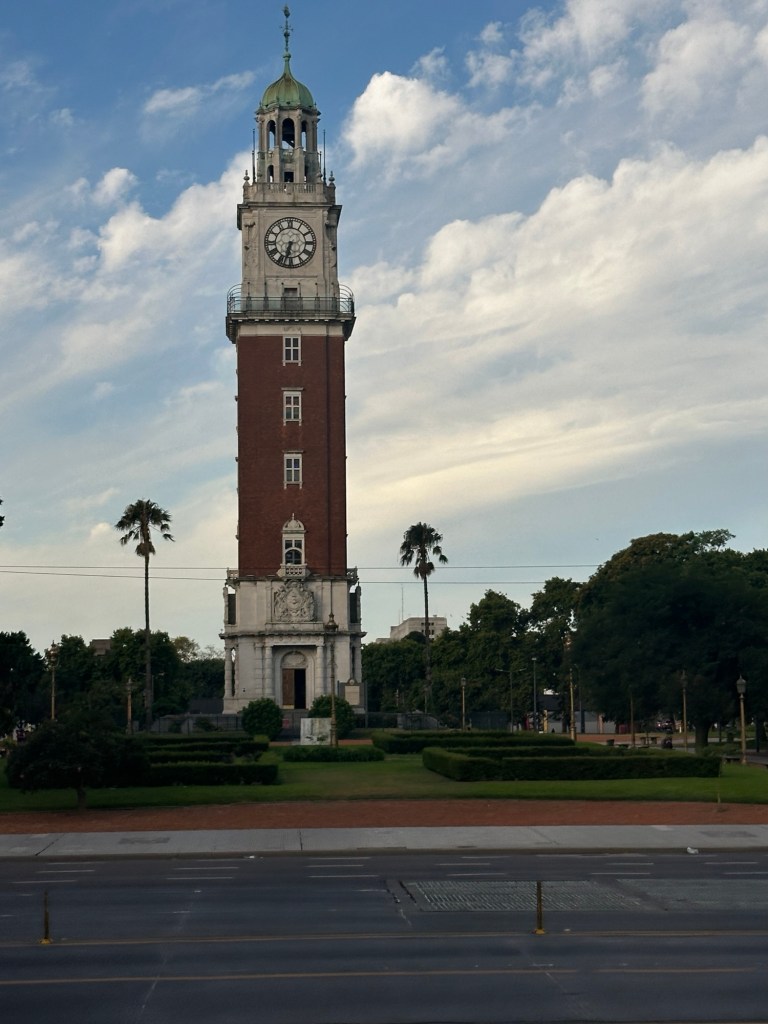
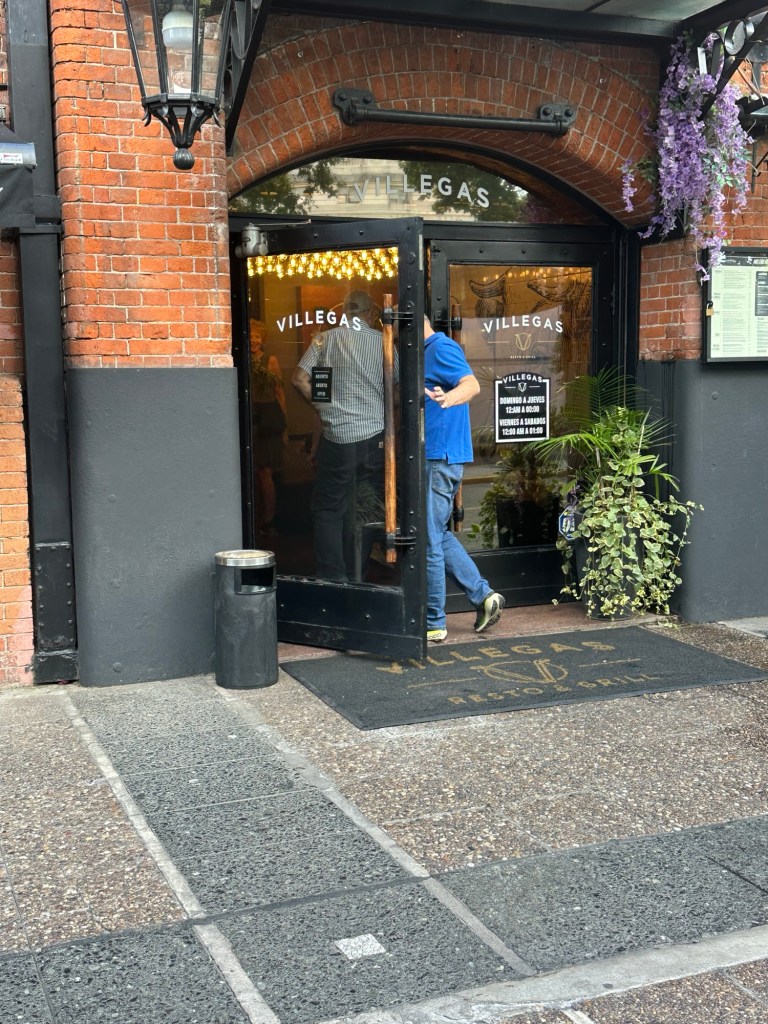
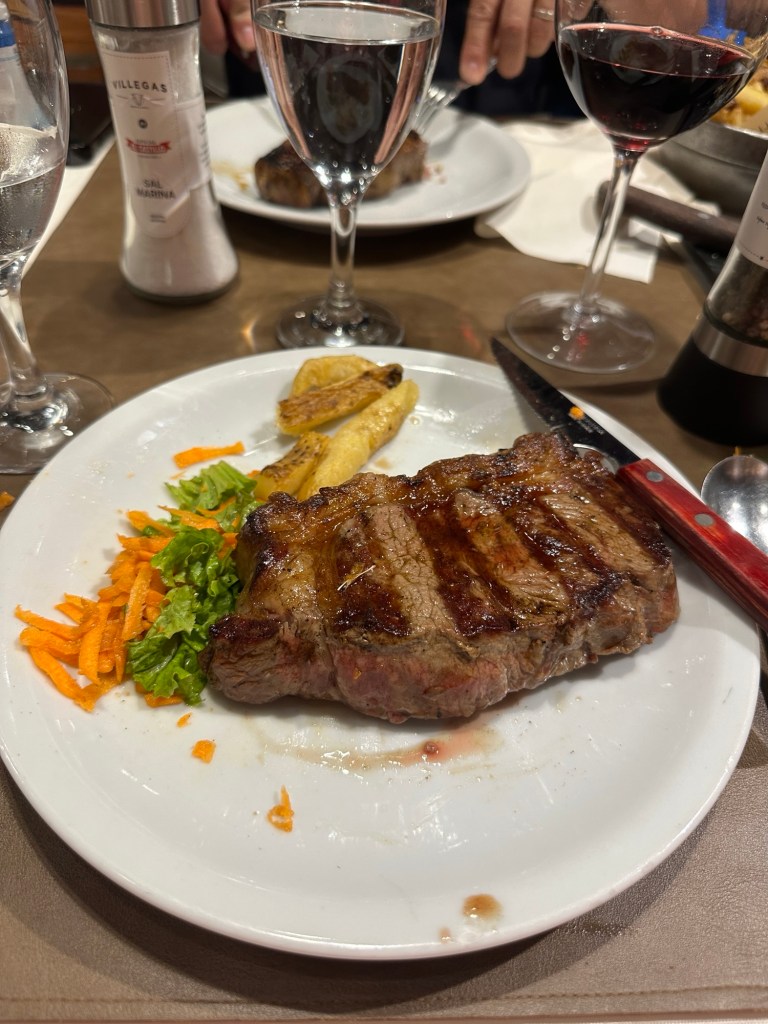
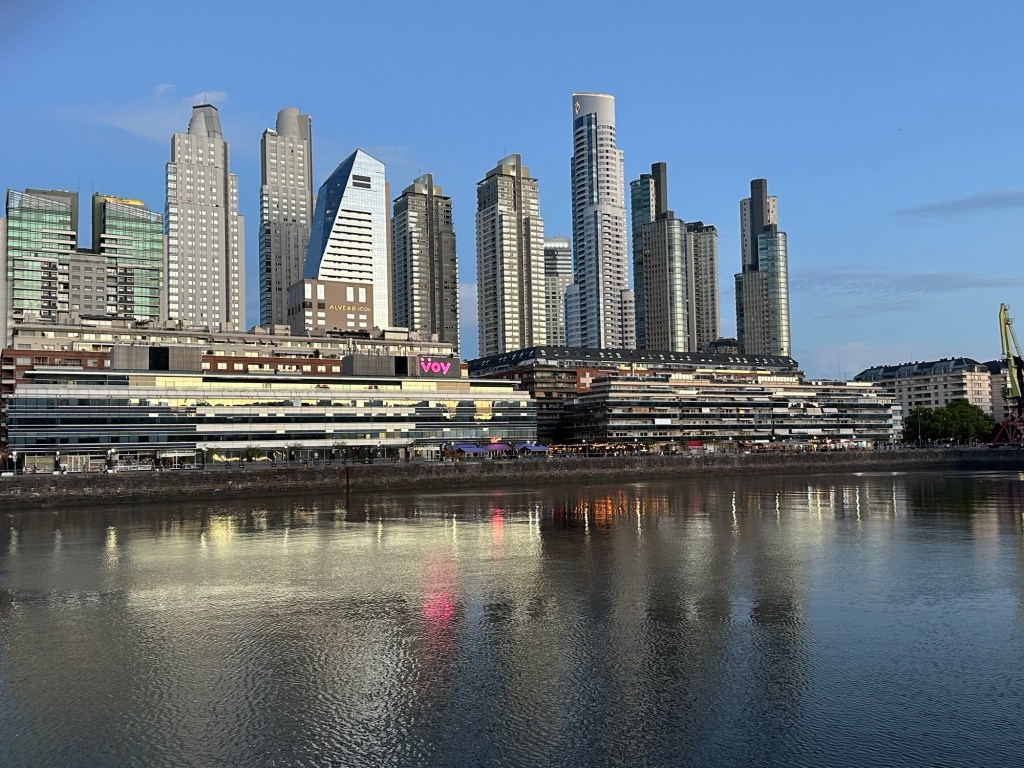
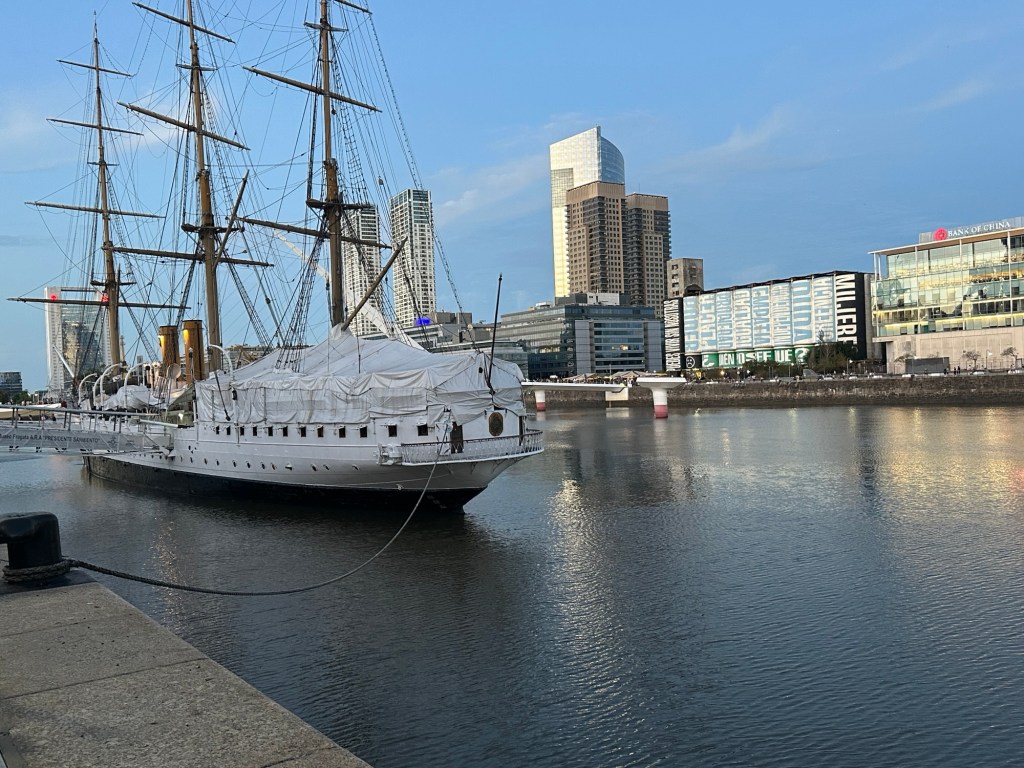
We flew back to Buenos Aires, checked into our hotel, reclaiming some of the items we had left in storage. Some of us made a final gelato our lunch. After a trip briefing with Carlos and our whole group, we had our final meal (steak, of course) at a restaurant in the Peurto Madero area. We walked across the Women’s Bridge, a lively spot for residents, tourists, and photographers in the evening.
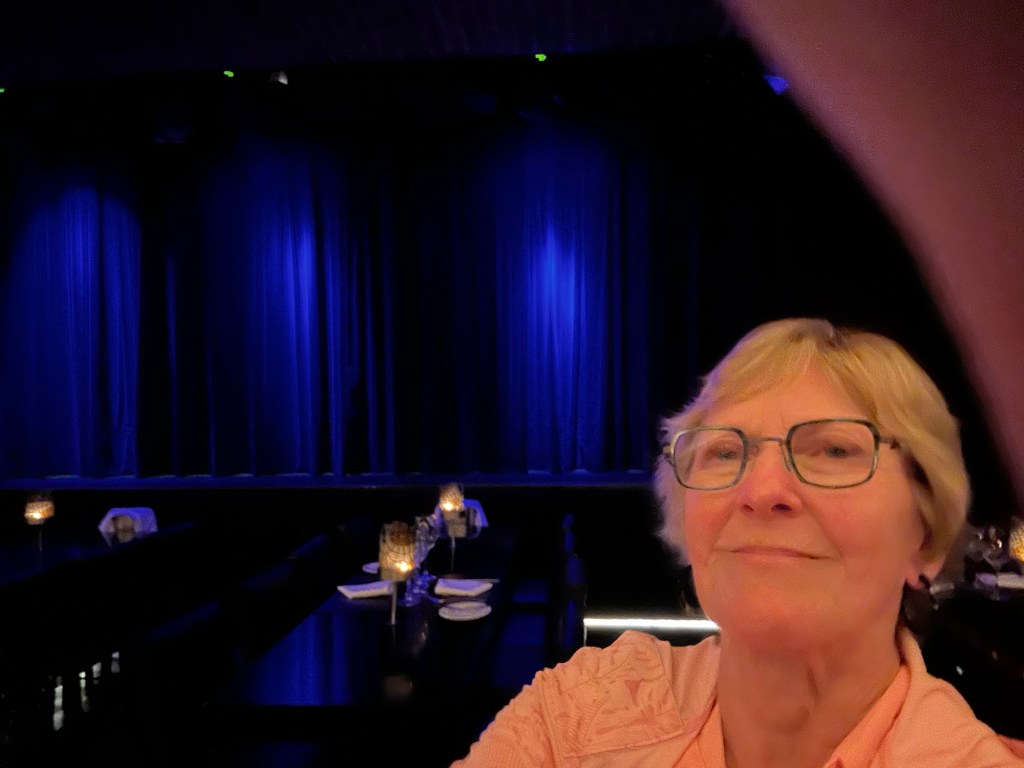
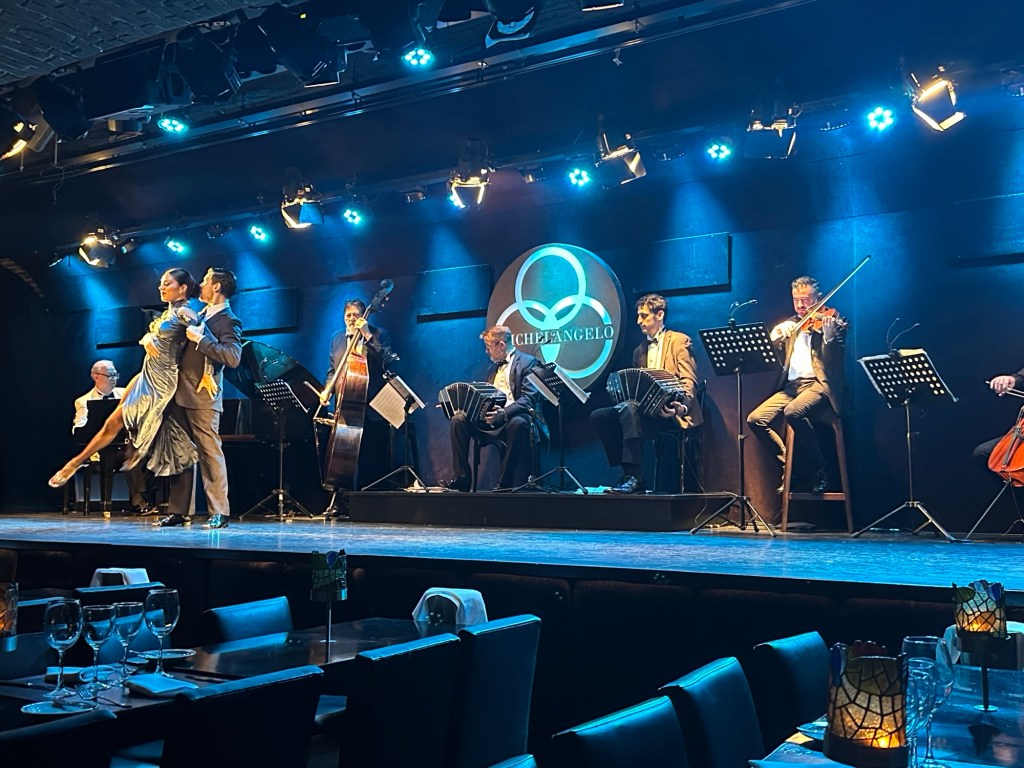
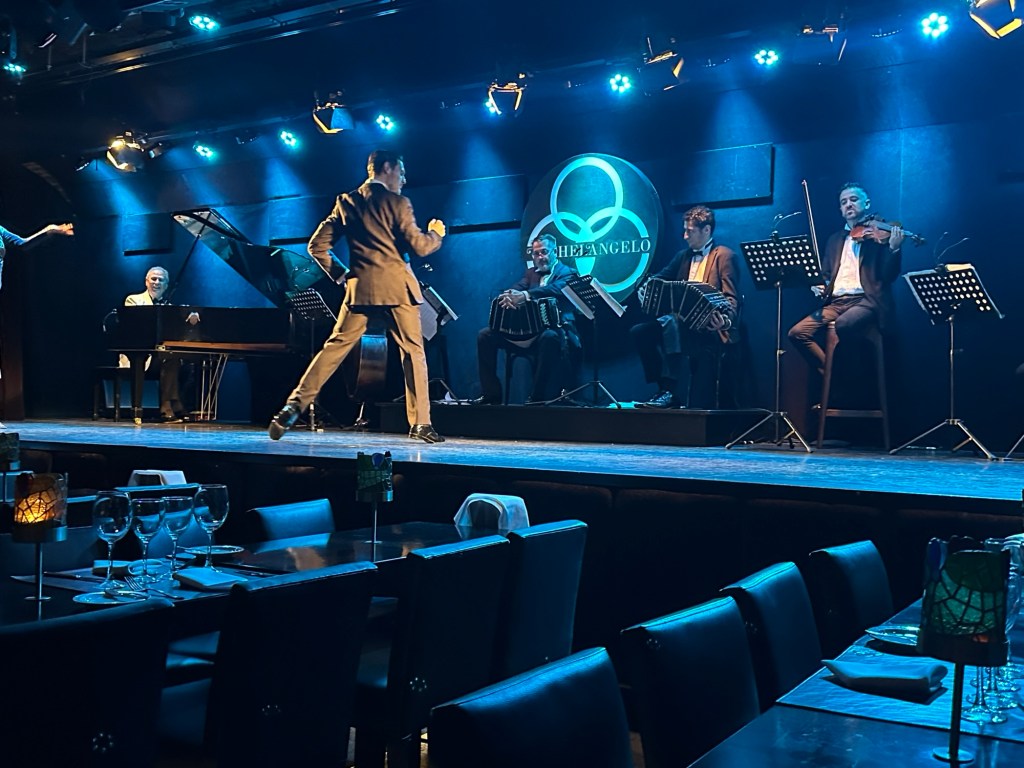
I arranged to get a ticket to a Tango show and the group bus dropped me off after our evening activities. This was very fun! Music was great, as was the dancing. I caught an uber back to the hotel after the show.
Monday, Jan. 26
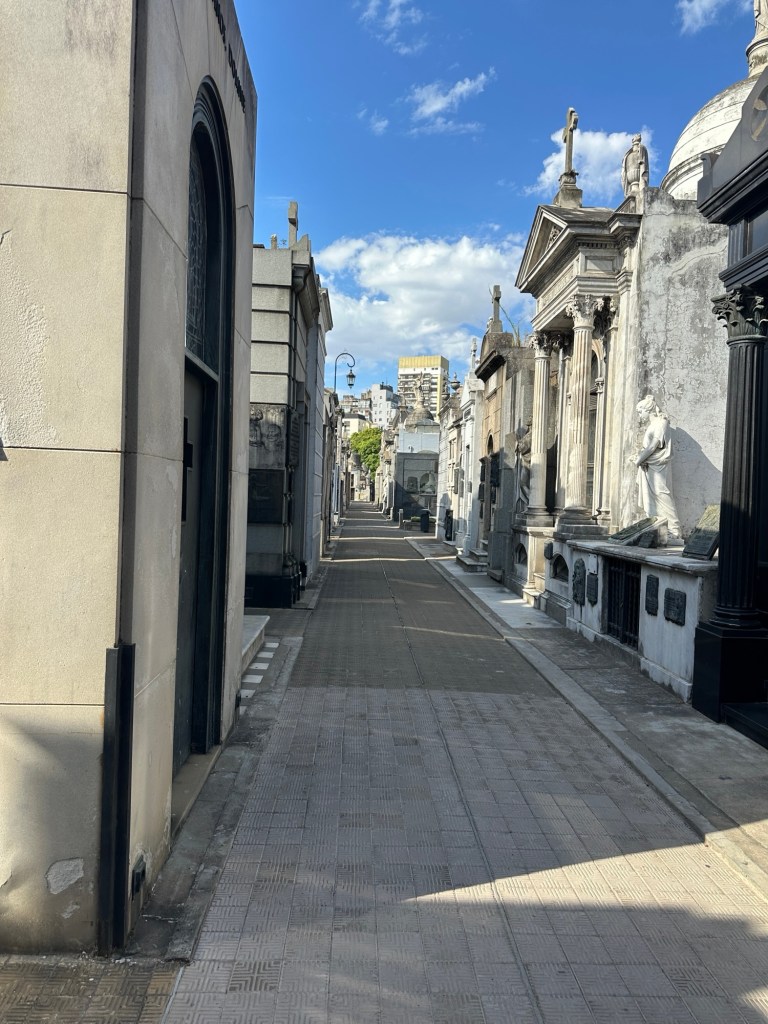
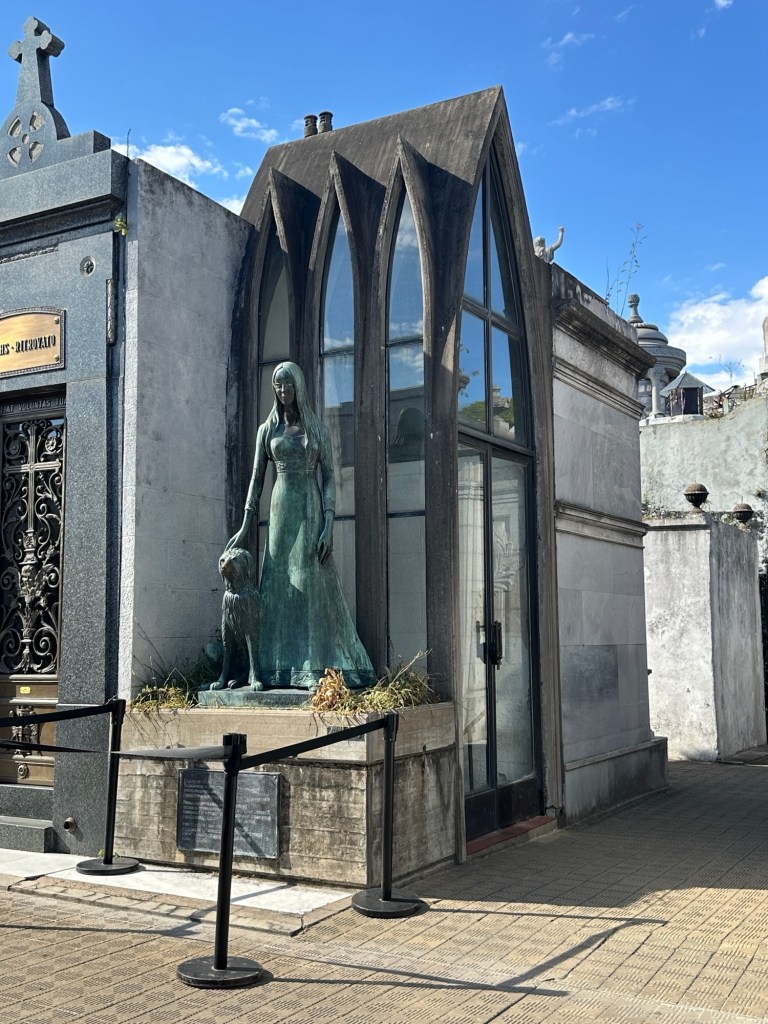
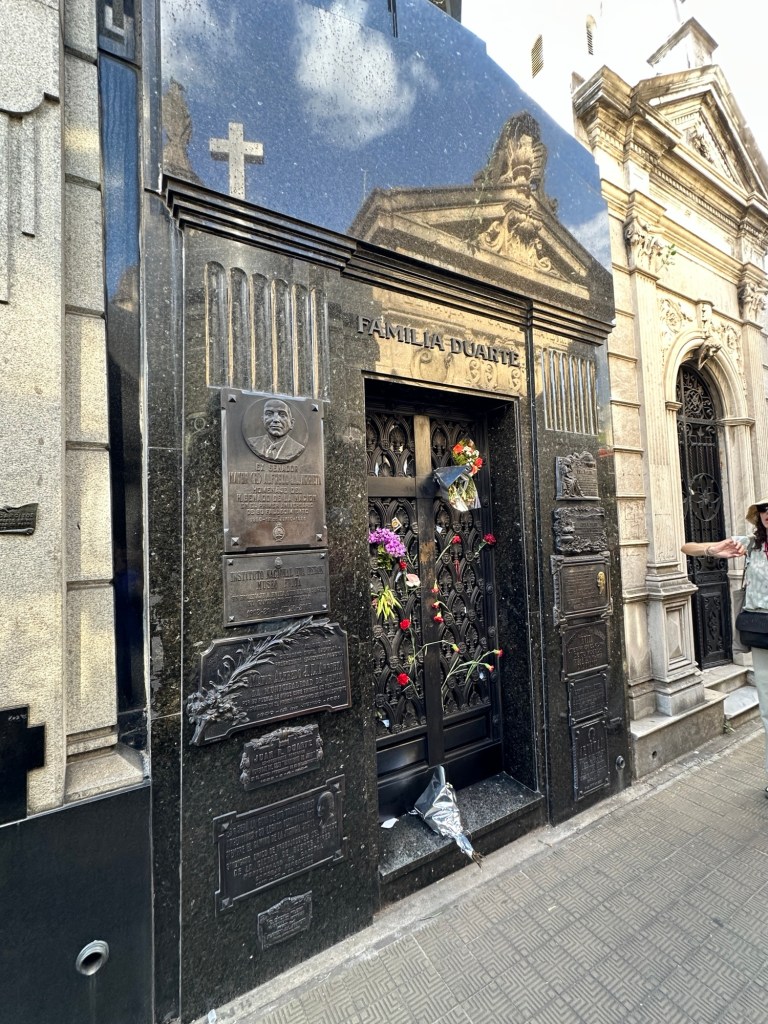
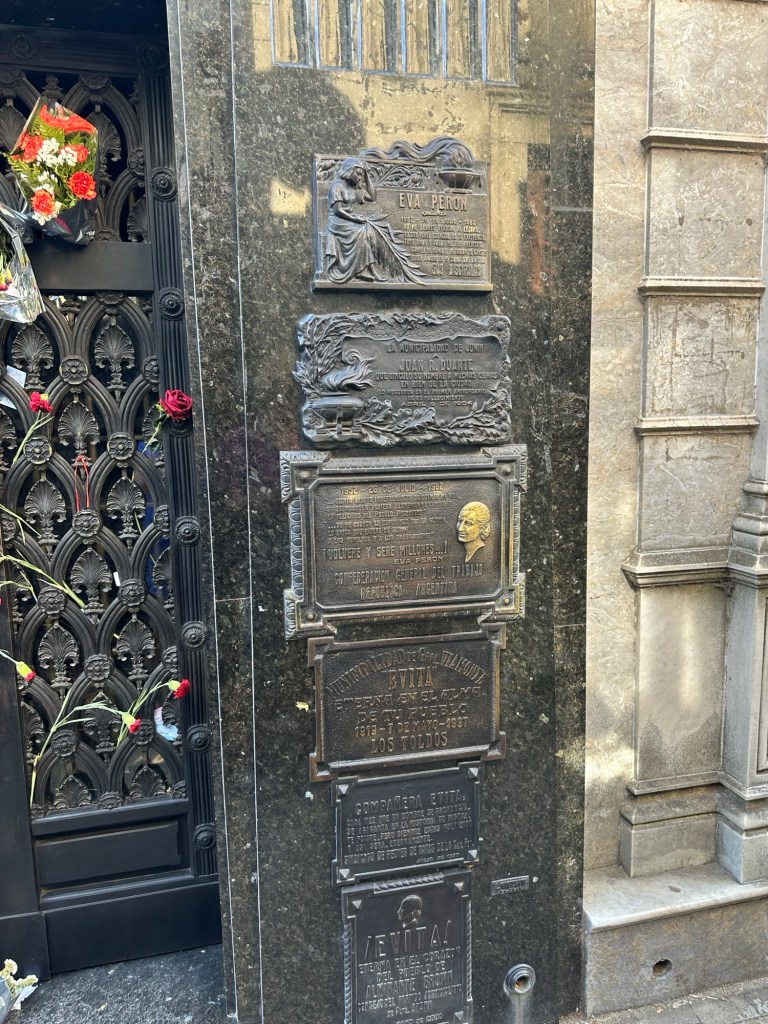
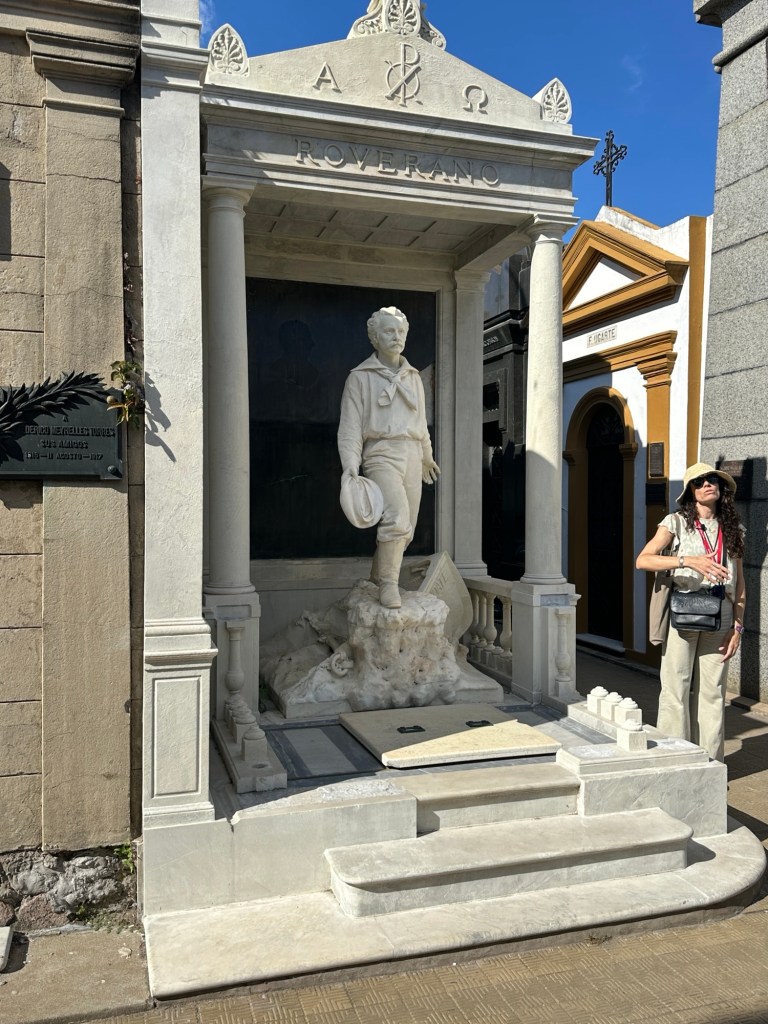
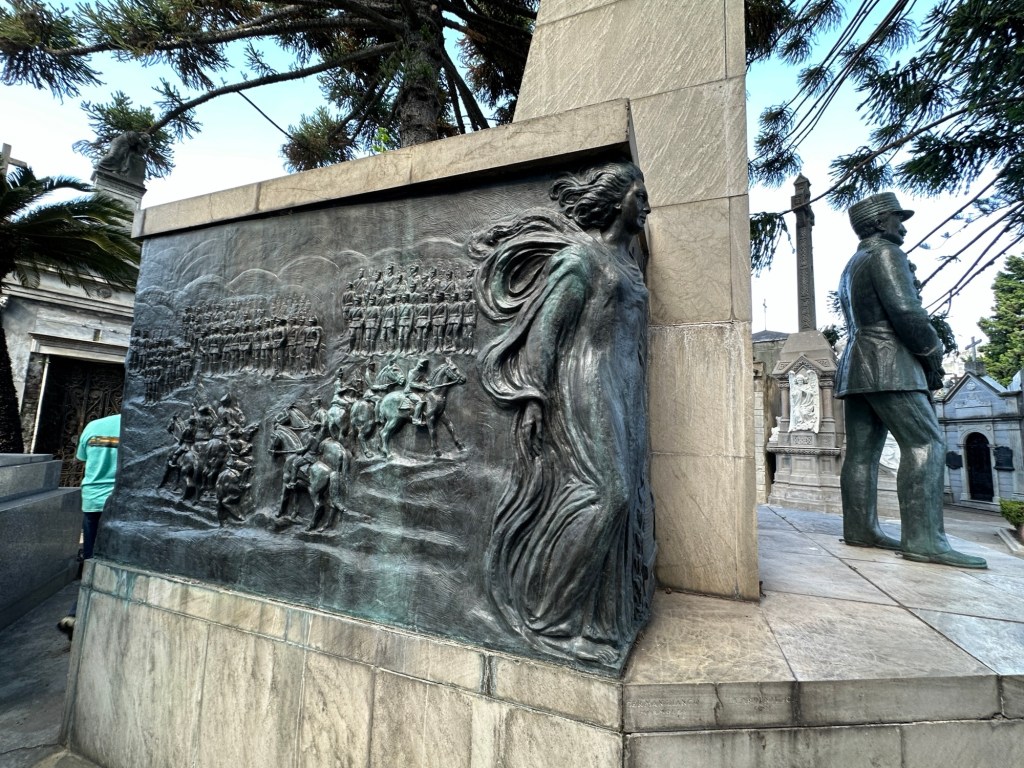
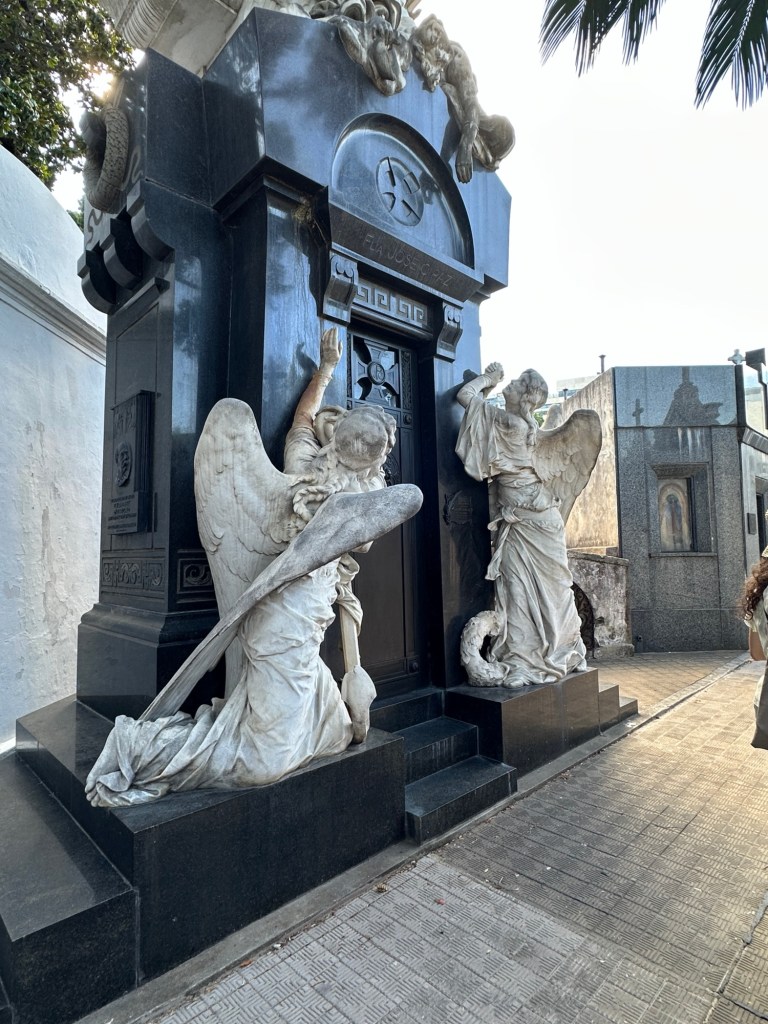
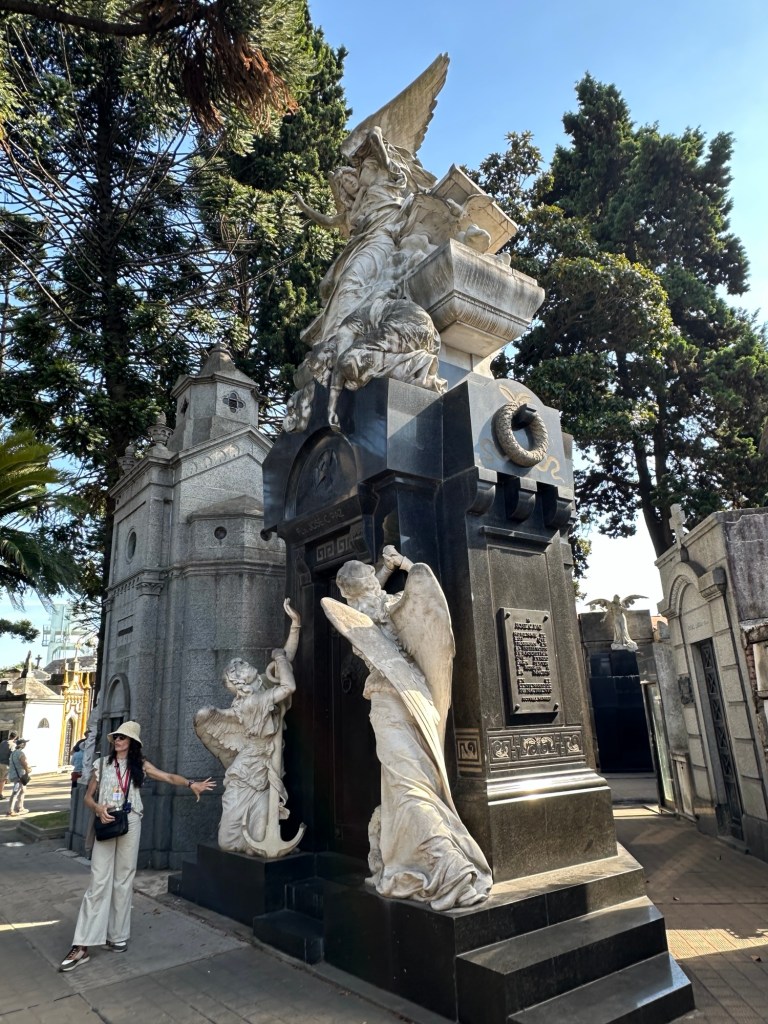
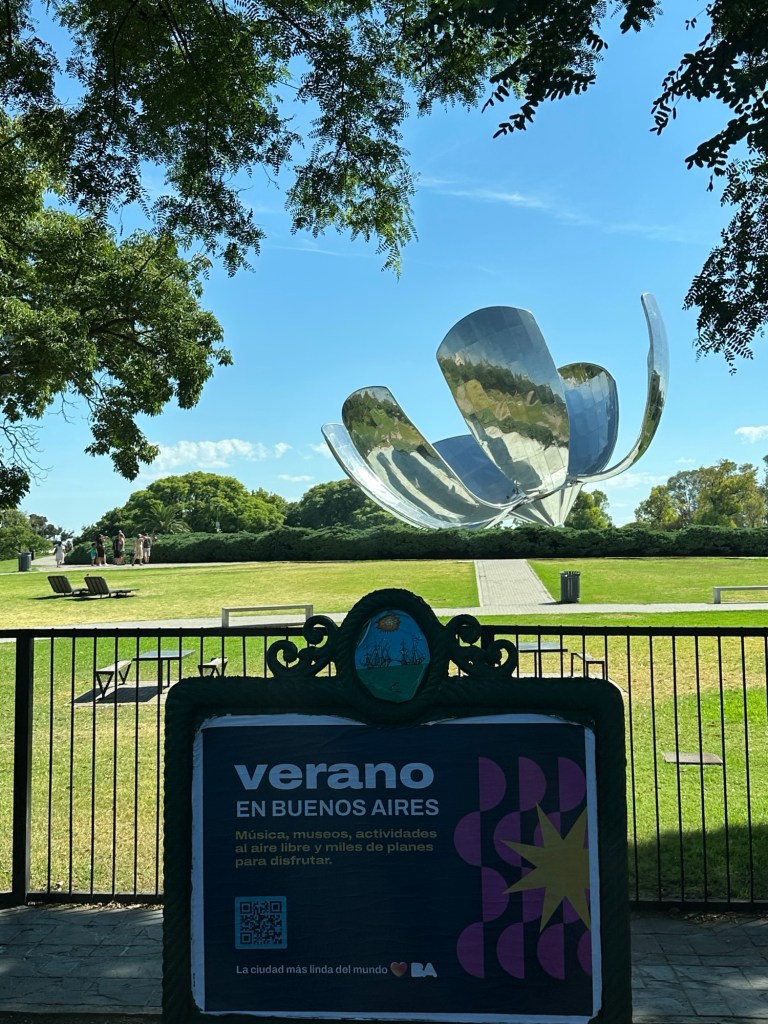
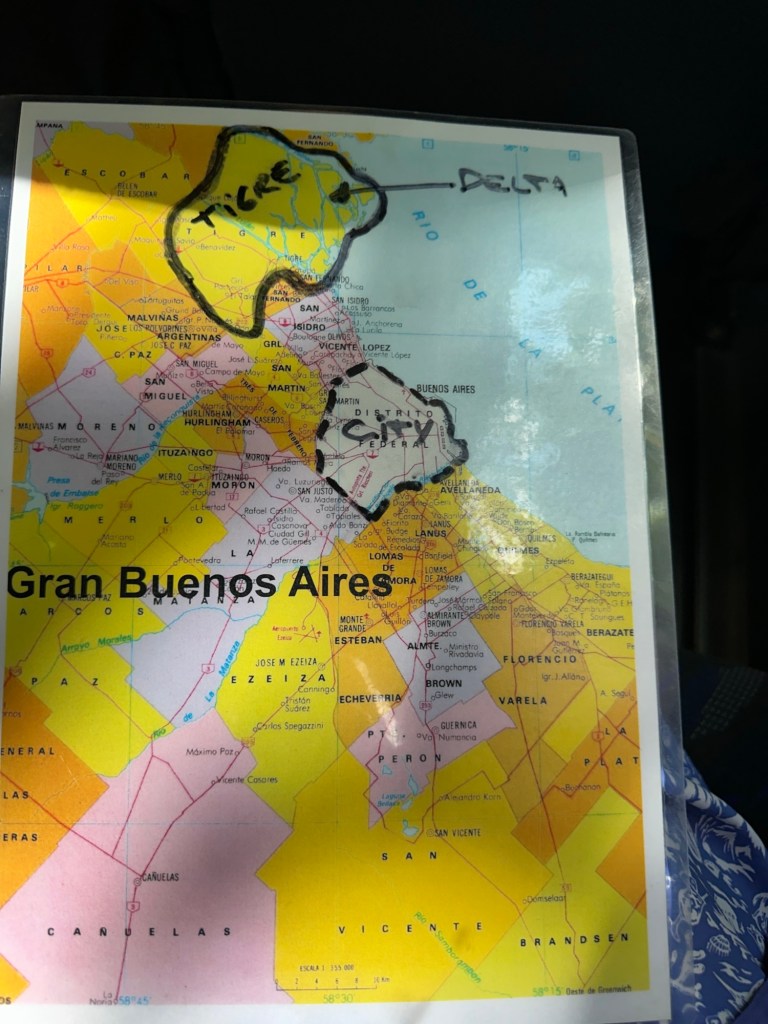
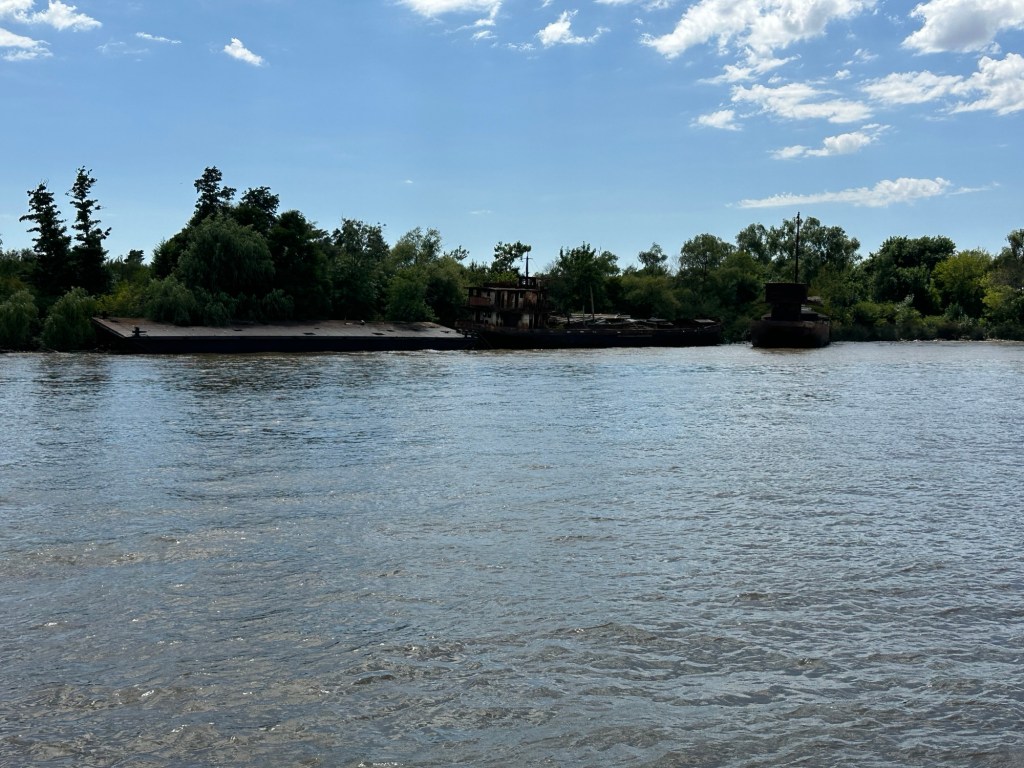
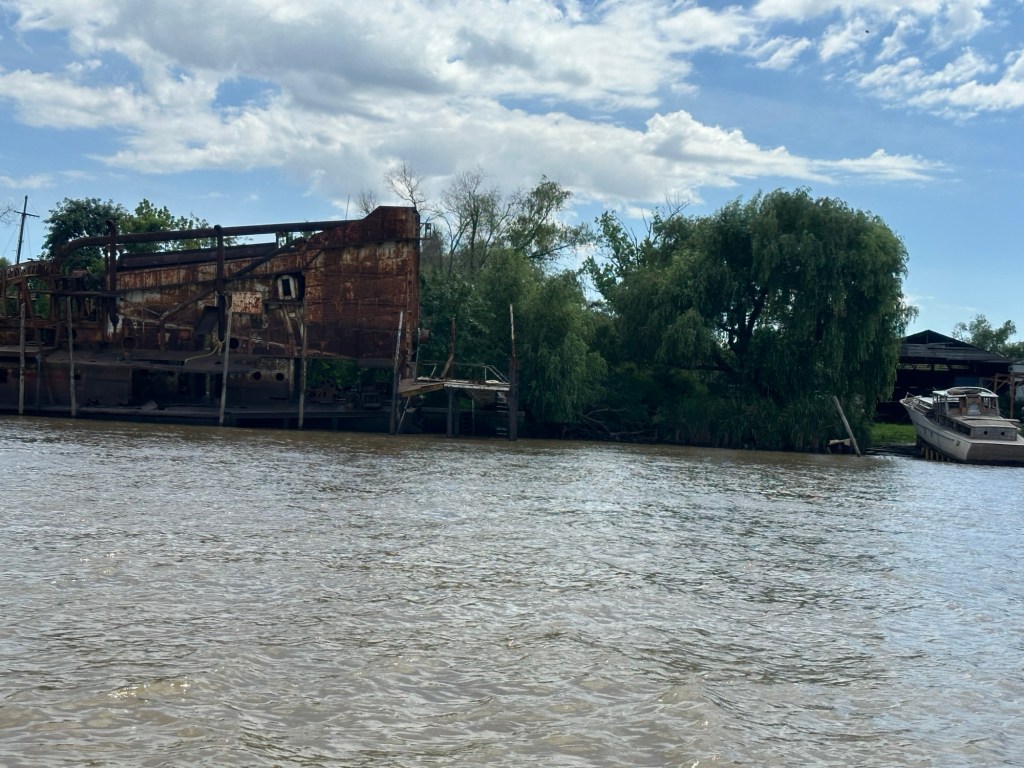
For our last day in BA, we had a tour of the famous cemetery in the Recoleta District, with tombs of many famous Argentinians, including Eva Peron. Then was drove to the Parana Delta for a boat trip along the river, that joins up with the Rio de la Plata (the river in BA). This is an area of summer homes and abandoned boats.
We landed back at the hotel to grab a take away pizza from the shop at the corner, pack, shower, and headed off to the airport for an evening flight to Miami.
As luck would have it, much of the US was dealing with major winter storms. My flight from Raleigh was canceled and rebooked for the next day, so I spent the day in the airport hotels in Miami. The joys and unexpected adventures of travel!!
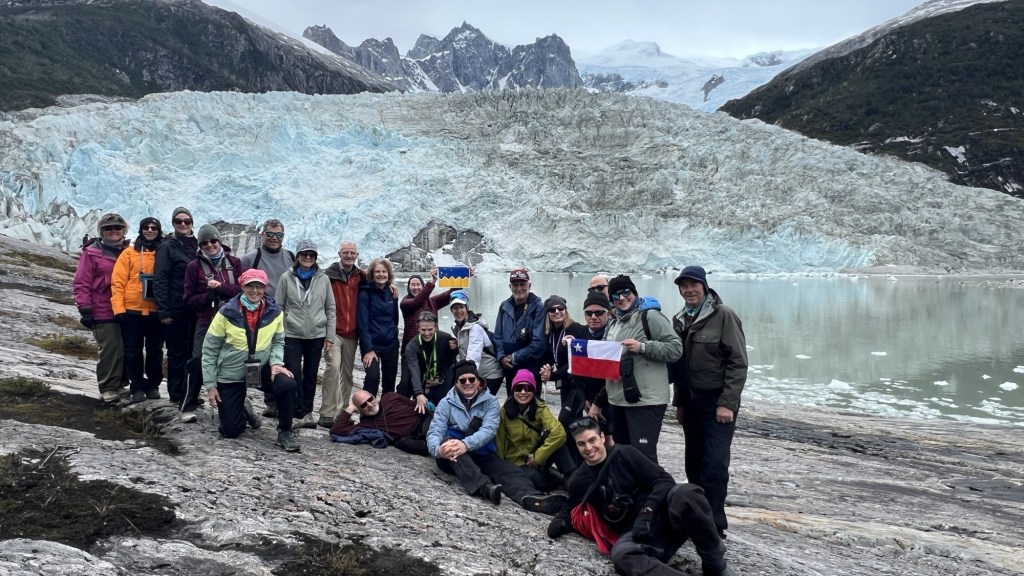
A few photos of our group, thanks to Carlos.
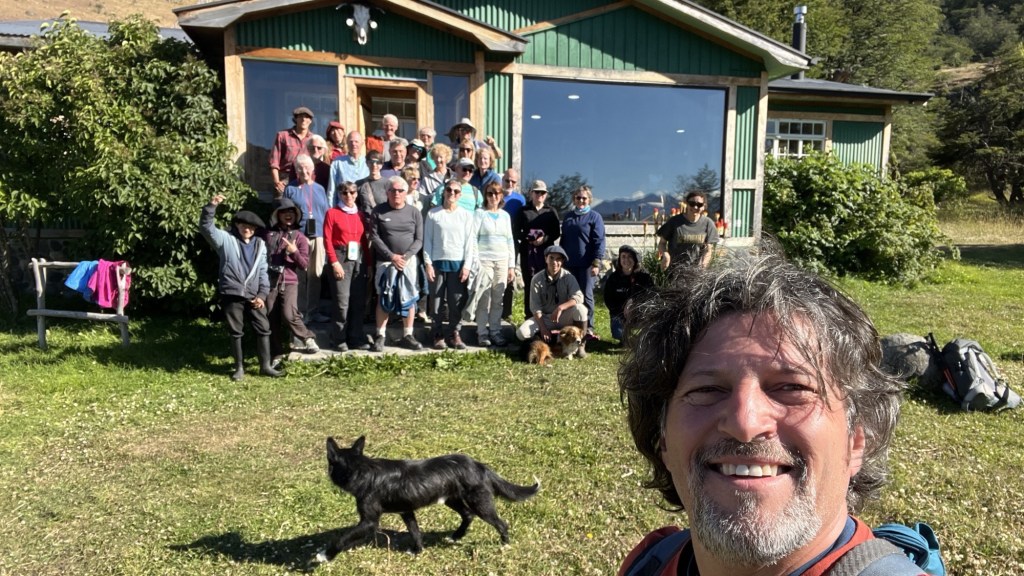
And a few other images

 My Travel Blog