
Norway and Iceland Trip, Summer 2025
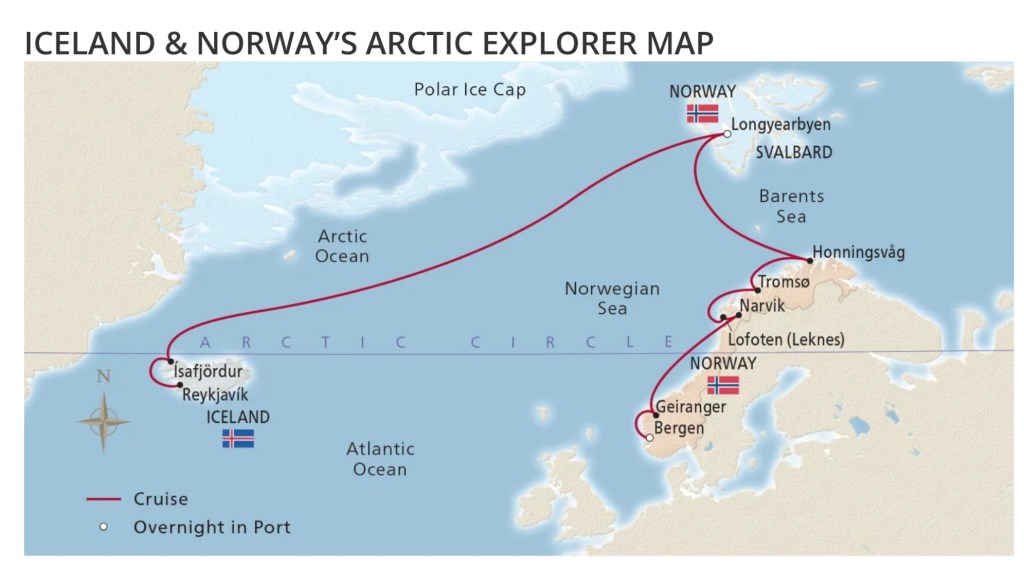
Map from the Viking website
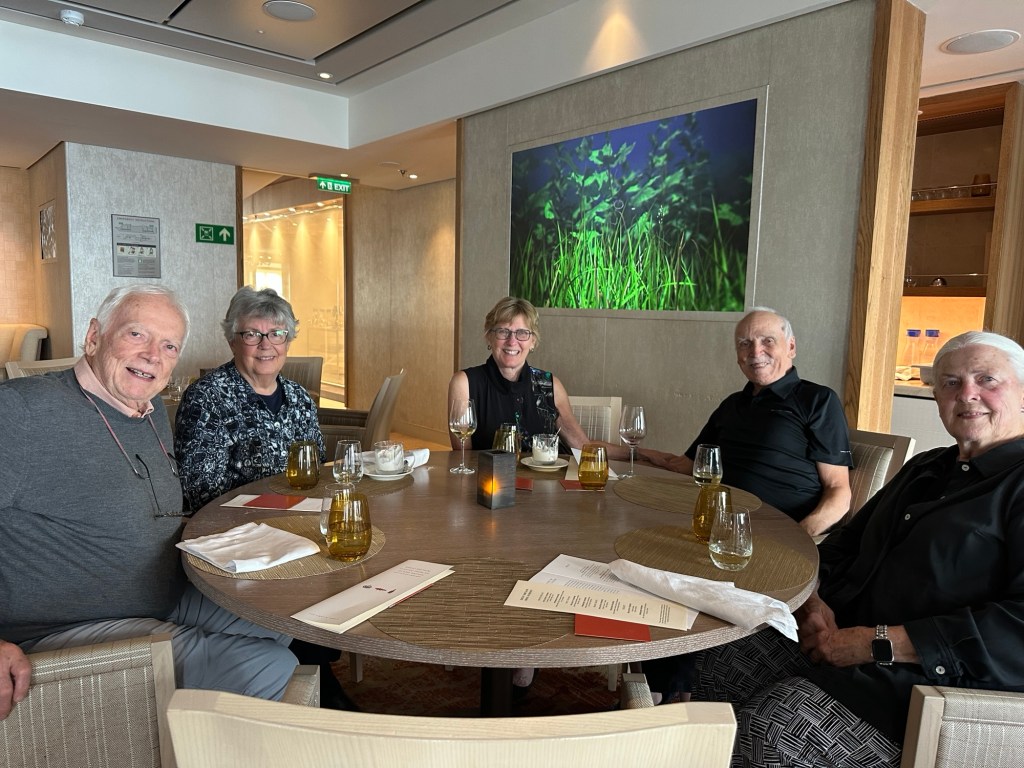
Chris and I escaped the extreme NC heat to see the beautiful landscapes of Norway and Iceland. Along with Chris’s brother Tim, his wife Kim, and her sister Jane, great travelling companians, we signed up for a Viking Ocean cruise, with a pre-trip to Oslo and train ride from Oslo to Bergen.
Below is a day-by-day summary of the trip. The most interesting photos are later on, so feel free to skip text and jump around. If you click on a photo, you will get the full image and can scroll through the images in that “block,” using the direction keys if on a laptop. Hit escape to return to the blog. In some sections there are multiple blocks of photos under the same text. I create these blogs as a way to help me remember key details of trips, and to put in context some of my favorite photos. I also love sharing the experience with friends and fellow travellers from different trips we have taken.
Friday, June 27
We arrived in Oslo after an Icelandair flight from RDU to Reykjavik, ate breakfast in the airport, and boarded the next flight to Oslo. Our hotel, the Radisson Blu, was centrally located, by the train station/mall and a short walk to the waterfront. Pizza and bed were all our jetlagged bodies could handle after we dumped our bags in the room.
Saturday, June 28
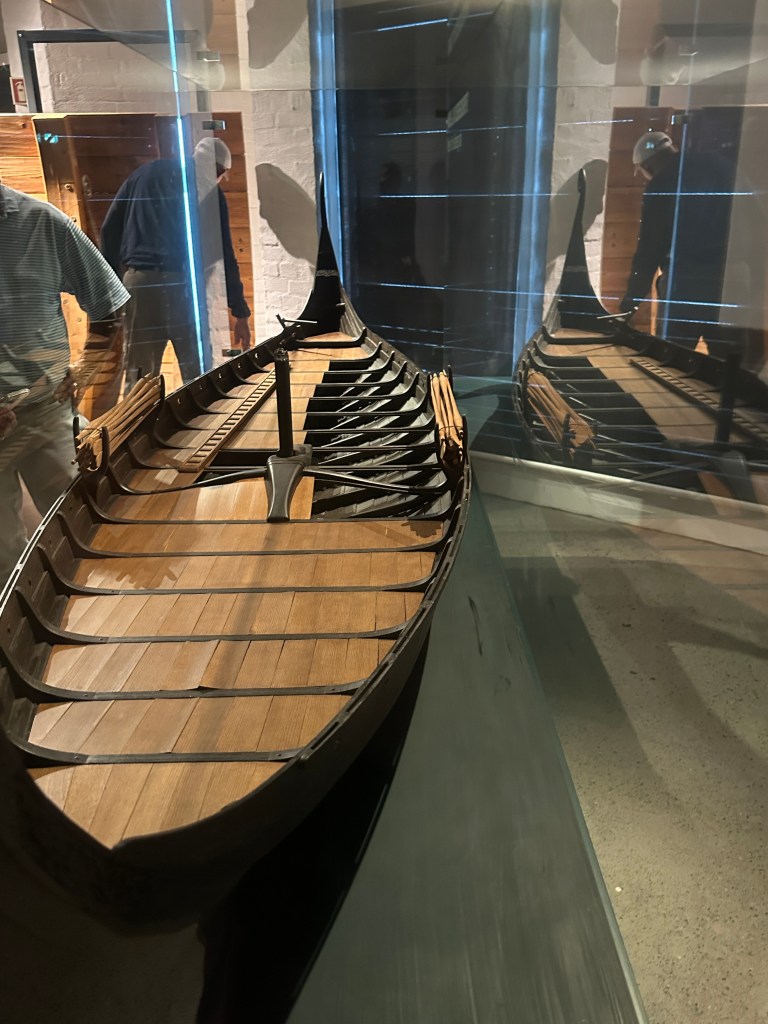
We had a morning tour of Oslo, which included a visit to a viking museum (the main museum was closed for renovations), and my favorite sculture park. At the museum we had a demonstration of the methods of viking shipbuilding, using overlapping planks of wood; and saw a model of an actual viking ship which had been excavated from land — it was a burial ship, which would have housed a body and key possessions of the dead.


Vigeland Scupture Park is inside the Frogner Park in Oslo.
Gustav Vigeland created all 212 granite, bronze, and cast-iron sculptures in the lovely park. Two of his creations, were originally planned for the central city until it was decided to consolidate all of his works in the park, which he designed. The fountain depicts all stages of human life. The monolith includes 121 figures reaching toward the heavens. I loved the small children’s garden with statues of little children surrounding a statue of an unborn child.


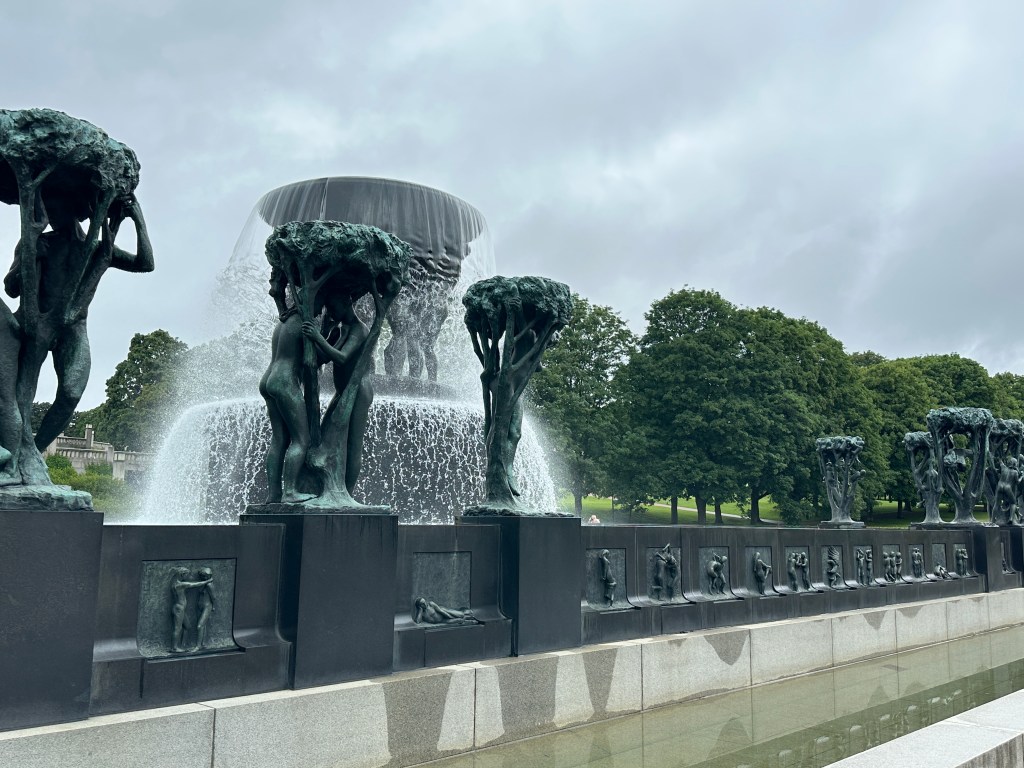


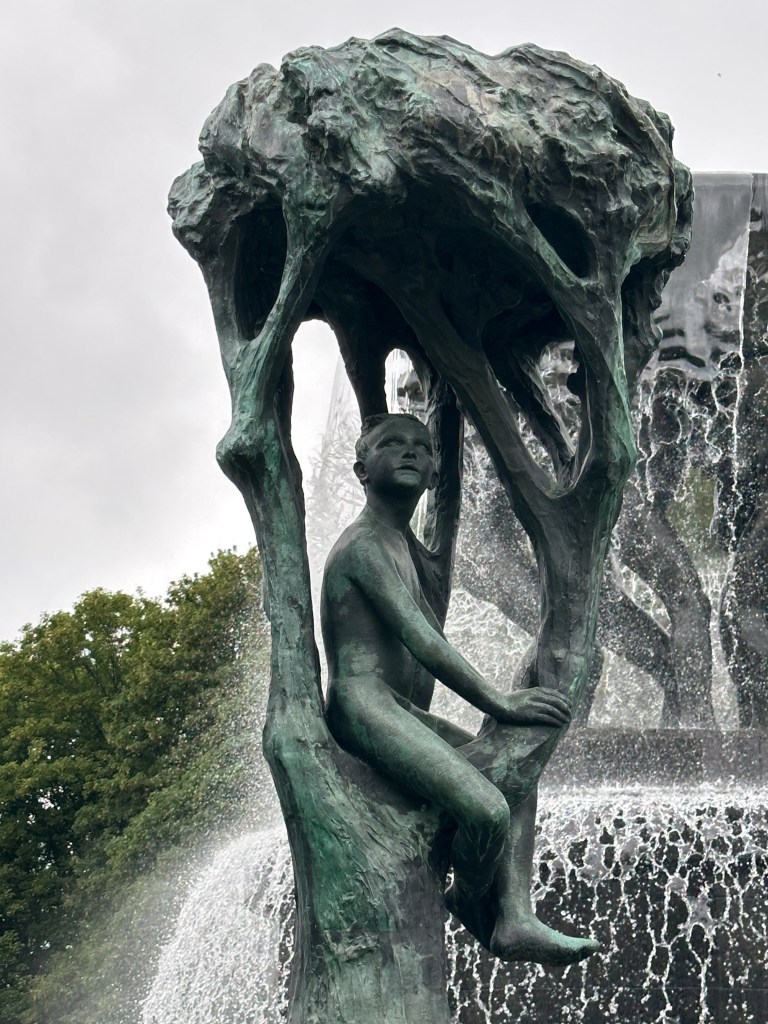
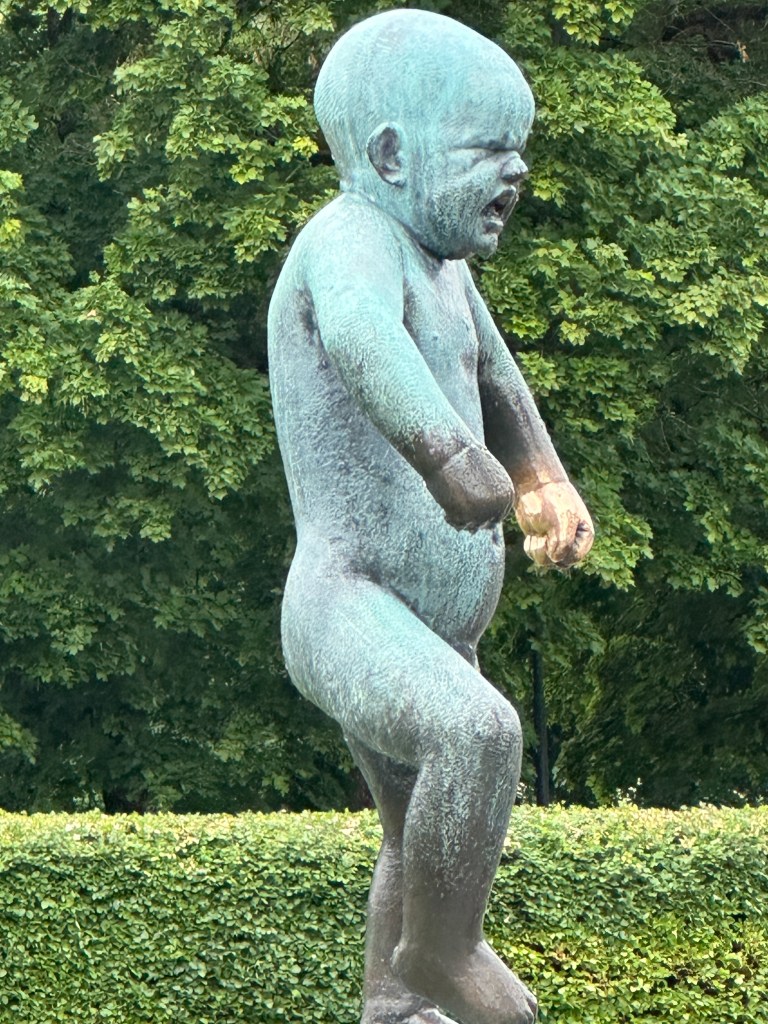


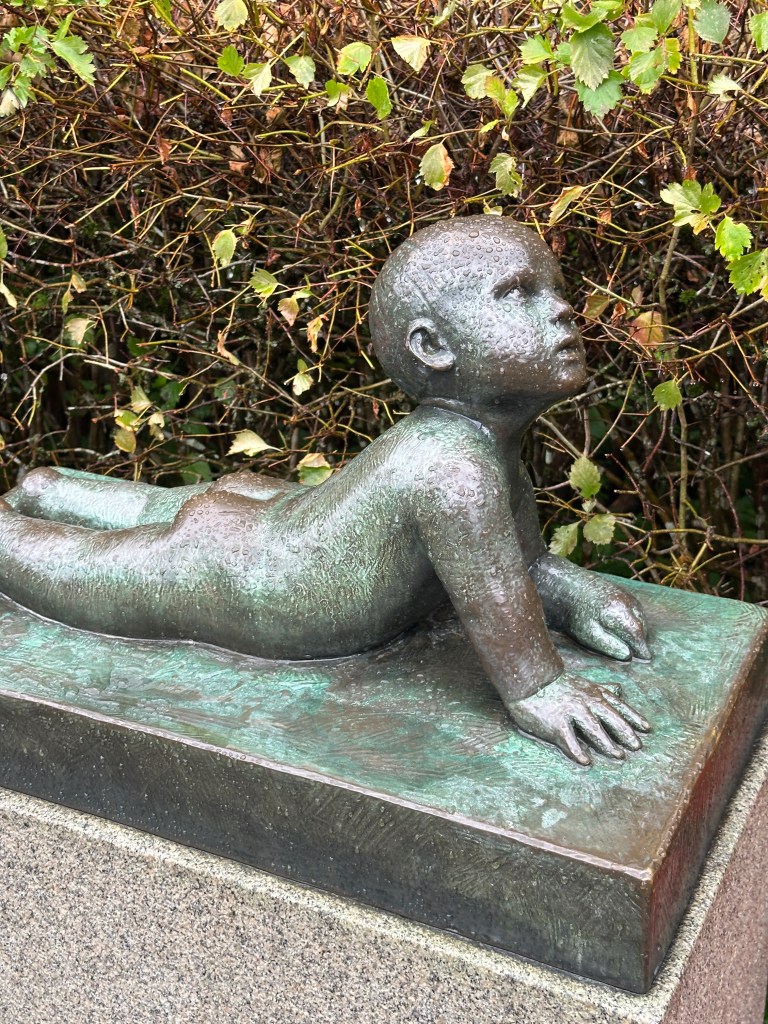

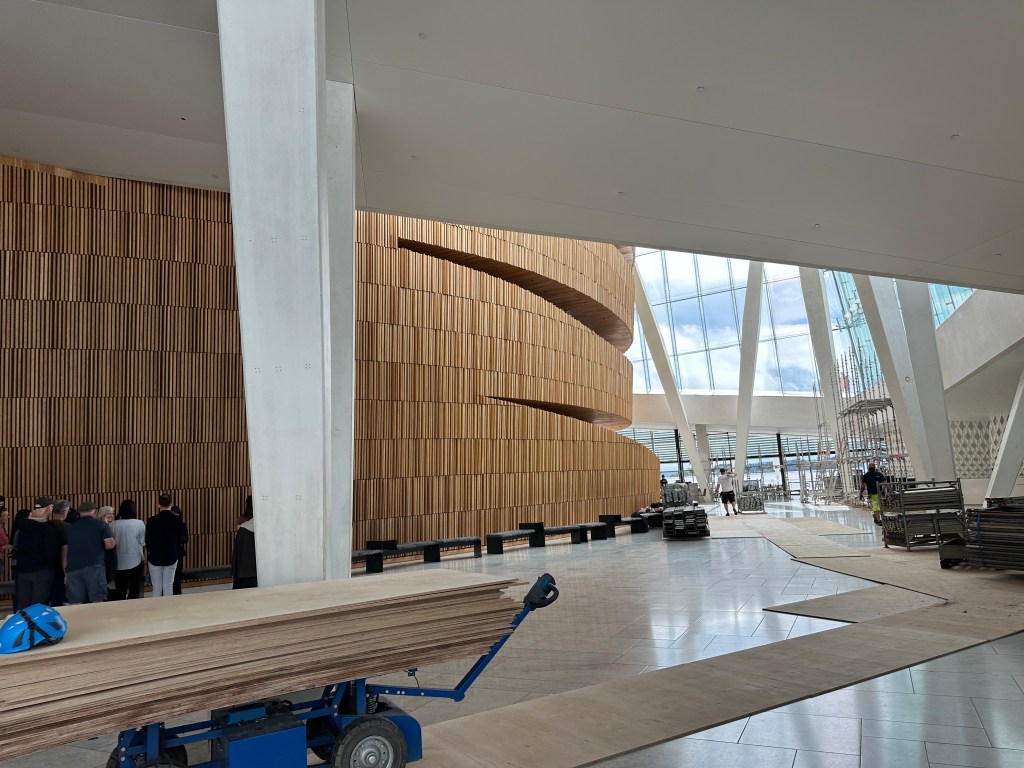
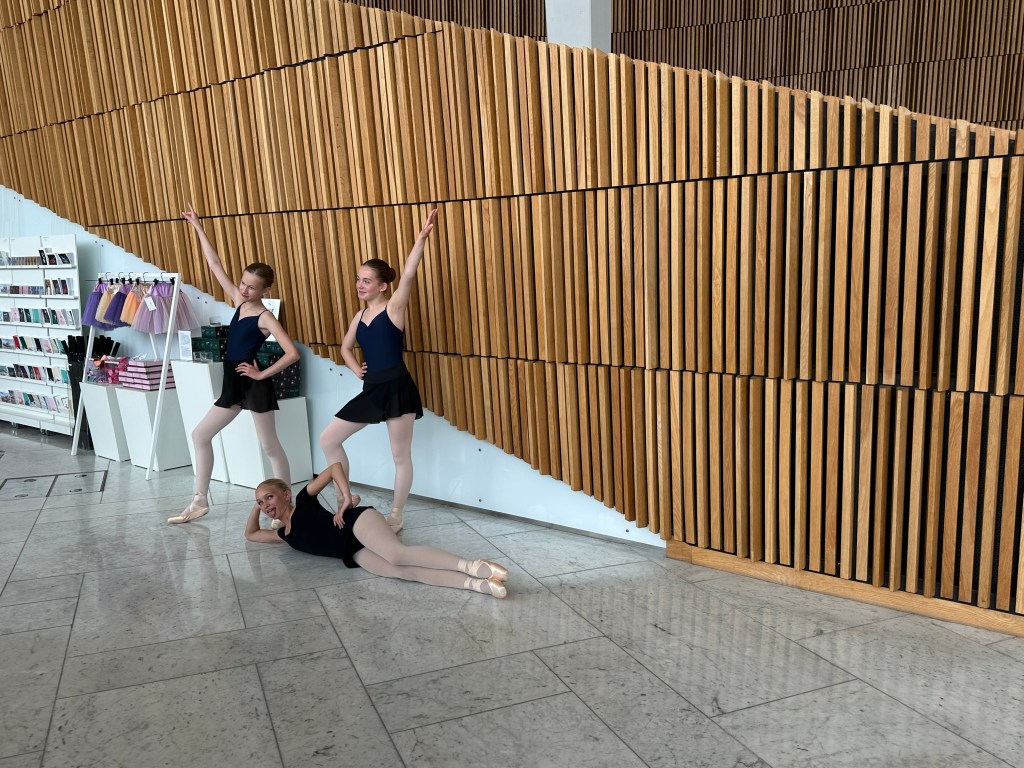
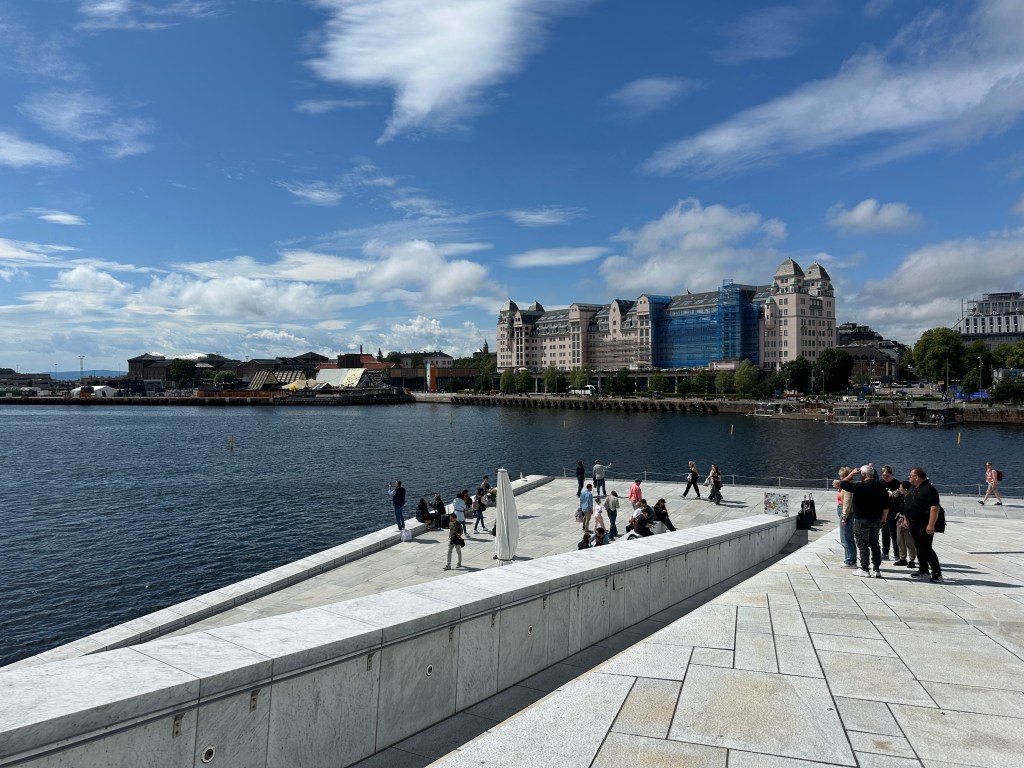
In the afternoon, Chris and I walked to the Opera House and the new Munch museum. I had been to the earlier Munch Museum, which was housed in a small mid-century modern building on the outskirts of the town. The new building is impressive, overlooking the harbour. I learned so much about Munch’s life and artistic inspiration!




Sunday, June 29
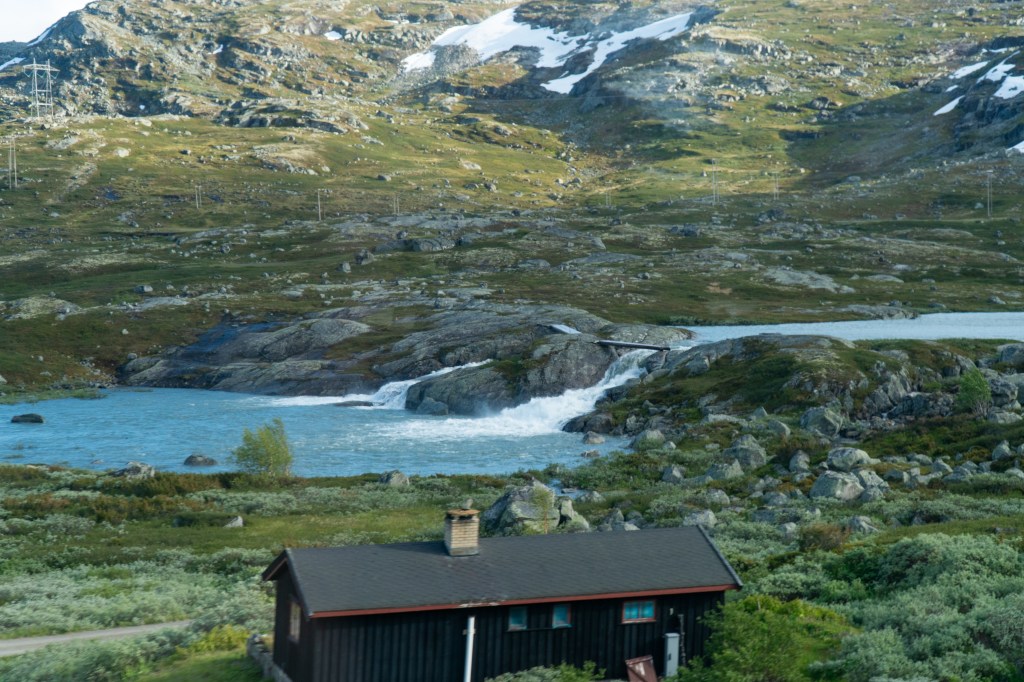
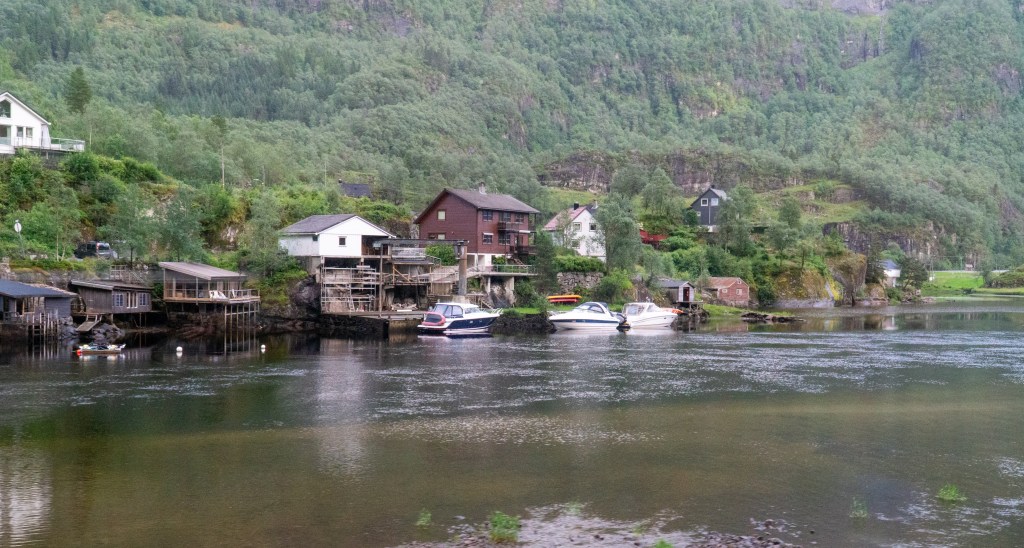
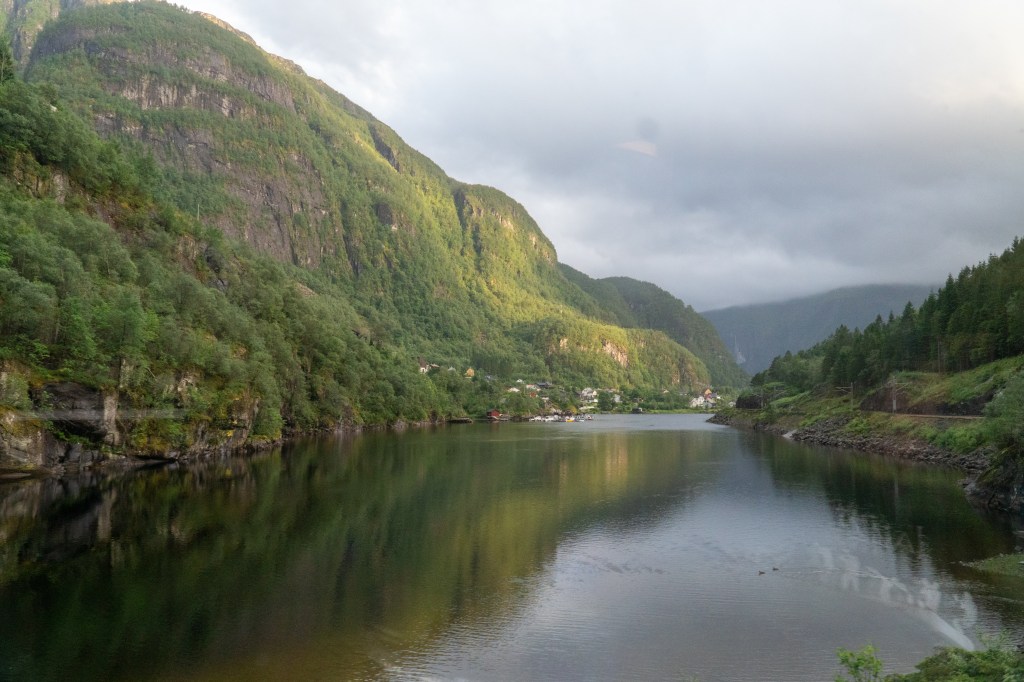
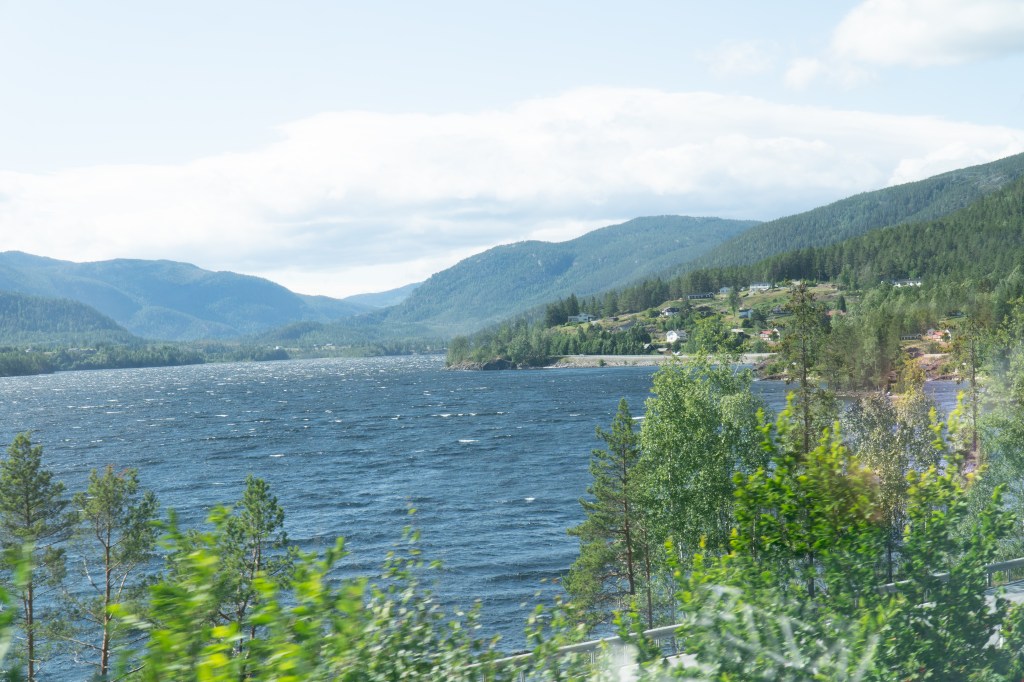
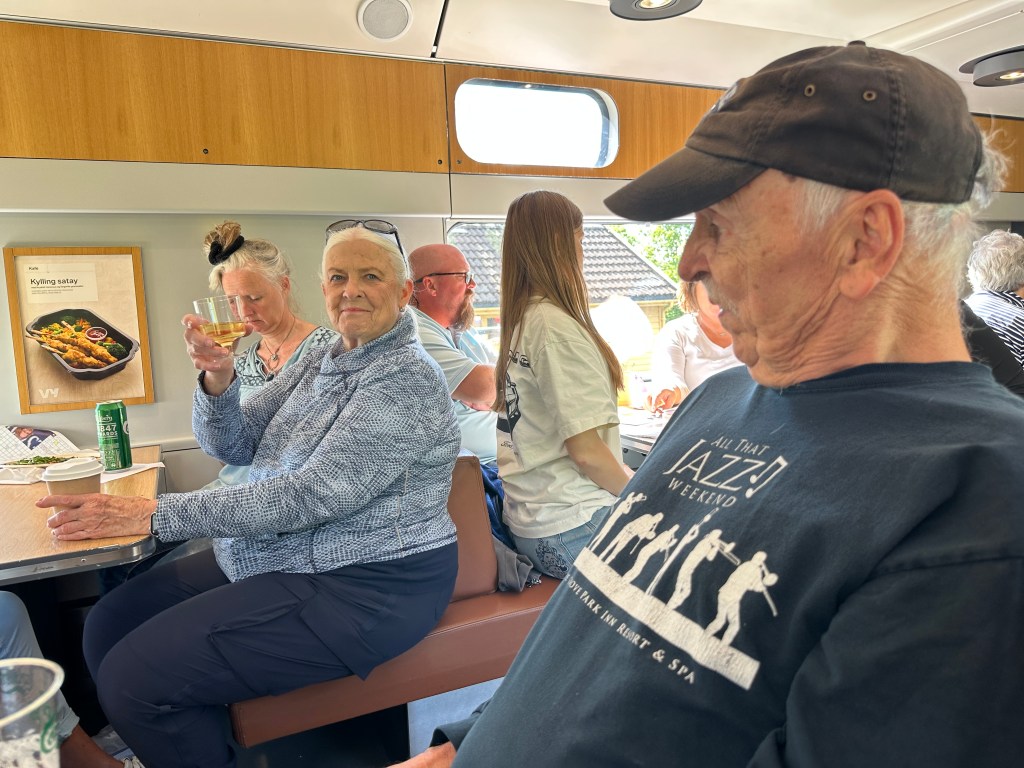
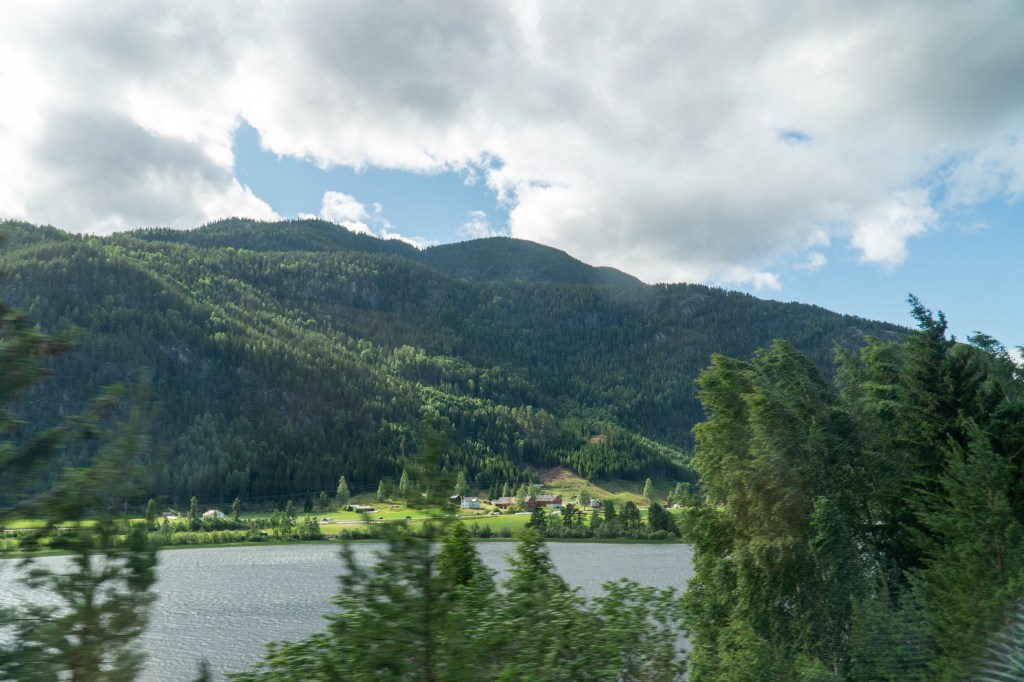
I have long wanted to experience the train ride from Oslo to Bergen, described as one of the most beautiful train rides in the world. Our train was delayed by an hour (for extra “cleaning”), and later during the ride, while they cleared trees off the tracks and electric cables. Strong winds were blowing trees down. So our planned 7 hour ride became 10 1/2. We still saw beautiful scenery! When we finally boarded our ship before midnight in Bergen, the dinner service was long past, but the staff had left some goodies in the stateroom and we found a lounge with excellent soup!





June 30, Monday
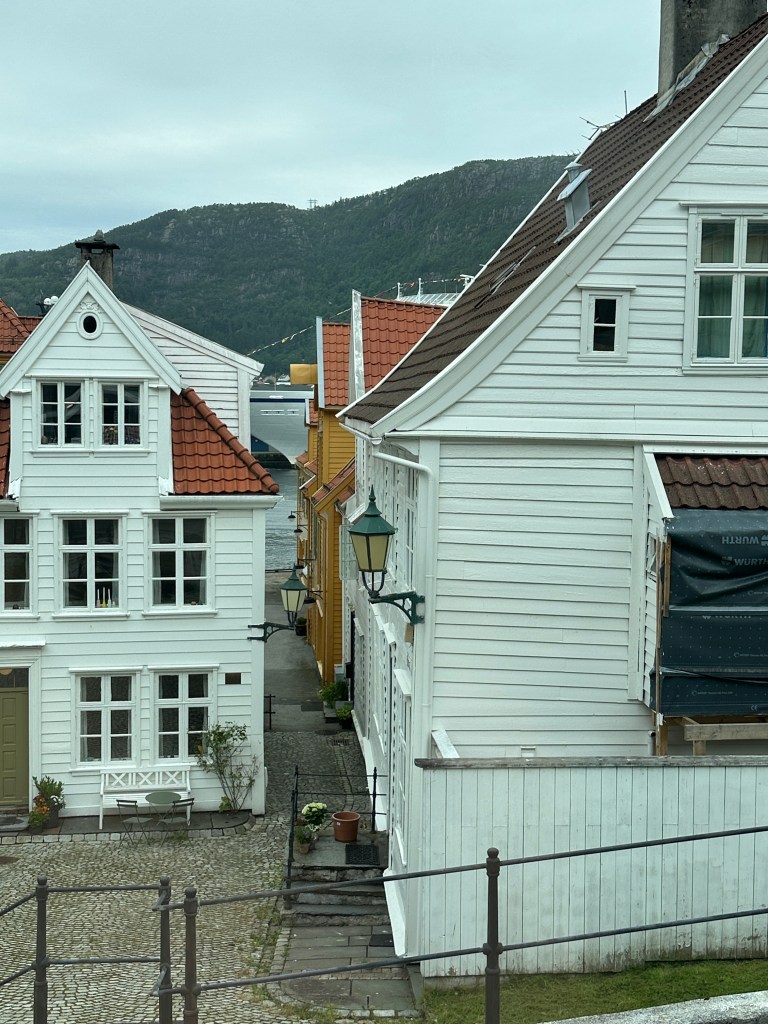
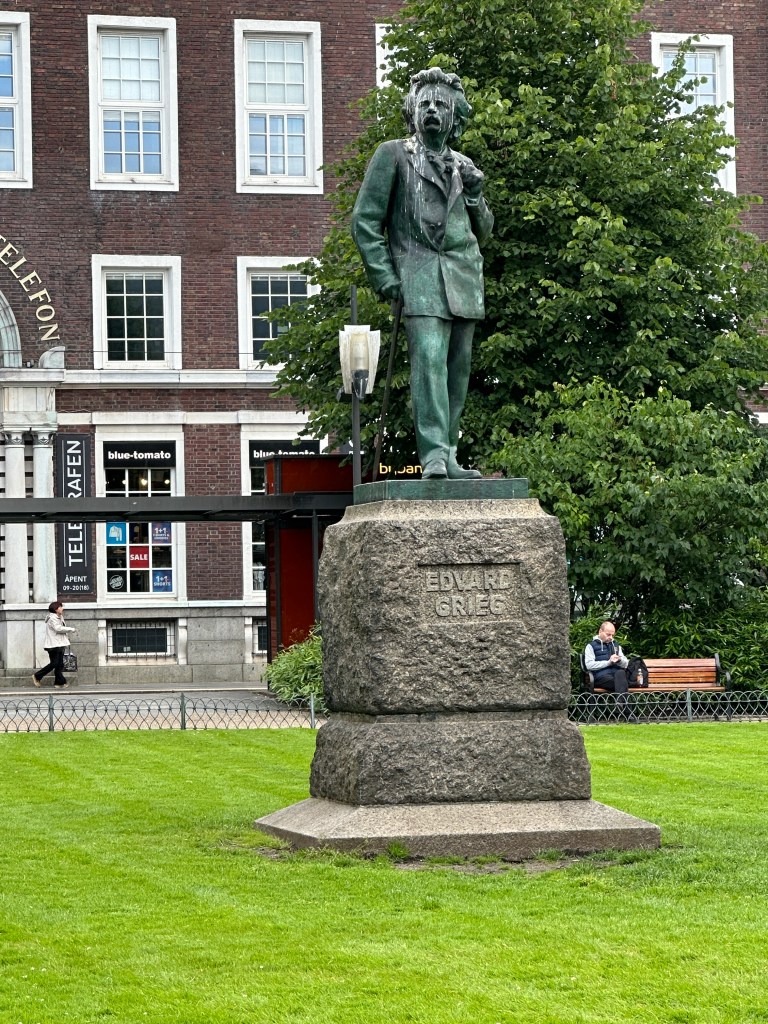
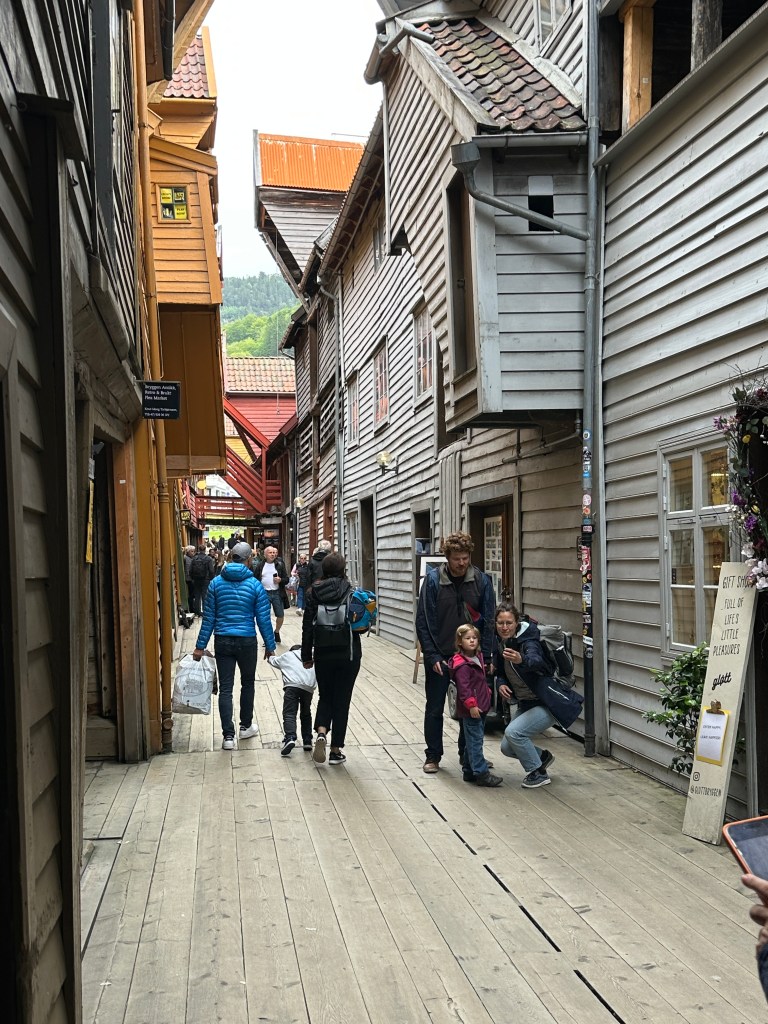
We had a day to get our bearings on the ship and to explore the lovely town of Bergen. Ole Bull, who was a composer and virtuostic violinist (on par with Paganini, according to Robert Schumann), helped discover and encourage a young Edvard Grieg.
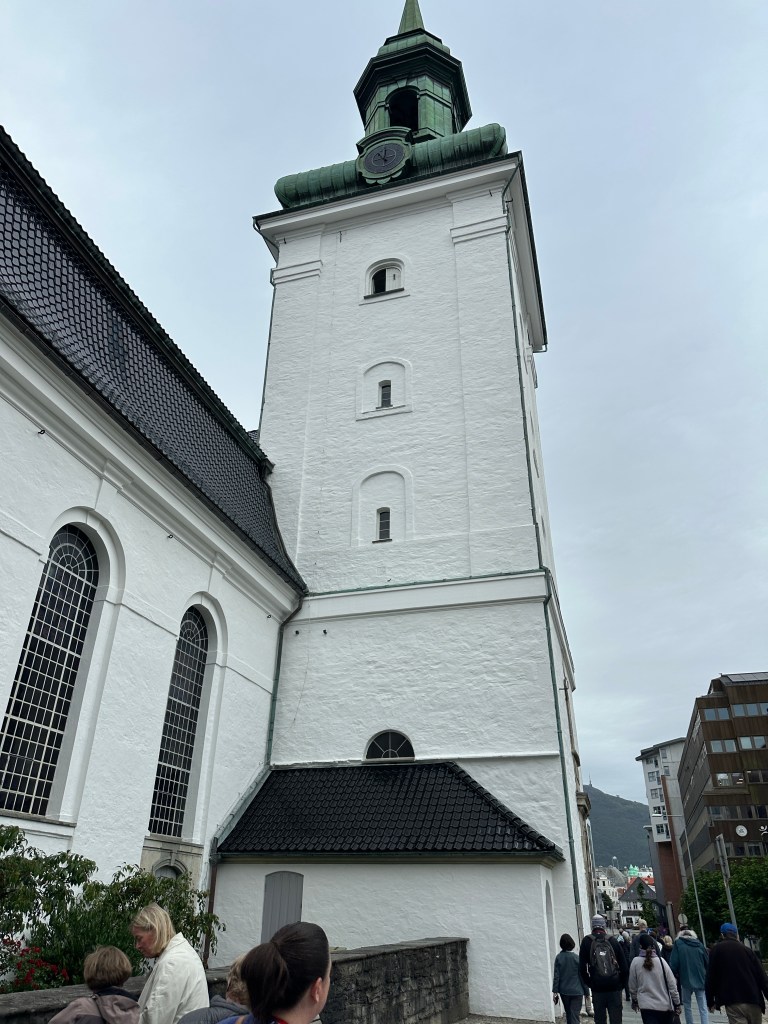
We visited Nykirken, a historic church, also known as the “children’s church,” with ruins of an archbishop’s palace underneath. History (or folklore) has it that some young hooligans set fire to part of the town, and as punishment were locked into the cellar of ruins. Food was lowered by dumbwaiter. Occasionally dead bodies were also lowered. Imagine the nightmares of these kids when they were finally released! The church is called the children’s church because of the many children’s events held there.
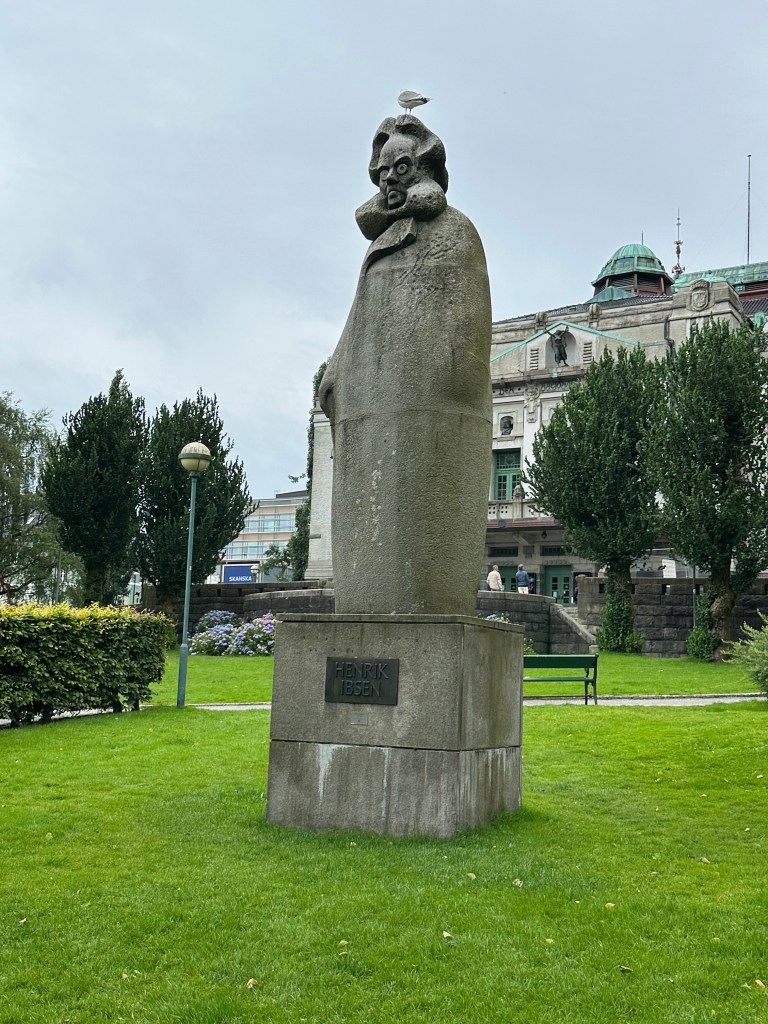
The Theatre had an important role in the town. From Wikipedia: “Opened under the name Det Norske Theater in 1850, the theatre has roots dating back to its founding on the initiative of the Norwegian violinist Ole Bull. The theatre was created to develop Norwegian playwrights. Henrik Ibsen was one of the first writers-in-residences and art-directors of the theatre and it saw the première in Norway of his first contemporary realist drama The Pillars of Society (Samfundets støtter) on 30 November 1877.”








July 1, Tuesday
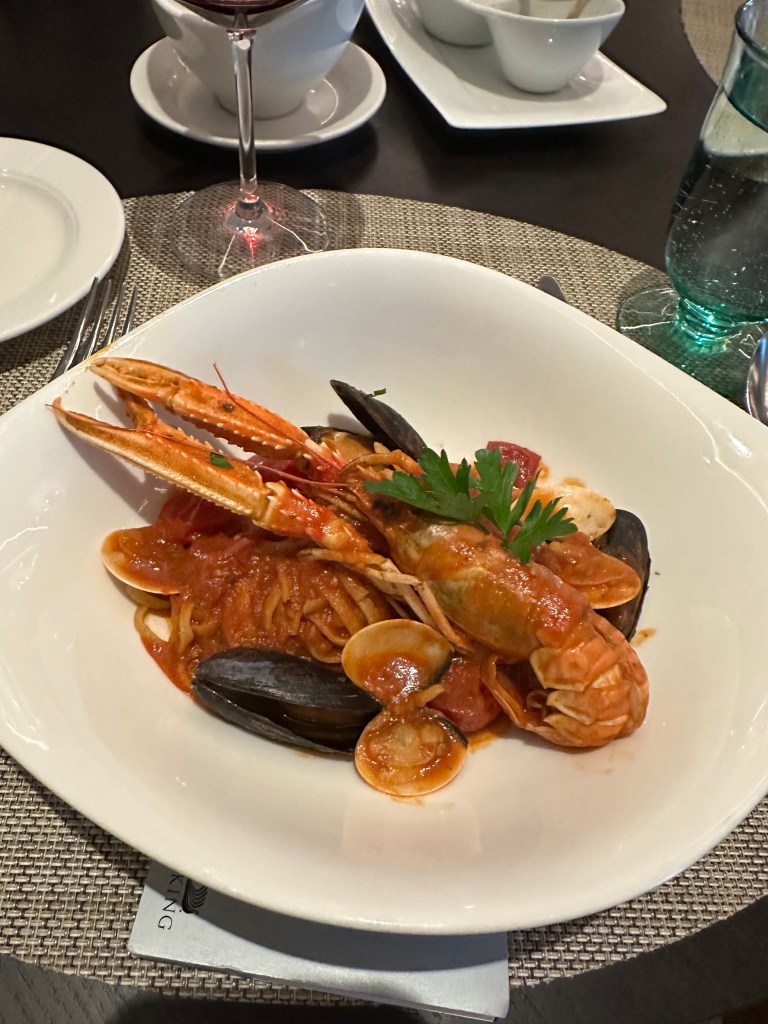
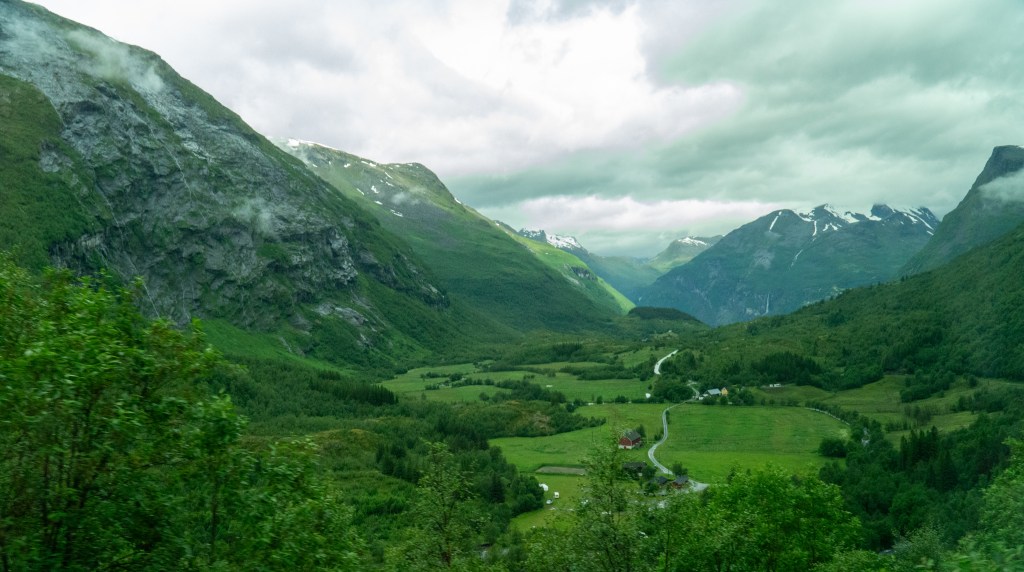
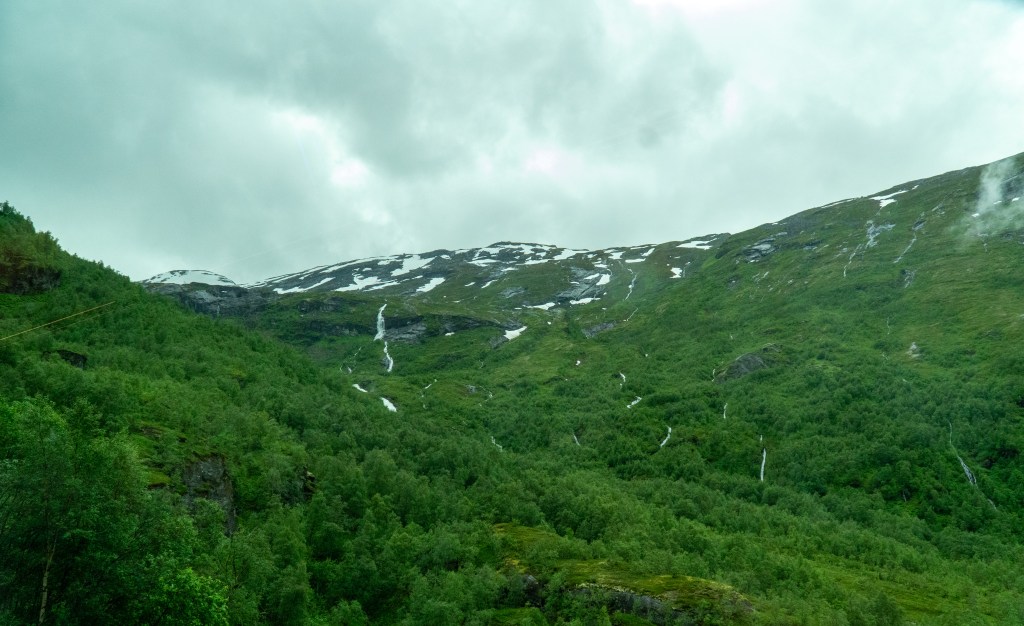
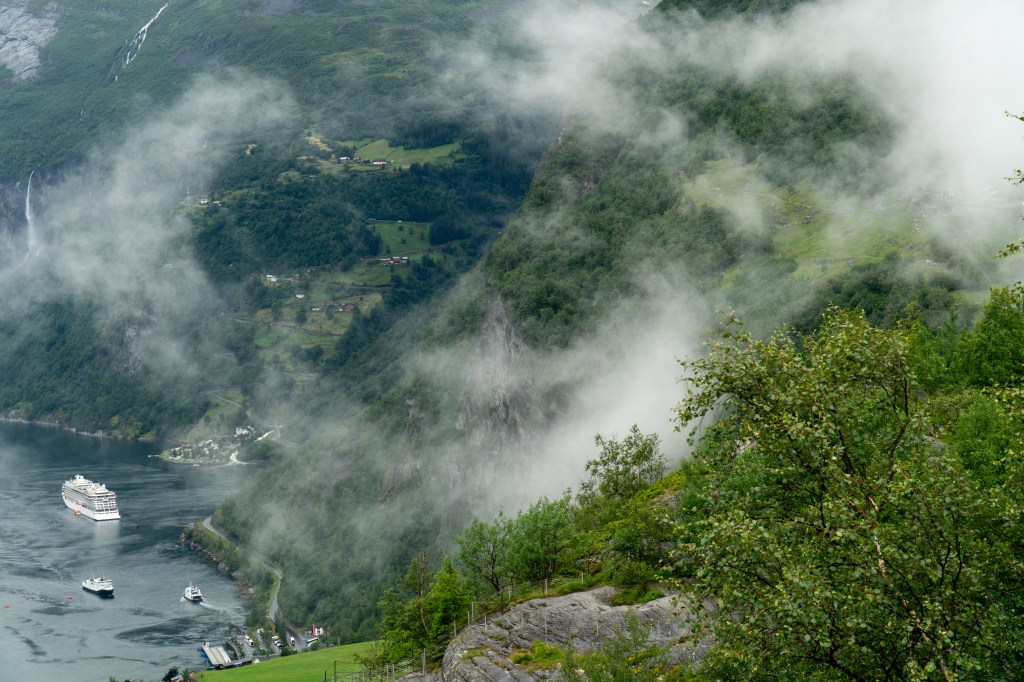
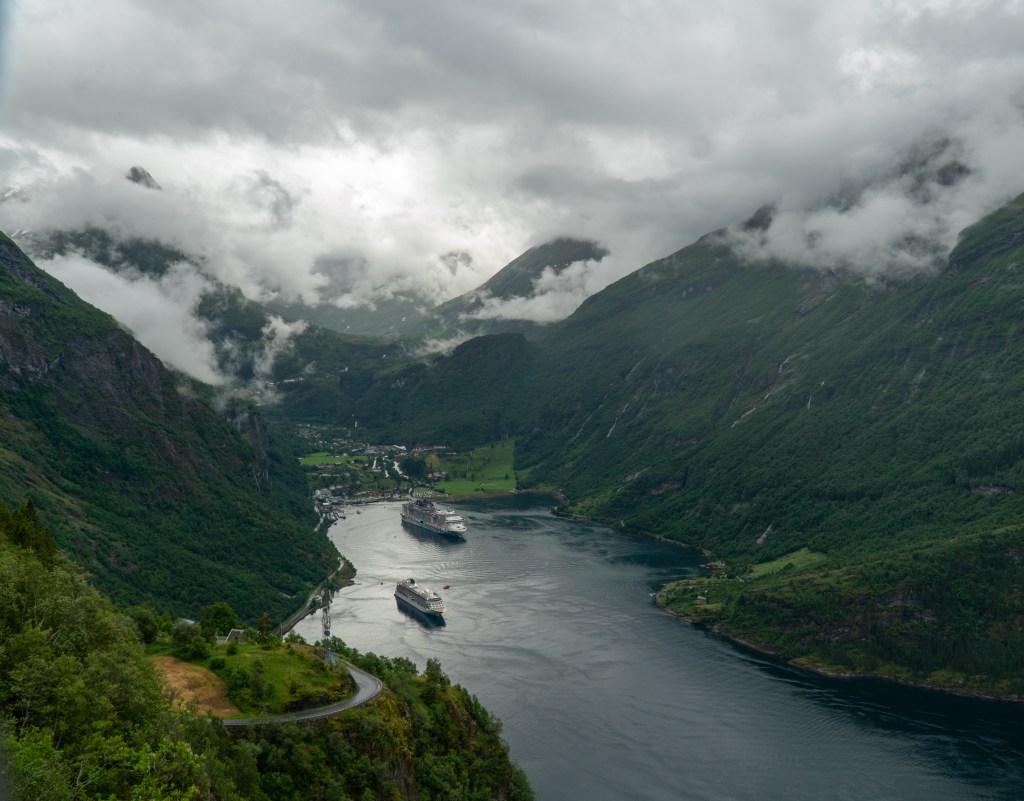
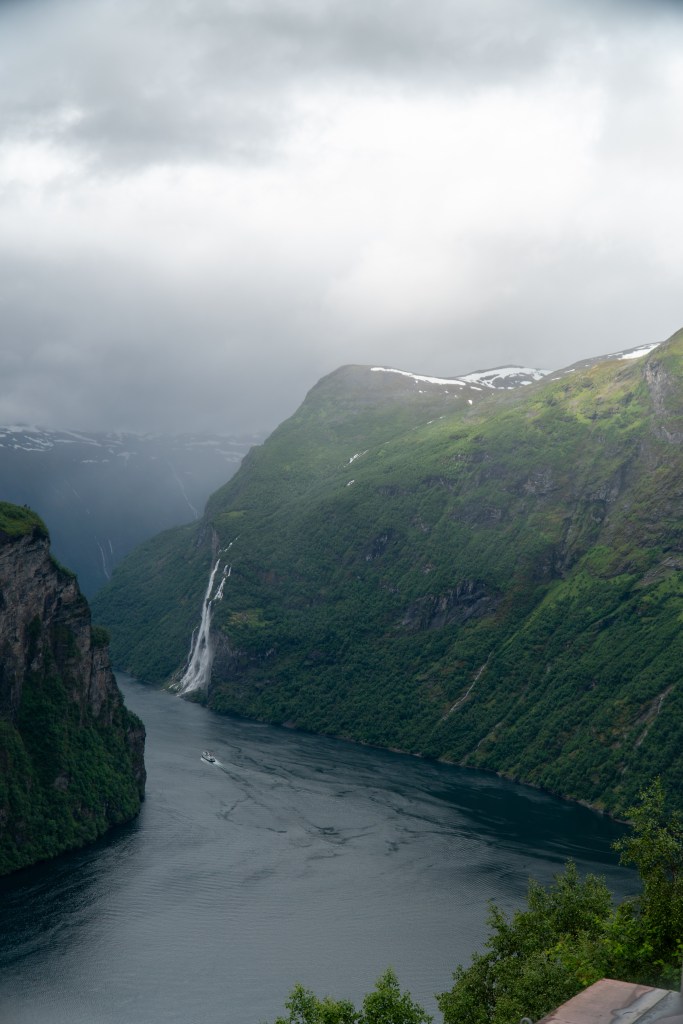
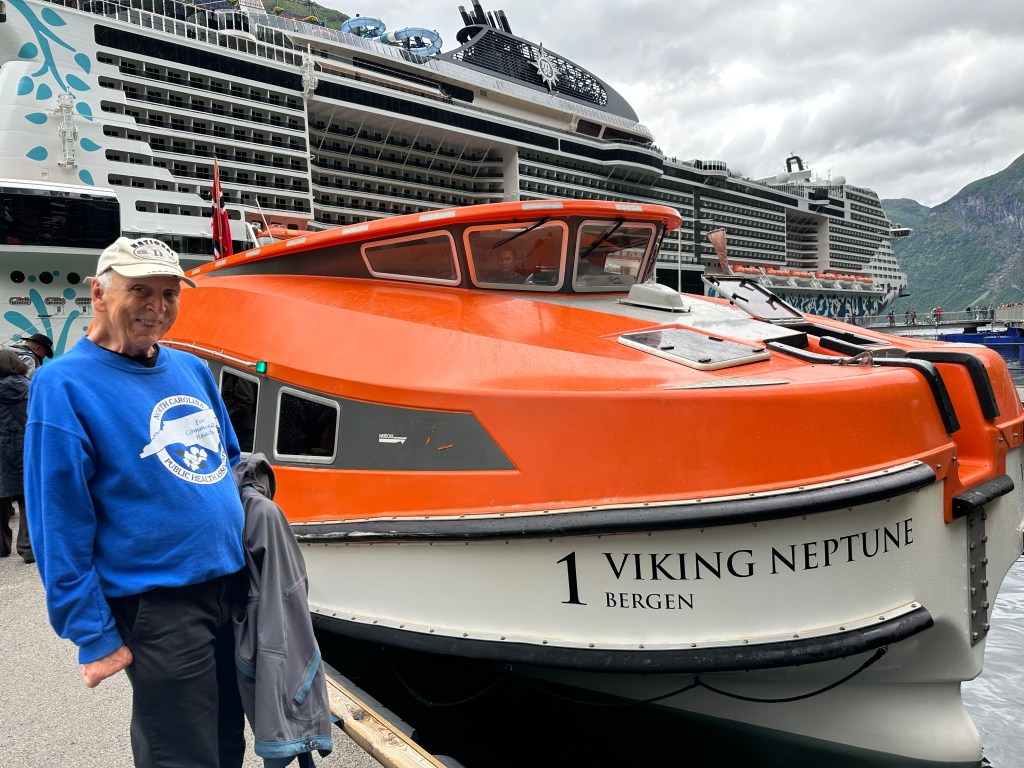
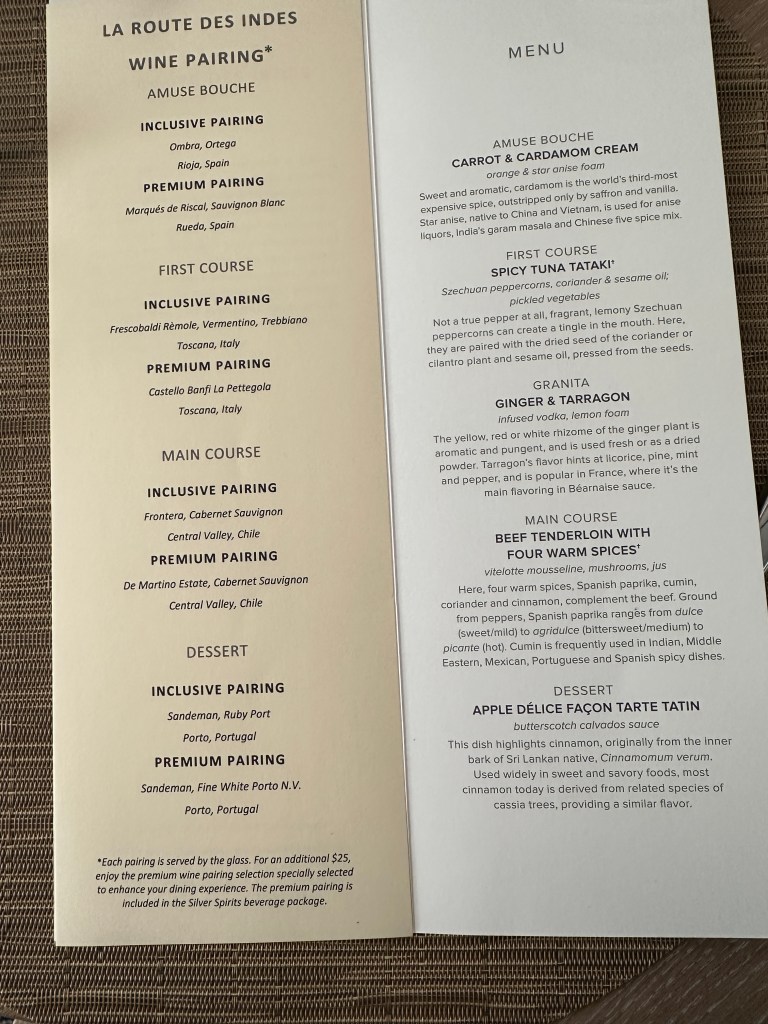
The ship sailed overnight and arrived at Geiranger, which is located in the Geirangerfjord, a UNESCO World Heritage site. We had a scenic drive to the Eagle’s Bend Outlook, where we could view the Seven Sisters and Bridal Veil falls. In the evening, we had our first meal at the Chef’s Table, which pairs wine with the different food courses. The theme of this meal was the Route to the Indies.







July 2, Wednesday
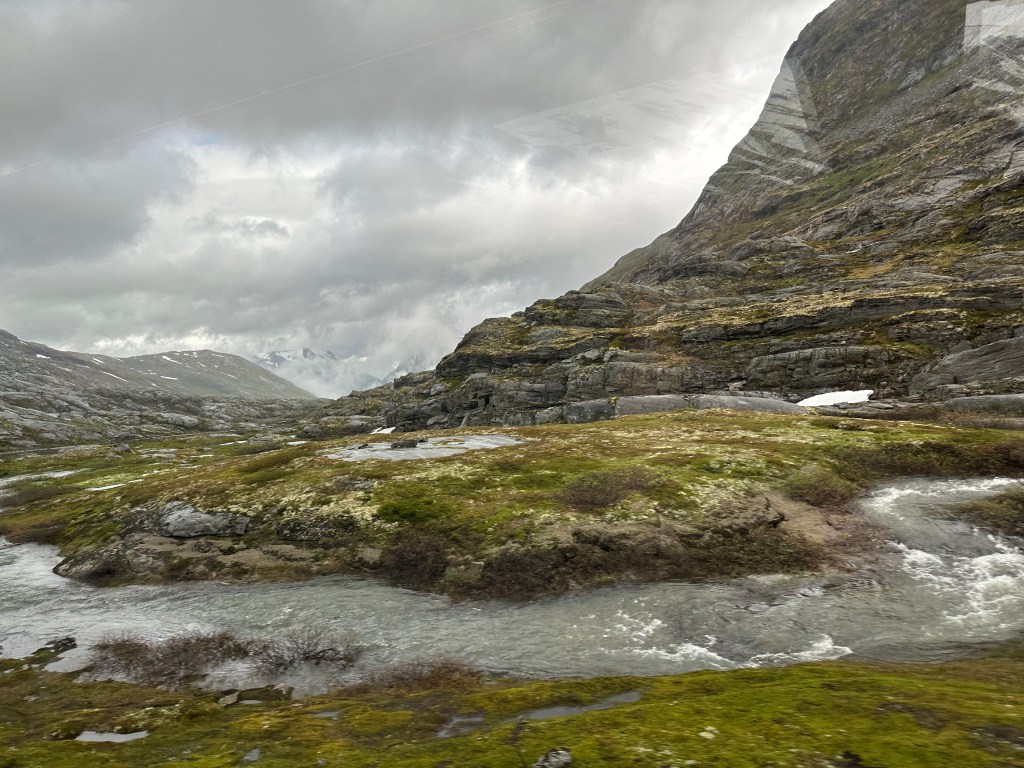
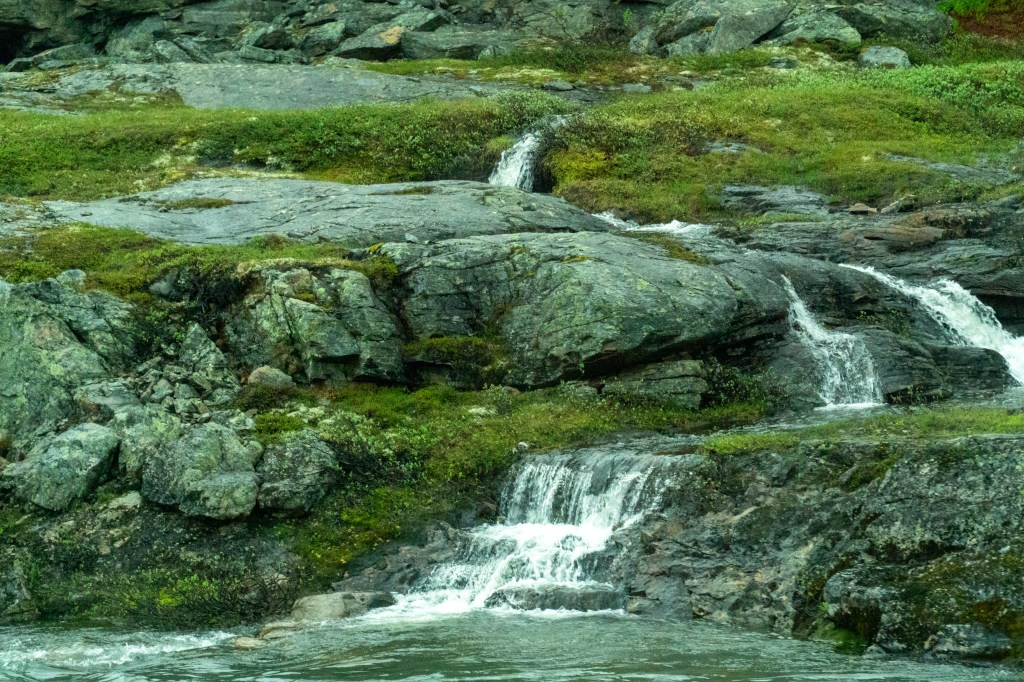
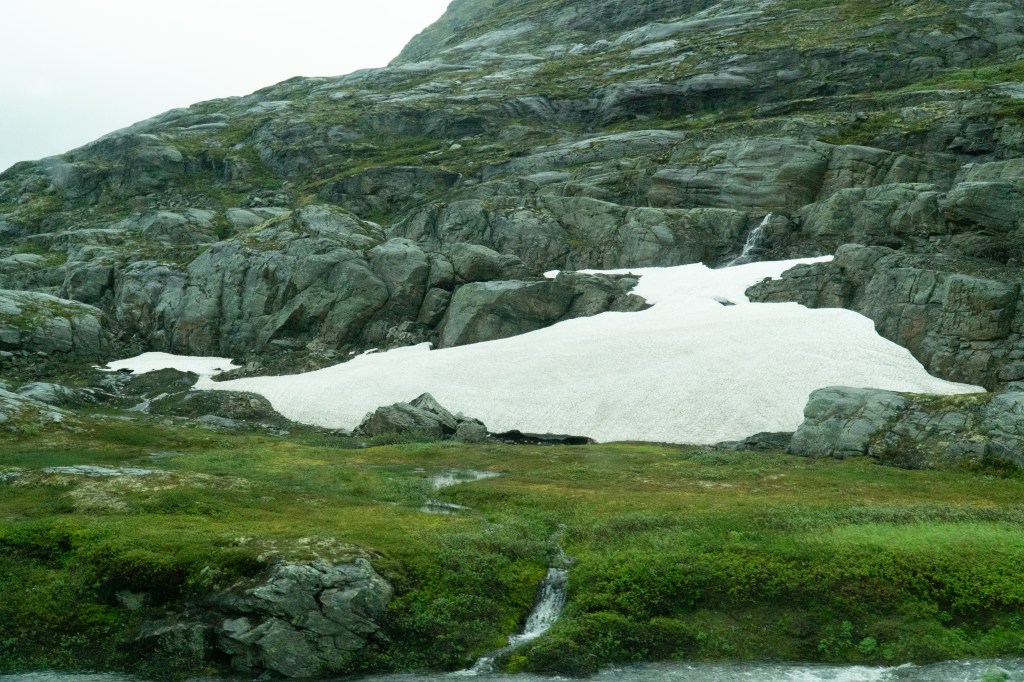
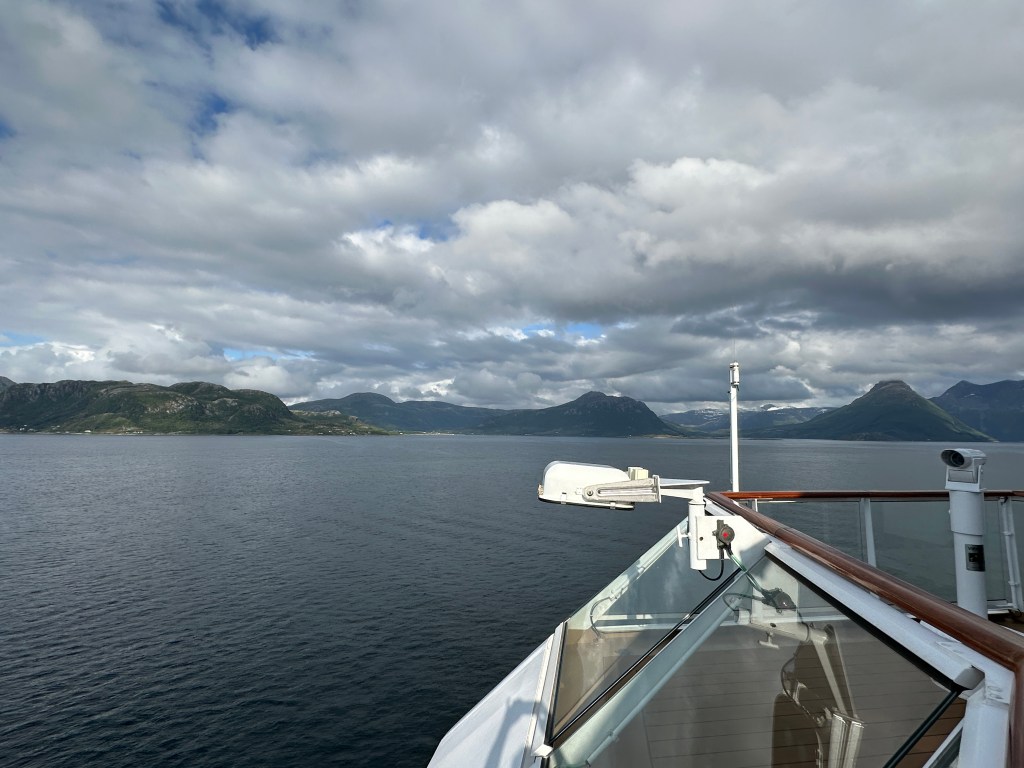
This was a day at sea as we made our way up the coast. Along the way, we passed the demarcation of the arctic circle. We also had a great view of Torghatten: from wikepedia below:
“Torghatten is a mountain located along the coastal area of northern Norway that features a distinctive natural tunnel passing completely through it. According to legend, the hole was made by the troll Hestmannen while he was chasing the beautiful woman Lekamøya. As the troll realized he would not overtake her, he released an arrow to kill her, but the troll-king of Sømna threw his hat into the arrow’s path to save her. The hat turned into the mountain with a hole in the middle.”
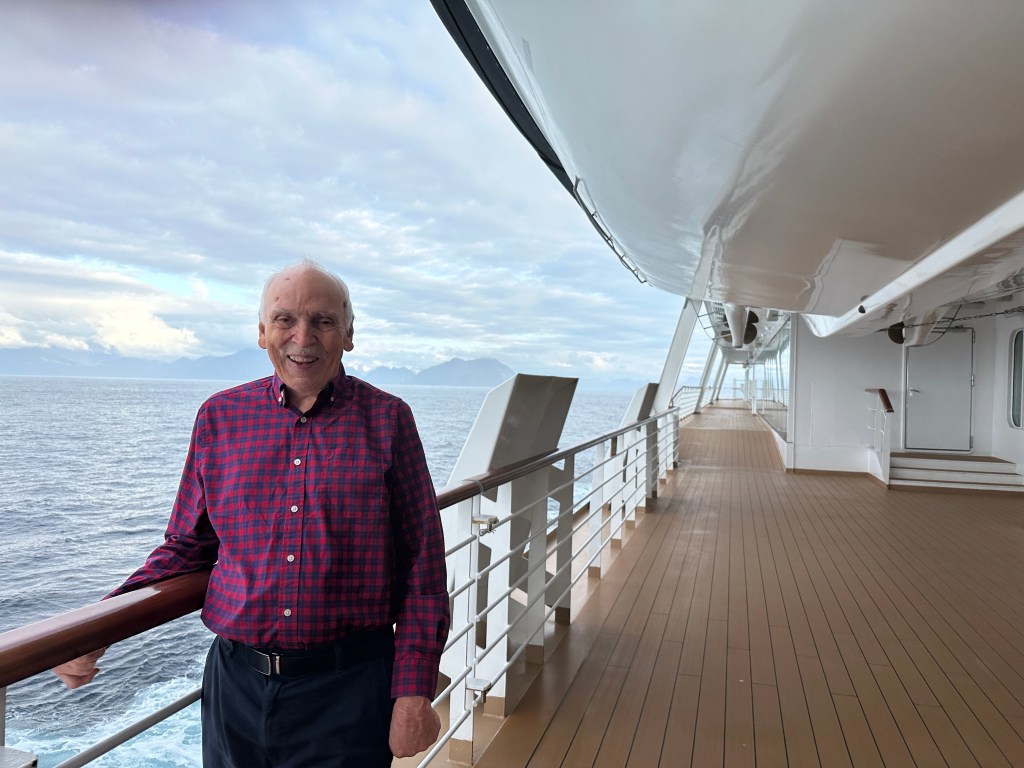
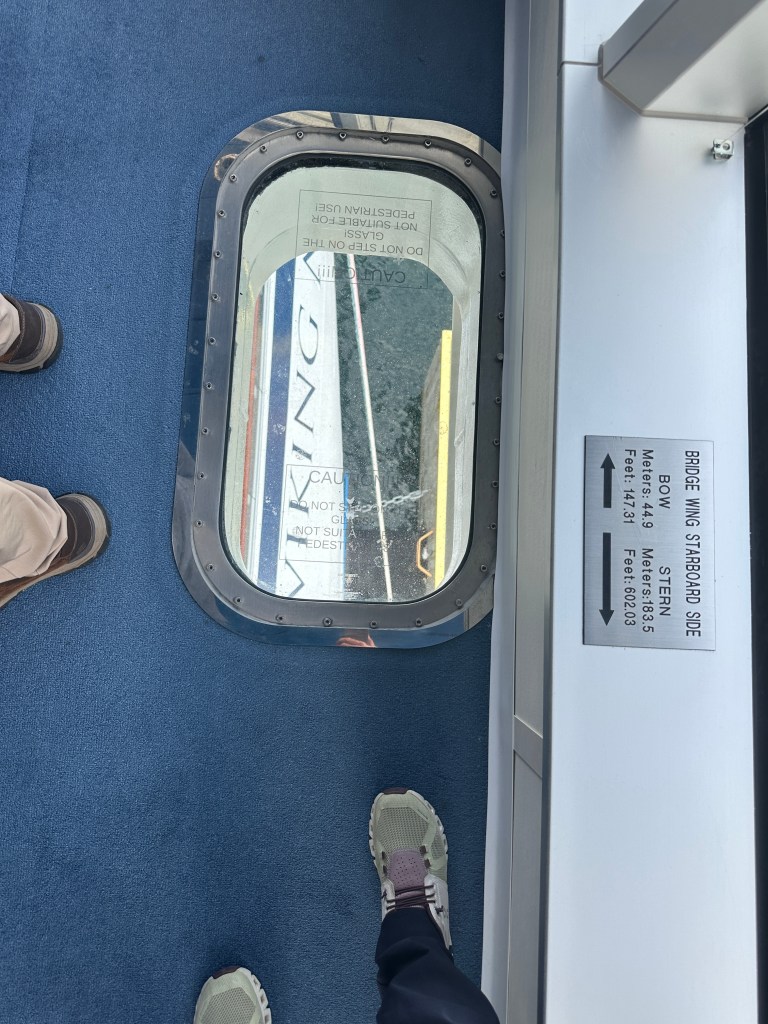
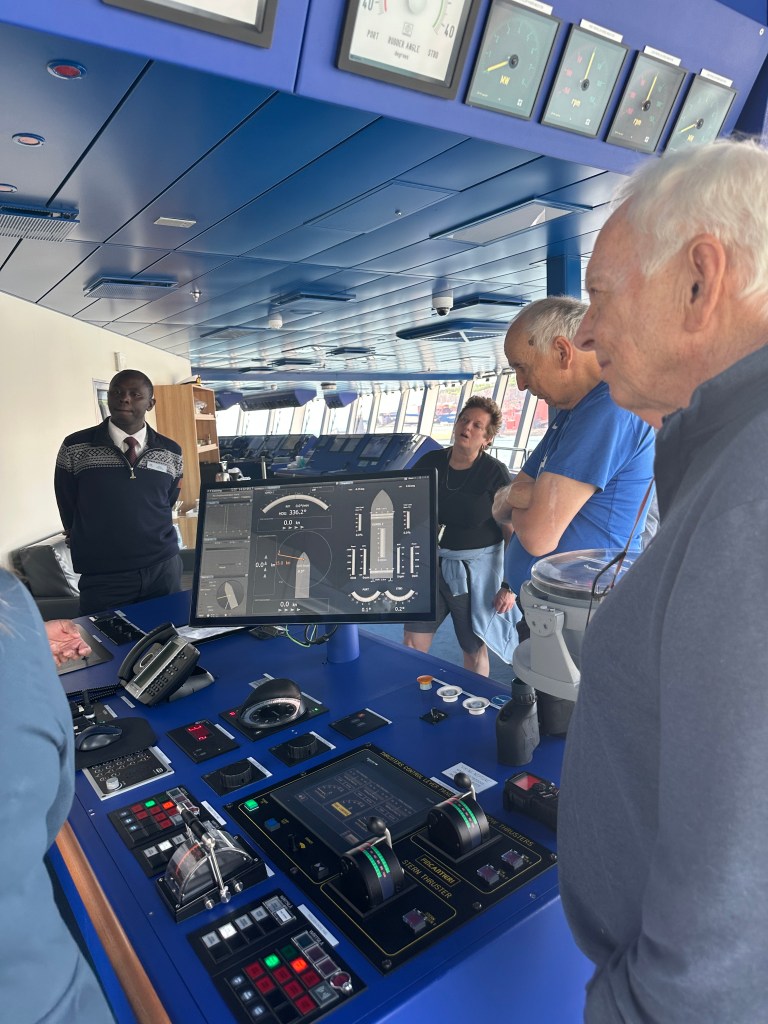
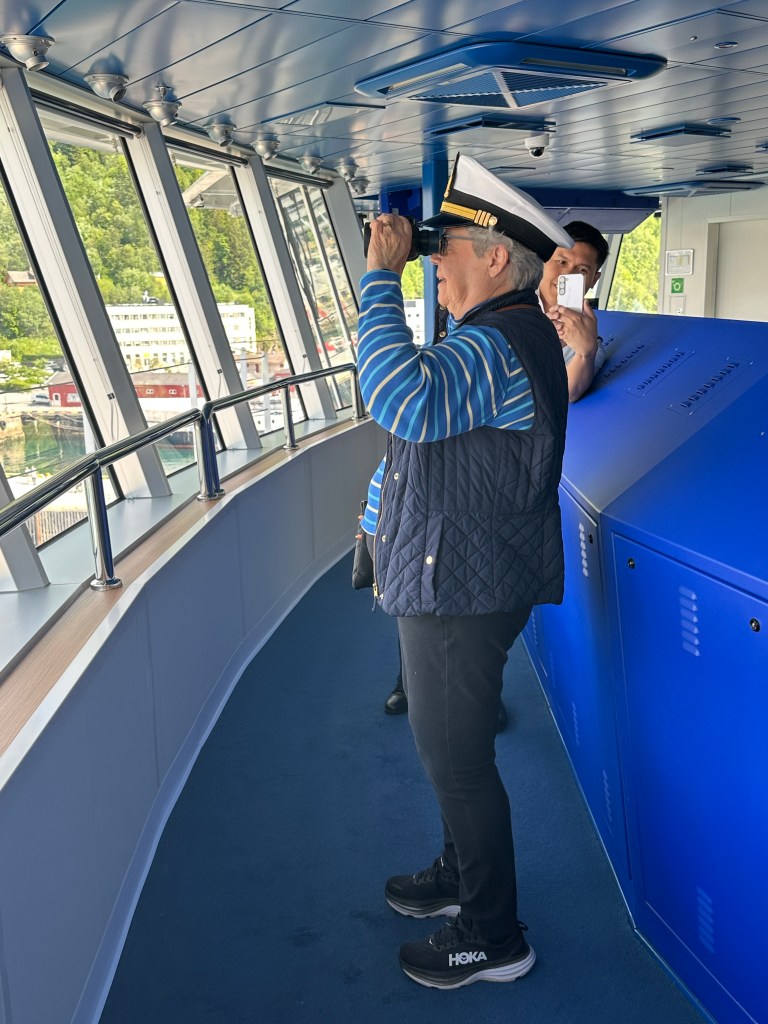
We had a tour of the bridge. We learned that the senior officers are from Norway and the Philippines.





July 3, Thursday
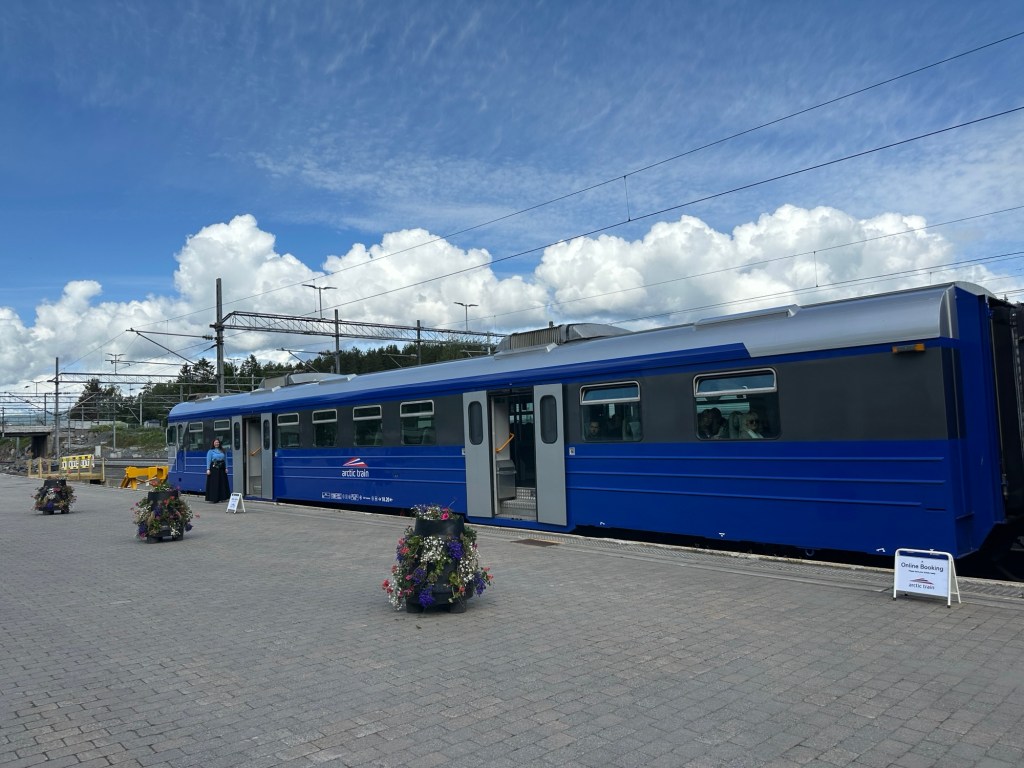
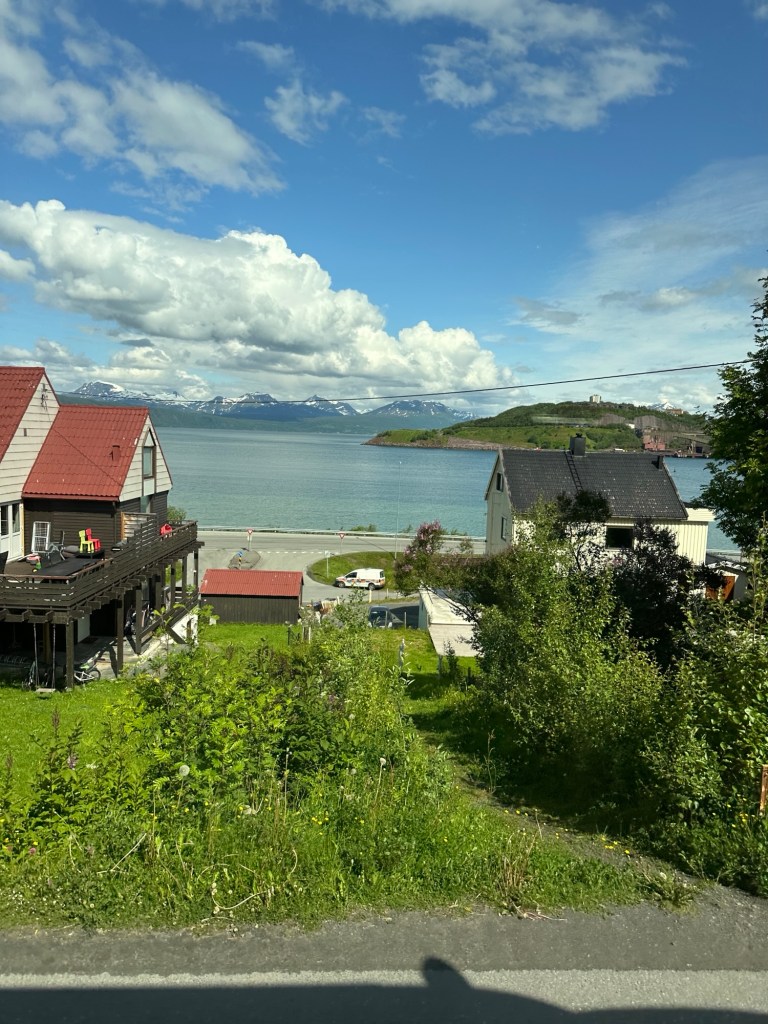
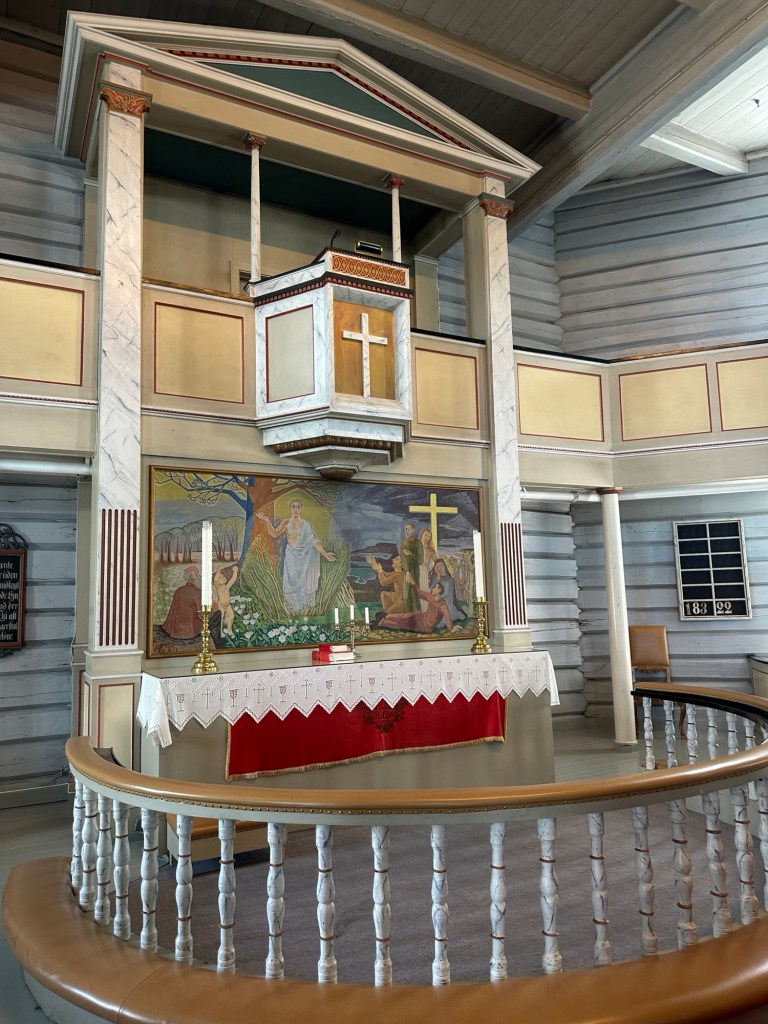
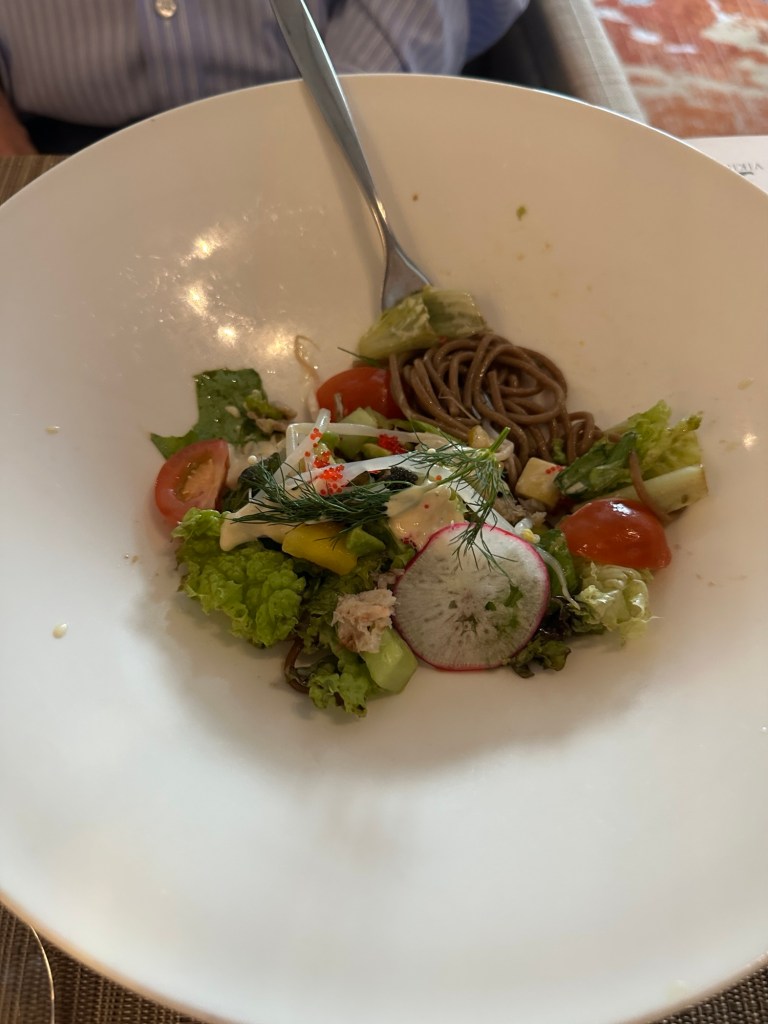
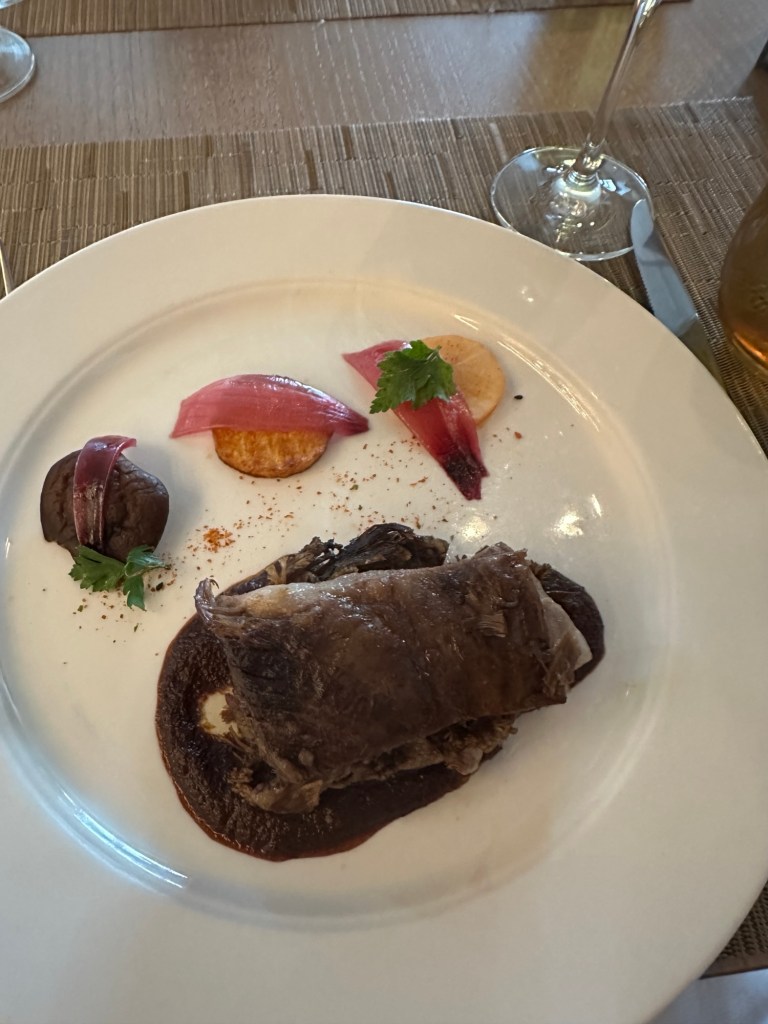
We arrived in Narvik, in the Ofotfjorden, within the Arctic Circle. We toured the old town, visited the famous railroad station, and the main church, where members of the choir treated us to some folk songs. We had a tour of the bridge, and enjoyed our second meal at the Chef’s Table, this time with a Korean themed menu.







July 4, Friday
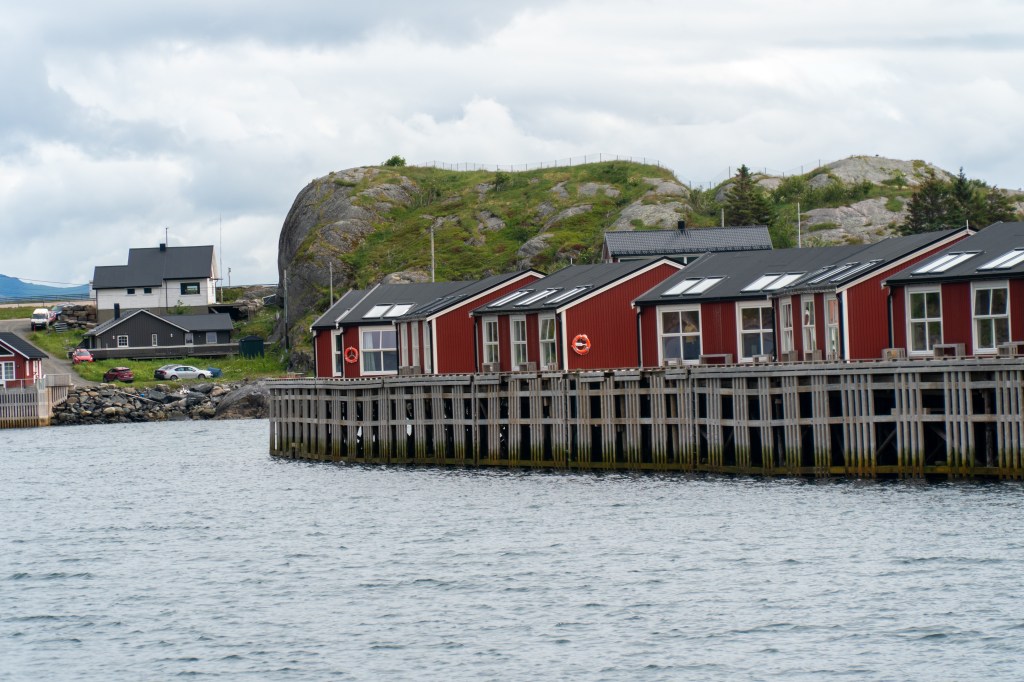
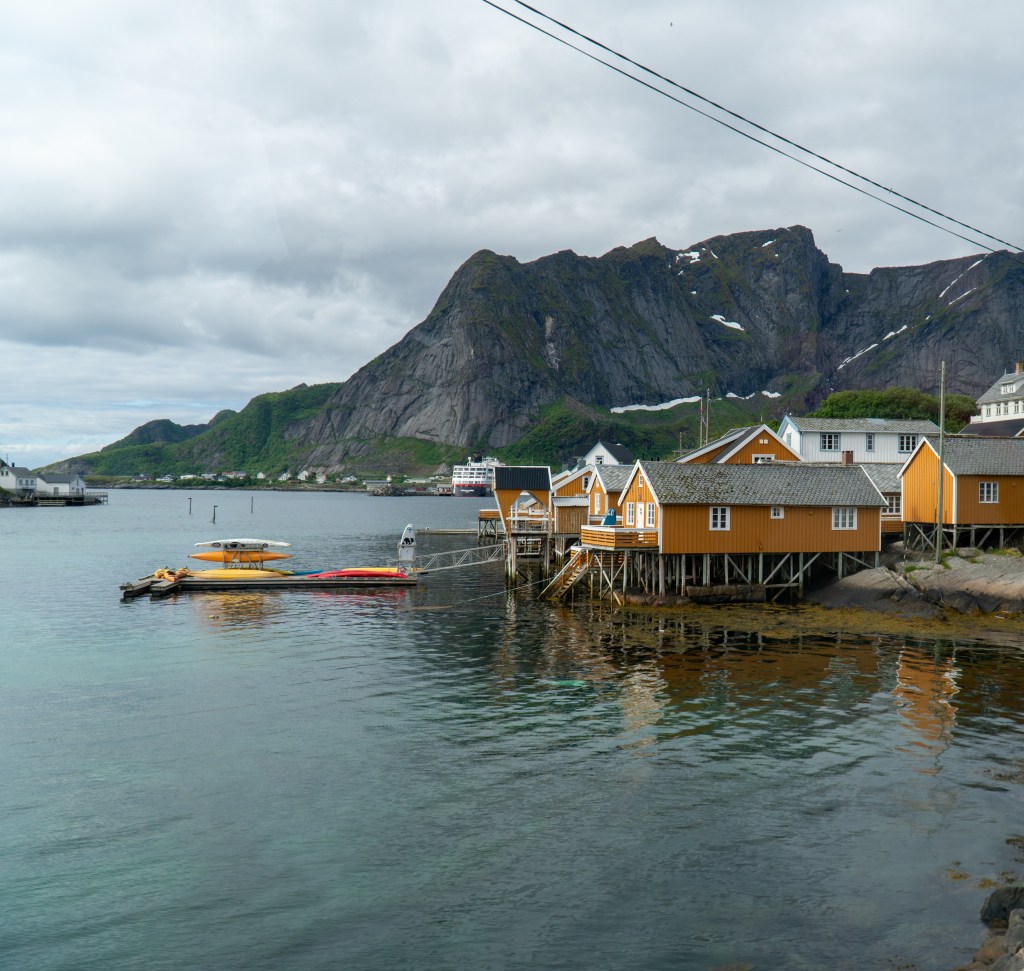
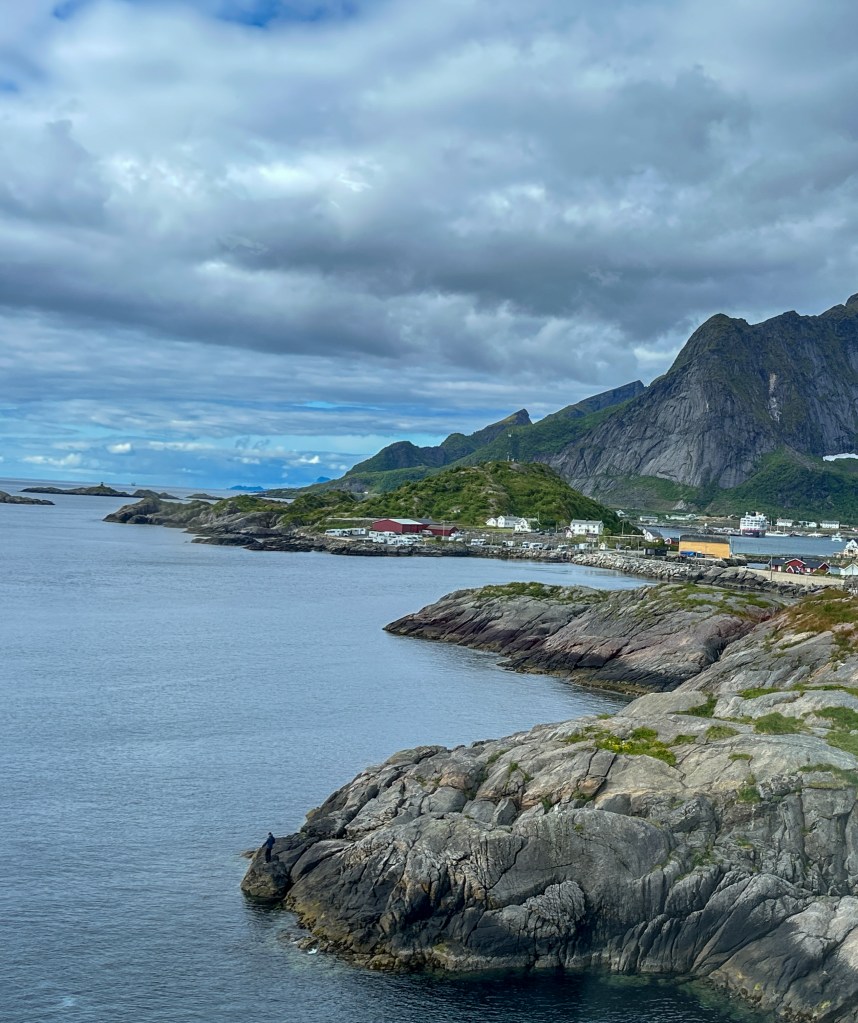
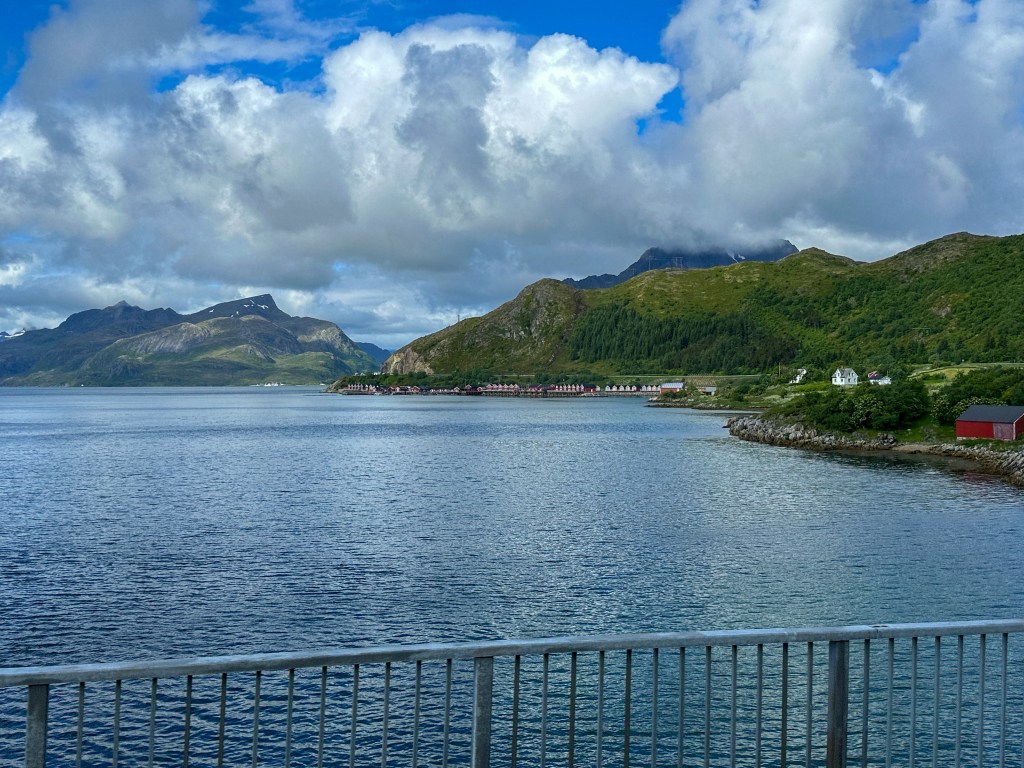
We spent a day in the town of Leknes, in Lofoten. The Lofoten islands are over a hundred miles off the Norway mainland, and are home to small fishing villages. We saw fish drying racks along the way in our bus and boat tour. Some of the homes of fishers are right on the water so they can fish from their porches.





July 5, Saturday
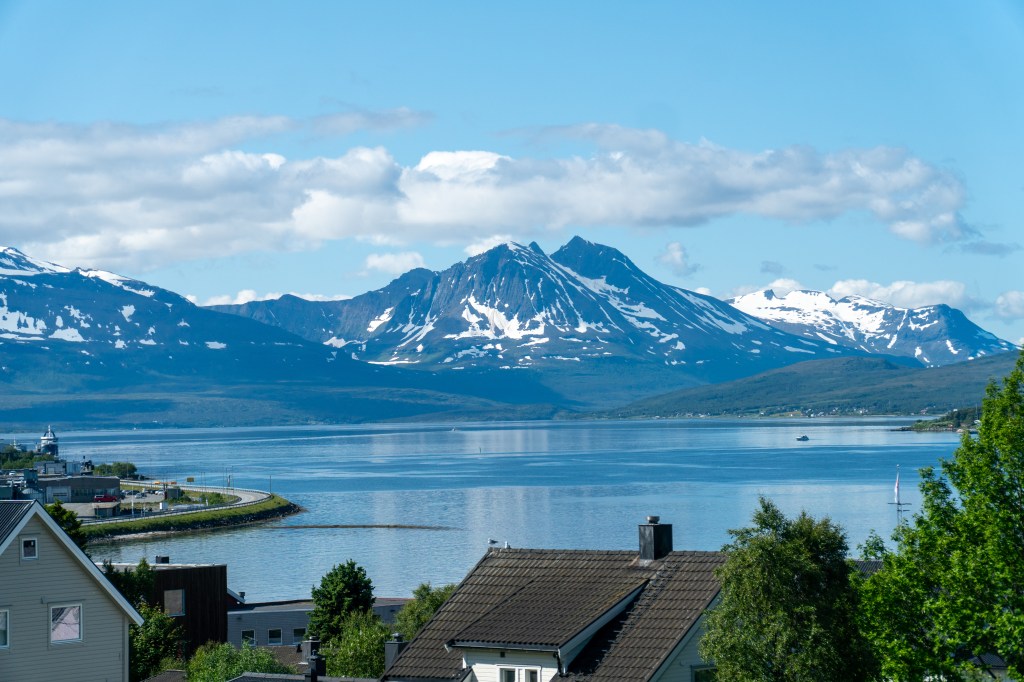
We docked at Tromsø today. It is the northernmost city in Norway, considered the “gateway to the arctic” for various expeditions. Our city tour took us to the Arctic Cathedral, and then to the planetarium where we watched an amazing film about the northern lights. The theatre was a digital dome, and the images were filmed by Ole Salomonsen, who chases extreme auroras, using fisheye lenses. https://skyskan.com/shows/extreme-auroras/. It was truly amazing!
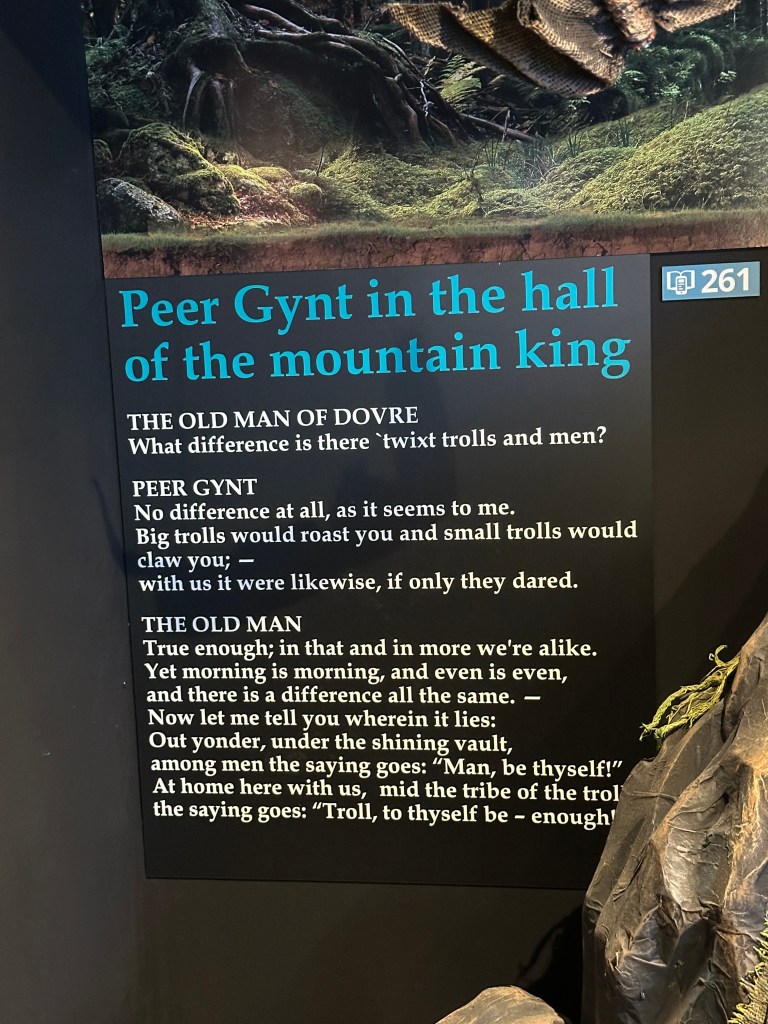
I later took the shuttle back into town to visit a pharmacy and stumbled upon the Troll Museum, the only such museum in Norway. It was delightful! They have made extensive use of Augmented Reality technology in their exhibits and museum book. There were so many great stories of Trolls, including the play Peer Gynt, written by Henrik Ibsen. The story is about a human boy who gets in trouble and runs away into the mountains, where he encounters trolls. Ibsen wanted to turn the play into a musical and invited Edvard Grieg to compose the music.
From the website The Norwegian American is this summary of this first encounter with trolls.
“In the Hall of the Mountain King” is the most famous piece of troll music ever written. Peer Gynt has been captured by trolls and is made to stand in front of the troll king. Naughty little troll children want to hurt him. One asks the king, “May I slash his finger?” Another says, “May I pull his hair?” A naughty little troll girl says, “Hei, hoo, let me bite his butt!” But the troll king won’t let the children hurt Peer. And guess why: because he wants Peer to marry his ugly daughter. Peer is tempted. If he married her, he would some day be king of the trolls himself. “But,” he thinks, “she looks like a cow! She is SOOOO ugly!” Think about this conversation when you listen to “In the Hall of the Mountain King.”
It was warm enough to eat lunch outdoors on the ship. You had to fend off the aggressive gulls, however!



July 6, Sunday
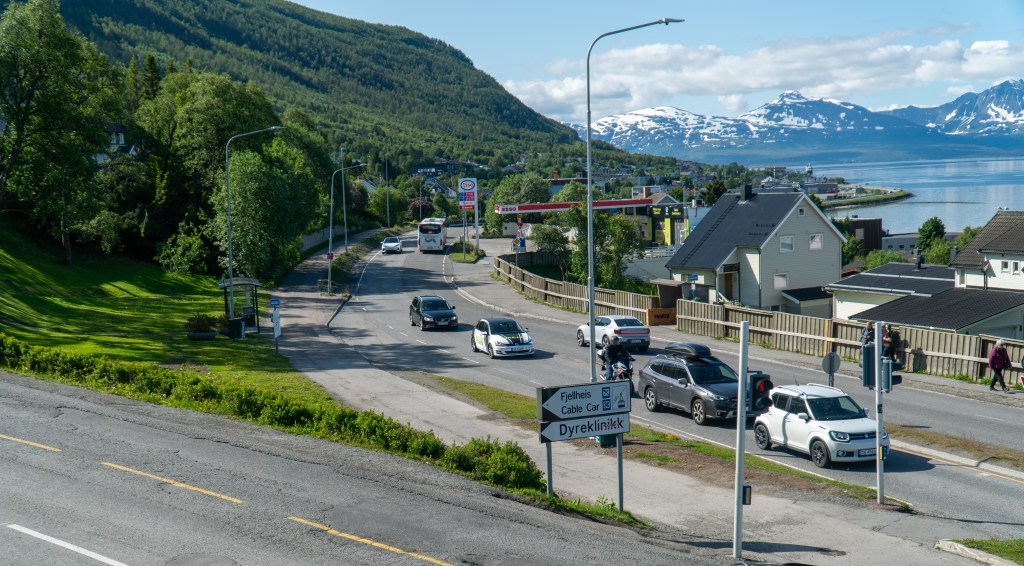
We docked today at Honnigsvåg, which is on Magerøya island overlooking the Barents Sea.

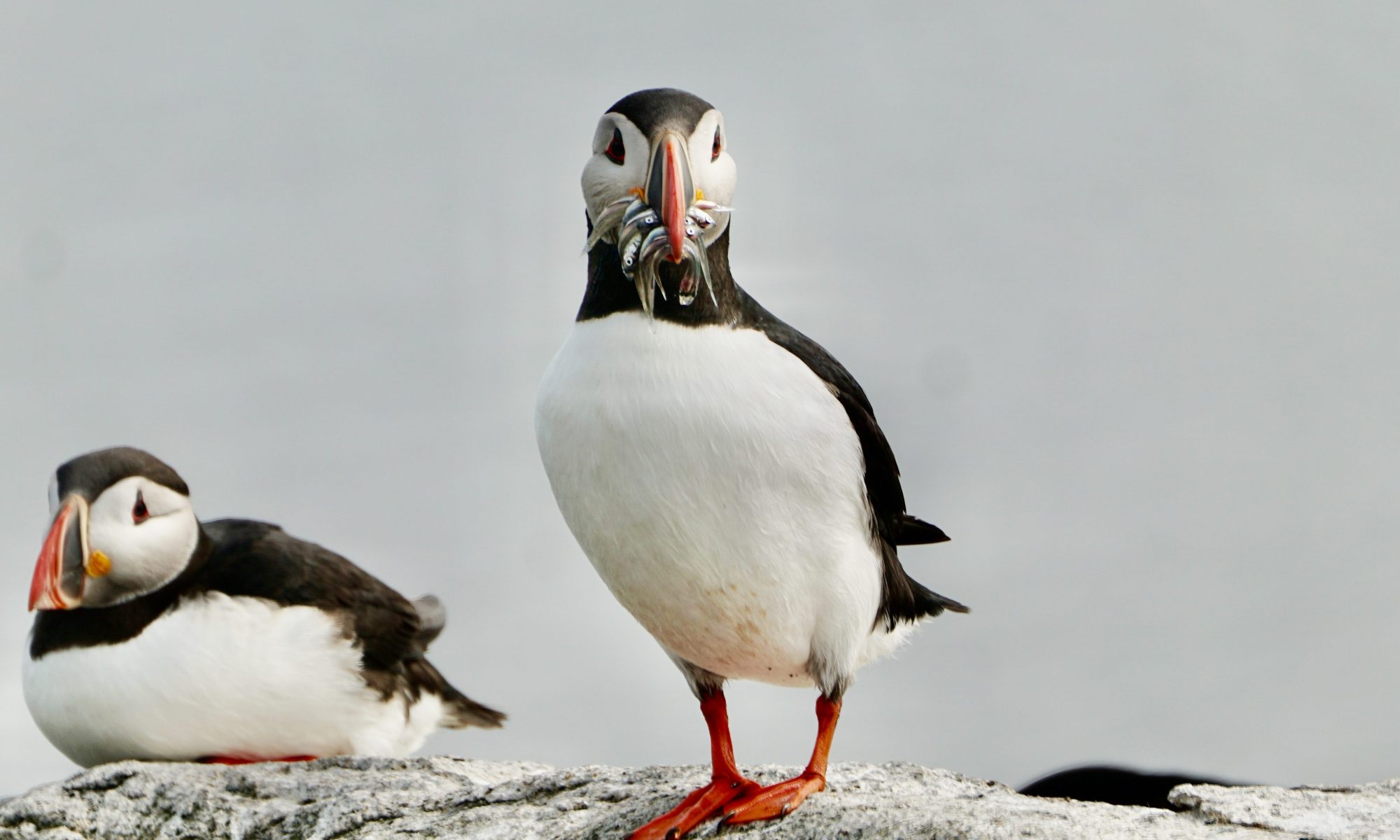
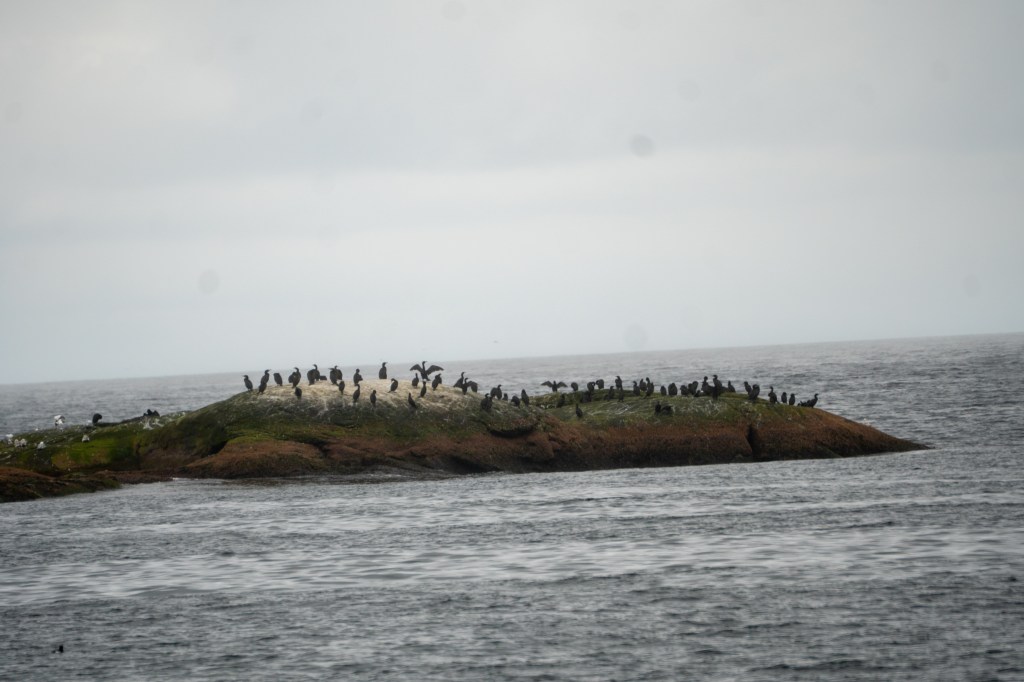
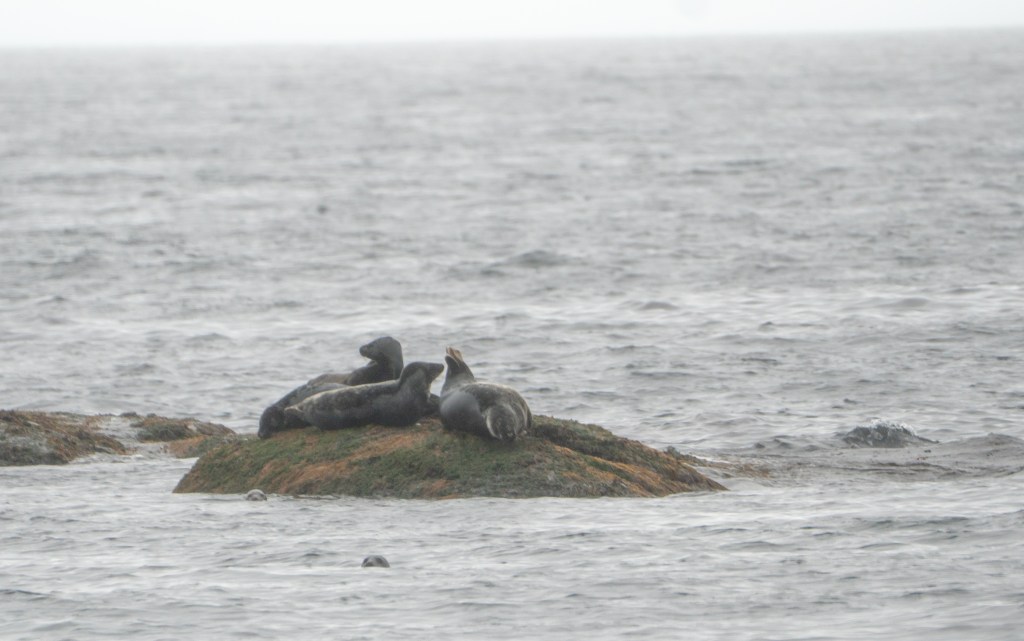
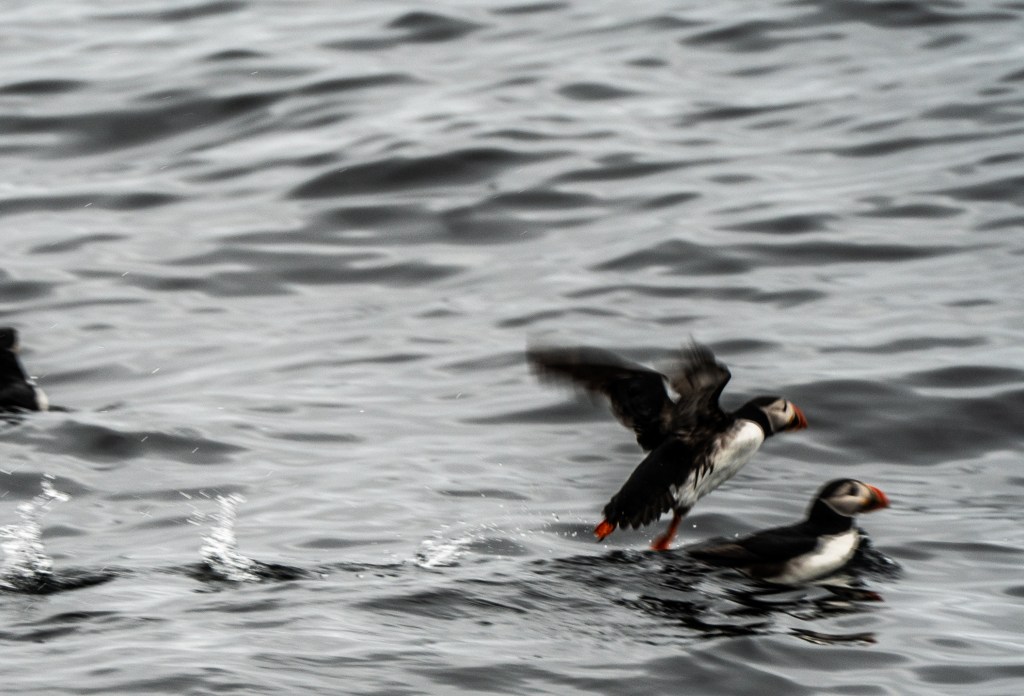
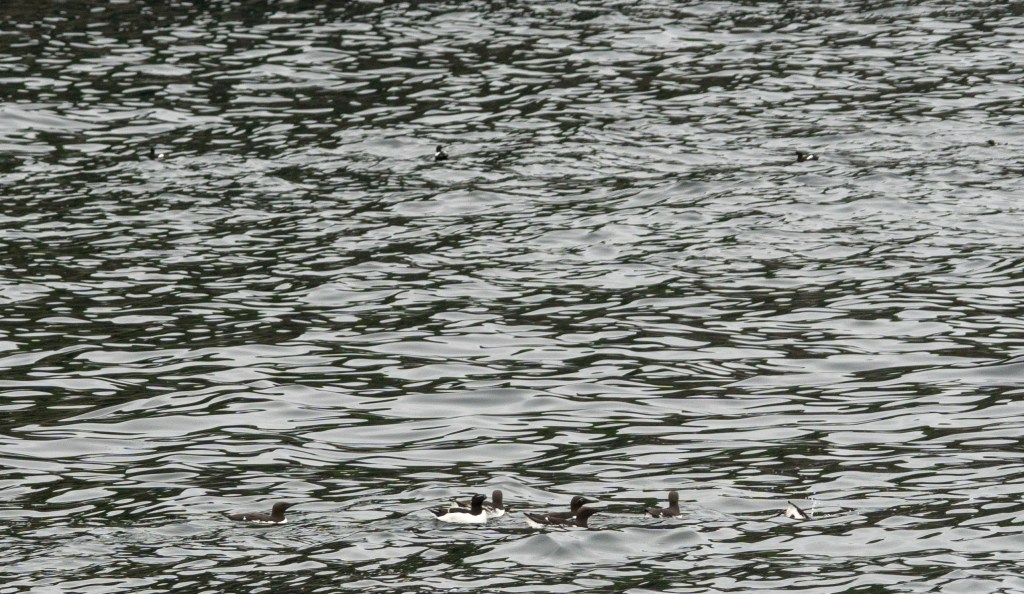
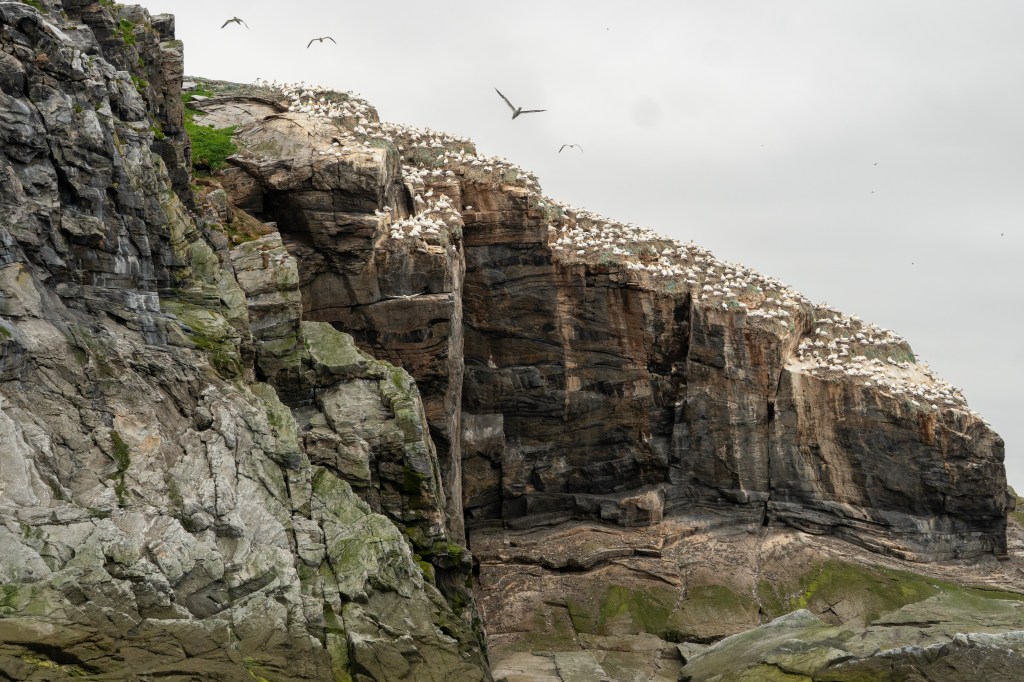
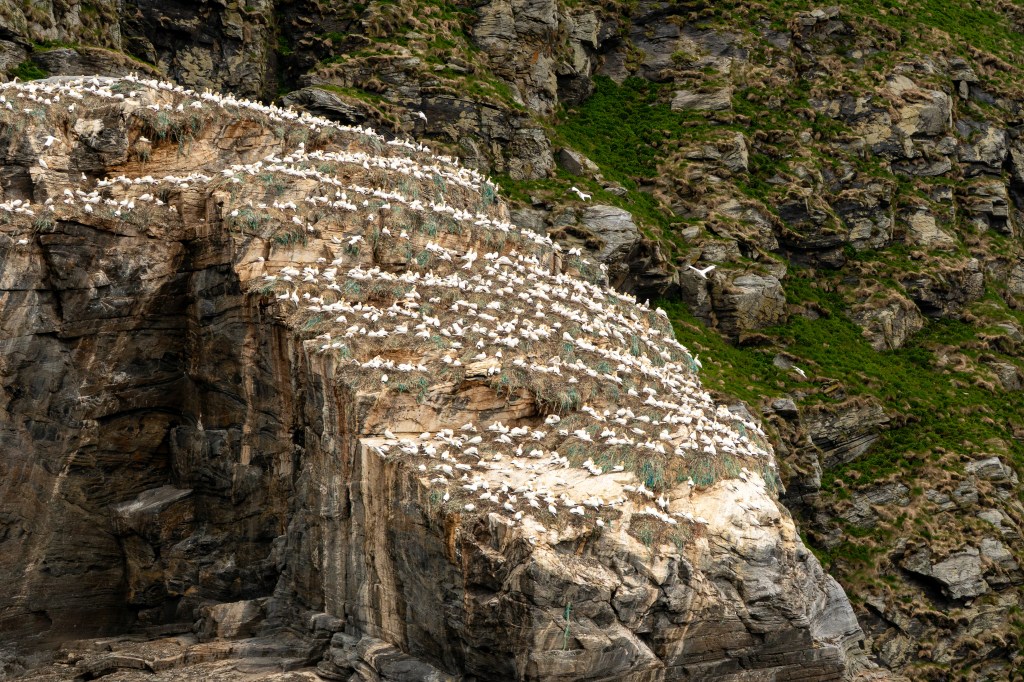
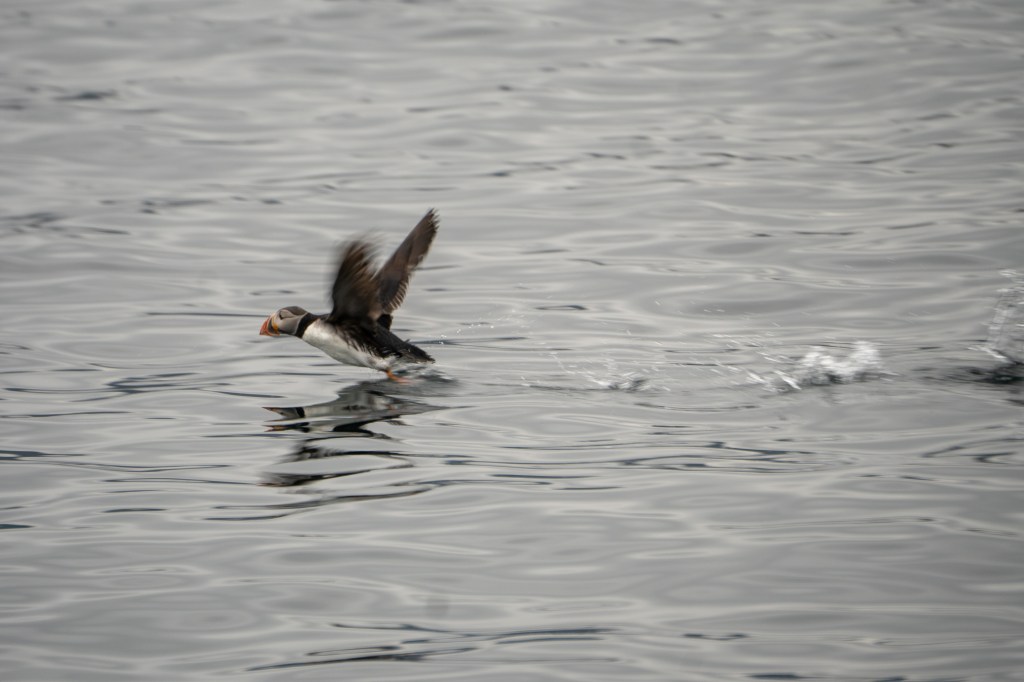
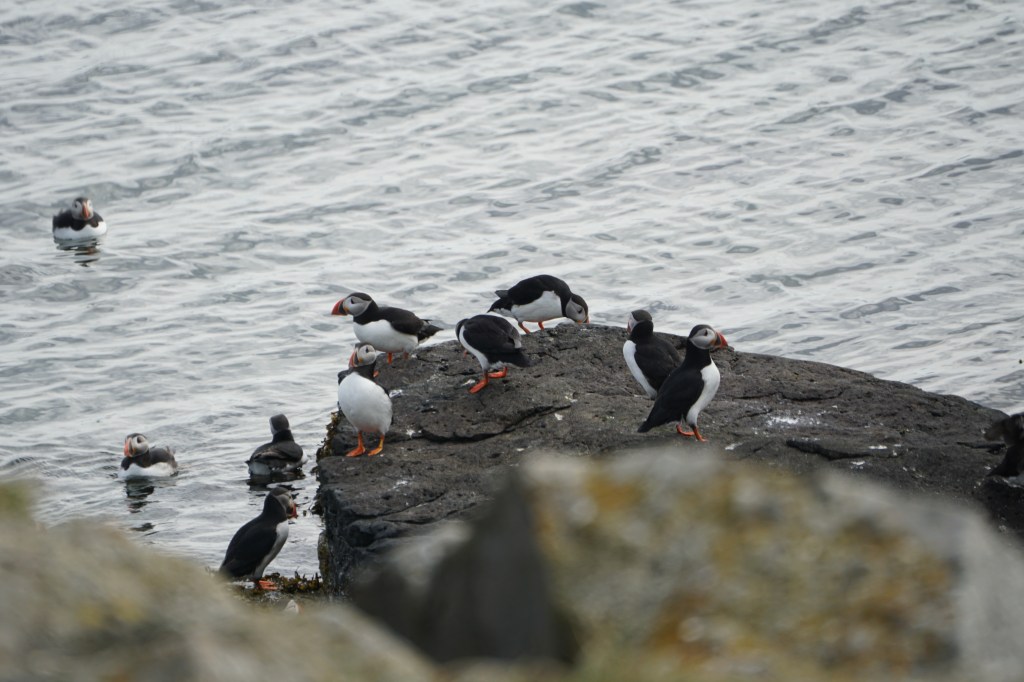
In the morning, I went on an excursion to see the birds of Stappen Islands. A bus took us from our dock to the town of Gjesvaer (upper left on map), where we boarded a boat for the ride to the islands. The islands are protected, so we were not able to land, but observed so many birds from the boat. Among our first sitings were Great Cormorants and seals. As we approached the islands we saw thousands of puffins either in the air or on the water, black guillemots and razorbills in the water, and other birds. We saw a colony of Northern gannets on a cliff.
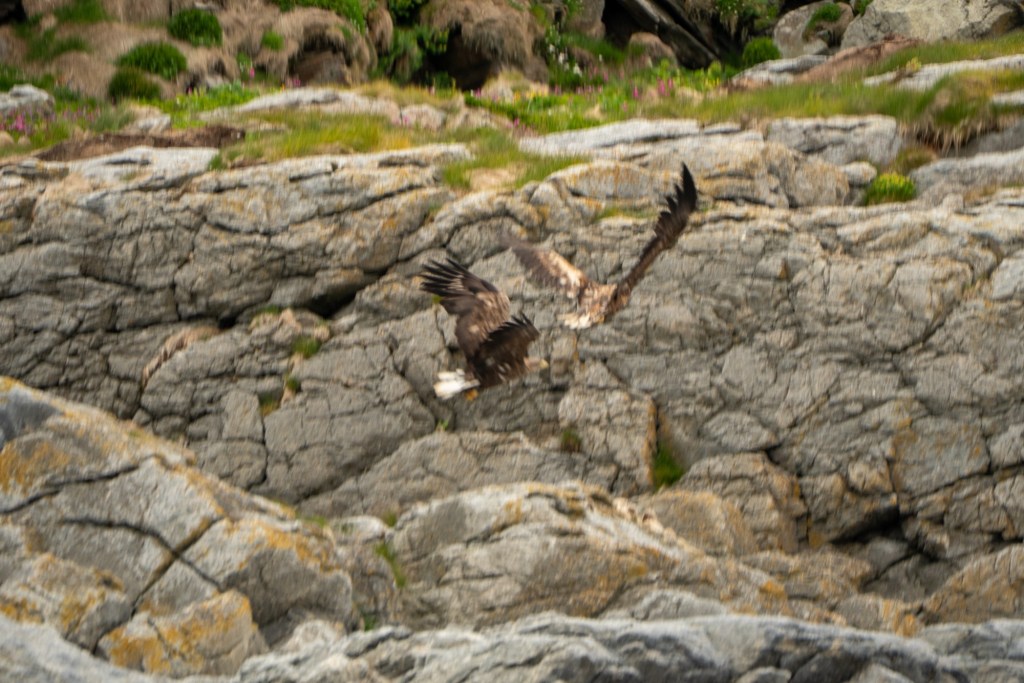
We also saw white tail eagles (two in a “death spiral,” and shags (small cormorants).









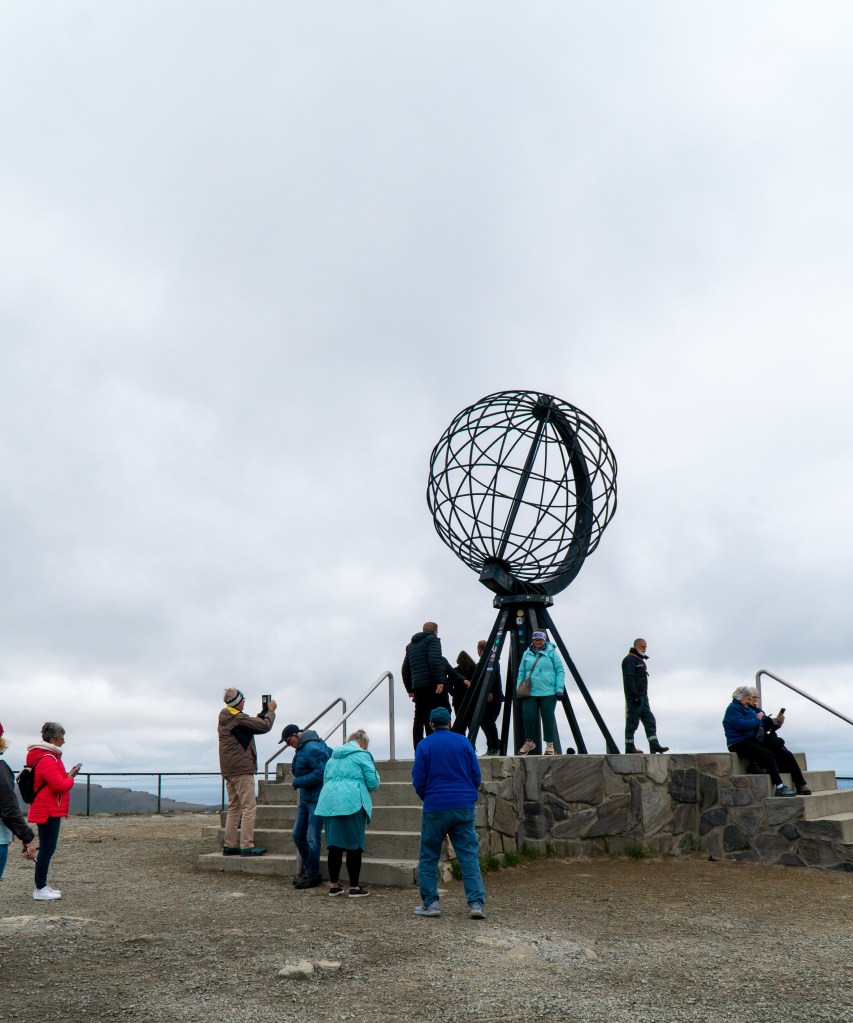
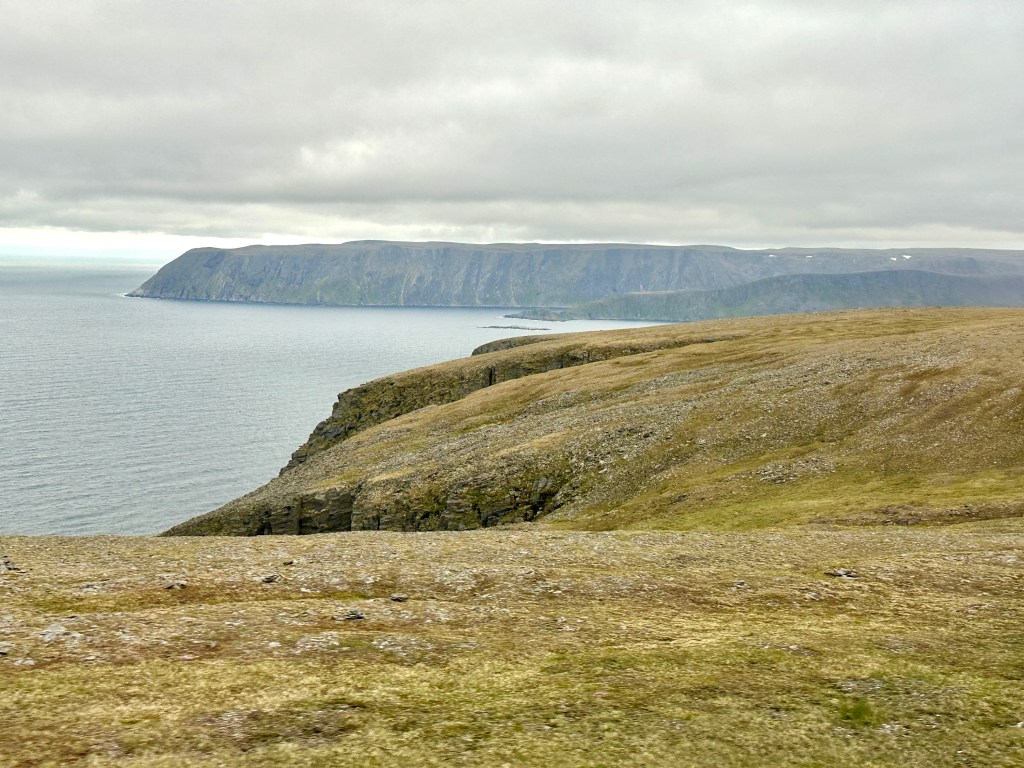
In the afternoon, we took a drive to the North Cape, on the top right of the map.
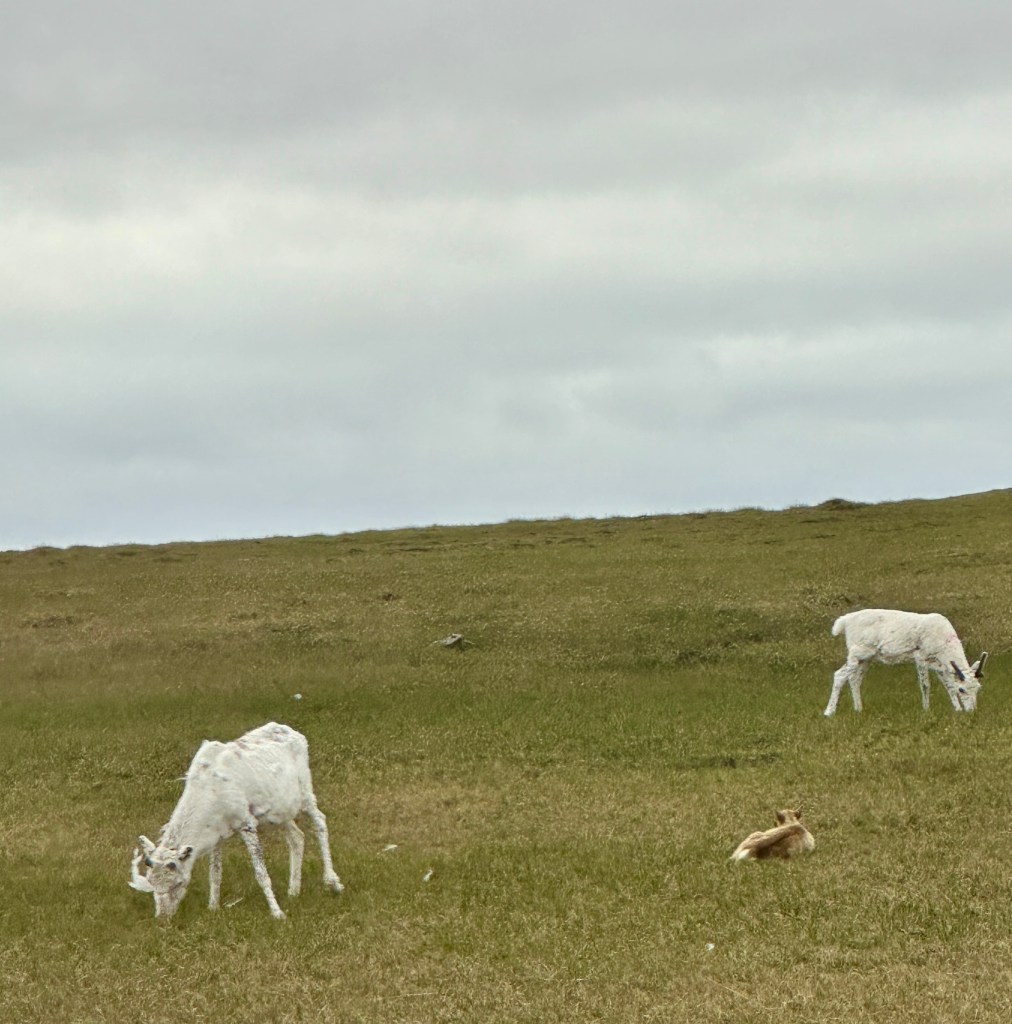
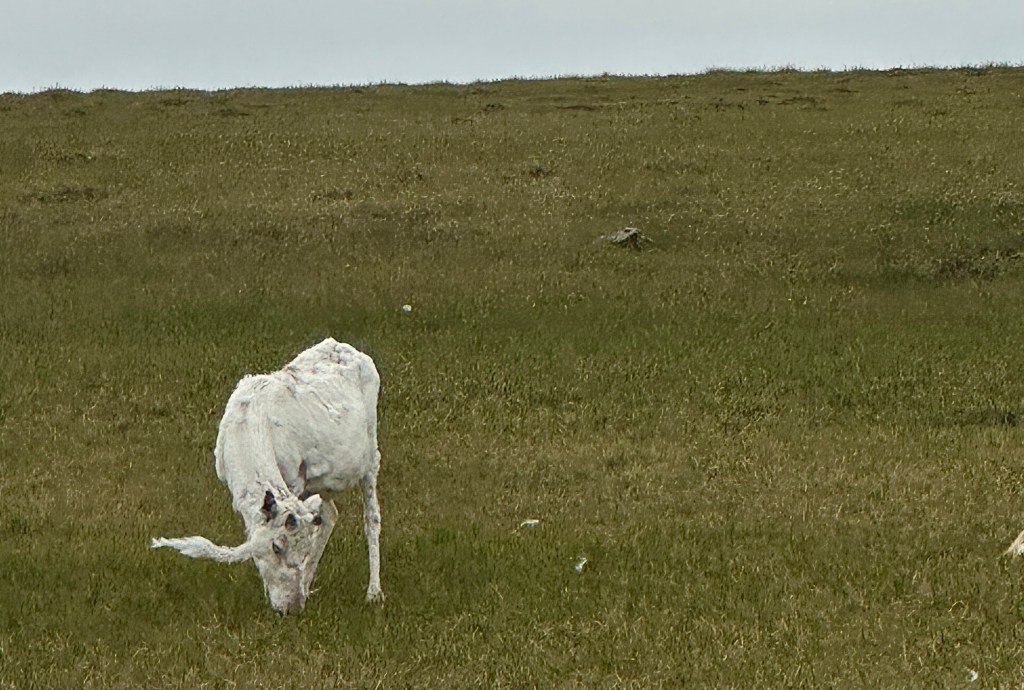
We watched a video about the islands in different seasons, and walked out to the Cape monument in some pretty strong wind and cold. Along our drive we saw lots reindeer that are owned and managed by native Sami families. The reindeer are white in the winter, but lose the white hair and turn brown in the summer. Their eyes also change color due to the different light conditions. They are taken off the islands in the winter and returned in the spring. We passed a Sami village.






July 7, Monday
We had our second sea day, going across the Barents Sea to the Svalbard Archepelago, which is part of Norway, between the mainland and the North Pole. While the rugged terrain, frozen tundra and glaciers are home to some special wildlife, we did not get to see any polar bears or Arctic foxes. (Another trip?!!). On board we spotted whales not too far from the ship, and enjoyed great food, vistas, live music, and lectures.
Also on board, the crew held a Blue Nose Ceremony for the travellers who wished to participate. It is a tradition among some naval ships to have a ceremony after crossing the Arctic Circle, by demonstrating feats of strength. In the case of our ship, this involved plunging into an ice-cold pool. After the plunge, the participant received a blue nose (some blue substance slathered on their nose), and a shot of Aquavit.
July 8
Upon arrival
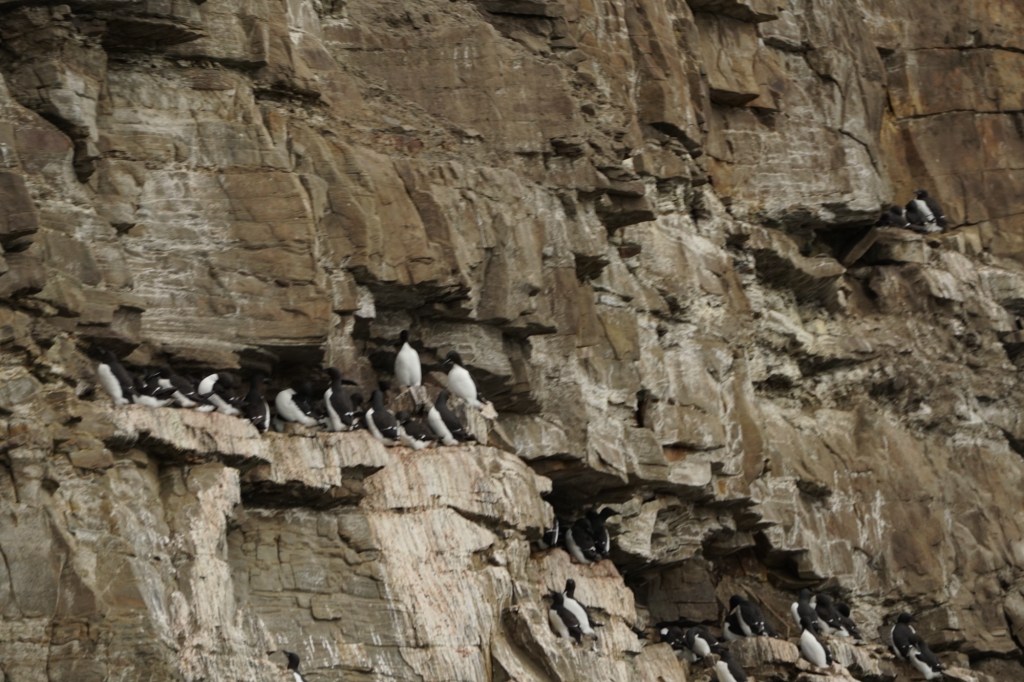
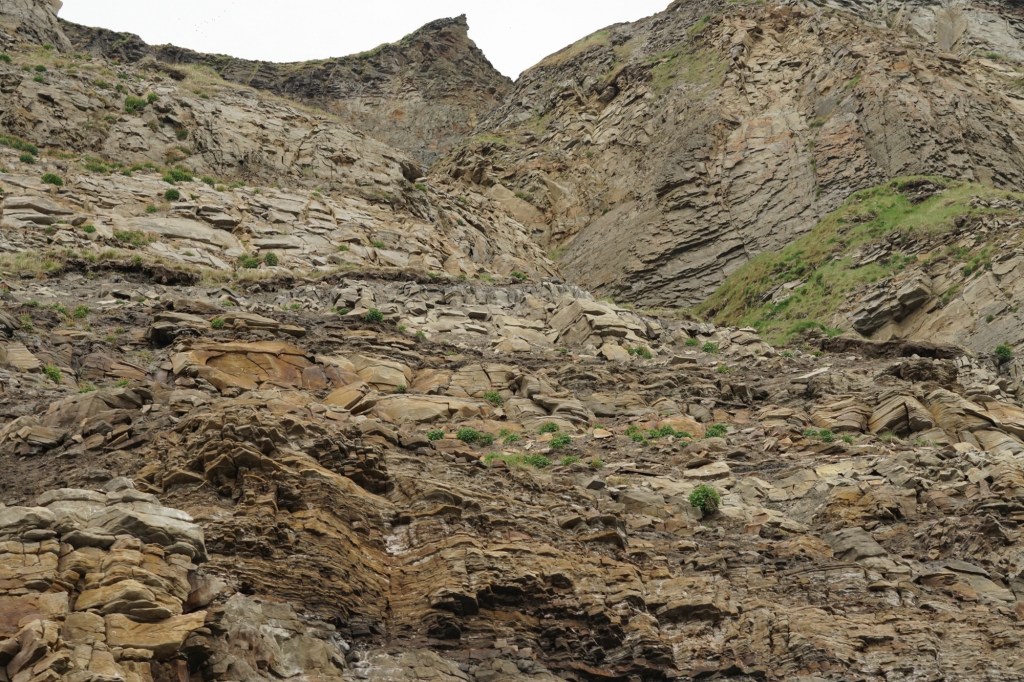
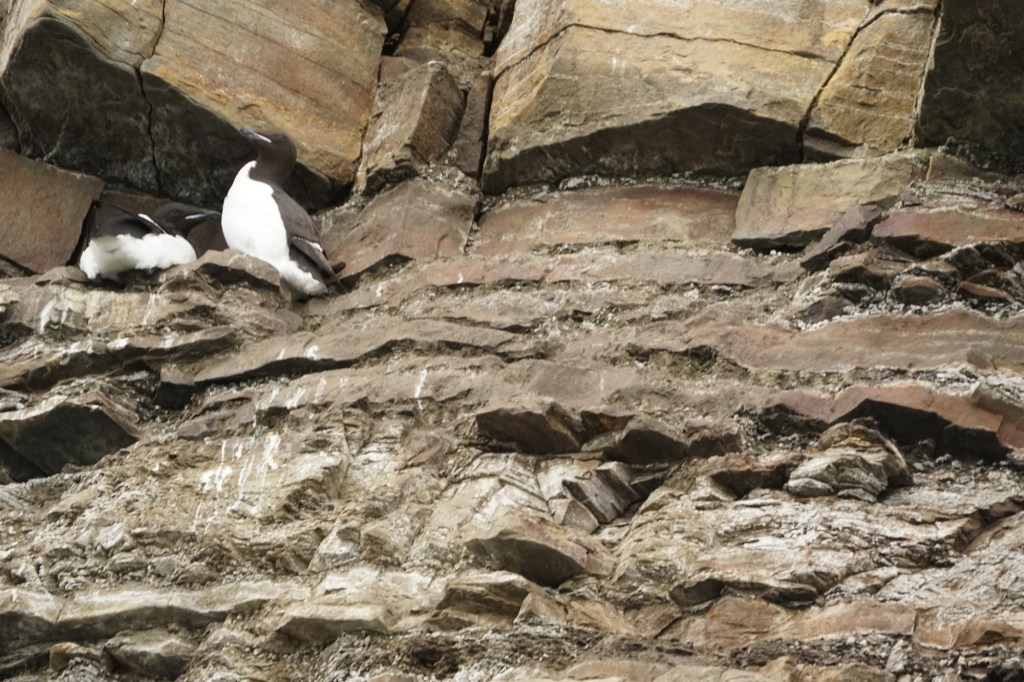
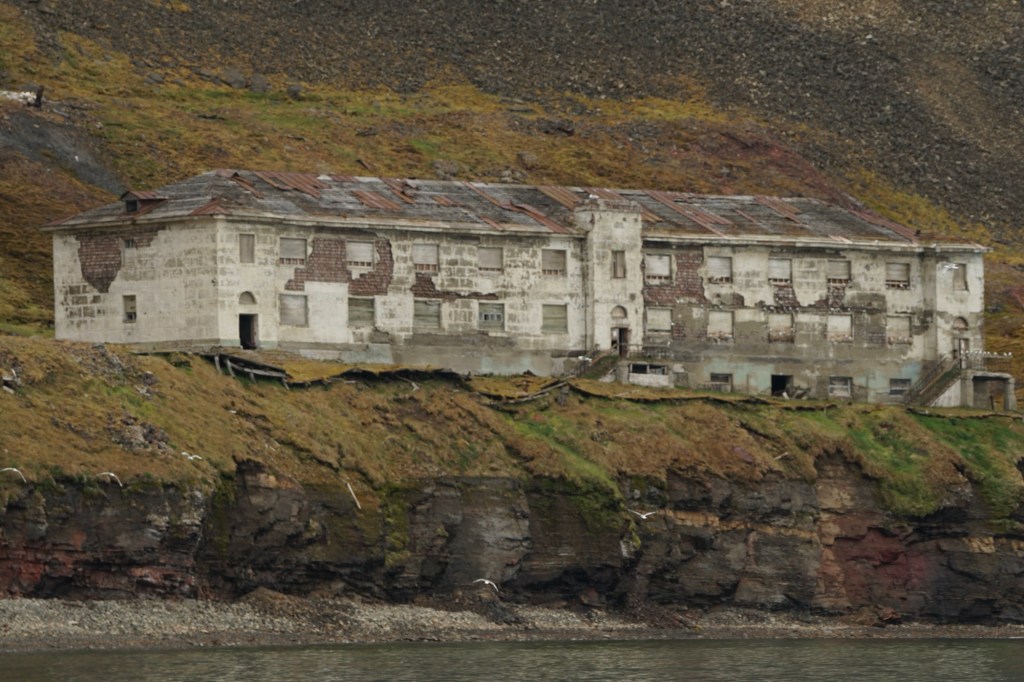
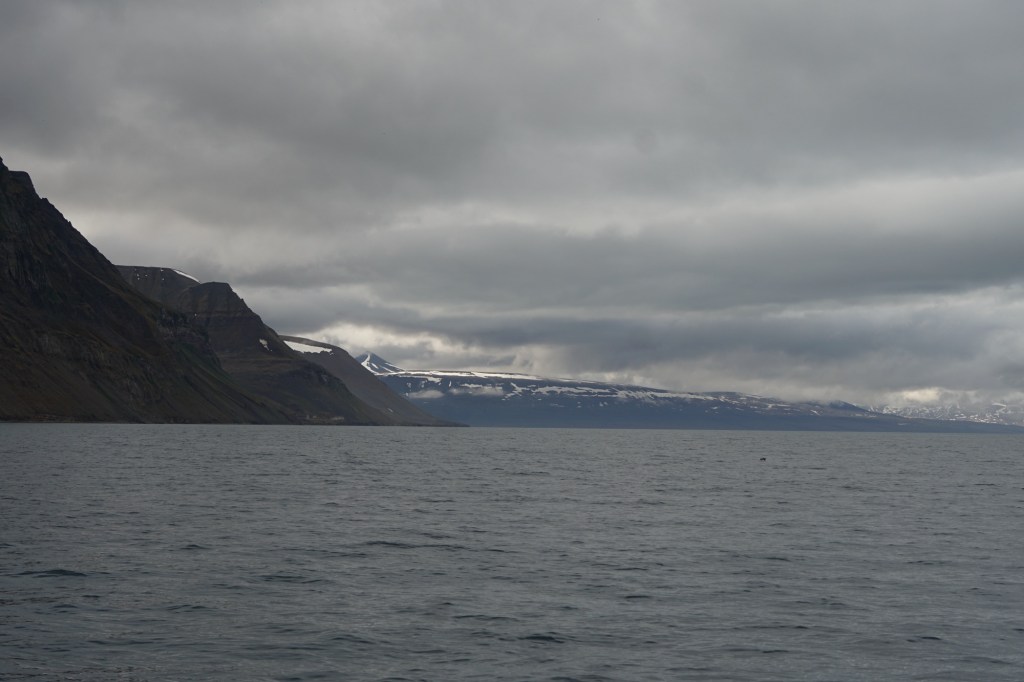
We arrived at Longyearbyen, one of the main towns in the Archepelago. I took a boat ride to Isfjorden to see birds. The boat was an open boat; you straddled the seat and held onto a metal bar in front. I had dressed in layers, and we were provided with head-to-toe, water-resistant suits, life vests, and googles. Nevertheless, it was a very cold journey.
We saw a large colony of black guillemots on a cliff, and at a later stop, the remains of an old Russian mining town.





July 9, 10, 11, Wednesday, Thursday and Friday
Chris and I were feeling under the weather, so we skipped the trip to visit the museum in Longyearbyen. The next two days were sea days on the Norwegian Sea, passing by Greenland on the way to Iceland.
We were so fortunate that the sea was super calm the entire trip. On sea days we still had so many things to do, including viewing the landscape/seascape, looking for birds, listening to live classical music, attending or viewing (via screen in the room) wonderful lectures from historians and a naturalist, and eating well.
July 12, Saturday
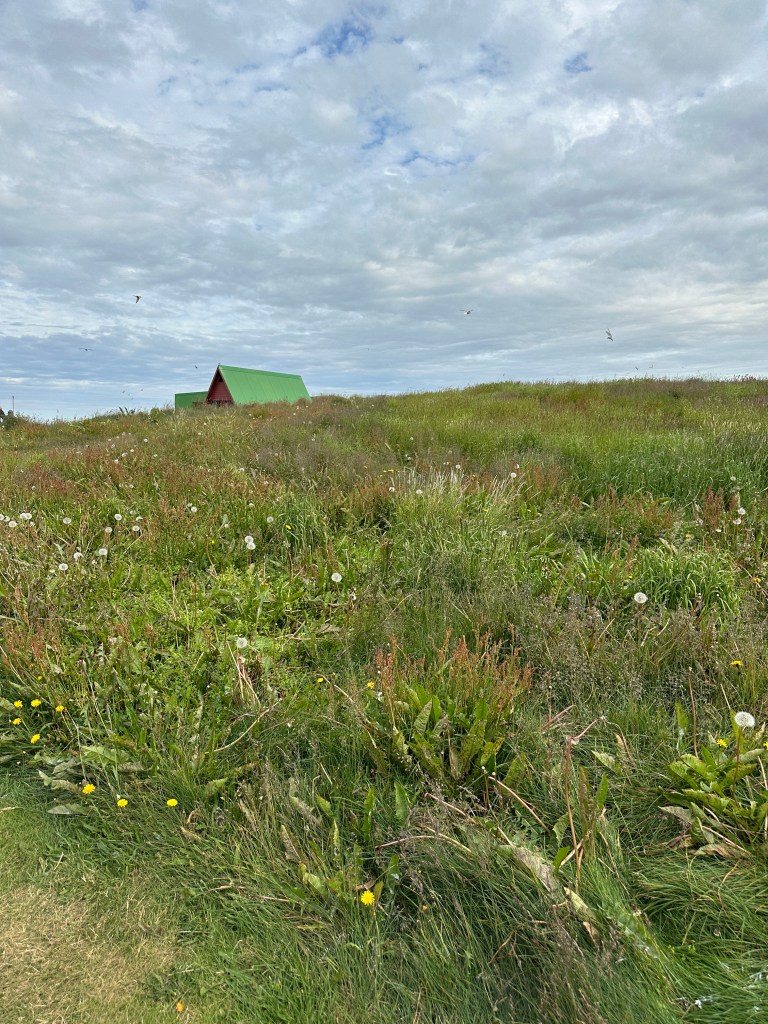
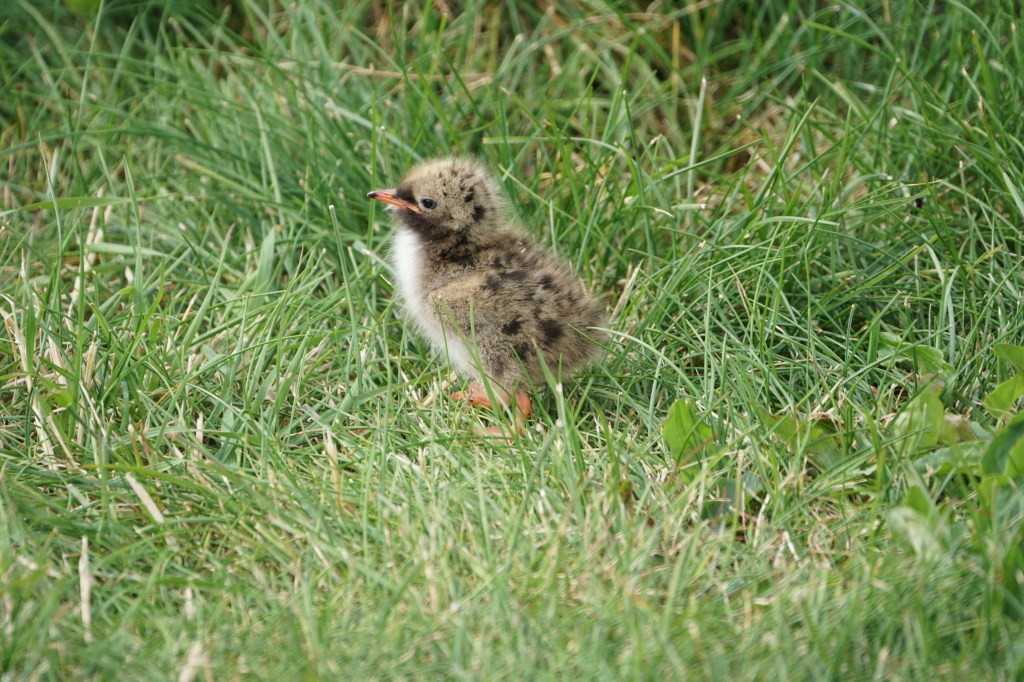
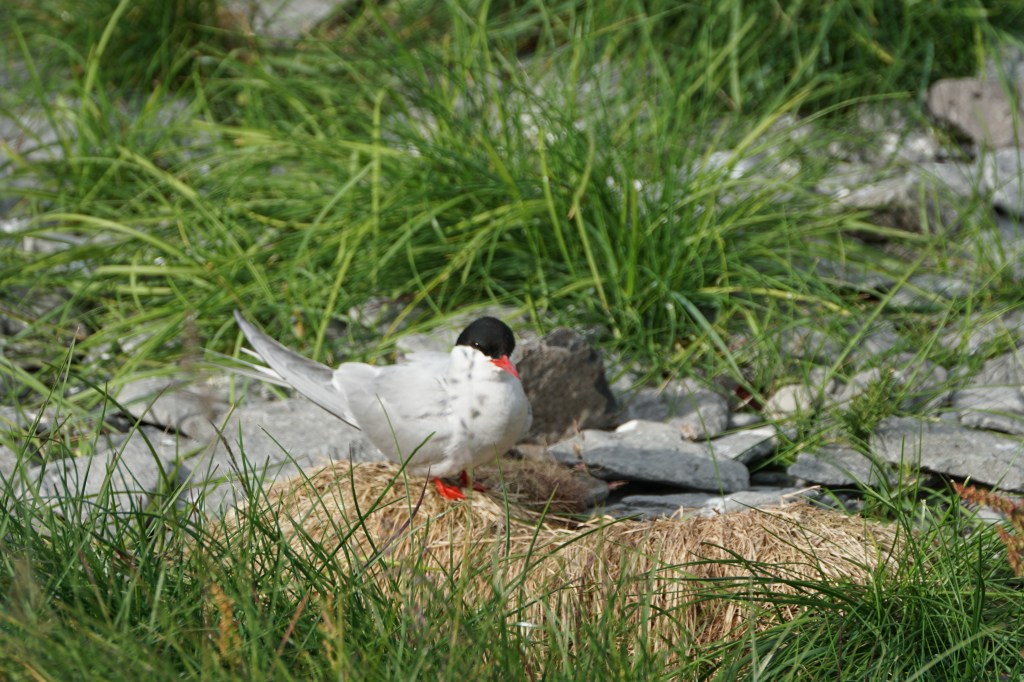
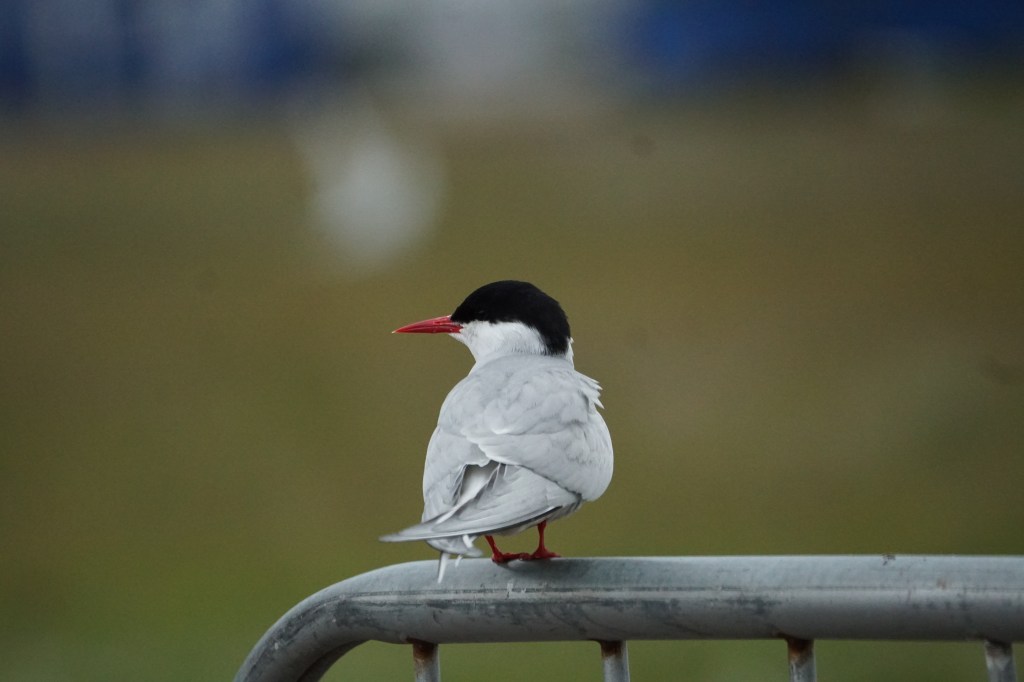
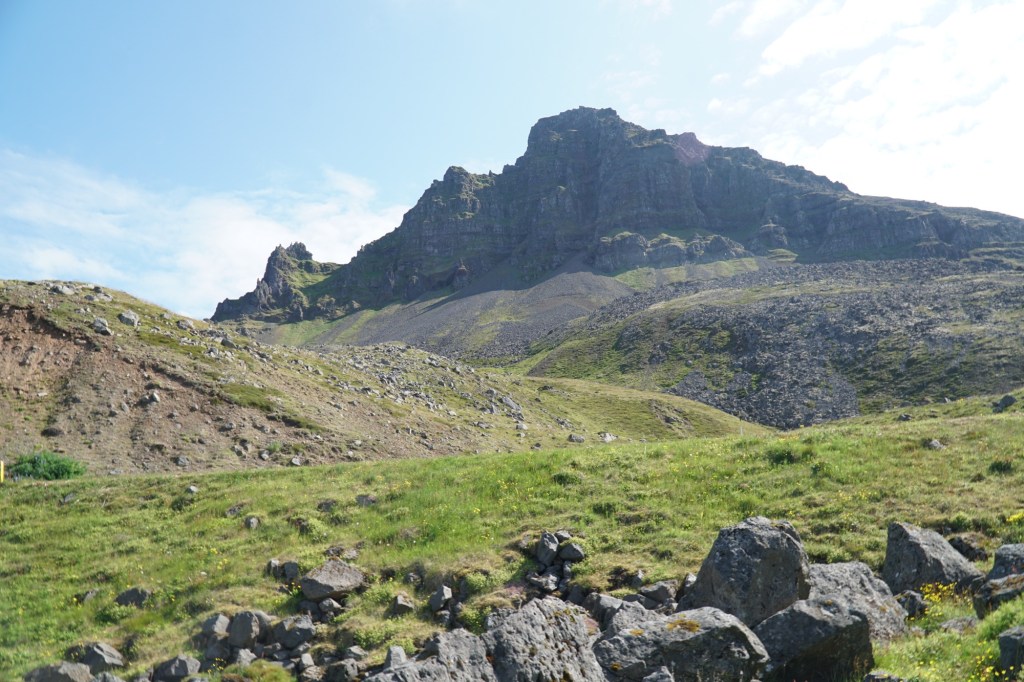
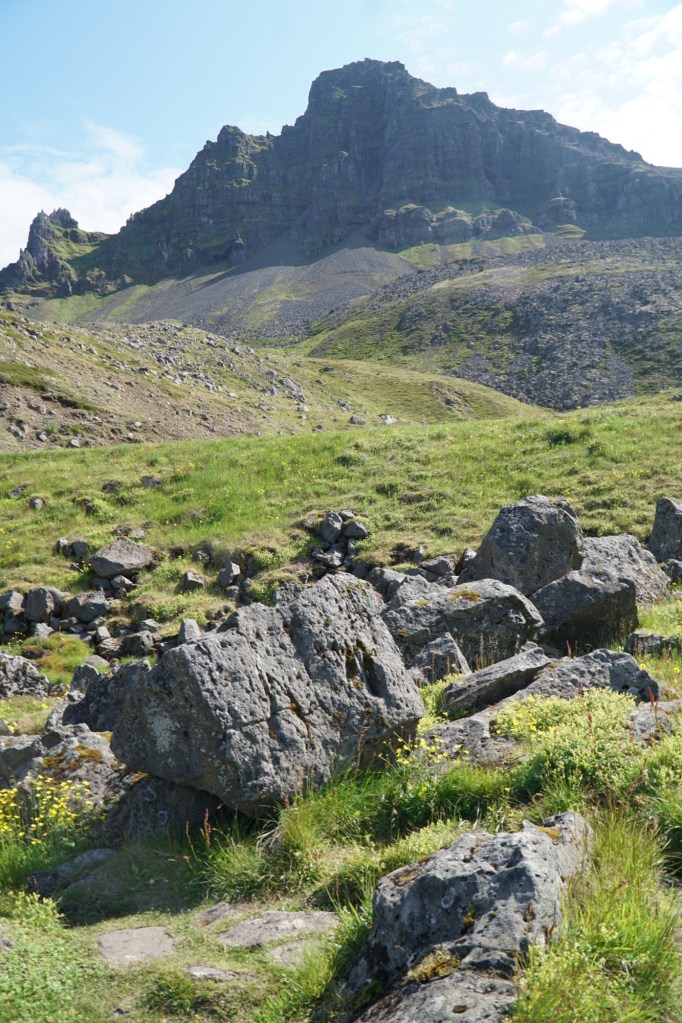
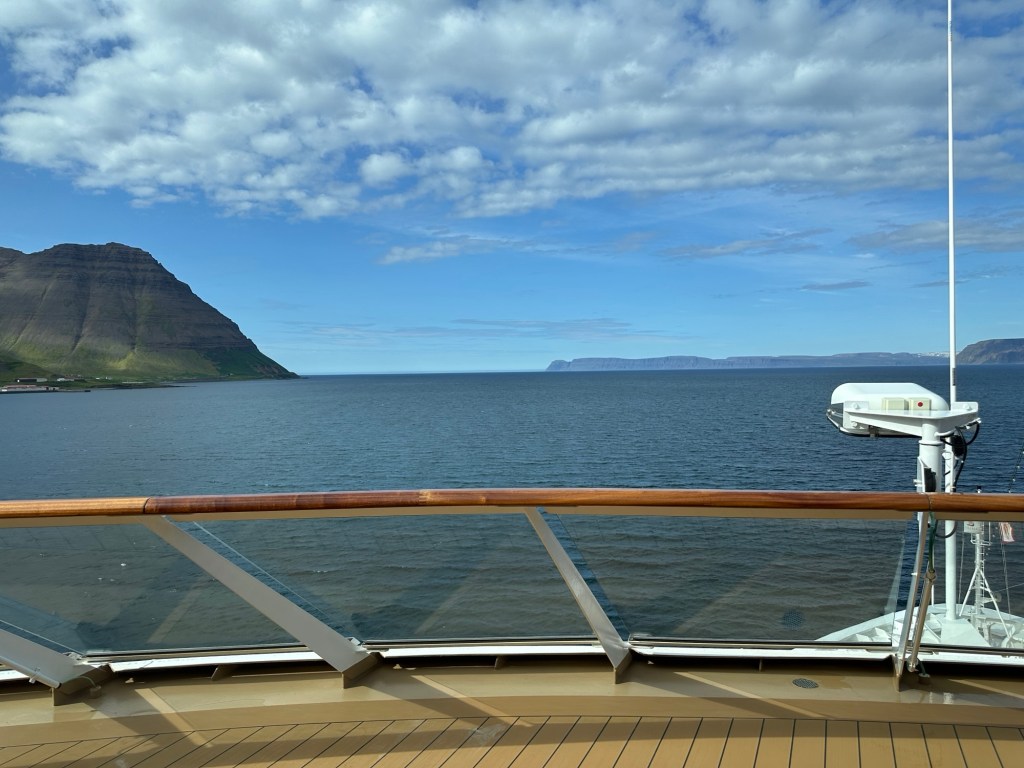
We arrived at Isafjördur, Iceland in the morning. Jane and I had both signed up for an excursion to Vigur Island. This is the second largest island in the Isafjördur Bay, but still a small and narrow island. A few years ago the island was purchased by a couple who are arctic naturalists/researchers, who wanted to preserve the island’s bird colonies, restore the ancient buildings, harvest eider down, and welcome small groups of visitors to the island. A total of 10 people live on the island. https://www.vigurisland.com/visit. Arctic terns nest on open ground, and are quite protective of their young, so as we walked on a small pathway past their breeding ground, we carried tall sticks by our heads to fend off bird strikes (they are NOT shy!).
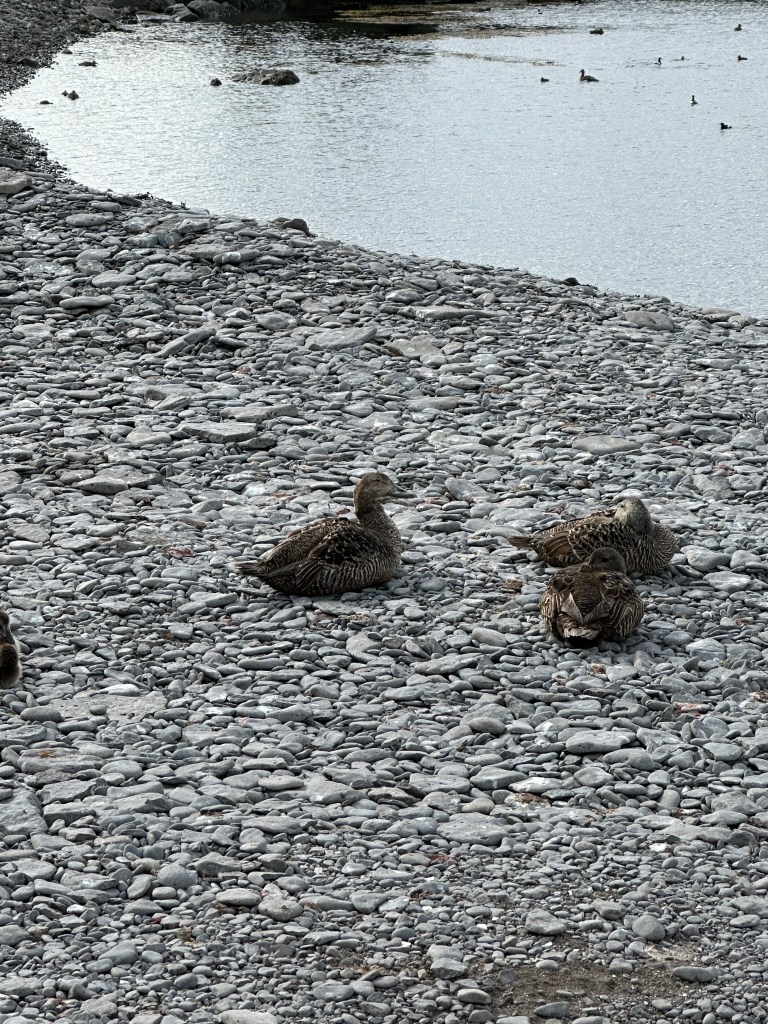
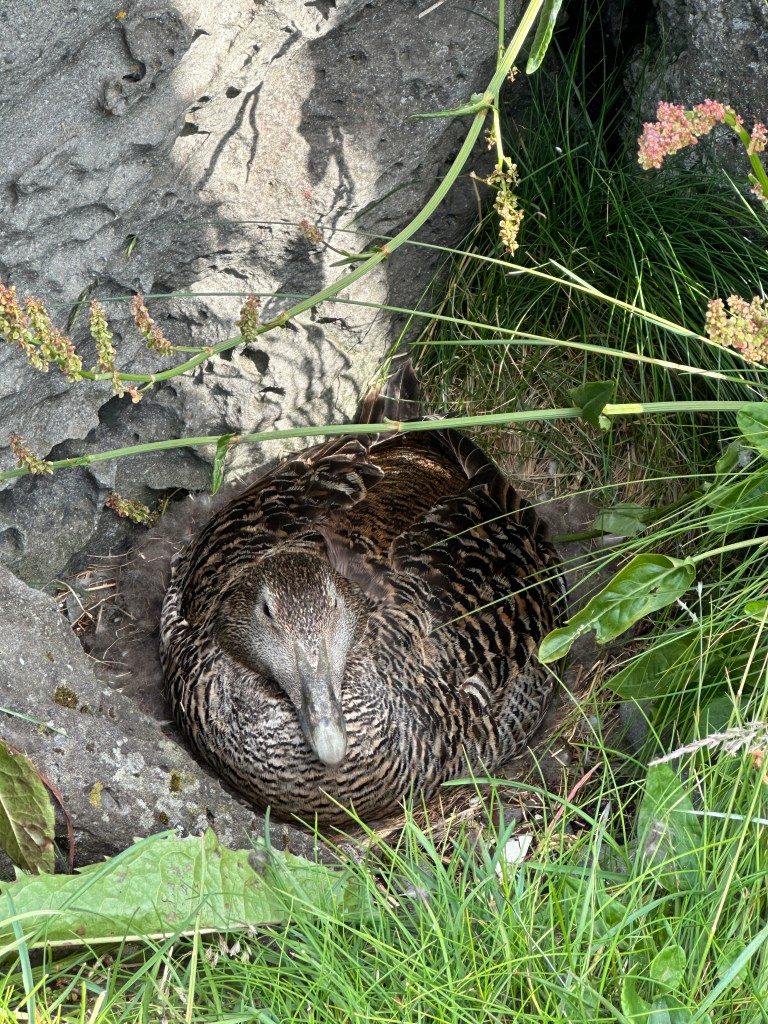
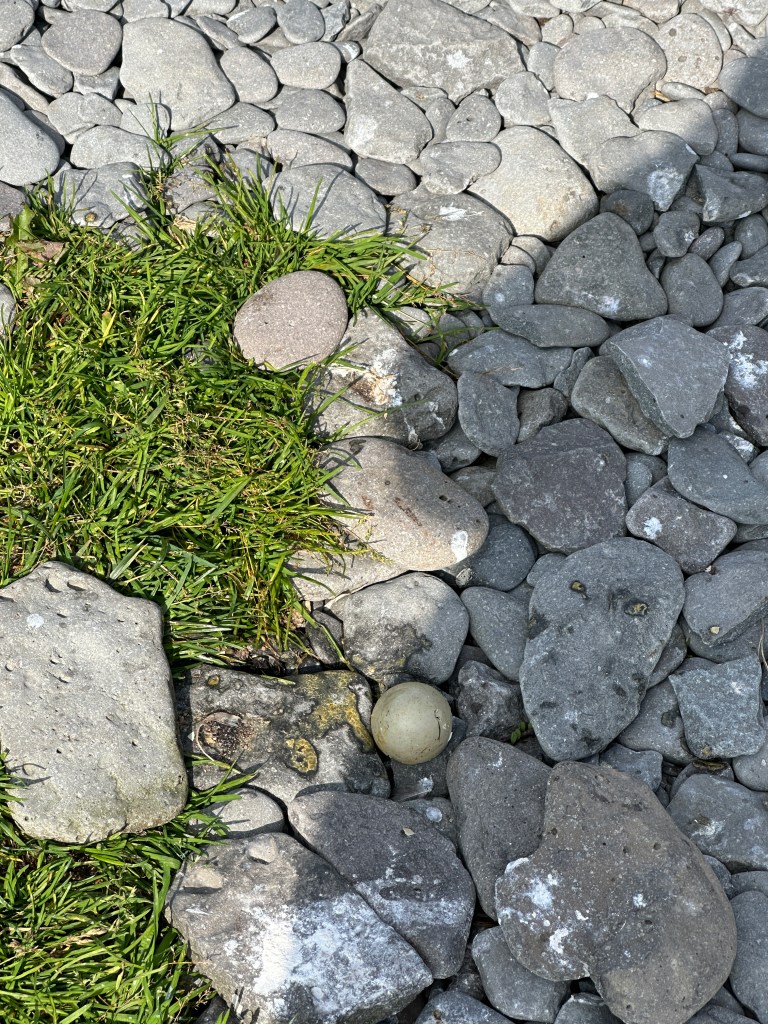
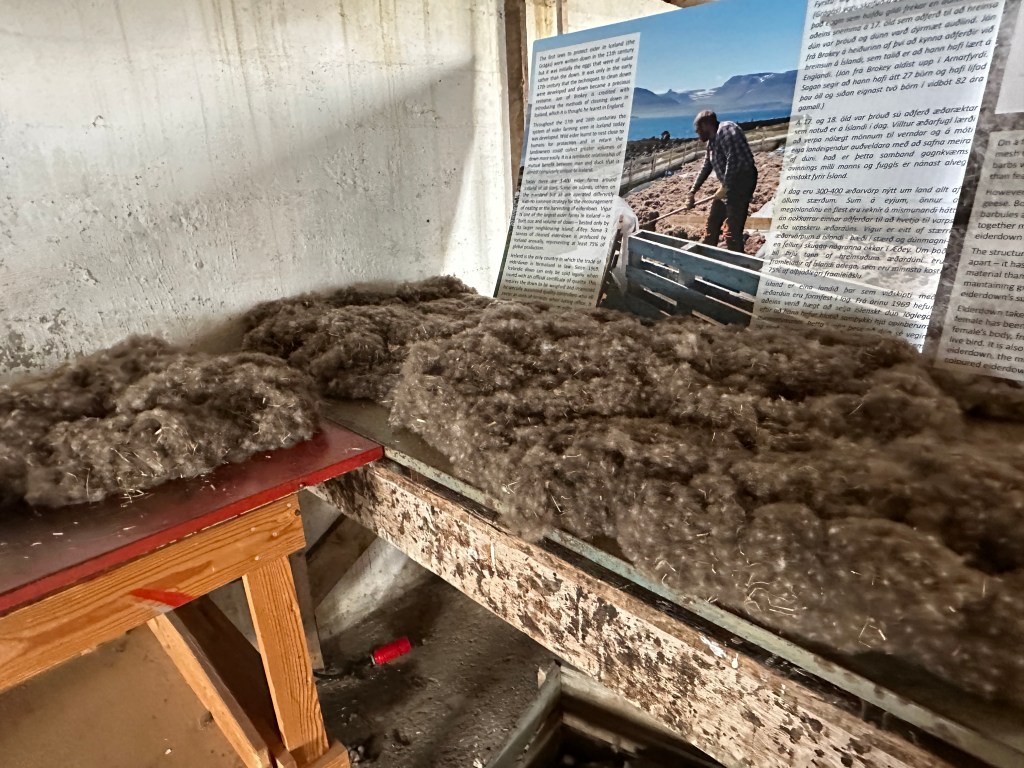
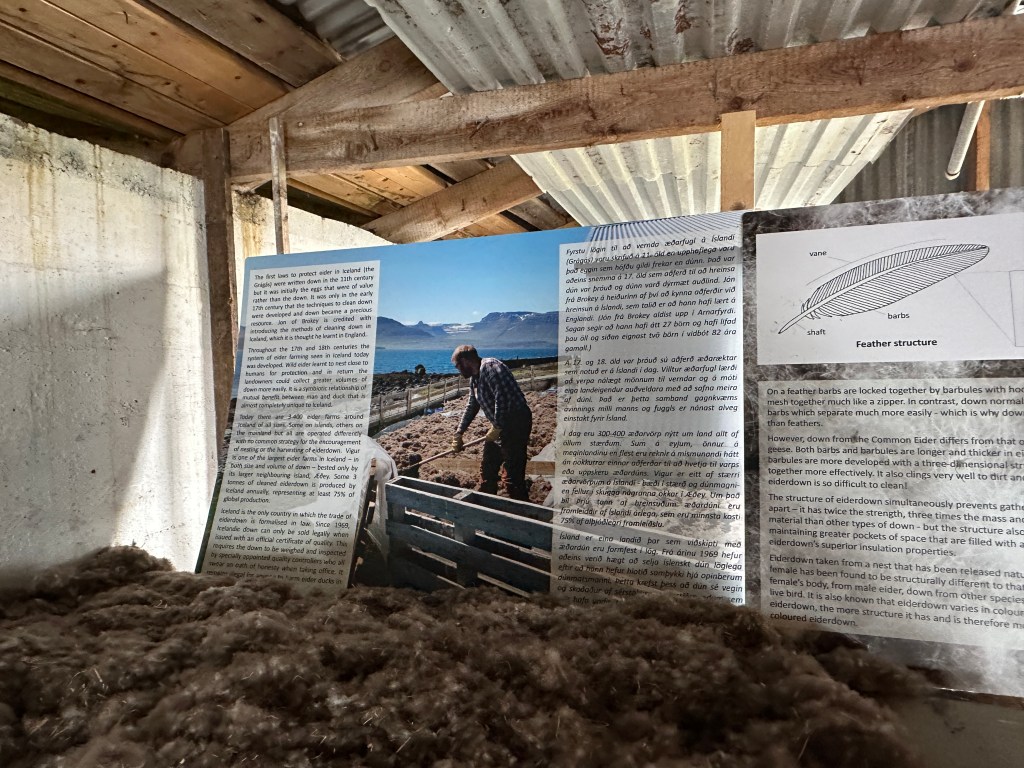
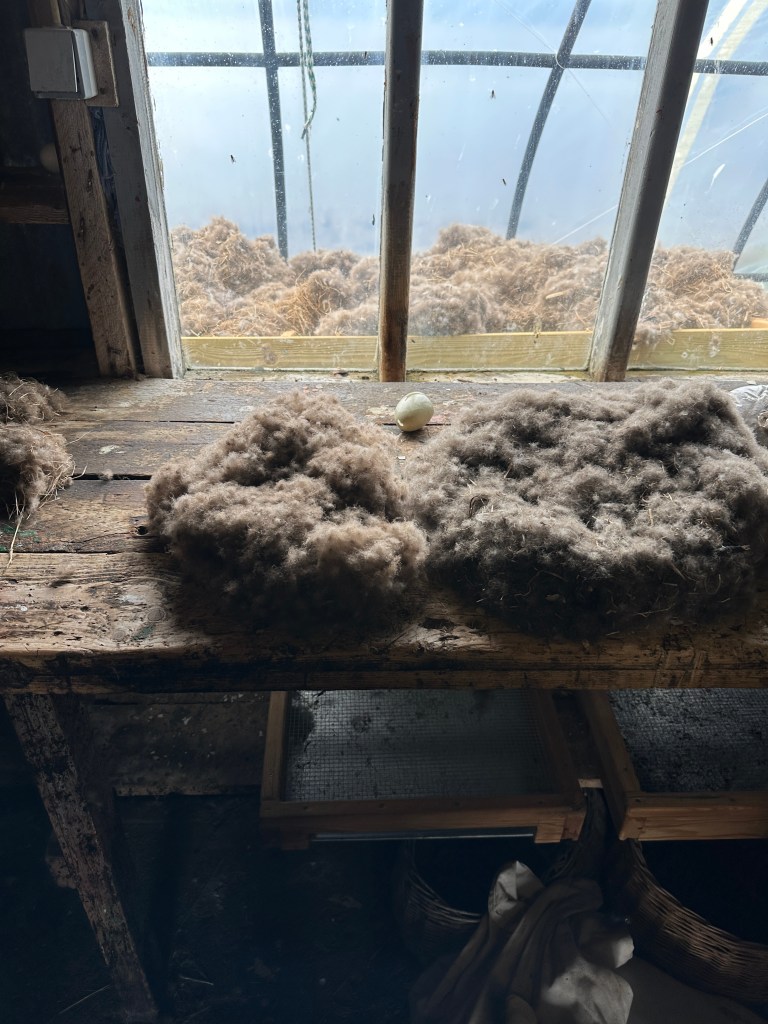
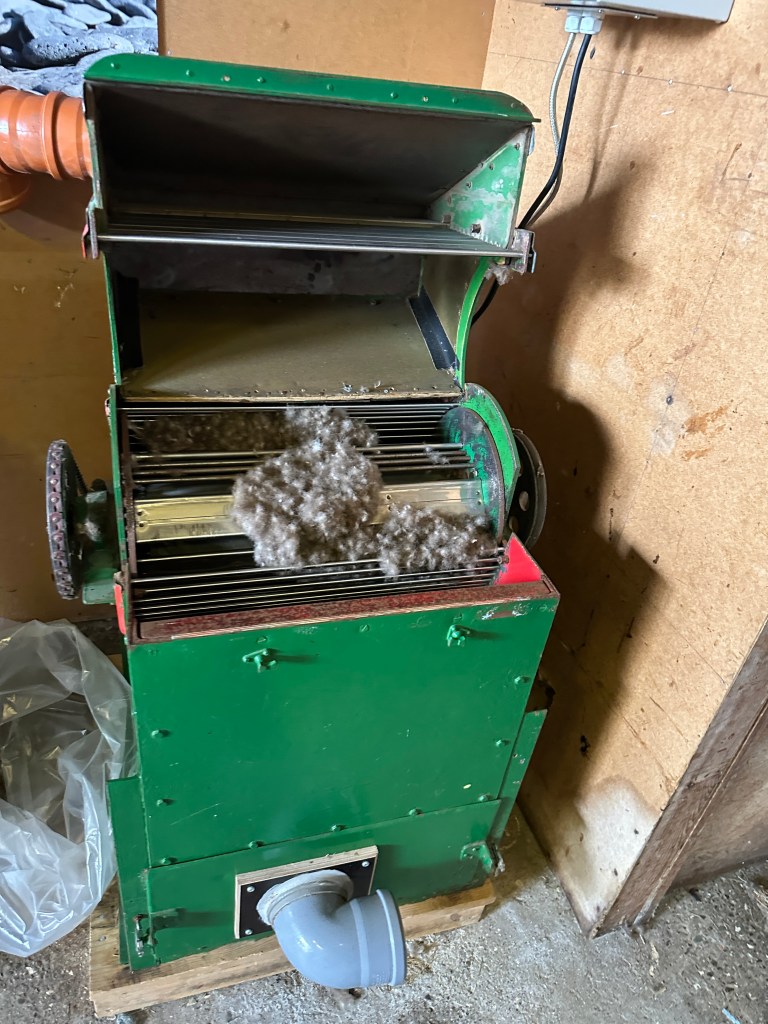
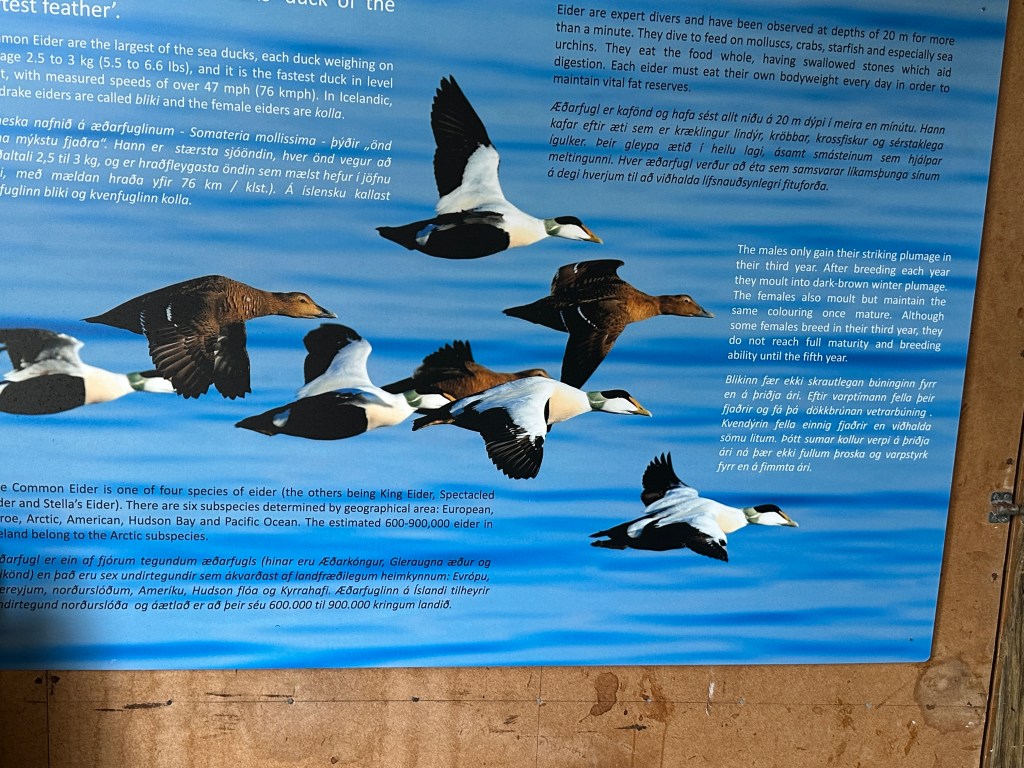
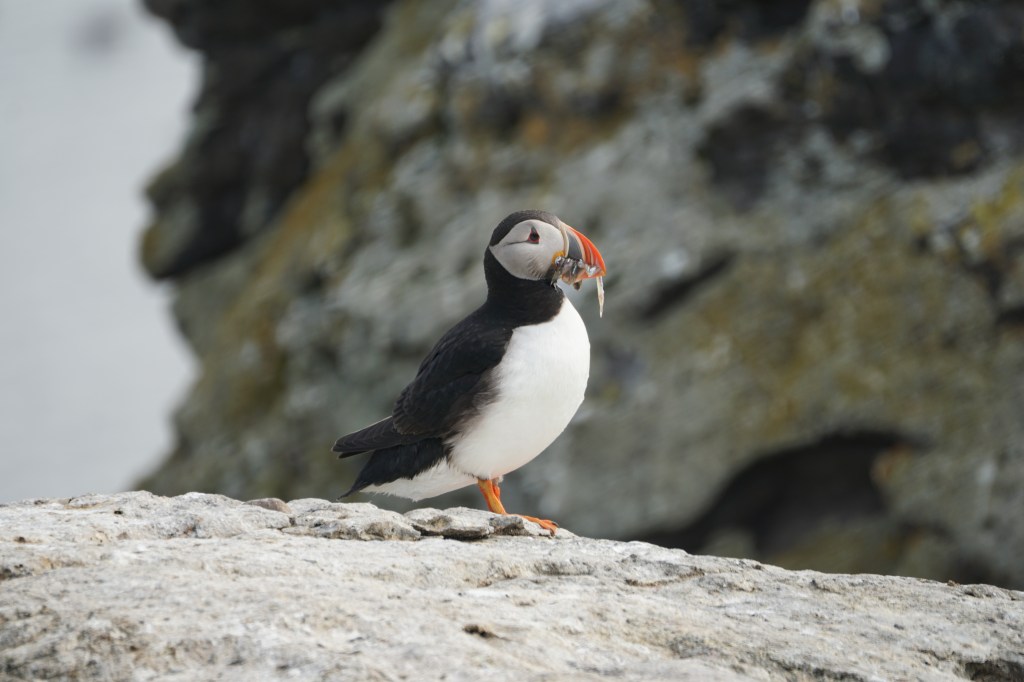
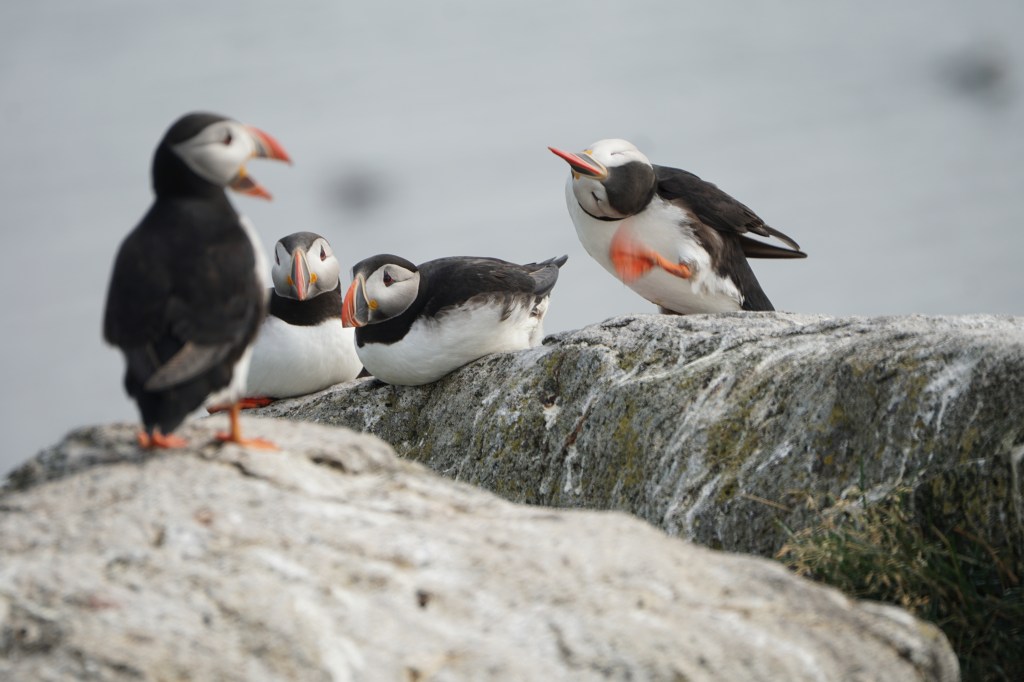
The island is also home to a huge number of puffins. It was great to see them on land as they strutted and posed for us. During the spring and summer, eider ducks nest on the island. The residents harvest the down, clean it and sell it for a pretty penny (Eider comforters are super expensive in Japan. Individuals display them outside their residences). When the eider mom lays her eggs, she lines her nest with down. As she leaves the nest for food, the residents retrieve the down, replacing it with straw. The eider mom continues to sit on the eggs, adding more down to the nest. When the chicks leave the nest, the rest of the down is collected, cleaned and processed.
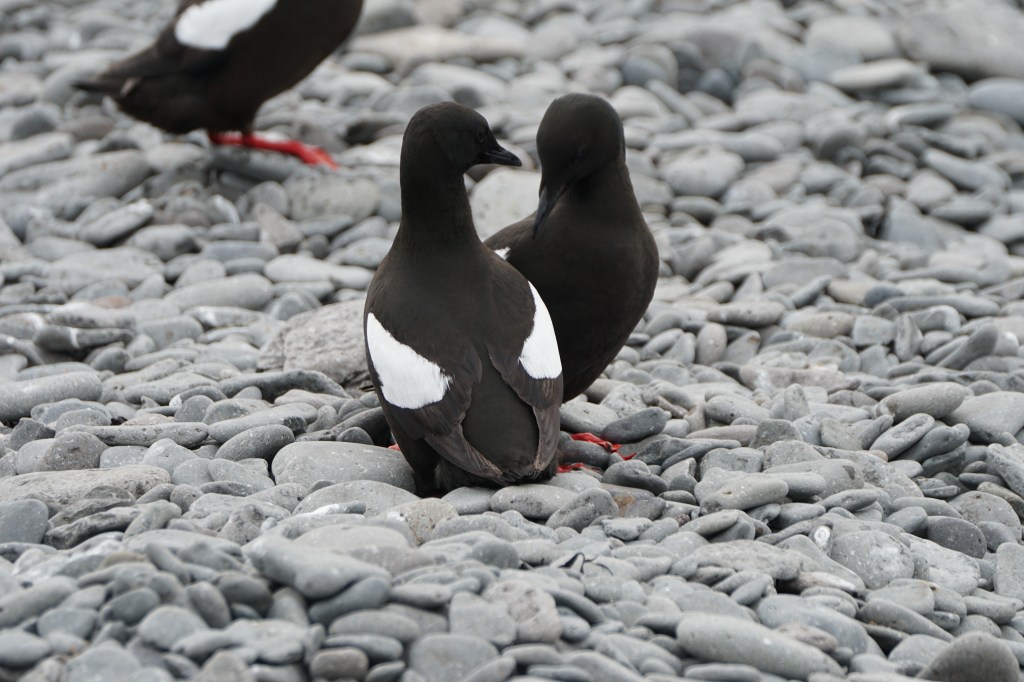
There is also a large colony of black guillemots on the island. We really enjoyed watching the puffins by the old restored windmill behind the main buildings. The residents also farm rhubarb on the island, and operate a small cafe, with gift shop and tiny post office. They provide coffee and rhubarb pie to their guests — it was delicious.




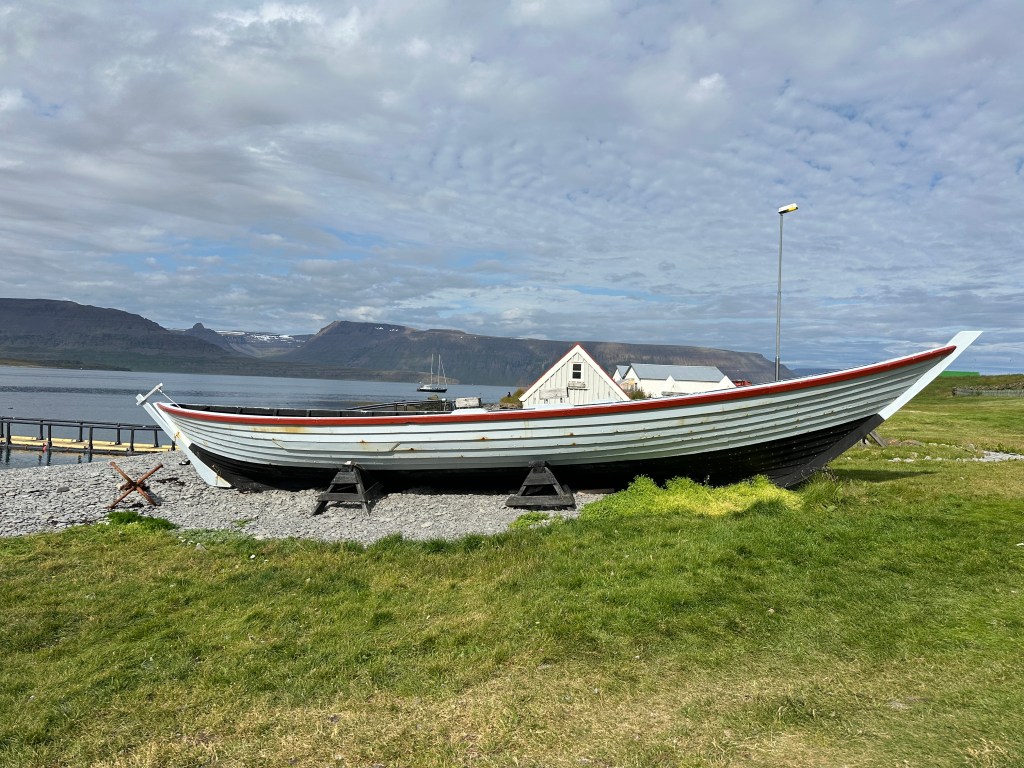








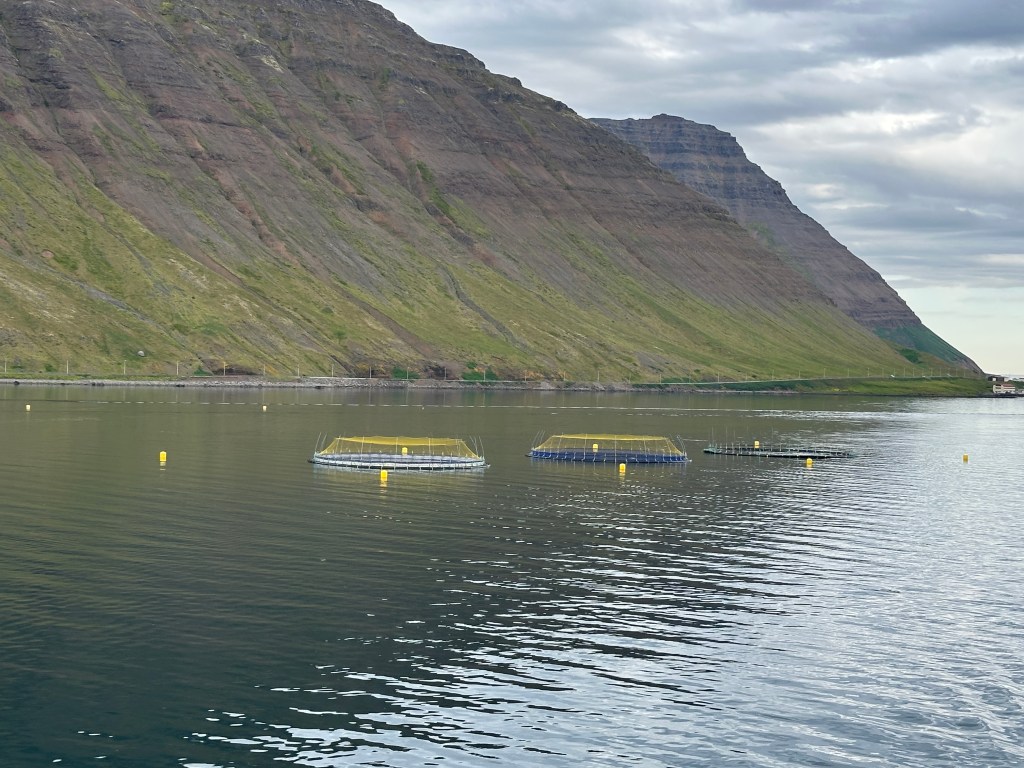
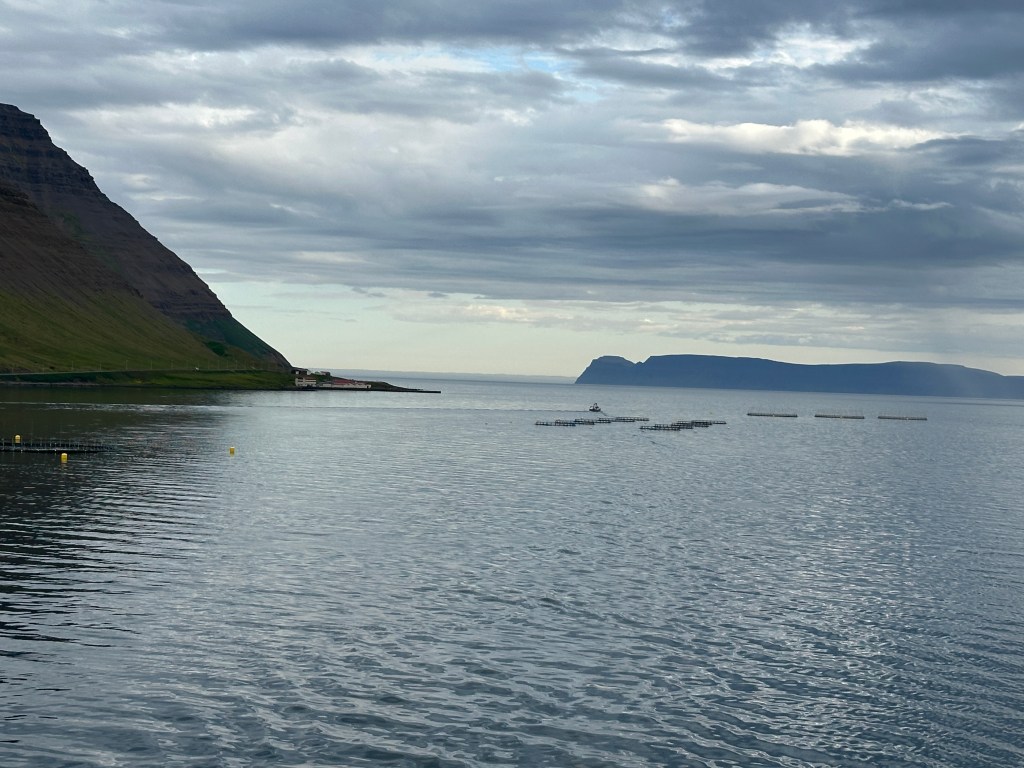

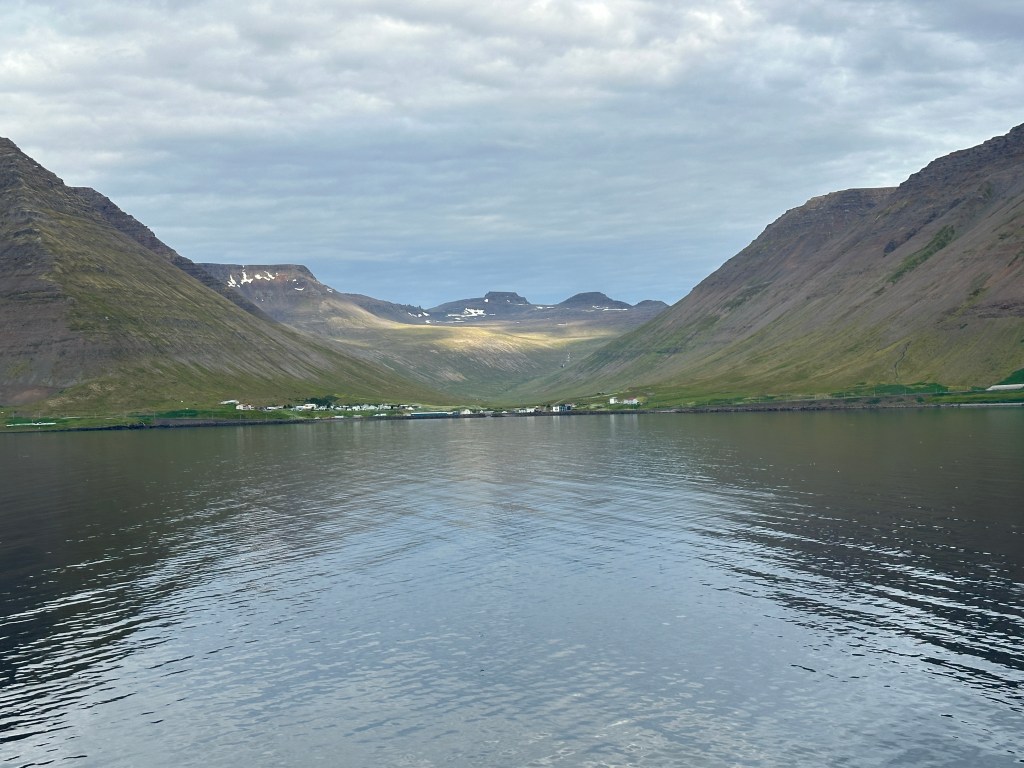











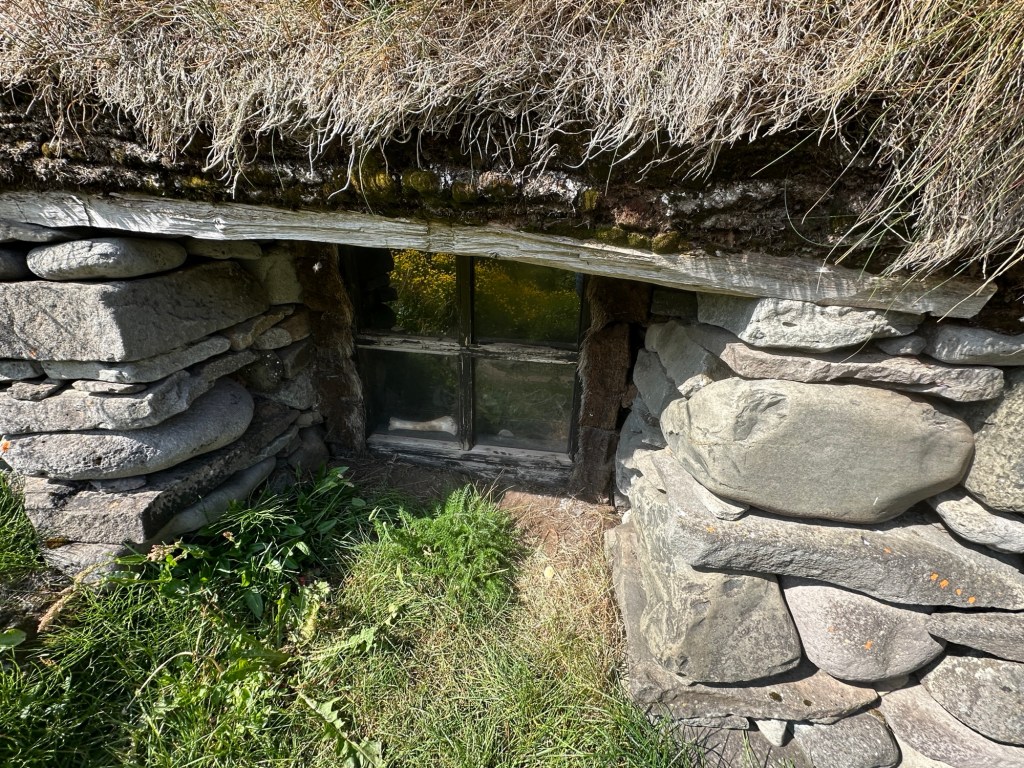
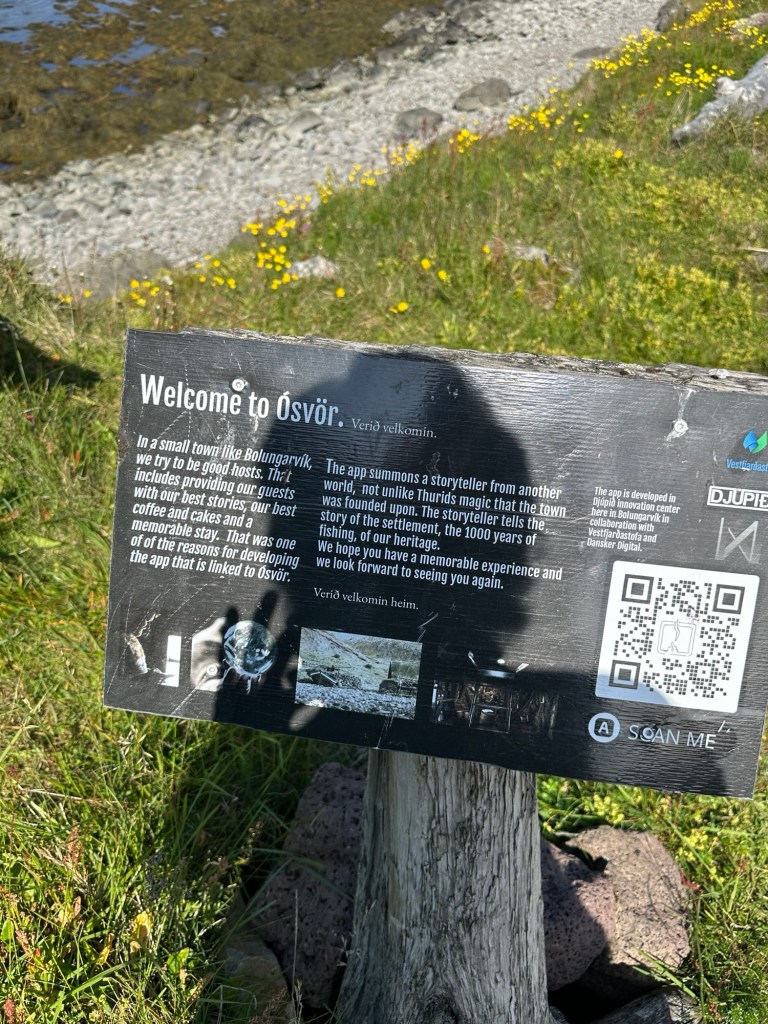
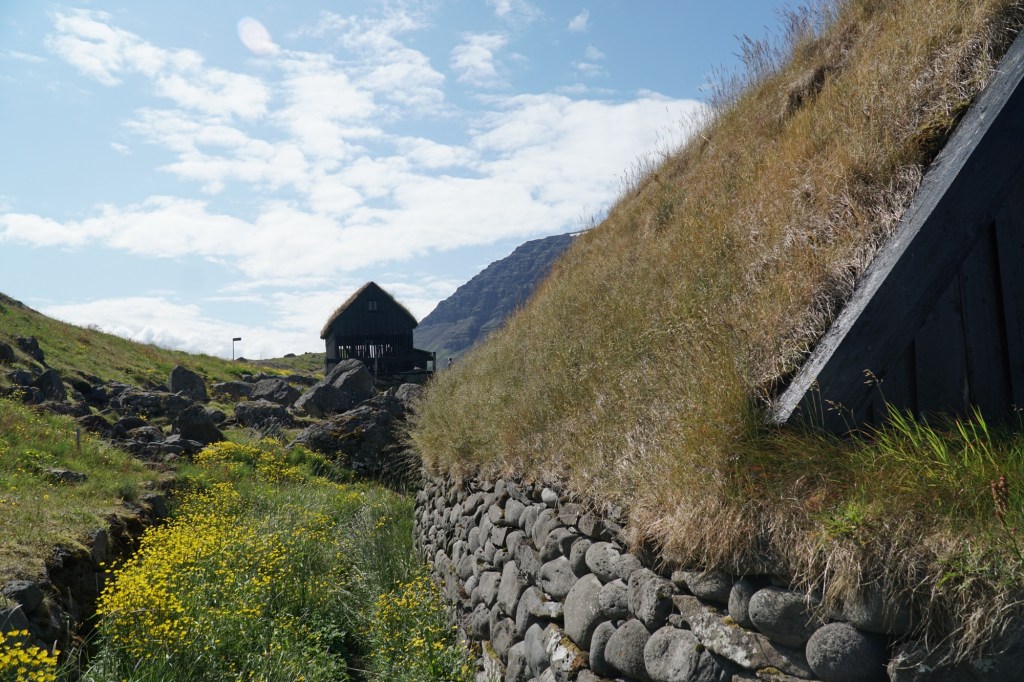
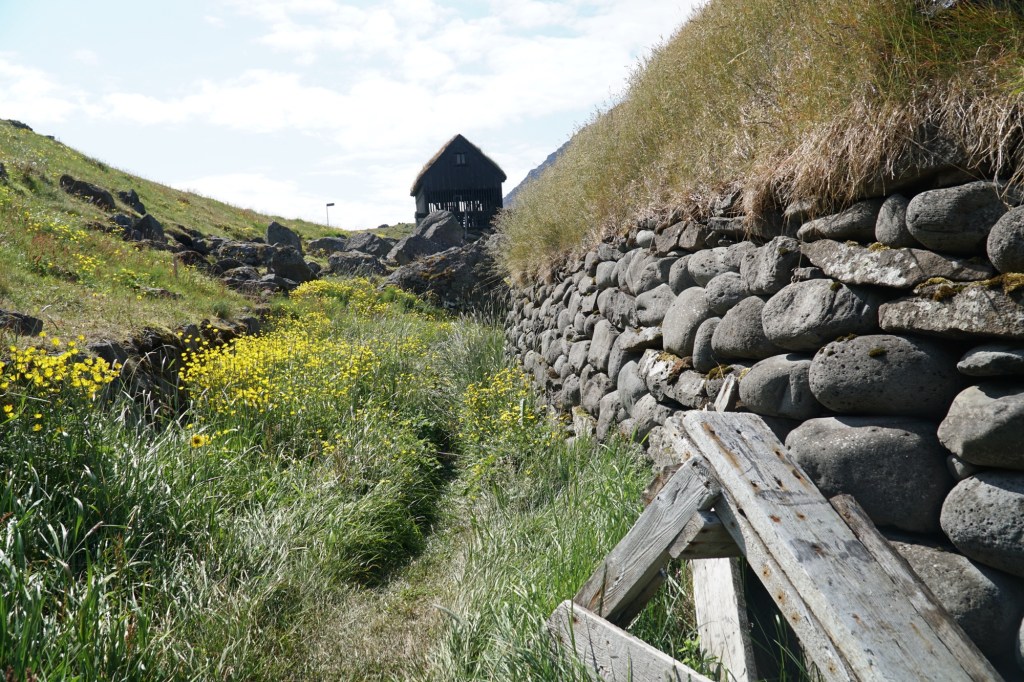
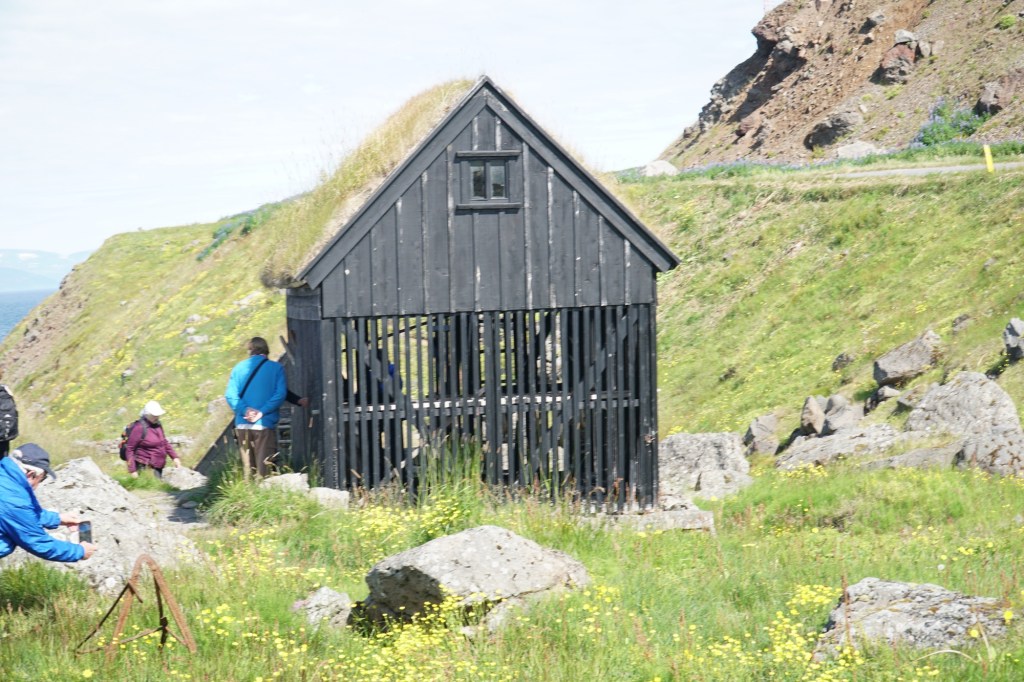
Later in the day, we had a tour around Isafjördur, stopping at the Ósvör Maritime Museum. The museum is a replica of a fishing outpost from the late 1900s. Each year a group of 8 (7 fishermen and one woman who cooked and sewed) would leave their farms and come to this area to fish, mainly for cod. Our guide was dressed in the period waterproof gear, and he showed us a typical fishing boat and described life at the outpost. The small boat had a stripe painted about two thirds of the way up to the top. Once they had filled the boat with enough fish that the water line reached this stripe, they returned to shore, and processed the fish, which included salting and drying. As the end of the season, they took a long row toward Greenland to catch a large shark which they pulled beside the boat while they extracted the liver for its vast quantify of oil. We were able to walk through the small kitchen/residence, the salt shed, and drying shed.
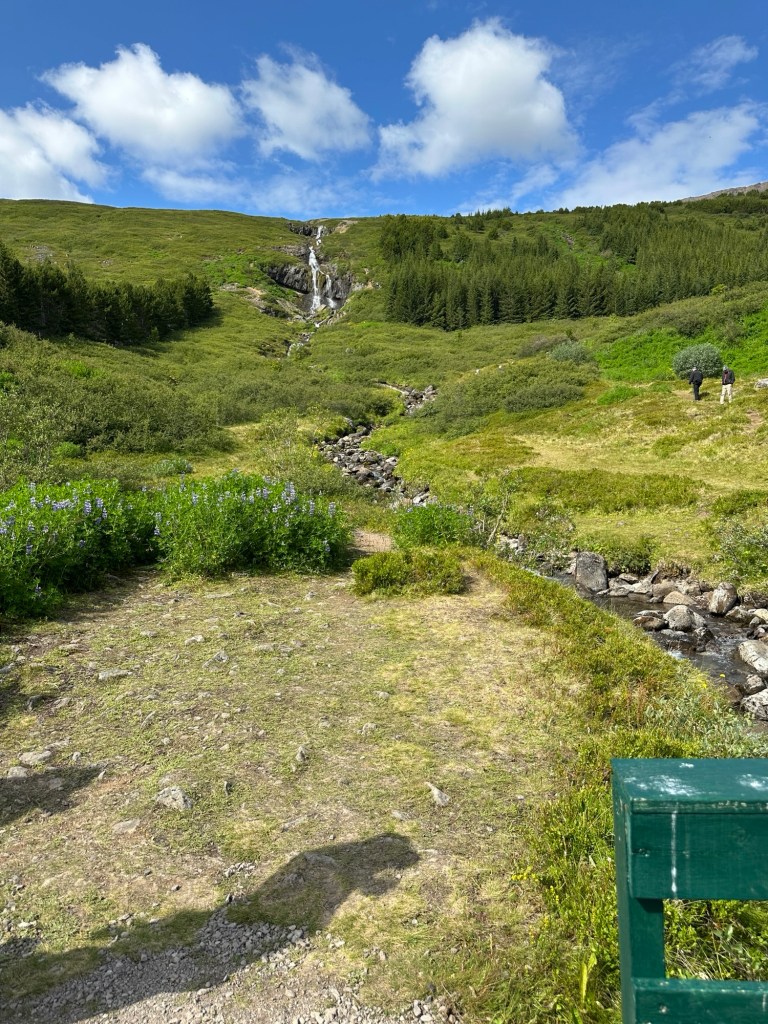
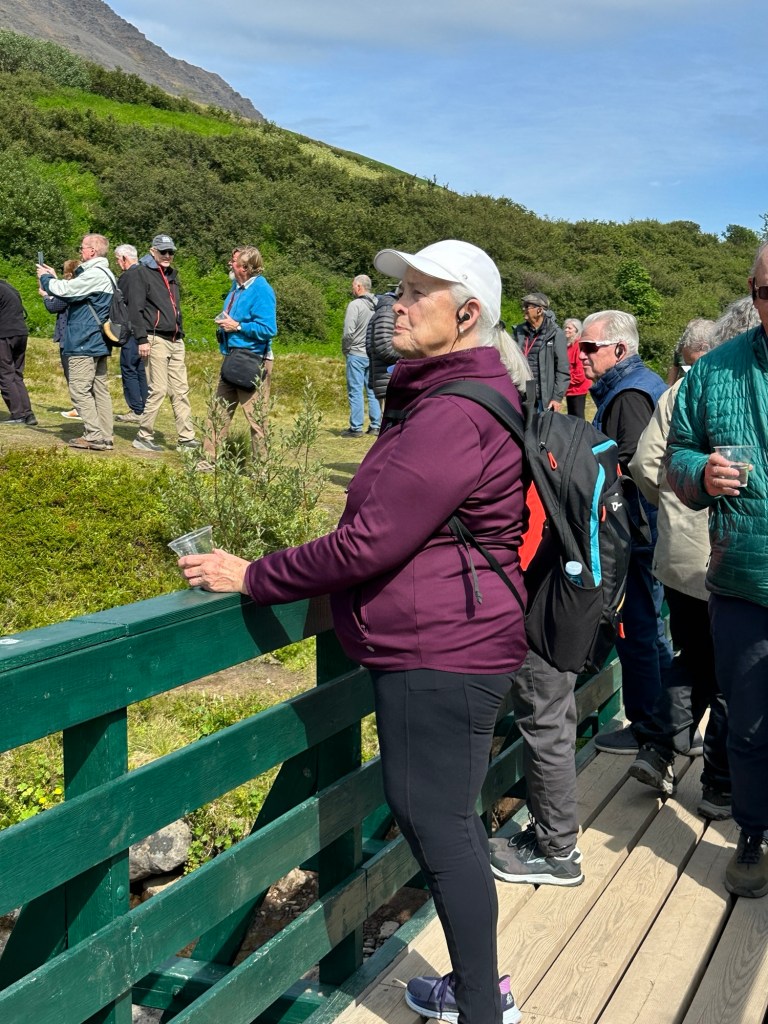
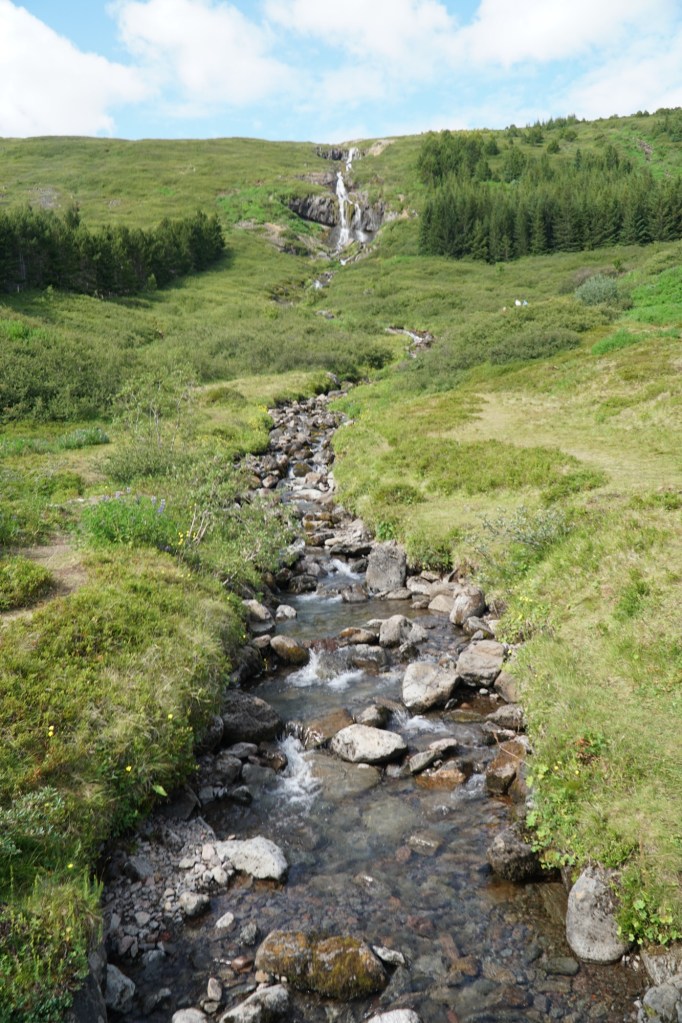
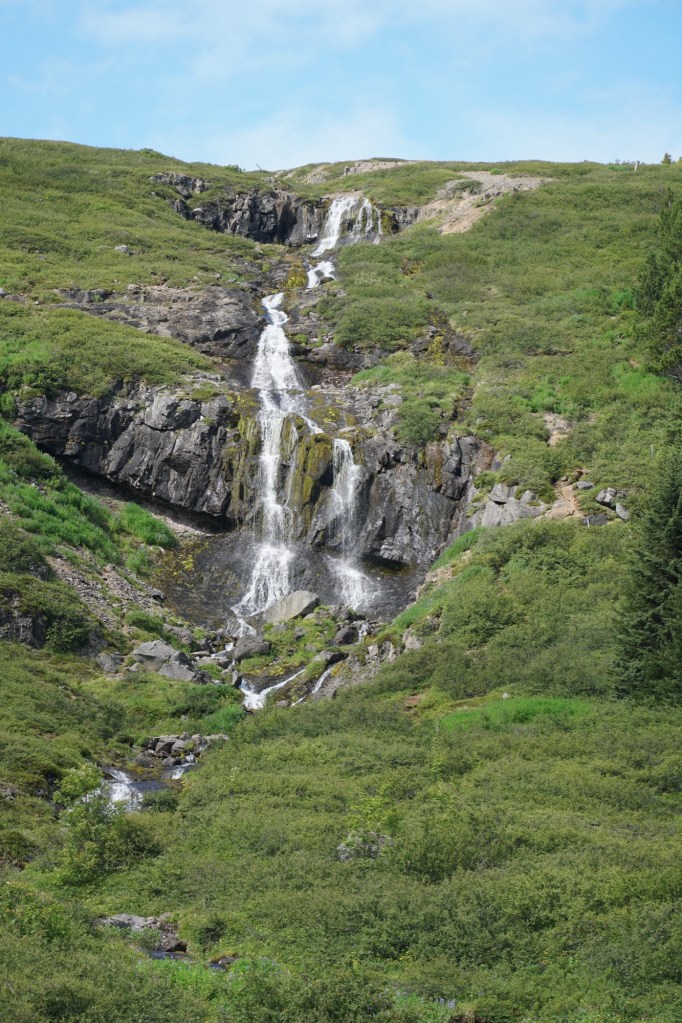
After the museum, we stopped to hear a short vocal concert of Icelandic songs, and then visited an awesome waterfall with water so pure we could drink it.


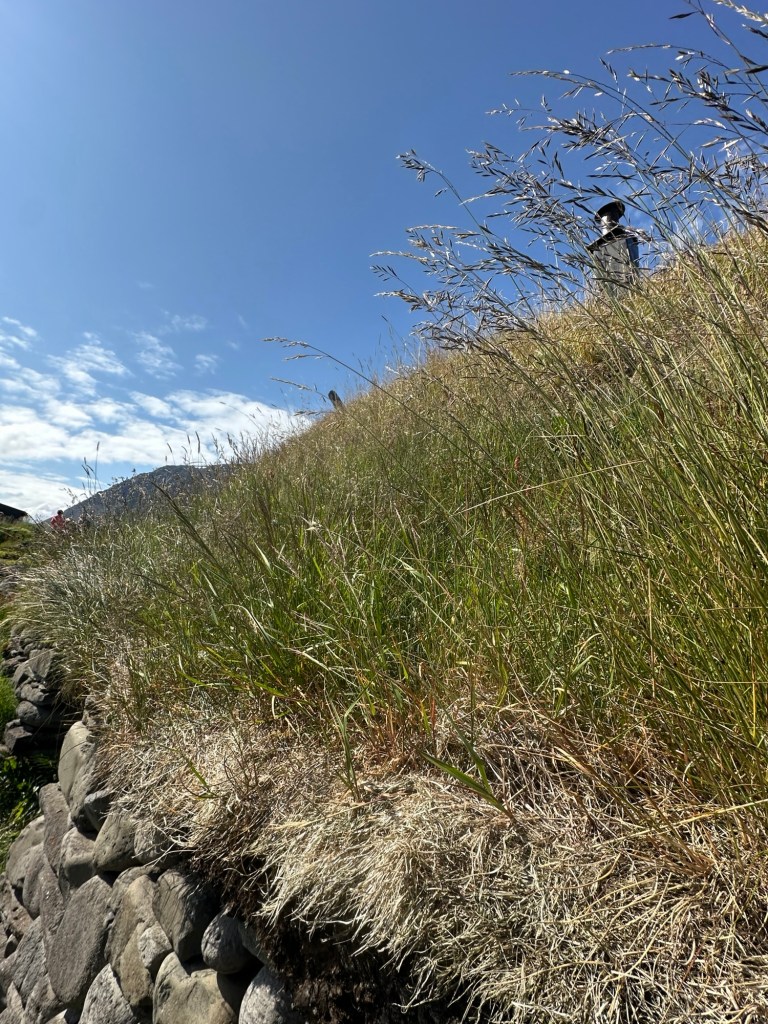










July 13, Sunday
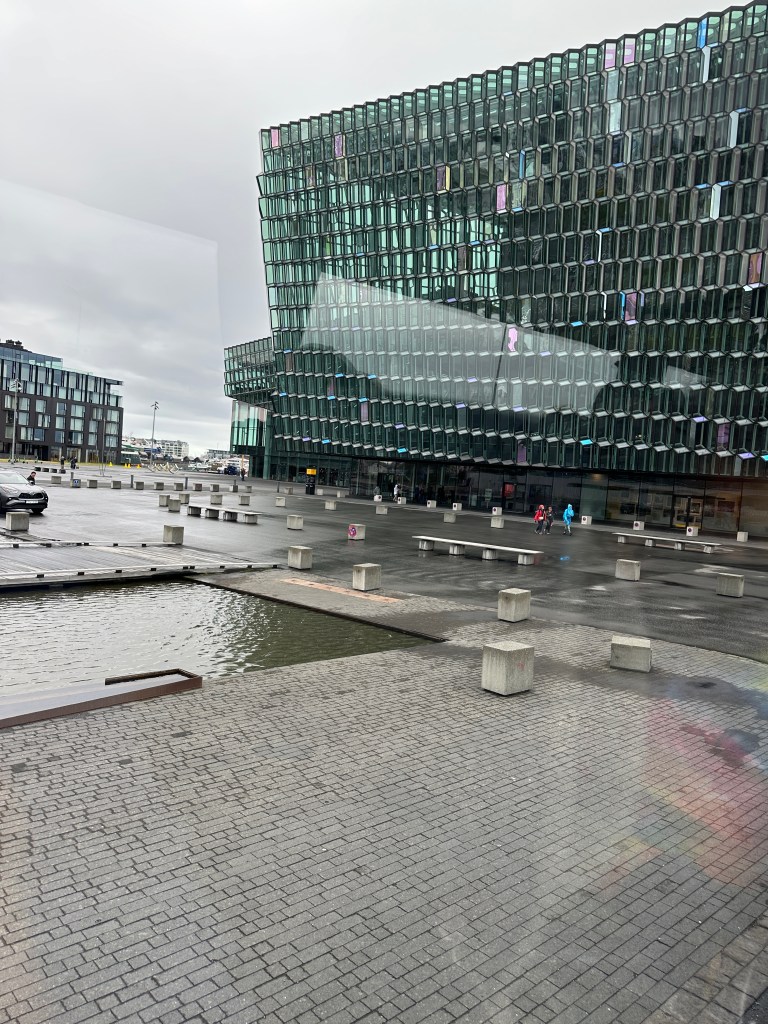
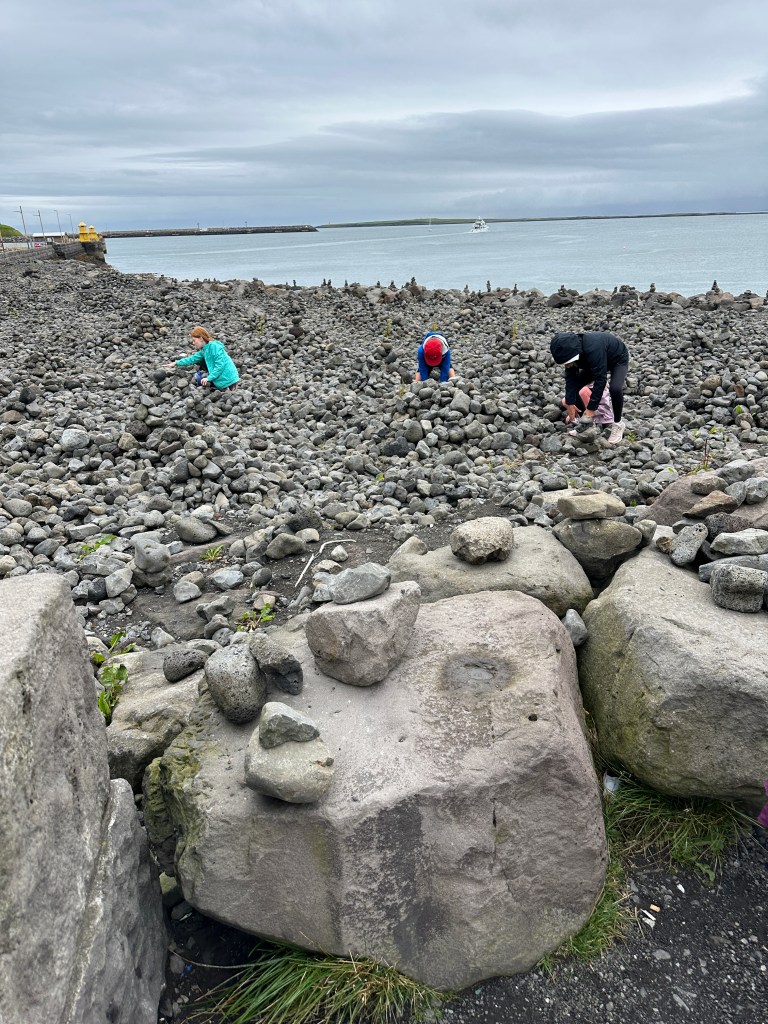
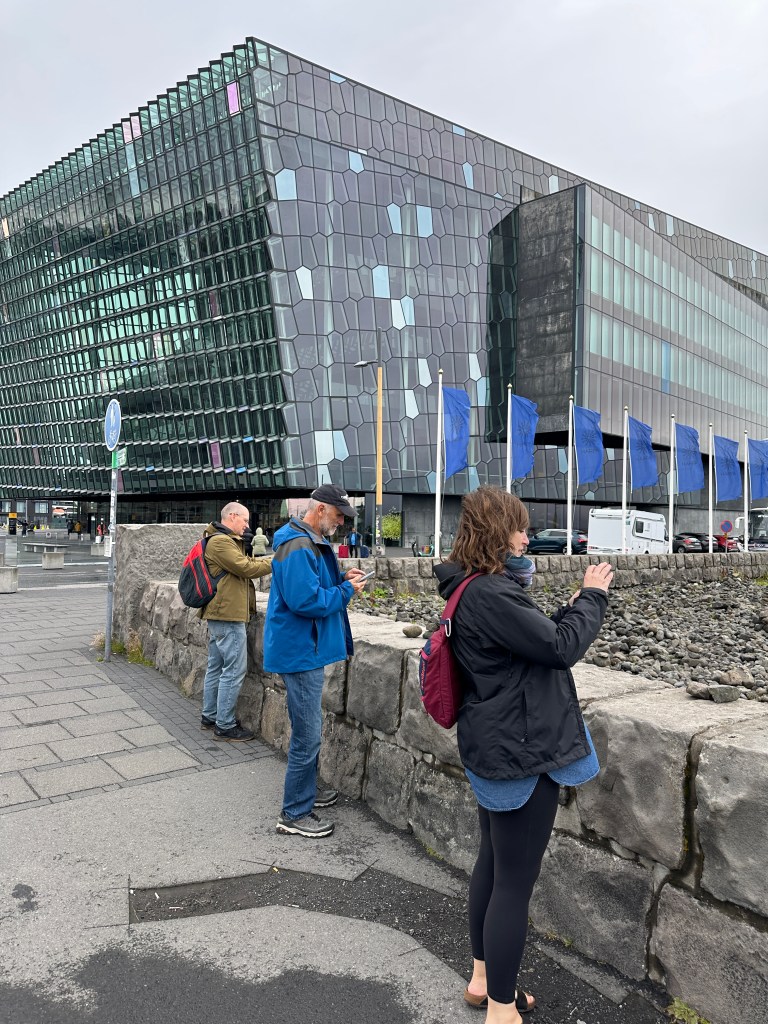
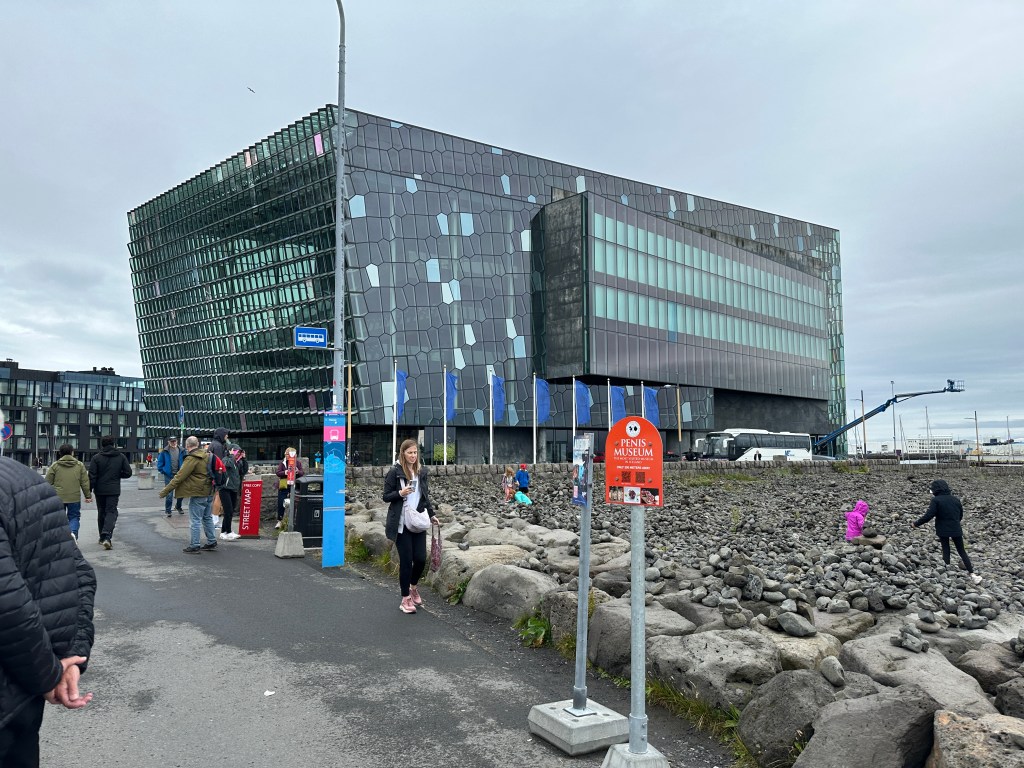
The next day, we docked in Reykjavik, disembarked, and were taken to a convention center/opera house to wait until time to get a ride to the airport for the direct flight home.


The Onboard Experience
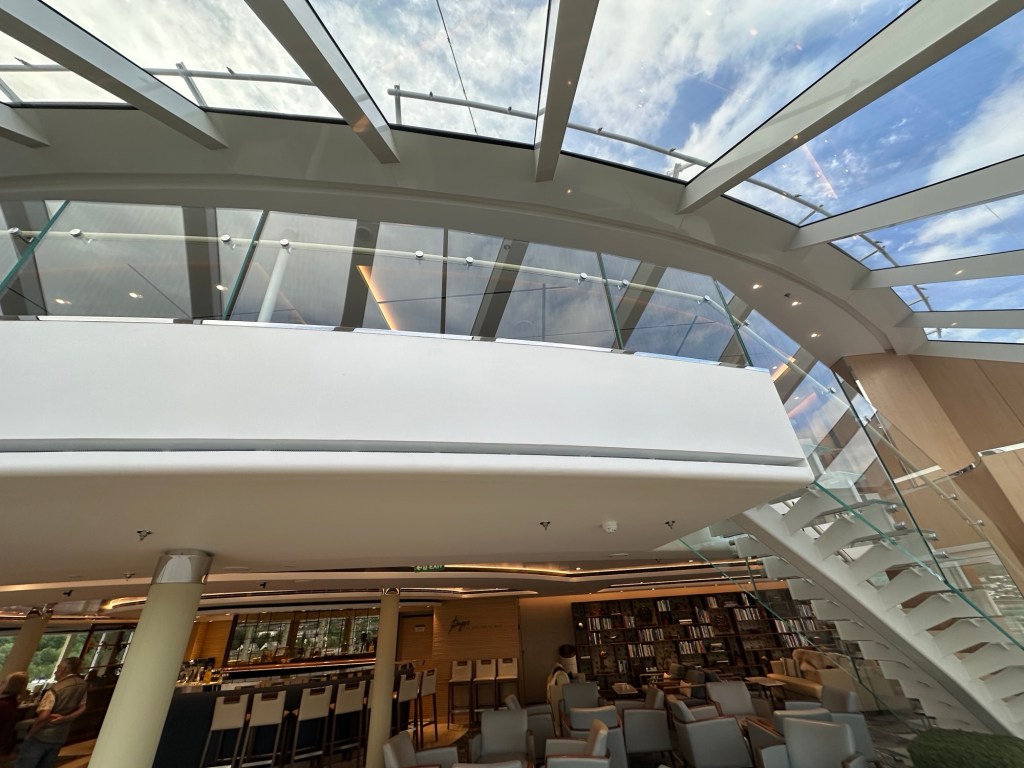
Our ship, Viking Neptune, was gorgeous and immaculate in every way. The Scandinavian styling is lovely. Our stateroom had plenty of space, a nice veranda with two chairs and a table, a TV with lots of movies and access to replays of all the lectures delivered in the auditorium. Internet connection was usually good.
We adored the pianist, Lydia from Romania, who played multiple times each day, as did a cello and volin duo. Once each day, there would be “Munch moments” when the pianist or duo would play Norwegian music, while the large screen over the main staircase would display images of Munch paintings. Viking had acquired exclusive access to these digital images, and also produced a nice book about Munch that they gave us. There were three historians and a naturalist who gave lectures during the cruise. Topics include history of the vikings, role of Churchill in Norway’s history, role of a diplomat (one lecturer was a distinquished former diplomat from the UK). Most were fascintating and excellently delivered.
One of our favorite locations was the Explorer’s Lounge, which had two levels at the front of the ship. A guitarist/singer played there every afternoon. There was an indoor pool under a retractable roof (which was retracted one day of the trip), and an infinity pool and hot tub at the back of the ship. The Winter Garden, adjacent to the indoor pool and very sunny, hosted high tea with classical music every afternoon. Best scones ever!
The Nordic Spa was amazing. There was a thermal pool, hot tub, steam room, and snow grotto in the co-ed area. In the women’s dressing room there was a sauna and icy plunge pool. I had one amazing spa treatment, but enjoyed the rest of the spa on multiple days.
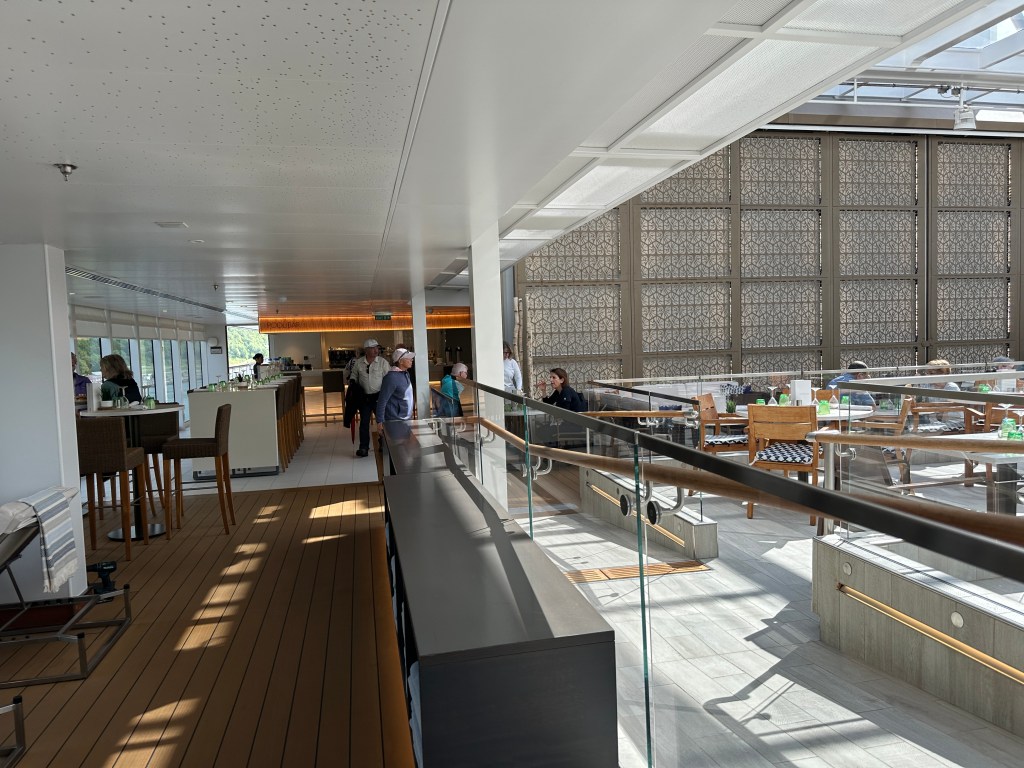
Food was excellent everywhere – in the main restaurant, the informal World Cafe (buffet), Manfredi’s italian restaurant, the Chef’s Table, and the Explorer’s Lounge, which had Norwegian soups and specialties at certain times. No casino, very little shopping on board — just two jewelry stores and a Nordic shop. No high pressure anything! Staff were unbelievably wonderful everywhere, especially wait staff and the stateroom stewards. We aren’t cruise people, but this trip was perfect for cruising because so much of the trip was about the beautiful scenery, and the time on the ship was great.





 My Travel Blog