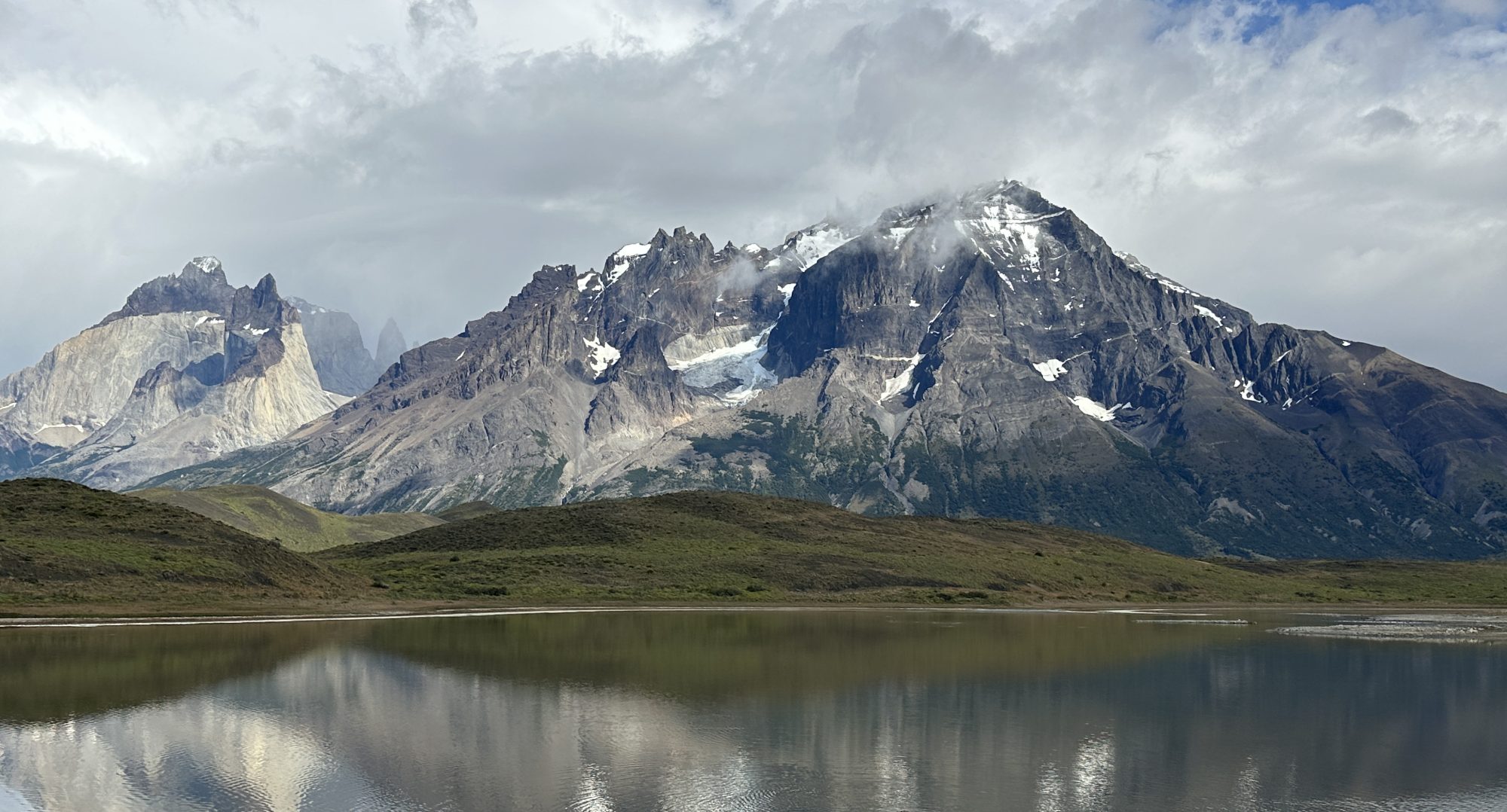
Chris and I spent 3 weeks exploring this beautiful and varied country, learning about different cultural and religious customs, meeting gentle and generous people, and eating flavorful meals!

We signed up for another Overseas Adventure Travel (OAT) trip, Moroccan Safari Odyssey, and this time embarked on the pretrip, which included several days in the North of the country, in Chefchoaen, the “blue city,” and Tangier. We landed in Casablanca on April 18 to begin our adventure. Of the 15 total travellers on the main trip, 11 opted for the pretrip as well. The Trip Leader (TL), Mohammed Ait Alla, led both the pretrip and the main trip. Most of the photos are from my Sony mirrorless camera or Iphone 14, and some, particularly group photos, were shared by other travellers on the trip, including our trip leader. Thanks to all who shared photos! Click on the photos to see them full size, as the embedded images are generally truncated thumbnails.
Here’s an OAT map with the trip agenda

April 18
After a short meeting with the individuals in the pretrip, we had a group dinner in a local restaurant to try our first tagine. The food was wonderful and the group friendly.

Friday, April 19
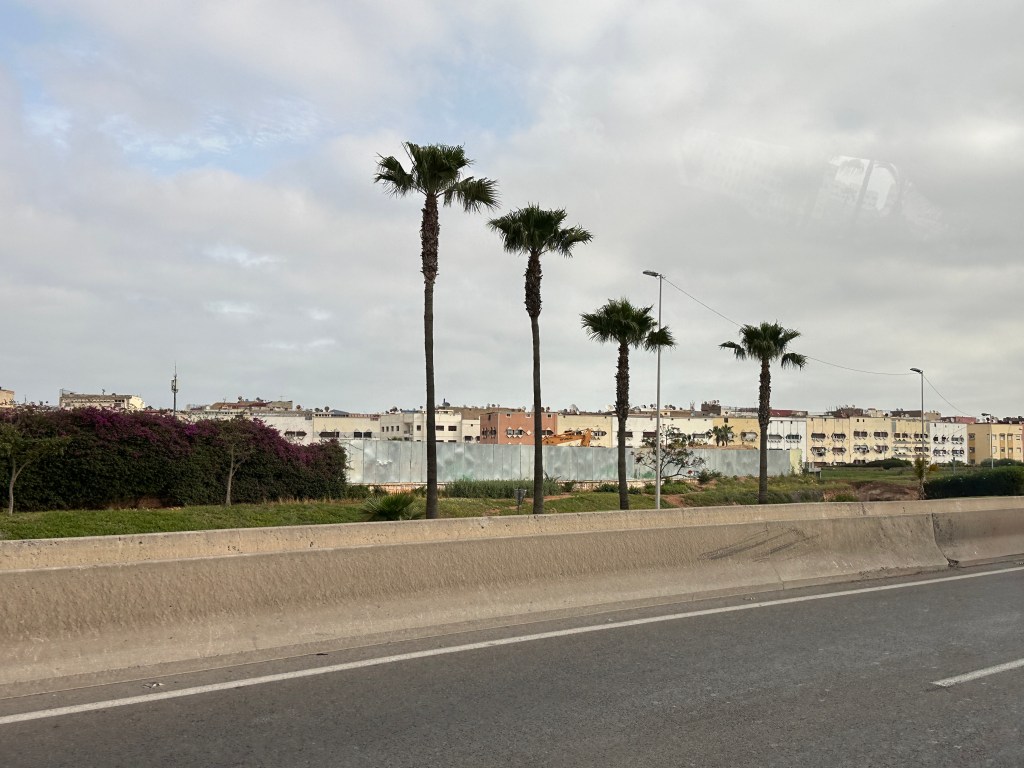
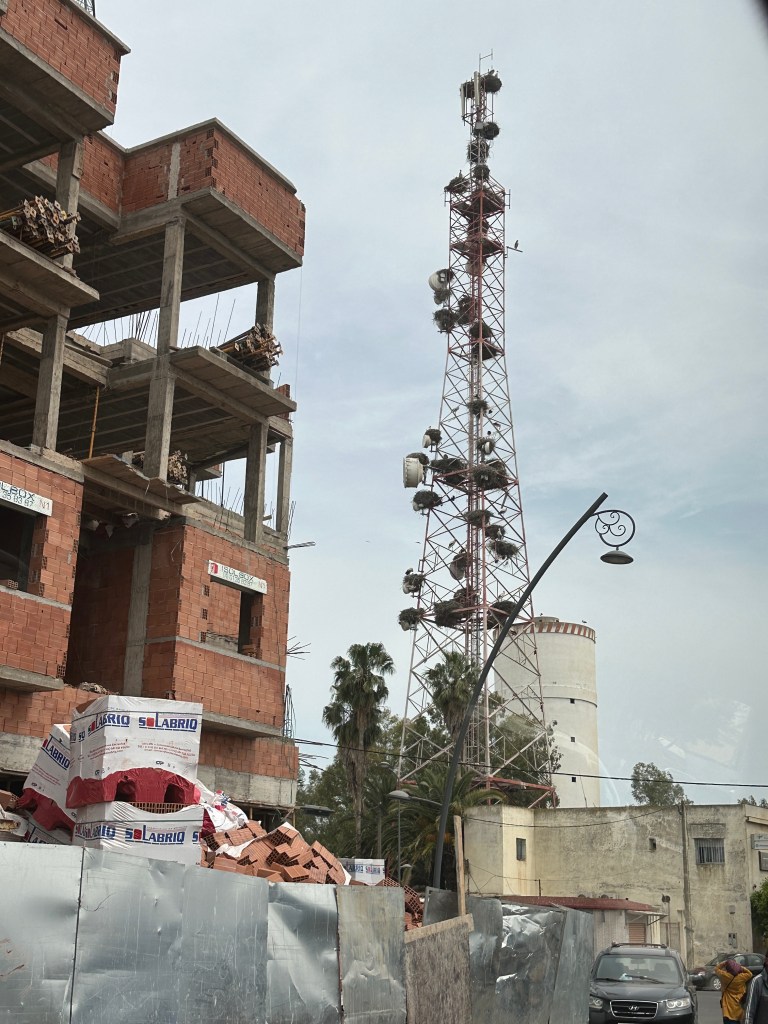
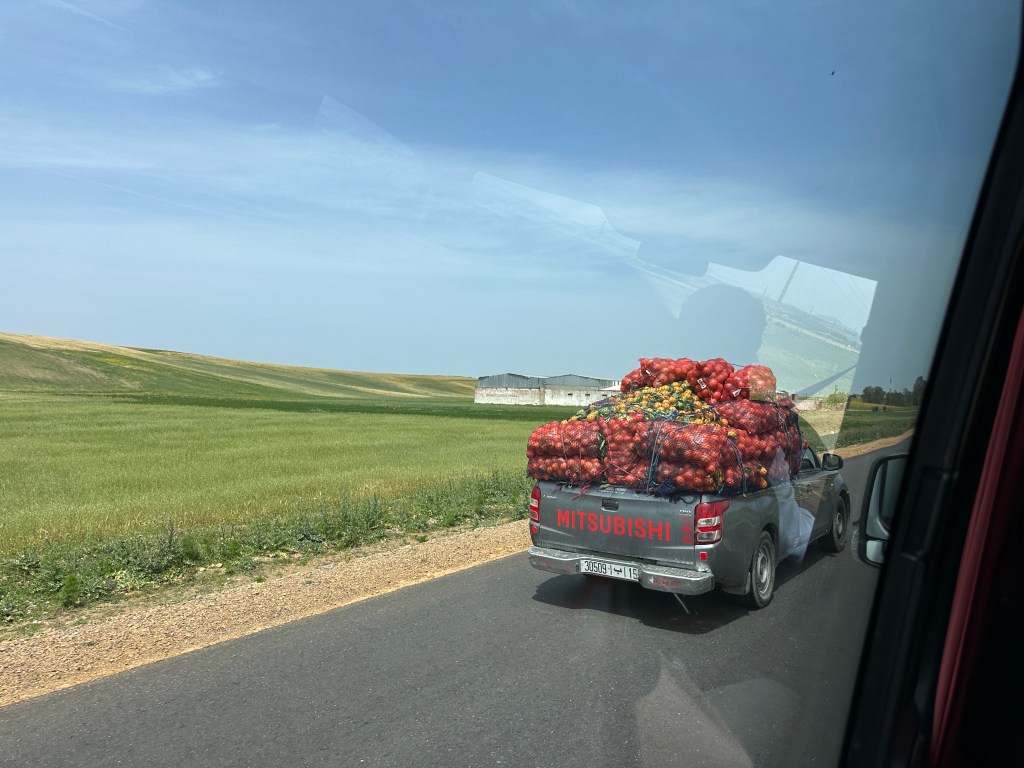
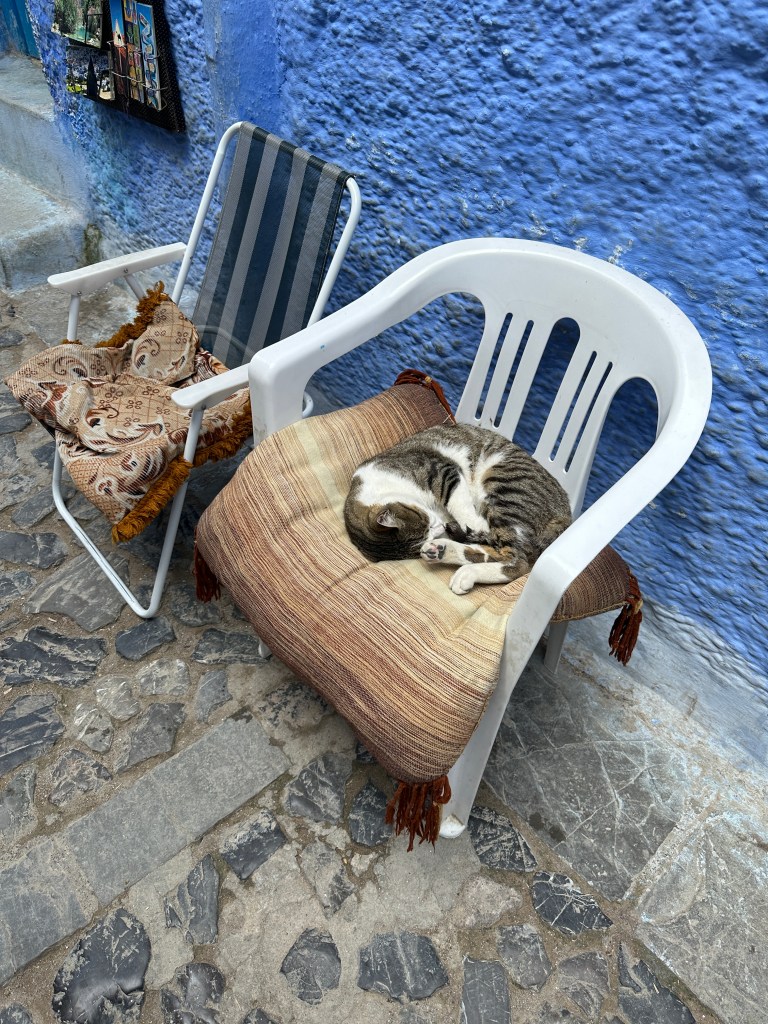
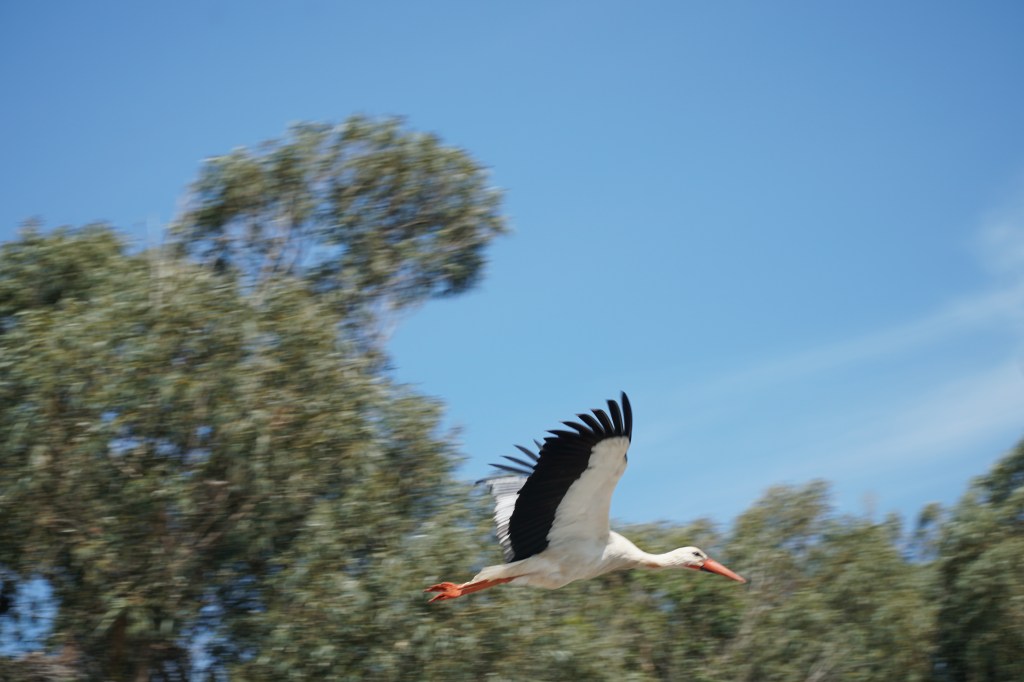
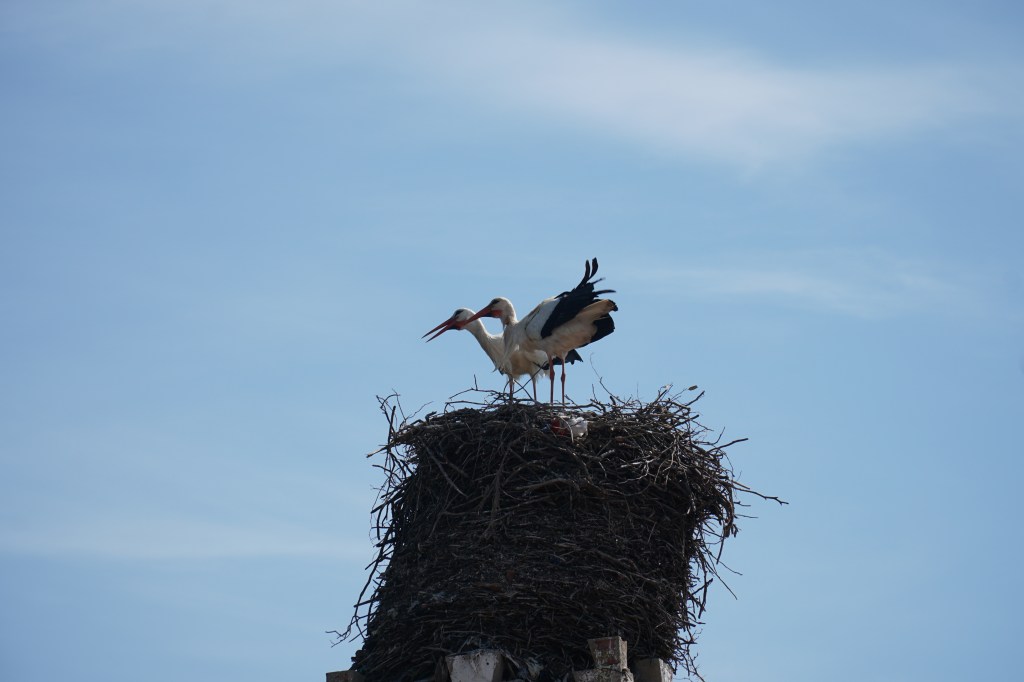
We started our pretrip activities today. We boarded our small coach to head to Chefchaouen. The land was fairly flat along the highway. We stopped for a short break and drank a “nas nas,” which is half coffee and half milk. Along the way, we saw lots of storks and stork nests on various towers. We also became aware that cats are everywhere!! People in the towns feed them and they mostly appear healthy.
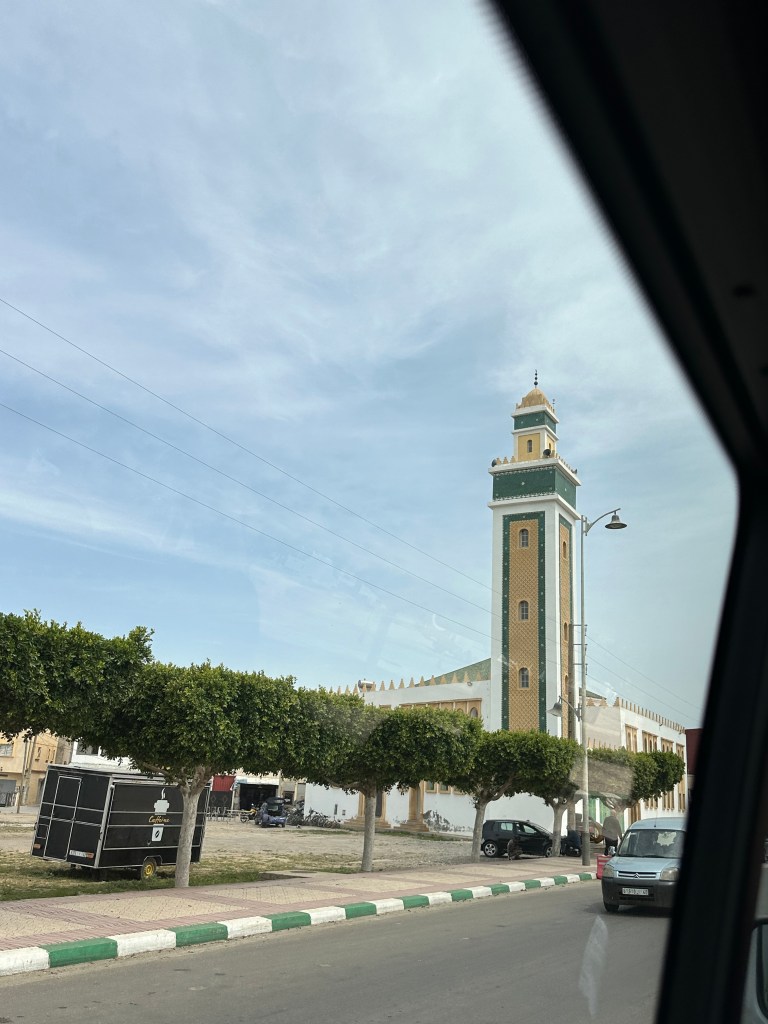
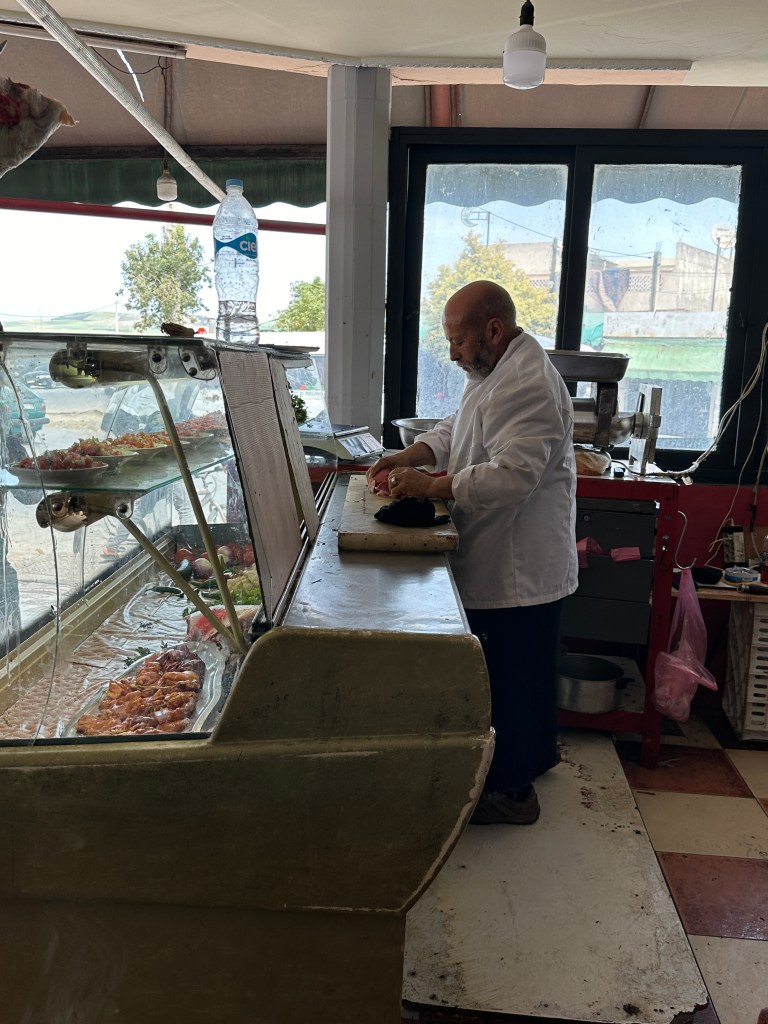
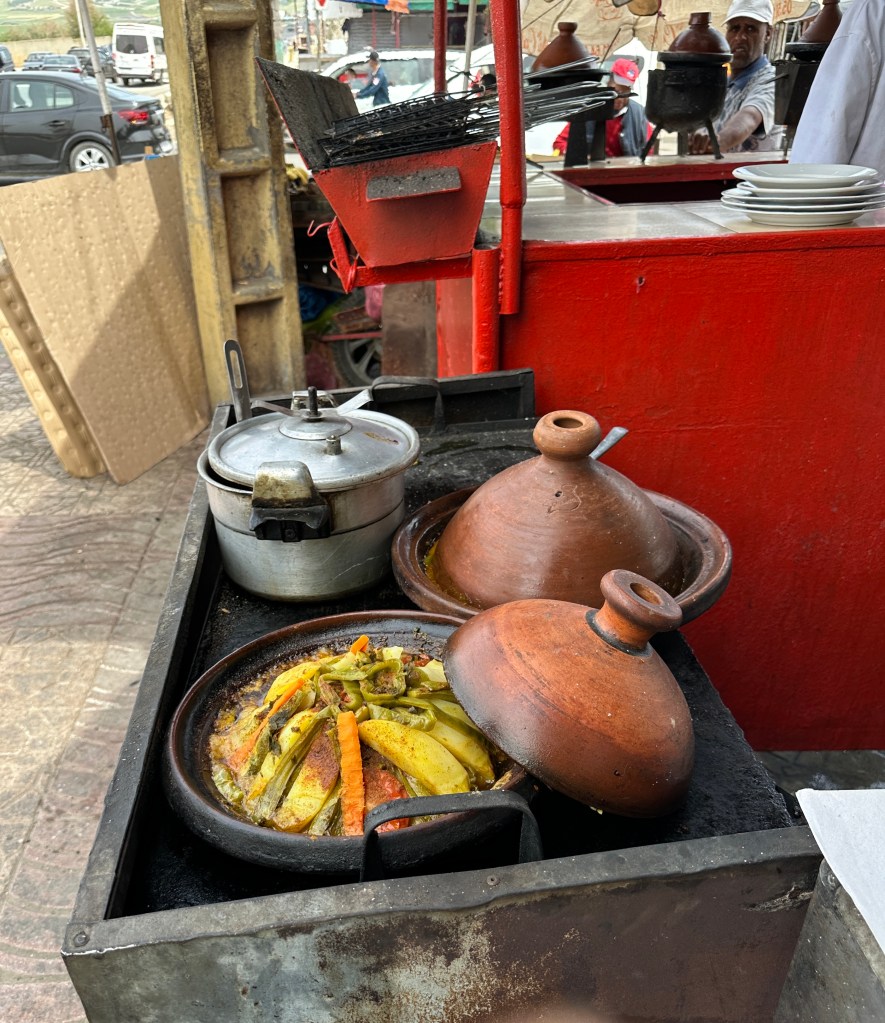
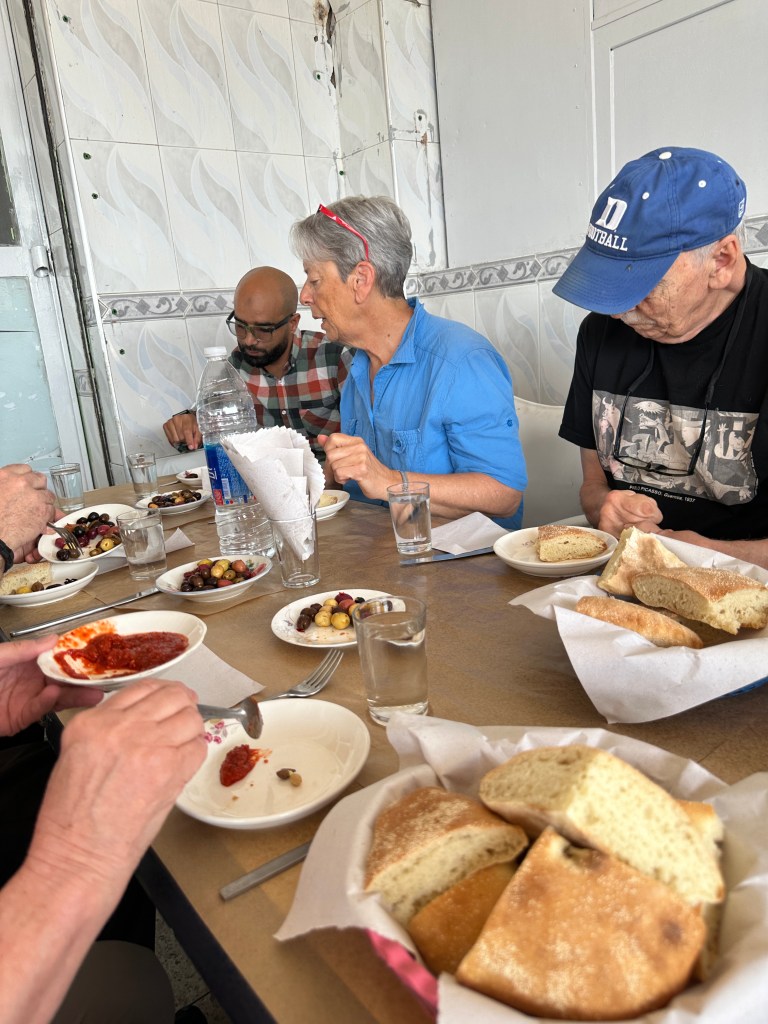
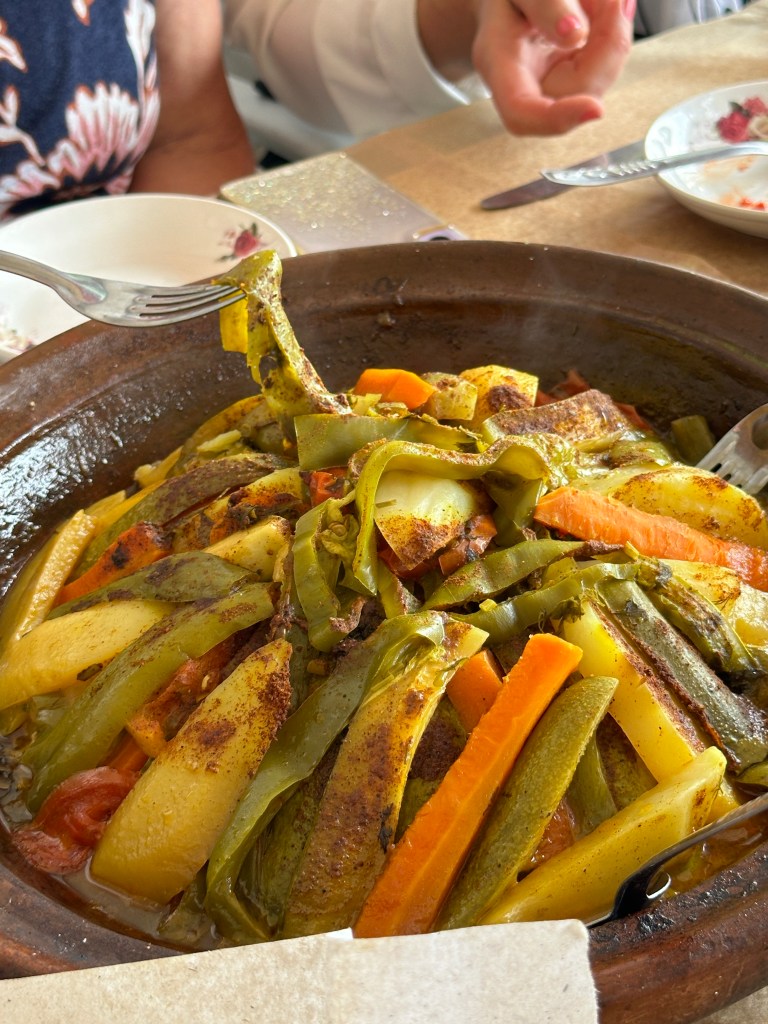
We then headed past the Sebou river to the town of Souk El Arbaa du Gharb. Towns were named after the day of the week of their market, and our town was “Wednesday.” The restaurant owner/butcher showed us how he prepared fresh beef for our main course. The staff provided lovely local hospitality and a wonderful meal. Olives, bread, and sauce to begin with, a nice lentil soup, roasted vegetables, and meatballs in a sauce with tomatoes. Dessert was sweet, fresh oranges.
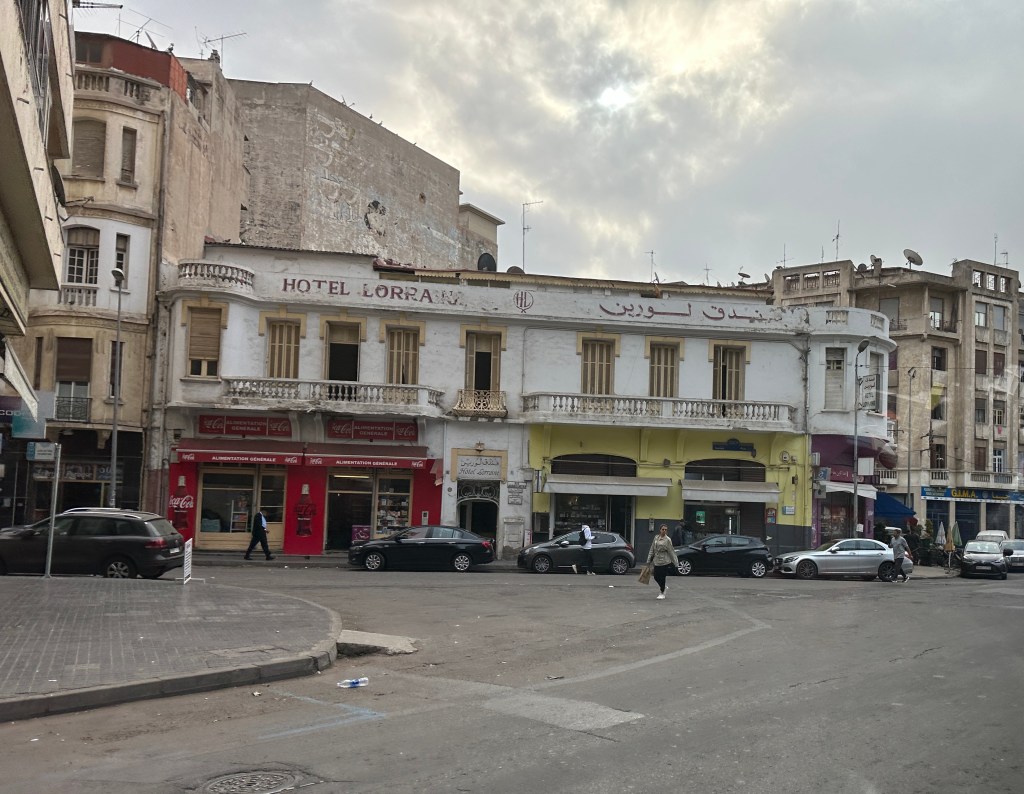
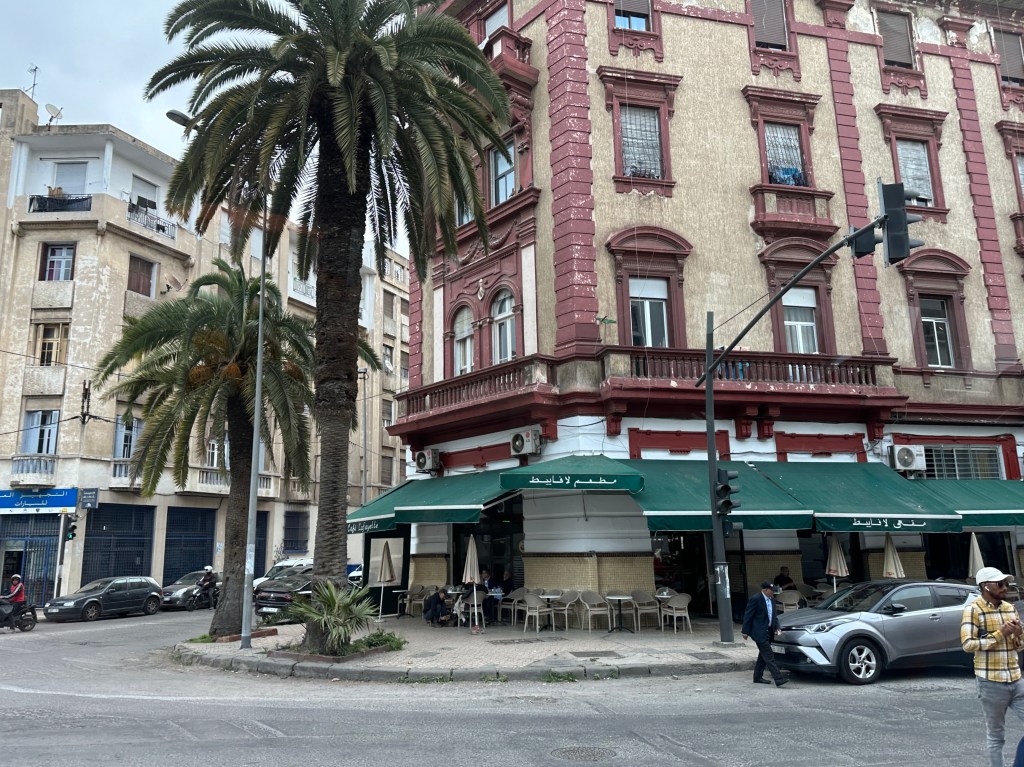









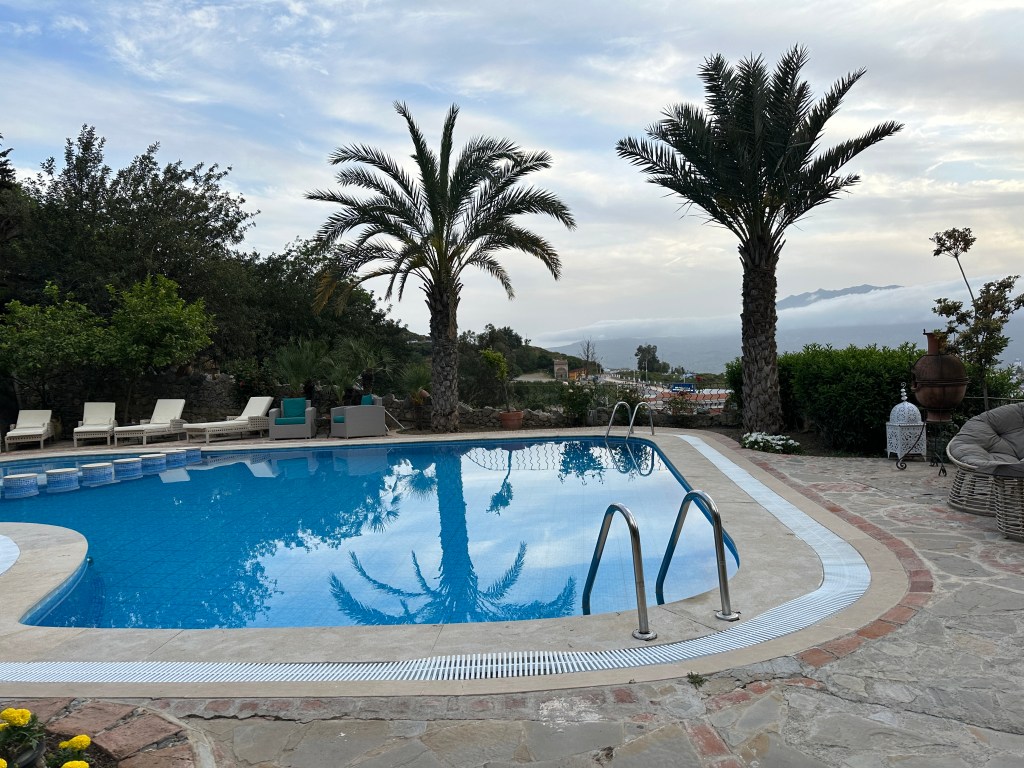
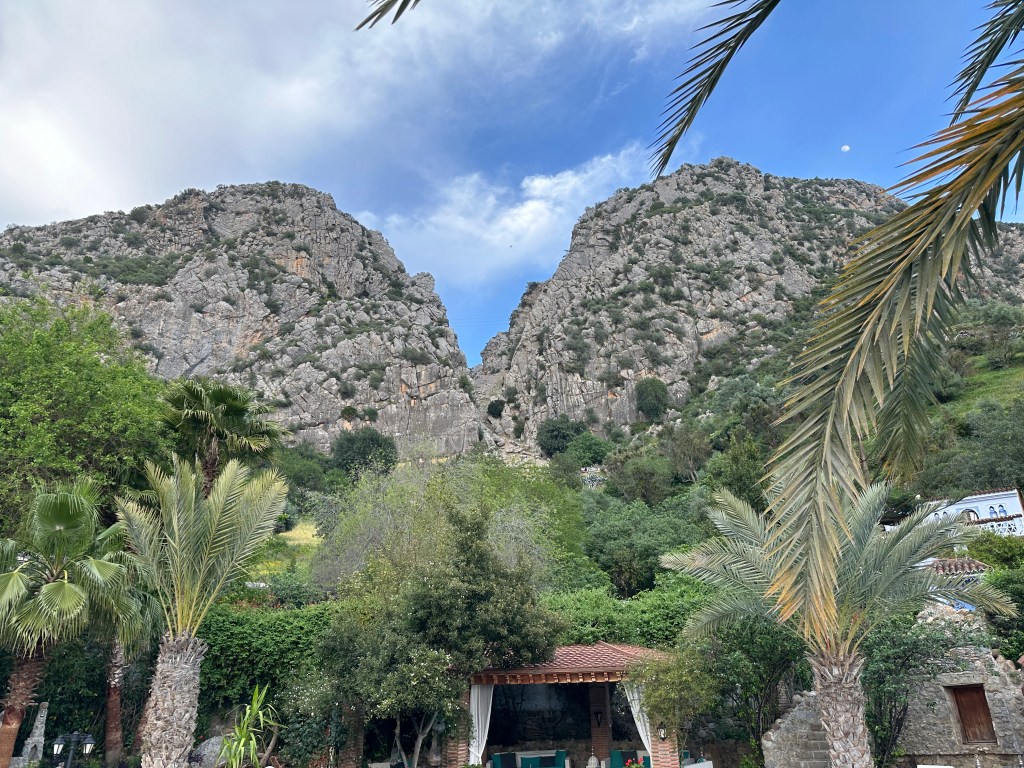
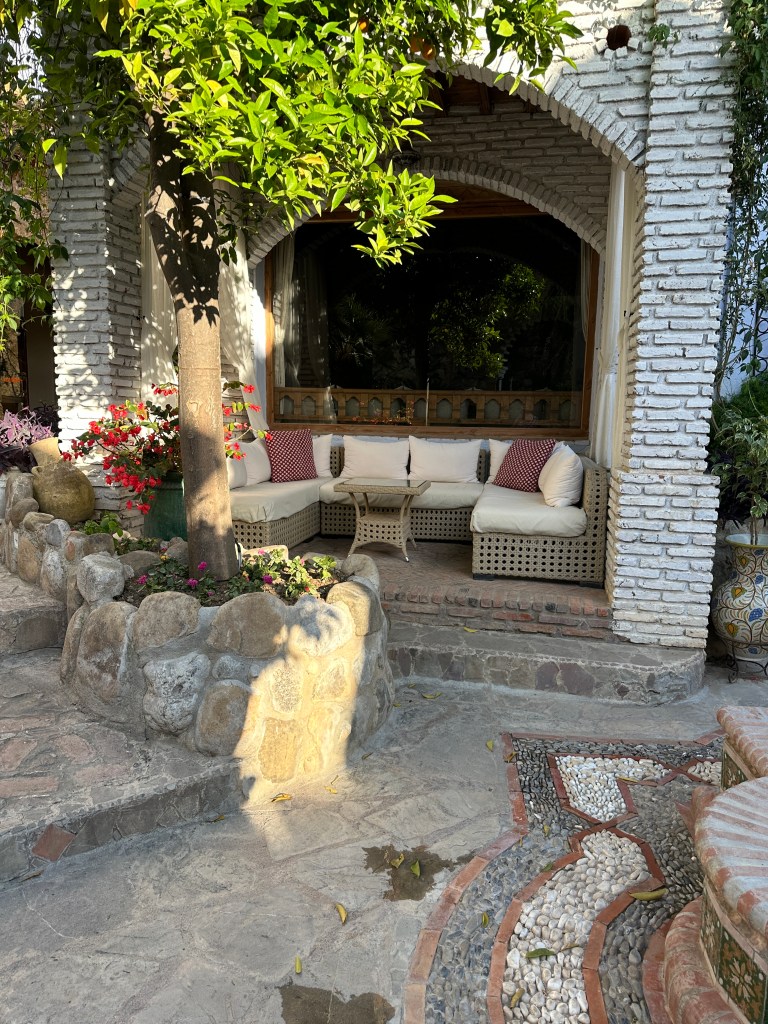
We travelled through the mountains, stopped for a view over the city of Chefchaoeun, and checked into our amazing riad (hotel). Riads were previously homes, often for multiple generations of a family. The outside door is alway very modest, and the interiors can be quite elaborate, with multiple stories built surrounding a courtyard, open to the sky, with at least one fountain. None of the riads in our trip were still open to the sky. Group gathering areas, the kitchen, and bedrooms overlook the courtyard. This particular riad had been expanded to allow for more guests. Our room had views over the blue city and the mountains behind. We had a porch with a couch and table and two other window balconies.

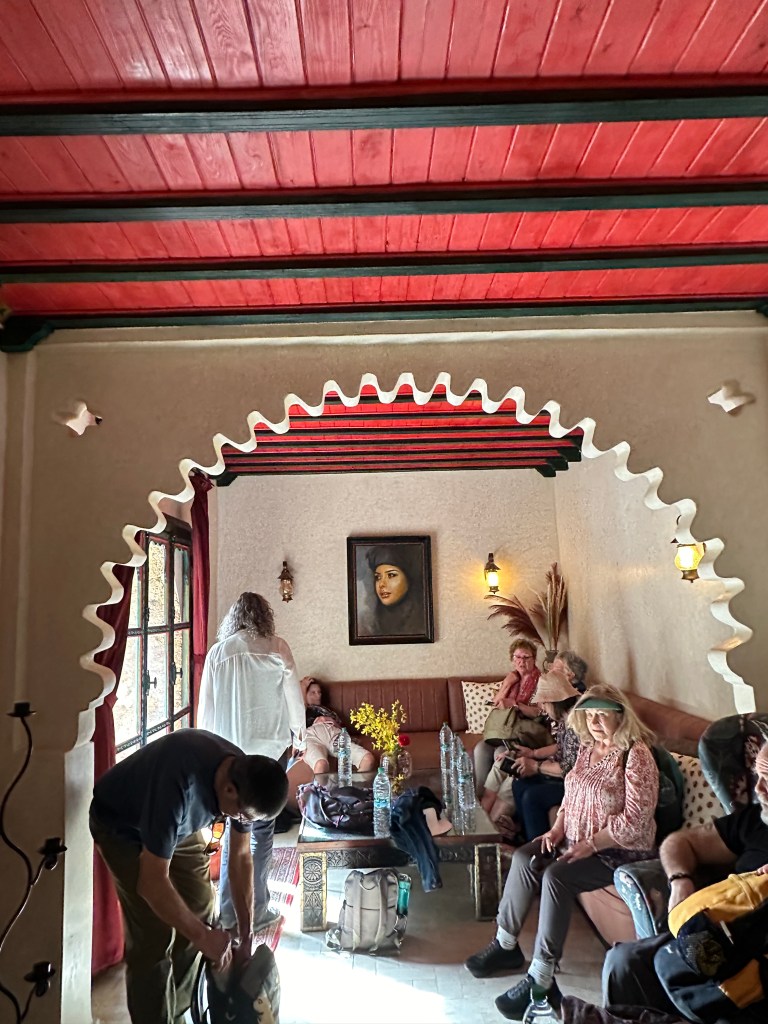

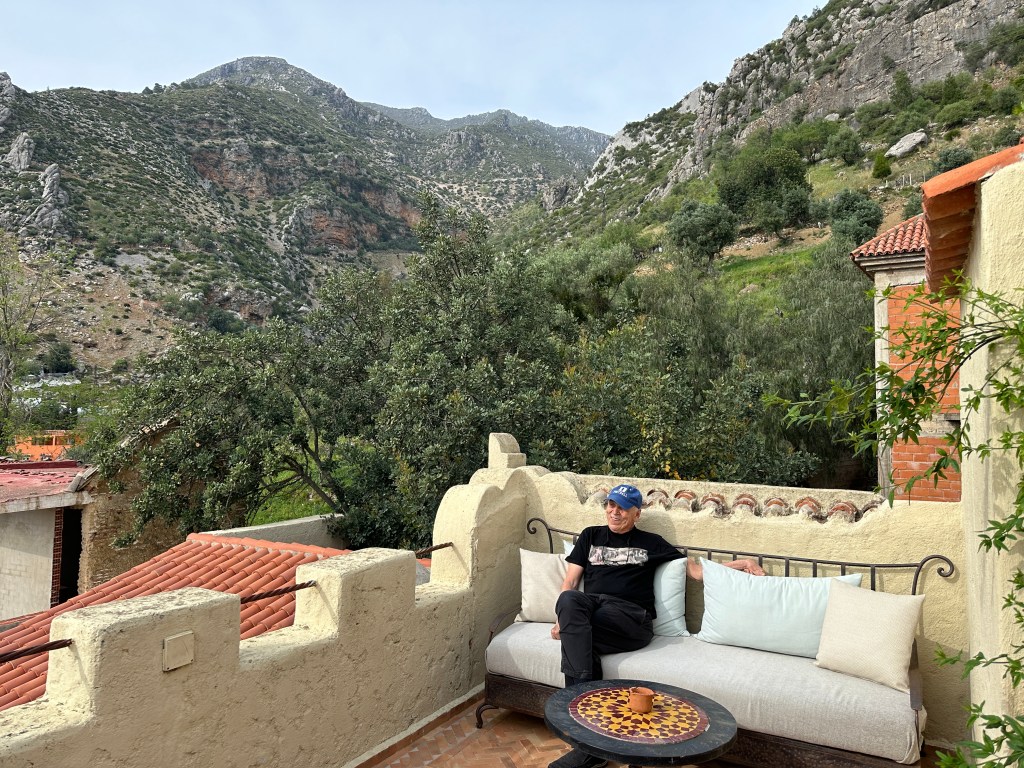

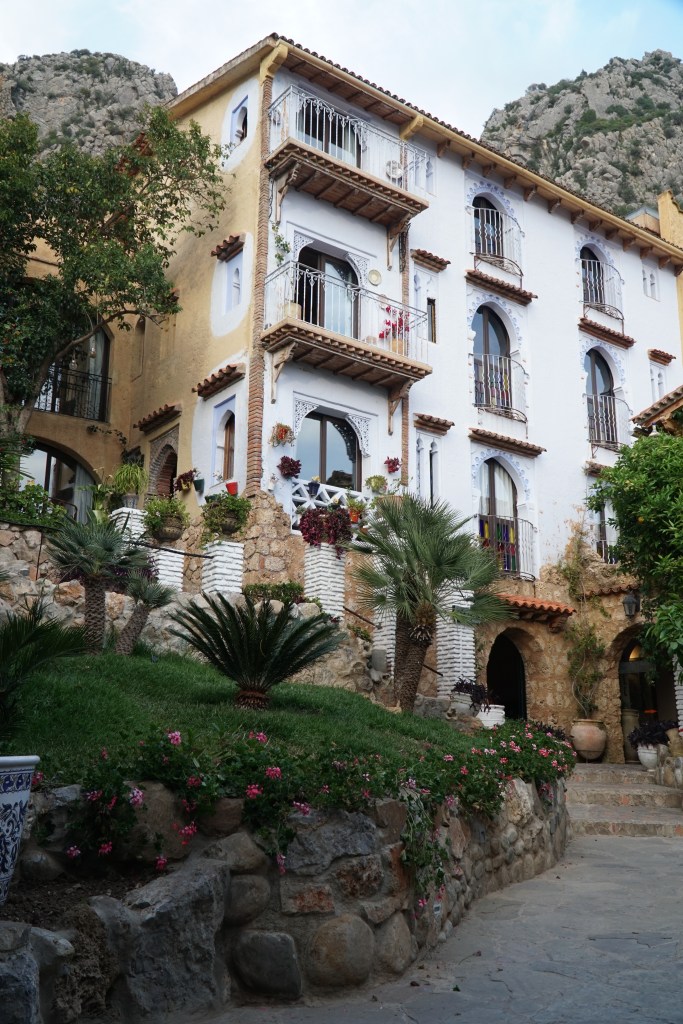
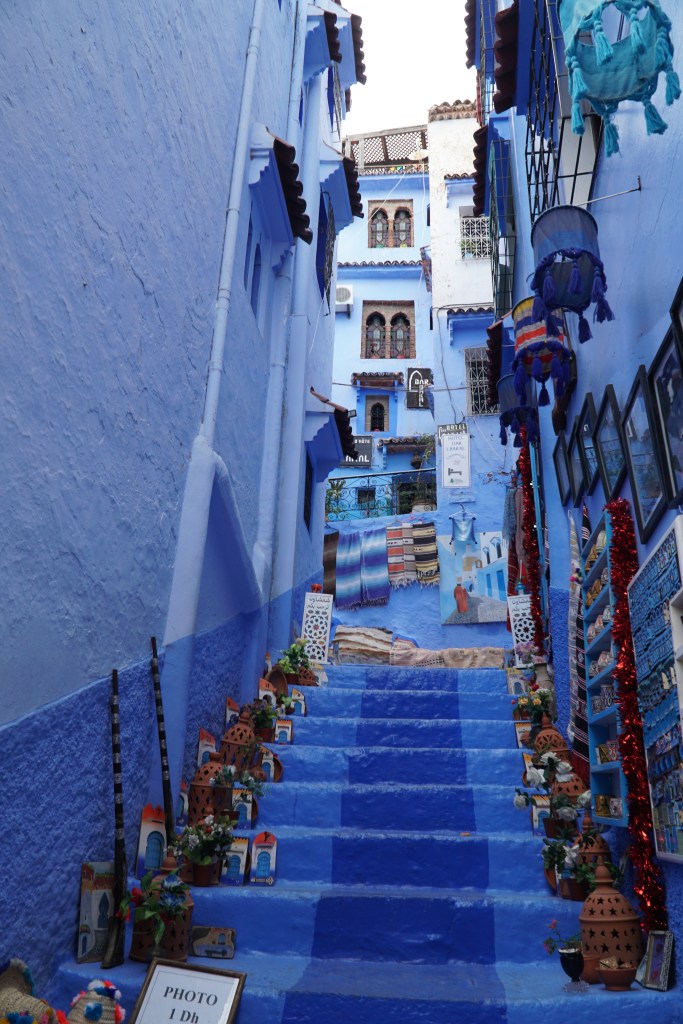
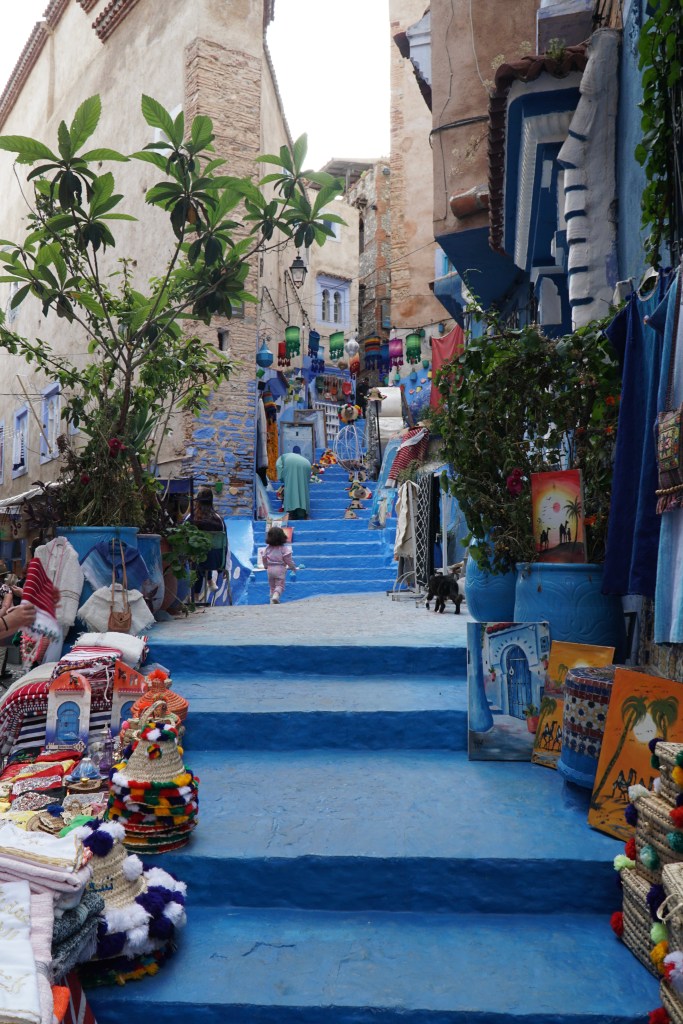
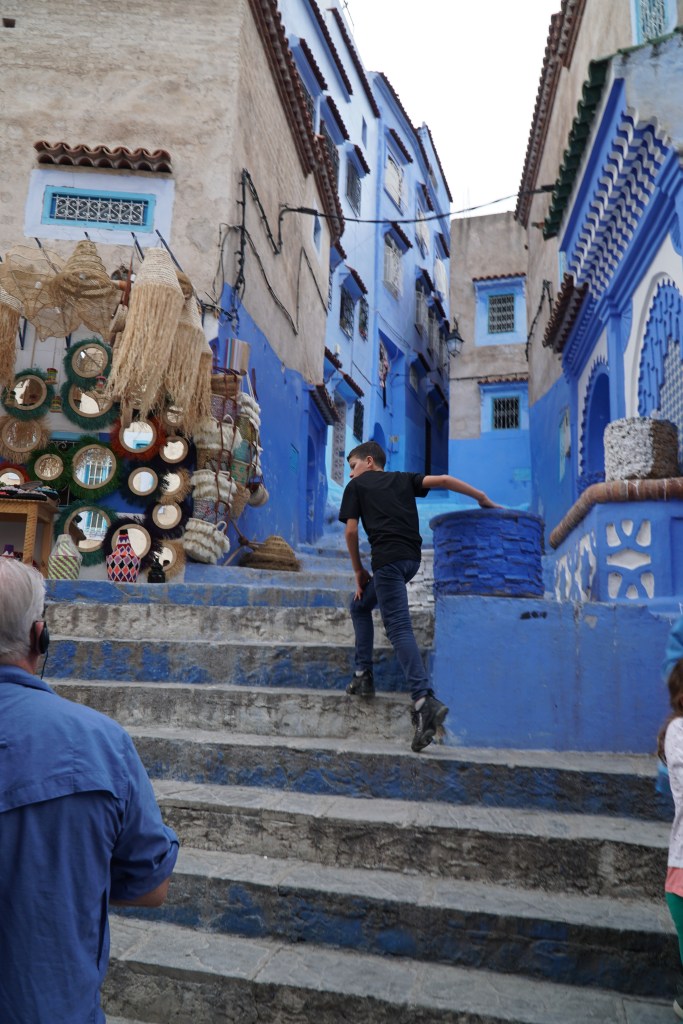
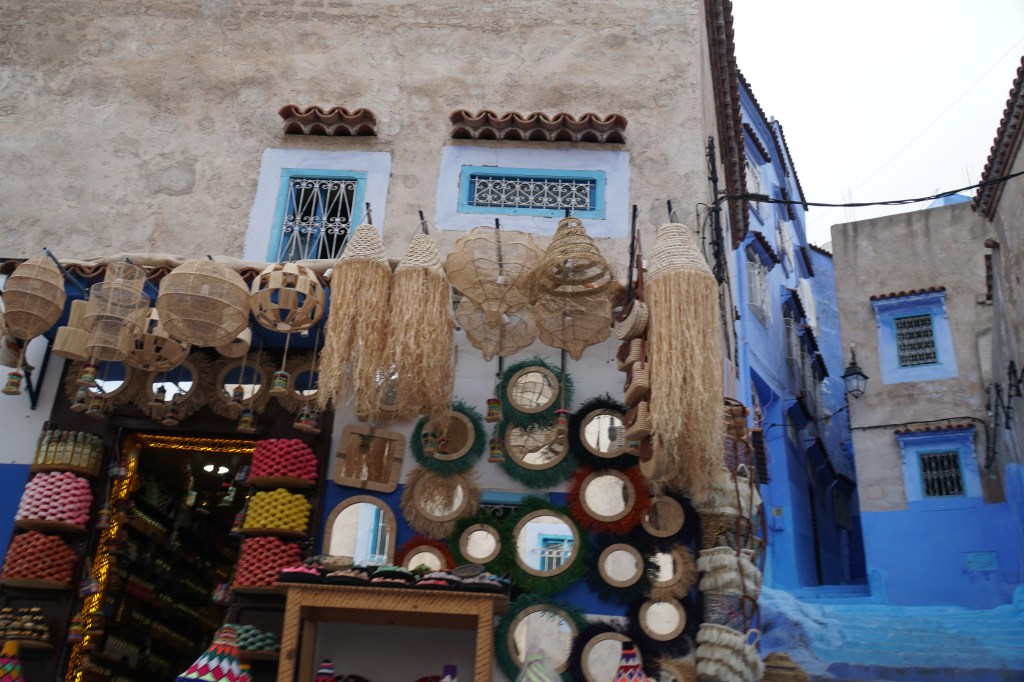
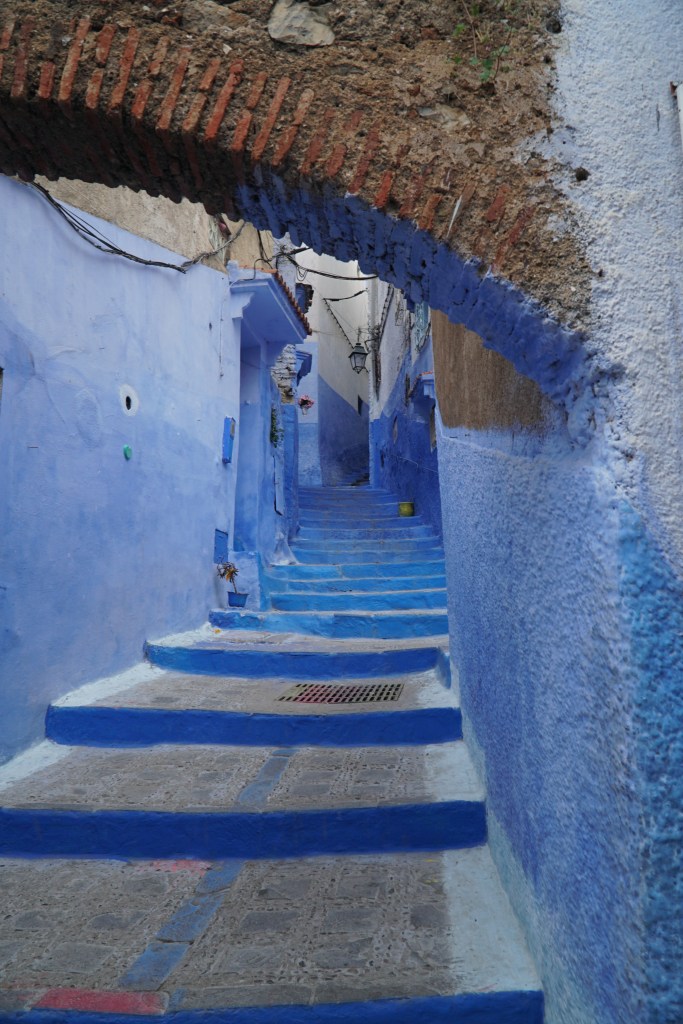
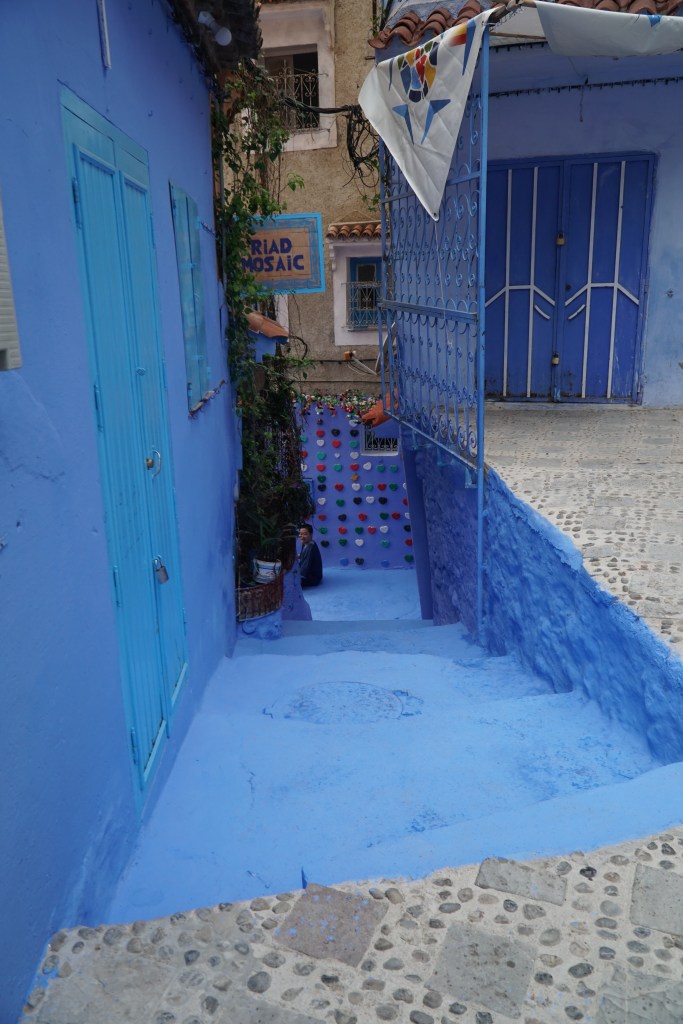
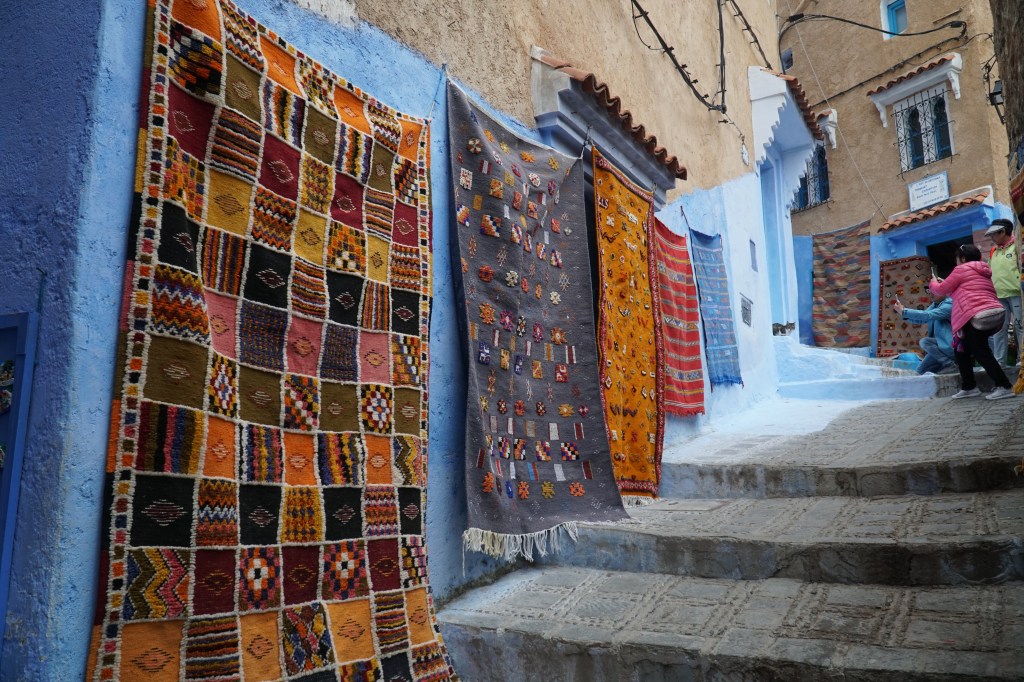
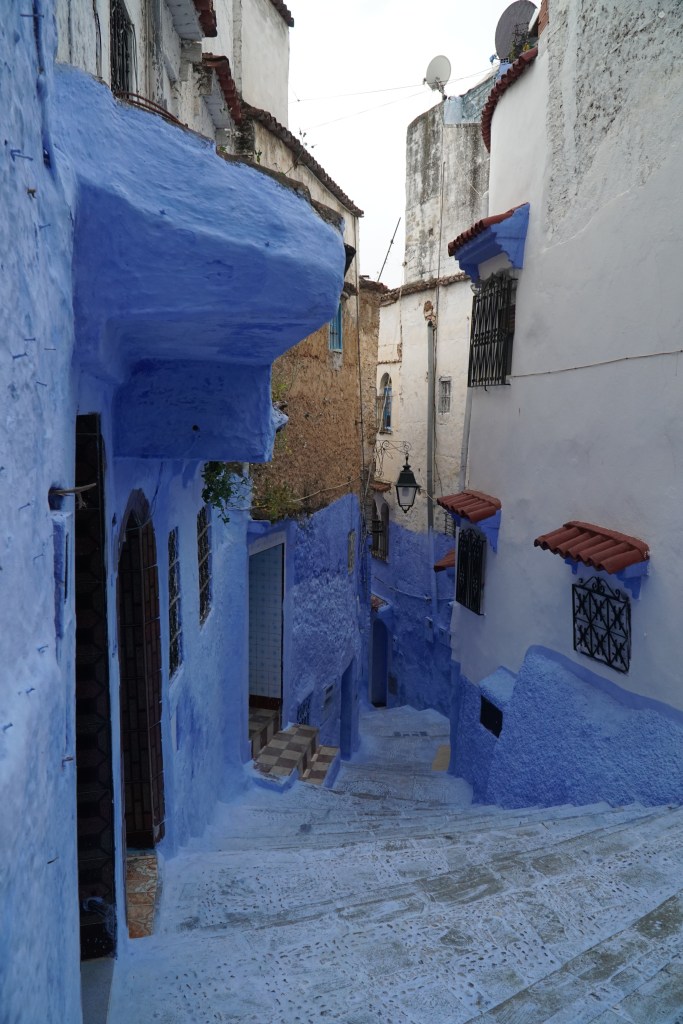
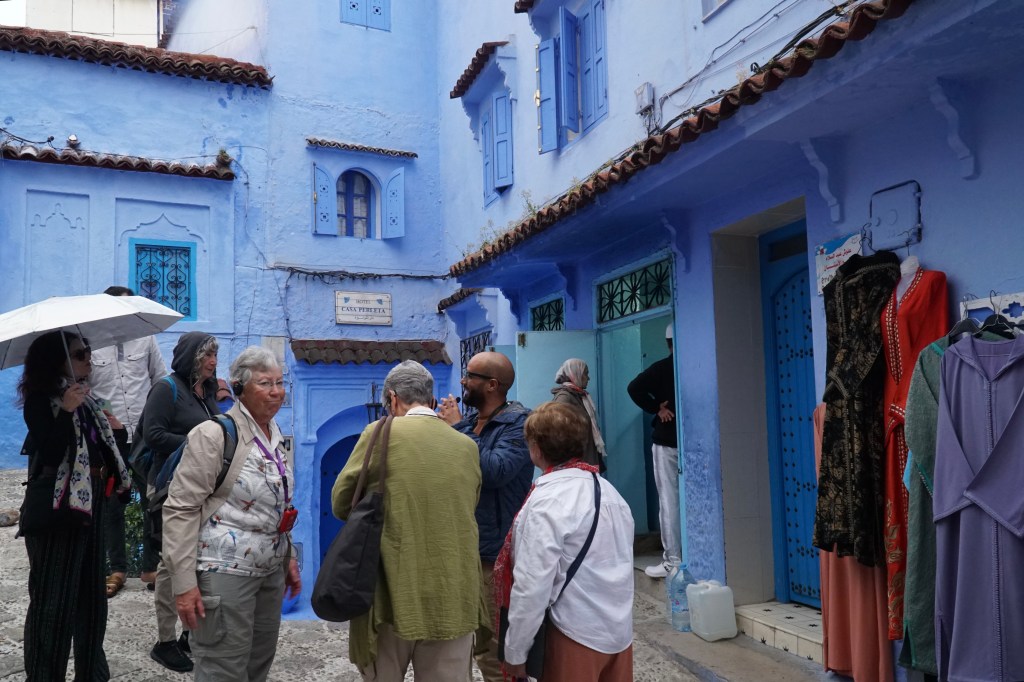
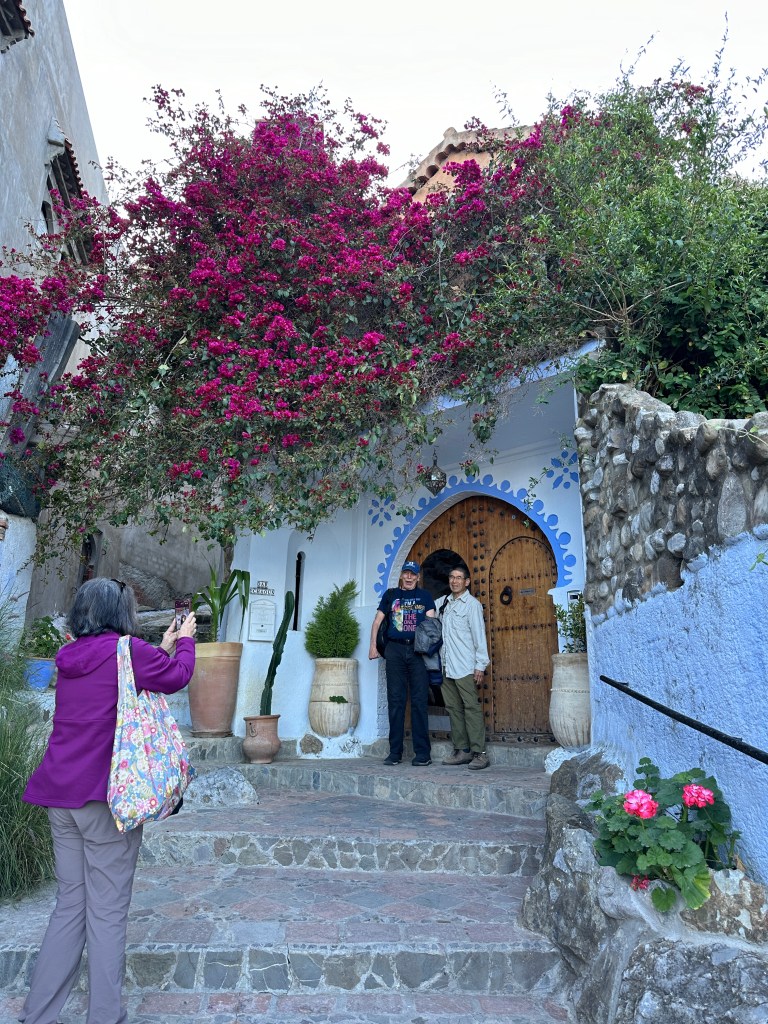
Our trip leader took us on a walk through the old town and town square, past many small shops and lovely blue-painted alleyways. The layout of the town reminded us of Positano. Many steps down to the main square!!! After seeing the ways to navigate the town, possible dinner venues, and shopping and museum ideas, we headed back to our hotel for a lovely 3-course dinner in the garden. We retired to our room around 9:00 after a wonderful day!







Saturday, April 20
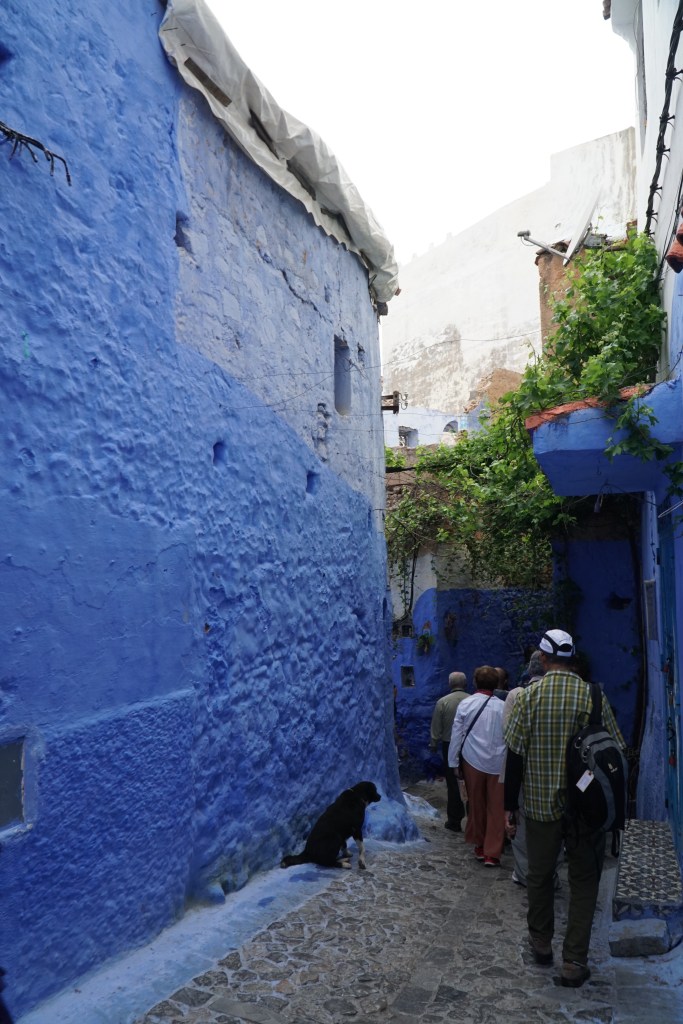
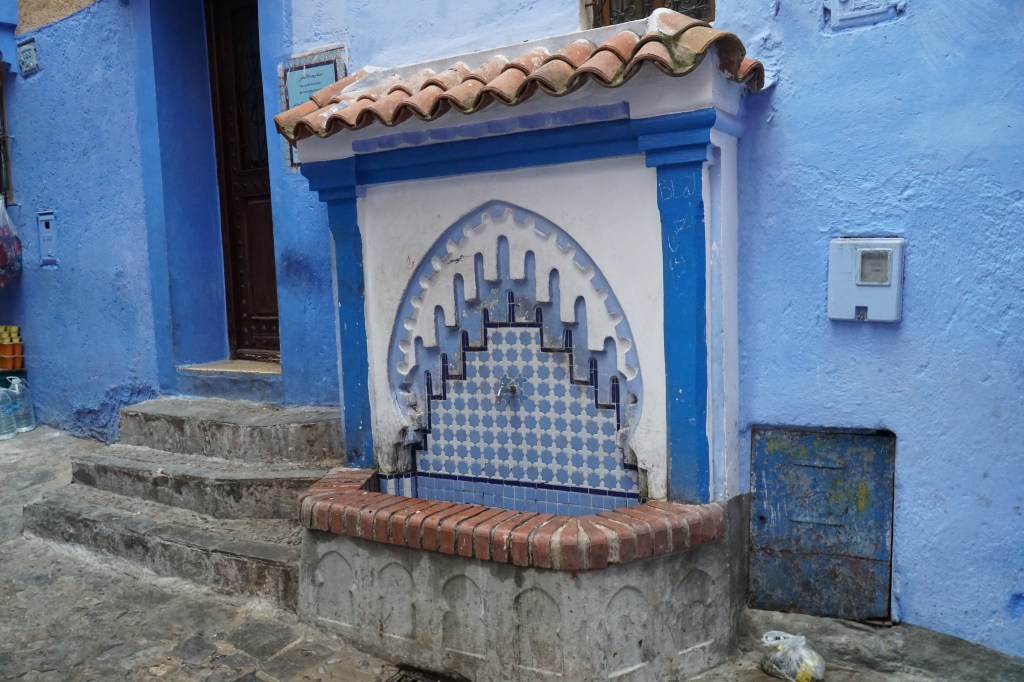
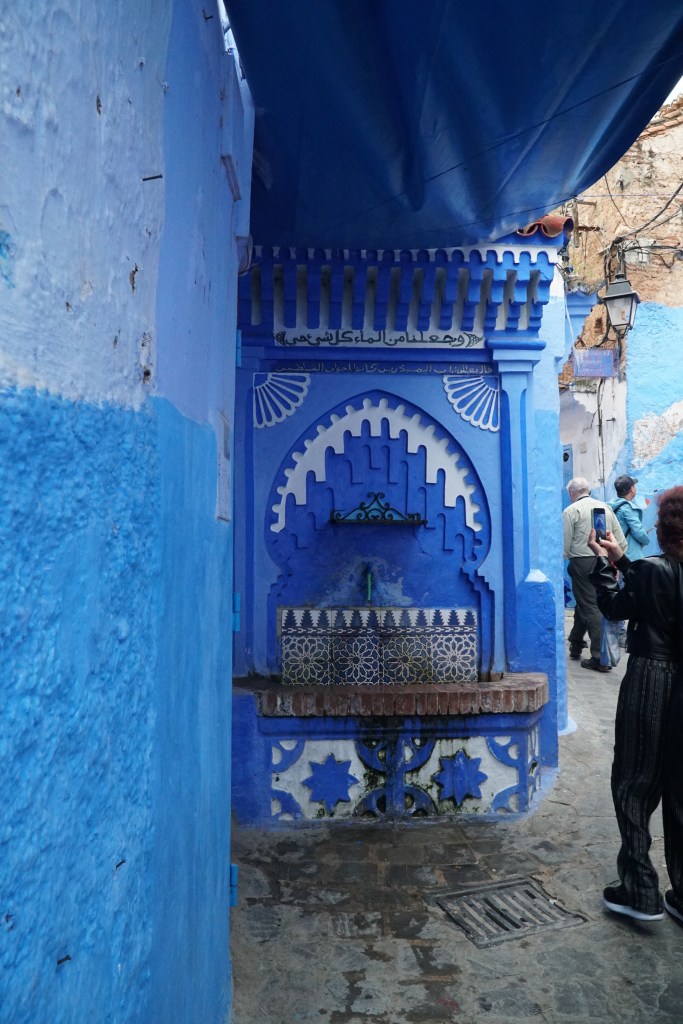
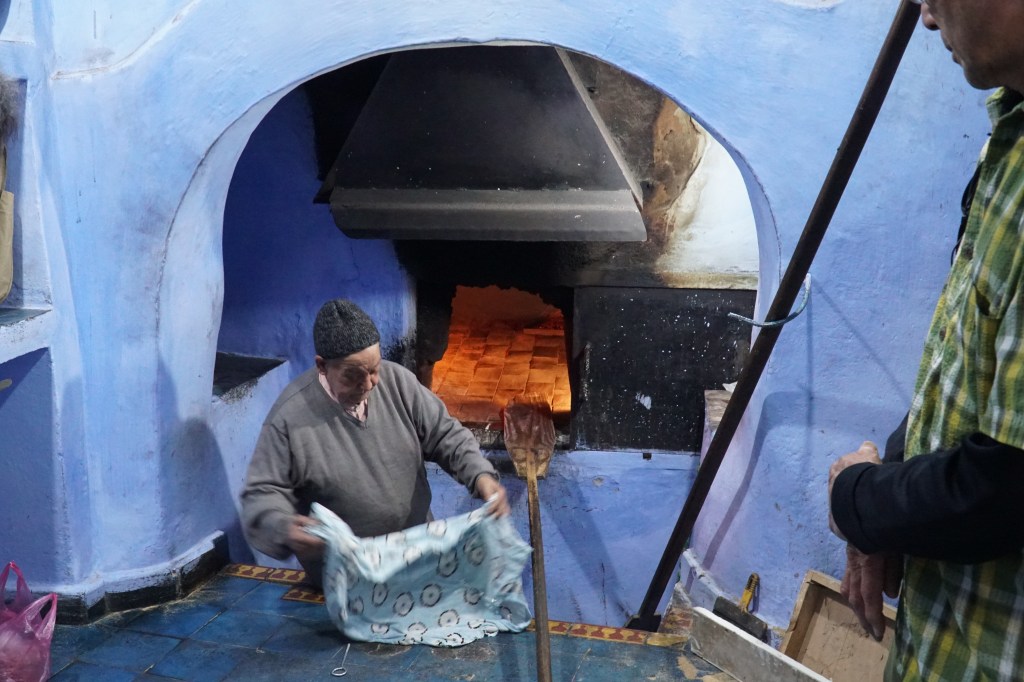
After breakfast, Mohammed led us on another walking tour of the town. We took a different route this time, had lots of photo ops before the crowds emerged later in the morning, and made a few interesting stops along the way. The first was to a very old bakery. Interestingly, in addition to preparing bread and pastries to sell to passers-by and fulfilling orders from restaurants for the day, the baker takes in prepared dough from local residents and cooks it in the bakery oven for 1 dirham/loaf. The dirham is the local currency, with 10 dirham=1 USD. The baker has to keep track of which dough belongs to which family! The families prefer the taste of bread baked in the wood-fired oven over bread from their home propane ovens.
Our Trip Leader showed us a couple of the old town gates to this walled city, and some of the fountains. As the old town was built, it was common to locate bakeries and hammams together near the fountains to take advantage of the flow of water and the heat. (Note: hammams are bathing spots with pools of different temperatures. In traditional hammams, women and men enter in at different times of day. An attendant uses a “kess,” a scratchy hand mit, to exfoliate the skin and remove the black soap, “savon beldi,” after letting the soap marinate the skin in the hottest room. These baths must have felt good after days of working in farming or other hard labor).
We visited another local baker who was roasting almonds. We were able to taste some freshly cooked bread and talk with the baker. He originally was studying for another career, but when his father became ill, he took over his bakery business. We also saw the current baker’s son, who is already learning the trade.
Mohammed showed us a doughnut shop and pointed out the only men make doughnuts, and only women make pancakes, by tradition.










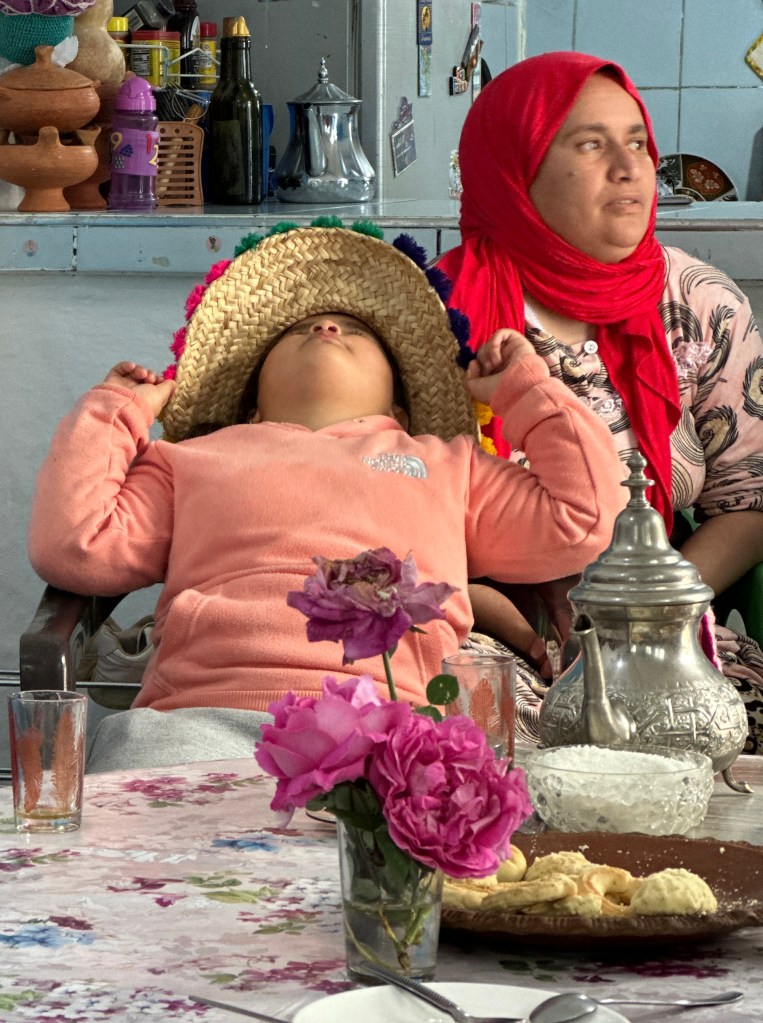
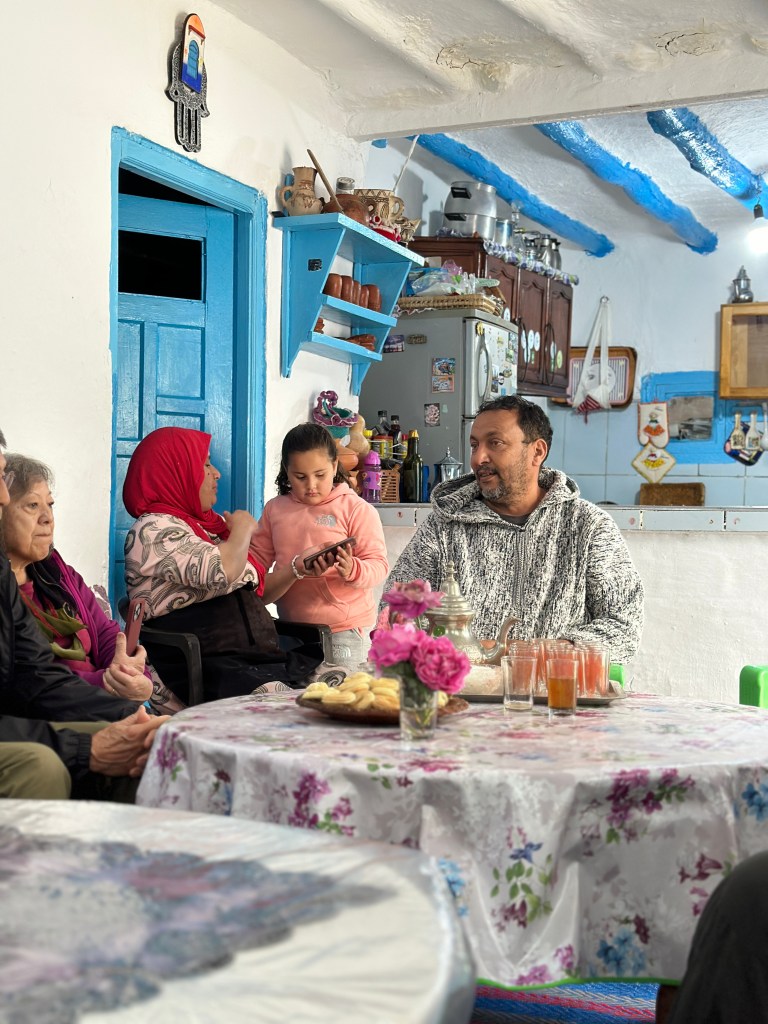
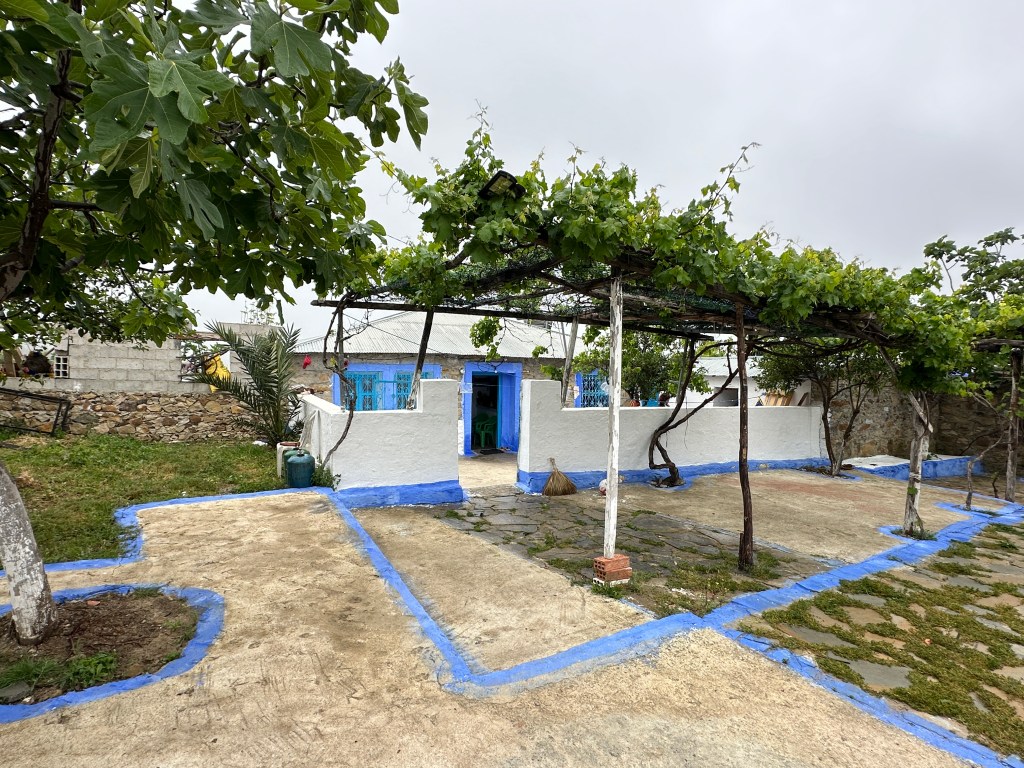
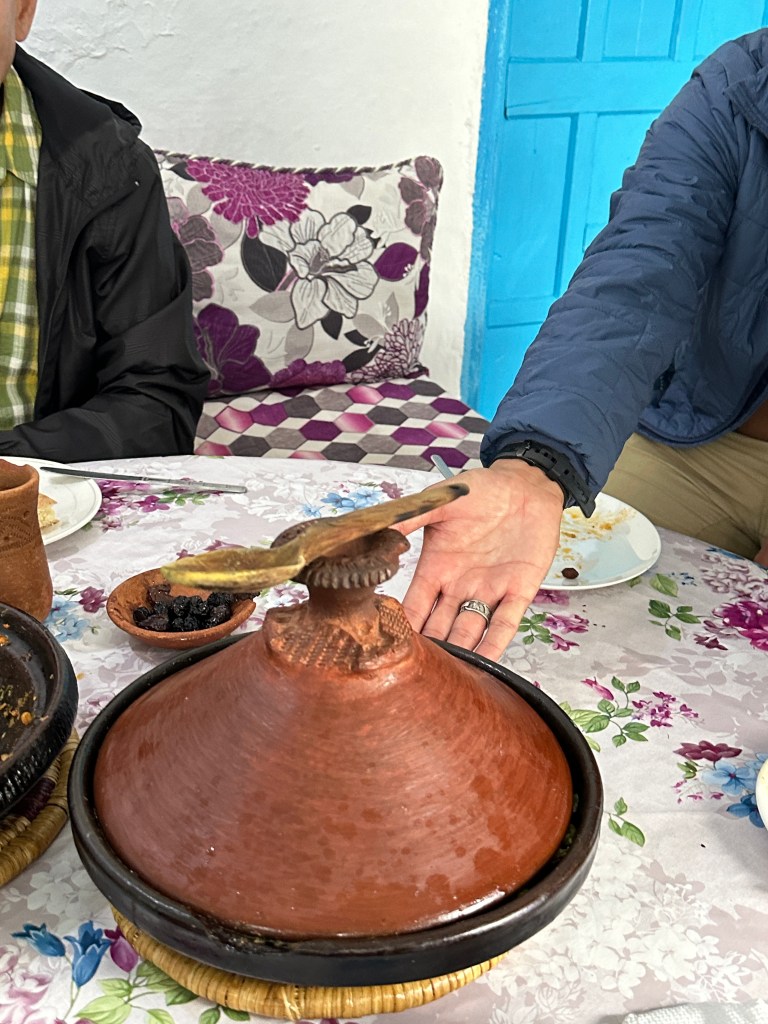
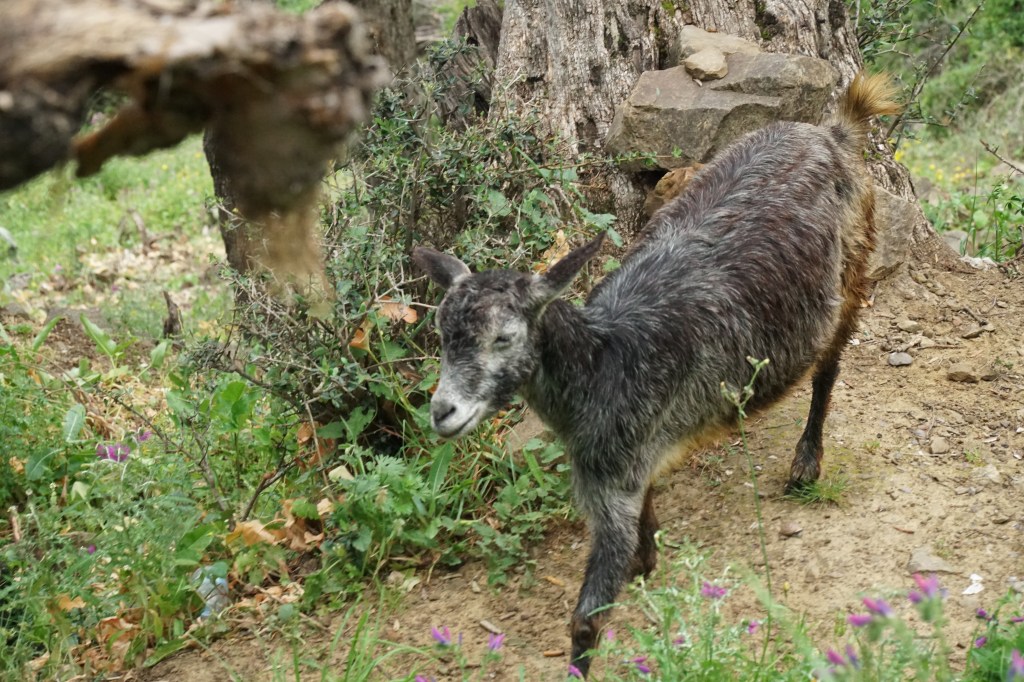
We took a ride through the Rif Mountains to Houmar, a rural village to visit a family home. The father, also named Mohammed (a family’s first-born son is usually named Mohammed), showed us the traditional way of making tea, starting with green tea leaves, adding sugar (they use quite a lot) and then fresh mint leaves. Tea was introduced into Morocco by the English, but it is now purchased from China. The father showed us his large garden and some of our group helped to pick fava beans, peas, and parsley to use in our lunch. When we arrived back at the house, we helped chop vegetables for the meal. The meal started with home-prepared olives (shriveled and tasty). Then a cabbage dish; next a stew containing chicken, beans, potatoes, and carrots; and finally a dish with the fava beans, garlic, tomatoes, and parsley we had picked. All these dishes had been cooked on the gas stove in tagines, the traditional clay cooking and serving containers. All the dishes were wonderful. We had a chance to talk with the mom and dad about their lifestyle, how they spend their time, and about schooling of their two children, one of whom joined us. Another child, a neice, was there as well, with her mother, with infant on her back, who was helping to prepare the food. While the food was cooking, “our” Mohammed explained customs about marriage. There are currently very few arranged marriages in Morocco, even though they were common in the past. In most cases, when a couple wants to get married, they do ask permission from the parents. The husband’s family provides a dowry, an agreed amount of money, which is given directly to the wife for her independent use. A rural wedding ceremony is held over three days and can include the entire community. A city ceremony lasts a single day. The couple typically moves into the household of the husband, although more couples are recently chosing to live independently if they can. If a husband dies, the wife continues to live with the parents and is owed the same inheritance.
Interestingly, the Moroccan divorce rate is high, around 44% (similar to the US), and most divorces are no-fault divorces. Both individuals are free to remarry if they wish; many women choose not to.
The litle girls at the house were quite charming and active, making for a delightful afternoon!!








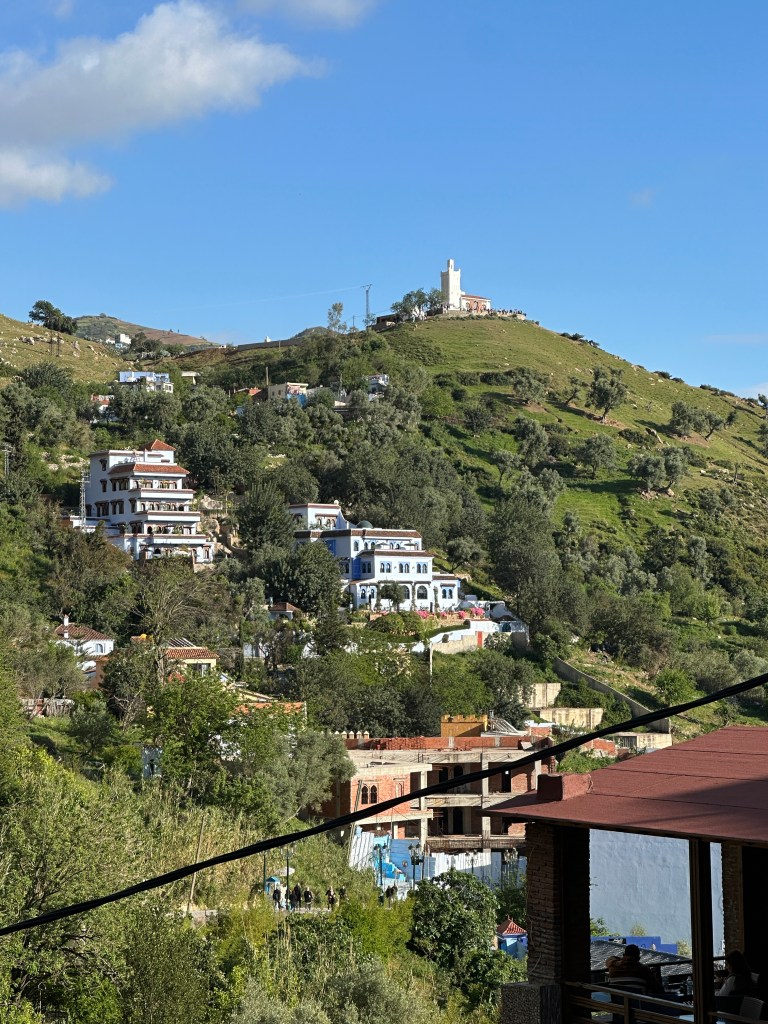
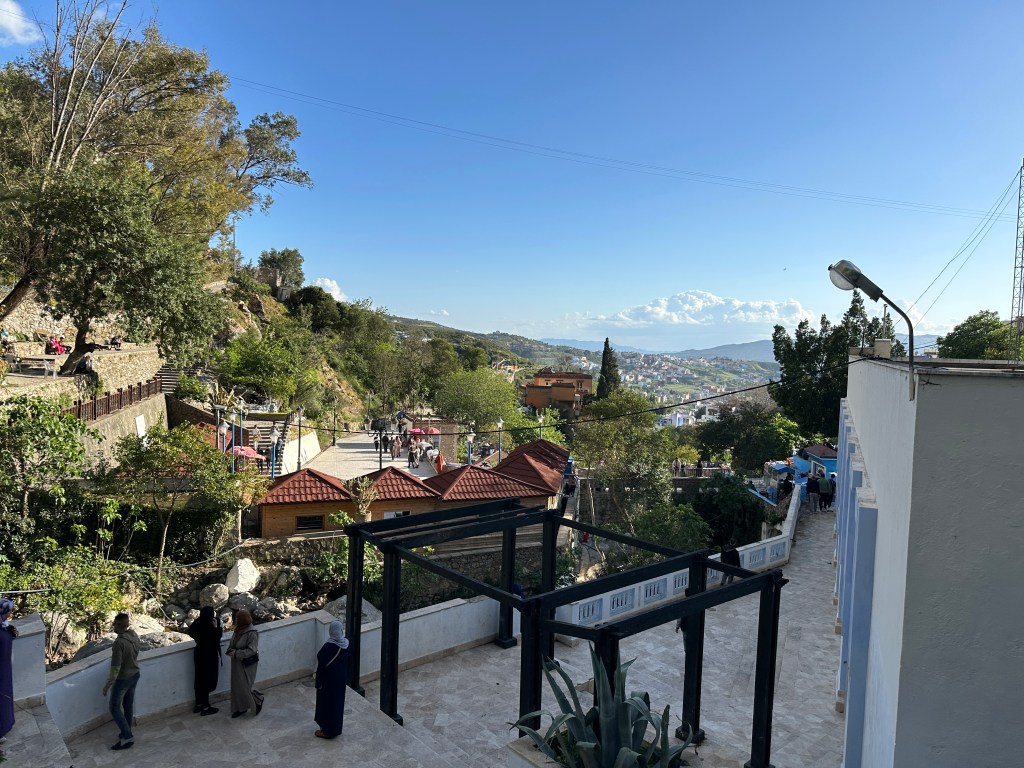
Around 6:00 pm, Mohammed led a group of us on a walk up the hill behind our riad to a mosque for a great view of the town, and some good exercise.
Our dinner at the hotel was great. A seafood paella for me, seafood pasta for Chris, and a Moroccan salad to share.


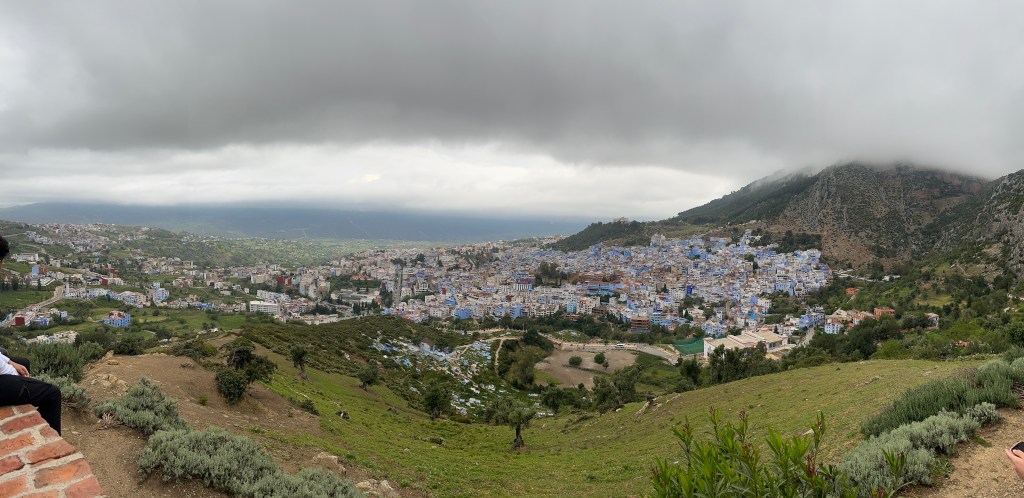


Sunday, April 21 – Sunny and warm!!
We decided against participating in an optional tour to a different small town, Tetuoun, and instead continued our exploration of Chefchaouen. We walked into the town in search of the vibrant paint pigments we had seen the day before, and an ATM for getting more local currency. In front of an ancient olive tree that still thrives after having been split by lightening years prior, was a seated young man who engaged us in English. I asked him where to find the pigments. He told us he had them, so I went downstairs into a seating area of his shop and waited while he retrieved the pigments, from another store. He assured me these were completely pure and natural pigments from indigo, saffron, and other sources, so I decided to buy a set of 20. We bargained on the price and settled on 475 Moroccan Dirham (about $47). I did not have cash since we were on our way to the ATM in the main square. He wrapped up the pigments and gave them to me and walked with us to the ATM. His English was great, from studying at NYU. He was such a lovely individual! After we got cash, paid him 500 MAD, we caught a taxi back uphill to the riad. We spent much of the afternoon at the swimming pool and on our porch.
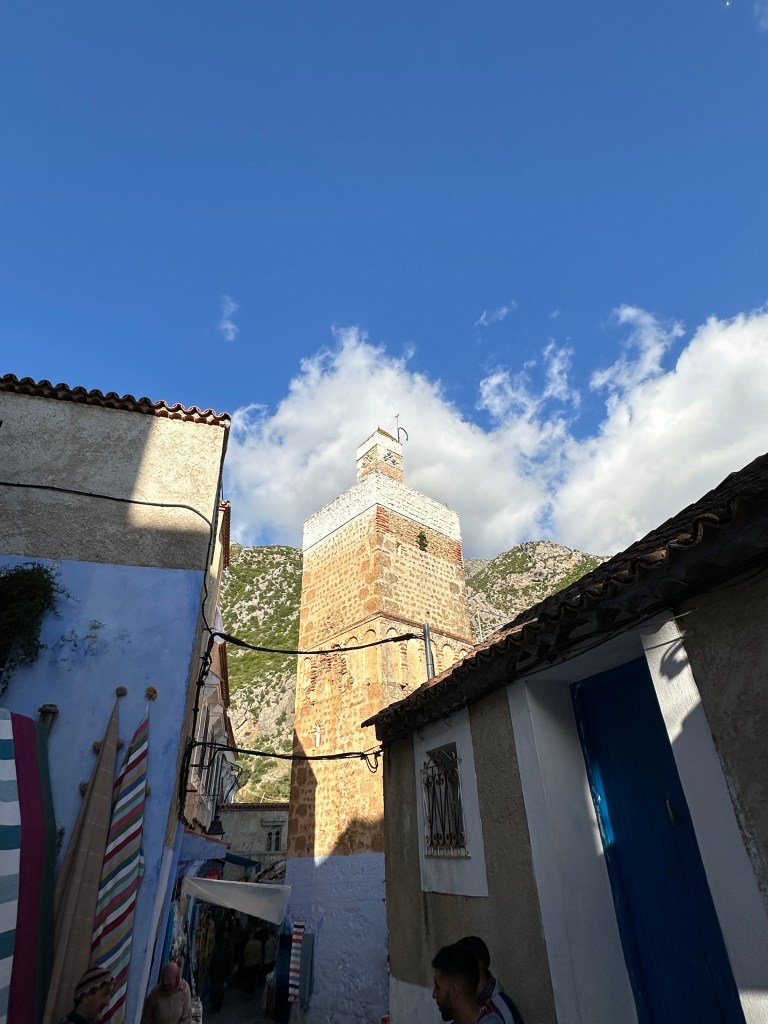
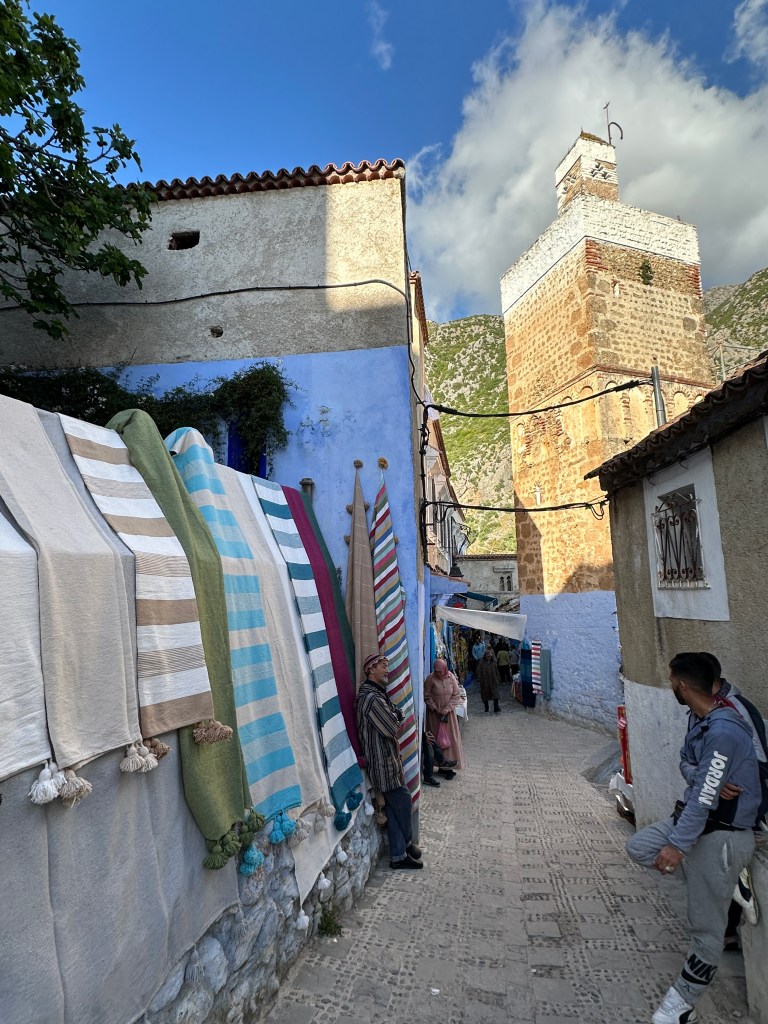
I walked back into the town for a quick stroll to watch people at the top of the little waterfall at the edge of the town, and wander past shops, and meander down alleys. As the water passed under a bridge into town, there were tables/raised containers that townspeople used for washing laundry.
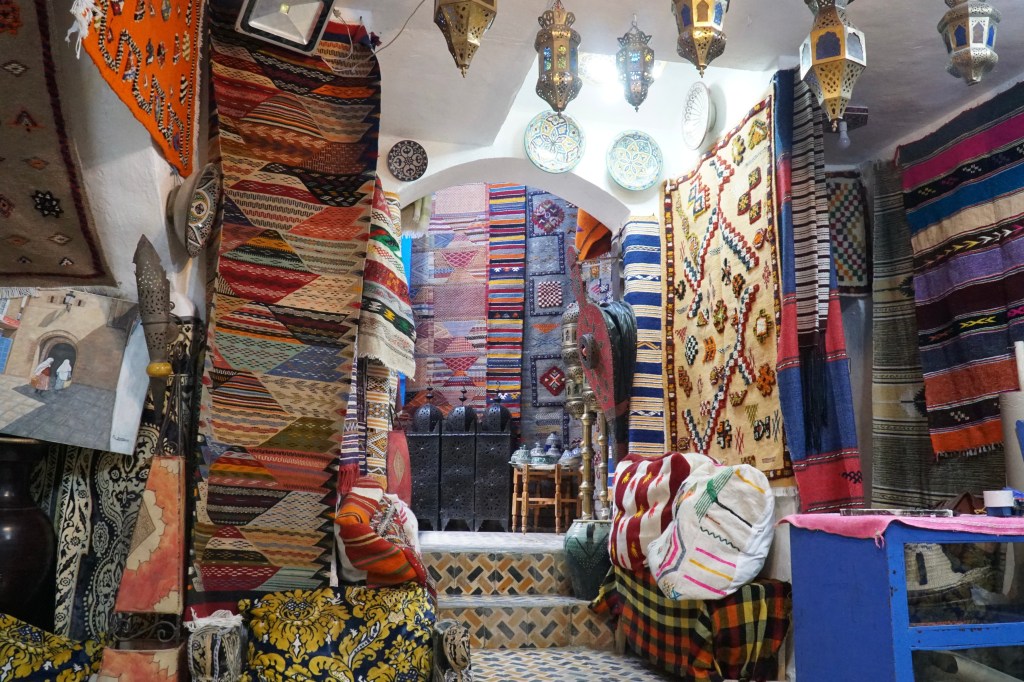
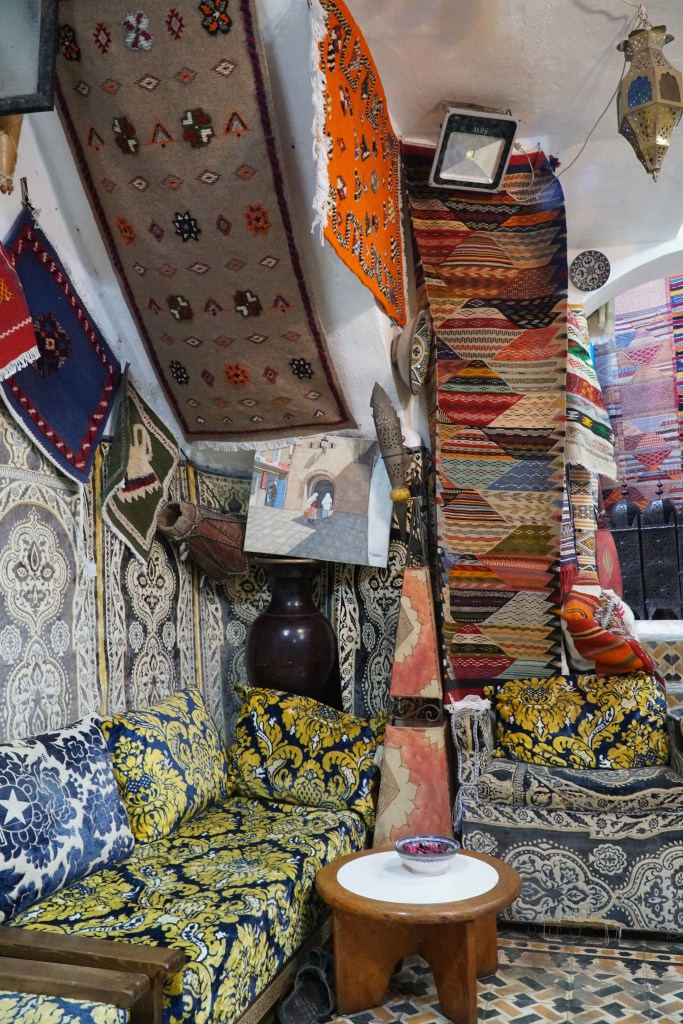

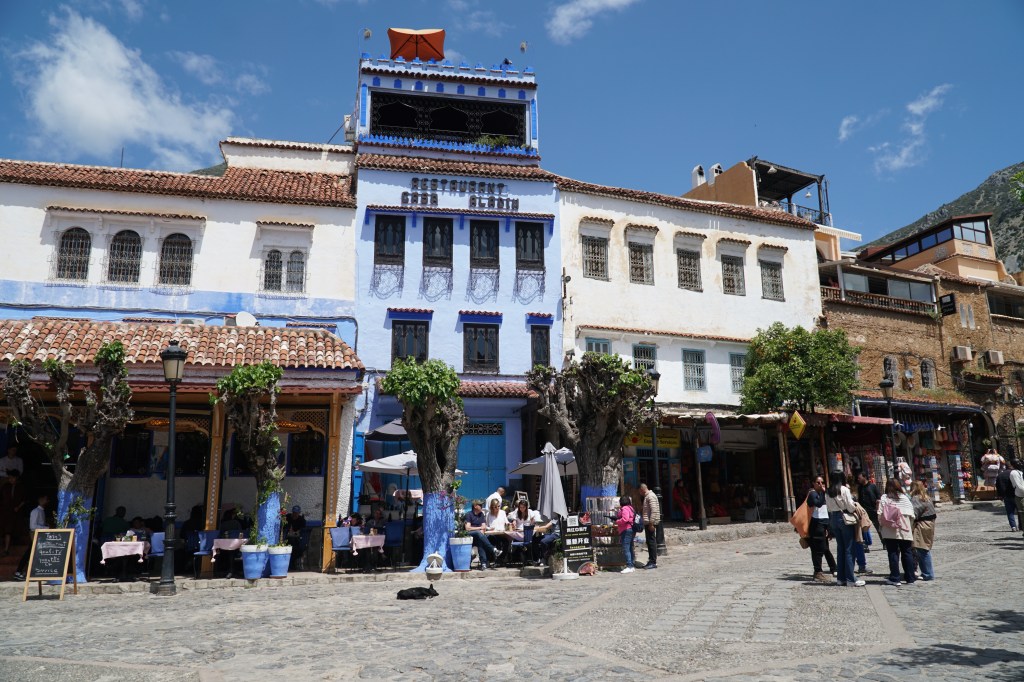







Monday, April 22
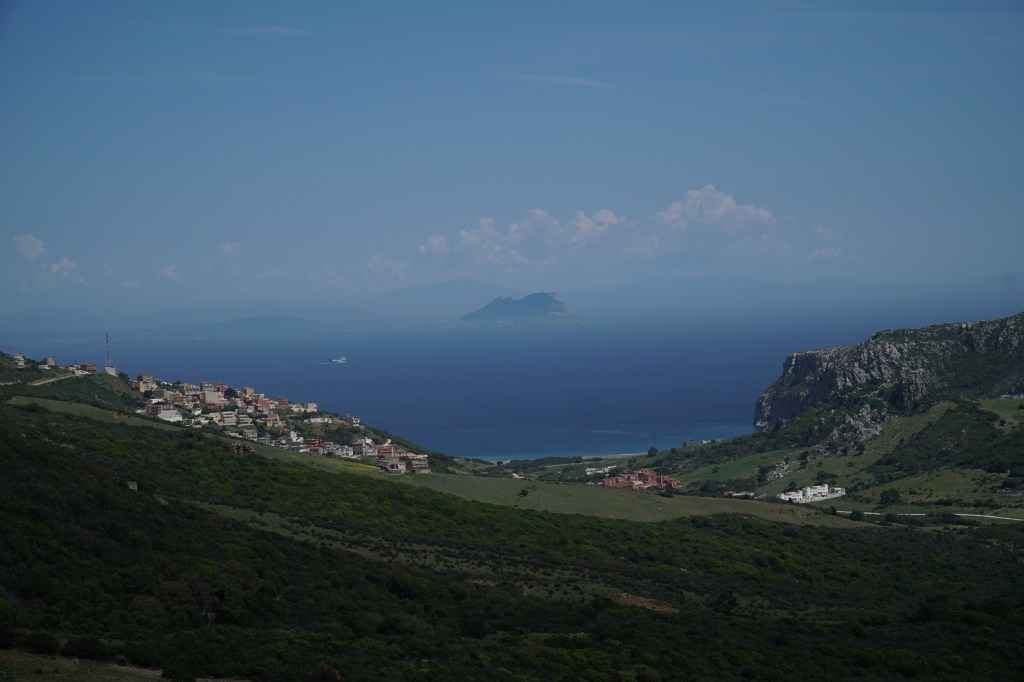
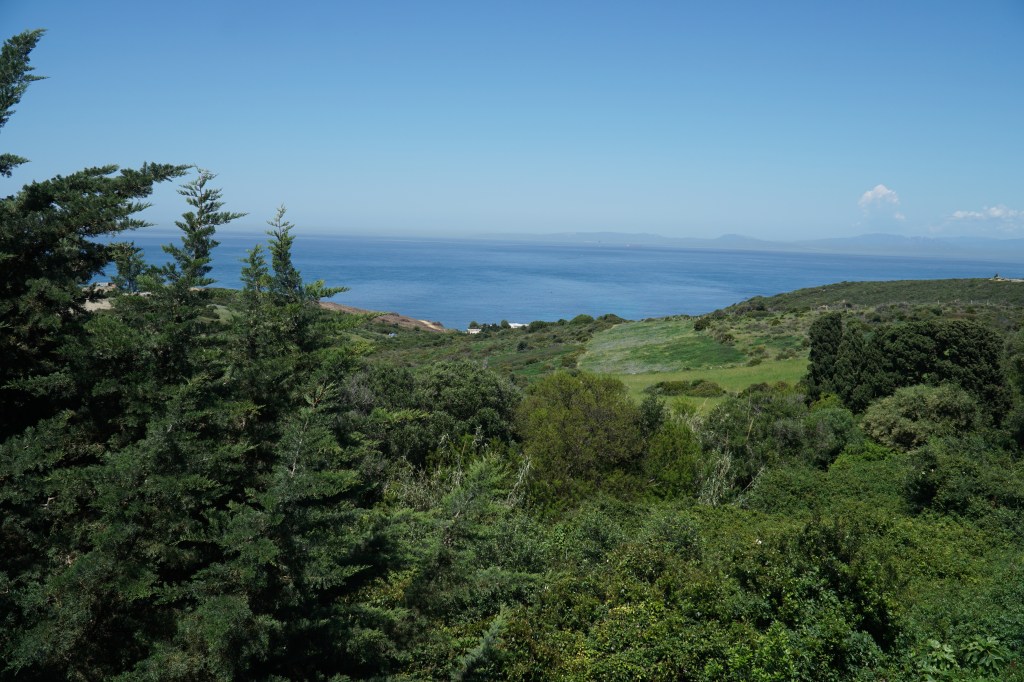
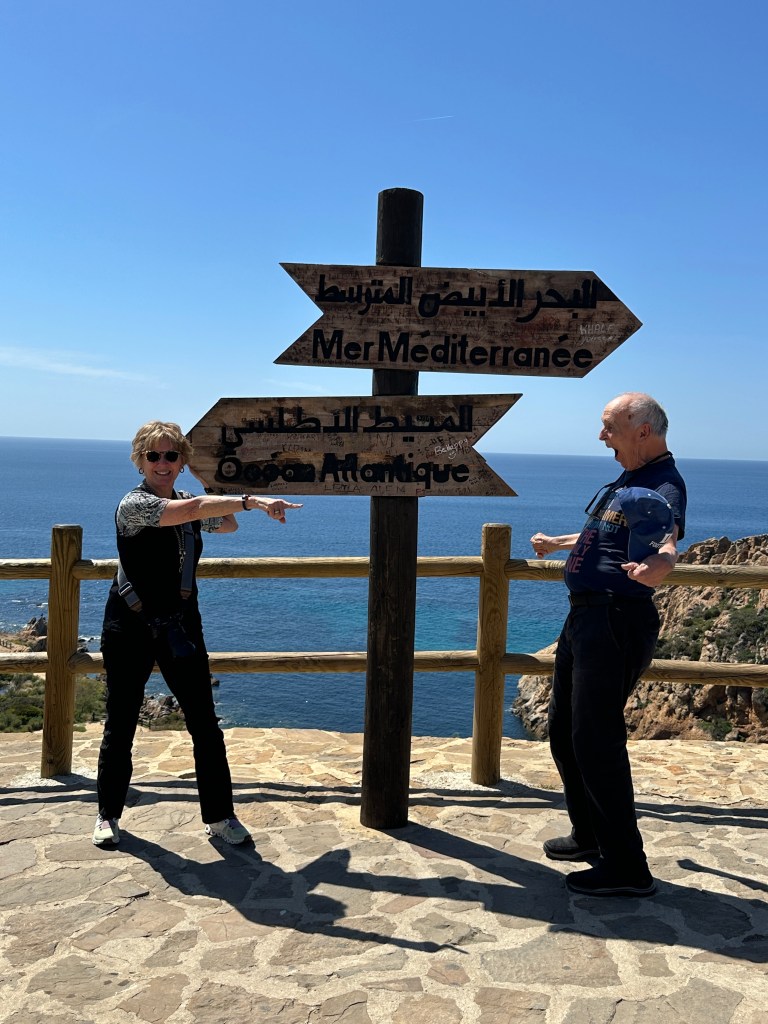
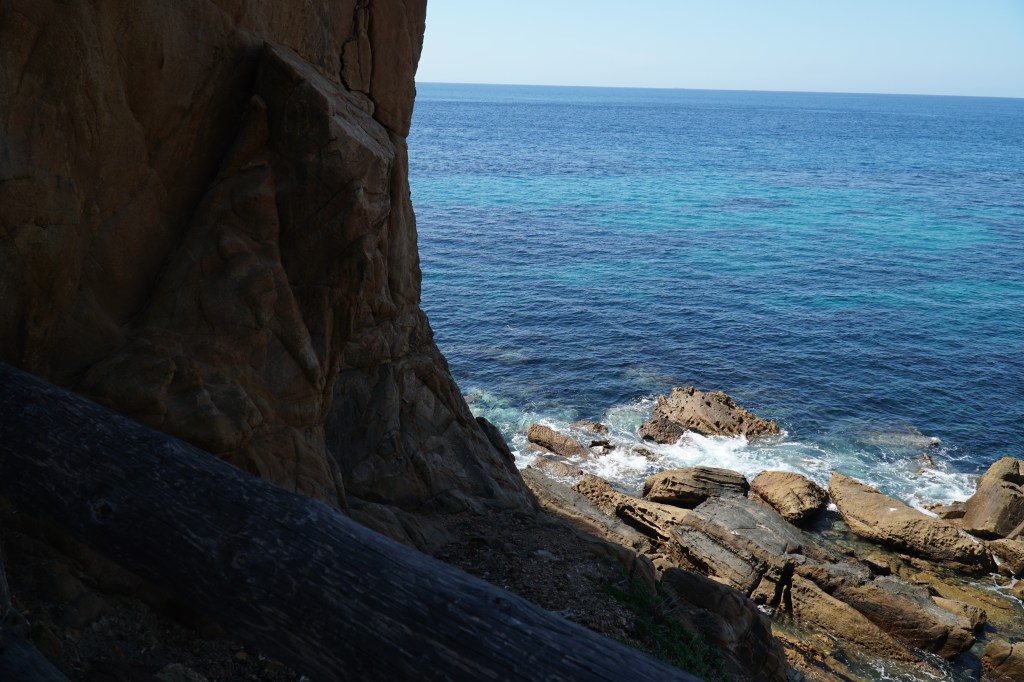
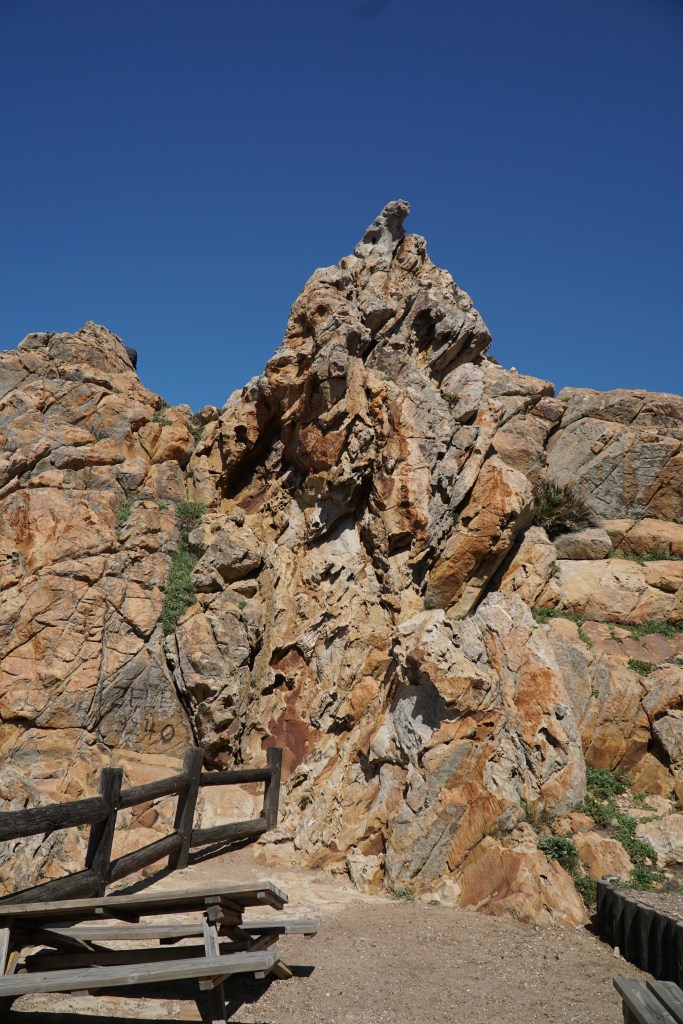
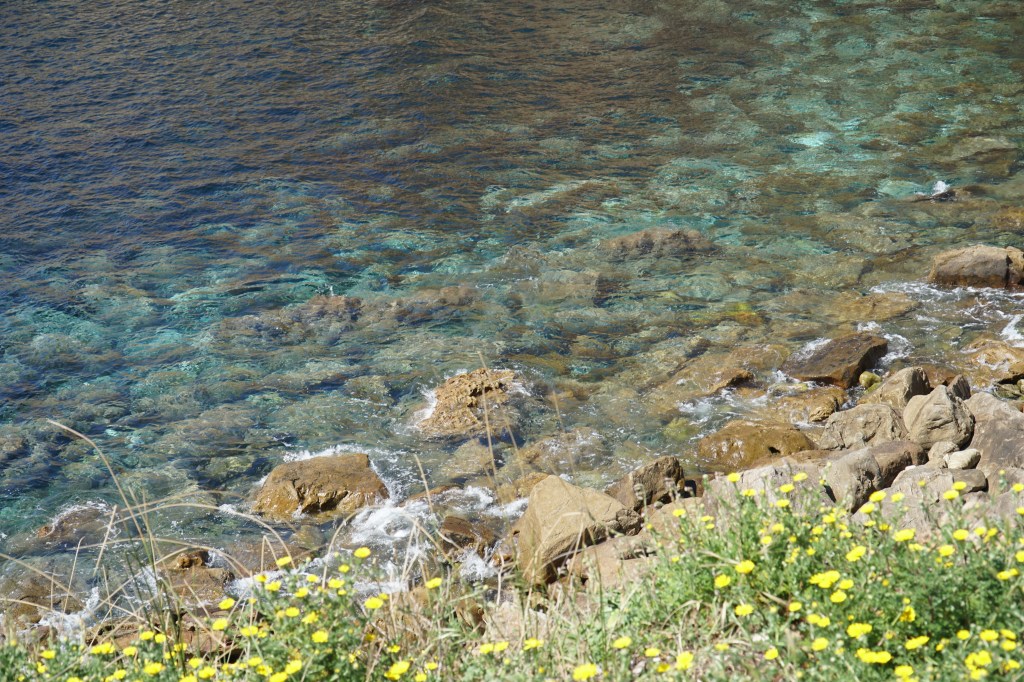
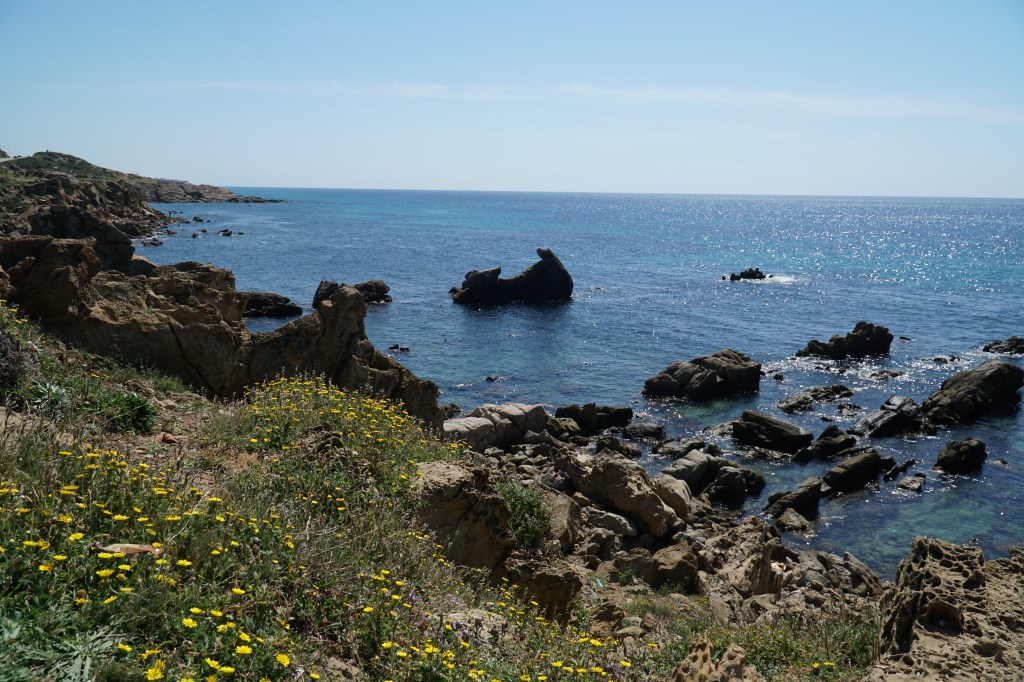
We had to leave our riad and board our coach for a drive north toward Tangier. We passed the town of Tetouan, the strait of Gibraltar, and saw the Rock of Gibraltar, and passed a new massive port (built since 2015 to promote industry and trade between Morocco and European ports). On the outskirts of Tangier, we stopped at a restaurant across the road from the Mediteranean sea for a lovely lunch. We then headed past a wealthy area with palaces and mansions to have a walk by the sea, starting from the point where the Mediteranean meets the Atlantic. It was a beautiful afternoon for this walk. Then we headed to our riad in the heart of the old town of Tangier and to a group dinner.








Tuesday, April 23
Below is a brief history of Morocco from out OAT briefing document.
“Morocco is unique for having been occupied by one group of people for all of its recorded history—people who have rarely been subjugated by outside forces. The Berbers or Imazighen (men of the land) have endured for millennia. They are not a homogenous group, but comprise various tribes who share some ethnic lineage. Nor were all Berbers nomads despite the stereotype. Most Berbers were farmers, but connected to fellow Berber traders and horsemen who developed semi-permanent encampments as they forged trade routes.
“The Berbers often frustrated Roman attempts to govern them, though their rebellion was not always violent but often based on shrewd alliances and gamesmanship. Most Berbers continued to practice their traditional, animist religions. They also borrowed from other African and Egyptian religions, and as the millennium turned, many Berbers were Christian or Jewish.
“In the 7th century AD, the Ummayad Arabs conquered the Middle East in less than a decade, but needed 70 years to subdue Morocco’s Berbers. They brought the Arab language, architecture, civil codes, and mostly, the new religion of Islam. Its ideals resonated with traditional Berber values and its adoption was widespread, rapid, and willing. But the Arabs were never able to unify the region politically. Though they enlisted Berber vassals to lead their conquest of Iberia, the sprawling caliphate proved difficult to manage, paving the way for Arab-Berber dynasties such as the Almoravids, Almohads, and Nasrids, who presided over Moorish Iberia, called al-Andalus. These dynasties have ruled Morocco continuously from the 8th century to the present.
“When the Moors were expelled from al-Andalus in 1492, Muslim and Jewish refugees brought their cultures back to Morocco, enriching the Imperial Cities of Fez, Marrakesh, Rabat, and Meknes. Rulers rose and fell for 140 years and in the 1630s, the Alaouite family overthrew the Saadis, establishing a line that rules to this day. In the late 1800s, Morocco’s strategic location and natural resources attracted France, which took control by 1912. Spain hung onto a small protectorate on the coast, Tangier was made an international zone, and Rabat became the capital. When Berbers rebelled in 1926, it took 25,000 Spanish-French troops to subdue them.
“During WWII, Morocco was ruled by Vichy France, which was a Nazi puppet. But independent- minded Casablanca provided crucial support for the Allied North African campaign. After the war in 1944, Morocco demanded freedom, and France was eventually pressured to grant it. Mohammed V returned from exile in 1955; Morocco won its independence in 1956; Mohammed V crowned himself king in 1957; and handed power to his son, Hassan II, in 1961. Hassan II earned the people’s affection in 1975 when he led the Green March into the Western Sahara to force Spain to hand over the province. More than 350,000 volunteers marched that day, but the dispute between Morocco and the western separatist Polisario Front still simmers.
“Mohammed VI took the throne in 1999, and advanced many liberal policies including women’s rights. In 2002, he married Salma Bennani, a computer science engineer, and many believed it symbolized the acceptance of modern roles. In 2004, the government imposed changes to family law geared toward lifting the gender inequality and protecting children. During the Arab Spring of 2011, Mohammed VI reacted with a deftness that eluded other leaders, announcing constitutional reforms, ceding more power to parliament, and making Berber an official state language. But Mohammed VI has increasingly been criticized for repressing freedom of speech, and the nation still struggles with poverty, unemployment, and corruption in the justice system.”
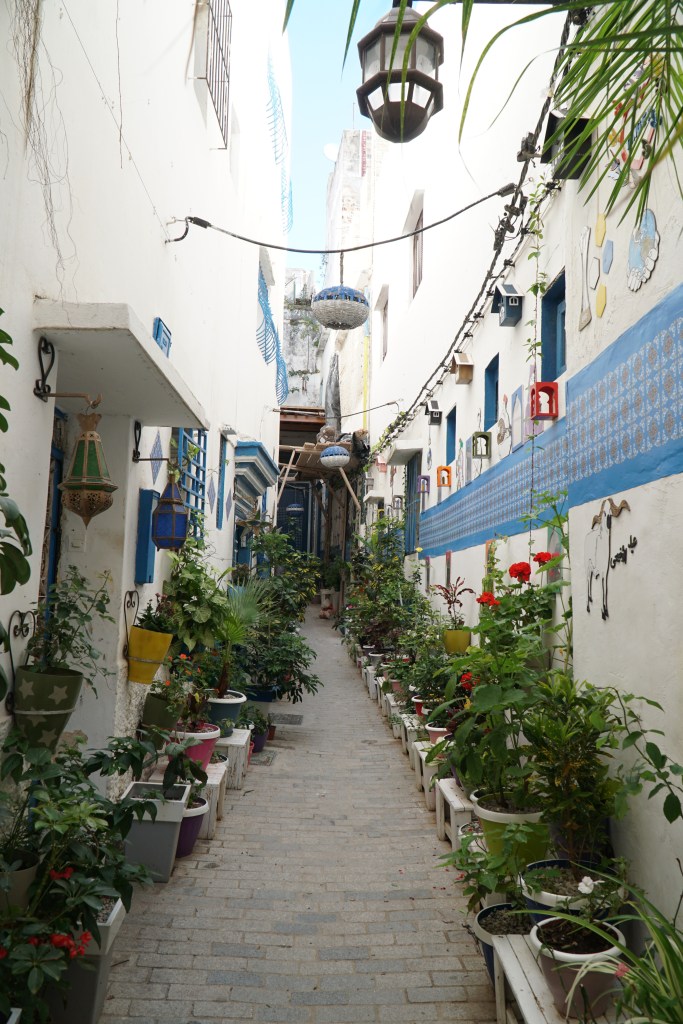
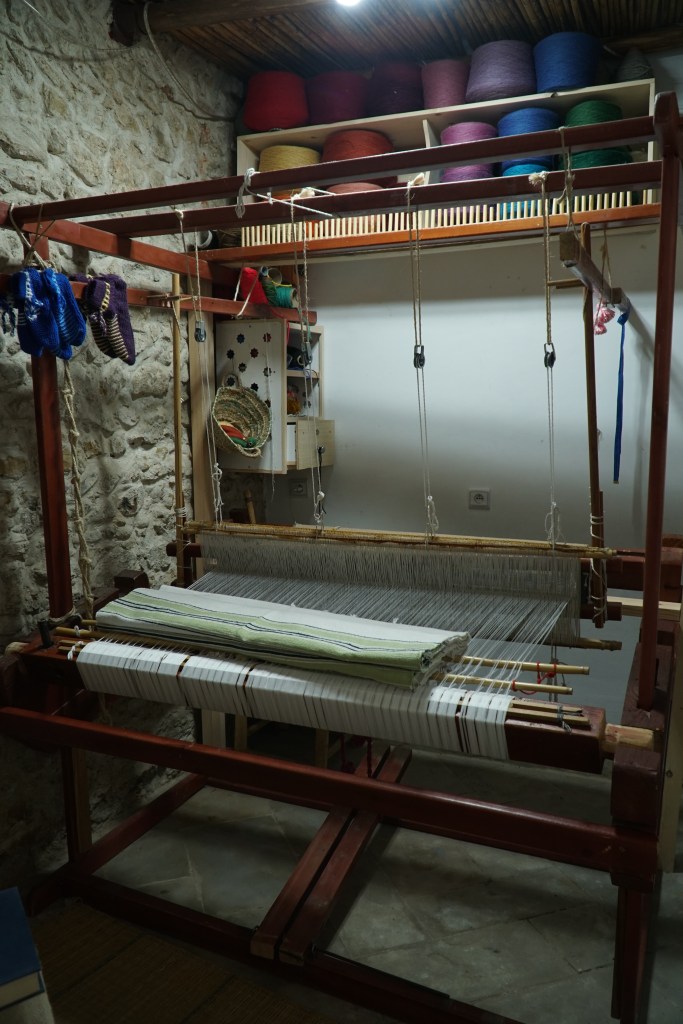
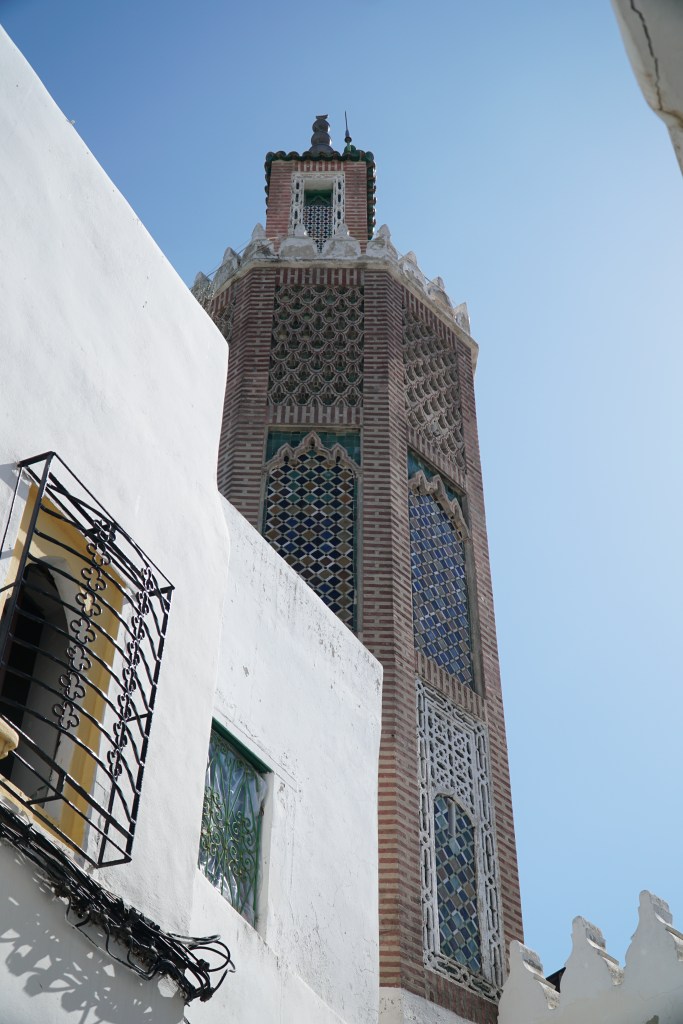
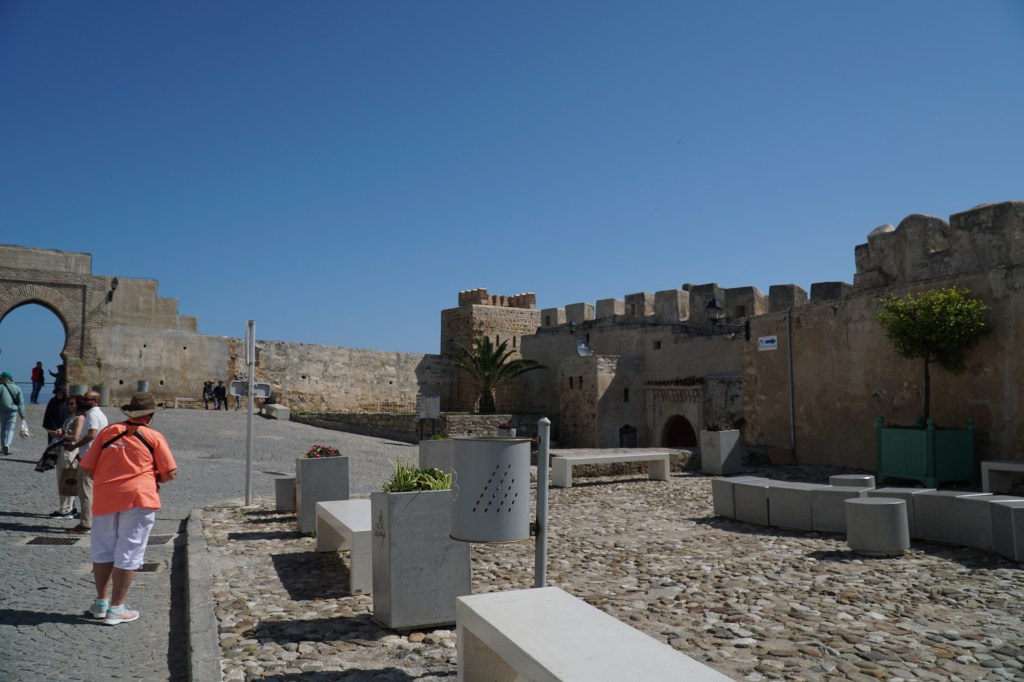
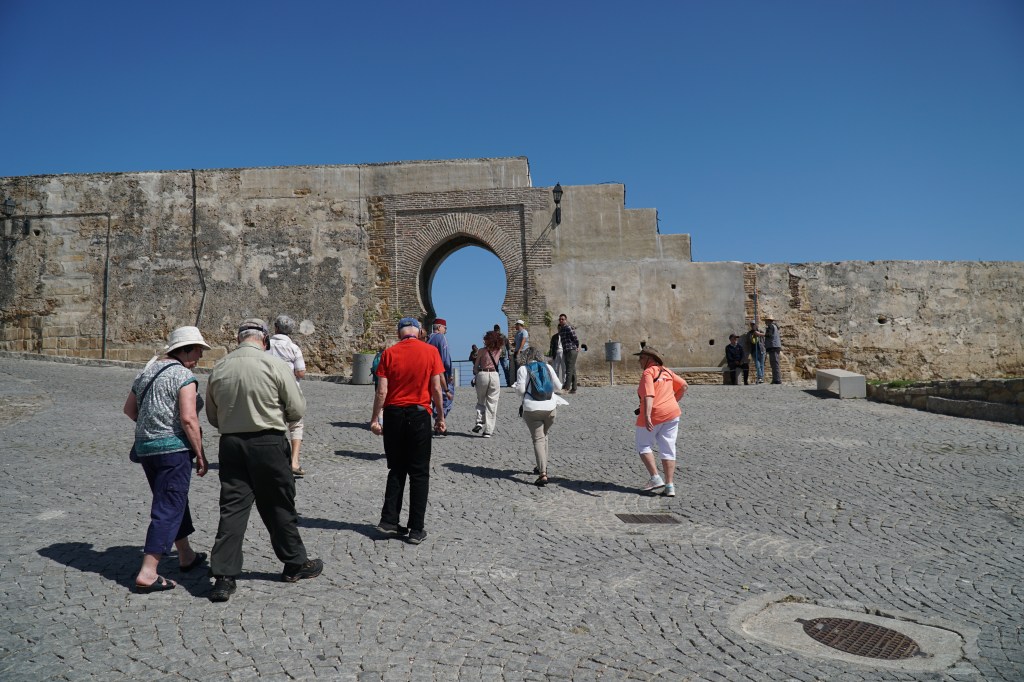
We started the morning with a fascinating tour of Tangier, with a local guide, Mohammed, who spoke excellent English, with an American accent. He provided a comprehensive historical perspective on the various groups who governed Tangier as an international proctectorate, beginning in 1925. The governance included various European countries, the US, and the Moroccan sultanate. The arrangement was an attempt to keep a single country (Spain) from having total control of the Strait of Gibraltar and therefore trade throughout the Mediteranean.







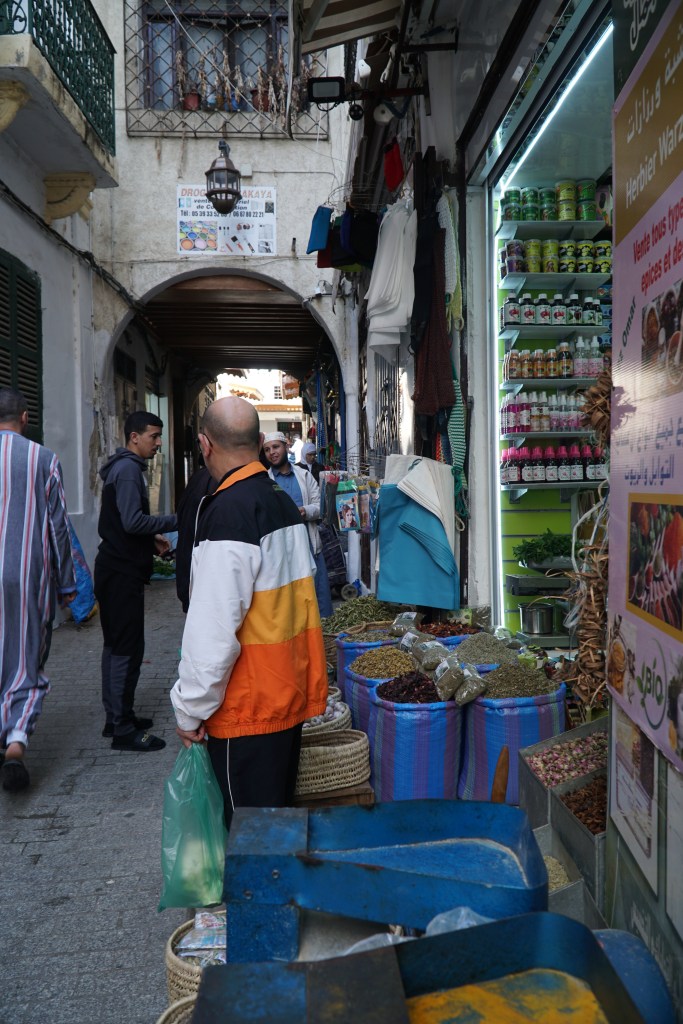

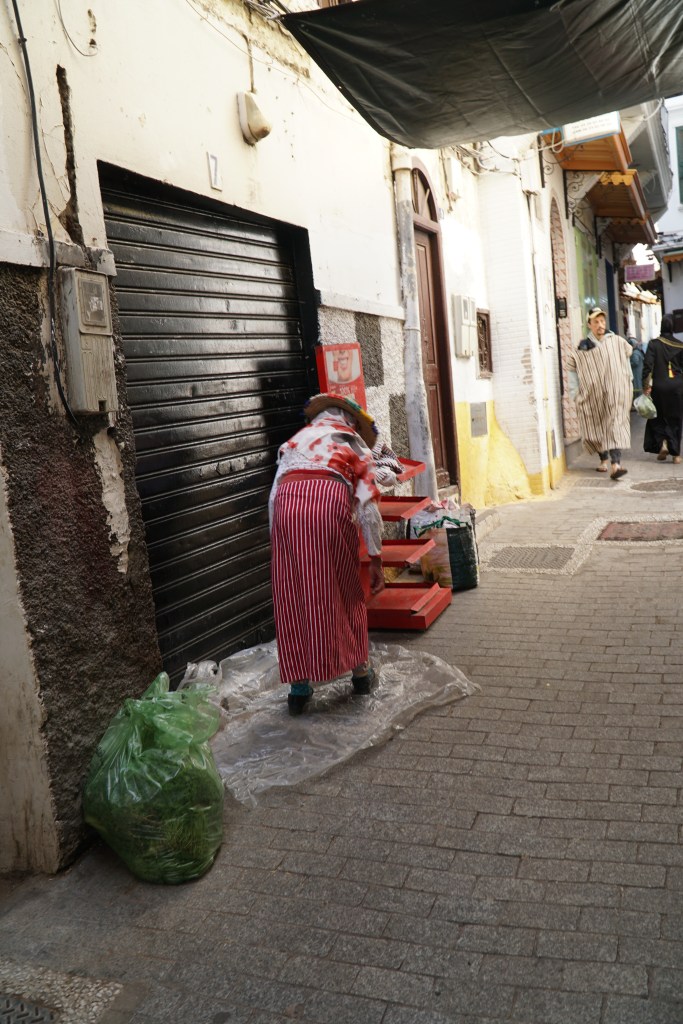


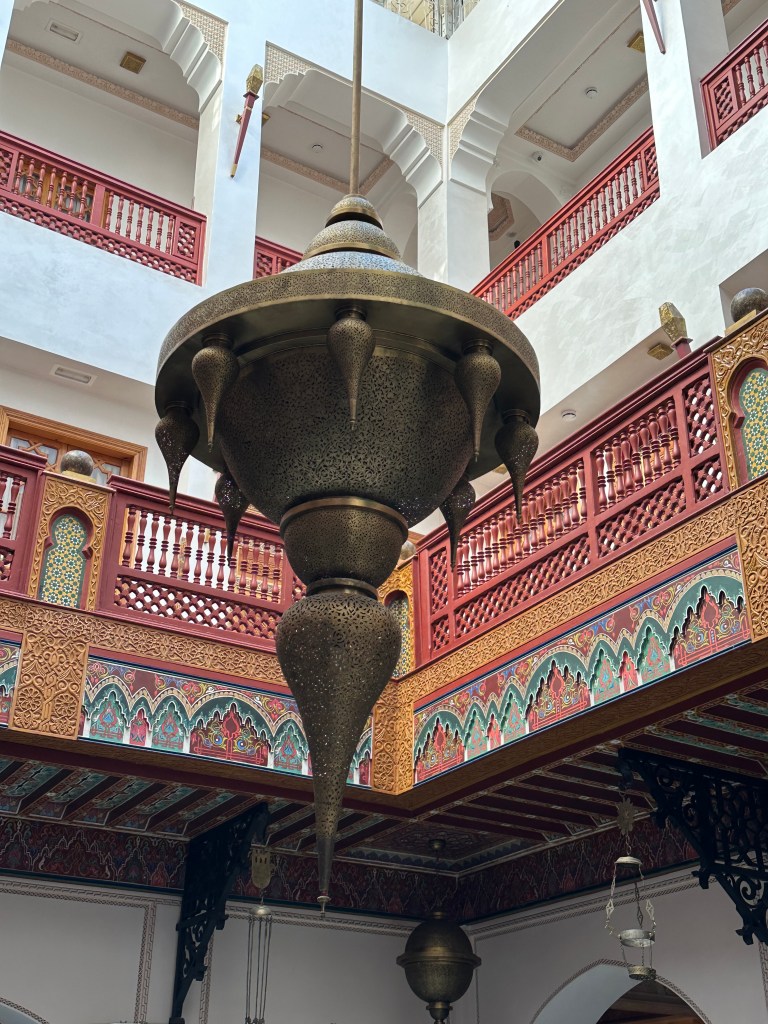

After the tour, we made our way to the train station to take a high-speed train to Rabat, the capital of Morocco, where we met the remaining 4 travellers, and started the main trip. Dinner was at the hotel.
Wednesday, April 24
We officially kicked off the main meeting with introductions, summary of the upcoming trip, and tips for a successful experience (including no discussing of American politics). Then we were joined by a local guide for a fascinating tour of Rabat. We visited the outside of the Royal Palace. This is a large compound including gardens and a school for the families who live and work at the palace. We learned about how the current king, Mohammed VI, is very popular, having introduced many social reforms, open government, support for equality of women. According to a student we met with later, his son, who was also a student at the same university, is very progressive and will likely be a popular leader when he succeeds his father.
We had several views of the Mohammed VI Opera House (not yet open), designed by Zaha Hadid and her architecture firm, and Mohammed VI tower (a 55-story rocket-shaped skyscraper to include hotels, banks and other businesses). Both structures are scheduled to open at the same time.
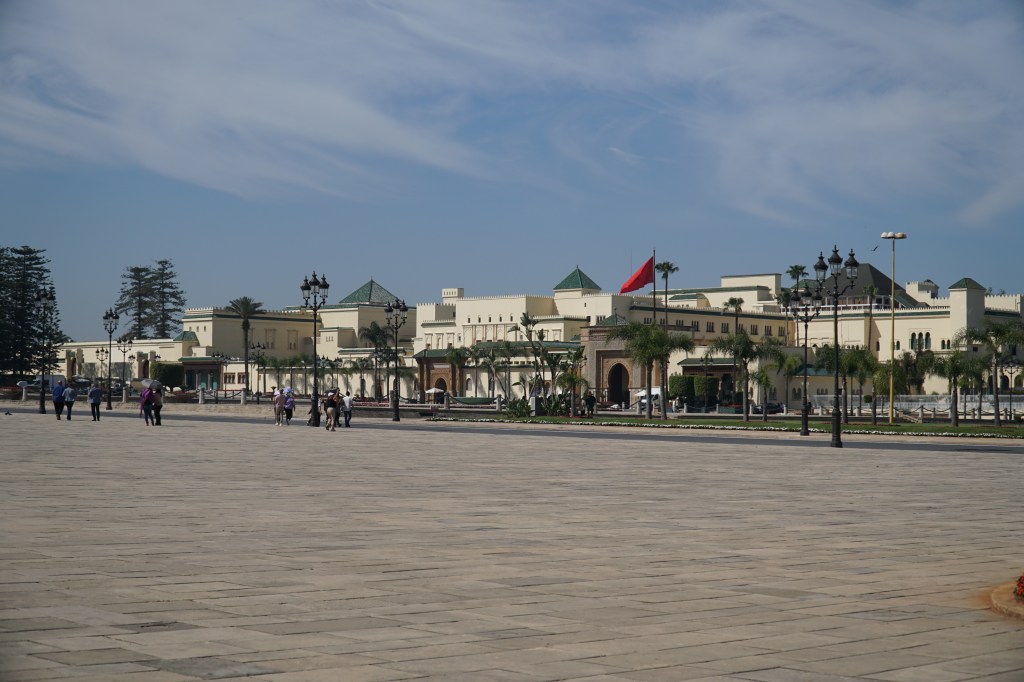


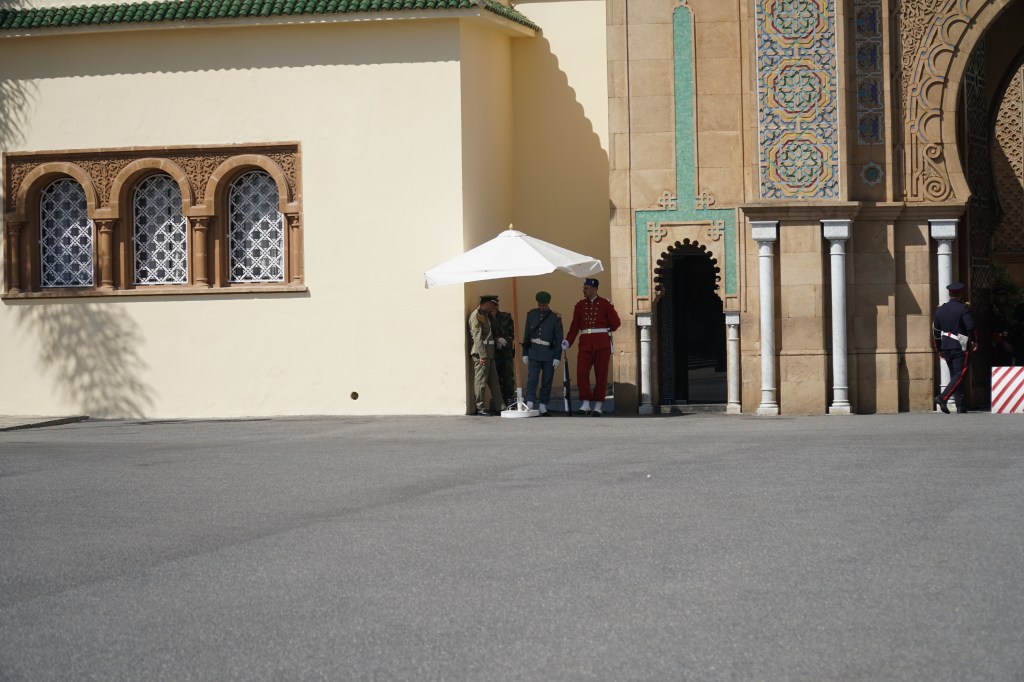
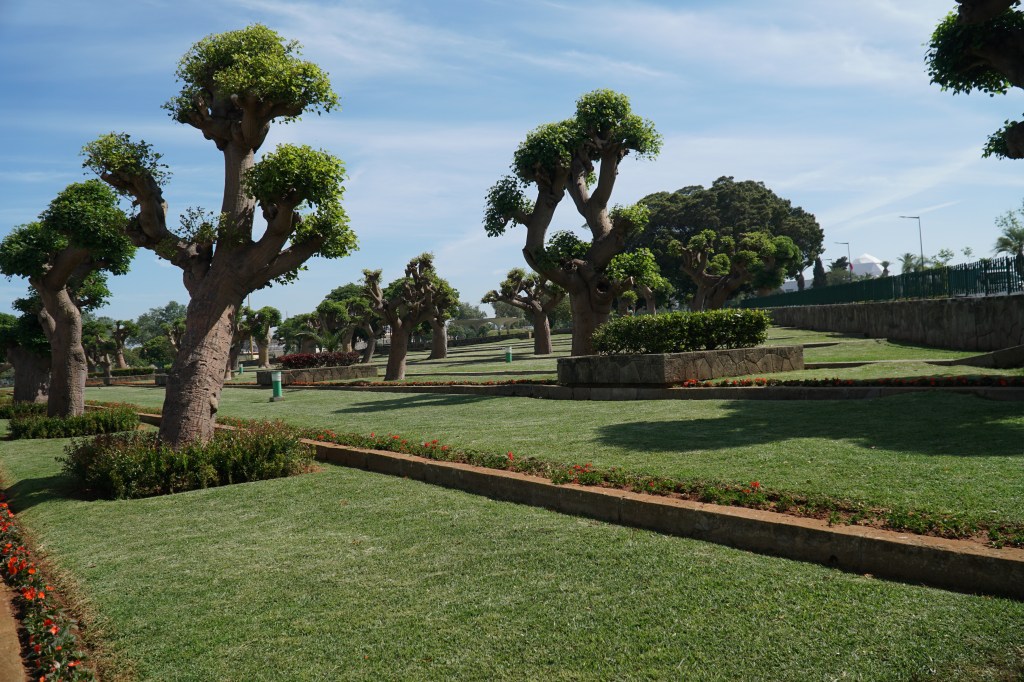

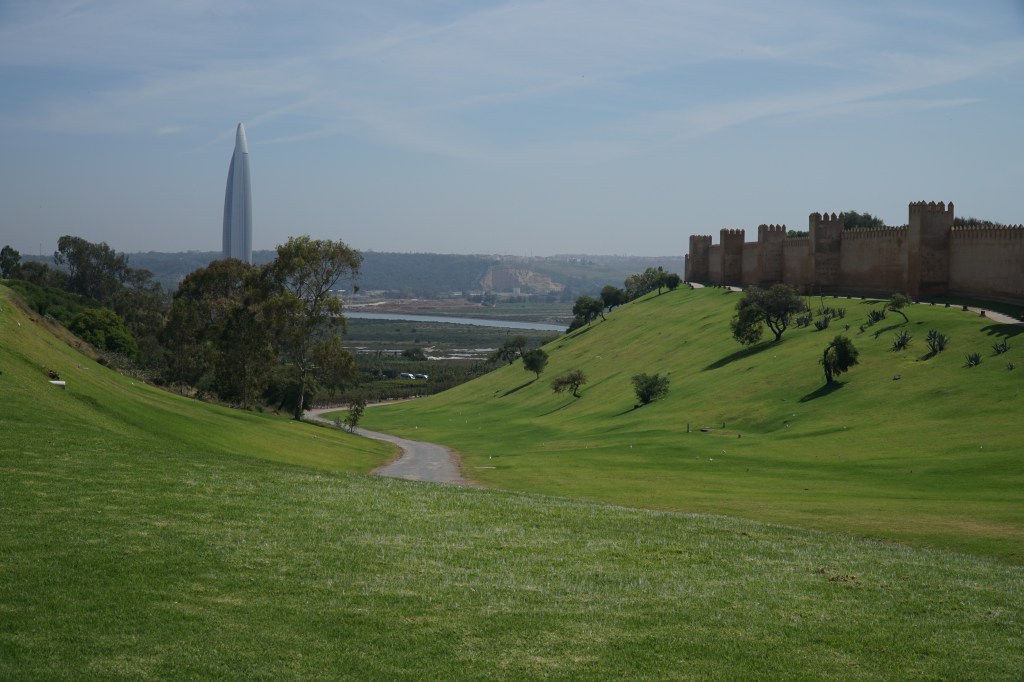
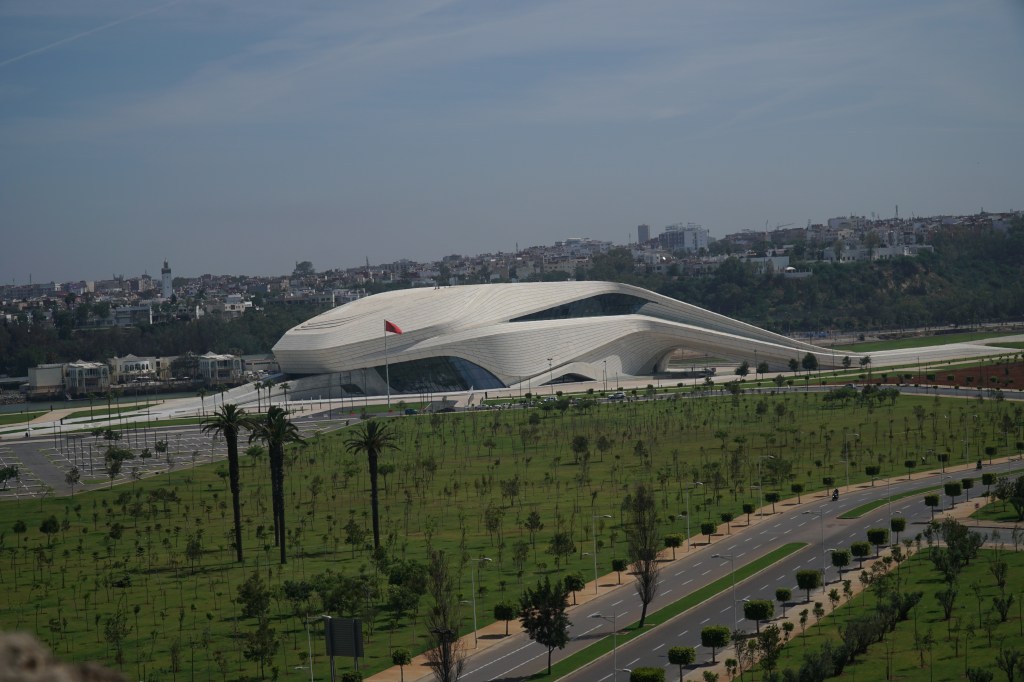
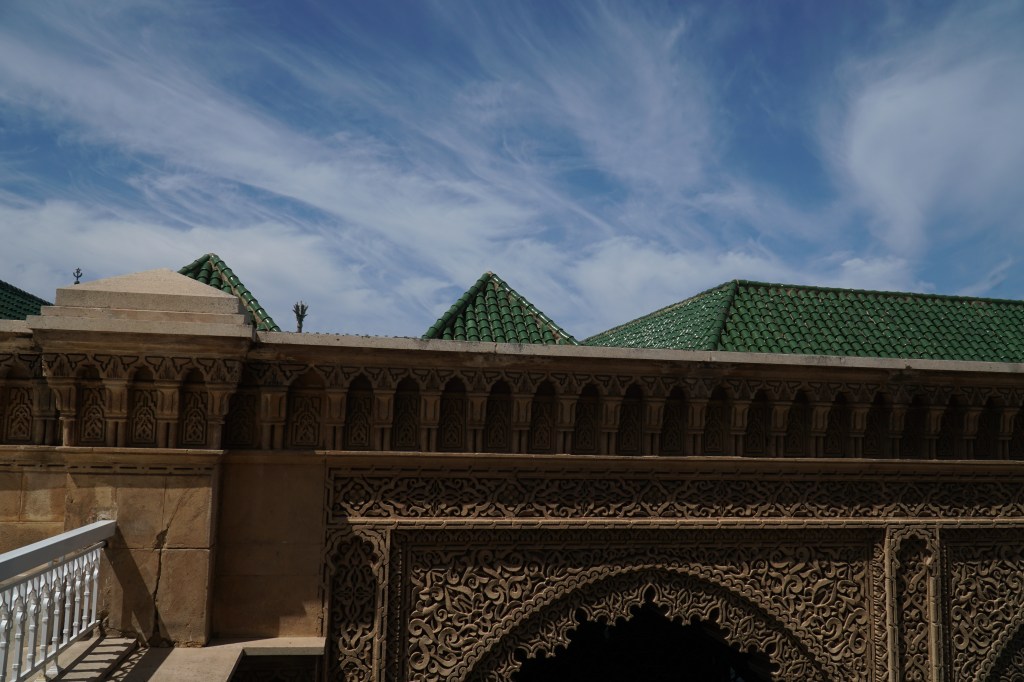
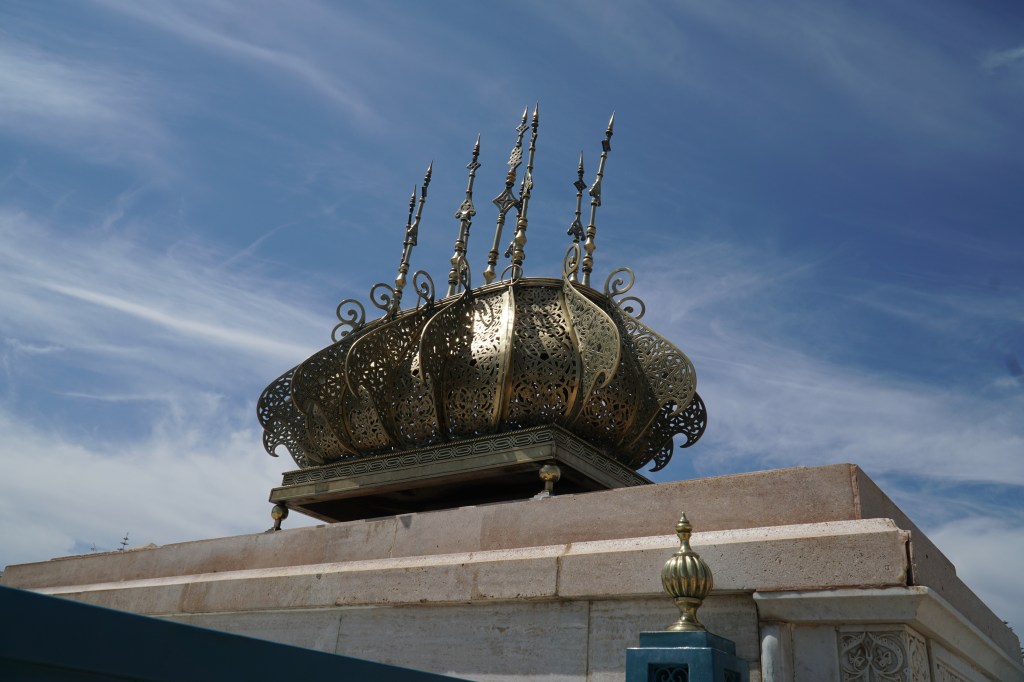
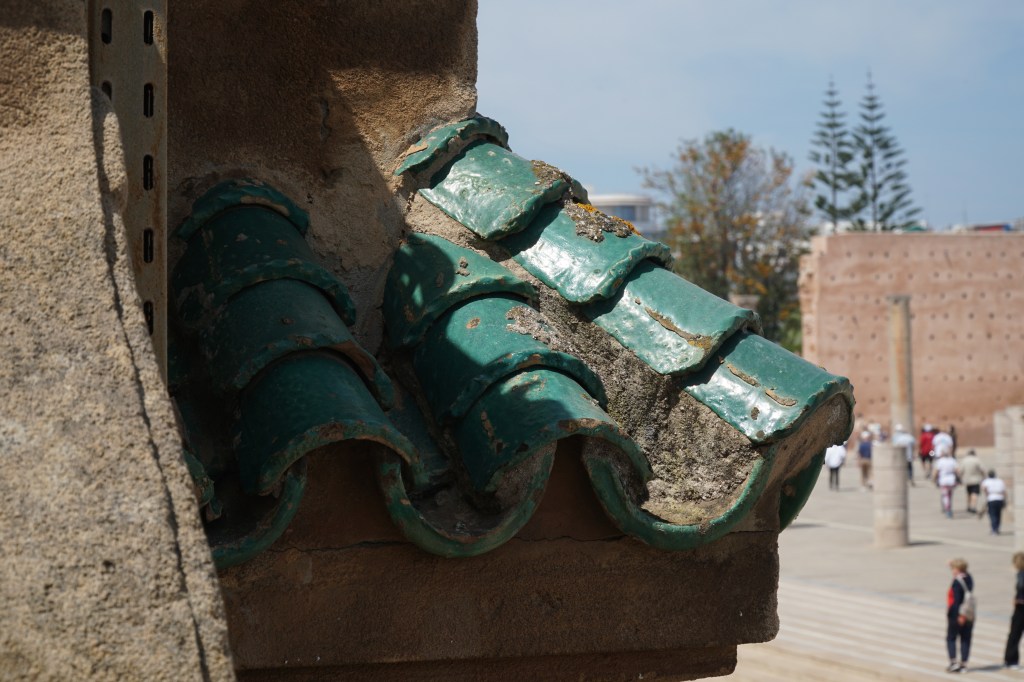
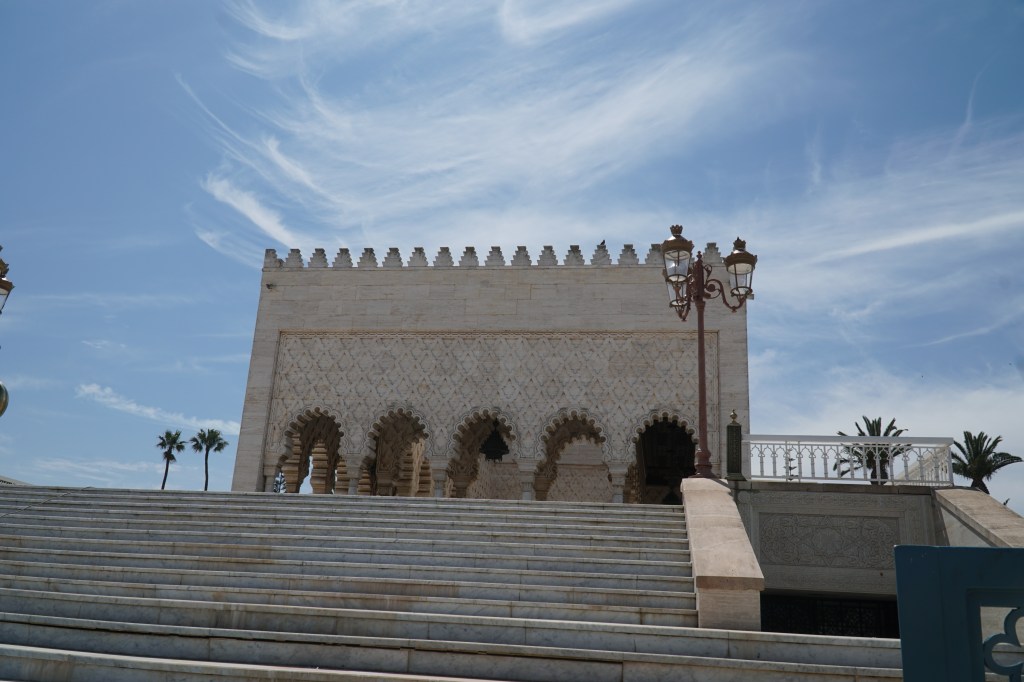
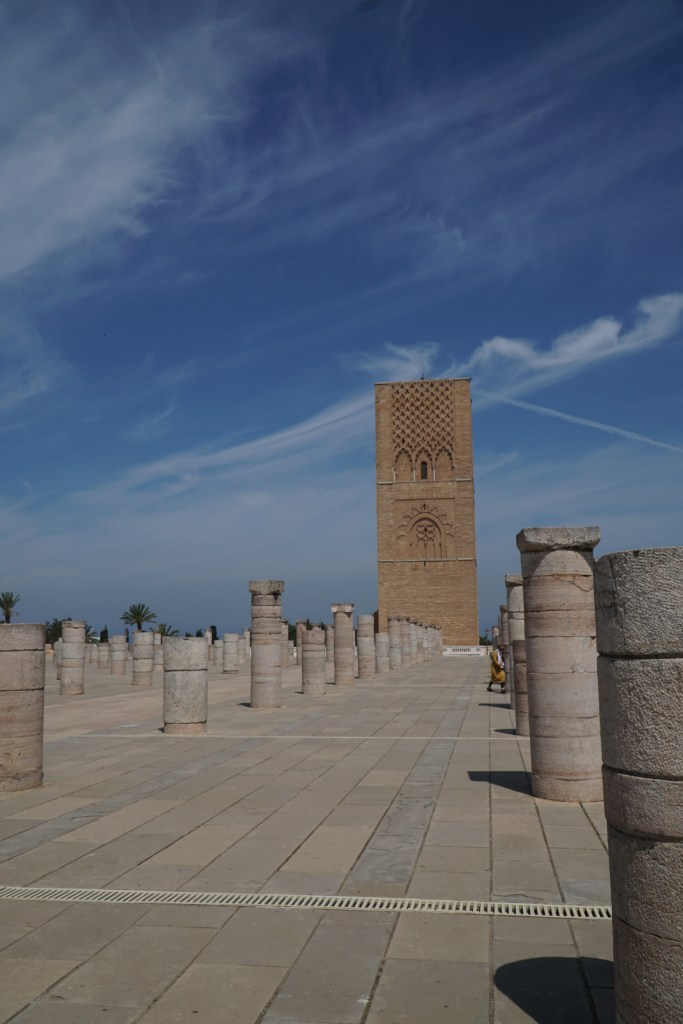
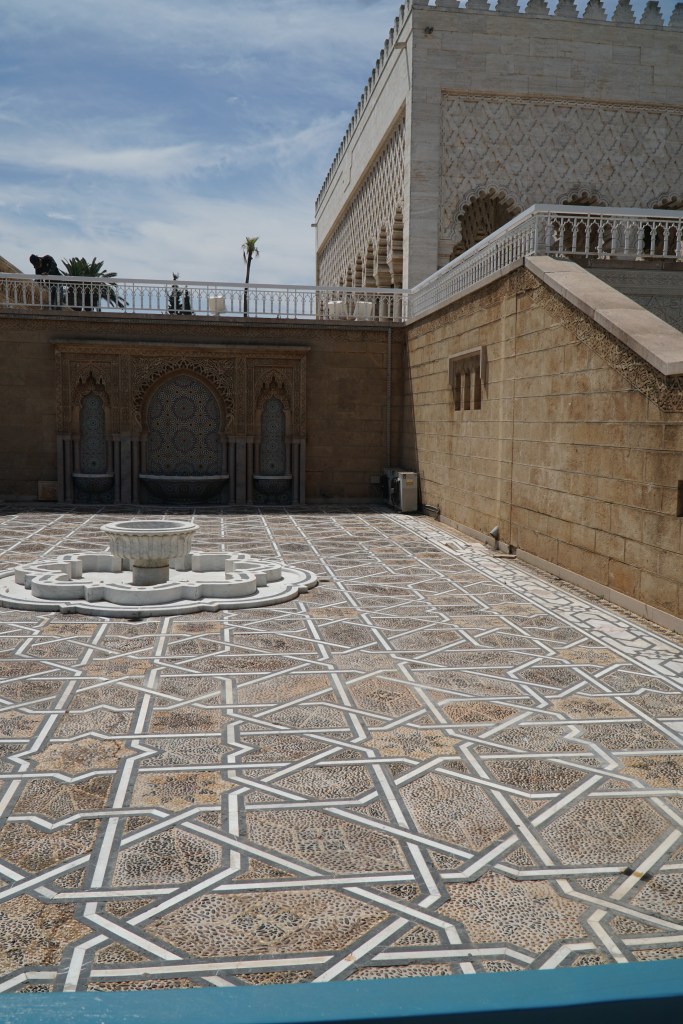
We then visited the Mohammed V Mausoleum, commissioned by Hassan II, and begun in 1961. It houses the remains of Mohammed V and his two sons. Across from the Mausoleum stands the Hassan Tower, which is an incomplete minaret originally intended in the 12th centure as part of one of the largest-ever mosques to be built, commisioned by Abu Yusuf Yaqub al-Mansur, the third caliph of the Almohad Caliphate. When al-Mansur died in 1199, all construction was stopped, leaving the incomplete columns, walls and minaret of the intended mosque. Note: the convention for naming the first son differs for the royal family – they alternate between Mohammed and Hassan in successive generations. The current king is Mohammed VI, and his son will be called Hassan III.


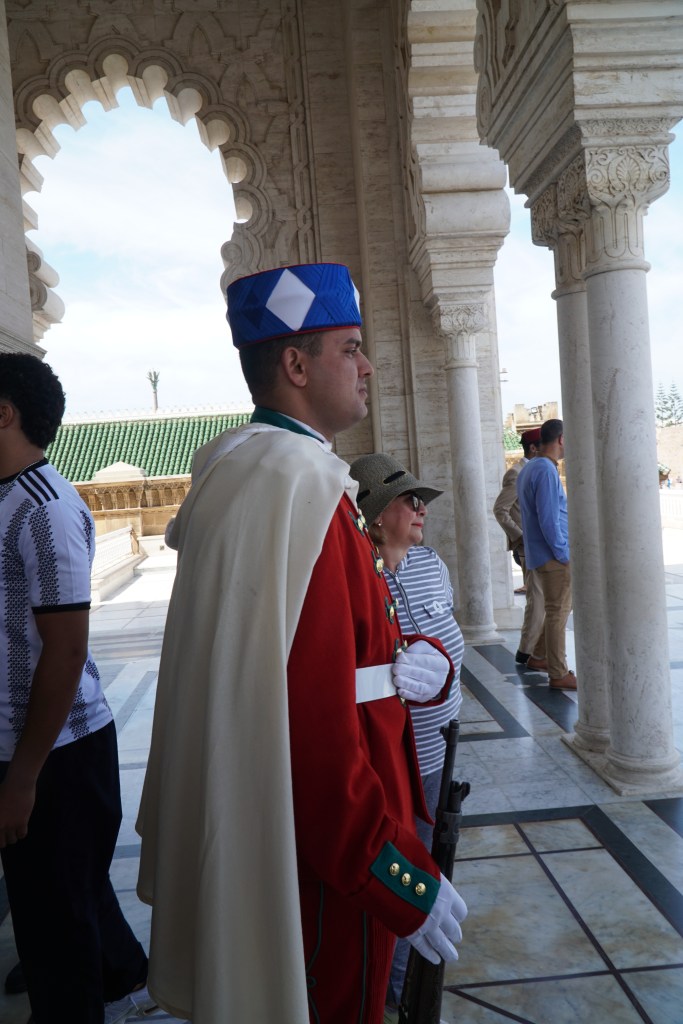

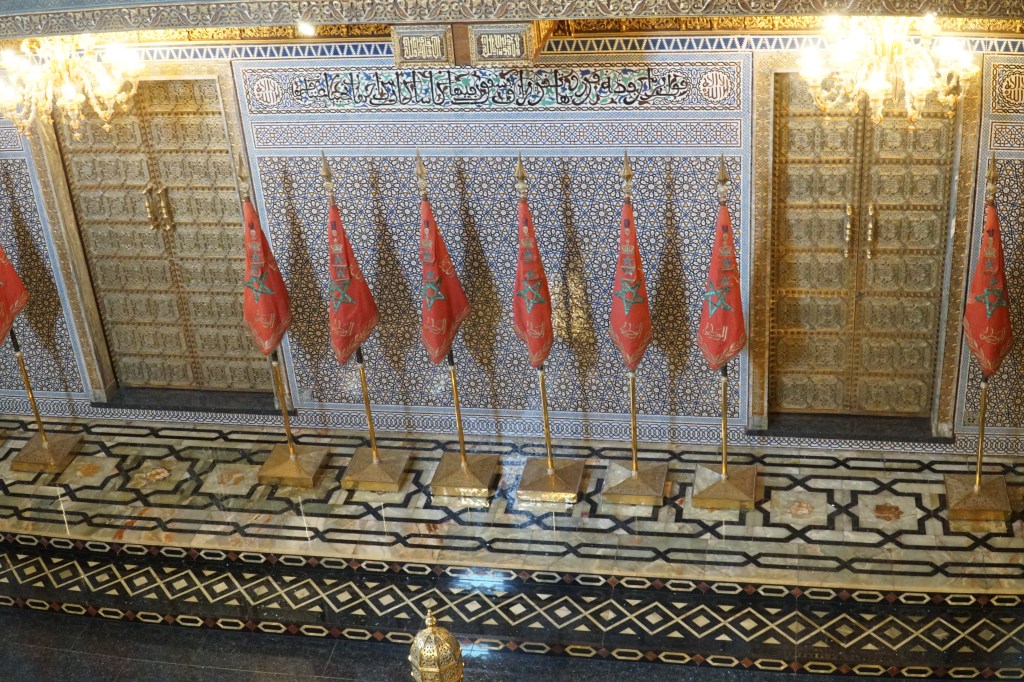
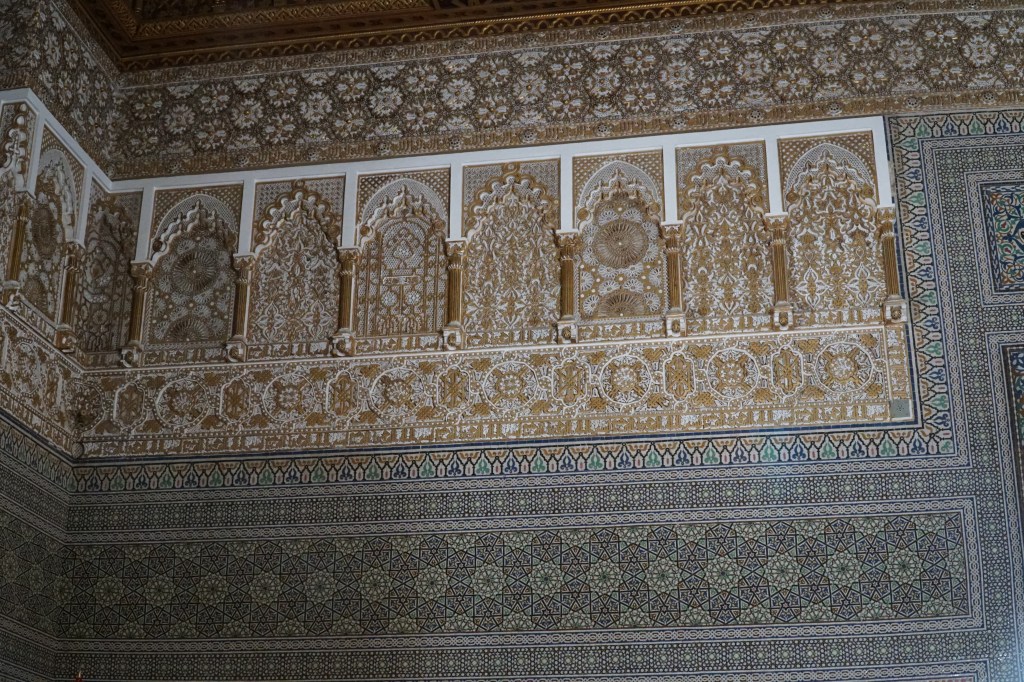
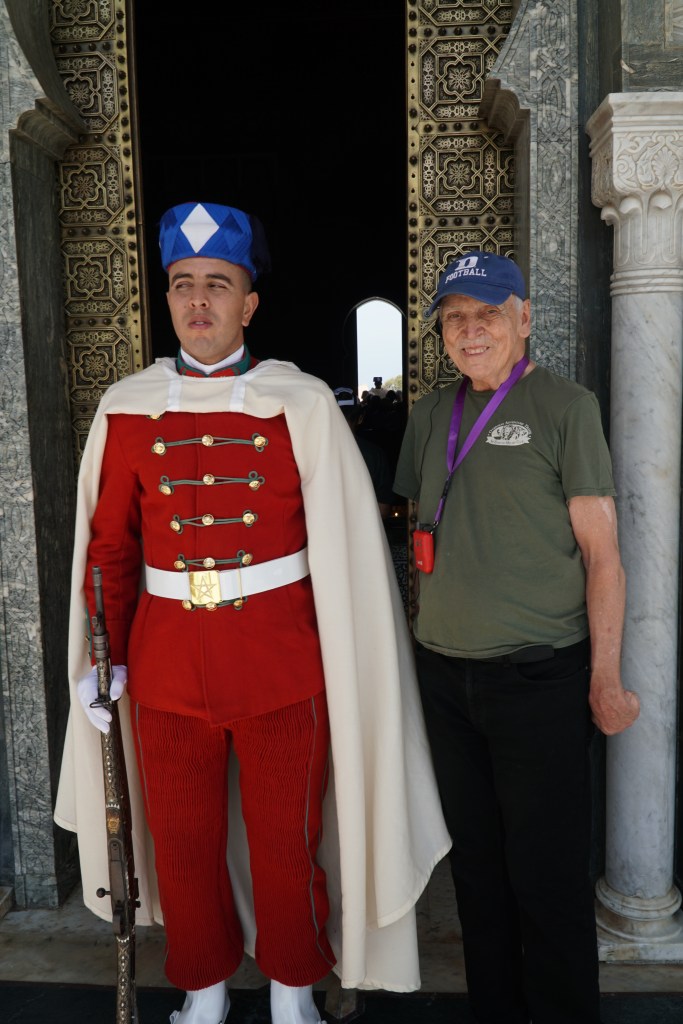

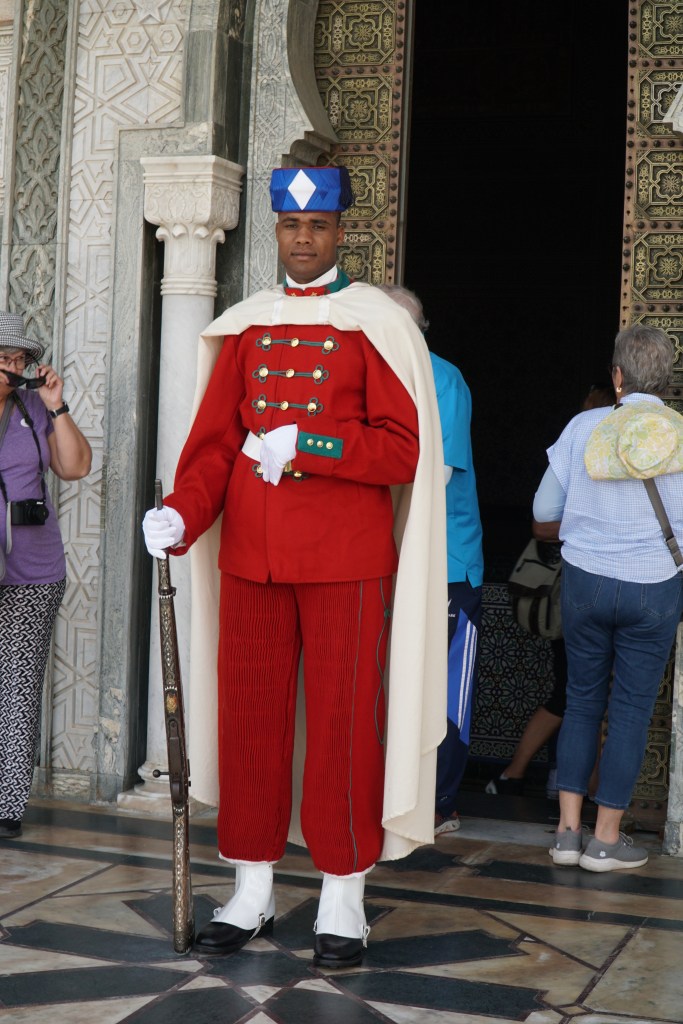
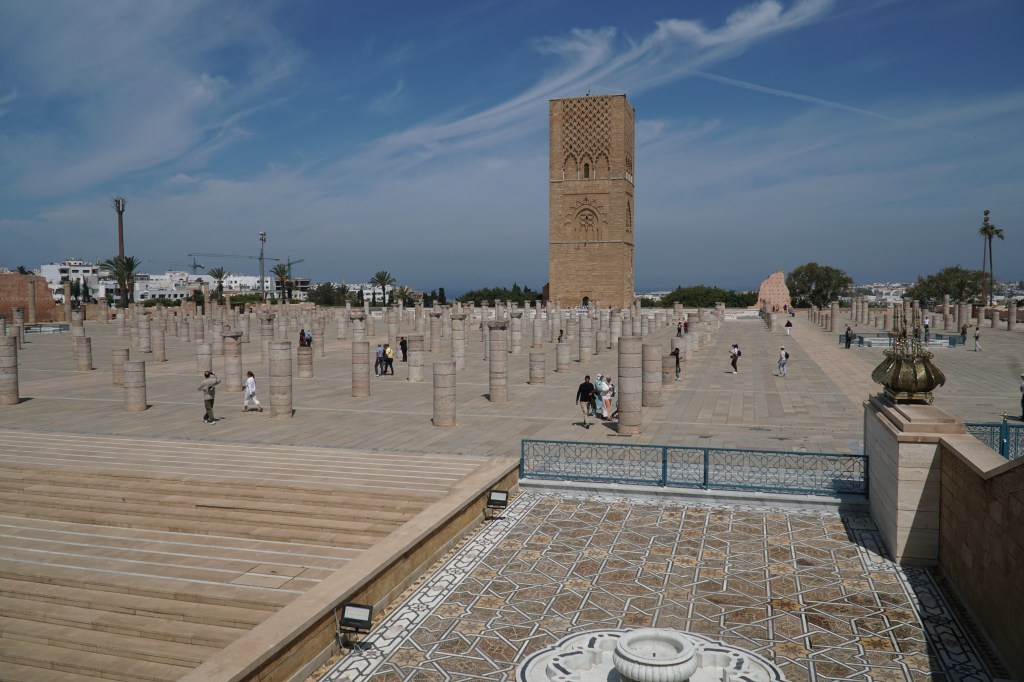
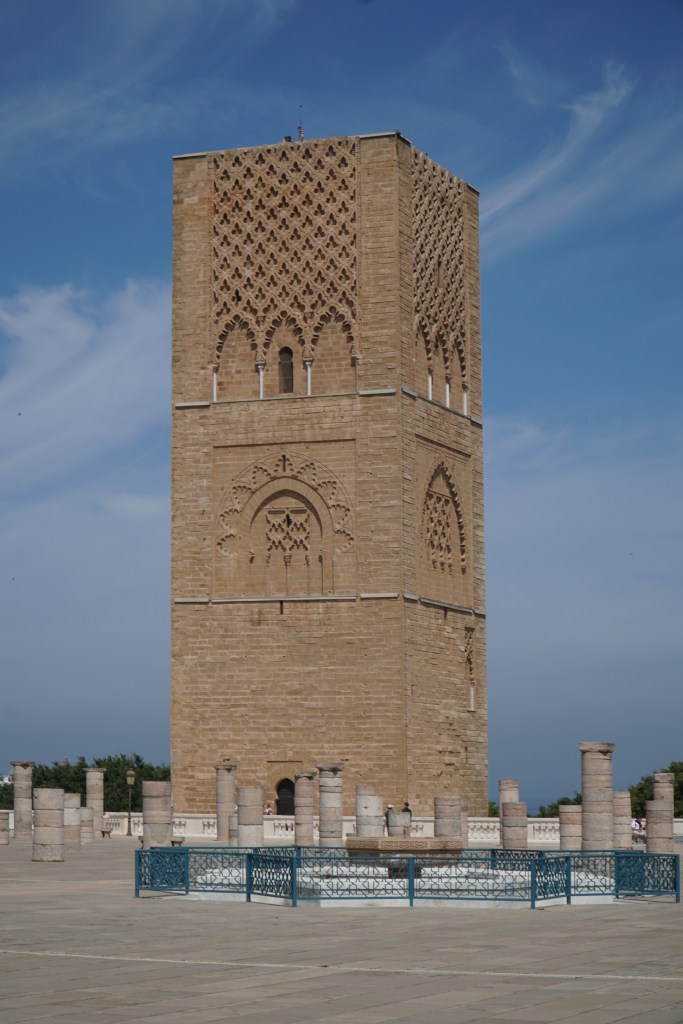
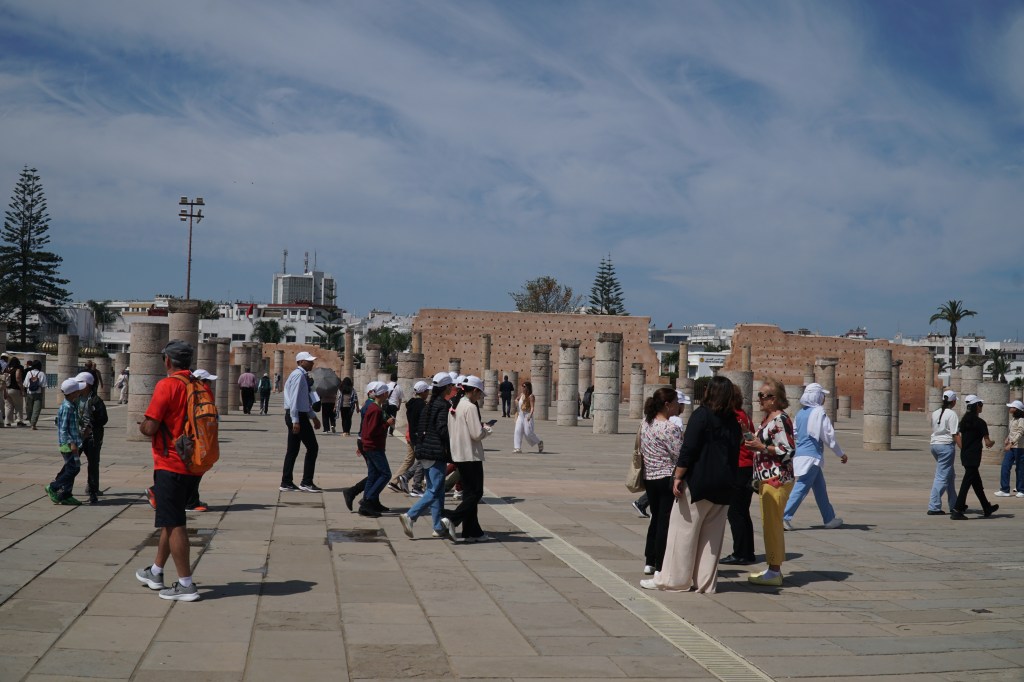

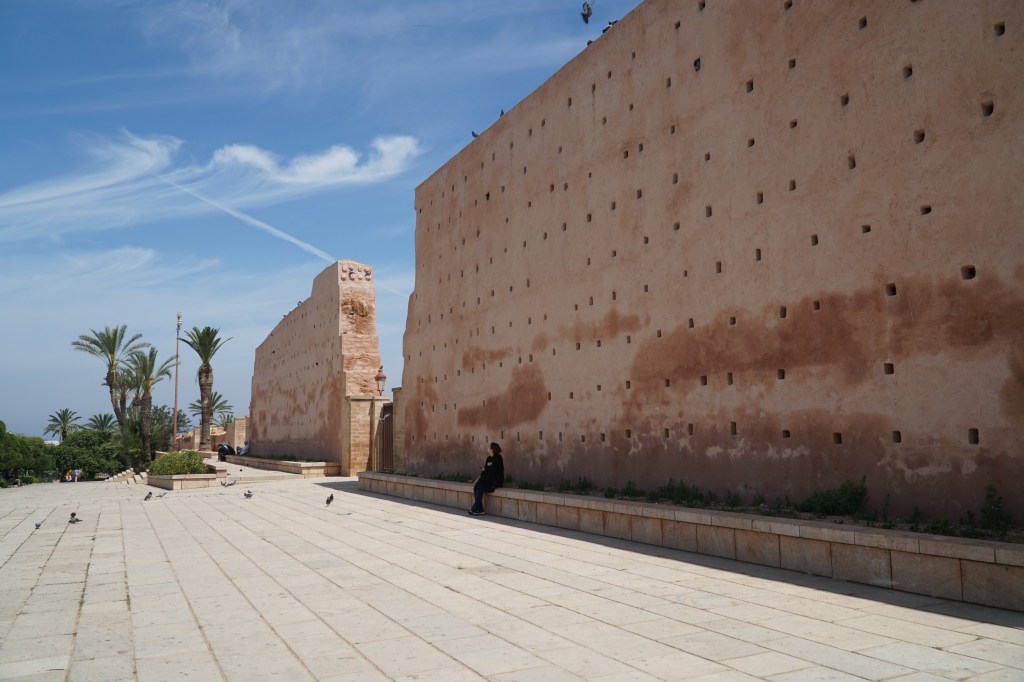
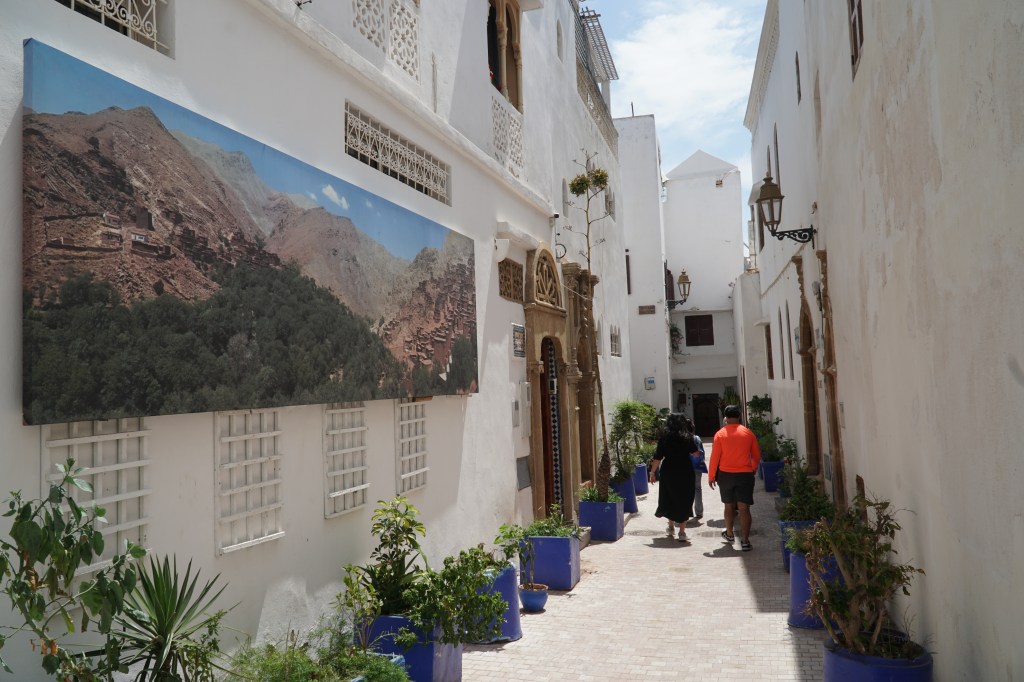
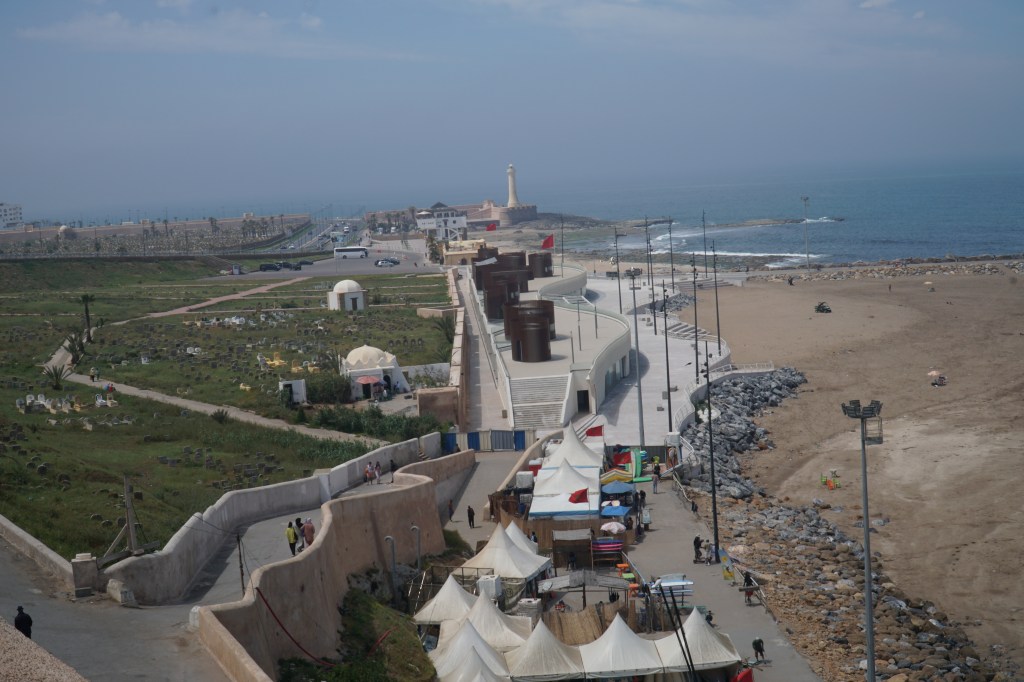
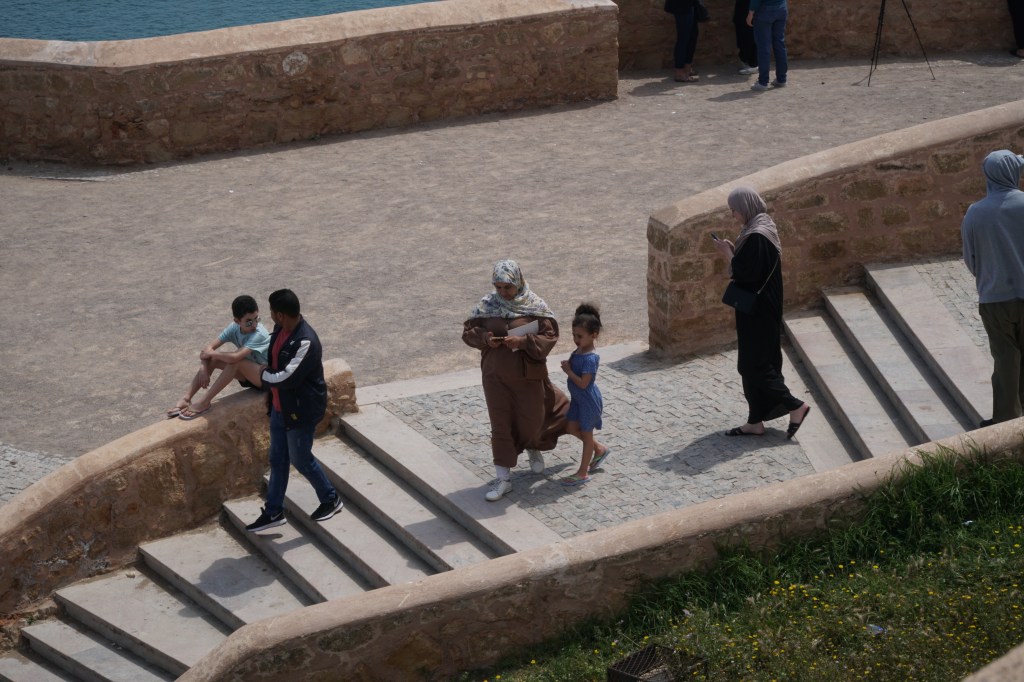
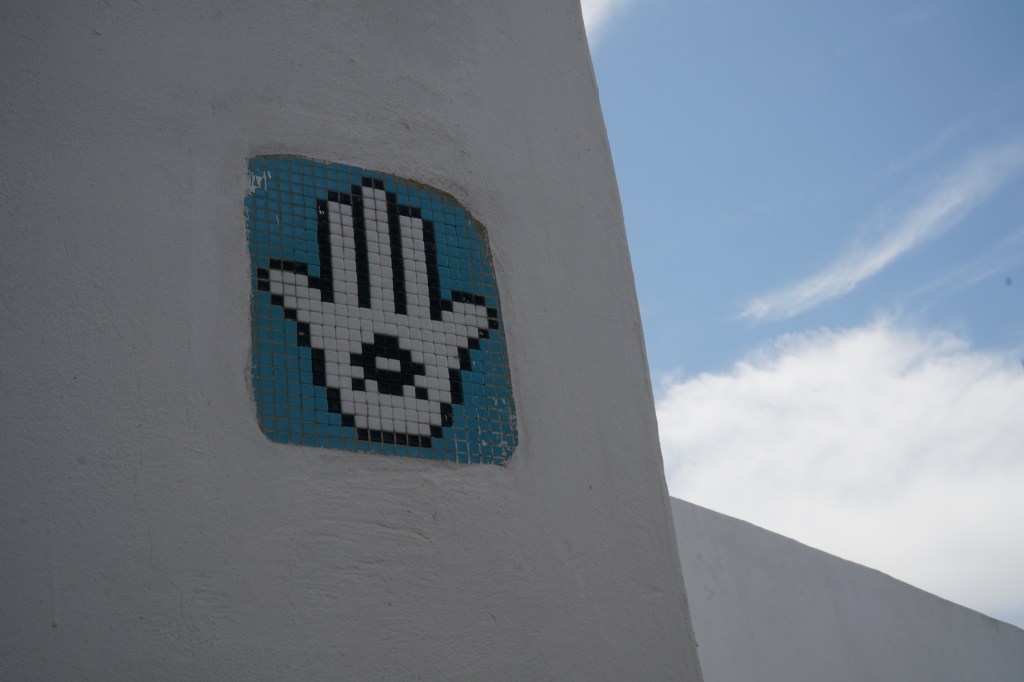
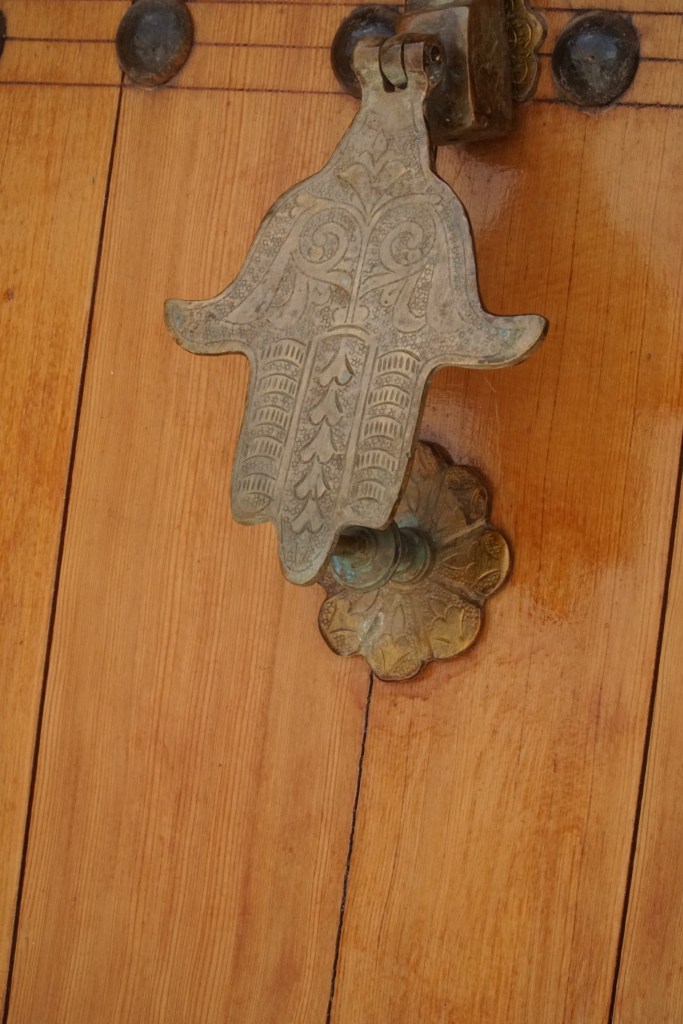
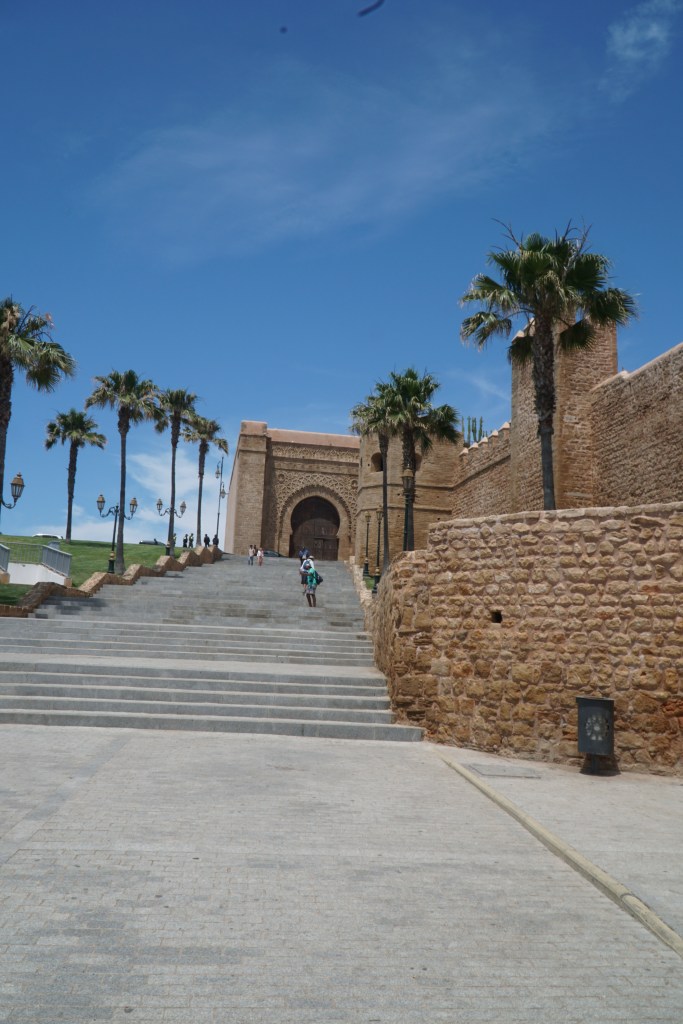
We then visited the Kasbah Oudeya, built in the 12th century. (Check out the youtube video of the chase seen from Mission Impossible: Rogue Nation). Kasbahs were originally built as defensive fortifications. This Kasbah is now a largely residential area with narrow streets and whitewashed homes. Many doors feature the hand of Fatima, which is thought to counter the evil eye. Fatima was the daughter of the prophet Mohammed and his first wife, Kadija There was a great spot for viewing the Bou Regreg River. We stopped for tea at a cafe that was a key watering hole for pirates, and walked through an Andalusian garden.









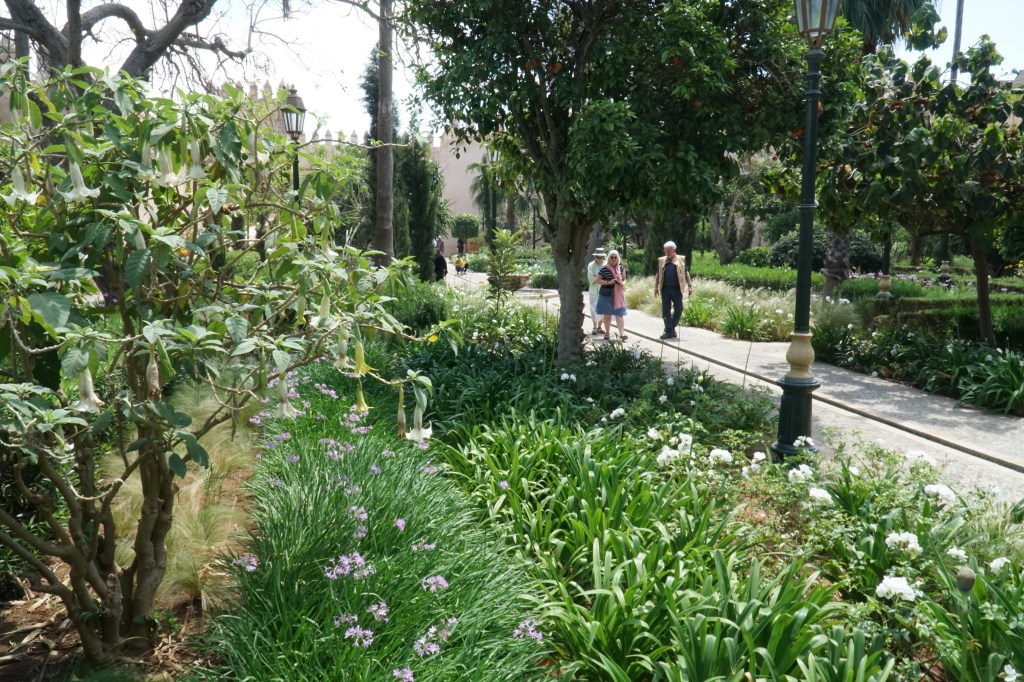
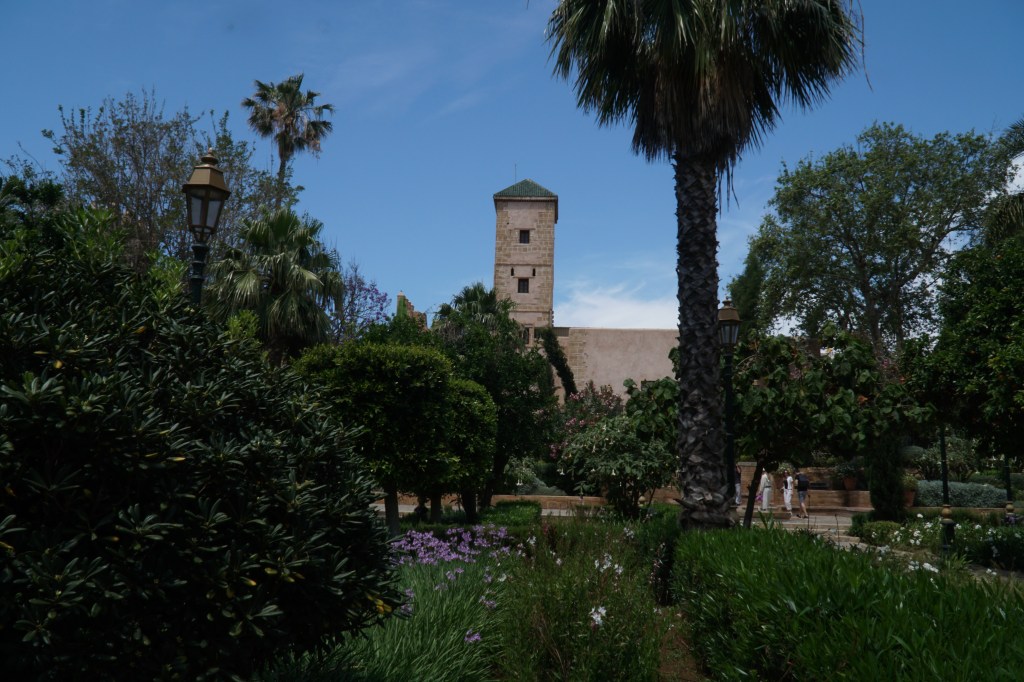
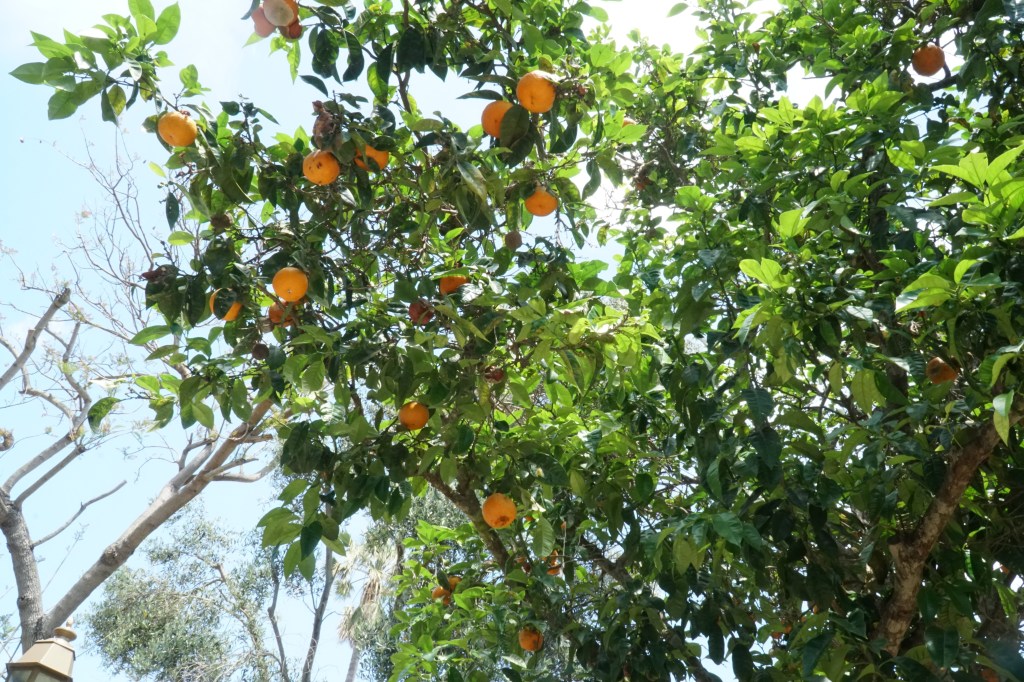
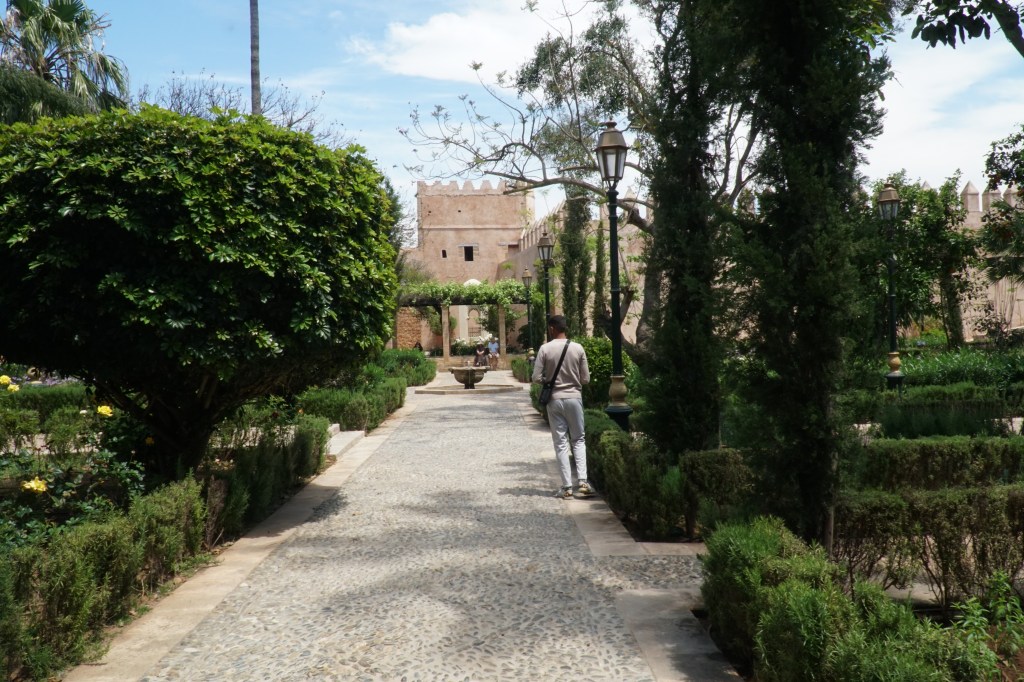



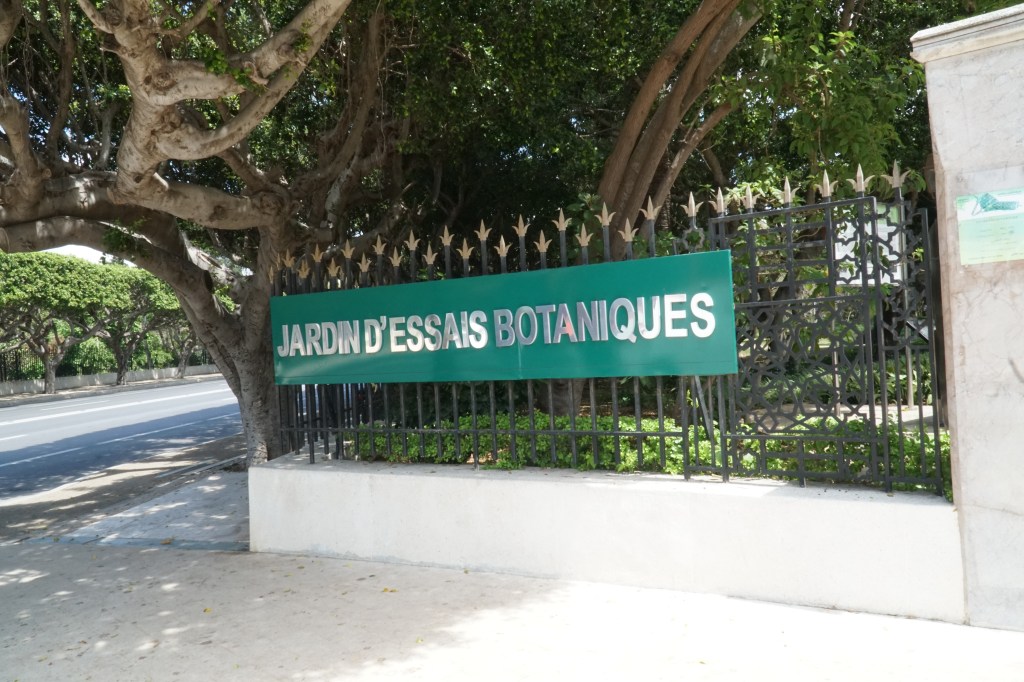
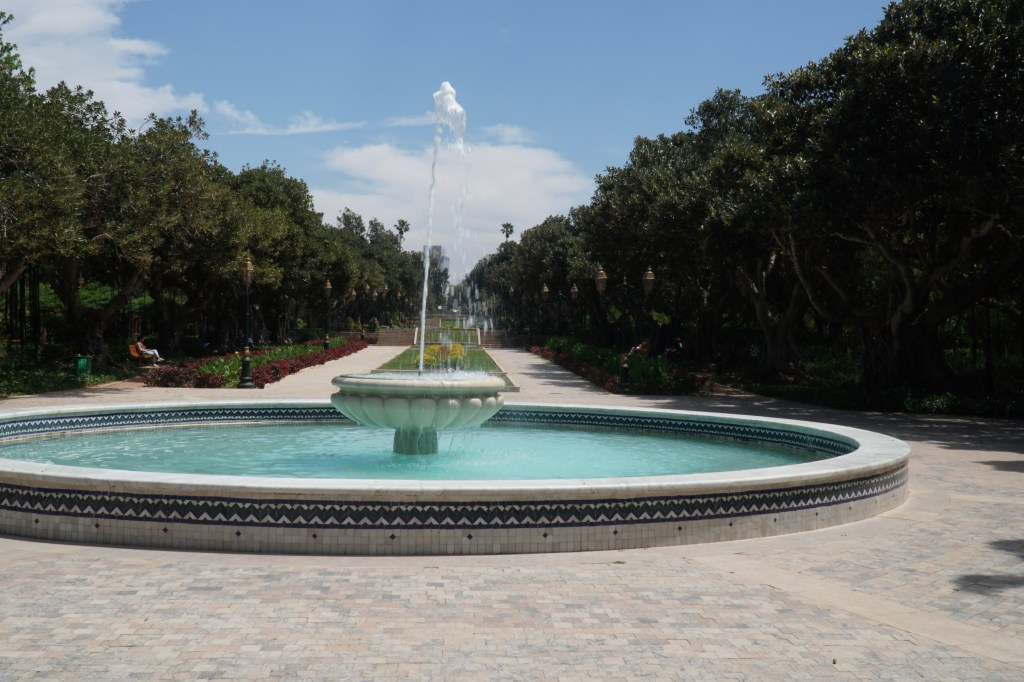
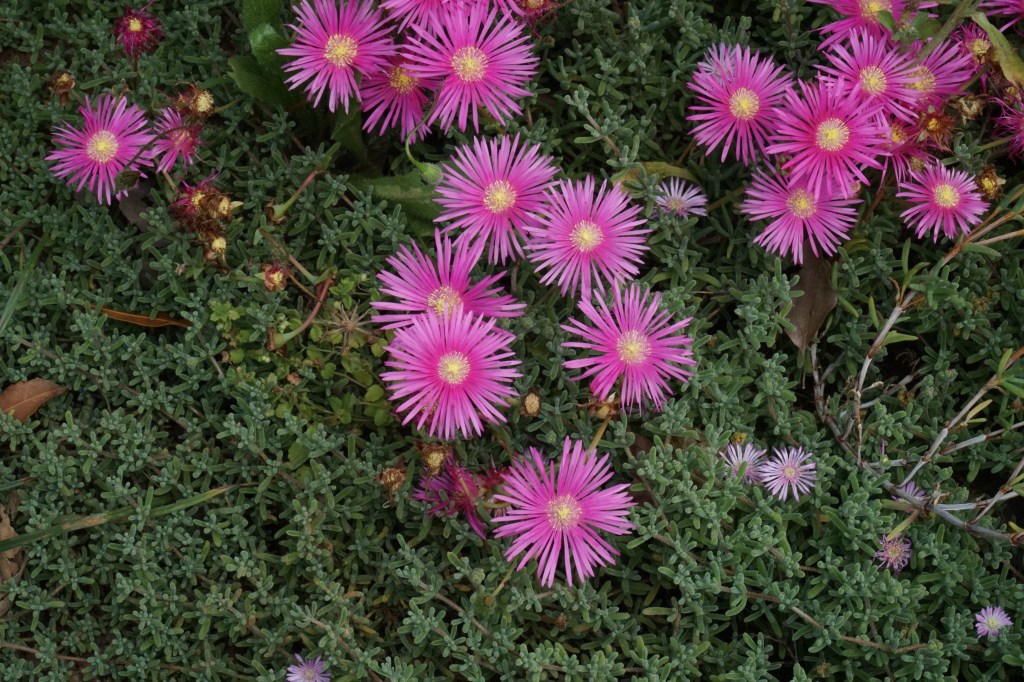
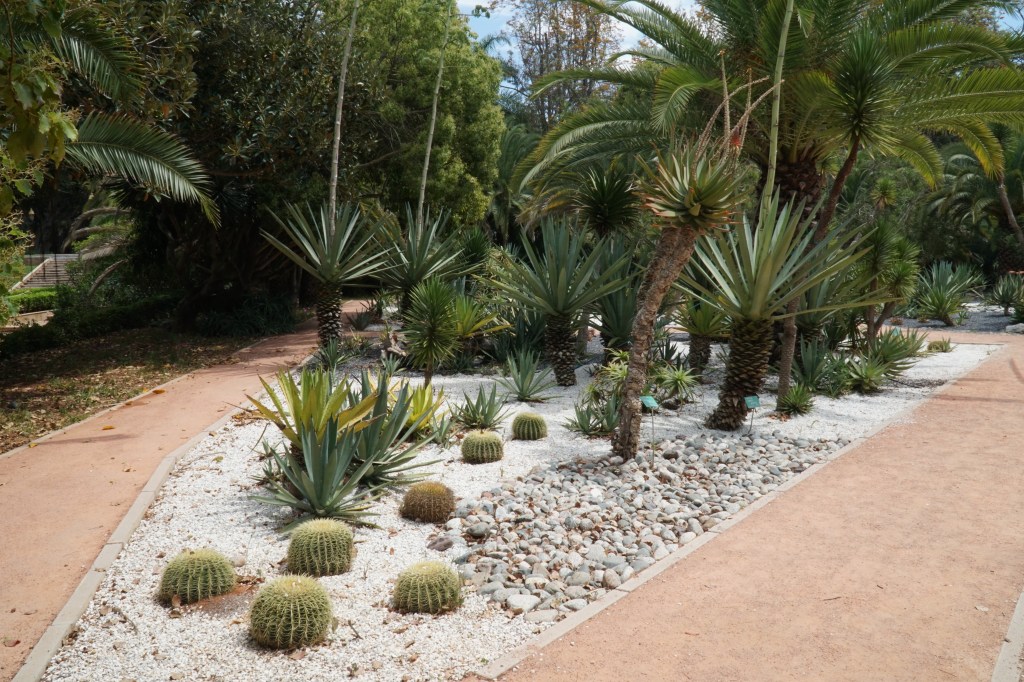
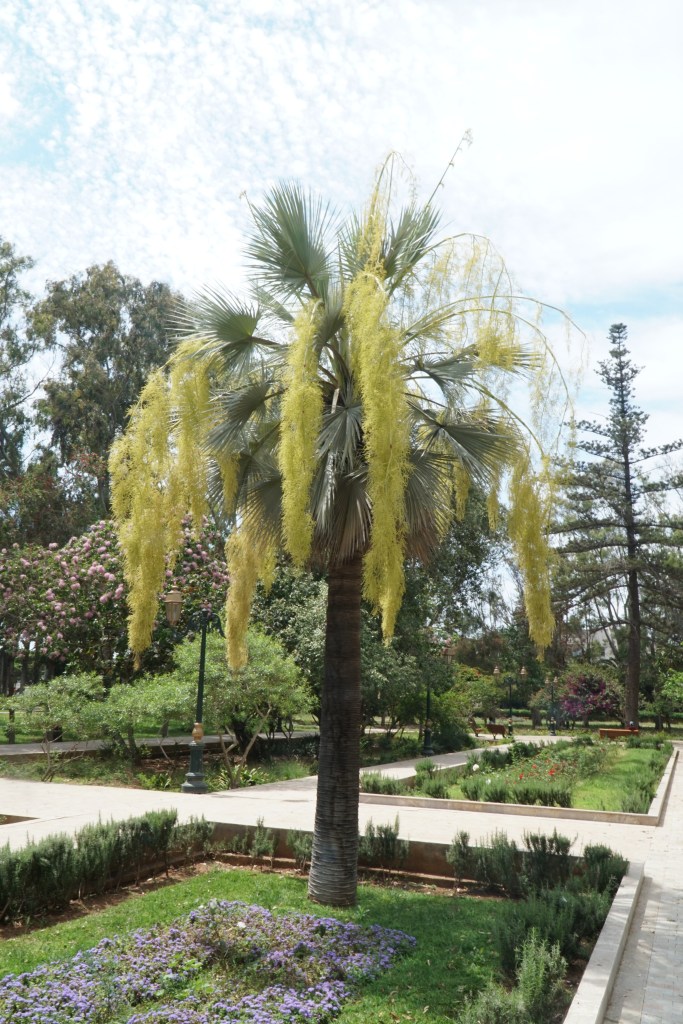
We had time on our own and spent an hour at the botanical garden…..






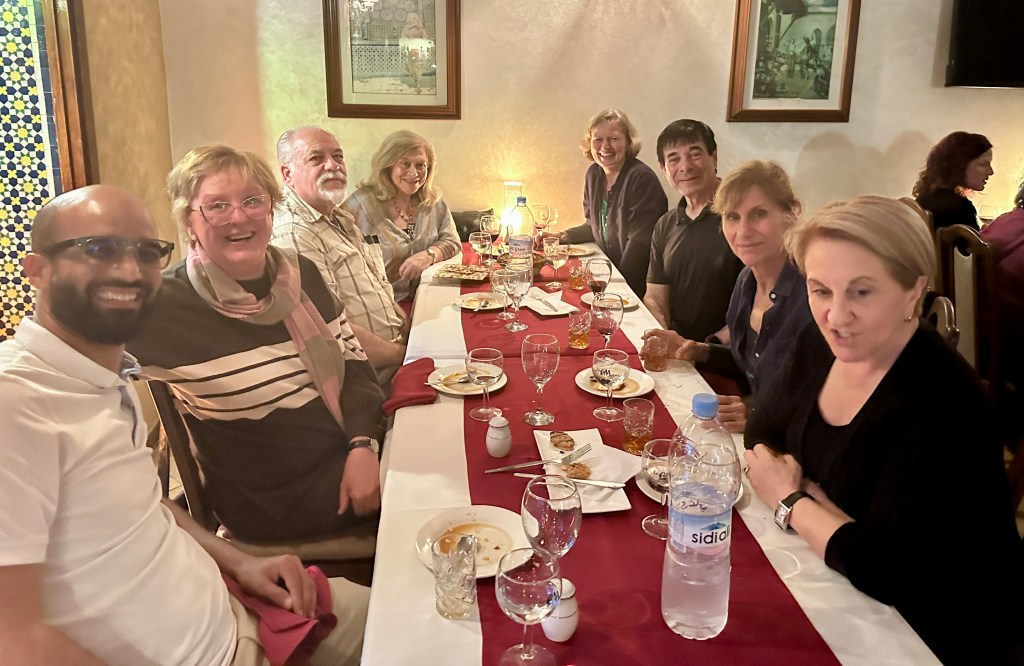
Our welcome dinner was at a local restaurant owned by a Jewish family.


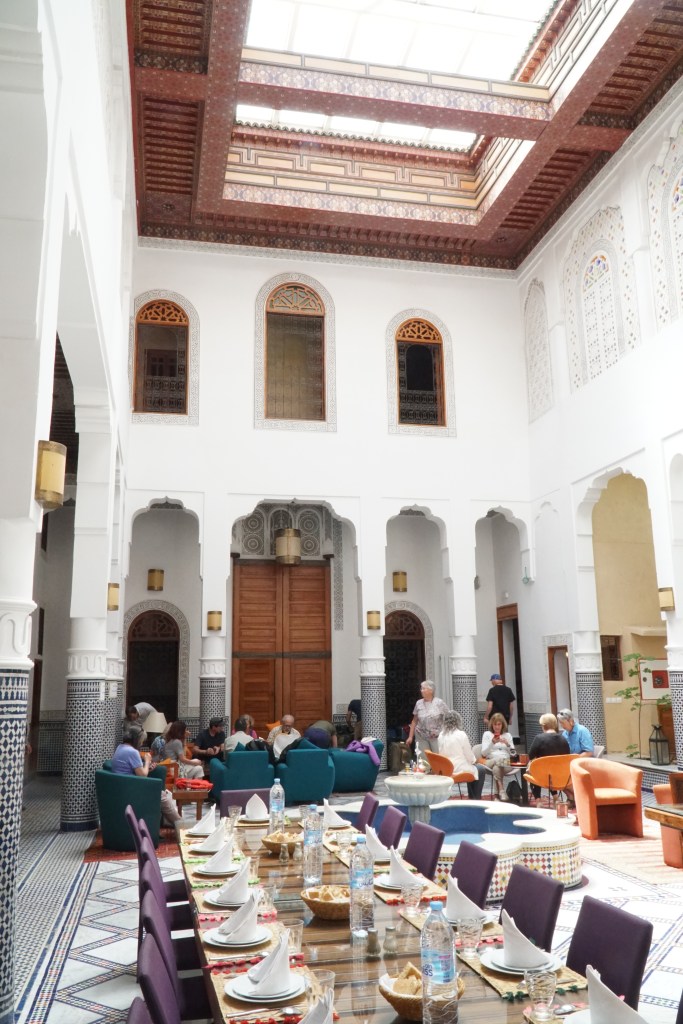
Thursday, April 25W
We drove to Fez (pronounced fes) through rolling hills and farmland. We stopped at a pottery business, where all the processes are performed by hand, using beautiful natural pigments. Because the kilns are so hot and smokey, they have been relocated out of town.


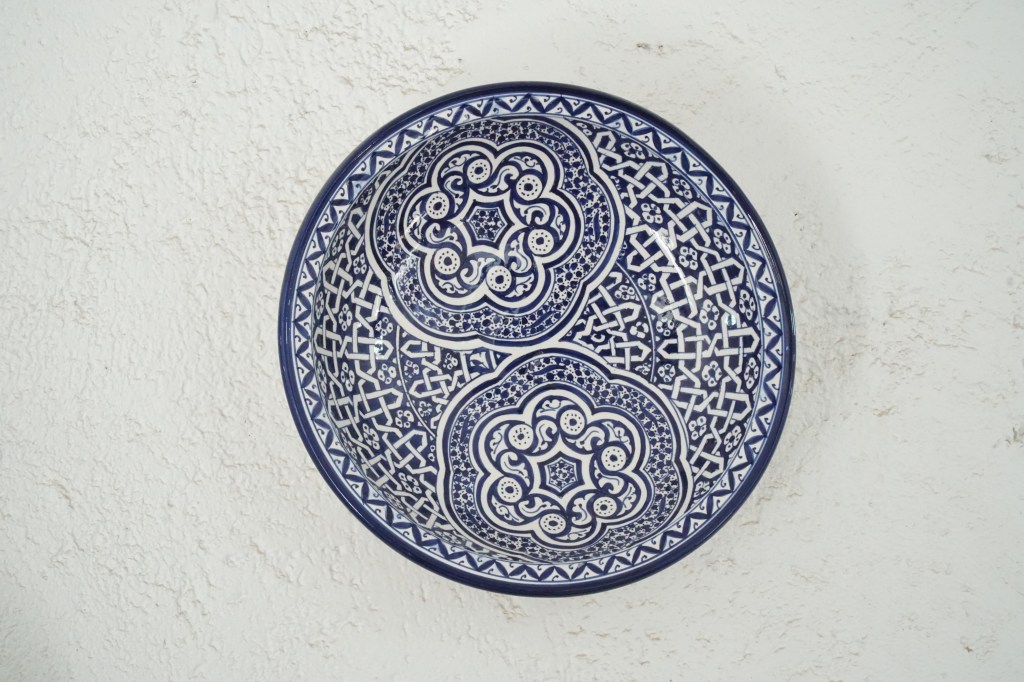
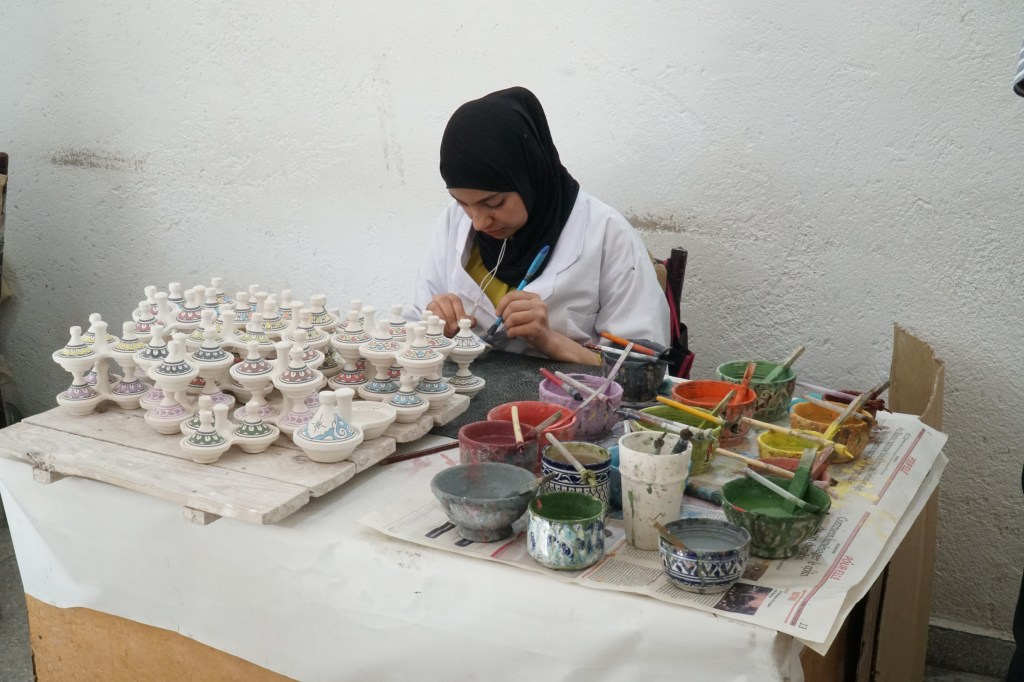


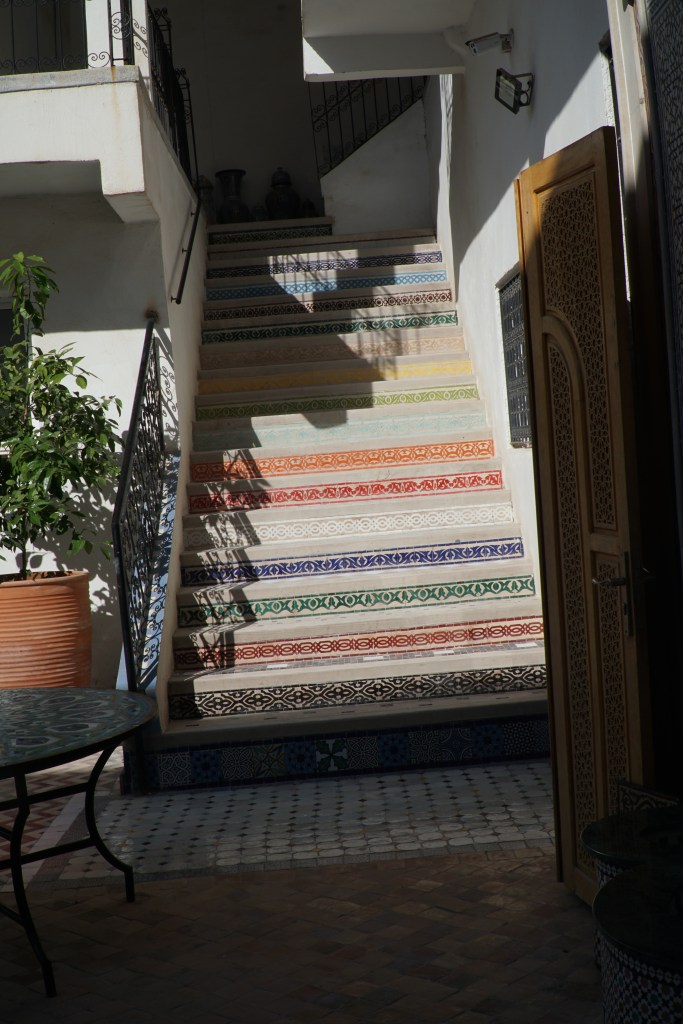
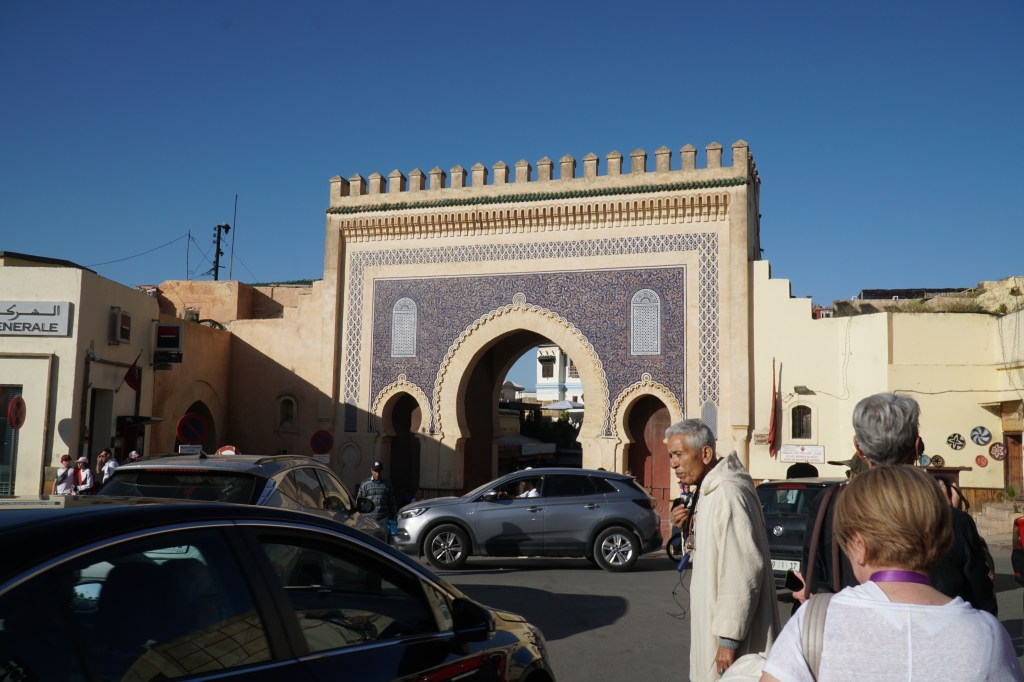


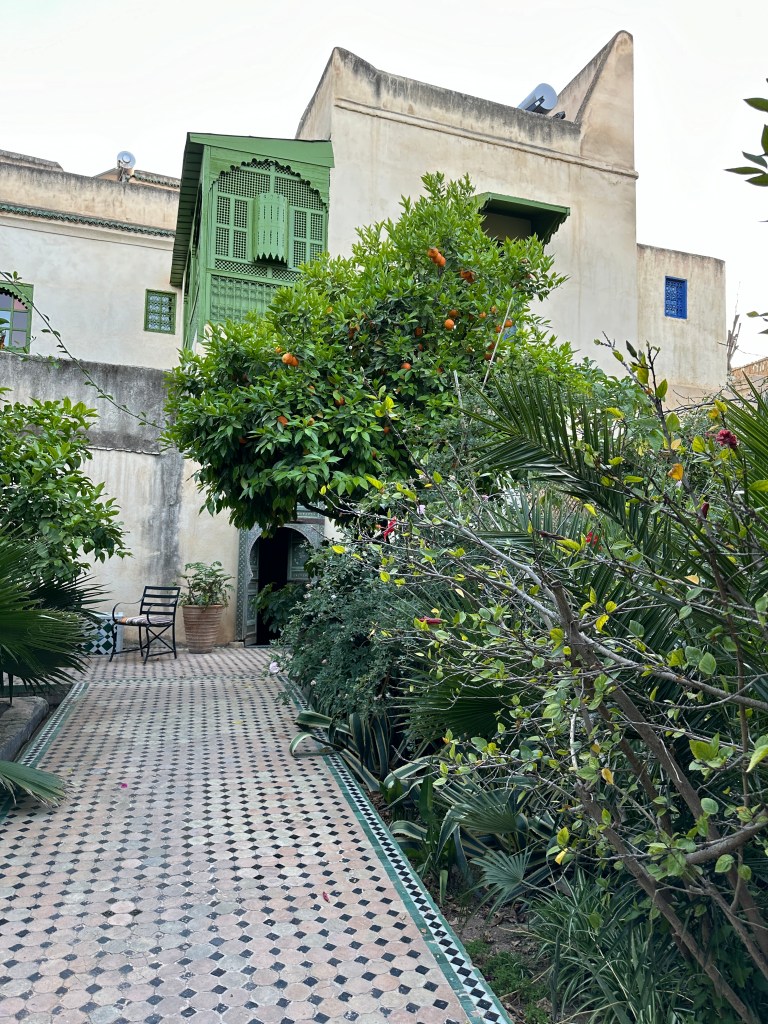
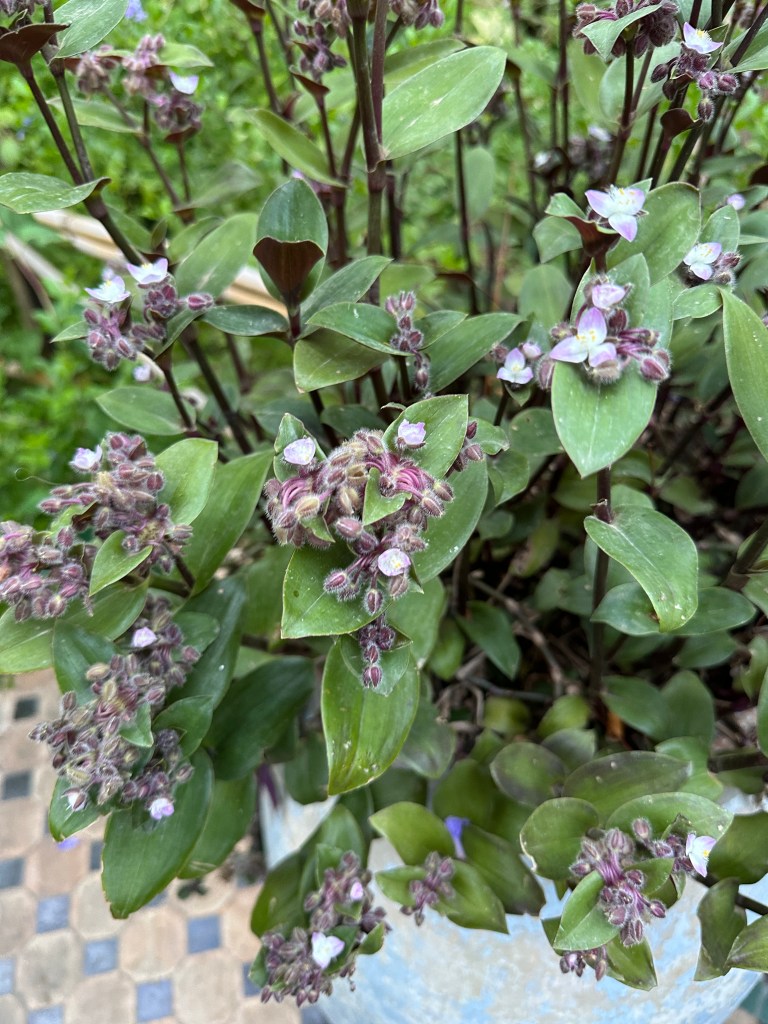
We had to leave our bus at the outskirts of Fez and walk through the medina to our riad (Riad au 20 Jasmins). We had lunch at the riad and then checked into our rooms. We had a lovely dinner with new friends in a garden restaurant close to the riad.
Friday, April 26
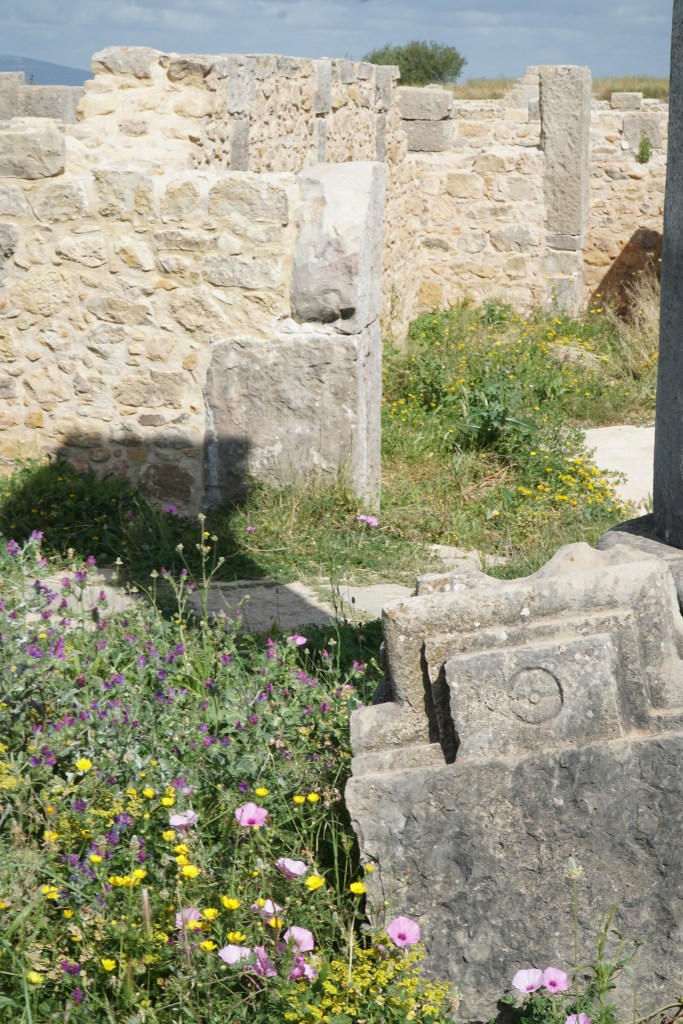
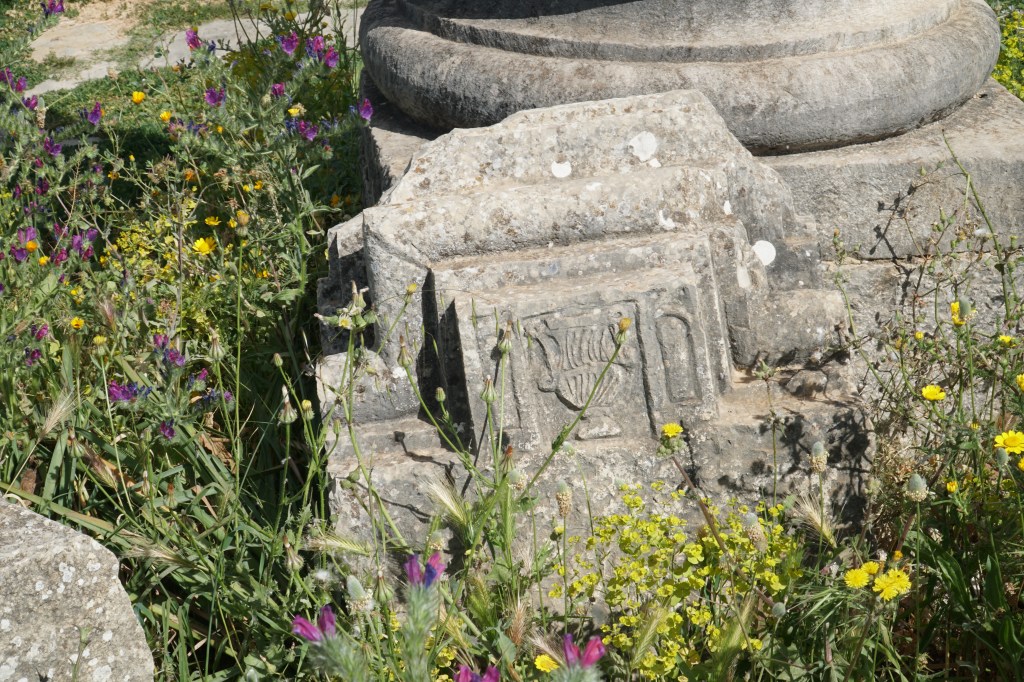
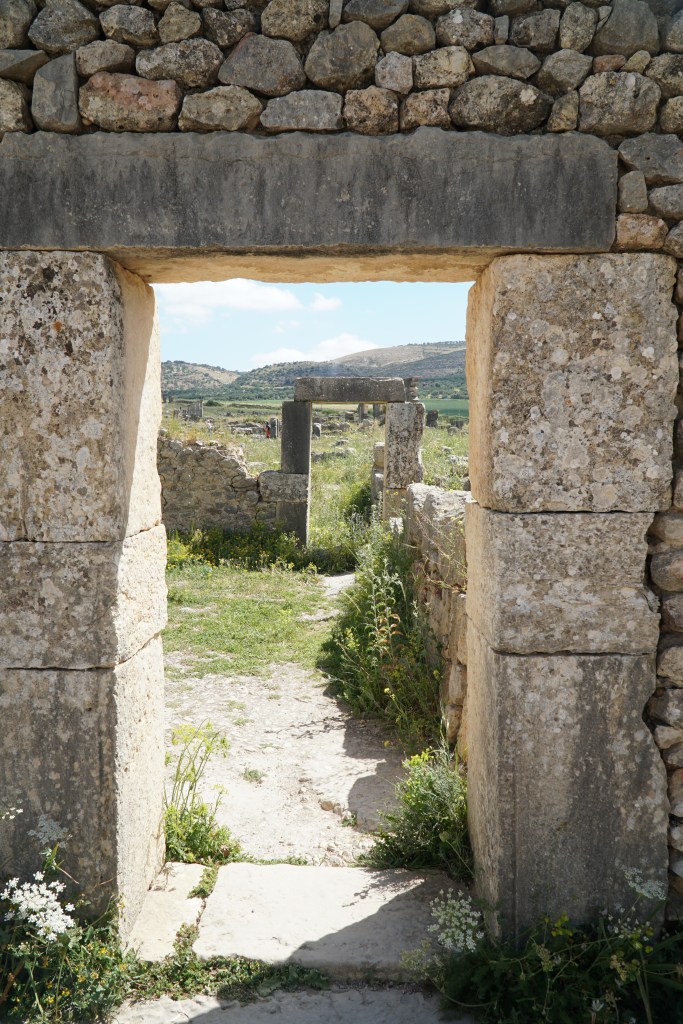
I took an optional tour to the ancient Roman ruins of Volubilis, a beautiful setting full of wildflowers, and a visit to the town of Meknes, which had previously housed the Moroccan sultanate.


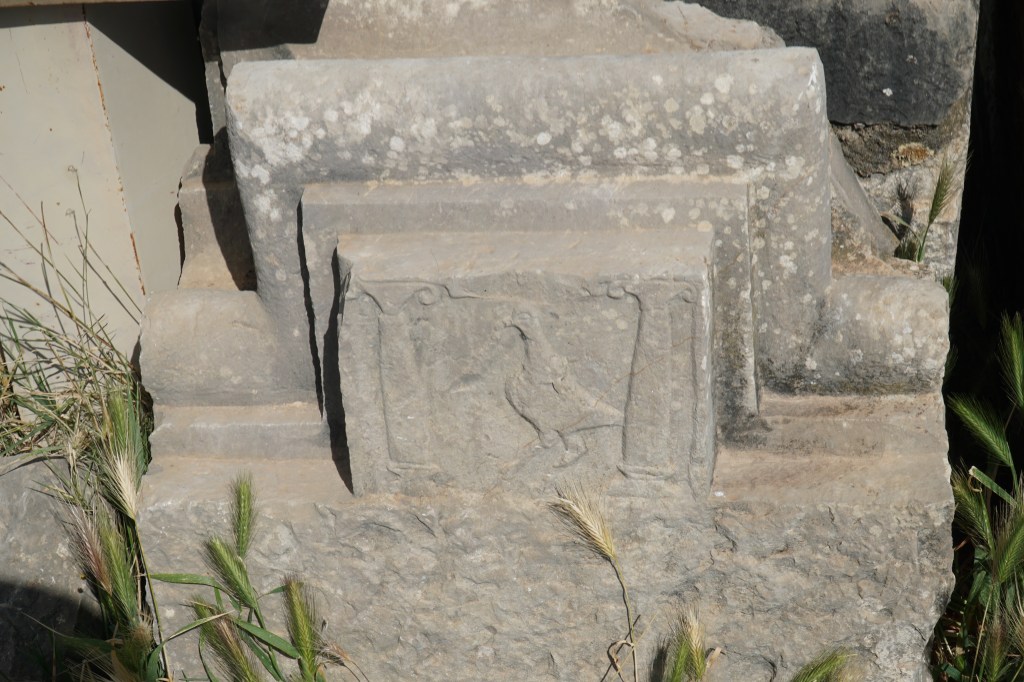

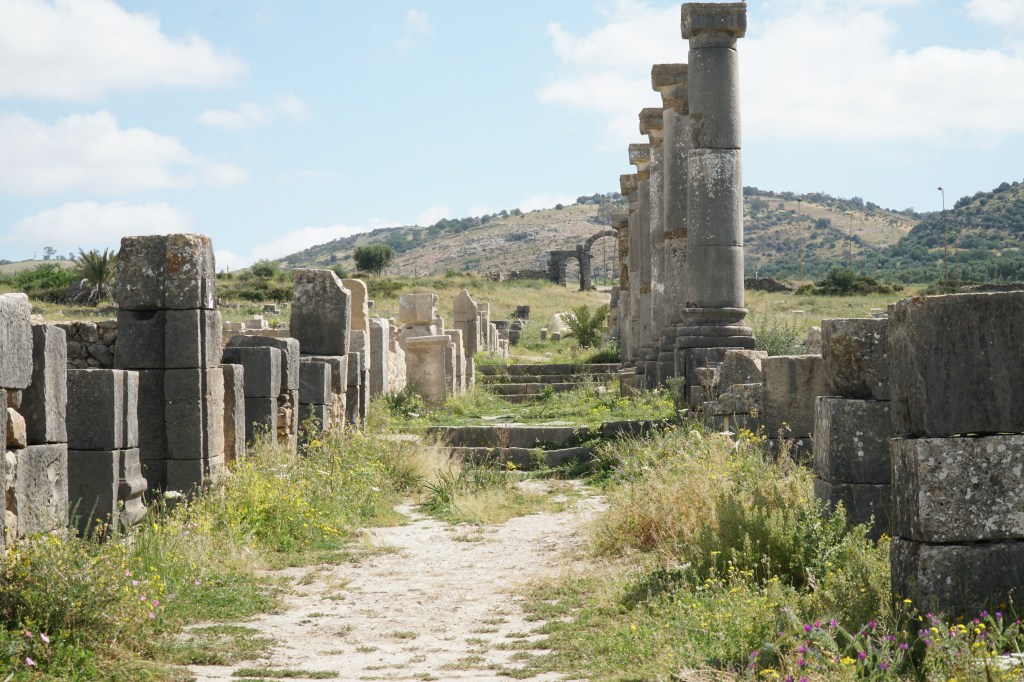
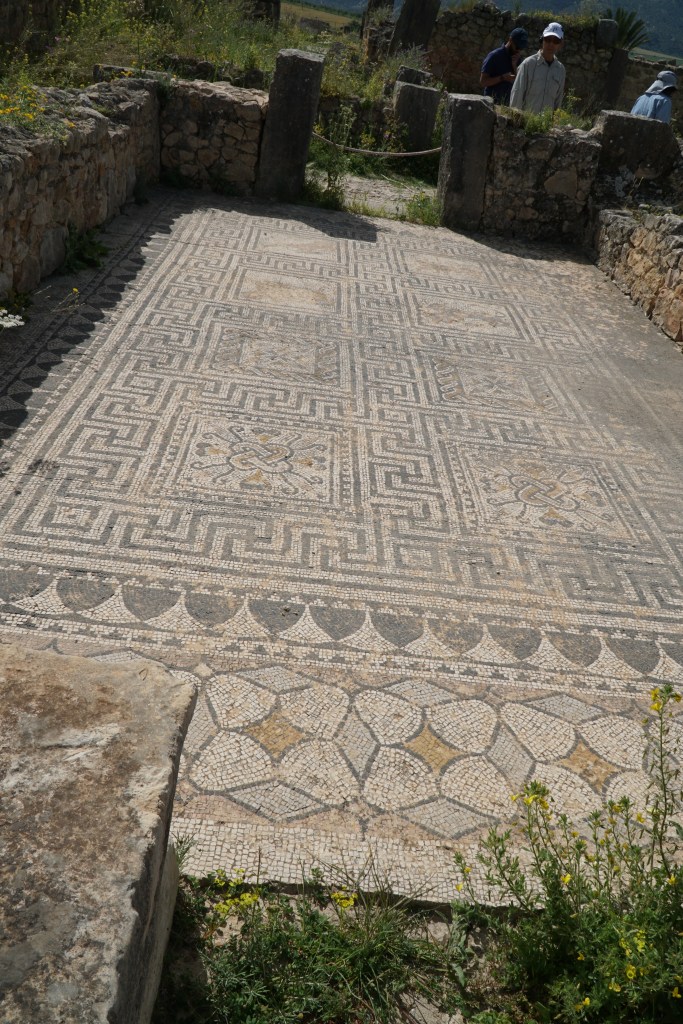
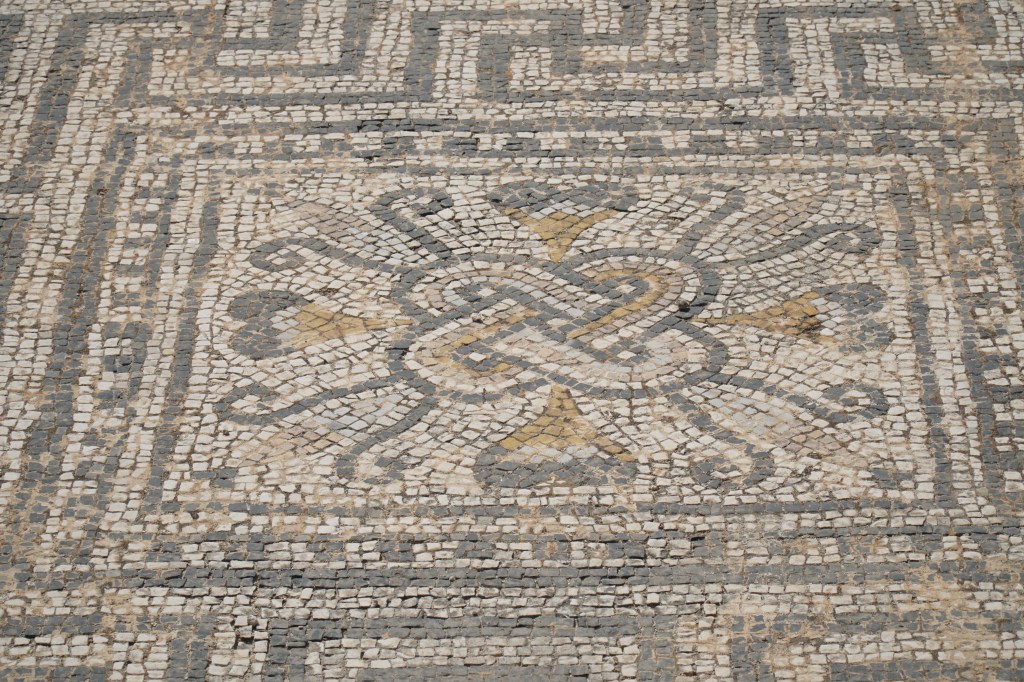




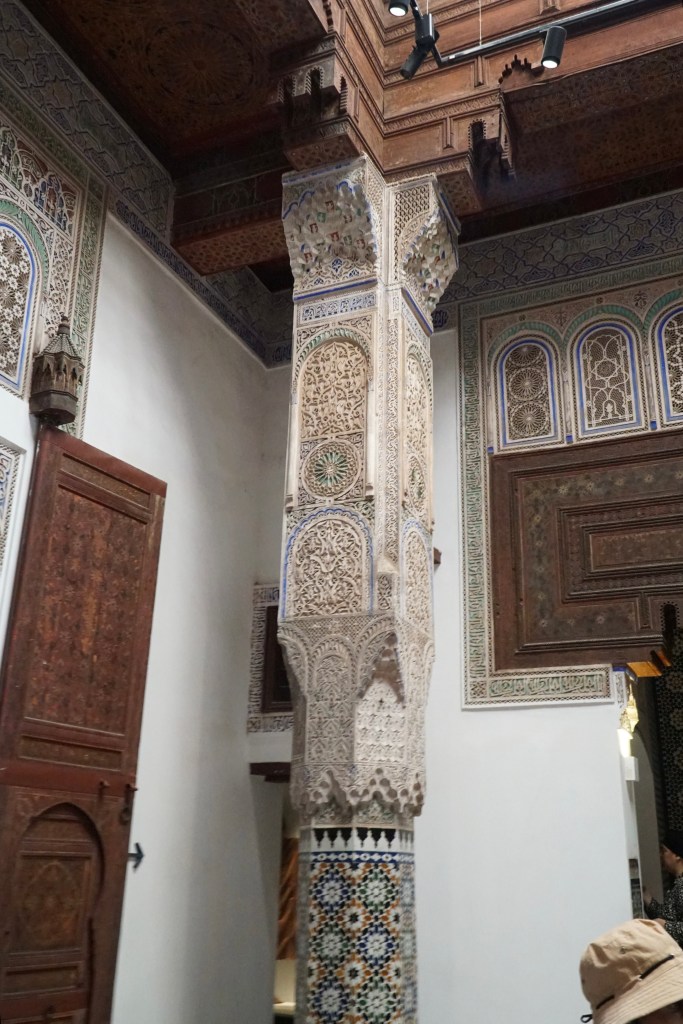
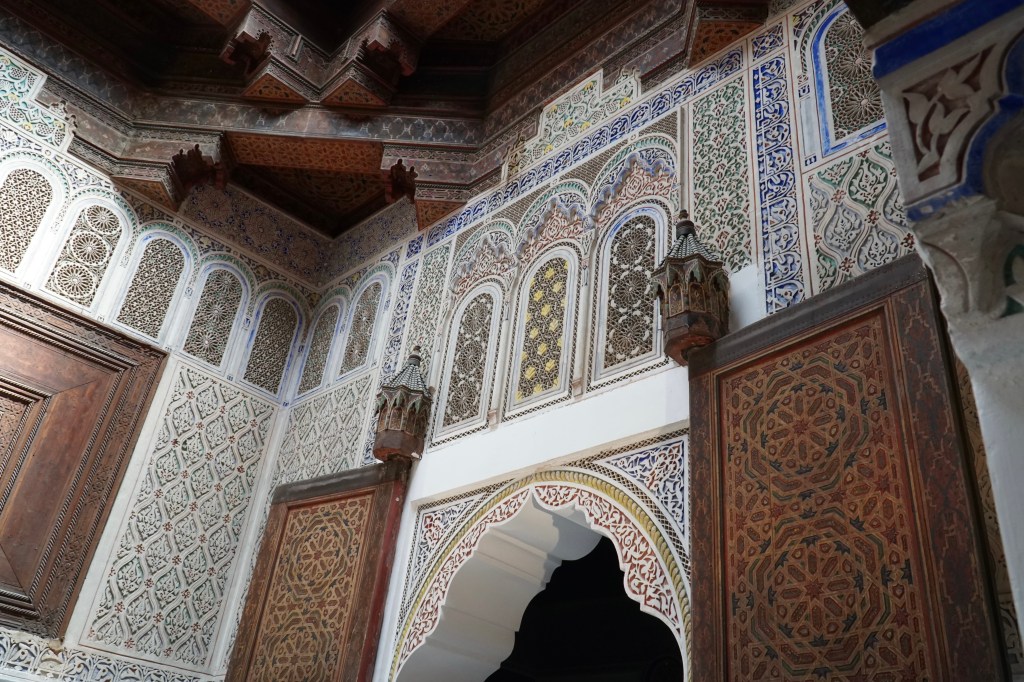
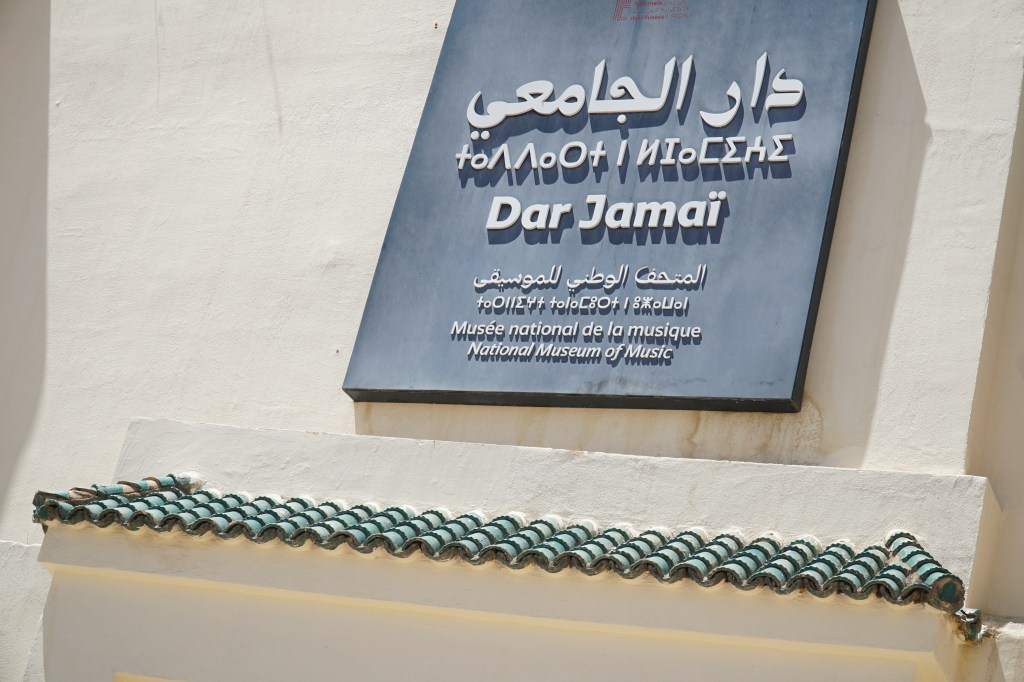
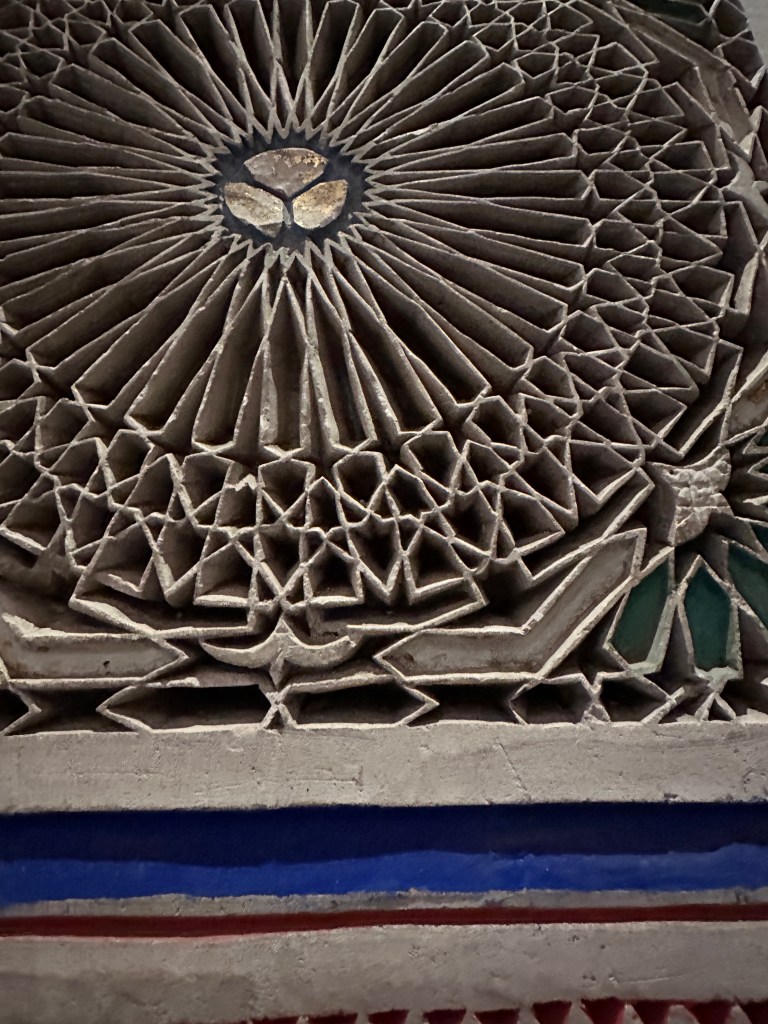
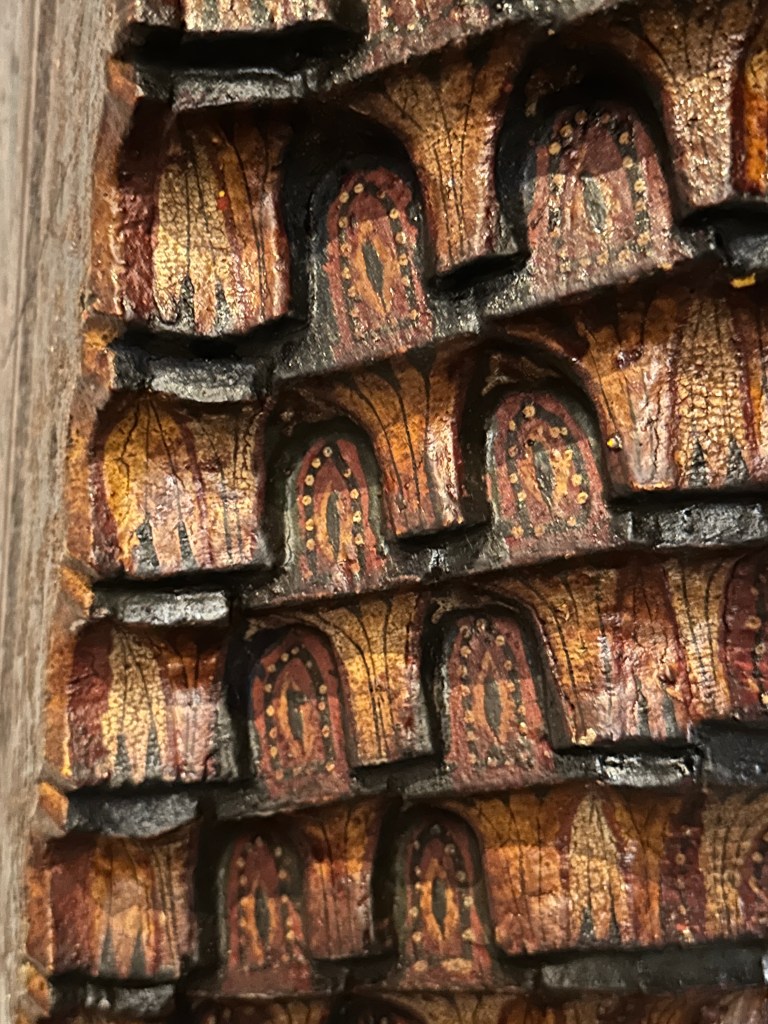
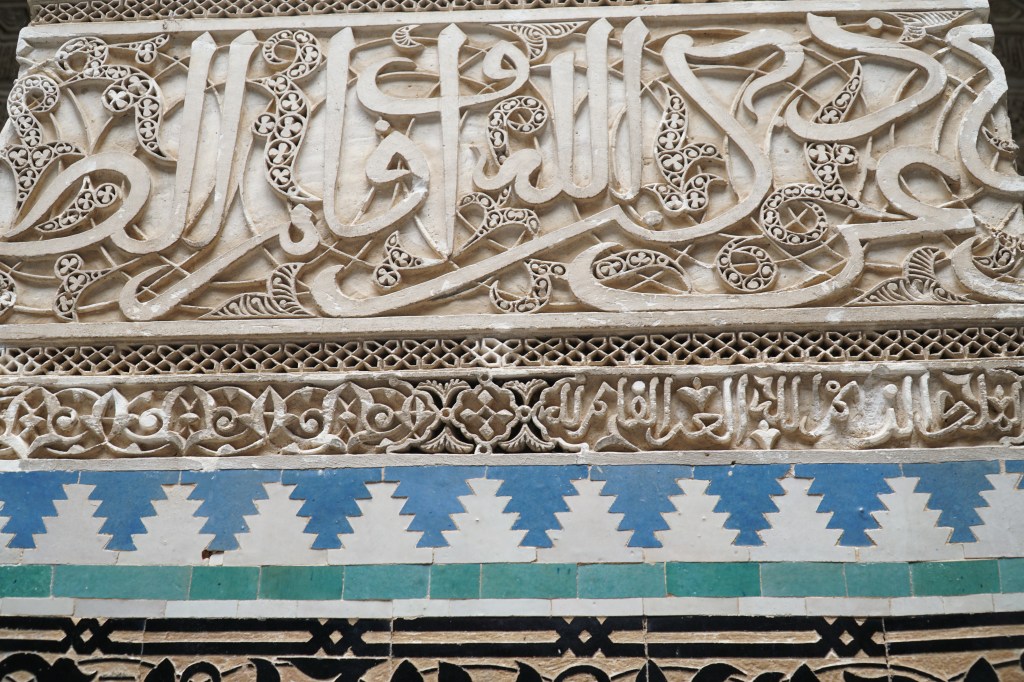
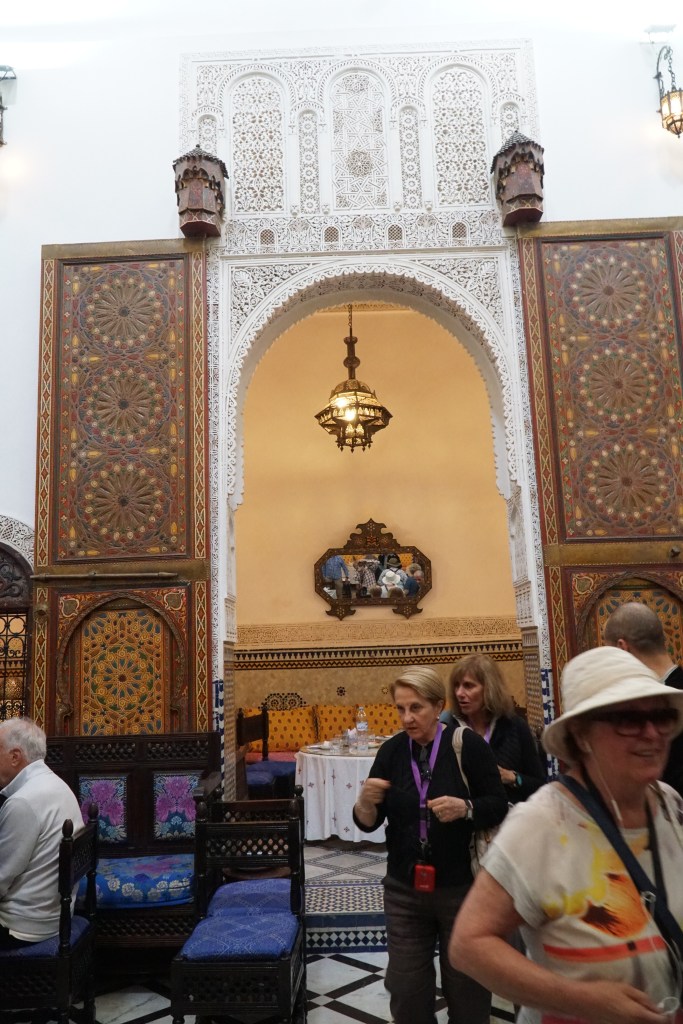
We also visited the national music museum housed in a magnificent building. Tilework, intricately carved plaster surfaces, painted cedar trim and ceilings were beautiful. Also colored glass windows.


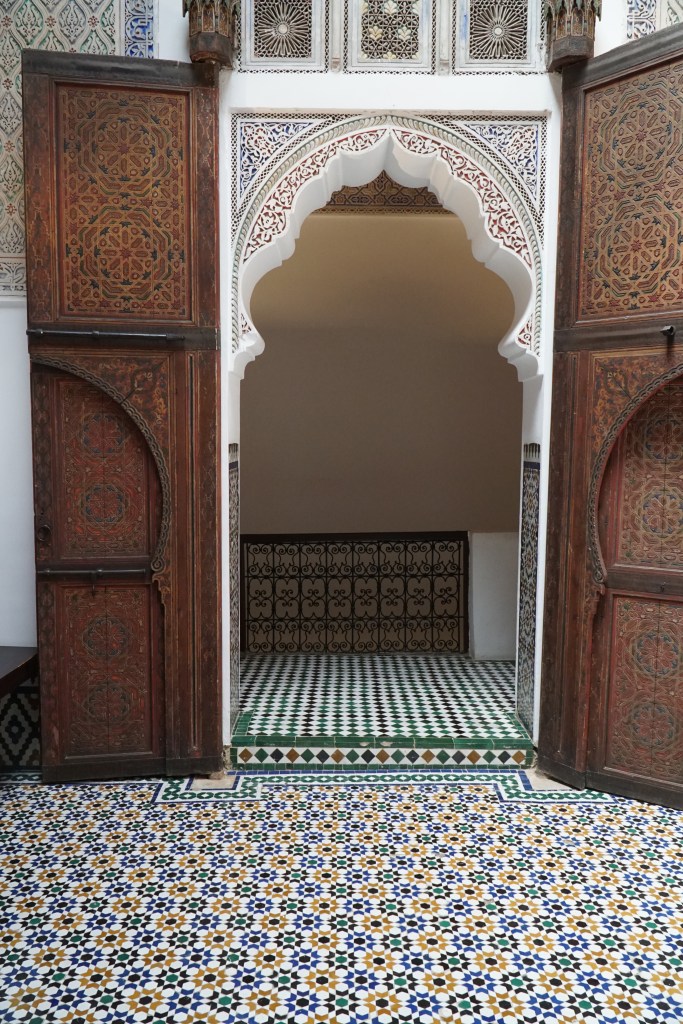

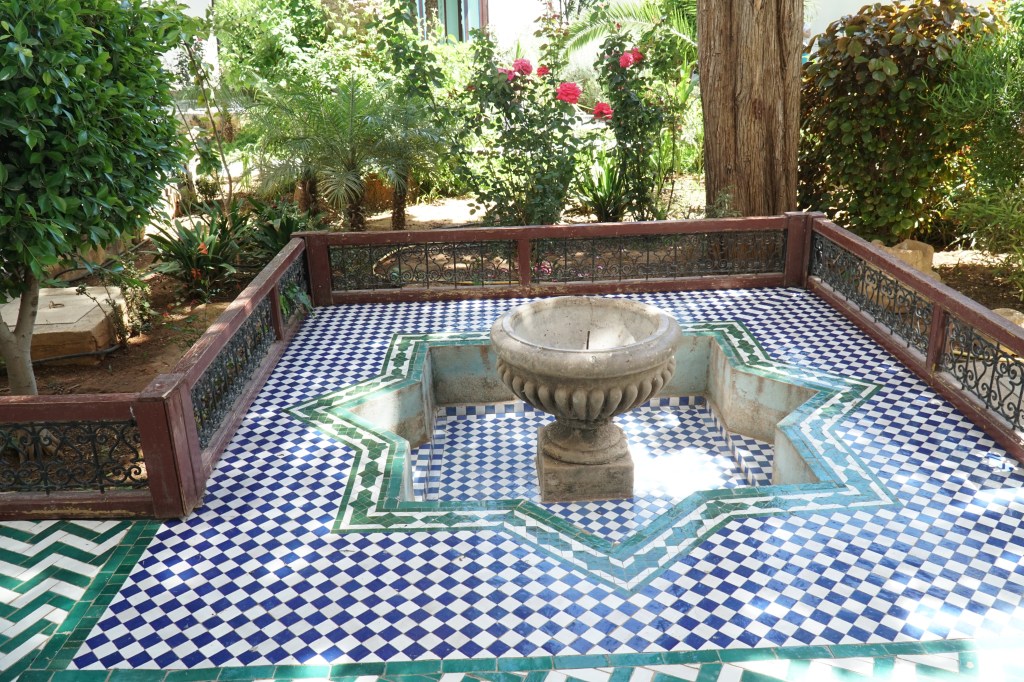
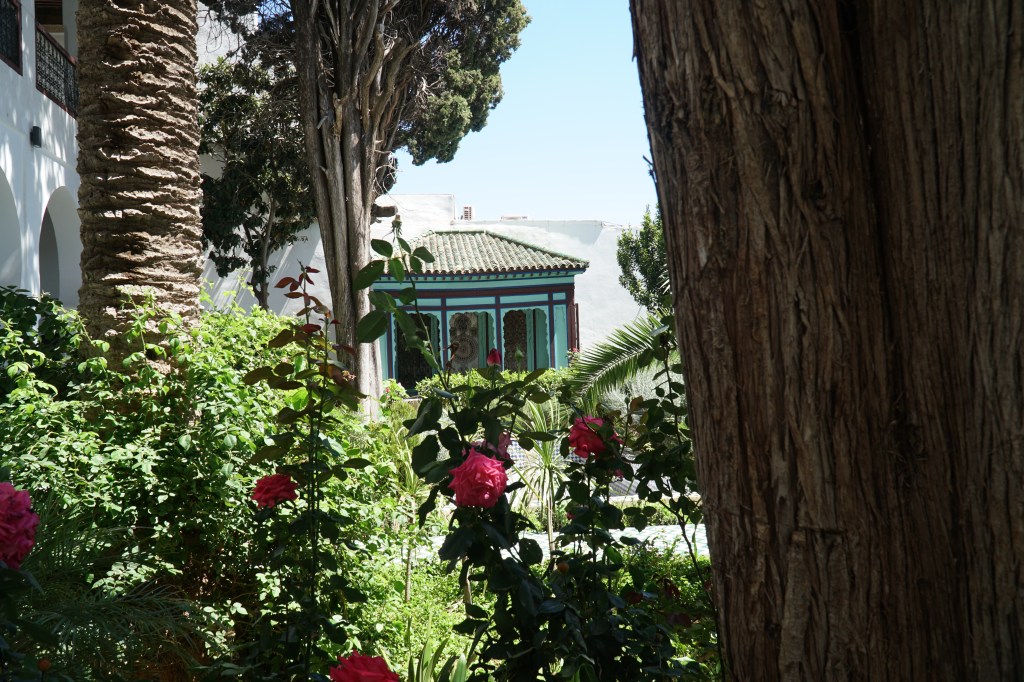


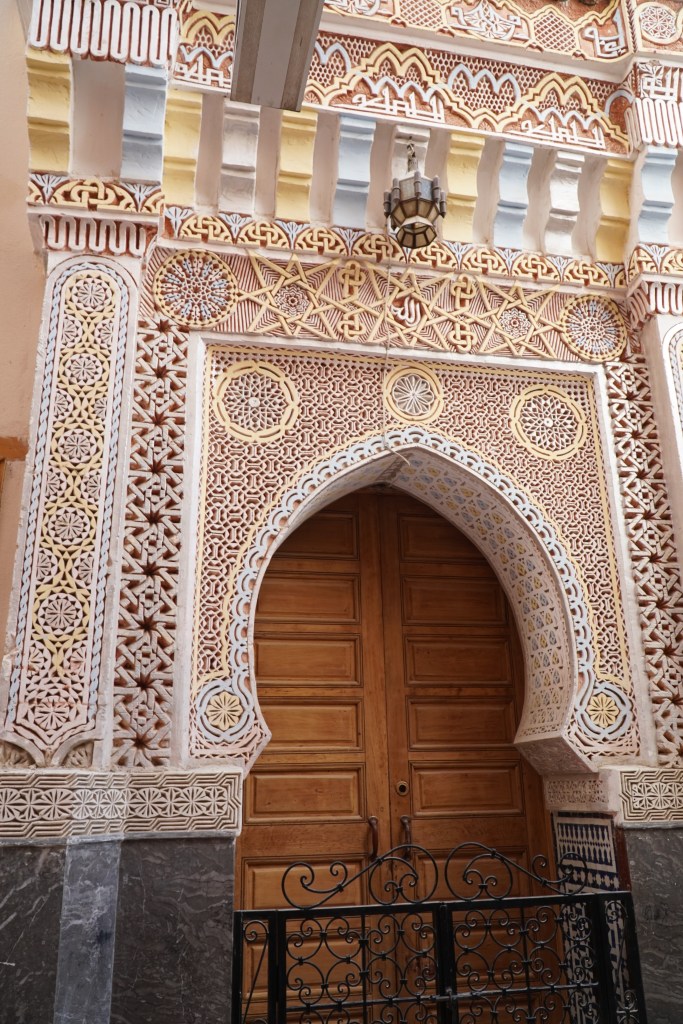






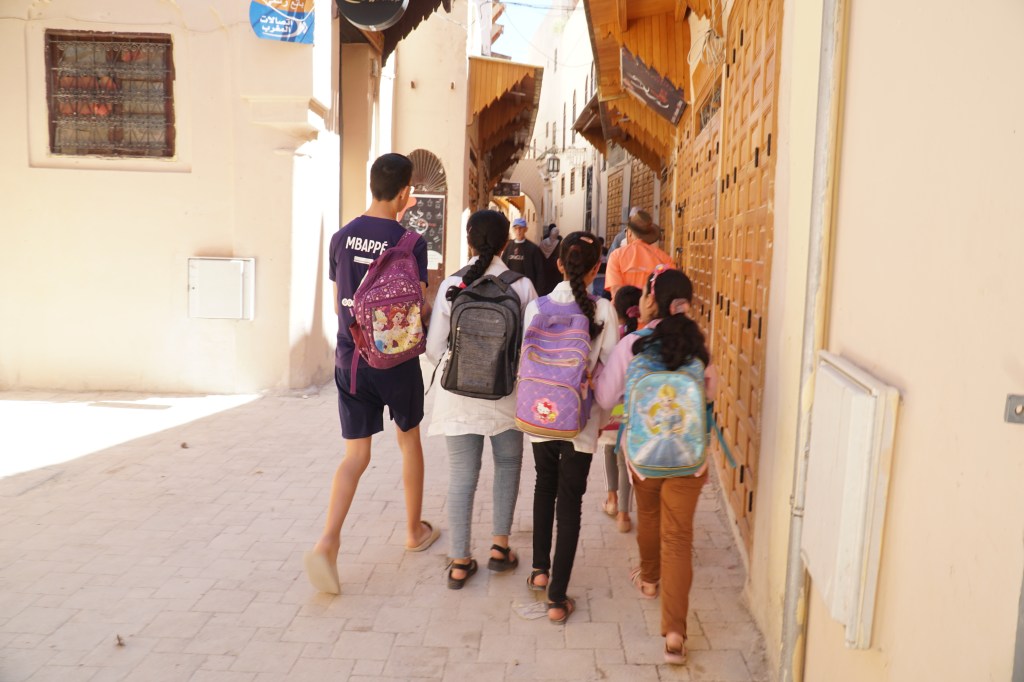
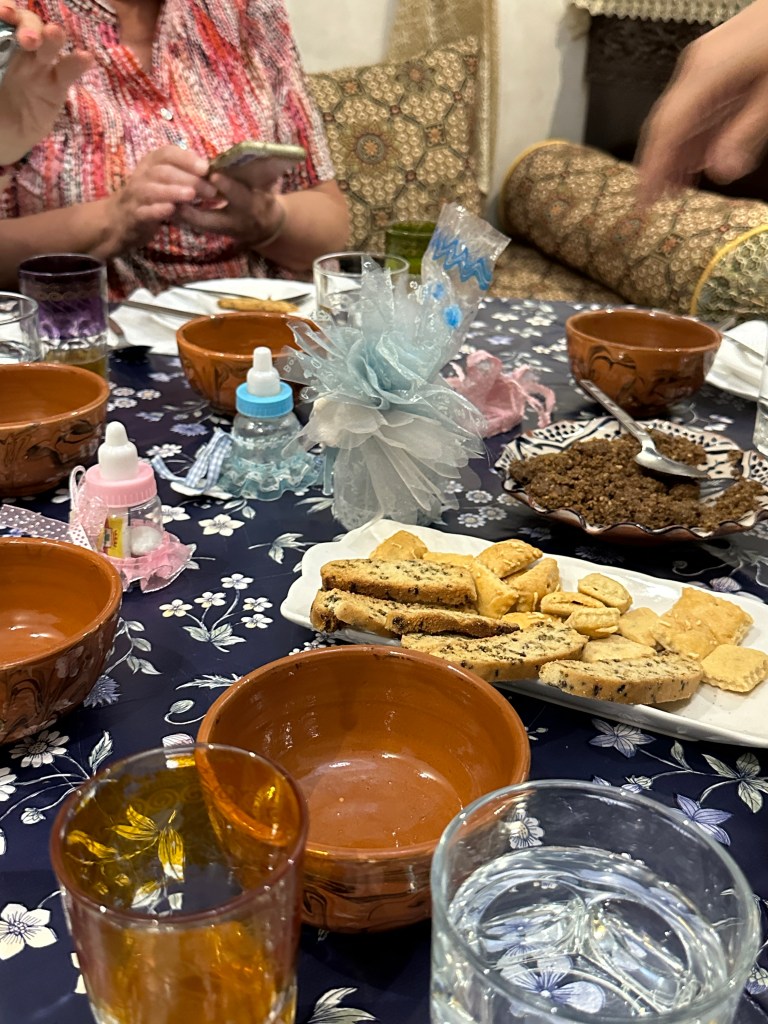
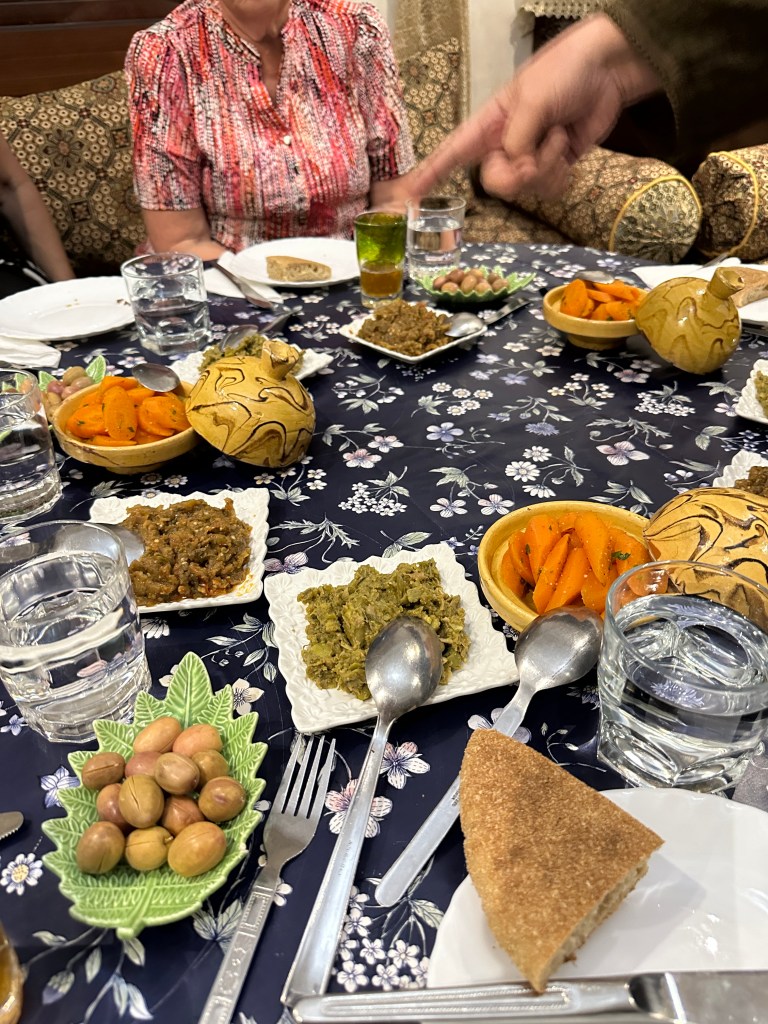
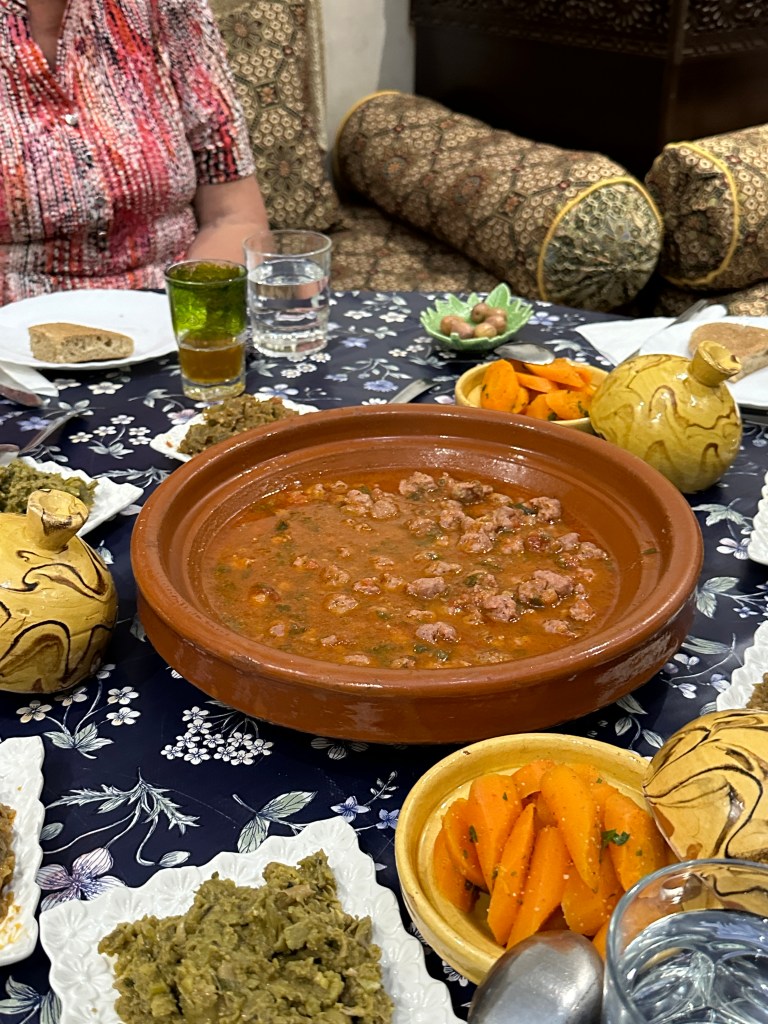
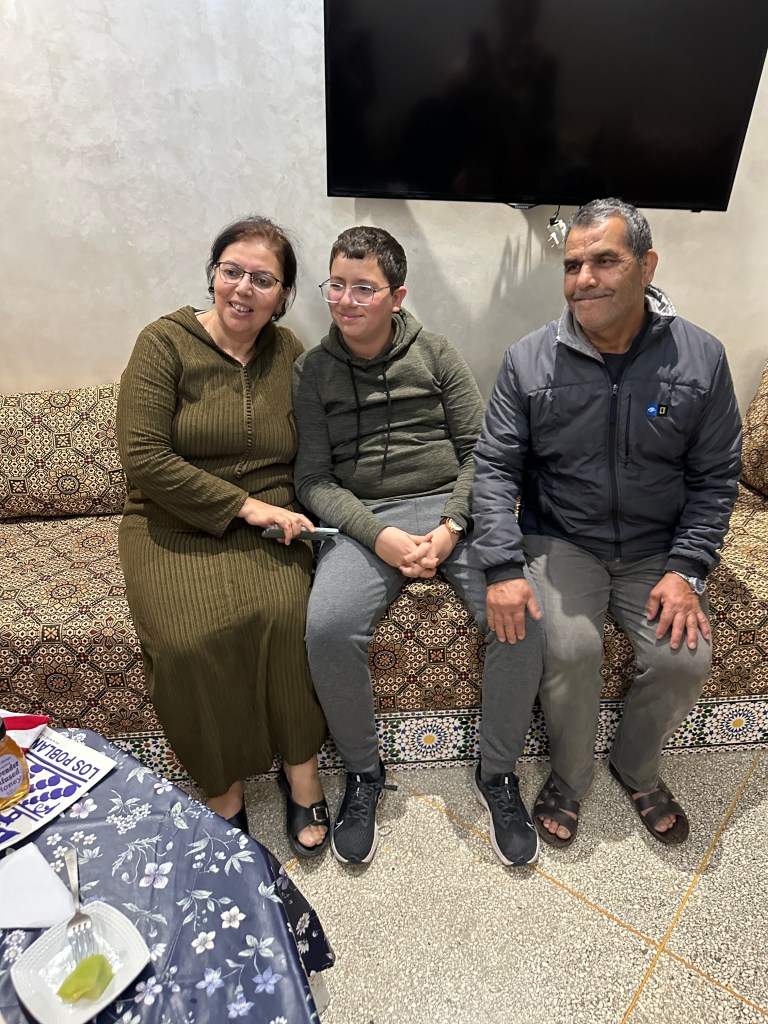
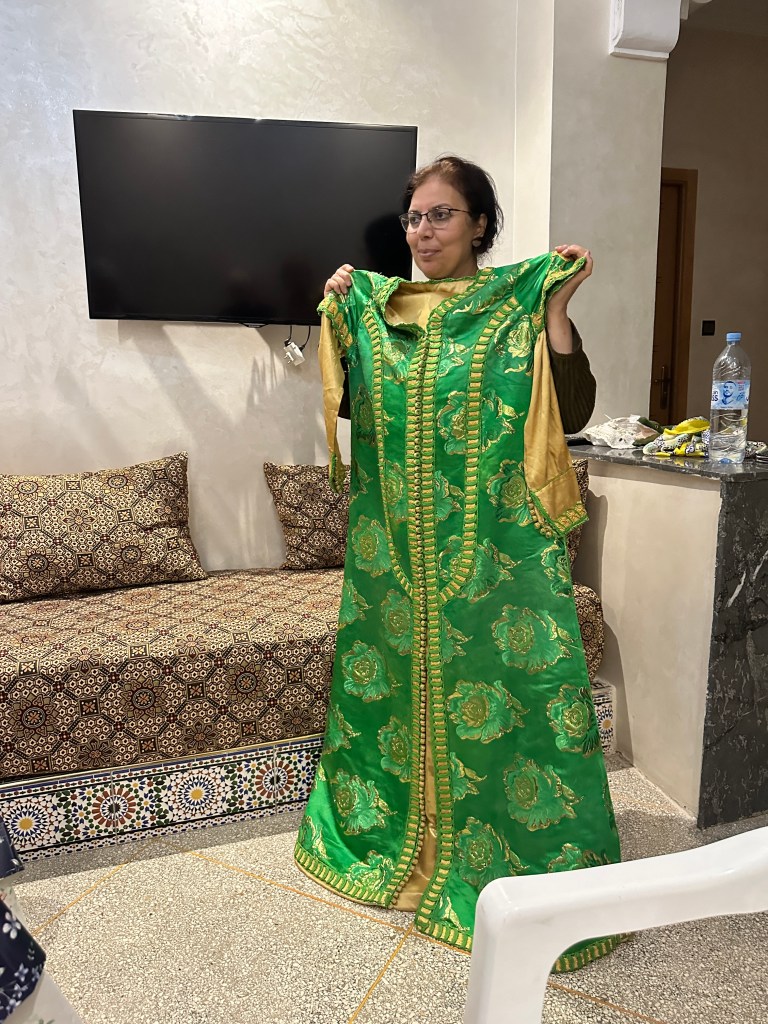
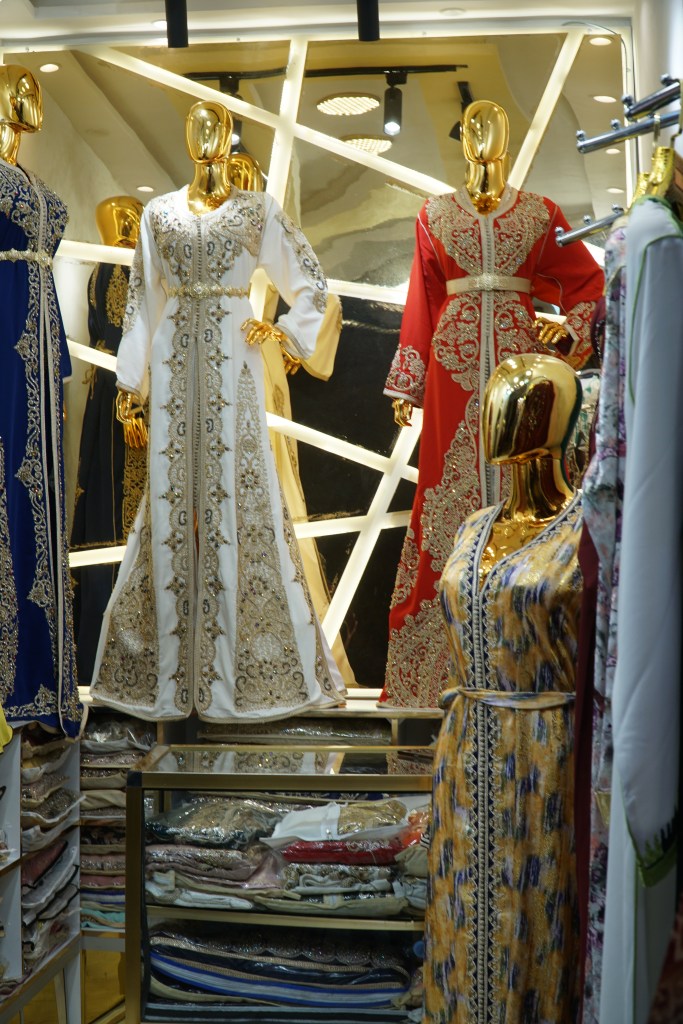
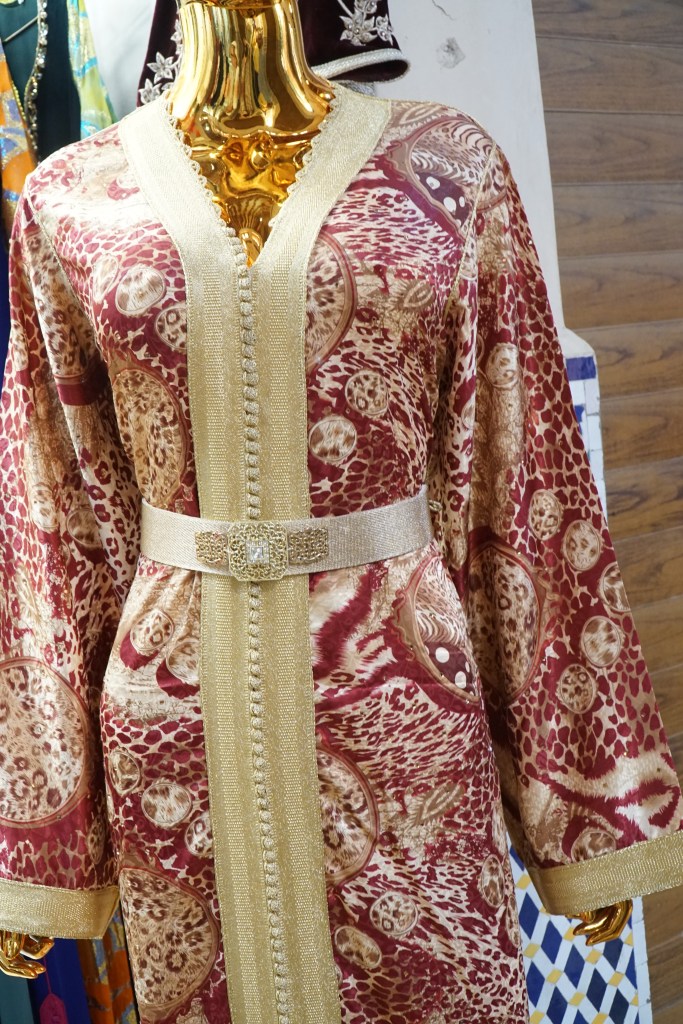
This evening was our home-hosted dinner, which was at the home of a lovely family. The mother and 16-year old son spoke excellent English, the husband spoke none. We exchanged information about our families and careers, and the mom explained details of wedding ceremonies. Particularly for some families, the bride has seven wedding outfits, the first and last are white, and the last can be a western-style bridal gown. The others are traditional, but elegant, and paired with special jewelry. The family hires a wedding coordinator who helps select the outfits and jewelry to rent, hires the attendants for the ceremony to help the bride with the costume changes, to support the bridal chair, etc. We saw photos from the mothers neice’s wedding. The family had moved from a riad in the old town to a smaller apartment with a garden, in the new town. The mother missed the neighbors and small town feel at the riad, but the new apartment is more convenient to schools and places of work

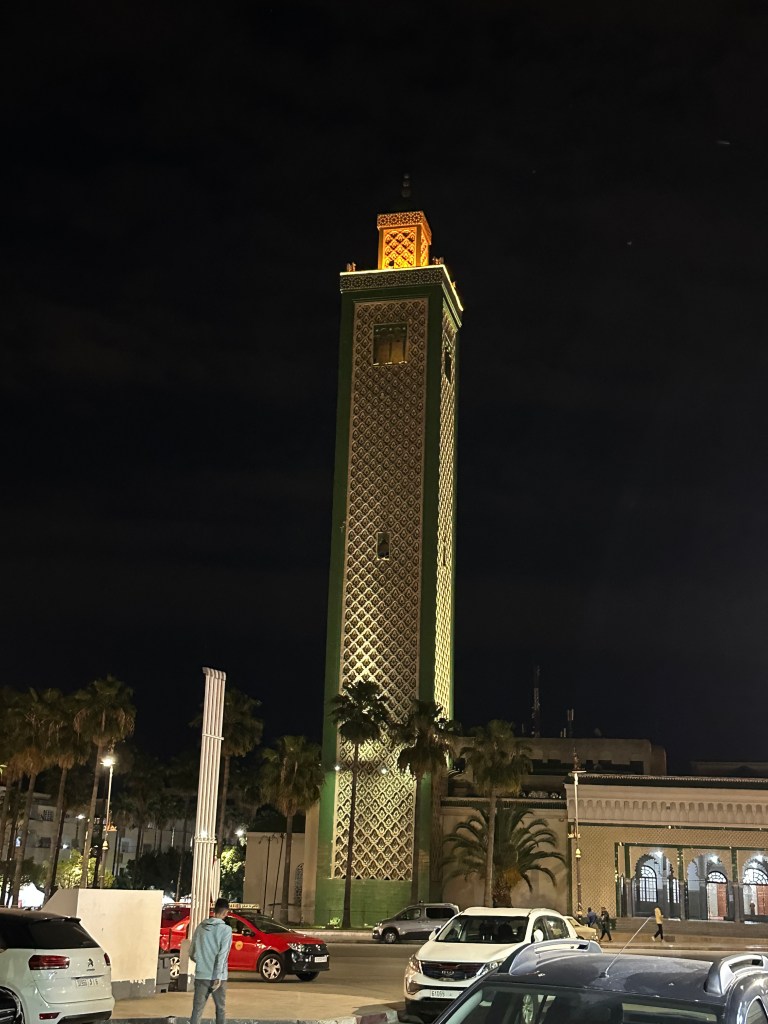

Saturday, April 27
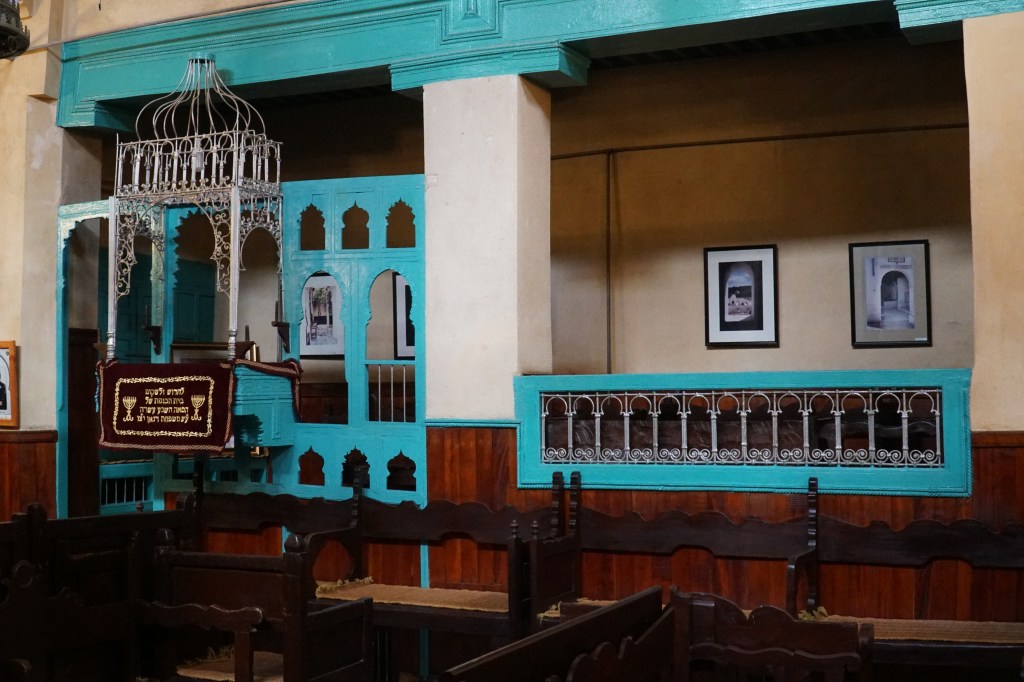
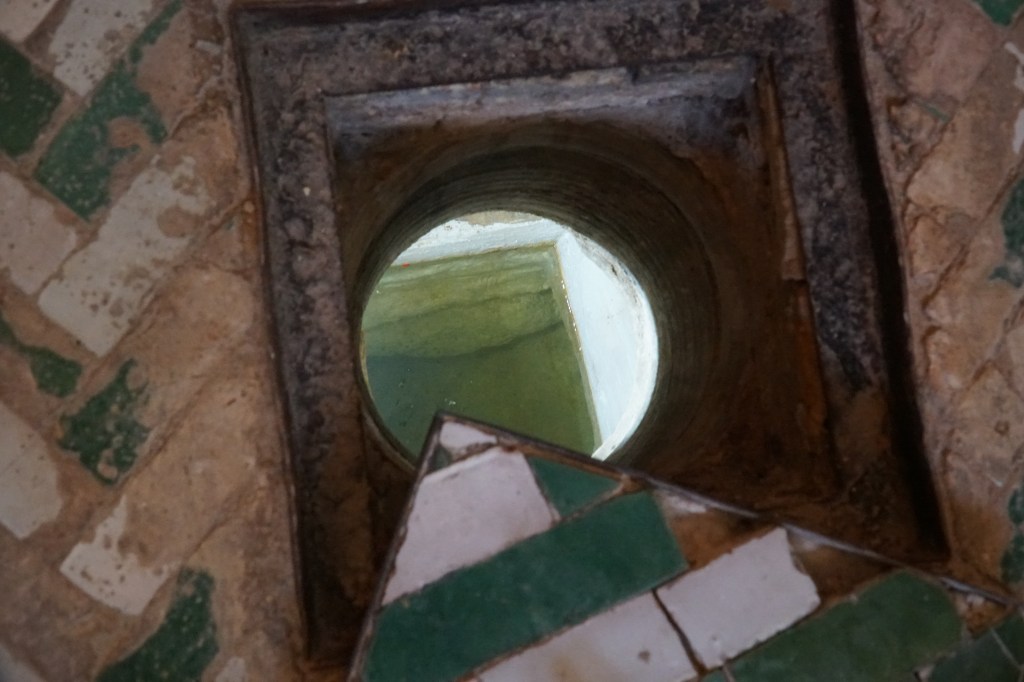
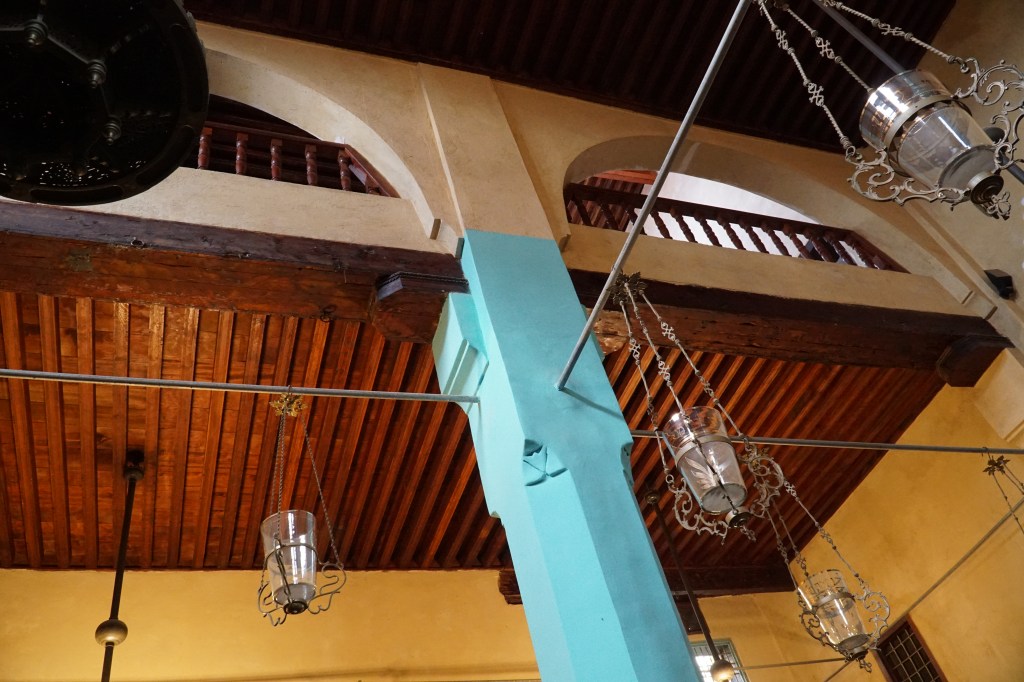
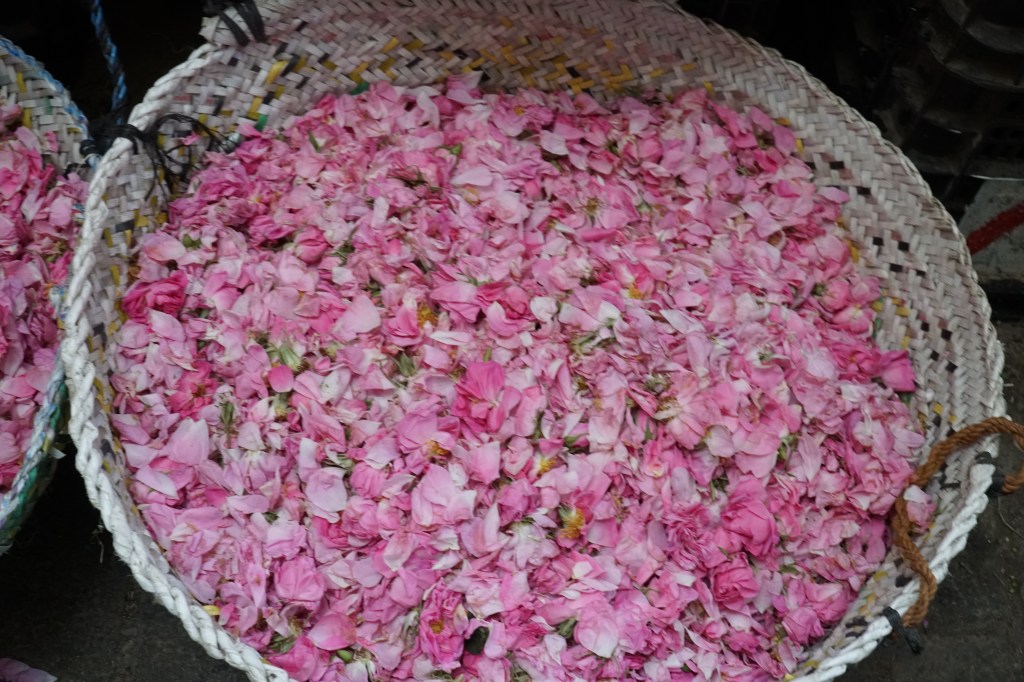
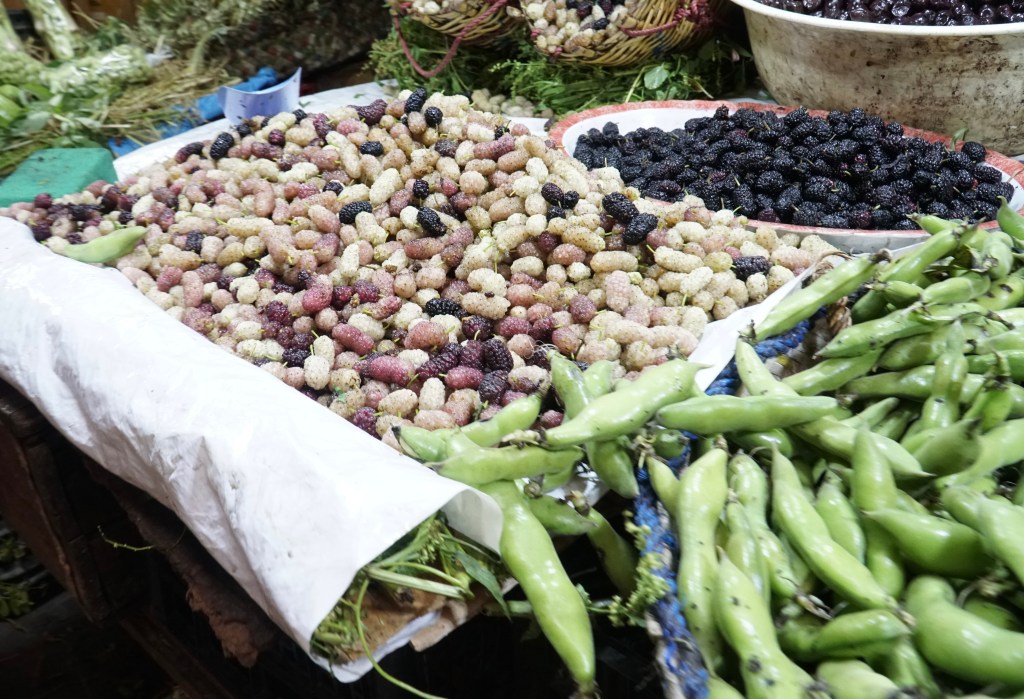
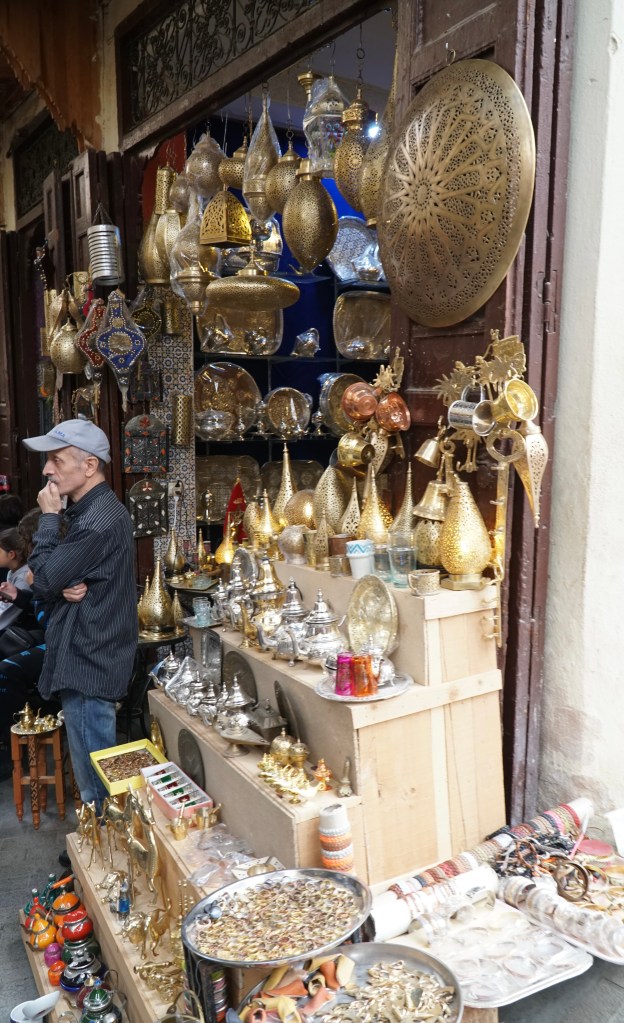
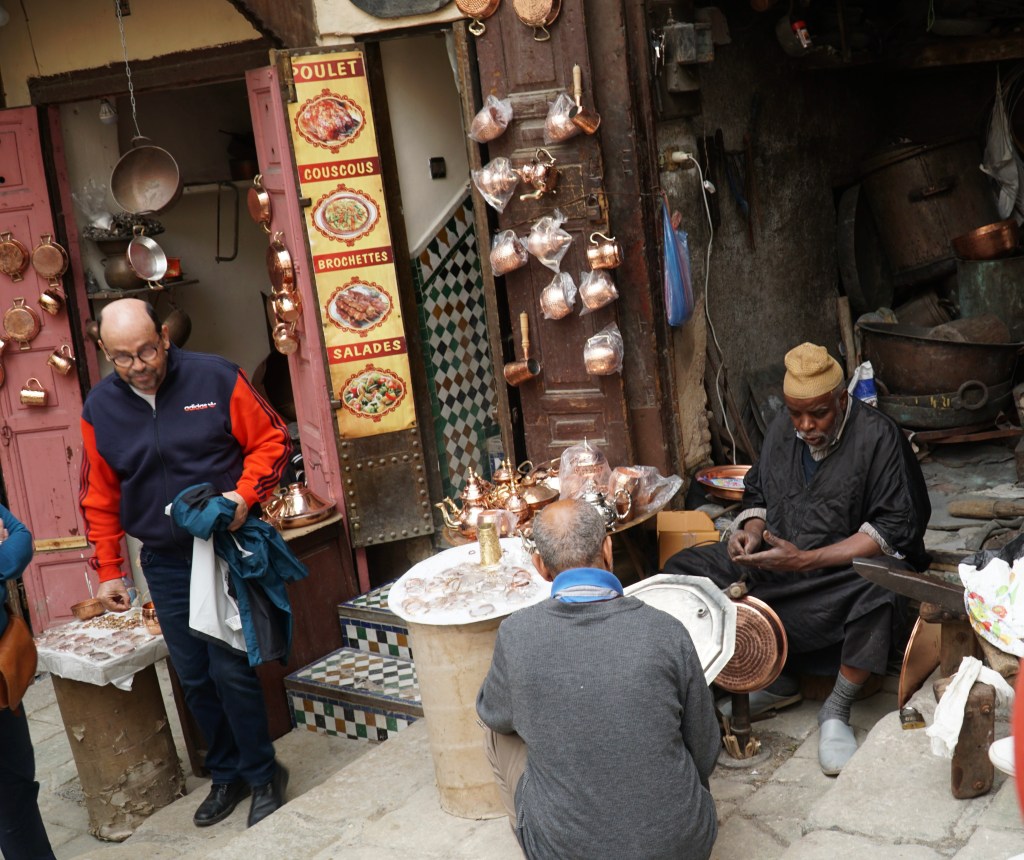
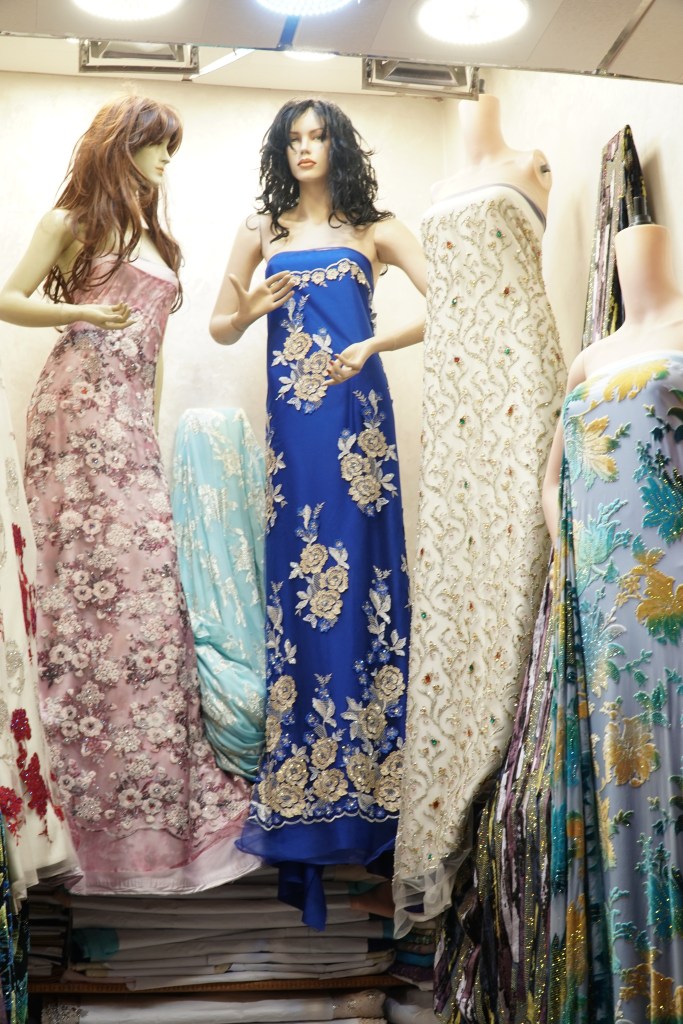
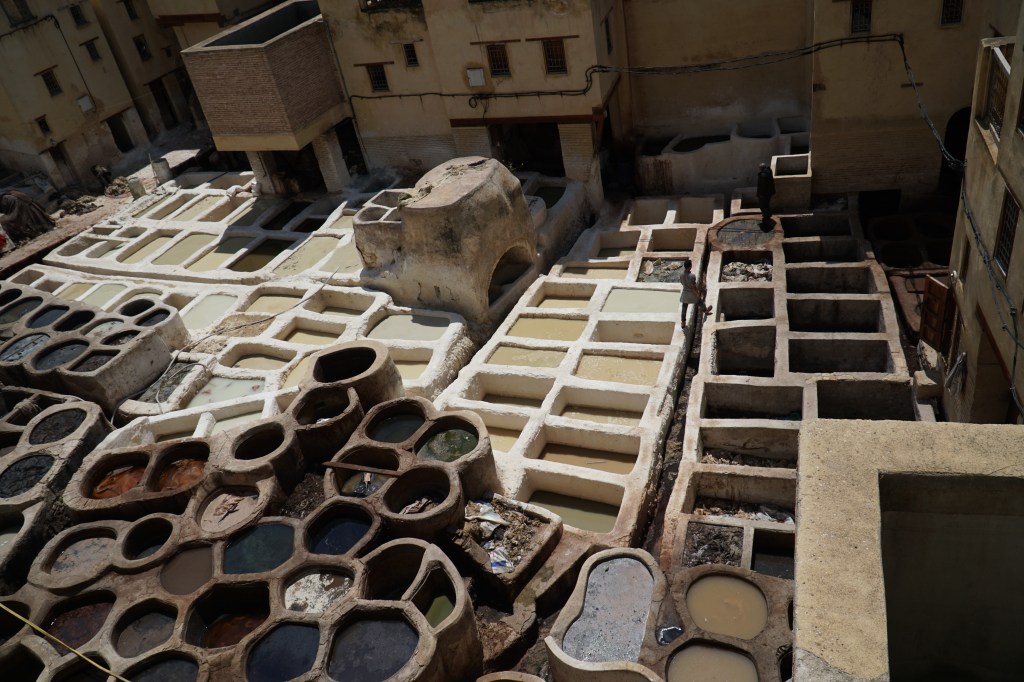
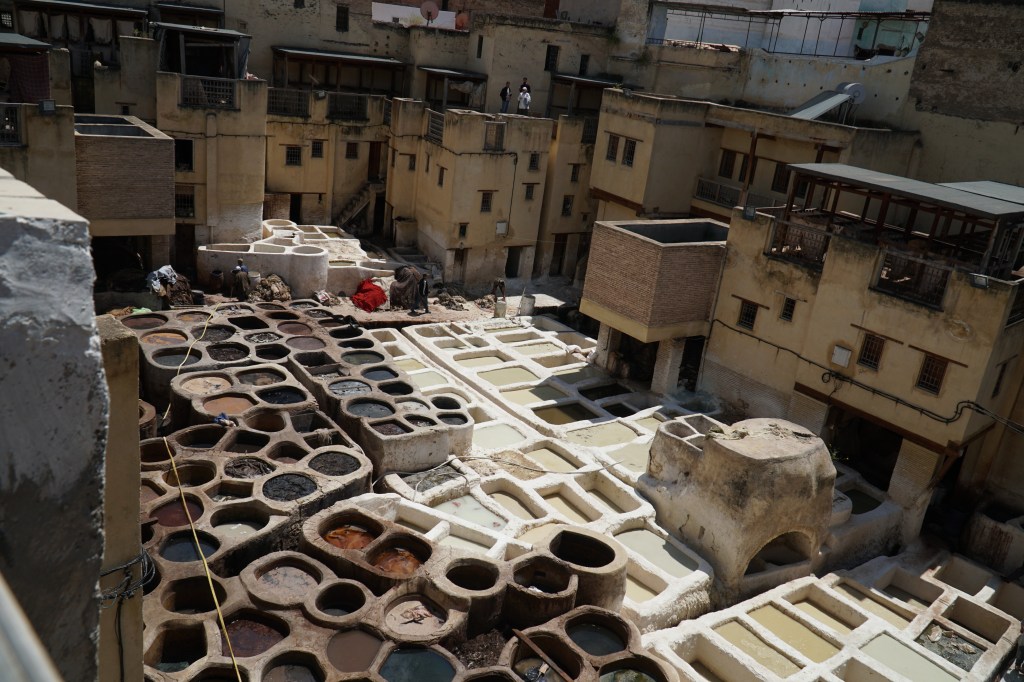
We explored Fez with a local guide. The medina (old town) is a UNESCO World Heritage site. We started in the jewish section of the medina, called the mellah, including the Ibn Danan synagogue. We wandered through the narrow streets with shops selling everything including rugs, clothing, consumables, and shoes. We had lunch at a local restaurant and continued our tour of the medina and the al-Attarine Madrasa (school for islamic studies) and visited a local tannery that had been operated by the same family for generations. We were given mint leaves to put in our noses while we viewed the dying vats, which smelled awful. Some of us purchased beautiful leather goods that were hand made in this family shop.
We had dinner at the riad and got ready for an early morning departure.


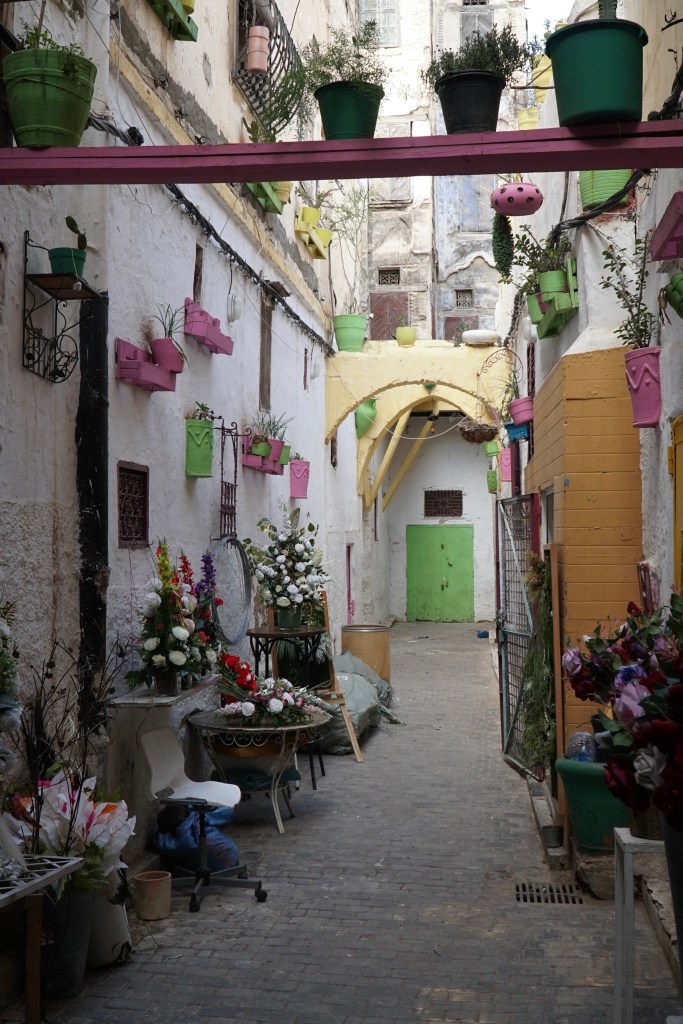
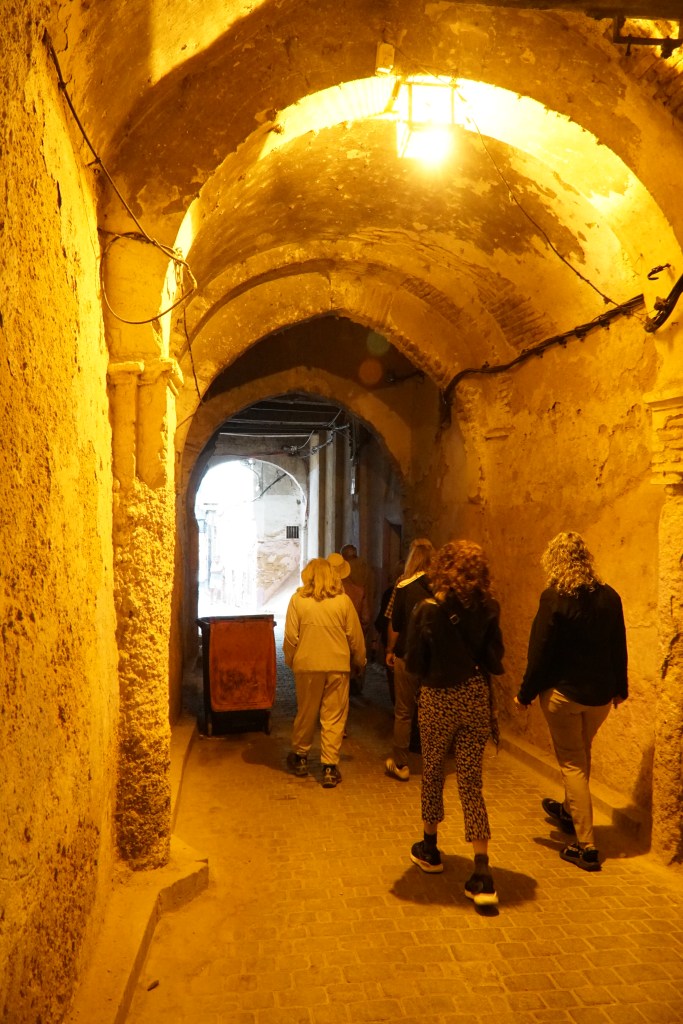



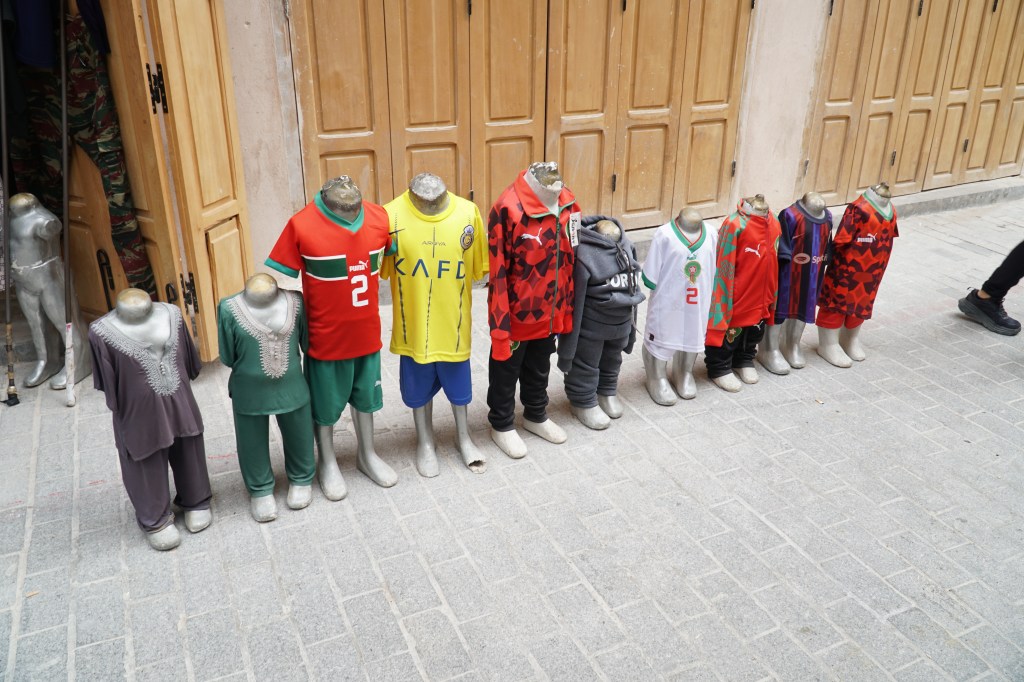

The markets are called souks.


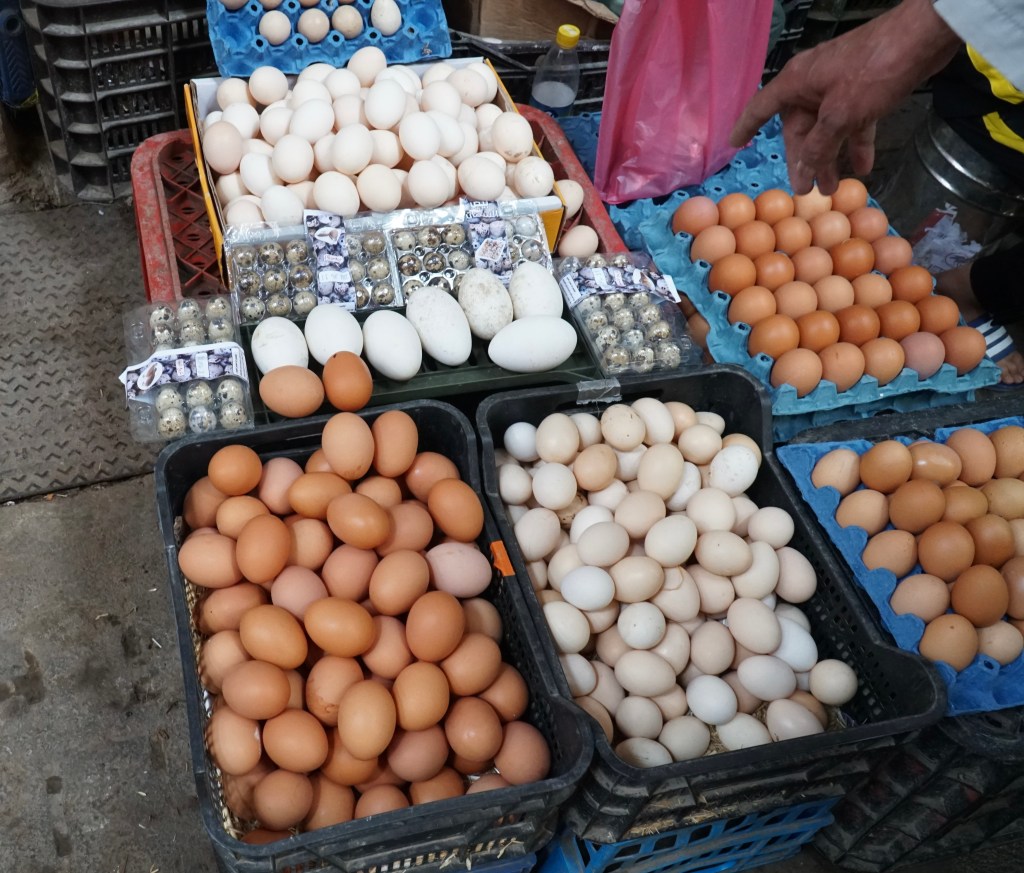
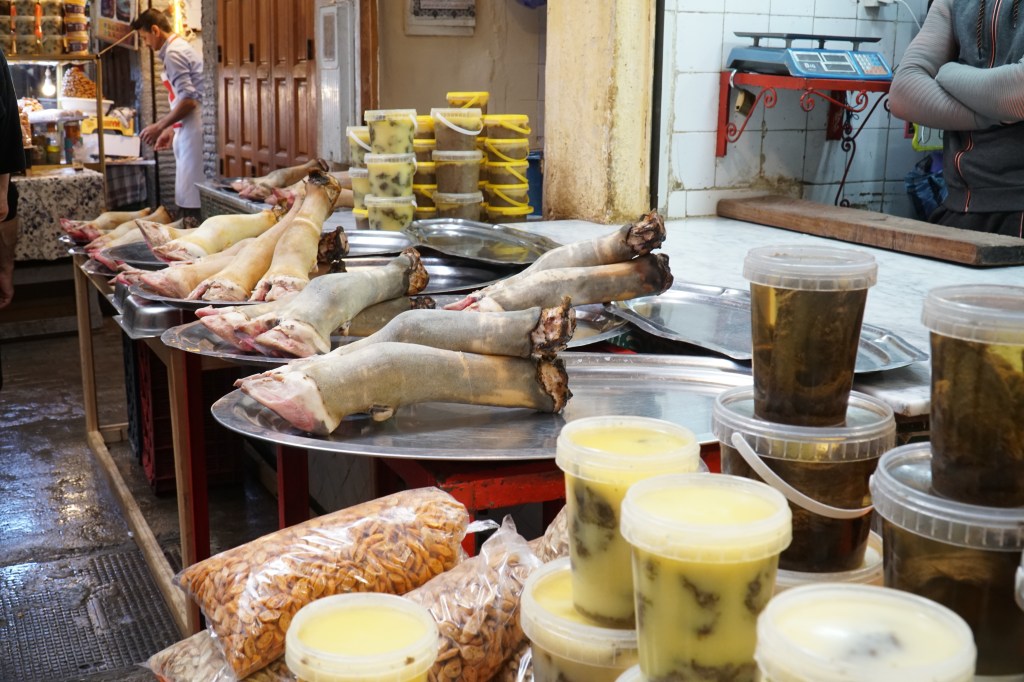


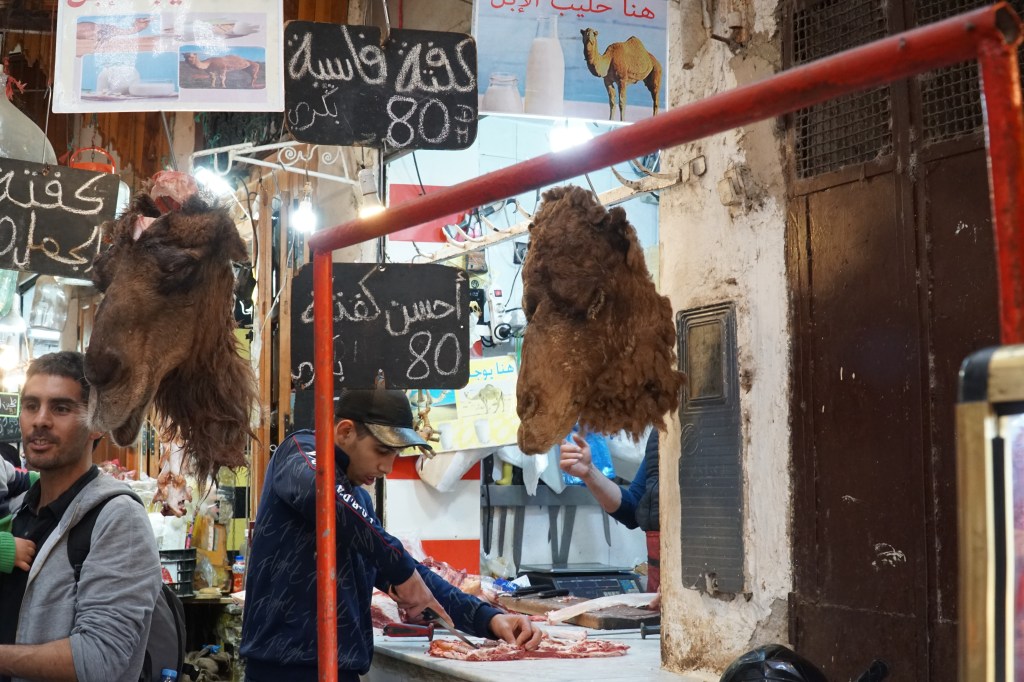












Sunday, April 28
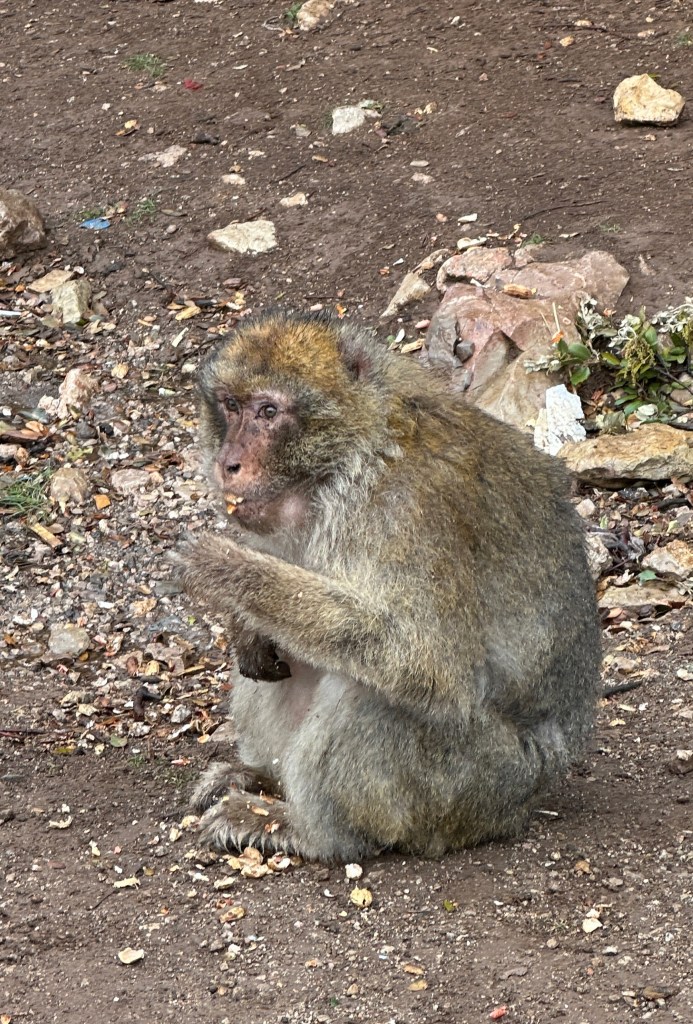
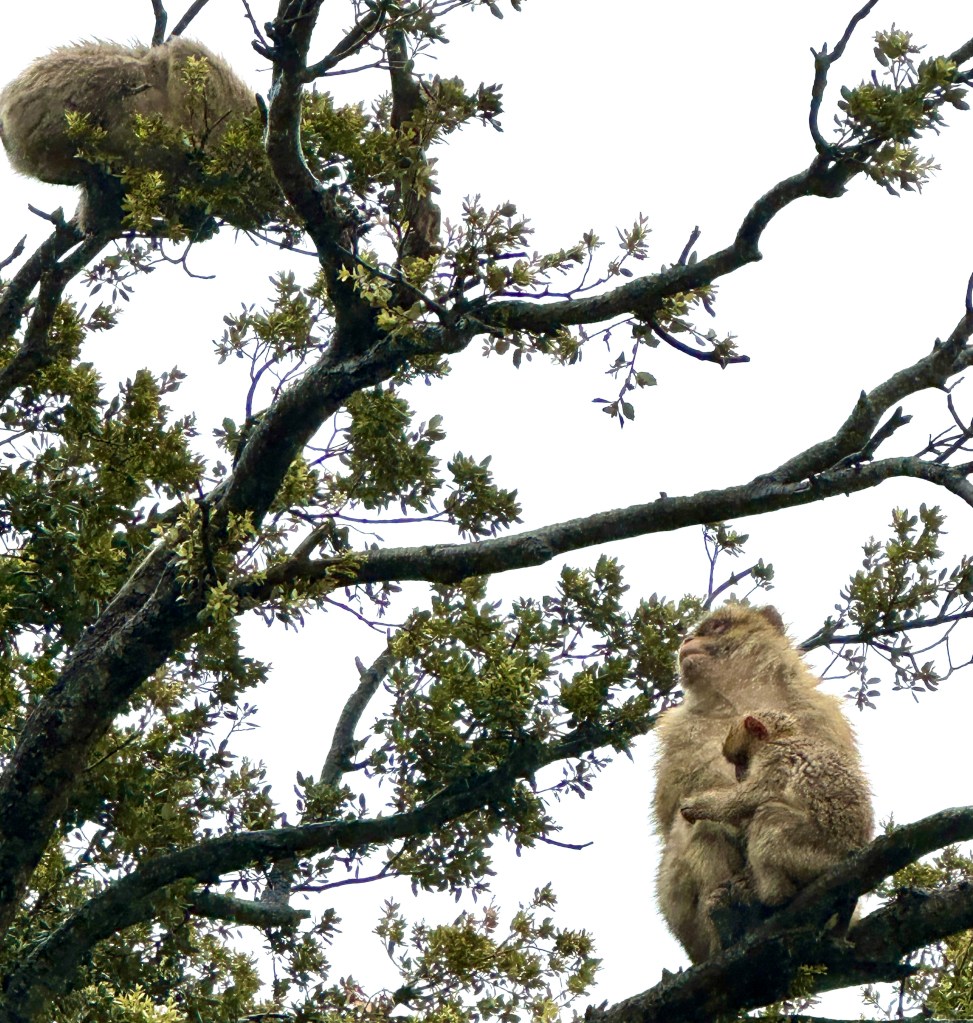
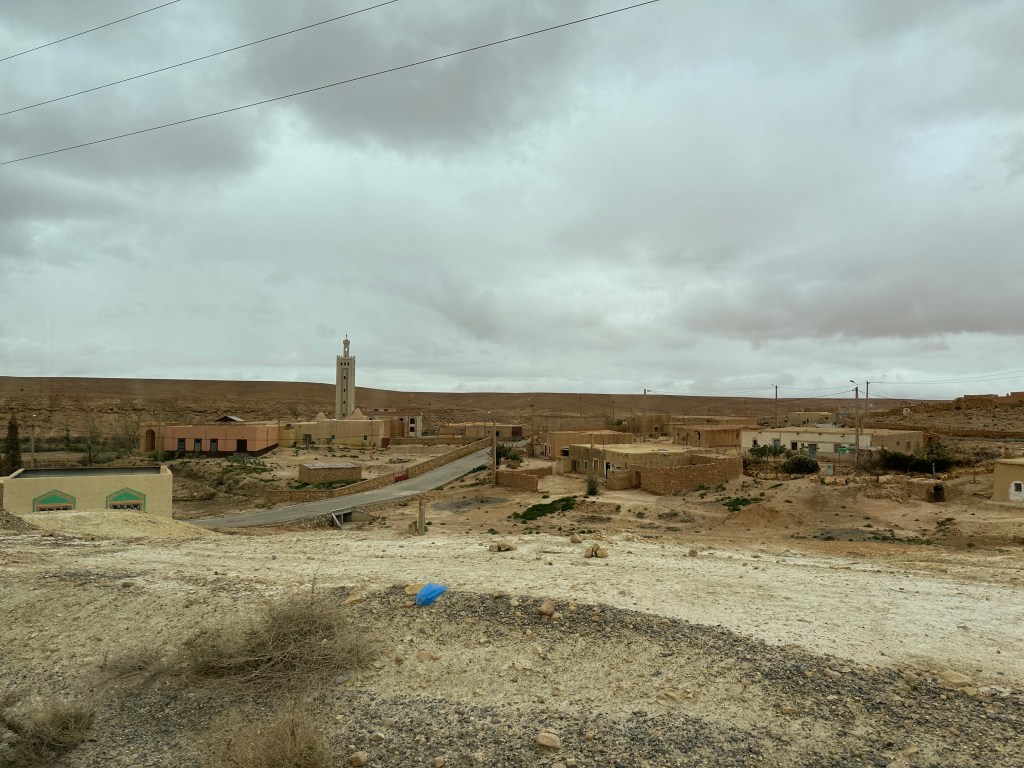
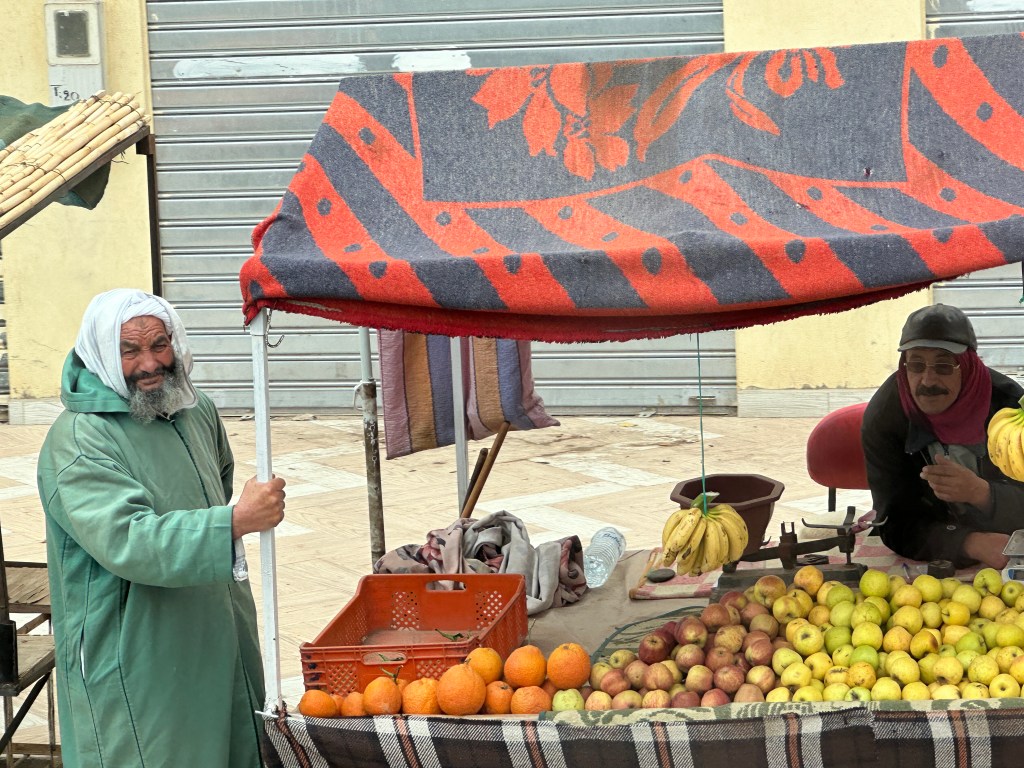
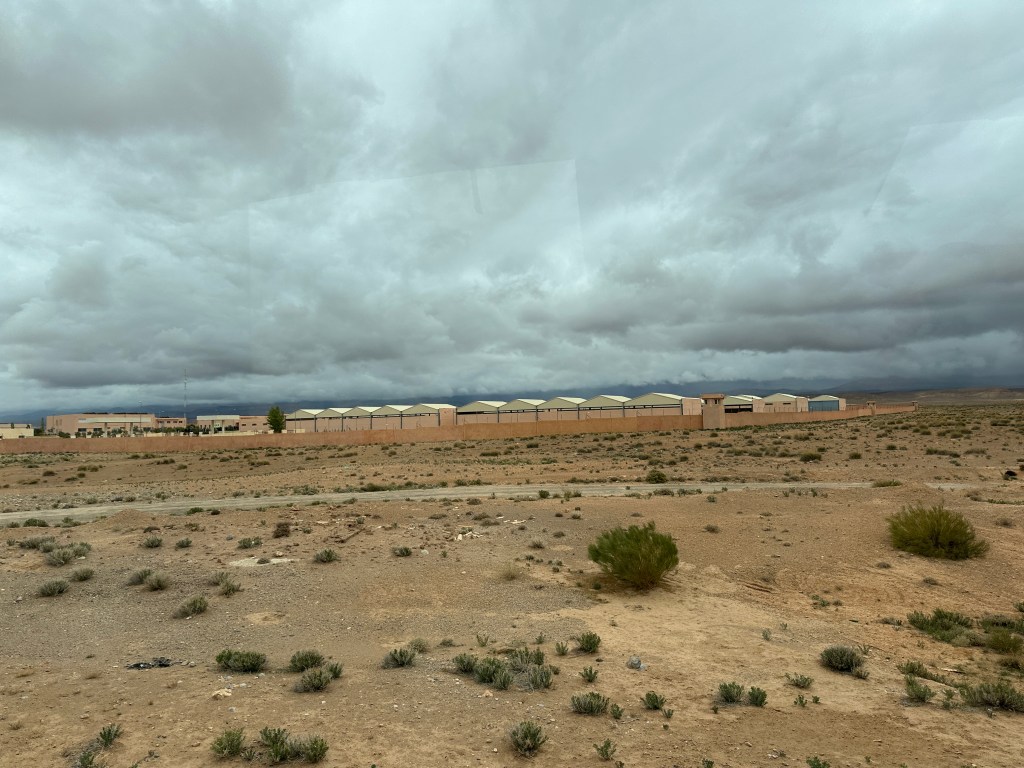
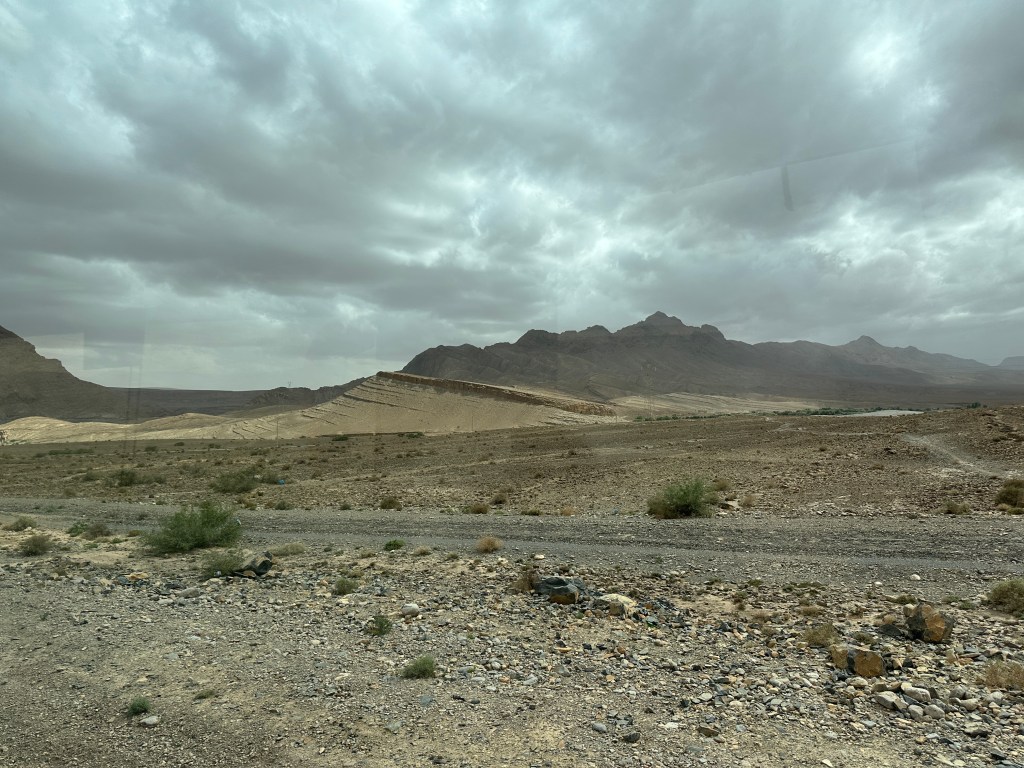
We had our longest ride of the trip, heading to the Sahara. We drove through the Middle Atlas Mountains, through a variety of landscapes. We stopped at a ski town of Ifrane for photos. We stopped along the road to view the barbary macaques as they were being fed by other tourists. We had lunch in Midelt, where they offered trout from the local fish farms.
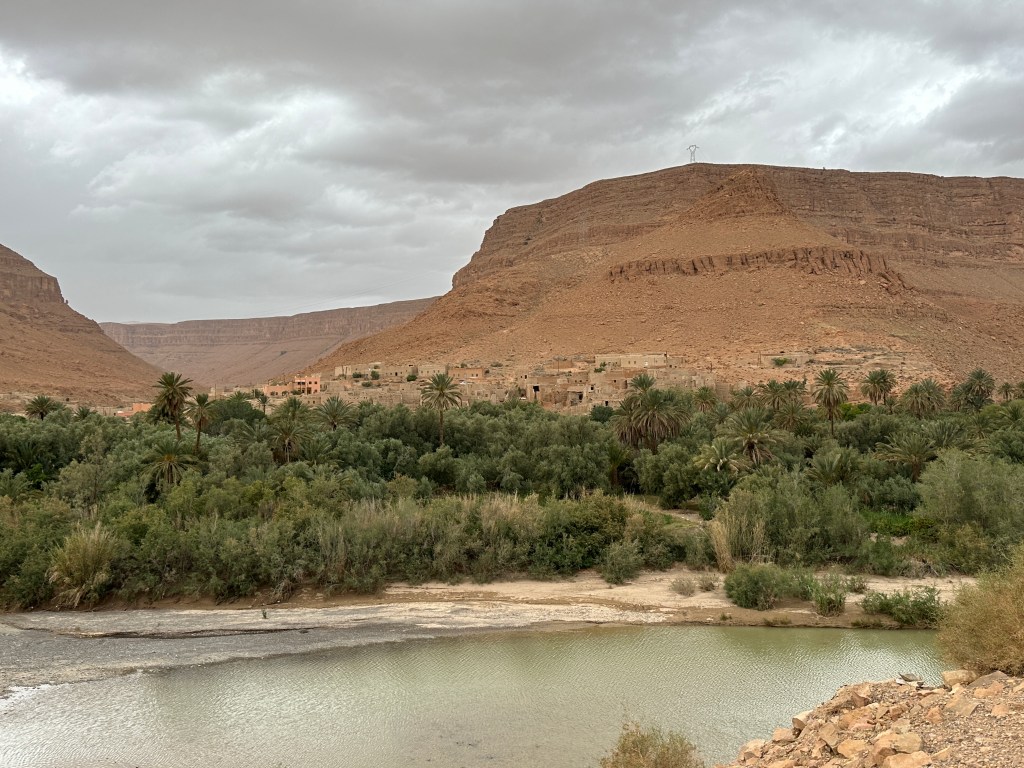
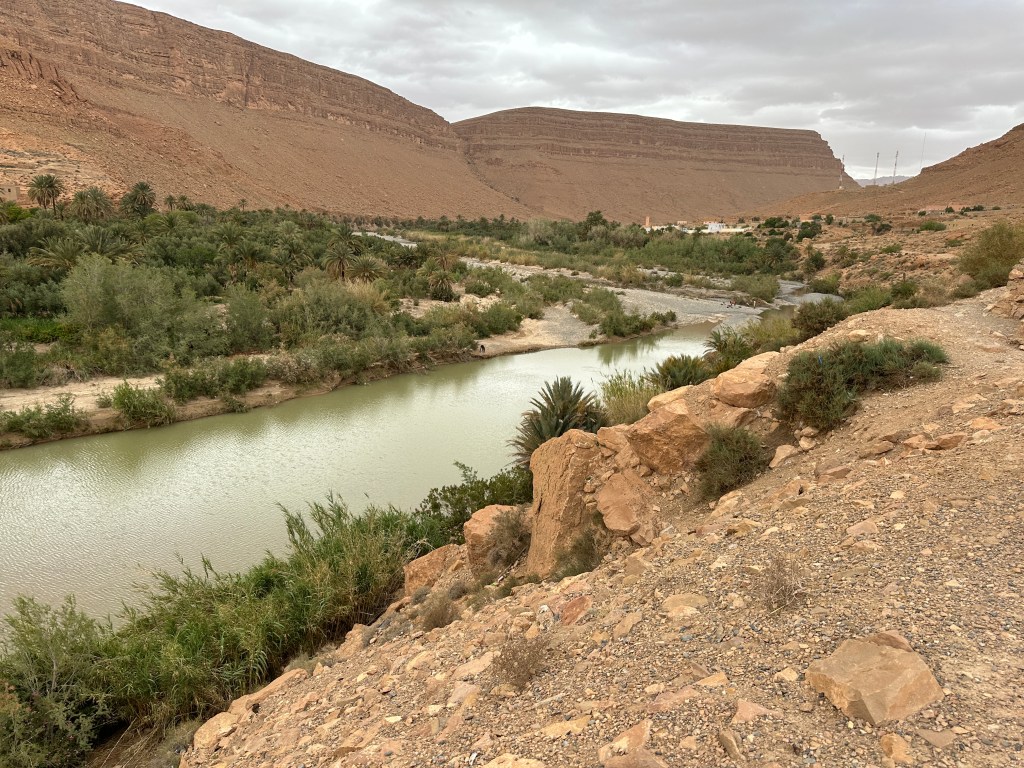
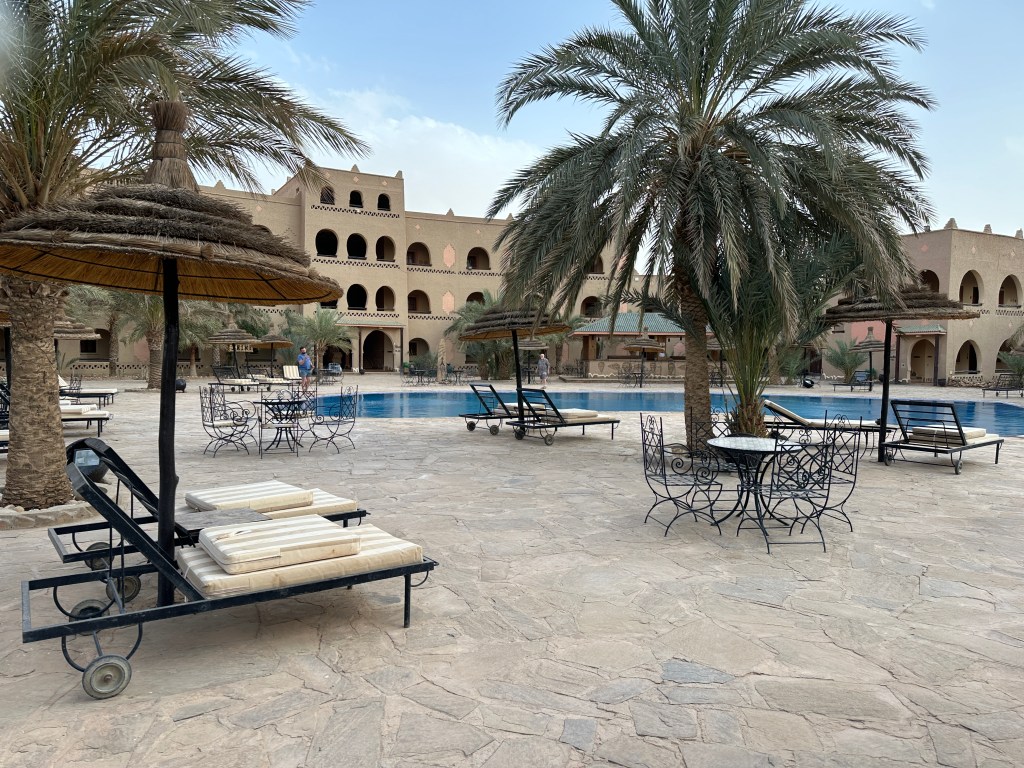
In late afternoon, After crossing the High Atlas mountains, we checked into a lovely hotel in Erfoud, Chergui Kasbah. We packed for the desert tented camp by putting just what we needed in smaller bags so our main luggage would stay on the bus and avoid the sand of the Sahara.








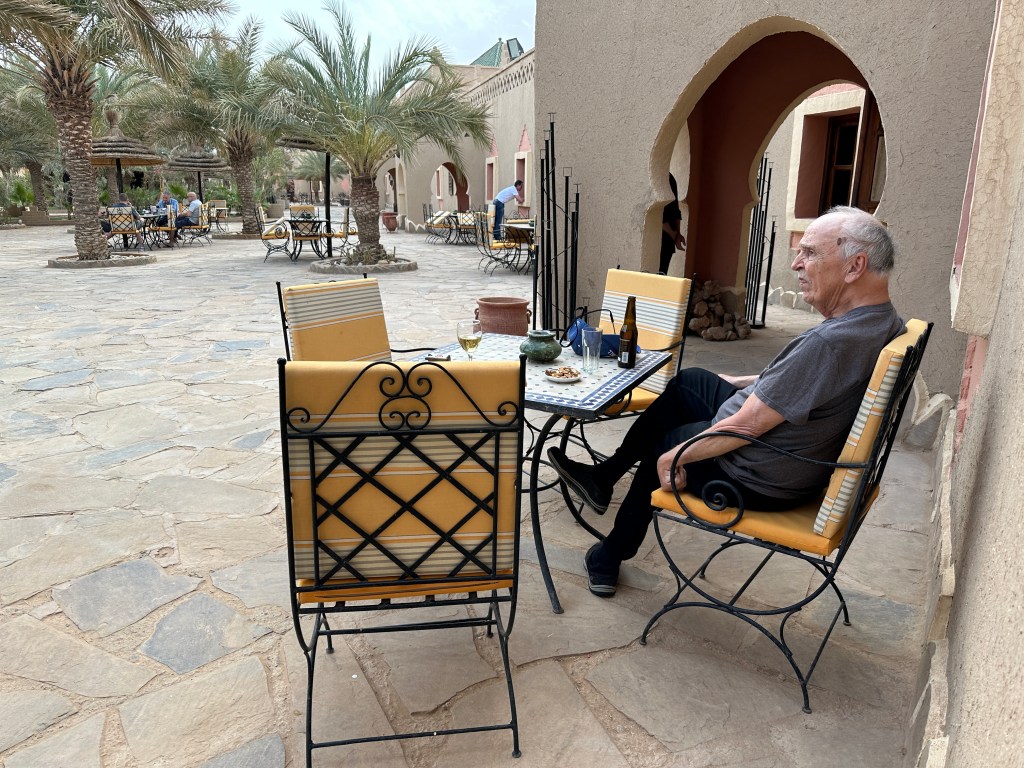
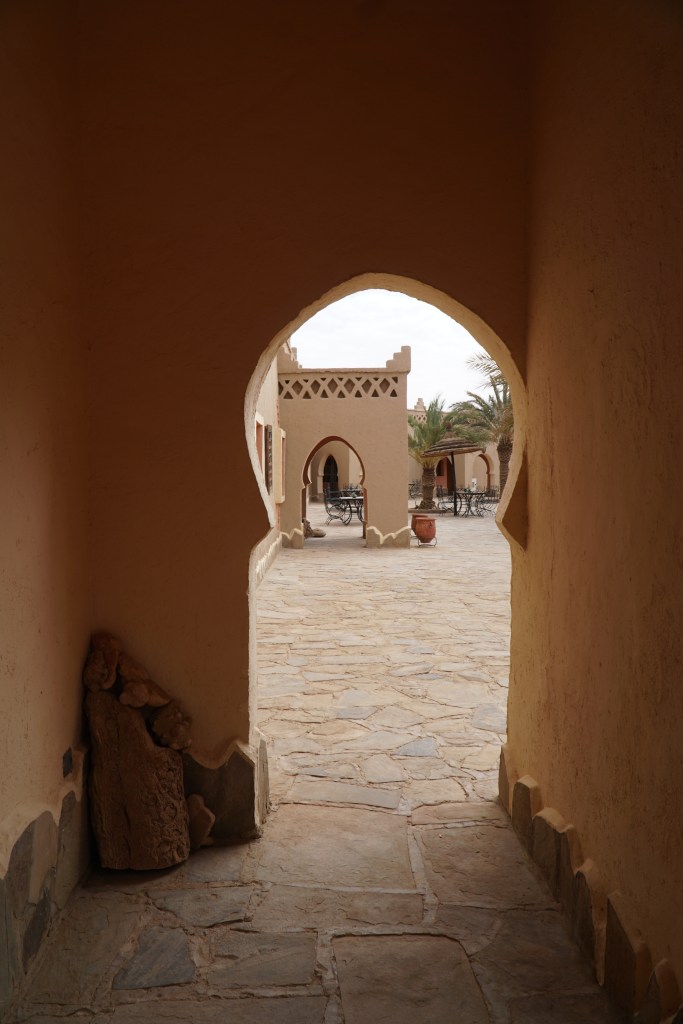
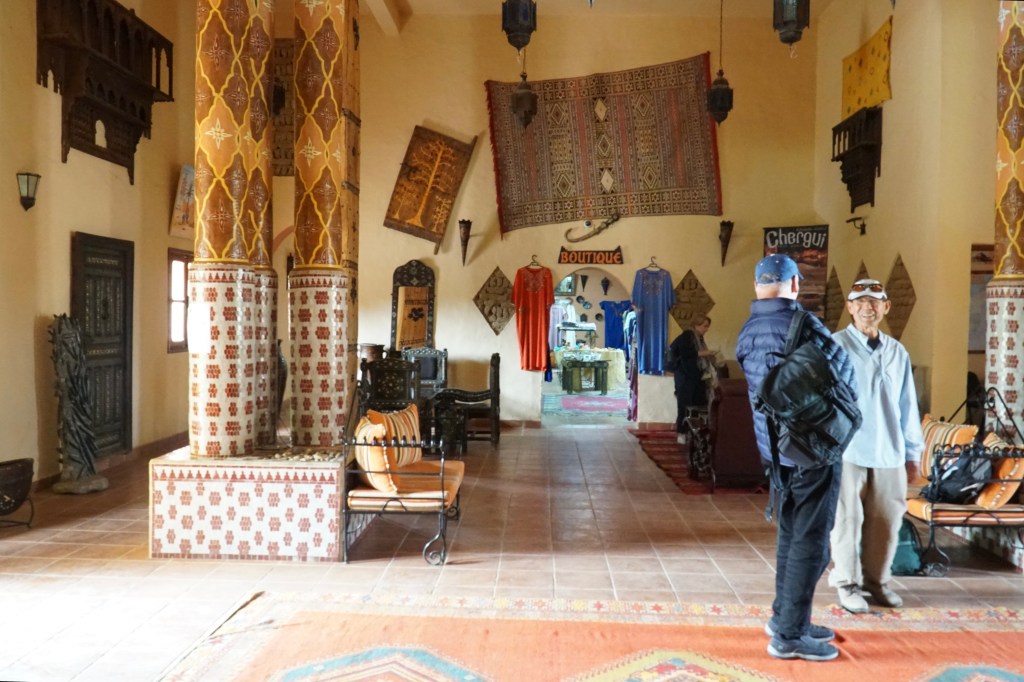
Monday, April 29
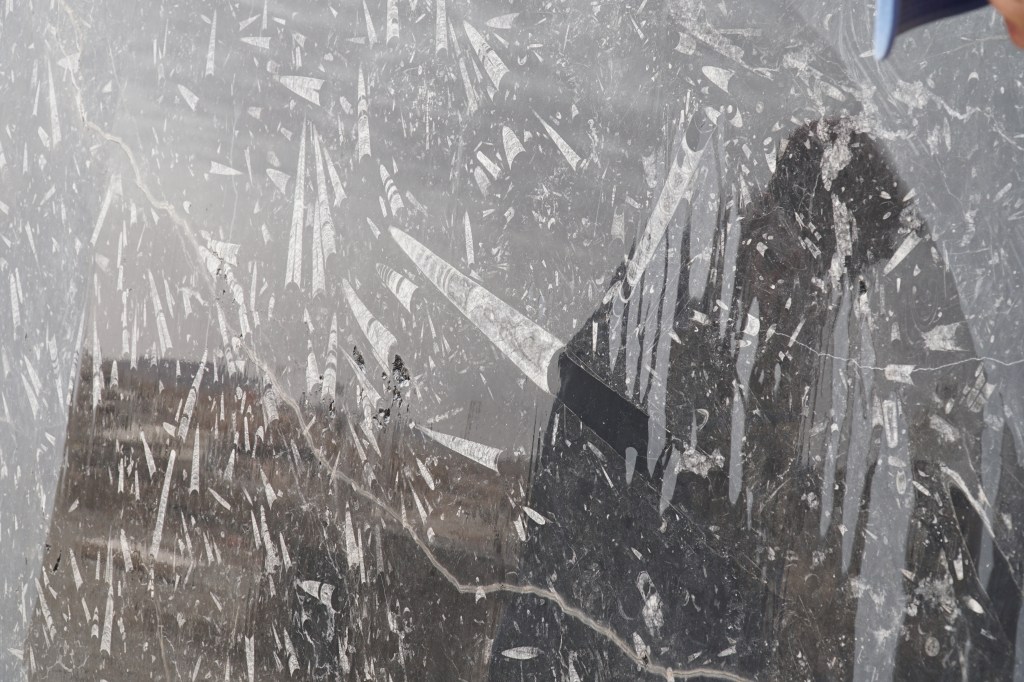
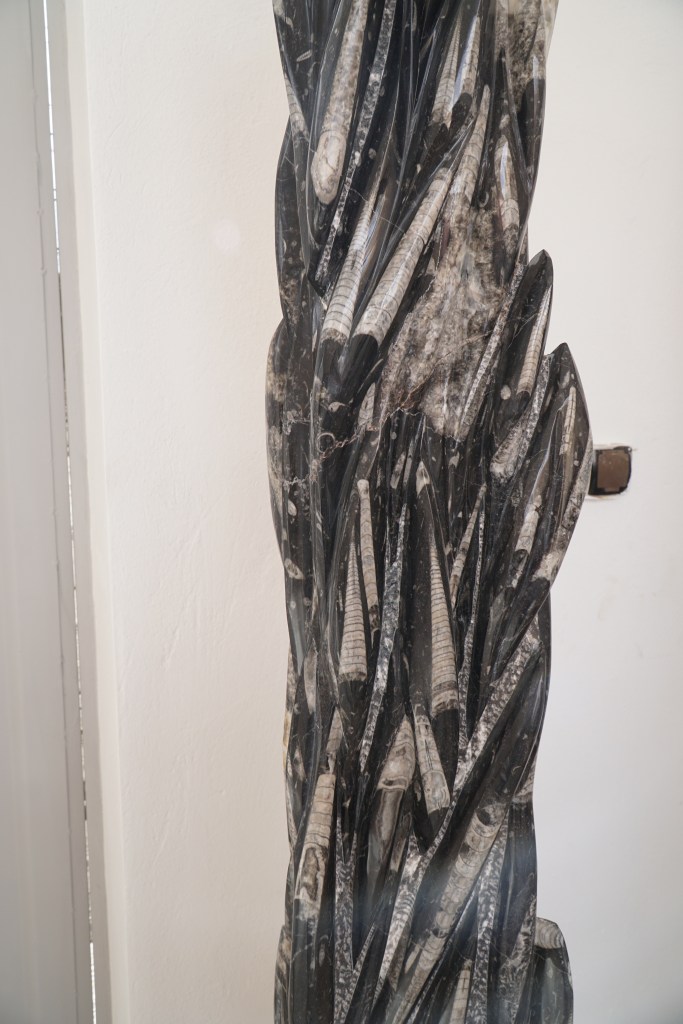
We stopped at an enterprise that collects and makes artistics products from fossils. The whole geographic region had previously been under water, so there is abundant material for their tables, artworks, and jewelry. There are laws protecting valuable fossils from leaving the country, so the only ones for sale are those that are not protected. Then we took the bus to the small town of Rissani. We stopped at a livestock farm and had the opportunity to try camel milk; we opted out of that opportunity. As public healthers, we only drink pasteurized milk ;).


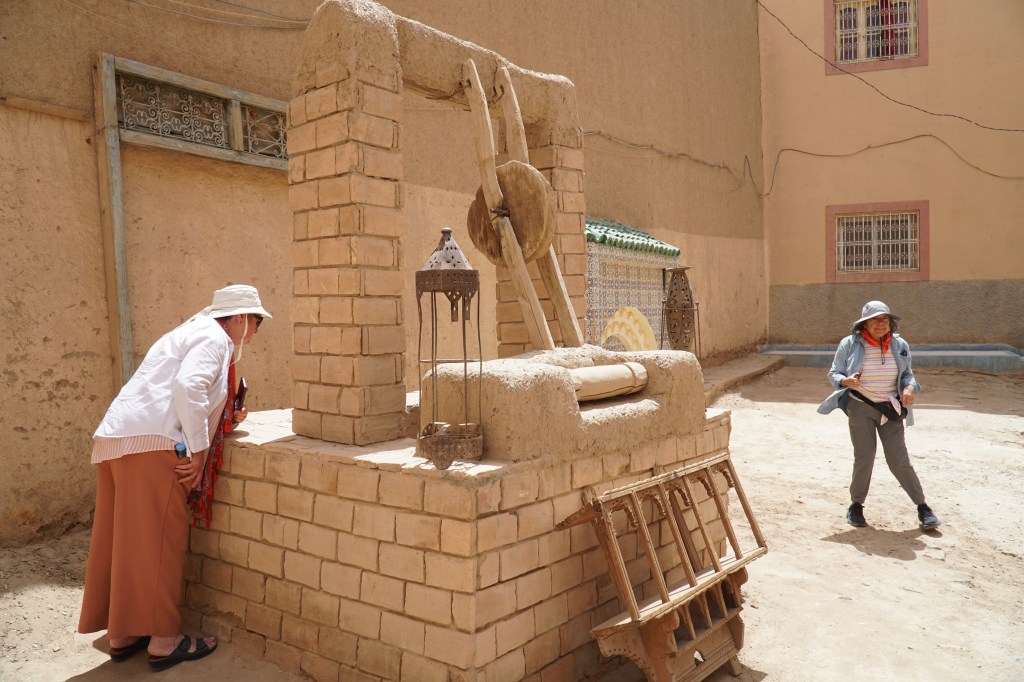


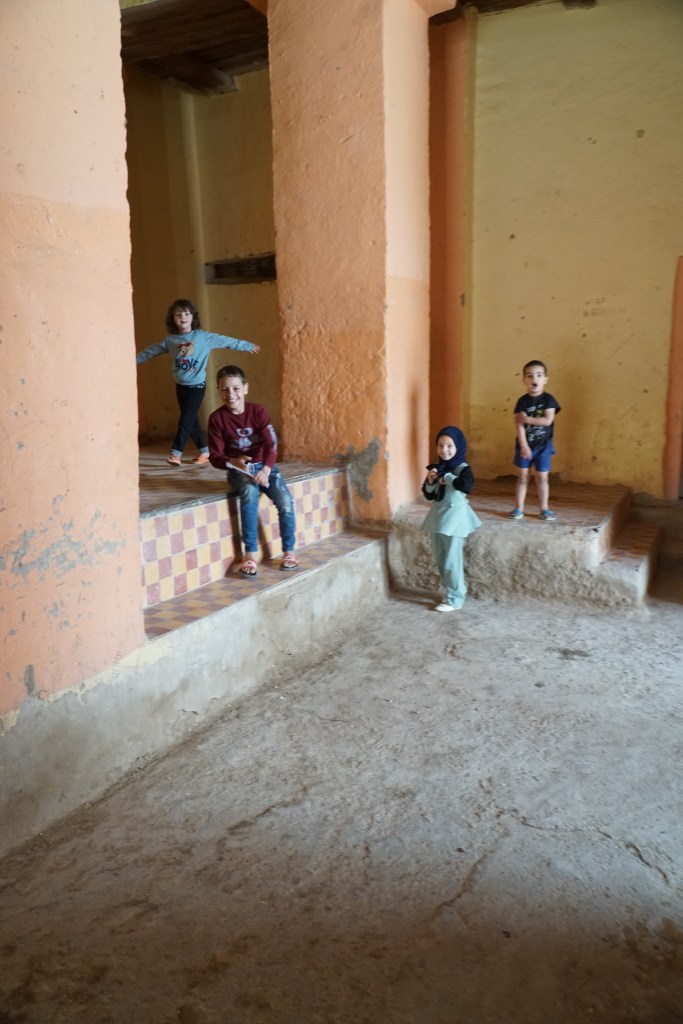
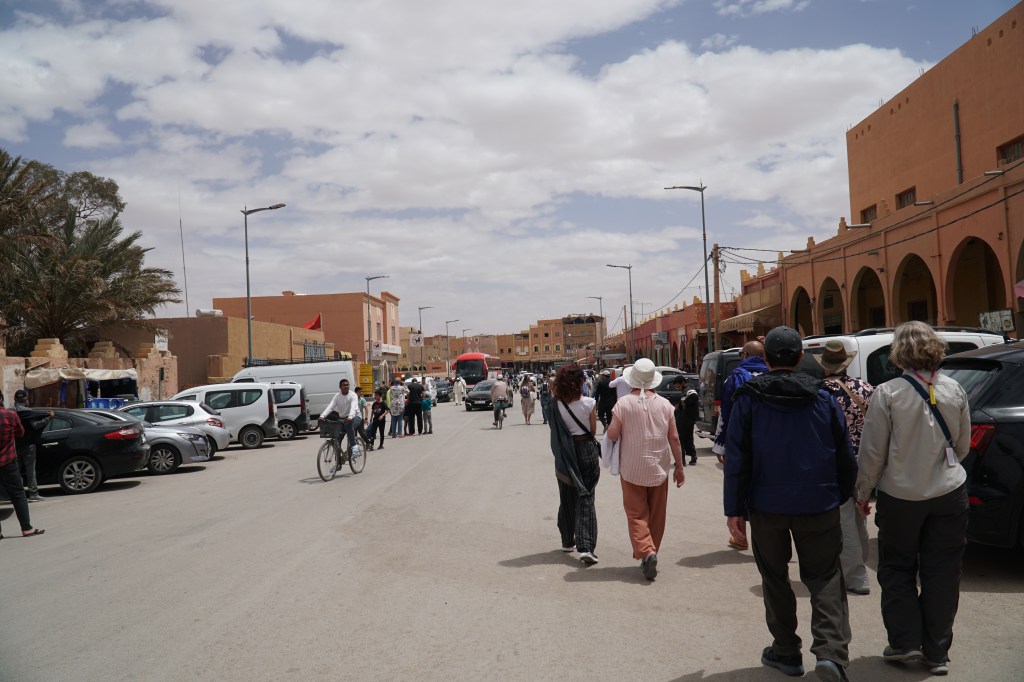

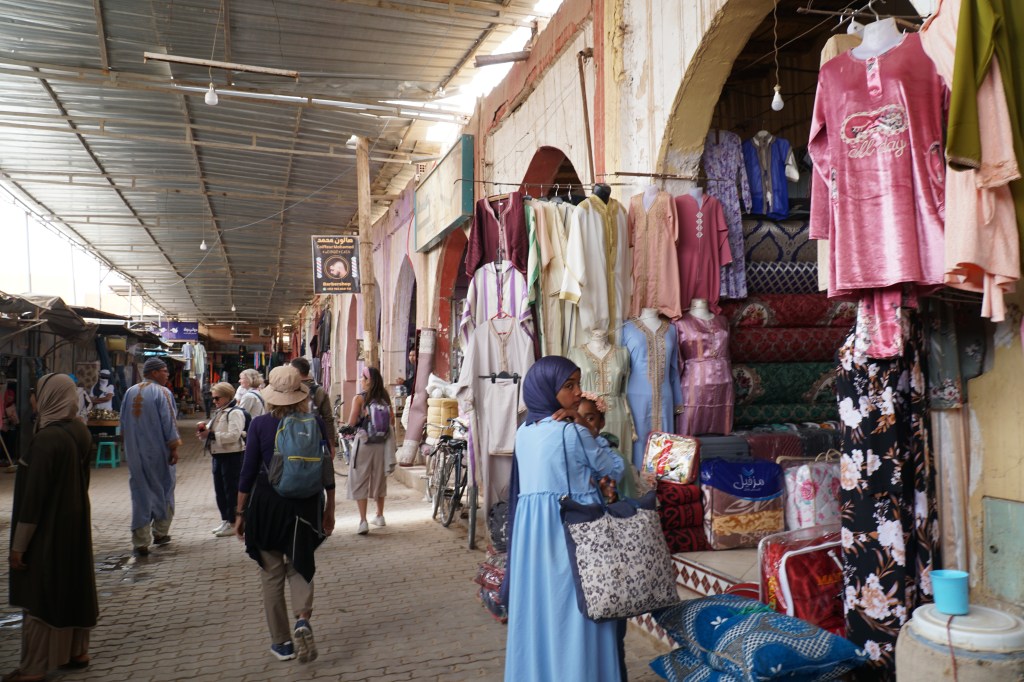
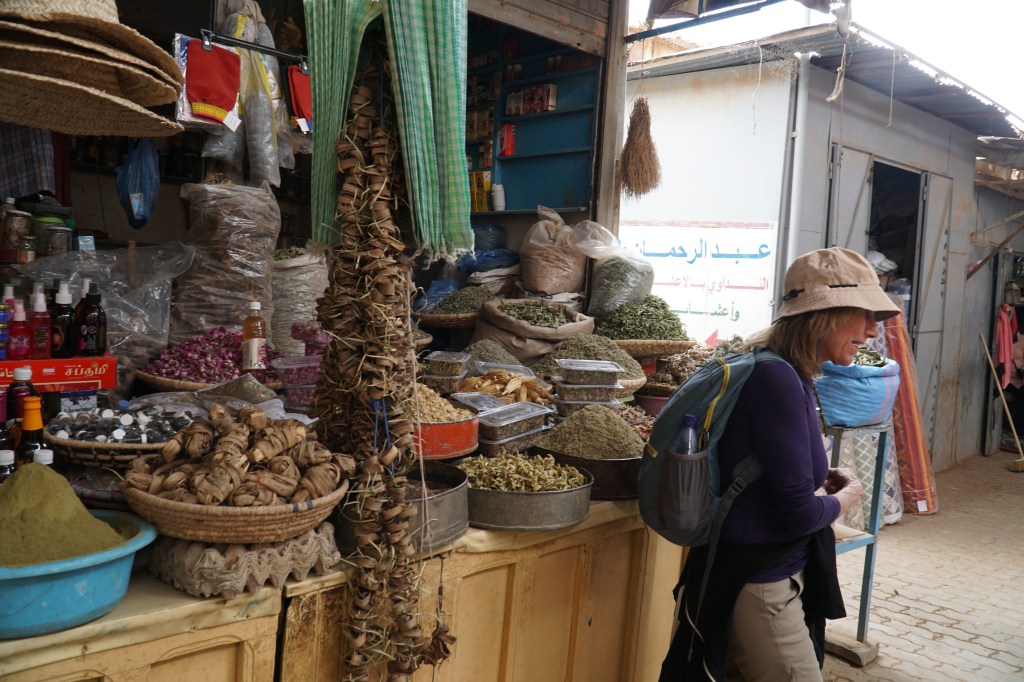


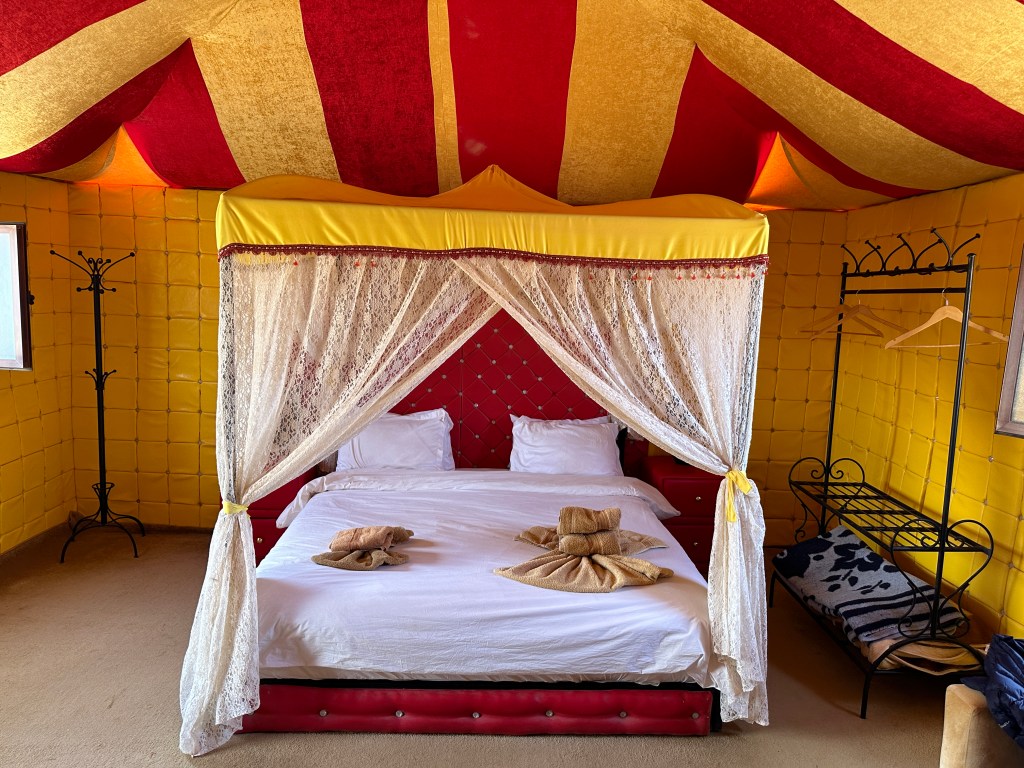
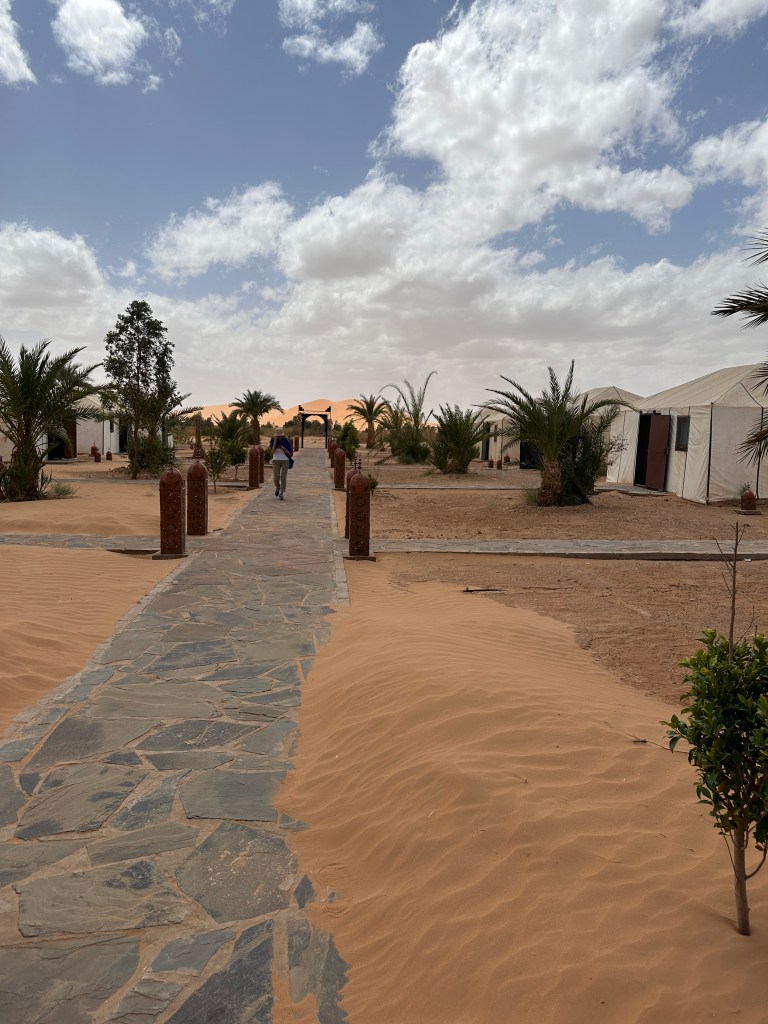
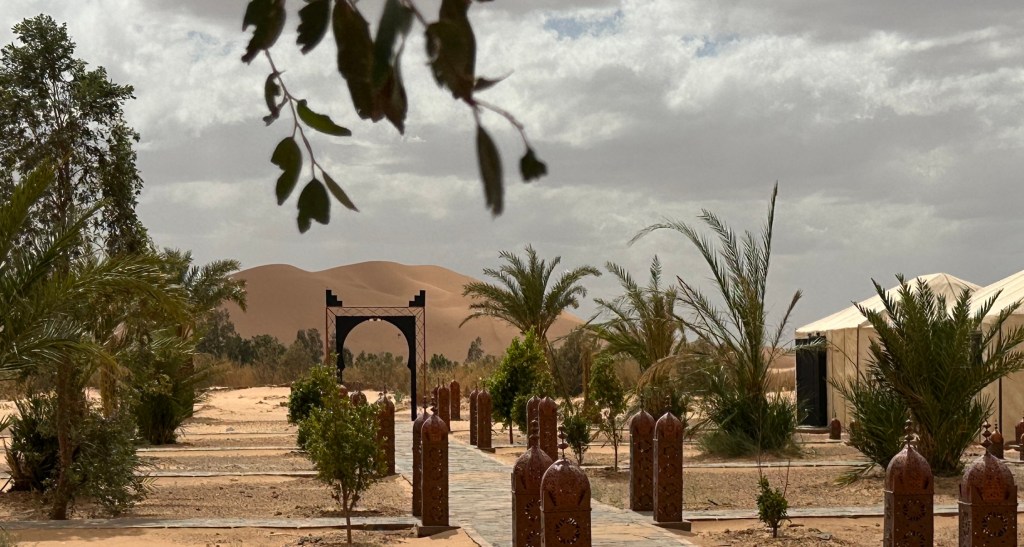
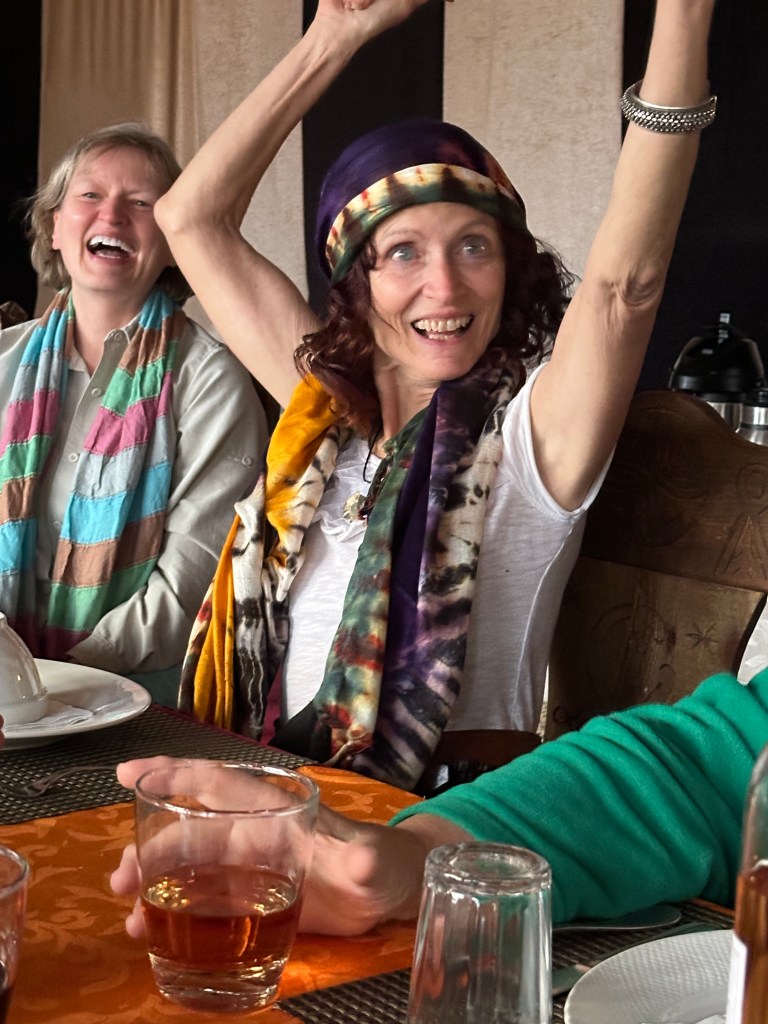
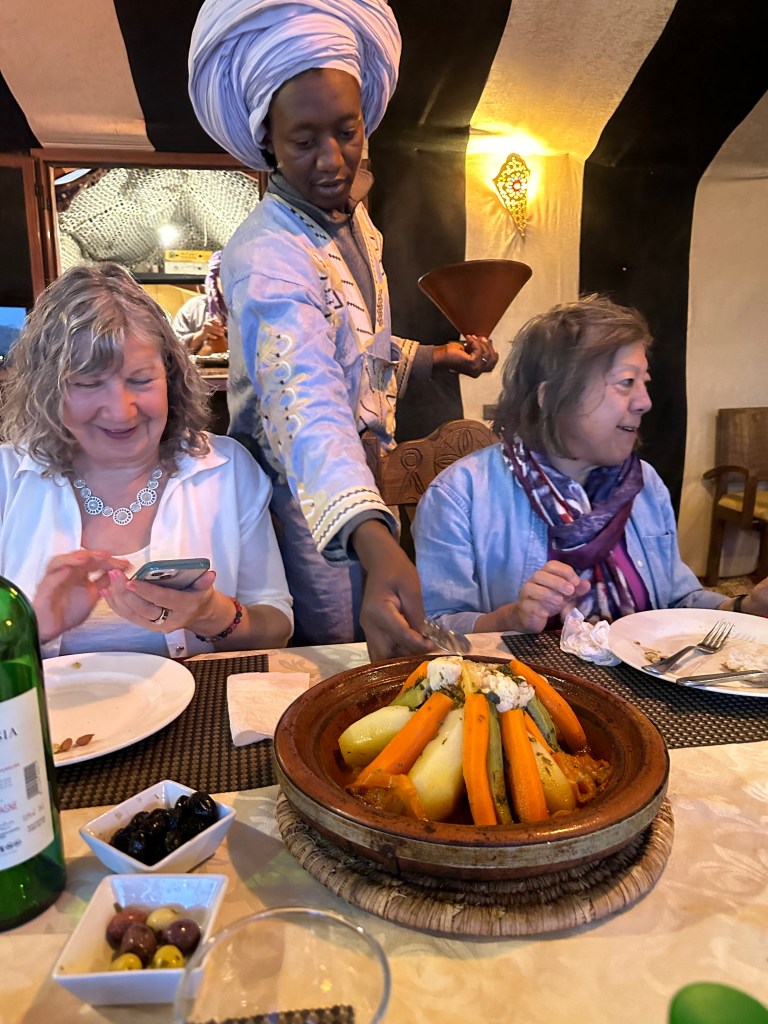
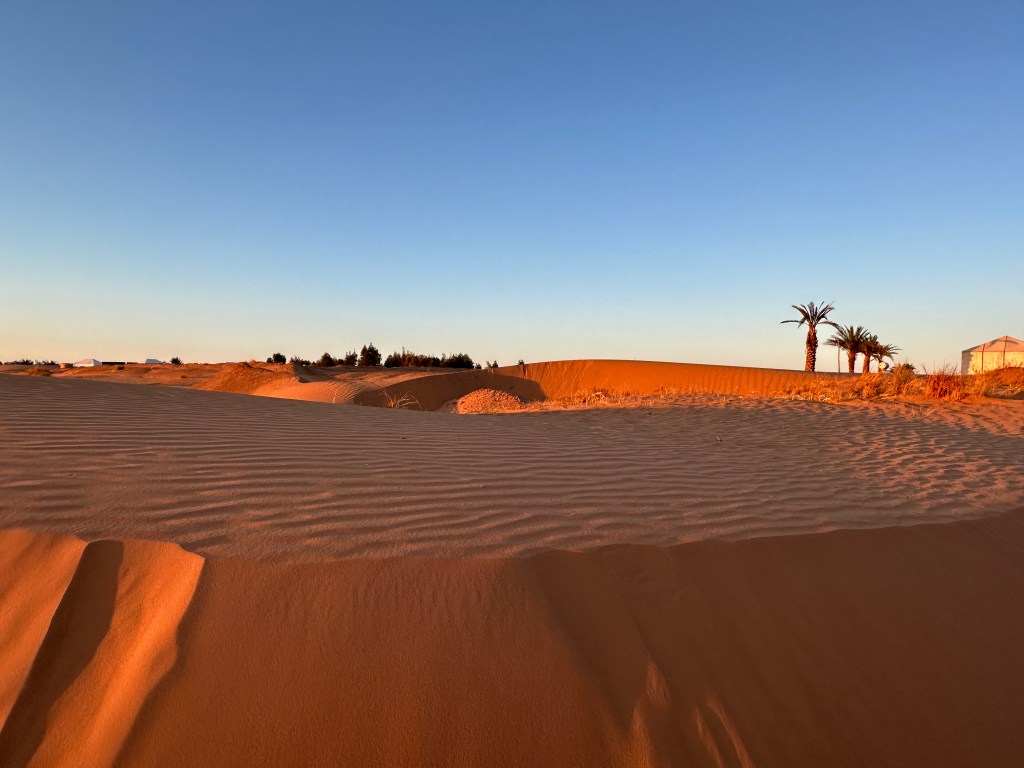
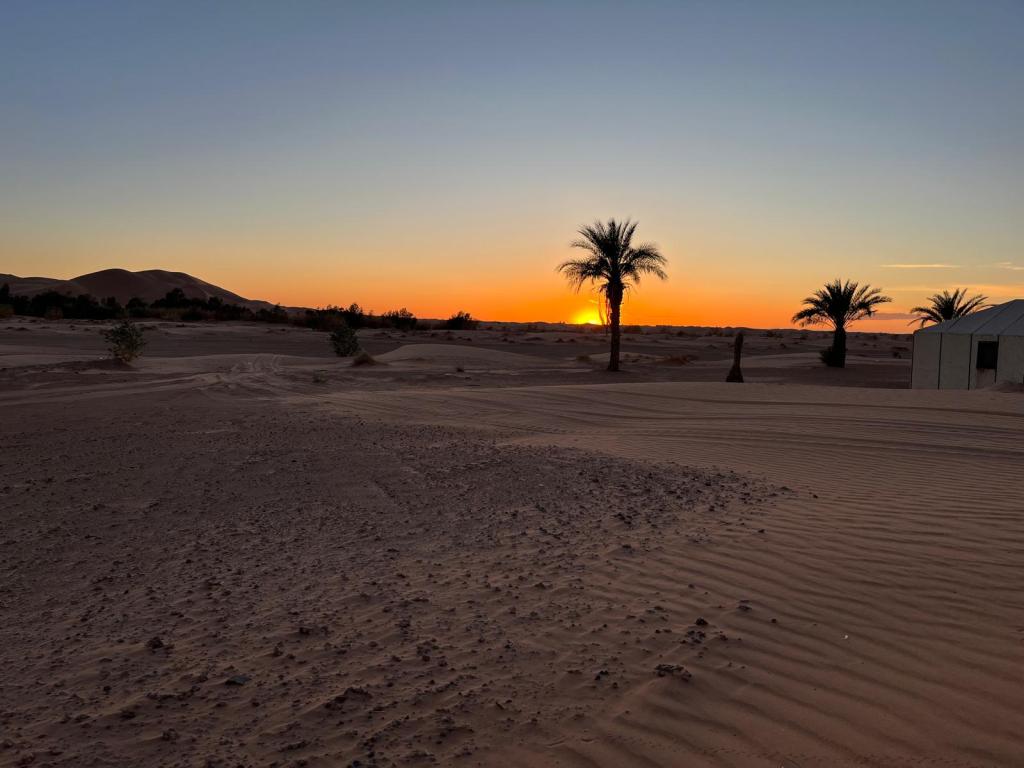
We broke into 5 groups to ride in 4×4 vehicles for the drive through the Sahara to the dunes near Merzouga. We checked into our tents and had lunch. In the afternoon we visited a desert farm, and rode around the area where we would start our camel ride the next day. Back at camp our chef gave us a cooking demonstration and we had another wonderful meal after watching the sun set.


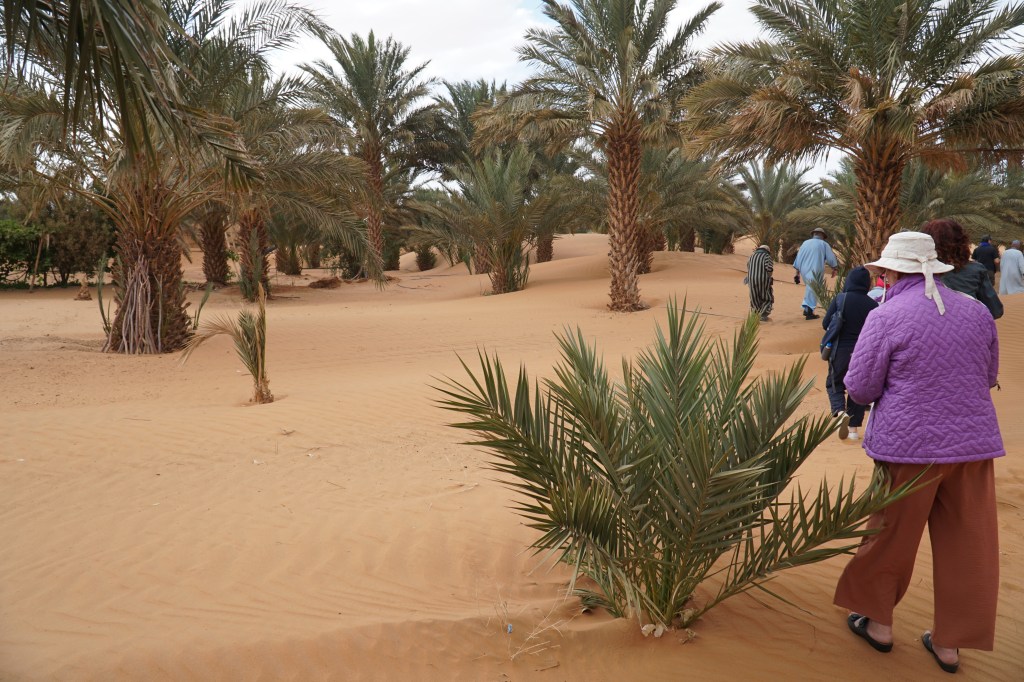








Tuesday, April 30
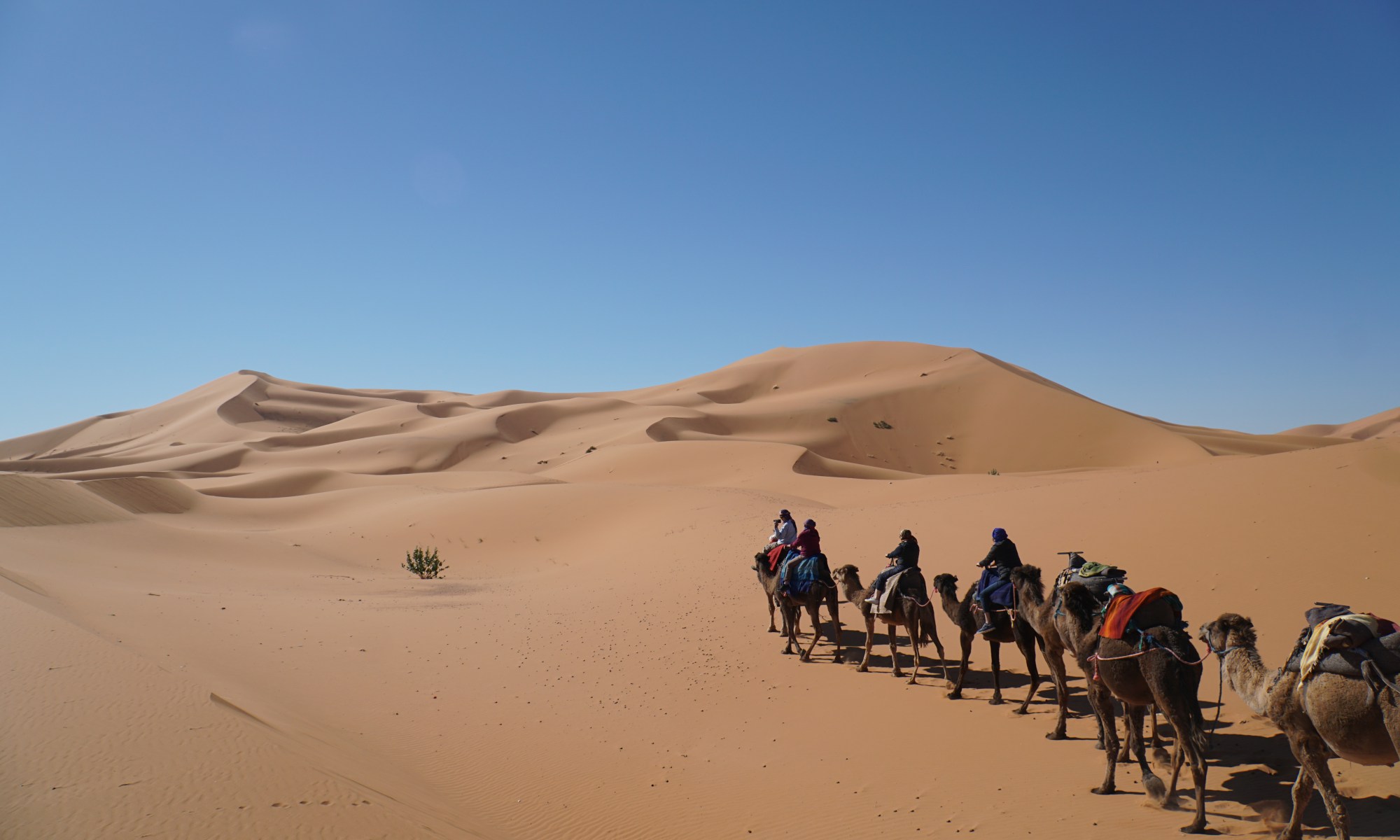
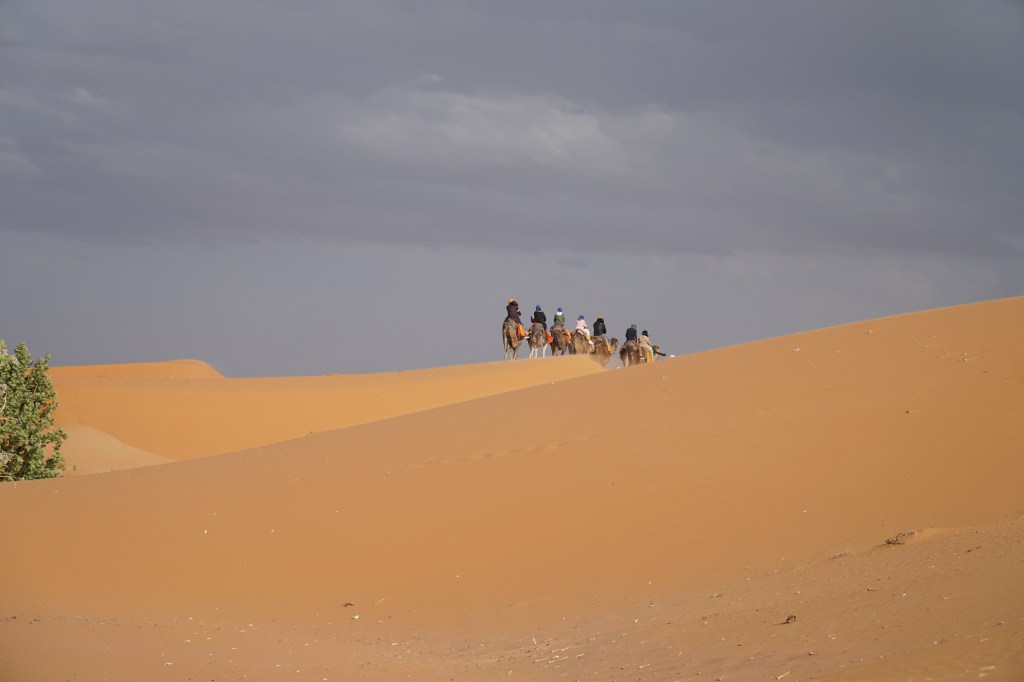
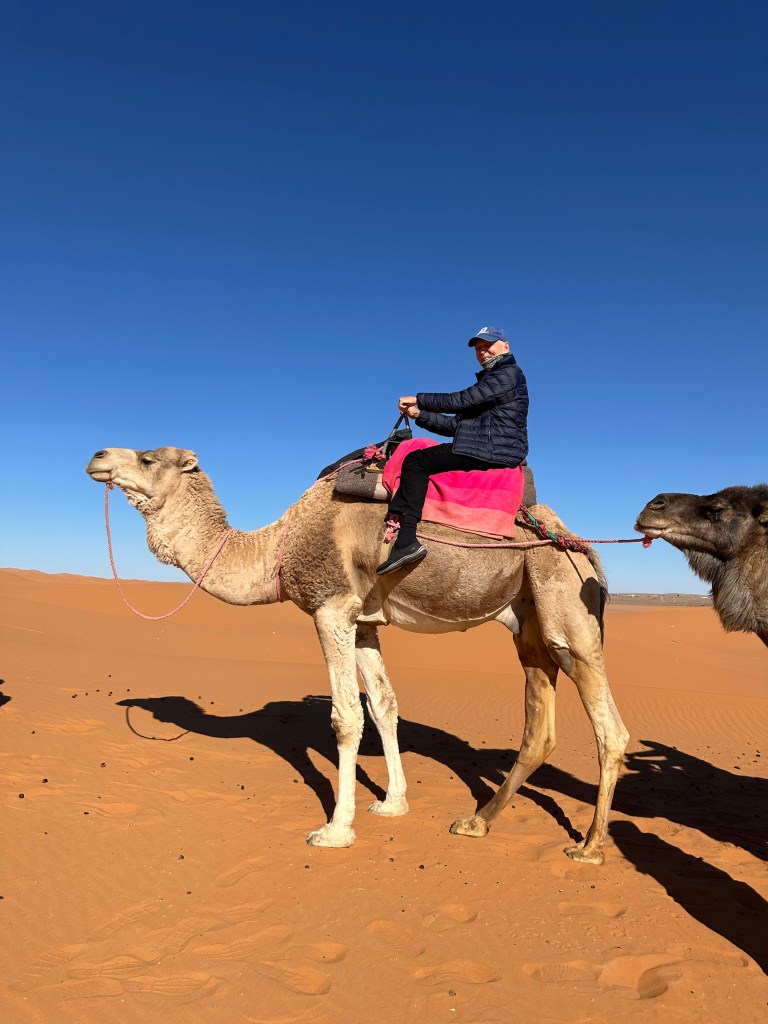
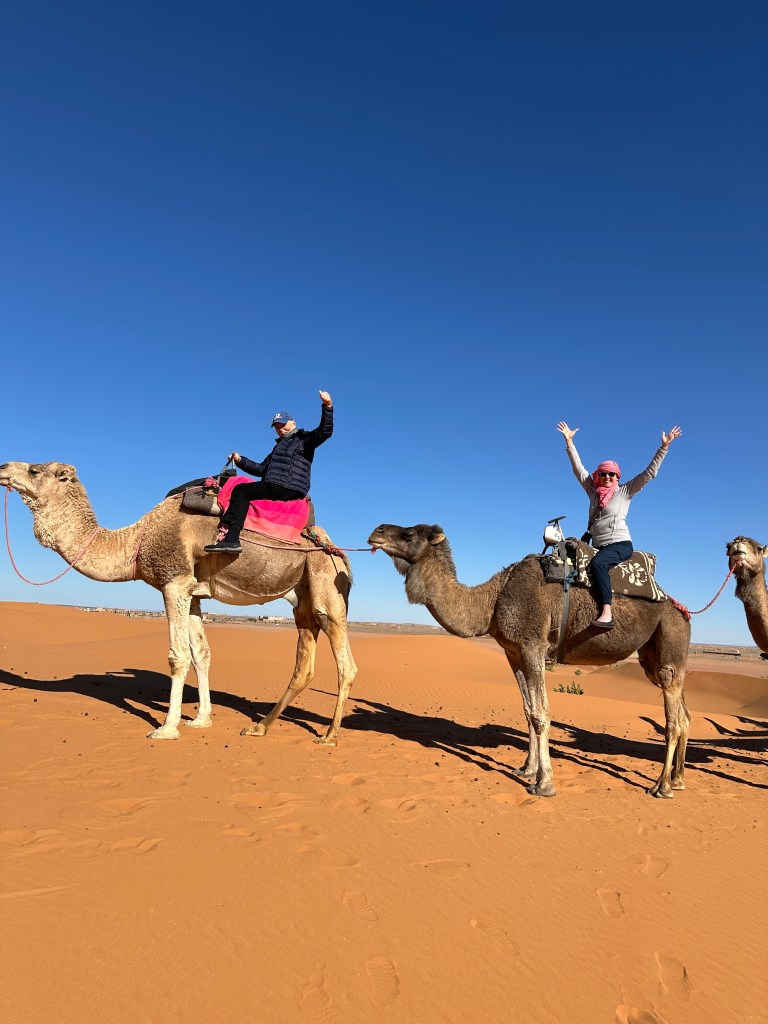
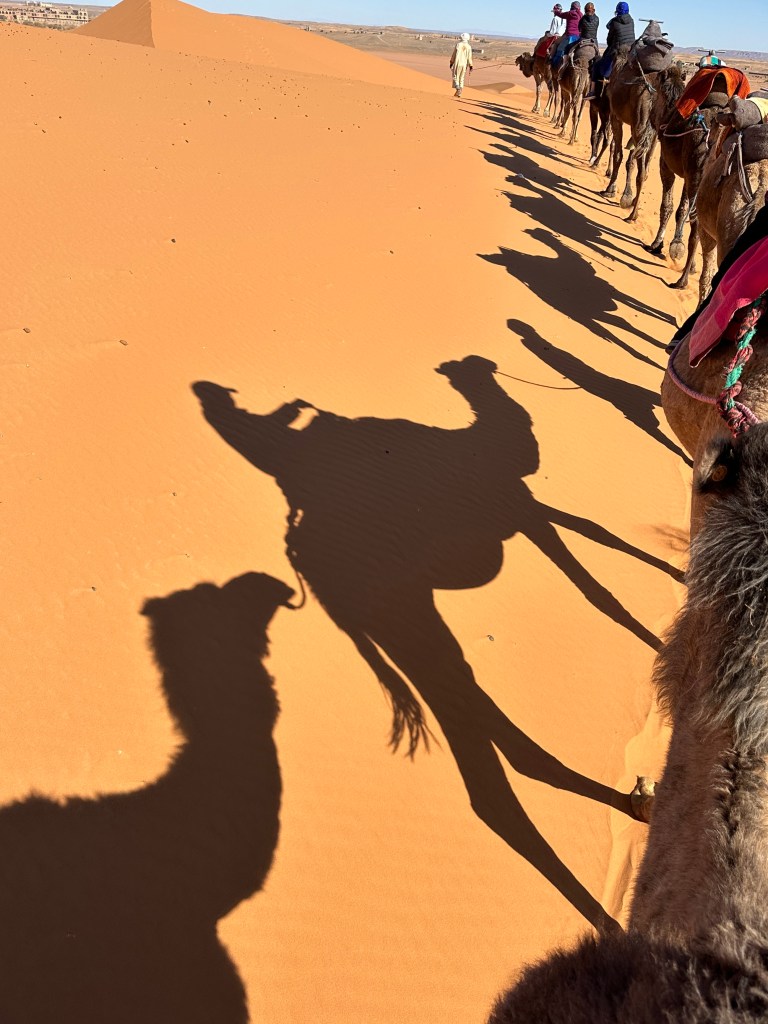
Some of us watched the sun rise over the dunes. After breakfast, we drove to the starting point for our camel ride over the dunes. The camel handlers wrapped our scarves around our heads and necks to protect us from the sand and sun. The camels had multiple layers of padding between their backs and our seats, and were tied together. We each mounted our camel while it was kneeling, and then it rose to standing – wow, what a launch! No one fell off! The ride was beautiful and the motion rather swayingly smooth. It was amazing how the camels could walk at the very edge of a dune ridge.




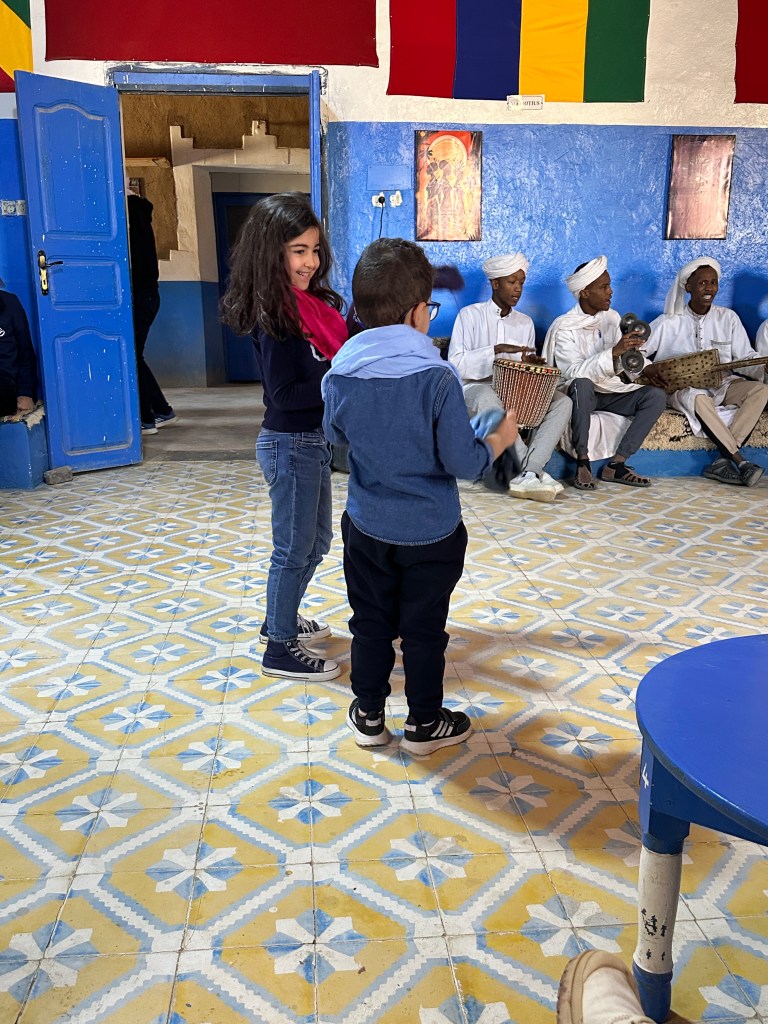
We then visited the village of Khamlia Gnawa, know for its music. Black Africans from the Gnawa tribes in Sudan, Mali and Niger, are descendents of slaves who worked the salt mines in the Sahara. As Islam does not allow slavery, the slaves were freed when Islam took hold in Morocco. The Gnawa originated a type of rhythmic music and chanting,which is played on drums, iron castenets, and stringed instruments called Guembri and Hajhuj, made of intestines and skins of goats and wood from the tamarisk trees.
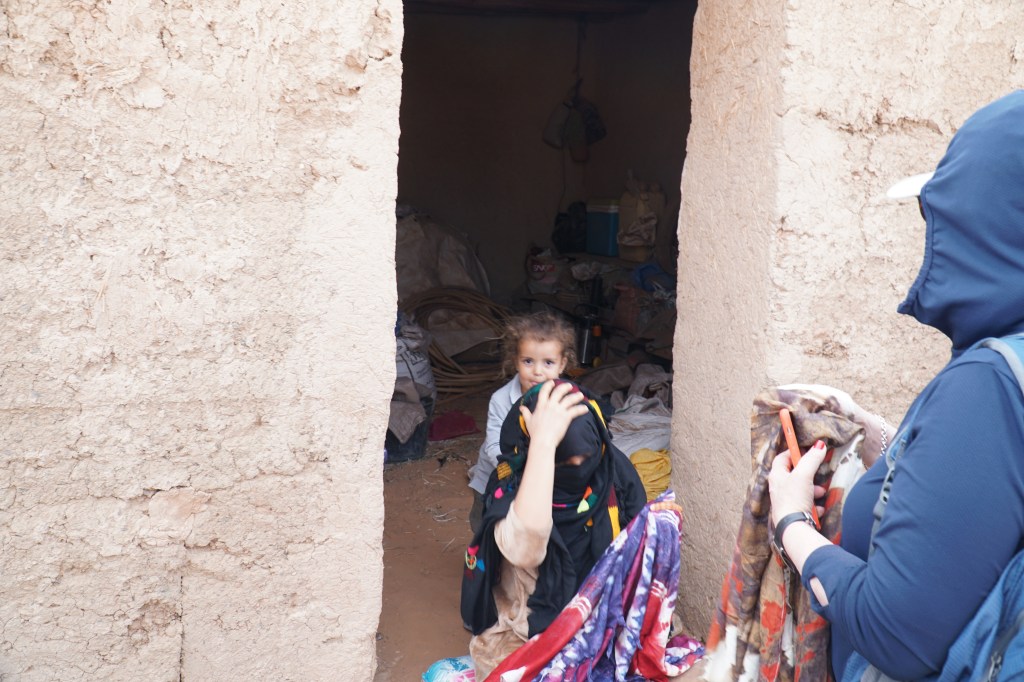
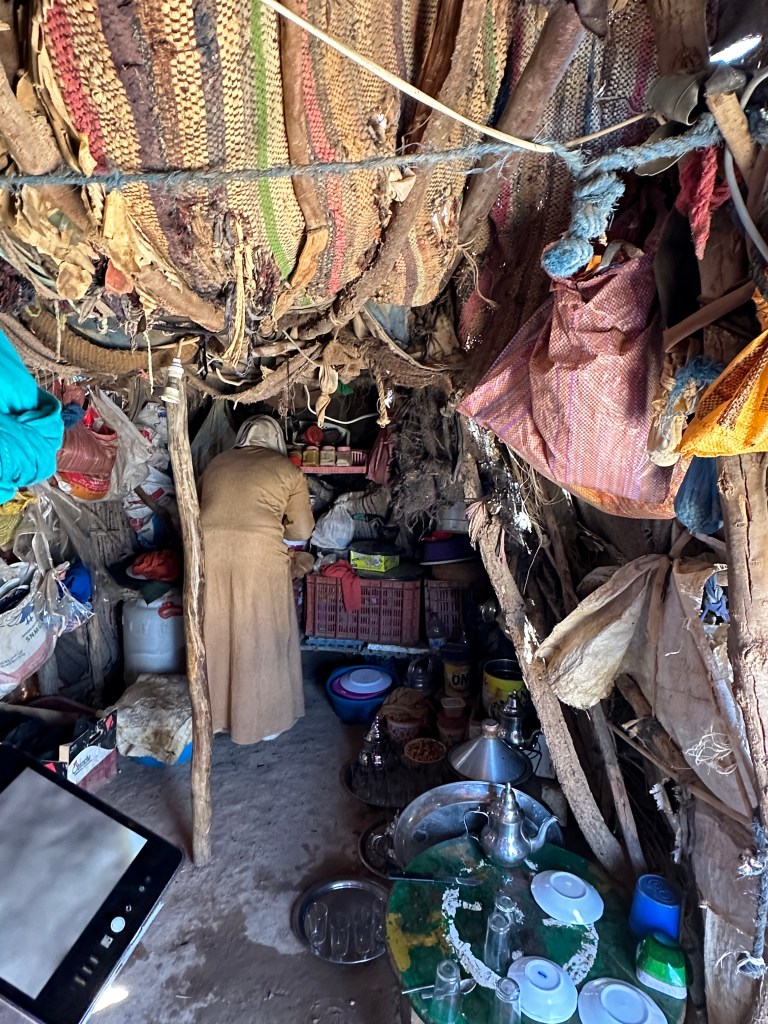
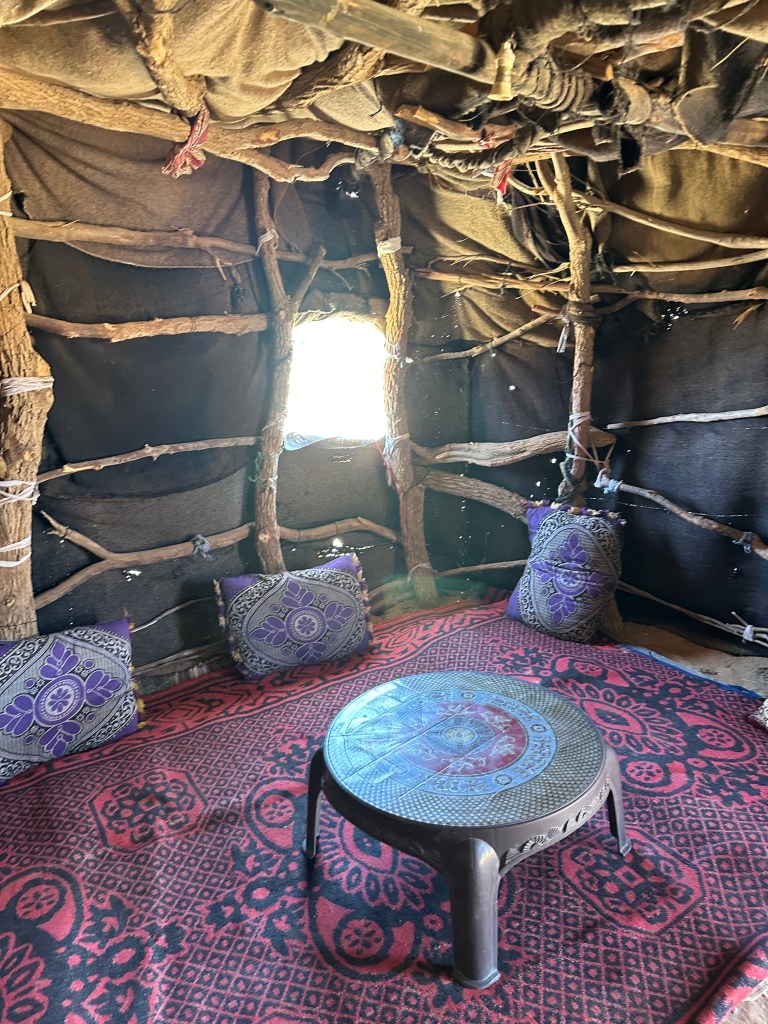
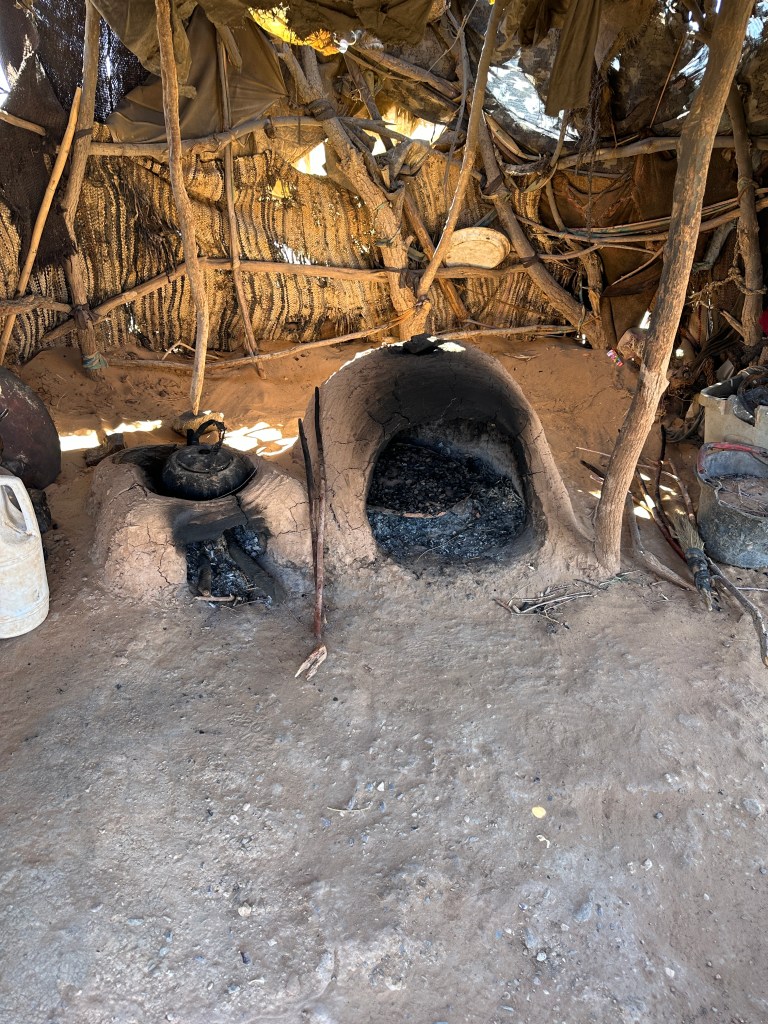
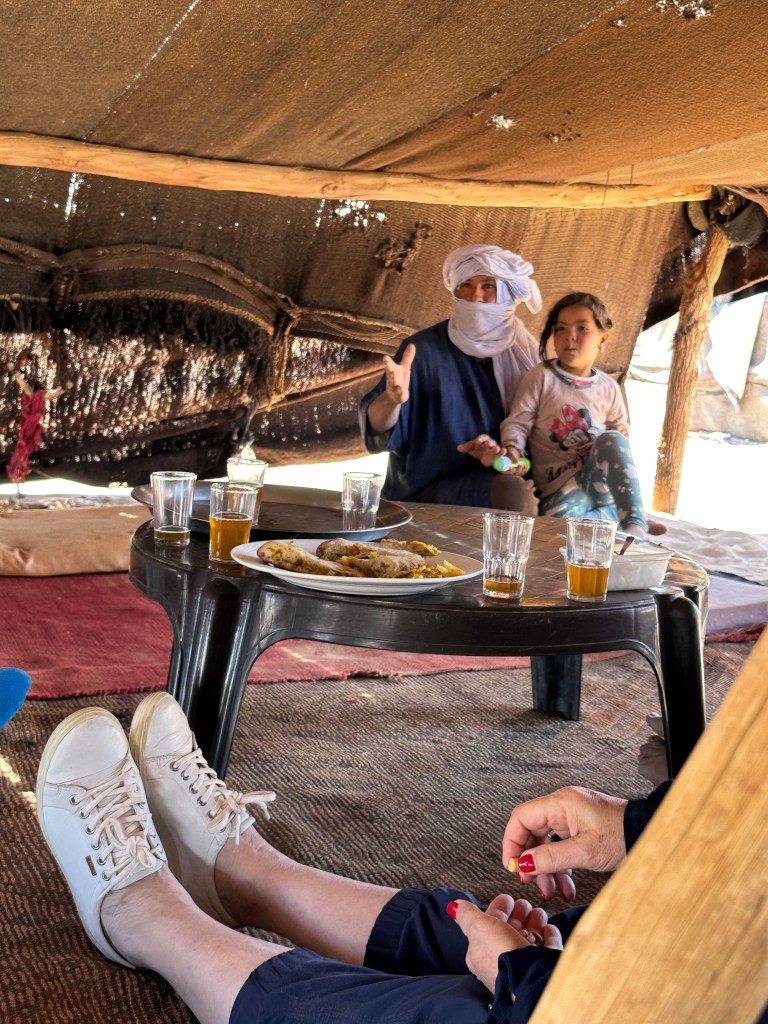
On our way back to camp, we visited a nomadic family, consisting of a father, mother and two young children. The father’s brother was minding their herd of sheep some distance away. We dropped in with no notice, and they welcomed us into their formal tent, and served us tea and homemade snacks (cookies and a mixture of nuts). We were able to ask them questions, take photos of their various tents, and enjoy their company. Because of their lifestyle, the children do not go to school and both parents are illiterate. They move to follow water sources, and take everything on backs of donkeys and camels. This type of lifestyle is dying out, with individuals increasingly moving to cities for menial jobs and small apartments. The nomadic lifestyle seems very hard, but the family appeared to enjoy the outdoors and freedoms of their choice.








Wednesday, May 1
We left our camp and headed to the next stop — Ouarzazate.
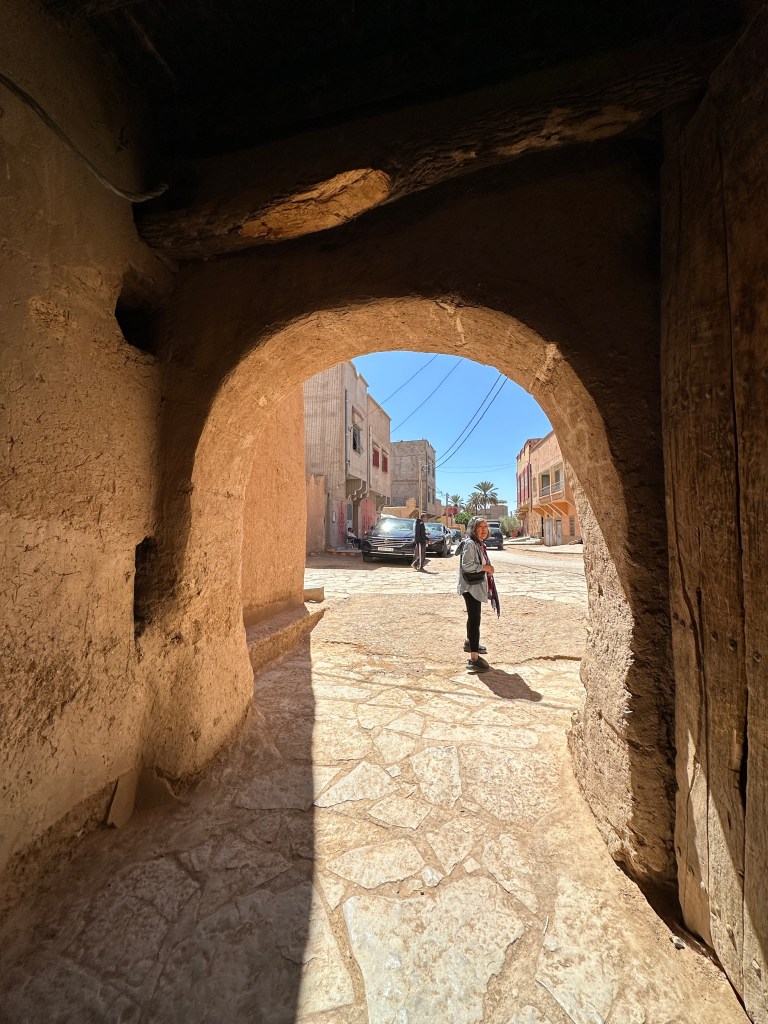
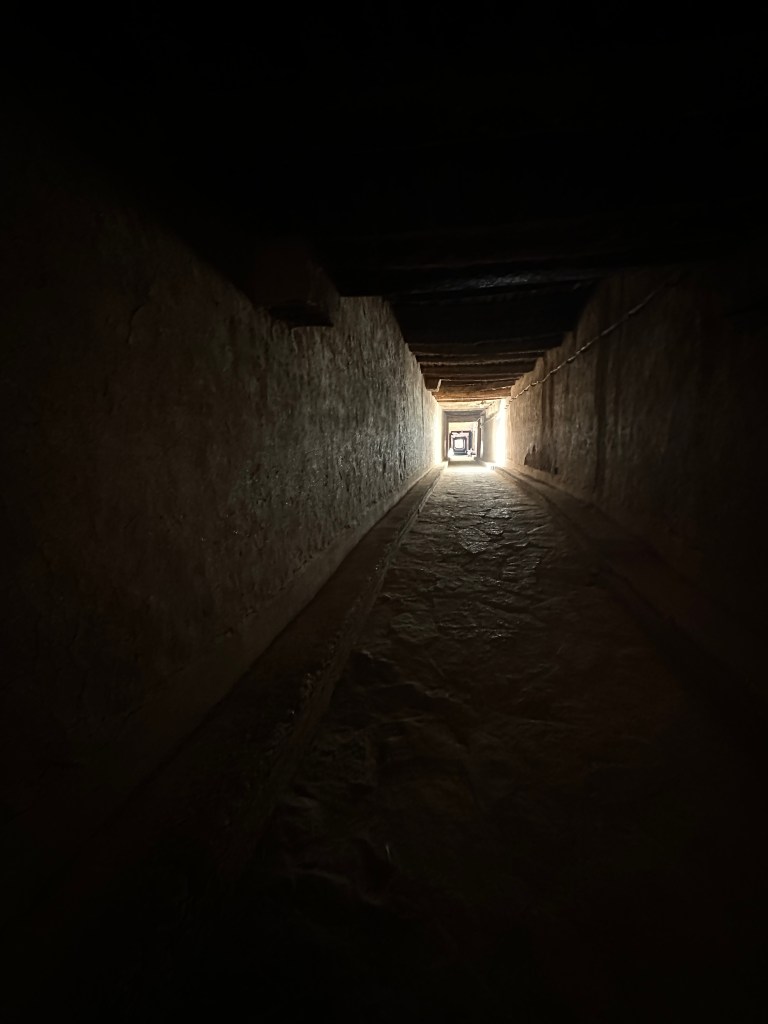
Along the way we stopped at one of the entrances to the underground irrigation tunnel system that had been used to bring water from the Atlas Mountains into the desert.
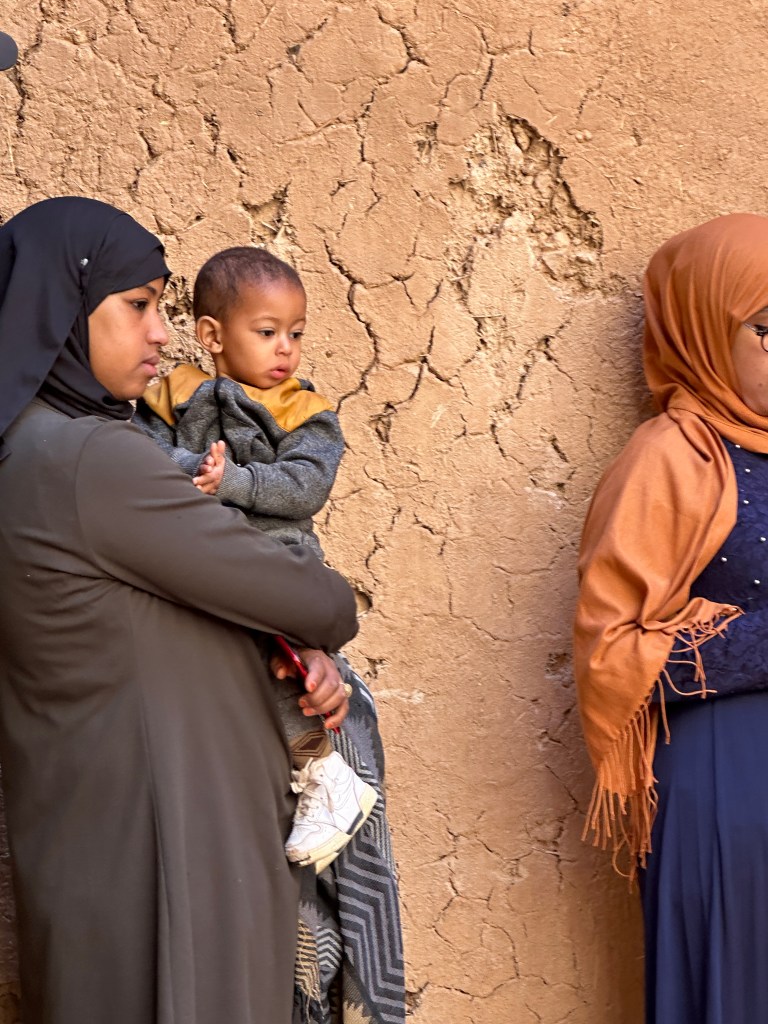
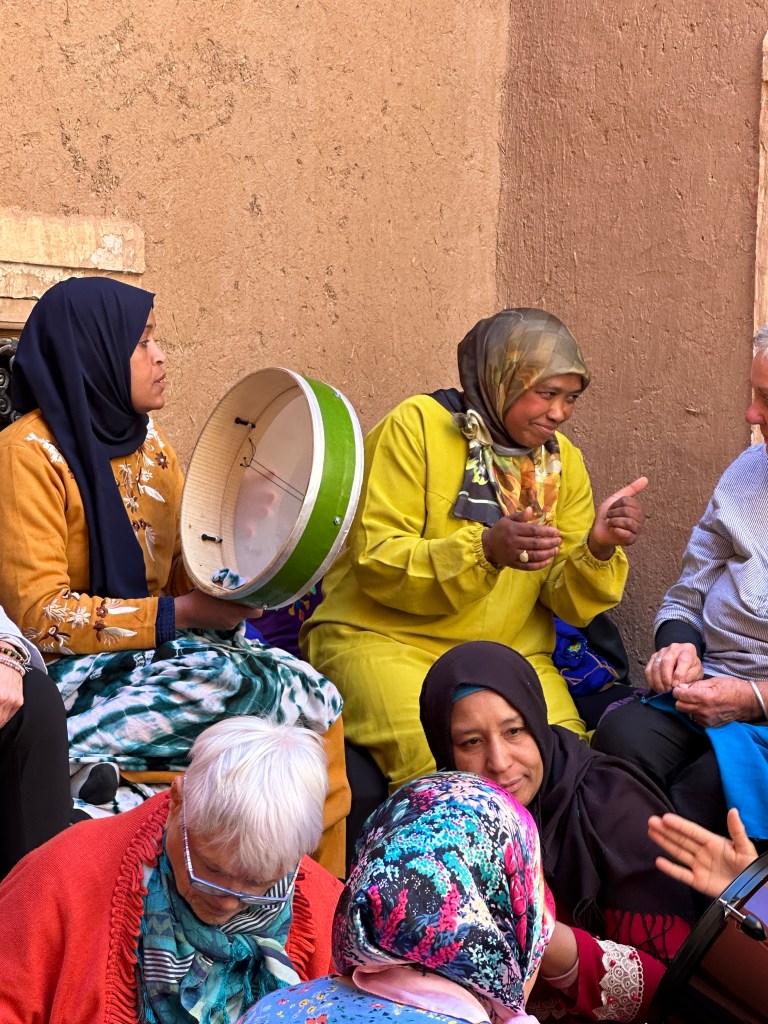
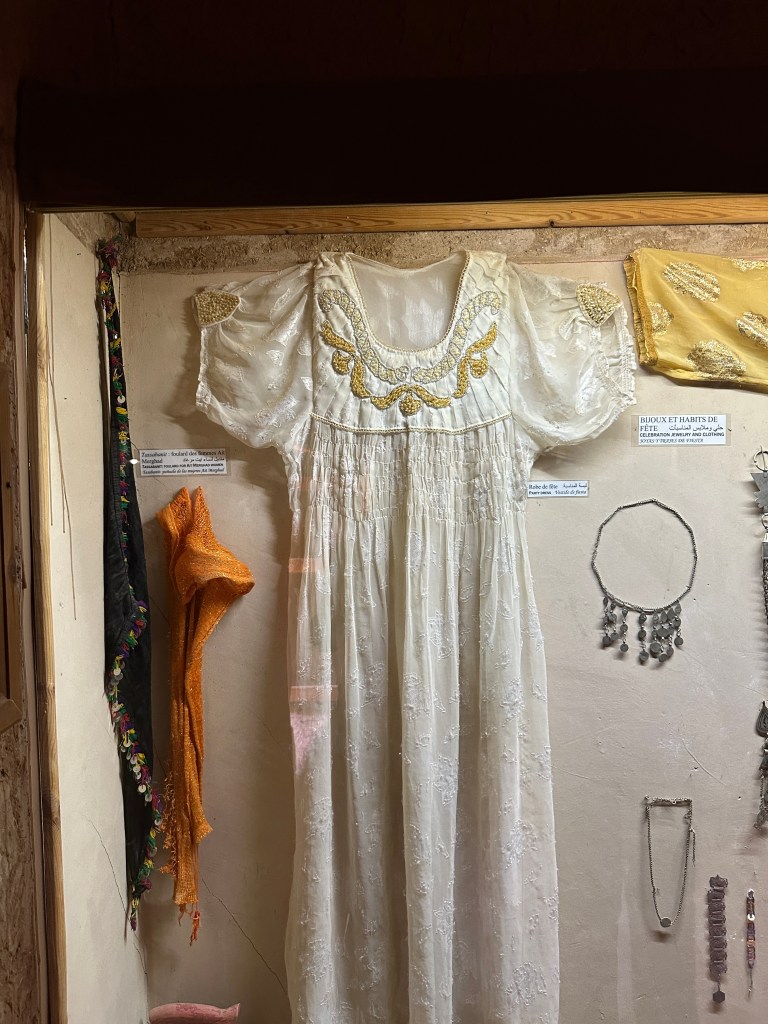
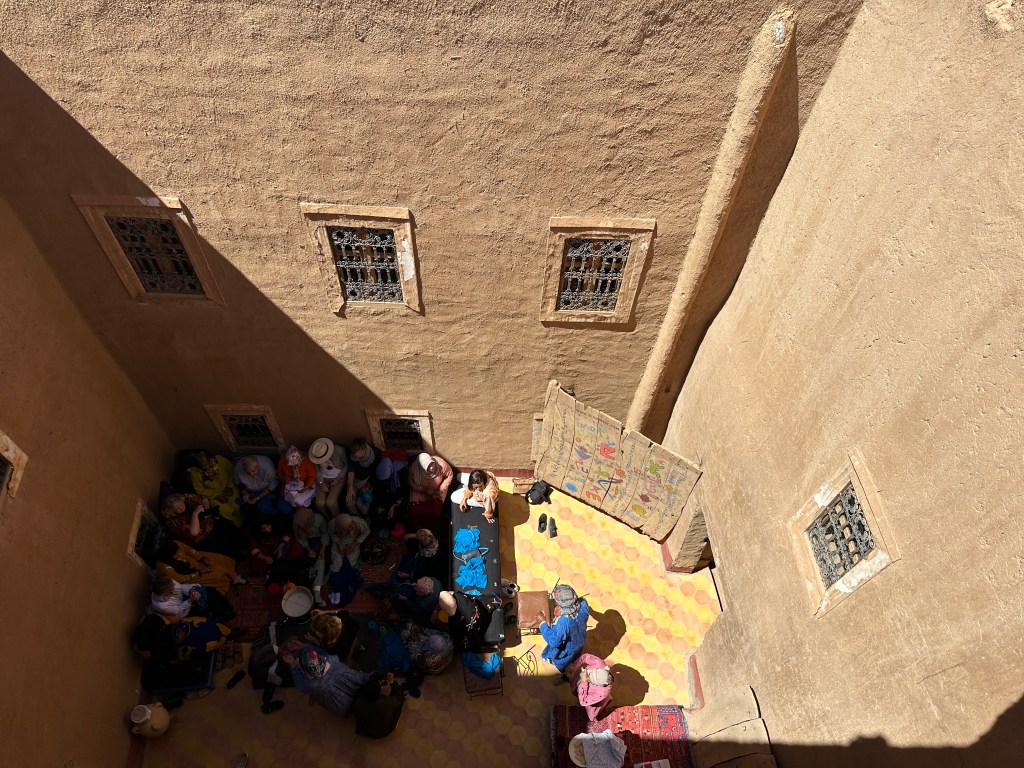
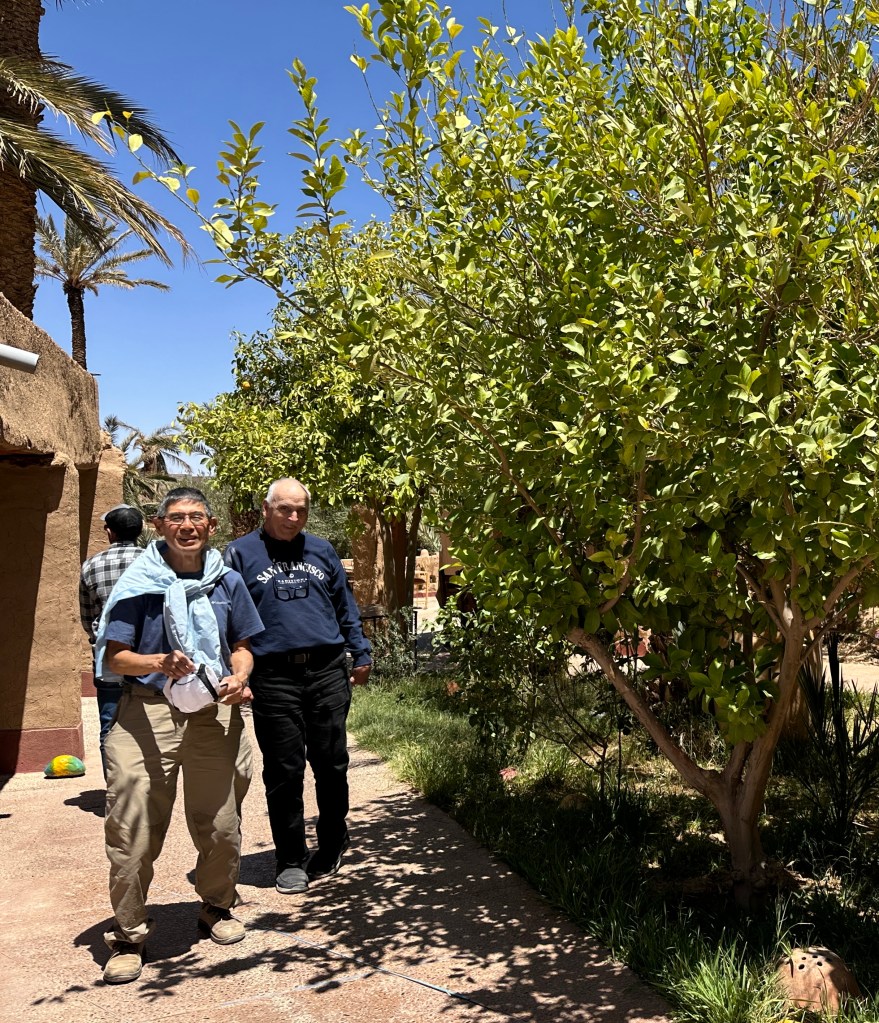
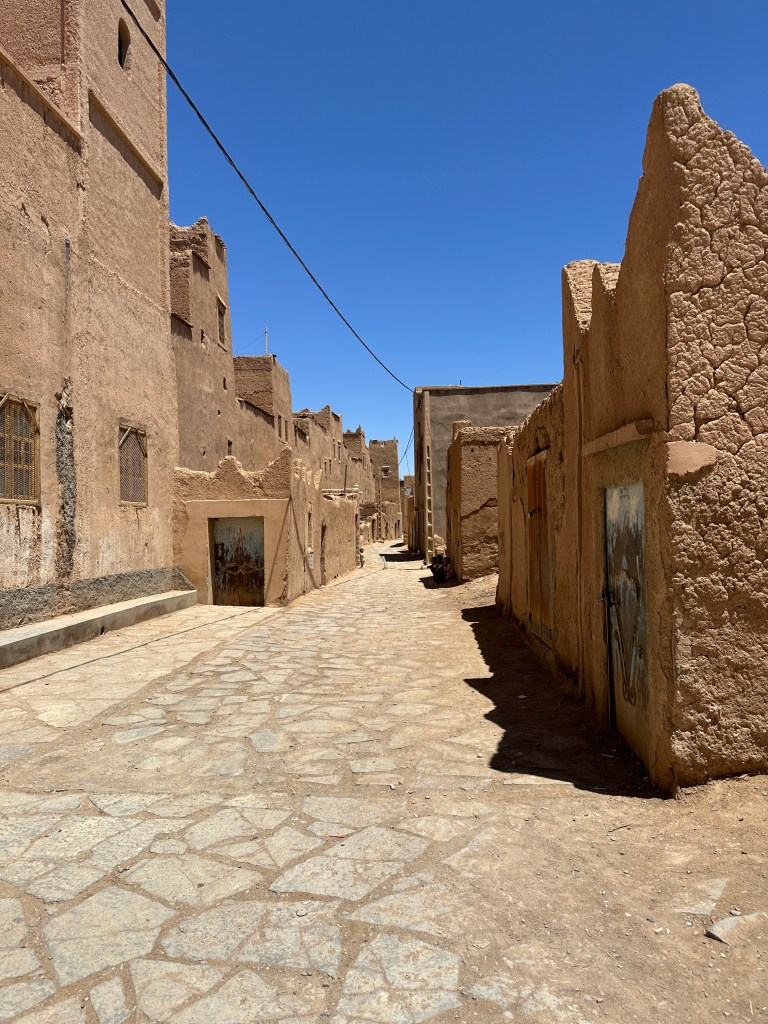
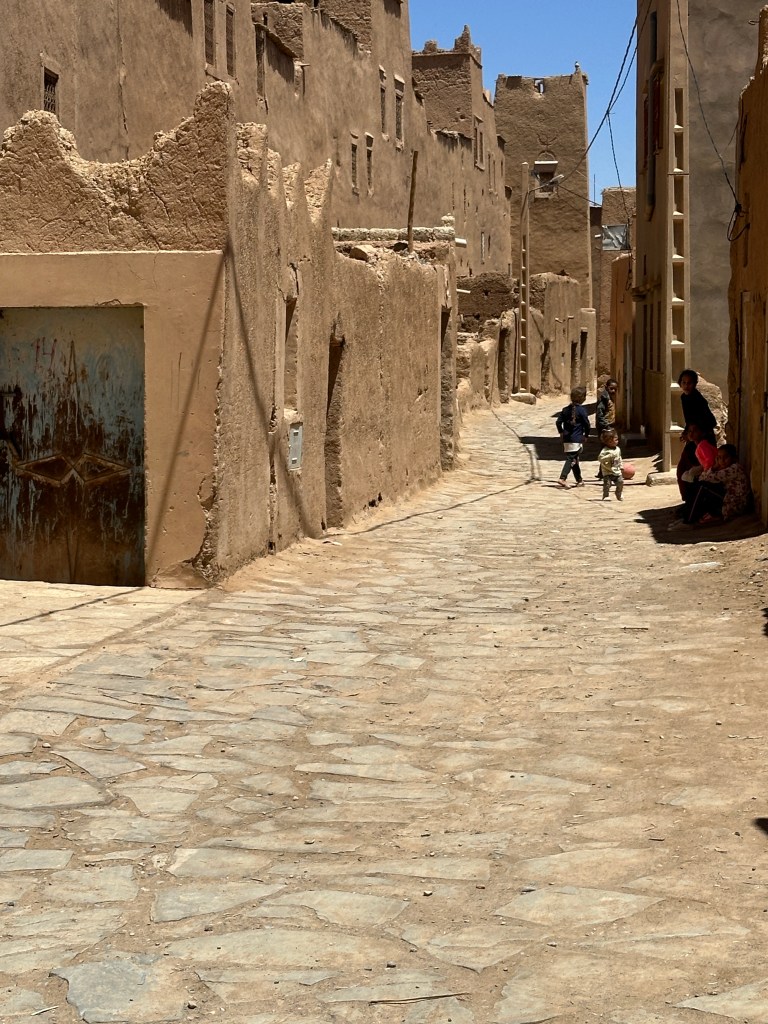
We later stopped in a small town walled berber village, a ksar, Tinejdad, to tour a Berber museum housed in a rustic stucco building. On the ground level were a group of women training others in the art of embroidery. They were singing, and a film crew was filming them.
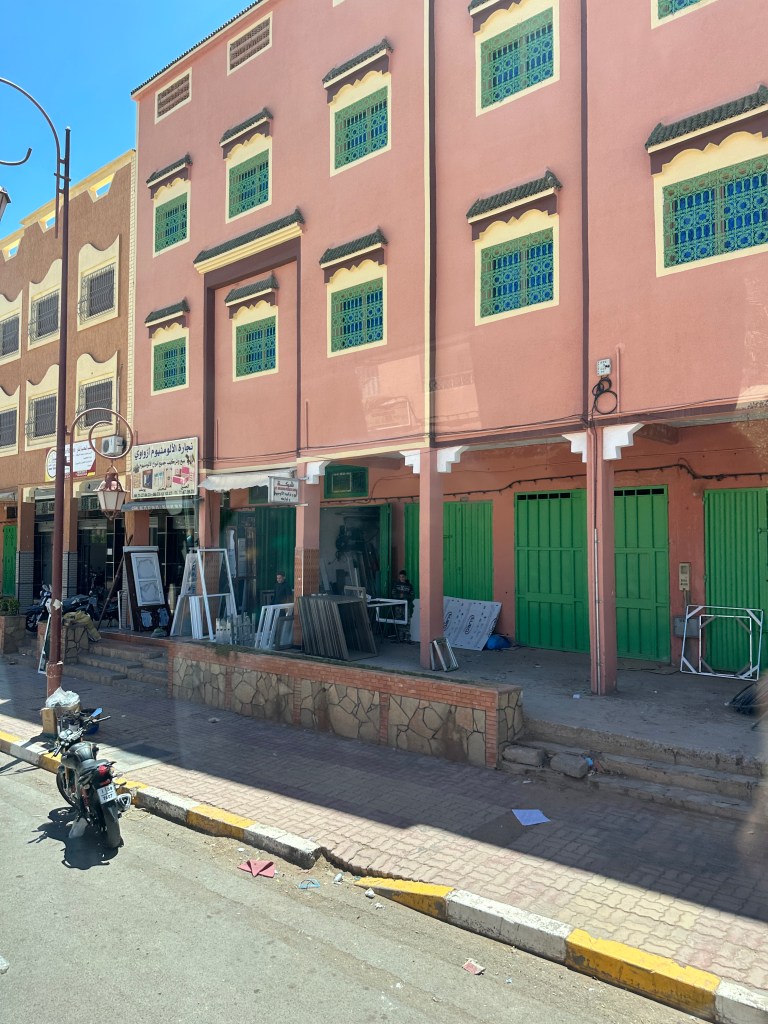
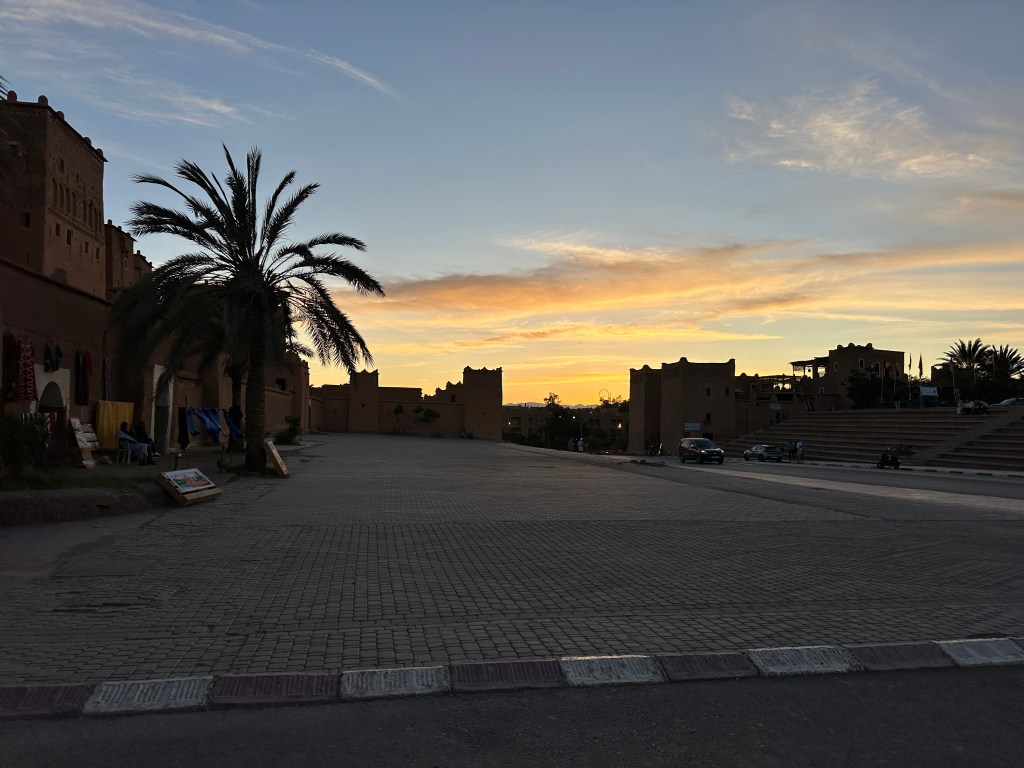
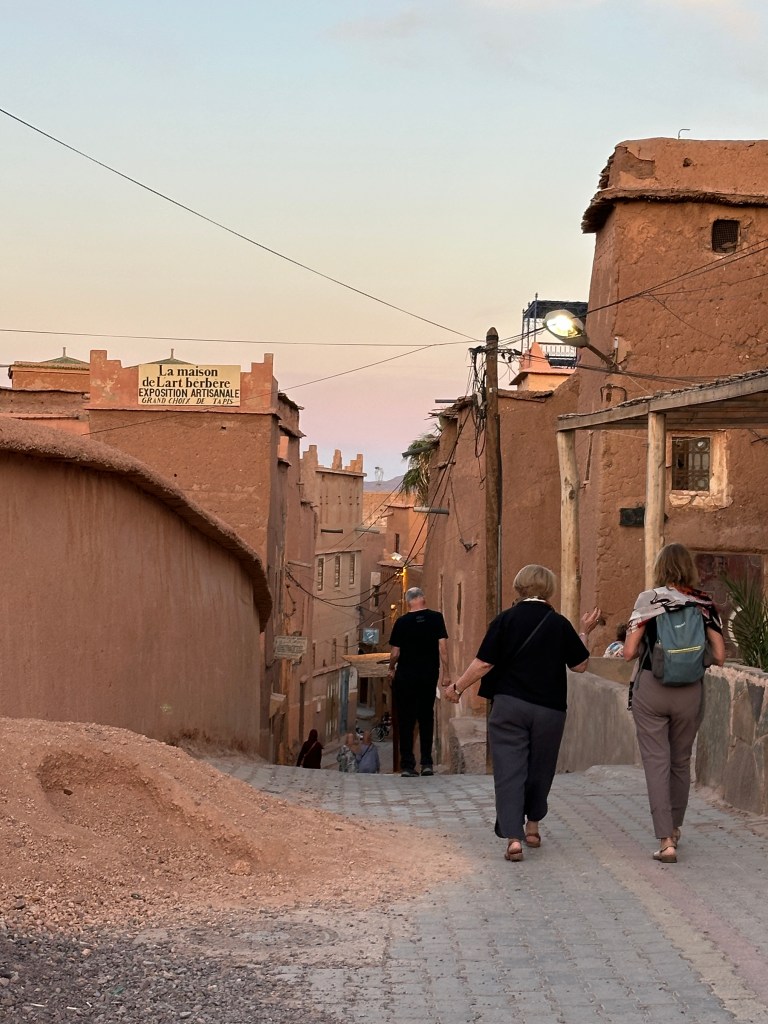
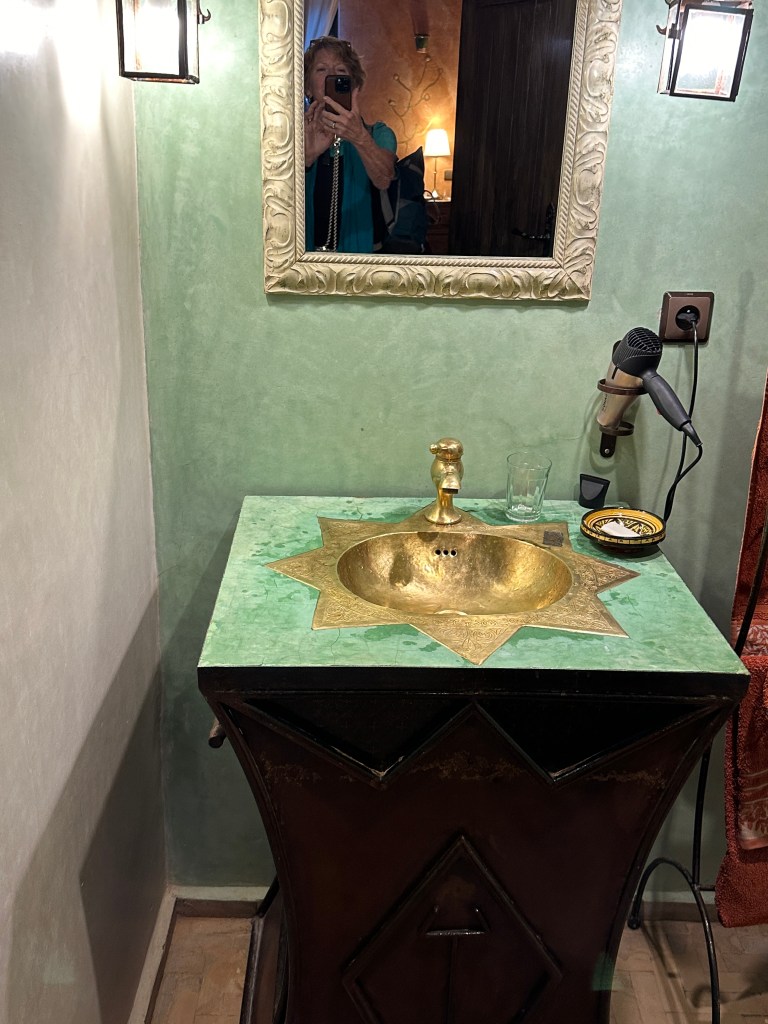
Late in the afternoon we checked into our riad at Ouarzazate. Internet connections were a real problem, but a little wine and meal in the hotel helped us to refresh after a long travel day.








Thursday, May 2
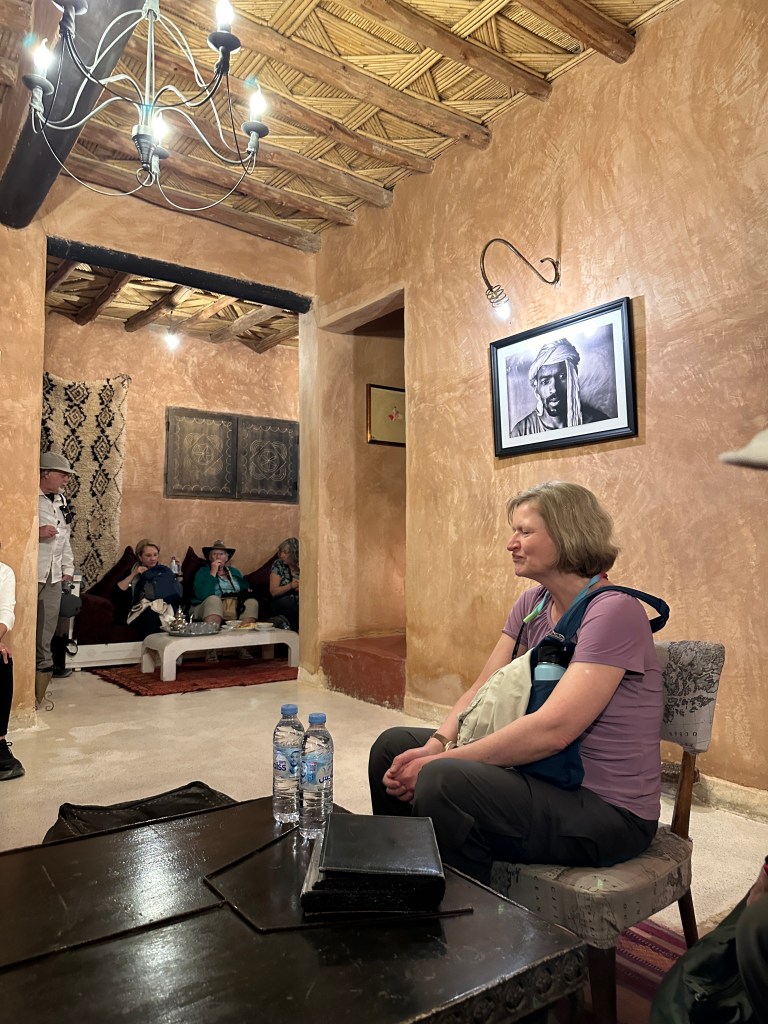
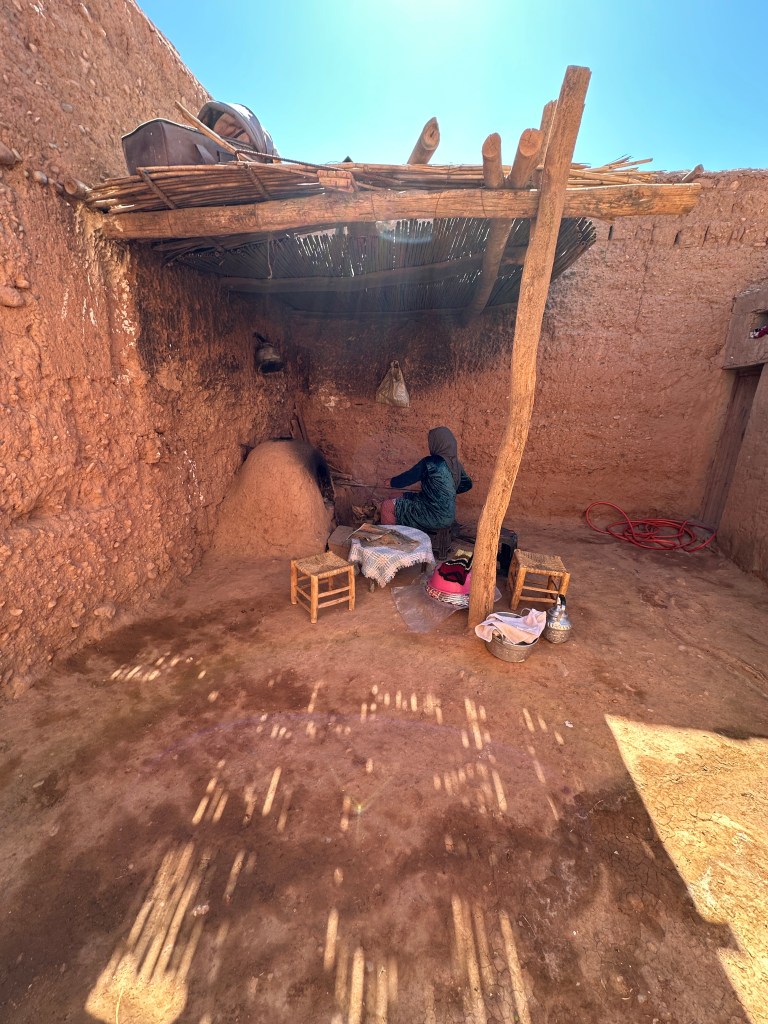
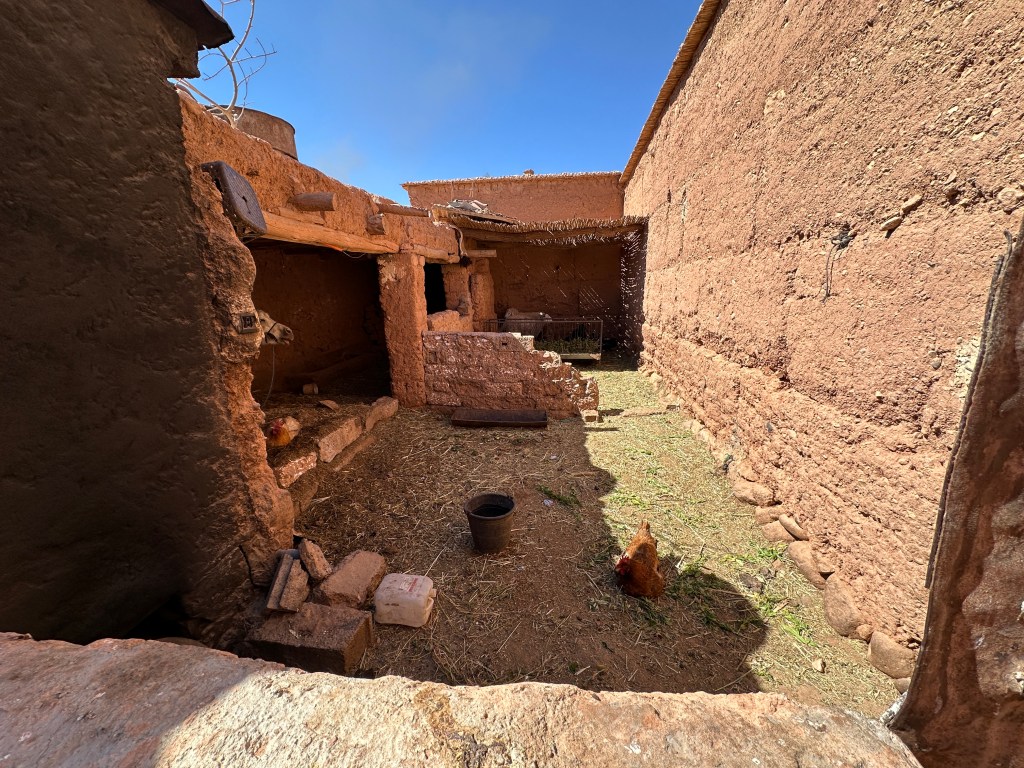
Breakfasts were on the rooftop, which had beautiful views of the town, and a stork nest on top of the minaret across from us. We experienced our “Day in the Life” ourside Ouarzazate. First we stopped to view the ancient city of Aït Benhaddou, a UNESCO world heritage site, where many movies have been filmed, including some scenes from Game of Thrones. We travelled a bit further to Asfalou where we met our local family. The father is a brick maker and demonstrated how he fashions bricks, allowing us to help. We walked down to the garden area, sat under shade trees for tea, bread and home-made olive oil, and chatted about life of the family. Our host showed us how they harvest clover, which they use for animal feed, with a hand scythe. We then made our way back into the main room of the house (taking our shoes off, of course), to help prepare lunch, which included couscous. This was a muli-generational extended family, with lots of helpers. We had great discussions.


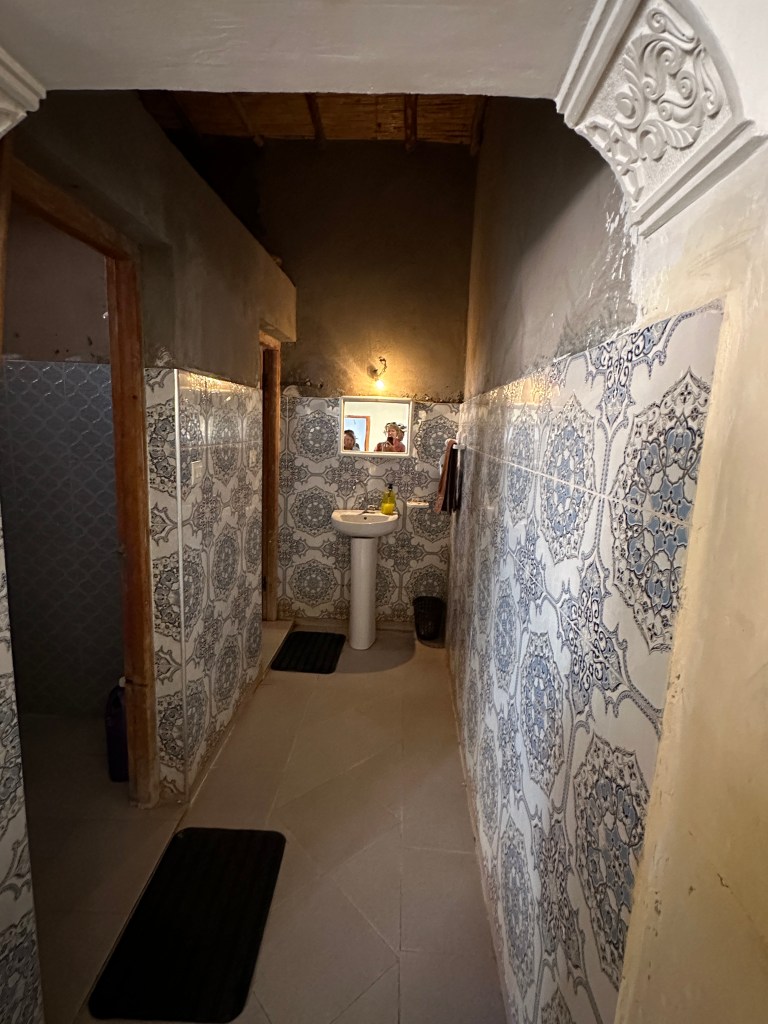

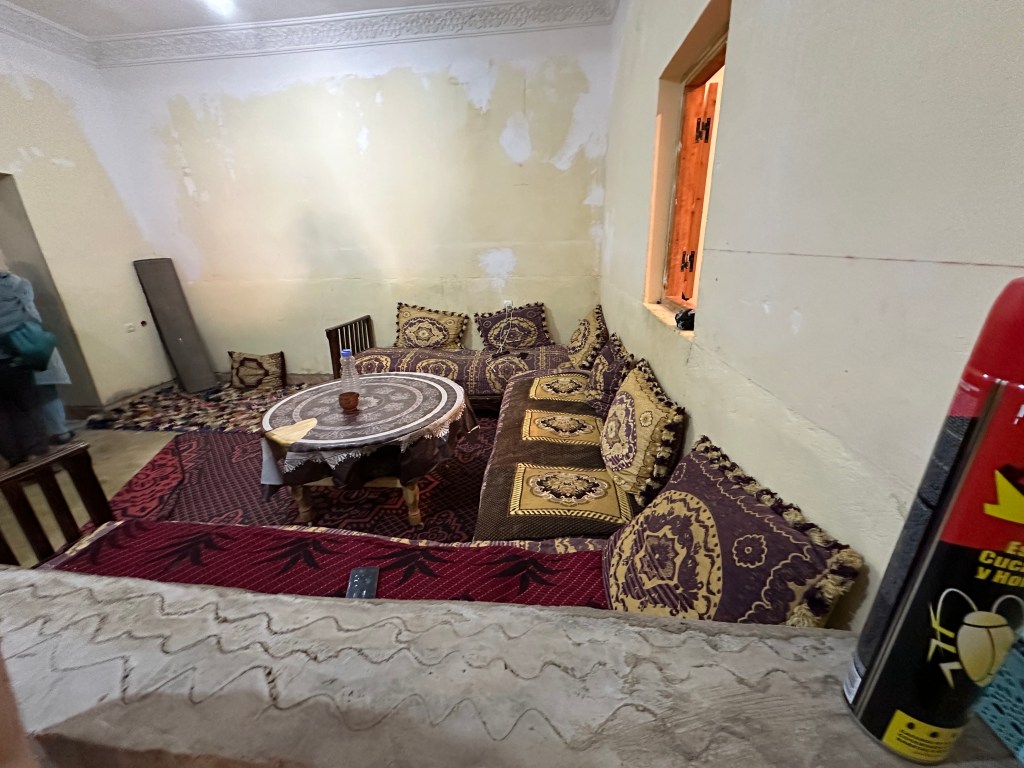




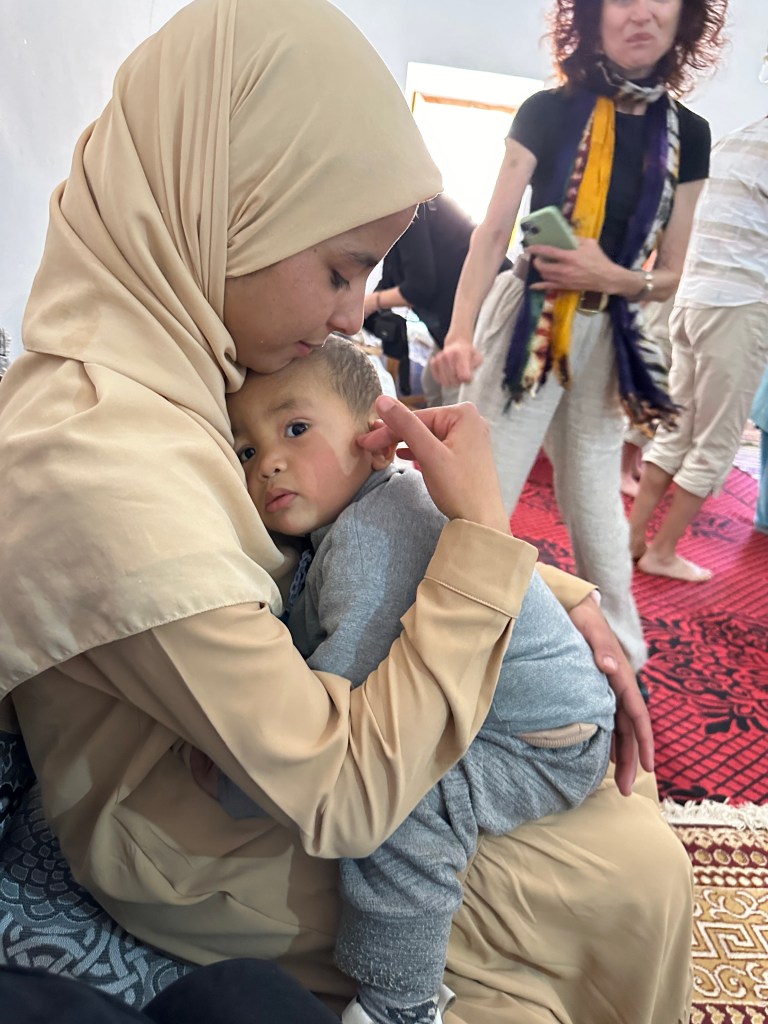

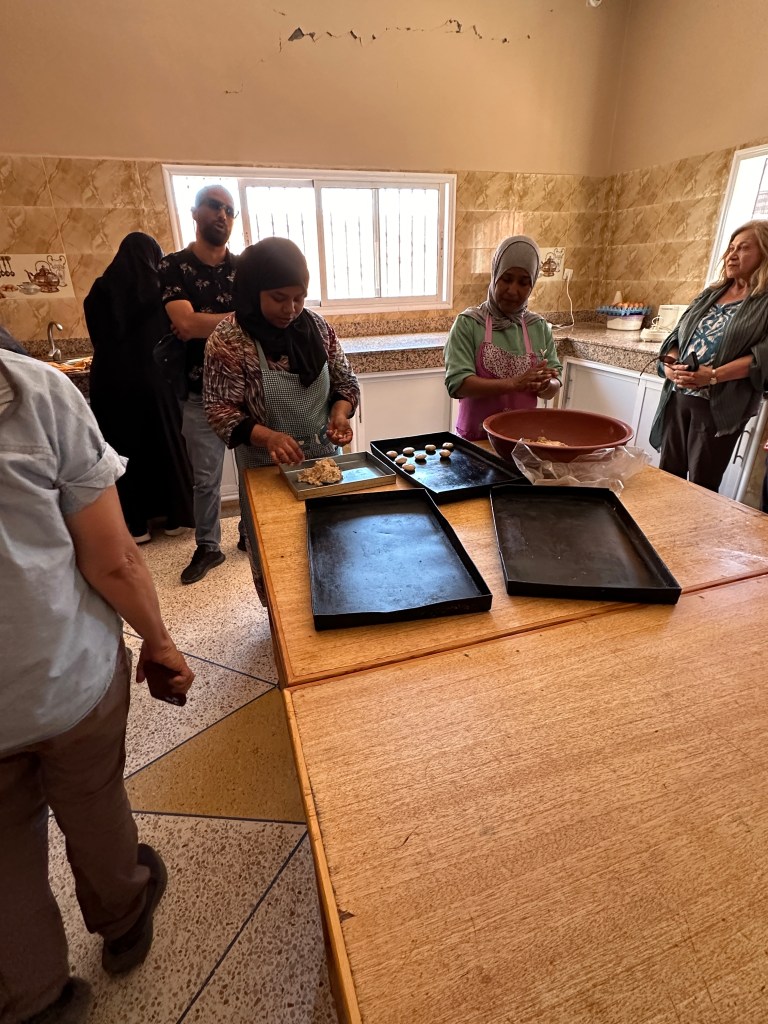
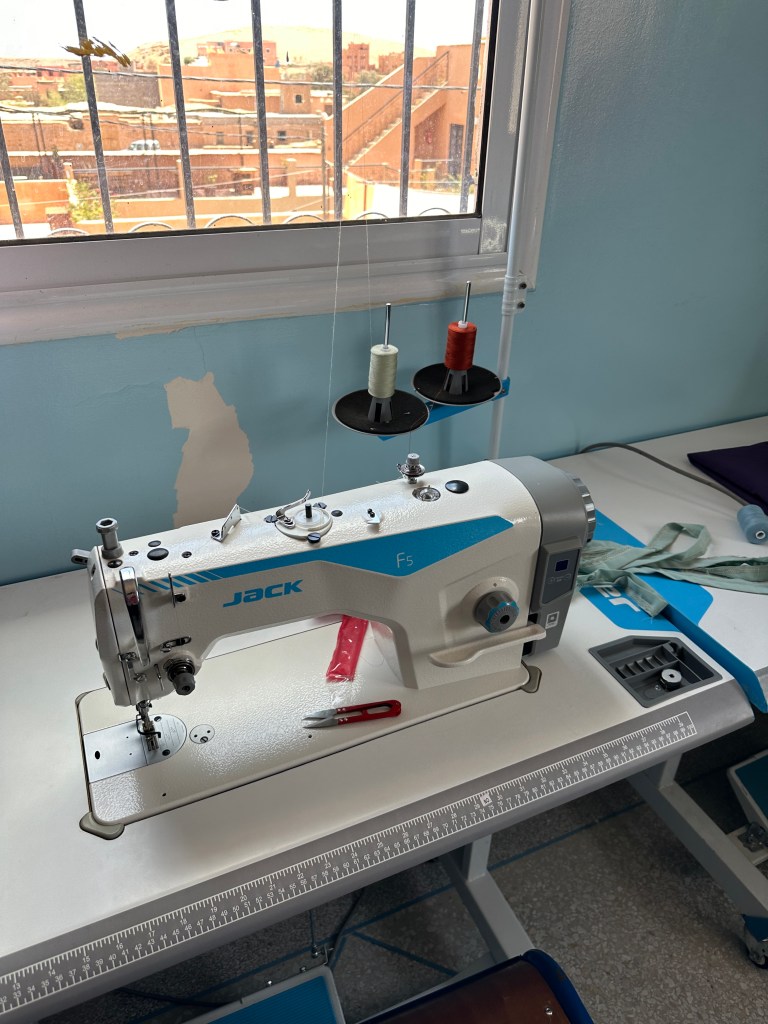
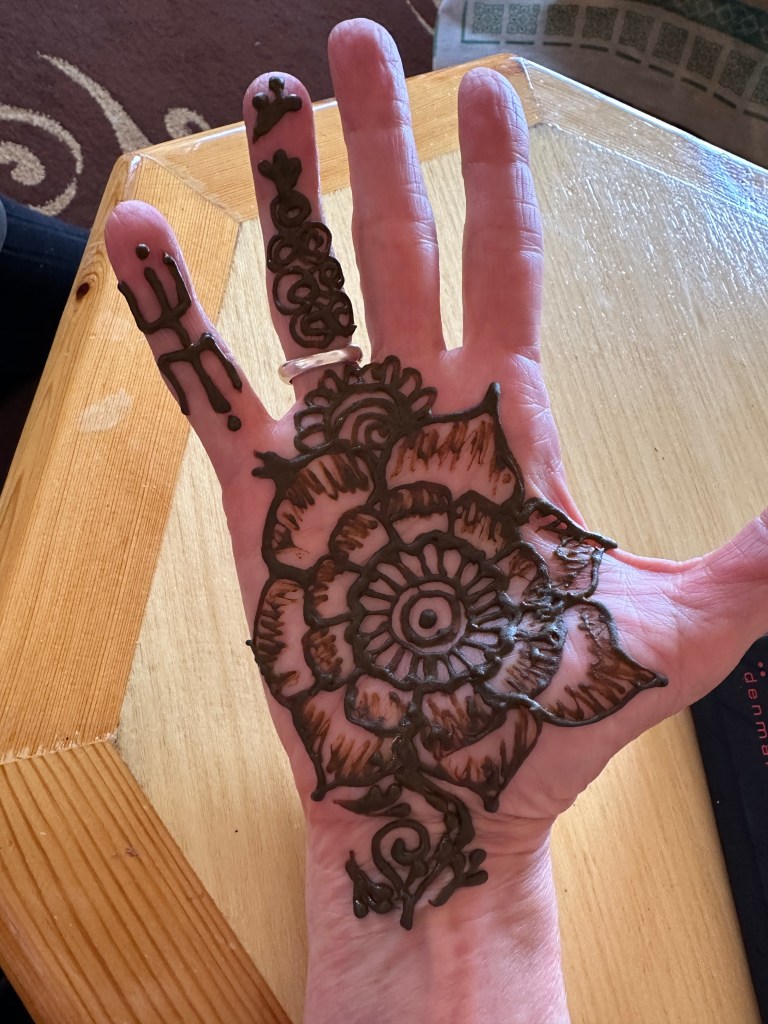
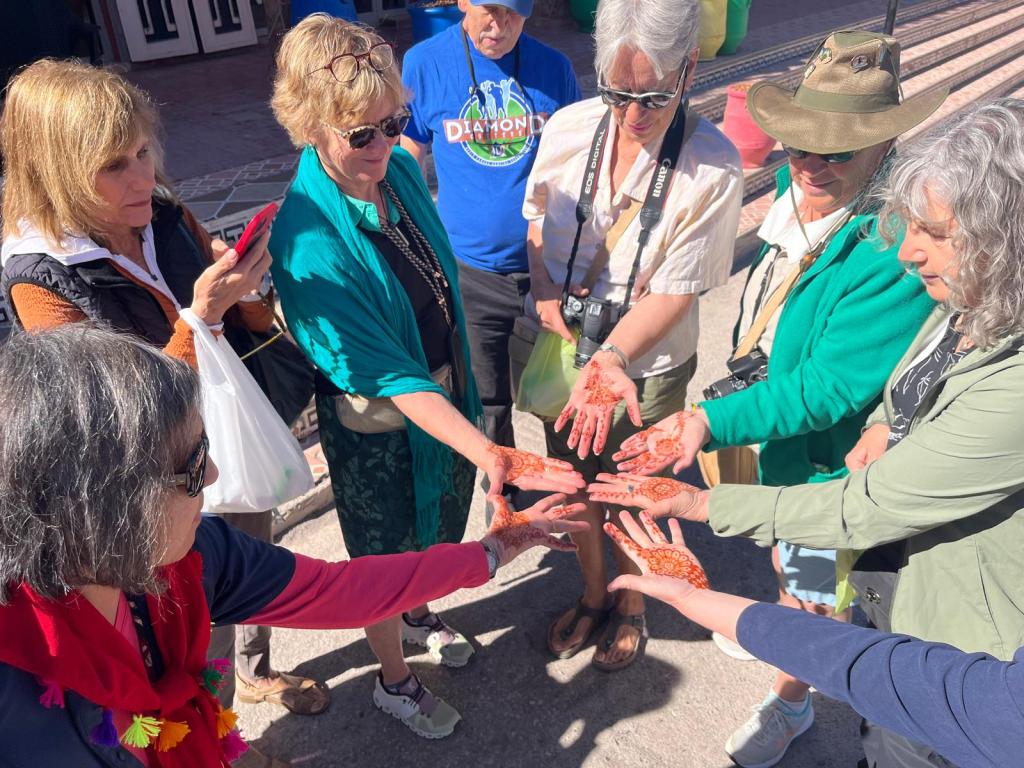
After saying our goodbye with waves and hugs, we drove to the Grand Circle Foundation-sponsored Imik Simik Women’s Association for Rural Development. A group of 15 local women (now 43) had gotten together with a plan to boost their economic chances as women in a male-dominated economy by learning new skills. While a men’s organization had offered a plan for a GCF project, GCF selected the women’s group to support through the building of a two-story building with rooftop level as well. An industrial kitchen was furnished an the women were trained in making pastries and other items to sell to local hotels and in the new cafe of the building. There is also a child-care center upstairs, a sewing room with great equipment (training will start soon), and a large gathering room for training and discussions. We had tea and cookies, and talked with the women, and then two of the women drew henna tattoos on some of our palms. It was a delightful experience to see how this endeavor is thriving and growing. There are plans for them to open a restaurant in the future.
We had dinner at a local restaurant back in Ouarzazate.







Friday, May 3,
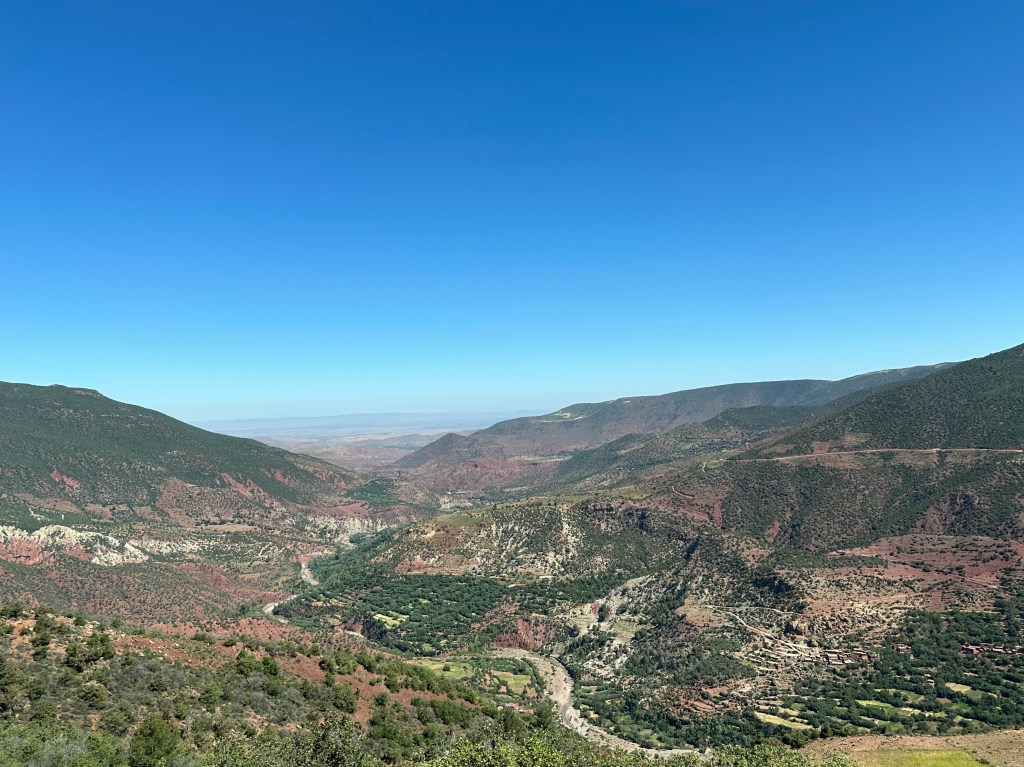
We drove through the High Atlas Mountains, stopping to see how Argan Oil is made from the nuts of the trees that grow only in Soutwestern Morocco.
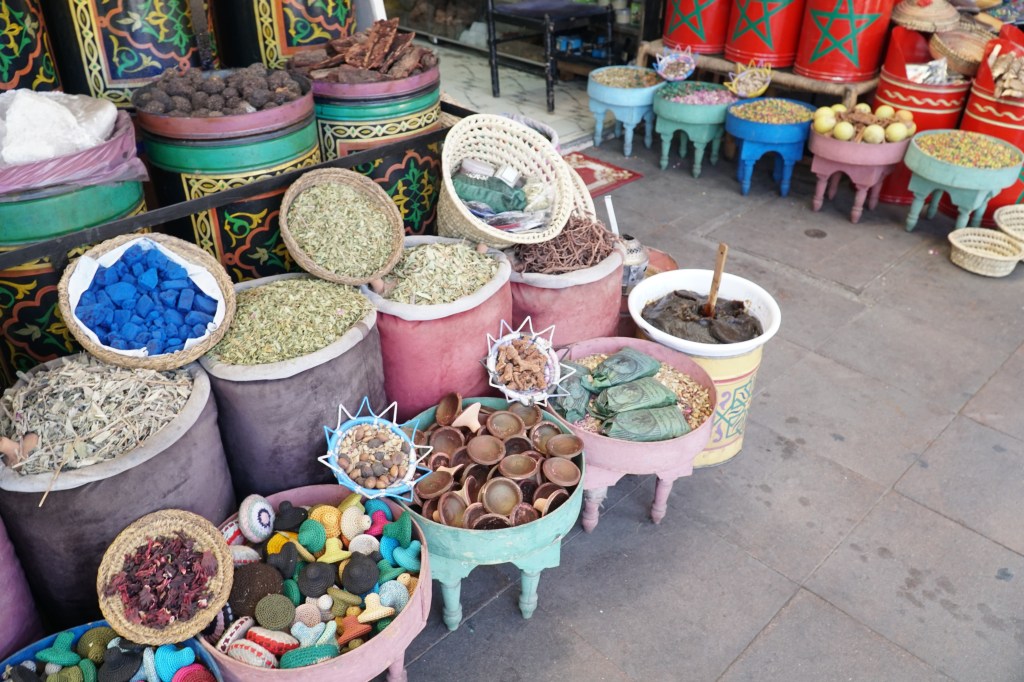
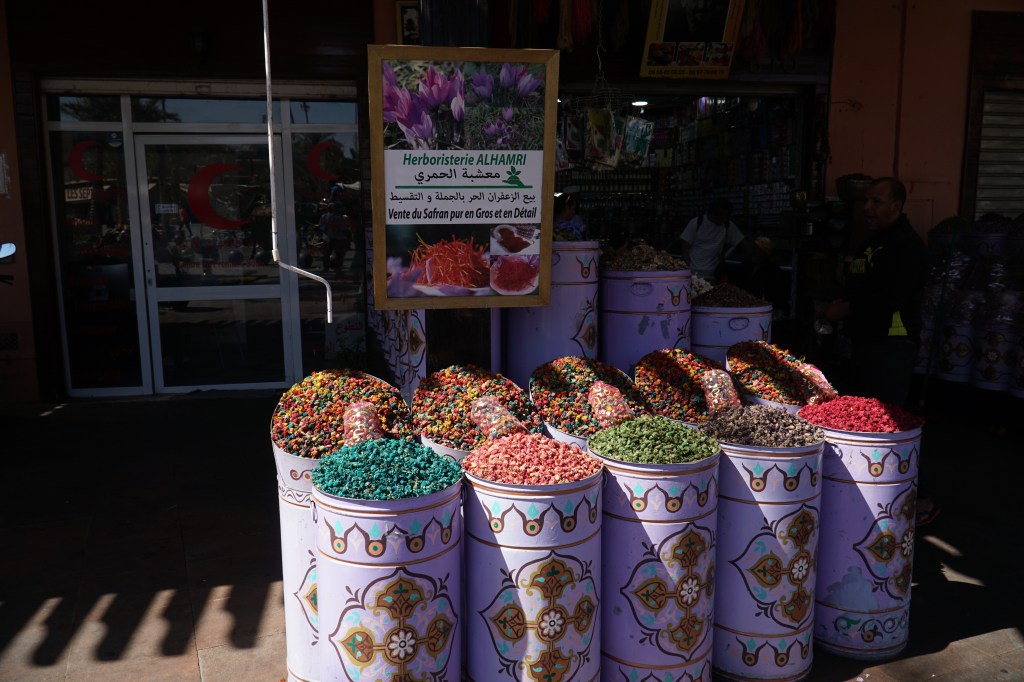
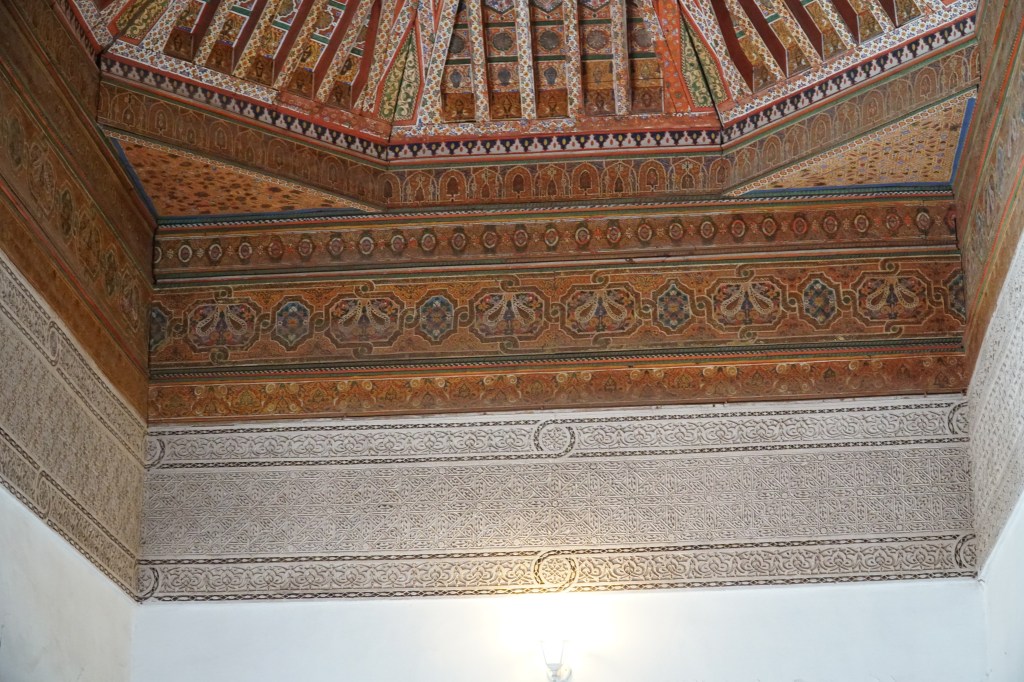
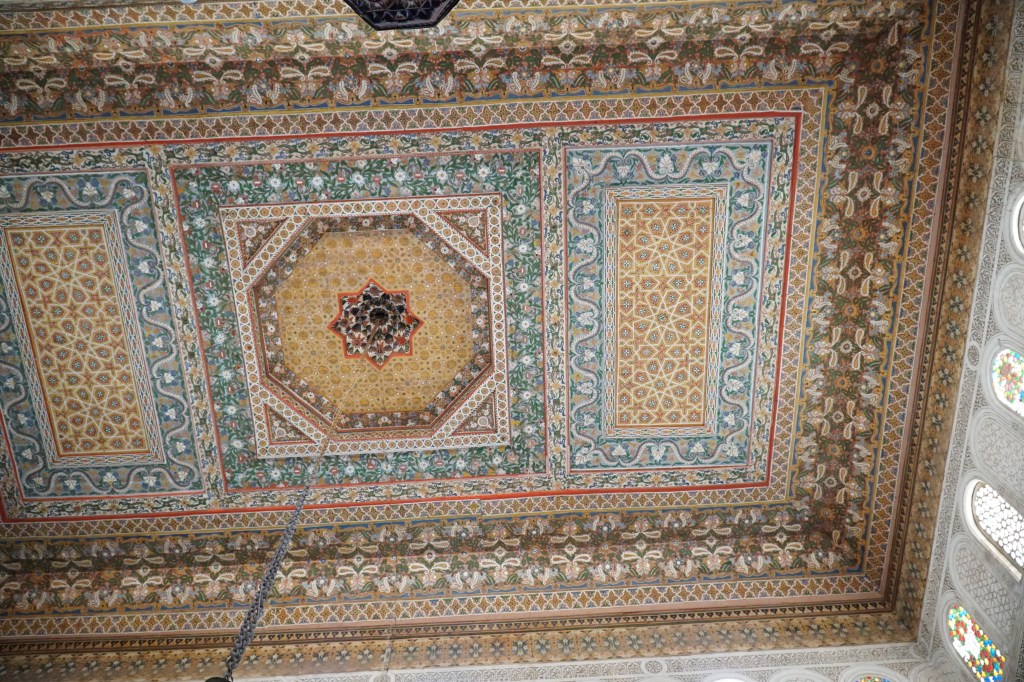
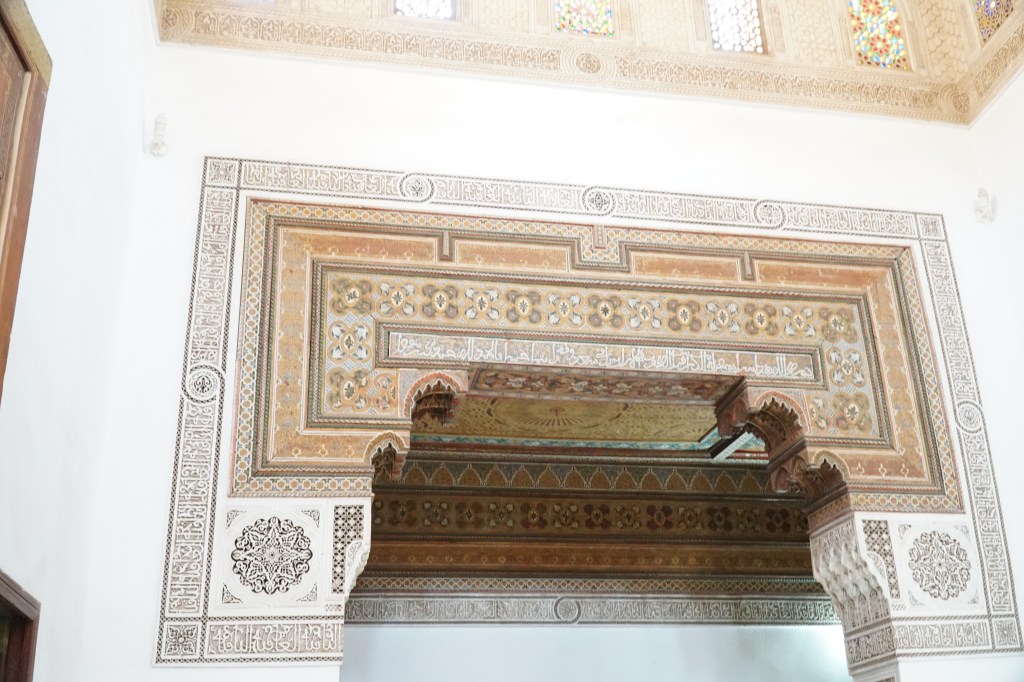
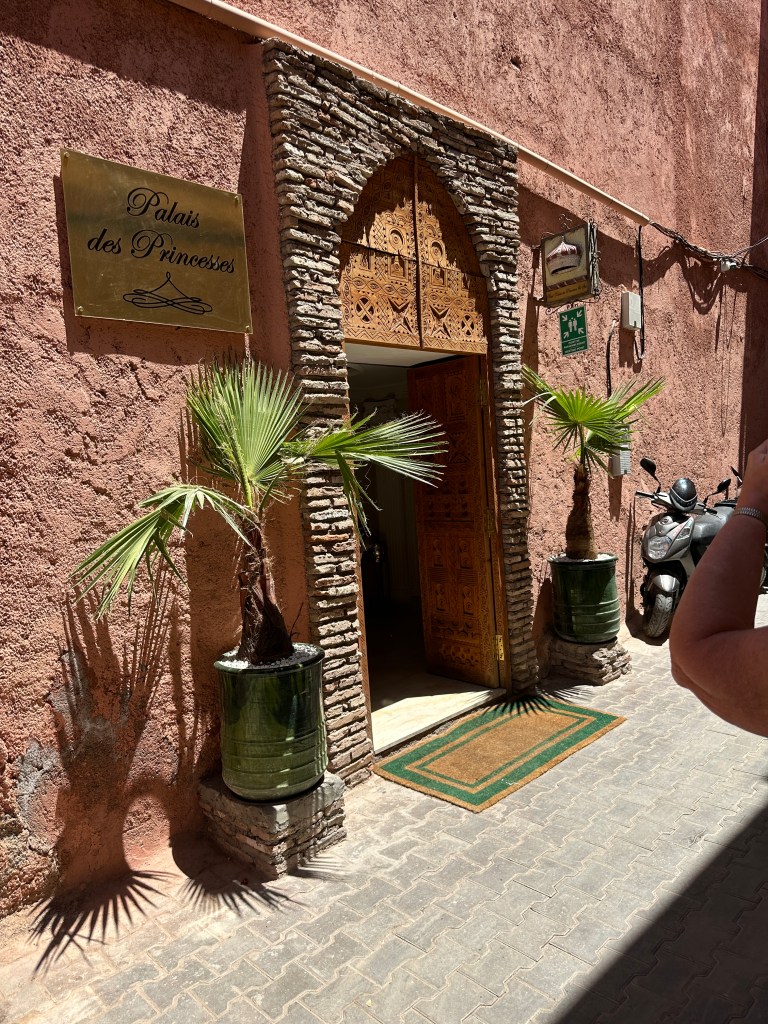
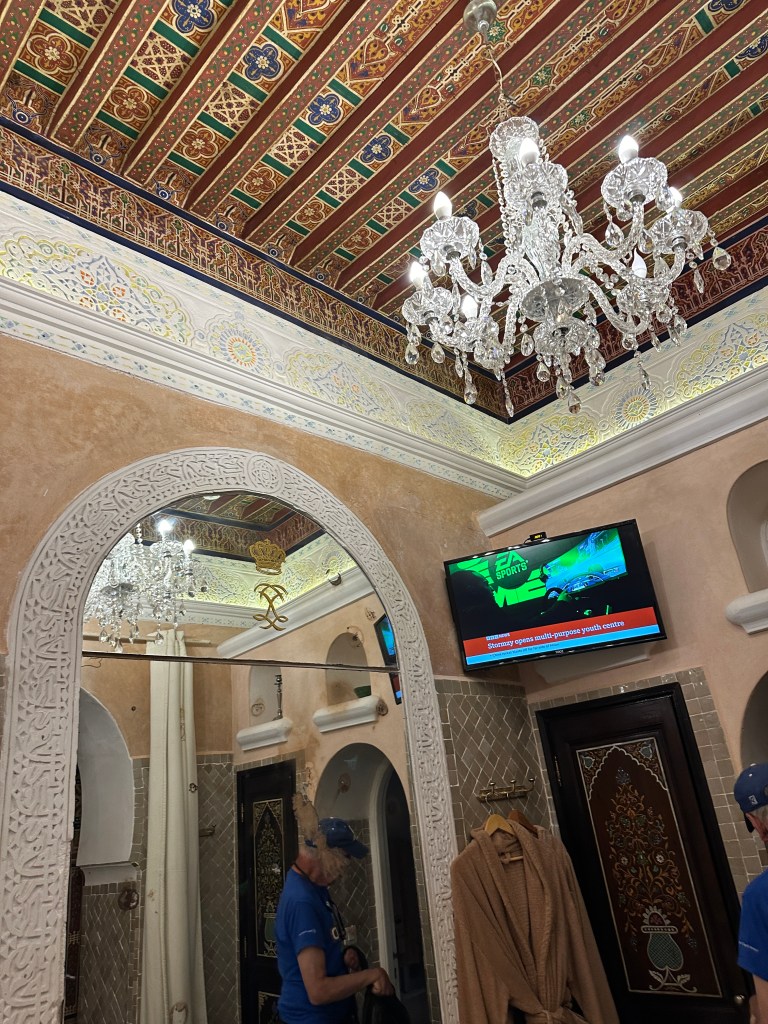
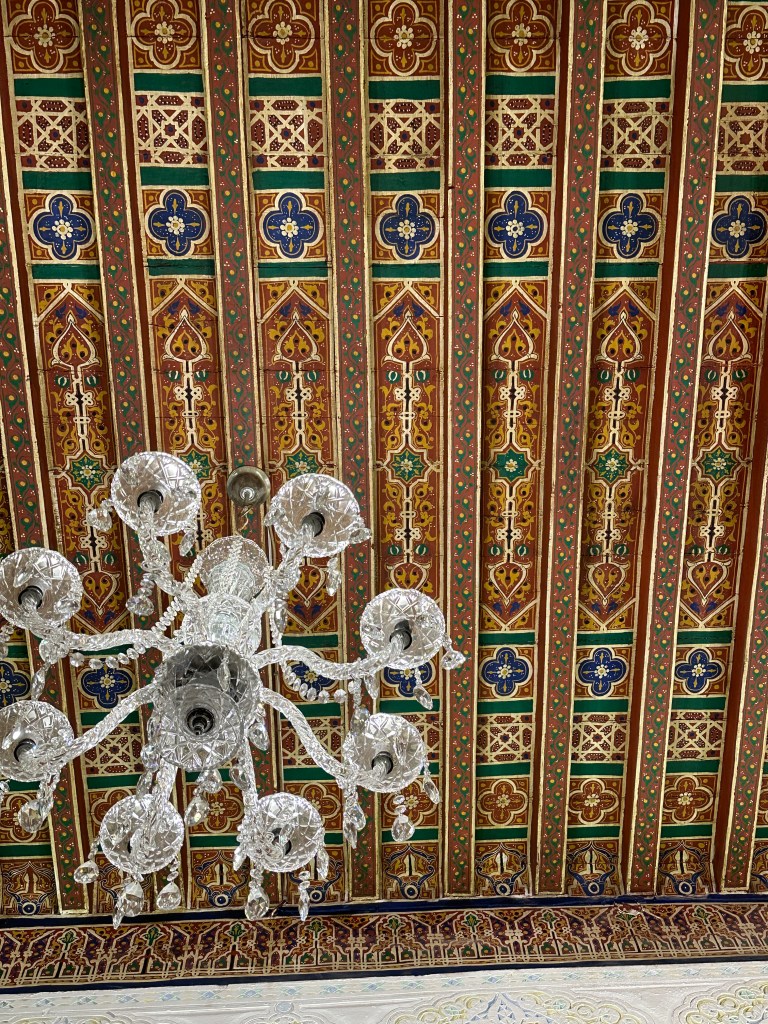
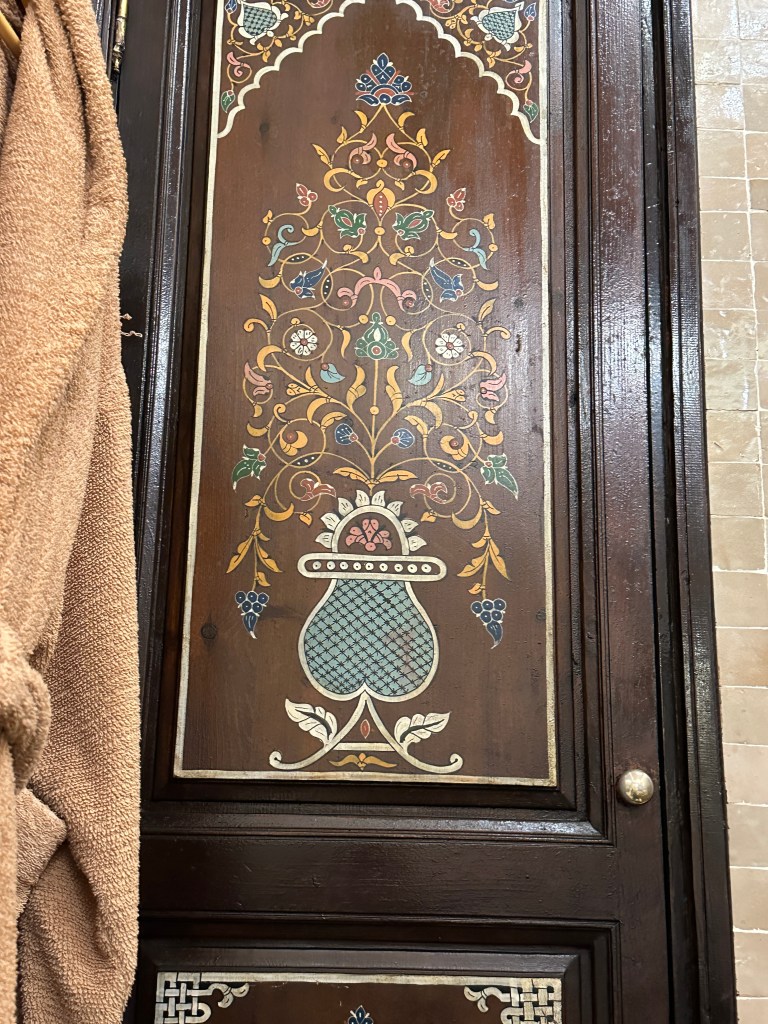
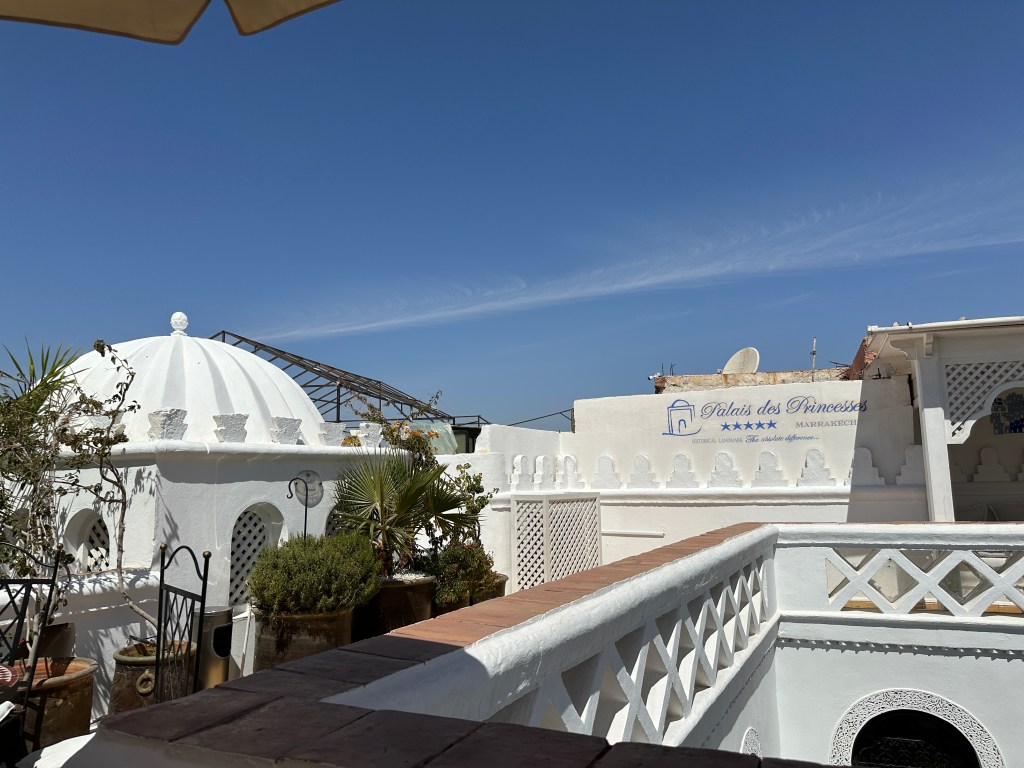
We checked into our riad in Marrakesh for lunch and then a had walking tour of parts of Marrakesh, particularly the Bahia Palace. Building of the palace began in 1859 by Su Musa, the grand by Si Musa, grand vizier of Alaouite sultan Muhammad ibn Abd al-Rahman, and completed by his son in 1900. Si Musa was descended from black slaves and his family rose to the highest ranks in the government. The tour ended in the Djemma El Fna, the main market square filled with vendors of all sorts, snake and monkey handlers, and motercycles that seem determined to run you over in the narrow alleyways from the square to our riad, the Palais des Princesses. The small alleys of the souks were crowded with vendors, shoppers, and motorcycles doing their best to avoid running us down!!
Some of the travellers ventured with Mohammed to find local street food options for dinner. Chris and I were tired from our travels and ordered sandwiches at the hotel, which were delivered to the rooftop seating area. We had purchased some bottles of wine and were able to sneak some up to roof to go with our food. Yes, in Morocco, wine and beer are scarce!







Saturday, May 4,
We opted not to join the group for the rest of the walking tour of Marrakech and instead did our private exploration of the souk and market square near our riad.
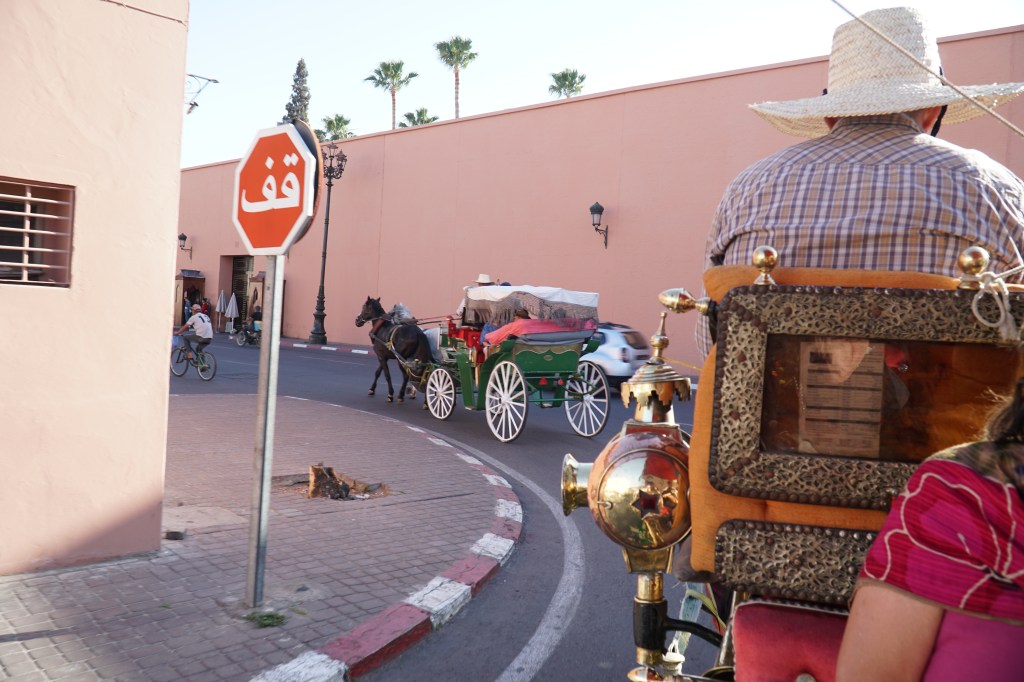
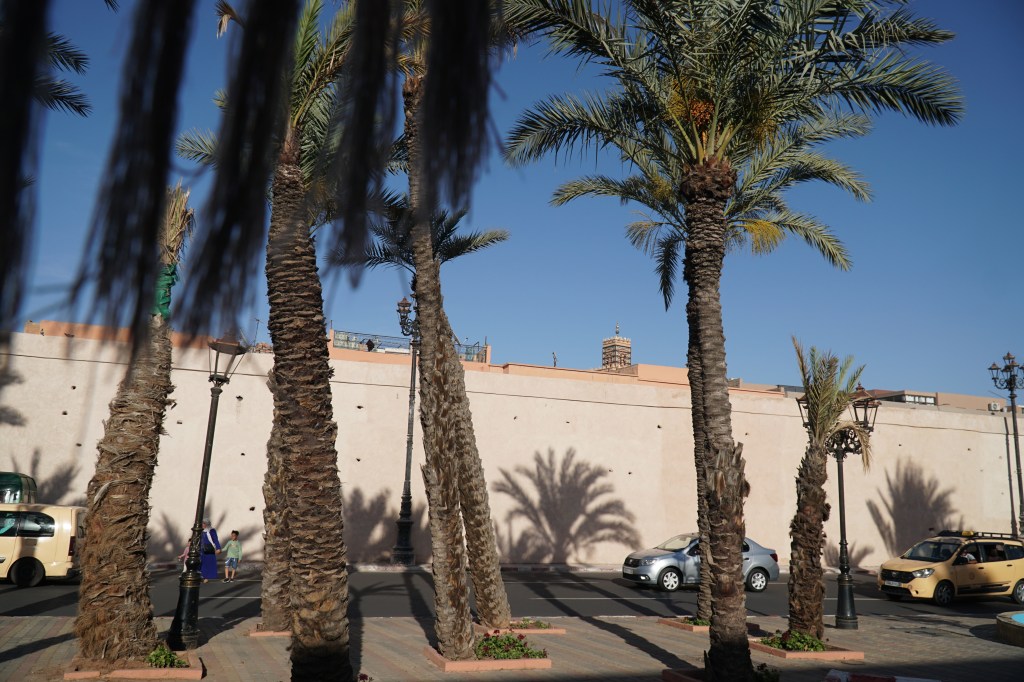
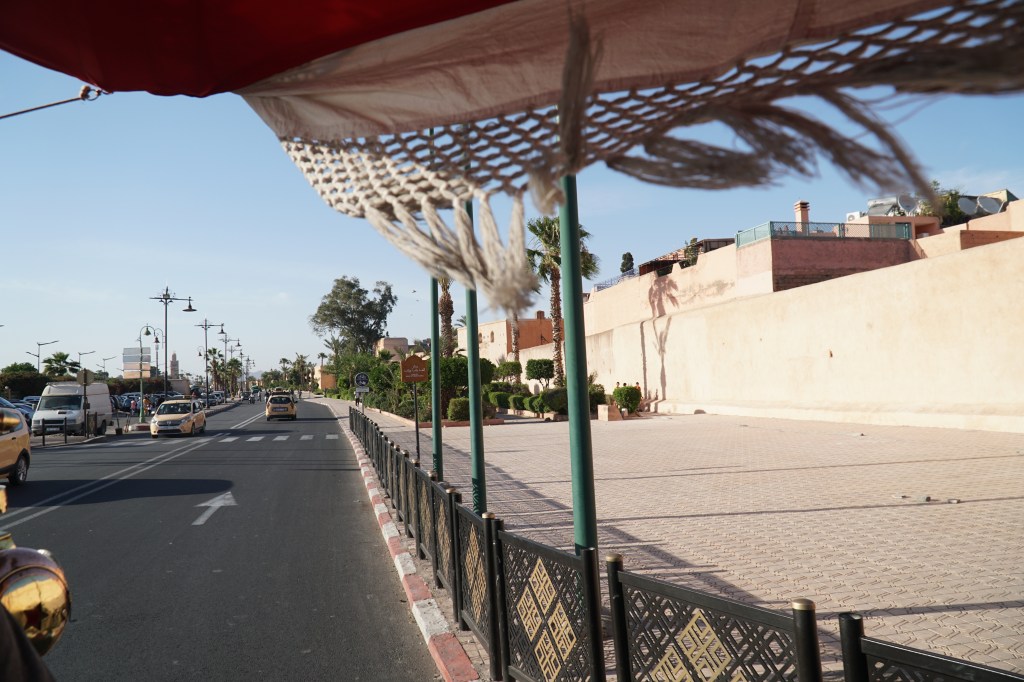
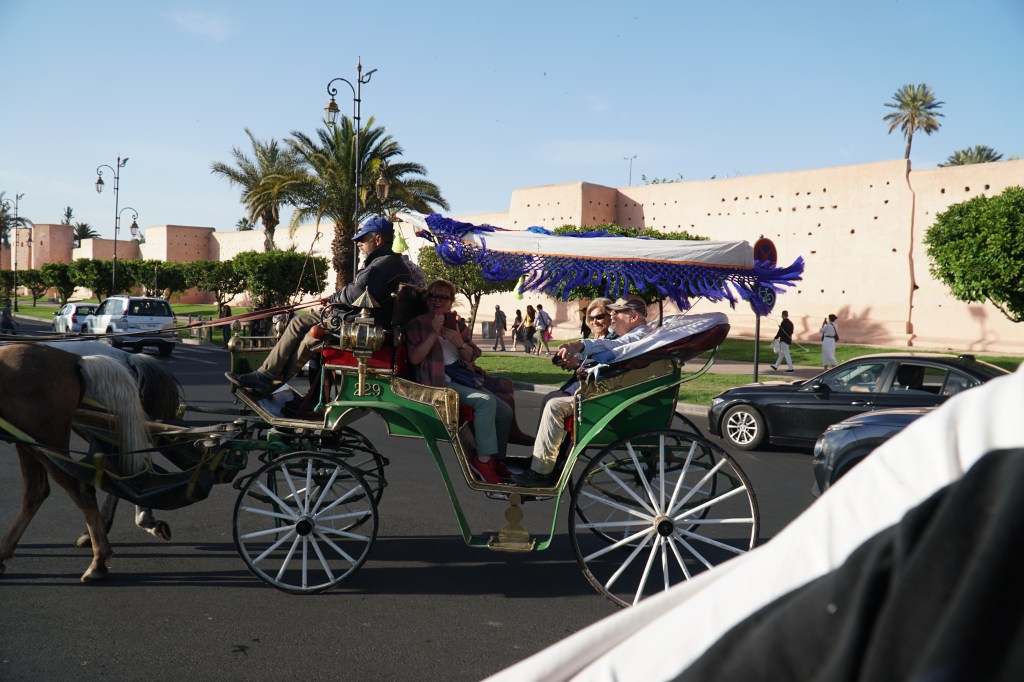
We met the group for lunch at a local restaurant cooking lamb chops and lamb burgers, and later had an hour and a half tour around Marrakech in horse-drawn calèches. We were able to see some of the new town with very modern and fancy homes, hotels, and restaurants, in addition to the old town market streets.
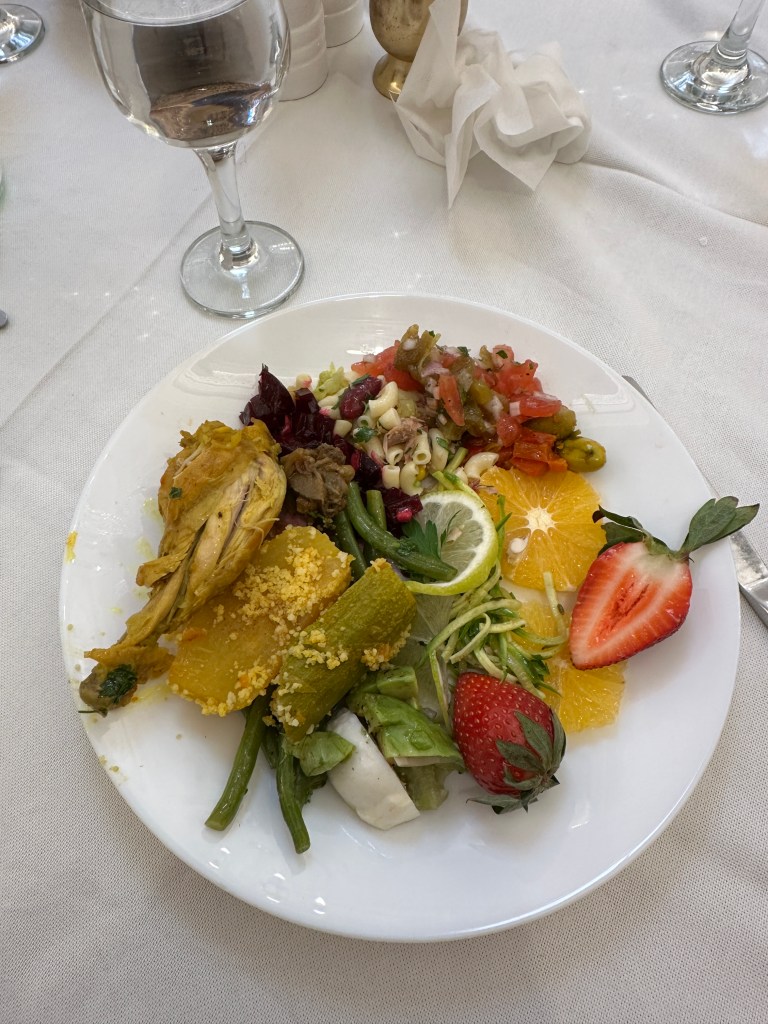
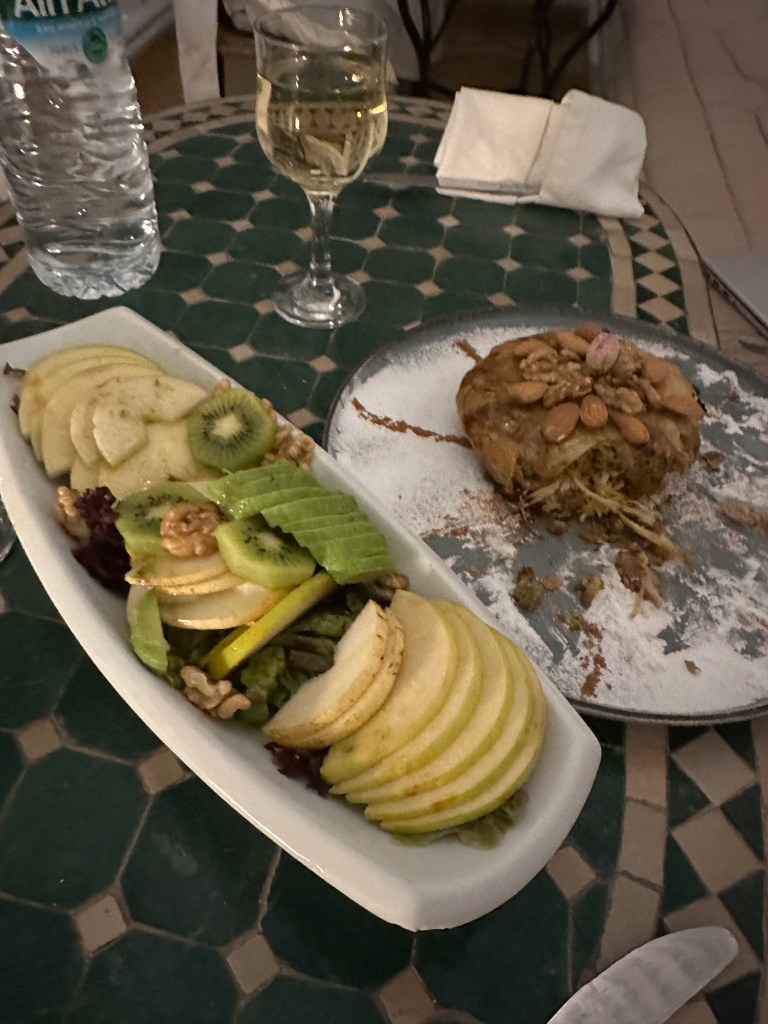
For dinner, we again opted to order from the riad and eat in the rooftop area. We had the most amazing salad of fruits, dates, and nuts, and a pastilla, which is a “pie” made with shredded chicken, shaved almonds, and spices wrapped in phyllo pastry. I can’t wait to try to make the pastilla!






Sunday, May 5
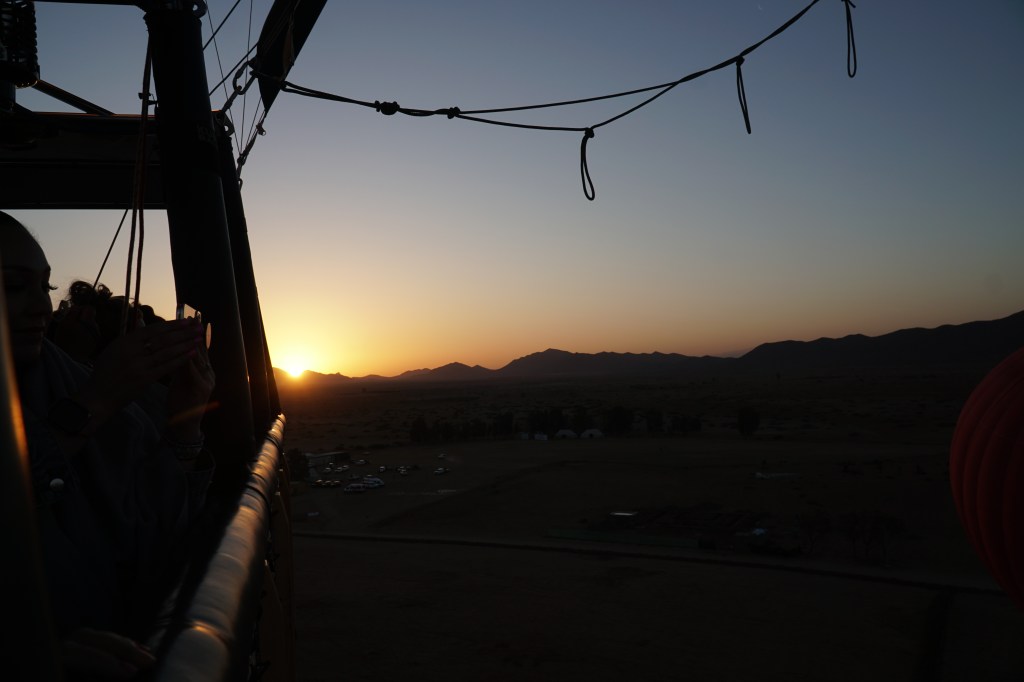
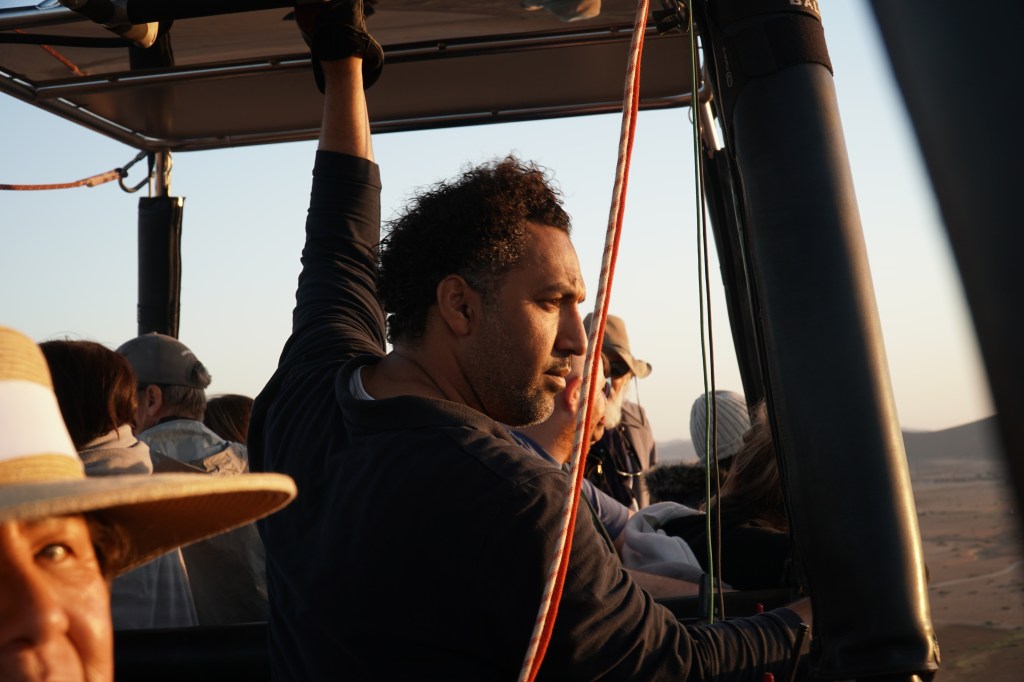
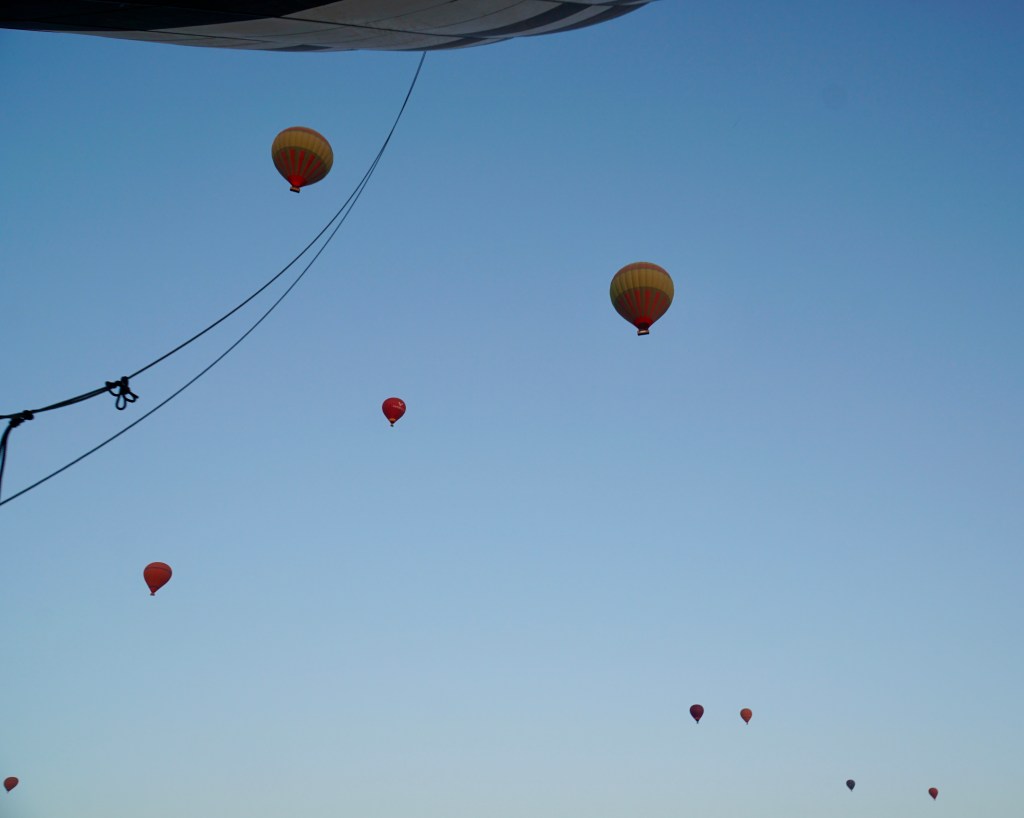
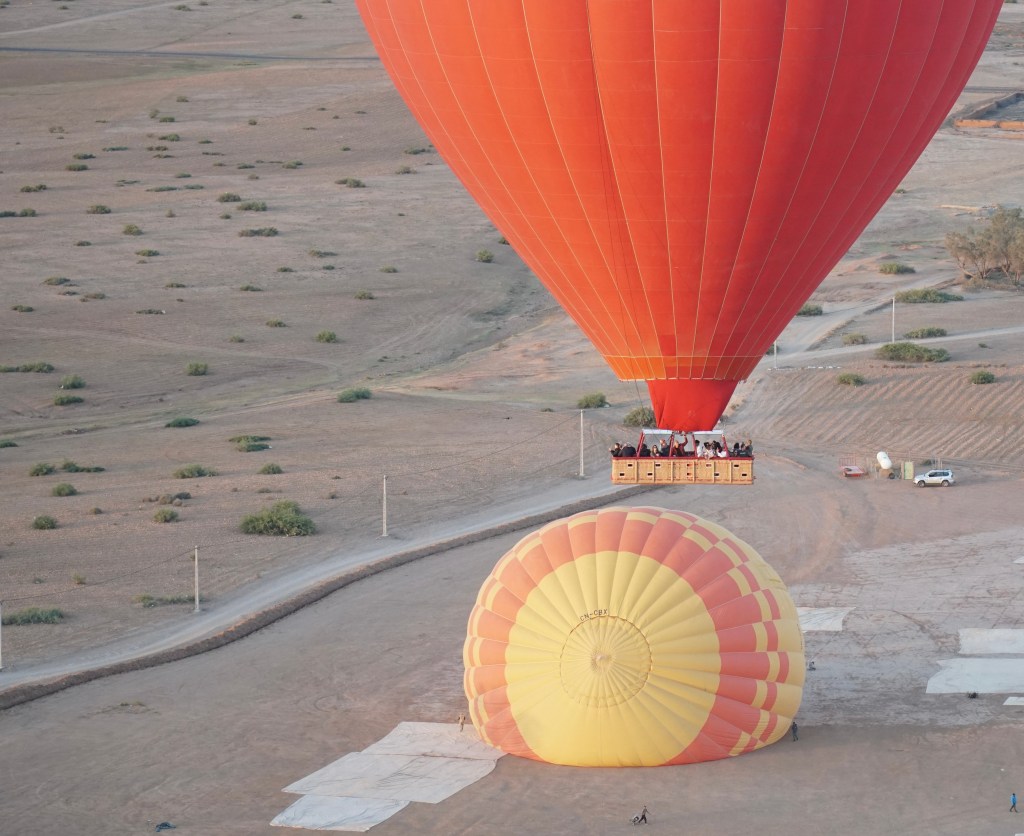
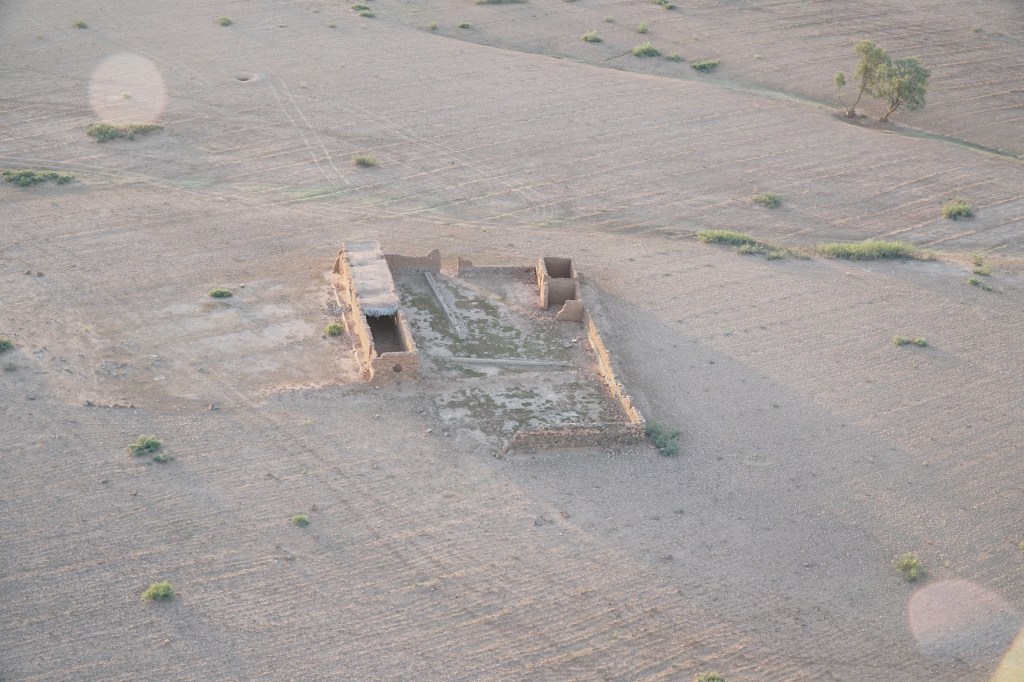
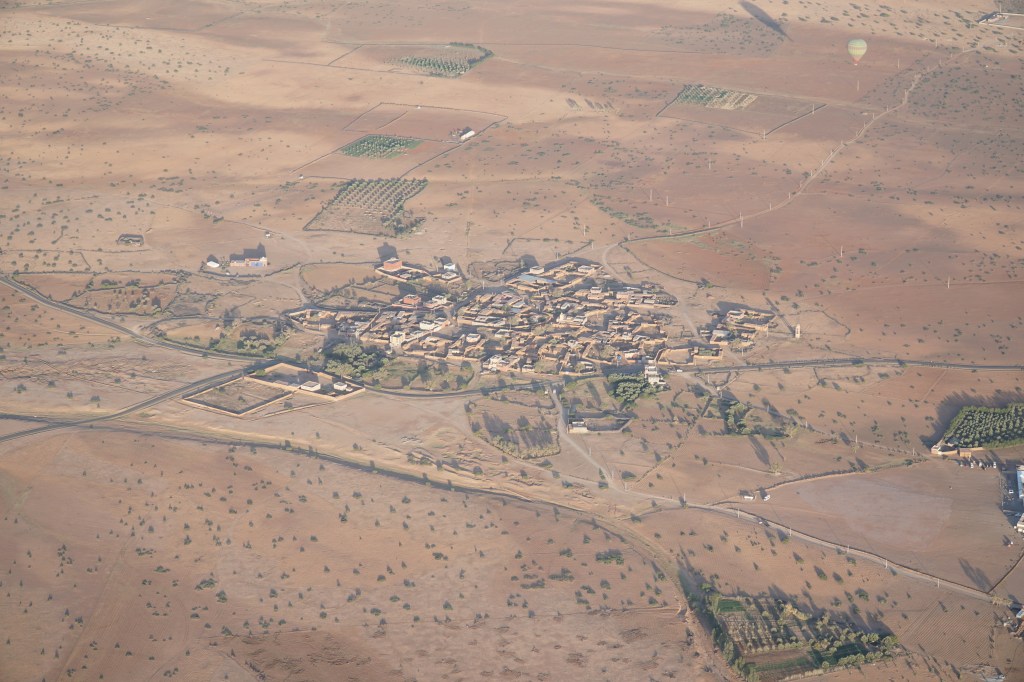
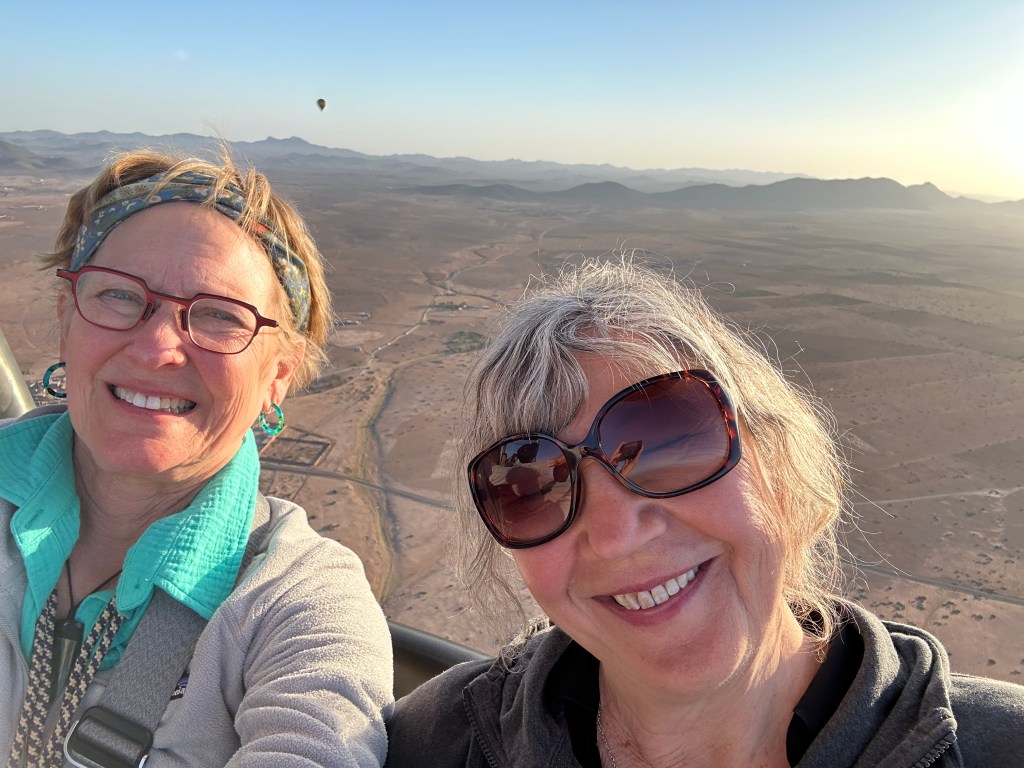
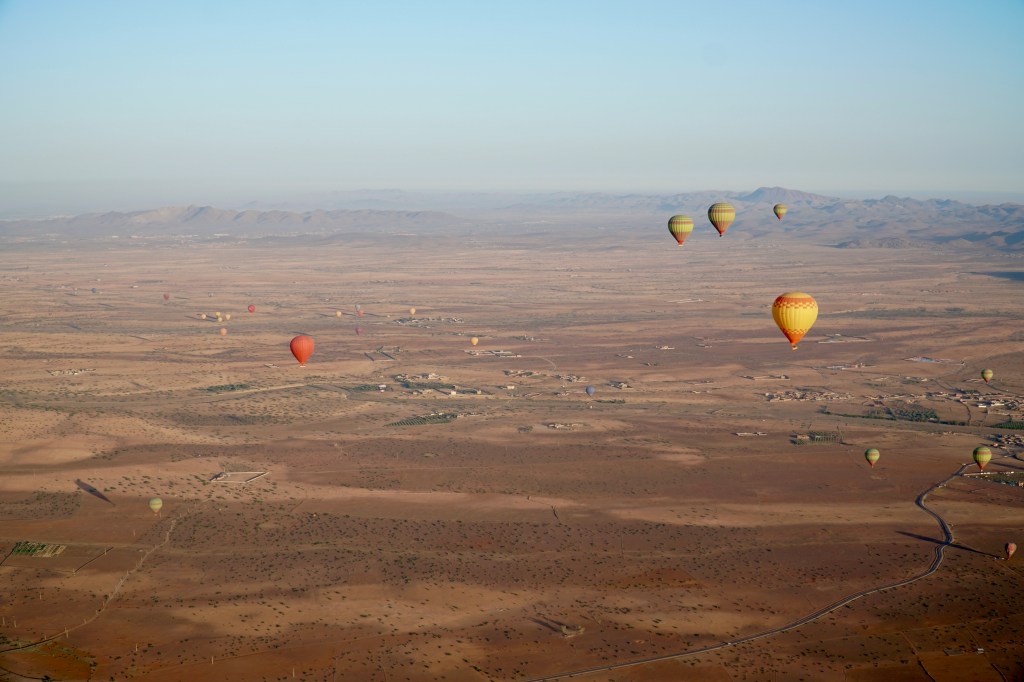
Two of us met a driver at 5:00 am to travel outside of town for a hot-air balloon ride. We watched the amazing preparations, then boarded our very large balloon. Our pilot was a very experienced Egyption pilot and helped the other balloons get up before we left. We were able to see the sun rise as we were taking off, then floated along to see the scenery, that included the highest peak in the High Atlas Mountains, goat herds, little villages, and about 30 other balloons. It was just amazing. I will do this again every chance I get!!!
After we landed and the crew prepared the rocky ground for the balloon to safely settle on, we were treated to a full Moroccon breakfast and then headed back to town.






Chris and I went silver shopping and I bought a Moroccan bracelet.
We later met in one of the riad dining rooms for a discussion with a student about life in Morocco, opportunities for women, cultural pressures, wearing of the veil, views on marriage. Despite her father’s pressure to wear the traditional scarf and pursue an economics college curriculum, she later decided to remove the veil and choose a different academic path. Interestingly, her father was completely supportive (leading her to wish she had asserted her independence earlier). I asked her about recent survey results I had read about which said a high percentage of women reported domestic abuse in the last year. Her response was that the abuse would totally have been psychological/emotional abuse and not physical abuse.
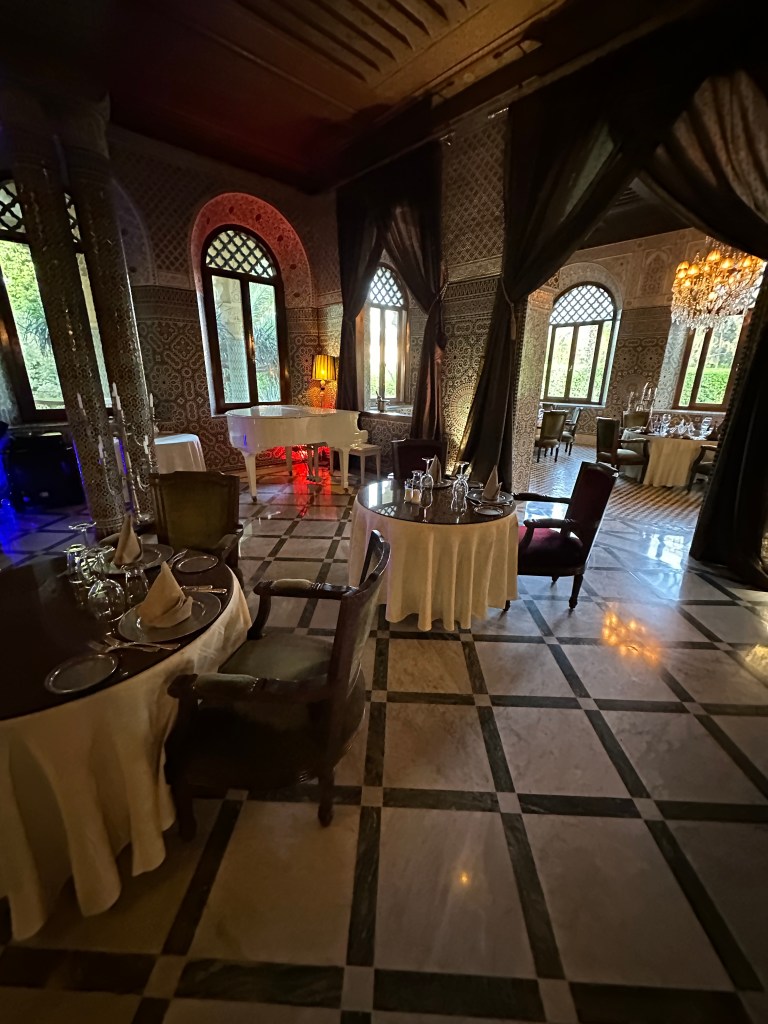
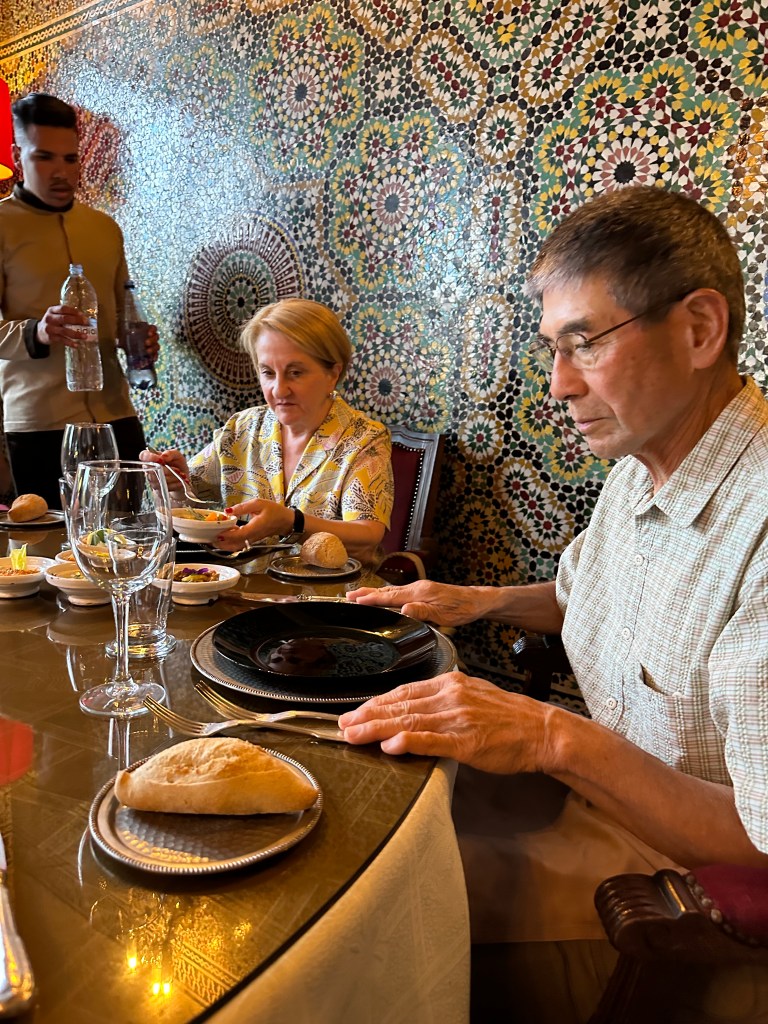
We had our farewell dinner at an amazing restaurant.



Monday, May 6
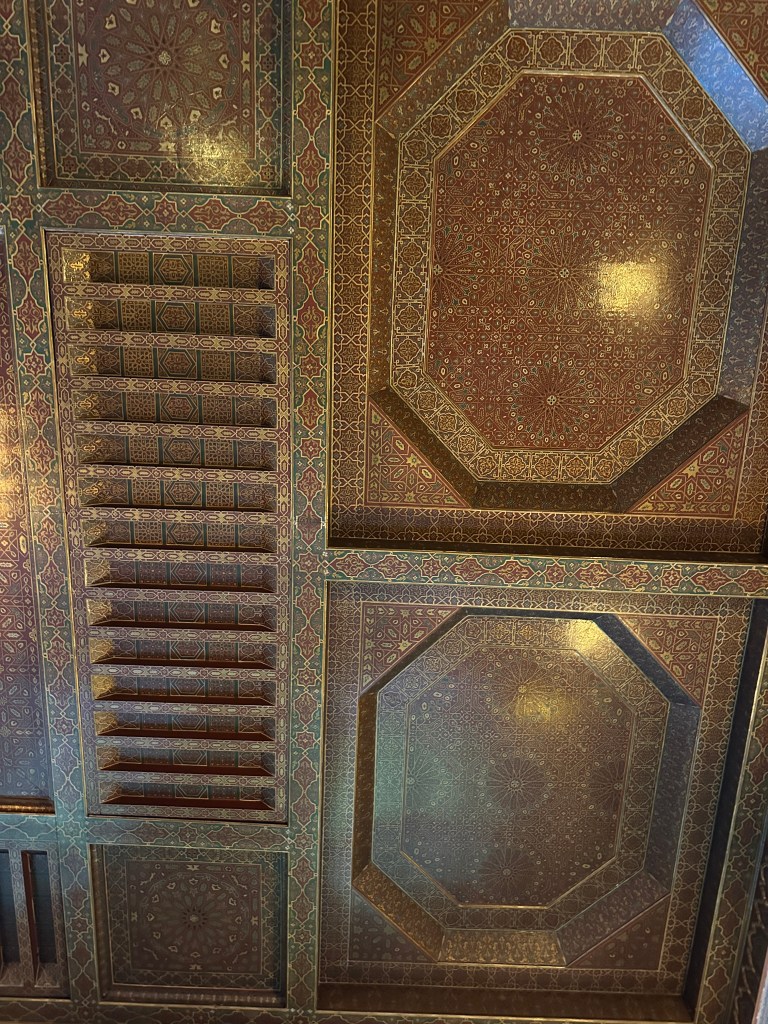
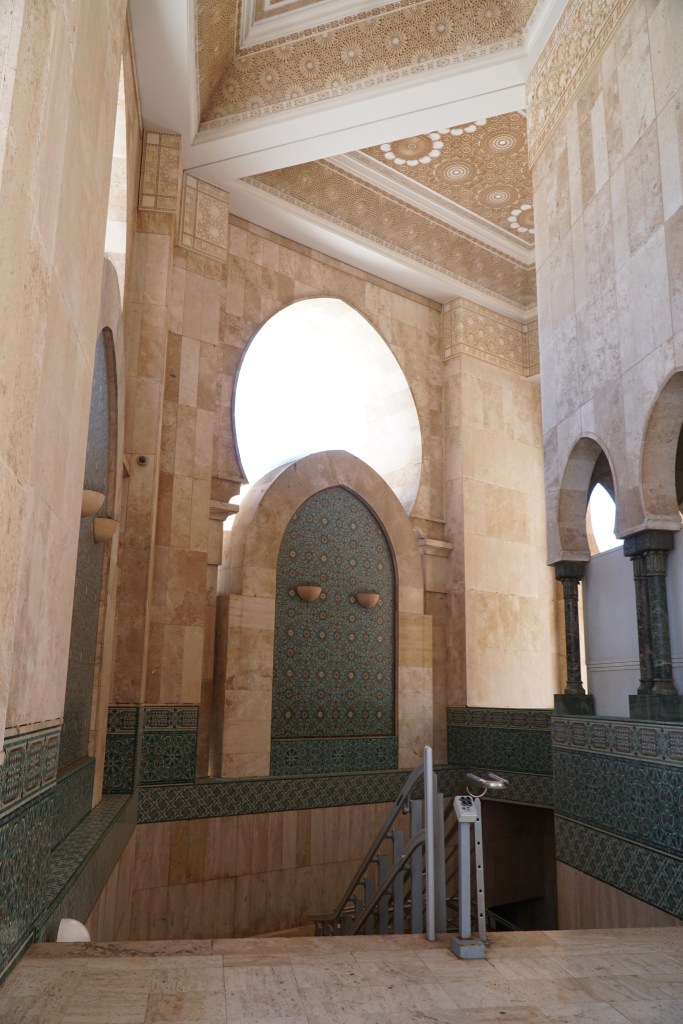
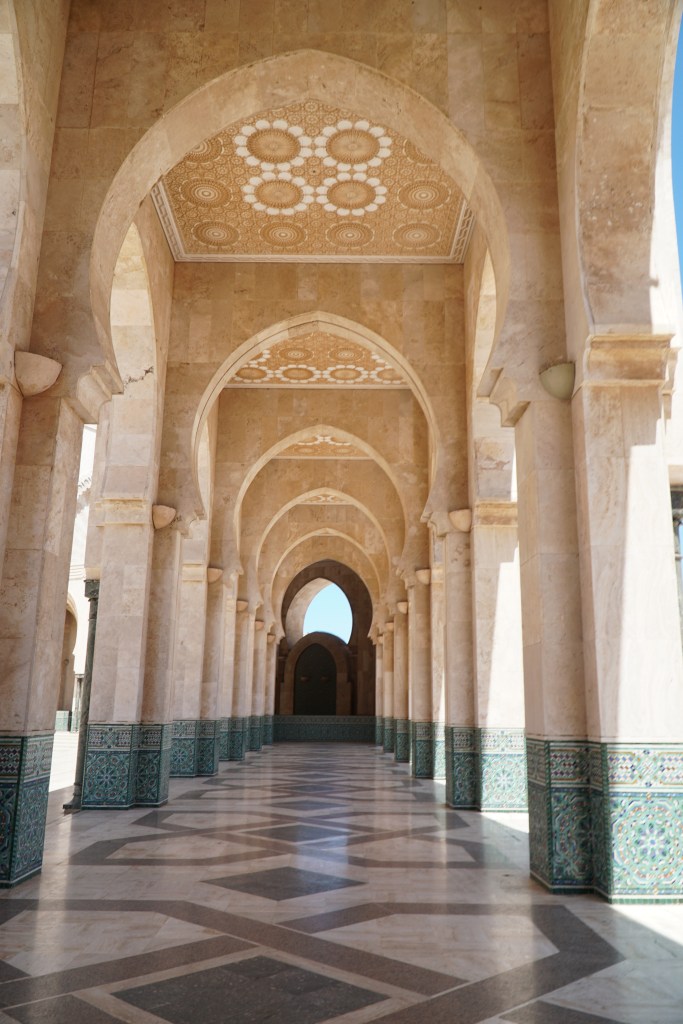
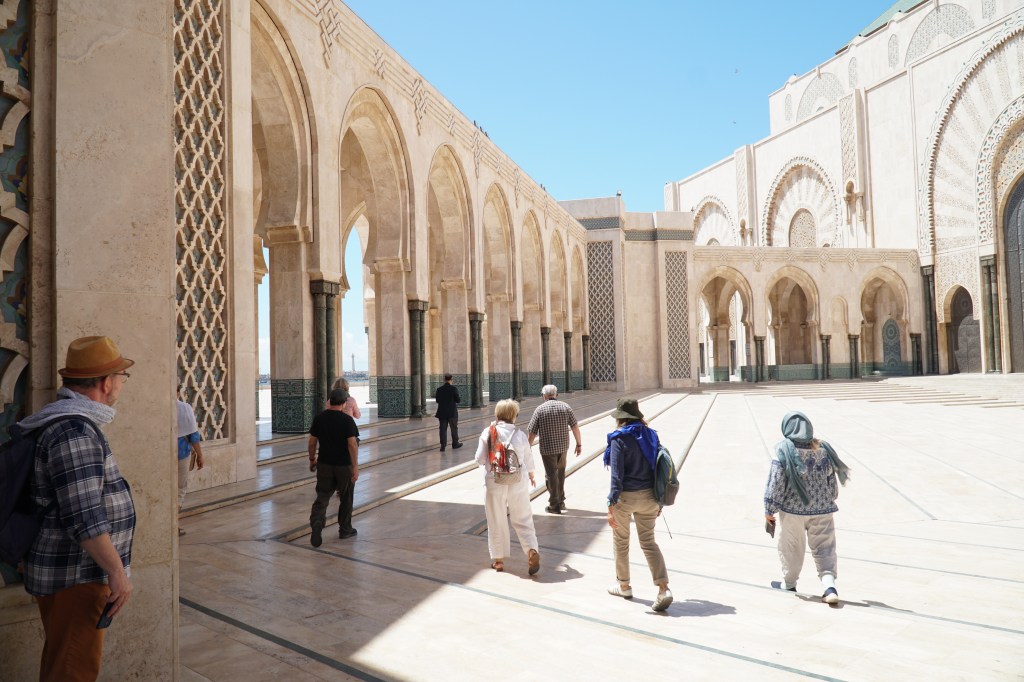
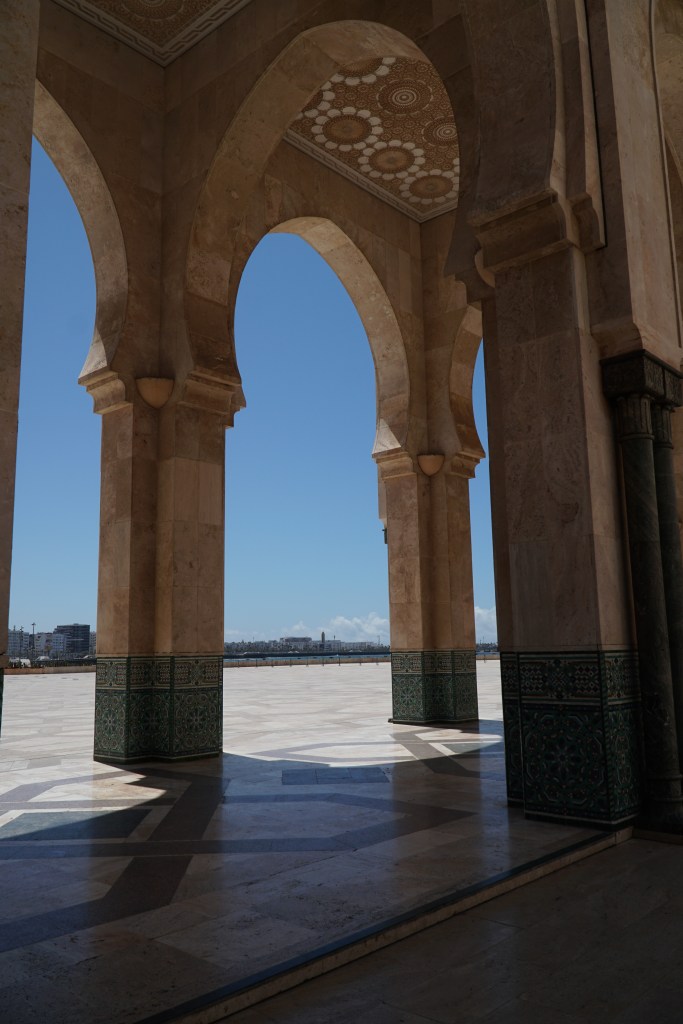
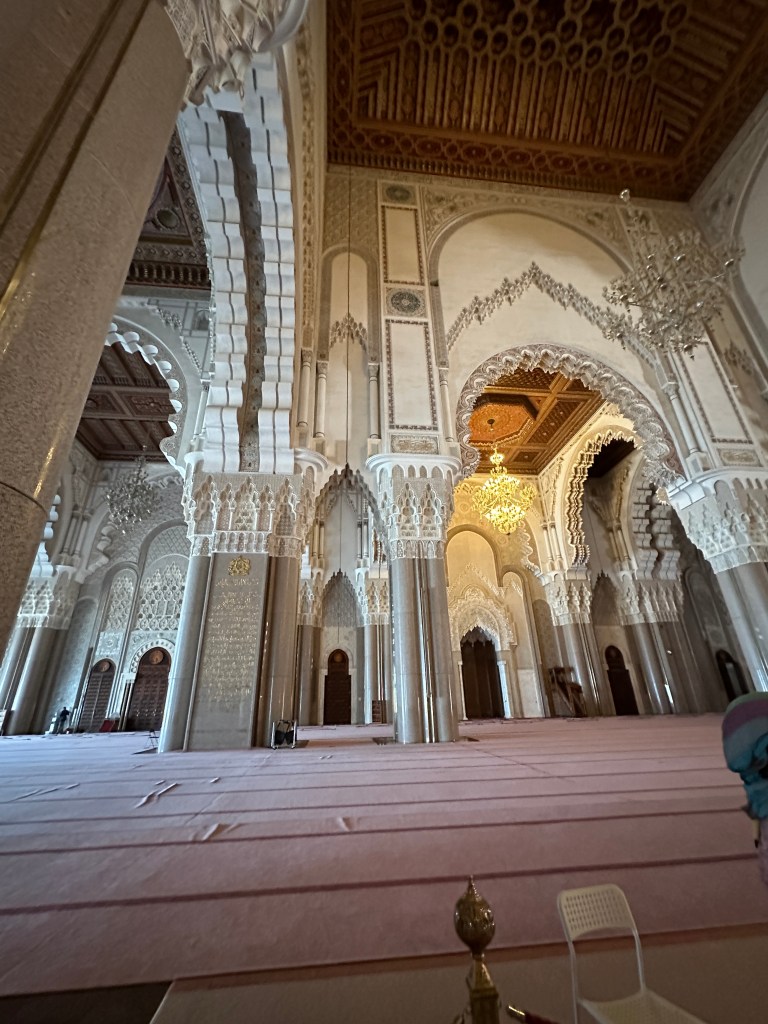
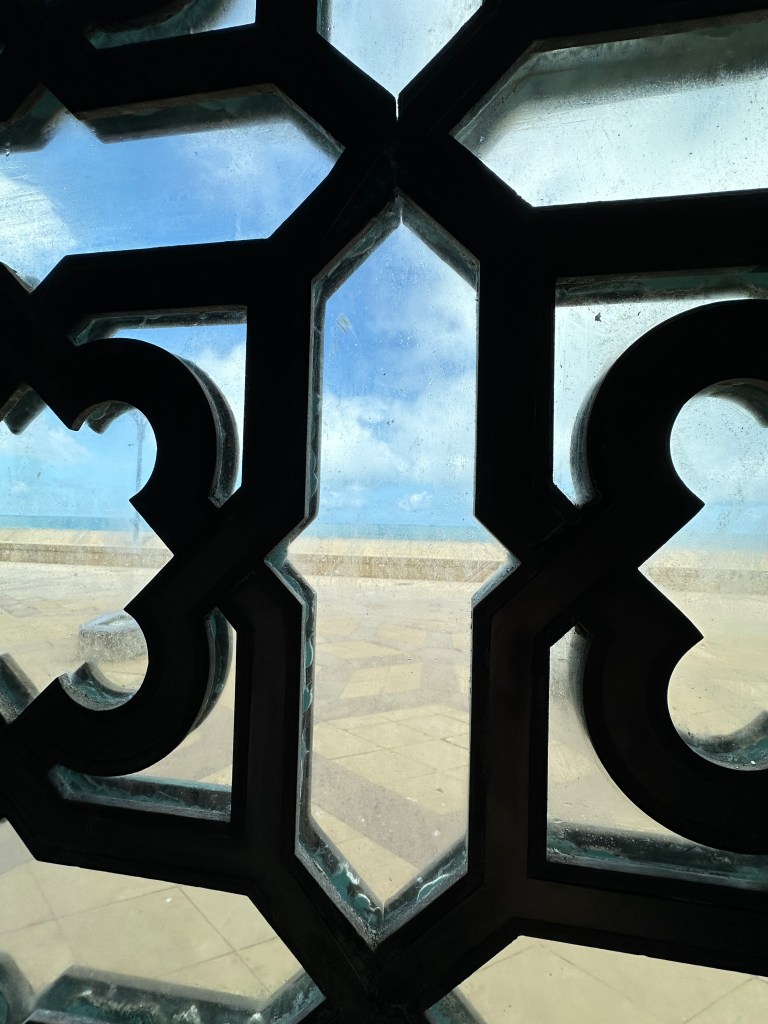
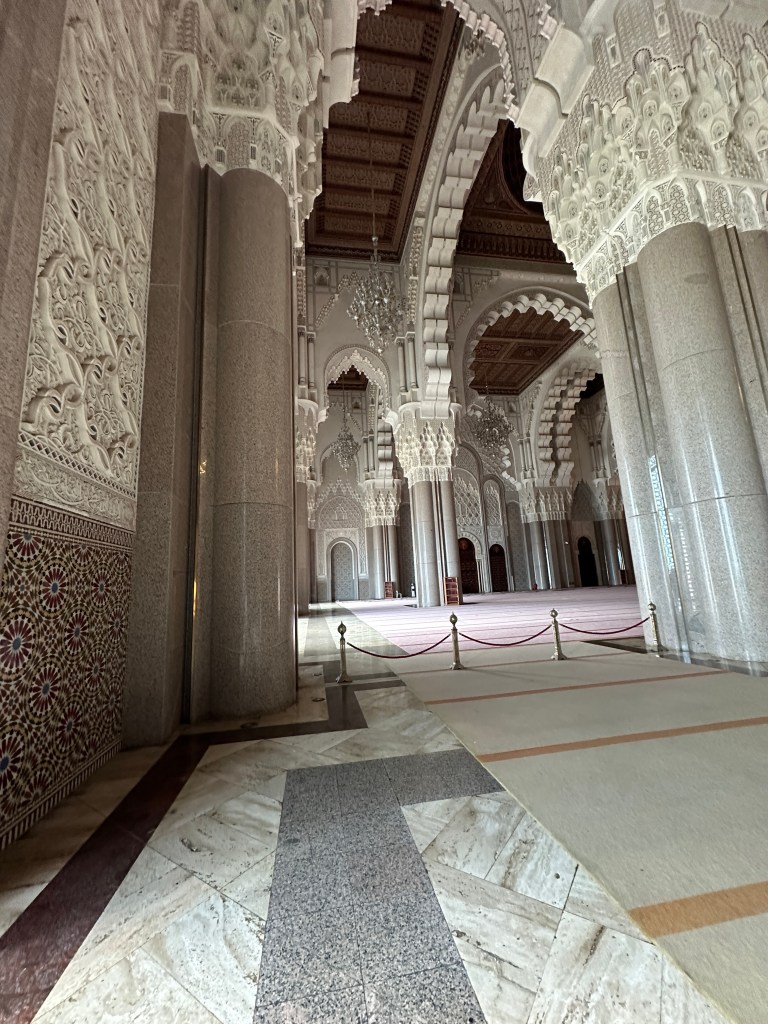
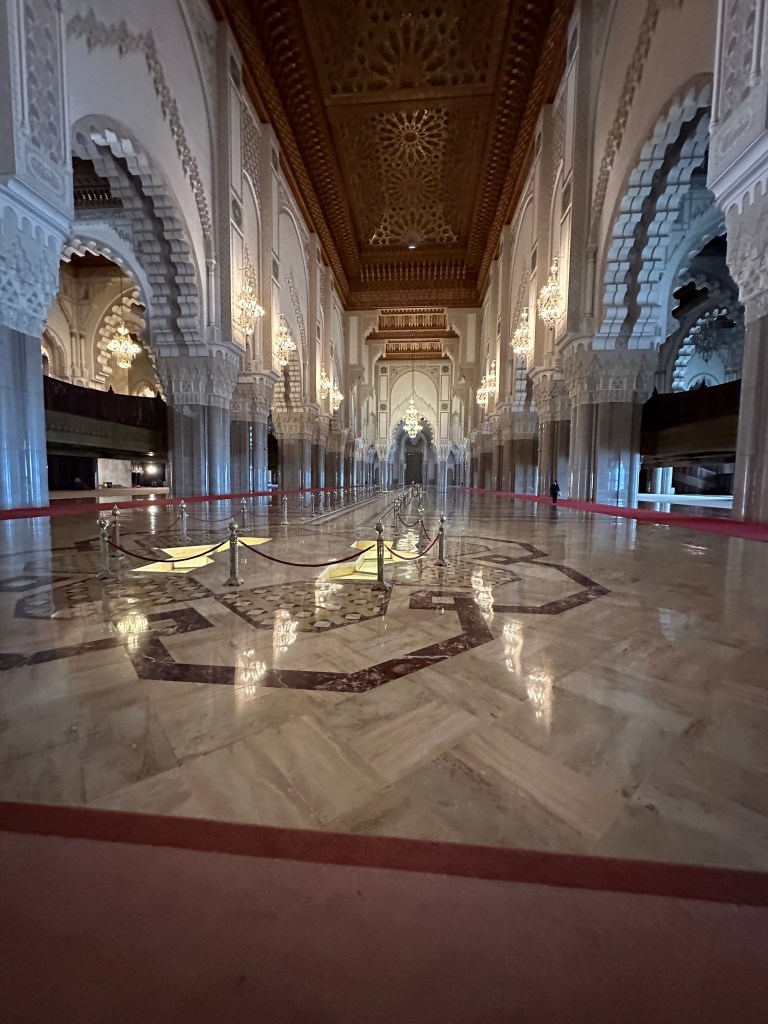
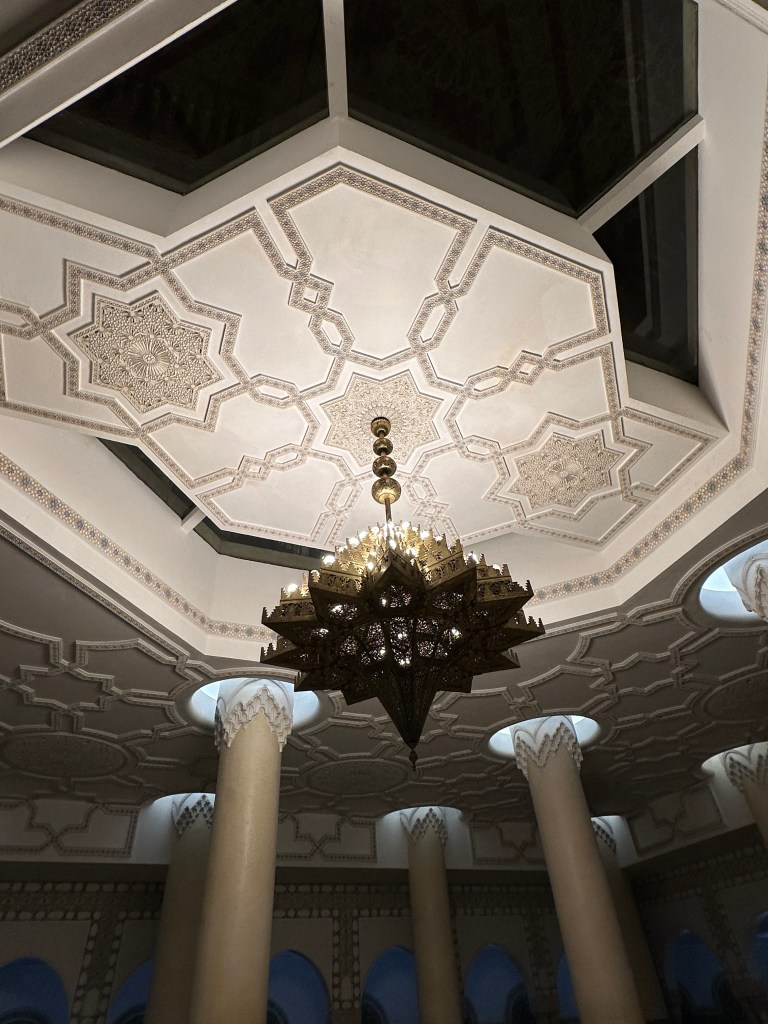
Off to Casablanca. When we arrived, we toured the Hassan II mosque, the only mosque in Morocco that allows non-muslims to visit. It was completed in 1993, designed by Michel Pinseau, overseen by Hassan II, and build by artisans from around the country. The minaret is the second tallest in the world, with a laser on top always pointing toward Mecca. The mosque is the second largest in Africa. It can accomodate 105,000 worshippers both inside and out. It was built on land reclaimed from the Atlantic. It was an amazing site and our guide was so helpful in explaining various rituals, customs and beliefs. The overall site also houses a madrasa and hammam, and faces the El Hank Lighthouse.










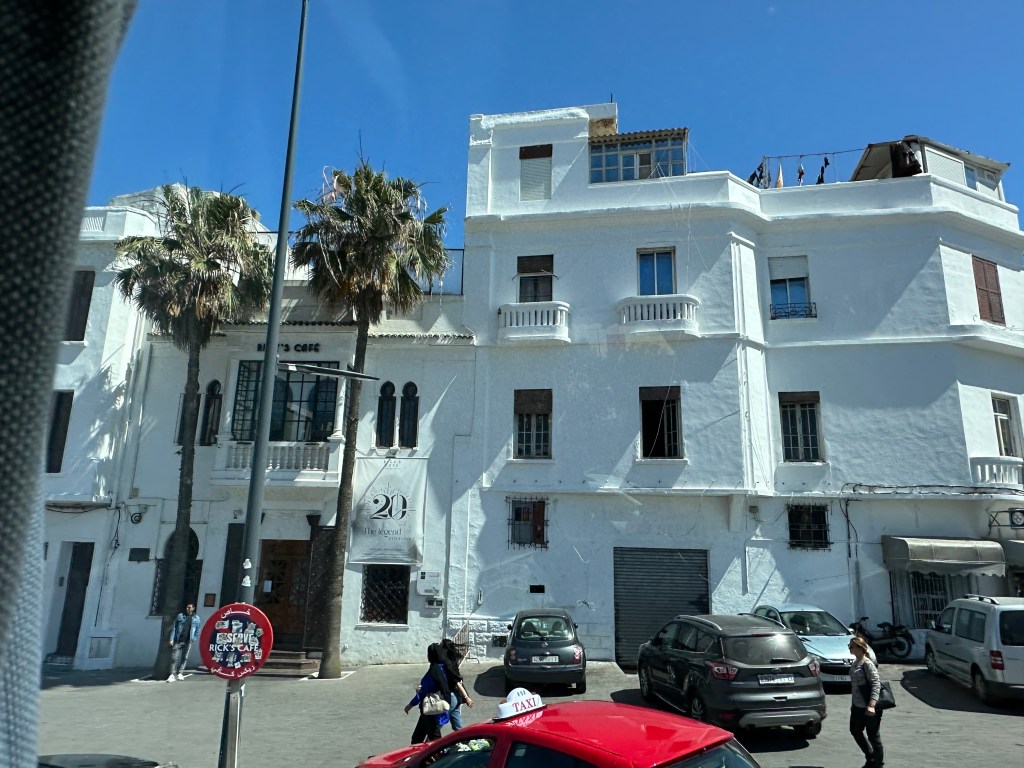
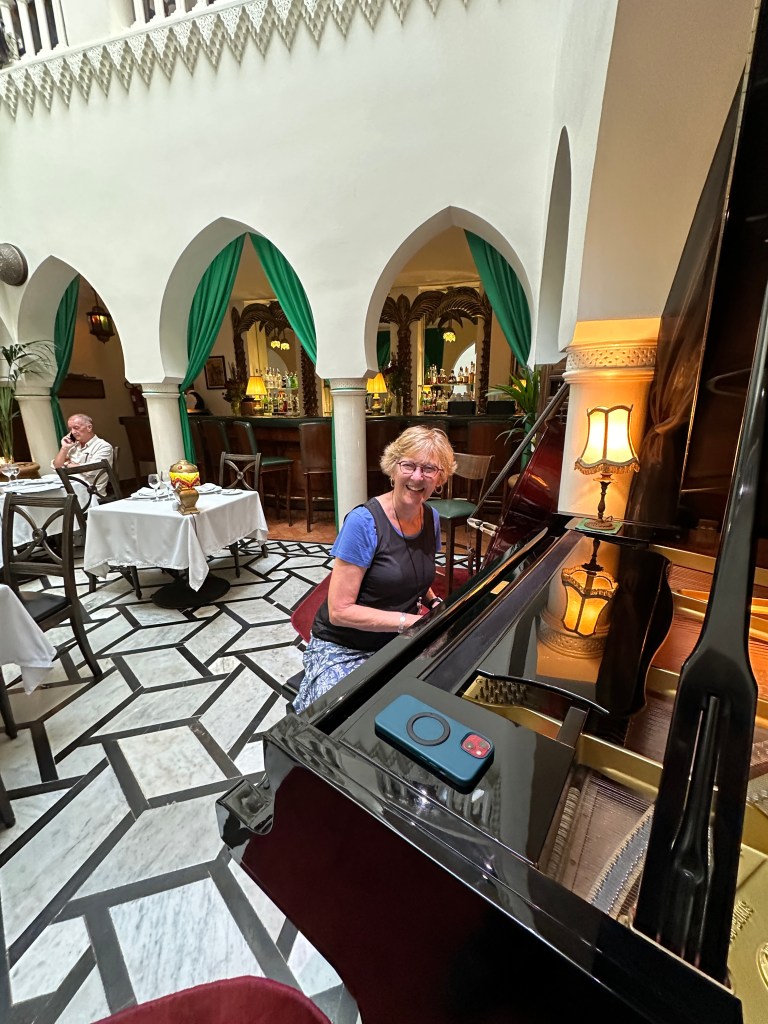
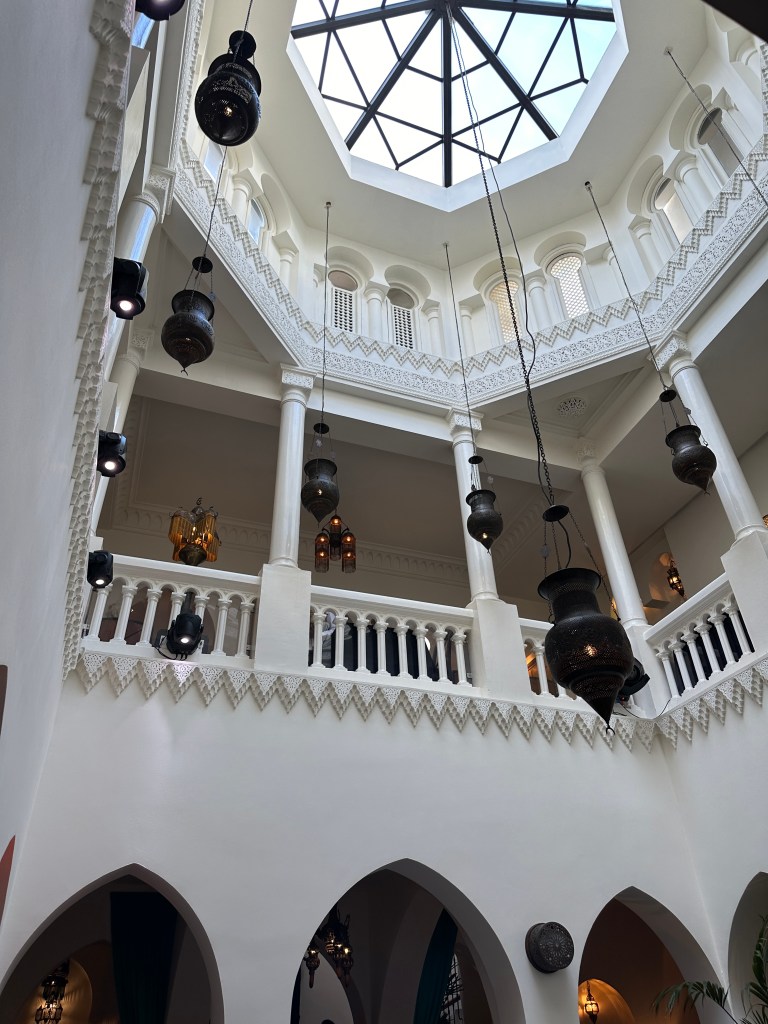
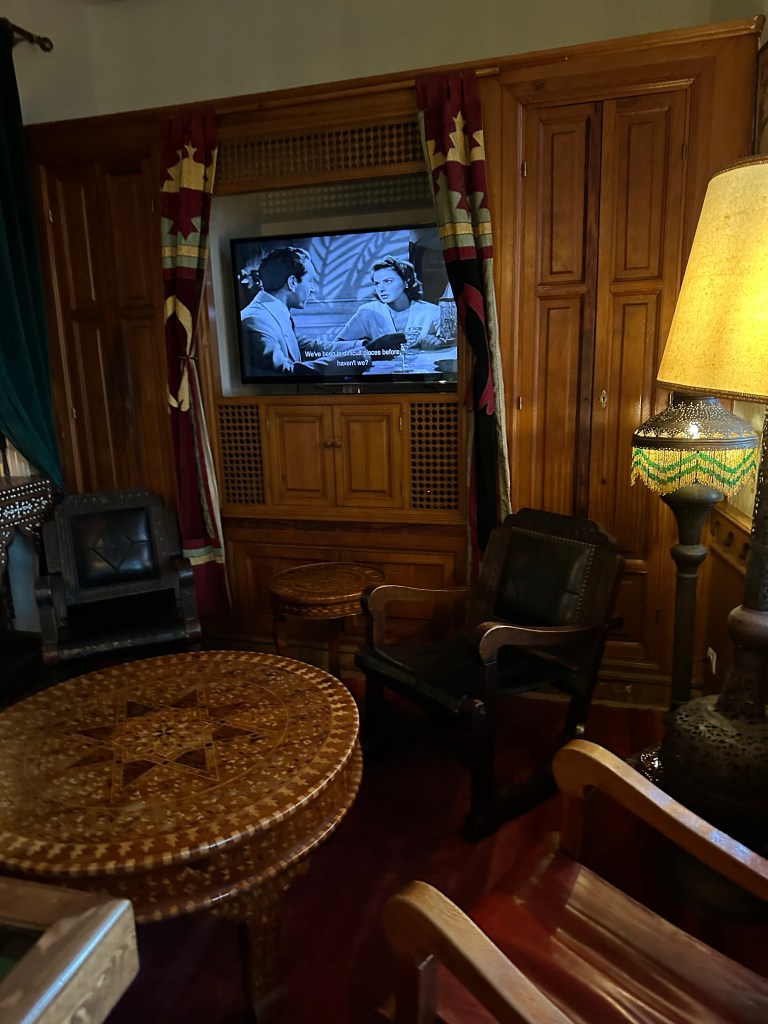
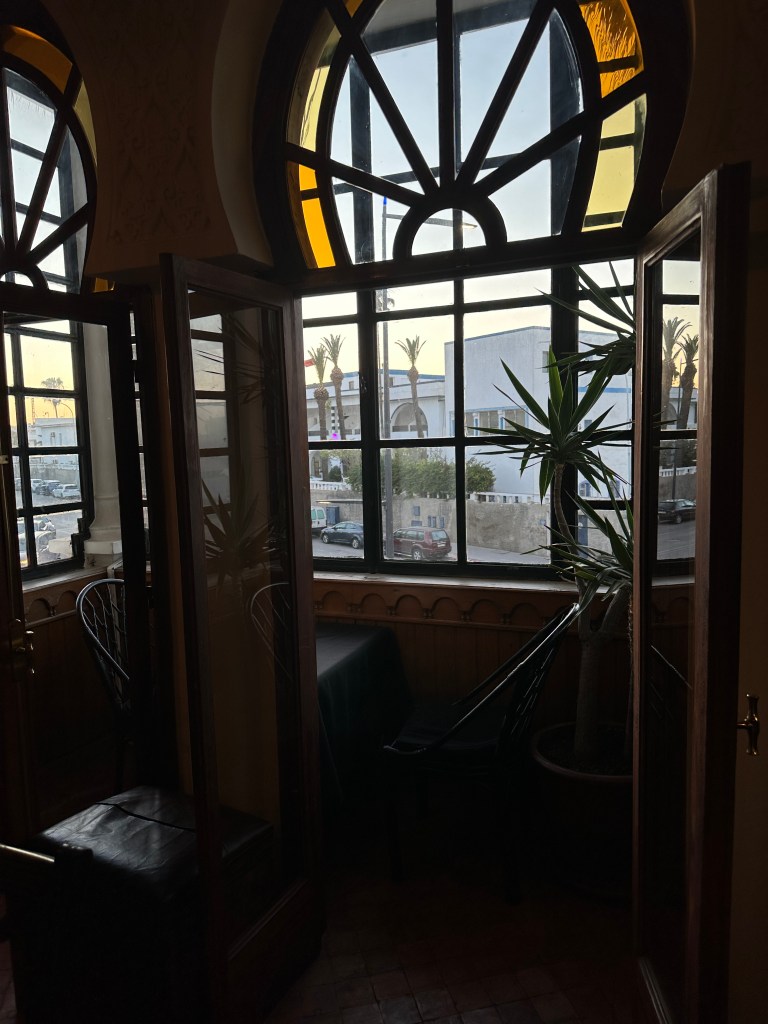
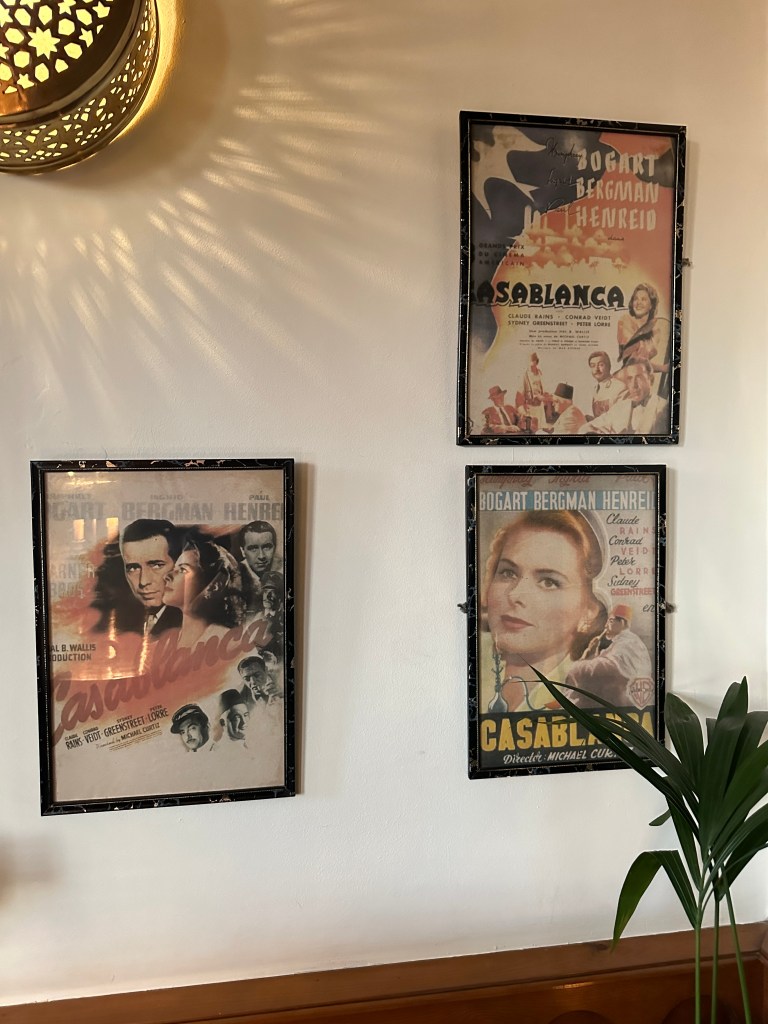
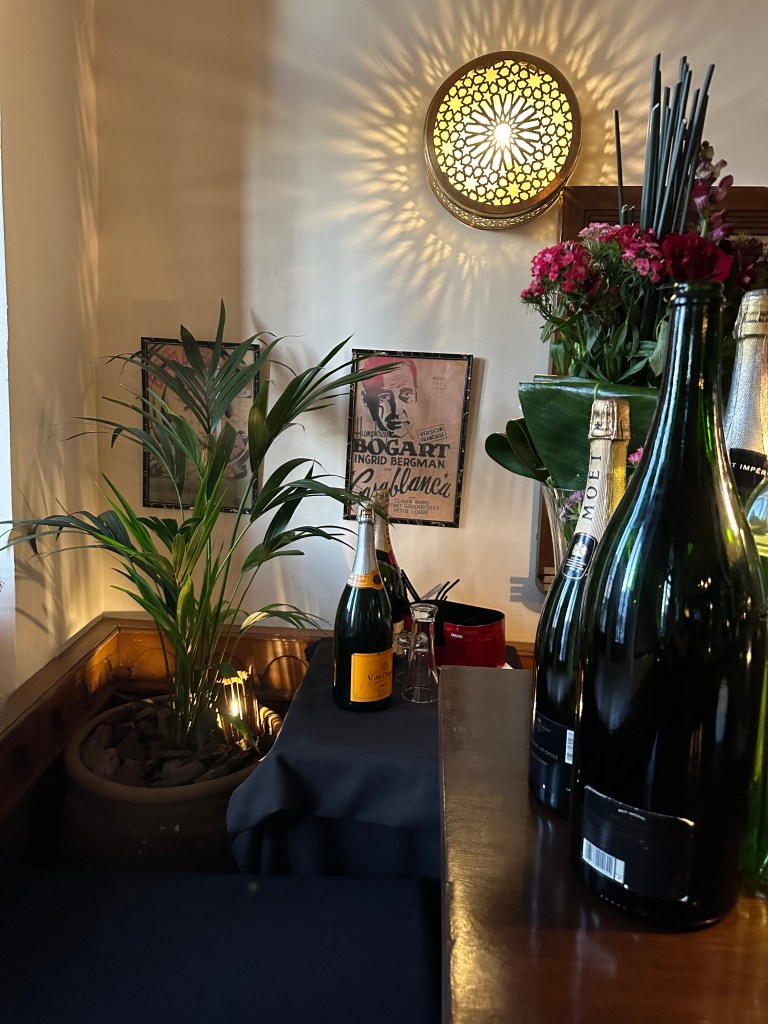
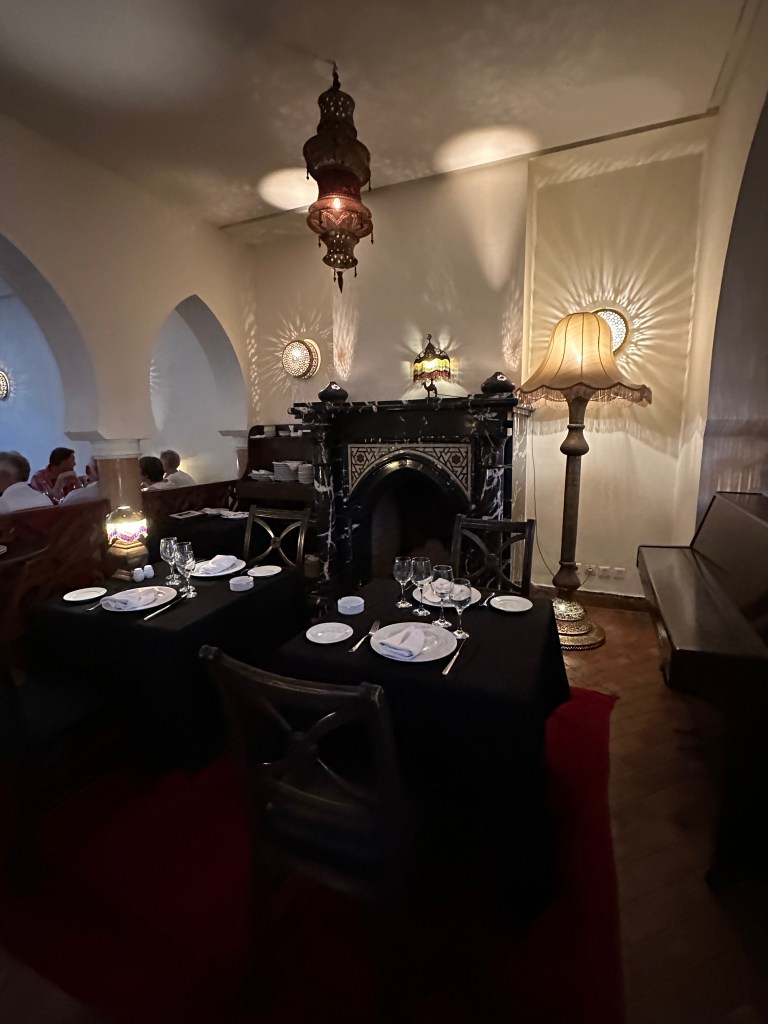
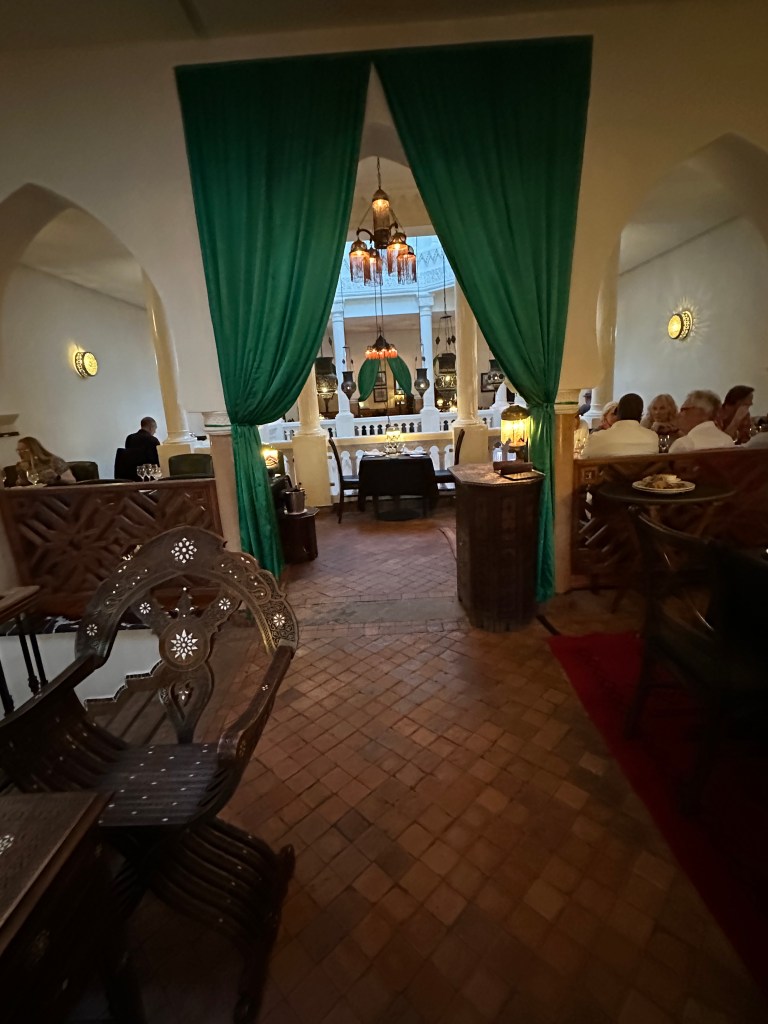
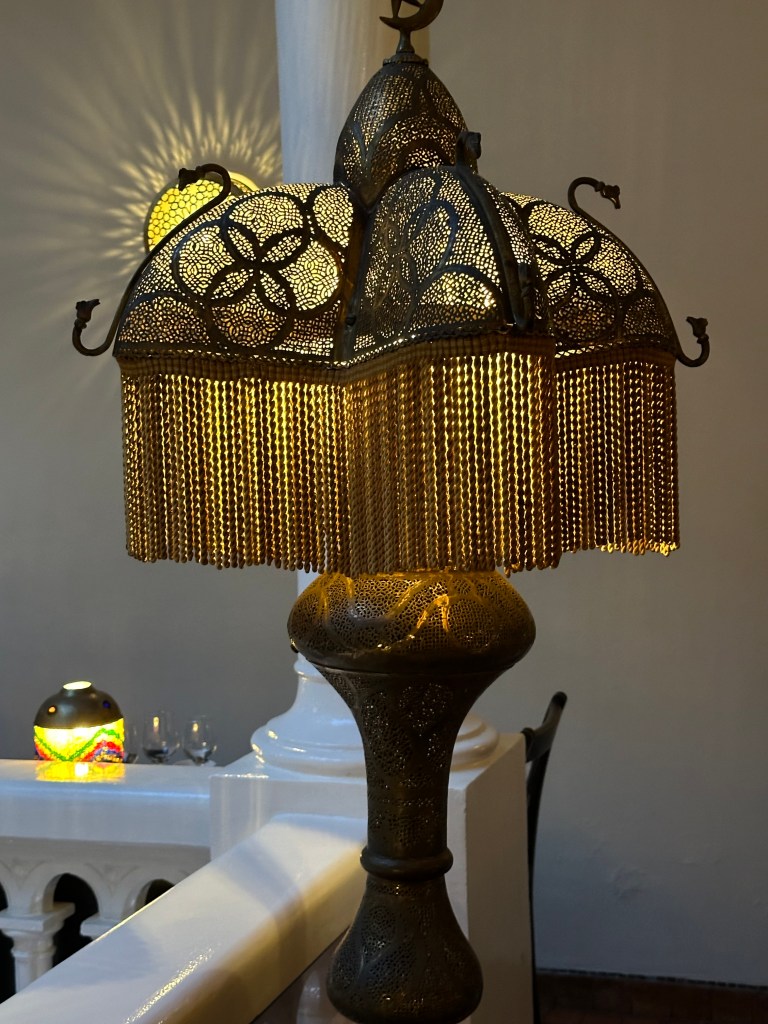
For our last dinner in Morocco, a group of us ate at Rick’s Cafe, the restaurant created to memorialize the movie Casablanca (which was filmed in Hollywood). Food and company were great. There was even live music. Next day we headed out for an early flight.






 My Travel Blog