Thailand, Laos, Cambodia and Vietnam (Ancient Kingdoms trip)
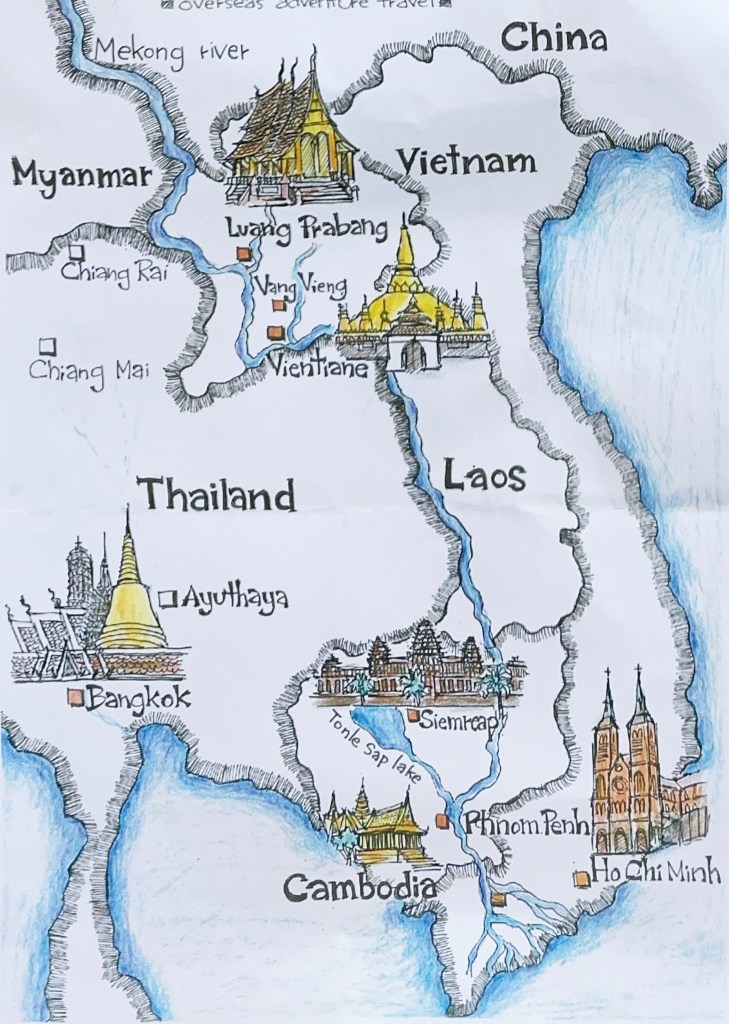
Seven travellers from North Carolina joined another eight lovely individuals for a trip organized by Overseas Adventure Travels (OAT). From NC were Tim (my husband Chris’s brother), his wife Kim, Kim’s sister Jane, and friends Kris, Laura and Bill. We flew from Raleigh Durham to Detroit, starting at 5:30 am Sunday, January 7, then to Seoul (14+ hours), and from there to Bangkok (another 6 hour flight), arriving after midnight, January 9, local time. It was grueling, but uneventful.
A word about the photos and videos below:
Most of the photos are mine, but some were provided by others on the trip, particularly Martha, a lovely traveller from Maryland, and Mark, our trip leader. Many thanks! In going through this blog, you can click on small photo images to see the entire photo, and then scroll through the full photos for each section. The video links go to YouTube.

A few observations before the day-by-day summary.
Being an American visiting Laos, Cambodia, and Vietnam was sobering. Just prior to the trip, I watched the ten-part documentary, The Vietnam War, by Ken Burns and Lynn Novick. This helped set the stage for many of the sites and memorials we visited, and stories of people we met. Of course, the local people refer to the war as the American War and rightfully so. It is fortunate for us that the vast majority of residents in these three countries are buddhist and therefore value life in the present rather than dwelling on the past. This trip involved a great many interactions with local people in small rural communities, and a few people with personal war histories. Many memories of these interactions will stay with me.
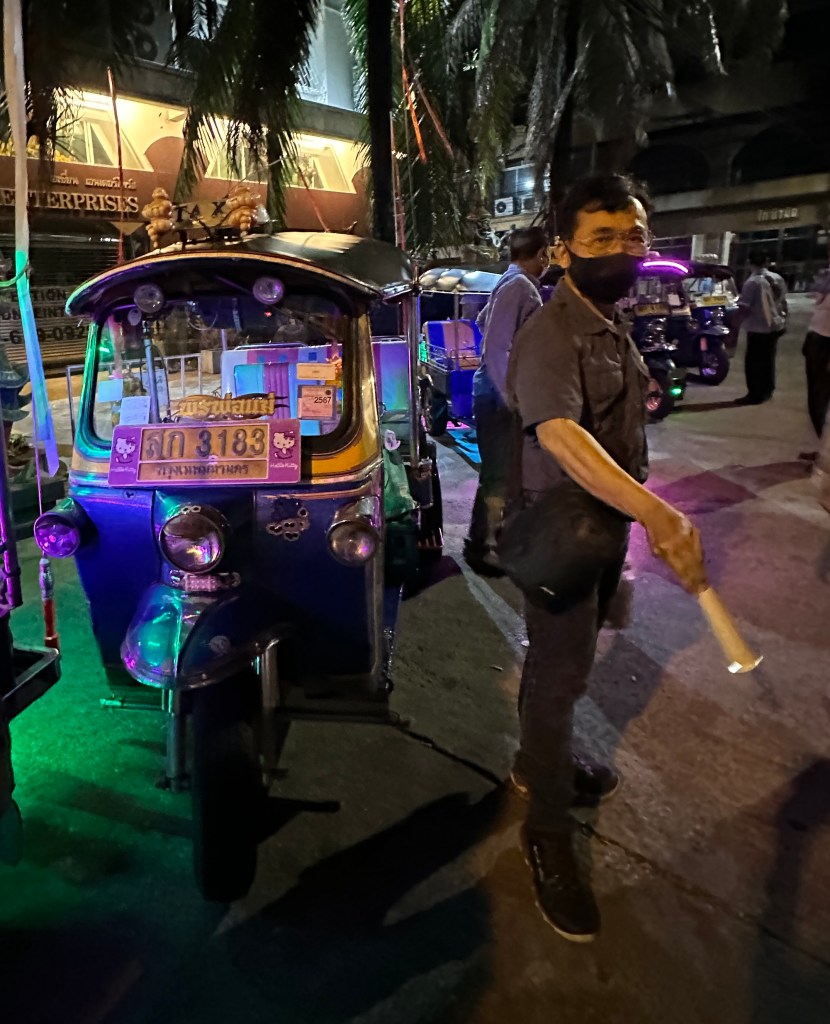
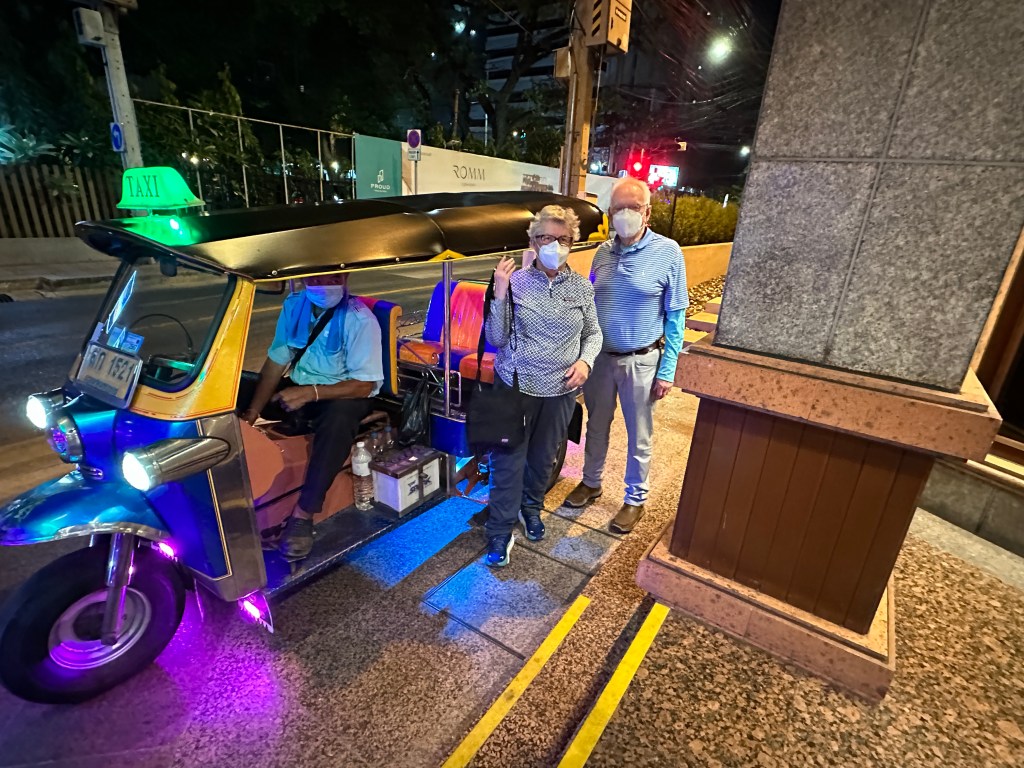
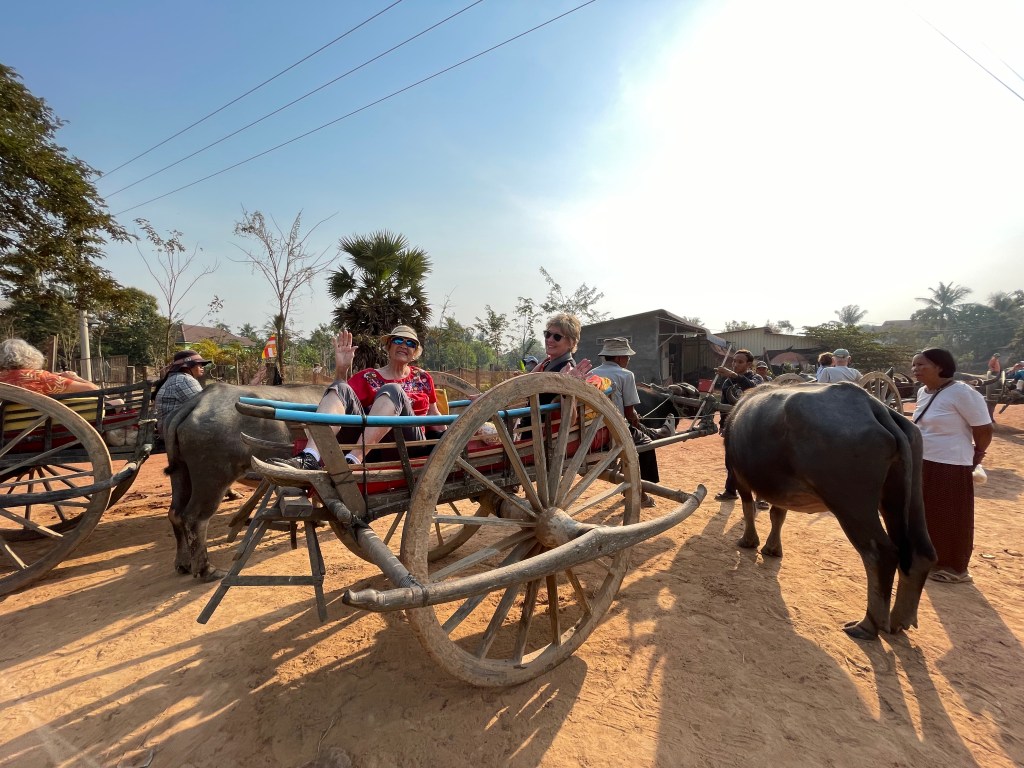
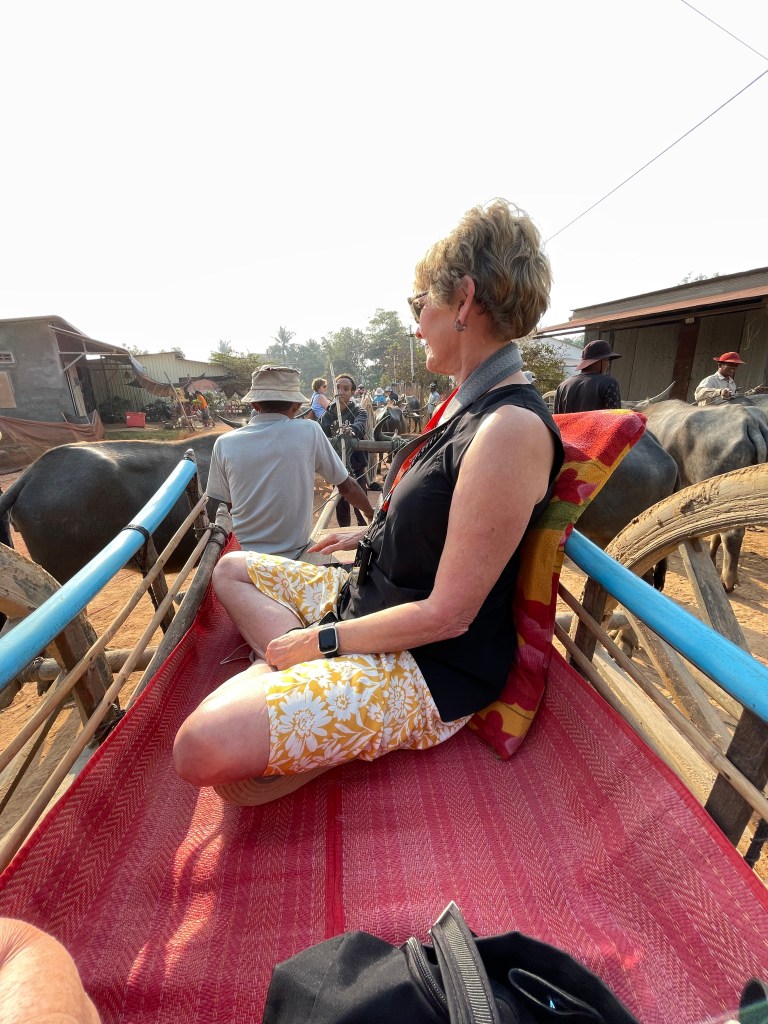
One fun aspect of the trip was experiencing the various modes of transportation. We had many chances to see cities and the countryside by boats, including a refurbished wooden rice boat and small sampans. By road, we were carted through Bangkok by tuk-tuks; in Laos by Jumbos, in Cambodia by moto-remorques (or remorks), and in Vietnam, the Lambros - all three-wheeled vehicles in different configurations. We rode in buffalo-drawn carts through a rural community near Siem Reap, Cambodia. And in Saigon, some of us opted to go on a wild adventure riding behind college students on the omnipresent scooters for a progressive “street food” dinner.
The trip had many planned activities and meals for the whole group of 15 travellers. In addition, we had free time, some optional tours (the street food tour), and some dinners on our own.
TRIP SUMMARY
Tuesday, Jan. 9
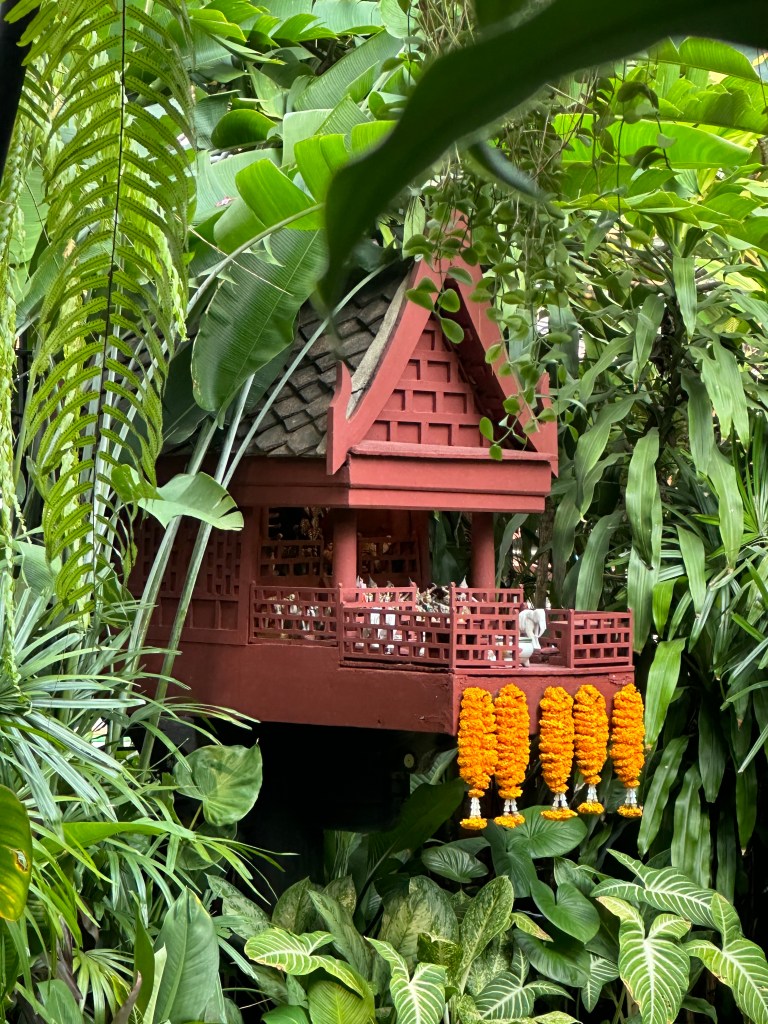
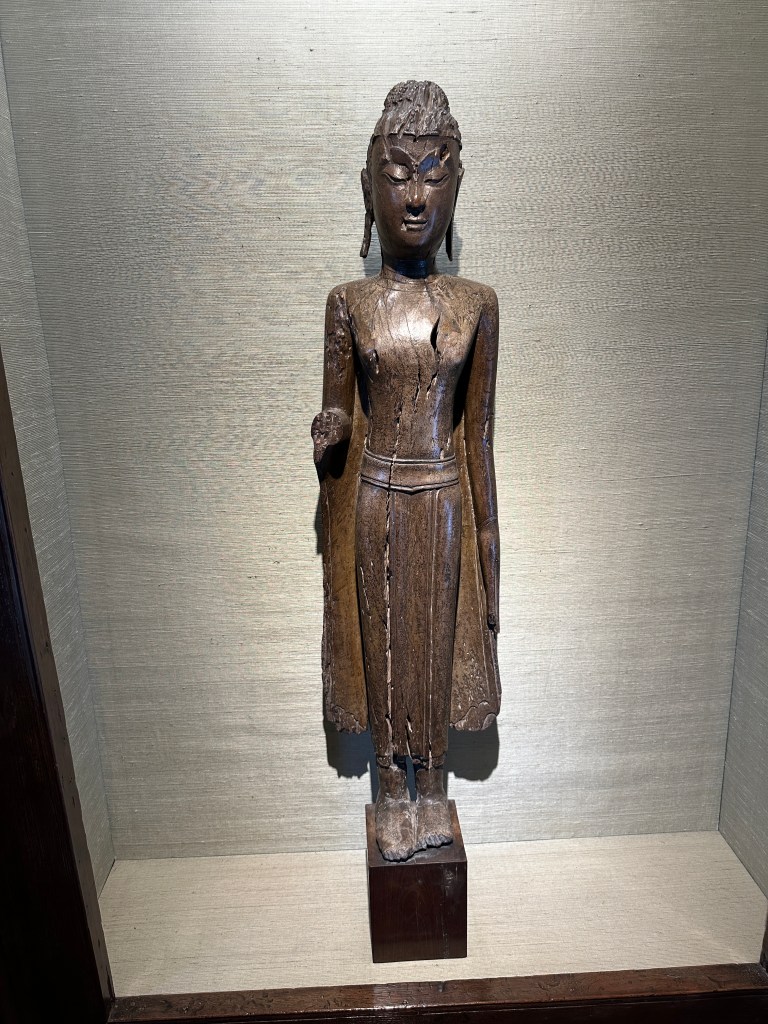
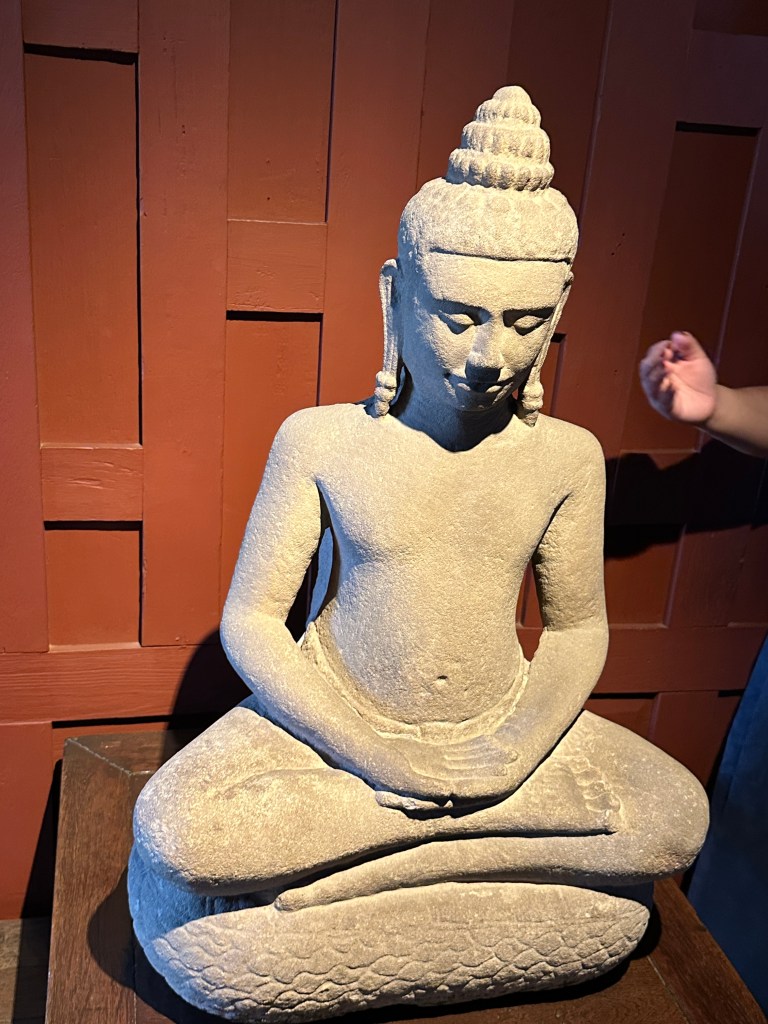
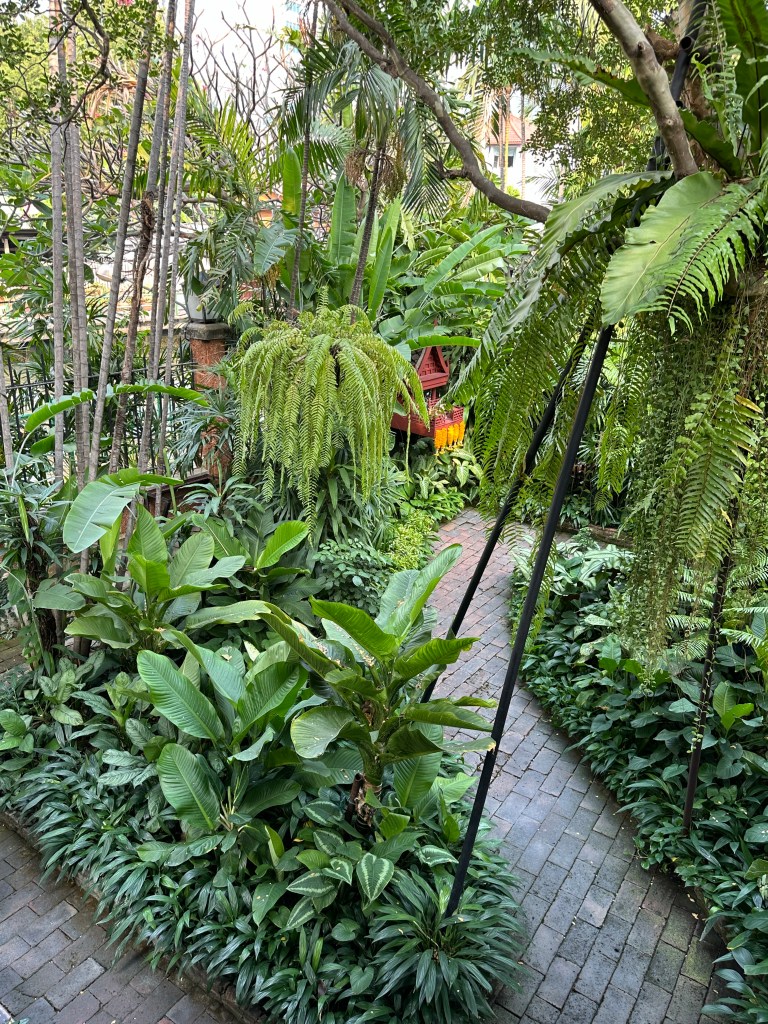
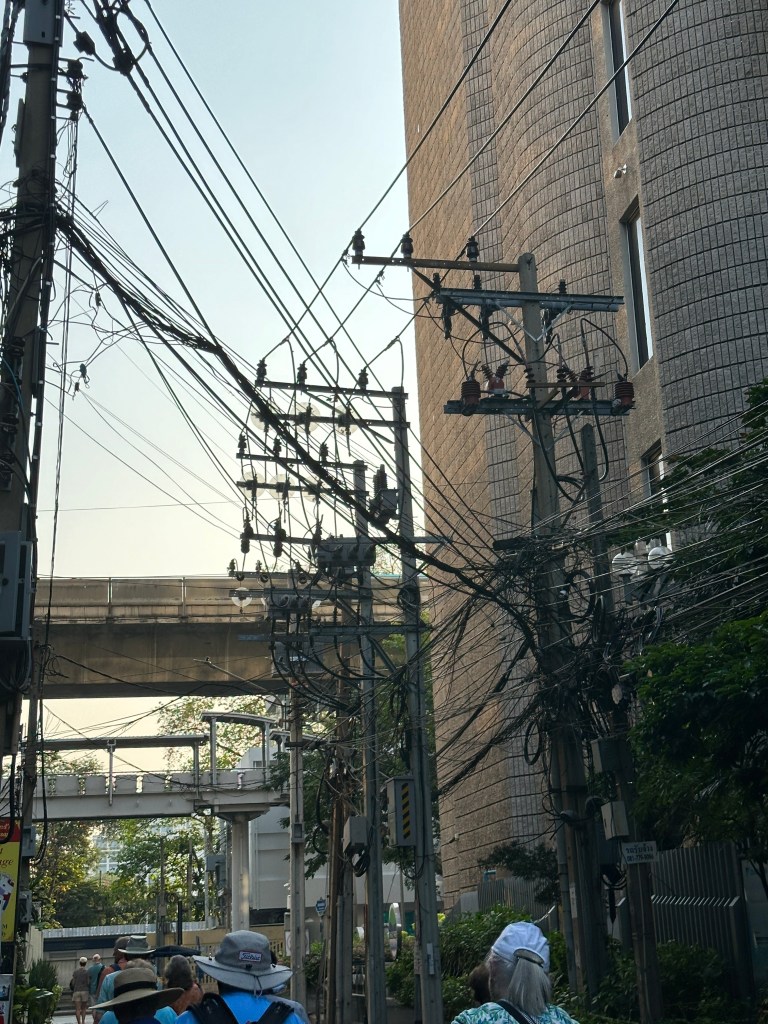
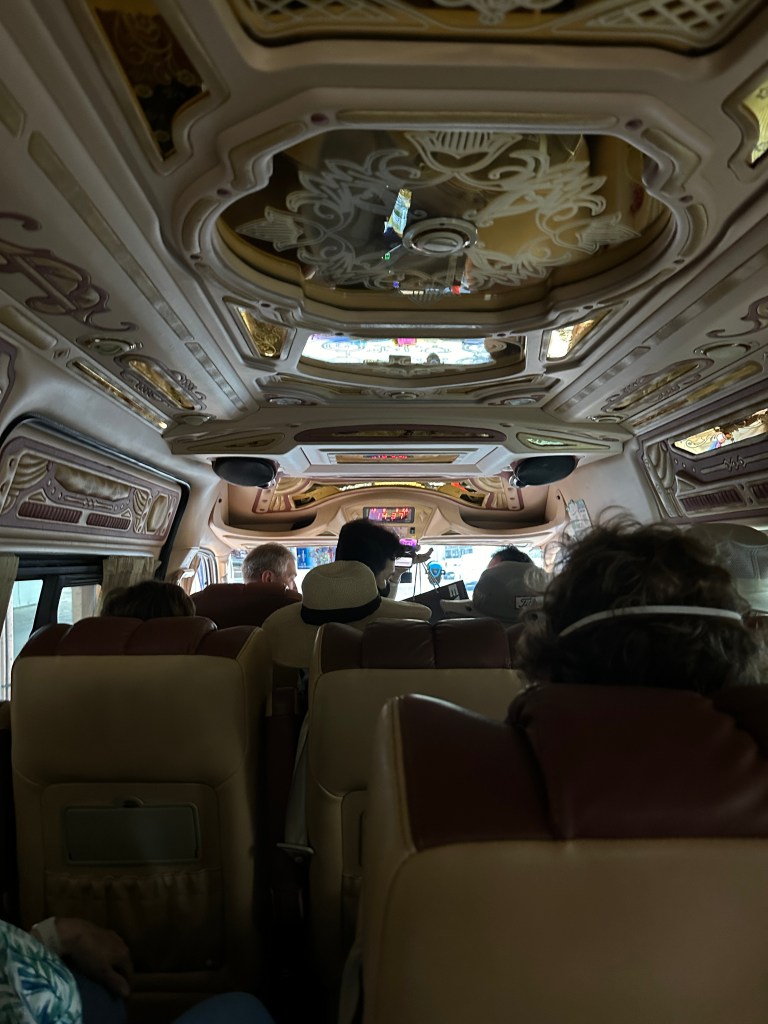
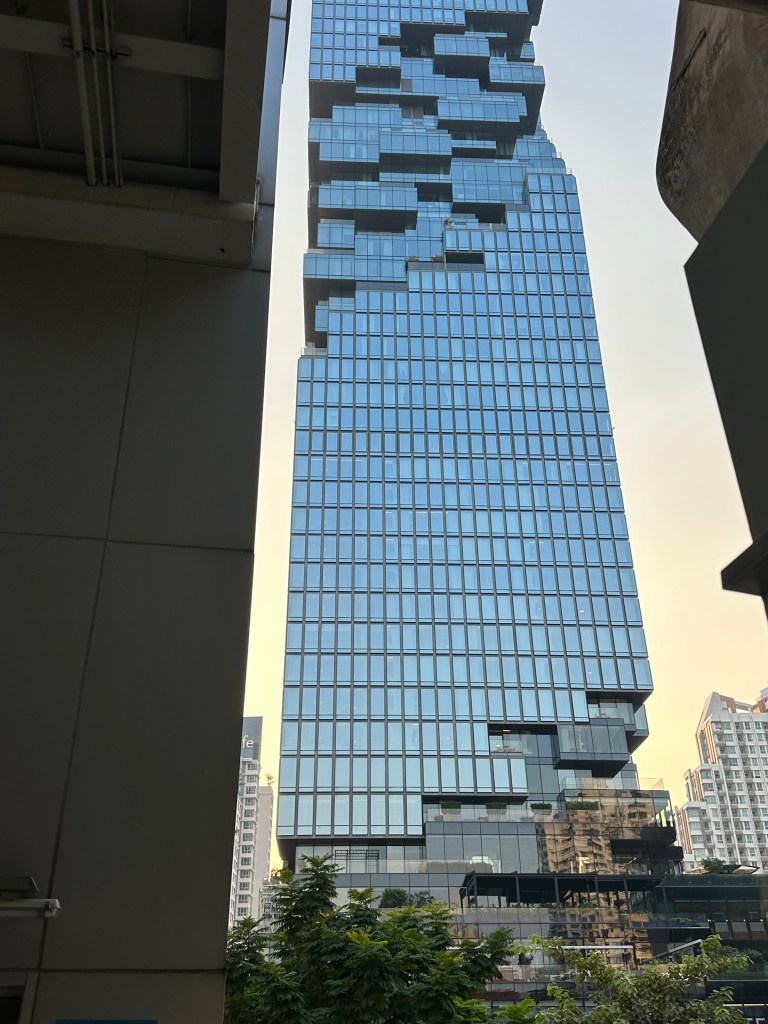
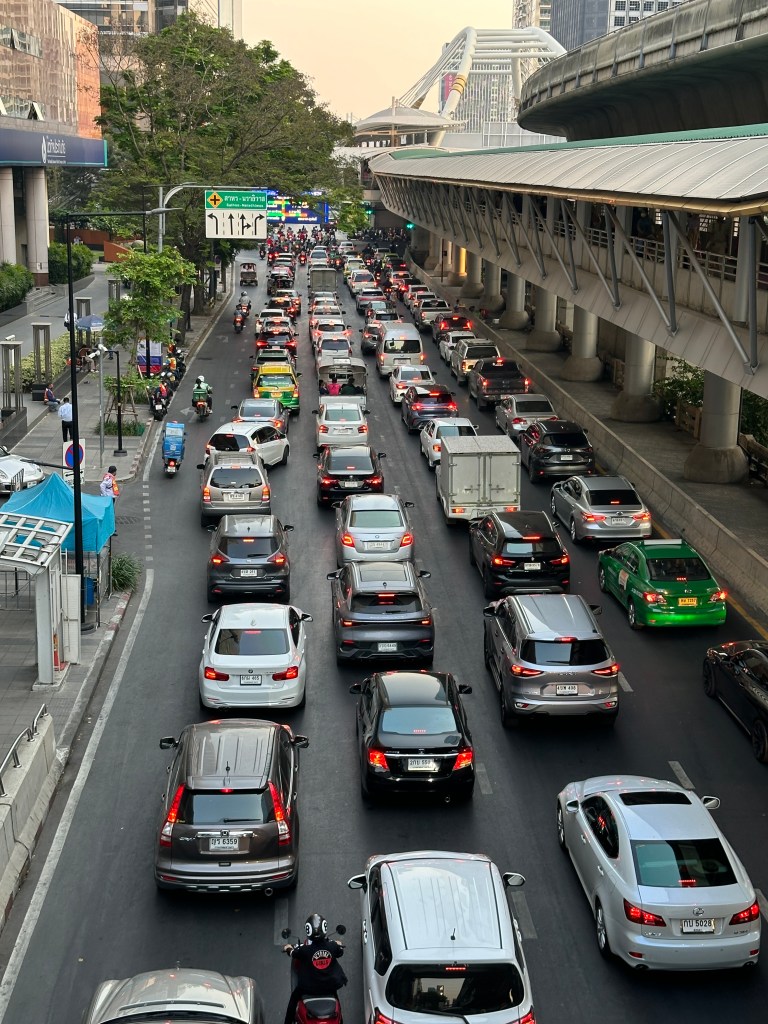
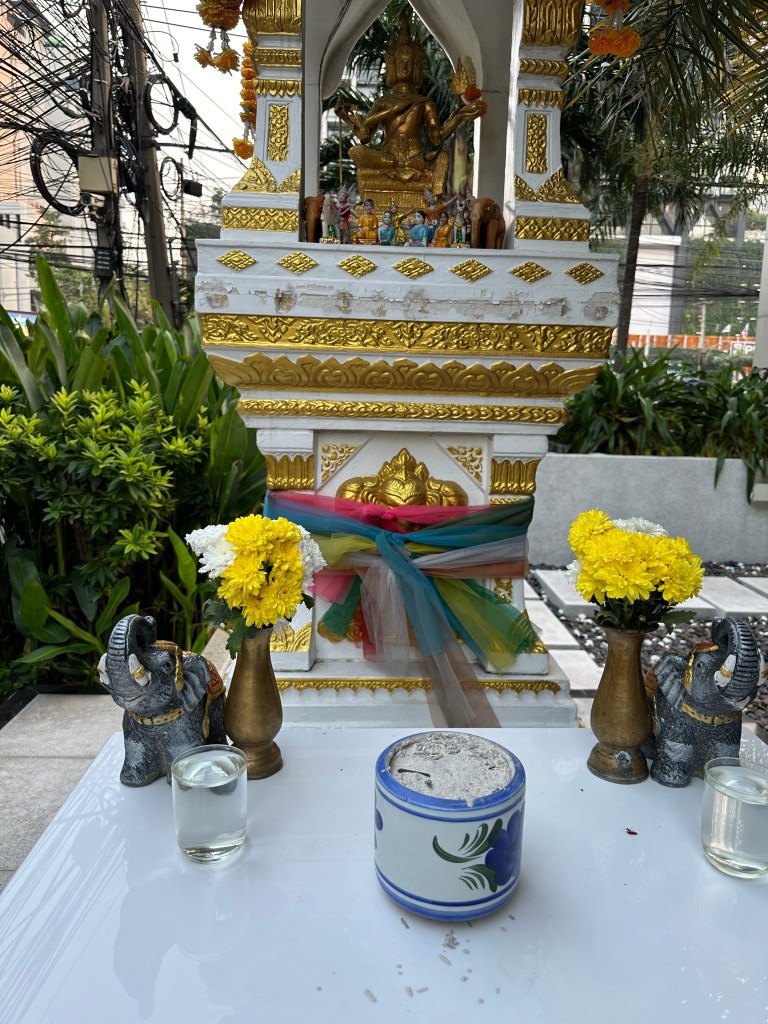
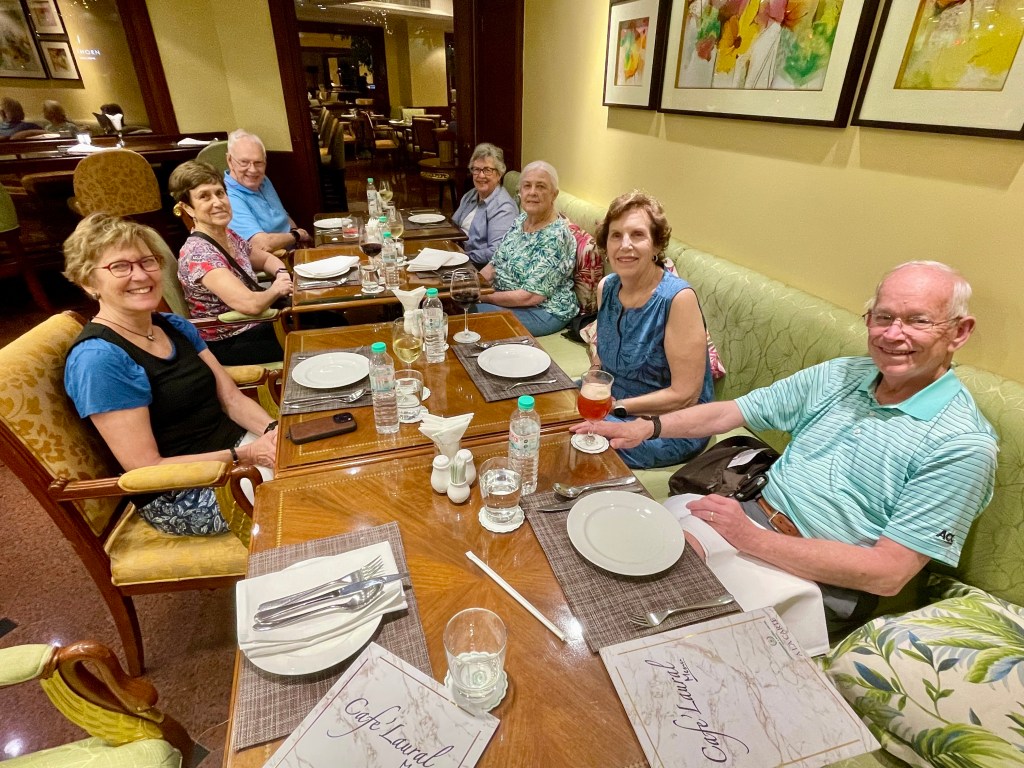
After settling in at hotel in the heart of Bangkok, sleeping, and devouring a great hotel breakfast, some of us had Thai massages, which were wonderful. The view from the hotel consisted of tall buildings and construction cranes everywhere. In the afternoon, we met our trip leader, Mark, who suggested we visit the Jim Thompson Thai House Museum. Jim Thompson was an American who settled in Bangkok and established a high-quality silk company. He disappeared mysteriously in 1967. His house was interesting, mainly because of the display of Asian artworks he had collected. These included Chinese ceramics, and statues of buddhas. In the compound was a “spirit house,’ designed to keep evil spirits at bay. These structures must be placed where they are not in the shadow of the main house. Daily offerings to the spirits included fresh flowers, food, and incense. We took an elaborate van to the house and the sky train back to the hotel.








Wednesday, Jan. 10
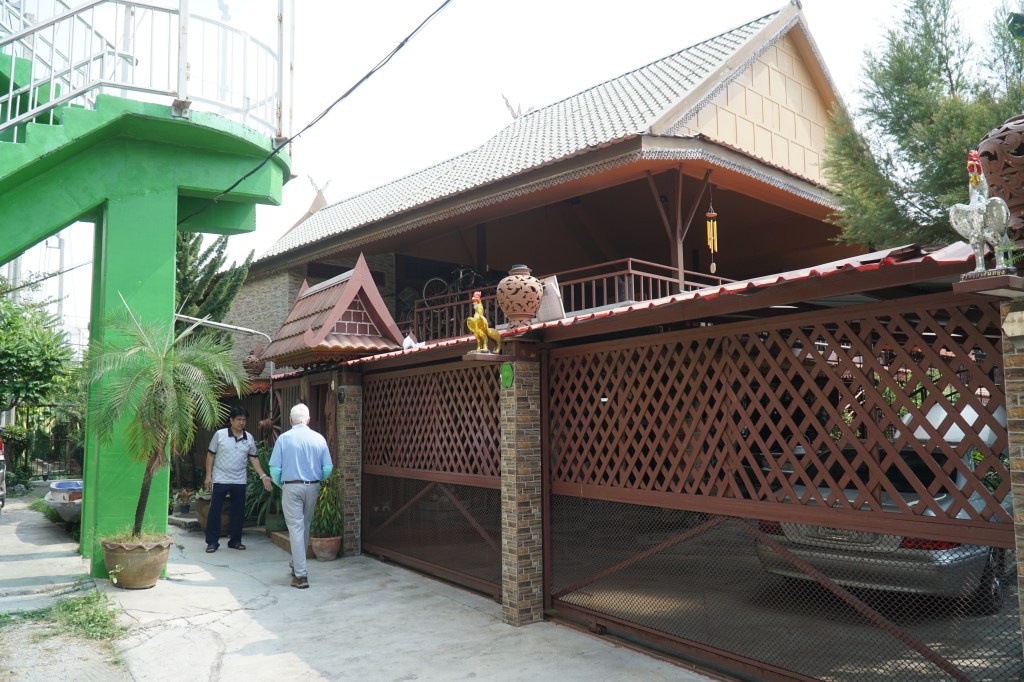
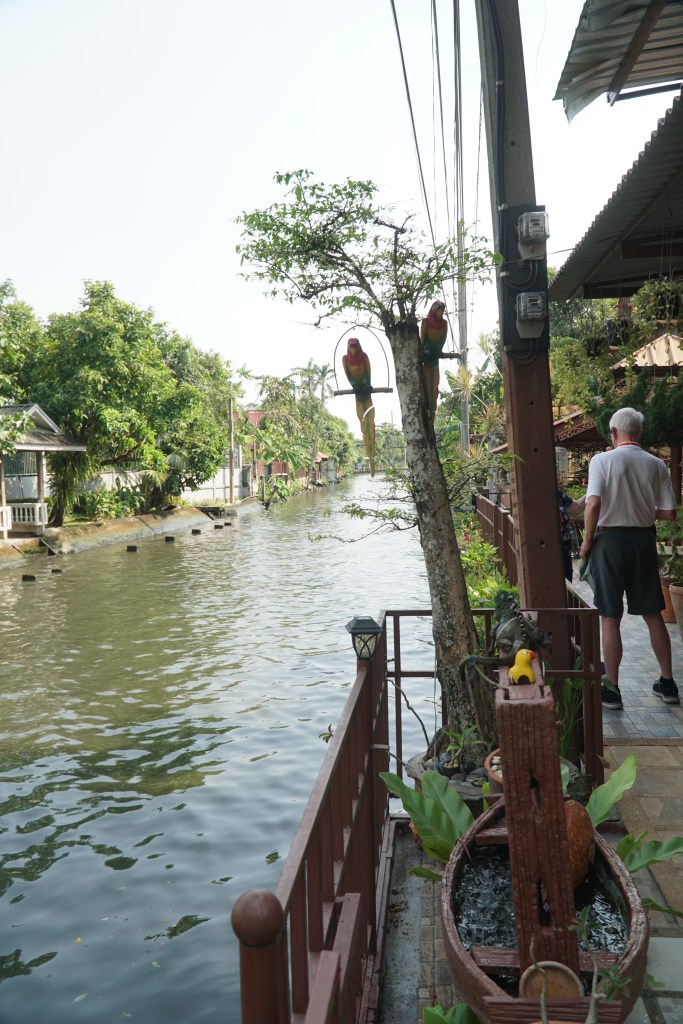
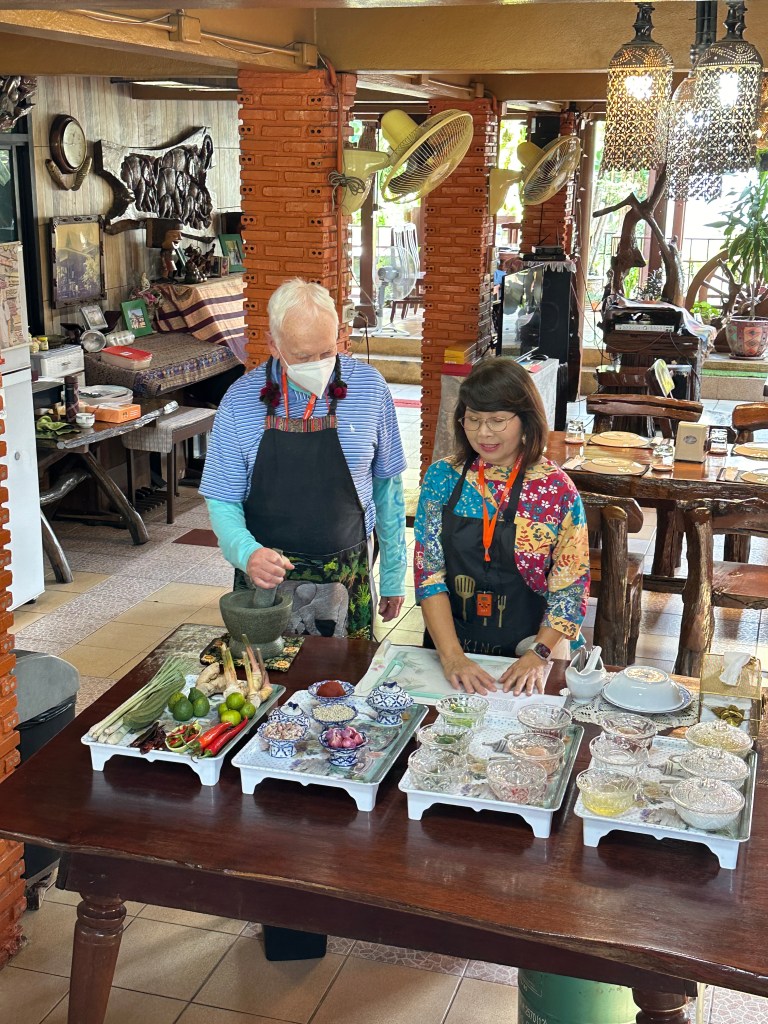
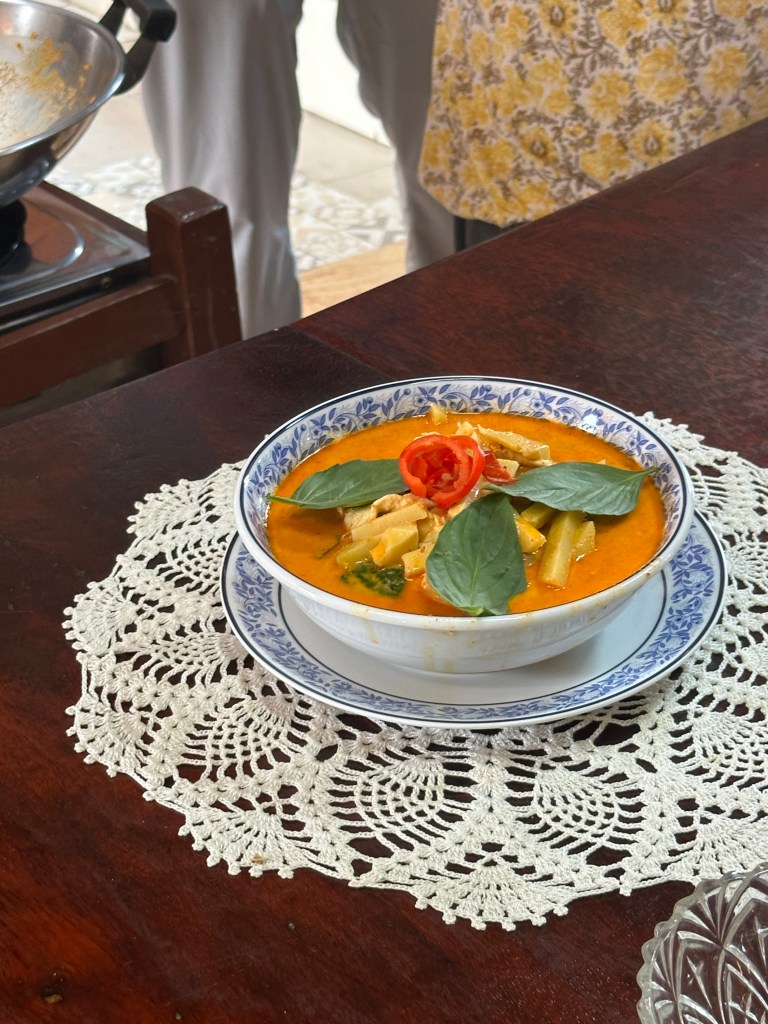
Today was the first official day of the tour. After breakfast and a welcome briefing about the trip, we traveled by coach to the 100-year old traditional home of a family (Apple and Kim) along a small river previously used as the primary means of transportation, and still an active waterway. We participated in a cooking lesson, the first step being to make Thai red chili paste. The chef explained all of the ingredients and let us have some first-hand experience with them, preparing them as necessary before Tim, volunteered by the group for his cooking expertise, used the mortar and pestle to mash them into a paste. Then the group participated in making the rest of the chicken and curry dish in a wok. We had a great lunch including several main dishes. Dessert included pineapple slices dipped in a sweet and savory powder.
The hosts had several trophies for karaoke singing. During Covid, the Thai government had encouraged singing contests as a way of keeping people active. Our hosts had a karaoke machine, drum, and tamborine, which we had to try out. The chef showed us a traditional group dance often performed with guests after a dinner party. Flowing and distinctive arm, wrist, and hand patterns are features of all the SEA dances we saw on the trip.






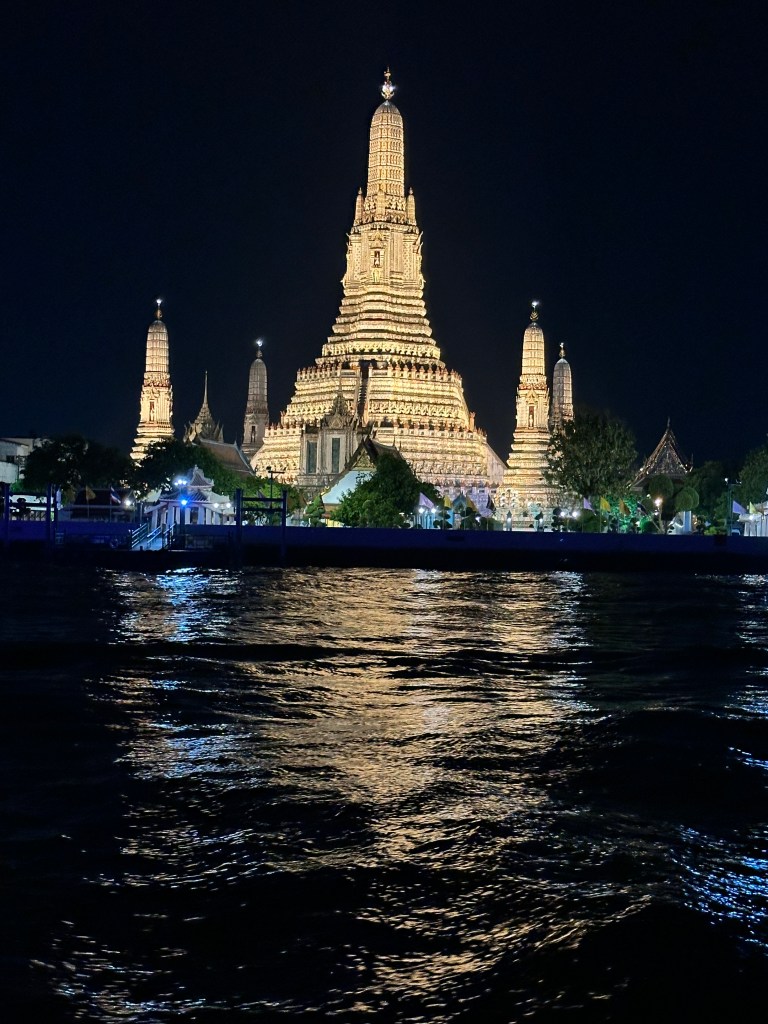
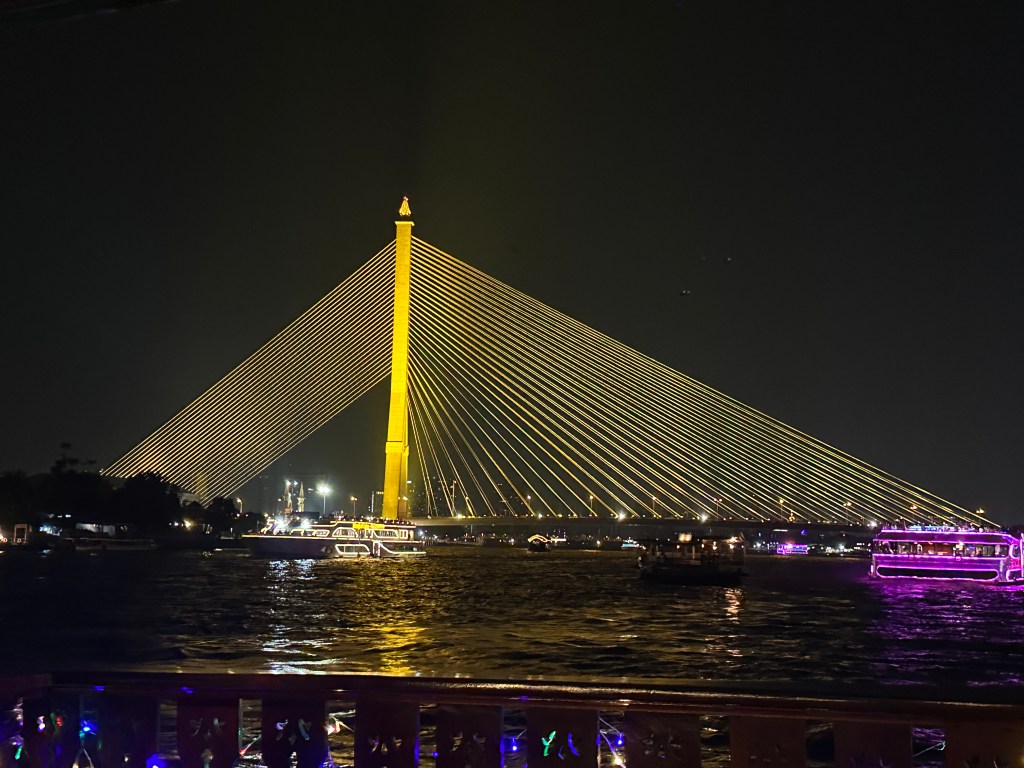
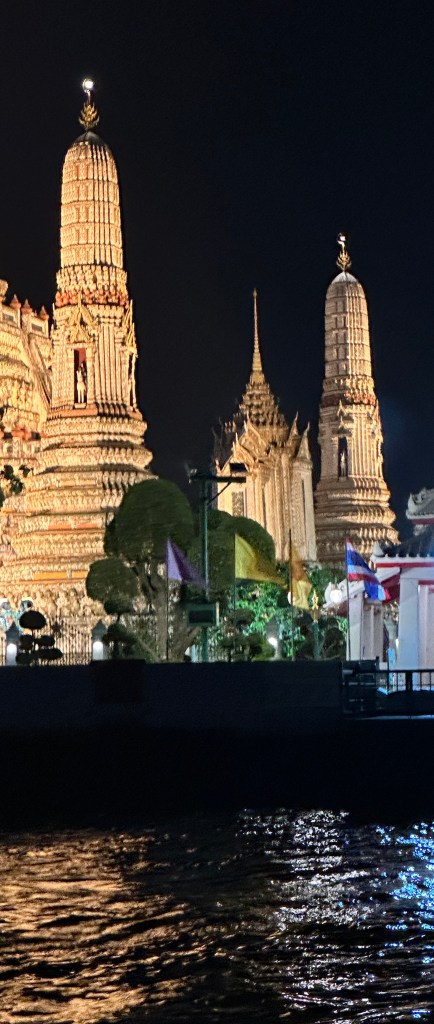
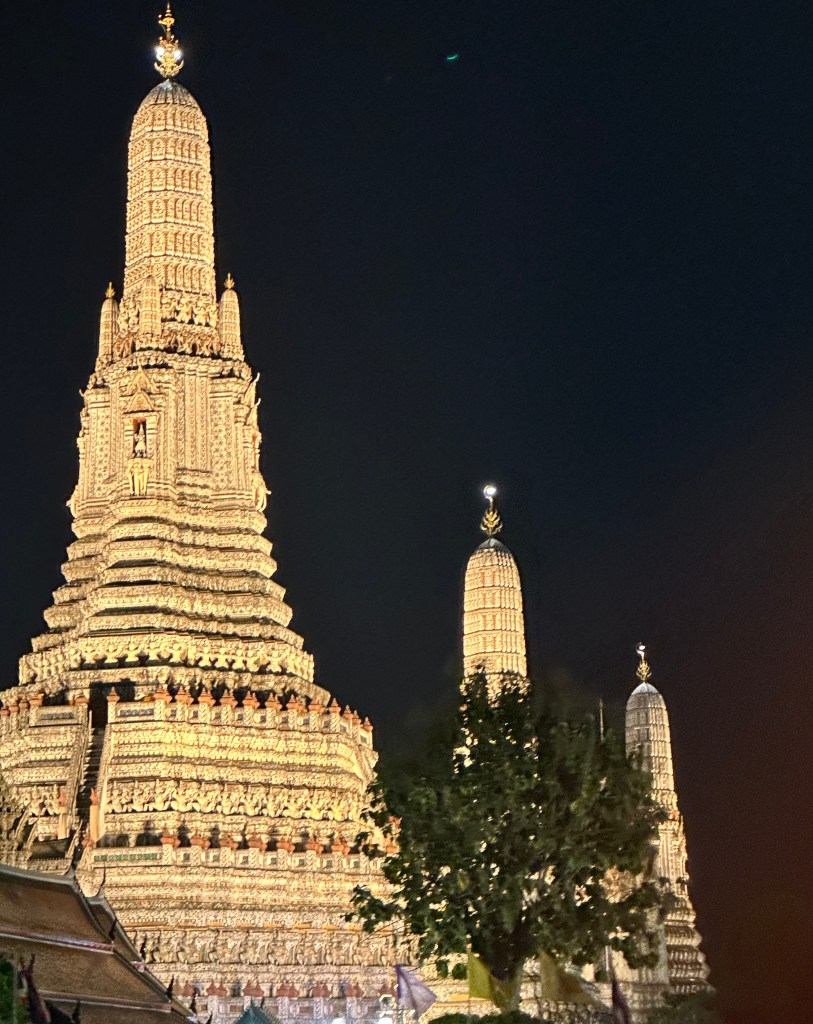
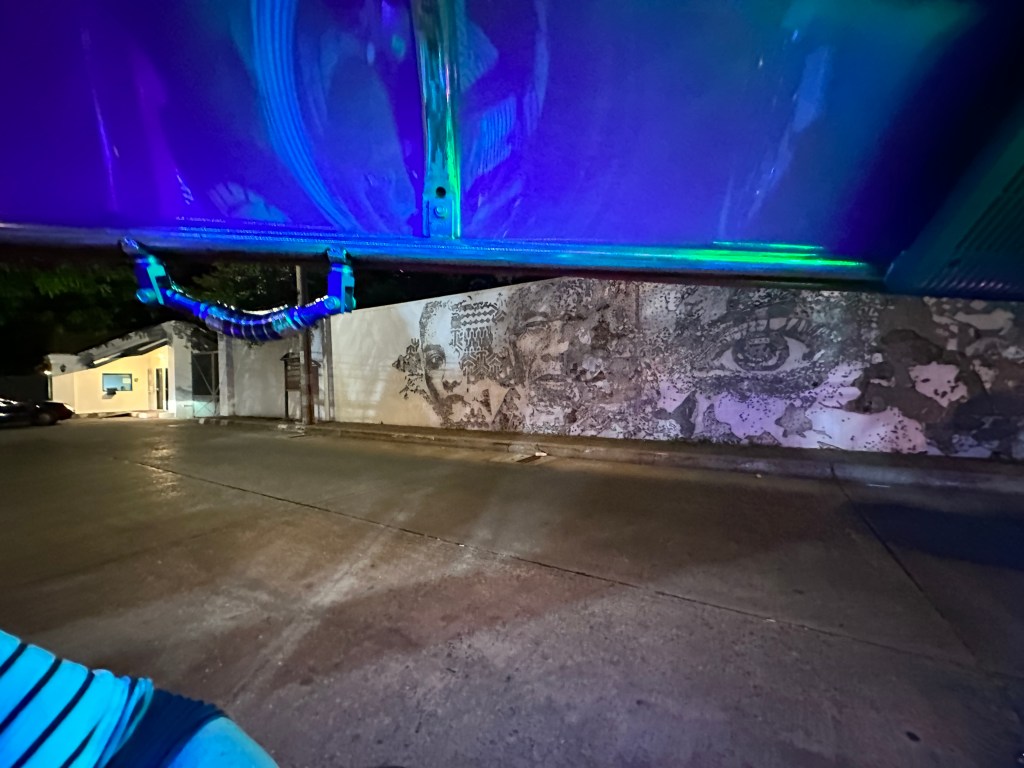
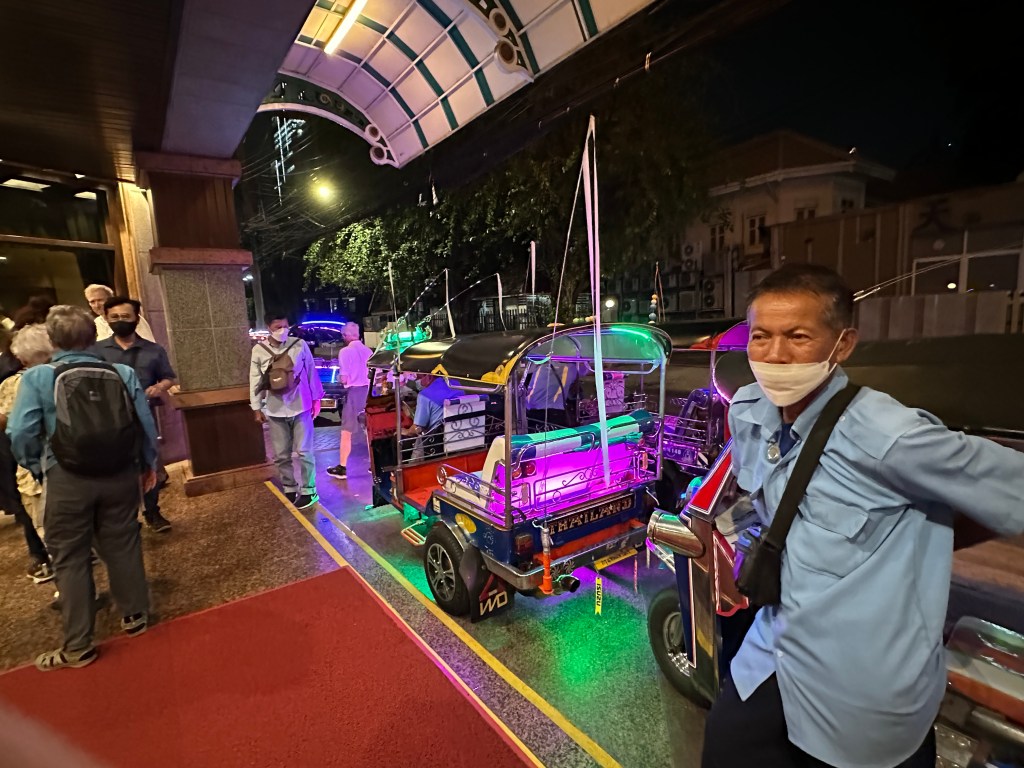
In the evening, the coach took us to the waterfront, where we boarded a small boat for a trip up the Chaophraya river and our welcome dinner on board. The temples and other structures up and down the river were magnificent, as was the asymmetric suspension bridge. The temple spires shaped like corn, we learned, reflected the Cambodian style of temple structure. We had a great experience riding in colorfully (garishly?) lighted tuk-tuks on the way back to the hotel.



Thursday, Jan. 11
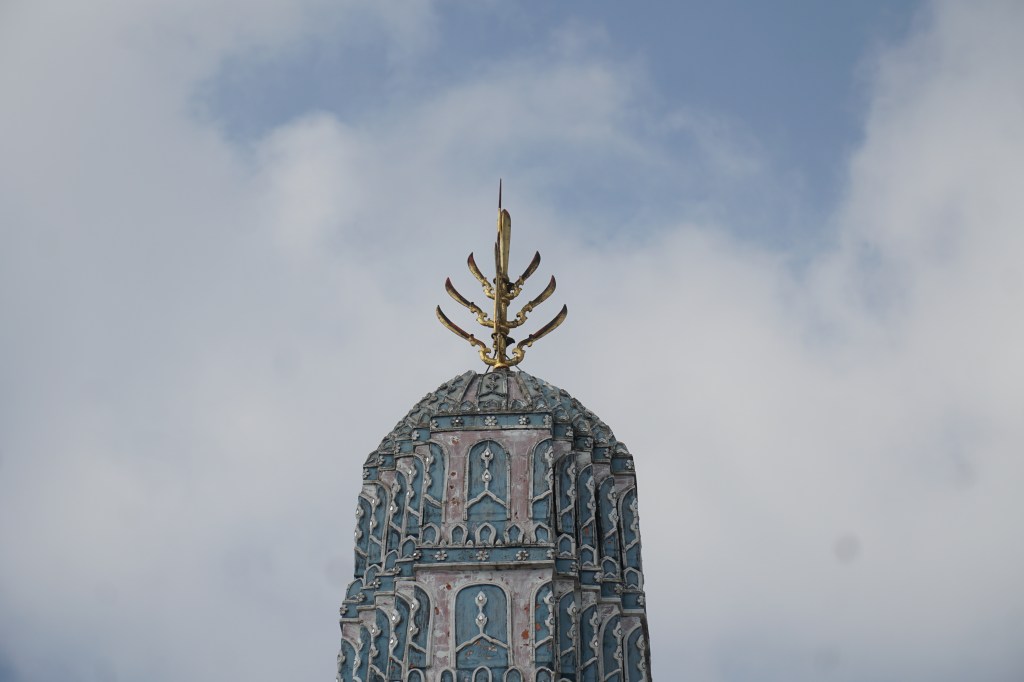
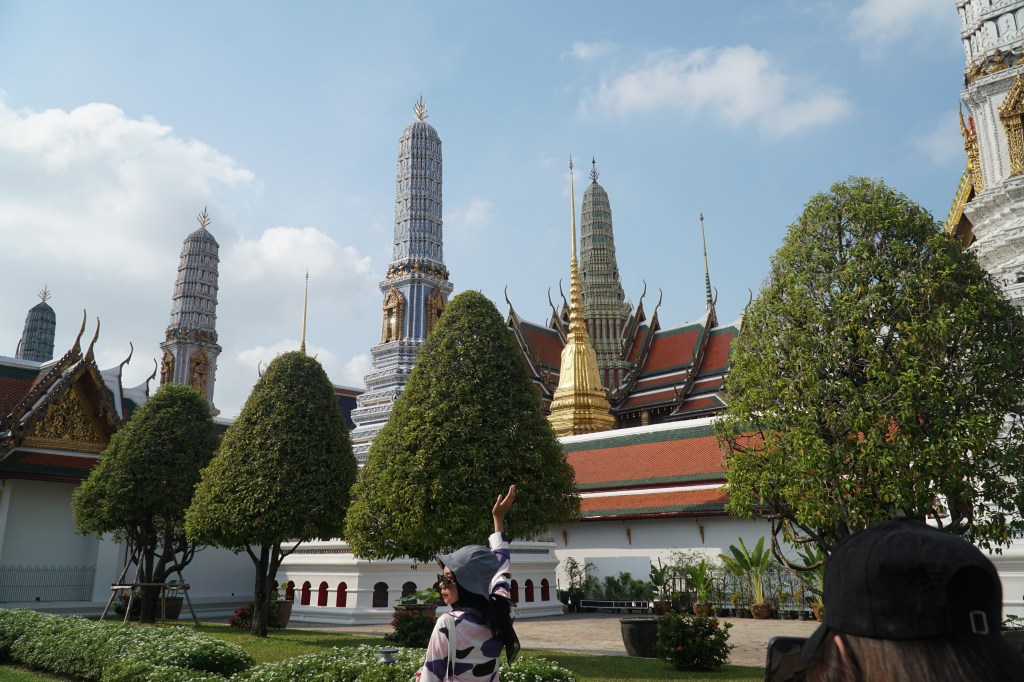
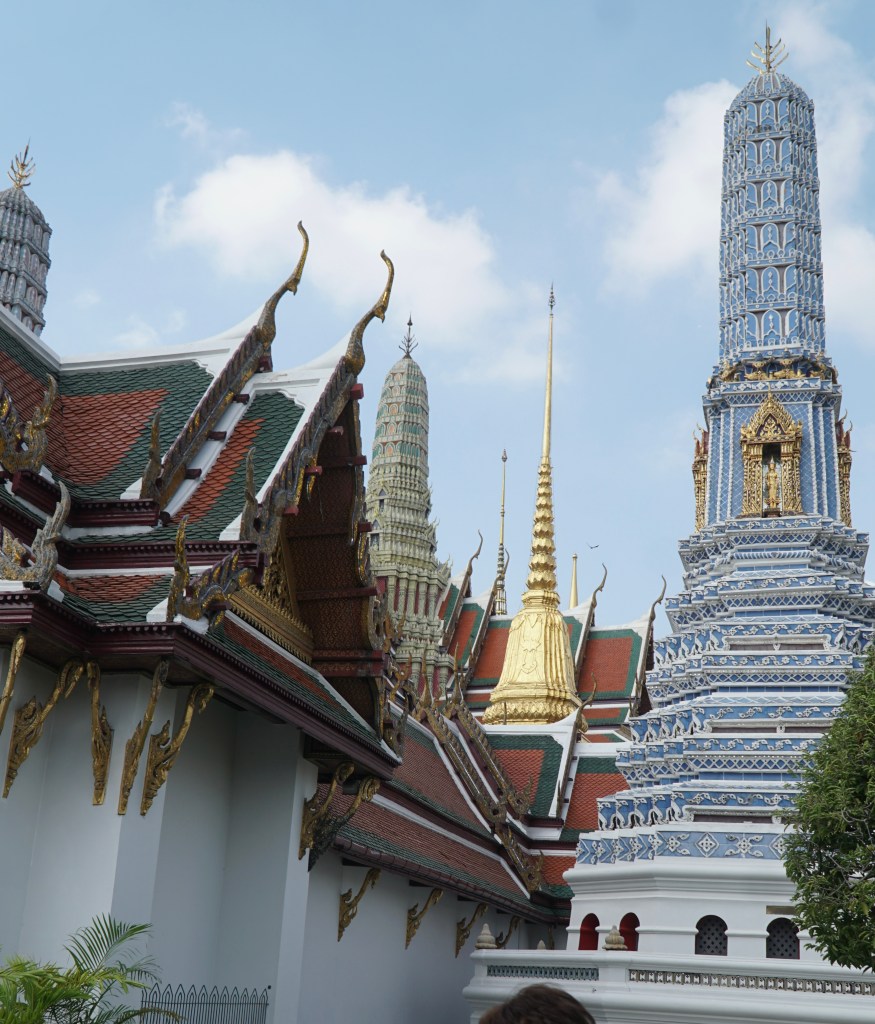
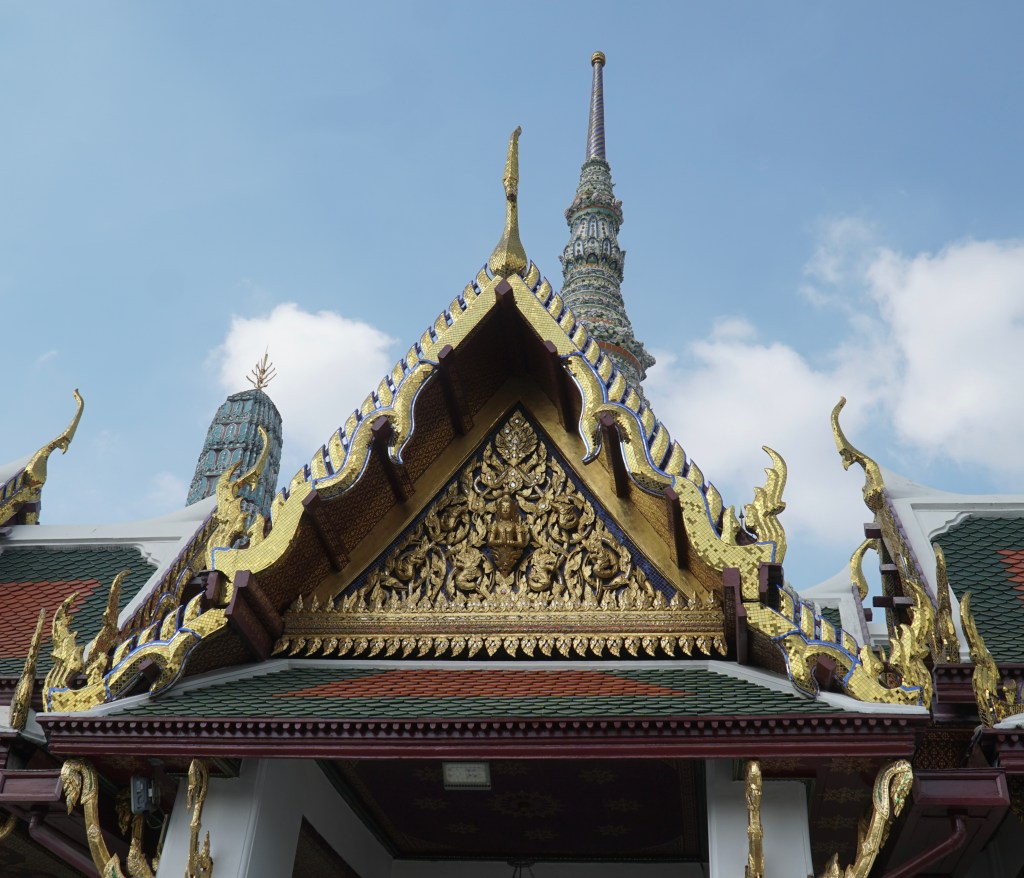
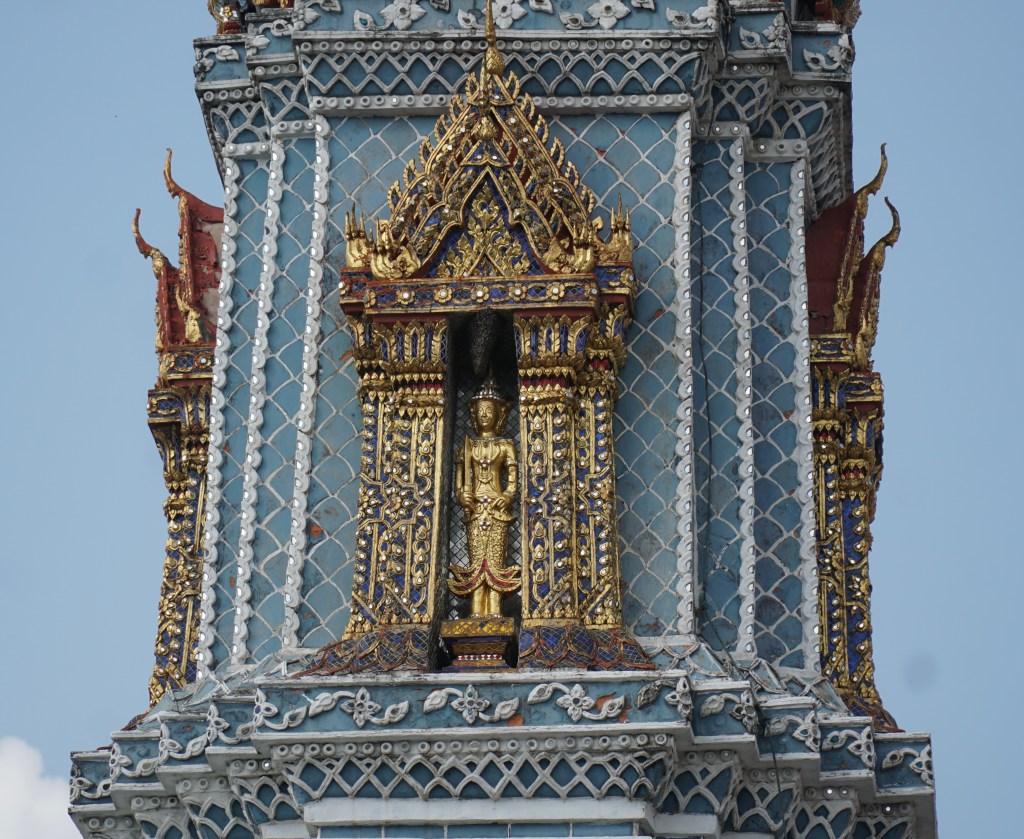
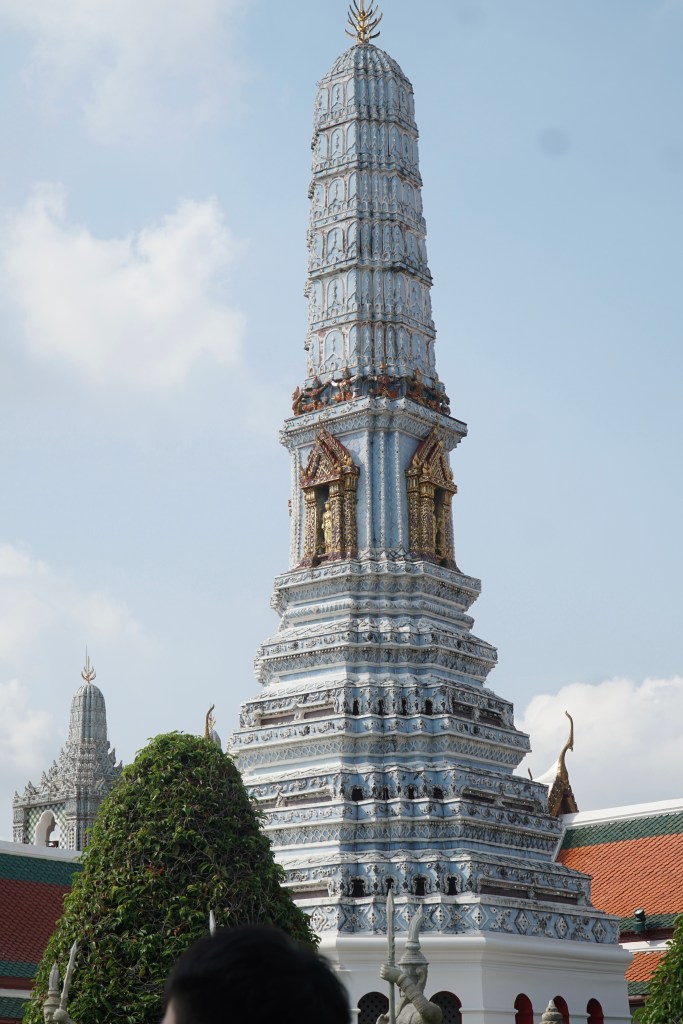
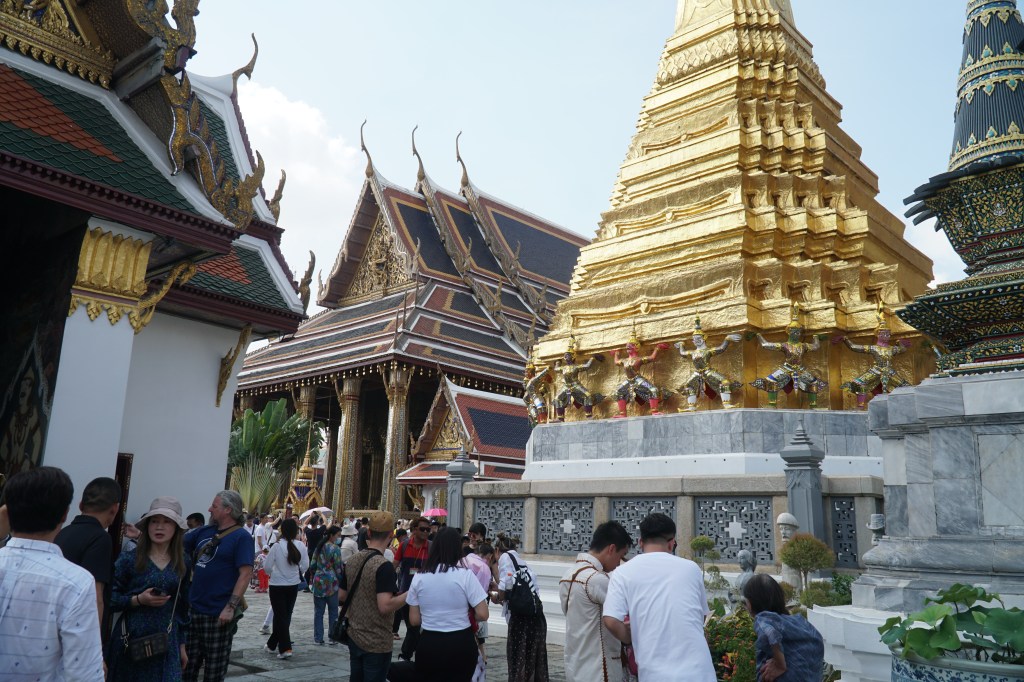
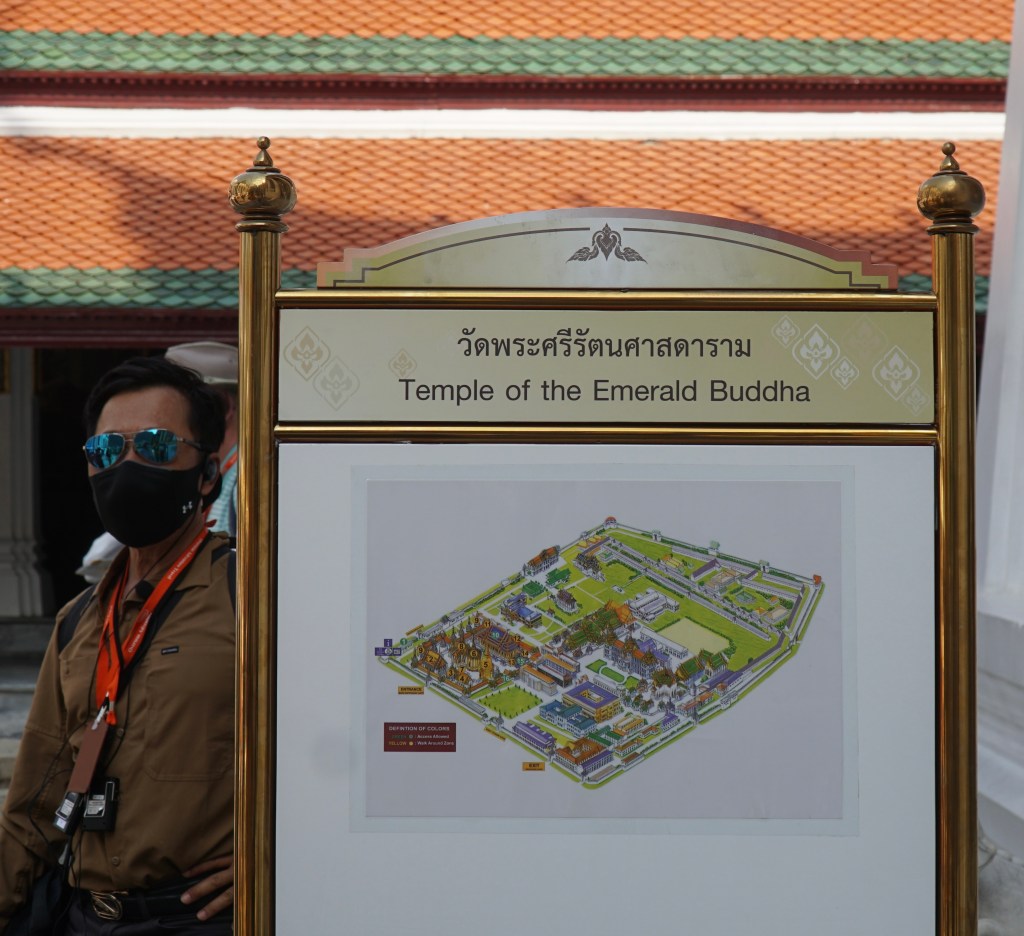
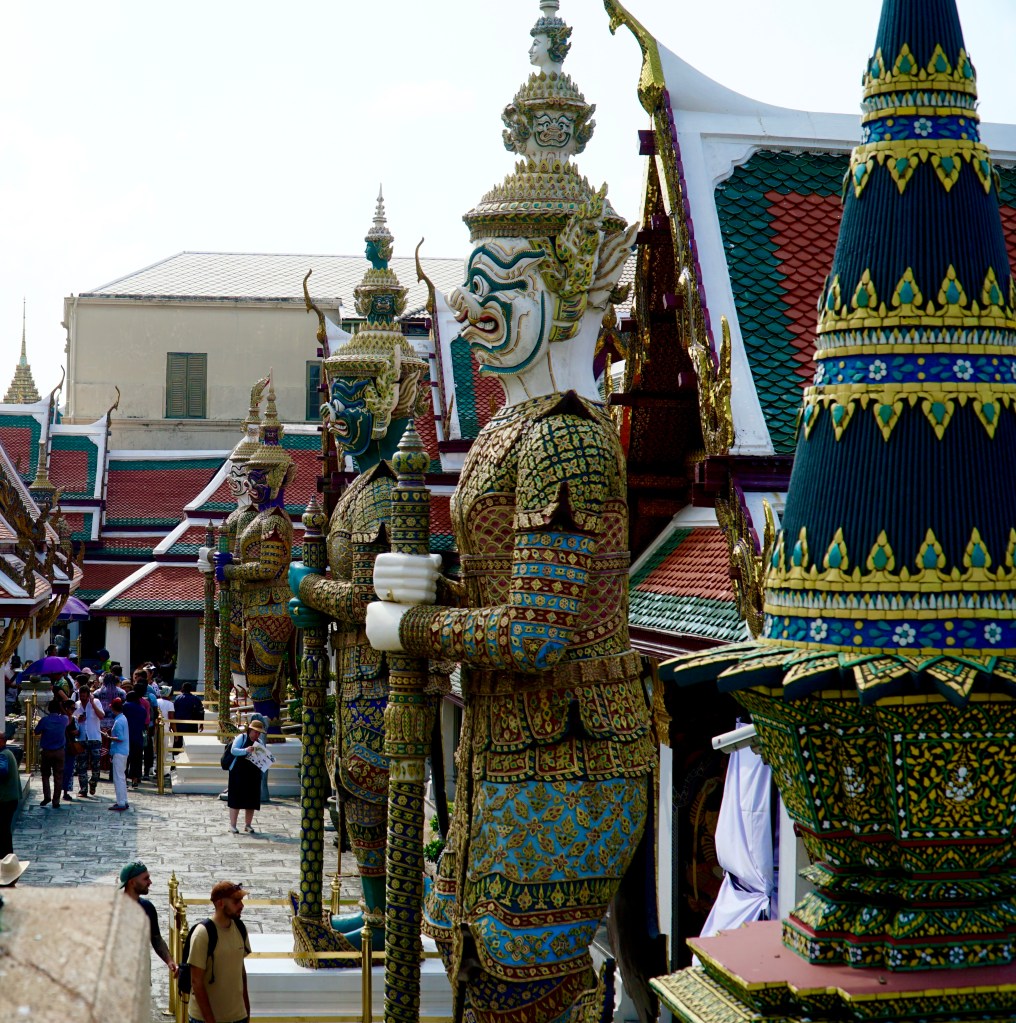
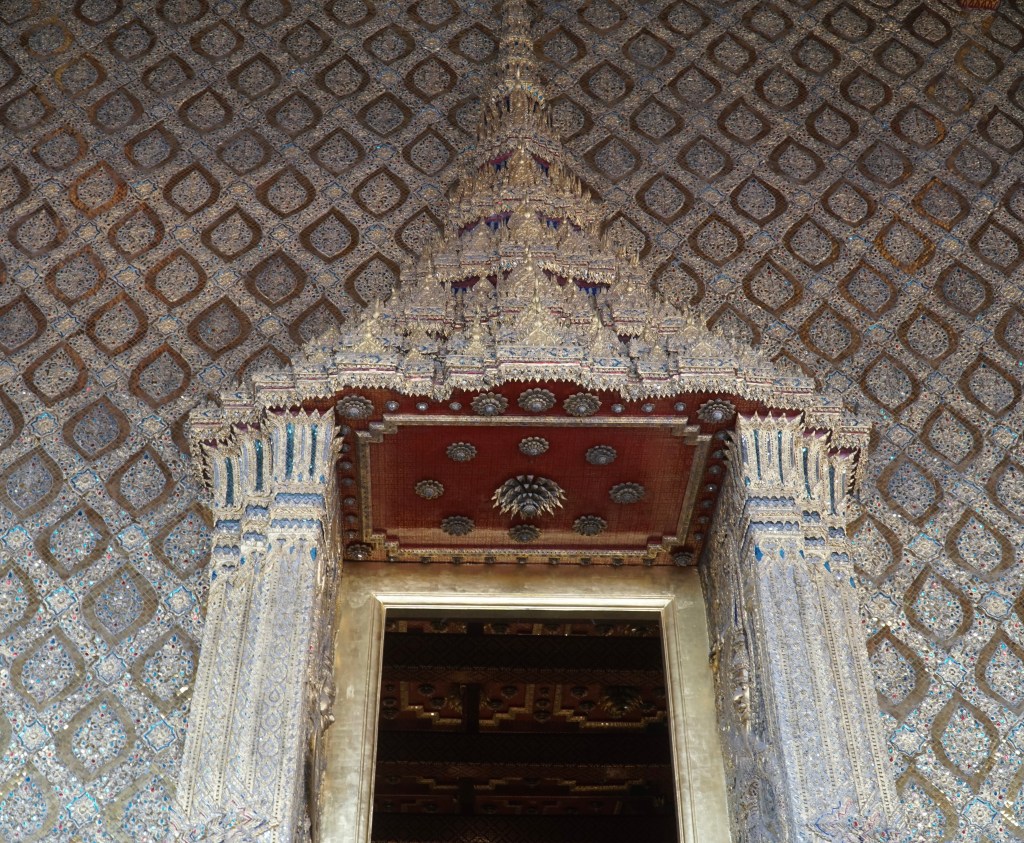
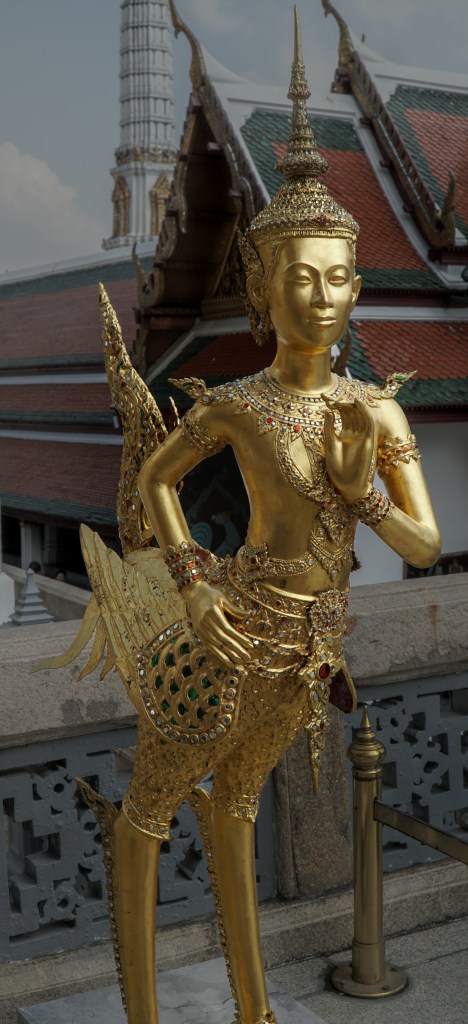
This was a big sightseeing day, with a visit to the Grand Palace of Thailand, dating back to 1782, when Bangkok was known as Krung Thep, or the City of Angels. Rama IV, (depicted in the movie The King and I) ruled from this palace. In the most elaborate temple, the Royal Chapel, is the “Emerald Buddha,” discovered in 1434. It has found a home here since 1785, despite other countries laying claim to this relatively small buddha carved of jade. I believe this was the hottest day of our trip, and the slow entry line was tedious (they were implementing a new ticketing system – just our luck!). I can’t imagine visiting in the summertime! This palace contained the most elaborate buildings and statues of the trip.





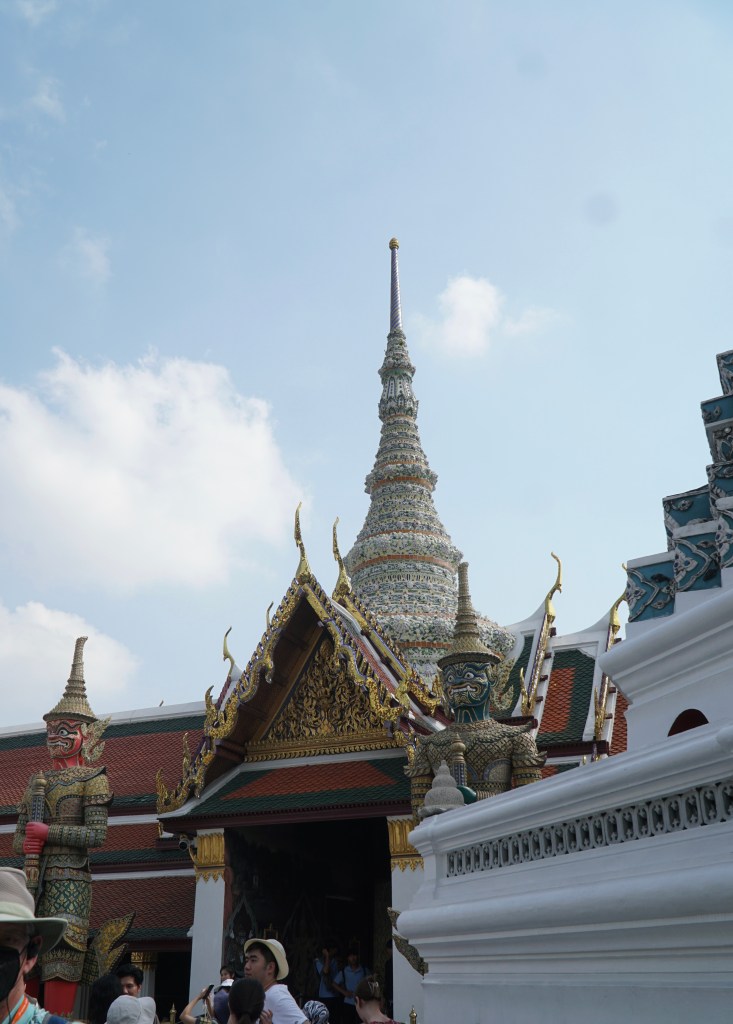


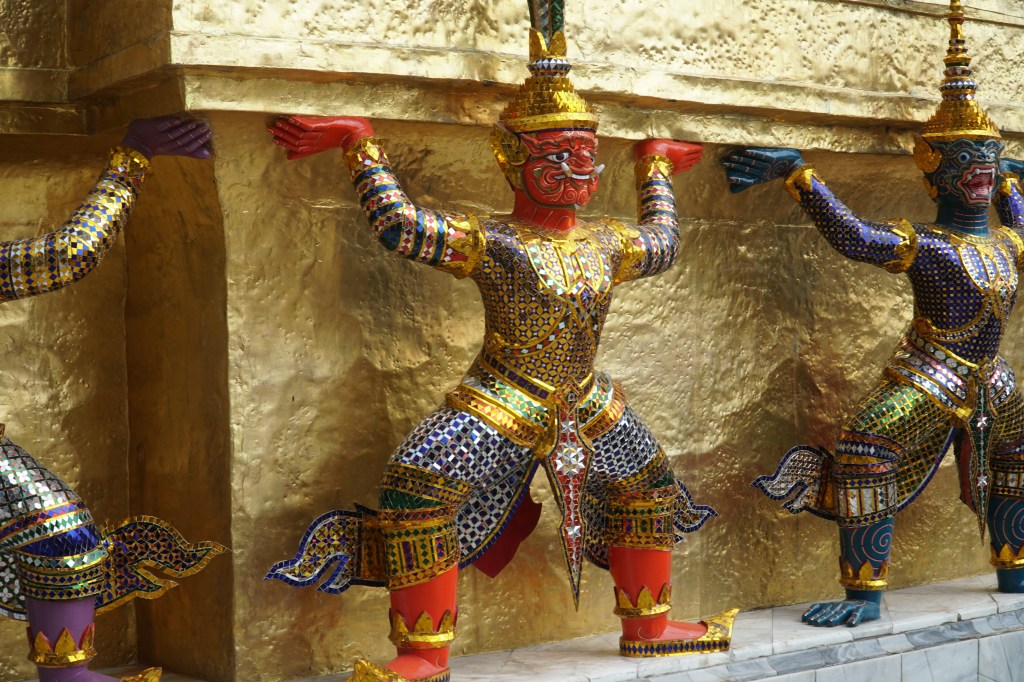
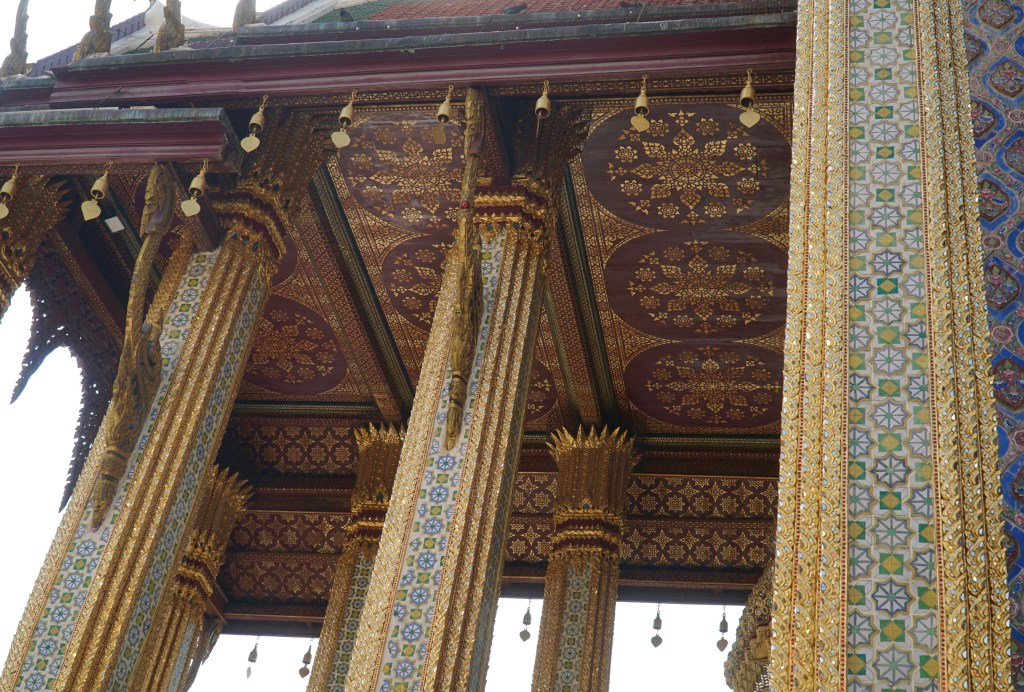
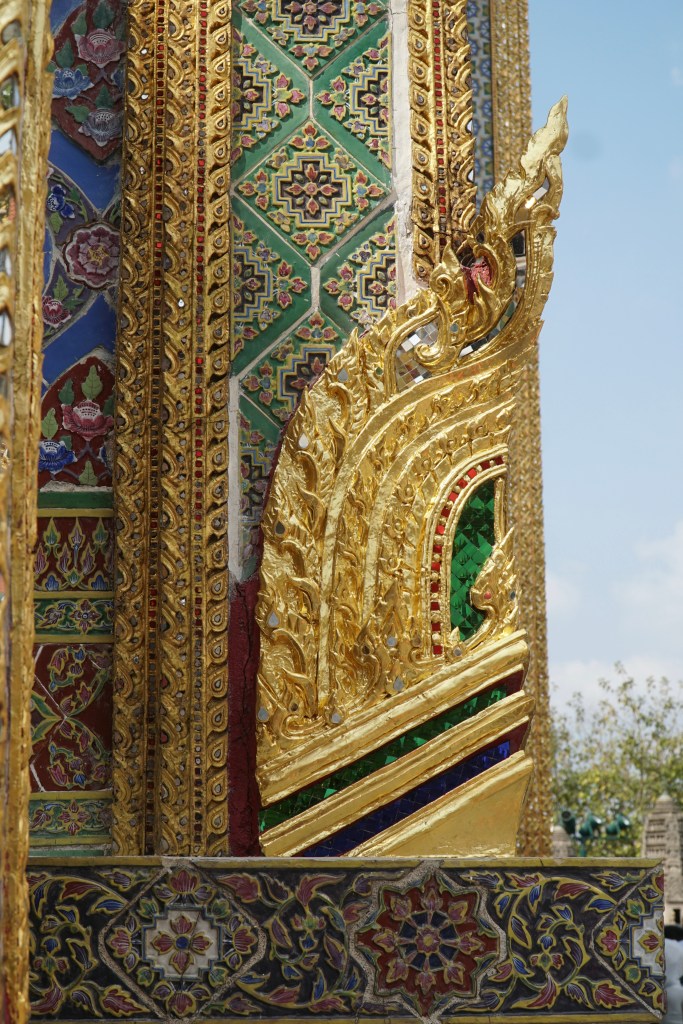








Over lunch at a local restaurant, we were joined by a student protester, who discussed her activism against one of the country laws that prevents any public comments/displays against the royal family. This was the first of our “controversial topics,” a feature of all OAT trips. I have to confess that I couldn’t catch all of the discussion because of language issues, but we did have more discussions of the topic with Mark during our time in Thailand. Unlike the other countries we visited in this trip, Thailand was never colonized. The government was an absolute monarchy, but switched to a constitutional monarchy, which has had various types of administrative leadership, including a military junta from 2014 to 2019, to a coalition government currently in place. There is freedom of speech with the exception of topics related to the titular royal family.
After lunch, several of us attended a performance of Thai Khon Masked dance at the National Theatre. According to the theatre’s website, the performances “narrate tales from Ramakien, with masked dancers portraying demons, creatures from other worlds, and monkey gods.” We thought it was excellent. Photos were not allowed.
Original Source: https://bangkok-tourism.com/national-theatre/.
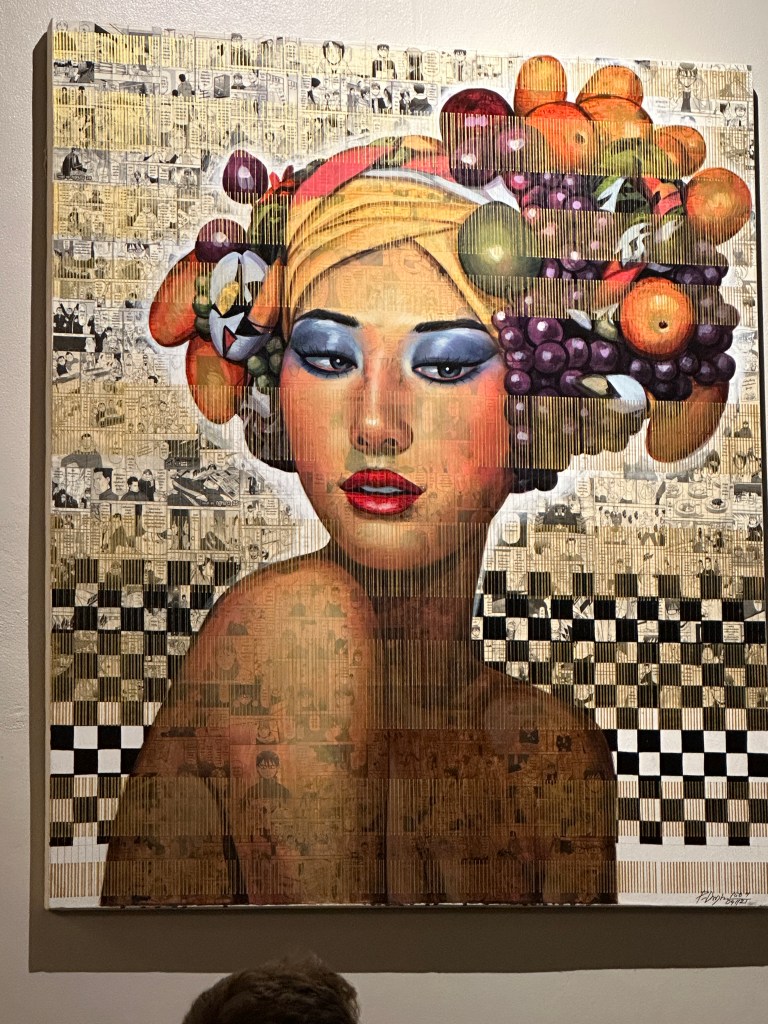
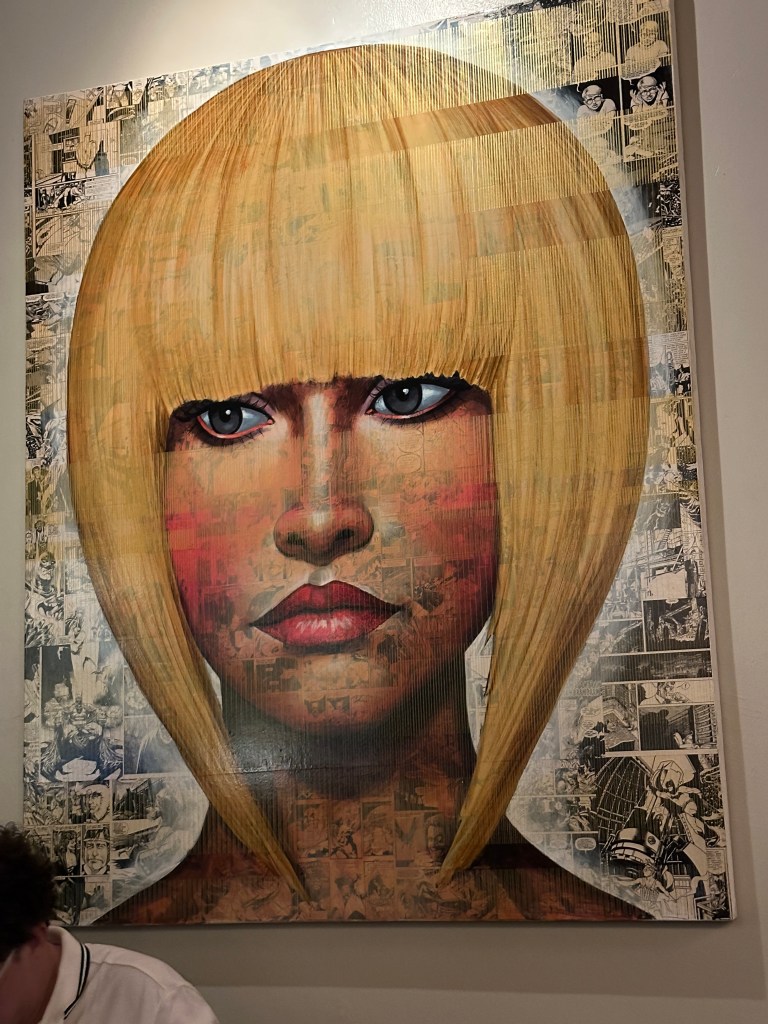
Several of us went to a local bistro for dinner. Spring rolls were wonderful and the art on the wall was great!


Friday, Jan. 12
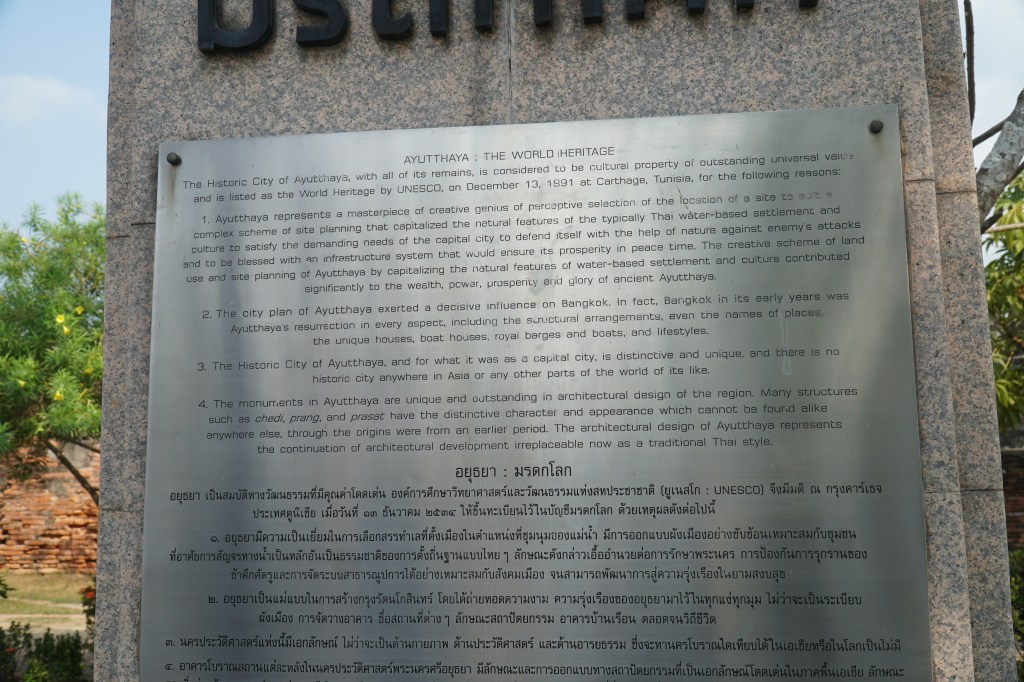
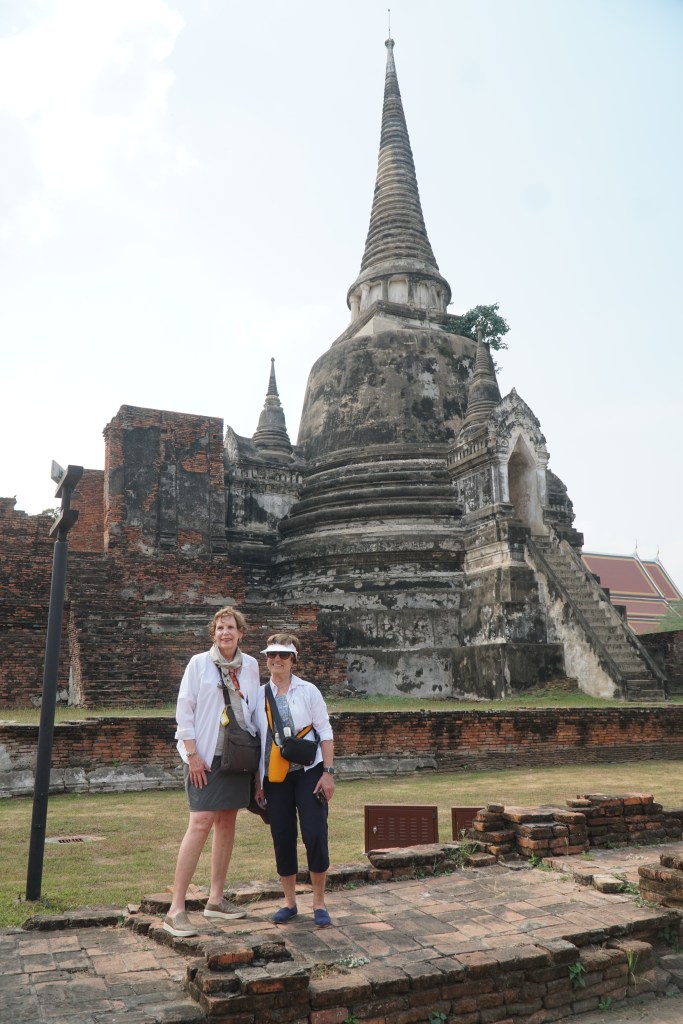
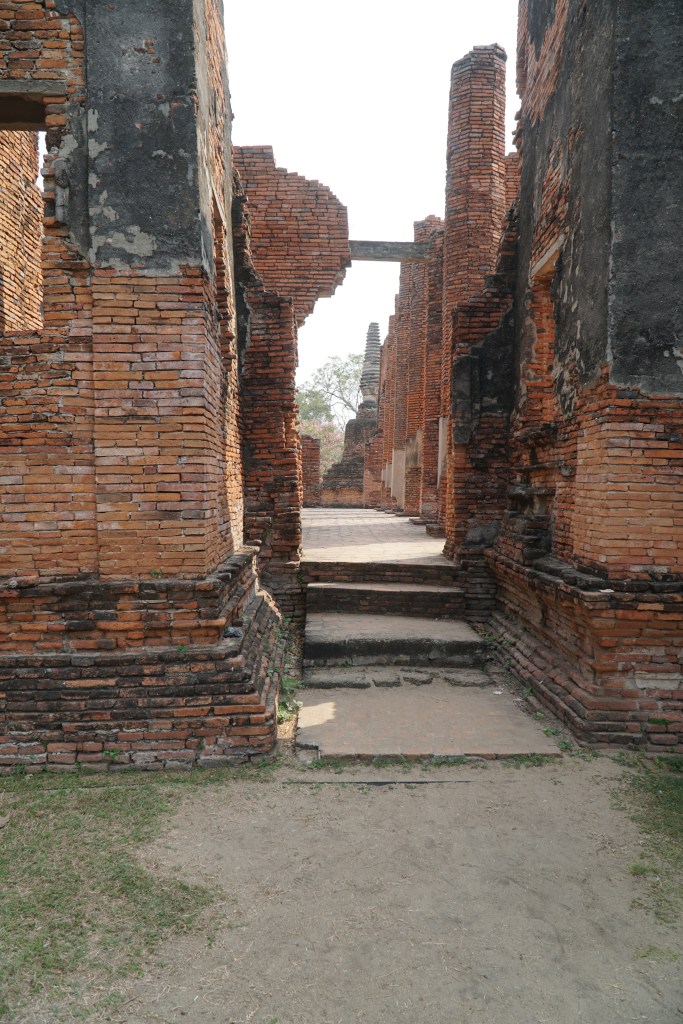
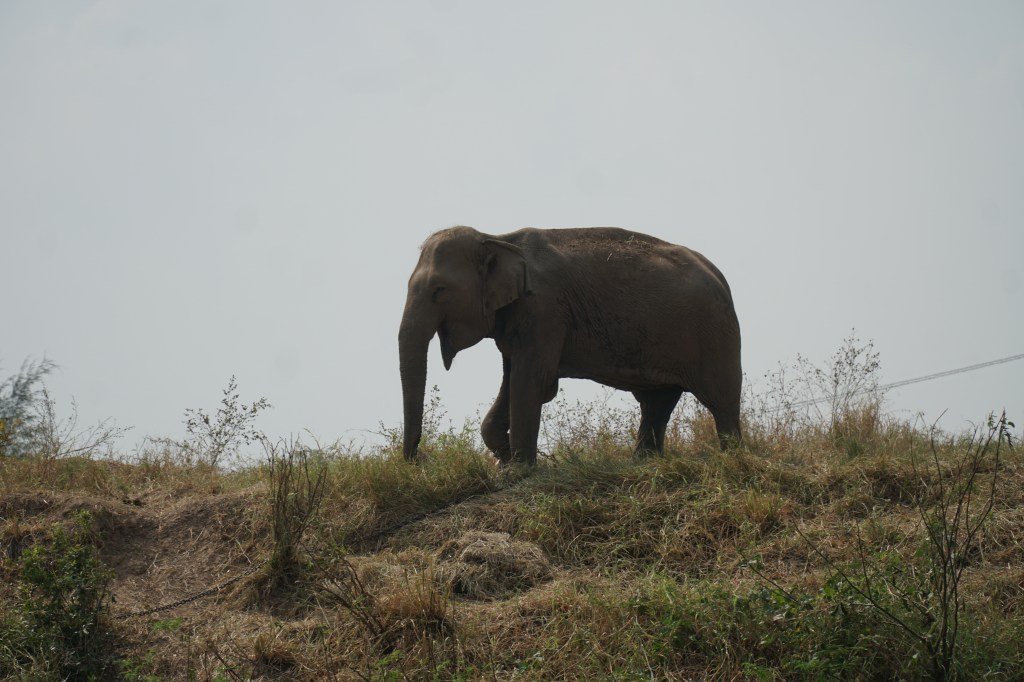
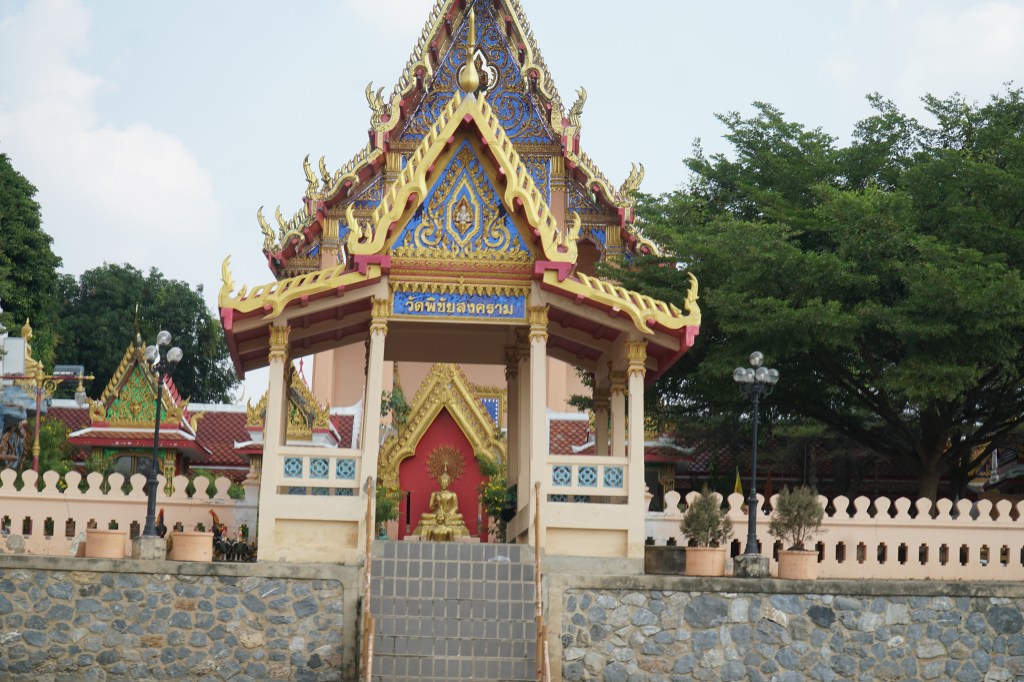
We drove to Ayutthaya, the capital of Siam (name of Thailand until 1939) from 1353 to 1767 to visit the temple ruins of Phra Sri Sanphet. There were many temple stupas - which were conical Buddhist structures erected to hold the remains of important people and to be places of meditation. This was an impressive site. Many of the other visitors were young monks or novices.

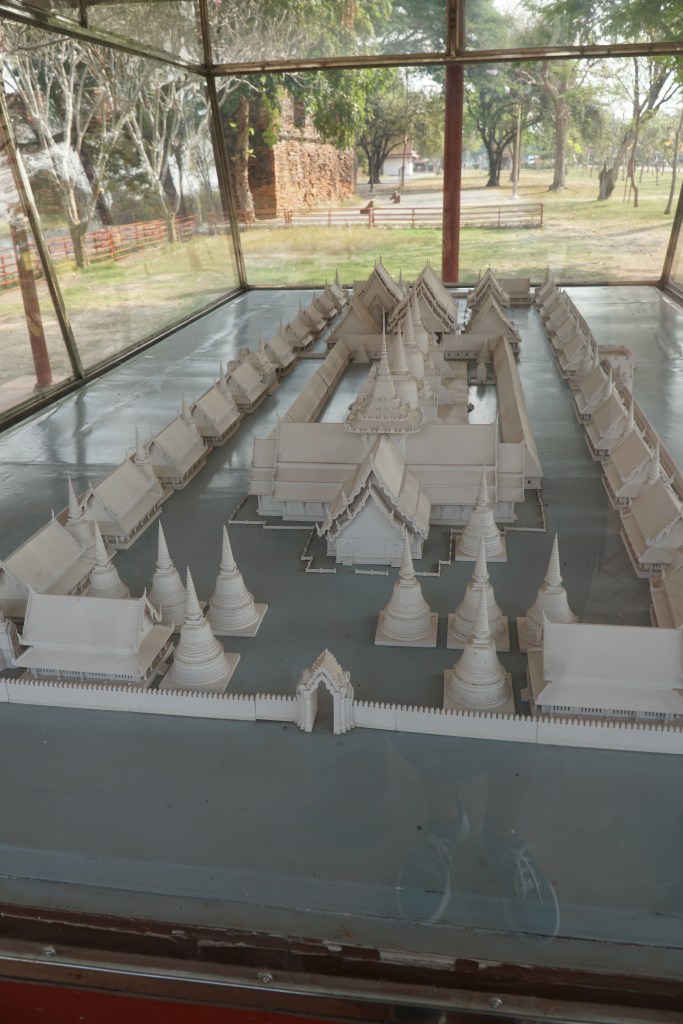

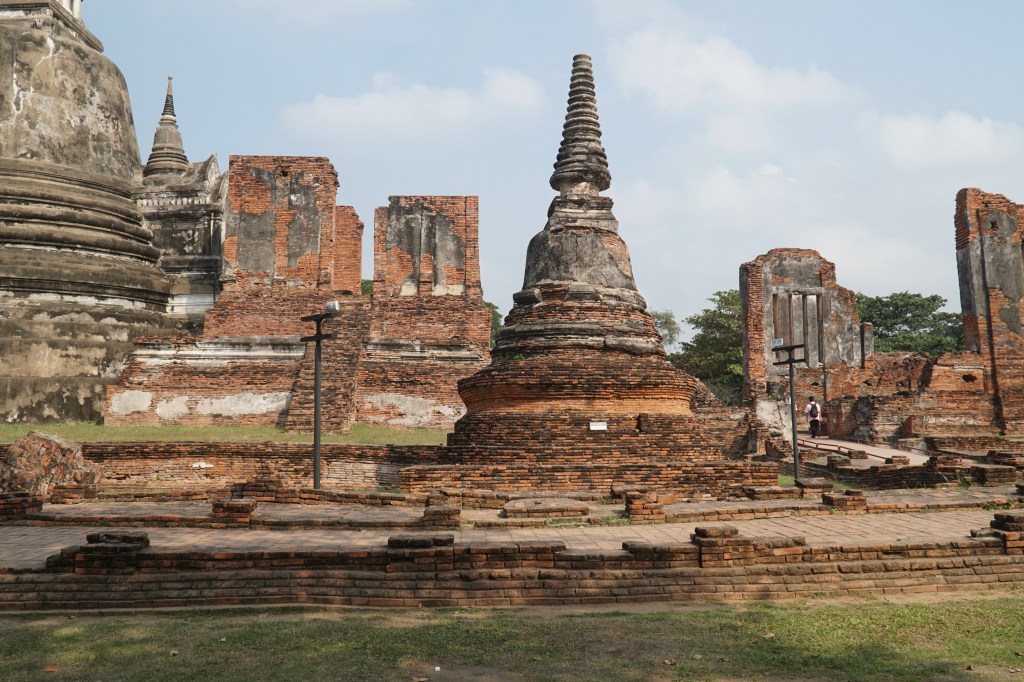


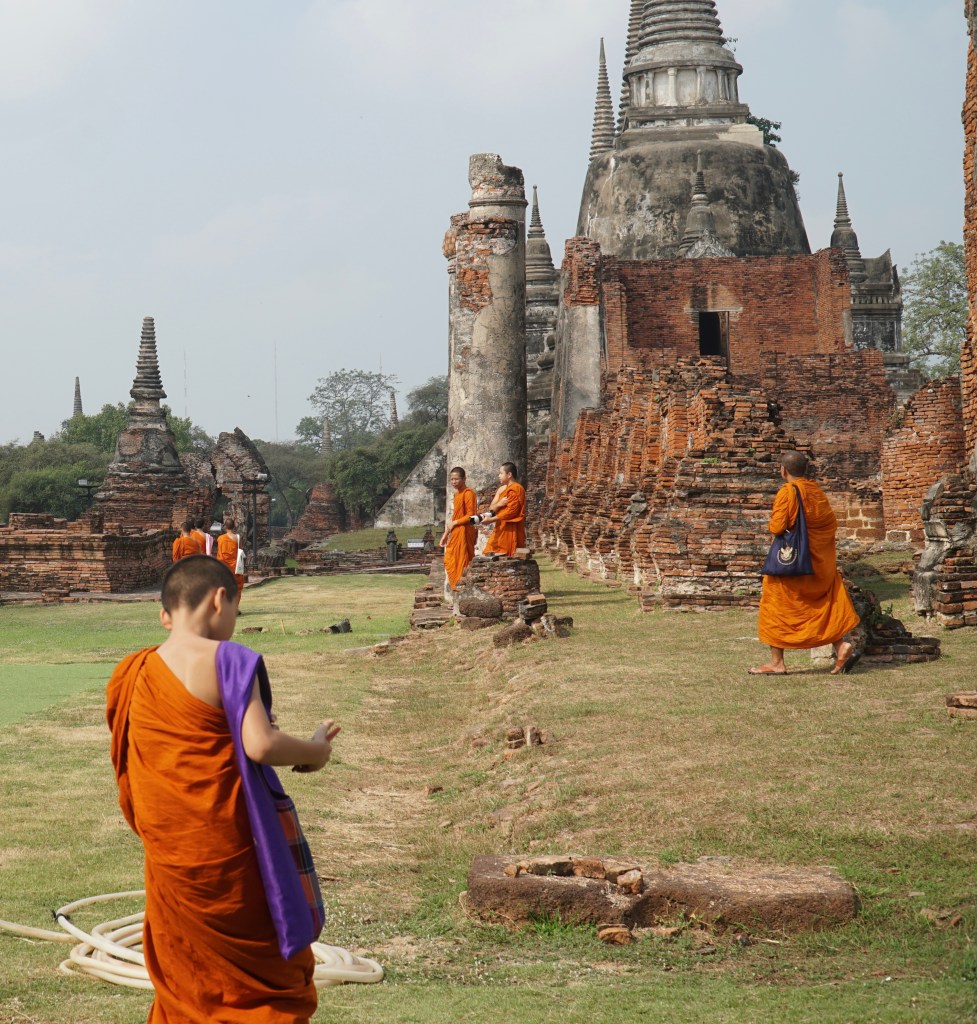


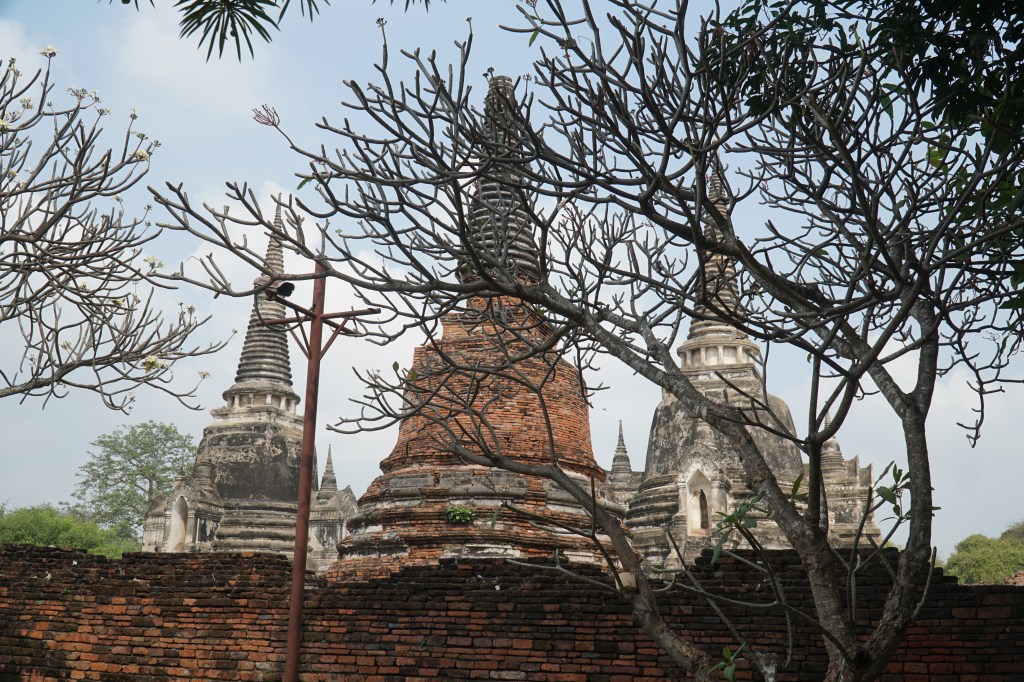


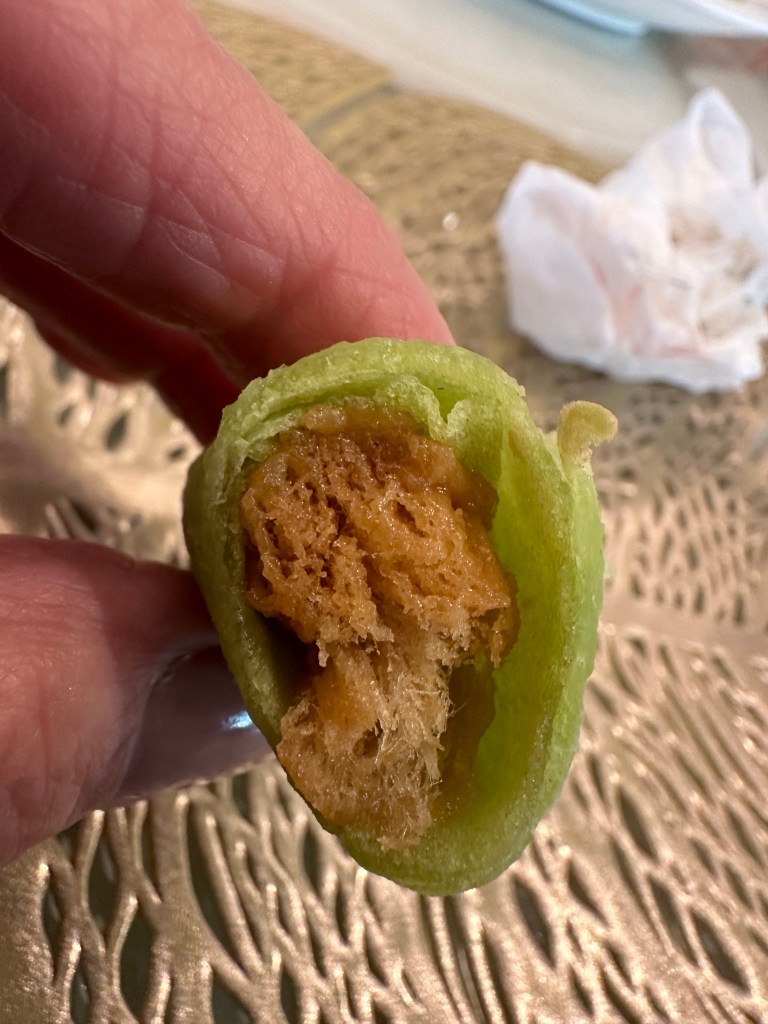
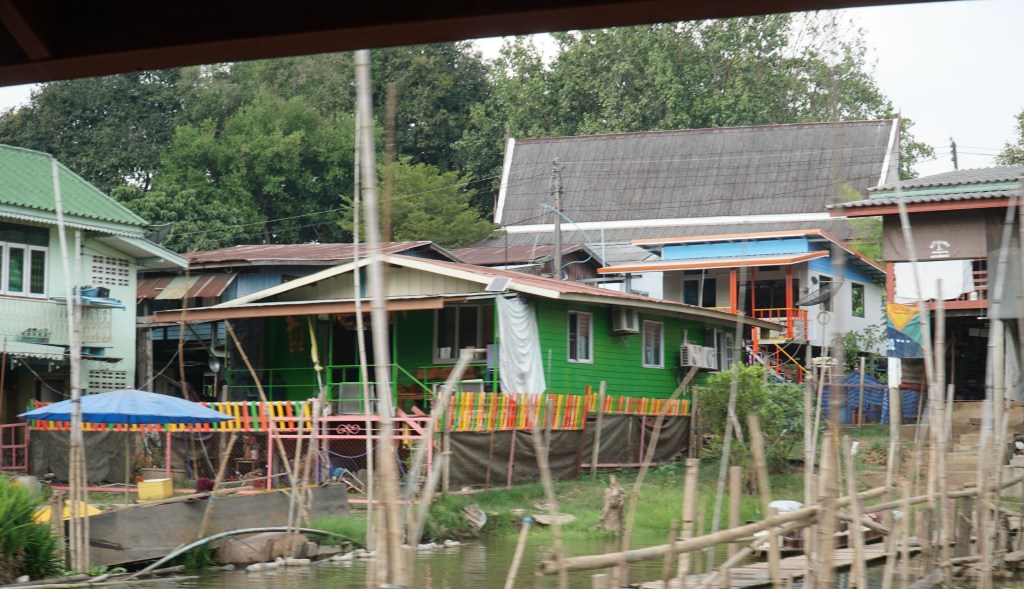
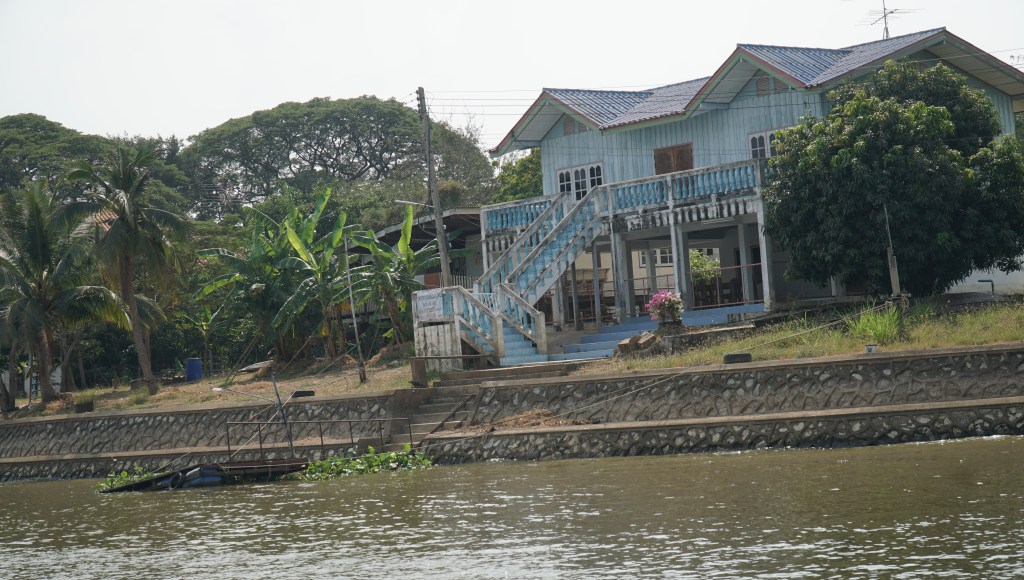
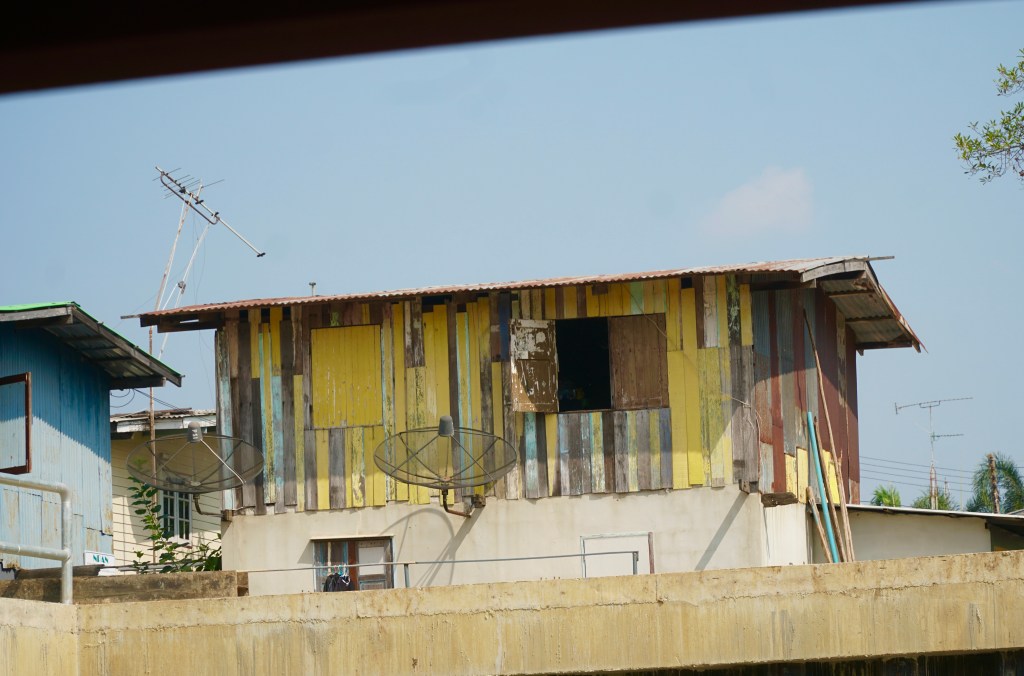
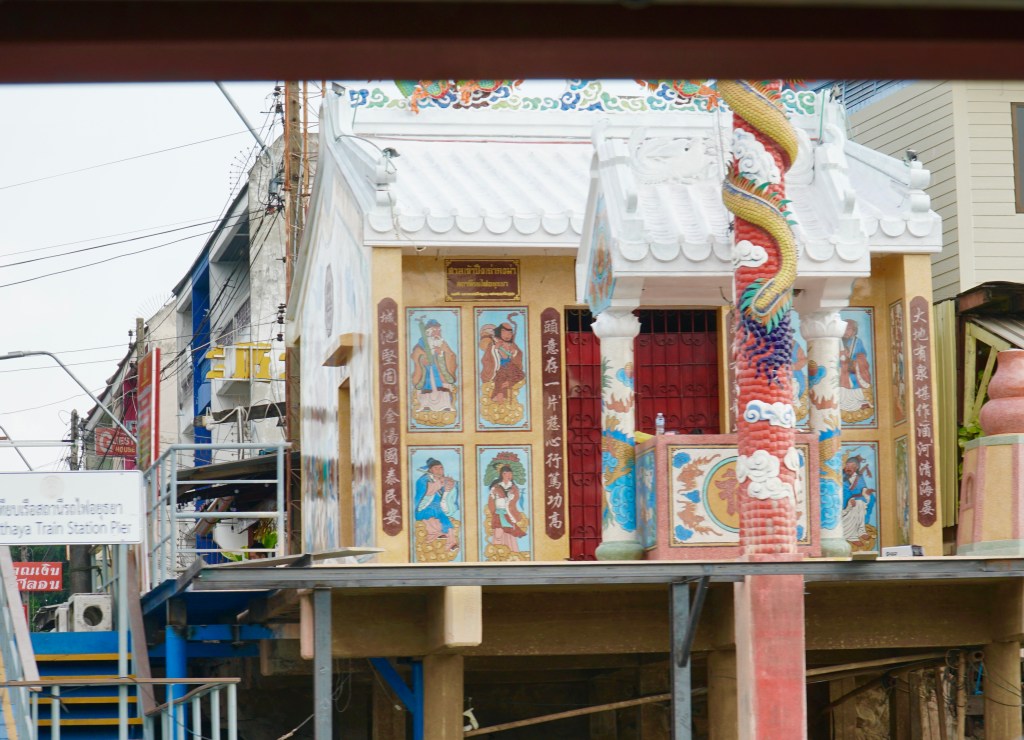
We stopped at a family-owned street stall where family members were making a type of treat that consists of something like spagetti-shaped cotton candy wrapped in a thin pancake. It was delicious! We then took a short boat ride on the Pa Sak river to get a view of local residences, and had lunch at a restaurant that ressembled a large US diner, and had loads of Christmas items for decoration and for sale (how odd!).










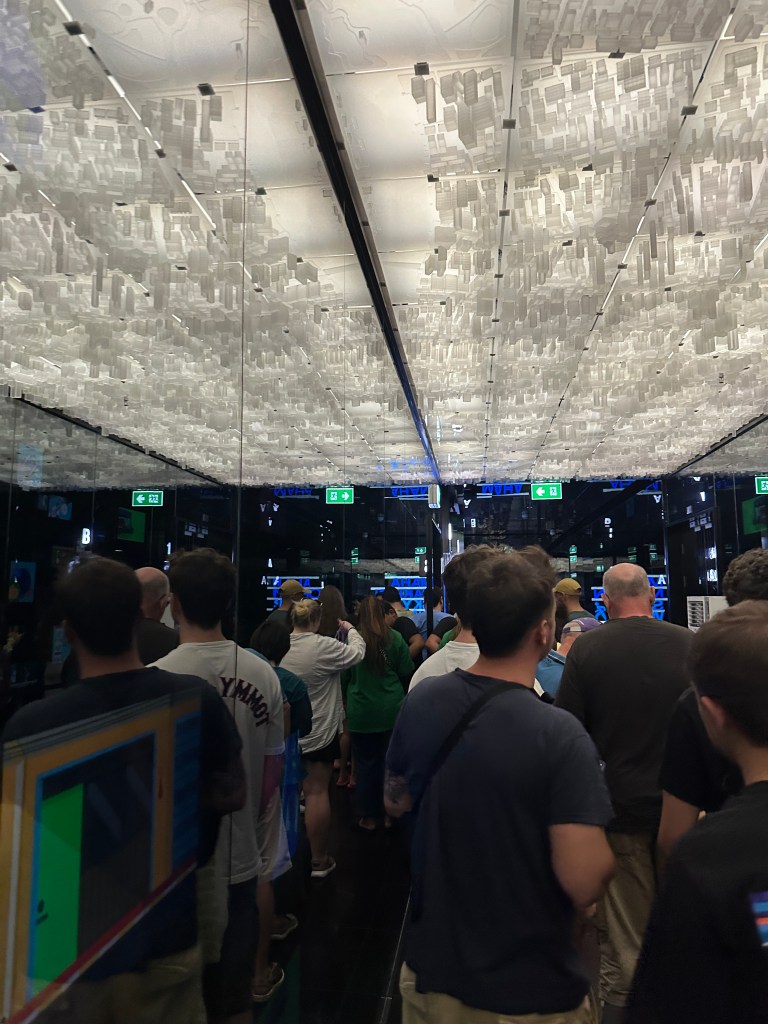
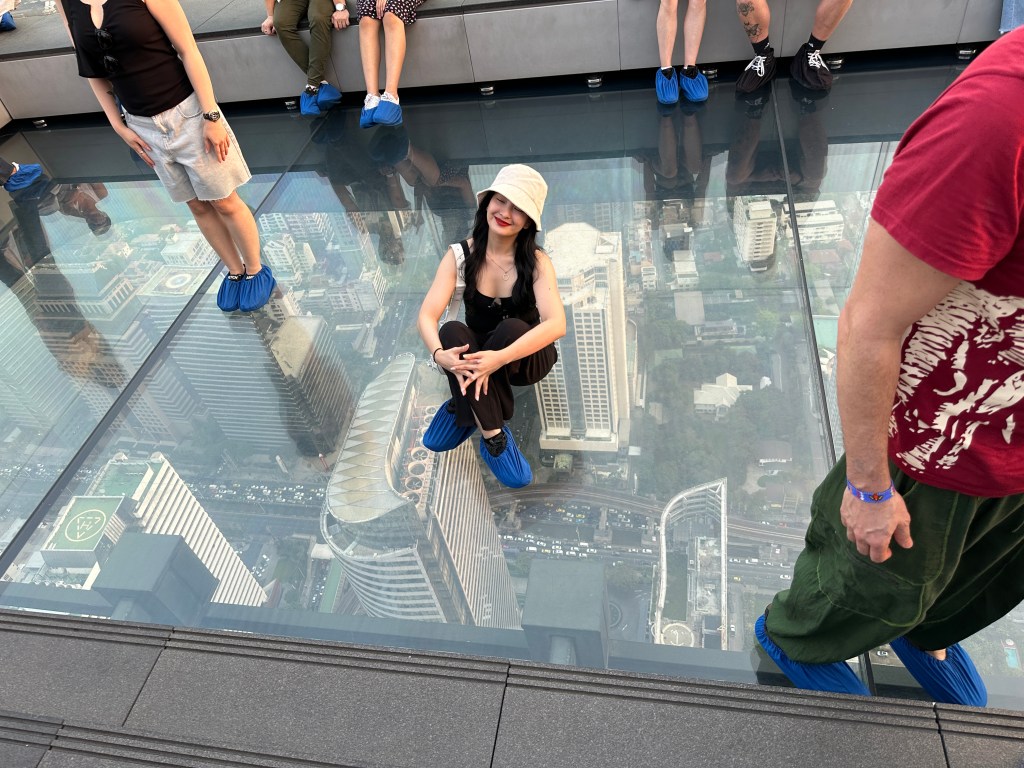
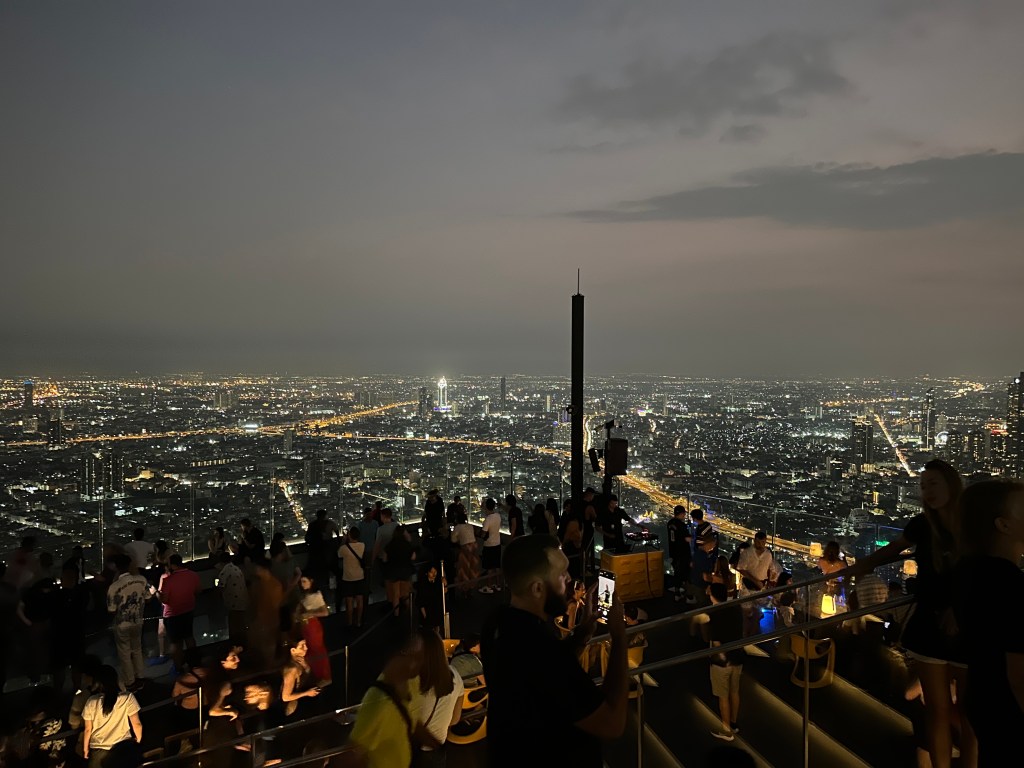
In time for sunset, some of us walked to the Mahanakhan Tower Rooftop Skywalk. The “lego-like” building is the tallest in Bangkok, and the Skywalk has great views of the city and a glass ledge that is very popular for posing for photos. Of note, the sky in Bangkok was never completely clear - a combination of polution (some from China) and humidity.



Saturday, Jan. 13
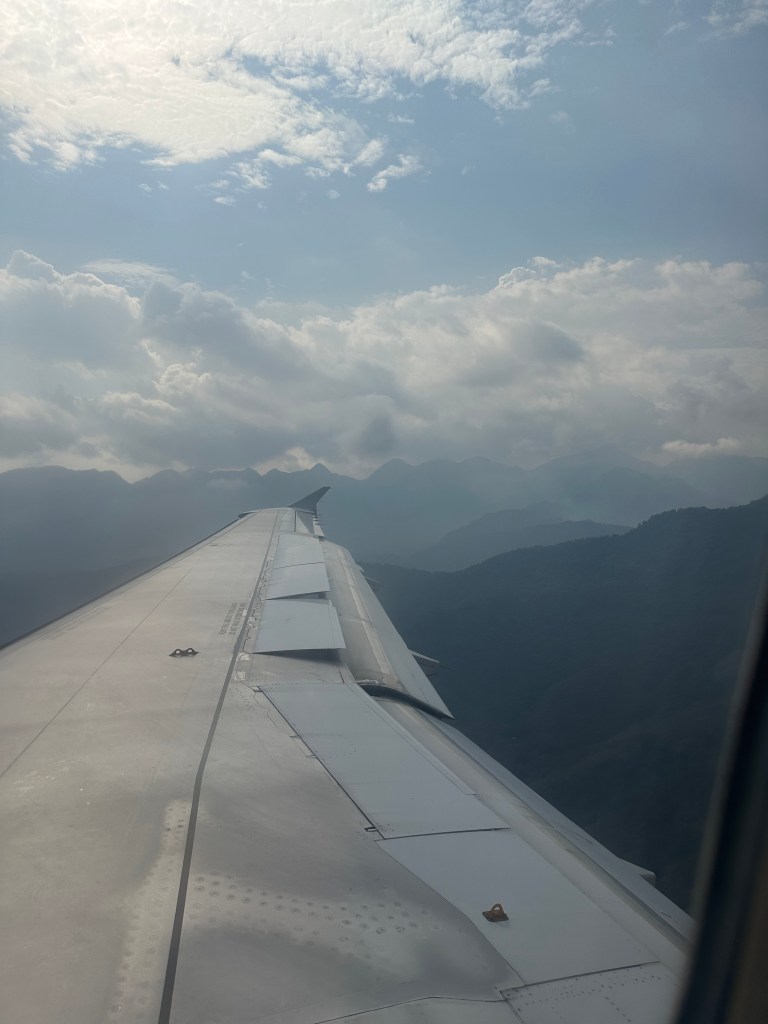
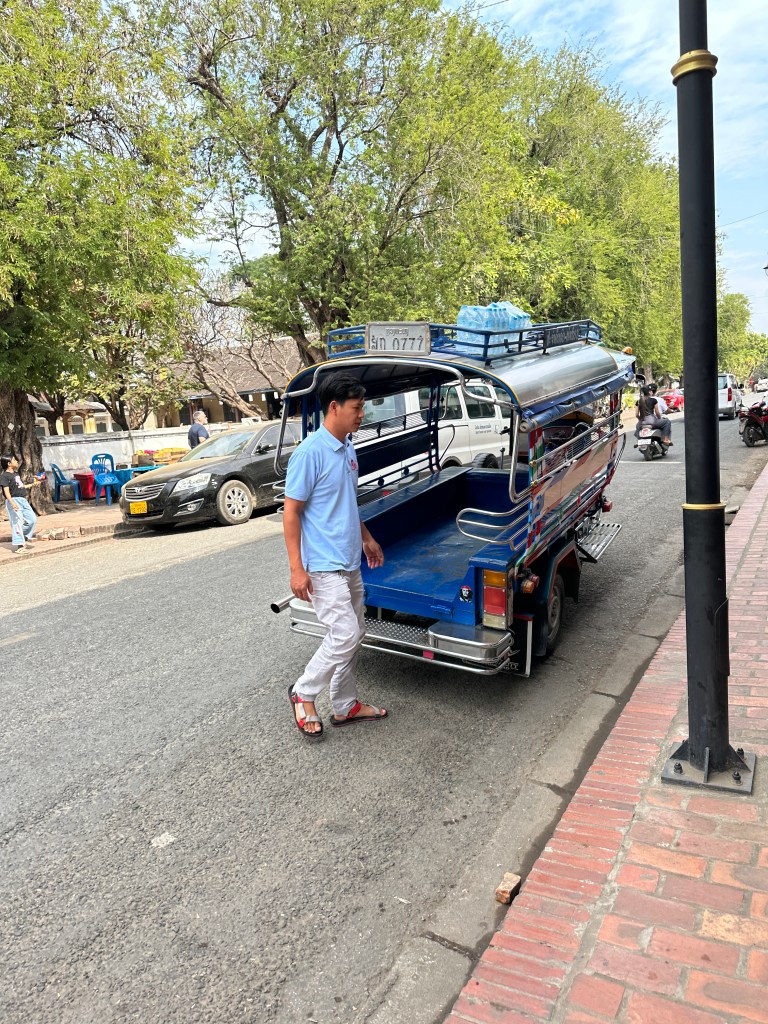
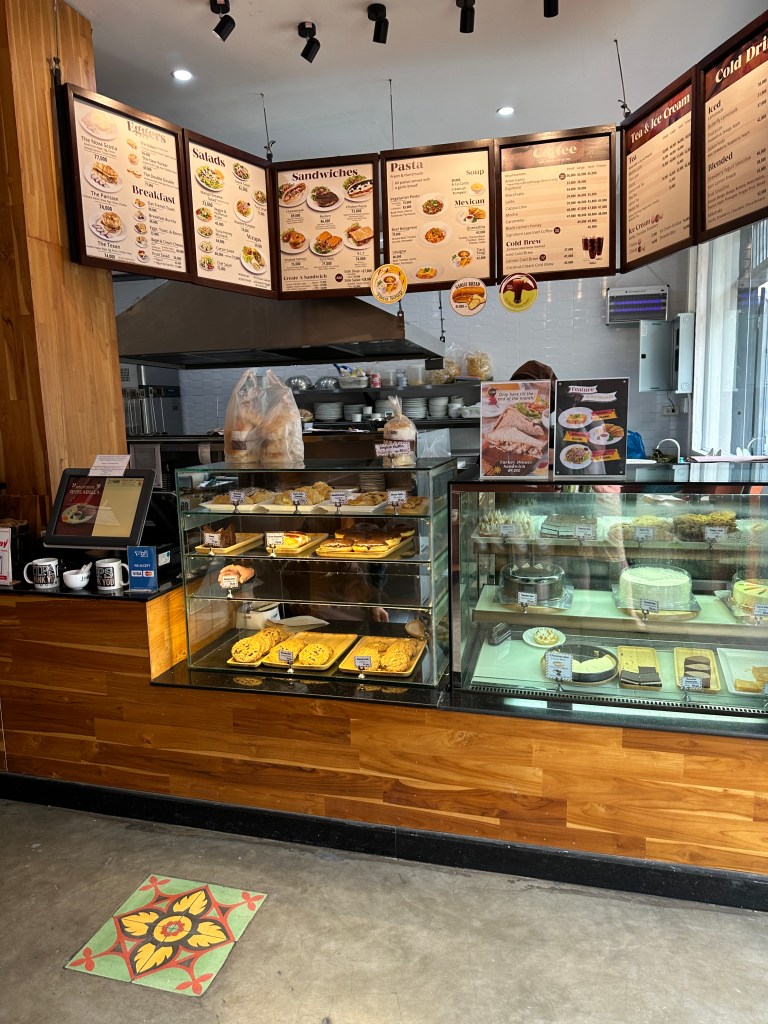
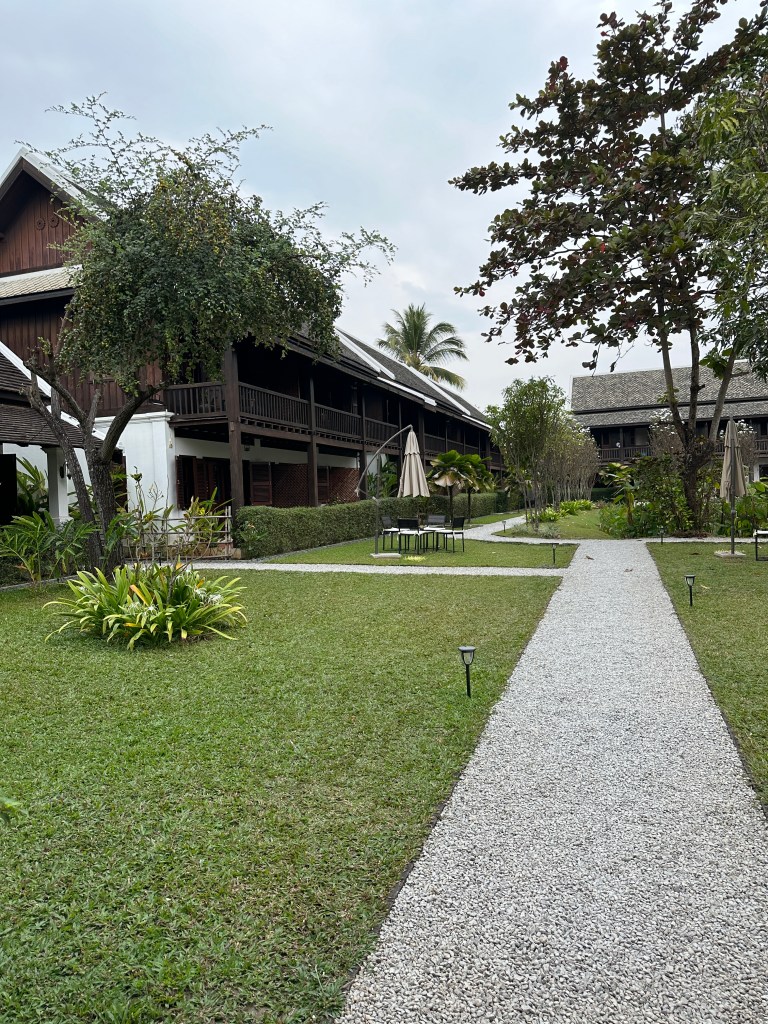
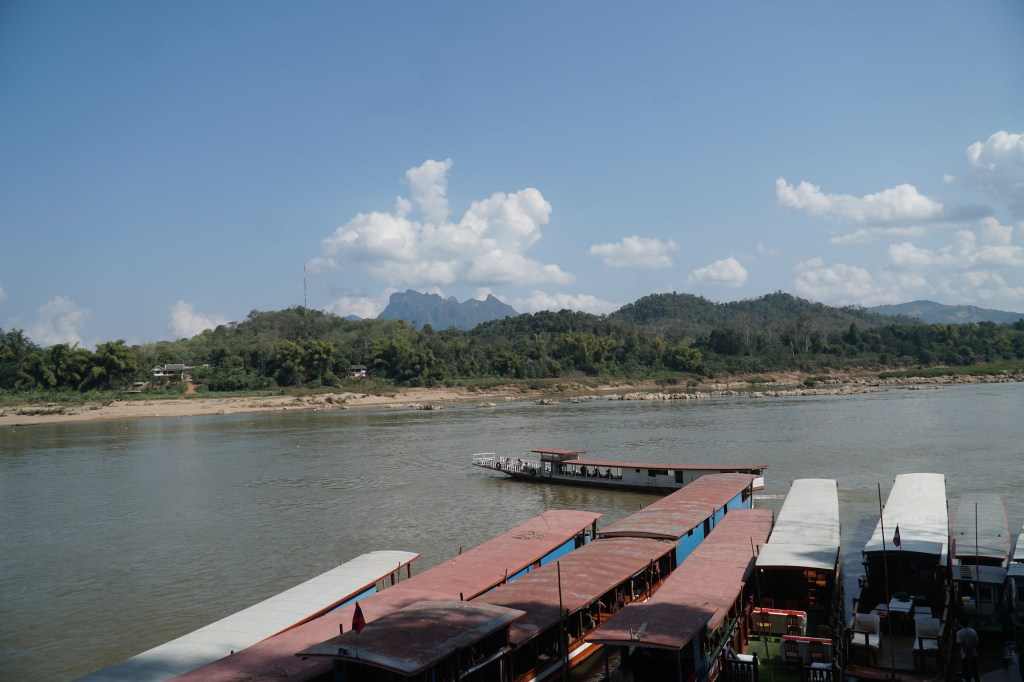
We flew to Luang Prabang, Laos. The residents of the Lao People’s Democratic Republic use the traditional pronunciation without the “s”. Owing to the inner city being a UNESCO World Heritage Site, buses were not allowed in the main town, so we transferred to Jumbos, the 3-wheel vehicles used in Laos. We had lunch at a cool bakery, and checked into our hotel, the Sanctuary Hotels and Resort. Rooms were in 2-story buildings with individual porches, and safe drinking water stations on each level. Throughout the trip, we used bottled water for everything, including brushing teeth. The buildings surrounded a lovely courtyard with pond and lush vegetation. We then walked around the town and down to the waterfront of the Mekong river.



Sunday, Jan. 14
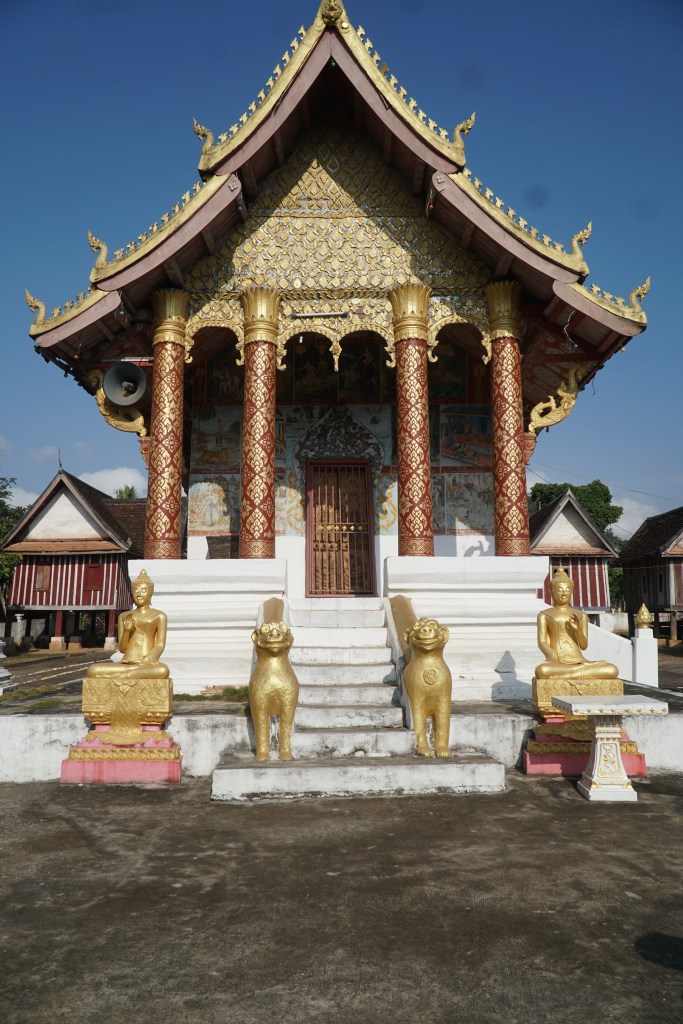
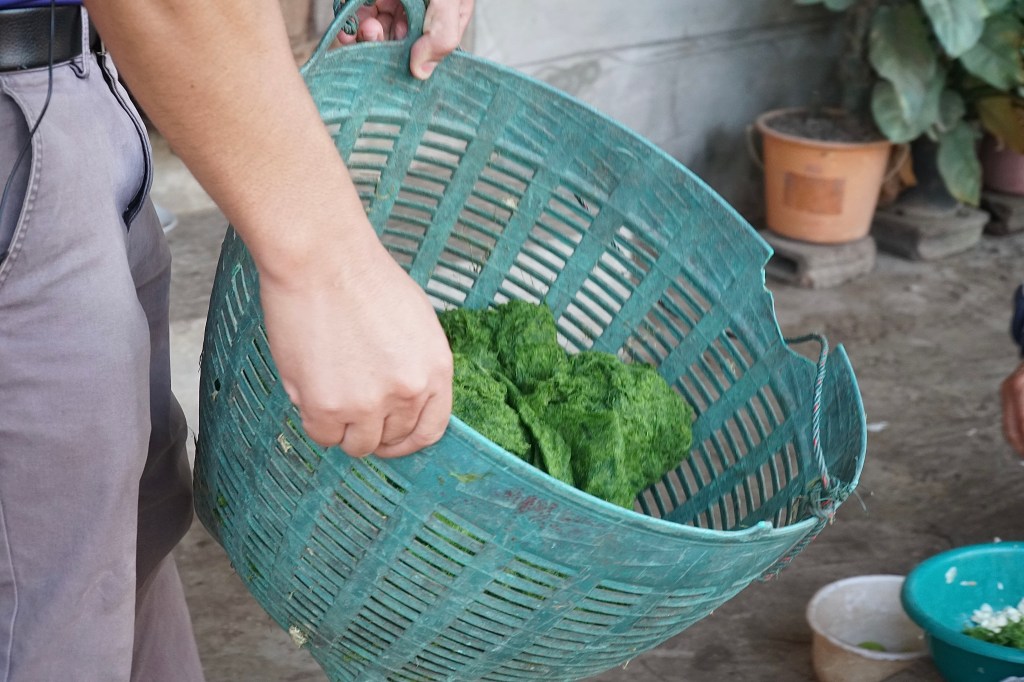
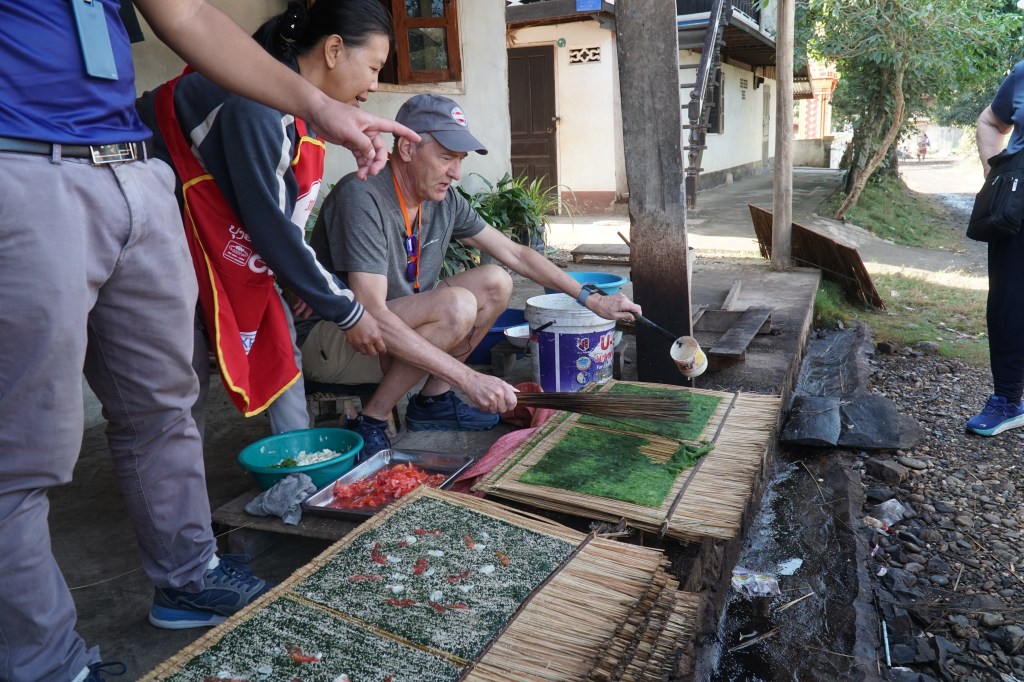
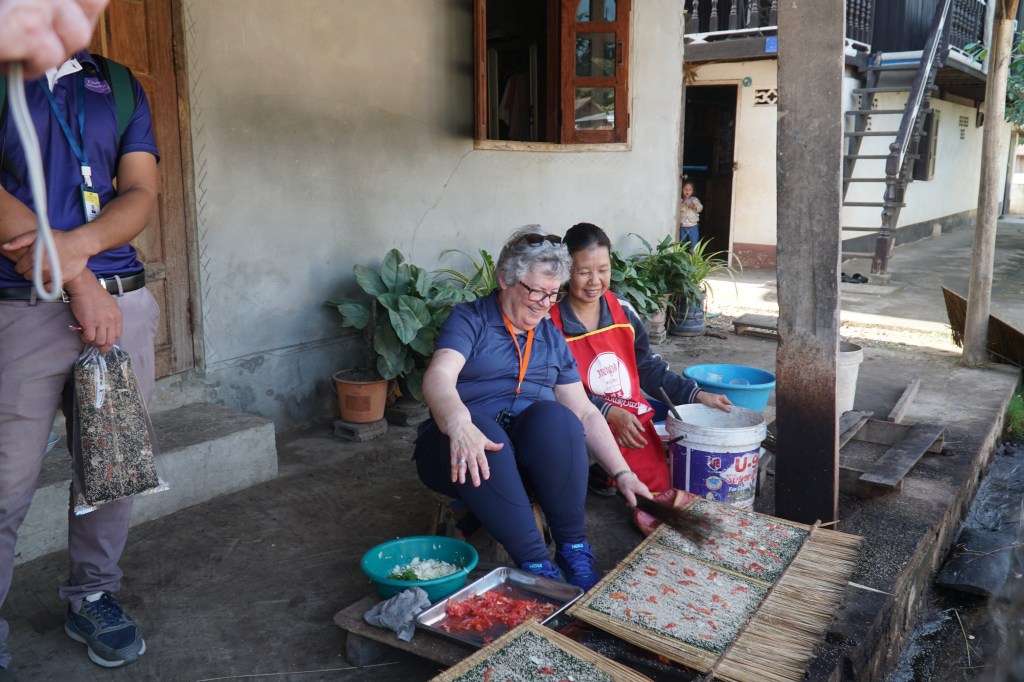
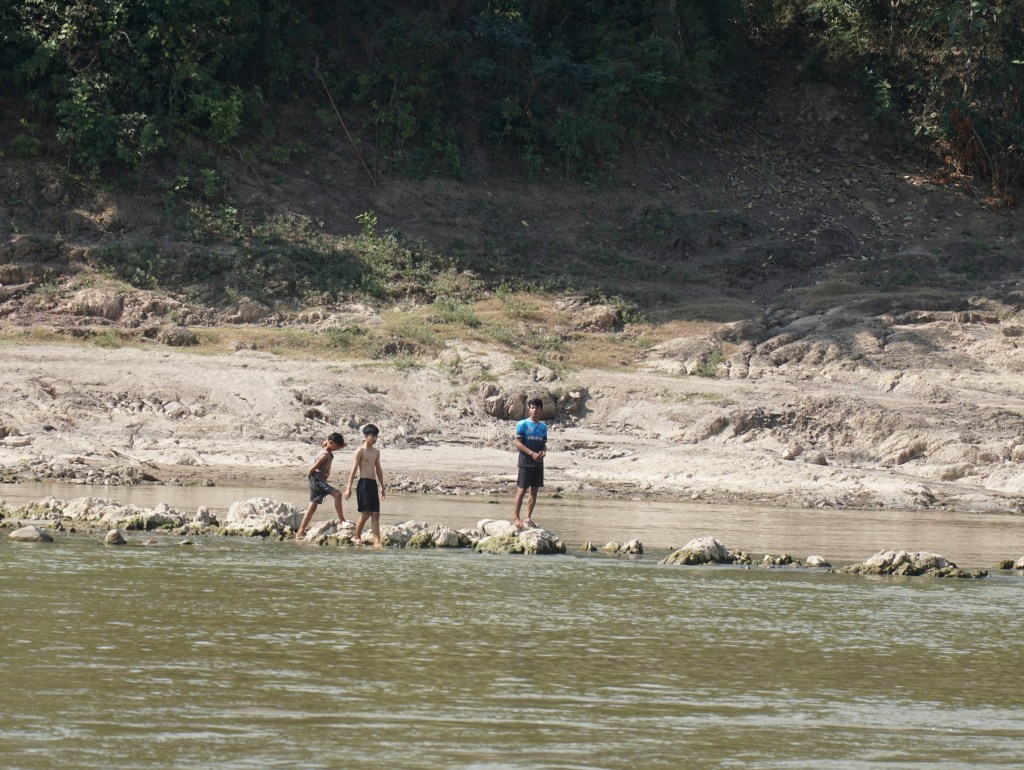
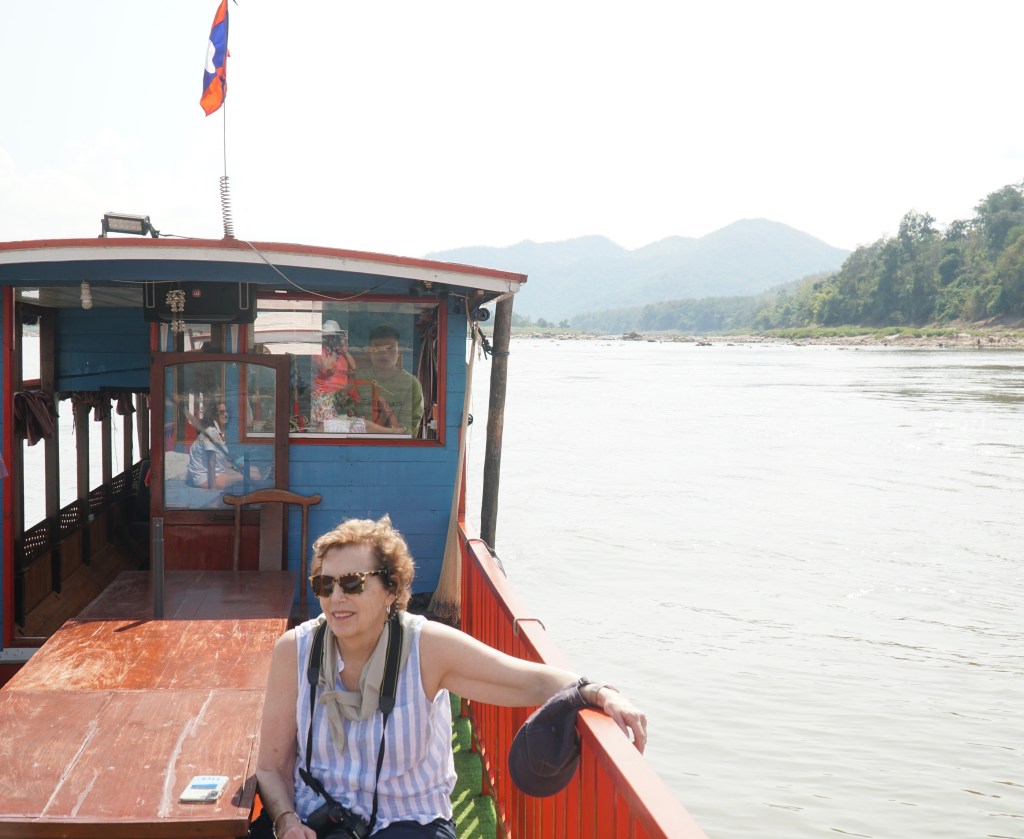
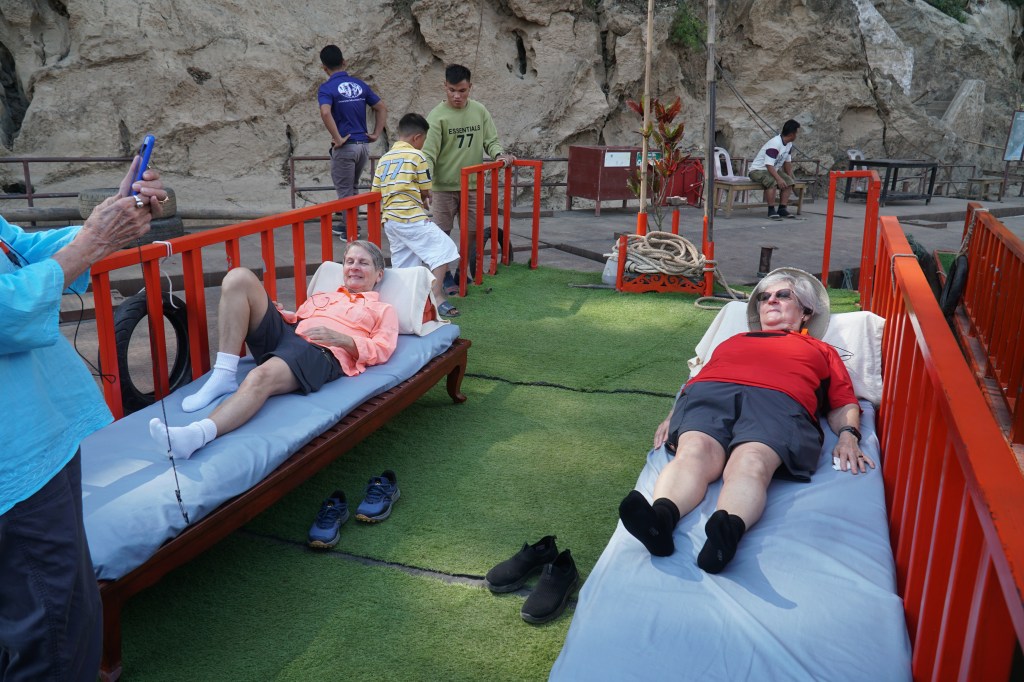
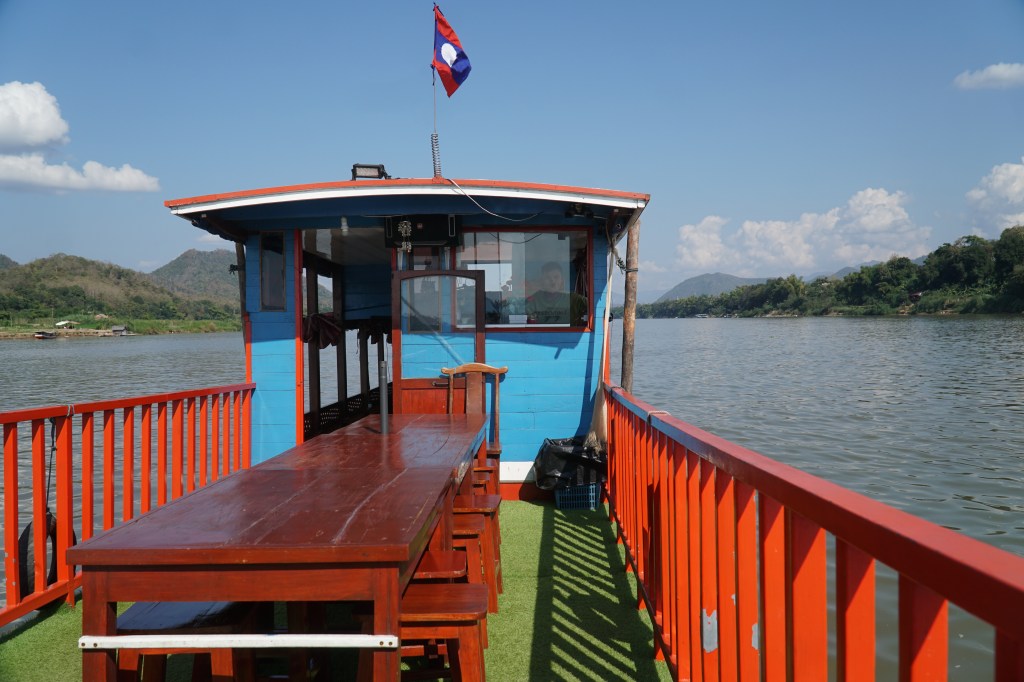
We rode in jumbos to the Royal Pier to hop on a wooden boat for a ride along the Mekong river. We stopped at a small village and learned how the residents make Kaipen, a very tasty crispy snack combining seaweed, sesame seeds, garlic and tomatoes, using a traditional method of brushing the seaweed on wire grids to remove much of the water. Then the grids are arranged to dry in the sun for a day before they are folded and bagged for sale in local towns. They also make crispy rice bowls used for some snacks and seafood dishes, These products and farming are the primary source of income in the village. At the entrance to the village from the river is a lovely temple.




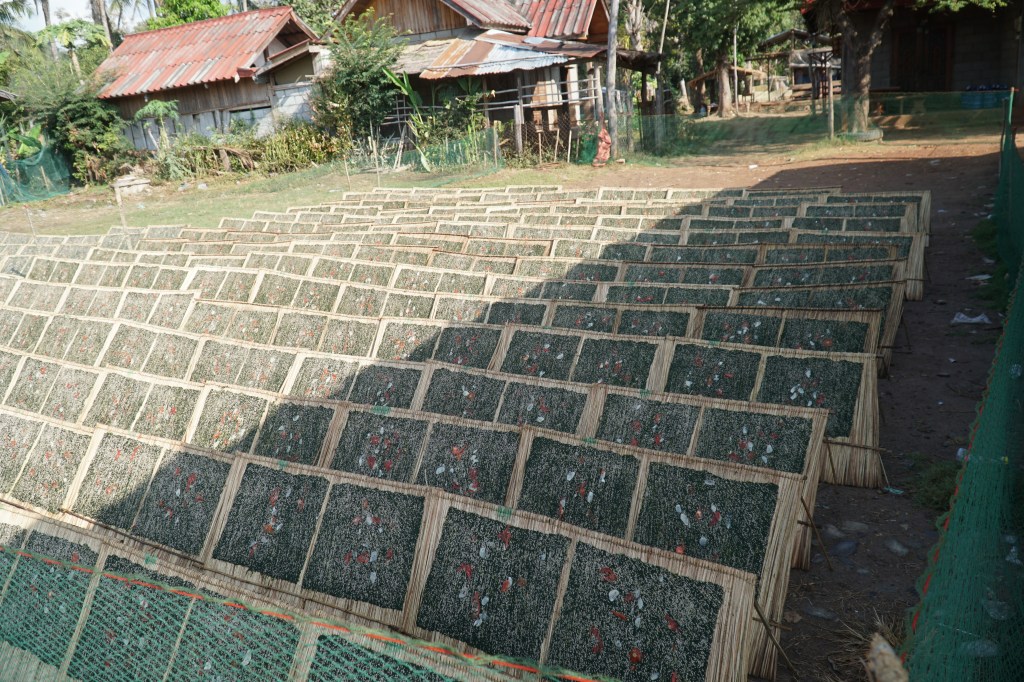
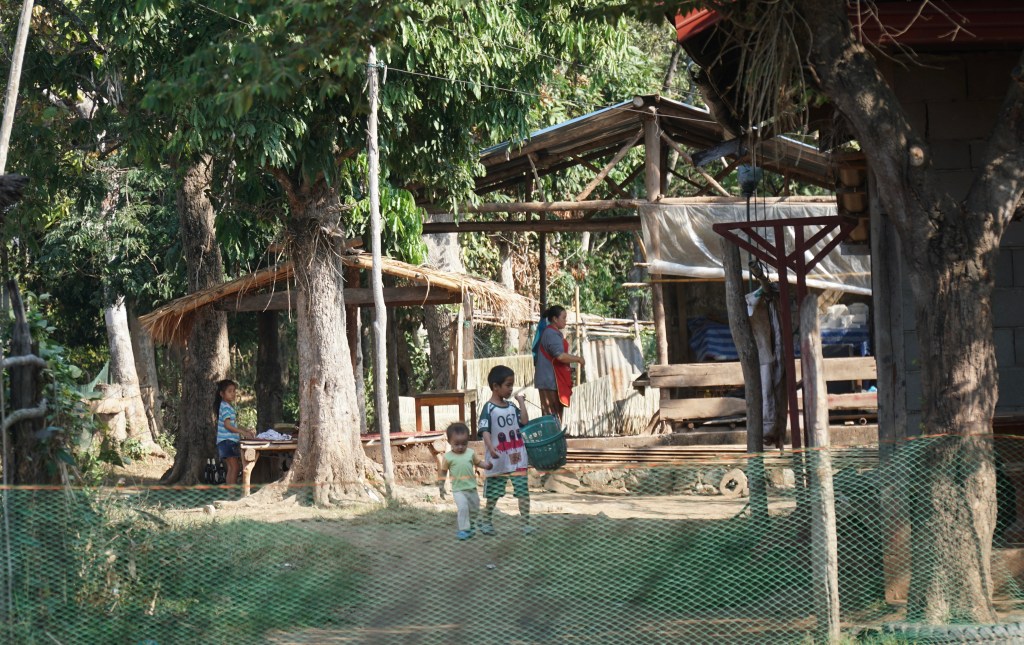


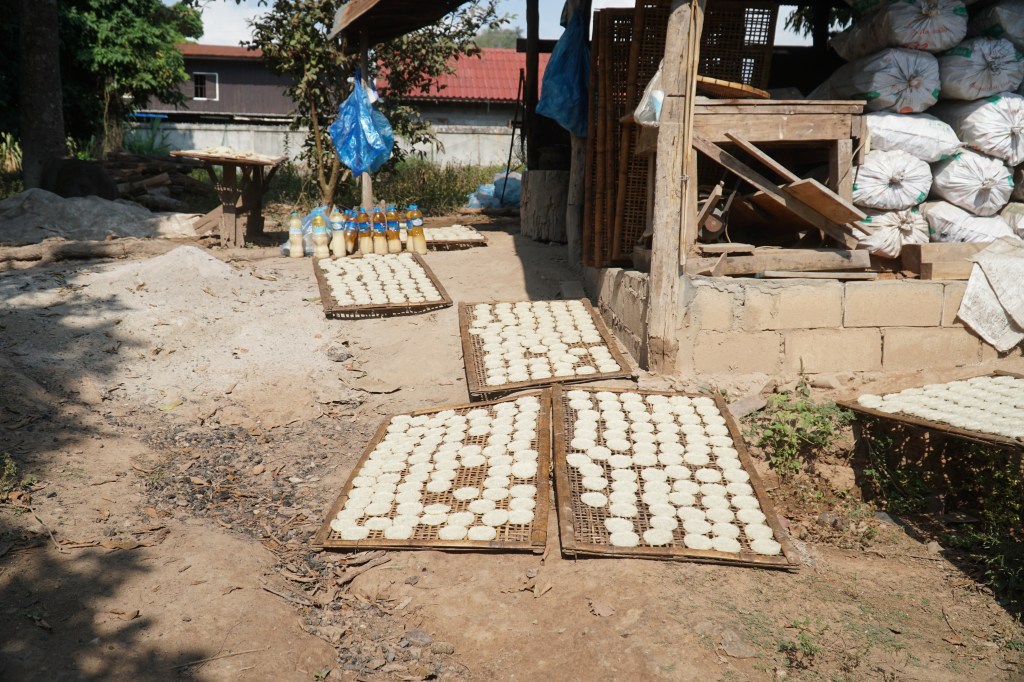
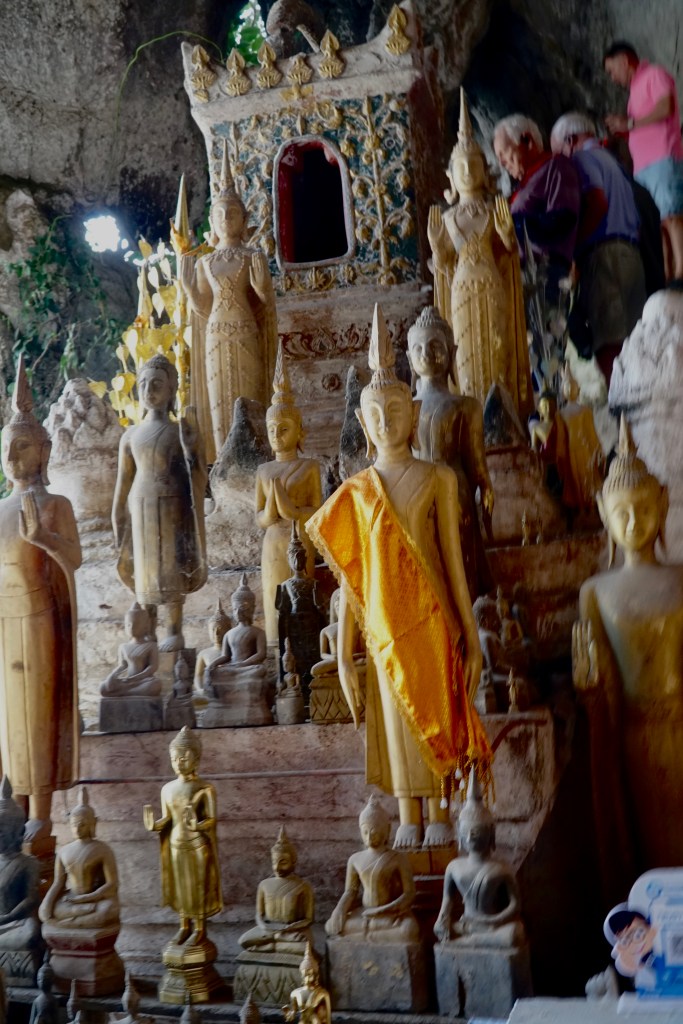
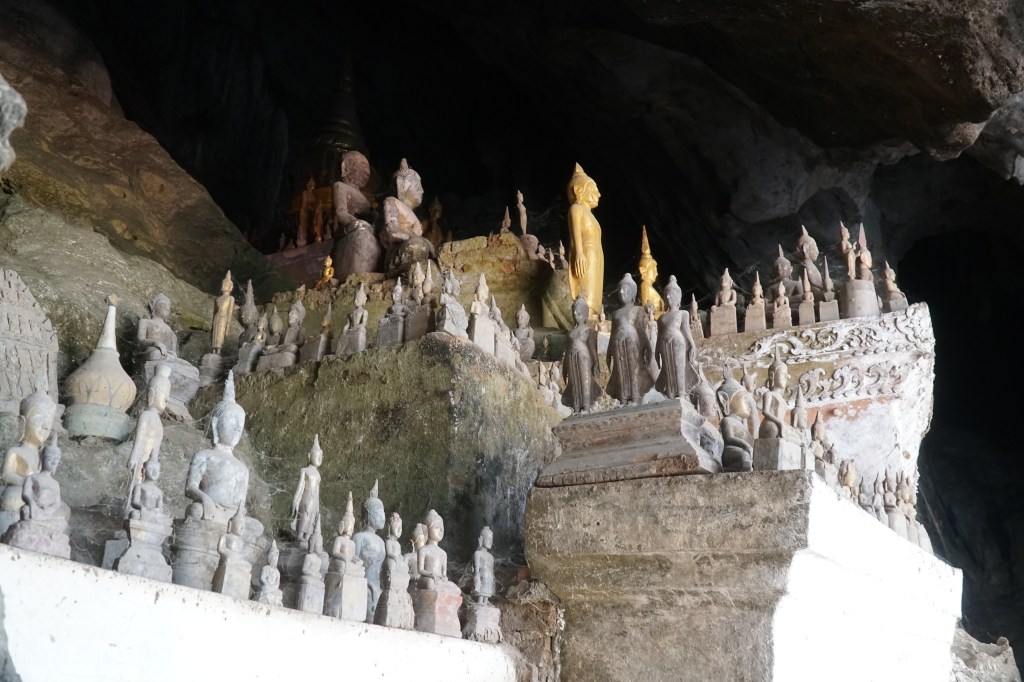
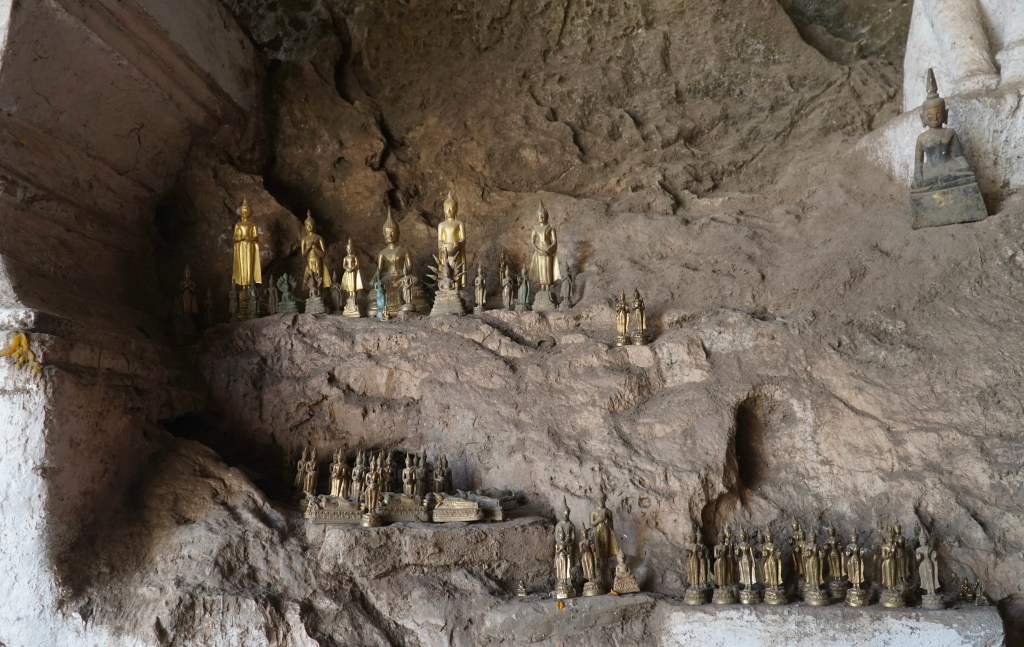
Our next stop was a cave with thousands of buddha statues. The cave was up a hill and under a high ledge. Some of us purchased incense and marigolds to place as offerings, and to support the local economy. We ate our lunch on the boat and headed back to town where we had free time.






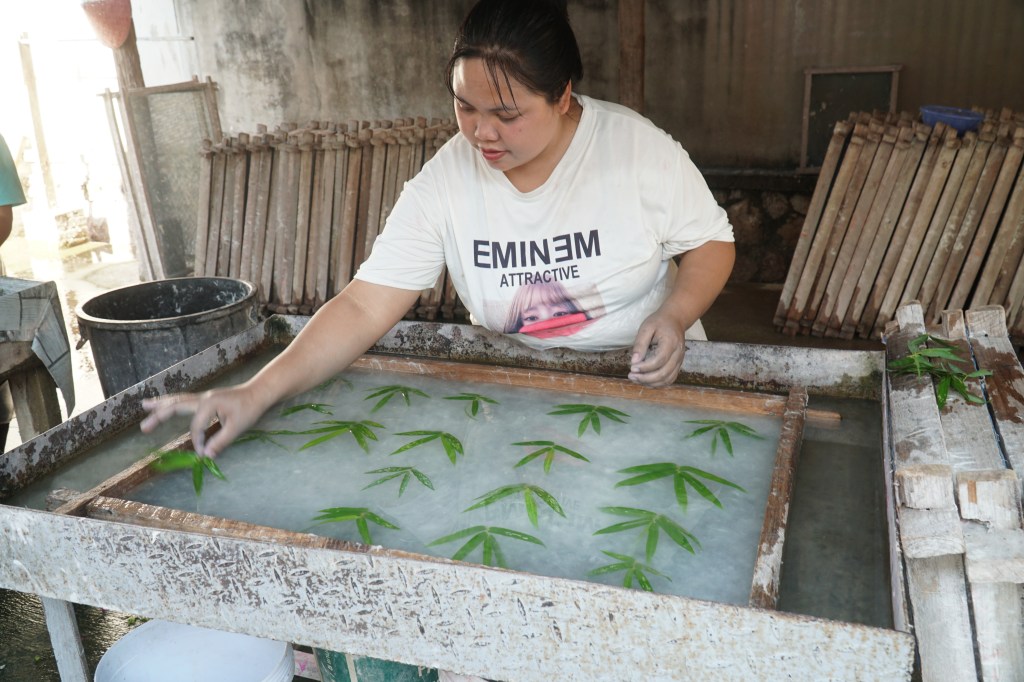
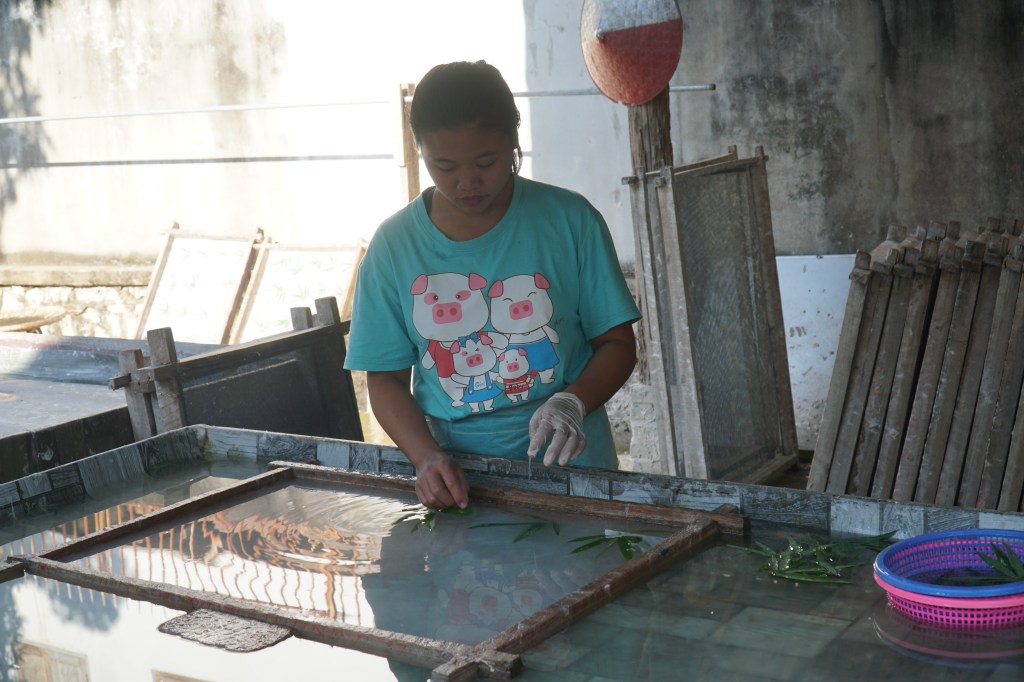
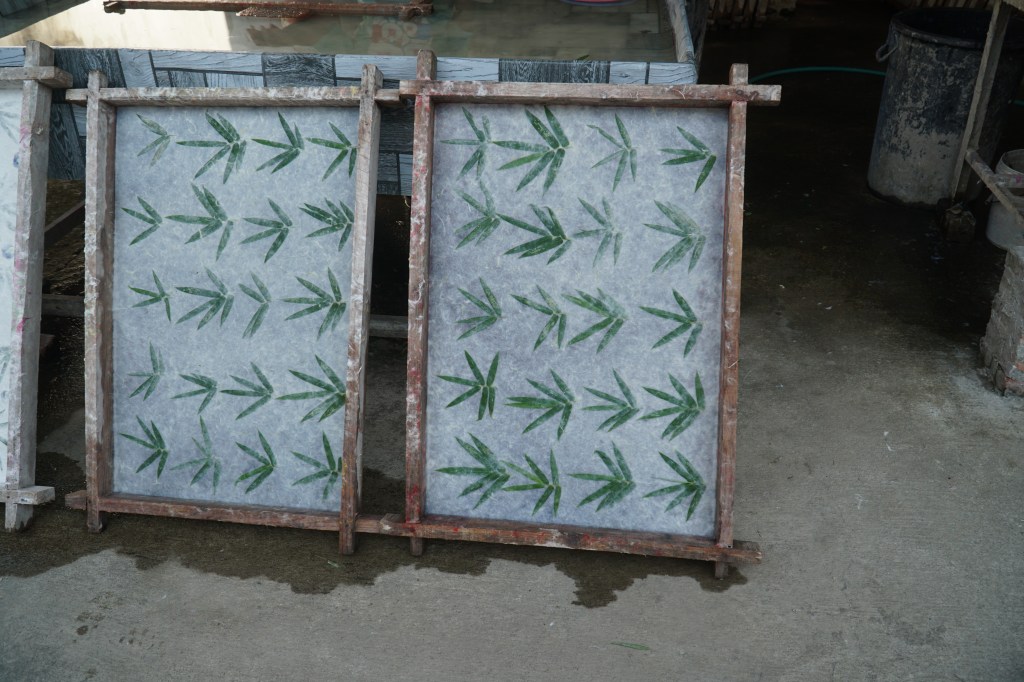
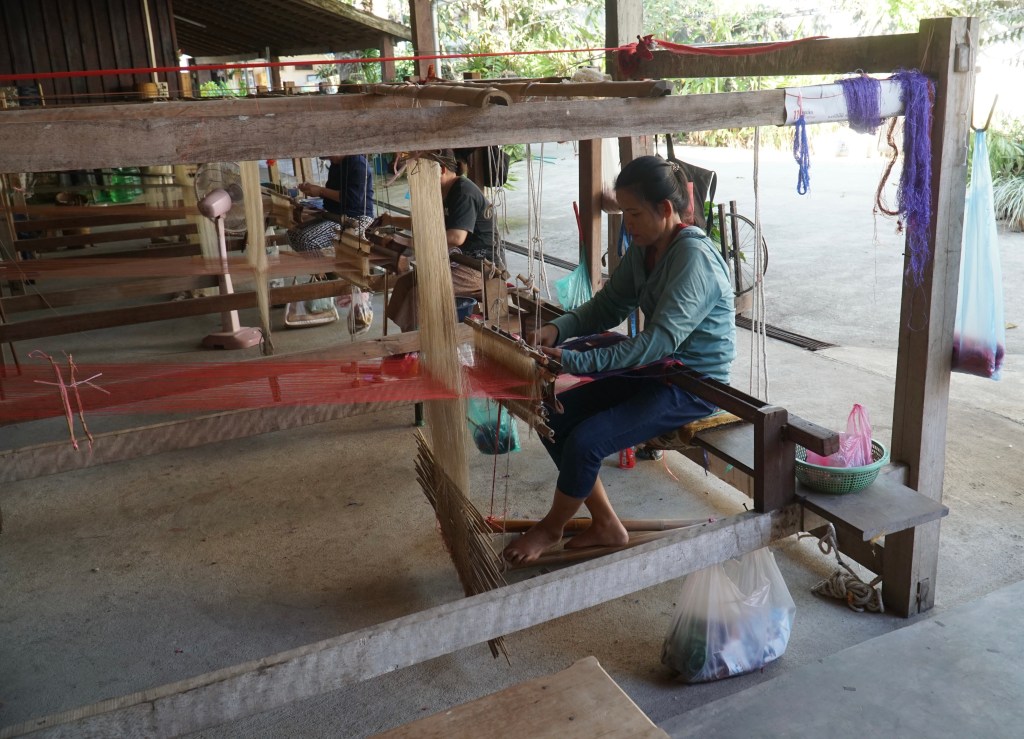
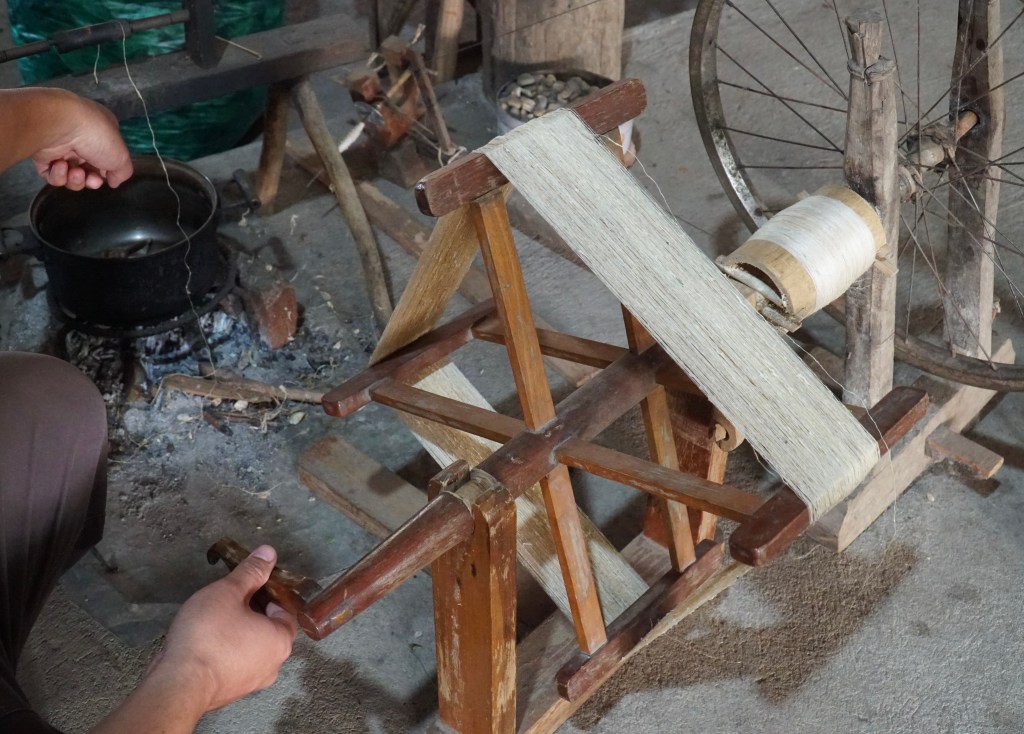
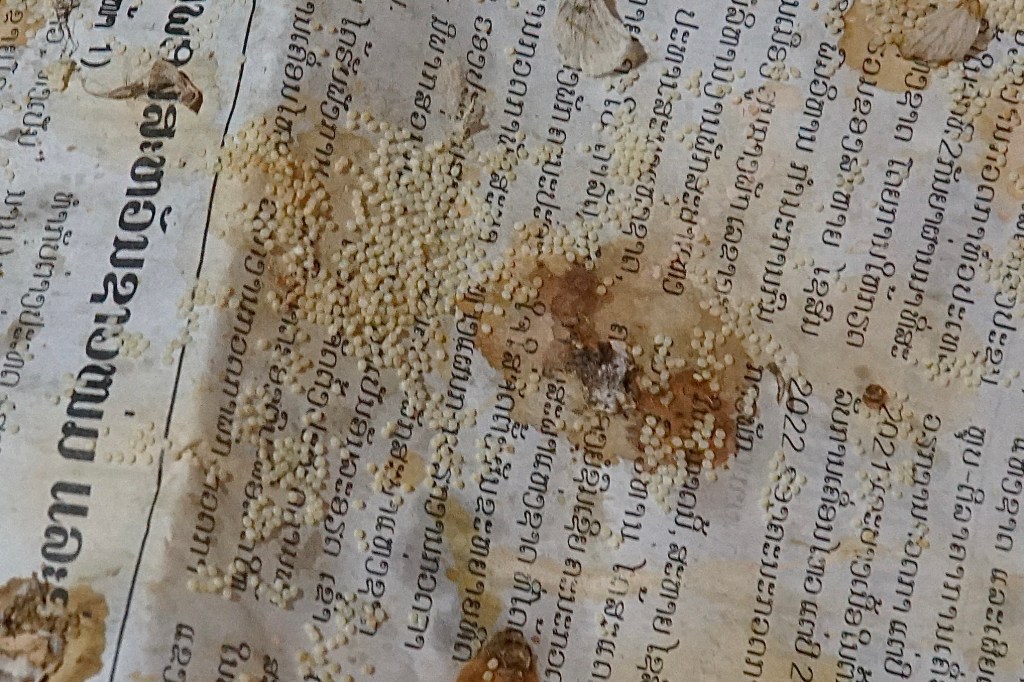
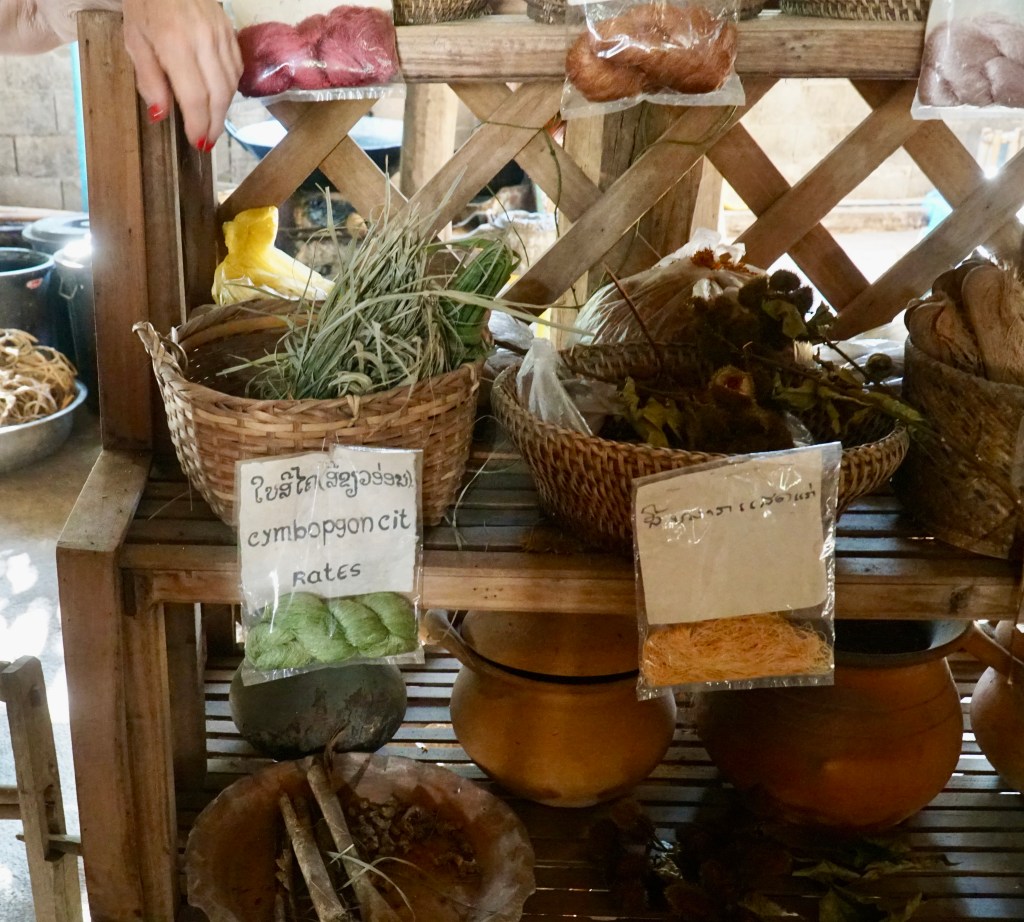
Several of us went to a local craft center in Baan Xang Khong village. We saw the process of making paper for various products such as shopping bags, greeting cards, and lanterns. The weaving staff gave us a tour of their processes of raising silk worms; spinning the silk thread; dying the silk, mostly using plant dyes; and weaving fabrics. The scarves and other products were gorgeous, and priced very reasonably. I later went with several travellers to the local “night market,” which starts getting set up around mid-afternoon. I found a water bottle sling, elephant pants, and a red and white elephant skirt I had been looking for. The prices were amazingly low!









Monday, Jan. 15
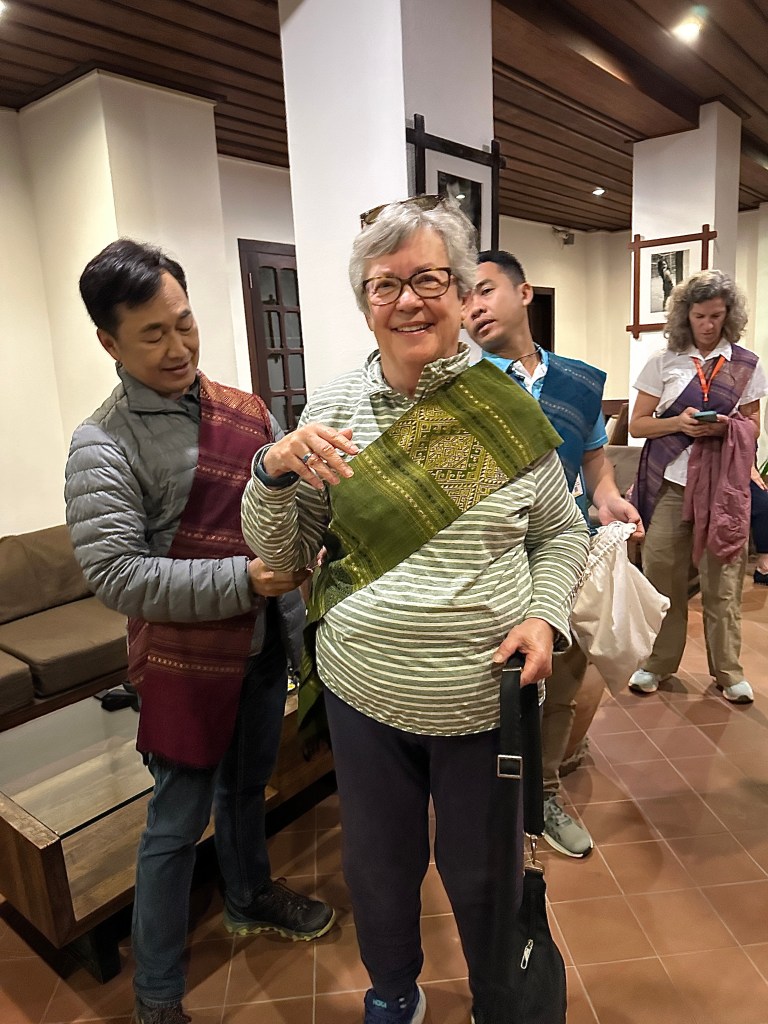
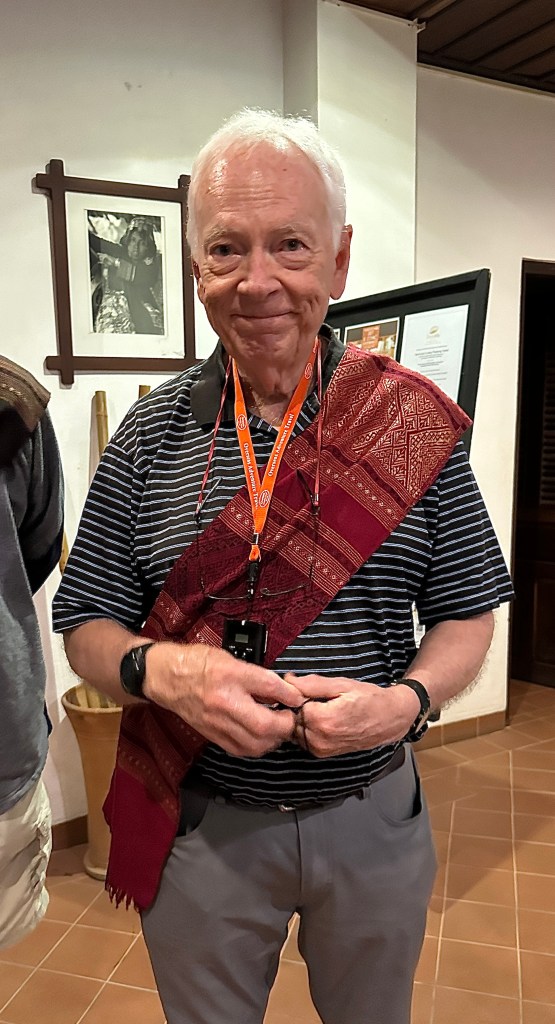
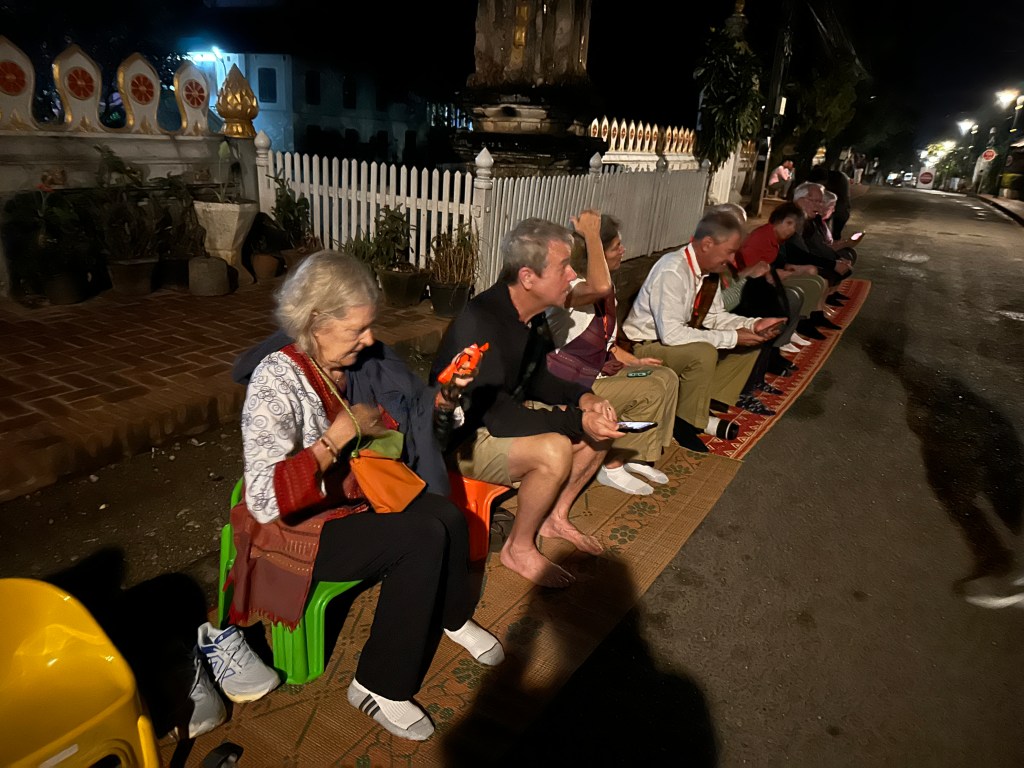
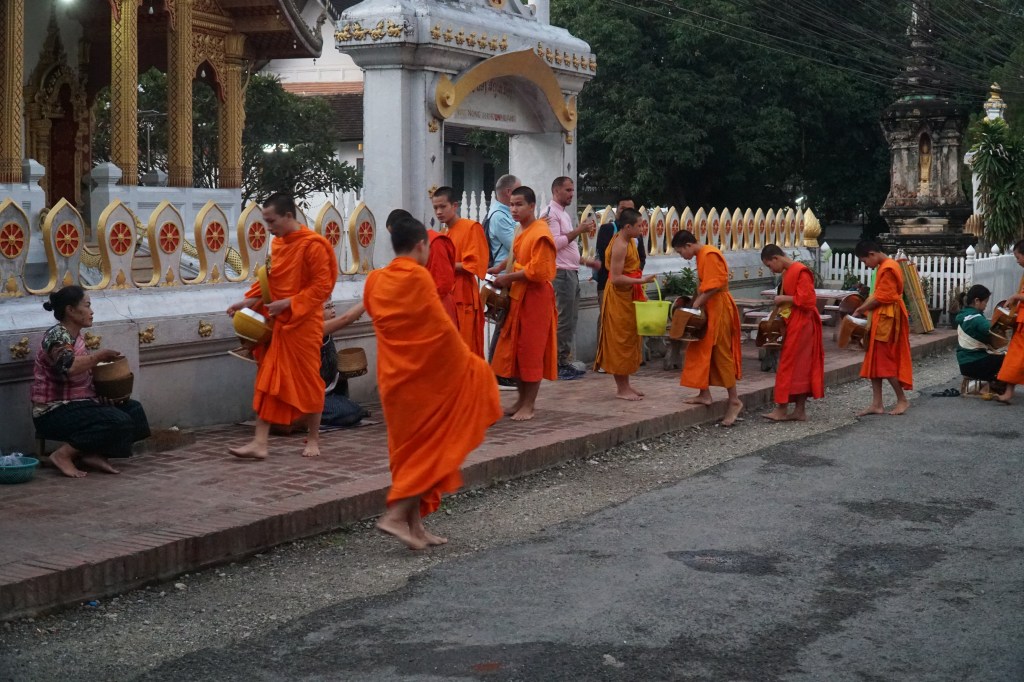
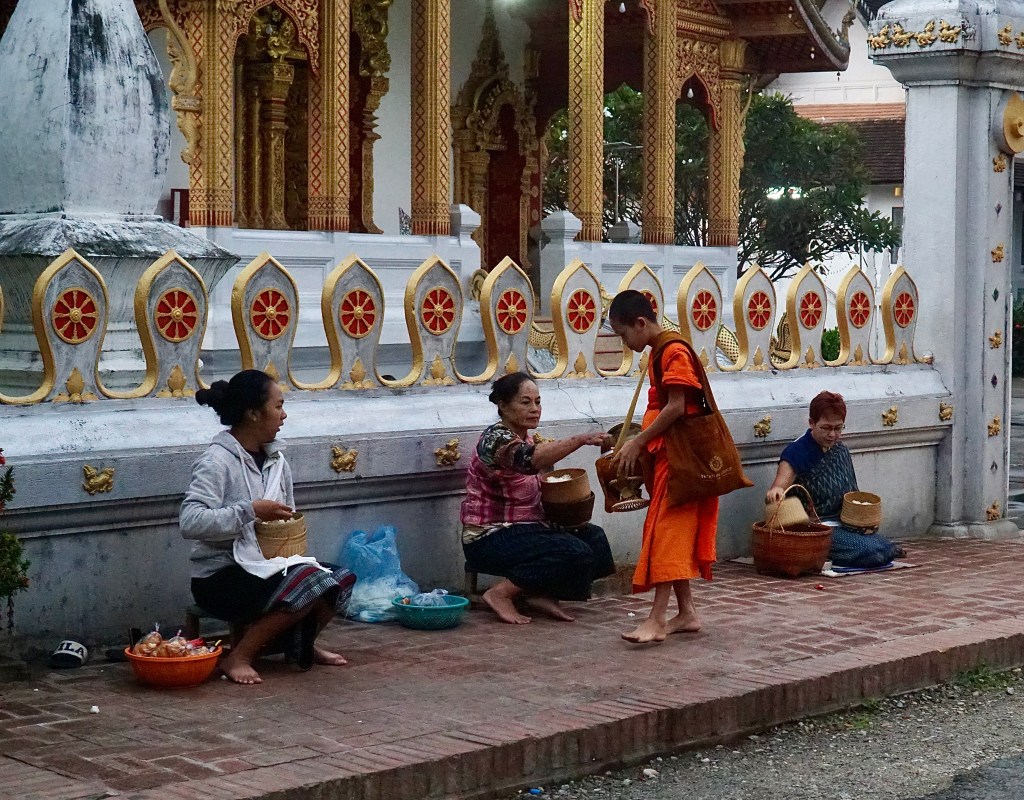
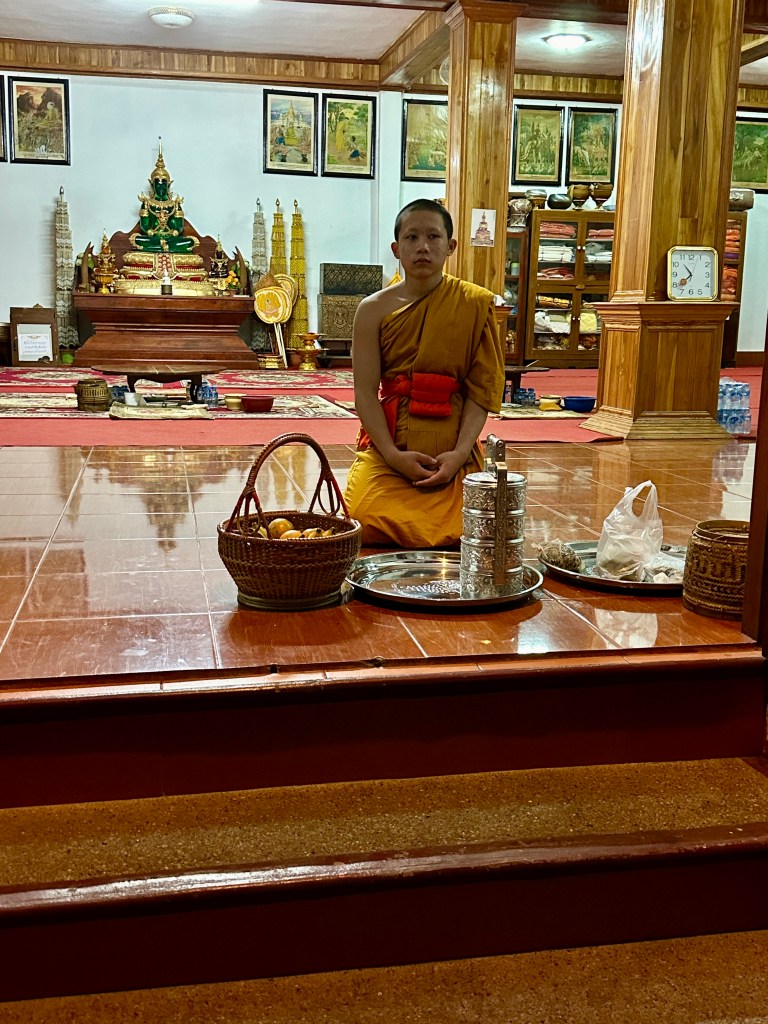
It was an early morning in which we headed to a street in the heart of town to set up for alms giving. We wore traditional sashes, sat on short chairs by the street curb, and held baskets of sticky rice. As the buddhist monks and novices came by, we gave each a portion of the sticky rice. We also delivered some fruit and prepared food dishes directly to a temple where a monk accepted our offering, transferred the food into the temple’s containers, and said a blessing with the group. The monks live in the temples, and are solely fed by these contributions. They eat twice a day, once in the early morning and again at lunch.





We had local coffee and tea by the river. The residents use sweetened condensed milk rather than milk in their coffee, so the coffee is extremely sweet. Interestingly the instant coffee in the hotel room included a blend that ressembled this mixture. Next we went to the local daily market that sells produce, fish, dairy products, and other grocery items. We embarked on a scavenger hunt, with each person being given the name of a product and local currency to buy the right quantity of it. These items were purchased to help prepare today’s lunch.
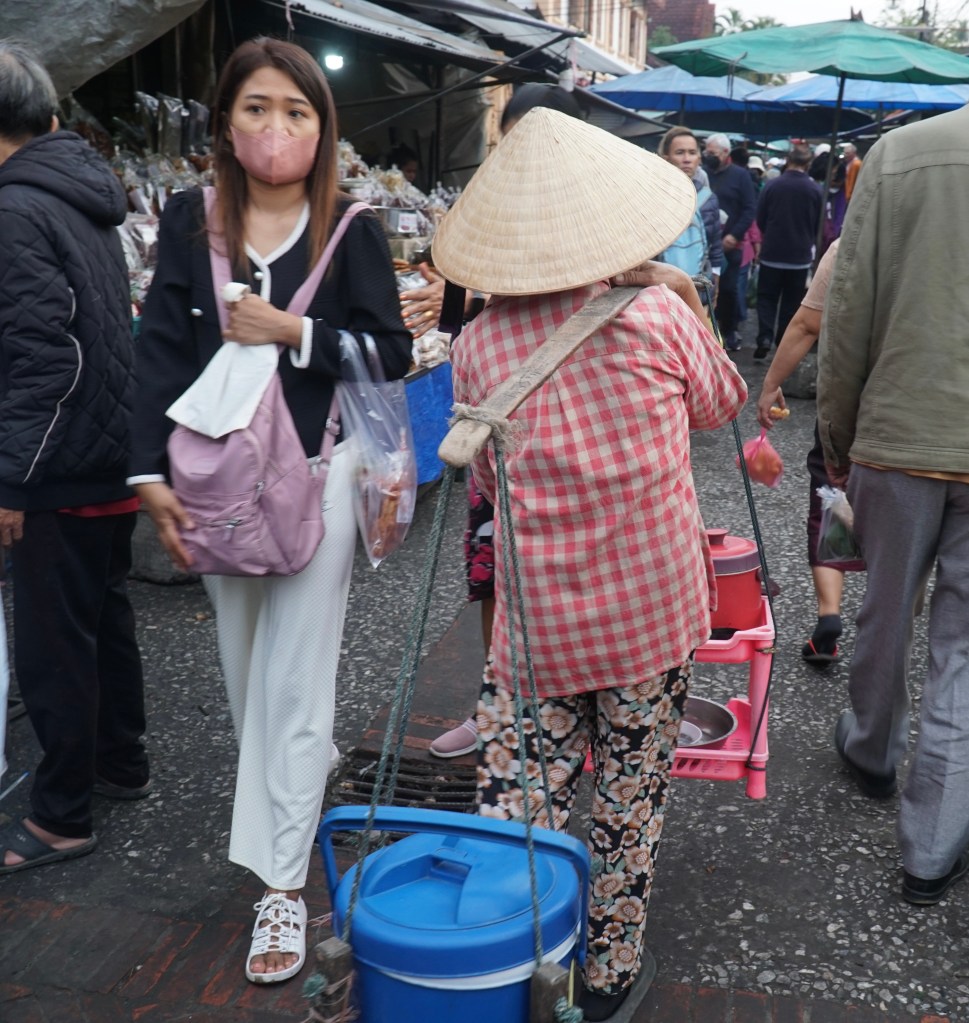


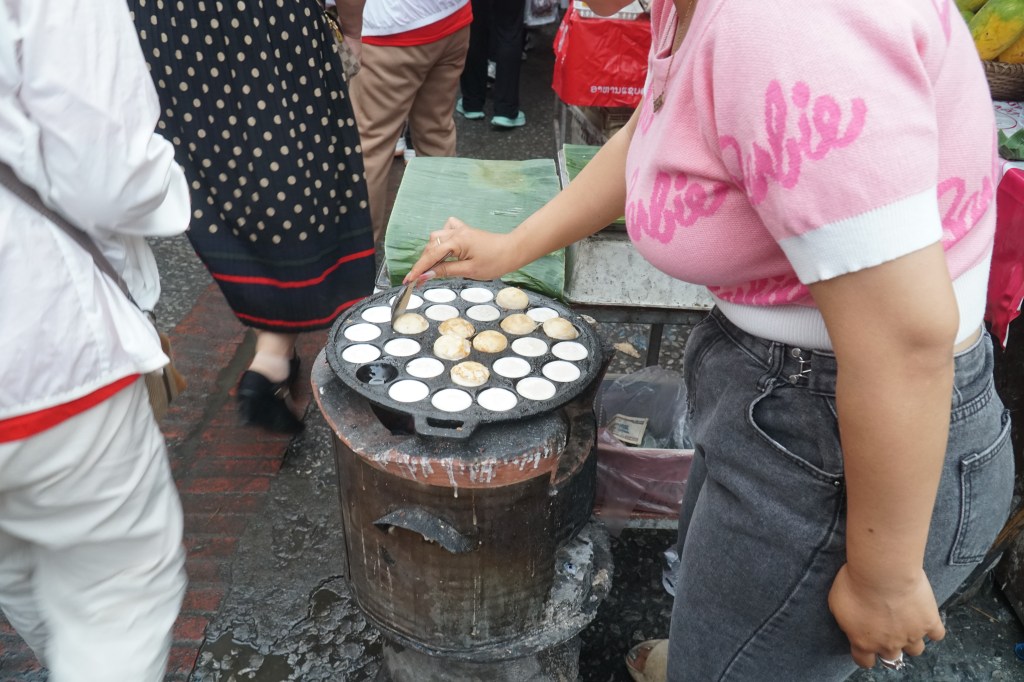


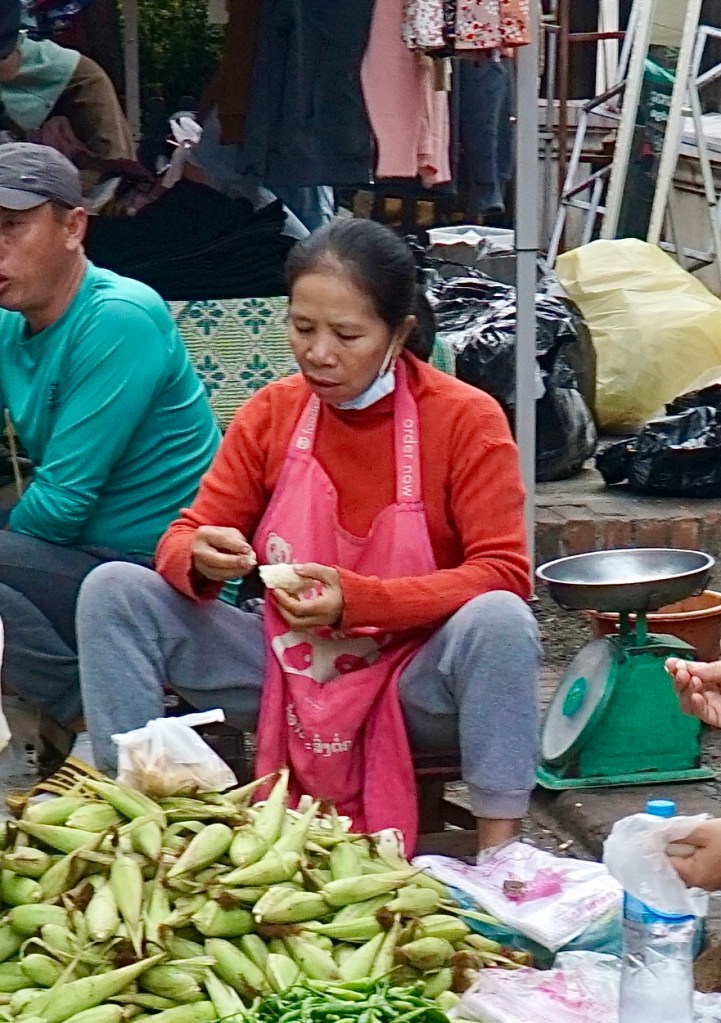


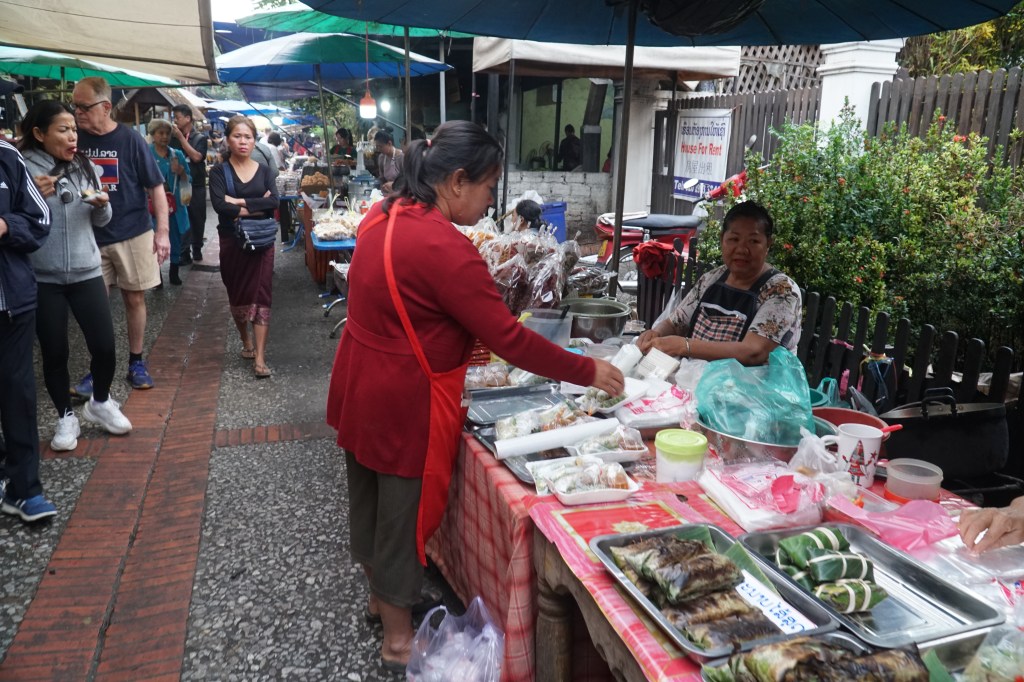


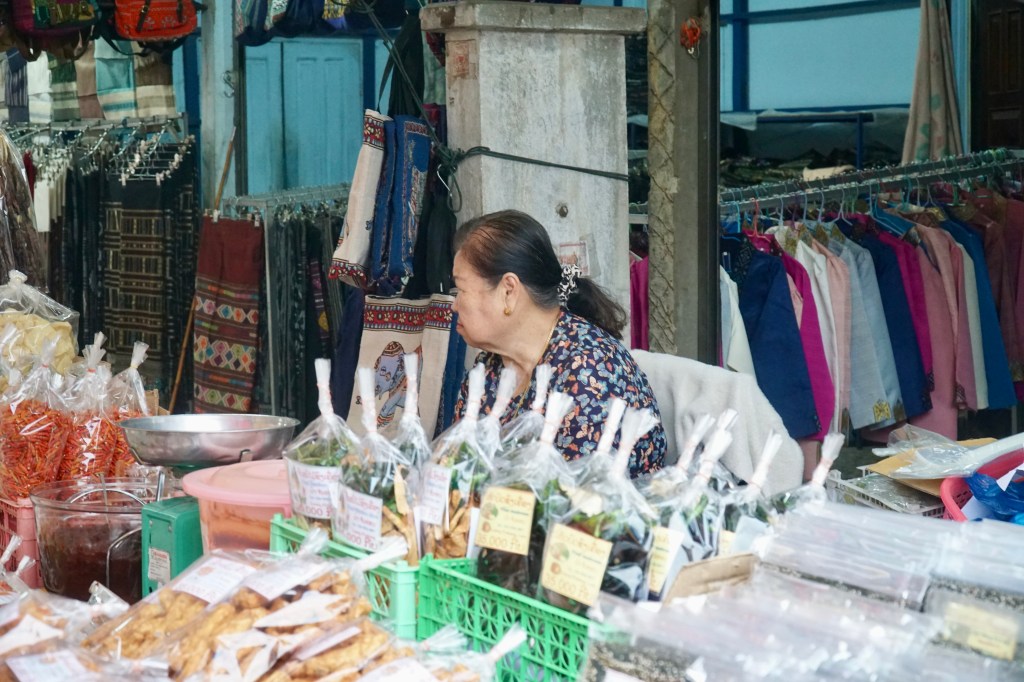

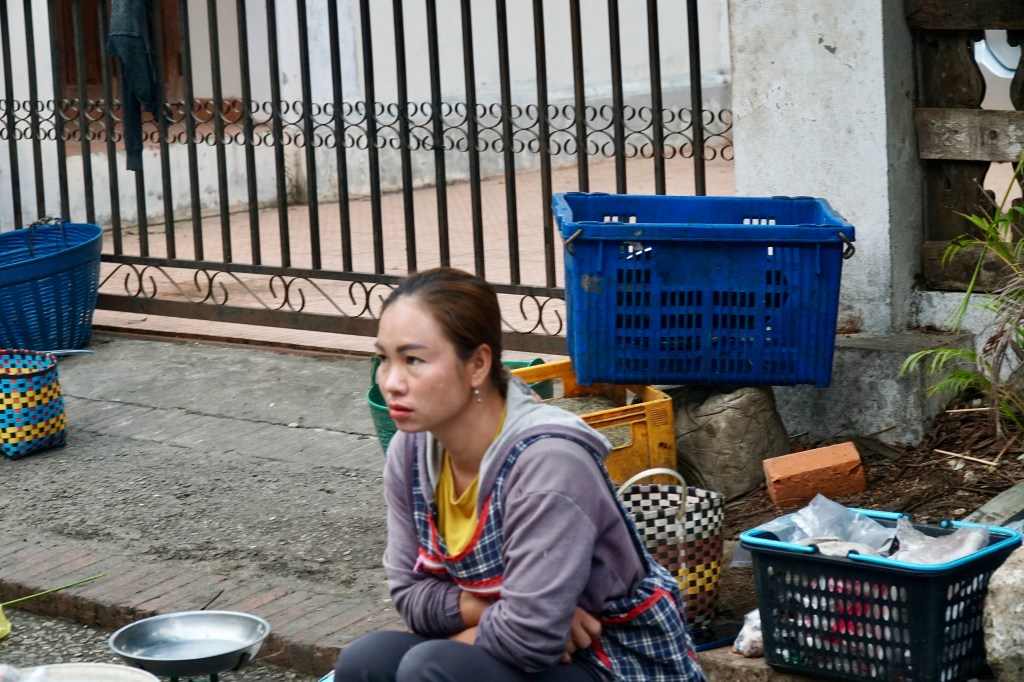


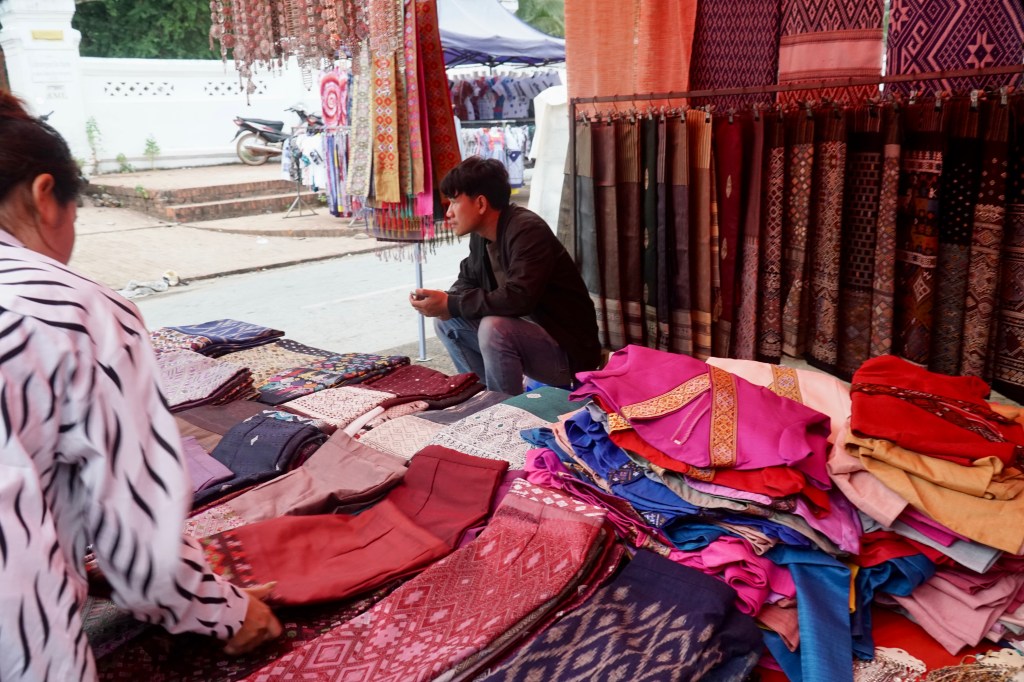
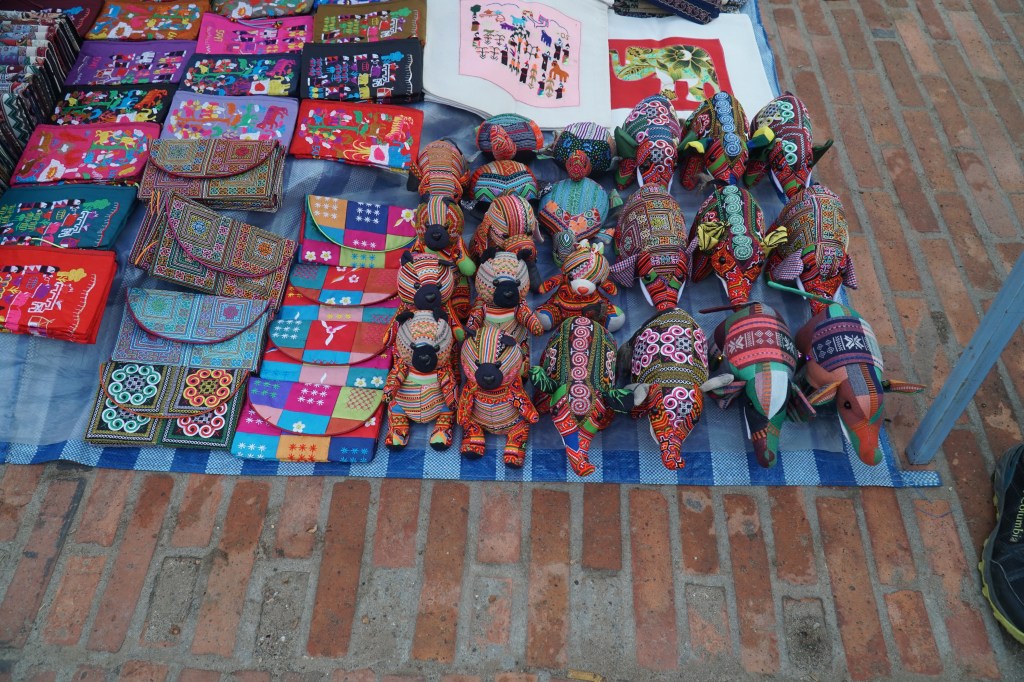
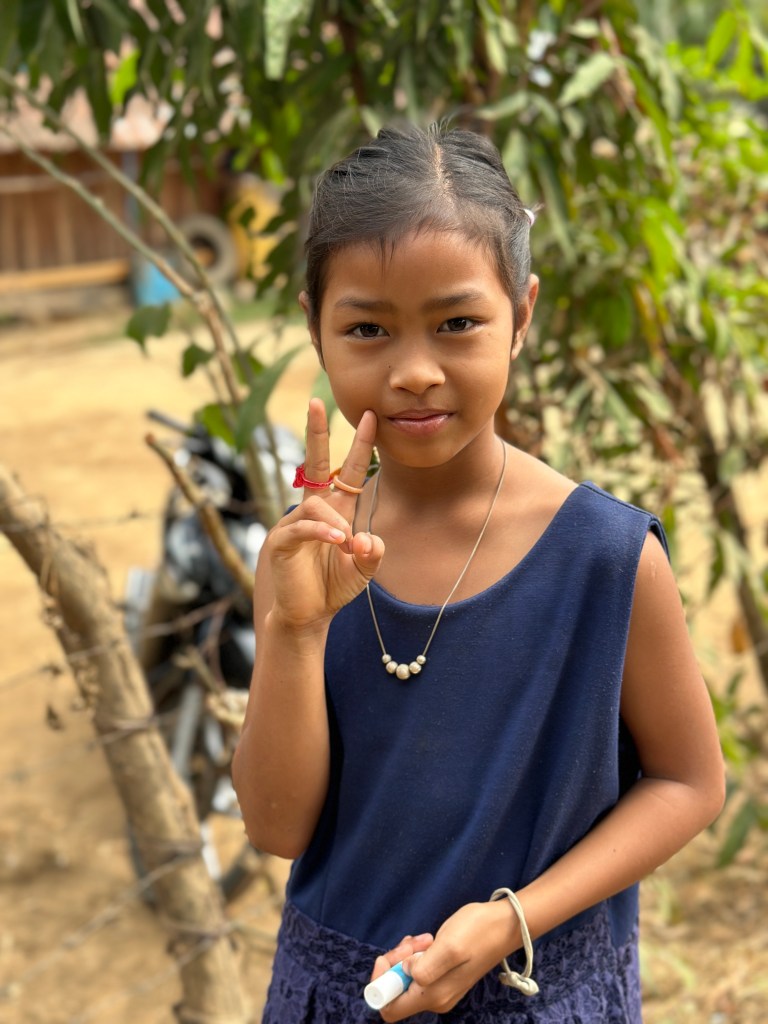
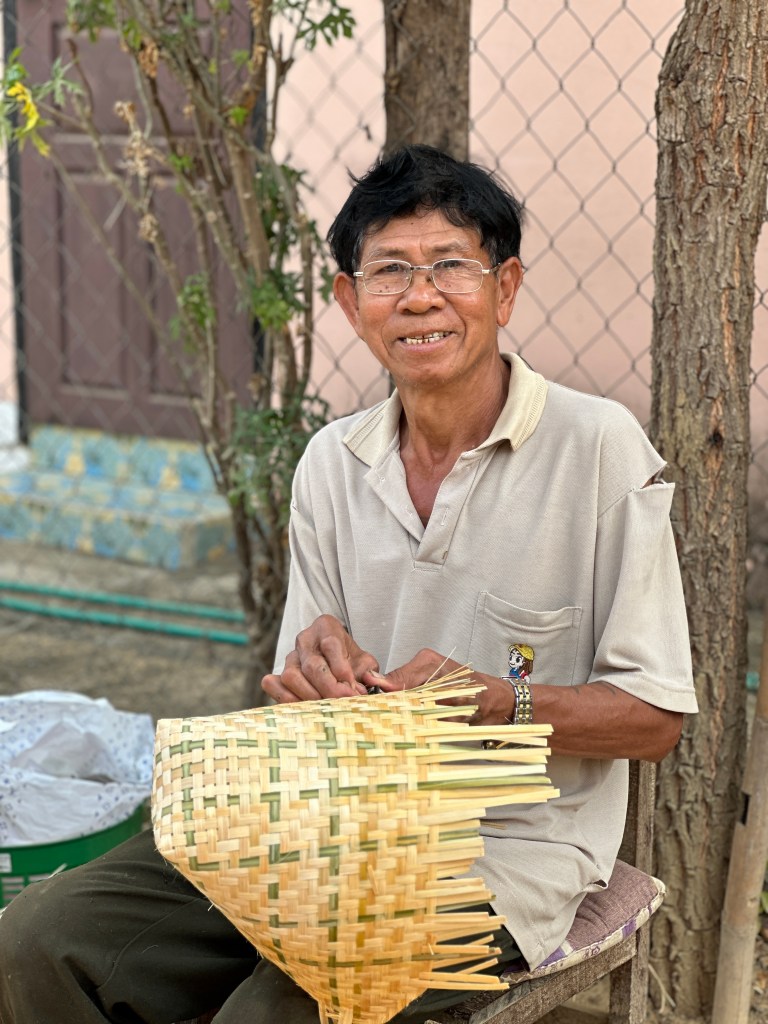
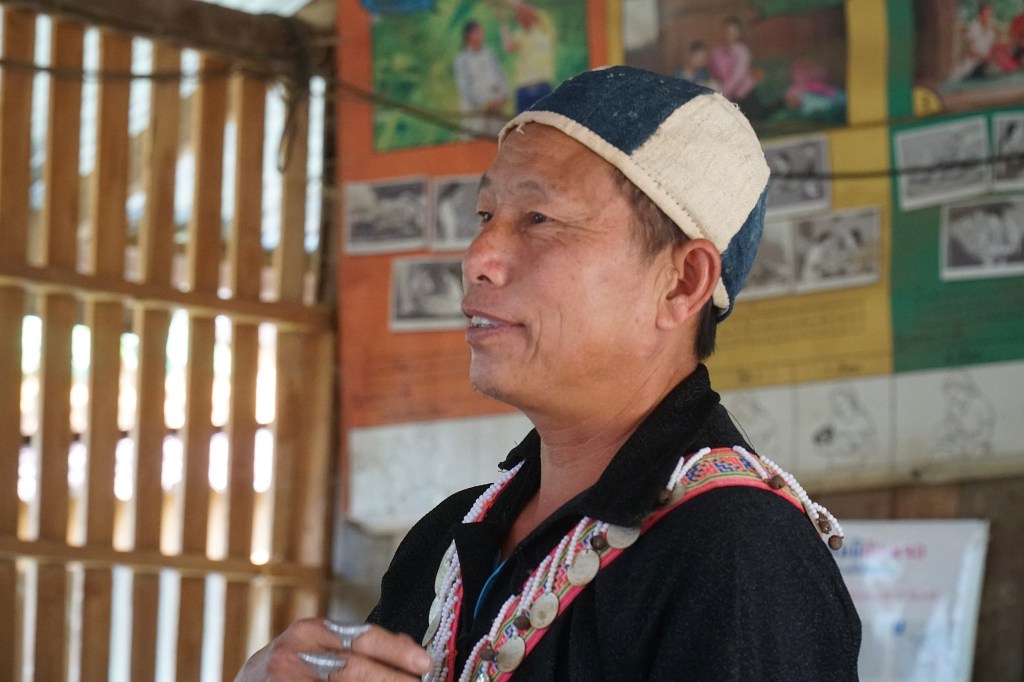
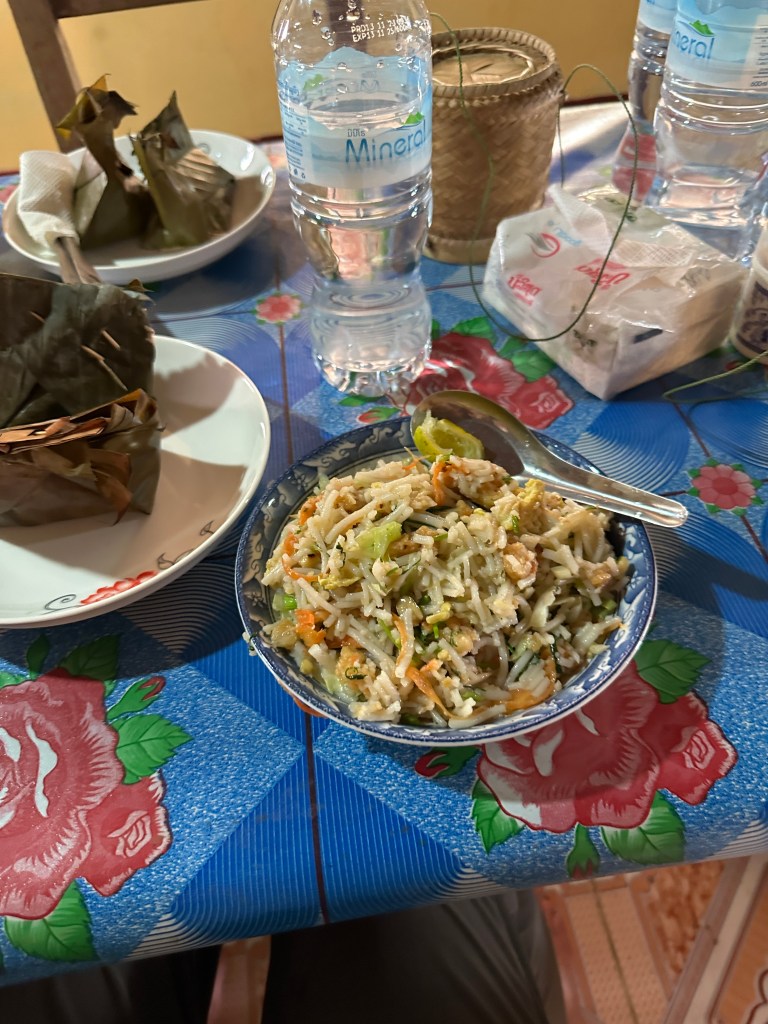
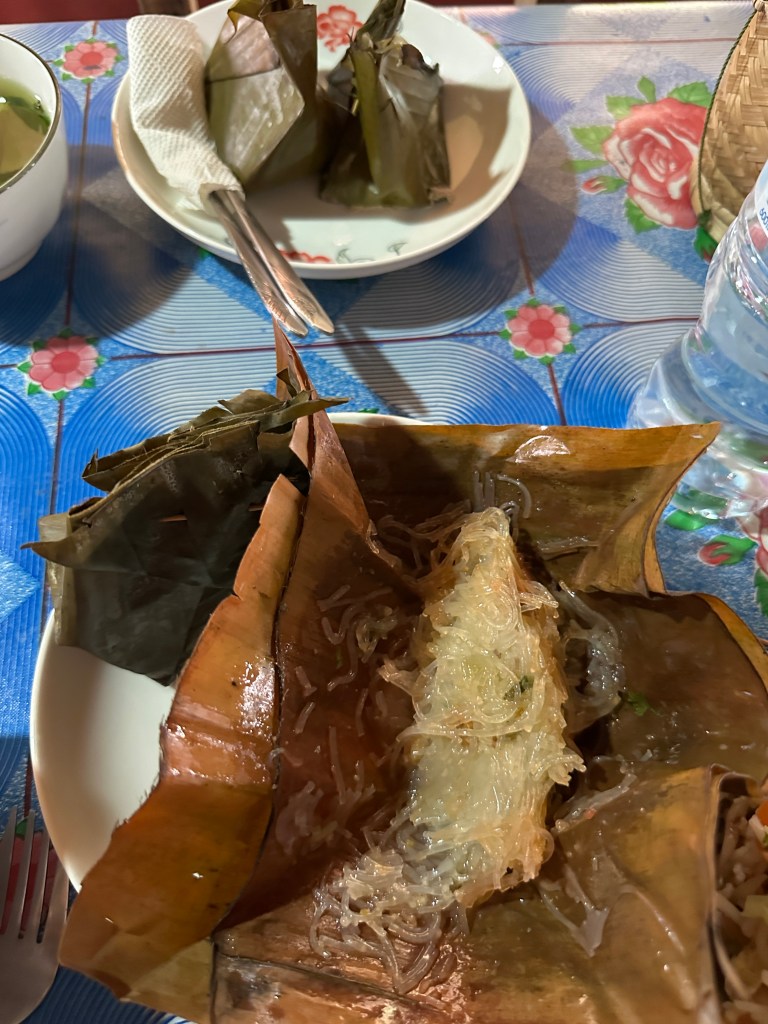
We returned to the hotel for our breakfast and then we drove to a nearby village for our “Day in the Life,” another standard experience for OAT trips. We met the leaders of the village, which included representatives of the three different ethnic groups in Laos — the Hmongs from the mountains, those originating in the lowlands, and those from the piedment. We had a demonstration from one of the village women of how they make a specific liquor using rice, and we tasted a sample —very strong. We visited the local primary school, talked with the teacher and spent some time with the students. This was a one-room school with a class that included multiple ages. The children sang a few songs and then gave us big hugs. Other children were having a fun time hanging around the village and playing with soccer balls. We also saw women weaving scarves and other items, and villagers making straw baskets. The Grand Circle Foundation (the charitable arm of the organization OAT is part of) has provided resources to this village to build the new school building, install electricity, build toilets, and to provide looms to 16-19 women so they can weave products to sell. Most of the villagers support themselved by farming.


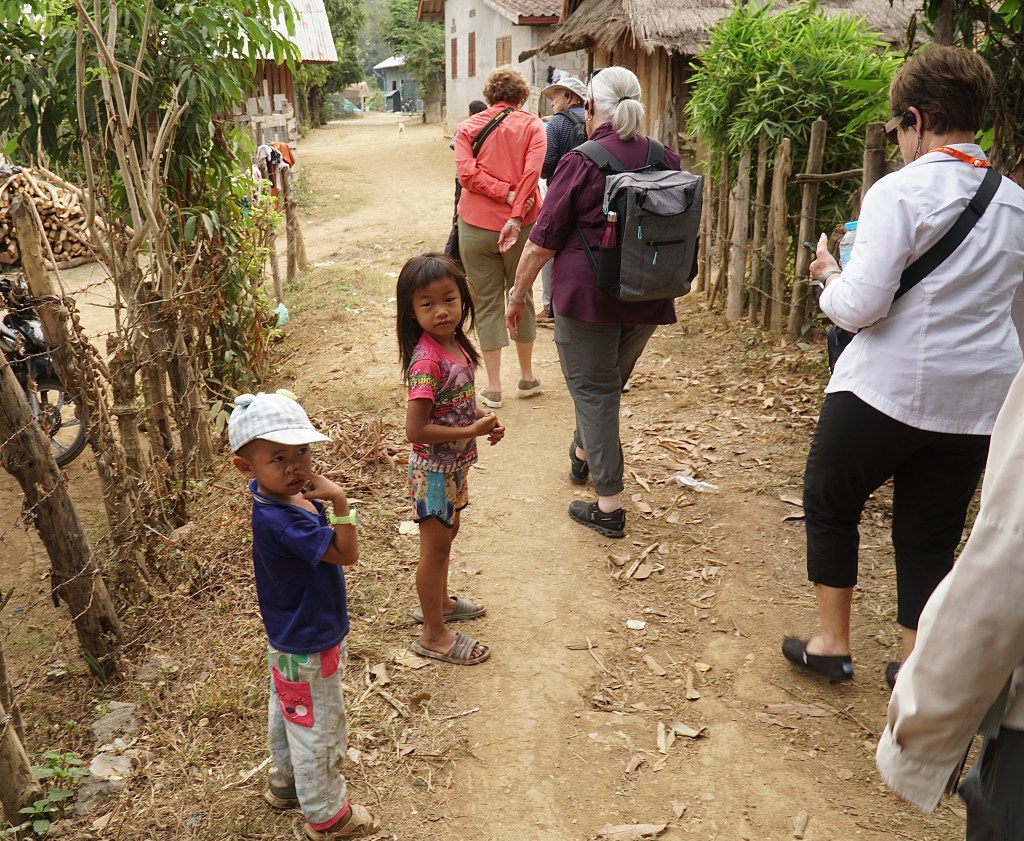
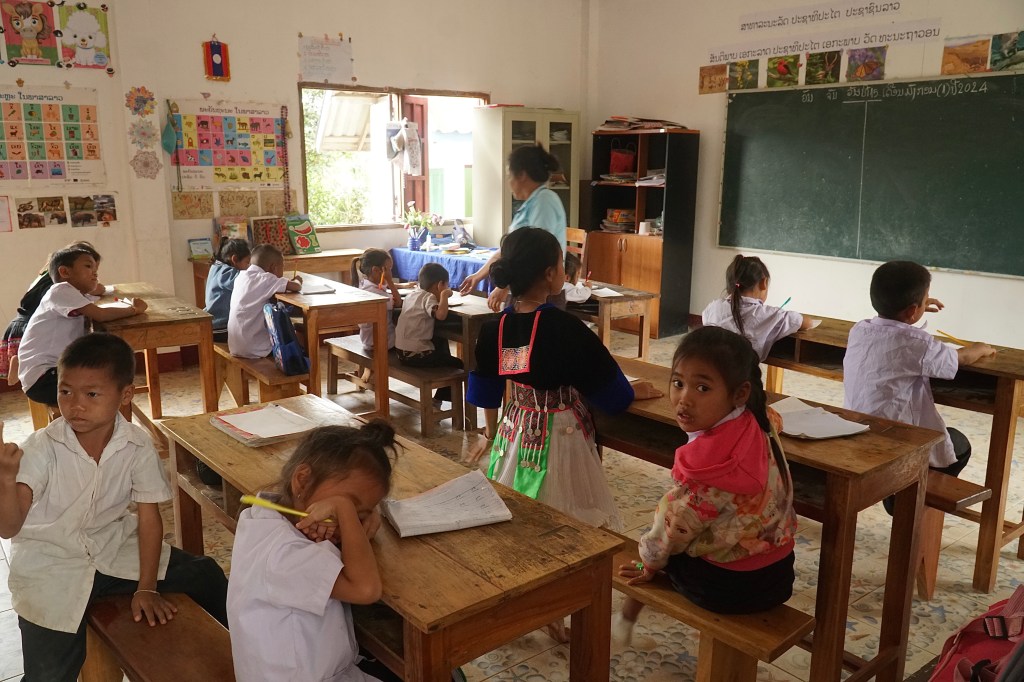
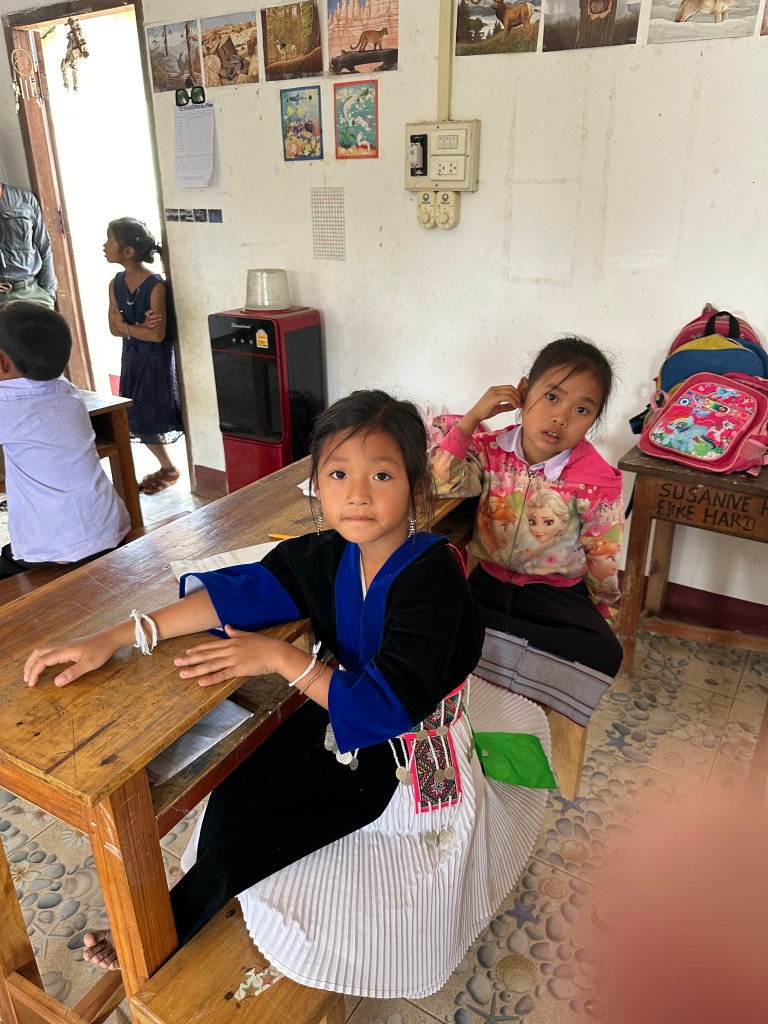


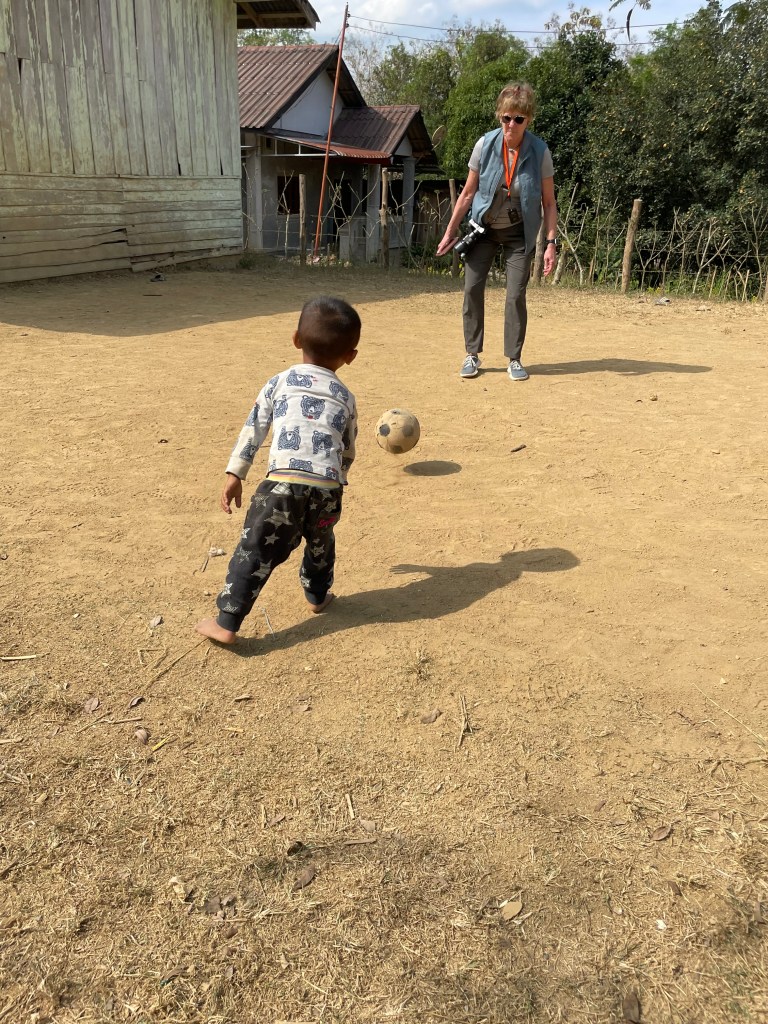


One of the village leaders gave us a demonstration of using a traditional hunting bow and arrow to shoot at a target, and he then played a native instrument and danced and sang along.
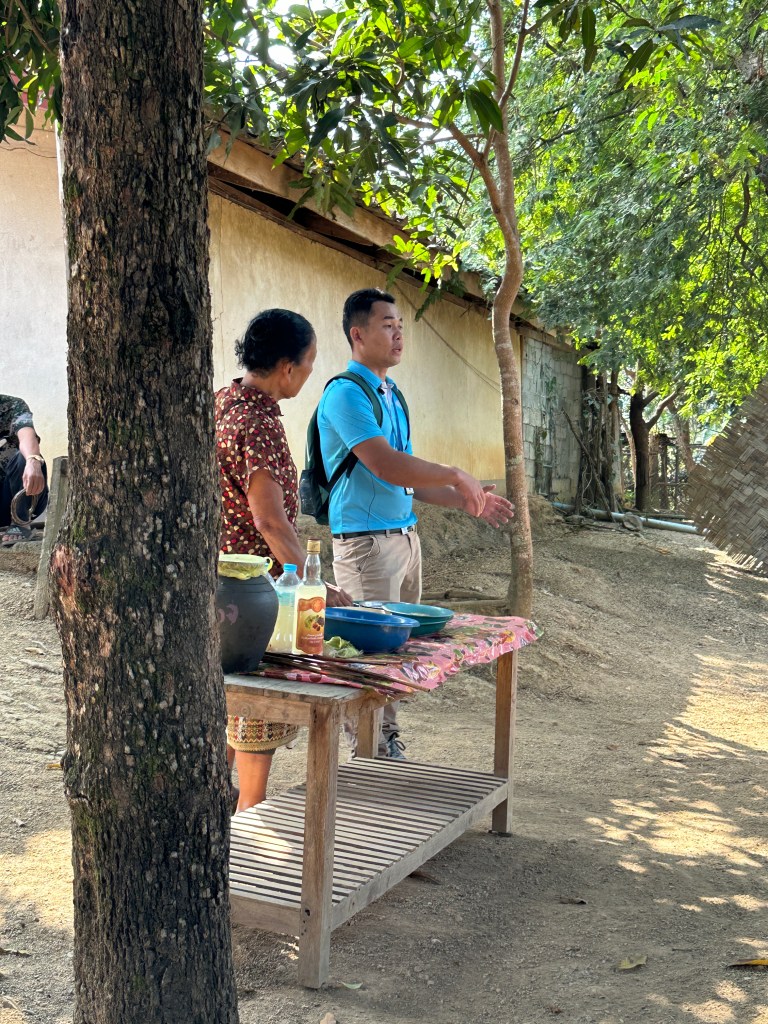


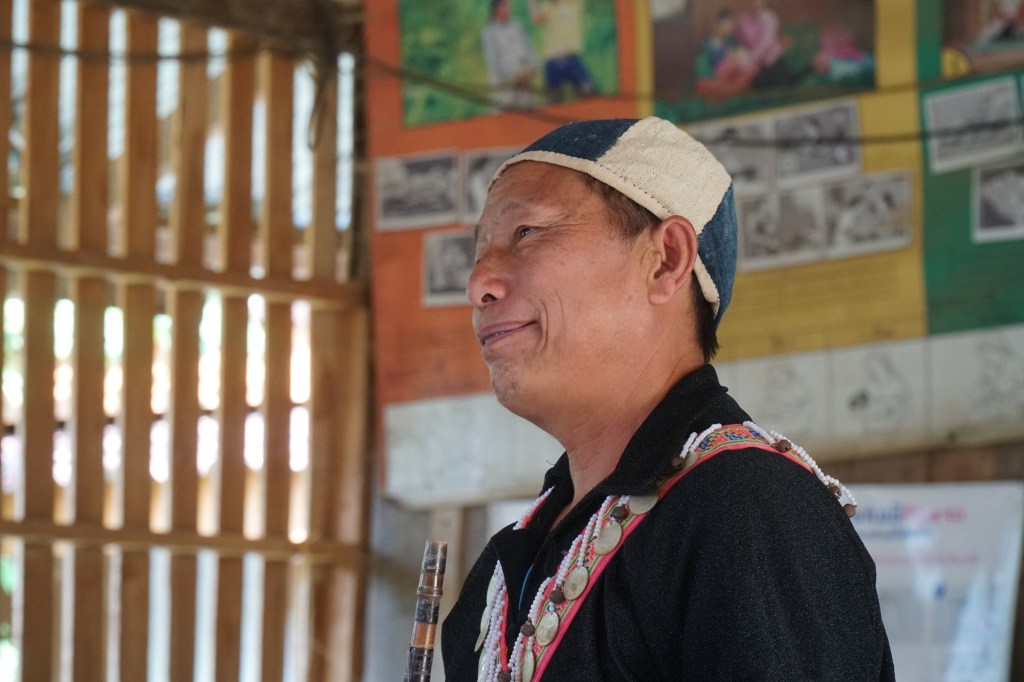
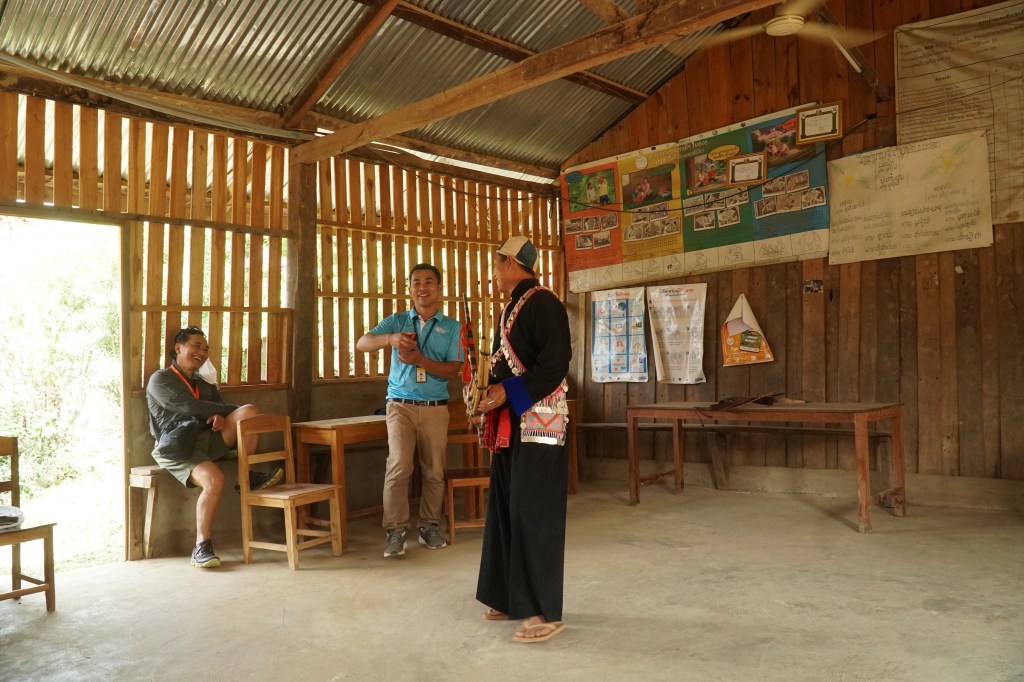


We participated in cooking the stir-fry dish using a large wok over a fire, then ate lunch in the village center with the chief, mayor, and other leaders. We had some conversations about community and national governance, the communist style of government, and freedom of speech, or lack thereof. These are conversations that had to occur indoors without the chance of being overheard.
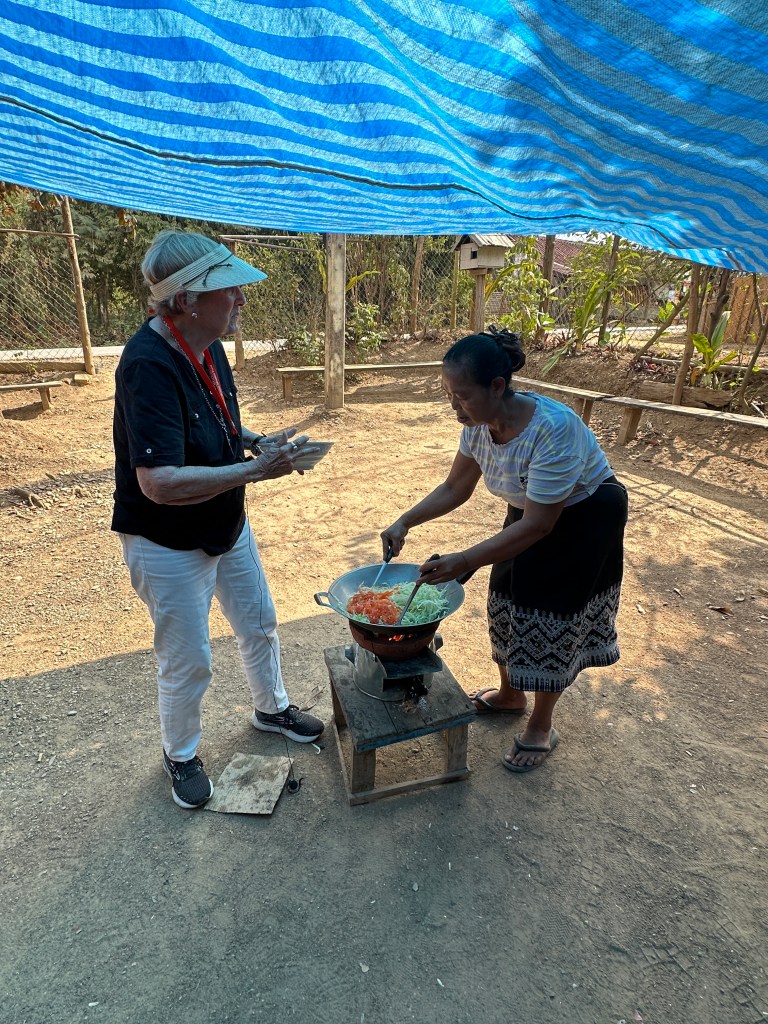


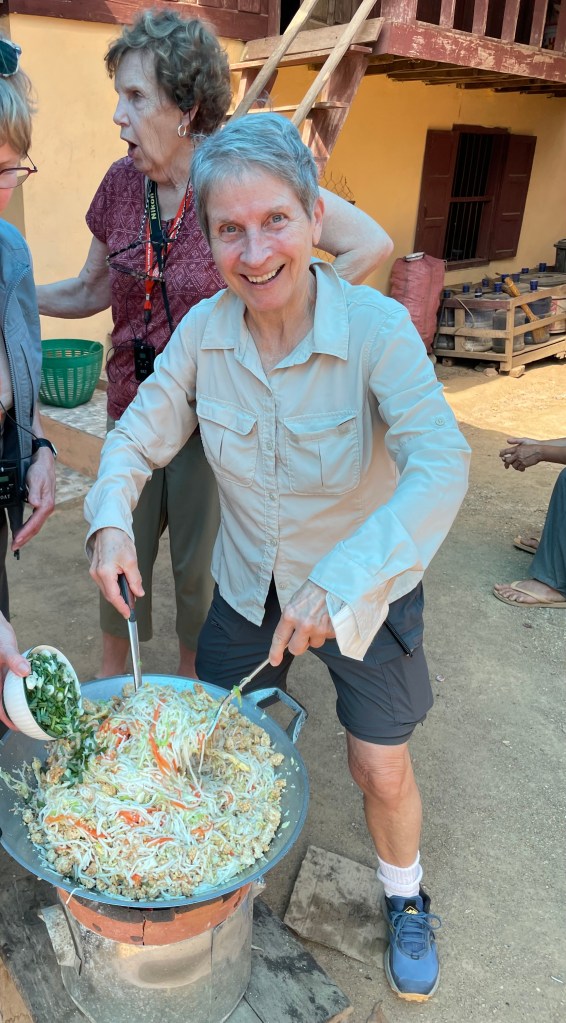

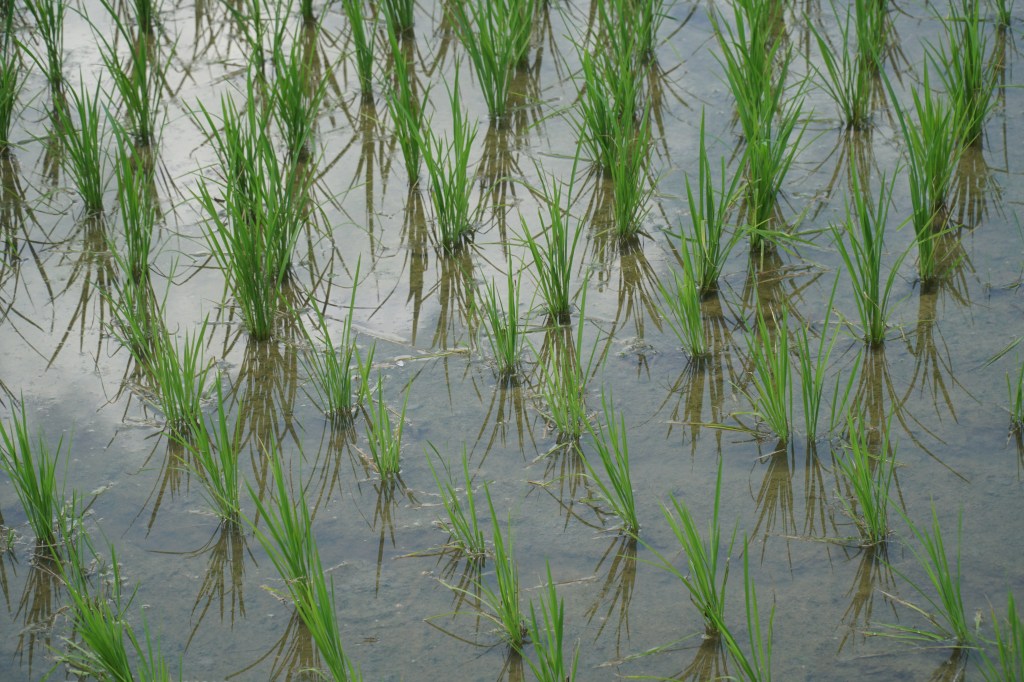
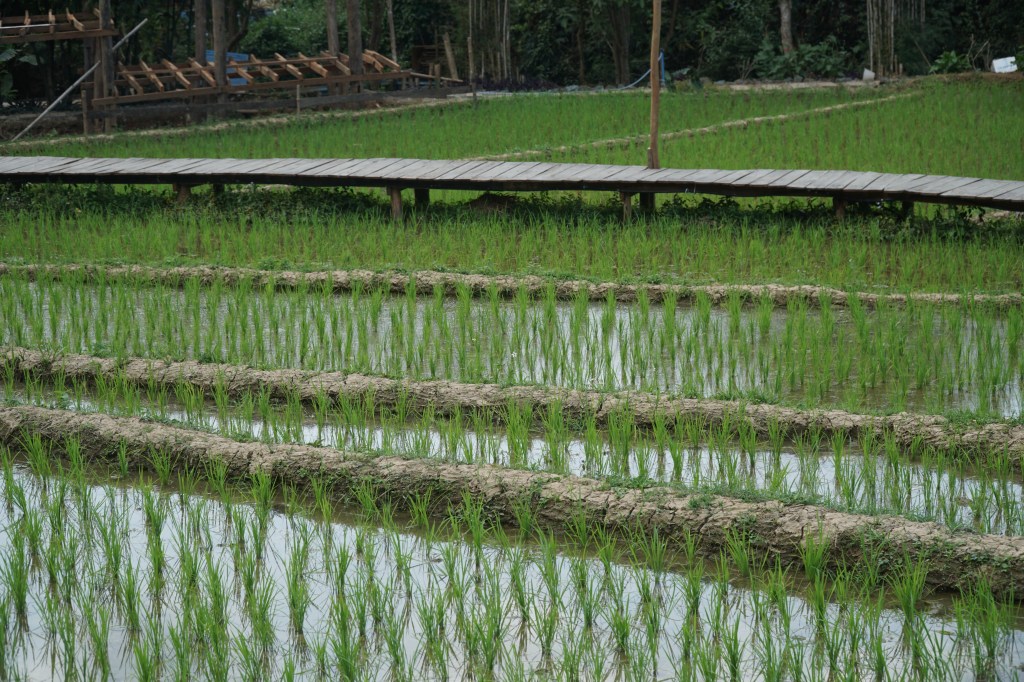
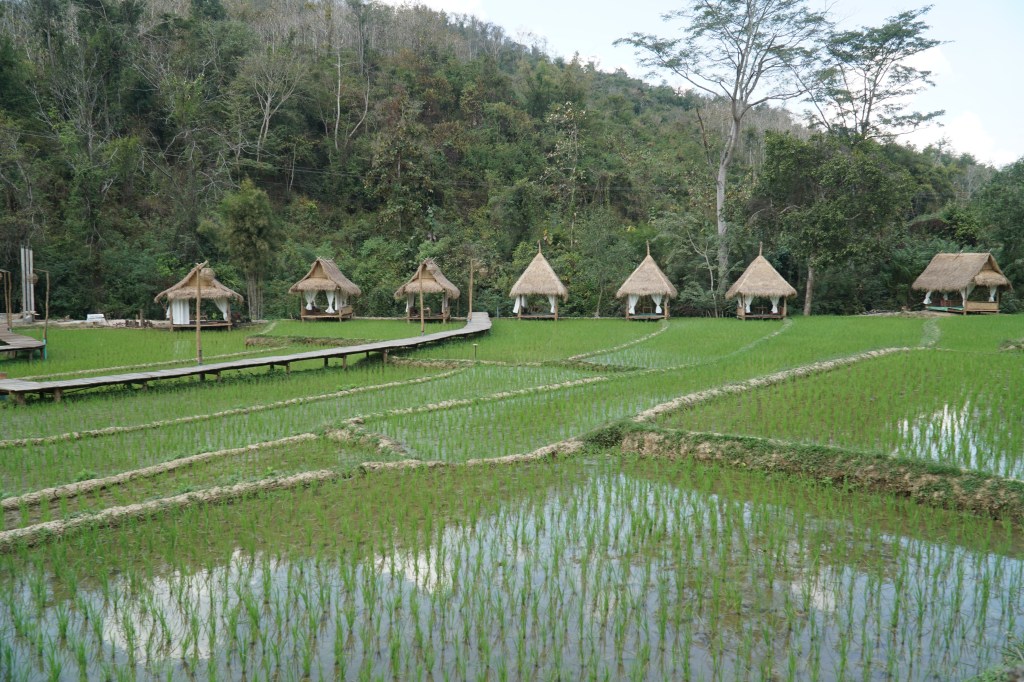
Sometime along the way, we stopped to look at a rice field up close.
Back in the town, we gathered for sunset at a cafe/bar by the river.
Tuesday, Jan. 16
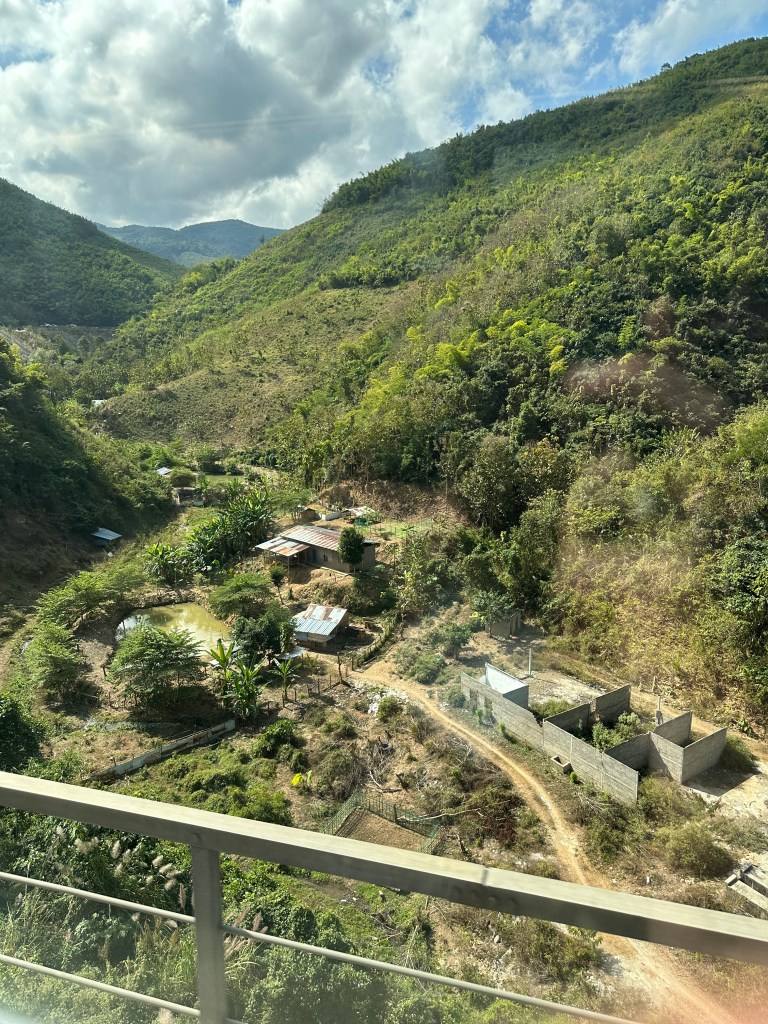
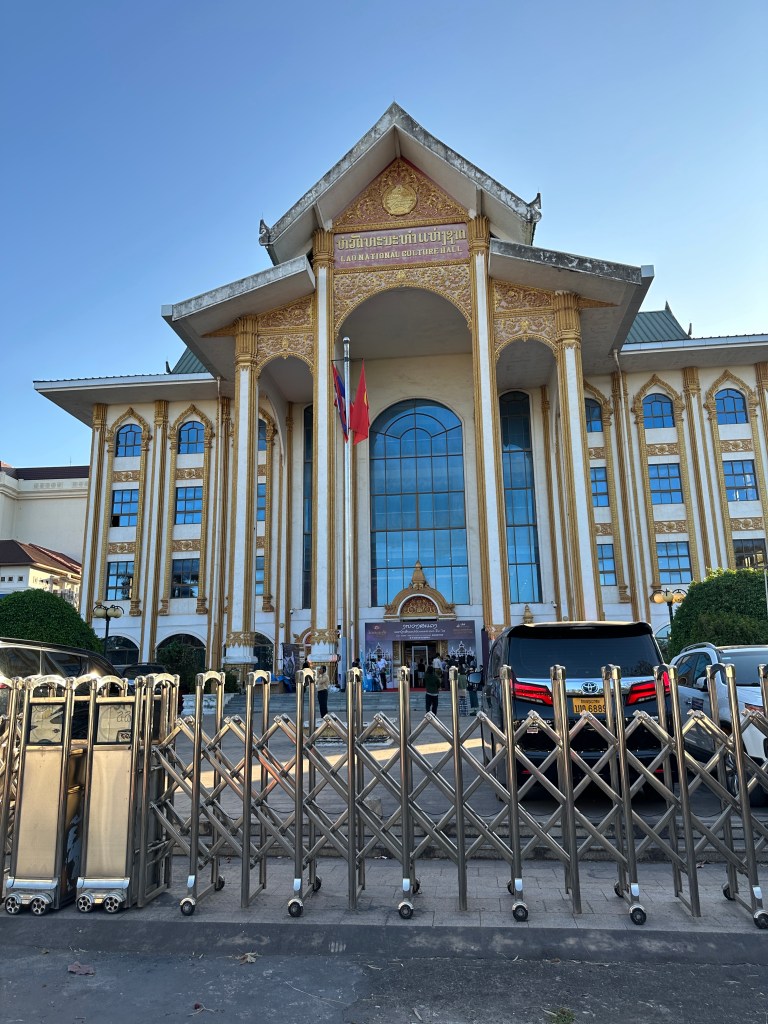
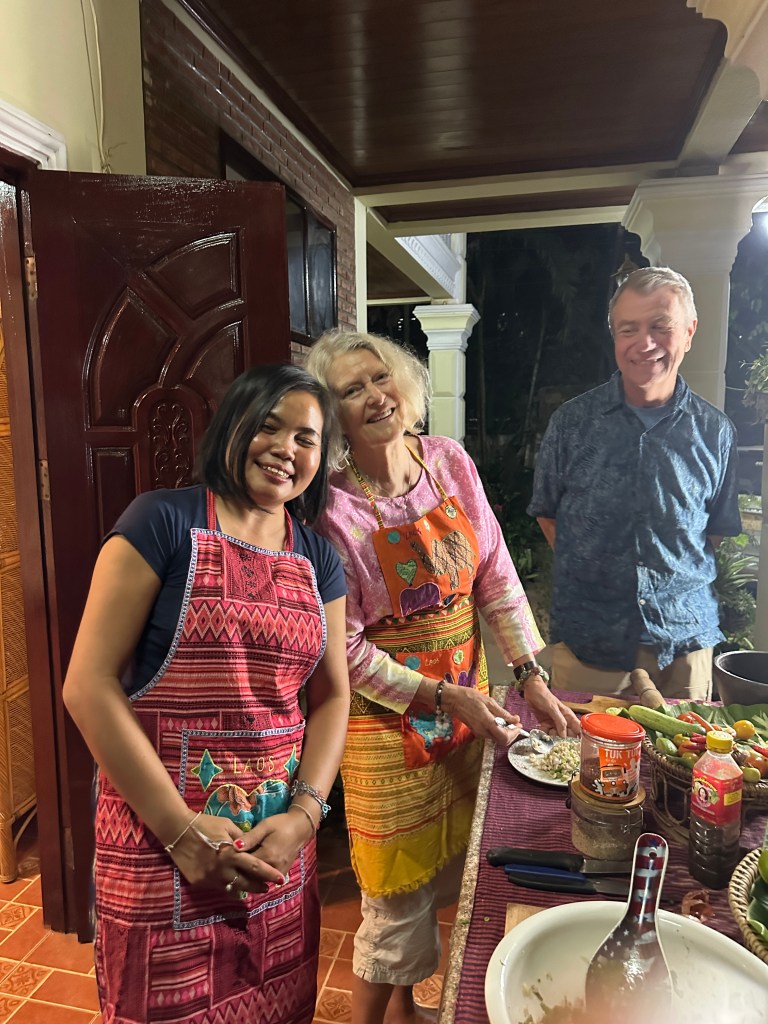
We left the lovely town of Luang Prabang, using jumbos, then bus, and then a “high-speed” train to Vientiane, after grabbing some lunch to go from the excellent bakery we previously visited. Scenery was beautiful through the mountains. Once in Vientiane, we checked into our hotel, the Sabaidee hotel. This was the evening of our home-hosted dinner. The hosts of our small group of five travellers were two sisters, a brother, and niece. The sisters’ parents ran a local grocery store and we waved at the mother as we passed her closing up the store — they lived behind the store. A bit further down an unpaved road we arrived at the sisters’ house. We saw family photos in the living rooms, went upstairs to sit on a large, comfortable porch overlooking their extensive garden, washed our hands in the upstairs happy rooms, and proceeded to the front porch to assemble part of the dinner. We chopped vegetables and herbs for the papaya salad, then moved indoors to the dinner table. After wonderful dinner conversation about our different lives and careers, we moved to the living room for a Baci ceremony that involved wearing traditional sashes, and being given string bracelets that symbolize the bringing into balance the body’s 32 spirits (associated with 32 organs) that may wander outside the body and become unbalanced. The blessing is intended to bring health and prosperity. We were asked to wear the bracelets for three days. It was a wonderful evening!!






Wednesday, Jan. 17
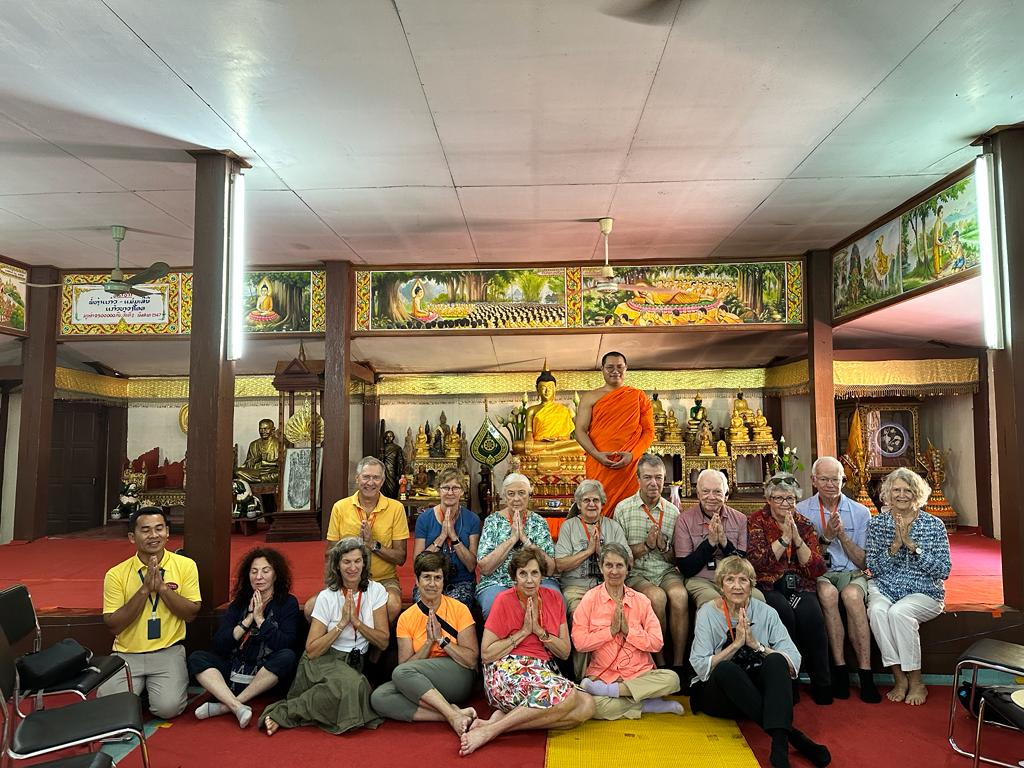
We visited Wat Sisaket, a the oldest Buddhist monastery in Laos, with thousands of Buddha images. We had a conversation with a monk and were able to ask him lots of questions about Buddhism, the primary belief structure, the rules for monks, range of activities of monks. He also demonstrated how they dress themselves using the orange fabric, as novices, and in informal or formal settings as monks. The monk we met serves as a college English teacher. Monks live in the temple, perform various jobs to maintain the temple, perform other services in the community, and spend much of their time in meditation. Many teenage boys and young men become novices and monks as a path to gain a free education. They can remain as monks or return to life outside the temple whenever they wish. I just read a wonderful book on Buddhism, “What the Buddha Taught,” by Walpola Rahula, a distinguished and erudite monk.

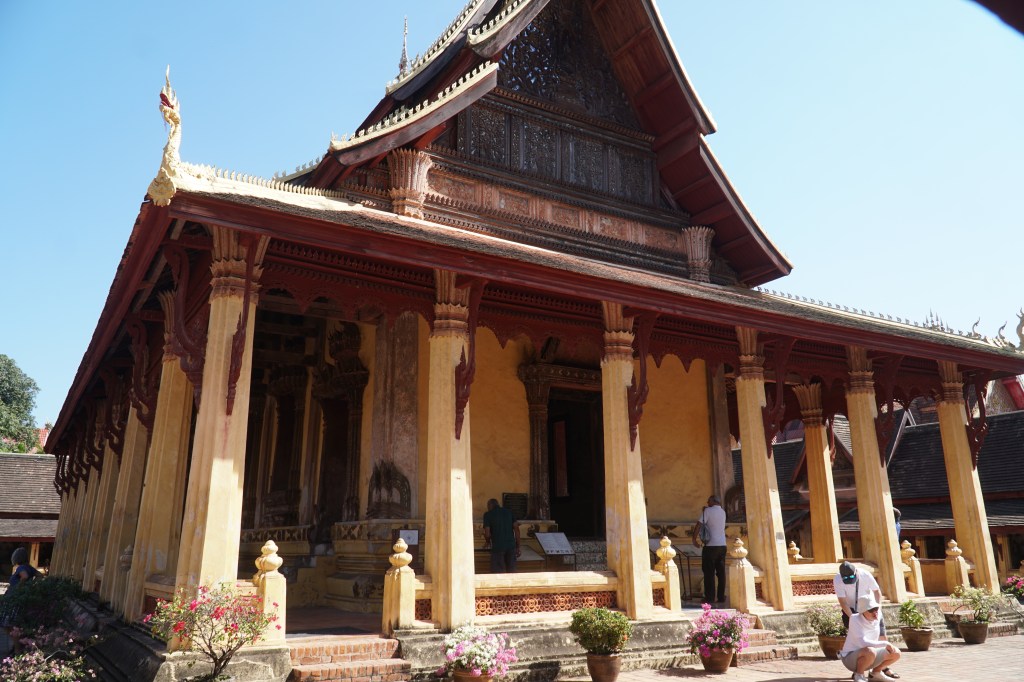
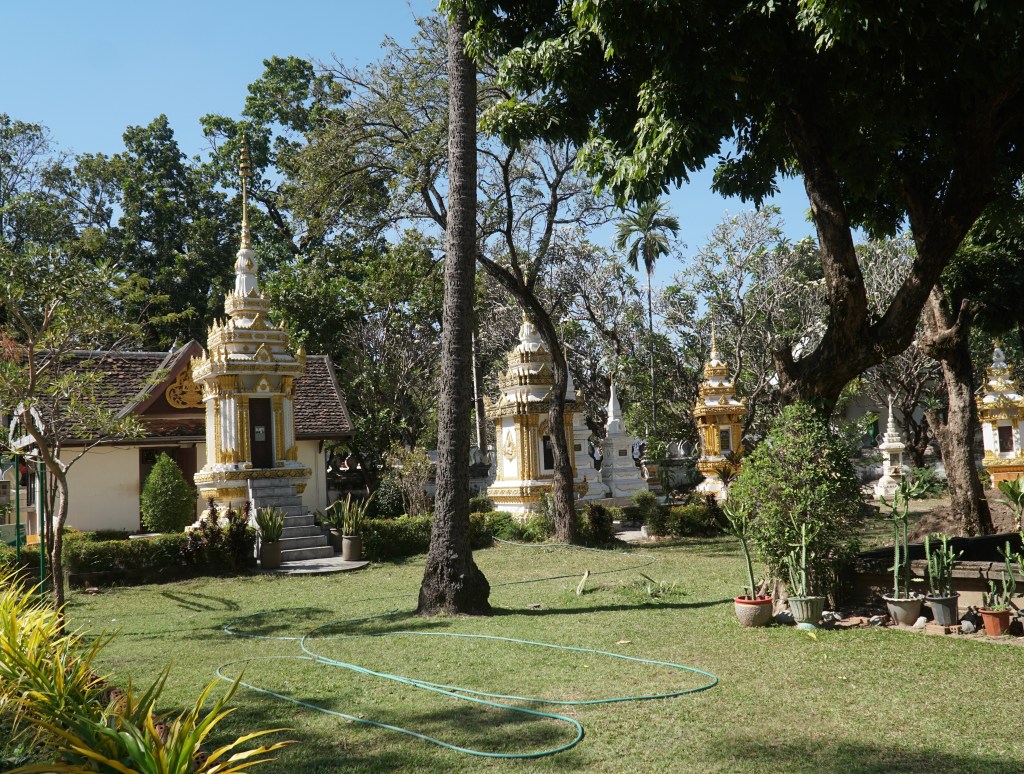


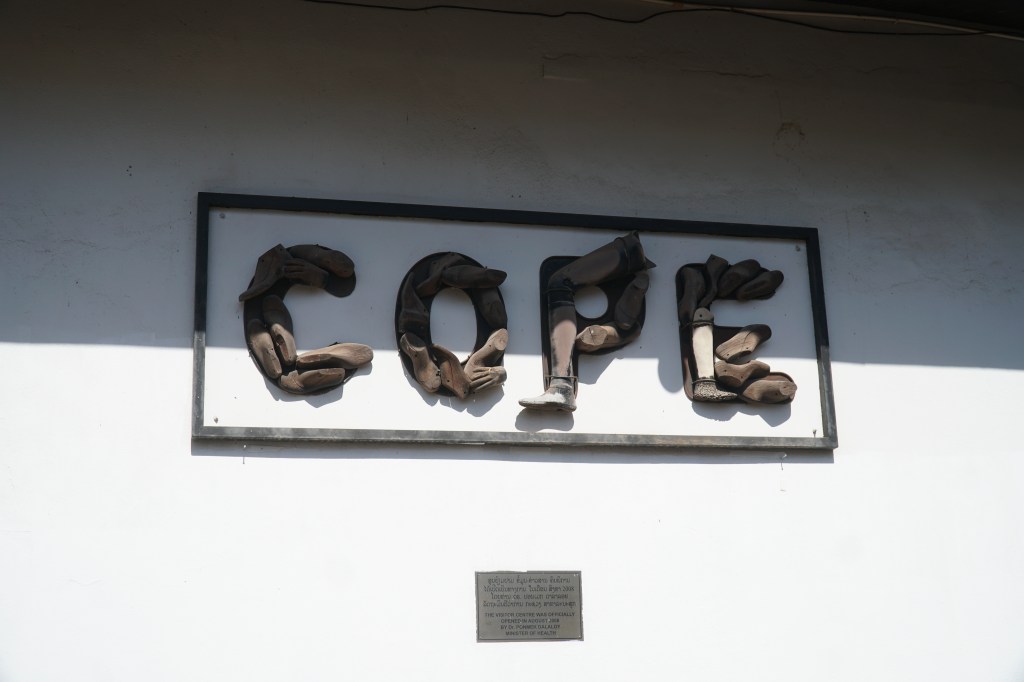
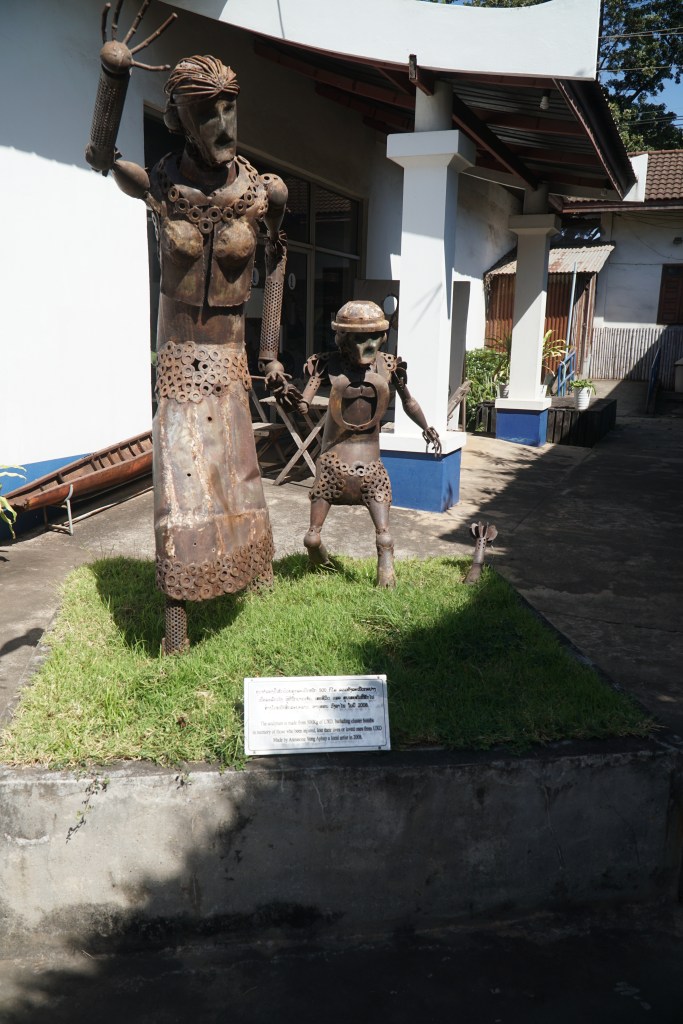
We then visited the COPE center (Cooperative Orthotic and Prostehetic Enterprise). This NGO provides prosthetics and other healthcare and rehabilitation support for individuals harmed by bombs dropped during the American War (we call it the Vietnam War) that were unexploded when they landed. Over 20,000 civilians are estimated to have been killed or injured by these bombs. We had a discussion with a man who had lost his legs in such a circumstance (in this case, prior to American War).



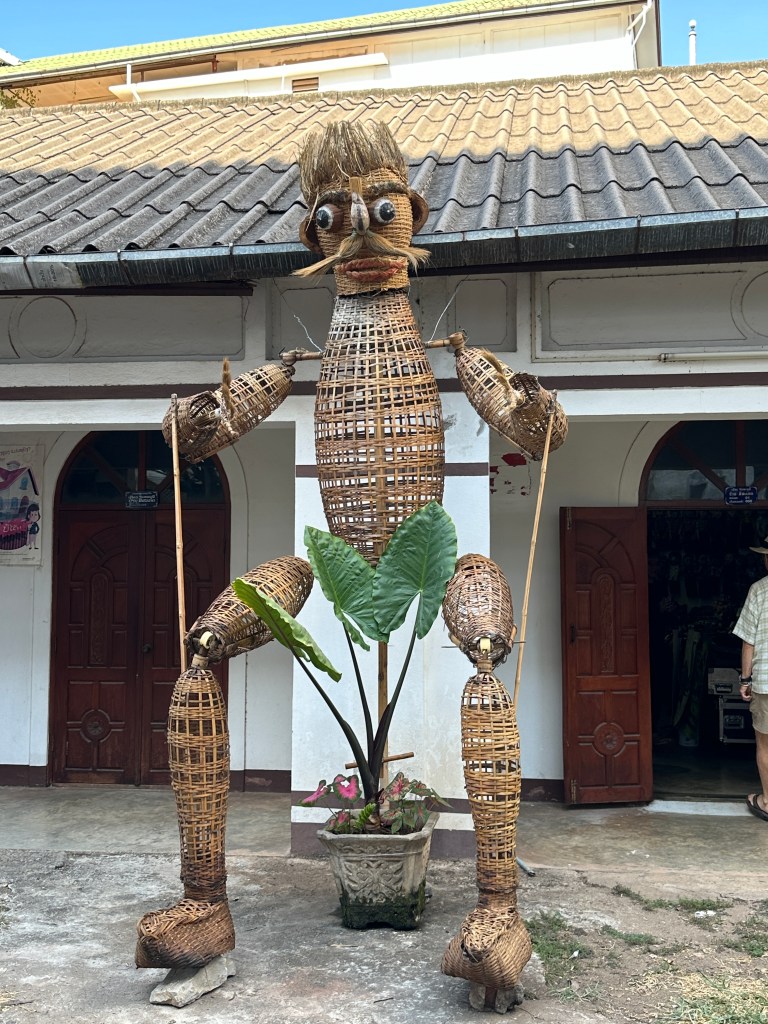
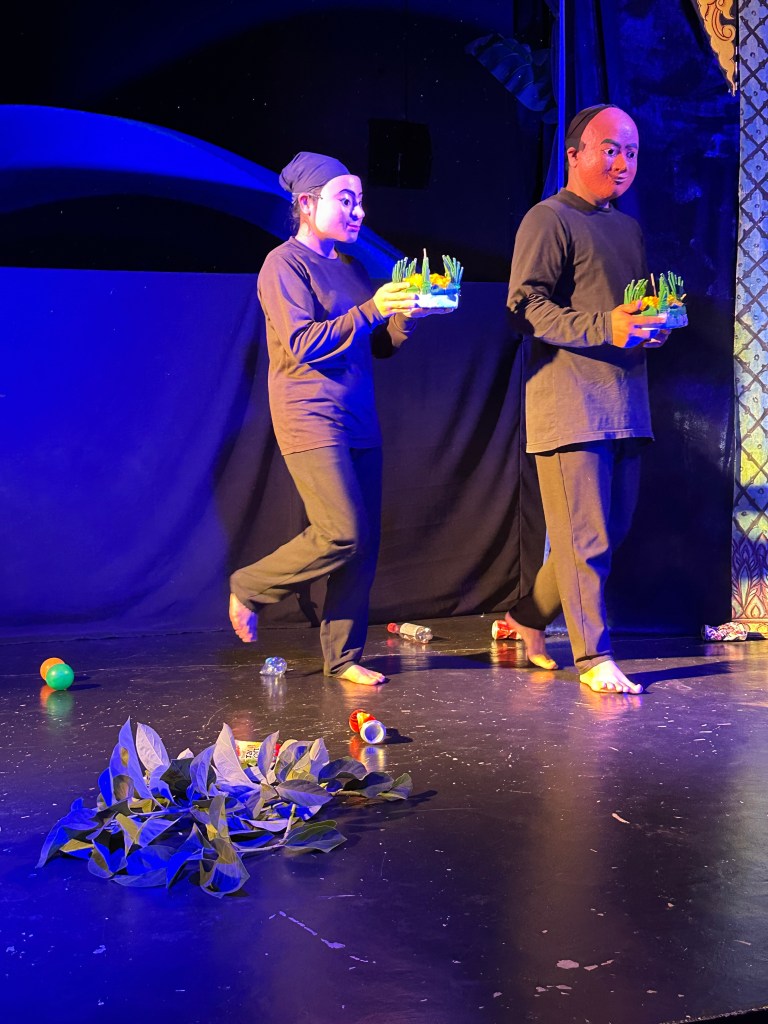
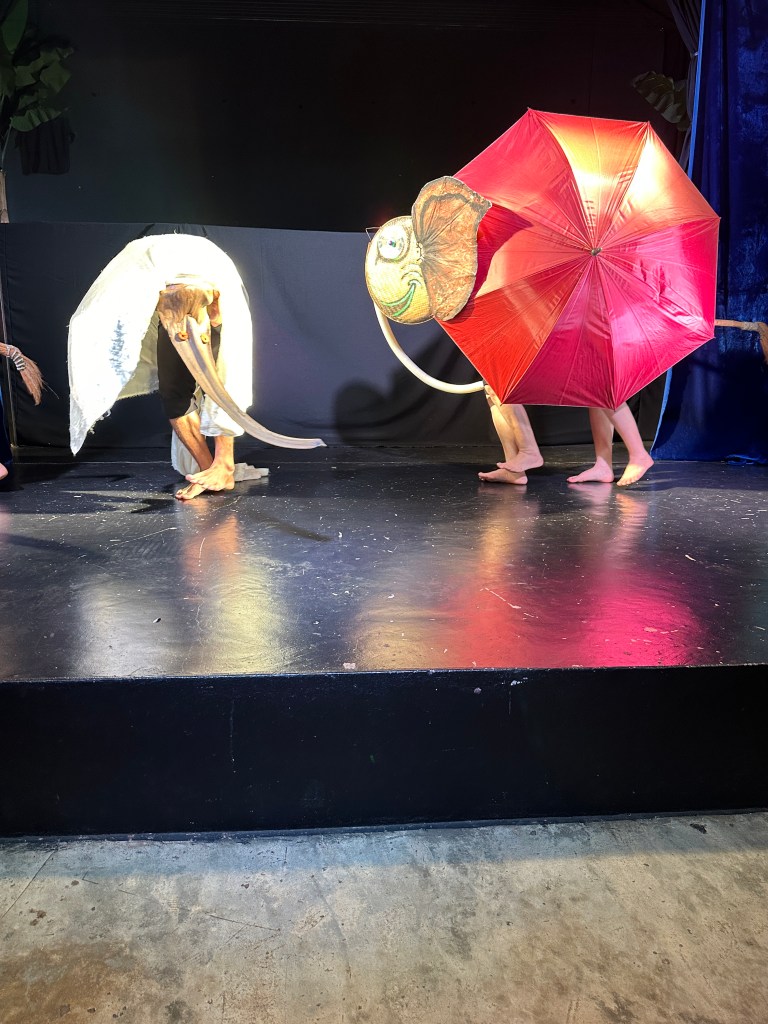
In our free time, most of us chose to attend a performance at a government-supported puppet theatre just around the corner from our hotel. The performances depicted different subjects relevant to Laos history and culture, including a skit about trash. In so many places we visited there was trash scattered everywhere. This particular skit is targeted for school children to try to change the behavior of the population. The whole visit was delightful!



Thursday, Jan. 18
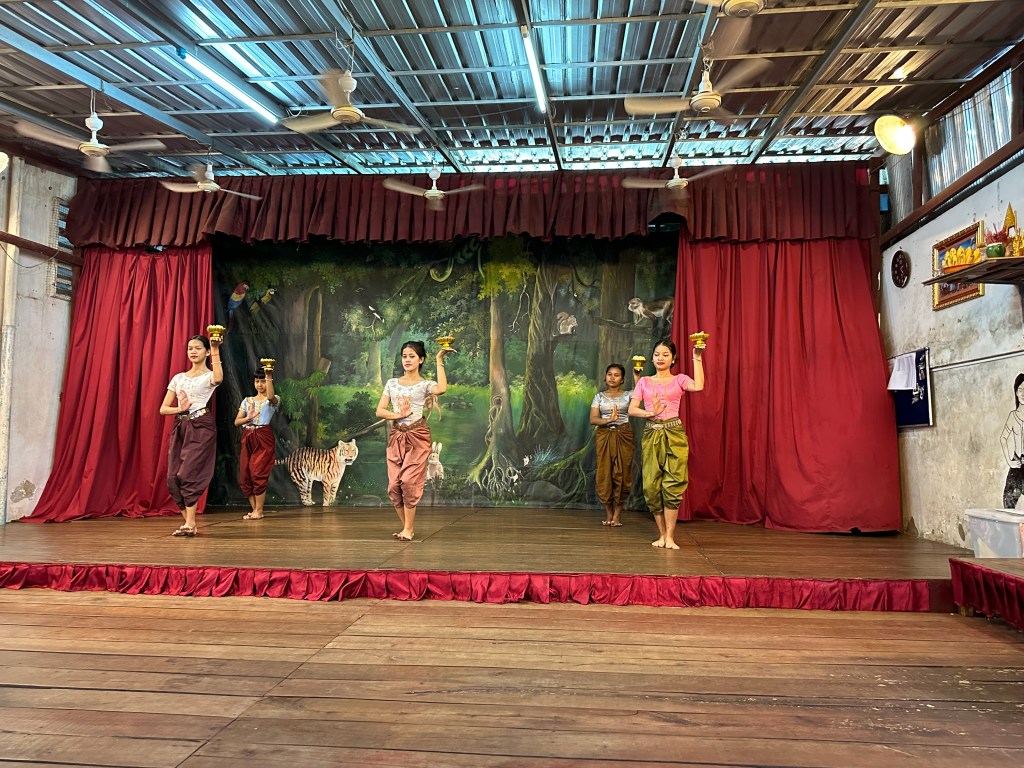
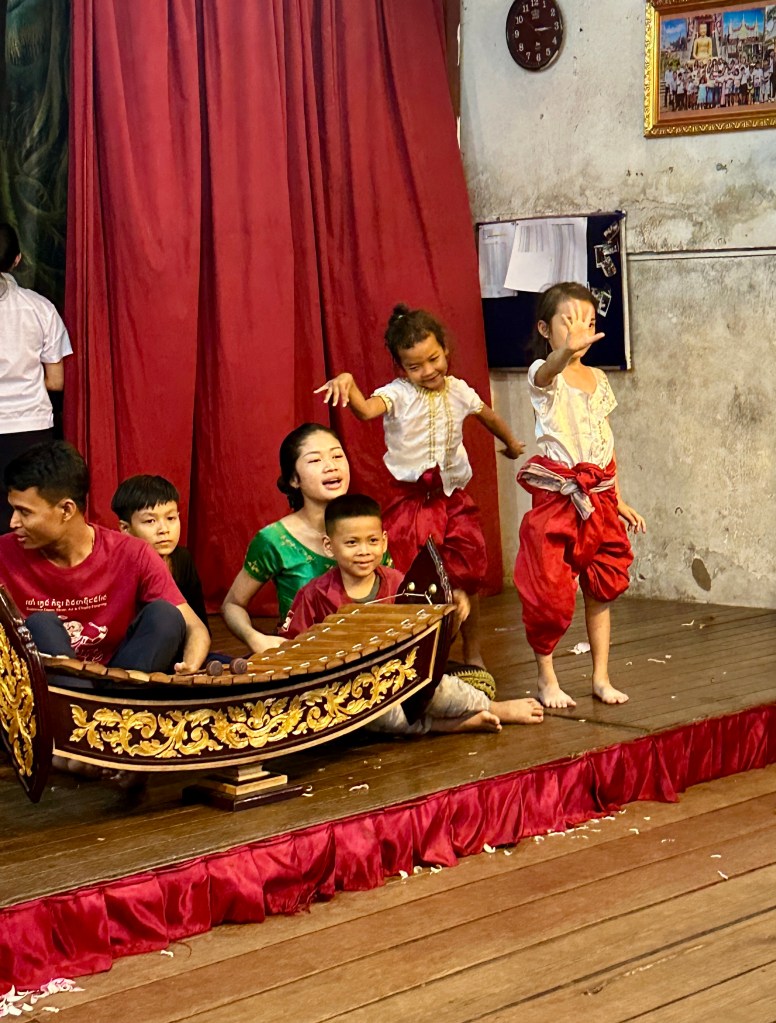
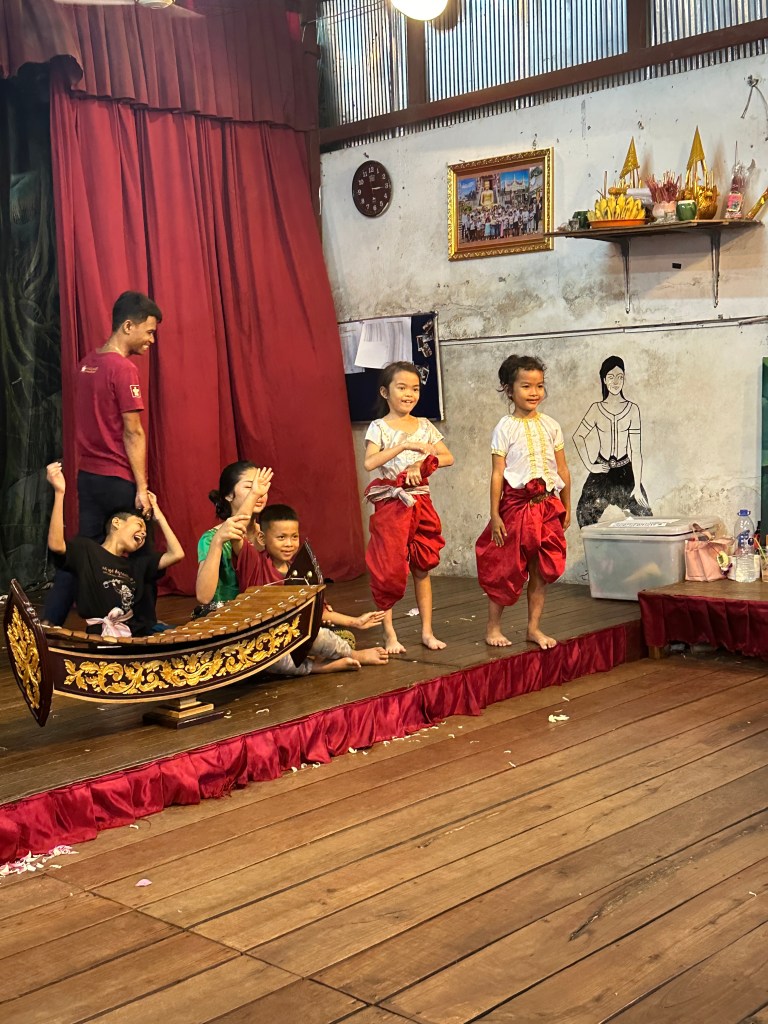
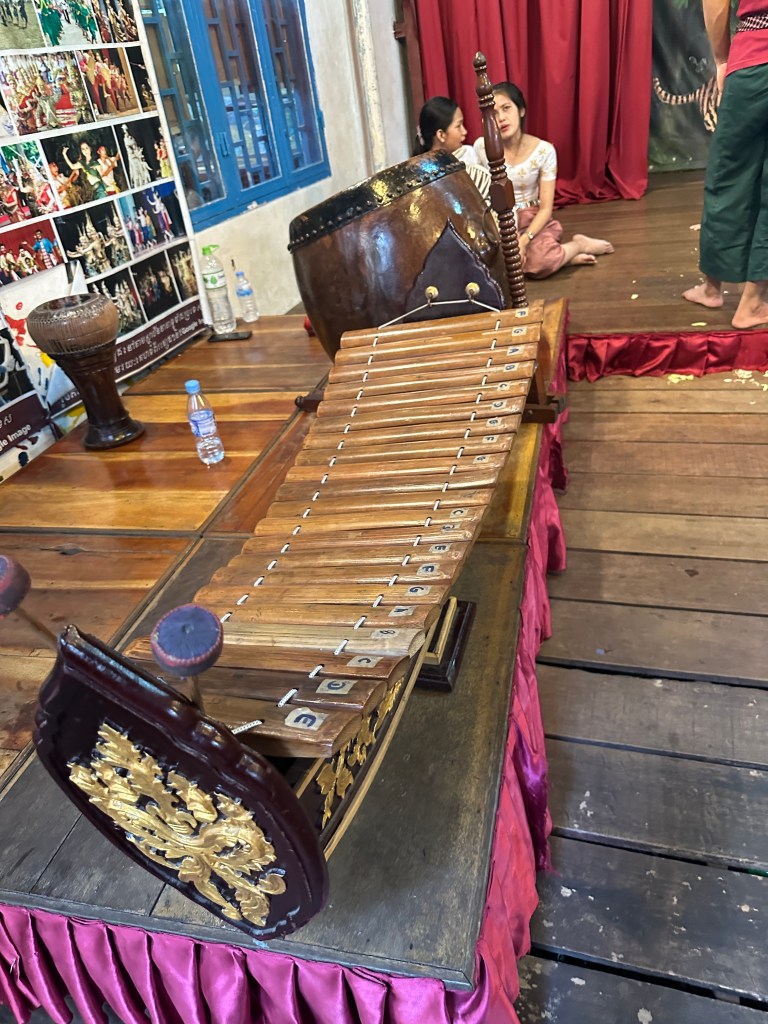
We flew from Vientiane to Phnom Penh, Cambodia. Before checking into our hotel, the Katari Hotel, we visited the Champey Academy of Arts. This is an organization that seeks to provide a career path to children who are orphaned, live on the streets, or are otherwise disadvantaged. They are also seek to preserve traditional art forms. The children performed some lovely dances in traditional costumes for us. The musicians accompanying them later showed us their instruments, including the tro sau, a bowed stringed instrument tuned to a fifth. The dancers helped our group put on the traditional attire and dance with them on stage. We also visited the art room where individuals were practicing their pencil drawing skills.


Friday, Jan. 19
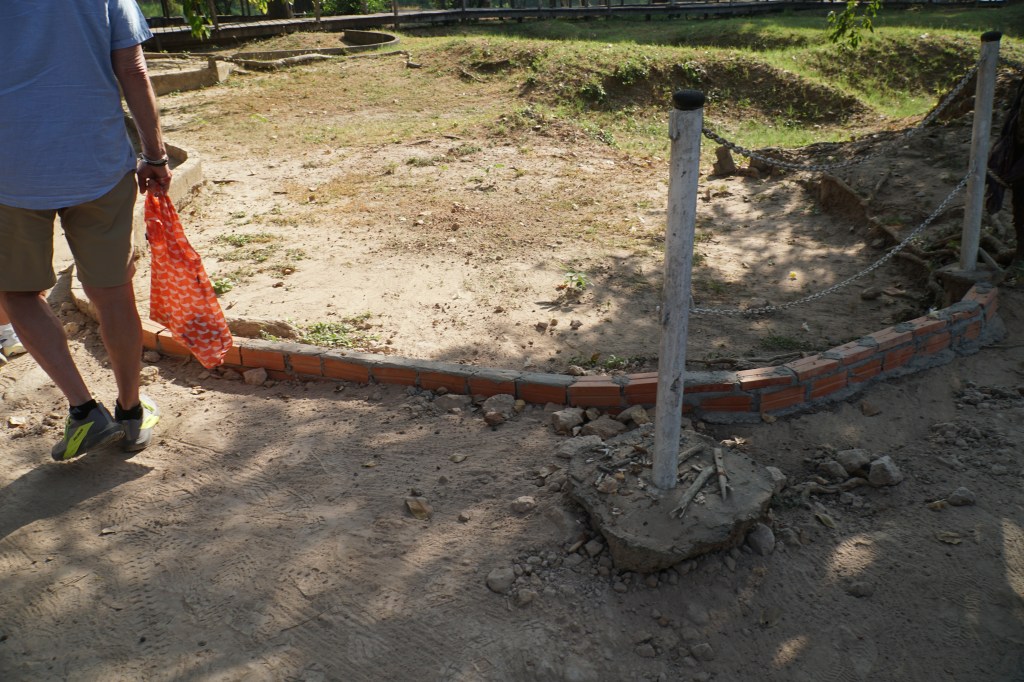
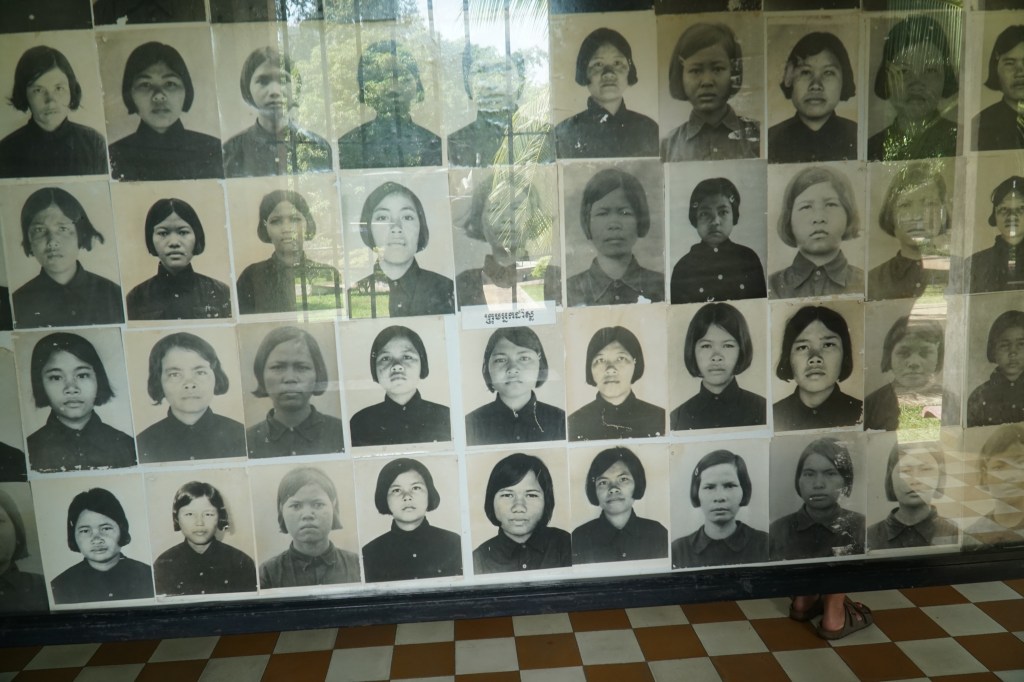
It was a sobering morning. We visited one of the many killing fields in Cambodia, the Killing Field of Choeung Ek, and then the Tuoi Sleng Prison Museum. When Pol Pot and the Khmer Rouge came into power, they began the genocide of 1975-79. To support the Marxist idea of a rural and socialist country, anyone suspected of collaborating with the enemy, and/or being an intellectual or teacher was detained. They were often told they were needed to help lead the new initiatives of the country. Many were imprisoned and tortured, and once they were no longer of value in revealing other “collaborators,” they were taken to the killing fields and murdered by axe or other implement Twenty-five percent of the Cambodian population was killed – 1.7 million people. It was commonly understood within the Cambodian army that if there was any doubt about a person’s “innocence,” it would be better to kill them than to let a potential traitor live. In the killing field memorial, we saw sites of many mass graves, a tower of skulls of victims, and remnants of clothing. The museum housed photographs of the individuals who had been held in the prison, many women and children. Of the thousands held at the prison, only 7 survived. We met two of them and had a chance to hear their stories and ask them questions. The younger man had been arrested with his mother and younger brother. His mother was killed, and the boys were released fairly soon when the regime was toppled by Vietnam in 1979. The older man had been spared when he continued to assert his neutrality and history as a manual laborer. They let him live mainly because he could repair their typewriters.






In the afternoon, a group of us visited the Carol Cassidy Lao Textile workshop. Carol Cassidy is a textile designer who worked with Laos weavers who had been trained in the craft by mothers and grandmothers. She ask them to weave many new and more intricate designs than traditional ones, which they initially asserted they could not do. In addition to developing the new skills, they were also able to build reusable templates for the designs. The resulting silk products are absolutely amazing. Unfortunately China is fabricating less expensive, copycat products that mimic the finished look of the Carol Cassidy products.


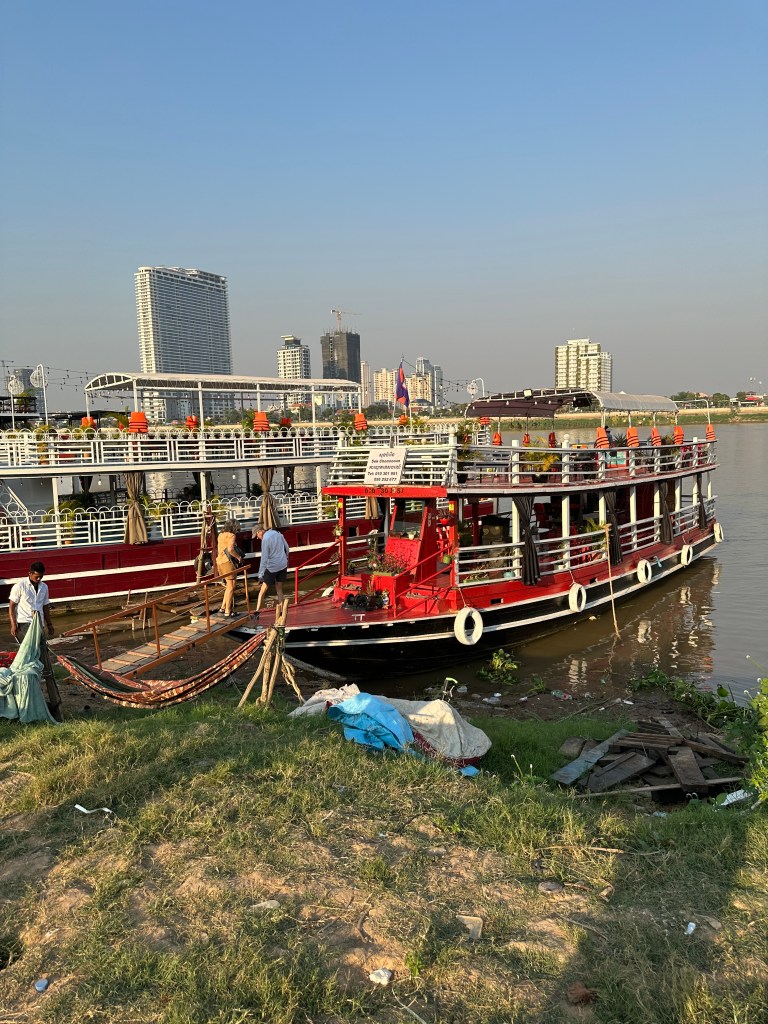
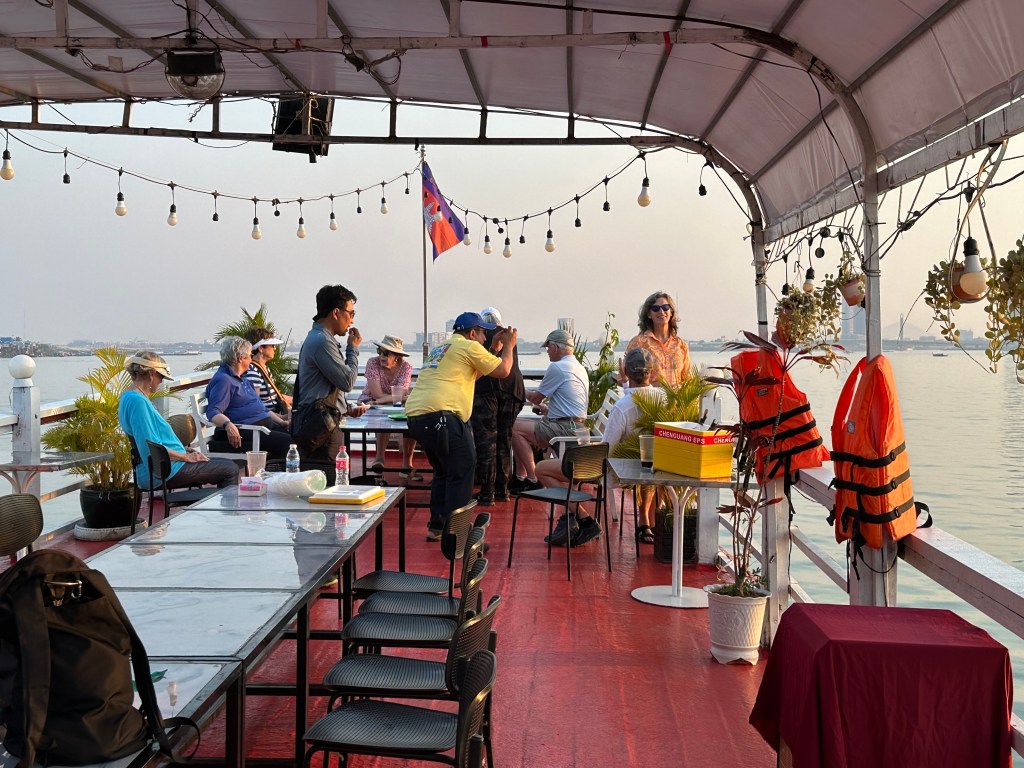
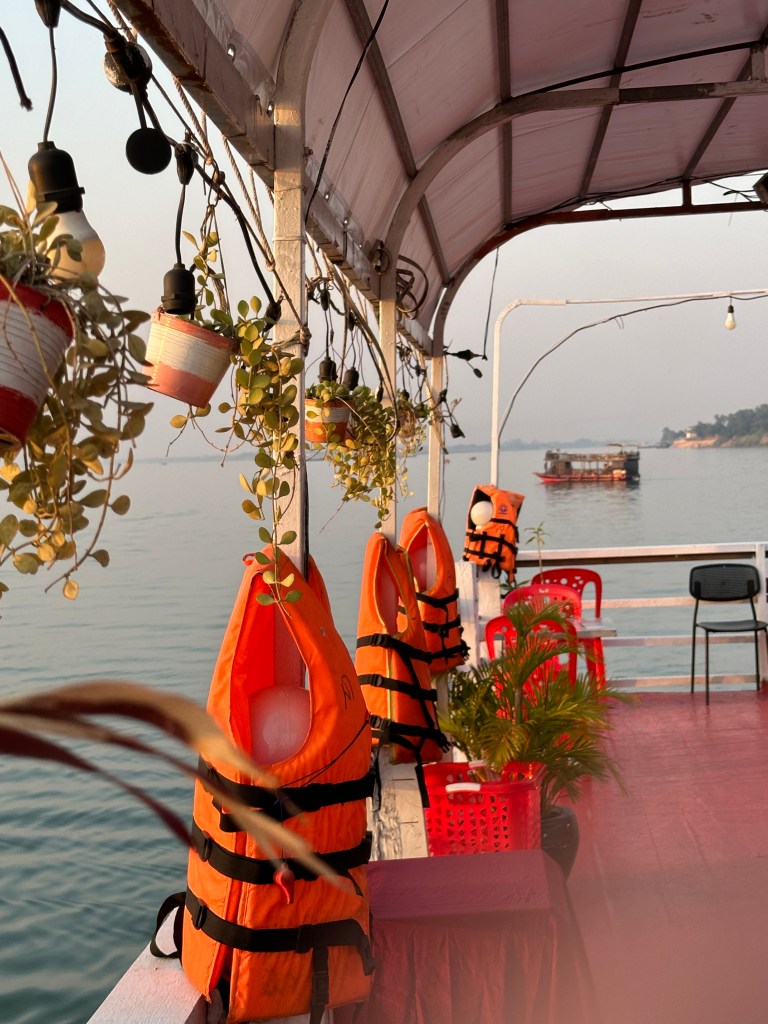
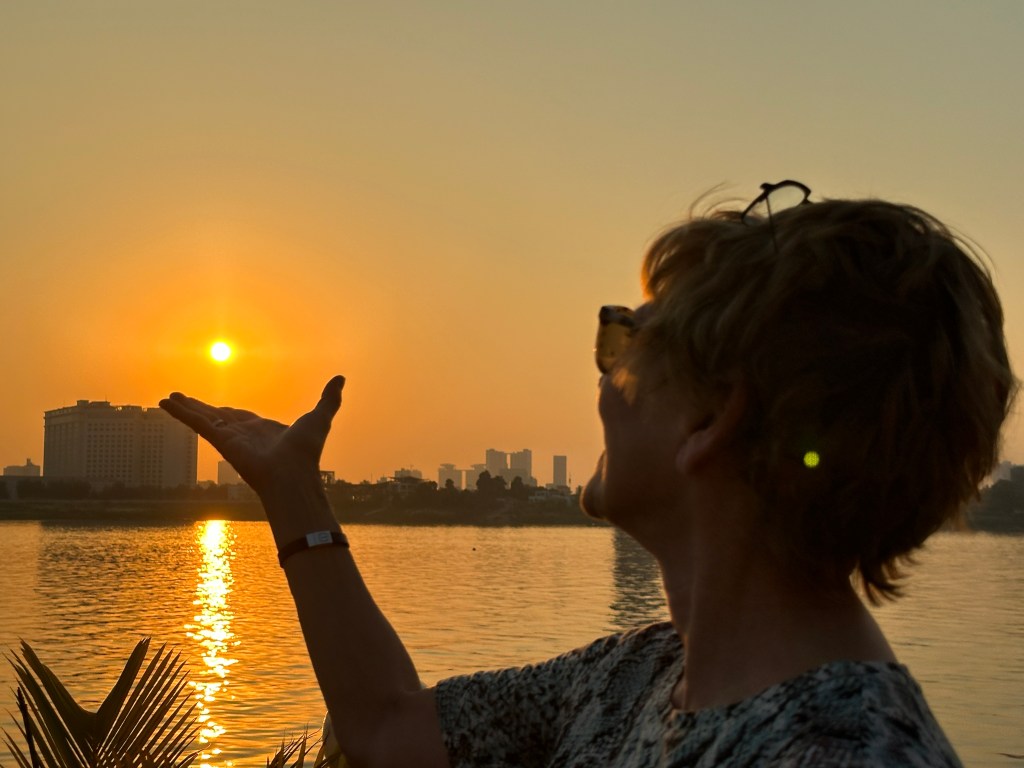
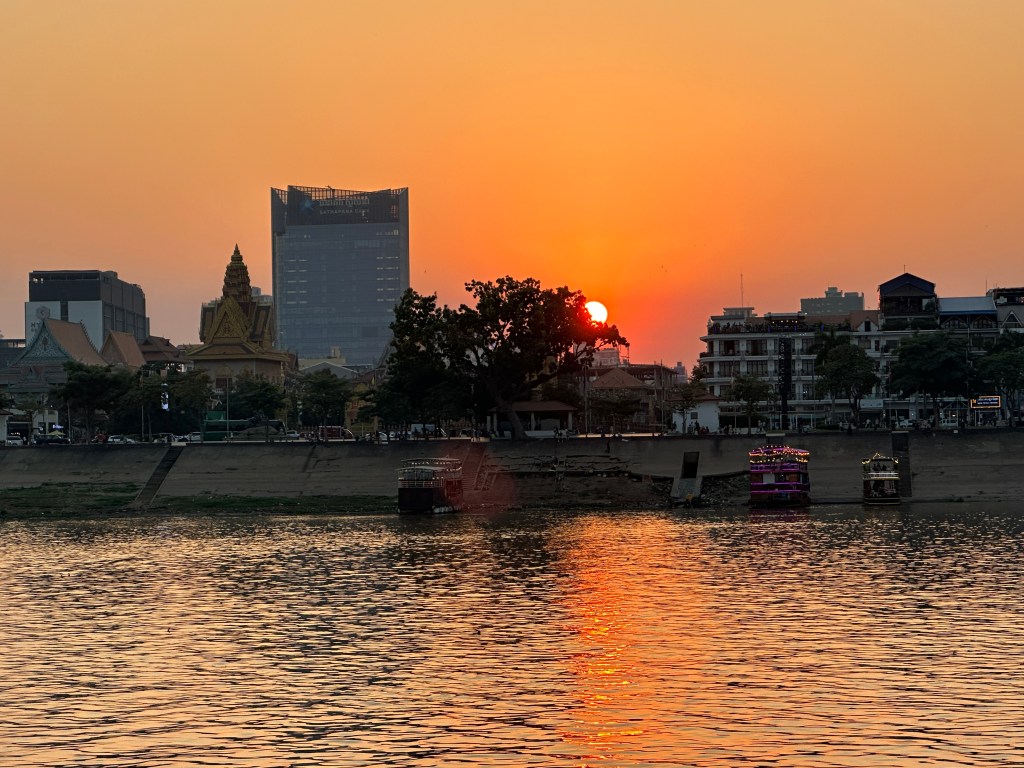
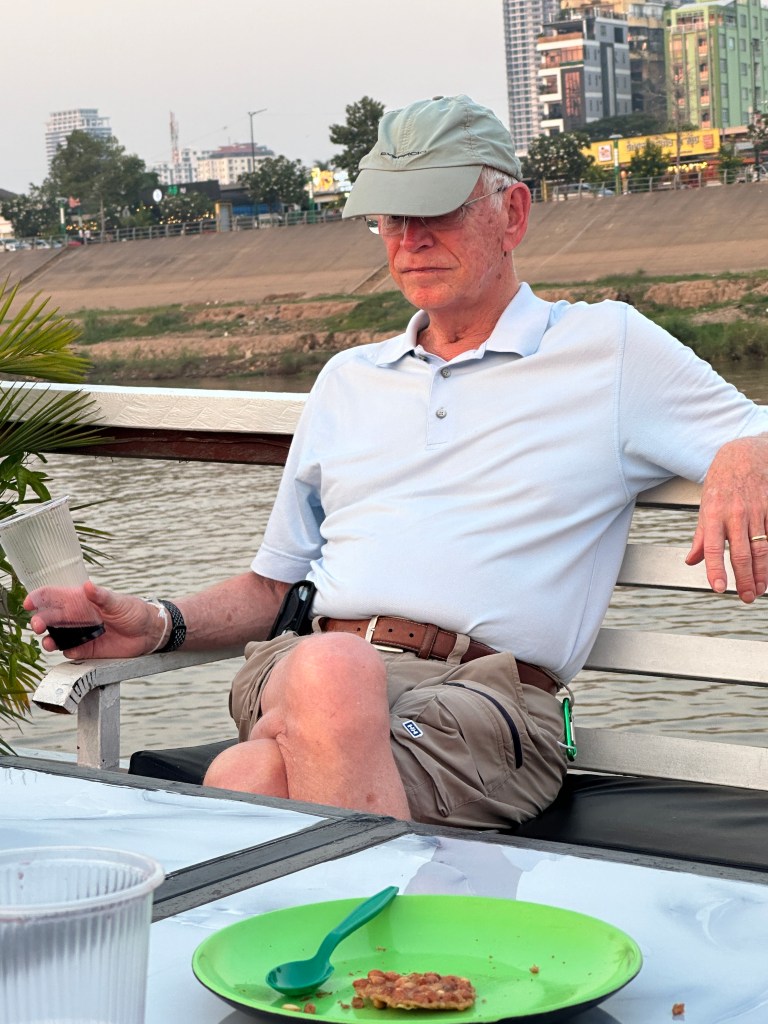
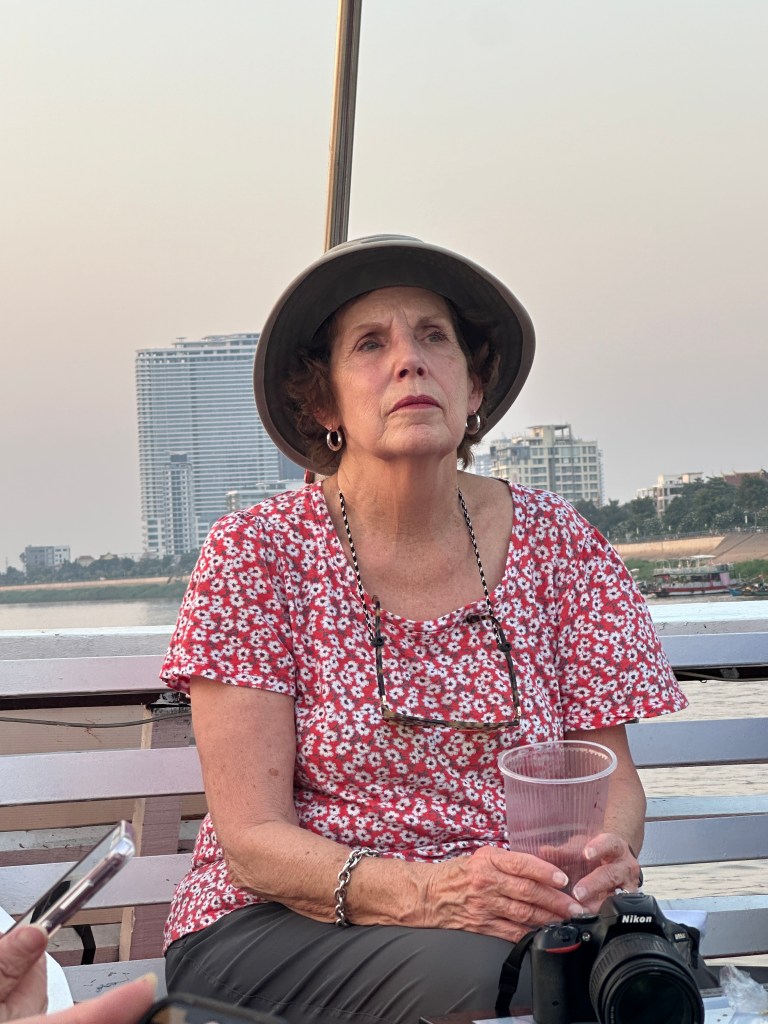
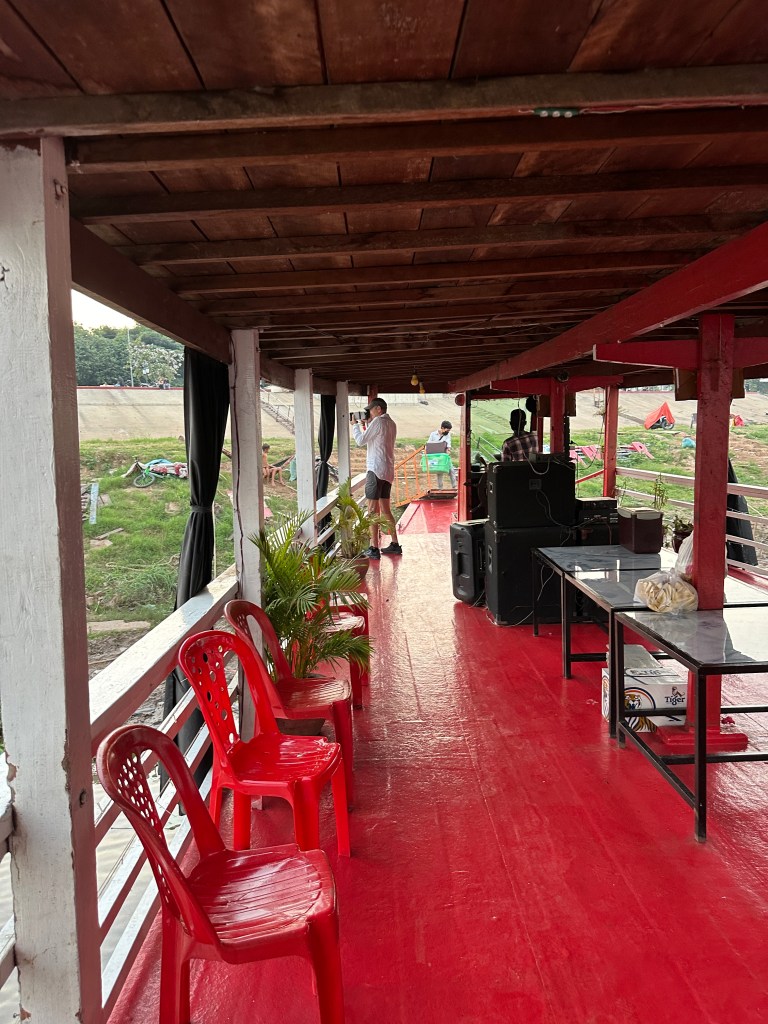
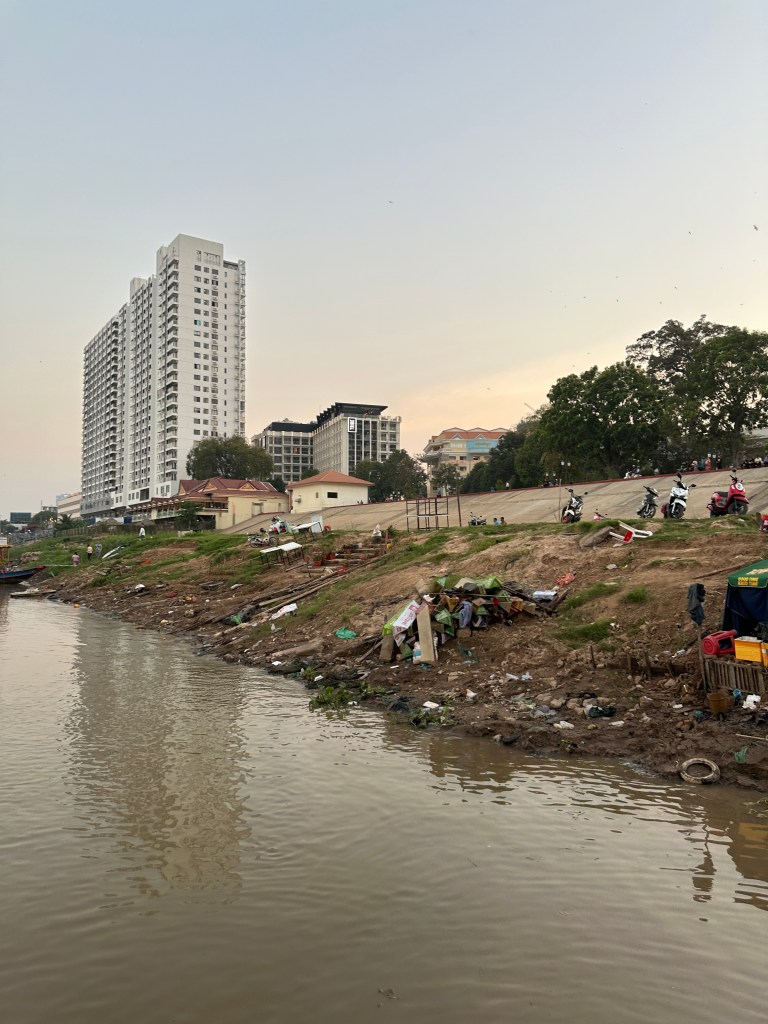
At sunset we took a boat ride along the river to savor drinks and snacks and see the last of the city before heading out.



Saturday, Jan. 20
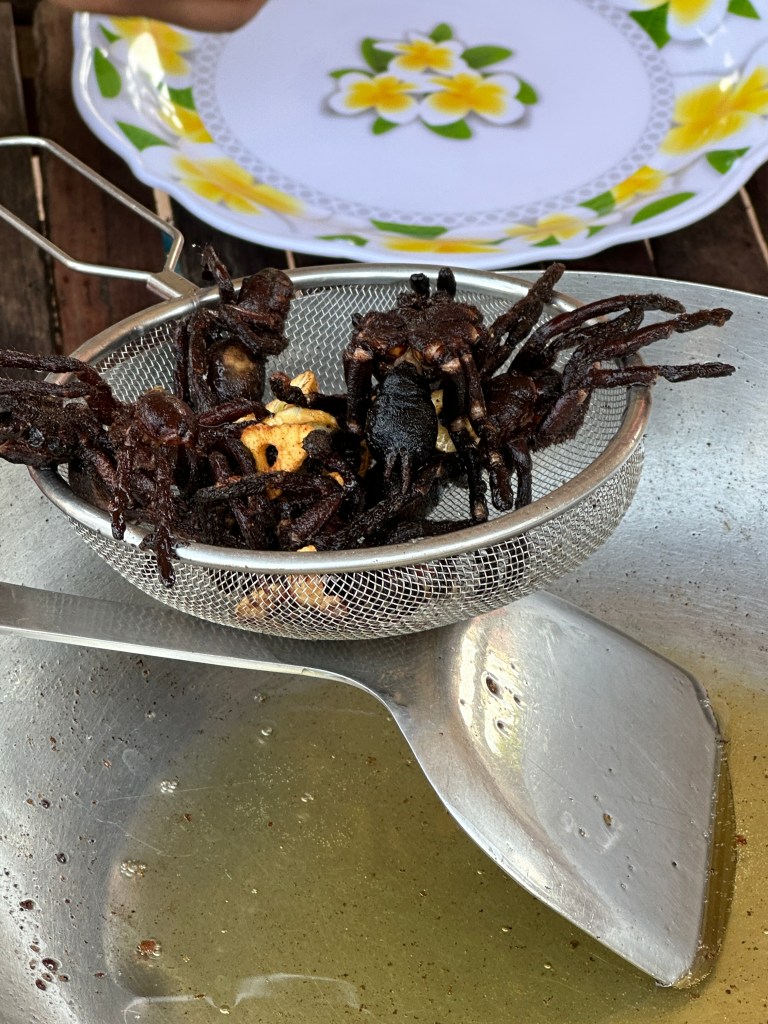
We had a long drive to Siem Reap, the only long drive on this trip. Along the way, we visited with a woman who hunts and cooks tarantulas to sell as delicacies in the local market. She showed us how she hunts, looking for holes in the ground covered by a web. She then extracts the tarantulas and removes their fangs. She washes them well and fries them with garlic and salt. The legs were tasty, but I stopped with one small bite.


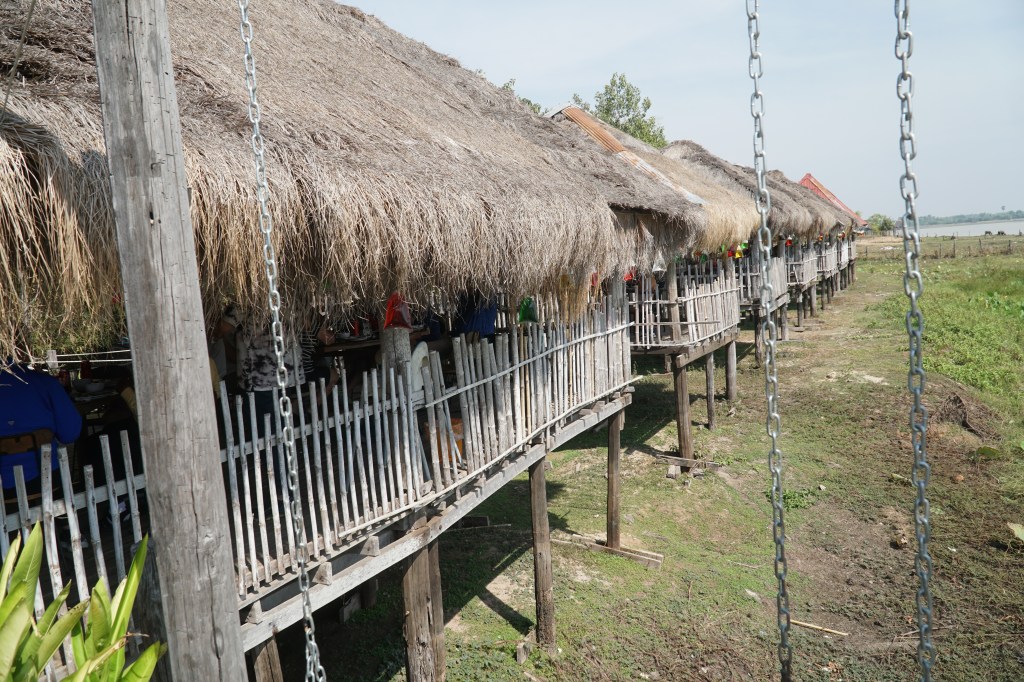
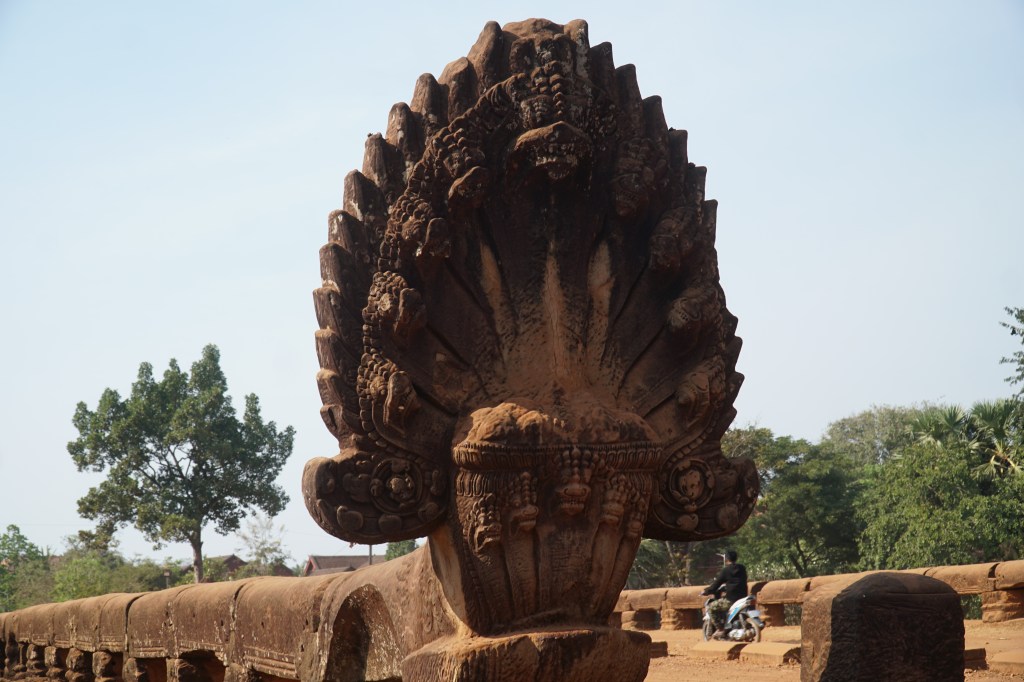
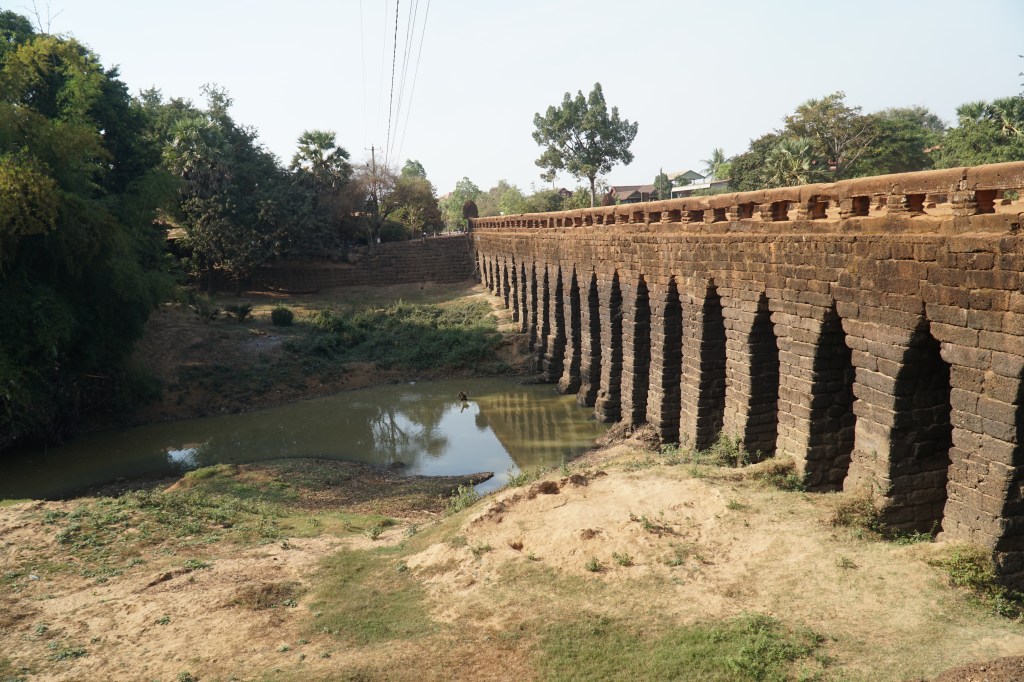
After a riverside lunch stop, we drove until we reached the Kampong Kdei Bridge (or ancient bridge) that was around a thousand years old. Upon arrival at Siem Reap, we walked around the area and had dinner. Our hotel was the Regency Angkor Hotel.



Sunday, Jan 21
We started the day with a ride in buffalo-drawn carts in a rural village.

Video. https://youtube.com/shorts/YCZEPZJSgNo
We then visited a floating village by boat. We visited the home of a multi-generational family and had the opportunity to discuss their experiences with them. The family included the grandmother, mother and father, and five children. They make their living by fishing. The father goes out in his fishing boat very early in the morning (3:00) to be back when the buyer is still available to purchase his catch. Fishing this time of year is not terribly productive. The older girls are in a local school. When asked, one said she definitely did not want to fish for a living!
The house was small, with bed mats rolled up in the bedroom to clear space. They had electricity, and a TV. The bathroom had a hole to the water for toilet.


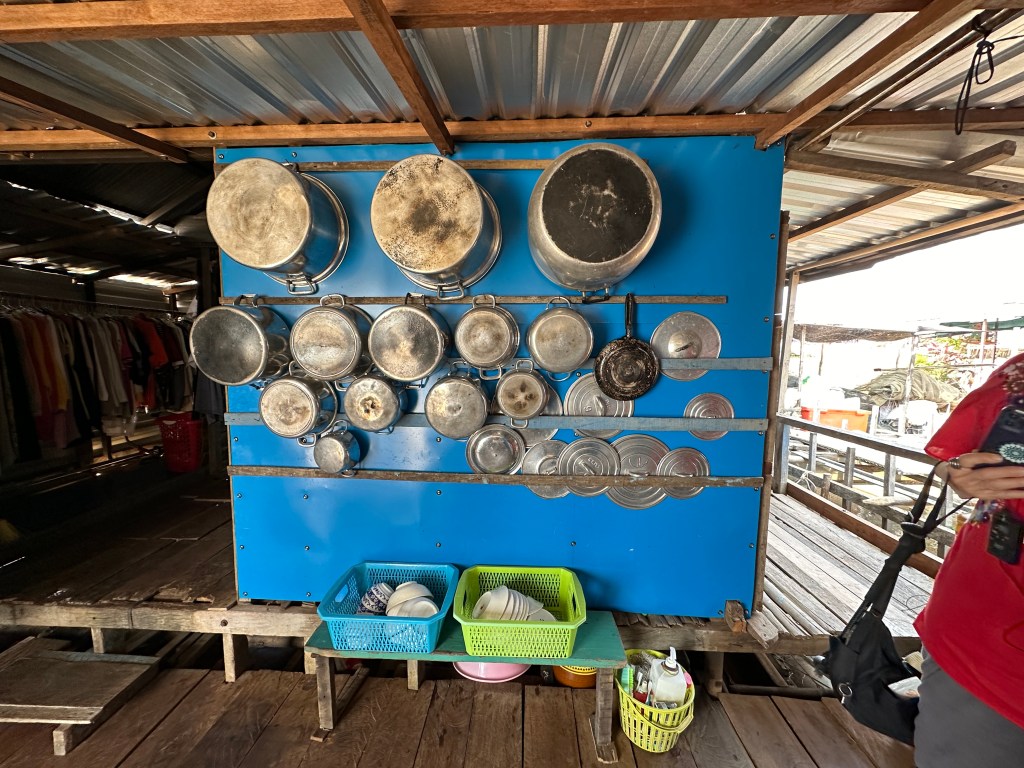
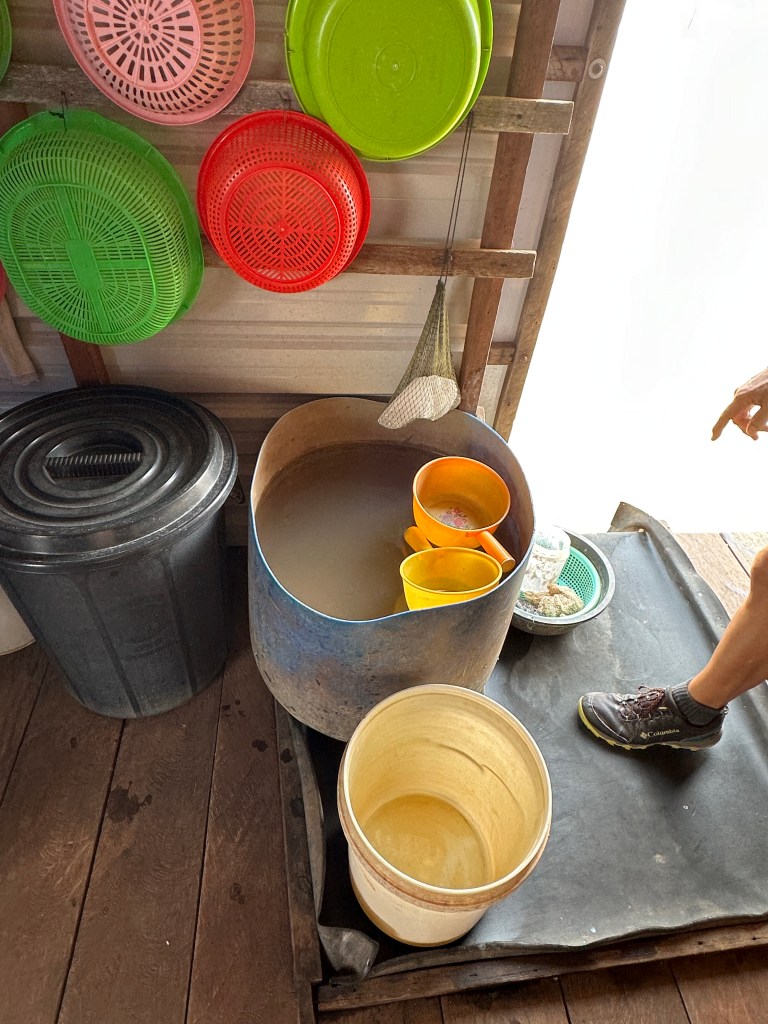


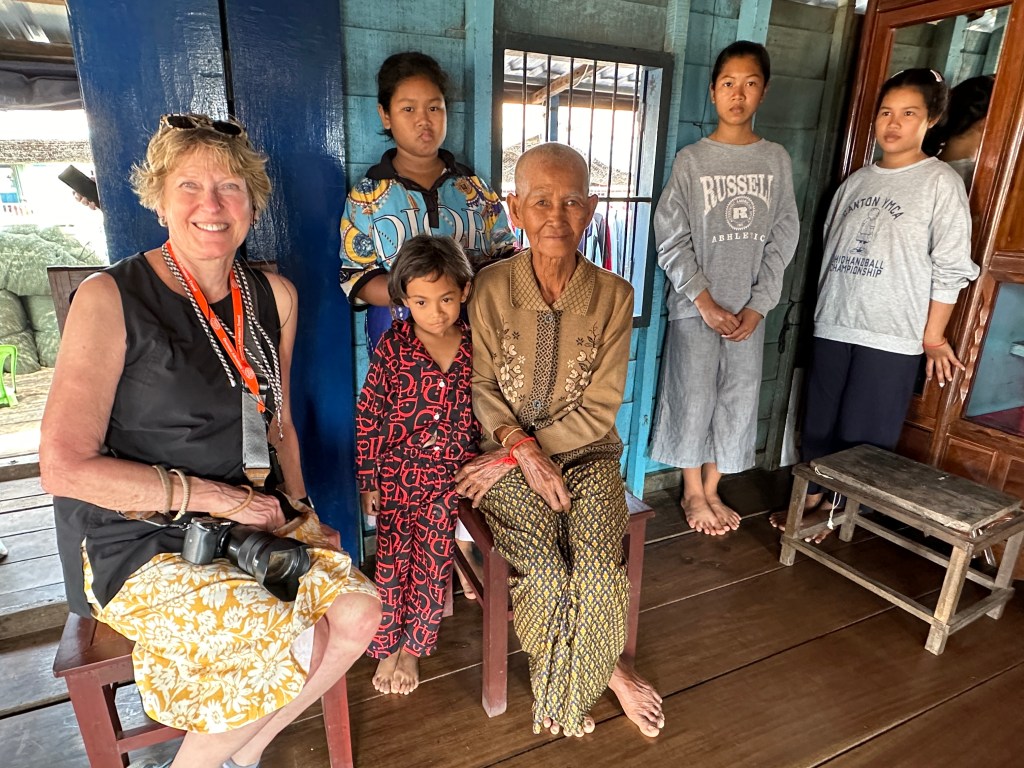
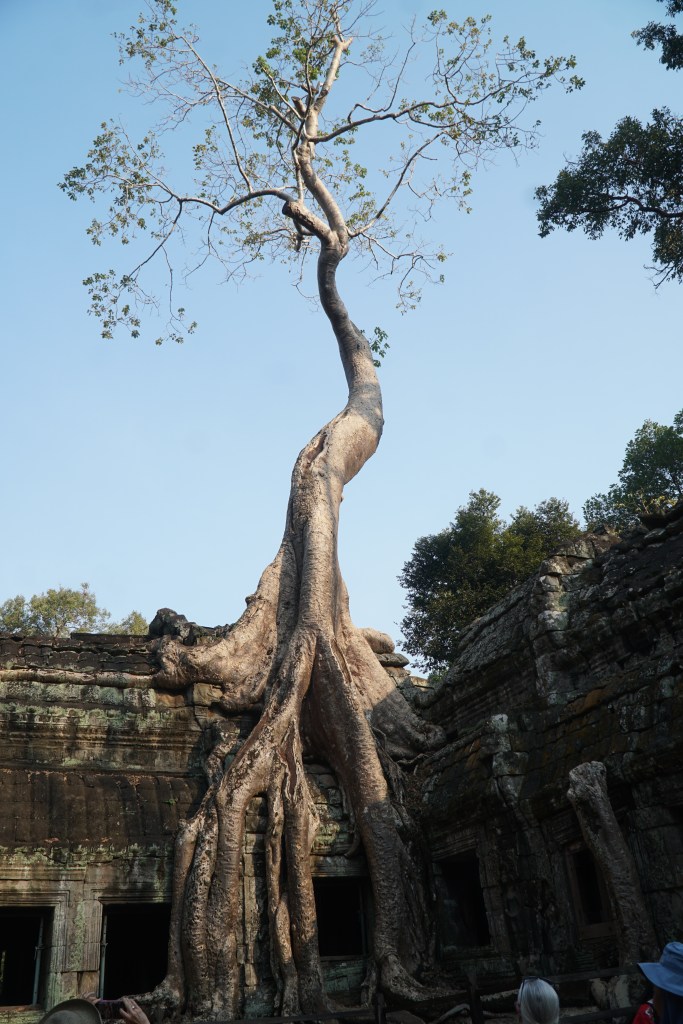
After a restaurant lunch, we went back to the hotel for a short while, then headed out to the Ta Prohm, a temple that mostly stands in decay. Amazing trees, stangler figs, grew out of sections of the temple. This temple, along with several we saw, was used in the Laura Croft Tomb Raider movies. I haven’t seen those movies. Evidently Angelina Jolie is quite popular here!
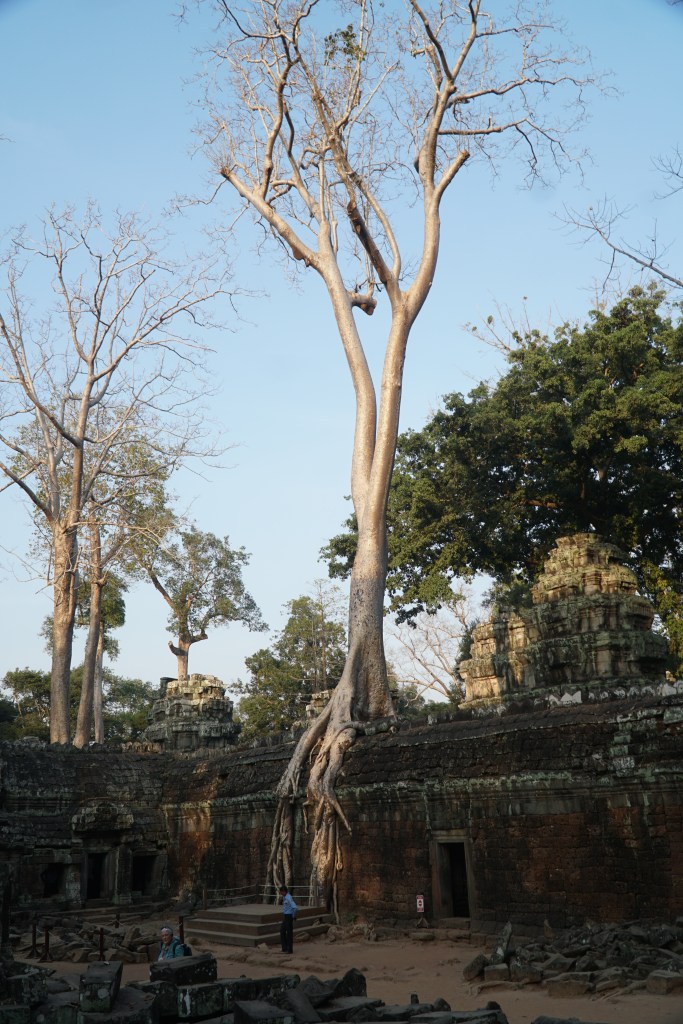


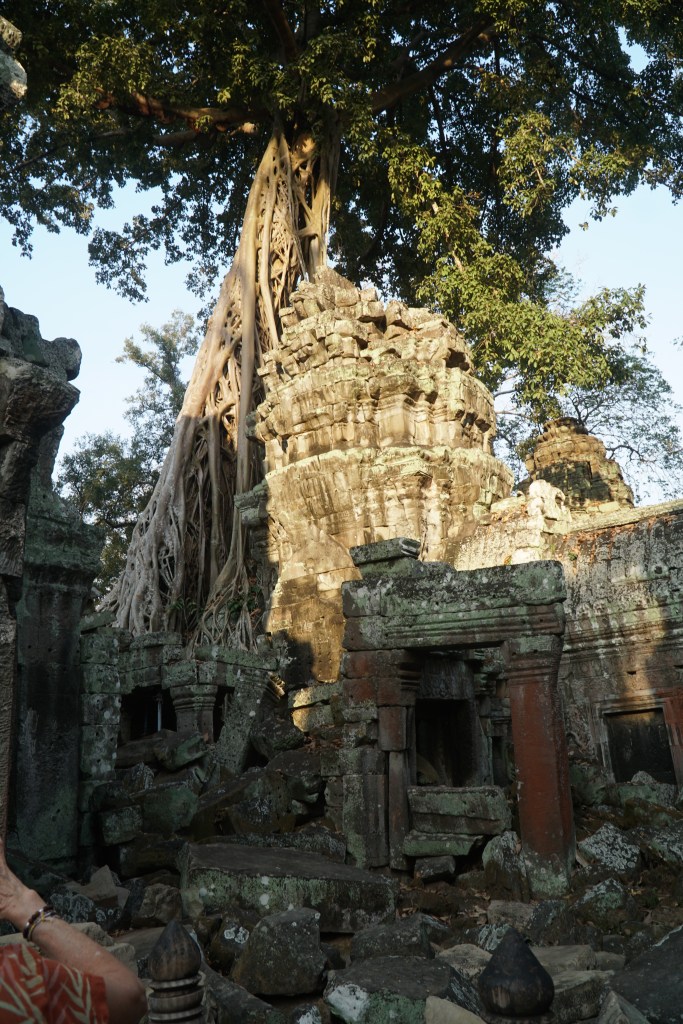
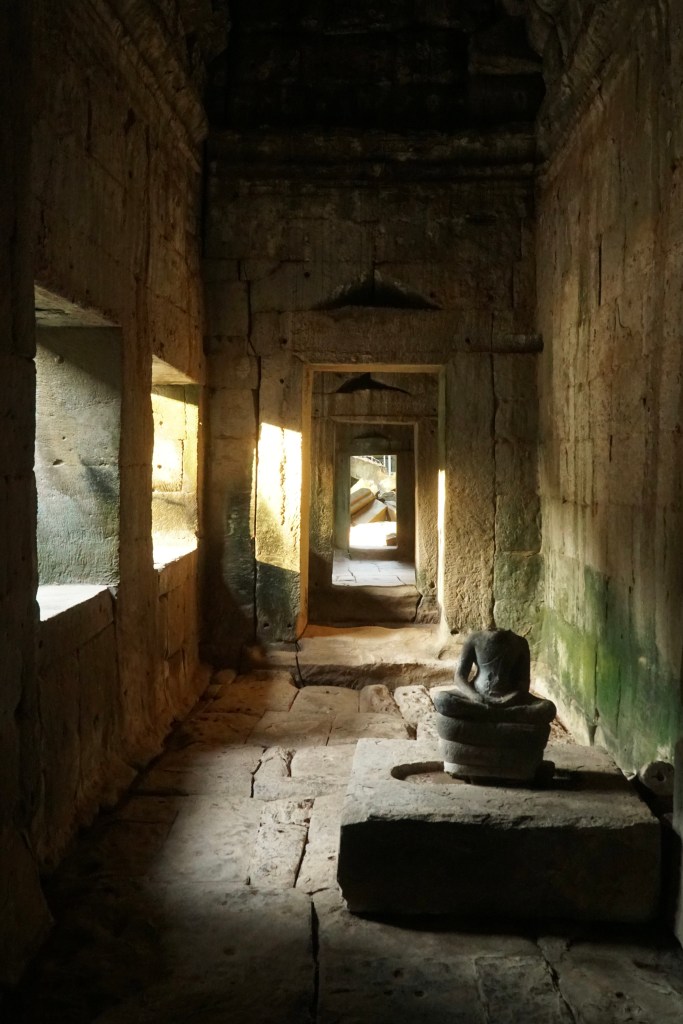


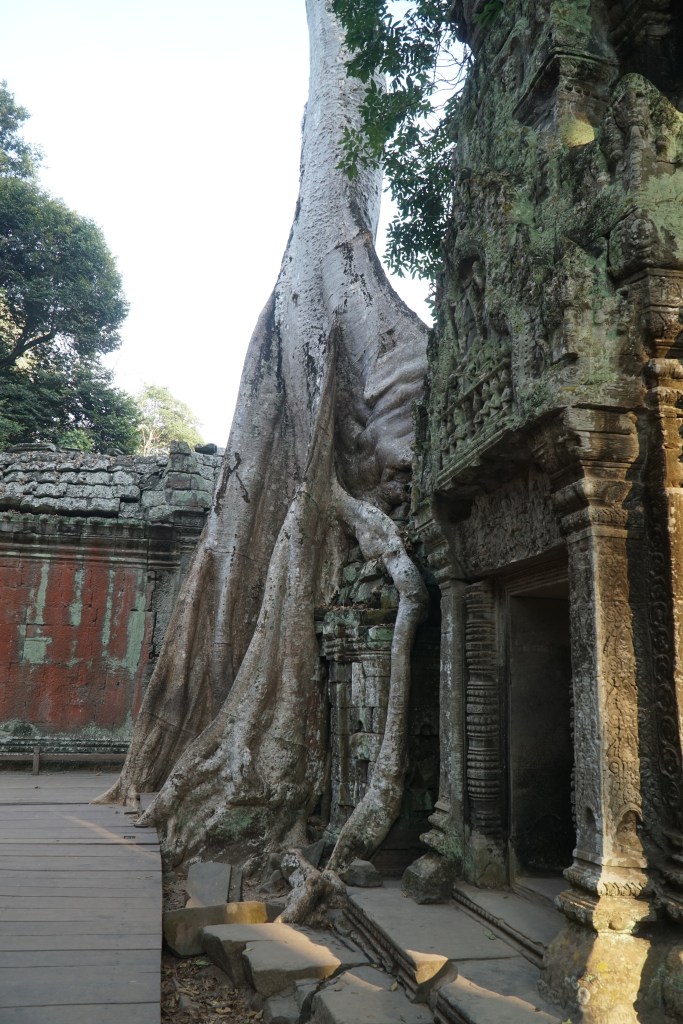

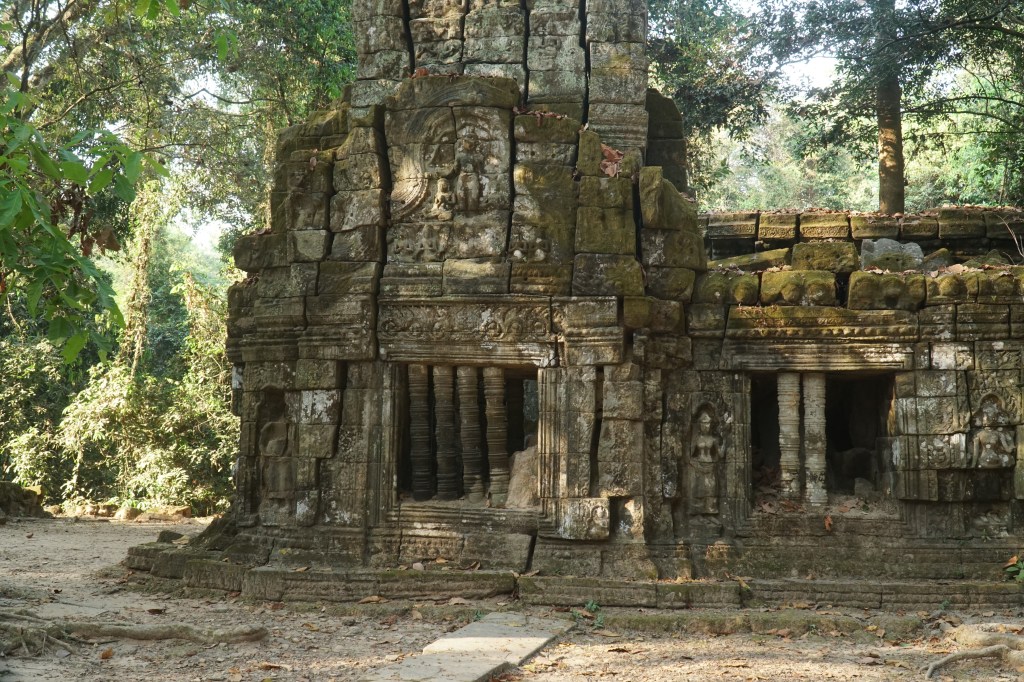


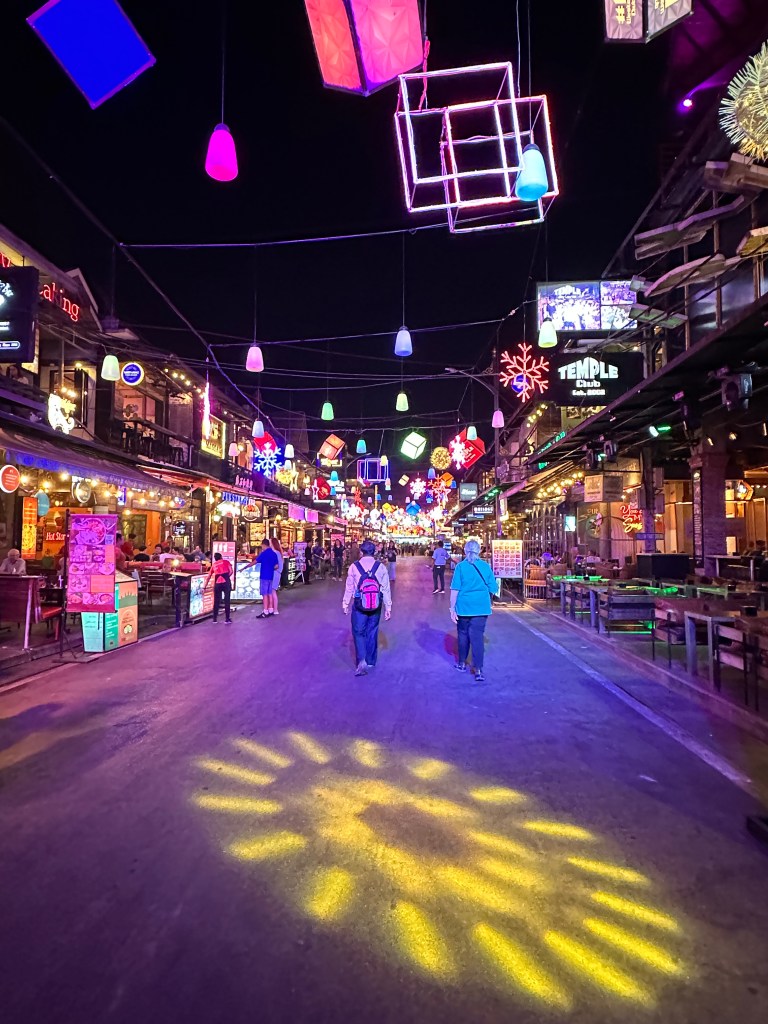
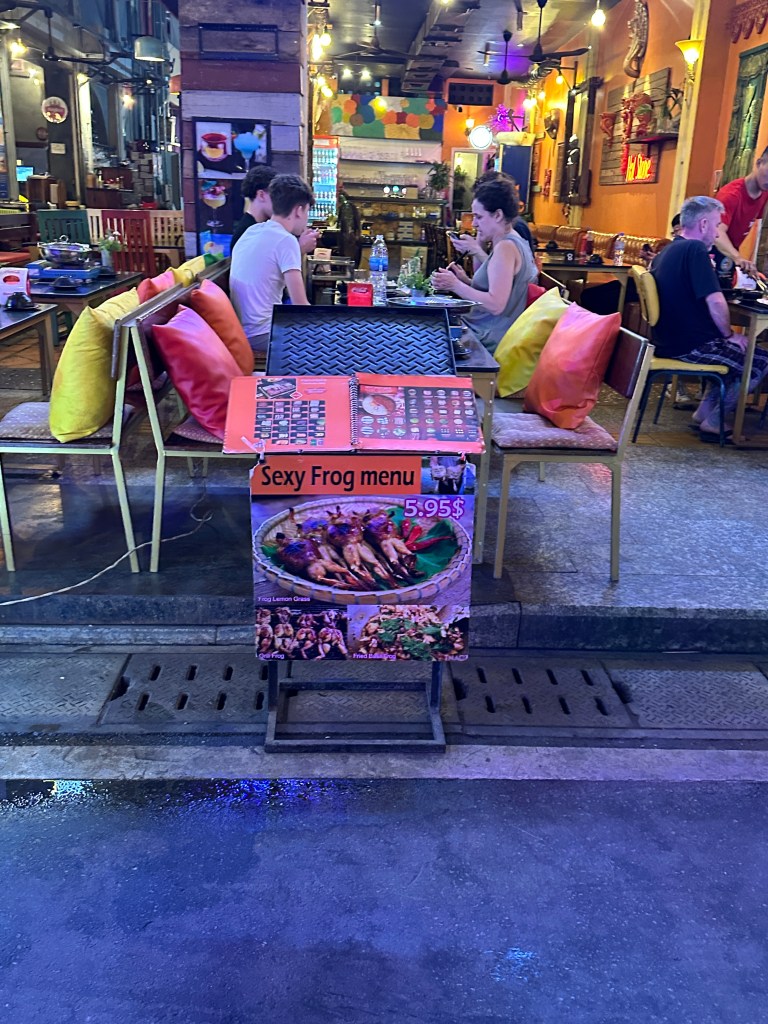
Most of us chose to head to Pub Street to take in the colorful lights, grab a cocktail and bite to eat at the Red Piano Bar, and wander through one of the night markets.



Monday, Jan. 22
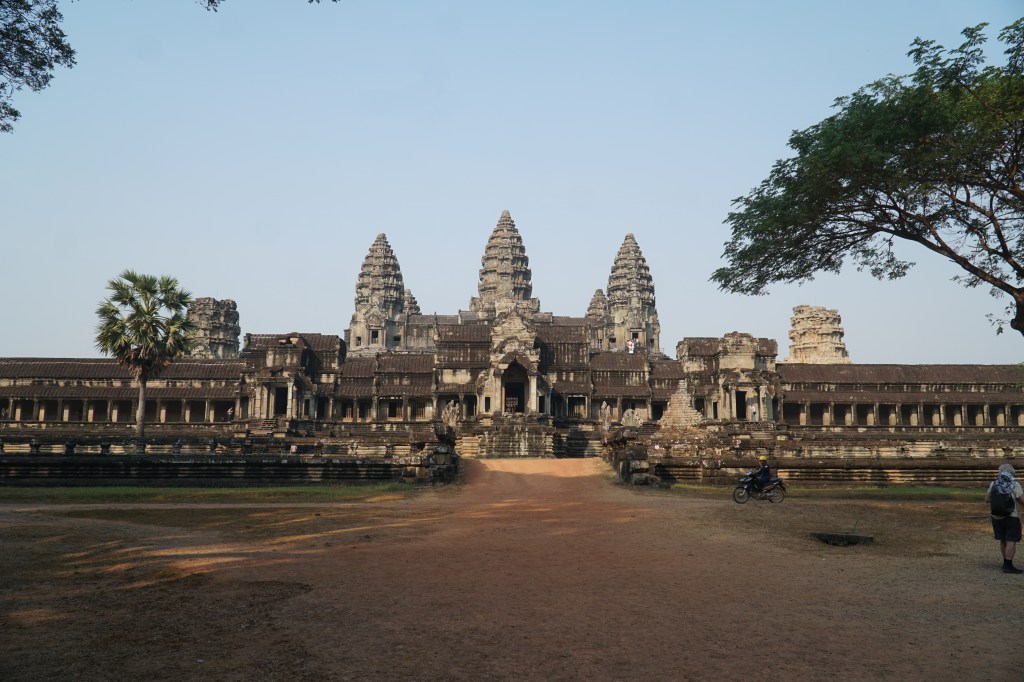
Today we visited the temples of Angkor Wat, one of the trip highlights, and the largest religious site in the world. It was built between 1113 and 1150. It is surrounded by a moat and forest land. There are many bas reliefs throughout the site. With 5 total towers, is was intended to represent the “center of all physical and spiritual universes and home to many gods in Hindu and Buddhist mythologies.” We climbed stairs to the third level for great views.


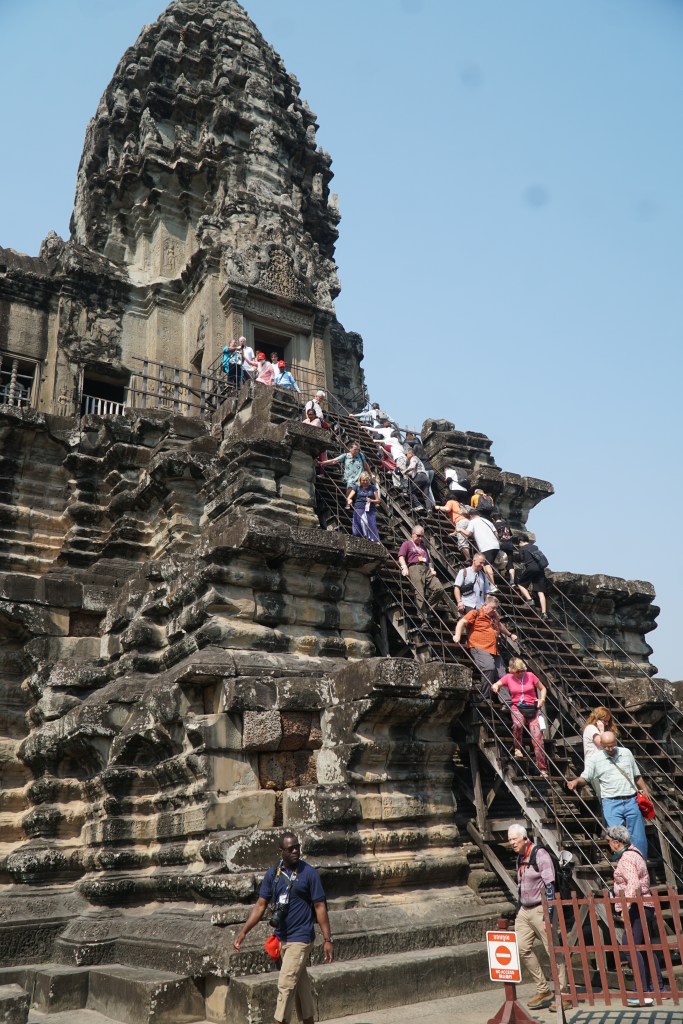
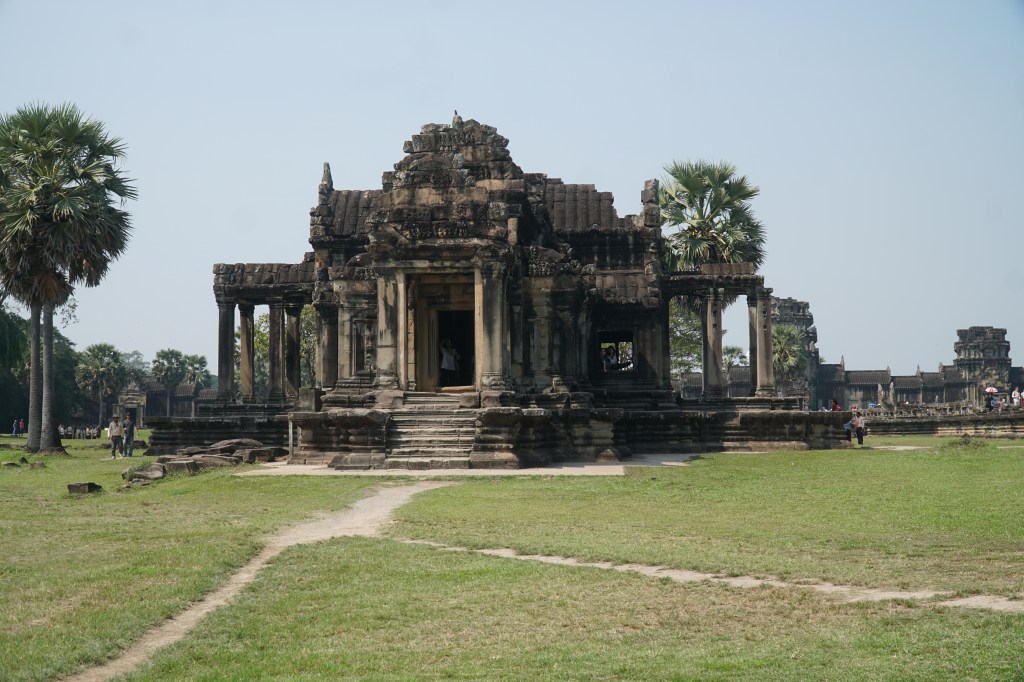


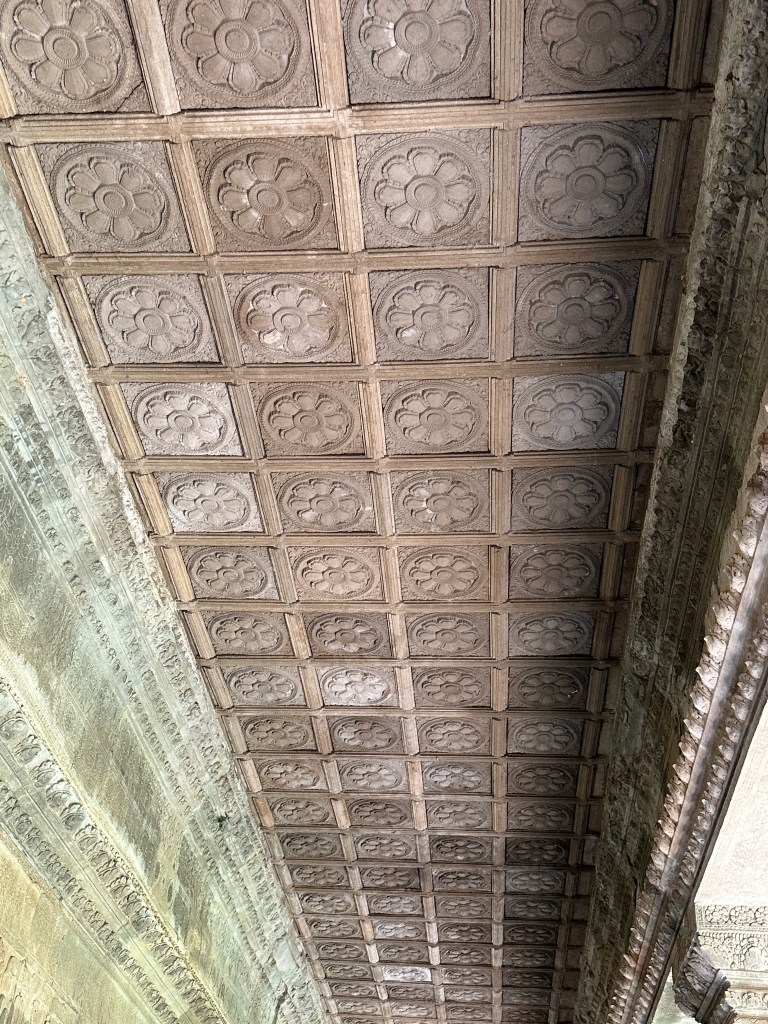

In the afternoon, we went to Banyon Temple, build in the 12th century. This was the most interesting temple to me because of the over 200 carved smiling faces on the stone towers. It is thought that the faces represent the spirit of Jayavaman VII, a favorite Cambodian king, or a combination on Buddha and Jayavaman. The bridge to the entrance was lined with remains of figures carrying logs. At the end of the bridge were the 7-headed nagas, which symbolize prosperity and the spirit of the land and water.
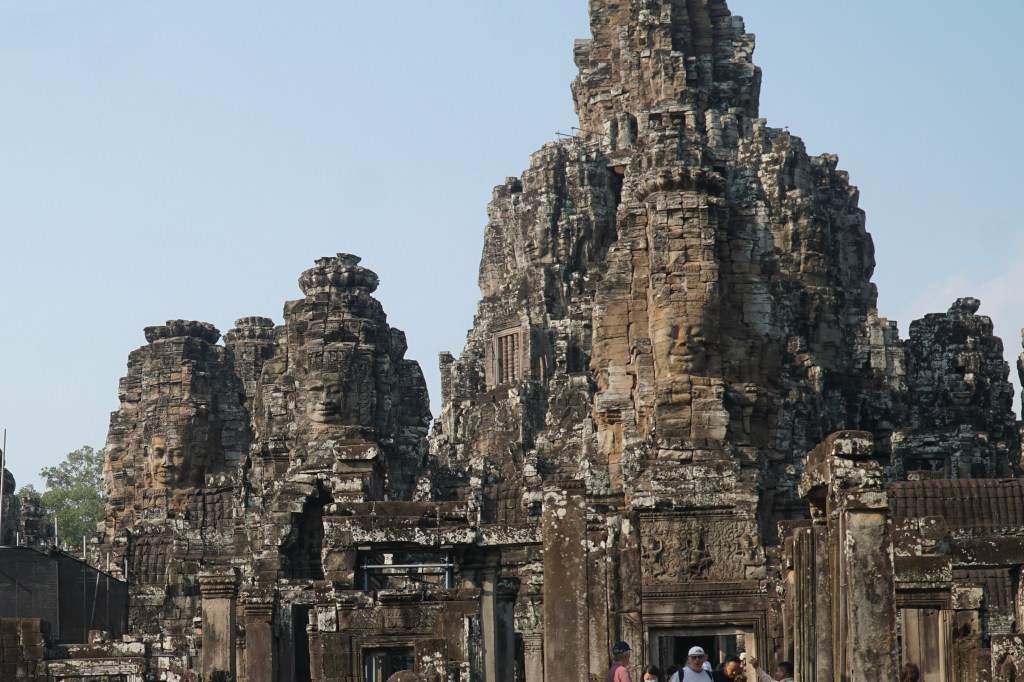
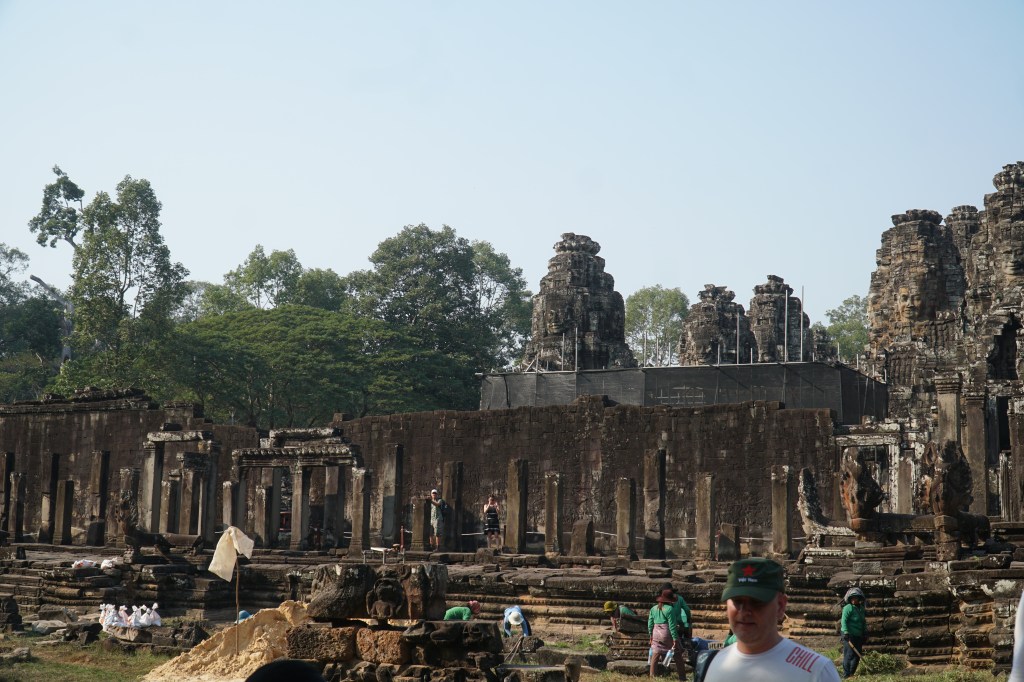


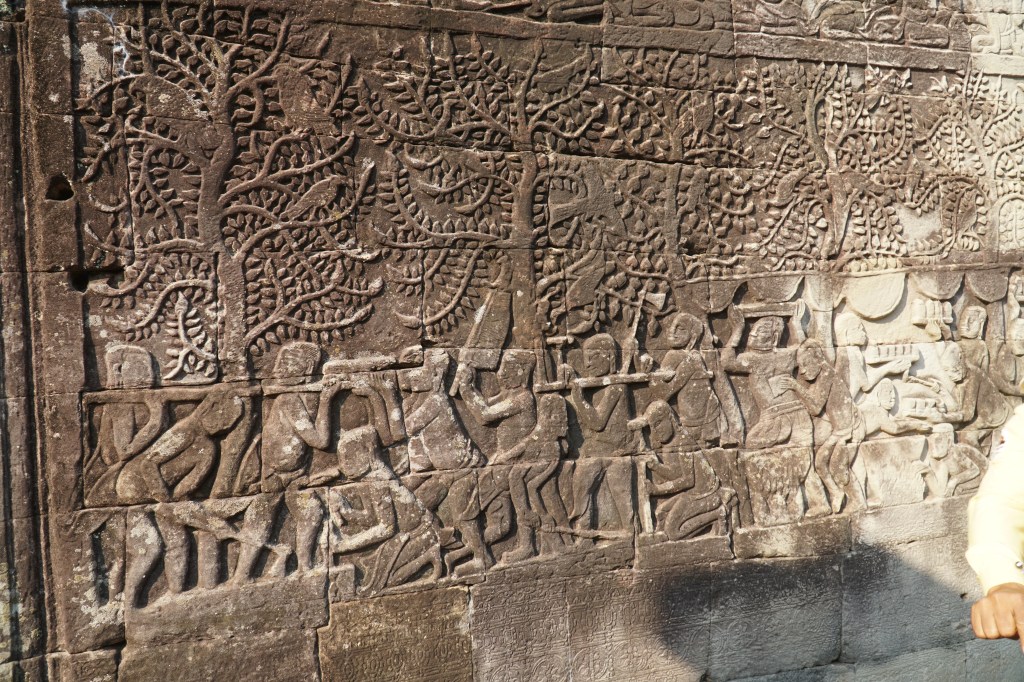


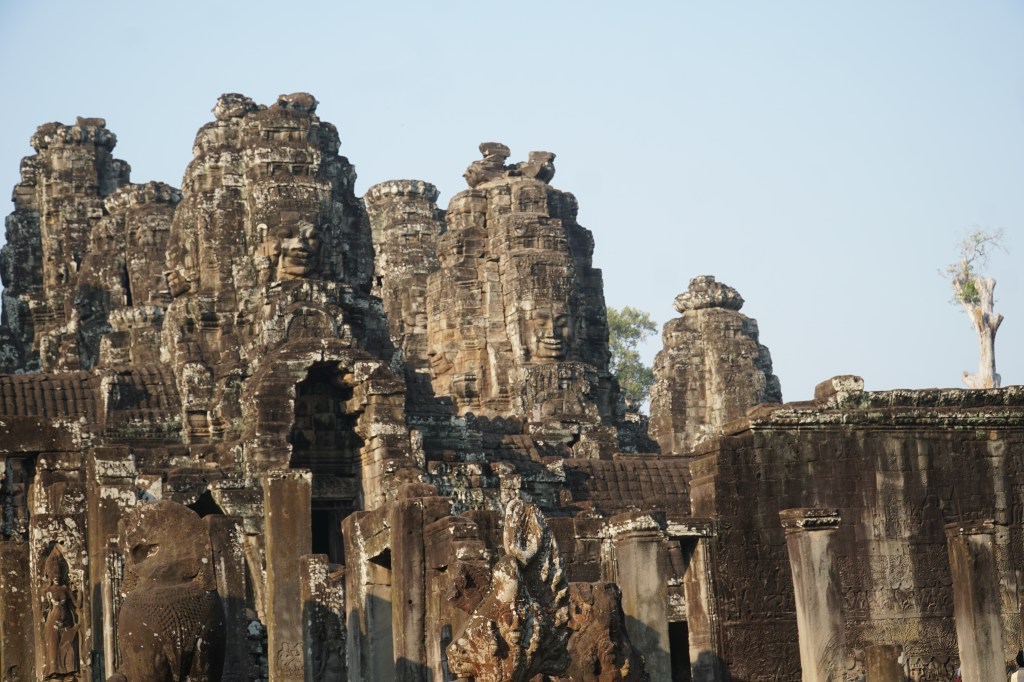


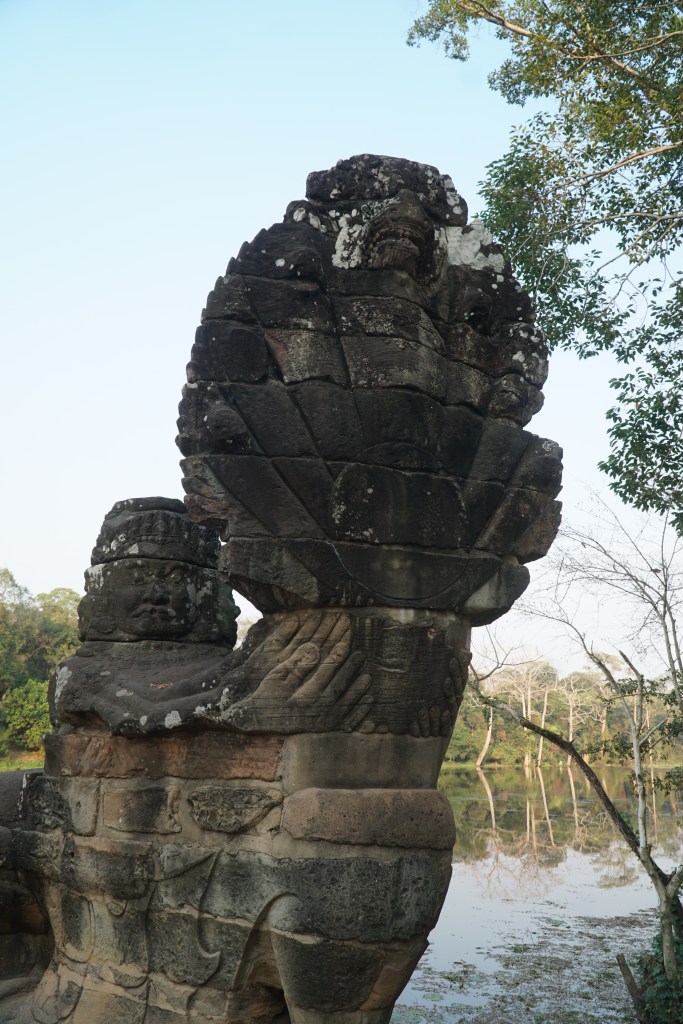
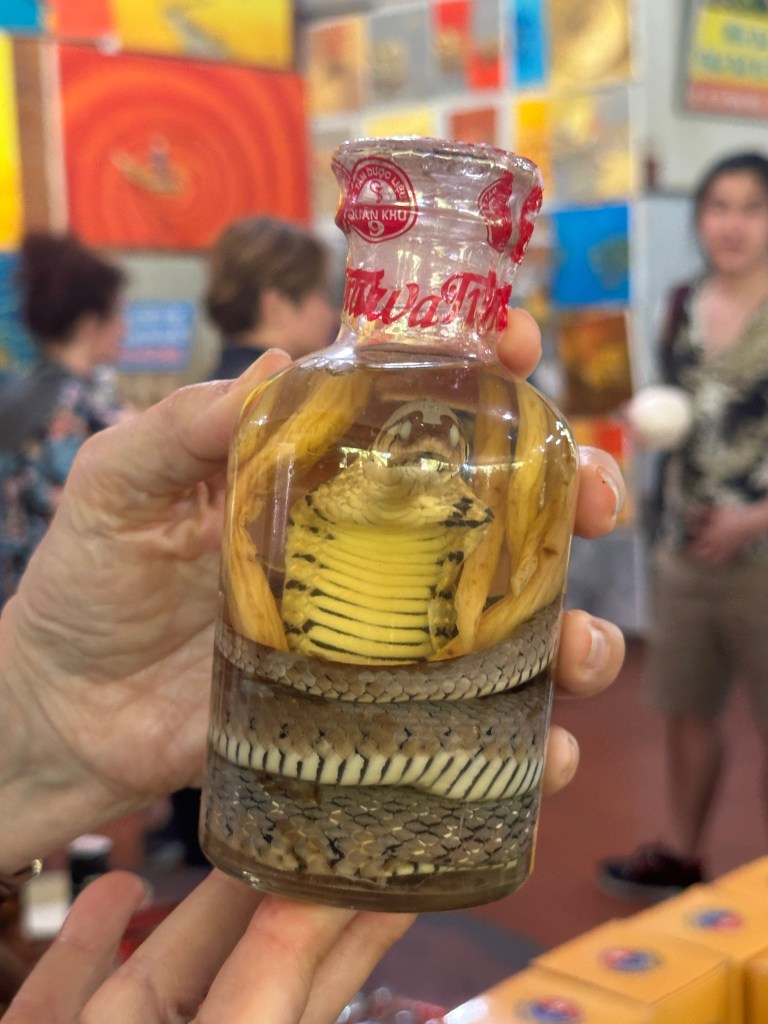
We had a toast, with some interesting snacks (including snake?) at an overlook where we could see Angkor Wat at Sunset.


Tuesday, Jan 23
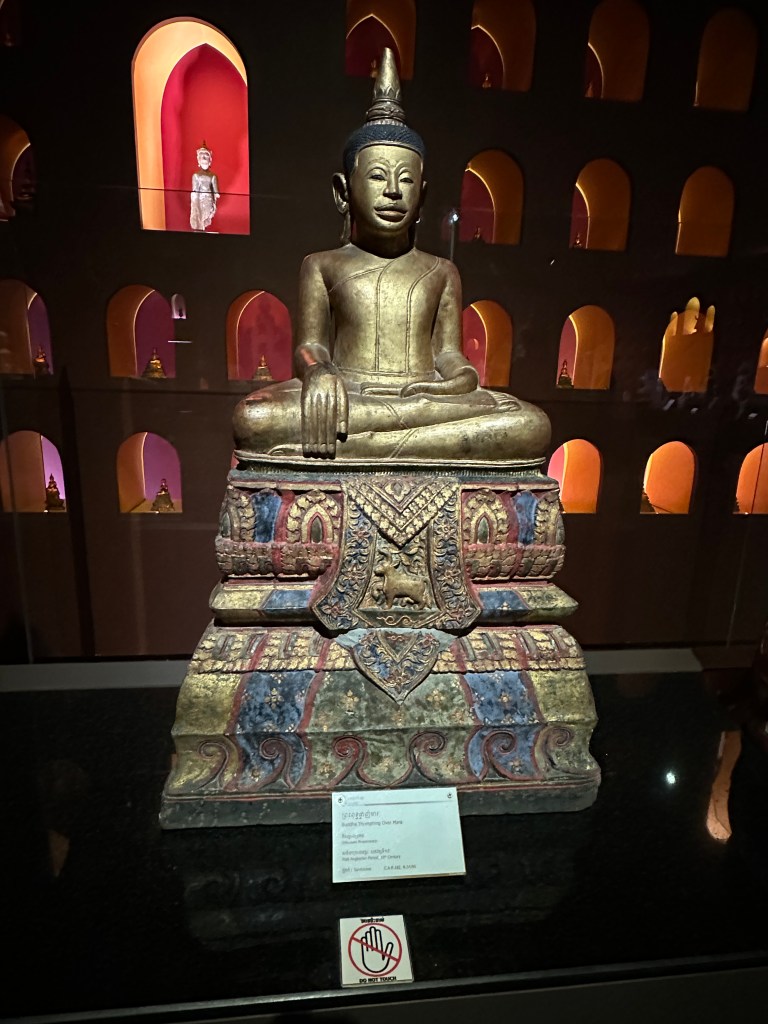
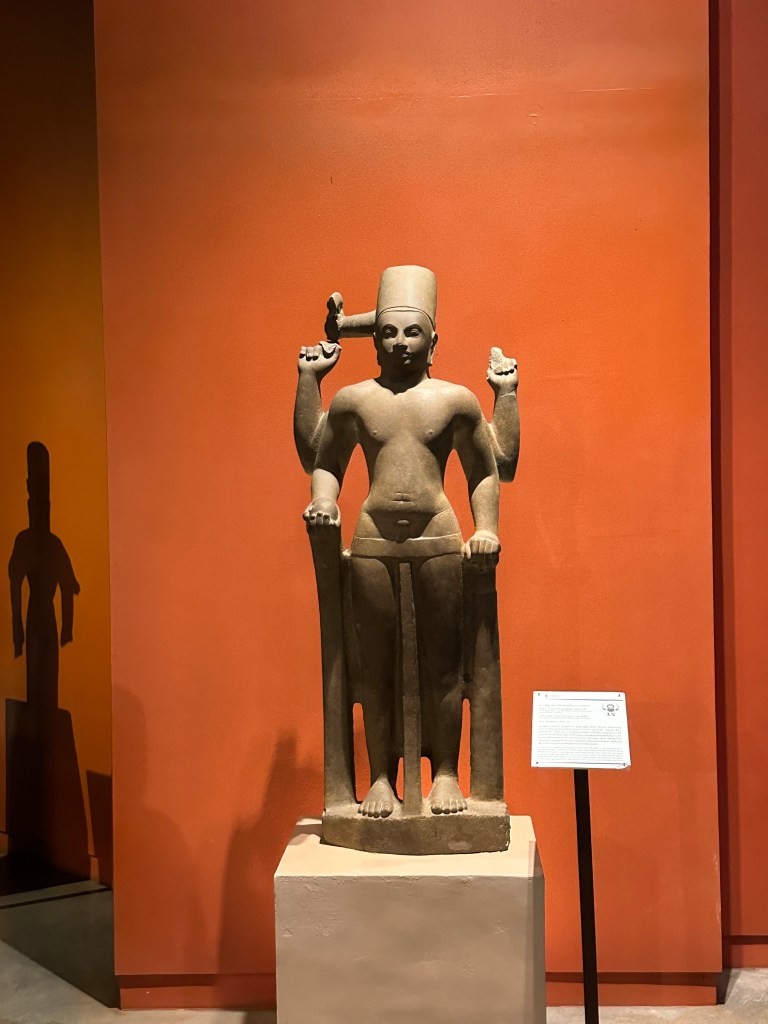
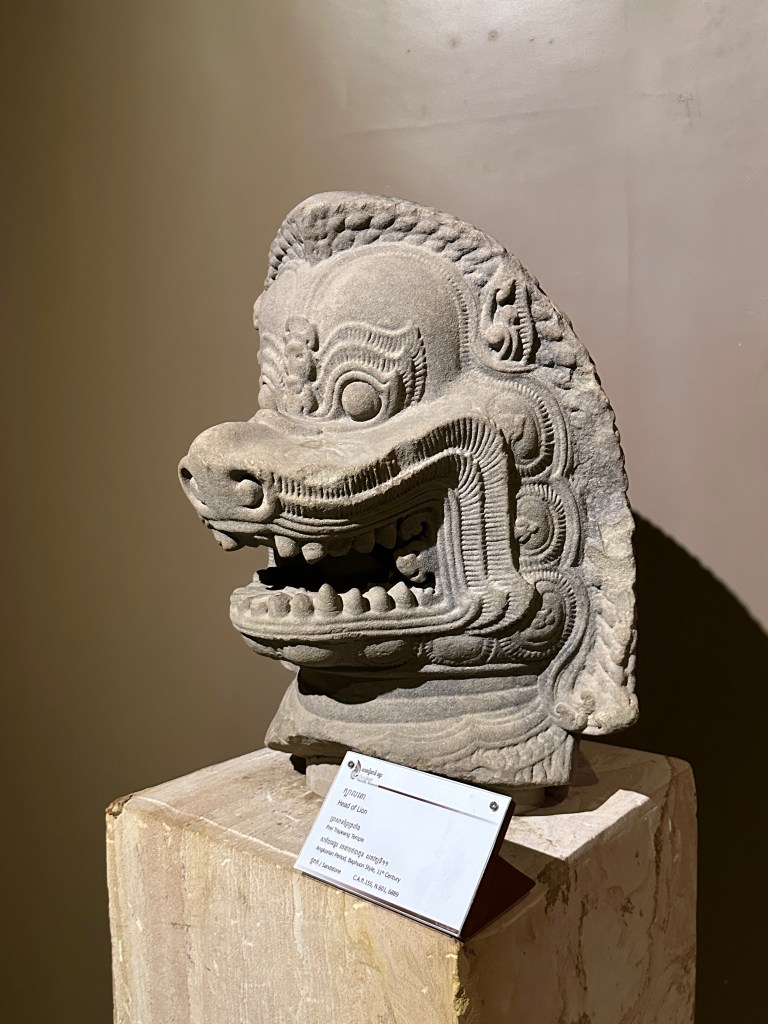
We had some free time in the morning, then visited the Angkor National Museum to see more relics from Angkor Wat and more historical insights. We picked up some dinner snacks to eat on the evening plane to Saigon, Vietnam, where we checked into the Nhat Ha L’Opera Hotel. We met our fabulous local guide, Shirley.



Wednesday, Jan. 24
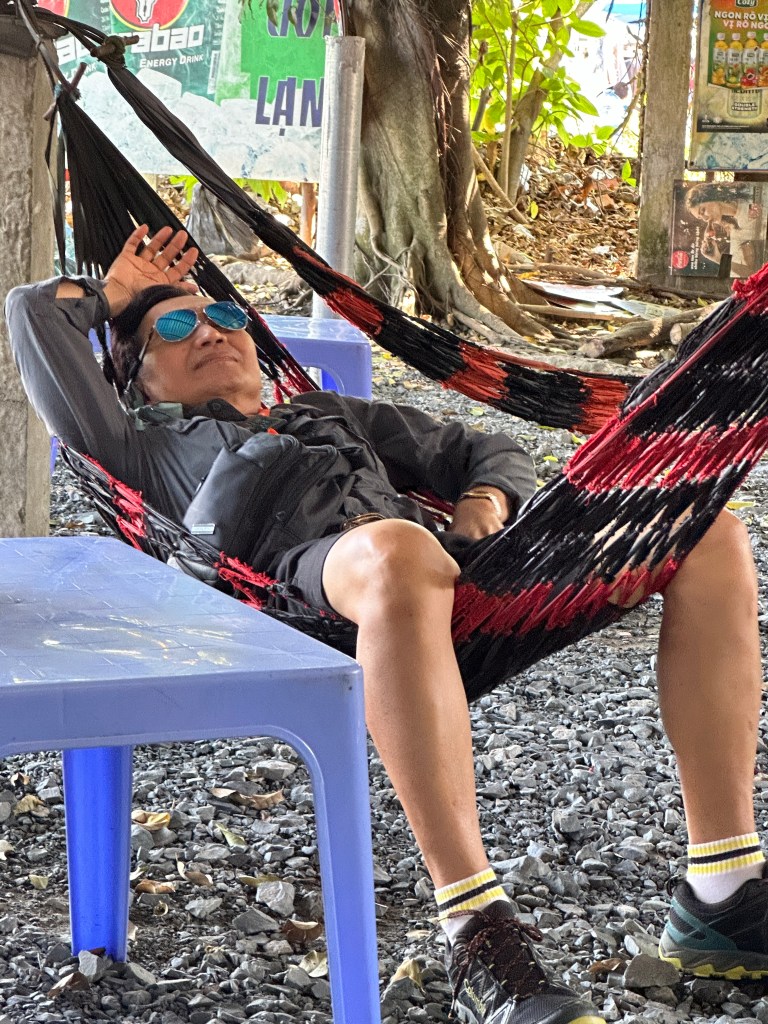
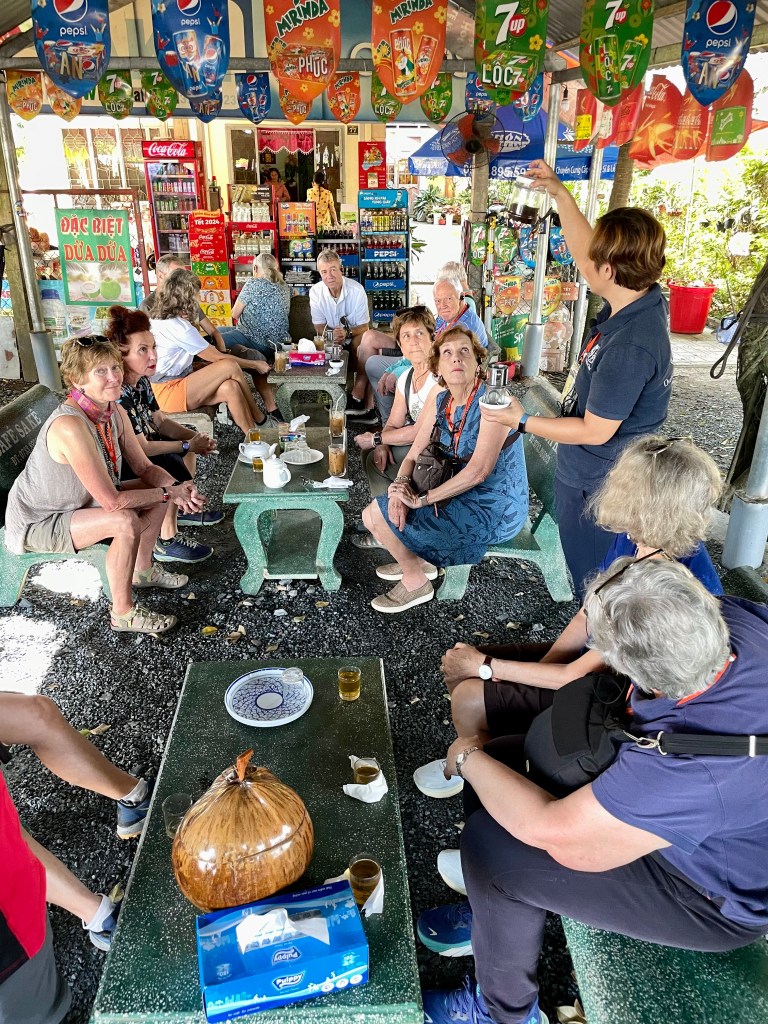
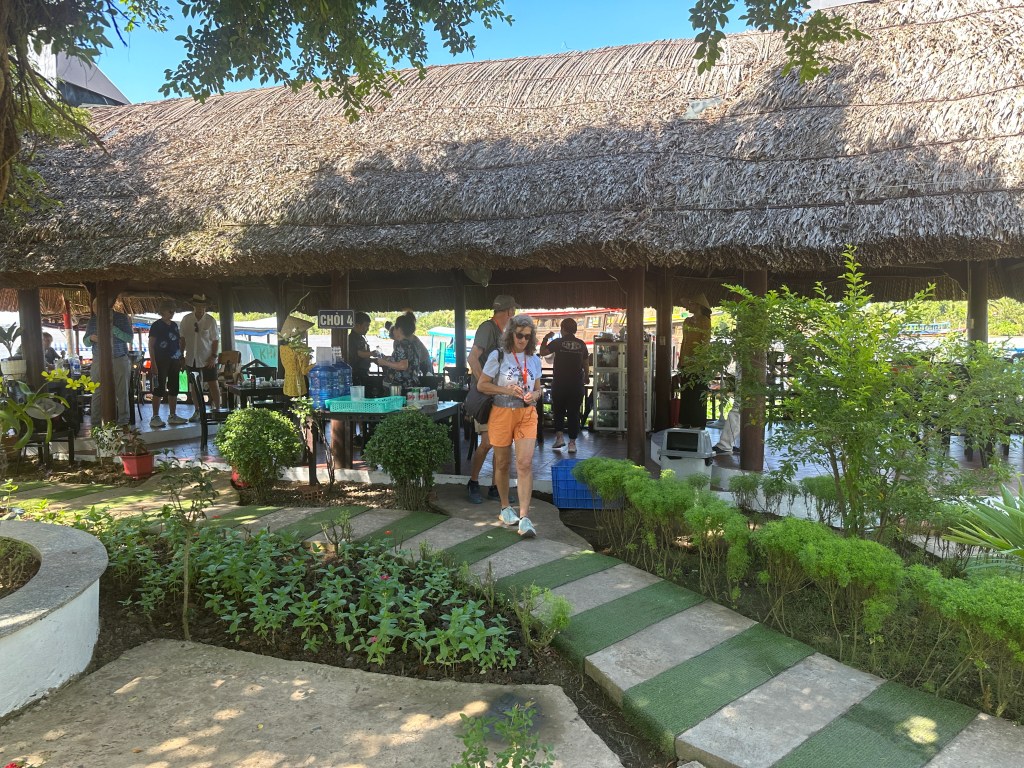
Today was the opportunity to explore the Mekong River and Delta. On the way to our boat, we stopped for a break at a local coffee and tea shop with hammocks available for long-haul drivers to nap.

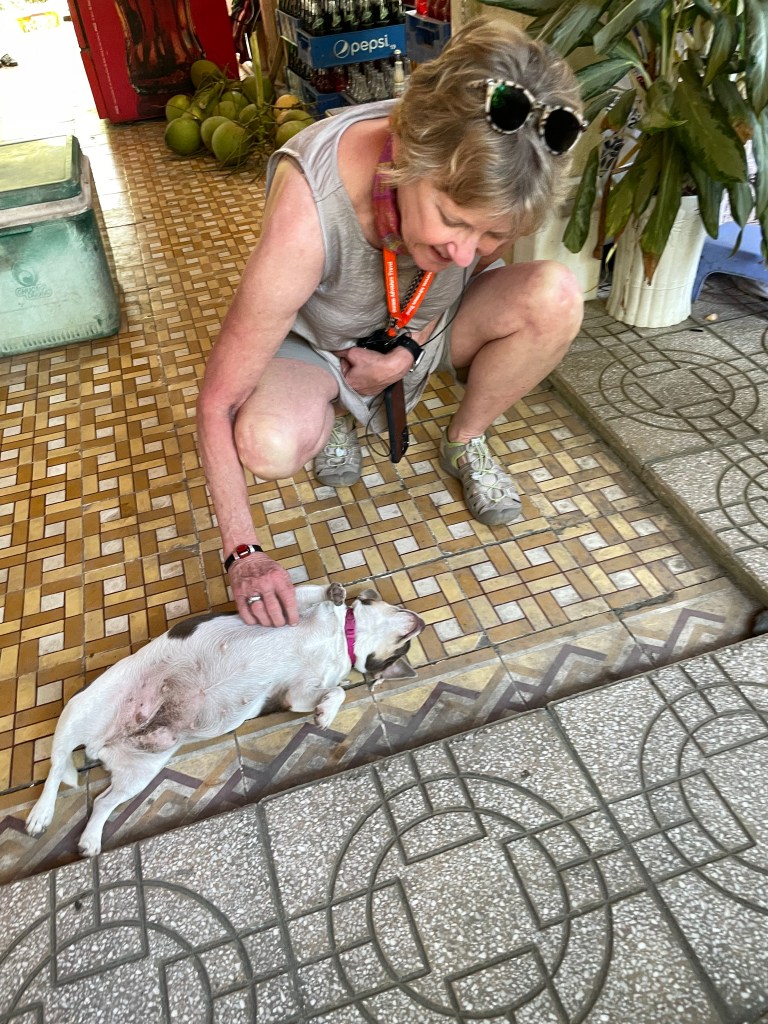
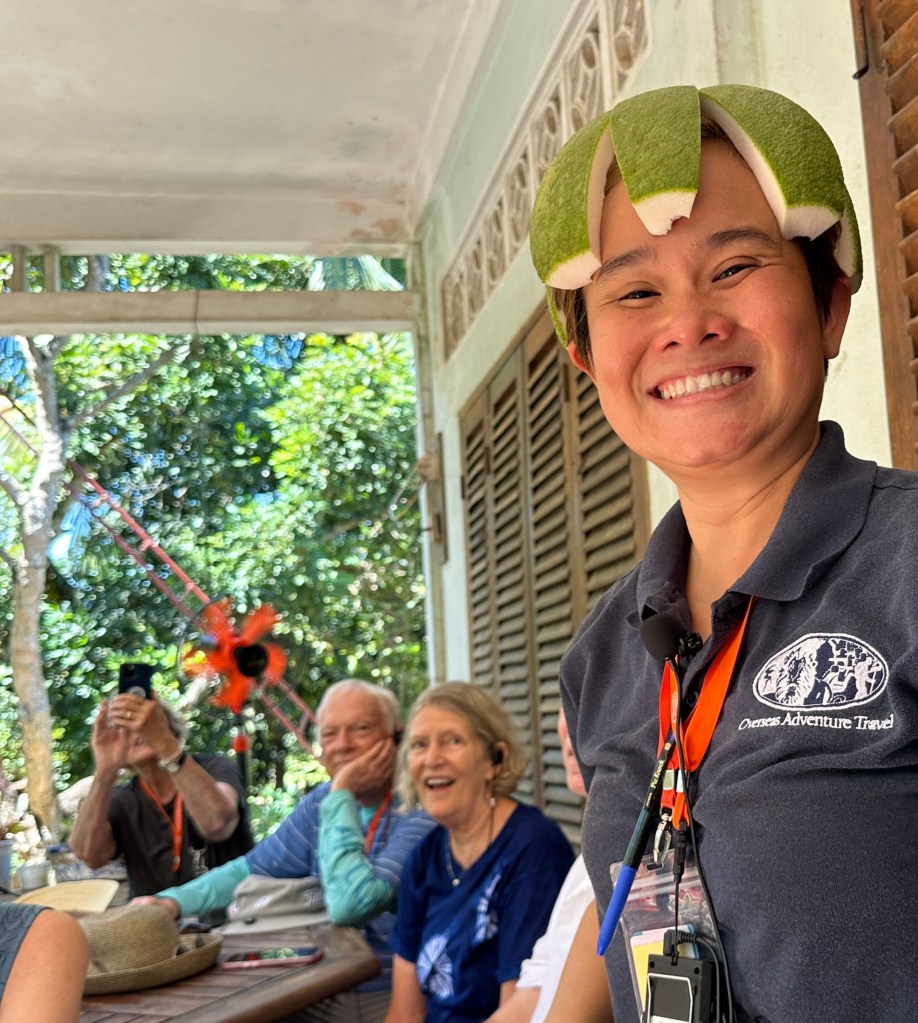
We headed to the dock and found our boat, an old wooden rice barge. We stopped in Vam Xep, to visit a family that farms mostly fruit, including jackfruit and pomelos.



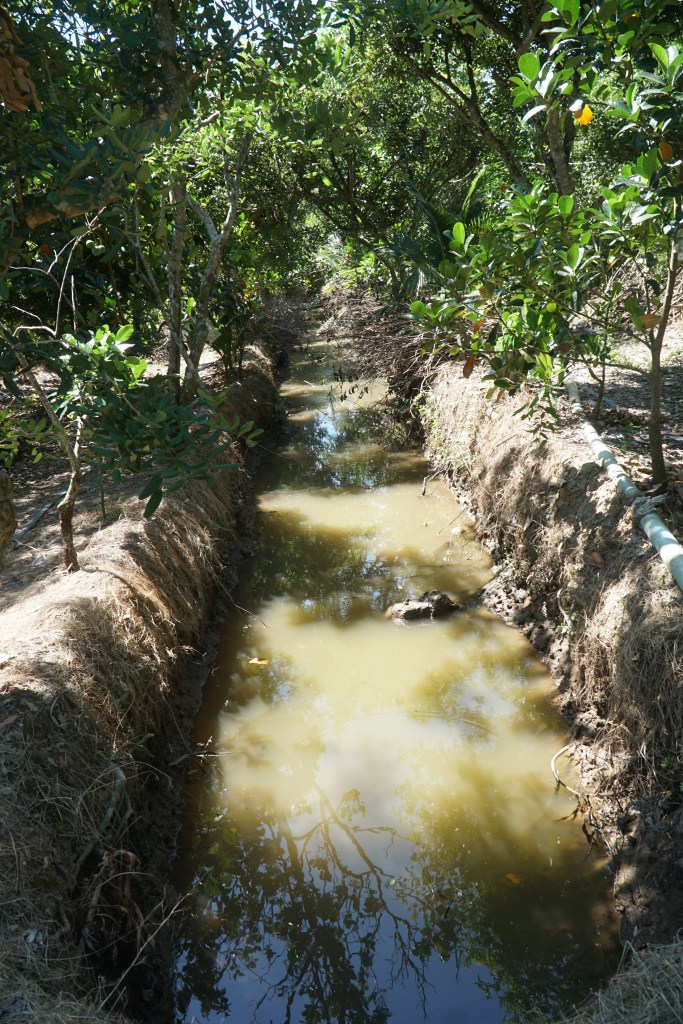
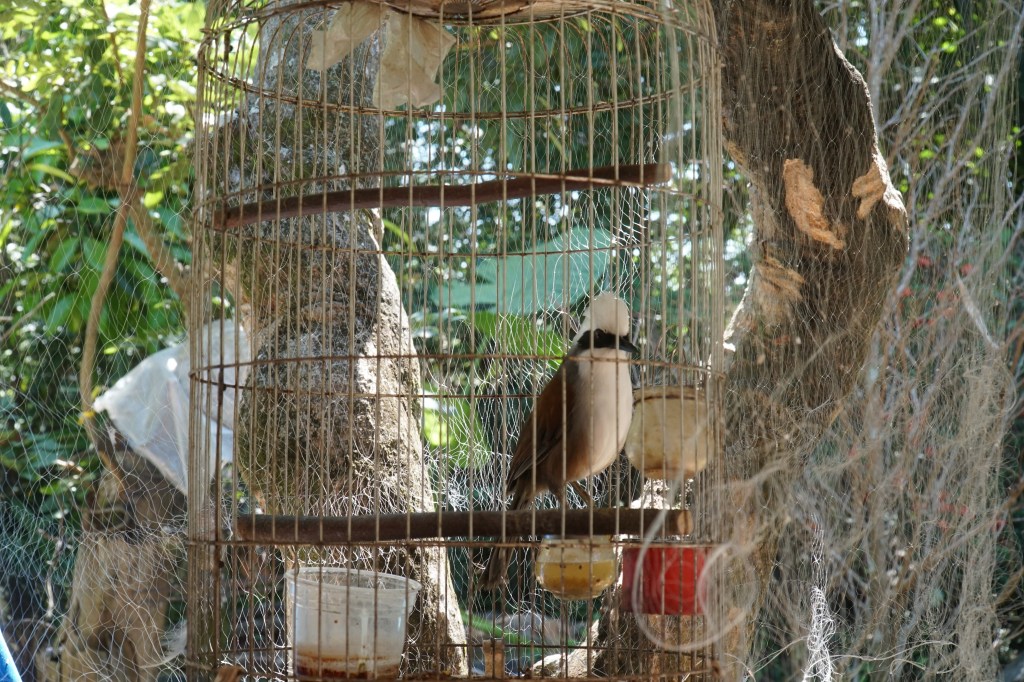


Later we switched to sampans, narrow canoe-like boats with a rower in the rear. We were able to pass through some lush fields and narrow straight of tropical plants.
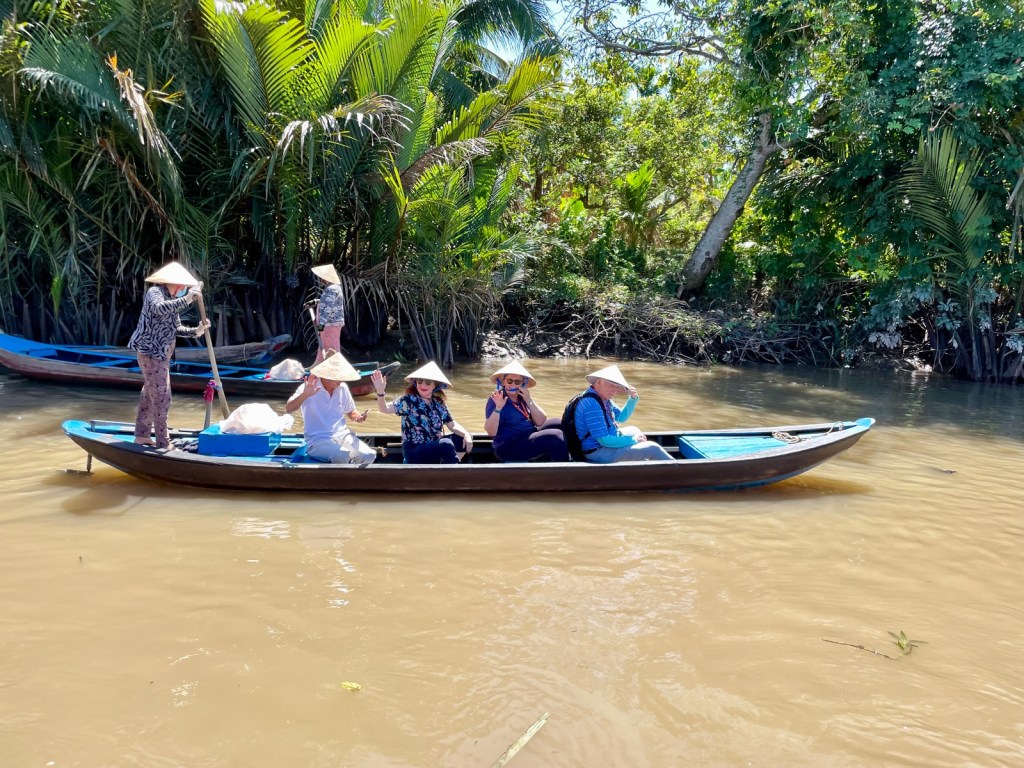
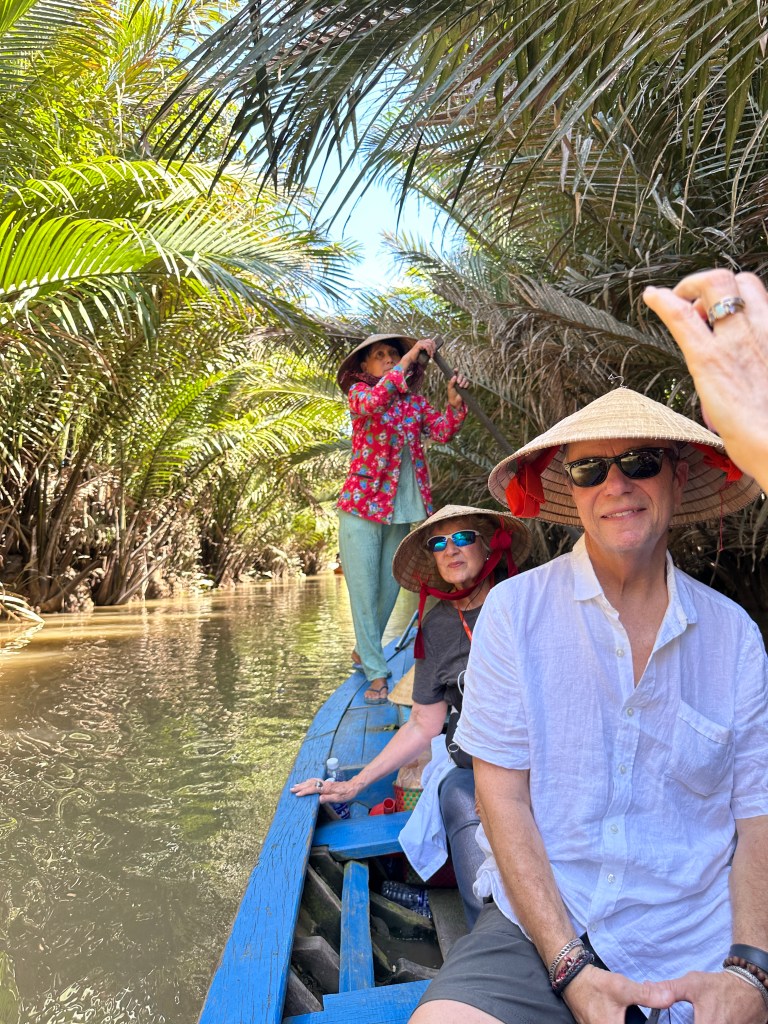


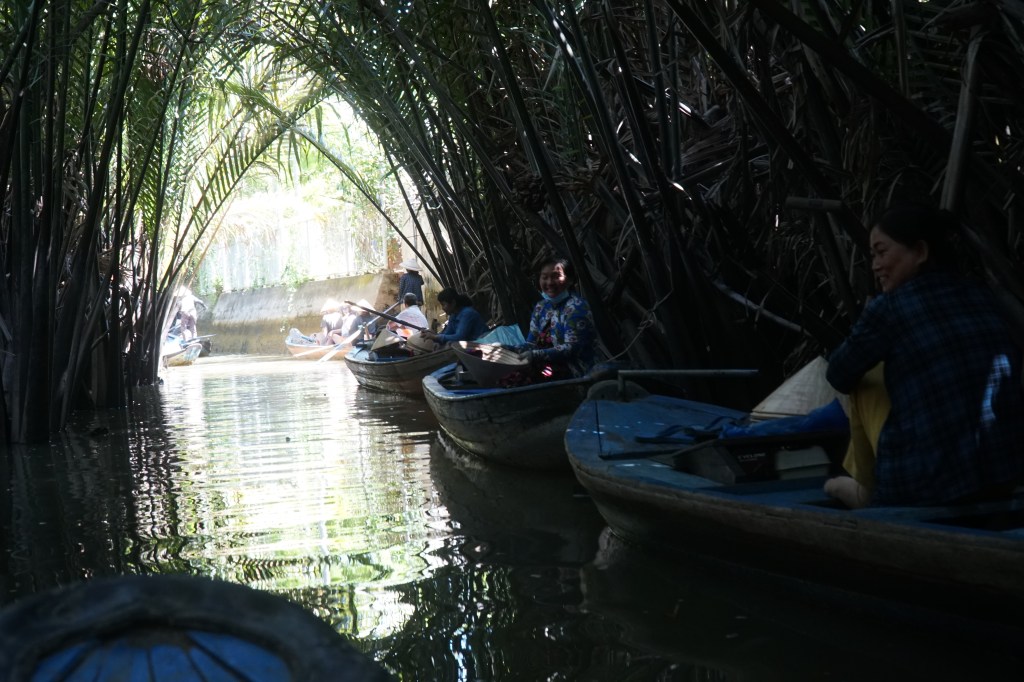

Here’s a time-lapse video from my vantage point.
https://youtube.com/shorts/iyUrkVv_9EY?feature=share
We stopped for lunch at a restaurant where we had tables at the waterfront and had a wonderful meal with the whole fish on the table. The flakey fish meat was placed along with vegetables in a delicate soft wrapper. Shrimp and fixings topped crispy rice shells. The whole meal was fabulous.
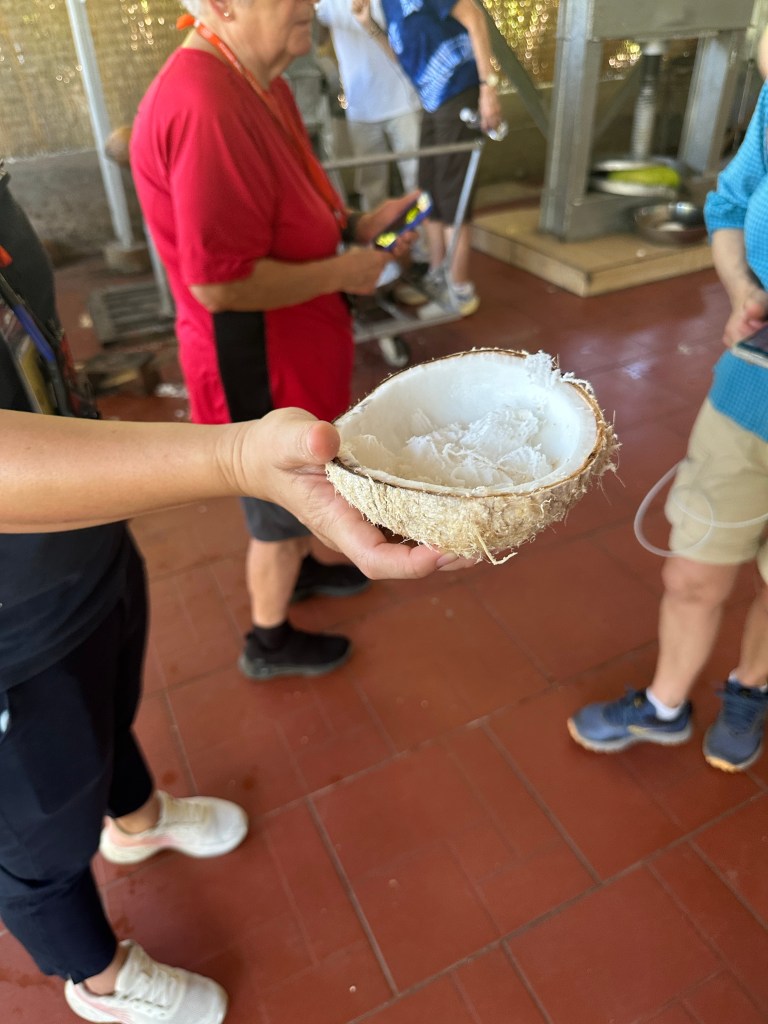
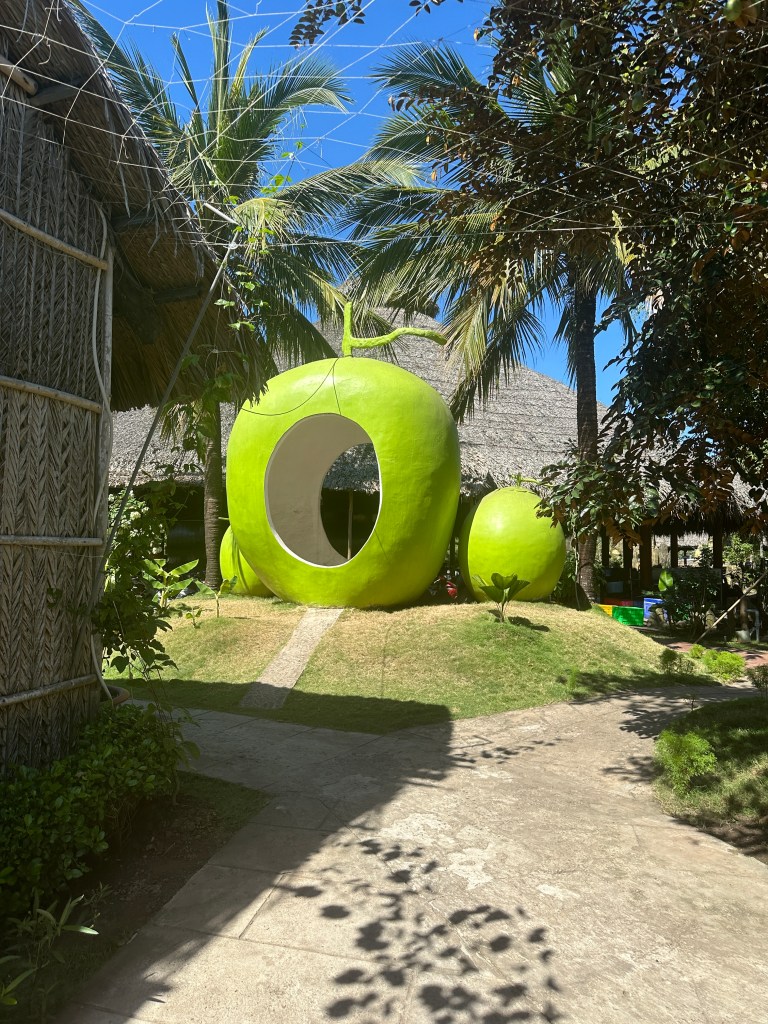
We then walked to a coconut candy maker, and later made our way via small vehicles, Lambros, to get back to our boat.


Thursday, Jan. 25
We took a city tour of Saigon. Much of the architecture was inspired by the French colonials. Of note were a brick “copy” of Notre Dame. We walked through an alley lined with book stores and filled with people, including a group gathered because of a planned collective book reading. We then walked to the Post Office, which looked very much like a European train station from the front. So many people were preparing for the new year celebrations in February by staging photo shoots wearing dressy attire. They really know how to pose for photos!! We visited Independence Palace, the former Presidential palace, offices of the country leaders and site of international collaborations. Underneath was a bunker for war communications. There was a secret door from the president’s office that led to the bunker.

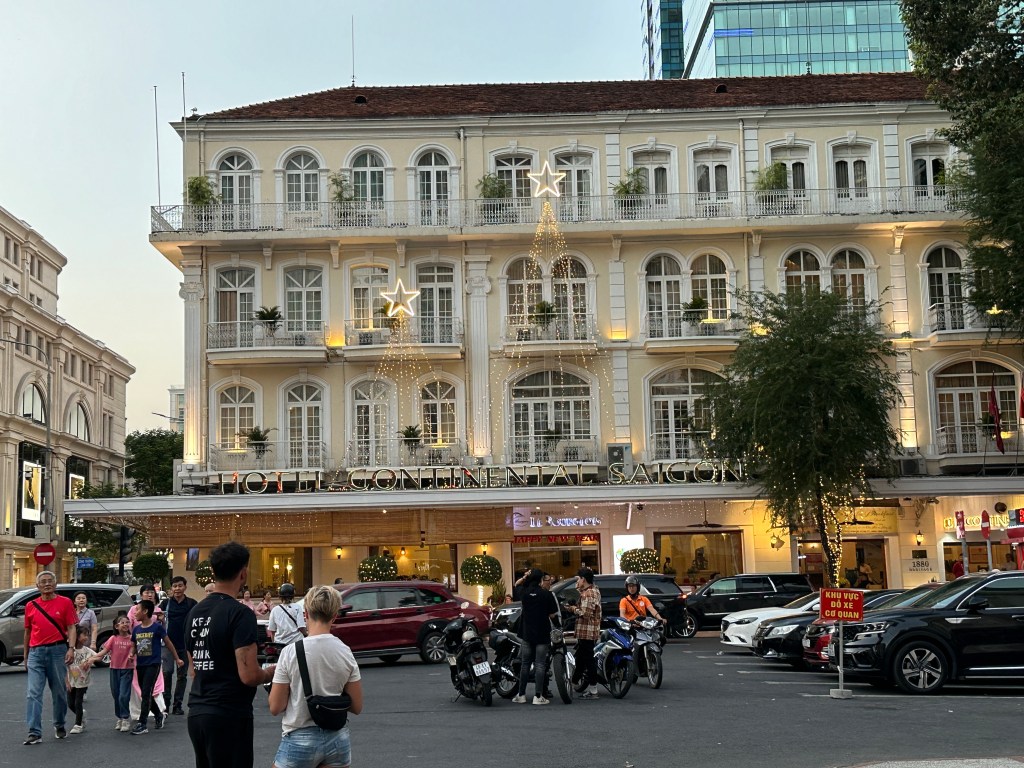
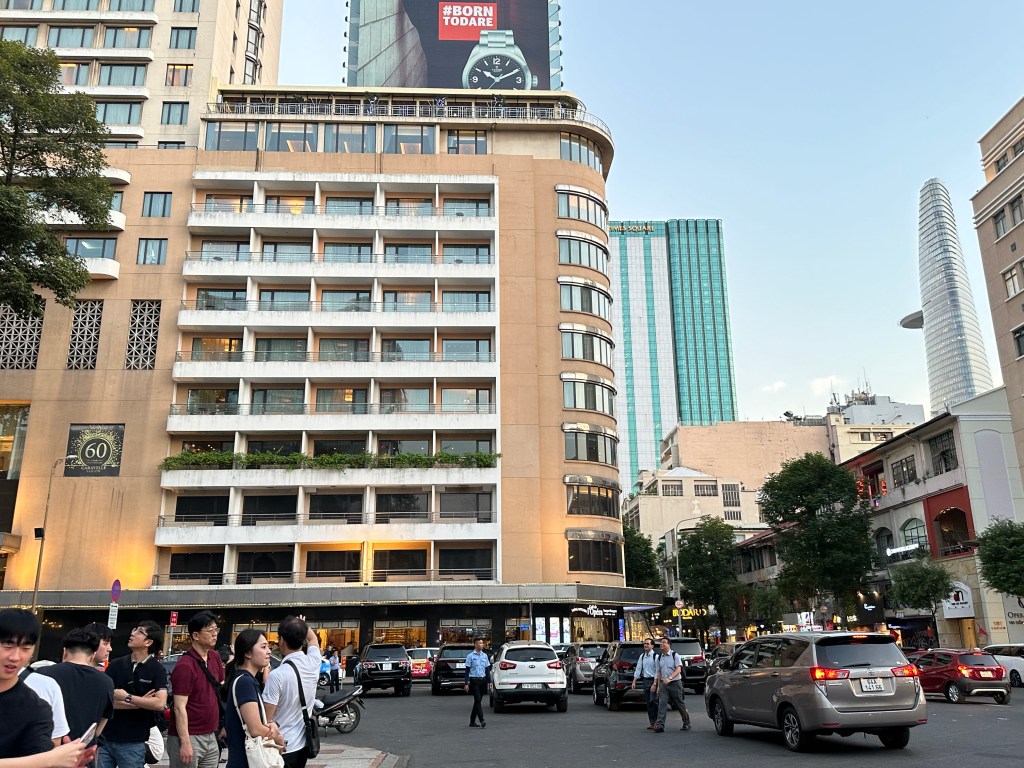

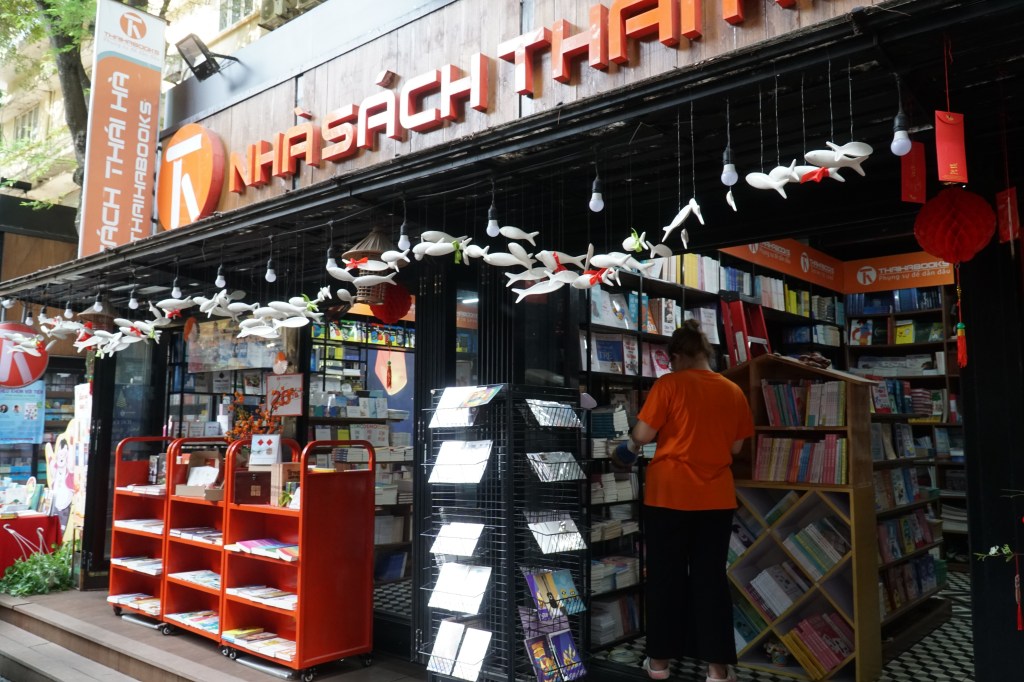


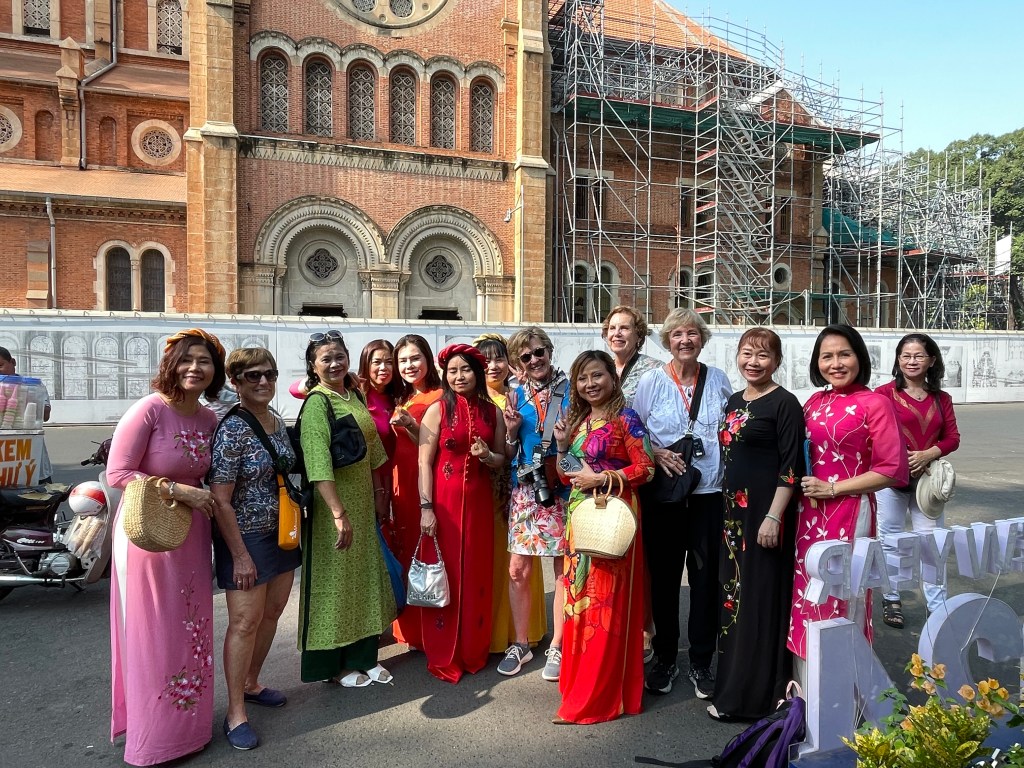


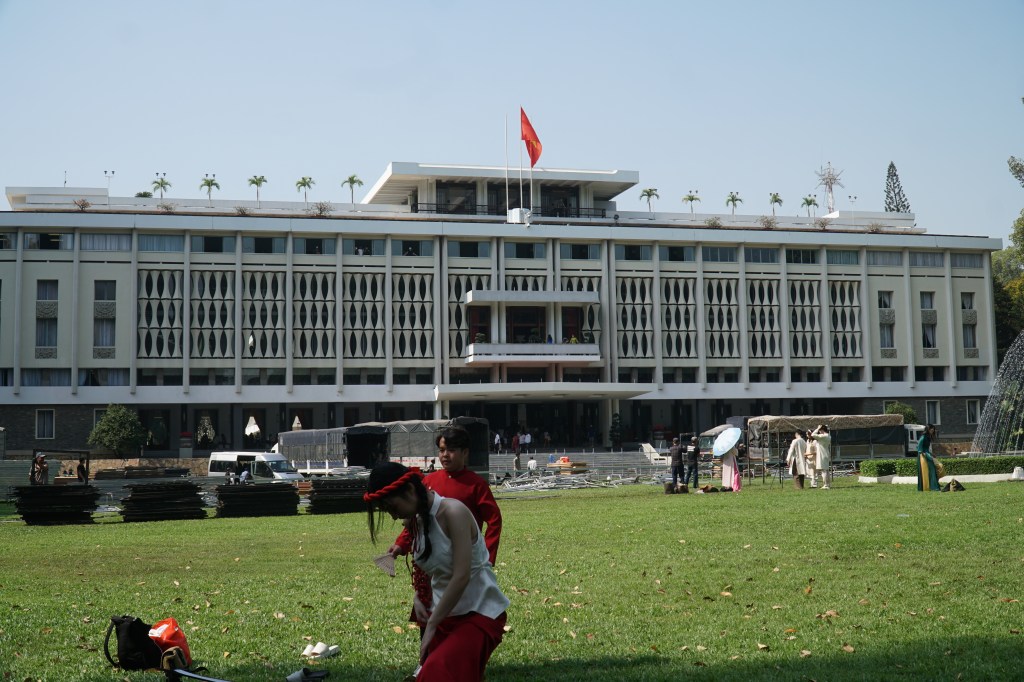
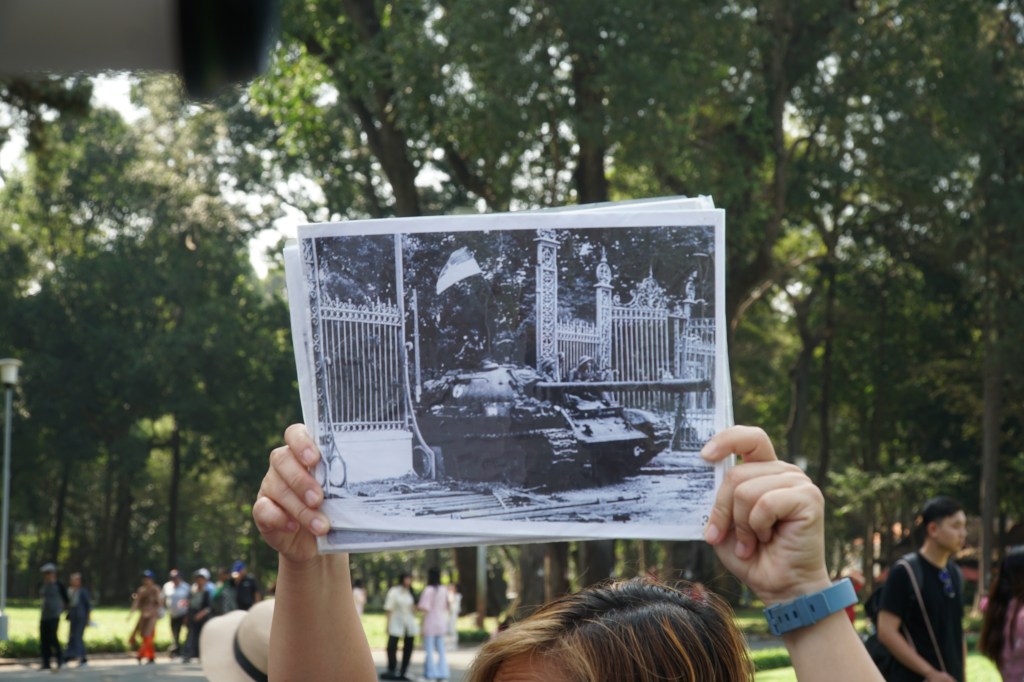
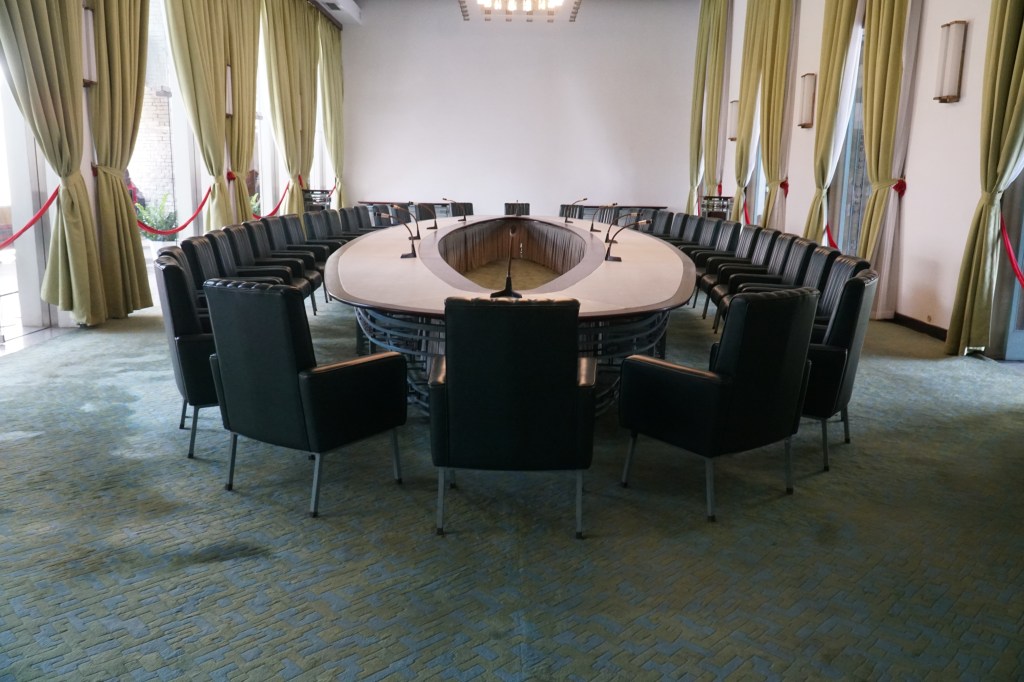

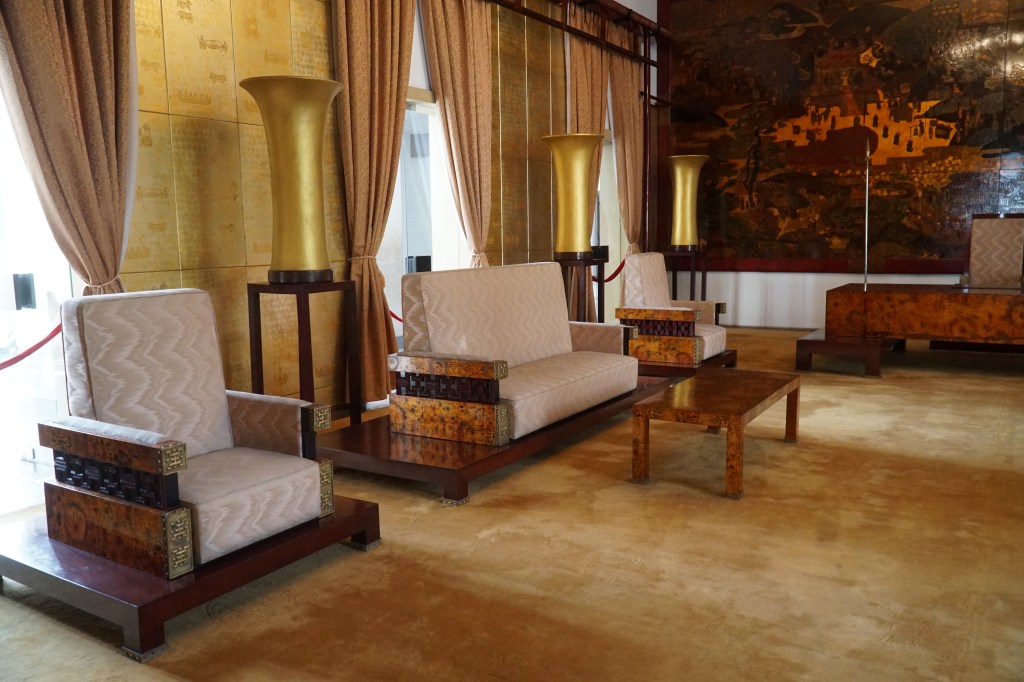



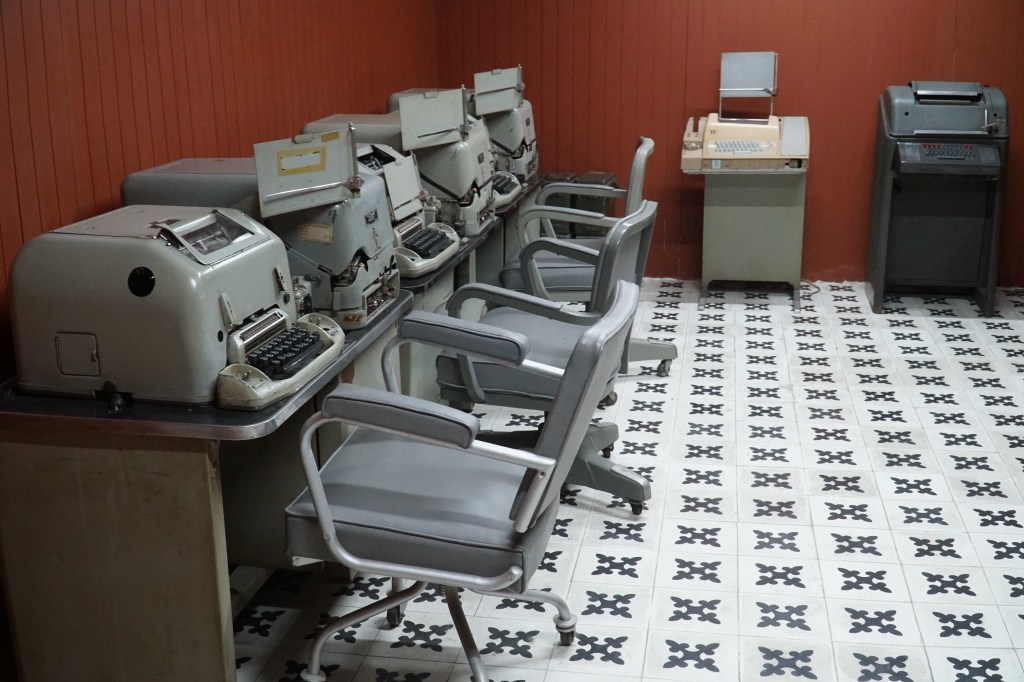
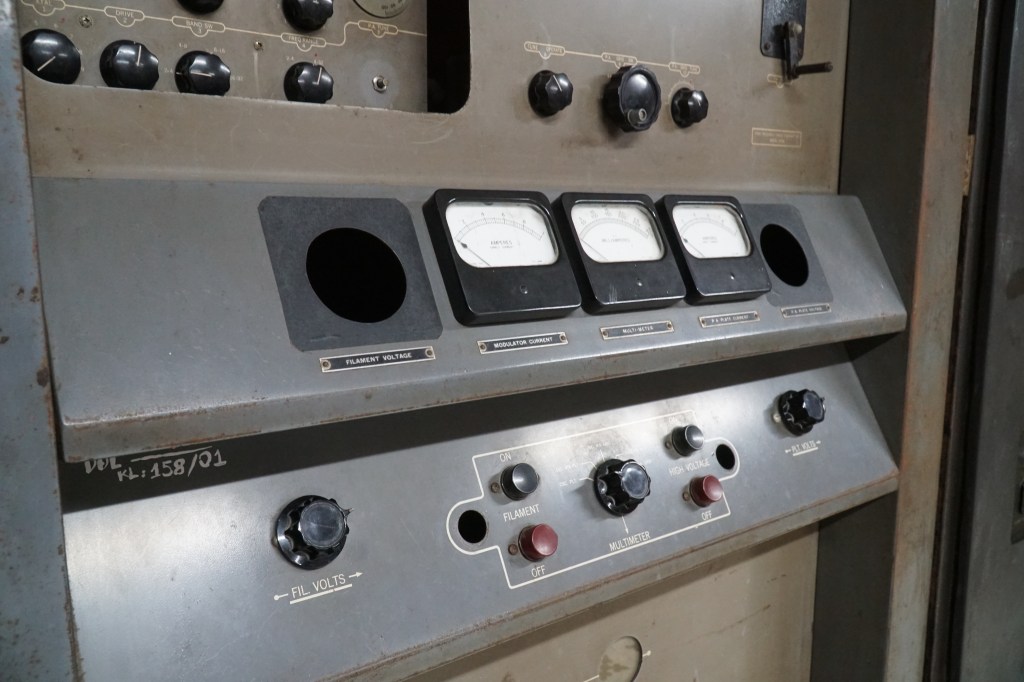
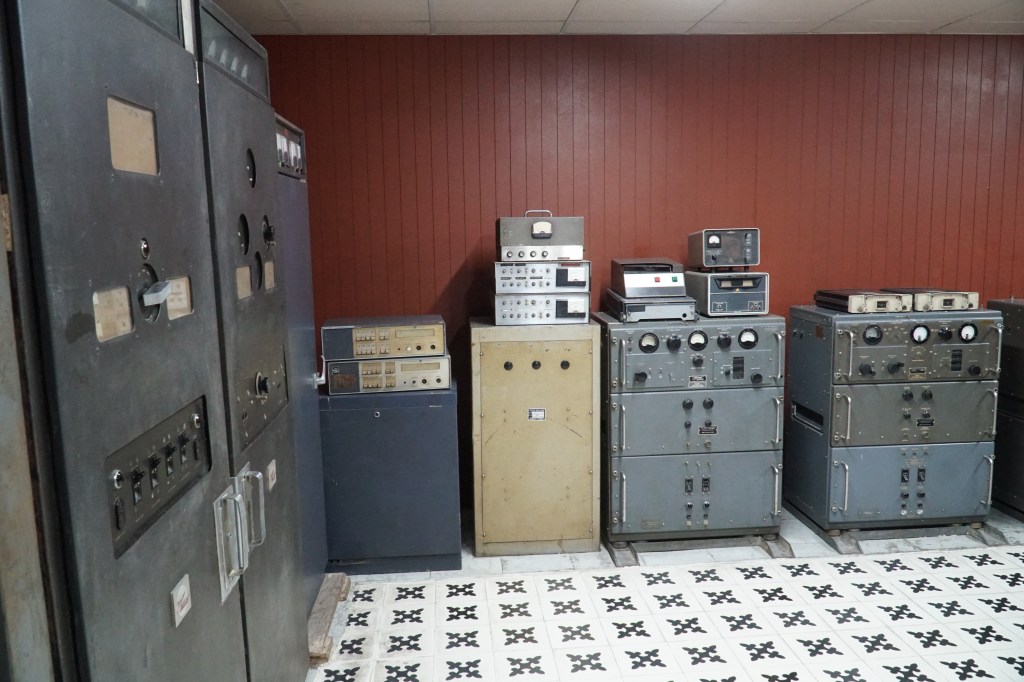
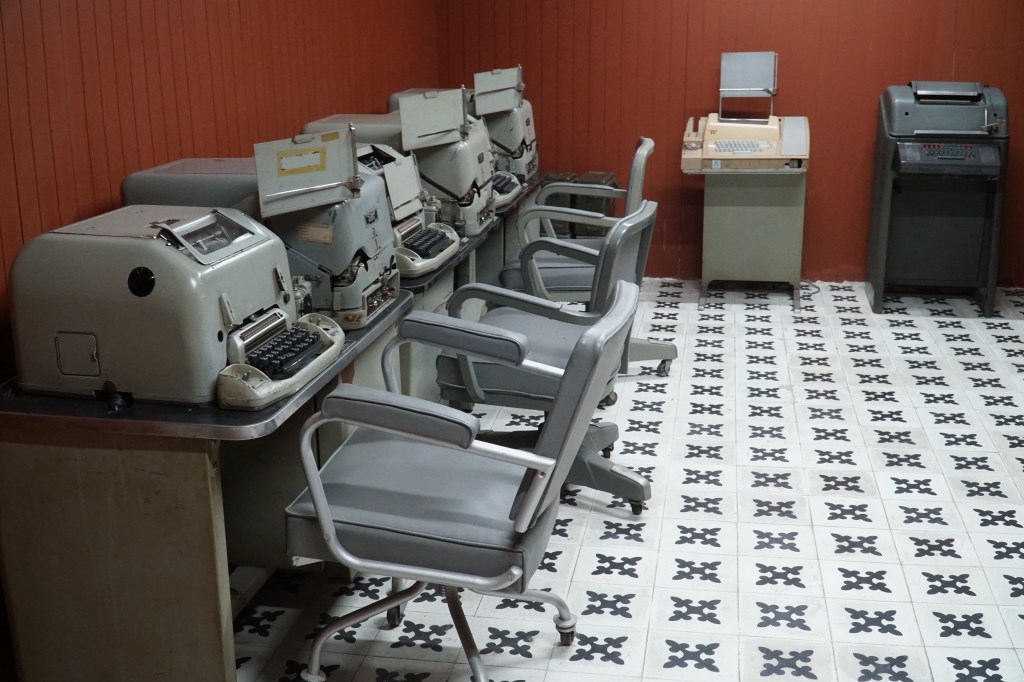
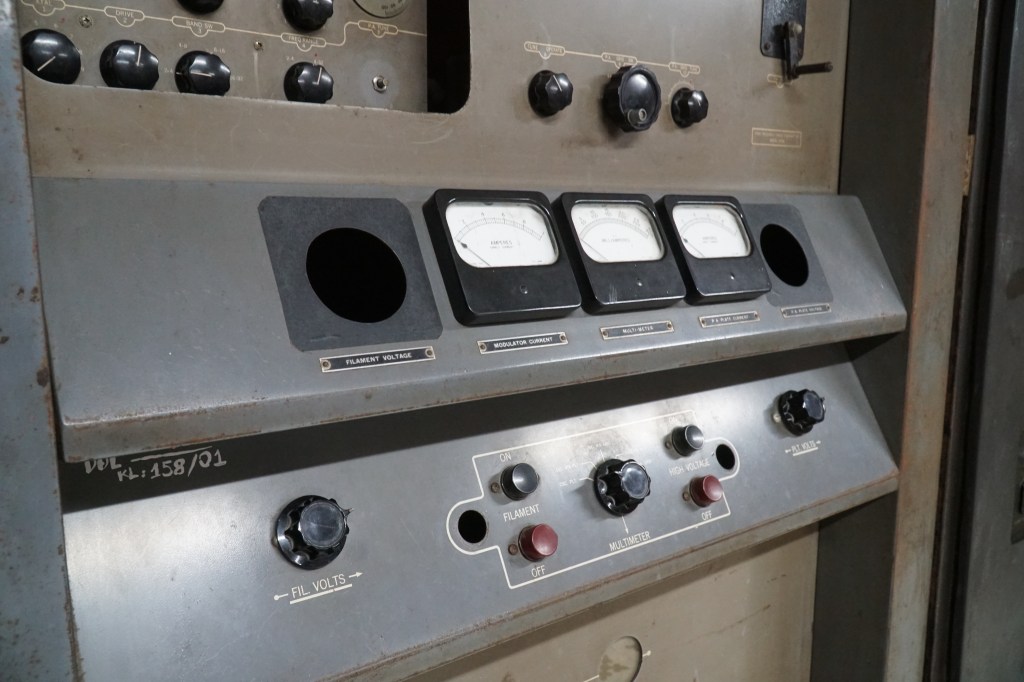


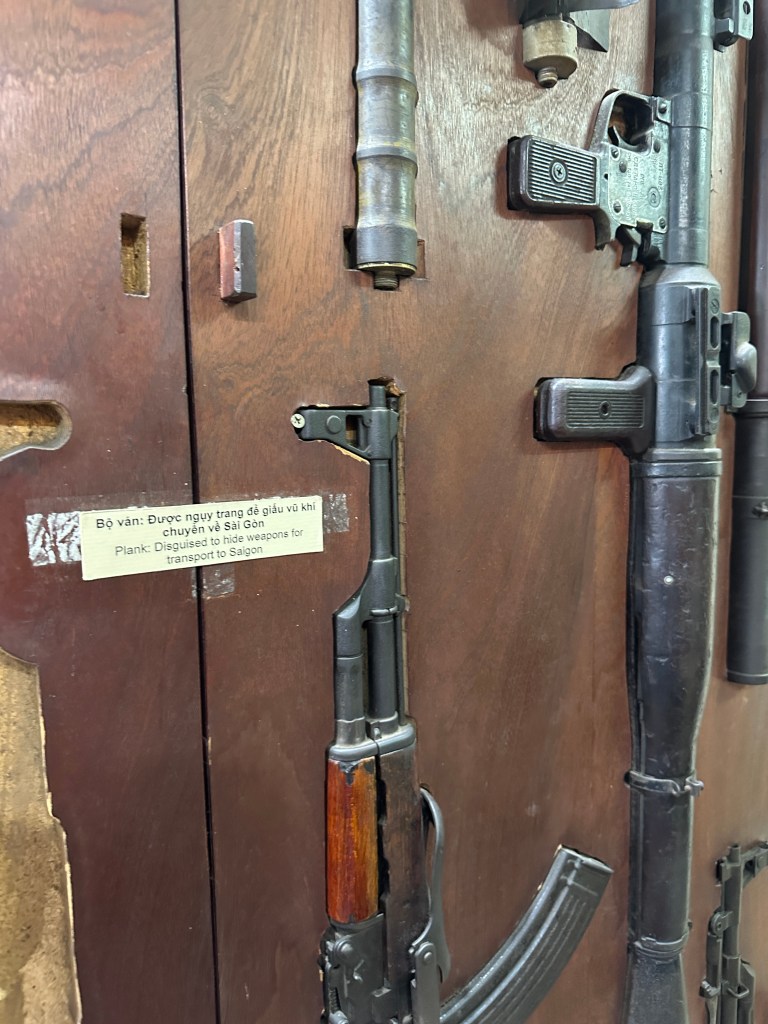
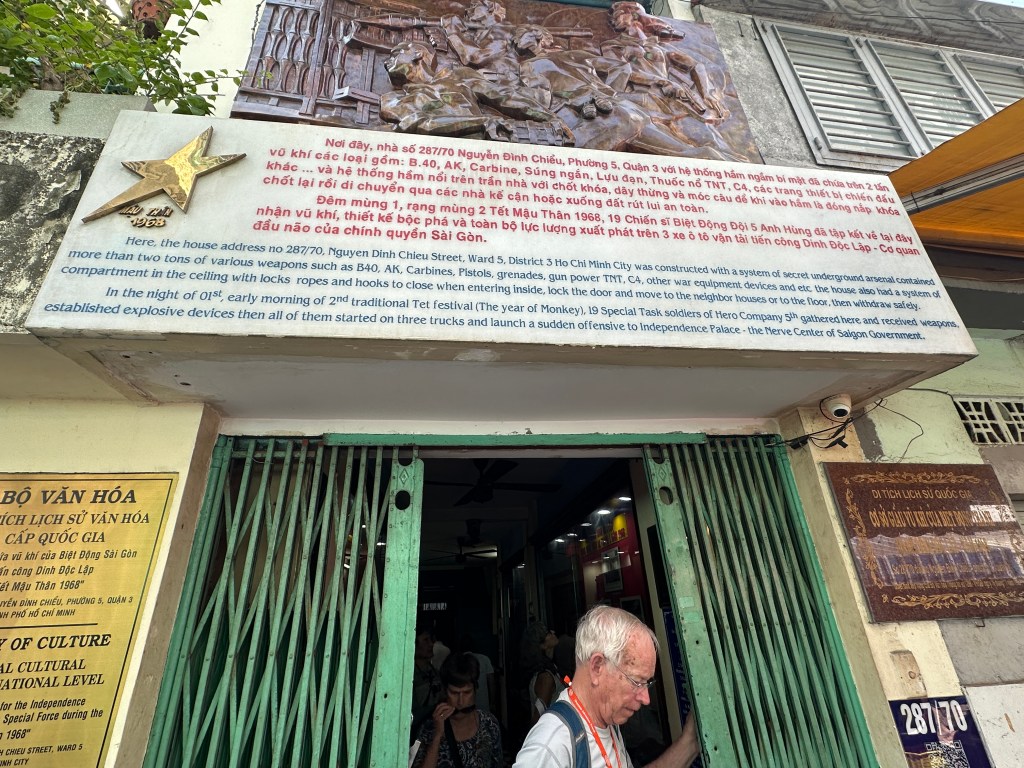
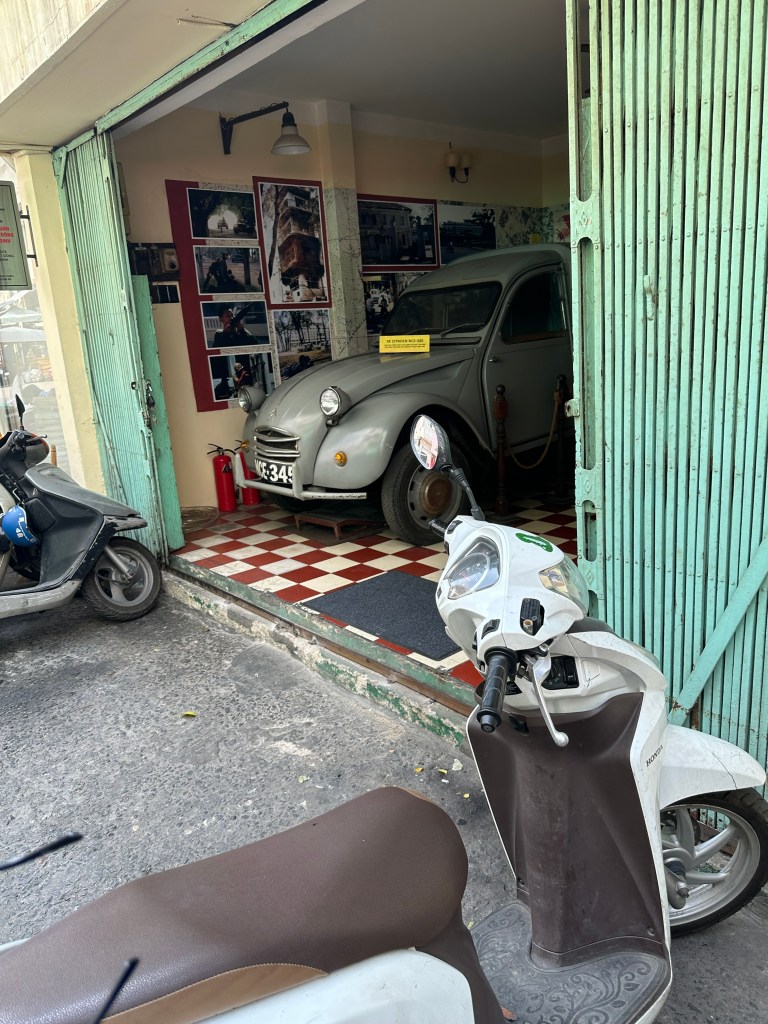
Next we visited a very tiny bunker where two tons of ammunition had been stored in preparation for storming the Presidential Palace during the Tet Offensive. Because the Tet celebration is a time when people update their homes, the rebels were able to hide weapons in pieces of furniture and market baskets to transport them unnoticed to the palace.


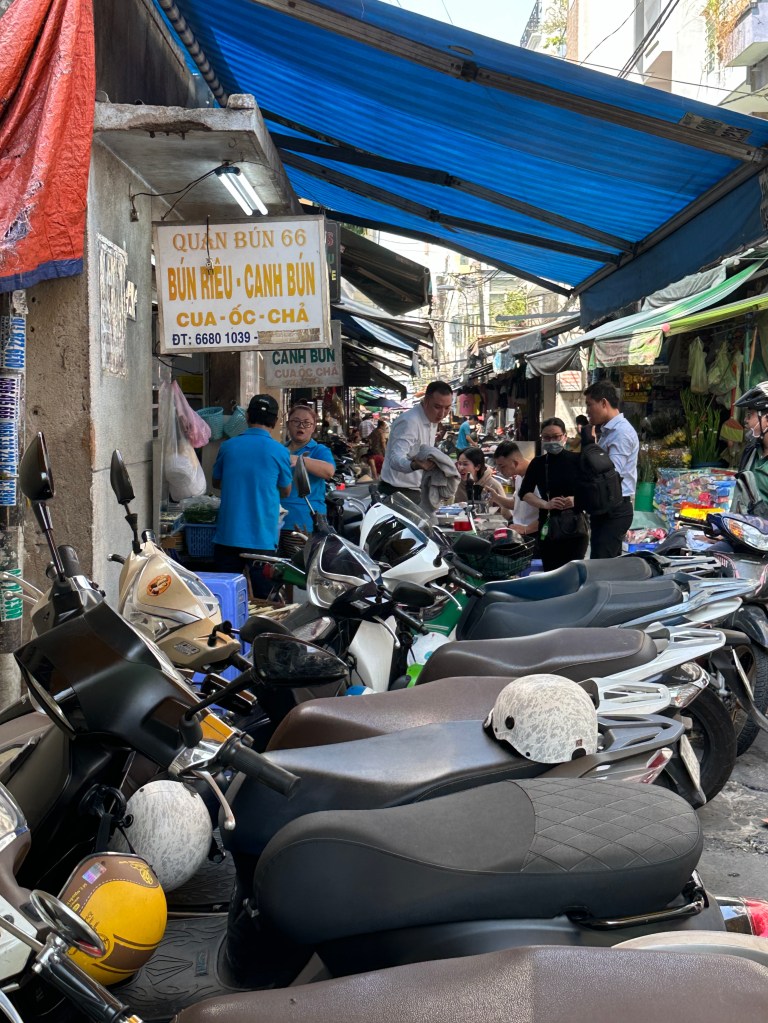
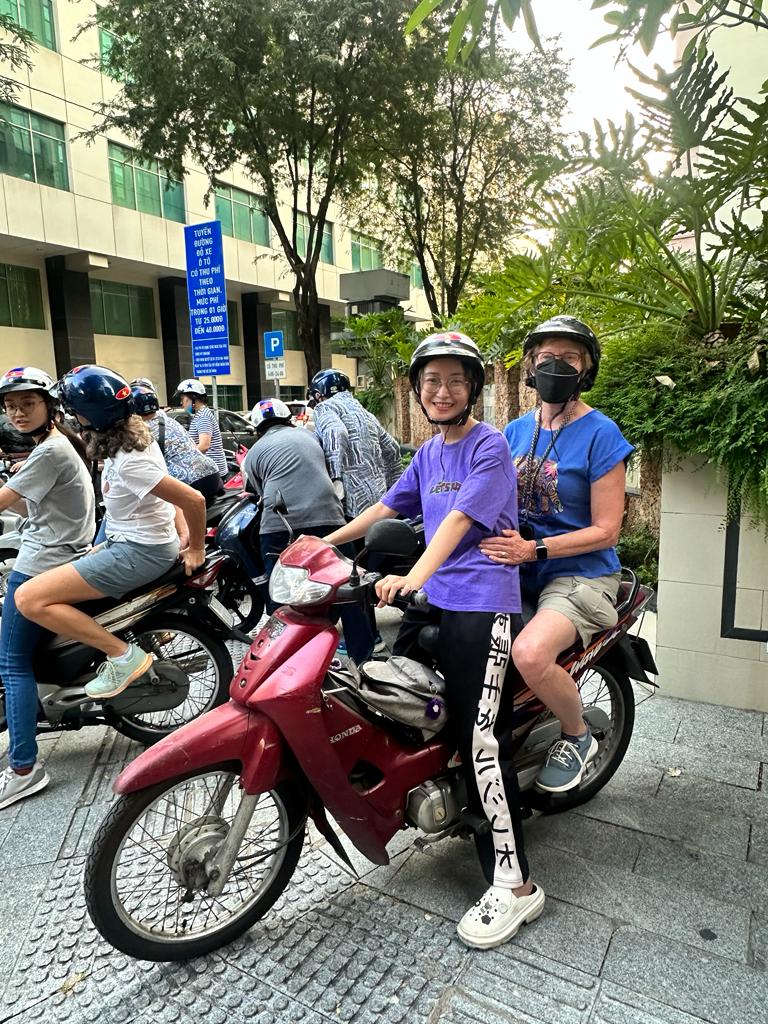
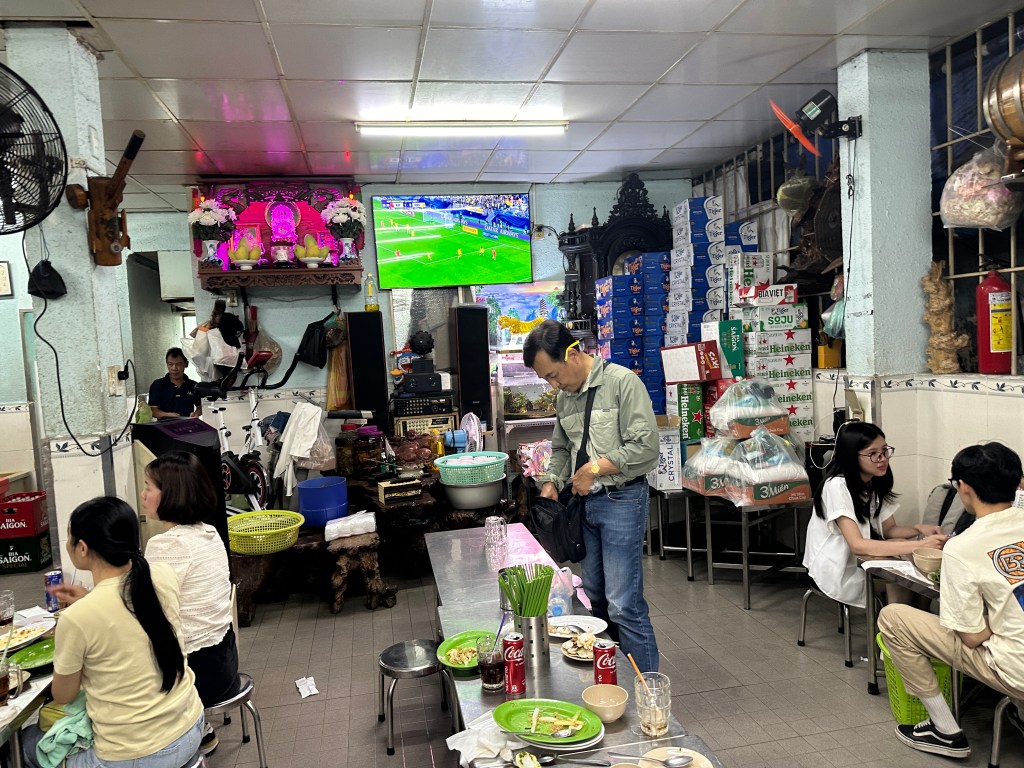
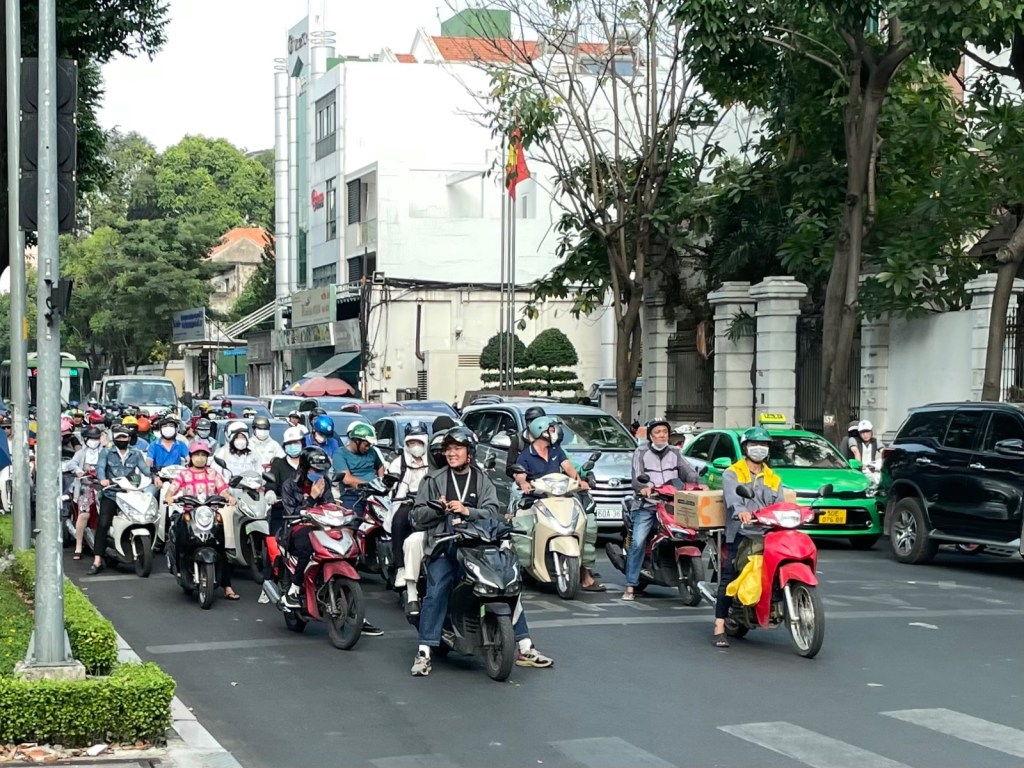
At 5:00 a group of us departed on a special “street food” tour of Saigon via scooter. Scooters are by far the main mode of transportation in the city. We were able to ride behind local college students who like to practice their English speaking. We went through the city streets, including commercial alleyways, and made our first stop for delicious Bahn Mi. After riding for another 20 minutes or so, we stopped at a seafood restaurant for an amazing meal of fresh shellfish. After another 20 minutes of riding, we stopped for ice cream. Then we rode back to the hotel, taking time to cross the beautiful bridge in both directions, looking at the evening cityscapes.





Friday, Jan. 26
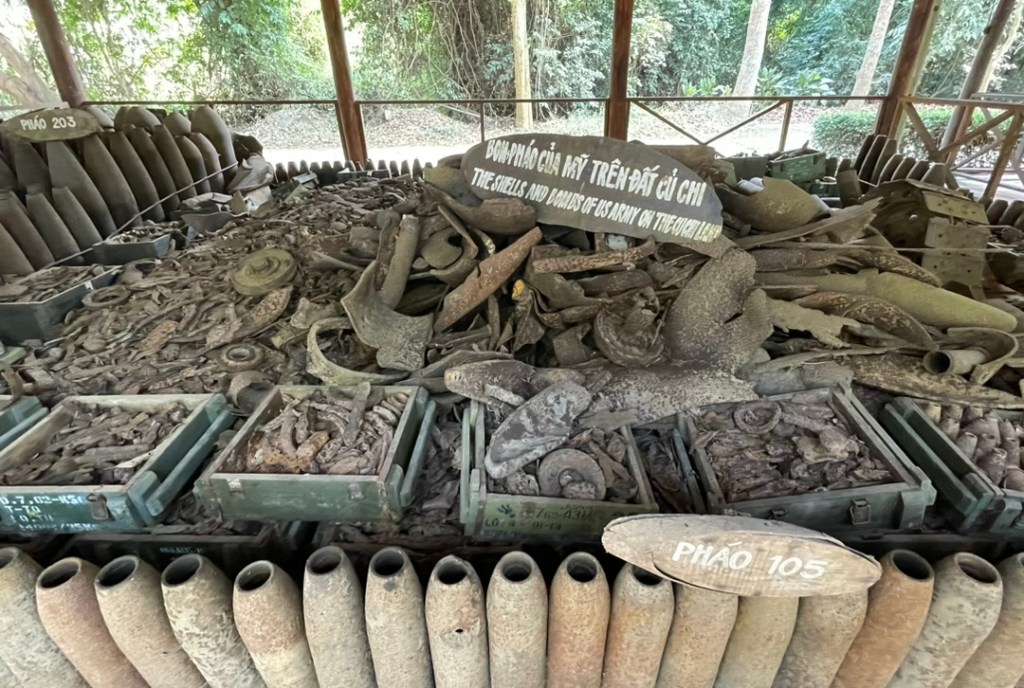
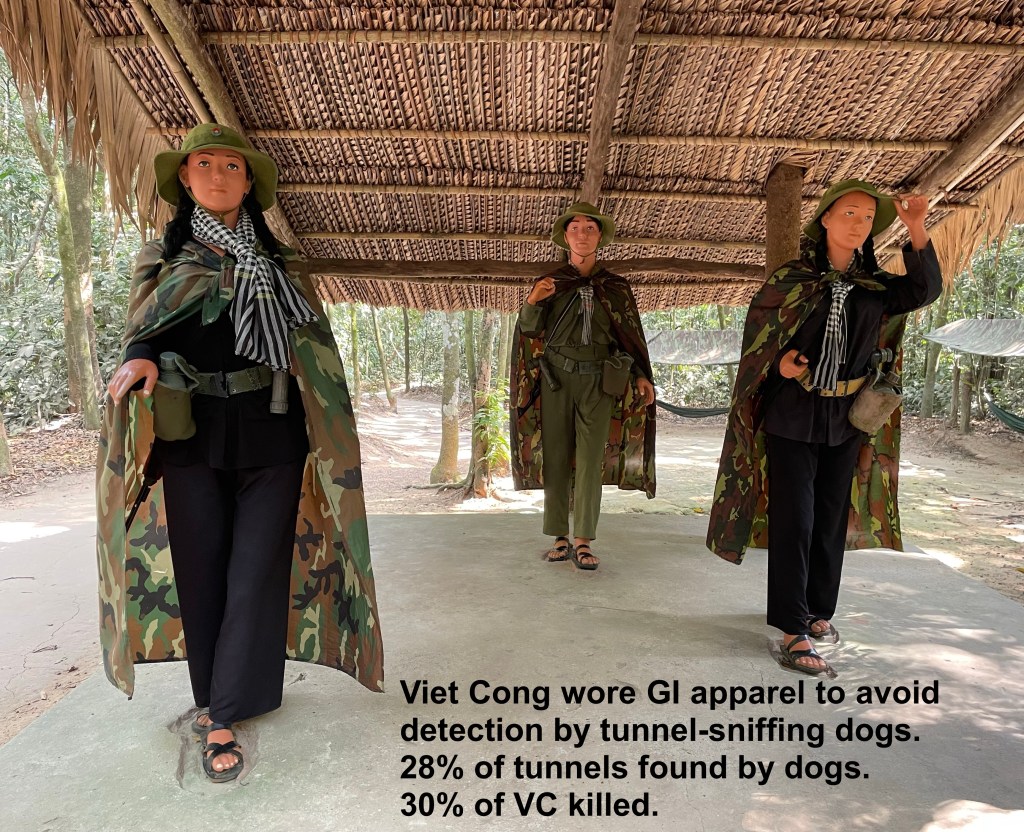
This was our last full day. I had a GI bug, and missed the group trip to the Cu Chi Tunnels. A fellow traveller, Maria, share some of her photos with me:



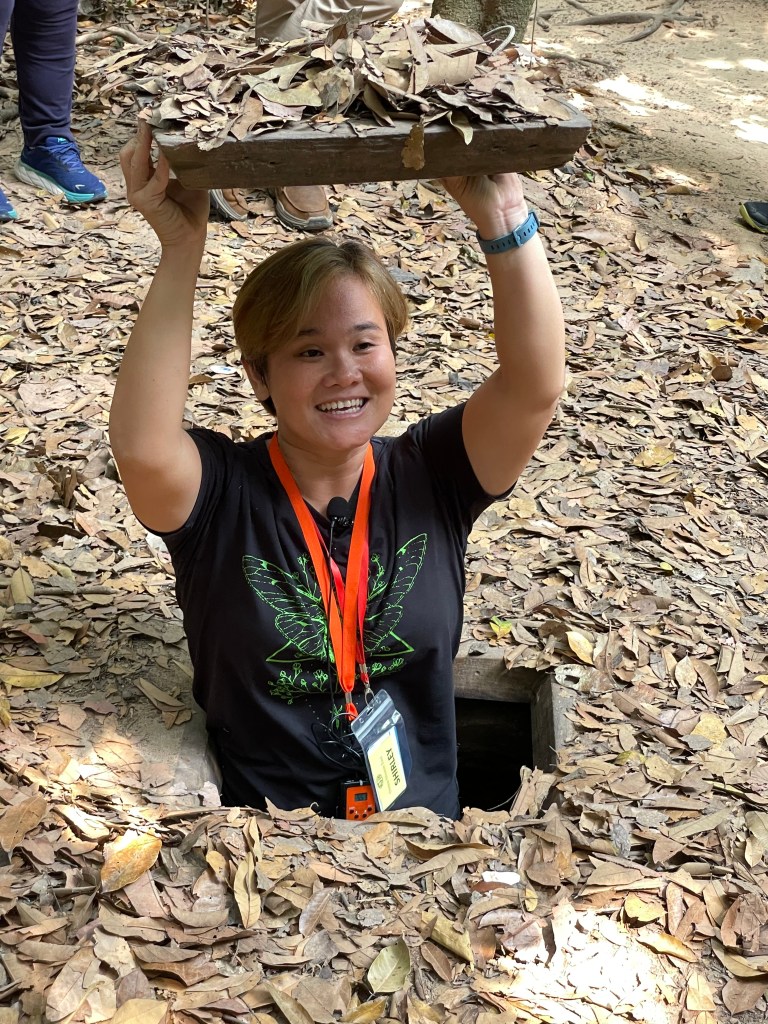


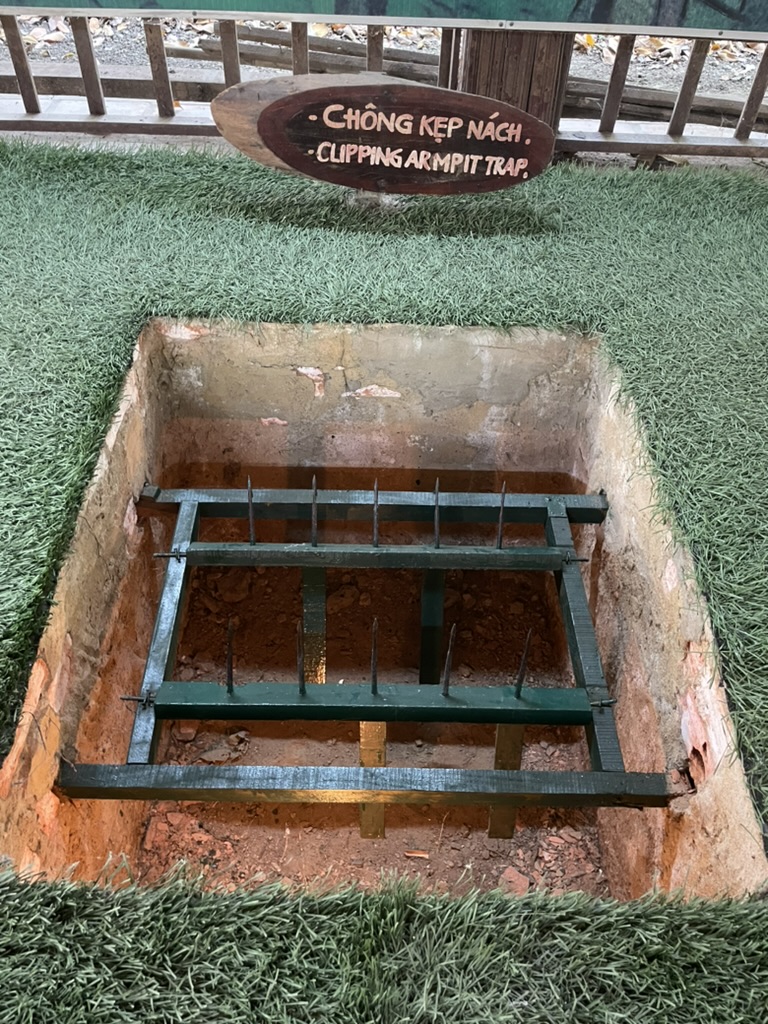
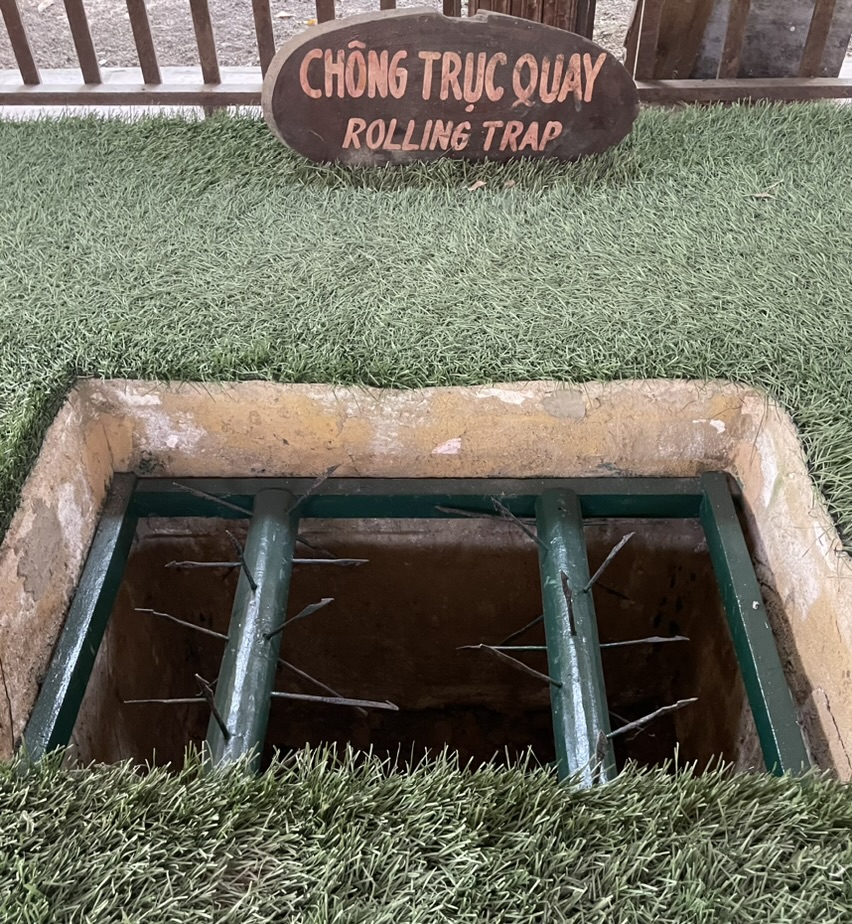
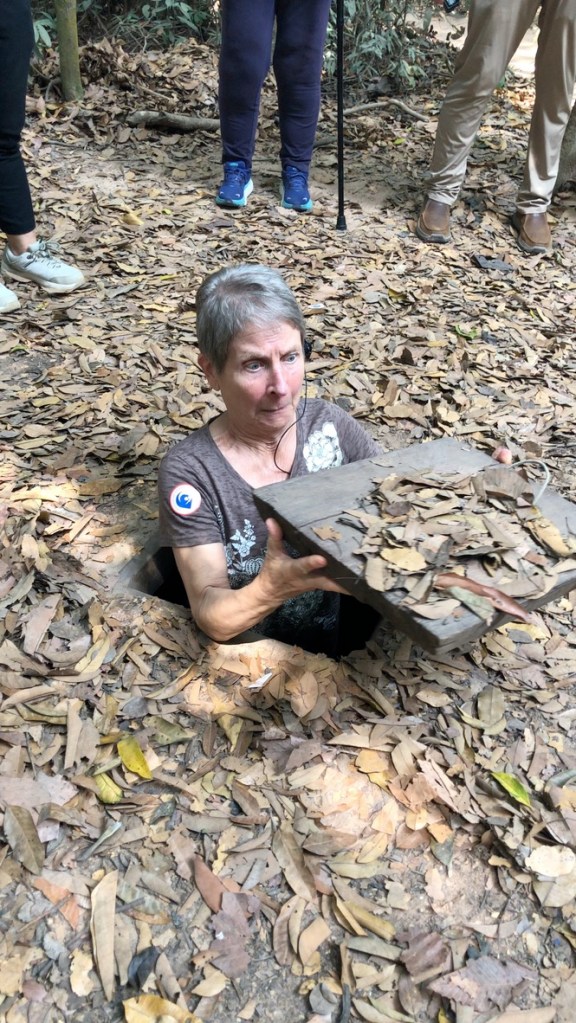

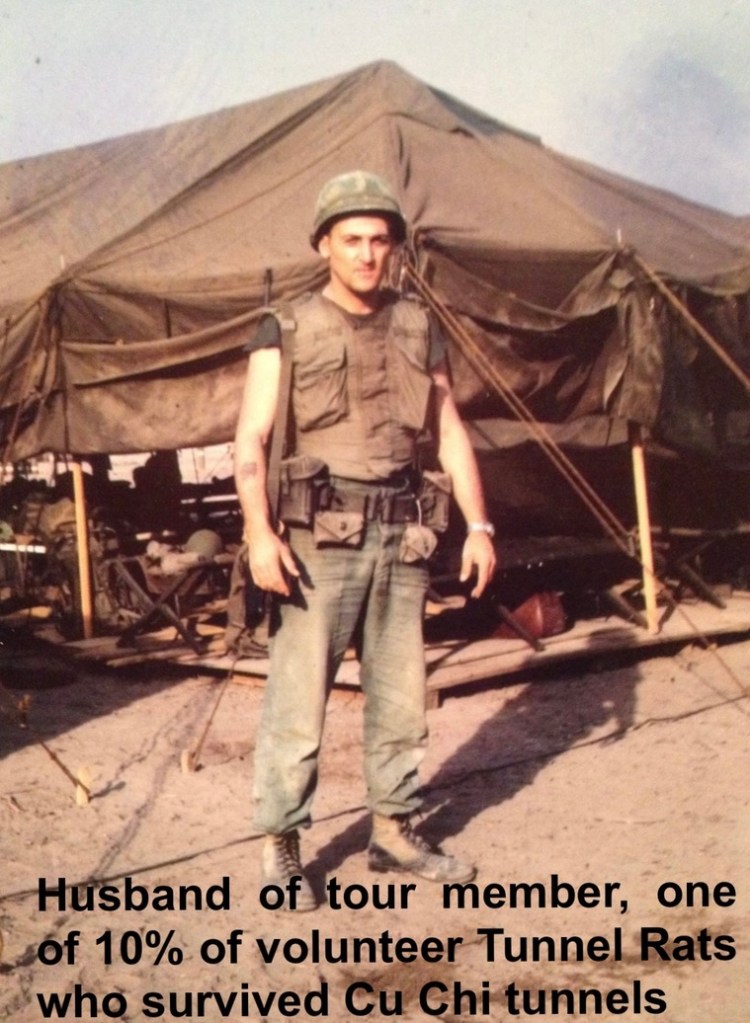
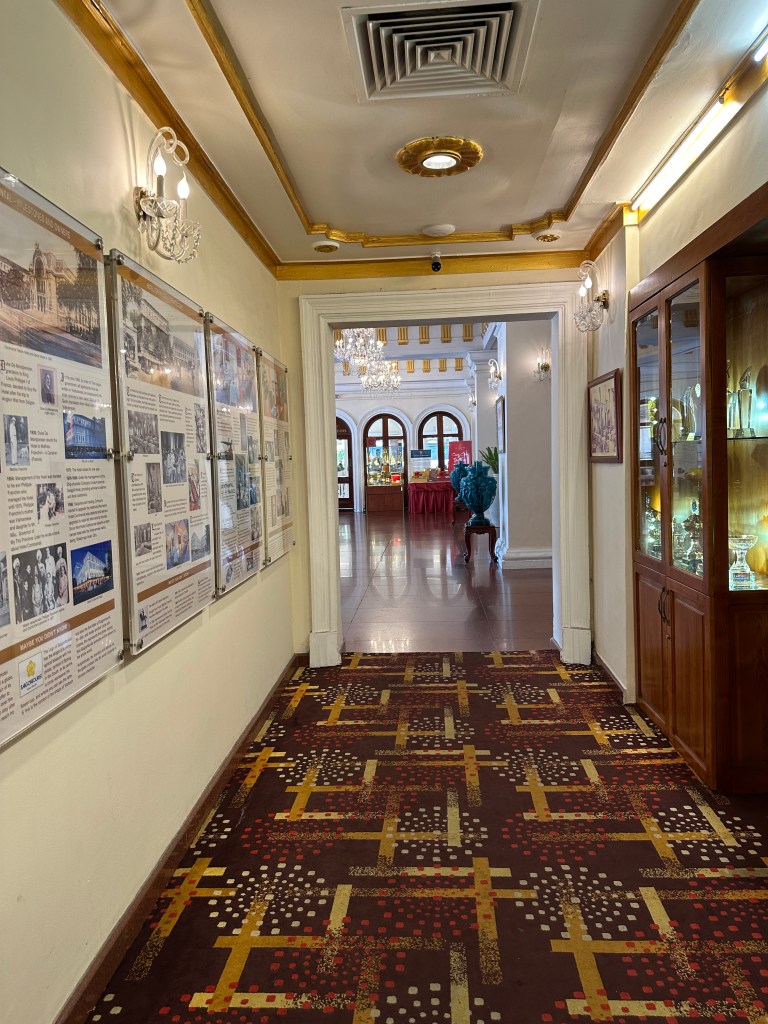
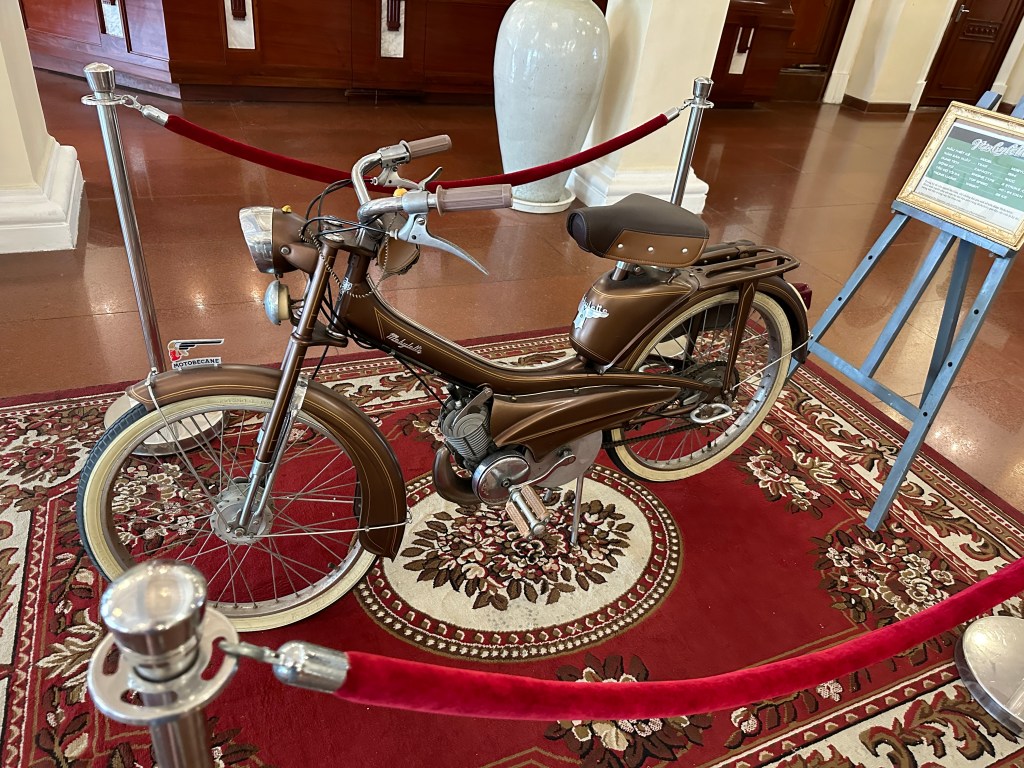
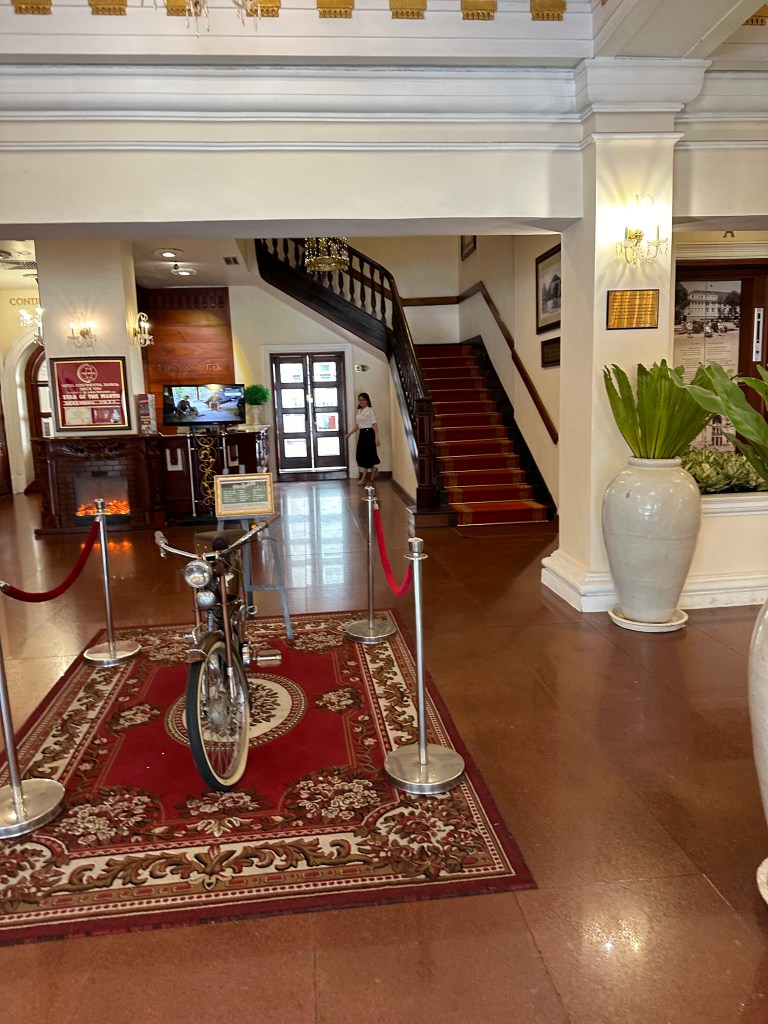
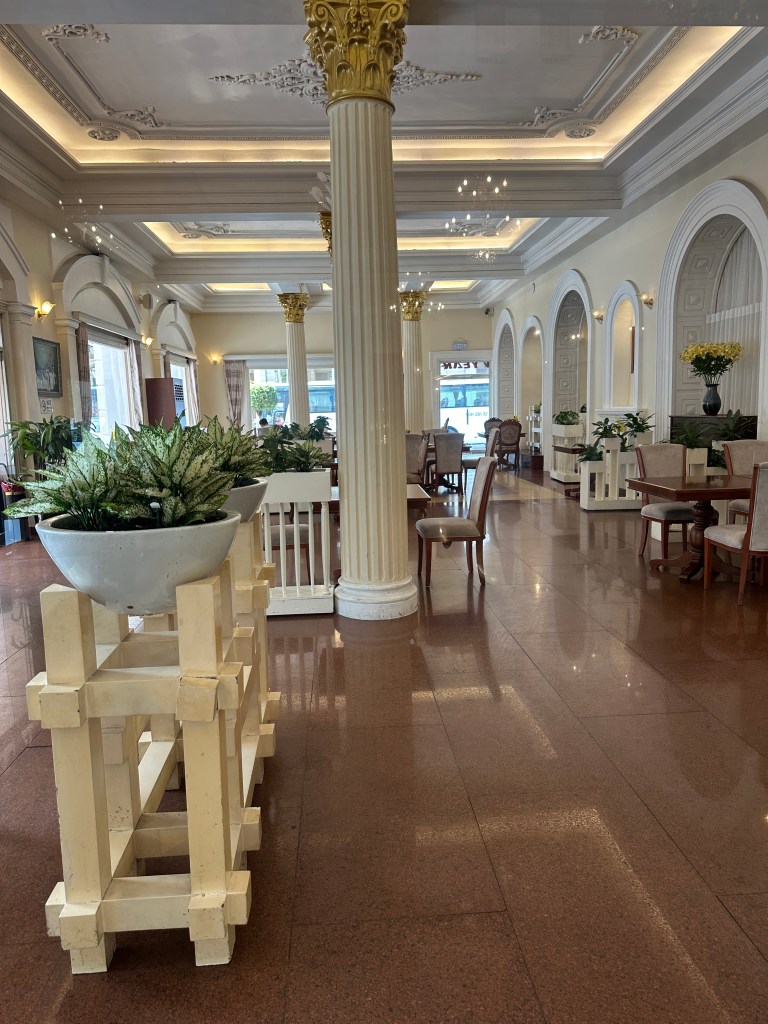
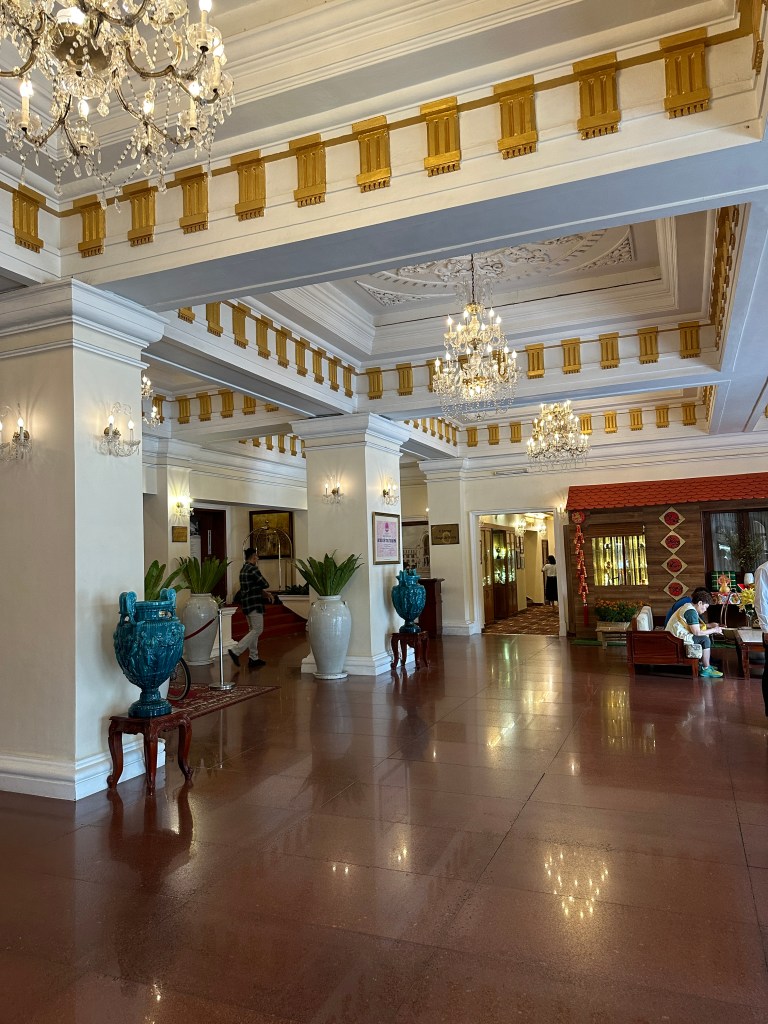
I visited the Continental Hotel, where Graham Greene, media outlets, and others headquartered in Saigon during the French occupation/war. I had a lovely massage in the late afternoon, and joined the group for our farewell dinner in the evening. Early to bed because many of us had to head to the airport by 4:00 am for the long journey back home. It was a fascinating trip with such lovely travelling companions!



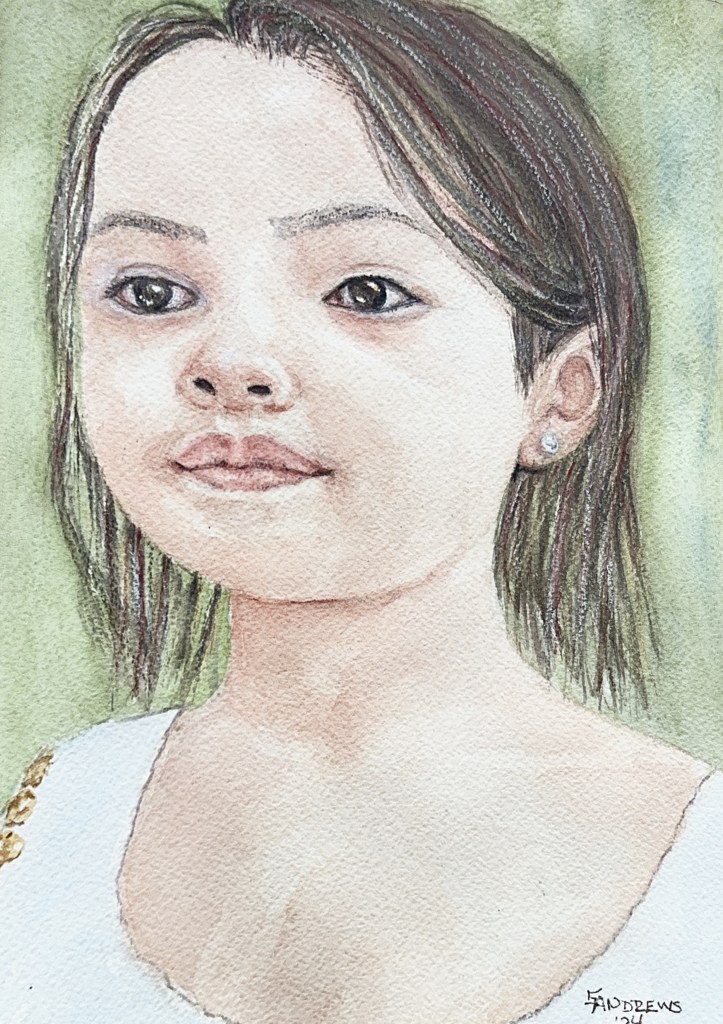
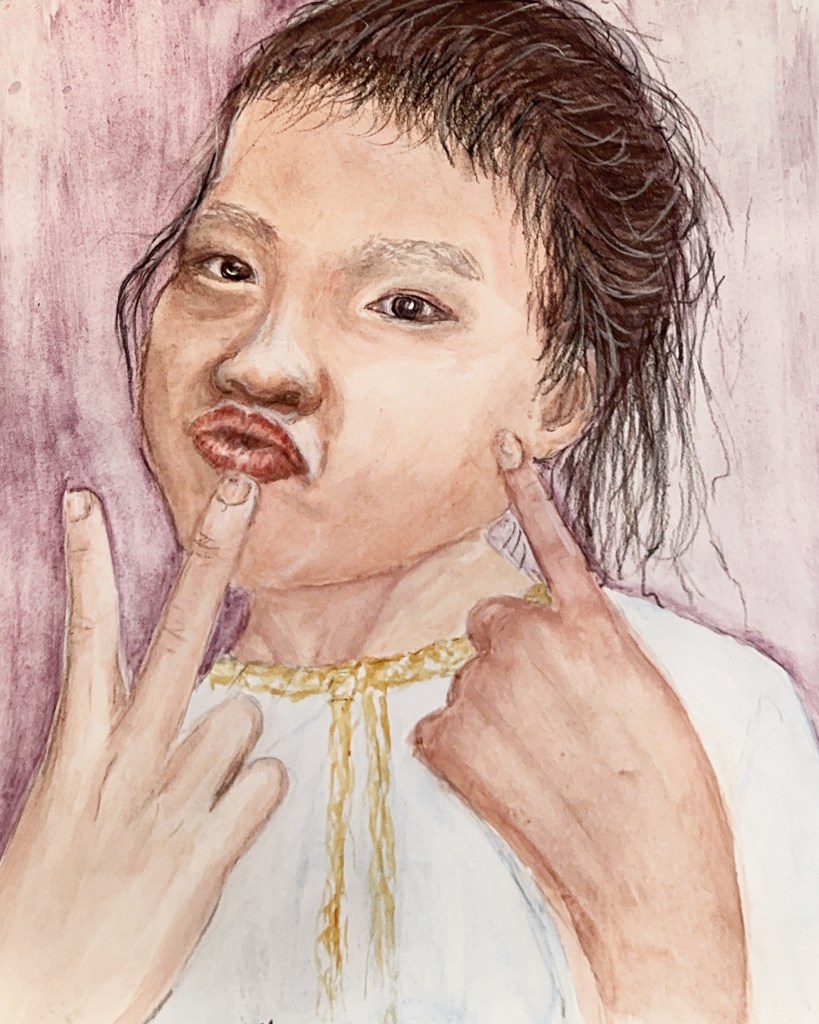
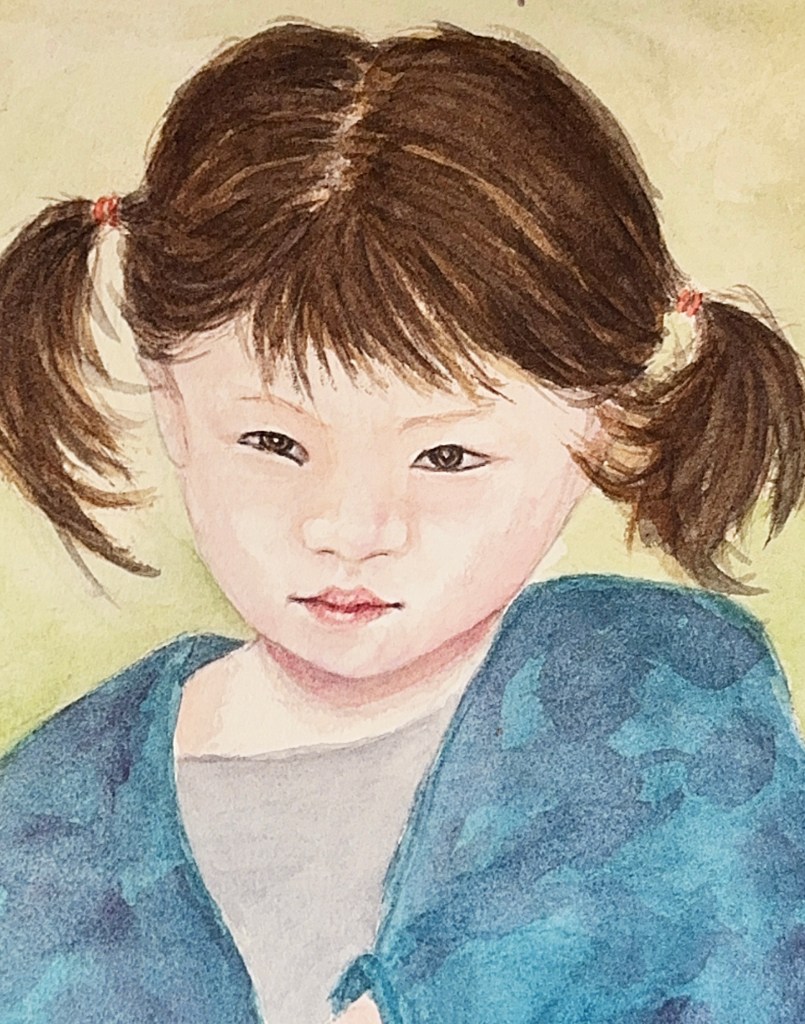
I did some quick sketching along the way, hoping to make some larger watercolors later.

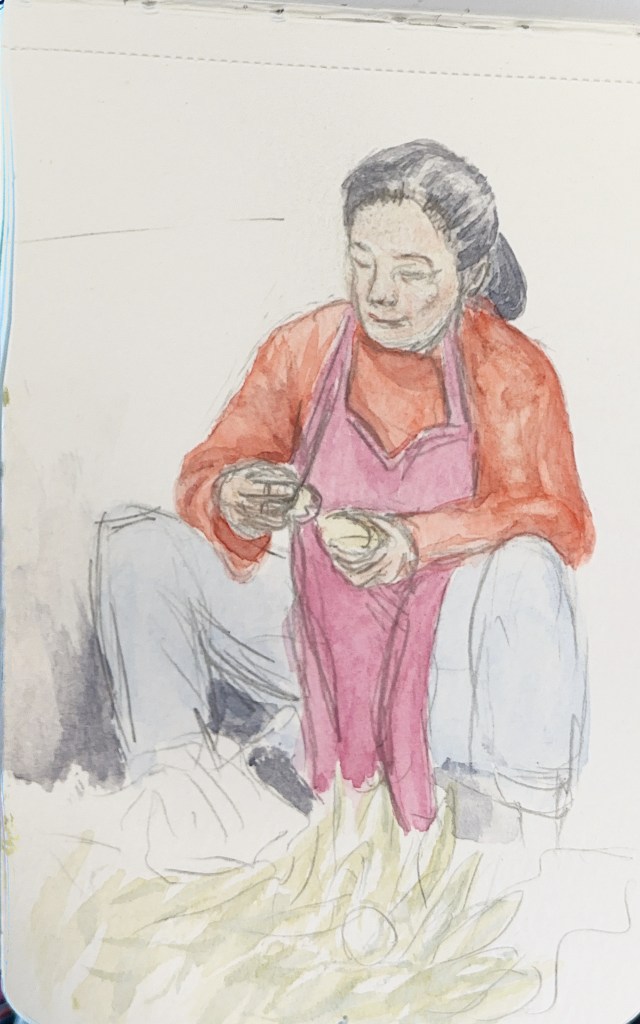
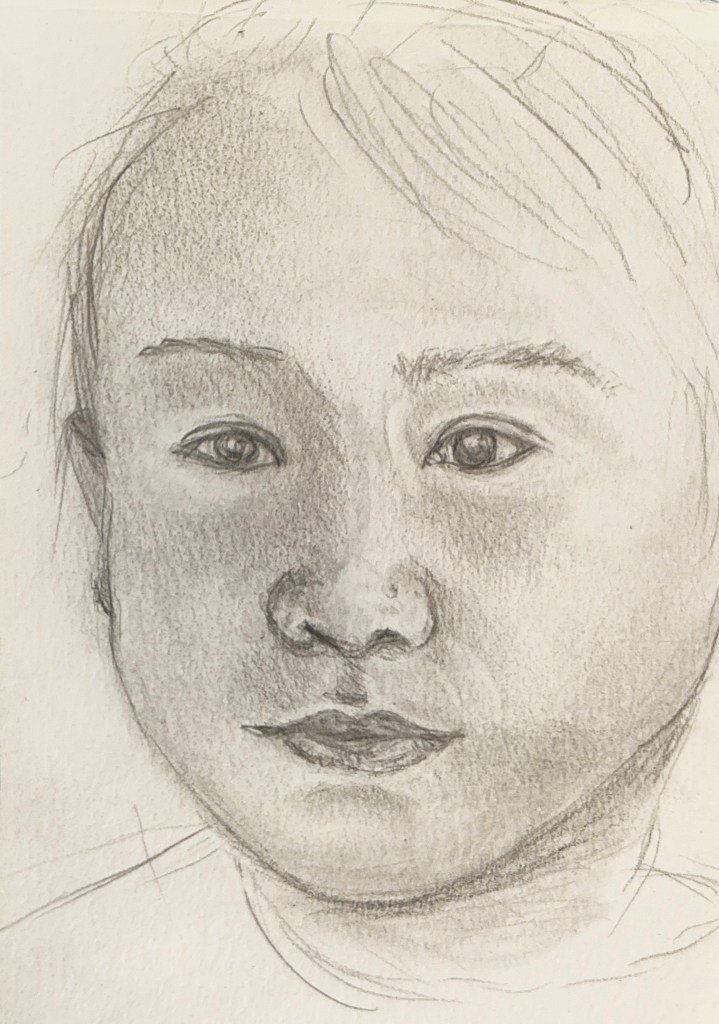
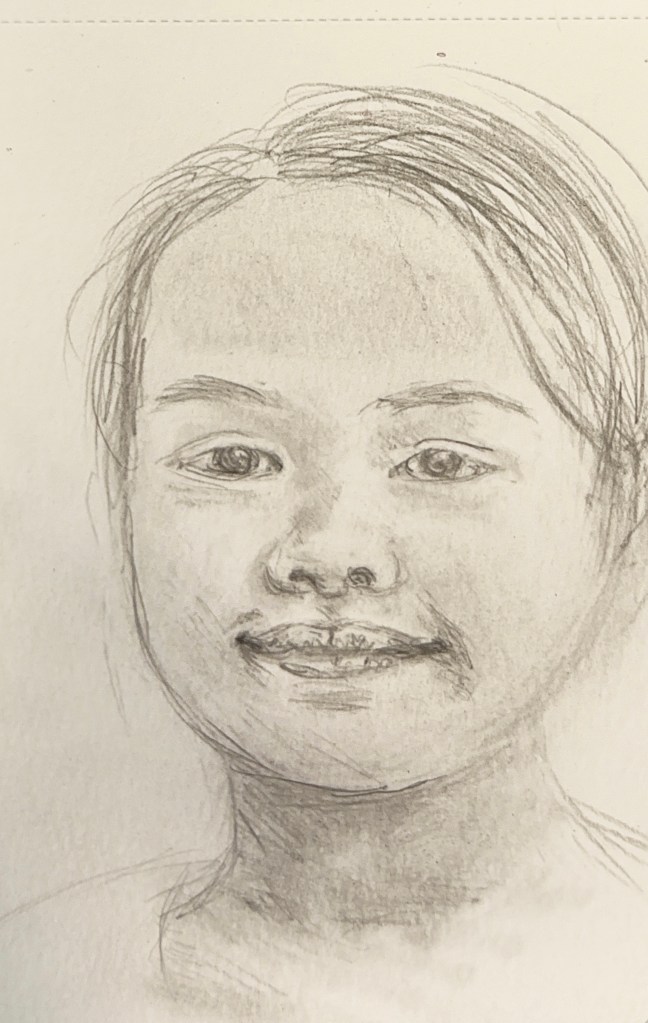


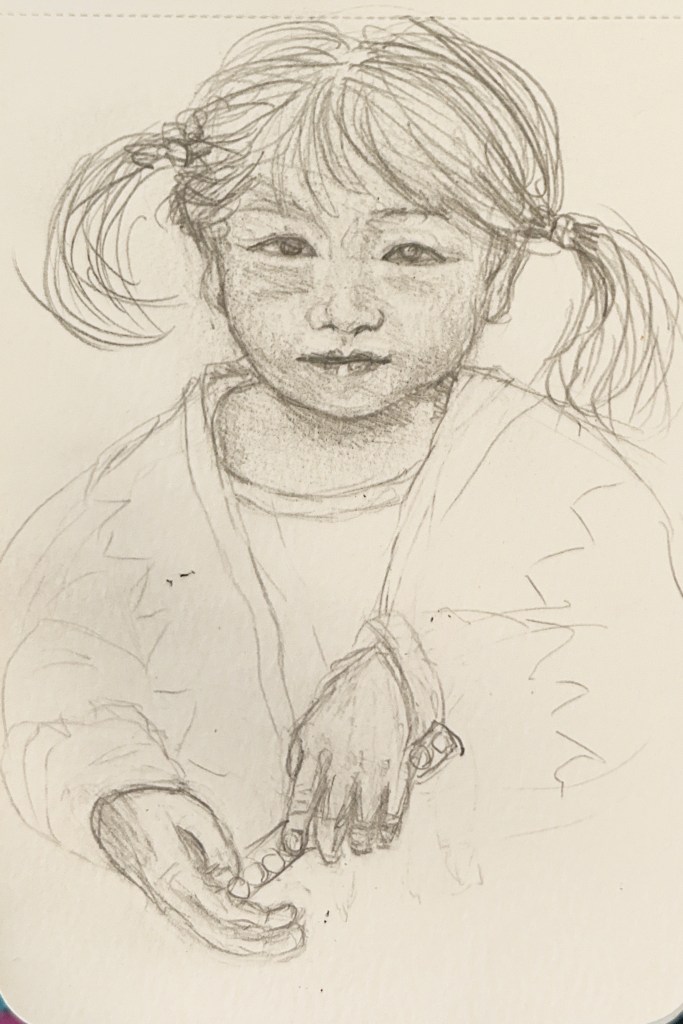
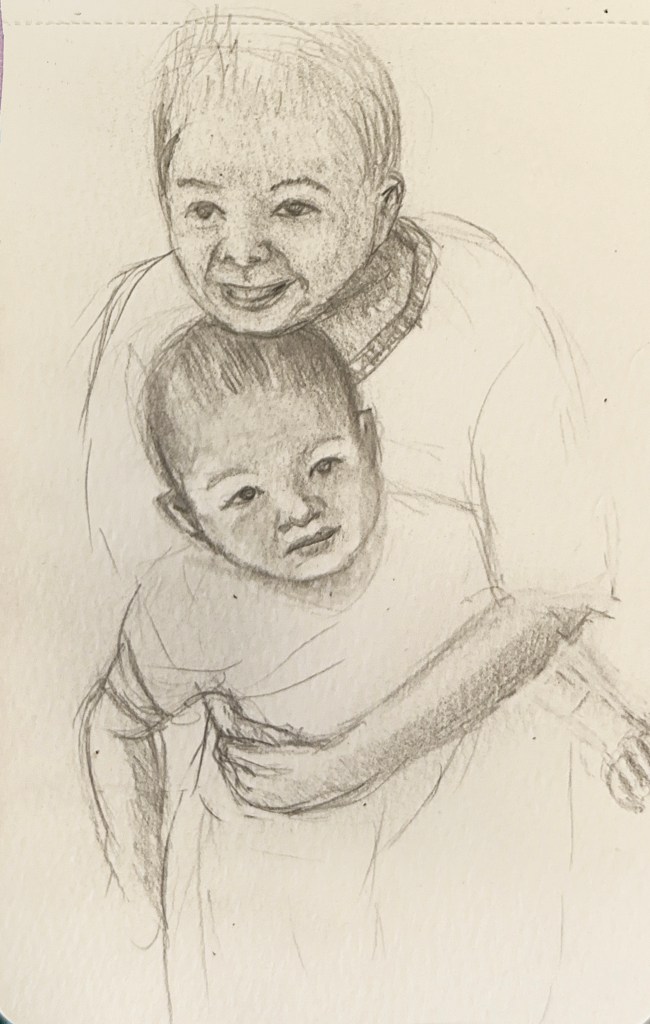
And here are the finished portraits




 My Travel Blog