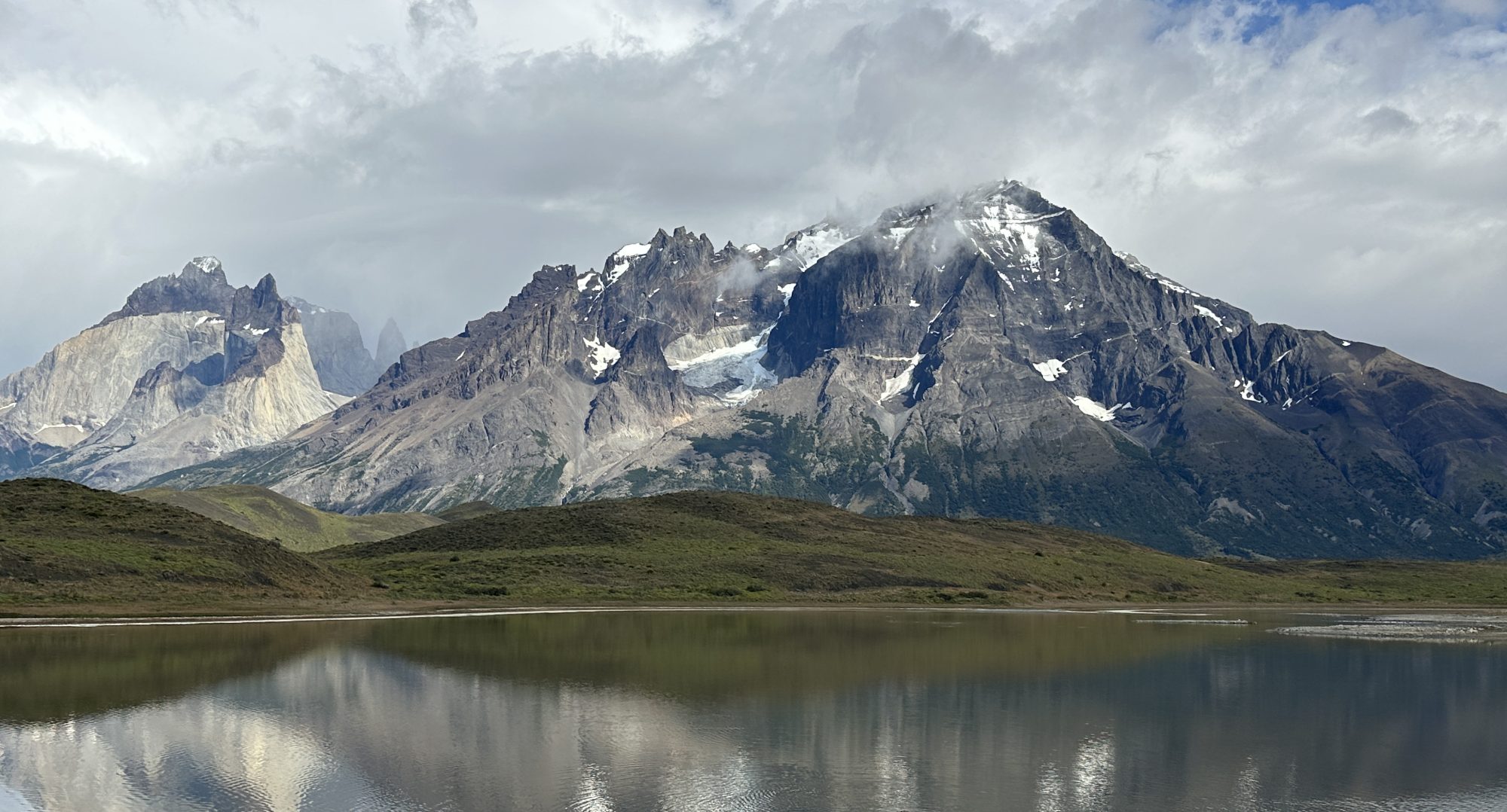

Chris and I left Raleigh Aug. 19 for a two-week trip to Scotland. While I have been to Scotland a number of times in a college trip and various work-related meetings, Chris was eager to experience its charms for the first time. It was great to be escaping the brutal August heat and humidity of Raleigh. Weather in Scotland was predicted to stay in the 50s and 60s. It occasionally rose into the 70s and we had a fair bit of sprinkles.
Our travel coordinator was Overseas Adventure Travel (OAT). The Trip Experience Leader was Robyn Airlie, a young woman from Edinburgh, who was wonderful and so much fun. There were a total of 16 travellers in the group. Three of us play ukulele, but no one brought their ukes. We would have had a blast! One is a singer, choral director, and has a recording of sea shanties: Born of Another Time: Songs of the Sailors—Songs of the Sea, Tom Goux and Jacek Sulanowski. We enjoyed listening to his music on Apple Music. Our group was full of experienced travellers who got along extremely well, as has generally been our experience on OAT trips.
Thanks to Robyn for sending some great photos after the trip. I have included some of those images here. The map below was provided by OAT. The red circles show the towns where we stayed the night (2 or 3 in each).

Day 1, Sunday, August 20
We arrived in Glasgow on Sunday, August 20 and checked into the Maldron Hotel in the heart of downtown. We were the first of our group to arrive and fortunately a room was ready for us.
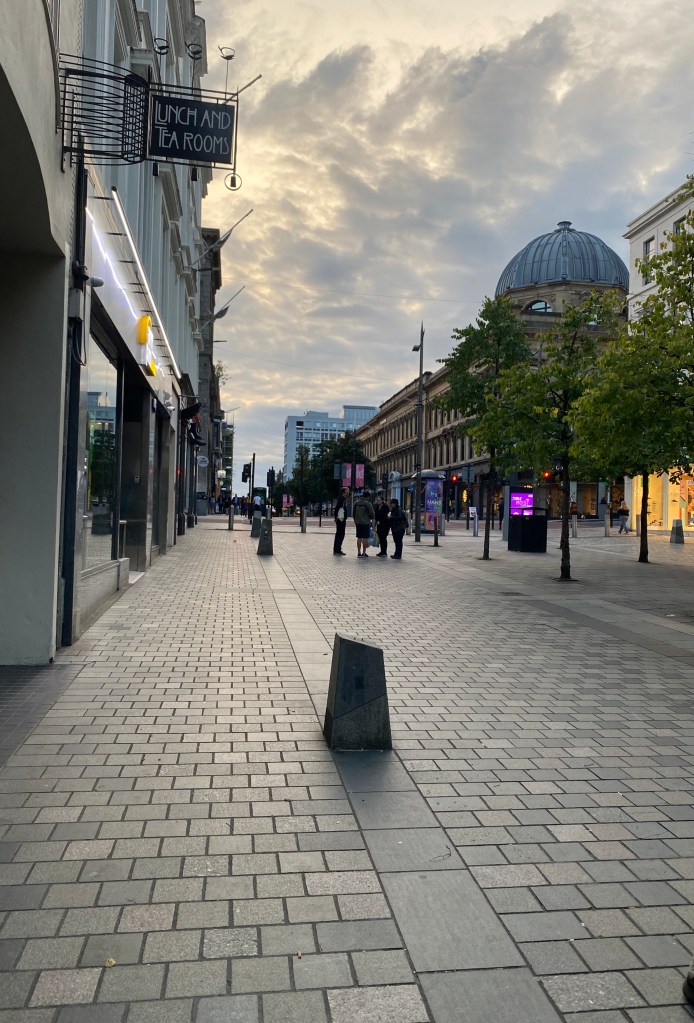
We had a short walk around the downtown area in the late afternoon, then stopped at a very old pub, the Drum and Monkey, for a drink and some pub food. There was a group of musicians playing traditional Scottish tunes. It was a great way to end the first day.


Day 2, Monday, August 21
It was my birthday (71) and the second time I’ve celebrated it in Scotland. The last time was during an International Society for Pharmacoepidemiology (ISPE) conference in Edinburgh in 2002. We were staying in dorms at the Heriot Watt University, and my colleagues gave me a university sweatshirt as a surprise gift, and I still have it.
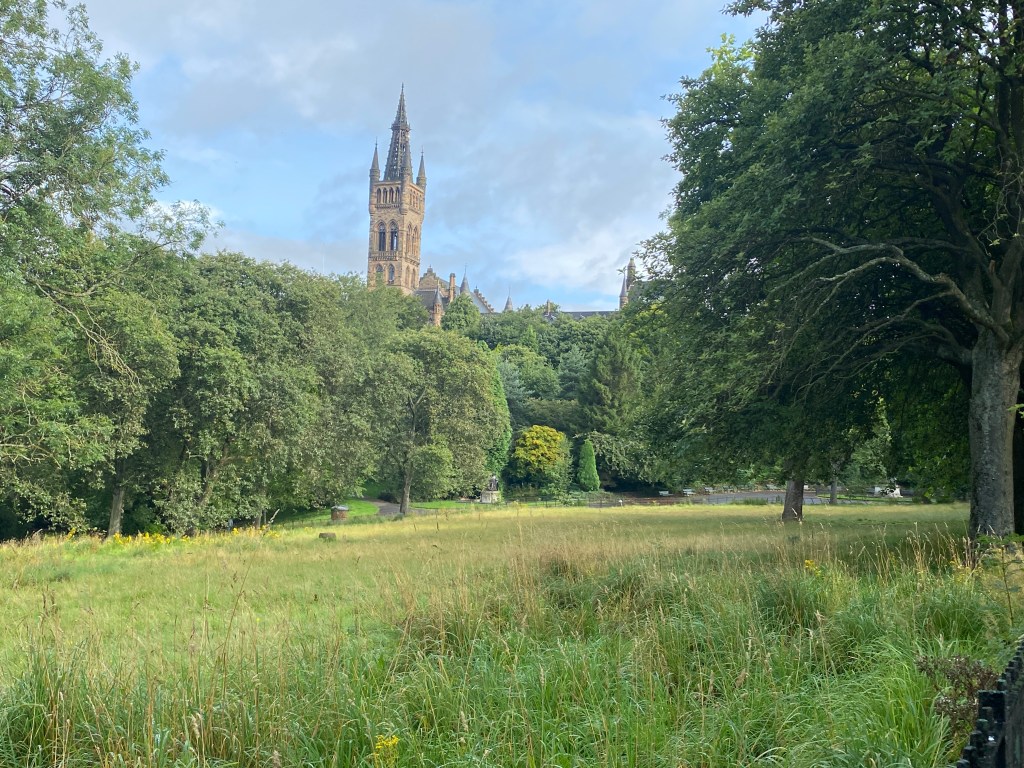
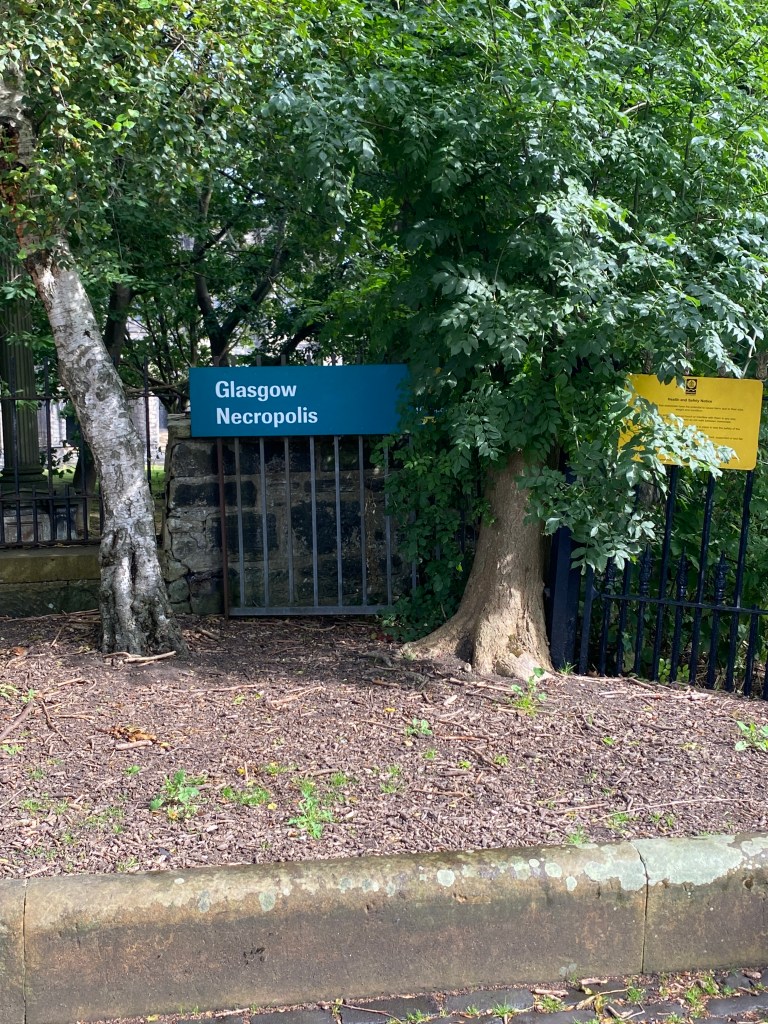
We started the day with a “panoramic tour” of Glasgow. We had intermittant clouds, clear weather, and a bit of dizzle – typical Scottish weather. We visited the Glasgow Cathedral and the Necropolis. We saw the university and museum areas. It was a good overview by a local guide who had hysterical stories of Glasgow events with her rowdy mother.
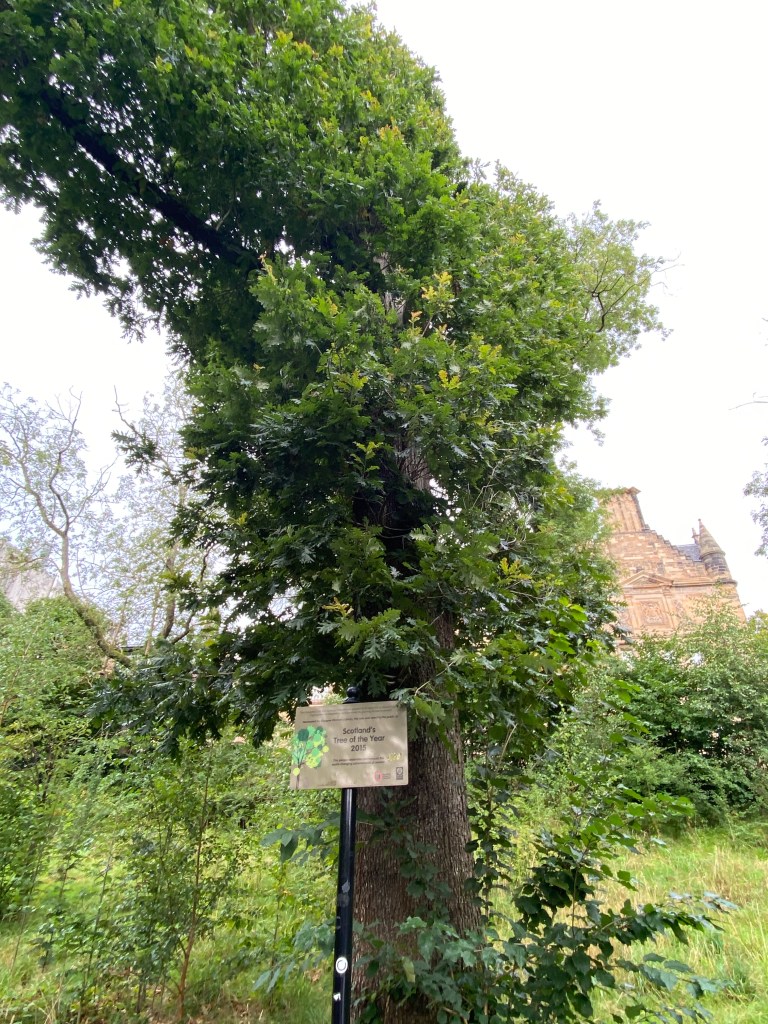
The city symbols on the Glasgow coat of arms are the tree, bird, fish, and bell (there is a story of St. Mungo behind each symbol):
There’s the tree that never grew,
There’s the bird that never flew,
There’s the fish that never swam,
There’s the bell that never rang.







We had lunch at the Soul Food Sisters, a non-profit group that helps refugee women find their way in Glasgow. They have been successful in attracting grants, even during the pandemic. For example, they were able to get catering contracts to provide food for schools during the pandemic and holiday breaks. They plan to move into larger space than the small area where we ate. We had a wonderful lunch with a variety of foods from different cultures. The two women there, the founder and a fairly recent volunteer, provided food and description of their work.

In the afternoon, we had free time. I visited the Gallery of Modern Art, hoping to see the Banksy graffiti exhibit, but all the same-day tickets were sold out. I saw some interesting exhibits of modern works. It was fun wandering around the streets and squares in the downtown area.
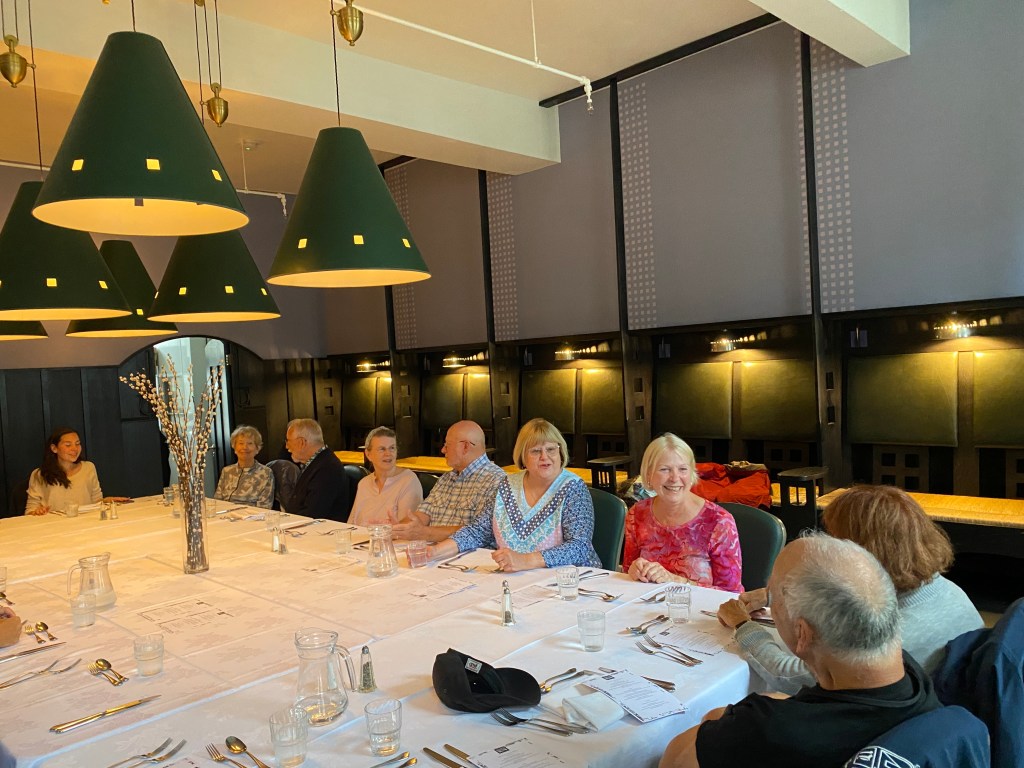
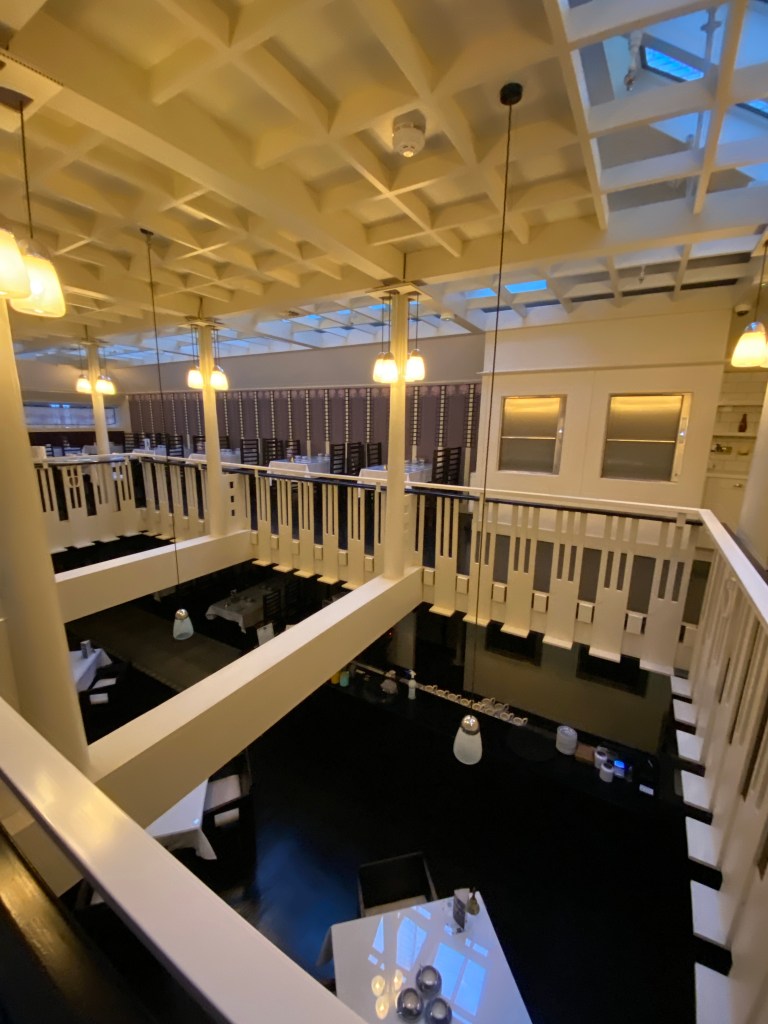
We had our welcome dinner at a great spot, a building designed by the most famous architect of Glasgow, Robert Rennie Macintosh: Macintosh at the Willow. It was our first serving of haggis. (Haggis is minced sheep or calf offal, mixed with spices and oatmeal, cooked in a bag made from the animal’s stomach.) The building was fabulous after so many renovations helped restore it to its former glory.






Day 3, Tuesday
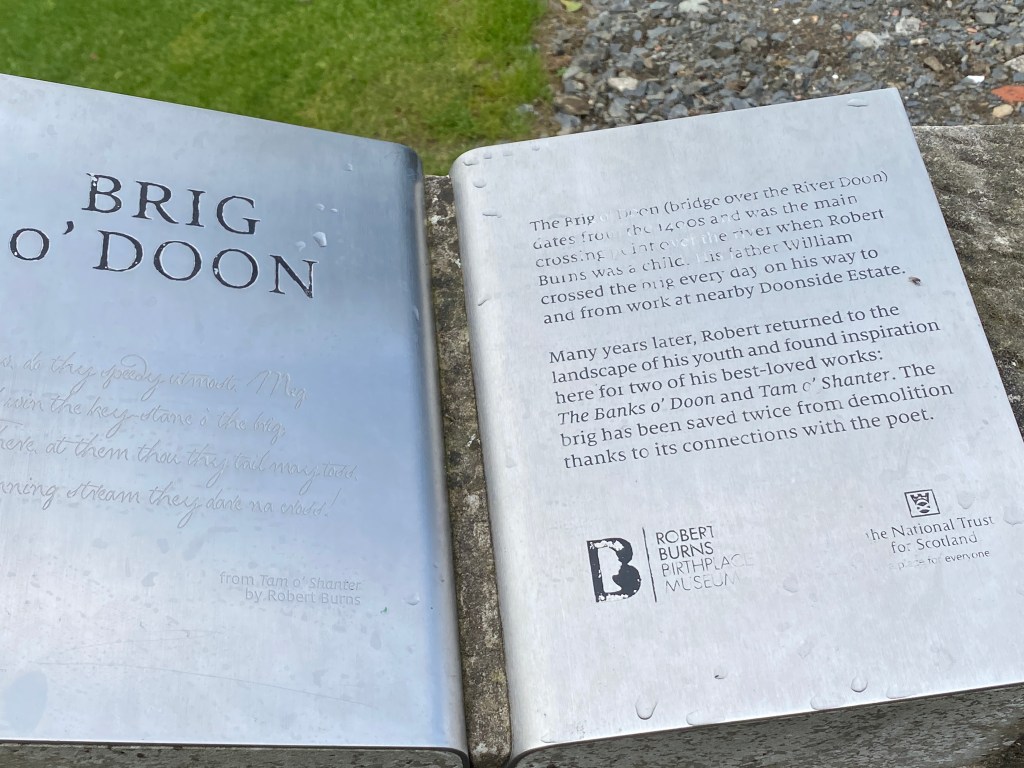
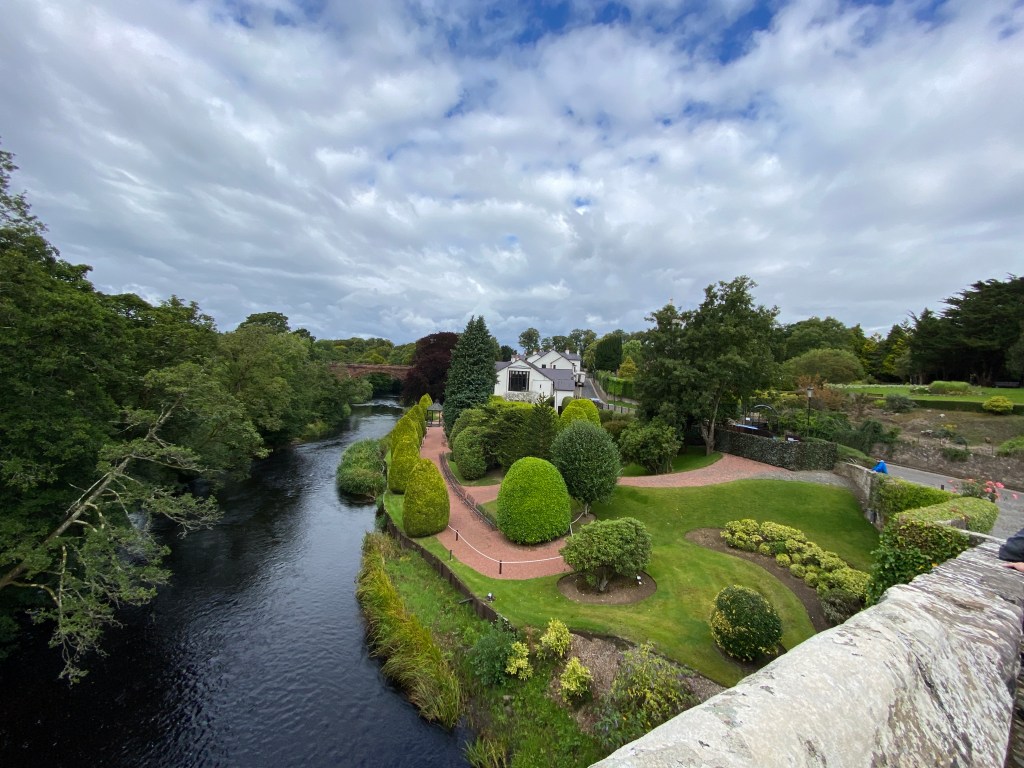
We took a coach ride to the village of Alloway, to the homeplace of Scotland’s National Poet, Robert Burns, aka Rabbie Burns. Our local guide gave us the history of Burns’ parents and the birth and life of Robert and his siblings. We walked along the Poet’s Path and into a cemetery and ruins of an old church, Auld Kirk, which had inspired Tam O’Shanter. Then we walked to the bridge over the river Doon —Brigadoon. The sun was finally out and the area around the bridge and the nearby pub were gorgeous. Particularly the monkey puzzle tree.


Gang aft agley,”






We returned to Glasgow in time to hear most of the 1:00 organ concert in the Kelvingrove Museum and Art Gallery.


The evening was devoted to our home-hosted dinner. Our host family was a couple, Fiona and Arthur, who live in a lovely home built in the 1910s which had been beautifully restored and decorated. The stained-glass windows on all the rooms facing the street were the originals. In addition, they had several authentic Tiffany lamps they had been given by a neighbor who had collected them. We ate mince and tatties and green peas, followed by meringue, ice cream and fresh Scotland strawberries. It was an amazing evening. OAT trips always include a home-hosted dinner. Usually the hosts are local, multi-generational families who really benefit from the additional income. Our hosts participate because Fiona discovered her elderly father enjoyed talking with the travellers so much. He was away, so Arthur, the husband, “stood in.”


Day 4, Wednesday
Today we left Glasgow and drove about an hour to Loch Lomand, where we boarded a boat for a circle tour of the lake. The rain held off and we even had a few moments of sunshine. The lakeside was quiet and beautiful.


After our boat ride, we drove to the Drover’s Inn for a filling pub lunch (macaroni and cheese, bread, salad). A previous owner of the inn was a taxidermist, accounting for all the stuffed animals throughout, including an upright bear at the entrance. Moreover, they had a stuffed “haggis,”which was a combination of several different small rodents. Evidently little children are told that haggis is a small and hard to spot animal. Kids are asked to look for them during car trips! We discovered that everyone in Scotland seems to have great stories of the haggis.


We stopped at the Glencoe Village visitor’s center, which included glorious views and a replica of an old mud/thatch house. We then made our way to Oban, to our hotel right on the water. We had dinner at the Barn and Bar, an out-of-the-way pub that opened for us even though they were closed on Wednesdays. The food and ambiance were great. I had ratatouille and Chris had a venison stew. We saw the first of many single and double rainbows, thanks to the weather, that alternated frequently between drizzle and sunshine.


Day 5, Thursday
This was our “day in the life” of a highland cattle farm, Cladich Fold. All OAT trips include this type of cultural experience. We visited the farm of John and Queenie on the south side of Loch Awe in Argyll. We were driven around the farm in a wagon pulled by a tractor. The farm manager, Stuart, told us all about raising highland cows (hairy coos), including how to prepare them for shows. Their cows have won many awards, and Stuart is so experienced he even judges shows in the UK and other countries (including an upcoming show in Tennessee). The bulls are kept separate from the females except at breeding time. We stopped and visited with several groups of females. They LOVE being groomed — about as much as our dog likes a good belly rub. They also raise sheep on this extensive property. It was interesting to see how John and Queenie, who previously worked in finance, had brought this old farm and small community back to life, refurbished buildings to provide good housing for workers, and built a beautiful house with magnificent views of mountains and valleys. We enjoyed lunch with them after the farm visit and also saw some images and videos of Stuart and his award-winning coos.


Day 7, Friday
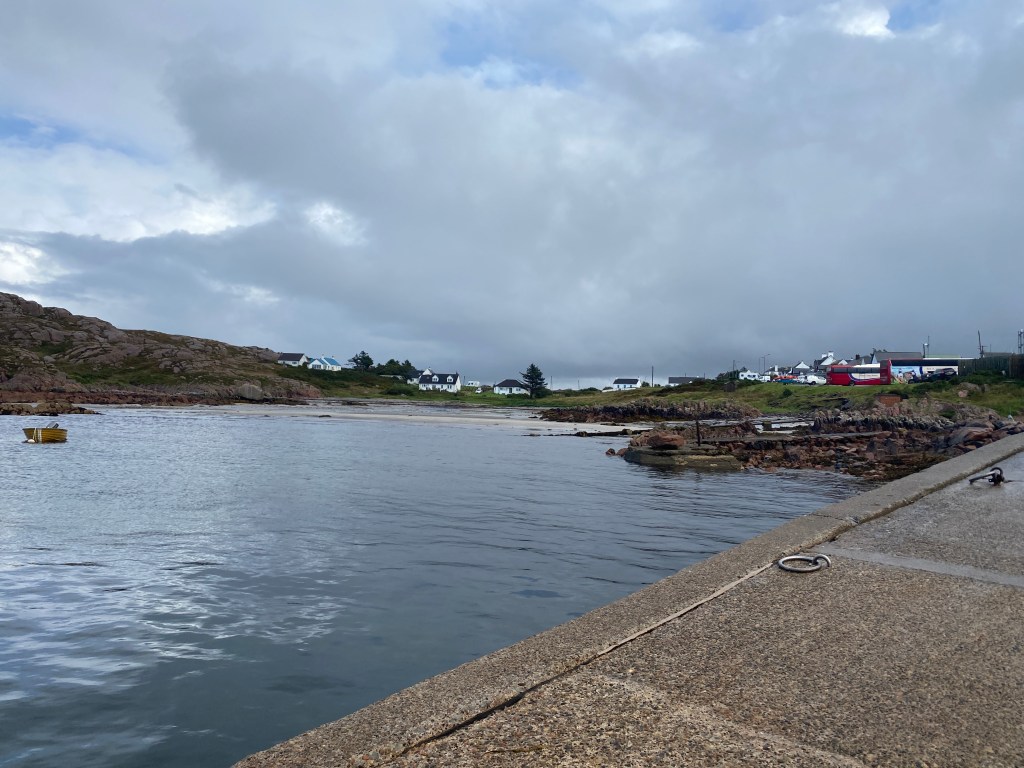
We had a full day outing, taking a ferry to the Isle of Mull in the Inner Hebredes, where a bus took us on an hour ride through gorgeous landscapes to a ferry terminal in Fionnphort to catch a short ferry ride to the island of Iona. After eating at a local restaurant, and our first taste of cullen skink, a popular smoked haddock soup, we met a local guide who led a walking tour of the island. The Celtic church, Iona Abbey, was thought to be the site where the Book of Kells was written. We visited the abbey and nunnery, saw the cemetery and other ruins under less than favorable conditions. Rain was pouring much of the time. It’s too bad because you could tell the little island is just beautiful! After visiting some artisan shops, we headed back the way we came, and the weather cleared so our vistas were amazing!
Since Oban is the “seafood capital of Scotland,” we ate at a seafood restaurant in the harbor and had wonderful platters of shellfish and fish.




Day 8, Saturday
We left Oban and headed to Fort Augustus, on Loch Ness, for a lunch break in a local pub and a walk around town. We did not see the hunt for Nessie, but it was in the news:
“LOCH NESS, Scotland, Aug 27 (Reuters) – Hundreds of hopeful volunteers joined a two-day hunt for Scotland’s fabled Loch Ness monster on Saturday and Sunday, in what organisers described as the biggest search for the elusive “Nessie” in more than 50 years.
“The Loch Ness Centre, which partnered with voluntary research team Loch Ness Exploration to organise “The Quest”, said they would be using surveying equipment that had not previously been tried at the loch, including thermal drones.
“Volunteers from around the world were allocated locations around the 23-mile (37-km) long lake from which to monitor for any signs of Nessie, while others took to boats. A hydrophone was also used to detect acoustic signals under the water.
“We did hear something. We heard four distinctive ‘gloops’,” said search leader Alan McKenna. “We all got a bit excited, ran to go make sure the recorder was on and it wasn’t plugged in.”
The town of Fort Augustus was lovely! We had a stop at Urquhart Castle, then motored on to Inverness. The Scottish highlands are full of castles.


Day 9, Sunday
We had our “controversial topic” session with two locals who take opposite sides in the debate about whether to create a fully independent Scotland or stay in the UK. The recent difficult experience with Brexit seems to have dampened the enthusiasm for secession. We then explored the battlefield of Cullonden, where the Duke of Cumberland (the government side) handily defeated Prince Charles Edward Stuart (“Bonnie Prince Charley,” who attempted to bring the Stuarts back to the throne) in the last Jacobite uprising. The battle was brutal, with more than 1500 soldiers dying in an hour of fighting. The government troops showed no mercy to the injured and retreating forces. This was a powerful reminder of the human tragedy and senselessness of war. The museum had some good exhibits, including a four-walled video, immersive battlefield experience. The day we went, they also held a demonstration of how kilts were fashioned and two fun-loving members of our group participated.
On our way back to Inverness, we stopped at the Clava Cairns, and area with standing stones and stone burial mounds that go back centuries. These standing stones were evidently the inspiration for the concept of time travelling through ancient stones for Diana Gabaldon’s Outlander book series. Robyn shared tastes of Drambuie, the secret recipe of which was created for Bonnie Prince Charlie, and was given by the prince to someone who helped him escape Scotland after the failed uprising.
After returning to Inverness, we had lunch in a food hall, followed by a very interesting whiskey tasting. Of the three whiskeys we tasted, we prefered a mellow one that had been aged in sherry casks. Taste definitely improves with addition of a drop or two of water. The peated whiskey was pretty awful and defintely an acquired taste! There are some whiskeys they sell for 1,000 BP a dram! Interestingly, in the US casks are used only once. The Scots use them multiple times for the aging process, so they import and reuse American casks.


Day 10, Monday
We drove through the Cairngorms to Ballater, a lovely village at the foot of the Cairngorms National Park. This was some of the most spectacular landscape of the trip. Unfortunately I could not get decent photos from the coach. Heather was in full bloom all over the hills. We stopped at a spot where a local artist had created seats that resembled modern standing stones from the rear, but were comfortable and quiet paces to absorb the scenery.


We arrived at Aberdeen and had dinner upstairs in a local restaurant, followed by live music played by two women with violin and small harp, and foot percussion. They played songs from a variety of regions and styles in Scotland. It was great!!!


Day 11, Tuesday
We visited the Fyvie castle, with a tour by the most informative guide. One of my favorite portraits was of one of the lairds of the castle, John Stirling, and his youngest daughter, Jean Wilhelmina, painted by Sir Henry Raeburn. She was a very interesting and important colleague of Frederick Chopin, starting as his piano student in Paris, and then becoming a manager, archivist, and financial supporter. Because of her inherited wealth, she was able to cover costs of many of this travels, concerts, and possessions. While they may never have had a romantic relationship, our guide told us that after his death, she wore mourning attire for the rest of her life.


After lunch at a cafe devoted to training individuals with intellectual and other disabilities, we had a presentation by a local artisan about traditional straw weaving and were able to create our own wheat dollies.
We had the rest of the day on our own.


Day 12, Wednesday
We left Aberdeen en route to Edinburgh. We stopped for most of the day in St. Andrews. We saw the famous golf club with its multiple golf courses, and had a guided tour around the historic town. Of course, St. Andrews is one of the oldest and most prestigious universities in the world, founded in 1413. It is also where Prince William and Kate Middleton met, so we were regaled with key sites of their meeting, favorite cafe, dorms, etc. The town is lovely, with many significant historical figures and events. We found a great pub for lunch, the Criterion; my steak and ale pie was unbelievably wonderful. After walking around after lunch, we indulged at the famous gelato shop, Jannettas.
One the way to Edinburgh we stopped to view the three bridges, created in three different centuries, over the Firth of Forth.


We headed to Edinburgh, settled into our hotel at the foot of the royal mile, and walked uphill along the Royal Mile to dinner.
Day 13, Thursday
We began the day with a morning tour of Edinburgh, led by a local guide. We stopped in the New Town to observe the architectural features and gated parks, visited the National Museum, and finished with a tour of the castle. I was on the lookout for places featured in Alexander McCall Smith’s “44 Scotland Street” series and Ian Rankin’s Rebus novels.
The temporary arena by the castle, used every August for the Royal Tatoo (which I saw on an earlier visit), was being dismantled. We just missed the crowds in town for the Fringe Festival, also held in August.
We stopped in a small restaurant for lunch and headed back to the hotel. Chris had caught a cold and needed some rest. We had a picnic dinner in our room.


Day 14, Friday
We decided to skip the planned morning activities of learning more about kilt-making and bagpipe construction. Instead, we visited one of my very favorite art museums, the Scottish National Gallery. Their collection includes amazing medieval and renaissance paintings. I particularly enjoyed the many portraits by Sir Henry Raeburn. We had lunch in the sister Portrait Gallery, in a cafe looking out over the gallery gardens, and headed back to pack our bags for the journey home.


Our farewell dinner was at a cosy restaurant up the Royal Mile, and we said our goodbyes to our Trip Leader and our fellow travellers. We were to be picked up at 3:30 Saturday morning for our flight to Healthrow, and then to Raleigh. We were lucky the flights were on time!


I’m adding a few sketches I did from the trip. Mostly pencil and watercolor.


Robyn sent the following playlist, from traditional songs she played during the trip.
Flower of Scotland – the Corries
Will Ye Go Lassie Go – the Corries
Hush Hush – the Corries
The Skye Boat Song – the Corries
The Massacre of Glencoe – the Corries
Caledonia – Dougie MacLean
Wild Mountainside – Eddi Reader
Ae Fond Kiss – Robert Burns & Eddi ReaderTo a Mouse – Robert Burns & Gordon Kennedy
Auld Lang Syne – Robert Burns & Dougie MacLean
Letters from America – the Proclaimers
I’m Gonna Be (500 miles) – the Proclaimers
I’m On My Way – the Proclaimers
Cap in Hand – the Proclaimers
The Northern Lights of Old Aberdeen – Alexander Brothers
Somewhere – Runrig
Loch Lomond – Runrig

And those are the wee “bits and bobs” that stuck out in my mind.
FAREWELL BONNIE SCOTLAND!!
 My Travel Blog