
Trip Summary and Commentary
From July 13-30, five of us women undertook an amazing trip to witness wildlife in a mobile safari in Botswana. The trip was organized by my friend and superstar photographer Debbie Lucas (www.debbieophotography.com). Participants included Margie Gardiner, whom Debbie and I worked with in Burroughs Wellcome some forty years earlier, Kathy Biederman, a long-time friend of Debbie’s, and Jennifer Lynn, my friend and neighbor. This travel log/blog is different than my others because I’m taking a two-part approach. Mainly, I’m describing the sites and fun adventures of the trip. But also, I’m adding some commentary, in italics, I’ll call “Taking a Risk on Robson.”
Let me explain. The five of us took a risk by signing on to the first official trip of Tracks of Old Safaris (https://tracksofoldsafaris.co.bw ), a company founded by our guide, Moagi Robson, and his wife, DK. Debbie Lucas, who had been on numerous safaris, knew Robson from a previous excellent trip. He is a Bushman from Botswana who learned wildlife tracking from an early age has been guiding expeditions for over 20 years. His skills are beyond amazing. And he is personally just delightful! He and DK set up their own company and planned to lead mobile safaris, which allow for much more extensive wildlife drives than the typical lodge-based game drives. You can learn more about mobile safaris and see Robson in a Youtube video entitled “The Soul of Botswana – a film by Roland Steffen.” Our trip was Robson’s inaugural mobile safari. He was our guide and drove the safari vehicle, plus he hired and coordinated the staff of 4 and the truck that carried all the equipment for setting up each of the camps and our food. DK continued to work as a guide with Belmont Lodges. As an inaugural trip, we anticipated a few hiccups. I will detail them in the italicized text. We love Robson and wish him the greatest of success, and know that one day he will look back at this trip, laugh heartily, and be delighted that it ended so well.
The maps below give an overview of the country, with the one on the right providing more detail of towns, roads, and parks. And below the maps are a few random shots to set the stage.




Day 1, Thursday, July 13.
The five of us flew from Newark on July 12, arrived in Johannesburg, SA, around 6 pm on the 13th, and were picked up by staff at the Sunrock Guest House. We arrived too late for dinner, but the lovely staff were able to order pizzas to be delivered to the bar, where we had our first drinks (Amarula with vodka – excellent!!! or wine). Hot showers and comfy beds were heaven after the long flight!


Day 2, July 14
After breakfast at the hotel, we were driven back to the airport, where we boarded a flight to Maun. Robson greeted us at the airport and drove us to the Waterfront Lodge, where we had the afternoon to explore the river with its wildlife, which included goats, pied kingfishers, jacanas and other birds. I spent some time on my porch sketching the kingfisher. We went to dinner with Robson at a local restaurant, Marc’s, and were joined by another guest at the hotel who was solo until joining his group. On the menu were warthog stew in beer and Eland Goulash, as well as more traditional entrees. We discussed plans for the next day.


Day 3, July 15
We got up early to drive to the airport for a one hour helicopter ride, doors off, over the Okavanga Delta. The landscape was amazing, as was the lighting as the sun was rising. We spotted elephants, hippos, giraffes, tsessebees and other antelopes.
Back at the hotel, we enjoyed a great breakfast and left with Robson in our safari vehicle. Before leaving Maun, we needed to purchase some supplies for the trip, which took much longer than expected due to some financial issues and the fact that is was a holiday weekend. Some of us sat in a parking lot for over an hour as Robson and Debbie got drinks for the early portion of the trip. We were also hoping to find a way to charge batteries using plugs and not just USB connectors. The vehicle only had USB outlets. There was no available solution. (An inverter was purchased later). My camera battery chargers needed electrical outlets. I had all the adapters, but needed to plug them in! We headed to an ATM (unsuccessful, plus it ate Debbie’s card), and shops for picking up large jugs of drinking water. This was a most tedious morning/early afternoon.
We picked up our lunches at the Dusty Donkey (restaurant at the turnoff to the airport in Maun), grabbed Savana Cider and wine from the cooler, and made our way to our first night in the tented camp at the Ntwetwe Pan Campsite, which is East of the Salt Pan. We needed to disinfect our shoe soles and vehicle tires before entering a wildlife area. Along the way to camp, we stopped by the roadside for our first extended viewing of elephants and zebras. Elephants had discovered they could break water pipes that ran alongside the main road to obtain water. This has been happening for a few years, with no remedies. I’m not sure about the downstream effects for the communities that rely on the water source. It was great to watch the elephants and zebras in the golden light as the sun was setting. Margie and I kept picking up a whiff of something that turned out to be wild sage – a memorable aroma of Botswana.


We arrived at the salt pan after dark, to a partially set up campsite. The salt pan seems an alien landscape devoid of trees or any shade. The truck bringing the crew and equipment had broken down and had arrived late, so the crew had to rush to set up basic tent structures, a temporary long-drop toilet in the open for us all share (we created a human wall for privacy), and to prepare for dinner. We sat around the fire, had dinner, and waited still longer around the fire until the tents were habitable. The beds were comfortable. The long-drop toilets in the en suites were a nice addition! It was a very cold night, and the promised bush babies (hot water bottles in fleece covers) were missing from the supplies. We got the bush babies at the next camp.
We also learned that the original crew Robson had hired had changed their mind about joining him about two weeks before our departure date. So he had recruited a new group to drive the truck, set up camp, cook, serve the food, bring us warm water, make sure the solar lights were charged during the day, wash clothes, drive the truck, fend off monkeys and honey badgers, etc. Fortunately Robson found some wonderful folks. What a beginning! We were pretty worried about the rest of the trip!


Day 4, July 16
We spent the day at the Nata Bird Sanctuary and in the Ntwetwe salt pan which were about an hour drive from our camp. Because of the limited amount of rain, the salt pan was dry and the flamingoes and pelicans, usually present, were absent. The landscape, however, was spectacular. In the distance in all directions, we saw what appeared to be water, based on the color and reflections of the trees above. It was a very convincing mirage. We did see Wildebeests, ostriches, the arrow-marked babbler, white-crowned shrike, and many other animals. I’ve include a more comprehensive list of our sightings at the end — it would take too long to mention every species seen every day. I’ll just show selected photos to give an idea of the terrain and key sightings. Most everyday we saw elephants, zebras, wildebeest, giraffes, impala, warthogs, helmeted guinea fowl, greater blue-eared starlings, lilac-breasted rollers, ostriches, fish eagles, and vultures. Caveat: I might have mixed up up some of the days and sightings.


When we returned to camp, we discovered that heavy winds had take a toll on some of the tents. However, we were happy to see our individual tents fully set up, with rugs, trash cans, shelves, and a bucket shower, water basin and mirror in our en suites. The staff filled our basins and shower buckets with heated water and we were able to wash hair and take showers. Around the fireside, we had some productive discussions with Robson about our interest in prioritizing wildlife viewing. He and Debbie had already had a “heart to heart.” It appeared that the days originally scheduled for us to spend in the Central Kalahari Desert (CKD) would yield a low number of animals and birds, so Robson suggested changing the itinerary, omitting the CKD and spending extra days in the Okavanga Delta. This seemed a promising change, particularly since I was very keen to spend time in the Delta after the disappointment of my previous (marvelous!) trip that was diverted to the delta panhandle rather than the heart of the delta.
Day 5, July 17
After another cold night in what I chose to call the “ice pan,” we drove another hour or so to the Planet Baobab Lodge for an adventure. We and another two travelers were driven another hour to a site that was home to a host of meerkats in the wild. Our local guide gave us an orientation to the delightful creatures and set us free to interact with them (supervised of course!). One meerkat would stand on top of our heads and jump from one head to another – quite the experience to have those tiny toes on your scalp! Others were chattering, scampering around, and digging in the sand for insects. There were two pairs of babies who were really amusing to follow. Two little ones actually approached Jen’s black-gloved hand and one ventured to sit on it! Listen to the chattering in the video below. After some hours with the meerkats, we were driven to a fenced-in village for our other two travelers to get oriented to a quad bike and start their ride around the salt pan. We had opted not to ride the quad bikes because of the dust (we had plenty of dust and dry air in our game drives), and instead drove around the salt pan in the safari vehicle, stopping to take photos and enjoy the amazingly stark scenery and layers of rocks that formed the floor of the pan. We had lunch at the lodge, wandered around the amazing baobab trees, and returned to our camp. The fruit of the baobab includes a hard chalky substance that works just like chalk! How about the ingenious foot-operated hand sanitizing station below?


Day 6, July 18
We left camp and moved through the savanna and Kalahari Desert to the Nxai Pan Lodge in the Makgadikgadi Pan area. The yellow grasses were so shimmery! Along the way, our vehicle had a flat tire, which we all helped change. Our lodge was fabulous with large, long rooms with windows facing a waterhole that attracted elephants. Running water and electricity were a plus!! At a distance from the waterhole was a wall of mid-height, brownish-gray vegetation. The elephants would gradually emerge from this wall, and after having their fill of the water, would plod back one by one to disappear behind what we labelled their “field of dreams.” I spent our precious free time making a crude watercolor sketch of several elephants at the waterhole. Because we were staying in a lodge, we were accompanied on game drives by the lodge’s guide and tracker, who were wonderful. (Aside: The typical lodge – often with permanent tented cabins, running water and flushing toilets – has its own guide staff and a schedule consisting of early breakfast, a morning game drive, lunch and siesta at the lodge, and an afternoon game drive with sundowner, followed by dinner at the lodge.) On our afternoon game drive, we saw ostriches, kori bustards, jackals, a bee-eater, and viewed the sunset behind a landscape of elephants. Back in the lodge, we had a lovely dinner.


Day 7, July 19
We had two game drives today. The first was to a second water hole where we saw Egyptian geese, blacksmith lapwings, white-headed vultures, white-backed vultures, the go-away bird (gray lourie), lilac-breasted roller, crimson-breasted shrike, laughing dove, springboks along the way, and more elephants. We also saw the carcass of a leopard tortoise. We were back to the lodge for lunch, and started a second game drive late in the afternoon.


As the sunset was approaching, our vehicle took a sharp left turn away from the sun and we were faced with a pleasant surprise — a lovely full bar with snacks for an amazing sundowner. Amarula with vodka on ice was a delicious treat. The sunset was beautiful. We arrived back at the camp and sat around the campfire before dinner. The whole camp crew descended from the dining area and performed local songs and dances with some complex rhythms, and sang farewell to those leaving camp the next day. It was awesome.


Day 8. July 20
Today we drove to the Kamaga campsite in the Makgadikgadi salt pan. The first part of the drive through the Ntwetwe Pan was through deep sand. We had another flat tire. We stopped at the park gate and ate our boxed lunch with Savannah hard cider. Jen asked for a wifi password in the office and received it quickly, maybe because they knew a Black Mamba (dangerous snake) was somewhere in the office.
Proceeding on to the campsite, again in deep sand, we had another flat. All the flats so far were on the left rear side. Fortunately the first flat had been repaired so that we had two spares. The camp was just a short way from our flat. We were getting good at the various tasks of changing the tire and placing the flat on the back of the vehicle. Each time was quicker. We arrived in camp while is was still daylight, and settled in after a quick drive to the riverbed, where we saw zebras, elephants, wildebeest, guinea fowl and other birds and antelopes. The camp setting was lovely, at a clearing among old trees. Our dinner conversation was really lively. The age-range of our group: 4 retired (and awesome) women approaching or hitting 70 (I’m the oldest), a bright, athletic, and still-working 38-year-old divorced woman, and Robson (42), the lone male (who, by the way, had not heard of the Beatles!) facilitated many intriguing revelations. As an example, we learned a lot about how women go about finding and vetting dates, and the process of first dates in the current environment!
This campsite was in a park with a number of ablution blocks, which housed a couple of flushing toilets, showers, and sinks. Hot water was available in the midday. Unfortunately it was too dangerous to walk to the buildings in the middle of the night.


Day 9. July 21
We had two drives today to the same general area of the Boteti riverbed, which contained a few pools of water, one man-made. The animals came down the sandy slopes from different places and at different times. Guinea fowl were abundant at each drive. Along the drives we saw elephants, giraffe, one of whom appears stationary and perhaps hurting from a sore above his hoof. In the afternoon drive, we also saw a bloated elephant carcass on the sand, and hippos on the shore and in the water.


Day 10. July 22
I skipped the morning drive to have some time to myself and sketched a cool giraffe face — they are so interesting with many curves and planes.
Afternoon game drive and sunset were awesome. This was the ideal place to watch the zebras and wildebeests on their migration, as well as the many elephants and giraffes that ventured to the water at different and overlapping times. Hippos really know how to nap! We saw vultures and maribou stork feasting on a downed zebra (video not shown). We saw our first and only Orex. The vervet monkeys were fun to watch, but a menace — they stole a serving spoon, fruit, and probably other items we did not notice!
The video clip below is a bit long, but it captures the barking of the zebras, and images of zebras big and small, many very pregnant and some quite young. It is hard not to fall in love with the zebras!


July 23
We left this lovely camp and headed to Maun for one night at the Crocodile Safari Lodge and spa. We checked in early enough to schedule afternoon massages before a late dinner. Robson drove us into town to have lunch. It was Sunday, so many restaurants, including the Dusty Donkey and Marc’s, were closed. We ended up eating at a lovely spot right across from the airport. A driver from the lodge drove us back while Robson was organizing the supplies and details for the next leg of the trip. The lodge was wonderful, grounds were lovely. The massages all start with a traditional foot bath. My 90-minute massage succeeded in taming the neck pain and decreased range of motion that started after our helicopter ride. Yay!!!! Talking with the massage therapists, it was obvious that the local residents rarely, if ever, venture into the bush for animal exploration.
We had dinner in a boma (fenced in area) next to the lodge restaurant. Robson and his three girls and their nanny joined us about 8:30 or so. The girls were awesome.


July 24
We awoke at the Crocodile Lodge in Maun, had breakfast, and waited for Robson, who was due shortly after we checked out at 10:00. When it was obvious he would arrive late, we moved to the bar to get some drinks (Sex with the Bartender for me) and watch for wildlife in the dry creekbed. We went back to the reception area and waited until 2:00. Fortunately we had wifi after a long internet drought. Evidently it was time-consuming to make the arrangements for the new campsite and get a refund for the originally planned one since we had changed our itinerary. We concluded that Robson needed a “back office” with someone who could handle communications and logistics while we were continuing with our planned activities. We were not a little frustrated by the delay, when we could have arranged our time differently since arriving at the lodge. Robson also had to find a new chef, because our previous chef left to take on a different assignment.
Our long drive northwest to the Khwai region of the Okavanga Delta began on a paved road for long enough to finish our lunch, which had been prepared by the Dusty Donkey. Then we were on sandy roads for the rest of the way. Close to the camp, we took a detour to watch Spotted Hyenas. A mother/caretaker, and eight babies: two spotted and the rest still solid black. Once the mother/caretaker left, the babies went into their den, which consisted of several deep and broad holes, with a network of tunnels underground, originally created by Aardvarks. We arrived at our camp, which was mostly set up, which was in a lovely setting surrounded by mature trees. We had a nice time by the fire and our first meal prepared by our new chef, Nancy.


July 25
We learned that during the early morning an elephant had approached the staff tents, creating fear and anxiety among the staff, understandably. There was nothing they could do other than wait for the elephant to move away peacefully.
We rose at 5:15 for an all-day game drive beginning in the edge of Chobe National Park. Robson spotted Leopard tracks, which we tried to follow until it became obvious baboons were after the leopards and we needed to abandon the chase.
We saw lots of birds and antelopes. Just after I mentioned that I had never seen a tsessebee run (they are the fastest antelopes), they took off running. We had our first view of lions, as two adults were feasting on the remains of a water buck.
We had a beautiful stop by the river around sunset and were surprised by another safari vehicle driven by DK, Robson’s wife. We shared stories with DK and her two guests from the Belmont lodge where DK was working as guide. We enjoyed some wine and snacks and watched the elephants and hippos as the sun set.


July 26
We woke up at 4:45 so we could leave early to drive to the Moremi Game Reserve in search of a lioness and her two cubs that had previously been spotted. We arrived in Moremi after viewing a beautiful morning, with loads of birds and wildlife along the way. We were among several vehicles in communication with each other trying to find the lions. While searching, we received a communication of wild dogs (same as painted dogs) around 6 km away. Robson flew to the site, passing a couple of dawdling vehicles, and we arrived at the site in time to see 4 wild dogs. Two were rough-housing in the sand. After a few minutes, the four dogs took off to our left. Robson tried to drive to a location where we could view them en route, but we did not see them again. It was such a rare sighting!!!! I did not post the image of the largest dog pooping—or maybe that is the first image..


As we proceeded on our drive, we saw a variety of birds, antelope, including the red Lechwe, elephants, giraffes, an occasional warthog, and one sighting (perhaps earlier) of a cape buffalo. We crossed the river Khwai, a one-lane bridge. We saw amazing birds and wildlife, had a late tea and coffee break, and then found our way to the lioness and her cubs. We watched for an extended time. The mom came over to our vehicle for a stay in our shade. The cubs were enjoying sleeping in the shade of scrubby plants. The mom decided to head out, probably in search of food for her cubs. The lions were amazing!


After a very late lunch and early dinner we were going to take an evening game drive. However, Gabe (our infectiously happy “waiter”) had spotted what he thought was a cheetah. It turned out to be a leopard, right in our camp. We followed the leopard as it was stalking an impala. We watched until the leopard began her chase. We did not want to interfere with the natural events. Debbie managed to get some amazing photos even in the dark (maybe I can add them later).


July 27
We had a morning drive, trying to see cheetahs and lions. We had heard there was a pair of mating lions close by, so we headed to watch them. The lion mating ritual lasts about 4 days. In the early stages, they mate every 5-8 minutes. We had the opportunity to witness a number of attempts. The male was obviously young and inexperienced. Rather than initiating the contact, the female approached him each time. On a couple of occasions, the mating was evidently successful because she laid down on her back, paws elevated. Another 20 minutes or so passed with no action, which is very unusual, and we left. We had a stops by the water multiple times, seeing hippos and elephants. We enjoyed watching the reflections of the elephants on the water and the moving reflections of water on their bellies.
On the way back, there was a dead elephant off the roadside and we drove in, covering our noses from the stench. A leopard was feasting. We watched until hyenas started showing up, chasing the leopard away. The truck had experienced some problems, so the owner/mechanic had been called. We passed the truck a couple of times on the road with the mating lions. We were back at camp enjoying dinner. Robson visited the truck and saw it was getting fixed. When he returned, he said the truck was a few minutes behind him. When it didn’t show up, he went out and found it — the driver thought he knew the way back to camp, but had gotten lost.


July 28
We left camp early in the morning for a short game drive, then returned to make sure everything was getting packed up for transporting to the next camp. We were to take a long, game-driving route (90 km or so), which the truck was going directly to the camp (about 30 km) so everything could be set up. This was a full-day game drive through the park. We stopped at a campsite near one of the park gates for a lunch provided by Nancy – delicious fried chicken and potato salad.
One the way back, we took a side road to avoid the washtub bumps of the main road. We saw a vehicle in a parking area beside the river and asked what they were looking at — it was a wet leopard that had just crossed the river.
We also saw Roan antelopes, which are uncommon in Moremi.


We arrived at the south gate where our campsite was located. When Robson checked in, he learned that the truck had never arrived in camp. He had had no means of communicating with the crew all day, and just assumed they would arrive and have the camp set up. Robson – get satellite phones so you can stay in communication with your team!!! We were quite put out by that time and were ready to tell Robson we needed to go to a lodge for the two remaining nights. There was no way we could settle in the camp that evening and it made no sense to set up camp for only one remaining night. Robson knew of a lodge about 50 km away, so we headed there. Along the way, we encountered the truck and let them know what we were doing. When we arrived at the dark lodge, Robson was able to speak with staff who agreed to check with management and see if they could accommodate us. There were no other guests. Fortunately they had some space available and we were able to settle in, have dinner, and get warm showers in our permanent tented cabins. What a frustrating day!!!!
July 29
After breakfast, we went on a full day game drive. Honey badgers had gotten into the vehicle overnight. We heard of a leopard with two cubs, so we set out to find them in the park. On the way, we stopped at the campsite and said hello to the crew. Gabe seemed very disappointed that we were not planning to return to camp. The plan was to say goodbye to the crew at the airport before we left the next morning.
We visited “paradise” in the park, and later located the leopard mom and cubs. An impala carcass was hanging in a tree near their resting place. One cub was a feisty male who was licking the carcass, then pestered his mom, who kept swatting him away. Zebras approached the leopards. In addition, a baboon scout was approaching. We took the vehicle between the leopards and the baboon, and the baboon was chased away. We were worried about the cubs because they had been so exposed on the leopard hill where they were playing. Once the leopards realized the danger, the mom moved away and the cubs took refuge in a tree “hotel” that they were obviously familiar with and an effective hiding place. We had a lunch prepared by the lodge, went back to see the leopards again, and watched other animals and birds. At some point in the we watched yellow-billed storks fishing. A saddle-billed stork caught a large fish, only to have it taken away when a fish eagle swooped down from a nearby tree and stole it! We had earlier seen a large herd of cape buffalo, so we drove around the park until we found them. It was an amazing sight as hundreds passed in front of our view. We were parked off-road, where we were not technically supposed to be, and out of view of all the official roads. Unfortunately, we discovered the vehicle battery was dead. We attempted a few remedies which did not work, and so Robson attempted to contact other vehicles. There were none other because lodge vehicles would be on siesta and not coming back out until 3:30 ( it was about that time). Robson walked to the main path and was fortunate to flag down a vehicle — the friend we had shared the leopard family with. They were able to tow us into a jump start. Instead of visiting the leopards again as planned, we drove straight to the park gate, which was closing at 6:30. We arrived at 6:32. Robson visited the guard’s house, then opened the gate and we made our way back to the lodge for dinner. The lodge had set up our dinner on the boma facing the elephant “pasture,” by a fire. It was a lovely dinner. One additional benefit of the lodge was that it was closer to Maun than the planned campsite, so our drive to the airport would be shorter than planned.


July 30
After a leisurely breakfast, we departed the lodge for the airport. We were met by the staff and said our farewells. After checking our bags, we were able to spend some time shopping. The flight was uneventful. We arrived in Joburg, and checked in for our flight. The flight was delayed; we had to really hustle in Newark to go through passport control, collect and recheck bags, go through security again and make it to the plane with only a few minutes to spare. It was great to get home, get clothes in the wash, empty sand from my duffle bag and get a long, hot shower.
Following the last photos are images of some of the pencil and watercolor sketches I made on the trip and upon return. After those images are lists of the birds and other wildlife we saw. Apologies for not being able to sort the lists! I invite my fellow travelers to send me any corrections!


Birds (sorry for the random order):
- African fish eagle
- Lilac-breasted roller
- Kori bustard
- African Jacana
- Crimson-breasted shrike
- Yellow hornbill
- White-backed vultures
- White-headed vulture
- Blacksmith Lapwing
- Go away bird (gray Lourie)
- Laughing Dove
- Crested guineafowl
- Helmeted guineafowl
- Hamerkop
- Swallow-tailed bee eater
- Red billed francolin
- Egyptian goose
- Crested francolin
- Marshall Eagle
- Long-billed crombec
- Maribou stork
- Long tailed shrike (magpie)
- Black chested snake Eagle
- Fawn colored lark
- Burchell’s Sand grouse
- Red headed finch
- Pepper roller
- Crested barbet
- Chat flycatcher
- Egyptian geese
- Hadaba ibis
- Sacred ibis
- Crested francolin
- Barred owl
- Double banded sandgrouse
- Bradfield hornbill
- Coqui francolin
- Firefinch
- African darter
- Southern Ground hornbill
- Cape dove
- Barred owl
- Senegal Coucal
- Coppery-tailed coucal
- Squacco heron
- Great white egret
- Herons
- Brown snake-eagle
- Groundscraper thrush
- White-crested Helmet Shrike
- Wattled crane
- Spur-winged Goose
- Vultures, Black-backed
- Maribou stork
- Mourning collared dove
- Crested barbet
- African red-eyed bulbul (black-fronted bulbul)
- Fork-tailed drongo
- Pearl spotted owlet
- Red-billed buffalo weaver nests
- Bearded woodpecker
- Tawny Eagle
- Saddle-billed stork
- Yellow billed stork
- Water thick-knee
- Gabar goshawk
- Pale chanting goshawk
- Bateleur
- Red eagle, small ???
- Open billed stork
- Red-billed wood hoophoe
- African darter
- Southern boubou?
- Yellow-bellied greenbul
- Great white pelican
- Yellow-billed oxpecker
- Red-billed oxpecker
- Greater blue-eared starling
- White-browed Robin-chat
Mammals and reptiles
- Water Monitor Lizard
- Leopard tortoise shells
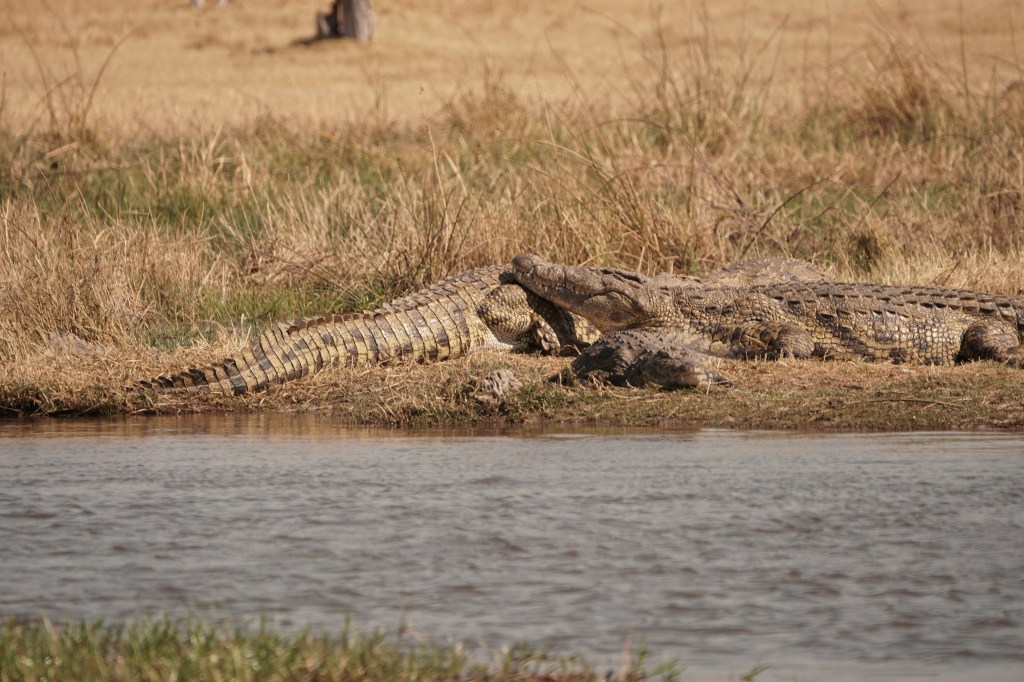
- Nile crocodile
- Blue wildebeest
- Cape buffalo
- African civet
- Slender Mongoose
- Dwarf Mongoose
- Banded Mongoose
- Female Leopard and cubs
- Lions
- Spotted hyenas
- Black-backed Jackals
- Honey badgers
- Meerkats
- Bush babies
- Cape and/or Savannah hares and/or Springhares
- Chacma baboons
- Vervet monkeys
- Painted dogs/wild dogs
- Warthogs
- Hippos
- Zebras
- Giraffes
- Elephants
- Tsessebees
- Orex
- Waterbucks
- Southern reedbuck
- Roan Antelope
- Sable Antelope
- Kudu
- Springbok
- Steenbok
- Red Lechwes
- Eland
 My Travel Blog